Abstract
This article examines how forced Kurdish displacement in Turkey during the 1990s fundamentally reconfigured the country’s class structure amid neoliberal reform. Drawing on a specially tailored KONDA Barometer Survey dataset, it traces the mass uprooting of Kurdish peasants—through the destruction of over 3,000 villages—and their subsequent migration to urban slums. The study demonstrates that this politically driven displacement not only fueled “informalization” in Turkey’s labor market but also expedited the transformation of Kurds into a key source of inexpensive, informal labor. Employing Portes and Hoffman’s class framework, the statistical analysis uncovers pronounced inequalities in class mobility, with displaced Kurds predominantly channeled into informal, precarious, low-wage positions. The findings further illustrate how ethnicity intersects with neoliberal economic reforms and forced migration to reinforce ethnic disparities in the working class. Overall, the article highlights the strong linkage between displacement, class restructuring, and the enduring ethnic conflict shaping Turkey’s evolving socio-economic landscape.
1 Introduction
The Kurdish population, making up approximately 18 % of Turkey’s population, has been embroiled in a protracted ethnic conflict since the Republic of Turkey was established in 1923. This conflict has seen various armed uprisings, the most prominent of which has been spearheaded by the Kurdistan Workers’ Party (PKK) since the early 1980s.1 In 1987, the Turkish government, reacting to increasing Kurdish support for the PKK, declared a state of emergency and set up the Special Governorship of Emergency Rule, lasting until 2002. This period saw the Turkish military engage in large-scale forced evacuations and the destruction of over three thousand Kurdish villages. Consequently, around 2.3 million Kurds, primarily peasants, were displaced, initially moving to cities within the Kurdish regions and subsequently migrating to the western parts of Turkey.2 This mass displacement operation, one of the largest globally since the 1980s, is comparable to those in countries such as Nigeria, Somalia, Sudan, Zimbabwe, and Colombia.3
The Turkish states’s aggressive military policies in the 1990s to curb the Kurdish movement led to the forced displacement of millions of Kurdish peasants. This mass migration pushed Kurds into urban slums, making them a crucial part of the burgeoning informal labor market. The displaced Kurdish population, having left their rural homes and farmlands, found themselves in dire economic and living conditions in the urban peripheries of both eastern and western Turkish cities. They depended heavily on kinship and community networks for survival. Many of the displaced Kurds, lacking professional skills, became a significant part of the informal labor market, particularly in big cities like Istanbul. The rapid urbanization of the Kurdish population coincided with a significant economic shift in Turkey from import-substitution industrialization to export-oriented growth, driven by neoliberal policies since the 1980s. These policies included privatization, flexibilization, informalization, and deregulation, leading to the formation of a large, impoverished informal proletariat. The displaced Kurds, largely unskilled, became an essential part of this informal labor force, providing cheap labor for various industries. Key sectors of the Turkish economy, including textiles, construction, shipbuilding, and electrical equipment production, relied heavily on subcontracting chains that utilized an informal labor force in which displaced Kurds gained a central part. The neoliberal economic shift in the 1990s and the internal displacement of Kurds interacted and resulted in the proletarianization of the Kurdish population and significantly altered the ethnic makeup of Turkey’s working class.4
Surveys, such as those conducted by KONDA used in this article, estimate that internally displaced people (IDP) make up 4.8 % of the population, approximately corresponding to 2.3 million people as of 1995. By 2010, the number of individuals from internally displaced families had grown to 3.5 million. The internal displacement accelerated Kurdish migration to urban areas, a trend that had begun with agrarian changes in the Kurdish regions in the 1950s. We argue that the Kurdish ethnic conflict and the subsequent changes in class structure in Turkey are closely linked. The forced displacement and urbanization of the Kurdish population not only changed the ethnic composition of the working class but also integrated many Kurds into the informal labor market. This dual process of proletarianization and ethnic migration underscores the complex relationship between ethnic conflict and socio-economic structures in Turkey.
This article presents an empirical analysis of the Kurdish internal displacement and its ramifications on the class structure in Turkey. As the first study to employ a quantitative approach to understand this significant turning point, it examines the intersection of ethnicity and class mobility amidst the backdrop of significant socio-economic shifts propelled by neoliberal policies and the ethnic political upheaval since the 1990s. As part of a research funded by the European Research Council, the study draws on data from a KONDA Barometer Survey specifically tailored by the co-authors to elucidate the displacement-induced proletarianization that disproportionately affects the Kurdish population.
The research highlights that the neoliberal era’s inception, characterized by mechanized agriculture and reduced state rural subsidies, which, along with ethnic political strife, precipitated a mass rural exodus and urban migration. This migration was markedly different in its nature and impact on the Kurdish community, with over 3,000 Kurdish villages destroyed under military policies in the 1990s, leading to a significant Kurdish displacement. Our analysis reveals that the Kurdish displacement has catalyzed a shift for Kurds from rural livelihoods to an urban informal employment, accelerating the expansion of the urban informal proletariart and embedding ethnic inequalities within Turkey’s working classes. Informalization was already an ongoing process in the Turkish labor market and what the Kurdish displacement did was hasten or ease this process as an unintended consequence, rather than cause it. The study statistically documents the details of this transition of the Kurdish population from a predominantly agrarian population to becoming a substantial part of the informal labor force in urban centers, particularly Istanbul, which has inadvertently become the city with the largest Kurdish population in the world’s. This urban migration, driven more by political and security pressures than economic opportunities, underscores the unique dimensions of the Kurdish question in Turkey’s socio-economic landscape. The findings indicate a higher rate of proletarianization and informal proletarianization among Kurds compared to the rest of the Turkish population, with internal displacement acting as a significant accelerant.
The article presents the class panorama of not only of Kurds but also of Turkey’s general population by providing descriptive statistics on the class composition. Our understanding of social class is based on Portes and Goffman’s 8-scale class conceptualization.5 It will depict Turkey’s class composition to assess current class destinations, familial class origins, and specific mobility patterns. It would also present the divergence between Kurdish and non-Kurdish populations regarding class distribution within each generation. This layer would provide descriptive statistics on changing class structures of peasants and proletarians as well, using the original data collected by KONDA in 2019. The data includes class-related questions which appropriately suit the conceptualization. The data includes questions on the class profiling of the respondents’ former generation, facilitating observation related to mobility patterns. The class analysis provides a foundational backdrop to understand the broader social transformations experienced by Kurdish communities, particularly in the context of forced migration and displacement. This nuanced approach reveals how homemaking practices were shaped by and responded to these shifting class dynamics, illustrating the structurel conditions within which displaced communities displayed resilience within the challenging socio-economic landscape of contemporary Turkey.
2 Class Mobility and the Kurdish Conflict
In the 1990s, Turkey underwent a profound transformation in its class structure as a result of the state’s forced migration policy. This policy, implemented to undermine popular support for the Kurdistan Workers’ Party (PKK), led to the displacement of millions of Kurds. As a consequence, the proportion of Kurds within the working class in Turkey incresed, while a large majority of the Kurds themselves became proletarianized. The forced migration of the Kurds and the resulting expansion of the informal proletariat emerged as significant factors that facilitated the success of neoliberalism in Turkey.6
Forced migration was a military-political population transfer practice implemented by the Turkish state in the 1990s. This policy was designed to sever the PKK’s support base by displacing the Kurdish population. The scope and scale of this forced migration were unprecedented, making it one of the largest forced migration practices globally since the 1980s. The armed forces burned around 3,000 villages and evacuated those that resisted the village guard system under military pressure.7 Consequently, millions of Kurds were forced to migrate from their villages to urban centers in the region and metropolises in the west.
While forced migration was primarily a political process, it had significant unintended economic and class outcomes. The neoliberal globalization of the world economy, including Turkey, initiated a process where the formal working class was increasingly replaced by an informal working class. Since the 1980s, Turkey has experienced such rapid and drastic economic changes under neoliberal restructurings, including the implementation of deregulatory policies, rapid privatization, and a shift from import substitution industrialization to export-oriented growth trajectories.8 These economic changes have transformed social stratification and adjusted mobility patterns. Following the 1980 coup and subsequent constitutional changes, the formal proletariat lost their bargaining power due to the limitations on the right to strike, collective bargaining, and the proliferation of subcontracting. As capital moved globally in search of more profitable production opportunities facilitated by an extensive subcontracting system, labor unions began to lose their transformative capacity.
Neoliberal adjustments pressured the formal proletariat to become informalized, and the influx of new migrants from rural areas increased the labor supply in cities, exerting downward pressure on wages. The profitability of production, driven by downward pressure on real wages, relied on an extensive subcontracting system that divided production into micro-processes.9 While the de-formalized and de-unionized working classes expanded, rural peasants continued to migrate to urban areas, becoming part of the informal proletariat and further depressing wages. Although many interpret this as the disappearance of the working class per se, it actually represented a reorganization of productive forces by capital in Turkey to maximize its competitive advantage.
This reorganization occurred in several ways. Firstly, the wages, job security, and union organization channels of the old working class eroded. Subcontracting networks based on informal labor became one of the dominant modes of economic operation. Secondly, capital incorporated the underprivileged and powerless segments of society, namely women, Kurds, and later on, other immigrants and refugees, as the main elements of this informal labor supply. Thus, since the 1990s, the working class in Turkey has become feminized and Kurdified through forced migration, while the Kurds have simultaneously become proletarianized.
The influx of Kurds into major cities significantly increased the supply of precarious and cheap labor, providing local and foreign capital in Turkey with a considerable cost advantage in global markets. For instance, the Turkish textile and apparel sector, despite the threat posed by the rise of China, has continued to be one of the leading global producers. Similarly, since the 1990s, Turkish construction companies have become key actors in the global industry, largely due to the employment of cheap Kurdish labor.10 The literature provides how the Kurdish migrants struggle with urban market conditions due to their lack of economic, cultural, and social capital.11 Due to the lack of access to economic resources, evacuation of villages, and ongoing ethnic insurgency in Turkey’s eastern regions, the Kurdish population has become a major and profitable section of the informal proletariat.12
In this article, we examine these changes by sociologically analyzing quantitative data on social class, ethnicity and migration. Following Portes and Hoffman’s eight-scale class conceptualization, we treat informal proletariat as a social class rather than a position in the labor market, because informal proletarians share common conditions, experiences, and political subjectivities that are structurally consistent enough to identify them as a social class.13 Hence, we are interested in the relationship between Kurdish internal displacement and class mobility patterns in Turkey. In this study, class mobility is defined as the movement of individuals or groups between different socio-economic classes over time, focusing on intergenerational mobility (changes from one generation to the next). The significance of informality in this context is profound, as the informal sector often serves as both a refuge and a trap for displaced populations. Informal employment lacks formal contracts, job security, and social benefits, which can hinder upward class mobility by limiting access to stable incomes and opportunities for advancement. Building on Portes and Hoffman’s theoretical framework, which analyzes how neoliberal policies in Latin America led to the expansion of the informal sector and reshaped class structures, we argue that similar neoliberal reforms in Turkey have interacted with the internal displacement of Kurds to produce a significant shift in class dynamics. This has resulted in a large informal proletariat where Kurdish displaced populations are disproportionately represented, thereby affecting their class mobility and embedding ethnic inequalities within the broader class structure.
3 Data
The data used in the article is a cross-sectional survey data collected by KONDA Research in collaboration with the ERC-funded Emerging Welfare Project that was conducted by the co-authors. This dataset was constructed by adding a class and forced migration module to the monthly KONDA Barometer Survey. The survey was conduceted in December 2019, featured 2,759 informants selected through stratified random sampling to ensure national representation, and was clustered at the neighborhood level. It provides detailed statistics on class profiles in Turkey, highlighting the divergences within the proletariat, including insights into the informal proletariat.
Most existing occupation-based class hierarchies neglect informal workers who experience a rapid exit and entry into the labor market. One of the most common employment-based class schemes, the Eriksson-GoldthropePortocarero scheme, known as the EGP scheme, is no different.14 A more updated version of EGP, the European Socio-economic Classification, the ESeC, is also widely used by scholars. These class schemes do not fully overlap with the societal dynamics in the Global South, whose population includes massive numbers of informal workers. In this article, we employ the class scheme proposed by Portes and Hoffman since there is a specific focus for the sub-categories of the proletariat.15 This particular endeavor was particularly suitable for the authors’ intended Marxian operationalization of class that would also incorporate informal workers. Table 1 shows the classification scheme used in this article for Turkey. In addition to the Portes and Hoffman categories, we add the peasanatry, which has been an important class position for the period that we analyze. We acknowledge that most farmers are already part of the informal sector, often working as unpaid family labor. However, farmers differ from the urban informal proletariat in significant ways, mostly the level of dispossession and the centrality of wage labor in subsistence relations. This distinction is particularly important because the eight-category class scheme presented is hierarchical, implicitly suggesting that farmers occupy a less advantageous position than the urban informal proletariat.
Table 1
The operationalization of classes (following Portes and Hoffman, “Latin American Class Structures”)
|
Class |
Description |
|---|---|
|
Capitalists |
Proprietors and managing partners of large/medium firms |
|
Executives |
Managers and administrators of large/medium firms and public institutions |
|
Professional |
University-trained elite workers employed by private firms and public institutions to staff positions of high responsibility |
|
Petty Bourgoisie |
Own-account professionals and technicians, and micro-entrepreneurs with personally-supervised staff |
|
Non-manual Formal Manual Proletariat |
Workers (vocationally-trained salaried technicians and white-collar employees) in public and private sector, who are protected by existing labor laws and covered by legally mandated systems of healthcare, disability, and retirement. |
|
Manual Formal Proletariat |
Blue-collar industrial and service workers and rural laborers in modern agricultural entreprises, who are protected by existing labor laws and covered by legally mandated systems of healthcare, disability, and retirement. |
|
Informal Proletariat |
The sum of own account workers (minus professionals and technicians), unpaid family workers, domestic servants, and waged workers without social security and other legal protections in industry, services, and agriculture |
|
Peasantry |
Farmers, animal husbandry, and stock farmers |
Since we are interested in intergenerational class mobility, our survey asked the same set of class-related question twice: first for the respondent and second for the parents of the respondent. In other words, in the second round, we asked the respondent questions about the class position of their parents when the informant was fourteen years old. We used this set of questions to construct two class measures: class and class origin.
4 Results
In this section, we will present the results of our descriptive and inferential statistical analysis of class profiles, class origions and intergenerational class transitions in Turkey and among the Kurds. The broader analysis of the larger population in Turkey will allow us to interpret the class profiles of the Kurds in a broader context.

Figure 1
The class profiles in Turkey
Citation: Kurdish Studies Journal 3, 2 (2025) ; 10.1163/29502292-bja10004
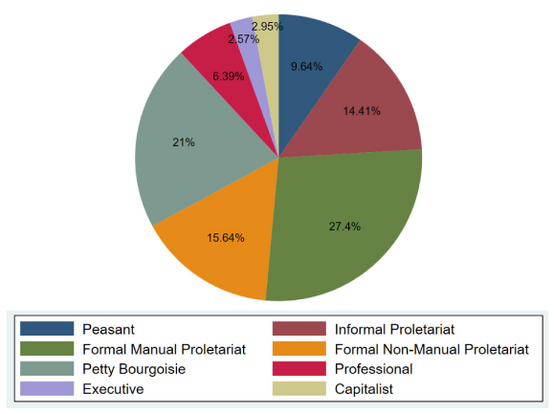
Source: KONDA Barometer Survey, EMW Social Policy Module (2019)Figure 1 shows the distribution of class profiles as of 2019 in Turkey. The descriptive pie chart shows that the proletariat constitute 57.45 % of the whole population, including formal manual, formal non-manual, and informal proletariat. The largest class is the formal manual proletariat (27.4 %), followed by the petty bourgeoisie (21 %), formal non-manual proletariat (15.64 %), and the informal proletariat (14.41 %). While the peasantry has a small share (9.64 %), the capitalists, executives and the professionals constitute a minority in the population.
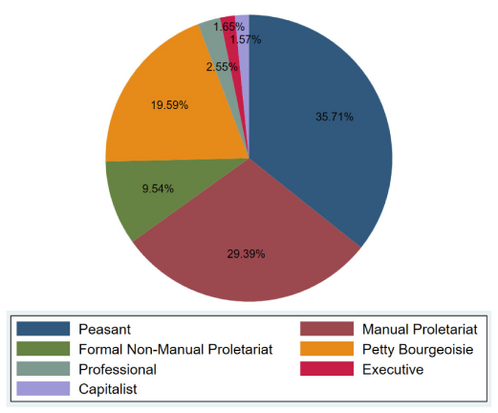
Figure 2 illustrates the distribution of parental class positions, namely, class origins. Respondents were asked a number of questions about their parents’s class positions when the respondents were fourteen years old. In the class origin analysis, we merged the informal proletariat and the formal manual proletariat into a single category of the manual proletariat, because of the difficulty of determining the informality status of parents in a survey administered with the second generation. The most striking change is in the peasantry classes; the most populous section of the society with 35.7 %, while in the next generation, nearly constitutes 10 % of the population. That signals the abolition of agrarian classes within a generational period. The proletariat was 38.93 % of the populations, indicating the second significant difference within a generation, while professionals in the society increase from 2.55 % to 6.39 %, with a nearly threefold increase. The proliferation of the higher education institutions, newly emerged private colleges, and non-profit educational organizations, rapid migration to the urban hemisphere that would lead to more accessible access to cultural capital sources like schools, courses, diploma, and certificate programs could constitute the reasons behind the nearly triple times increase in the professional classes. The pie chart also illustrates that the percentages of other classes remain relatively steady, with 19,59 % petty bourgeoisie, 1.57 % capitalists, 1.65 % executives.
The drastic changes in the proletarian and agrarian classes within a generation invite us to consider Turkey’s rapid political-economic and social changes. The total percentage of the agrarian and proletarian classes is found to be 74.63 %. After a generational period, it turns into 67.09 % of the whole population. Therefore, despite massive changes in the proletariat and agrarian milieu’s in-class populations, the aggregate population of these two classes does not reflect a significant change. Roughly analyzing the ultimate consequence of the neo-liberal restructuring is to turn farmers of the past into today’s workers by dispossession, privatization, and migration mechanisms.
Figure 2
Class origins in Turkey
Citation: Kurdish Studies Journal 3, 2 (2025) ; 10.1163/29502292-bja10004
Source: KONDA Barometer Survey, EMW Social Policy Module (2019)5 Class Mobility in Turkey
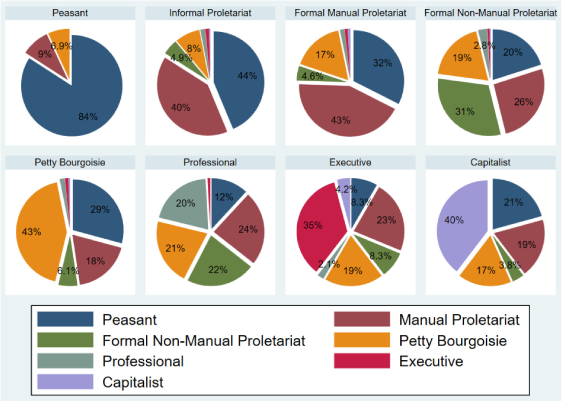
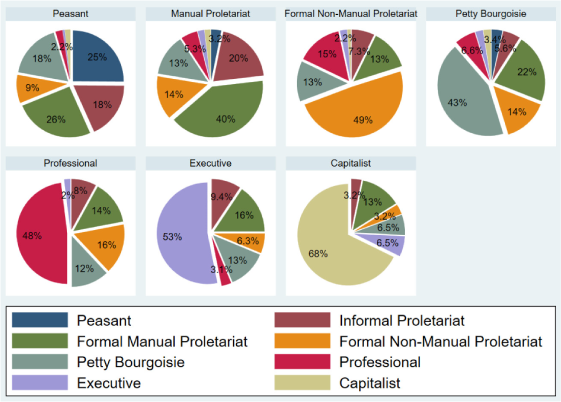
Figure 3 and Figure 4 provide a detailed depiction of intergenerational class mobility in Turkey, highlighting the enduring influence of class origins while also revealing pathways of both upward and downward mobility. Together, they demonstrate how structural changes, such as urbanization, neoliberal economic policies, and forced migration, have reshaped Turkey’s socio-economic hierarchy.
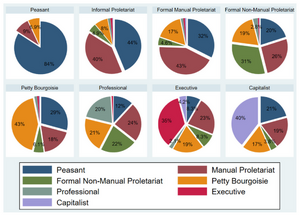
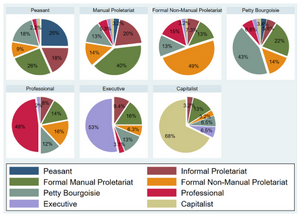
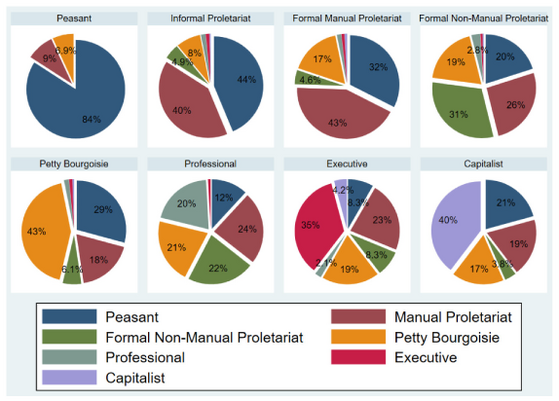
Peasant origins continue to play a foundational role in Turkey’s class structure. According to Figure 3, 84 % of individuals currently classified as peasants originate from peasant households, reflecting significant continuity in rural areas. However, Figure 4 shows that only 25 % of individuals with peasant origins remain in the peasant class today, highlighting substantial mobility away from agriculture.
Figure 3
Class origins of the current class profiles
Citation: Kurdish Studies Journal 3, 2 (2025) ; 10.1163/29502292-bja10004
Source: KONDA Barometer Survey, Social Policy Module (2019)Figure 4
Class destinations of original classes
Citation: Kurdish Studies Journal 3, 2 (2025) ; 10.1163/29502292-bja10004
Source: KONDA Barometer Survey, Social Policy Module (2019)The majority of individuals with peasant origins have transitioned into urban and industrial labor markets. Specifically, 26 % have entered the formal manual proletariat, 20 % into the informal proletariat, 18 % into the petty bourgeoisie, and 9 % into the formal non-manual proletariat. These transitions reflect the broader structural forces—including rural displacement and urbanization—that have reallocated rural populations into new labor markets.
6 The Informal Proletariat: A Destination for Marginalized Origins
The informal proletariat serves as a key destination for individuals originating from rural and proletarian classes. Figure 3 shows that 40 % of those currently in the informal proletariat come from manual proletarian households, while 44 % originate from peasant families. This highlights the informal sector’s role as a primary absorber of displaced rural workers and manual laborers, particularly in the context of Turkey’s neoliberal restructuring. The informal proletariat’s prevalence as a class destination highlights the precarious conditions of Turkey’s labor market, where workers face limited opportunities for upward mobility, formal employment, or social protection. Its prominence also underscores the broader challenges of informalization within Turkey’s economy.
The formal manual proletariat shows both significant continuity and pathways of mobility. According to Figure 3, 43 % of individuals currently in this class share manual proletarian origins, while 32 % come from peasant households. This reflects the persistence of industrial labor roles across generations.
Figure 4 reveals that 40 % of individuals with manual proletarian origins have become part of the formal manual proletariat, while 14 % have transitioned into the formal non-manual proletariat, and 20 % into the informal proletariat. These trends suggest that while many manual workers maintain their class positions, some experience upward mobility into white-collar roles, while others face downward transitions into precarious informal work.
Figure 3 shows that 43 % of individuals currently in the petty bourgeoisie come from petty bourgeois origins, while 29 % originate from peasant households. Figure 4 demonstrates that 43 % of those with petty bourgeois origins have remained in the same class, 22 % have transitioned into the formal manual proletariat, and 14 % into the formal non-manual proletariat. This stability and limited mobility suggest that while some petty bourgeois households retain their entrepreneurial roles, others experience slight upward or downward transitions, often depending on access to resources and education.
The elite classes—including professionals, executives, and capitalists—exhibit the highest levels of intergenerational continuity, reflecting the persistence of inherited privilege. Figure 4 shows that 48 % of individuals with professional origins remain professionals today, while 53 % of those with executive origins continue in executive roles, and 68 % of individuals with capitalist origins remain in the capitalist class. These findings underscore the structural advantages of financial, cultural, and social capital, which sustain elite positions across generations.
7 The Class Analysis of Kurds
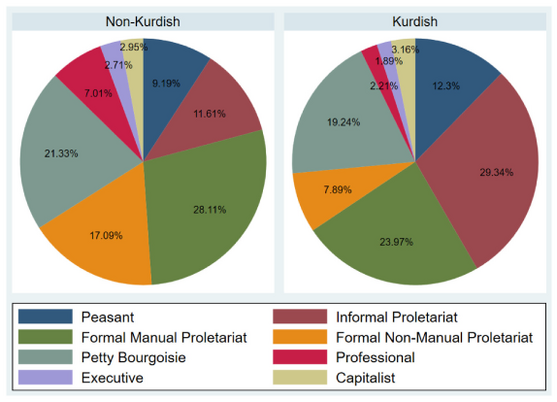
Figure 5 reveals a compelling story about the class dynamics between Kurdish and non-Kurdish communities in Turkey, highlighting deep-seated disparities in access to stable employment and economic mobility.
Figure 5
Class profiles in Turkey by ethnicity
Citation: Kurdish Studies Journal 3, 2 (2025) ; 10.1163/29502292-bja10004
Source: KONDA Barometer Survey, EMW Social Policy Module (2019)For the Kurdish population, a strikingly large share is concentrated in the informal proletariat. Nearly a third of Kurds are found in this precarious class, which encompasses jobs with little security, low wages, and few benefits. This is in stark contrast to the non-Kurdish population, where the proportion in the informal sector is significantly smaller. This disparity suggests that Kurds are more likely to be pushed into unstable, low-paying work, a possible reflection of systemic barriers they face in accessing more secure forms of employment.
In contrast, non-Kurds are more likely to be employed in the formal manual proletariat, where jobs, while physically demanding, typically offer more stability, legal protections, and social benefits. This indicates that non-Kurds have better access to formal job markets, potentially due to discrimination and differences in social networks, educational backgrounds, or regional advantages. Interestingly, while both Kurds and non-Kurds show a significant presence among the petty bourgeoisie, which includes small business owners and self-employed individuals, Kurds are still slightly underrepresented here. When it comes to professional roles, such as doctors, engineers, or other white-collar professions, non-Kurds are far more represented. The non-Kurdish share in these professional categories is more than three times that of Kurds, suggesting that Kurds face barriers to entering these higher-paying, skilled fields. This discrepancy could be rooted in educational inequities, where Kurds may have less access to higher education or the kind of social networks that facilitate entry into professional careers.
Figure 6
Class origins in Turkey by ethnicity
Citation: Kurdish Studies Journal 3, 2 (2025) ; 10.1163/29502292-bja10004
Source: KONDA Barometer Survey, EMW Social Policy Module (2019)Figure 6 tells a powerful story of intergenerational shifts and the enduring impact of structural inequalities on Kurds and non-Kurds in Turkey. By looking at the class profiles of the parents of today’s respondents, we gain insight into the roots from which each group emerged and how those origins have influenced their children’s life trajectories. For the Kurdish community, the past was largely defined by a deep connection to the land. Nearly half of Kurdish parents belonged to the peasant class, relying heavily on agriculture for their livelihoods. This reliance on rural work stands in stark contrast to the non-Kurdish population, where a smaller, though still significant, portion of parents were engaged in agriculture. This story is one of limited choices—of families tied to rural areas with few avenues to escape subsistence farming.
In the manual labor sector, both Kurdish and non-Kurdish parents were well-represented, but Kurds were more likely to be concentrated here. Manual labor offered a lifeline for families seeking stability, yet the fact that Kurds were more entrenched in this type of work suggests that their economic options were even more constrained. For non-Kurds, there were pathways to more secure and prestigious positions, but for Kurds, those doors remained largely shut. Non-Kurds, historically, found more opportunities in urban, non-manual jobs. Their parents were more likely to be employed in formal roles that offered stability, benefits, and the possibility of upward mobility. By contrast, only a small fraction of Kurdish parents could break into such professions. This gap highlights the historical barriers that Kurds faced in accessing education and the kinds of networks that could lead to white-collar jobs. For Kurdish families, professional opportunities were rare, making it difficult for their children to climb the socio-economic ladder.
Interestingly, while entrepreneurial spirit was not entirely absent among Kurdish parents, the space for small business ownership was dominated by non-Kurds. This disparity may reflect challenges Kurds faced in securing the resources needed to start and sustain a business, such as access to credit or market connections. The difference suggests that non-Kurds, even a generation ago, were better positioned to take advantage of economic opportunities beyond manual labor. Even at the upper echelons, where families might have risen to become executives or capitalists, Kurds were nearly invisible. Non-Kurds, though also minimally represented, had a slight edge in reaching these top tiers. This hints at the systemic barriers that have kept Kurds from accessing the highest levels of economic power and influence, a legacy that seems to persist into the present.
When we compare the current generation’s class profiles with those of their parents, a pattern of slow and uneven change emerges. The shift away from agriculture among Kurds suggests that many have left the fields behind, seeking new opportunities in the cities. Yet, instead of moving into stable, formal employment, they are often pushed into informal or unstable jobs. The leap from rural work to secure professional roles remains a formidable challenge. Despite the passage of time, the legacy of limited opportunities for Kurds persists, while non-Kurds have had better chances to build on the gains of their parents. The result is a landscape where, even today, ethnic background continues to play a decisive role in determining who gets ahead and who remains on the margins
8 Class Mobility Among Kurds in Turkey: A Statistical Analysis
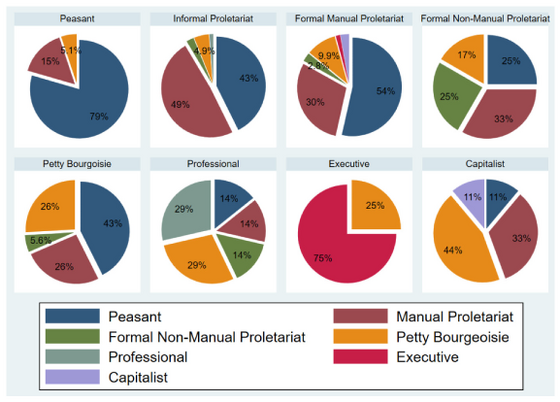
Figure 7 and Figure 8 provide a comprehensive view of class mobility patterns among Kurds in Turkey, revealing the profound impact of forced migration, structural economic changes, and systemic inequalities on Kurdish households. These patterns highlight both the transformation of traditional class structures and the constraints imposed by entrenched marginalization, particularly as Kurds transition from rural livelihoods to urban labor markets.
The Kurdish peasantry, once the dominant class among Kurdish households, has experienced dramatic transformation in recent decades. According to Figure 7, 79 % of Kurds currently classified as peasants come from peasant households, reflecting strong continuity among those who remain in agrarian livelihoods. However, Figure 8 reveals that only 23 % of Kurds with peasant origins remain in the peasant class today, signaling a significant decline in agrarian livelihoods and the reshaping of the Kurdish class structure.
The majority of Kurdish peasants have transitioned into urban labor markets, often occupying low-wage and precarious employment. Twenty-eight percent have moved into the manual proletariat, integrating into industrial and labor-intensive urban sectors. Another 26 % have transitioned into the informal proletariat, reflecting their overrepresentation in unregulated and insecure urban employment. Seventeen percent have entered the petty bourgeoisie, engaging in small-scale entrepreneurship or independent economic activities. Smaller proportions transitioned into the formal non-manual proletariat, at just 4.4 %, with very few achieving elite positions such as professionals or executives.
This transformation highlights the disruptive impact of forced migration during the 1990s, when state policies uprooted millions of Kurds from their rural homes. Stripped of their agrarian livelihoods, Kurdish households were thrust into urban centers where systemic barriers—such as discrimination and limited access to resources—constrained their ability to achieve economic stability. The transitions into both the manual and informal proletariat demonstrate the challenges faced by Kurdish households in adapting to Turkey’s urban labor market, while their limited representation in the petty bourgeoisie and elite roles underscores the structural inequalities that continue to shape their socio-economic mobility.
Figure 7
Class origins of the current class profiles among the Kurds
Citation: Kurdish Studies Journal 3, 2 (2025) ; 10.1163/29502292-bja10004
Source: KONDA Barometer Survey, Social Policy Module (2019)Figure 8
Class destinations of original classes among the Kurds
Citation: Kurdish Studies Journal 3, 2 (2025) ; 10.1163/29502292-bja10004
Source: KONDA Barometer Survey, Social Policy Module (2019)The informal proletariat has become a significant destination for Kurdish households transitioning from rural or proletarian origins. Figure 7 shows that 26 % of Kurdish peasants and 43 % of manual proletarians transitioned into the informal proletariat, underscoring how precarious labor markets disproportionately absorb marginalized populations. This overrepresentation highlights the systemic barriers Kurdish workers face in accessing formal employment. Informal jobs often lack protections, stability, and opportunities for upward mobility, leaving Kurdish workers economically vulnerable and socially marginalized. As discussed in the article, this dynamic reinforces structural inequalities within Turkey’s labor markets.
The manual proletariat emerges as a critical destination for Kurdish households, offering a measure of stability compared to informal employment. Figure 8 shows that 23 % of Kurds with manual proletarian origins transitioned into the formal manual proletariat, while 43 % transitioned into the informal proletariat. This duality reflects the economic pressures and structural barriers facing Kurdish workers. While some manage to secure stable, regulated jobs in industrial or labor-intensive sectors, a significant portion is pushed into unregulated roles. These trends highlight the limited upward mobility available to Kurdish workers within the formal labor market.
The petty bourgeoisie plays an important transitional role for some Kurdish households, though it remains constrained by structural inequalities. According to Figure 8, 17 % of Kurdish peasants transitioned into the petty bourgeoisie, suggesting that some displaced rural workers established small businesses or became independent workers. Among Kurds with petty bourgeois origins, 37 % remain in the petty bourgeoisie, while 18 % transitioned into the formal manual proletariat. This pathway reflects the economic vulnerability of many Kurdish petty bourgeois households, who often lack the resources to sustain entrepreneurial endeavors or move into higher-status roles.
Kurds remain significantly underrepresented in professional and elite classes, reflecting systemic barriers to accessing higher socio-economic positions. Among Kurds with professional origins, 67 % remain in the professional class, suggesting a measure of continuity for those who have managed to attain skilled positions. However, transitions into executive or capitalist roles are negligible, highlighting the limited opportunities for Kurds to reach the top tiers of Turkey’s socio-economic hierarchy. The situation is particularly stark for Kurdish capitalists. According to Figure 8, only one-third of Kurdish capitalists have remained in the same class, while two-thirds have experienced proletarianization, transitioning into lower-class positions such as the manual or informal proletariat. This dramatic downward mobility underscores the vulnerability of Kurdish elites, who lack the structural protections and access to resources that enable other groups to maintain their status.
9 Quantitative Analysis of Class Mobility, Ethnicity, and Migration
We conducted a quantitative analysis that draws on the survey data to examine the socio-economic transitions of individuals with peasant origins into various contemporary class positions in Turkey. The dataset consists of a large, representative sample, containing 2,473 observations for most models. This dataset allows for a detailed exploration of class mobility patterns across socio-economic and demographic groups, with a specific focus on Kurdish households and migrants.
To estimate the likelihood of transitioning from peasantry to different socio-economic classes, the study employs logistic regression models. Each model corresponds to a specific class destination and investigates the influence of key independent variables—ethnicity (Kurdish identity) and migration—alongside other demographic factors. Robust standard errors are used to account for heteroskedasticity and ensure reliable statistical estimates.
Table 2
Logistic regression results: determinants of class transitions from peasantry in Turkey
|
(1) |
(2) |
(3) |
(4) |
(5) |
(6) |
(7) |
|
|---|---|---|---|---|---|---|---|
|
Variables |
Peasant to informal proletariat |
Peasant to formal proletariat |
Peasant to nonmanual proletariat |
Peasant to petty bourgeoisie |
Peasant to professional |
Peasant to executives |
Peasant to capitalist |
|
Kurdish |
0.478* |
0.227 |
–0.254 |
0.0561 |
–0.441 |
–0.577 |
|
|
(0.245) |
(0.234) |
(0.474) |
(0.288) |
(1.169) |
(1.148) |
||
|
Migration |
0.342* |
0.782*** |
0.237 |
0.277 |
–0.827 |
0.532 |
0.657 |
|
(0.200) |
(0.170) |
(0.279) |
(0.198) |
(0.680) |
(1.032) |
(0.596) |
|
|
Male |
0.0268 |
–0.0742 |
–0.213 |
0.107 |
–1.082* |
0.727 |
0.986 |
|
(0.218) |
(0.171) |
(0.277) |
(0.198) |
(0.619) |
(1.030) |
(0.654) |
|
|
Age |
–0.00770 |
–0.00442 |
0.0360*** |
0.00403 |
0.0393** |
0.00397 |
0.0402*** |
|
(0.00749) |
(0.00584) |
(0.0101) |
(0.00663) |
(0.0155) |
(0.0116) |
(0.0152) |
|
|
Education |
–0.403*** |
–0.298*** |
0.274** |
–0.254*** |
0.494 |
–1.102*** |
–0.0165 |
|
(0.0856) |
(0.0623) |
(0.110) |
(0.0736) |
(0.328) |
(0.269) |
(0.241) |
|
|
Household Size |
0.139** |
0.0804* |
0.226*** |
0.0821* |
0.226* |
0.321*** |
0.104 |
|
(0.0637) |
(0.0444) |
(0.0658) |
(0.0480) |
(0.133) |
(0.115) |
(0.203) |
|
|
Constant |
–2.063*** |
–2.045*** |
–7.458*** |
–2.776*** |
–9.289*** |
–4.760*** |
–8.473*** |
|
(0.714) |
(0.546) |
(0.997) |
(0.618) |
(2.039) |
(1.644) |
(1.957) |
|
|
Observations |
2,473 |
2,473 |
2,460 |
2,473 |
2,460 |
2,104 |
2,460 |
Robust standard errors in parentheses
*** p < 0.01, ** p < 0.05, * p < 0.1
The independent variables of primary interest are Kurdish identity and migration. Kurdish identity is a binary variable indicating whether an individual identifies as Kurdish, capturing the ethnic dimension of socio-economic mobility and marginalization. Migration is also a binary variable, indicating whether an individual has moved from rural to urban areas, reflecting the structural shifts brought about by urbanization and displacement. The models also include control variables: gender (male, binary), age (continuous), education (measured in years of formal schooling), and household size (number of individuals in the household).
The dependent variable in each model is a binary outcome indicating whether an individual has transitioned from peasantry to one of several socio-economic classes. These include the informal proletariat, representing unregulated and precarious urban labor markets; the formal manual proletariat, encompassing regulated industrial and labor-intensive jobs; and the formal non-manual proletariat, including semi-skilled or white-collar employment. Other class destinations include the petty bourgeoisie (small-scale entrepreneurship), professionals (skilled occupations requiring advanced education), executives (high-level managerial roles), and capitalists (ownership or leadership in capital-intensive enterprises).
The regression analysis in Table 2 provides valuable insights into how being Kurdish and experiencing migration influence the likelihood of transitioning from peasantry to various socio-economic classes. These two independent variables illuminate the structural barriers and opportunities faced by rural-origin individuals, particularly Kurdish households, as they navigate Turkey’s socio-economic hierarchy.
Being Kurdish significantly affects the likelihood of transitioning into certain socio-economic classes, reflecting entrenched ethnic inequalities and systemic marginalization. Kurds are notably more likely to transition from peasantry into the informal proletariat (
The starkest finding is the negative association between being Kurdish and transitioning into elite classes such capitalists (
Migration does not show statistically significant effects on transitions to higher-status roles, such as the formal non-manual proletariat or professionals. This suggests that while migration facilitates entry into urban labor markets, it does not necessarily enable upward mobility into skilled or white-collar jobs. These results reflect the structural challenges migrants face in overcoming systemic barriers, particularly for those displaced by conflict or economic restructuring. The combined effects of Kurdish identity and migration underscore the compounded disadvantages faced by Kurdish migrants. Kurds are disproportionately channeled into informal employment, and their limited access to higher-status roles reflects systemic ethnic discrimination. For Kurdish migrants, the challenges are amplified by displacement, which often forces them into precarious labor markets with little opportunity for advancement. While migration can facilitate entry into the formal manual proletariat, this pathway appears less accessible to Kurdish migrants, who remain overrepresented in the informal proletariat. These patterns highlight the intersection of ethnic and structural inequalities, which continue to shape the socio-economic mobility of Kurds in Turkey. The regression analysis reveals that being Kurdish and experiencing migration profoundly influence class mobility, often in ways that reinforce structural inequalities. Kurds are more likely to transition into precarious roles, such as the informal proletariat, while facing significant barriers to accessing higher-status positions. Migration, while providing opportunities for urban labor market integration, frequently channels individuals into low-wage and insecure employment.
10 Discussion
The Kurdish forced migration represented the most comprehensive and rapid wave of dispossession and proletarianization in Turkish history. This Kurdified informal proletariat has replaced the formal, unionized, and organized working class of the past both economically and politically. The forced migration of Kurds, therefore, not only altered the demographic composition of the working class but also played a crucial role in the success of neoliberal economic policies in Turkey. By providing a vast pool of cheap labor, it enabled Turkish industries to compete effectively on a global scale, ensuring the continuation of neoliberal reforms and their associated economic benefits.
The slums of western metropolitan areas in Turkey have become the new settlement zones for migrant workers, who were previously peasants in the rural east and now supply cheap labor to the urban economy. The neoliberal economic paradigm divides production into micro-processes using an extensive subcontracting system.16 It shifts to a new production chain, where workers labor in small workshops in small groups, earning low wages and possessing minimal bargaining power.17 The de-unionized and de-formalized proletariat constitute the reserve army of the urban economy for more profitable productions.
The article also contributes to Marxian class schemes. Rather than employing Erikson-Goldthrope-Portocarero (EGP) and its extended version, European Socio-economic Classification (ESeC), developed versions of Weberian status groups, the article applies a Marxian class scheme following in the footsteps of Portes & Hoffman. The advantage of the Portes & Hoffman class scheme is that it is specific to Latin American countries; thus, it is highly encompassing for the emerging economies and the Global South. It captures the divergences among working classes, including the divergence between the formal and informal proletariat. In this regard, we find Portes & Hoffman’s class scheme best fits Turkey’s class panorama, capturing the informality and manual and non-manual working classes so that we could reach more robust conclusions.
The findings from this study shed light on the profound structural changes in Turkey’s class system, particularly the role of neoliberal economic restructuring, urbanization, and forced migration in shaping intergenerational class mobility. The descriptive and inferential results offer valuable insights into the dynamics of class composition, transitions, and the ethnic and migration-related inequalities that permeate Turkey’s socio-economic landscape.
The data illustrate that while the agrarian classes have undergone a dramatic decline—shrinking from 35.7 % of the parental generation to just 10 % in the current generation—the overall proportion of the proletariat has remained relatively stable. This continuity reflects the pivotal role of proletarianization in Turkey’s neoliberal restructuring, as displaced rural populations were integrated into urban labor markets through mechanisms such as privatization, dispossession, and migration. Importantly, the results reveal that this shift has not been accompanied by significant upward mobility, as the bulk of the workforce remains concentrated in manual and informal labor markets.
The enduring dominance of proletarian classes, comprising 57.45 % of the current population, underscores the persistence of structural inequalities. The growth of the informal proletariat (14.41 %) highlights the precarious nature of contemporary labor markets, where workers lack security, benefits, and stability. These findings align with global patterns observed in neoliberal economies, where informalization often accompanies the dismantling of state protections for labor. The analysis demonstrates the entrenched barriers faced by Kurdish households in achieving upward mobility, highlighting the intersection of ethnic marginalization and labor market stratification. Despite significant transitions out of agrarian roles, Kurdish workers remain disproportionately concentrated in the informal proletariat, with 26 % of those with peasant origins entering this precarious class. These trends reflect the systemic exclusion of Kurds from formal employment opportunities, as evidenced by the lower likelihood of their transitioning into formal non-manual or elite roles.
The results also underscore the continuity of privilege among the non-Kurdish elite classes, where intergenerational mobility is limited, and inherited advantages in financial, cultural, and social capital sustain their dominance. The finding that 68 % of individuals with capitalist origins remain in the capitalist class exemplifies the resilience of structural privilege and the difficulty of accessing elite positions for marginalized groups. Migration emerges as a double-edged sword in Turkey’s class mobility landscape. While it facilitates transitions into urban labor markets, such as the formal manual proletariat (
11 Conclusion
Our study highlights the intersection of forced migration, state violence, and neoliberal economic transformations in reshaping Turkey’s class structure. The forced migration of Kurdish populations during the 1990s had significant unintended economic and class-related consequences. The displacement catalyzed one of Turkey’s most rapid and large-scale proletarianization processes, fundamentally altering the composition of the working class and embedding Kurdish labor into urban economies as a source of cheap and precarious labor.
This proletarianization was closely tied to Turkey’s neoliberal restructuring. As large numbers of displaced Kurds moved to urban centers such as Istanbul, Izmir, and Mersin, they filled the informal labor markets that were expanding due to the dismantling of formal employment protections and the rise of subcontracting networks. By the mid-1990s, Kurdish informal workers had become essential to the success of neoliberal capital accumulation strategies in Turkey. Their availability as a surplus labor force provided Turkish and international capital with a significant competitive advantage in sectors such as textiles and construction.
The proletarianization of Kurds also reshaped the ethnic composition of Turkey’s working class. As the traditional organized working class—largely composed of Turkish, Sunni, male industrial workers—declined due to de-unionization and privatization, the new urban proletariat became increasingly “Kurdified” and feminized. The integration of Kurdish workers into urban economies has created new political and ideological challenges for the state. While Kurdish workers remain economically marginalized, their presence in urban peripheries has facilitated the emergence of new political formations, such as the mobilization efforts of the pro-Kurdish political parties. The growth of informal proletarian networks in urban neighborhoods represents not only an economic reality but also a potential locus for political resistance.
Furthermore, these dynamics must be situated within global patterns of war, forced migration, and neoliberal capitalism. Similar to the displacement-induced proletarianization seen in Colombia, Zimbabwe, or Sudan, the Kurdish experience in Turkey illustrates how war and conflict are leveraged to create surplus labor populations that sustain capital accumulation. The use of displaced Kurdish labor exemplifies how neoliberal strategies depend on the integration of marginalized groups into informal and insecure work, mirroring broader global trends. The findings, therefore, demonstrate that the Kurdish issue is not merely a regional or ethnic concern but a central component of Turkey’s neoliberal transformation. The alignment of forced migration, ethnic marginalization, and capital accumulation highlights the structural role of state violence in economic restructuring.
The influx of Syrian, Afghan, and other international migrants into Turkey’s informal labor market is reshaping the dynamics of Kurdish labor, historically shaped by forced migration and systemic marginalization. Kurdish workers, who were integrated into unregulated urban labor markets following displacement in the 1990s, now face increased competition in sectors such as construction, textiles, and agriculture. While both groups share experiences of dispossession, the racialization of labor differentiates their challenges. Kurds face entrenched ethnic discrimination rooted in Turkey’s political history, but as citizens, they retain access to rights and resources largely unavailable to non-citizen migrants. International migrants, by contrast, encounter heightened precarity due to their legal invisibility and social stigmatization, making them even more exploitable. This layered marginalization intensifies competition, depresses wages, and fragments solidarity among these groups, creating hierarchies within the informal labor force.
The Kurdish forced migration in Turkey during the 1990s, as explored in this article, provides a critical lens for understanding homelessness and homemaking in post-displacement contexts within the MENA region. The large-scale displacement of Kurdish populations not only uprooted them from their rural livelihoods but also led to widespread homelessness, as millions were forced to relocate to urban centers under precarious conditions. This homelessness extended beyond physical shelter, encompassing the loss of community ties, economic stability, and cultural belonging. In the face of these challenges, Kurdish communities engaged in homemaking practices that went beyond securing housing, actively reshaping their identities and rebuilding networks in new urban environments. Homemaking, in this context, became a form of empowerment, as displaced Kurds transformed informal settlements into sites of social and political mobilization, fostering new solidarities and reclaiming agency. These practices of adaptation resonate with broader patterns in the MENA region, where displacement caused by conflict and state violence has necessitated innovative coping strategies. Examining Kurdish homemaking highlights how the displaced simultaneously contend with marginalization and assert their presence in urban spaces, contributing to a nuanced understanding of resilience and survival in post-displacement settings.
White, Primitive Rebels.
Yörük, The Politics of the Turkish Welfare System; Yükseker and Kurban, “Permanent Solution”.
Baird et al., “Human Tide”; Ibáñez and Vélez, “Civil Conflict and Forced Migration”.
Yörük, “Welfare Provision as Political Containment”.
Portes and Hoffman, “Latin American Class Structures”.
Yörük, The Politics of the Welfare State.
Kurban et al., Coming to Terms with Forced Migration.
Cizre-Sakalhoǧlu and Yeldan, “Politics, Society and Financial Liberalization”; Eder, “Retreating State?”; Bedirhanoǧlu and Yalman, “State, Class and the Discourse”; Öniş, “Power, Interests and Coalitions”; Ozbay et al., The Making of Neoliberal Turkey.
Yörük, “Social Relations of Production”.
Yörük, “Labor Discipline in the Informal Economy”.
Smits and Gündüz-Hoşgör, “Linguistic Capital Language”; Stefanovic, Loizides, and Parsons, “Home Is Where the Heart Is?”.
Wedel, “Internal Migration and Ethnic Identity”; İçduygu et al., Türkiye’de İçgöç; Keyder, “Globalization and Social Exclusion in Istanbul”; Yörük, “Social Relations of Production”; Göktürk, “Internal Migration”; Saraçoǧlu, “The Changing Image of the Kurds”.
Portes and Hoffman, “Latin American Class Structure.”
Erikson, Goldthorpe, and Portocarero, “Intergenerational Class Mobility”.
Portes and Hoffman, “Latin American Class Structures”.
Bozkurt, “Neoliberalism with a Human Face”; Yörük, “Social Relations of Production”.
Yörük, “Labor Discipline in the Informal Economy”; Kiray, “Turkish Debt and Conditionality”.
Bibliography
Baird, Rachel, Katy Migiro, Dominic Nutt, Anjali Kwatra, Sarah Wilson, Judith Melby, Andrew Pendleton, Malcolm Rodgers, and John Davison. “Human Tide: The Real Migration Crisis: A Christian Aid Report”. London: Christian Aid, 14 May 2007. https://reliefweb.int/report/colombia/human-tide-real-migration-crisis-christian-aid-report.
Bedirhanoǧlu, P., and G.L. Yalman. “State, Class and the Discourse: Reflections on the Neoliberal Transformation in Turkey,” in Economic Transitions to Neoliberalism in Middle-Income Countries: Policy Dilemmas, Crises, Mass Resistance, 107–127, London: Routledge, 2009.
Bozkurt, Umut. “Neoliberalism with a Human Face: Making Sense of the Justice and Development Party’s Neoliberal Populism in Turkey”. Science & Society 77 (2013): 372–396.
Cizre-Sakalhoǧlu, U., and E. Yeldan. “Politics, Society and Financial Liberalization: Turkey in the 1990s”. Development and Change 31, no. 2 (2000): 481–508.
Eder, M. “Retreating State? Political Economy of Welfare Regime Change in Turkey”. Middle East Law and Governance 2, no. 2 (2010): 152–184.
Erikson, Robert, John H. Goldthorpe, and Lucienne Portocarero. “Intergenerational Class Mobility in Three Western European Societies: England, France and Sweden”. The British Journal of Sociology 30, no. 4 (1979): 415–441.
Göktürk, A. “Internal Migration Transpires Like Emigration: The Case of Internally Displaced Kurds in Turkey”. Journal of Mediterranean Studies 17, no. 2 (2007): 271–295.
Ibáñez, Ana María, and Carlos Eduardo Vélez. “Civil Conflict and Forced Migration: The Micro Determinants and Welfare Losses of Displacement in Colombia”. World Development 36, no. 4 (1 April 2008): 659–676.
İçduygu, Ahmet, İbrahim Sirkeci, İsmail Aydıngün, and İlhan Tekeli. Türkiye’de İçgöç: Türkiye’de İçgöç, Sorunsal Alanları ve Araştırma Yöntemleri Konferansı: 6–8 Haziran 1997, Bolu-Gerede. İstanbul: Türkiye Ekonomik ve Toplumsal Tarih Vakfı, 1998.
Keyder, Çağlar. “Globalization and Social Exclusion in Istanbul”. International Journal of Urban and Regional Research 29, no. 1 (2005): 124.
Kiray, Emine. “Turkish Debt and Conditionality in Historical Perspective: A Comparison of the 1980s with the 1960s,” in The Political Economy of Turkey: Debt, Adjustment and Sustainability, edited by Tosun Aricanli and Dani Rodrik, 254–269. London: Palgrave Macmillan, 1990.
Kurban, Dilek, Deniz Yükseker, Ayşe Betül Çelik, Turgay Ünalan, and A. Tamer Aker. Coming to Terms with Forced Migration: Post-Displacement Restitution of Citizenship Rights in Turkey. Hertie School of Governance, 2007.
Öniş, Z. “Power, Interests and Coalitions: The Political Economy of Mass Privatisation in Turkey”. Third World Quarterly 32, no. 4 (2011): 707–724.
Ozbay, C., M. Erol, A. Terzioglu, and Z.U. Turem, eds. The Making of Neoliberal Turkey. London: Routledge, 2016.
Portes, Alejandro, and Kelly Hoffman. “Latin American Class Structures: Their Composition and Change During the Neoliberal Era”. Latin American Research Review 38, no. 1 (2003): 41–82.
Saraçoǧlu, C. “The Changing Image of the Kurds in Turkish Cities: Middle-Class Perceptions of Kurdish Migrants in Izmir”. Patterns of Prejudice 44, no. 3 (2010): 239–260.
Smits, J., and A. Gündüz-Hoşgör. “Linguistic Capital: Language as a Socio-Economic Resource among Kurdish and Arabic Women in Turkey”. Ethnic and Racial Studies 26, no. 5 (2003): 829–853.
Stefanovic, D., N. Loizides, and S. Parsons. “Home Is Where the Heart Is? Forced Migration and Voluntary Return in Turkey’s Kurdish Regions”. Journal of Refugee Studies 28, no. 2 (2015): 276–296.
Wedel, H. “Internal Migration and Ethnic Identity: Kurdish Women in Turkish Metropolises”. Orient 37, no. 3 (1996): 437–452.
White, P.J. Primitive rebels or revolutionary modernisers? The Kurdish nationalist movement in Turkey. London: Zed Books, 2000.
Yörük, Erdem. “Labor Discipline in the Informal Economy: The Semi-Formal Professional Code of Istanbul’s Apparel Urban Factory”. Berkeley Journal of Sociology 53 (2009): 27–61.
Yörük, Erdem. “Social Relations of Production within the Workshop System in Istanbul’s Apparel Industry”. Master’s Thesis. İstanbul: Boğaziçi University, 2006.
Yörük, Erdem. “The Politics of the Turkish Welfare System Transformation in the Neoliberal Era: Welfare as Mobilization and Containment”. Baltimore: The Johns Hopkins University, 2012. http://gradworks.umi.com/35/36/3536083.html.
Yörük, Erdem. The Politics of the Welfare State in Turkey. Ann Arbor: University of Michigan Press, 2022. https://www.press.umich.edu/11429032/politics_of_the_welfare_state_in_turkey.
Yörük, Erdem. “Welfare Provision as Political Containment The Politics of Social Assistance and the Kurdish Conflict in Turkey”. Politics & Society 40, no. 4 (1 December 2012): 517–547.
Yükseker, D., and D. Kurban. “Permanent Solution to Internal Displacement: An Assessment of the Van Action Plan for IDPs”. Istanbul: TESEV, 2009.