


Notes on Contributors
Lauren Cifuentes
 is a College Professor in the Educational Design and Learning Technologies program at NMSU where she teaches Critical Digital Literacy, Technology and Pedagogy; Foundations of Learning Design; and Design and Development Research to graduate students who are primarily early preK-16 teachers. Her expertise lies in distance learning, cognition, and learning design. Prior to her position at NMSU she directed distance learning initiatives at Texas A&M University-Corpus Christi and taught for 23 years at Texas A&M University, College Station. She has conducted countless workshops on technology applications for K-12 teachers in schools and universities and has over 100 publications primarily focused on distance learning.
Hannah Digges Elliott
 is an Instructional Designer in the Center for Innovative Teaching & Learning at Western Kentucky University. She holds a B.A. in History, an M.A.E. in Adult Education, and a Graduate Certificate in Instructional Design from Western Kentucky University. She is currently a doctoral candidate in the Ed.D. program in Educational Leadership at Morehead State University. She is a 2020 Cochran Intern for the Association for Educational Communications and Technology (AECT), current Graduate Student Assembly Representative to the Systems Thinking & Change Division, and the Communications Officer-Elect for the Graduate Student Assembly.
Tonia A. Dousay
 is an Associate Professor of Learning Sciences at the University of Idaho. She previously taught at the University of Wyoming and James Madison University, and often consults with other institutions and government agencies on distance learning and using technology equitably. She actively collaborates with STEM disciplines to brainstorm innovative ways to use, teach, and create with technology, impacting education at all levels and in all contexts. Her current research focuses on reducing barriers to STEM disciplines with virtual learning experiences, the role of self perceptions of creativity and skill proficiency on engagement, and innovative practicum experiences for preservice teachers.
Duane M. Dunn
 is assistant dean of academic programs for the College of Agriculture at Kansas State University. Prior to joining the College of Agriculture, Dunn served as associate dean with K-State’s Global Campus, the distance learning arm of the university. His responsibilities encompassed program development, quality of design, policy and procedures, and outreach services. He has over 30 years of administration serving as a technical college president, a community college president and teaching. He enjoys the opportunities as a peer evaluator for the Higher Learning Commission and as consultant evaluator for a number of institutions.
Robbie Grant
 joined Academic Technology in 2004 (known as ICT Training Services at that time) as a Systems Analyst. In 2006 he was promoted to the position of LMS Administrator and has been the lead LMS Administrator since that time. In 2017 Robbie was named manager of the Academic Technology unit and in September of 2020 he was named Director of Academic Technology at NMSU. He received his Bachelor’s degree in Marketing and his Master’s in Business Administrator from New Mexico State University. Robbie also served as a Canvas Coach for the public facing Canvas user’s community from 2013-June 2020.
Cassidy S. Hall
 is an Associate Clinical Professor of Educational Technologies and the Director of the Doceo Center for Innovation + Learning at the University of Idaho. She works closely with Classroom Technology Services and the Center for Excellence in Teaching and Learning to support technology integration and offer faculty training on all UI campuses. She also provides technology integration support and professional development to K-12 educators throughout the state of Idaho. She previously dedicated 15 years to working in public education in Pennsylvania as a library media specialist, teacher, technology coach, and instructional coach.
Atsusi “2c” Hirumi
 currently holds a joint appointment with the Department of Learning Sciences in the College of Community Innovation and Education, and the Department of Medical Education in the College of Medicine at UCF. For the past 25 years, Dr. Hirumi has centered his teaching, research and service on the design of online and hybrid learning experiences. He has worked with faculty, staff, students and administrators in K12 and higher education, medical centers, and the military across North and South America, Asia, and the Middle East to improve eLearning. Dr. Hirumi’s research now focuses on advancing medical education and fostering transdisciplinary collaboration among instructional designers and educators in the health professions. Awards include: The David H. Jonassen Excellence in Research Award presented by the Association for Educational Communication and Technology for long-term record of excellence in research and impact in ID&T, the US Army Training Maverick Award for leadership in distance learning, the Texas Distance Learning Association Award for commitment to excellence and innovation, AERA Studying and Self-Regulated Learning SIG Poster Award, the Outstanding Research Proposal awarded by the Research and Theory Division of AECT, UCF’s Scholarship for Teaching and Learning Award, the WebCT Exemplary Online Course Award, and the Phi Delta Kappa Outstanding University Practitioner Award.
Swapna Kumar
 is a Clinical Associate Professor of Educational Technology at the College of Education, University of Florida, USA. She coordinates the online doctoral program in Educational Technology at the College of Education. Her current research is focused on quality assurance in online programs and online mentoring/supervision. Details of her publications can be found at http://www.swapnakumar.com
Michelle Lebsock
 joined Academic Technology in 2014 and is an Enterprise Applications Administrator. She is a co-administrator for Canvas, the lead administrator for Zoom, Canvas Studio, and Adobe Connect, and supports the Panopto integration with Canvas. She collaborates with Classroom Technology and Instructional Media Services to provide faculty training for simulcast classrooms using Zoom and Adobe Connect and partners with the Teaching Academy to support NMSU’s flagship Technology Enhanced Active Learning (TEAL) classroom. Michelle received her bachelor’s degree in Journalism and Mass Communications with a minor in Economics from NMSU, her master’s in Film Production from Chapman University, and is a doctoral candidate in the department of Educational Leadership and Administration at NMSU. She is a Quality Matters Master Reviewer and has completed NMSU’s Course Design Summer Institute. Michelle has served as online adjunct faculty for the Journalism and Media Studies department since 2017.
Florence Martin
 is a Professor of Learning, Design and Technology at University of North Carolina Charlotte. She teaches 100% online and engages in research focusing on the effective design of instruction and integration of digital technology to improve learning and performance. She has conducted several studies focusing on designing and integrating online learning environments to improve learner achievement and engagement. For more details, visit https://www.florencemartin.net
Christopher T. Miller
 is a Professor of Education and Director of Morehead State University at Mt. Sterling. He has served as the Interim Dean of the College of Education and as chair of the Department of Foundational and Graduate Studies in Education at Morehead State University. He holds a B.S. in Applied Science and Technology from Morehead State University, a Master’s in Interior Design, Merchandising and Textiles and an Ed.D. in Instructional Systems Design from the University of Kentucky. He was a 2000 Cochran Intern for the Association for Educational Communications and Technology (AECT), Past-President of the AECT Foundation, and is currently serving as the Technology Integrated Learning Division Representative on the AECT Board of Directors. He recently co-edited, with Dr. Anthony A. Piña, Lessons in Leadership in the Field of Educational Technology.
Efrén de la Mora Velasco
 is a post-doctoral scholar at the Rosen College of Hospitality Management at the University of Central Florida. He received his B.S. in information systems and his M.A. in Learning Technologies from the University of Guadalajara, Jalisco, Mexico. He was an associate professor of educational technology and multimedia programming and design at the University of Guadalajara for 8 years. For the past 4 years, Dr. De la Mora Velasco investigated the implementation of technologies to facilitate motivation, engagement and learning, as well as factors related to higher education students’ academic achievements. Dr. De la Mora Velasco’s research now focuses on information systems, consumer behavior, and learning technologies. Awards include the Desirable Profile for Associate Professors by the Secretariat of Public Education of Mexico, and the Latin American Academy Fellowship by the State University of New York.
Rachel Mork
 is a writer, editor, and partner at Verified Studios, a higher education marketing consultancy. In addition to almost a decade writing marketing copy for colleges and universities through Verified Studios, she has consulted for a variety of clients providing advice, analysis, and content to support marketing efforts. Her clients include therapists, self-help gurus, executive coaches, trainers, medical advisors, planned giving facilitators, and nonprofit organizations.
Daniel Olsson
 joined Academic Technology in early 2018 as an Instructional Technology Consultant. Dan regularly provides professional development, consulting services, and technical support for NMSU faculty. He is a co-administrator of the Canvas Learning Management System and the lead administrator for EvaluationKit (NMSU’s enterprise course evaluation software). Dan received his Bachelor’s degree in Electrical Engineering from New Mexico State University. He also holds a Master’s in Business Administration also from NMSU. Dan worked in multiple engineering roles within the U.S. federal civil service for most of his early career prior to returning to his alma mater. He has also served as an adjunct faculty member teaching online with the Student Success Center and First Year Initiatives program.
Anthony G. Picciano
 holds multiple faculty appointments at the City University of New York’s Hunter College, Graduate Center; and the School of Professional Studies. He has also held administrative appointments at the City University and State University of New York including that of Vice President and Deputy to the President at Hunter College. He assisted in the establishment of the CUNY PhD Program in Urban Education and served as its Executive Officer for ten years (2007–2018). Dr. Picciano’s research interests include education leadership, education policy, online and blended learning, multimedia instructional models, and research methods. He has authored seventeen books and numerous articles including Educational Leadership and Planning for Technology which currently is in its fifth edition (Pearson Education). His latest book is Blended Learning: Research Perspectives, Volume 3 (with C. Dziuban, C. Graham & P. Moskal, Routledge/Taylor & Francis Publishers, in press). He has been involved in major grants from the U.S. Department of Education, the National Science Foundation, IBM, and the Alfred P. Sloan Foundation. He was a member of a research project funded by the U.S. Department of Education – Institute for Education Sciences, the purpose of which was to conduct a meta-analysis on “what works” in postsecondary online education (2017–2019). In 1998, Dr. Picciano co-founded CUNY Online, a multi-million dollar initiative funded by the Alfred P. Sloan Foundation that provides support services to faculty using the Internet for course development. He was a founding member and continues to serve on the Board of Directors of the Online Learning Consortium (formerly the Sloan Consortium). His blog started in 2009 has averaged over 600,000 visitors per year. Dr. Picciano has received wide recognition for his scholarship and research including being named the 2010 recipient of the Alfred P. Sloan Consortium’s (now the Online Learning Consortium) National Award for Outstanding Achievement in Online Education by an Individual. Visit his website at: anthonypicciano.com
Anthony A. Piña
 is Associate Provost for Teaching and Learning and Distinguished Lecturer at Sullivan University. Tony has been a consultant to Fortune 500 corporations, small businesses, local government agencies, non-profit organizations, the U.S. Department of Defense and to educational institutions across the country. He was the recipient of the 2019 Wagner Award for Leadership in Online Learning and has published 6 books on distance education and leadership – including the award-winning Leading and Managing e-Learning: What the e-Learning Leader Needs to Know (Springer). Tony has developed and taught numerous online courses and developed online degrees from associate to doctorate. He has overseen instructional design teams for hundreds of online courses.
Meredith Ratliff
 received her B.S. and M.A.T. in Mathematics at the University of Florida. She has been Associate Faculty in the mathematics department at Valencia College in Kissimmee, Florida for the past eight years. Ms. Ratliff is currently a doctoral candidate in Instructional Design and Technology program at the University of Central Florida.
Ray Schroeder
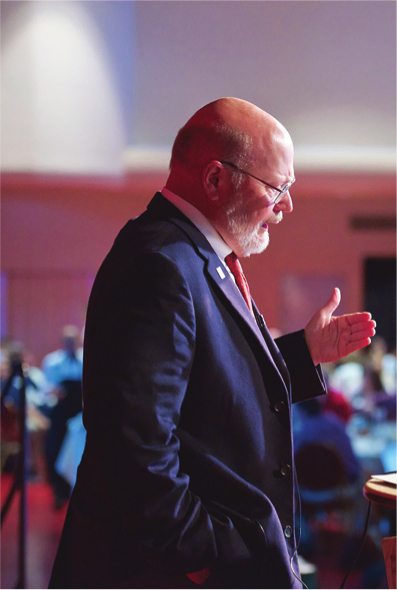 is a senior fellow of the University Professional and Continuing Education Association (UPCEA), as well as a professor emeritus and associate vice chancellor at the University of Illinois Springfield (UIS). He launched the UIS online learning program in 1997; founded the university’s Center for Online Learning Research and Service; and became associate vice chancellor for online learning in 2013 – a position he still holds. Schroeder regularly publishes articles, book chapters, and presents nationally on emerging topics in online and technology-enhanced learning. He is the recipient of numerous national awards and citations for individual excellence and leadership from various associations and entities, including the Sloan Consortium, the U.S. Distance Learning Association, the American Journal of Distance Education, the Illinois Council for Continuing Higher Education, the University of Wisconsin, and the University of Illinois.
Adam Schultz
 is the founder and CEO of Verified Studios, a digital agency that’s been building and marketing highly effective digital experiences for Higher Ed clients since 2006.
Renay M. Scott
 serves as Vice President of Student Success for New Mexico State University and Professor of Education. Dr. Scott has also served as President, Provost, and Dean of Arts and Sciences at two community colleges and Associate Professor of Education at Central Michigan University where she taught in the Masters of Educational Technology program and undergraduate teacher preparation program. She lives in New Mexico and enjoys bicycling, camping and reading.
Ormond Simpson
 is a consultant in distance and online education, working recently as Visiting Fellow at the London University International Programmes. He was previously Visiting Professor at the Open Polytechnic of New Zealand, and Director of the Centre for Educational Guidance and Student Support at the UK Open University. He has worked, given keynote presentations and run workshops in 17 countries in Africa, South America, India, China, the West Indies, South Korea, and Europe. His next keynote will shortly be to the Open University of Nepal. His interests are in student support and retention, cost-benefits of retention activities, ethics, and learning motivation. His latest book is Supporting Students for Success in Online and Distance Education (2012, Routledge). He has written many book chapters and journal articles, which are freely available from his website www.ormondsimpson.com He originally graduated with a degree in theoretical physics, but believes that the task of developing really effective distance student support is just as challenging as finding a Theory of Everything…
Timothy Strasser
 (University of Pittsburgh, 2019) has worked as an Instructional Consultant for both New Mexico State University and the University of Pittsburgh, focusing on online teaching and learning. At NMSU, he was part of a small team that provided university-wide support to NMSU faculty in using Canvas to teach both synchronous and asynchronous formats. He also was the main faculty contact for support of the polling software i>Clicker and the anti-plagiarism software Turnitin. At the University of Pittsburgh, he assisted faculty with instructional design of courses while using the Blackboard Learning Management System. His teaching experience includes approximately 10 years, including eight years of online teaching experience, instructing various courses for NMSU’s College of Education and for Doña Ana Community College’s Education Program.
Josh Strigle
 began serving online students and faculty in 1998, as the first distance learning help desk employee at the College of Central Florida. He has experienced the pains associated with the growth of online learning from the administrative, as well as the student perspective. He has served as his college’s representative to the Members Council for Distance Learning and Student Support, of the Florida Virtual Campus, since 2010 and recently completed a term as chair. This combination of student, administrative and policy experience serves him well, as he seeks to continually improve the learning experience for online students.
Karen Swan
 is the Stukel Distinguished Professor of Educational Leadership and a Research Associate in the Center for Online Learning, Research and Service at the University of Illinois Springfield. Dr. Swan has been teaching online for over twenty years and researching online learning for almost as long. Her current research focuses on interactivity, social presence, person-centered education, and undergraduate retention and progression in online and blended programs. Dr. Swan is a Fellow of the Online Learning Consortium (OLC), a member of the International Adult and Continuing Education Hall of Fame, and a founding member of the OLC Board of Directors. She received the OLC award for Outstanding Achievement by an Individual, the National University Technology Network (NUTN) award for Outstanding Service, the Distinguished Alumnus Award from Teachers College, Columbia University, the Springfield University Burks Oakley II Distinguished Online Teaching Award, and the Association for Educational Communications and Technology (AECT) 2020 Distance Education Book Award.
Jennifer Veloff
 is an Online Program Manager assisting departments in their efforts to provide a strong foundation for the online initiative at the Colorado School of Mines. She earned her M.Ed. in Curriculum and Instruction with an emphasis in Instructional Technology from the University of South Florida and also has her Project Management Professional (PMP) certification. She has experience in higher education teaching as an adjunct professor and has practical hands-on experience with multiple instructional modalities. During the last 14 years, she has provided leadership for online and distance education programs as well as managed resources and personnel for several large government contracts and an instructional design team.