Abstract
This study investigated the effectiveness of the orientation, identify, discussion, decision, and engage in behavior (OIDDE) learning model in enhancing biology learning outcomes, critical thinking, ethical attitudes, and engagement among high school students in Indonesia. Employing a quasi-experimental design with pre- and post-tests, the research included 66 randomly sampled students, evenly divided into experimental and control groups. Data were gathered through validated observation sheets, ethical attitude questionnaires, and tests, with analysis of covariance (ANCOVA) analysis conducted following normality and homogeneity tests. Results indicated significant improvements across all measured variables in the experimental group compared to the control group. The findings suggest that the OIDDE model was more effective than conventional methods in fostering comprehensive educational outcomes in biology, as its problem-based approach promotes active learning, ethical decision-making, and collaborative problem-solving, aligning well with the needs of 21st-century education. This study underscores the model’s potential for broader application across various subjects to enhance critical thinking, ethical behavior, and sustained student engagement.
1 Introduction
Learning is an ongoing process of acquiring knowledge, which results in a change in behavior. These behavioral changes are shaped by new experiences gained through learning (Djamaluddin & Wardana, 2019). The outcome of learning has often been referred to as “learning outcomes,” which encompass changes in behavior across the affective, cognitive, and psychomotor domains (Mahananingtyas, 2017; Nurrita, 2018). To maximize these outcomes, learning should be structured to provide holistic guidance and skills. In the global era, holistic skills are essential for addressing global challenges (Miseliunaite et al., 2022).
In Indonesia, particularly in high schools, there has been limited research on the effectiveness of various learning models in improving the learning process, especially in biology education (Azizah & Alberida, 2021; Herman & Rahmat, 2023). This includes evaluating how well these models enhance students’ critical thinking skills and ethical attitudes. Learning outcomes serve as a key measure of students’ mastery of the material (Fitrianingtyas & Radia, 2017), reflecting their overall achievement (Mahajan & Singh, 2017). Therefore, learning outcomes must be clear, learner centered, and focused on the expected performance or understanding (García, 2021), especially in the context of biology education.
Biology education is closely linked to the development of critical thinking skills, which are essential in today’s globalized world due to their wide-ranging impacts. However, some research has suggested that learning outcomes in biology do not always significantly reflect these skills (Suharsono et al., 2017). This discrepancy underscores the need for effective teaching methods to cultivate critical thinking (Kinoshita, 2022; Setyowati et al., 2018).
In Indonesia’s archipelagic regions, where students may face limited access to educational resources and infrastructure due to geographical isolation, improving biology learning outcomes is particularly relevant. These challenges can impact the quality of education and student engagement, especially in science subjects like biology, which often require hands-on learning and laboratory work.
The orientation, identify, discussion, decision, and engage in behavior (OIDDE) learning model is specifically designed to enhance engagement and critical thinking through structured stages that foster active learning and decision-making. In resource-limited settings such as archipelagic regions, where traditional lecture-based methods may fail to fully engage students, the OIDDE model offers an alternative approach. By encouraging students to take an active role in their learning, this model has the potential to improve biology learning outcomes despite logistical and infrastructural challenges. Therefore, investigating the effectiveness of the OIDDE model in enhancing high school biology learning outcomes is of great importance.
Moreover, critical thinking skills are essential for addressing complex problems, including environmental issues (Santi et al., 2018). Developing these skills requires diverse and engaging teaching methods (Hwang et al., 2023). Unfortunately, studies indicate that junior high school students in Indonesia’s archipelagic regions have relatively low critical thinking skills, likely due to the prevalence of traditional teaching methods that lack problem-solving opportunities and student-centered approaches (Susilawati et al., 2020).
Developing critical thinking skills is vital for helping students solve everyday problems (Syafitri et al., 2021). However, research on enhancing critical thinking in biology through the OIDDE learning model has still been scarce. Teachers can employ various learning models to improve critical thinking, learning outcomes, and engagement, especially in biology. However, Indonesia’s biology education faces many challenges, including didactic issues, curriculum constraints, and insufficient learning facilities (Khoiri et al., 2020). Additionally, science teachers often lack proper training and resources, including laboratory equipment, which hinders effective biology instruction.
Several initiatives have been aimed at improving science education in Indonesia, including teacher certification, curriculum innovation, and collaborative international research (Faisal & Martin, 2019). These initiatives can significantly impact biology learning, influencing not only learning outcomes and critical thinking skills but also ethical attitudes and student engagement. In education, there has often been a primary focus on learning outcomes and critical skills, while aspects such as ethical attitudes and student engagement have frequently been overlooked. This has been especially true in Indonesia’s archipelagic regions, where unique geographic and cultural contexts create specific educational challenges, and where ethical attitudes and student engagement have not been sufficiently studied (Hudha et al., 2018).
In these isolated and diverse regions, ethical attitudes are particularly crucial for fostering social cohesion and mutual respect among students from varied cultural backgrounds. With limited access to external resources and diverse perspectives, these communities rely heavily on locally rooted values and interpersonal relationships. Developing ethical attitudes in education can thus promote tolerance and inclusivity, preparing students to contribute positively to their communities. Moreover, in today’s global era, ethical attitudes play an essential role in shaping students’ character and values, fostering a moral, tolerant, and well-behaved society (Tsoraya et al., 2023).
Despite the importance of ethical attitudes, many high school biology teachers focus primarily on cognitive aspects of learning, neglecting affective aspects such as ethical attitudes (Chowdhury, 2016). The increasing instances of unethical behavior among students in Indonesia’s archipelago have underscored the need to emphasize ethical attitudes in education (Ardiana et al., 2022). Similarly, student engagement in biology learning requires further exploration. The OIDDE learning model offers a promising, innovative approach to address these educational challenges. This study aims to evaluate the effectiveness of the OIDDE learning model in improving critical thinking skills, learning outcomes, ethical attitudes, and learning engagement among high school students in the eastern Indonesia.
2 The OIDDE Learning Model
The OIDDE learning model, developed and validated by Hudha et al. (2016), has demonstrated reliability and practical application in educational settings. Recognized as an innovative educational tool, it has been awarded copyright status by the Directorate General of Intellectual Property under the Ministry of Law and Human Rights of the Republic of Indonesia (Registration Number: EC00201701142). This copyright is held by the first author (Hudha, 2016). Readers are encouraged to apply the OIDDE learning model in their teaching by following the syntactic framework provided in this publication. The specific steps in the OIDDE model are detailed in Table 1.

Phases of the OIDDE learning model
Citation: Asia-Pacific Science Education 10, 2 (2024) ; 10.1163/23641177-bja10087
Adapted from Hudha et al., 20162.1 Research Questions
This study was aimed at evaluating the effectiveness of the OIDDE learning model for high school students in island regions through biology education. The specific research questions were as follows:
How does the OIDDE learning model enhance the biology learning outcomes of high school students in the islands?
How does the OIDDE learning model affect the development of critical thinking skills in high school students in the islands?
How does the OIDDE learning model influence the ethical behavior of high school students in the islands?
How does the OIDDE learning model contribute to increasing learning engagement among high school students in the islands?
3 Research Methodology
3.1 General Background
This study employed a quasi-experimental research design with a control group, utilizing a non-equivalent pre-test and post-test format. The experimental group was taught using the OIDDE learning model, while the control group followed conventional methods. The research was conducted with 10th-grade biology students at one high school, covering ecosystem topics. The study included three weekly sessions, each lasting 120 minutes, for a total of 360 minutes of instruction. The topics covered across these sessions included ecosystem components, interactions within ecosystems, the relationship between biotic and abiotic factors, levels of organization, and the flow of matter and energy within ecosystems.
The OIDDE learning model was applied to students in the experimental group, following the stages outlined by Hudha et al. (2018), as shown in Table 1. The control group, on the other hand, was taught using the conventional teaching methods typically employed by their teachers.
In the experimental group, the ecosystem content in the biology curriculum was delivered over three sessions following the OIDDE model. In contrast, students in the control group received the same content using the conventional teaching methods typically applied by their teacher. The details of the ecosystem material covered in these sessions are provided in Table 2.
Implementation of biology learning topics on ecosystems using the OIDDE learning model across three meetings
Citation: Asia-Pacific Science Education 10, 2 (2024) ; 10.1163/23641177-bja10087
3.2 Research Sample
The study population consisted of 66 10th-grade students, who were randomly assigned into two groups. Class X-A, with 33 students, served as the experimental group, and Class X-B, also with 33 students, served as the control group.
3.3 Instrument Development
This study examined four key variables: (1) Critical thinking skills – the ability to analyze arguments, draw conclusions based on reasoning, evaluate or assess information, and make decisions or solve problems. (2) Learning outcomes – the specific competencies or abilities acquired by students after participating in the learning process, encompassing cognitive, affective, and psychomotor domains. (3) Ethical attitudes – an individual’s overall positive or negative response to ethical or unethical behavior, or adherence to rules and laws. (4) Learning engagement – an attitude reflecting cognitive involvement, active participation, and emotional commitment in all learning activities.
The instruments used in this research included (1) observation sheets for evaluating the implementation of both the OIDDE learning model and the conventional learning model; (2) questionnaires assessing students’ ethical attitudes toward ecosystems, administered both before and after the intervention; and (3) pre-test and post-test questions to measure learning outcomes, critical thinking skills, and ethical attitudes.
Before using, the observation sheets and ethical attitude questionnaires were validated by expert validators, with all instruments deemed valid. Validation of the question items was conducted using the Pearson correlation test, and the analysis was supported by SPSS 22.0 for Windows. The results of the validation showed that each question item was valid, as indicated by a p-value of less than 0.05. The reliability of the questions was tested using Cronbach’s alpha, which yielded a value of 0.669, indicating that the question instrument was reliable (Siregar, 2013).
For ethical attitudes, in addition to test-based measurements, non-test measurements were conducted using a questionnaire related to students’ ethical attitudes toward ecosystems. The questionnaire consisted of 15 statements that students were asked to respond to, reflecting their individual attitudes toward ecosystems. Ethical attitude data was collected using a 4-point Likert scale to assess each item: (1) strongly disagree, (2) disagree, (3) agree, and (4) strongly agree (Syaifudin, 2012). A detailed description of the ethical attitude questionnaire is presented in Table 3.
Questionnaire on high school students’ ethical attitudes toward the ecosystem
Citation: Asia-Pacific Science Education 10, 2 (2024) ; 10.1163/23641177-bja10087
3.4 Learning Implementation Observation Sheet
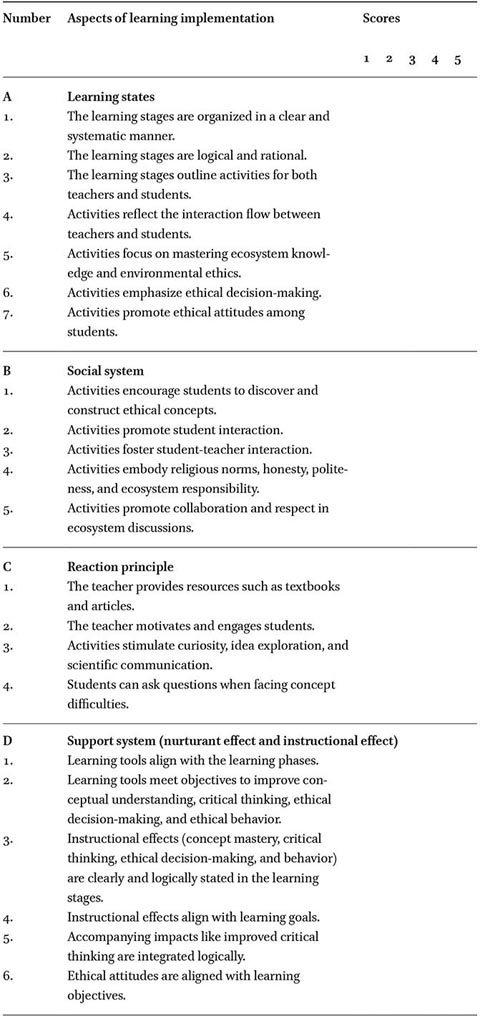
The learning implementation observation sheet, used to measure learning engagement, was applied to both the experimental group and the control group. The observation sheet focused on four main aspects, as outlined by Weil and Joyce, (1978) and Joyce and Weil, (2003): implementation of the phases of the OIDDE learning model, implementation of social systems, application of principles of reaction, and implementation of support systems.
These four aspects were further developed into 22 measurable indicators, which were assessed using a Likert scale. The indicators were categorized as follows: seven indicators for model construction, five for the social system, four for the principles of reaction, and six for the support system. All indicators were rated on a 5-point Likert scale, with the following ratings: 1 = very bad, 2 = not good, 3a = fairly good, 4 = good, and 5 = very good. The observation sheet for learning implementation is presented in Table 4.
Learning implementation questionnaire for high school students’ engagement in biology and ecosystem content
Citation: Asia-Pacific Science Education 10, 2 (2024) ; 10.1163/23641177-bja10087
The scores obtained from Table 4 were then converted into learning implementation assessment categories based on the University of Muhammadiyah Malang Learning Assessment Standards (Universitas Muhammadiyah Malang, 2020), as follows: 80.0 (outstanding), 75.0–80.0 (excellent), 70.0–74.9 (very good), 60.0–69.0 (good), 55.0–59.9 (fair), 40.0–54.0 (pass), and < 40.0 (fail).
3.5 Data Analysis
Data analysis was conducted using analysis of covariance (ANCOVA) to assess the effectiveness of the OIDDE learning model compared to the conventional learning model in relation to learning outcomes, critical thinking skills, and ethical attitudes (based on pre-test and post-test results). Before performing the ANCOVA, normality was evaluated using the Kolmogorov-Smirnov test, and homogeneity was assessed with the Levene test. All data analyses were carried out using SPSS for Windows, version 22.
4 Results
The research results provide insights into the impact of the OIDDE learning model on enhancing learning outcomes, critical thinking skills, ethical attitudes, and learning engagement among students in both the experimental and control classes. The data analysis outcomes are detailed below.
4.1 Learning Outcomes
The differences in student learning outcomes between the experimental and control classes are shown in Table 6. The one-way ANCOVA results presented in Table 5 indicated an F value of 27.643, with a p-value < 0.0001, demonstrating a significant difference in learning outcomes between the experimental and control classes (F (1,37) = 27.643, p = 0.004). This result suggests that the OIDDE learning model was effective and significantly improved learning outcomes for students in the experimental class compared to those in the control class.
Results of one-way ANCOVA on biology learning outcomes of high school students
Citation: Asia-Pacific Science Education 10, 2 (2024) ; 10.1163/23641177-bja10087
Mean corrected scores of high school students’ learning outcomes in conventional vs. OIDDE learning models
Citation: Asia-Pacific Science Education 10, 2 (2024) ; 10.1163/23641177-bja10087
Next, the corrected mean analysis for each class, specifically comparing the experimental class (using the OIDDE learning model) and the control class (using the conventional learning model), is shown in Table 6. The corrected average score for the experimental class (M = 77.350) was higher than that for the control class (M = 65.850), indicating that students in the experimental class achieved better learning outcomes. The final post-test scores and the improvement from pre-test to post-test were consistently higher for the experimental class. These results indicated that the OIDDE learning model was more effective in enhancing biology learning outcomes than conventional teaching methods.
4.2 Critical Thinking Skills
The next section of data analysis focused on the improvement of students’ critical thinking skills for both experimental and control class students, as shown in Table 7. The calculated F difference in the OIDDE learning model treatment was 25.183, with a p-value < 0.0001, indicating a significant variation in critical thinking skills between the experimental and control classes (F (1,37) = 25.183, p > 0.0001).
ANCOVA results on critical thinking skill achievement of high school students
Citation: Asia-Pacific Science Education 10, 2 (2024) ; 10.1163/23641177-bja10087
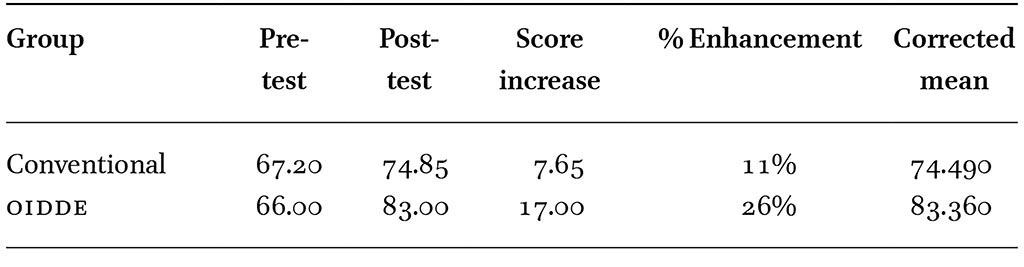
Table 8 presents the average pre-test and post-test scores for both classes. According to the ANCOVA test results, the corrected mean score for critical thinking skills in the experimental class (M = 83.360) was higher than the corrected mean score in the control class (M = 74.490). This difference was evident in both the average post-test scores and the improvement from pre-test to post-test. Therefore, the OIDDE learning model positively influenced the enhancement of students’ critical thinking skills in the experimental class.
Corrected mean scores for critical thinking skills of high school students
Citation: Asia-Pacific Science Education 10, 2 (2024) ; 10.1163/23641177-bja10087
Overall, the OIDDE learning model significantly improved students’ critical thinking skills in the experimental class compared to the conventional learning model used in the control class. This finding suggests that applying the OIDDE model to biology learning, especially in ecosystem studies, creates a more conducive learning environment for developing higher-order thinking skills. The structured stages of the OIDDE model – orientation, identify, discussion, decision, and engage in behavior – encourage active participation and deeper engagement with the content, making the learning process more interactive, student-centered, and meaningful compared to traditional methods.
In line with Agustina and Abidin (2022), Bayu et al. (2022), and Ningrum and Murti (2023), who argued that improving critical thinking competency requires effective and innovative learning models, this research shows that the OIDDE model can significantly enhance students’ critical thinking abilities. Additionally, as highlighted by Heard et al. (2020) and Rodzalan et al. (2020), sustaining improvements in critical thinking skills requires attention to various factors, including students’ physical well-being, intellectual development, and continuous motivation. The OIDDE model indirectly supports these aspects by fostering an engaging, interactive learning environment that encourages active learning and intellectual curiosity. This holistic approach aligns with the need for a learning model that not only enhances cognitive skills but also motivates and sustains students’ interest and engagement.
4.3 Ethical Attitudes
The next research section presents an ANCOVA analysis of data on the ethical attitudes of students in both the experimental and control classes toward ecosystems after participating in biology lessons on ecosystem material, as shown in Table 9.
ANCOVA results on ethical attitudes of high school students
Citation: Asia-Pacific Science Education 10, 2 (2024) ; 10.1163/23641177-bja10087
Table 9 provides a summary of the ANCOVA test results, which were used to analyze the impact of the learning model on students’ ethical attitudes. The results clearly showed that there was a significant difference between the experimental and control classes in terms of ethical attitudes, with F (1,37) = 24.439 and p < 0.001. This indicates that the OIDDE learning model was more effective in significantly enhancing the ethical attitudes of students in the experimental class than it was in the control class, which followed a conventional learning model.
The increase in ethical attitudes through the OIDDE learning model is notable. This is because the OIDDE learning model’s structure specifically fosters the development of attitudes, particularly in its fifth stage: “Engage in behavior.” This stage represents the culmination of the learning process, where students’ ethical involvement becomes evident through their participation in problem-solving activities and dilemmas related to the teaching material.
Next, the class averages for both the experimental class (using the OIDDE learning model) and the control class (using the conventional learning model) are compared (Table 10).
Average ethical attitude scores of high school student
Citation: Asia-Pacific Science Education 10, 2 (2024) ; 10.1163/23641177-bja10087
Table 11 shows that the corrected mean for the experimental class (M = 83.233) was higher than that of the control class (M = 74.612), showing that the ethical attitudes of students in the experimental class, who engaged with the OIDDE learning model, were significantly better than those in the control class, who followed a conventional learning approach.
Learning engagement levels of high school students by learning model
Citation: Asia-Pacific Science Education 10, 2 (2024) ; 10.1163/23641177-bja10087
The significant increase in ethical attitudes in the experimental class highlights that learning ecosystem-related biology topics through the OIDDE learning model may have enhanced students’ ethical awareness and sense of responsibility toward the environment. These findings align with previous research by Hudha et al. (2018), which demonstrated that the OIDDE learning model effectively increases students’ understanding of life ethics, ethical decision-making, and ethical attitudes.
Ichsan et al. (2020) further emphasized that 21st-century ecosystem education must be contextual and foster higher-order thinking skills to effectively address environmental issues. In this regard, the OIDDE learning model is well suited for fostering foster higher-order thinking skills, as it encourages critical, creative, and analytical thinking applied to problem-solving in biology education. Tasrif (2022) reinforced this idea by highlighting that fostering higher-order thinking skills includes the ability to think critically, creatively, and analytically to solve problems using information and data. The OIDDE learning model, by focusing on problem discovery, ethical decision-making, and behavioral involvement, supports the development of these higher-order thinking skills.
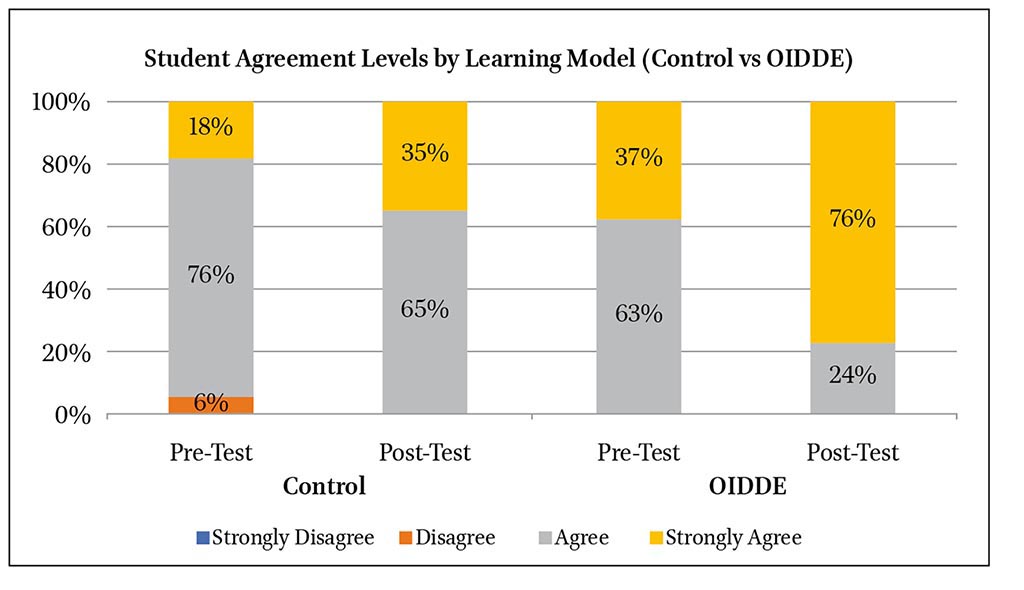
In addition to the pre-test and post-test measurements of ethical attitudes (as shown in Tables 10 and 11), researchers also assessed students’ ethical attitudes in both the experimental and control classes using a questionnaire. The results of this assessment are illustrated in Figure 1.
Questionnaire results on students’ ethical attitudes before and after implementing the learning model in the experimental and control groups
Citation: Asia-Pacific Science Education 10, 2 (2024) ; 10.1163/23641177-bja10087
Figure 1 shows that students in the experimental group, who were taught using the OIDDE learning model, exhibited significantly stronger ethical attitudes toward ecosystem issues compared to students in the control group. In the pre-test for the experimental group, 37% of students strongly agreed with ethical statements regarding ecosystems, while in the post-test, this percentage increased to 76%. This reflects a 39% improvement in students’ ethical attitudes after learning with the OIDDE model. Additionally, there was a notable decline in students expressing only agreement (from 63% in the pre-test to 24% in the post-test), indicating a positive shift from moderate agreement to strong agreement in ethical attitudes.
In contrast, the control group displayed more varied ethical attitudes toward ecosystem issues. In the pre-test, 6% of students disagreed, 76% agreed, and 18% strongly agreed with the ethical statements. By the post-test, there was a 17% increase in the number of students strongly agreeing, from 18% to 35%. This improvement was accompanied by a slight decrease in the percentage of students who agreed, dropping from 76% in the pre-test to 65% in the post-test. Overall, while there was some improvement in the control group, it was not as pronounced as in the experimental group.
The data shown in Figure 1 highlight one of the main advantages of the OIDDE learning model: It effectively motivated students to express ethical behavior independently, with integrity and honesty, particularly in relation to ecosystem issues. This is not commonly observed in other learning models. Chairilsyah (2016) noted that honesty is a critical aspect of daily life, and as Cooper et al. (2023) argued, honesty encourages individuals to behave ethically. Additionally, Bonnie et al. (2022) emphasized that honesty is closely related to well-being. Therefore, ethical attitudes, as reflected in honesty, play a fundamental role in students’ lives and behavior.
In addition to improvements in learning outcomes, critical thinking skills, and ethical attitudes, the study also measured student learning engagement for both the experimental and control classes. Learning engagement data was collected using observation sheets during biology lessons on ecosystem material. As noted earlier, engagement levels were then categorized based on the University of Muhammadiyah Malang Learning Assessment Standards (Universitas Muhammadiyah Malang, 2020). According to these standards, scores are classified as follows: ≥ 80.0 (outstanding), 75.0–79.9 (excellent), 70.0–74.9 (very good), 60.0–69.9 (good), 55.0–59.9 (fair), 40.0–54.9 (pass), and < 40.0 (fail).
As shown in Table 11, students in the experimental class, who were taught using the OIDDE learning model, achieved an engagement score of 78%, which falls into the ‘excellent’ category. In contrast, students in the control class, who followed the conventional learning model, scored 70%, placing them in the ‘very good’ category. While the difference between the two percentages is 8%, this suggests that the OIDDE model may contribute to a higher level of student engagement. However, further research with a larger sample size and additional engagement metrics would be beneficial to confirm these findings.
5 Discussion
5.1 Effectiveness of the OIDDE Learning Model
This model is particularly valuable in Indonesia’s archipelagic regions, where logistical challenges and limited resources can hinder the effectiveness of traditional, lecture-based teaching methods. By providing a structured, student-centered approach, the OIDDE model offers a feasible and impactful solution to enhance student engagement and critical thinking in resource-constrained environments. The results indicated that the OIDDE learning model was highly effective in enhancing learning outcomes, critical thinking skills, ethical attitudes, and learning engagement compared to the conventional learning model used in the control class. Students in the experimental class consistently outperformed those in the control class across all measured domains, demonstrating the value of the OIDDE model in fostering a more meaningful and engaging learning experience. This aligns with prior studies that have emphasized the importance of innovative, problem-based, and contextual learning models in achieving significant educational outcomes (Hajeniati & Kaharuddin, 2022).
This research reinforces earlier findings that have indicated that the OIDDE learning model improves the critical thinking skills of students and their creative thinking abilities (Ma’rifatillah et al., 2019). The results are also consistent with studies that have highlighted the significance of ethical attitudes in biology education (Kohli et al., 2015; Chen and So, 2017). The OIDDE learning model’s positive impact on ethical attitudes, which had been previously observed in prospective biology teachers, has also been shown here in the context of high school students (Hudha et al., 2018).
The OIDDE learning model is well-suited to 21st-century educational demands, characterized by critical thinking, problem-solving, collaboration, creativity, and innovation (Aslamiah et al., 2021; Wulandari, 2021). This model can be highly effective in creating a constructive, student-centered learning environment, which is essential for developing students’ cognitive and ethical competencies in modern education. The integration of the model’s stages into science education can foster a conducive and innovative learning atmosphere, benefiting students academically and personally.
5.2 Enhancing Critical Thinking and Ethical Attitudes
The development of ethical attitudes is especially crucial in these culturally diverse and geographically isolated communities, where fostering social cohesion and mutual respect among students from varied backgrounds is essential. The OIDDE model’s emphasis on ethical reasoning aligns with these community needs, supporting students in becoming responsible and ethically aware citizens. The improvements in critical thinking skills and ethical attitudes among students in the experimental class highlight the effectiveness of the OIDDE learning model, particularly in the context of biology education. The model’s problem-based approach encourages students to actively engage in solving ethical dilemmas related to ecosystem issues. This active involvement fosters critical thinking and enables students to make informed, ethical decisions, a skill that is vital for addressing 21st-century challenges (Rahman et al., 2023; Haulia et al., 2022).
One of the key advantages of the OIDDE learning model is its capacity to create an active learning environment. The stages of the model encourage students to engage in hands-on problem-solving, fostering both independent thinking and teamwork. This collaborative learning environment helps develop critical thinking and ethical attitudes, as students work together to address real-world issues. Small group discussions, in particular, encourage cooperation, which is essential for improving learning outcomes and engagement (Kvellestad et al., 2021).
5.3 The Role of Problem-Based Learning in Science Education
The OIDDE learning model’s emphasis on problem-based learning aligns with research that has demonstrated the importance of addressing contextual, real-world problems in education. By presenting students with issues related to ecosystems, the model promotes the development of critical thinking skills, ethical attitudes, and greater engagement in learning. The effectiveness of this approach was evident in the significant improvements observed in the experimental class, where students were more motivated, engaged, and capable of making ethical decisions compared to the control class (Pozas et al., 2020; Bahri & Corebima, 2015).
5.4 Strengths of the OIDDE Model
The sequential stages of the OIDDE learning model, from orientation to decision-making and behavior engagement, play a crucial role in its effectiveness. Each stage was designed to encourage students to think critically, collaborate, and engage in ethical decision-making. The flexibility of these stages allows teachers to incorporate real-world problems and contextual learning into their lessons, enhancing both cognitive and affective learning outcomes. This step-by-step approach has proven to be effective in fostering deeper learning, ethical understanding, and student engagement in biology education.
The research uncovered several new findings related to the implementation of the OIDDE learning model. First, both teachers and students in island high schools were introduced to an innovative and effective learning model that fostered greater awareness of ethical dilemmas in biological issues. Second, students developed critical thinking skills and learned to engage in ethical decision-making through group discussions. These findings highlight the OIDDE model’s potential for promoting student-centered learning and fostering a deeper understanding of complex environmental issues.
The OIDDE learning model has been demonstrated to be effective in enhancing learning outcomes, critical thinking skills, ethical attitudes, and engagement among high school students. Based on the research findings, we recommend that the OIDDE model be adopted in various subjects beyond biology to promote critical thinking, ethical behavior, and student engagement across disciplines. Additionally, further research should explore the application of the OIDDE model in different educational contexts and subject areas, focusing on the development of student integrity, ethical decision-making, and problem-solving skills.
6 Conclusion
This study demonstrated the effectiveness of the OIDDE learning model in enhancing various educational outcomes, including learning achievement, critical thinking, ethical attitudes, and student engagement, within the specific context of high school biology education in Indonesia’s archipelagic regions. Students in the experimental group, who were instructed using the OIDDE model, demonstrated significantly higher performance across these domains compared to their peers in the control group who were taught with conventional methods. These findings underscore the potential of the OIDDE model to address the demands of 21st-century education by promoting skills such as critical thinking, problem-solving, ethical reasoning, and active learning.
The OIDDE model’s structured, problem-based stages were particularly effective in developing students’ critical thinking and ethical attitudes. Given the geographical and logistical constraints faced by schools in isolated regions, where traditional teaching methods often fail to engage students fully, the OIDDE model offers a valuable alternative. By enabling students to interact with real-world environmental issues and ethical dilemmas, the model not only enhanced cognitive skills but also fostered a sense of responsibility and ethical awareness. These qualities are crucial for preparing students to confront complex global and local challenges, aligning with the broader goals of holistic education.
In addition to cognitive benefits, the model’s impact on ethical attitudes highlights the importance of integrating ethical reasoning and behavior into science education. The “Engage in behavior” stage of the OIDDE model was particularly effective in this regard, encouraging students to participate actively in ethical discussions and decision-making related to ecosystem issues. This stage aligns with research advocating for educational models that go beyond content mastery, aiming to cultivate students’ holistic development, including ethical and social responsibilities.
The findings also revealed that the OIDDE model fosters a more engaging and collaborative learning environment, which is beneficial in settings where students may otherwise have limited exposure to interactive learning. Students taught under the OIDDE model reported higher levels of engagement, likely due to the model’s emphasis on student-centered, active learning strategies that increase motivation and cooperation. This aligns with the study’s emphasis on creating inclusive, supportive learning environments that are critical for fostering student engagement and success in regions facing educational resource limitations.
Overall, the OIDDE learning model has shown its effectiveness in improving learning outcomes, fostering critical thinking, and developing ethical attitudes in biology education. Future research should explore the OIDDE model’s applicability across other subjects and educational settings to examine its broader impact on student engagement, ethical development, and critical thinking across disciplines. Expanding the use of this model may contribute to the cultivation of ethically minded, critically thinking individuals prepared to tackle complex societal and environmental challenges.
7 Limitations and Recommendations
This study was conducted with students from a single high school in Indonesia’s archipelagic region, focusing specifically on biology education. Consequently, the findings may not be fully generalizable to other subjects, educational settings, or geographic regions. Consequently, the findings may not be fully generalizable to other subjects or educational settings. However, the positive outcomes observed here provide a valuable foundation for future research exploring the implementation of the OIDDE model across different subject areas and diverse educational contexts.
Another limitation is that the OIDDE model was new to both students and teachers at the research site. As with any new educational model, there was an adjustment period that may have influenced the initial impact. Future studies might consider longer implementation timelines to allow students and teachers to become more familiar with the model, enabling a more accurate assessment of its sustained impact. Such studies could also explore adaptations of the model to better fit resource-limited settings, ensuring its accessibility and relevance in regions with fewer educational resources.
Based on the findings of this study, we recommend expanding the adoption of the OIDDE model in various educational levels and subjects beyond biology. The model’s structured approach, which fosters critical thinking, ethical attitudes, and student engagement, aligns well with the competencies required in 21st-century education. In contexts where traditional, lecture-based teaching methods prevail, the OIDDE model provides a student-centered alternative that encourages holistic development – an approach particularly relevant in Indonesia’s archipelagic regions where students may face limited access to diverse learning opportunities.
Additionally, the OIDDE model can serve as an effective framework for cultivating critical thinking skills and promoting ethical behavior, both essential qualities for modern learners. By integrating this model into diverse educational contexts, educators can support the holistic development of students, encouraging deeper engagement and ethical awareness. These recommendations underscore the value of the OIDDE model in advancing innovative, student-centered learning strategies that prepare students for complex, real-world challenges.
Future research should focus on exploring the applicability of the OIDDE model in other subject areas and regional contexts, particularly those with similar geographic and resource-based challenges. By doing so, the model’s potential to advance innovative, student-centered learning strategies can be more fully understood, enabling educators to cultivate ethically aware, critically thinking students prepared to address complex societal and environmental issues.
Acknowledgments
The authors sincerely appreciate the participants for their time and commitment throughout the data collection process.
Ethical Consideration
This study was conducted with oversight and approval from school administration, including the principal and relevant teachers, ensuring compliance with ethical standards for educational research. Data collection was carried out with permission from both the participants and the biology teacher. The identities of all participants were kept confidential.
About the Authors
Atok Miftachul Hudha is an associate professor in the Department of Biology Education at the Faculty of Teacher Training and Education, Muhammadiyah University of Malang, East Java, Indonesia. He holds bachelor’s and master’s degrees in biology education from Muhammadiyah University of Malang and Malang State Postgraduate Institute, respectively, and earned his doctorate in biology education from the State University of Malang. His research centers on biology learning models, bioethics education, and zoology, with a particular focus on developing the OIDDE learning model. He continues to teach courses aligned with his research specializations.
Handri Oktapiani holds a master’s degree in biology education from the University of Muhammadiyah Malang, where she also completed her undergraduate studies. In addition to teaching at a secondary school, she is a volunteer trainer for the OIDDE learning model in Eastern Indonesia. Her research primarily focuses on biology education.
Abdulkadir Rahardjanto is a professor of biology education at the Faculty of Teacher Training and Education, Muhammadiyah University of Malang, East Java, Indonesia. He earned his bachelor’s degree in biology education from Yogyakarta State University, a master’s degree in environmental studies from the Bandung Institute of Technology, and a doctorate in Environmental Studies from the University of Indonesia. His research interests include environmental science, conservation, and social dynamics in biology education. He serves as the editor-in-chief of the Journal of Educational Research and Development.
References
Agustina, H., & Abidin, Z. (2022). Model Pembelajaran Yang Dapat Menumbuhkan Sikap Berpikir Kritis Pada Siswa [Learning Model That Can Develop Critical Thinking Attitudes in Students]. Jurnal Ilmiah Wahana Pendidikan, 8(11), 153–159. https://doi.org/https://doi.org/10.5281/zenodo.6830542.
Ali, Z., Masroor, F., & Khan, T. (2020). Creating positive classroom environment for learners’ motivation towards communicative competence in the English language. Journal of the Research Society of Pakistan, 57(1), 317–328.
Ardiana, E. R. F., Juliejantiningsih, Y., & Ismah. (2022). Pengaruh Layanan Bimbingan Kelompok Teknik Sosiodrama terhadap Perilaku Etis Siswa Kelas XI SMAN 6 Semarang [The influence of sociodrama engineering group guidance services on the ethical behavior of Class XI Students at SMA N 6 Semarang]. Jurnal Pendidikan Dan Konseling, 4(6), 1899–1908.
Aslamiah, A., Abbas, E. W., & Mutiani, M. (2021). 21st-Century Skills and Social Studies Education. The Innovation of Social Studies Journal, 2(2), 82. https://doi.org/10.20527/iis.v2i2.3066.
Azizah, N., & Alberida, H. (2021). Seperti Apa Permasalahan Pembelajaran Biologi pada Siswa SMA? [What are the biology learning problems like for High School Students?] Journal for Lesson and Learning Studies, 4(3), 388–395. https://doi.org/10.23887/jlls.v4i3.38073.
Bahri, A., & Corebima, A. D. (2015). The Contribution of Learning Motivation and Metacognitive Skill on Cognitive Learning outcome of Students within different Learning Strategies. Journal of Baltic Science Education, 14(4), 487–500. https://doi.org/10.33225/jbse/15.14.487.
Bayu, W. I., Nurhasan, Suroto, & Solahuddin, S. (2022). Peer observation, self-assessment, and circuit learning: Improving critical thinking and physical fitness in physical education. Cakrawala Pendidikan, 41(2), 308–320. https://doi.org/10.21831/cp.v41i2.38654.
Bishop, C. F., Caston, M. I., & King, C. A. (2014). Learner-centered environments: Creating effective strategies based on student attitudes and faculty reflection. Journal of the Scholarship of Teaching and Learning, 14(3), 46–63. https://doi.org/10.14434/josotl.v14i3.5065.
Bonnie, M. L., Chopik, W. J., Shimshock, C. J., & Princeton, C. X. (2022). When the truth helps and when it hurts: How honesty shapes well-being. Current Opinion in Psychology, 46. https://doi.org/https://doi.org/10.1016/j.copsyc.2022.101397.
Chairilsyah, D. (2016). Metode dan Teknik Mengajarkan Kejujuran pada Anak Sejak Usia Dini [Methods and techniques for teaching honesty to children from an early age]. Educhild, 5(1), 8–14.
Chen, Y., & So, W. W. M. (2017). An investigation of mainland China high school biology teachers’ attitudes toward and ethical reasoning of three controversial bioethics issues. Asia-Pacific Science Education, 3(1), 1–16. https://doi.org/10.1186/s41029-016-0012-6.
Chowdhury, M. (2016). Emphasizing Morals, Values, Ethics, and Character Education in Science Education and Science Teaching. Malaysian Online Journal of Educational Sciences, 4(2), 1–16.
Cooper, B., Cohen, T. R., Huppert, E., Levine, E. E., & Fleeson, W. (2023). Honest Behavior: Truth-Seeking, Belief-Speaking, And Fostering Understanding Of The Truth In Others. Academy of Management Annals, 1–88. https://doi.org/doi.org/10.31234/osf.io/a5tnj.
Djamaluddin, A., & Wardana. (2019). Belajar Dan Pembelajaran, 4 Pilar Kompetensi Pedagogis [Studying and learning, 4 pillars of pedagogical competence]. In CV Kaaffah Learning Center.
Emaliana, I. (2017). Teacher-centered or Student-centered Learning Approach to Promote Learning? Jurnal Sosial Humaniora, 10, 59–70.
Faisal, & Martin, S. N. (2019). Science education in Indonesia: Past, present, and future. Asia-Pacific Science Education, 5(1), 1–29. https://doi.org/10.1186/s41029-019-0032-0.
Fitrianingtyas, A., & Radia, A. H. (2017). Peningkatan Hasil Belajar IPA melalui Model Discovery Learning Siswa Kelas IV SDN Gedanganak 02 [Improving Science learning outcomes through the discovery learning model for class IV students at SDN Gedanganak 02]. In Universitas Kristen Satya Wacana.
García, J. F. (2021). Analysis of the competencies and learning outcomes concepts of virtual environments. Revista Panamericana de Comunicación, 3(1), 61–67. https://doi.org/10.21555/rpc.v0i1.2351.
Hajeniati, N., & Kaharuddin, A. (2022). Innovation of the problem-based learning model with contextual teaching learning in mathematics learning in the Industrial Revolution 4.0 era: A comparative case studies. International Journal of Trends in Mathematics Education Research, 5(2), 222–227. https://doi.org/10.33122/ijtmer.v5i2.154.
Haulia, L. S. N., Hartati, S., & Mas’ud, A. (2022). Learning Biology Through the Ethnoscience-PBL Model: Efforts to Improve Students’ Scientific Thinking Skills. Scientiae Educatia, 11(2), 119. https://doi.org/10.24235/sc.educatia.v11i2.11229.
Heard, J., Scoular, C., Duckworth, D., Ramalingam, D., & Teo, I. (2020). Critical Thinking: Skill Development Framework. Australian Council for Educational Research, September 2021, 1–23.
Herman, M., & Rahmat, A. (2023). Blended Learning dan Hasil Belajar Biologi Siswa SMA: Sebuah Meta-Analisis [Blended learning and high school students’ biology learning outcomes: A Meta-analysis]. Biology and Educational Journal, 3(1), 37–49.
Hudha, A. M. (2016). Skema Model Pembelajaran OIDDE [OIDDE Learning Model Scheme] (EC00201701142). https://pdki-indonesia.dgip.go.id/search?type=copyright&page=1&keyword=oidde.
Hudha, A. M., Amin, M., Bambang, S., & Akbar, S. (2016). Study of Instructional Models and Syntax As an Effort for Developing ‘Oidde’ Instructional Model. JPBI (Jurnal Pendidikan Biologi Indonesia), 2(2), 109–124. https://doi.org/10.22219/jpbi.v2i2.3448.
Hudha, A. M., Amin, M., Sumitro, S. B., & Akbar, S. (2018). The effectiveness of oidde learning model in the improvement of bioethics knowledge, ethical decision, and ethical attitude of biology pre-service teachers. Journal of Baltic Science Education, 17(6), 960–971. https://doi.org/10.33225/jbse/18.17.960.
Hwang, J., Hand, B., & French, B. (2023). Critical Thinking Skills and Science Achievement: A Latent Profile Analysis. Thinking Skills and Creativity, 49(6). https://doi.org/10.1016/j.tsc.2023.101349.
Ichsan, I. Z., Sigit, D. V., Miarsyah, M., Ali, A., Suwandi, T., & Titin. (2020). Implementation supplementary book of green consumerism: Improving students hots in environmental learning. European Journal of Educational Research, 9(1), 227–237. https://doi.org/10.12973/eu-jer.9.1.227.
Joyce, B., & Weil, M. (2003). Fifth Edition Models of Teaching. Prentice Hall of India, 7.
Khoiri, A., Nasokah, Amalia, T., & Hefi, S. (2020). Analisis Kritis Pendidikan Sains di Indonesia: Problematika, Solusi dan Model Keterpaduan Sains Dasar [Critical Analysis of Science Education in Indonesia: Problematics, Solutions and Basic Science Integrated Models]. SPEKTRA: Jurnal Kajian Pendidikan Sains, 6(1), 19–34.
Kinoshita, H. (2022). Teaching of Critical Thinking Skills by Science Teachers in Japanese Primary Schools. 21(5), 801–816.
Kohli, M., Mahajan, R., Bansal, P., Tuli, A., & Athira, P. A. (2015). Cell Biology and Ethics: Knowledge, Attitudes and Practices of Anatomists in India. Journal of Biosciences and Medicines, 03(03), 66–72. https://doi.org/10.4236/jbm.2015.33010.
Kvellestad, R. V., Stana, I., & Vatn, G. (2021). Working Together: Cooperation or Collaboration? FormAkademisk, 14(4), 1–17. https://doi.org/10.7577/FORMAKADEMISK.4648.
Ma’rifatillah, I., Efendi, R., & Hasanah, L. (2019). Effectiveness of OIDDE learning model with reading infusion strategy in trained 21st century students’ skills on momentum and impulse materials. Journal of Physics: Conference Series, 1280(5). https://doi.org/10.1088/1742-6596/1280/5/052014.
Mahajan, M., & Singh, M. K. S. (2017). Importance and Benefits of Learning Outcomes. IOSR Journal of Humanities and Social Science, 22(3), 65–67. https://doi.org/10.9790/0837-2203056567.
Mahananingtyas, E. (2017). Hasil Belajar Kognitif, Afektif Dan Psikomotor [Cognitive, affective and psychomotor learning outcomes]. Prosiding Seminar Nasional Himpunan Dosen Pendidikan Guru Sekolah Dasar Indonesia Wilayah IV “Pengembangan Kompeensi Sumber Daya Manusia Menuju Pendidikan Dasar Yang Berkualitas” [Proceedings of the National Seminar on the Association of Indonesian Primary School Teacher Education Lecturers Region IV “Development of Human Resource Competencies Towards Quality Basic Education”], 192–200.
Miseliunaite, B., Kliziene, I., & Cibulskas, G. (2022). Can Holistic Education Solve the World’s Problems: A Systematic Literature Review. Sustainability (Switzerland), 14(15). https://doi.org/10.3390/su14159737.
Ningrum, A. W., & Murti, R. C. (2023). Contextual Learning Models in Improving Elementary School Critical Thinking Skills. Jurnal Penelitian Pendidikan IPA, 9(5), 48–53. https://doi.org/10.29303/jppipa.v9i5.2360.
Nurrita, T. (2018). Pengembangan Media Pembelajaran Untuk Meningkatkan Hasil Belajar Siswa [Development of learning media to improve student learning outcomes]. MISYKAT: Jurnal Ilmu-Ilmu Al-Quran, Hadist, Syari’ah Dan Tarbiyah, 3(1), 171. https://doi.org/10.33511/misykat.v3n1.171.
Pozas, M., Loffler, P., Schnotz, W., & Kauertz, A. (2020). The Effects of Context-based Problem-solving Tasks on Students’ Interest and Metacognitive Experiences. Open Education Studies, 2(1), 112–125. https://doi.org/10.1515/edu-2020-0118.
Rahman, A., Ilwandri, I., Santosa, T. A., Gunawan, R. G., Suharyat, Y., Putra, R., & Sofianora, A. (2023). Effectiveness of Problem-Based Learning Model in Science Learning: A Meta-Analysis Study. JUARA: Jurnal Olahraga, 8(2), 713–726. https://doi.org/10.33222/juara.v8i2.3128.
Rodzalan, S. A., Noor, N. N. M., Arif, L. S. M., & Saat, M. M. (2020). Factors Influencing the Improvement of Students’ Critical Thinking and Problem-Solving Skill An Industrial Training Intervention. International Journal of Emerging Technologies in Learning, 15(22), 134–145. https://doi.org/10.3991/ijet.v15i22.16303.
Santi, N., Winarti, A., & Soendjoto, A. (2018). Critical Thinking Ability of Biology Education Students through Solving Environmental Problems. Jurnal Pendidikan Biologi, 11(No. 1), 35–39. http://dx.doi.org/10.20961/bioedukasi-uns.v11i1.19738.
Setyowati, R. N., Sari, M. M. K., & Habibah, S. M. (2018). Improving Critical Thinking Skills of Students through the Development of Teaching Materials. Advances in Social Science, Education and Humanities Research 1st International Conference on Social Sciences (ICSS 2018), 226, 240–245. https://doi.org/10.2991/icss-18.2018.50.
Siregar, S. (2013). Metode Penelitian kuantitatif: dilengkapi dengan Perhitungan Manual dan Aplikasi SPSS versi 17 [Quantitative Research Method: equipped with Manual Calculations and SPSS version 17 Application]. Jakarta: Bumi Aksara (1st ed.). Bumi Aksara. https://books.google.co.id/books?id=knDKEAAAQBAJ&pg=PA124&hl=id&source=gbs_toc_r&cad=2#v=onepage&q&f=false.
Suharsono, S., Ramdani, D., & Badriah, L. (2017). Perbedaan Hasil Belajar dan Kemampuan Berpikir Kritis Mahasiswa Pendidikan Biologi dengan Menggunakan Pembelajaran E-learning dan Konvensional [Differences in Learning outcomes and critical thinking abilities of biology education students using e-learning and conventional learning]. Bioedusiana, 2(1), 94–102. https://doi.org/10.34289/277884.
Susilawati, E., Agustinasari, A., Samsudin, A., & Siahaan, P. (2020). Analisis Tingkat Keterampilan Berpikir Kritis Siswa SMA [Analysis of the level of critical thinking skills of high school students]. Jurnal Pendidikan Fisika Dan Teknologi, 6(1), 11–16. https://doi.org/10.29303/jpft.v6i1.1453.
Syafitri, E., Armanto, D., & Rahmadani, E. (2021). Aksiologi Kemampuan Berpikir Kritis (Kajian Tentang Manfaat dari Kemampuan Berpikir Kritis) [Axiology of critical thinking ability (Study of the Benefits of critical thinking ability)]. Journal of Science and Social Research, 4(3), 320. https://doi.org/10.54314/jssr.v4i3.682.
Syaifudin, A. (2012). Reliabiitas dan Validitas (4th ed.). Pustaka Pelajar.
Tasrif, T. (2022). Higher Order Thinking Skills (HOTS) dalam pembelajaran social studies di sekolah menengah atas [Higher Order Thinking Skills (HOTS) in social studies learning in high school]. Jurnal Pembangunan Pendidikan: Fondasi Dan Aplikasi, 10(1), 50–61. https://doi.org/10.21831/jppfa.v10i1.29490.
Tsoraya, N. D., Khasanah, I. A., Asbari, M., & Purwanto, A. (2023). Pentingnya Pendidikan Karakter Terhadap Moralitas Pelajar di Lingkungan Masyarakat Era Digital [The importance of character education on student morality in the digital era society]. Literaksi: Jurnal Manajemen Pendidikan, 1(01), 7–12.
Universitas Muhammadiyah Malang. (2020). Sistem Penilaian [Scoring System]. Umm.Ac.Id. https://www.umm.ac.id/id/pages/pembelajaran/sistem-penilaian.html.
Weil, M., & Joyce, B. R. (1978). Information Processing Models of Teaching. Prentice-Hall.
Wulandari, R. (2021). International Conference of Economics Education and Entrepreneurship (ICEEE 2020) SHE s: Conference Series 4 (3) (2021) 8–16 Characteristics and Learning Models of the 21st Century. International Conference of Economics Education and Entrepreneurship (ICEEE 2020), 4(ICEEE 2020), 8–16.