Abstract
The purpose of this study is to propose a “modified novelty space” model for learning in virtual geological field trips. To do so, three field sites in Busan National Geopark were selected to explore geological characteristics. VR-based virtual field trips (VFTs) were developed for participation. These VFTs consisted of basic, plus, and advanced steps. The modified novelty space model redefines the novelty space for the context of virtual learning environments (VLEs) by subdividing it into cognitive, geographic, psychological, technical, and social factors. The cognitive domain refers to the curriculum content in geology. The geographic domain involves contextual interpretations of places. The psychological domain increases familiarity based on methods to provide stability. The technical domain refers to the ability to handle skills. The social domain refers to emotional sharing among people in relationships. This model proposes five elements with the aim of decrease in modified novelty space ultimately contributing positively to virtual learning.
1 Introduction
One of the most significant features highlighted in the revised Korean curriculum of 2022 is the cultivation of digital competency and literacy, seeing it as a supplementary approach to the science education goal of cultivating scientific literacy and as a vital competency for our students, who will play pivotal roles in shaping society in the future. With the experience of non-face-to-face learning environments we have encountered since the COVID-19 pandemic, new scientific technologies such as artificial intelligence, virtual reality (VR), and augmented reality have been integrated into school settings, leading to learning environments based on virtual reality. The continuous development of science and technology has also commonly been referred to as immersive virtual reality, and recent research has been conducted on this (Dolphin et al., 2019; Radianti et al., 2020). In particular, virtual learning environments (VLEs) have not only been developed for purposes such as entertainment and games through multiple platforms but are now also being utilized for educational goals (Hew & Cheung, 2010). This study refers to the implementation of educational environments in the 3D form as VLEs. We approach the VLE as another learning environment paradigm in addition to the traditional classroom learning environments, laboratory learning environments, and outdoor learning environments in science education.
The Earth science curriculum covers interdisciplinary areas such as geology, oceanography, meteorology, and astronomy and can also be suitable for implementing spatial scales into VLEs from a systemic perspective. There has also been interest in applying VLEs to traditional learning environments such as classrooms, laboratories, and outdoor settings within the academic domain. Orion (1993) suggested that students can experience all traditional learning environments through preparatory steps (classroom and laboratory steps), field trip steps (outdoor steps), and summary steps (consolidation classroom steps). For example, they may prepare for cognitive aspects related to outdoor steps, such as observing rocks or mineral samples in classroom or laboratory environments, or experience preparatory processes, such as familiarizing themselves with field courses or planning their time. In outdoor steps, students may participate in activities such as visiting designated sites to observe rocks and exploring geological structures and features. In consolidation steps, teachers in classroom or outdoor environments may assess students’ achievement of learning objectives and provide opportunities for students to engage in reflective thinking. In summary, from the teacher’s perspective, this is a process of reducing the novelty space, which refers to an area comprised of cognitive, geographical, and psychological factors. Emphasizing the necessity for thorough preparation to successfully conduct outdoor learning and enhance its effectiveness, this process proposes a more efficient and productive outdoor learning by reducing the novel space into these three components described (Orion, 1989).
The importance of field trips for geological learning cannot be emphasized enough (Shulman, 2005). Numerous studies have highlighted the significance of field trip activities, emphasizing that they are essential not only for geology majors but also for anyone learning geology (Cho & Clary, 2020; Mogk & Goodwin, 2012). For instance, field trips can positively contribute to students’ evidence-based reasoning (Elkins & Elkins, 2007). The activation of interaction during field trips can foster students’ sociability and may also aid in their cognitive development (Henry & Murray, 2018; Stokes & Boyle, 2009; Stokes et al., 2019). Field trips also promote spatial understanding in geological learning and the experiential nature of outdoor geological learning itself can be beneficial in defining students’ learning (Behrendt & Franklin, 2014). In essence, outdoor learning can provide multifaceted learning experiences within the context of student learning in geology.
While the importance of field trips in the context of geological learning has been emphasized, practical difficulties can hinder their implementation in school settings, including budget constraints, safety issues at field sites, weather conditions during field trips, lack of geological learning experience among teachers, and challenges in conducting classes (Barrows et al., 2016; Carabajal et al., 2017; Lei, 2015; Wilson et al., 2017). Despite being a field that has traditionally seen considerable research, field trips still face many challenges in school settings. To overcome these limitations, one avenue of interest has been learning in virtual geological field trips (Bursztyn et al., 2017; Ruberto et al., 2023). In the past, learning in virtual field trips (VFTs) was defined as using multimedia to convey natural landscapes and sounds to learners via computers as a means of executing outdoor classes in the classroom (Klemm & Tuthill, 2003). However, in recent years, learning in VFTs has been redefined as field trips conducted in a three-dimensional virtual environment using software and other technologies that can be harnessed (Kenna & Potter, 2018). While past efforts have focused on implementing field trips within the context of computers, recent endeavors have concentrated on creating environments for VFTs using various technologies. Learning in VFTs represents an approach to overcoming the limitations of traditional field trips and explores new learning locations within the context of VLEs. This approach is aimed at not only facilitating the application of outdoor classes in school settings but also providing academically meaningful interpretations within the spatial context of VLEs in Earth science education.
Learning in virtual geological field trips has been the subject of ongoing research, including the development of VFTs, comparisons between in-person field trips and VFTs, and discussions on the effectiveness of educational settings (Alqudah & Khasawneh, 2023). However, there has been a lack of discussion or activities to establish a hierarchy or guidelines for VFTs or to integrate them into the curriculum. This study aimed to address the theoretical aspects of learning in virtual geological field trips by reconceptualizing the notion of the novelty space proposed for outdoor geological learning. The purpose of this research was to articulate the modified novelty space required for implementing learning in virtual geological field trips based on an empirical VFT program.
2 Research Questions
In this paper we present VFT programs implemented in VR based on field trip locations in Busan National Geopark developed using Klippel et al.’s (2019) framework for VFT design: basic, plus, and advanced. The elements of the modified novelty space were classified into five categories. This approach was aimed at establishing a theoretical foundation and educational approach in Earth science education for VFTs derived from technological advancements rather than from an educational engineering perspective. Based on this direction, this study addressed the following two research questions and aimed to establish five categories of a modified novelty space.
How is structured learning designed and implemented in virtual geological field trips for Busan National Geopark?
How does learning in VFTs themed around Busan National Geopark relate to the modified novelty space framework?
3 Theoretical Background
3.1 Learning in Geological Field Trips
3.1.1 Novelty Space: Key Categories and Factors in Field Trip Education
In terms of outdoor learning, novelty space consists of three elements: cognitive, geographical, and psychological factors (Orion, 1989). These elements define the aspects of learning, considering both the definitional and cognitive aspects necessary for outdoor learning. Cognitive factors involve pre-existing knowledge, where learners acquire prior knowledge necessary for outdoor learning, such as knowledge about rocks, minerals, geological structures, and sedimentary structures, with the aim of enhancing understanding of the curriculum before field trips. Geographical factors entail understanding of the field trip area, knowing the field trip location or route, the time required for the trip, current location during the trip, and future movement, representing familiarity with geographical situations and understanding of the field trip area. Positive effects on learning may result from prior geographical understanding and familiarity with the area. Psychological factors relate to prior experiences, encompassing apprehension and anxiety about outdoor learning. In outdoor learning, students may seek psychological stability by clearly recognizing their assigned tasks and understanding the form of activities (Choi, 2022).
To successfully perform outdoor learning and enhance its effectiveness, thorough preparatory processes are crucial to reducing novelty space composed of these three elements. Assuming that the larger this space, the more difficult the performance ability of outdoor learning tasks, both teachers and students need to make efforts to reduce novelty space. As novelty space decreases, students can more actively and openly participate in outdoor field trips, thereby increasing their confidence (Orion & Hofstein, 1994). Ultimately, reducing novelty space can be a critical factor in determining students’ decisions regarding outdoor learning.
Additionally, the educational framework required for successful outdoor classes for students consists of three elements: teacher, course, and student factors (Orion & Hofstein, 1994). Teacher factors include the position of outdoor investigations within the curriculum structure, teaching methods and materials, and teacher qualifications. Course factors include the quality of learning conditions at each observation point, time spent at each course, attractive points of the course, and weather conditions during outdoor classes. Student factors include prior knowledge of outdoor investigation topics, familiarity with outdoor investigation areas, prior experiences and attitudes related to outdoor investigations, class composition (age and degree of scientific orientation), and class size.
3.2 Learning in Virtual Geological Field Trips
3.2.1 VFTs
Klemm and Tuthill (2003) defined a VFT as the utilization of multimedia, delivered to learners through computers, conveying natural landscapes, sounds, and so forth. However, given the rapid advancement of technology, the definition needed to be redefined beyond the context of computers, with various tools such as 360-degree cameras and VR equipment being utilized. In this study, VFTs are defined as being executed in virtual spaces implemented through various technological advancements and platforms, the internet, websites, and equipment related to videos (Kenna & Potter, 2018).
VFTs can be categorized as being in either synchronous or asynchronous formats based on whether they occur in real time or not, respectively (Zanetis, 2010). The synchronous format refers to VFTs that occur in real-time interactive sessions, utilizing video platforms that enable remote interaction with others and learning from experts. The asynchronous format refers to virtual outdoor geological field trips that do not occur in real time, which has been the predominant method thus far. This approach utilizes apps or websites offering text, various images and graphics, audio, video, and three-dimensional (3D) simulations of reality.
Pierantozzi (2008) distinguished VFTs into two other forms: pre-developed and teacher created. The pre-developed form entails students accessing and using previously developed VFTs, as teachers cannot control the availability or adjust the content of these pre-developed resources. The teacher-created form is a teacher-guided approach that involves teachers leading VFTs, considering such aspects as students’ academic levels, interests, and comprehension of texts.
3.2.2 Advantages and Disadvantages of VFTs
The emergence of VFTs stems from the limitations inherent in traditional outdoor classes. For example, the numerous tasks involved in preparing and executing field trips, such as budget allocation and management, administrative tasks, site selection and mobility constraints, weather issues, ensuring site safety, lower carbon emissions, and the additional burden of lesson preparation for teachers, are some of the challenges associated with outdoor learning (Choi, 2022; Dolphin et al., 2019; Gillett, 2011; Schott, 2017). VFTs were thus aimed at overcoming these challenges.
VFTs offer three primary advantages. First, they reduce costs associated with on-site excursions (Jacobson et al., 2009; Litherland & Stott, 2012). While there are expenses involved in creating VFTs, substantial savings can be made in areas like transportation, guest speakers, and additional personnel needed for traditional trips.
Second, VFTs offer autonomy in terms of spatial and temporal access, freeing students and teachers from external environmental factors (Boyle et al., 2007; Pugsley et al., 2021). Within VLEs, students can move freely, which is especially advantageous for those with physical difficulties, enhancing accessibility (Elleven et al., 2006). VLEs also make otherwise inaccessible spaces available for exploration.
Third, VFTs can help students gain a clearer understanding of the scale and scope of field locations and support post-field trip activities (Hesthammer et al., 2002; Sturm & Bogner, 2010). From this perspective, VFTs assist students in achieving spatial understanding of geology by allowing them to virtually revisit observation points.
Despite these benefits, VFTs have limitations. They may reduce social interaction and cooperative learning among students, as well as interaction between teachers and learners, which are typically more present in traditional field settings (Arrowsmith et al., 2005; Bailey et al., 2012; Dunphy & Spellman, 2009). From a sociocultural perspective, learning often relies on teamwork, which may be less effective in a virtual setting.
VFTs may have limitations in students’ observation of natural phenomena through various sensory organs (Hutchins & Renner, 2012; Hurst, 1998; Lakoff & Johnson, 1999). For example, if VFTs rely primarily on visual materials, students may have limitations in experiencing aesthetic appreciation while learning about the natural environment through multiple sensory organs. Due to being based on VR, there may be technical limitations in implementing natural environments as they are (Pugsley et al., 2021). While the shift to remote learning environments after the pandemic may have had a positive impact on the development of specific curricula contexts such as VFTs, virtual learning had made significant progress over the previous decade, even before the pandemic.
3.2.3 The Design of the VR-Based VFT in Three Steps: Basic, Plus, and Advanced
The design of the VR-based VFT in this study follows a three-step method: basic, plus, and advanced, adapted from Klippel et al. (2019). In the basic step, the focus is on recreating spatial situations within a VLE to replicate a traditional outdoor learning experience. This involves providing realistic and familiar outdoor environments, geological features observable by participants, and an intuitive interface for ease of use. Together, these features aim to replicate the sensory experience of traditional outdoor learning, facilitating immersion in a virtual environment.
The plus step of this study’s VFT aims to extend learning by offering new methods for spatial engagement. Features include functions that enhance accessibility to environments that may be challenging to access physically, allowing participants to investigate and compare various environmental aspects through added observation nodes and comparative tools. Scenarios are also introduced that simulate diverse geological terrains to deepen users’ understanding, and exploratory questions along with collaborative activities are added to promote cognitive engagement.
The advanced step in this study’s VFT design introduces complex simulations and additional learning environments to enrich the learning experience. For example, functions that allow observation of changes over time, such as landscape formation from the past to the present, are integrated. This step also involves collaboration with technical experts to add specialized simulation capabilities beyond the standard setup, which supports an exploratory learning experience by immersing students in dynamic, temporally evolving landscapes.
3.2.4 Experiential Learning Model for VR-Based VFT
Kenna and Potter (2018) proposed three steps for planning and implementing learning in virtual geological field trips based on Kolb’s (1984) experiential learning model: pre-experience instruction, during-experience accountability, and post-experience reflection.
3.2.4.1 Pre-experience Instruction
In the pre-experience instruction step, teachers need to develop measurable objectives to achieve educational goals. Along with this, students should be able to explore what they know about the educational objectives. Students should familiarize themselves with the tasks assigned to them and ultimately need to explicitly articulate what they are learning through the assigned tasks and activities. Instead of simply providing students with all the information, teachers may introduce texts or documents and engage in interactive dialogues such as Socratic questioning and discussions. Alternatively, teachers may introduce instructional materials such as graphics and videos to assist students in processing a lot of information. Ultimately, before starting a VFT, students need to be prepared to actively participate in the class by understanding what activities they are engaging in, what tasks they are given, and what they are expected to learn in the VLE.
3.2.4.2 During-Experience Accountability
During-experience accountability is the step where students describe the process of participating in VFTs and continuing their learning. Students need to establish what they need to learn and master during VFTs and how they will measure what they observe. Therefore, in this step, students need to explicitly recognize what they need to learn and master, and teachers need to set appropriate measurement methods and evaluation criteria to assess students’ tasks. Teachers should also guide students to participate in activities such as observing or conducting additional experiments during this step. In this regard, teachers should provide guidance to enable students to collect data or engage in continuous activities through texts, documents, various graphics, and so forth.
3.2.4.3 Post-Experience Reflection
Reflection is an essential element in the learning process. The post-experience reflection step follows a VFT. After a VFT, students can engage in reflective thinking on what they have learned and what tasks they have participated in, and teachers should prepare for proactive interaction and communication among students and between students and teachers. In this step, teachers can assess students or utilize the time for further development of the VFT through discussions and deliberations.
4 Research Method
4.1 Overall Procedure
The research procedure and selection of research participants followed five steps as outlined below. First, a review of prior studies and literature was conducted related to the research topic. Subsequently, detailed information was compiled focusing on outdoor learning, virtual learning, and Busan National Geopark keywords. Second, exploration of software utilization was undertaken to develop a VLE. Third, collaboration with prospective two middle school Earth science teachers was initiated to develop a VFT focusing on exploring the Busan National Geopark. Fourth, a VR-based learning program using a virtual geological field trip was developed under the theme of exploring the Busan National Geopark. Fifth, based on empirical cases from the virtual geological field trip, detailed discussions were held to establish theoretical foundations. Subsequently, content validity was reviewed by presenting the material to a PhD in Earth science education, a PhD graduate in geology, two secondary school teachers with master’s degrees in geology, and a geology master’s graduate. A single virtual meeting was conducted with each specialist to confirm the appropriateness of geological content hierarchy and alignment with the curriculum. Through such processes, efforts were made to enhance confidence in the VFT and curriculum content and to refine the modified novelty spaces.
4.2 Development of a VFT for Busan National Geopark
4.2.1 Software Program for the VLE: Theasys
The software program selected for implementing virtual learning, Theasys, which offers free access to the software program, was chosen for its positive role in budget saving in educational settings. Moreover, its functionality, which allows the use of multiple senses, and usability, which involves sharing and utilization through social media platforms, were considered to ensure ease of use. Thus, it contributed budget savings, administrative ease, and ease of use in schools where outdoor classes were limited.
4.2.2 Development Procedure
The development procedure was organized into three stages: selecting field trip locations, constructing the VLEs, and developing the VFTs based on the design framework and instructional model.
In the first stage, three locations within Busan National Geopark – Igidae Park, Orangdae Park, and the orbicular gabbro area – were chosen as field trip sites. These locations were selected based on their geological significance, alignment with the educational curriculum, and natural aesthetic value.
The second stage involved constructing the VLEs. At Igidae Park, volcanic rocks and sedimentary layers were identified as key observation content. The VLE at this site allows students to observe geological features such as pyroclastic sedimentary layers, gem minerals, dykes, sea caves, and sea arches. To enhance learning, question-and-answer sessions were incorporated to encourage scientific inference regarding the formation processes of these features, aiming to deepen students’ understanding of the region’s geological history.
At Orangdae Park, the geological landscape features extruded rocks from Cretaceous granite intrusions near the coast. Students can explore cliffs, sea caves, and formations like jointing and tafoni, which provide insight into erosional landforms. Coastal gravel layers are included to help students classify gravel and understand erosional processes. Quizzes on stratigraphy principles allow students to explore the formation sequence of surrounding landforms. To maximize content richness, observations of rock types, the terrain’s formation processes, and additional evaluations were integrated.
For the area near Hwangryeong Mountain, the focus was on orbicular gabbro, with an overarching theme of the rock cycle. The VLE here highlights the observation of igneous, sedimentary, and metamorphic rocks, with a particular emphasis on orbicular gabbro – a rare geological feature that forms in low-silica magma as it cools slowly underground. The concentric orbicular structures represent a unique example of a xenolith, and viewing this feature in VR aims to help students understand spatial scale and terrain formation, with signs providing additional context.
The third stage involved developing the VFT program using the design framework and Theasys software. The program was designed to enhance students’ experiences across cognitive, affective, and aesthetic domains related to geology (Klippel et al., 2019). This involved selecting VFT locations, applying the VFT design framework, and incorporating an instructional model tailored to virtual outdoor learning.
4.2.3 Validity of the VFT
This process was classified into suitability for the development of the VFT and elements of learning in virtual geological field trips. Initially, the VFT was broken down into exploring the applicability of geological content and curriculum in Busan National Geopark. Subsequently, through inductive approaches, the modified novelty space and educational framework and categories for the VFT were concretized.
The content validity of the Busan National Geopark was discussed through meetings with a geology major to evaluate the appropriateness of the curricular content. The author conducted two face-to-face interviews with a geology professor from the Department of Earth Science Education at ‘B’ National University to discuss the suitability of geological and instructional content at the Busan National Geopark. Additionally, the author held one-time discussions with a geology PhD and a master’s degree holder regarding the appropriateness of the applied curricular content for developing the VFT program at the Busan National Geopark, focusing on rocks, landforms, and structural features. Subsequently, as this research was not aimed at training geology majors, the author discussed the applicability concerning the curriculum hierarchy, linkage, and pedagogical content knowledge with two earth science teachers through separate online meetings to ensure alignment with educational goals suitable for pre-service teacher education or school students.
Through peer review, the educational framework and categories for VFTs were concretized. Two professors of Earth science education participated in virtual meetings to share the research results and provide feedback. Specifically, the researcher discussed the limitations of the traditional novelty space within the context of VLEs and the necessity for new concepts, based on theoretical aspects and empirical research, to address these limitations. Subsequently, these new elements were refined through individual feedback from the faculty. The results were then shared with two middle and one high school Earth science teachers. The research findings were presented twice at domestic Earth science education-related conferences and once at an international academic conference on geoscience education to share the information with domestic and international peer researchers and to enhance the credibility of the research.
5 Results
5.1 Development of VFTs for Busan National Geopark
This research developed a virtual outdoor geological exploration program for three locations. The three-step VFTs (Klippel et al., 2019) were aimed at helping learners engage in geological exploration through VR. Based on the aforementioned design framework, Site A, Site B, and Site C exploration sites were developed.
5.1.1 Site A: Igidae Park, Busan National Geopark
The VFT at Igidae Park was divided into basic, plus, and advanced steps, with each step corresponding to specific content (Klippel et al., 2019). The basic step involved interpreting virtualizations of the actual sites (Figure 1), enabling learners to access the virtual outdoor geological exploration of Igidae Park using desktops, phones, tablets, head-mounted display devices, and so on.

Igidae Park: starting point for basic step
Citation: Asia-Pacific Science Education 10, 2 (2024) ; 10.1163/23641177-bja10082
The plus step focused on constructing what learners were able to observe at each survey site. Starting with signboards, learners were able to observe features such as rock veins, erosional caves, rock fissures, gem minerals, and sea caves (Figure 2). Since physically accessing features such as rock veins or gem minerals during real surveys can be difficult, the aim of virtual implementation was to help overcome the limitations of physical access.
Sea cave: plus step
Citation: Asia-Pacific Science Education 10, 2 (2024) ; 10.1163/23641177-bja10082
The advanced step, which was the most sophisticated, offered learners inferential tasks demanding spatiotemporal understanding that involved reconstructing topics from the basic and plus steps focusing on geological changes from a temporal perspective. For instance, learners not only observed erosional caves in the VLE but also inferred the processes leading to their formation, exploring how the region was shaped into a formation such as a sea cave (Figure 3). Additionally, learners were able to engage in further inference about the formation process of rock fissures, contemplating how the terrain has evolved. Table 1 summarizes the geological content for each course and location at the Igidae VFT, including all the information necessary to conduct scientific reasoning based on observations.
Formation of sea cave: advanced step
Citation: Asia-Pacific Science Education 10, 2 (2024) ; 10.1163/23641177-bja10082
Igidae Park VFT content
Citation: Asia-Pacific Science Education 10, 2 (2024) ; 10.1163/23641177-bja10082
5.1.2 Site B: Orangdae Park, Busan National Geopark
Orangdae Park was divided into basic, plus, and advanced steps, with each step corresponding to specific content (Klippel et al., 2019). The basic step involved constructing Orangdae Park into a VLE, allowing access via various devices through the provided URL address (Figure 4). This step ensured clarity in selecting the survey location by virtually transporting learners to the actual field site.
VLE for Orangdae Park: basic step
Citation: Asia-Pacific Science Education 10, 2 (2024) ; 10.1163/23641177-bja10082
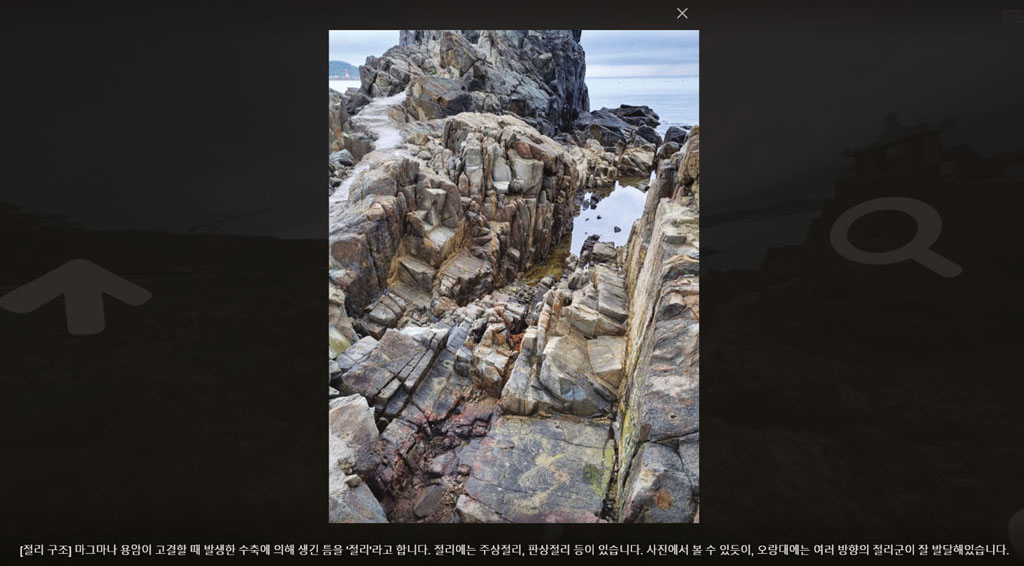
The plus step focused on constructing what learners were able to observe at each survey site, including tafoni, joint patterns, gravel, cross-bedding structures, and traps. Features such as joint patterns formed along the coast and those near the shoreline may not be easily accessible physically due to factors such as weather conditions and vegetation distribution (Figure 5). Considering these aspects, the plus step took into account points that learners may find useful upon closer observation, even if physically accessing them might be challenging.
Joint: plus step
Citation: Asia-Pacific Science Education 10, 2 (2024) ; 10.1163/23641177-bja10082
The advanced step included quizzes on the formation process of coastal joint patterns over time, guiding students to infer the chronological order of geological structures (Figure 6). This approach allowed students to explore the sequential development of geological features and infer how joint patterns commonly observed along the coast were formed, providing an experiential understanding of geological changes within a temporal framework in the VLE. These activities enabled students to engage with empirical cases independently, without relying on external instructors or additional tasks. Table 2 summarizes the VFT courses and content at this site. Unlike other locations, the VFT at Orangdae Park incorporated a quiz (Figure 6) to support smooth scientific reasoning in subsequent learning activities
Spatiotemporal inference quiz
Citation: Asia-Pacific Science Education 10, 2 (2024) ; 10.1163/23641177-bja10082
Orangdae Park VFT content
Citation: Asia-Pacific Science Education 10, 2 (2024) ; 10.1163/23641177-bja10082
5.1.3 Site C: Orbicular Gabbro on Outcrops of Hwangryeong Mountain in Busan
The outcrops of orbicular gabbro on Hwangryeong mountain were observed with the aim of categorizing them into basic, plus, and advanced steps, each corresponding to specific content (Klippel et al., 2019). The basic step involved implementing a VLE where typical samples of outcrops could be observed before witnessing them in nature. Apart from the outcrops, various rock samples were also available in the VLE within the context of the rock cycle, allowing learners to observe them. The actual survey site was then virtually implemented, considering the environmental context to enable the observation of outcrops in nature (Figure 7).
VLE for field sites
Citation: Asia-Pacific Science Education 10, 2 (2024) ; 10.1163/23641177-bja10082
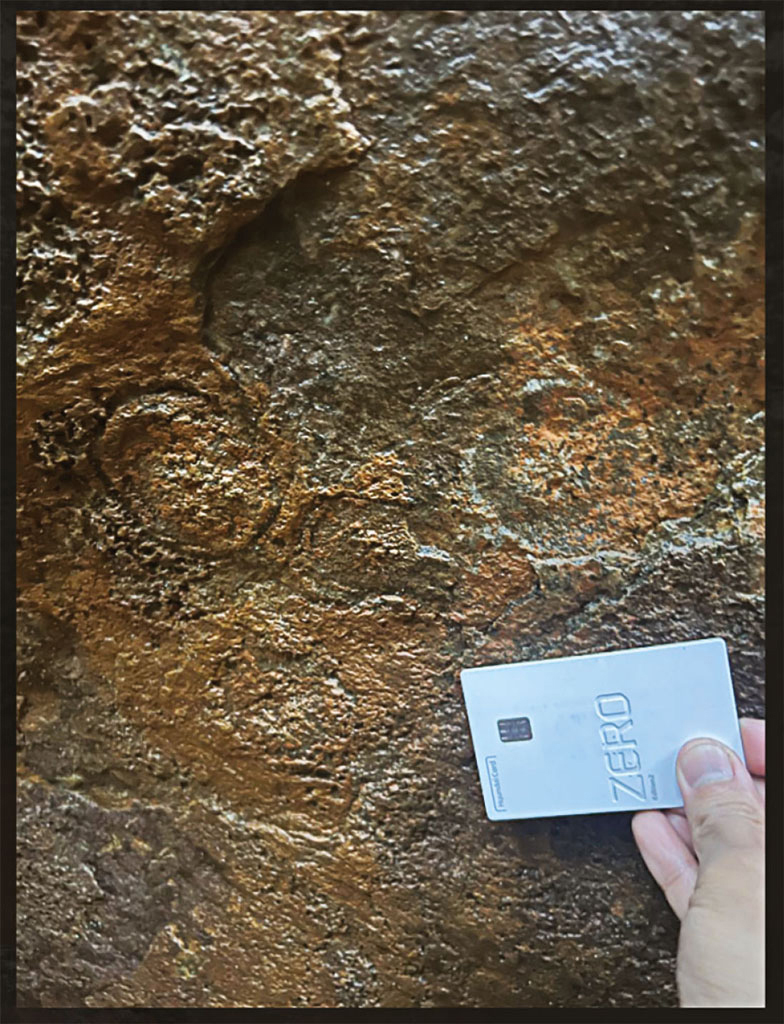
The plus step focused on constructing what learners could observe at each survey site, including outcrops, orbicular gabbro (Figure 8), granite, and temples. Learners could observe not only the outcrops but also granite and instances of granite rocks being used in nearby temples.
Orbicular gabbro
Citation: Asia-Pacific Science Education 10, 2 (2024) ; 10.1163/23641177-bja10082
The advanced step introduced areas where learners could engage in scientific inference about how the granite rocks observed in the basic and plus steps contributed to the formation of local mountains. This included processes such as granite formation, slow cooling of magma underground, erosion of the basement, progression of weathering and erosion over time, and geological epochs (Mesozoic), providing a platform for scientific inference (Figure 9).
Formation of granite mountain
Citation: Asia-Pacific Science Education 10, 2 (2024) ; 10.1163/23641177-bja10082
Table 3 summarizes the VFT courses and their content at the orbicular gabbro site. This course was designed to facilitate additional rock observations and to infer the formation process of this region, considering a macroscopic perspective.
Orbicular gabbro in the VFTs
Citation: Asia-Pacific Science Education 10, 2 (2024) ; 10.1163/23641177-bja10082
In this study, three geological sites at the Busan National Geopark were documented following the VFT design framework. Research on developing virtual field excursions in Korea underscores the need for enhanced capabilities in cost-effective technology, such as 3D panoramas or PTGui software. By adapting the virtual field excursion to replicate aspects of traditional face-to-face outdoor learning environments (Cho & Yoon, 2022; Kim, 2015), this study developed a program tailored to virtual learning environments within the context of the Busan National Geopark.
5.2 Conceptualization of Modified Novelty Space of VFTs in Busan National Geopark
This study defines the concept of modified novelty space as consisting of five elements: cognitive, geographical, psychological, technical, and social. Building upon Orion’s (1989) proposal of three elements of novelty space – cognitive, geographical, and psychological – the framework was adapted to the context of learning in virtual geological field trips. Additionally, two new elements – technical and social factors – were added. In this section, the meaning of each element of the modified novelty space is described, and further interpretations are provided for elements that exhibit complementary relationships (Figure 10).
Modified novelty space
Citation: Asia-Pacific Science Education 10, 2 (2024) ; 10.1163/23641177-bja10082
In the context of learning in virtual geological field trips, the cognitive domain is associated with curriculum content and explicitly specifies what is to be learned. While it encompasses the cognitive aspects defined in the original novelty space, slight differences may arise due to the different contexts of VLEs. The geographical domain pertains to understanding places within the VFT contexts, involving grasping the locations where the VFTs are conducted. Understanding geographical locations beyond mere numerical labeling can aid in comprehending the spatial arrangement of VFT sites and the approximate time required to traverse them, contributing to a deeper understanding of geology. The psychological domain may be one of the most crucial elements within the context of VFTs, and the psychological factor emphasizes the alleviation of participants’ anxiety by familiarity or comfort in engaging in virtual learning. It may emphasize the importance of ensuring students’ psychological well-being, minimizing anxiety, and fostering positive attitudes and engagement during learning activities. The technical domain is widely regarded as a crucial element in VLEs, as it encompasses the skills needed to navigate and interact effectively with VFTs (Wen & Gheisari, 2020). The social domain reflects the sociocultural context of learning and underscores the significance of social relationships among learners (Farber & Hall, 2007; Hardy et al., 2013; Kang & Gretzel, 2012; McCabe & Johnson, 2013; Xie & Garner, 2009), emphasizing the formation of positive social networks and effective communication between participants, which are crucial for collaborative learning experiences.
The study presented the modified novelty space as elements in learning in virtual geological field trips, refining the concept originally proposed in geology learning. While the original novelty space focused on cognitive, geographical, and psychological elements, this study introduced a more nuanced understanding of the interrelationships among these elements. Rather than measuring the importance of each element in isolation, the modified novelty space emphasized their complementary relationships. Ultimately, it assumed that within the conditions of VLEs, students can engage in meaningful virtual learning, promoting cognitive development, geographical understanding, technical proficiency, and social relationships while minimizing psychological barriers.
Modified novelty space can be approached through five different elements as follows. For instance, the cognitive domain can be explored through subject-specific approaches at Busan National Geopark. At Igidae Park, one can explore minerals such as veins and beryl and structural geology content such as dikes and sea caves, which also include topographical features. At Orangdae Park, the emphasis is on structural geology areas such as tafoni, joints, semi-crystalline structures, and enclaves, while also implementing a scientific reasoning area considering the learners and curriculum involved in the formation process of joints. Orbicular granite, which falls within the cognitive domain of study, is unique in South Korea as it can be observed within major city centers, unlike in most other locations worldwide.
Second, the geographic domain in this study involves exploring spatial scales and movement within the virtual geological excursion sites of Busan National Geopark. The geopark features 20 excursion sites where diverse geological, topographical, and environmental heritage can be observed, with this study focusing on three prominent sites for educational exploration. In the virtual geological field trips, the geographic domain extends beyond traditional spatial understanding, allowing learners to explore the excursion sites in 360 degrees without physical constraints. For example, Igidae Park and Orangdae Park, which may be difficult to access due to weather or course limitations, offer unrestricted virtual movement, highlighting a unique advantage of VLEs over the geographic elements typically found in physical novelty spaces.
Third, the psychological domain focuses on elements that promote learners’ comfort, supporting smooth learning experiences. In this study, the VLEs are designed to help learners feel at ease in unfamiliar learning environments – in this case, the excursion sites within Busan National Geopark. While Orion’s (1989) concept of novelty space addresses outdoor learning environments, this study emphasizes the importance of adapting this focus to VLEs. Using Theasys software to implement VLEs has been shown to positively impact the psychological comfort of sixth-grade students (Choi & Kim, 2022). Additionally, although Busan National Geopark holds significant geological value, it may be unfamiliar to many learners. Increasing awareness and familiarity with both the Busan region and its geological features may further enhance the psychological comfort needed for effective learning in these virtual settings.
Fourth, the technical domain in this research represents a new essential component for instructors and learners. While definitions of technology may vary, in this study, the technical domain refers to the skills necessary for effective engagement with and configuration of the VLE. For example, instructors must be proficient in using Theasys software to create the VLE, while learners need the ability to access the provided program URL and navigate the virtual excursion sites smoothly. This foundational capability is not addressed in traditional novelty space models but is crucial here for effective interaction with VLEs. For instructors, understanding the technical domain means facilitating a seamless virtual learning experience, while for students, it enables continued learning and task completion in a virtual environment.
Fifth, the social domain in this study refers to the relational capacity among learners participating in the virtual geological field trip. For example, learners are encouraged to engage in scientific reasoning at each virtual excursion site by freely exchanging opinions with teachers and peers. In other words, effective discussions and debates that enhance scientific reasoning rely on a harmonious rapport among participants. Therefore, fostering positive relationships between teachers and students, as well as among students themselves, is considered essential for supporting meaningful scientific reasoning in the virtual environment.
6 Conclusions
This study aimed to propose an approach to enhance the feasibility of field application, a longstanding limitation of learning in geological field trips, and to develop a VFT, thereby suggesting learning elements and educational frameworks for learning in virtual geological field trips. Focusing on exploring the Busan National Geopark, a VFT was developed, leading to the conceptualization of modified novelty space and educational frameworks for learning in virtual geological field trips. Two main conclusions can be drawn from this research.
First, by proposing a VFT as one of the empirical cases applicable to school settings, additional options for geological exploration in schools can be provided. Given the difficulties encountered in actual field trips that have been highlighted in previous studies, geological exploration conducted within the context of a VLE can play a positive role in overcoming spatial constraints, physical time limits, weather conditions, transportation issues, and other external factors. Interpreting the VLE as a paradigm for new learning environments, the development of a VFT tailored to the new learning environment can yield useful results in both academic and empirical aspects.
Second, not only were the five learning elements for learning in virtual geological field trips specified, but also the importance of the psychological domain within the context of VLEs was emphasized. The advancement and progress of evolving technology may ultimately act as another lens that changes our lives. Accordingly, the quality transformation of education in the new era and environment will likely demand a different educational framework. In this societal context of change, this study discussed the five learning elements for learning in virtual geological field trips and emphasized the complementary relationships among these elements, with a focus on psychological factors. By theorizing the learning components required for learning in virtual geological field trips within the condition of the geological learning context in VLEs, the modified novelty space lays a theoretical foundation distinct from traditional learning environments such as classrooms, laboratories, and outdoor learning environments, thereby contributing to the academic discourse.
7 Limitations
This study aimed to describe a theoretical framework for learning in virtual geological field trips within the paradigm of a new learning environment, alongside practical aspects to help overcome the limitations of traditional geology learning. To achieve this, various field locations within the Busan National Geopark were implemented in a VLE, and the modified novelty space and educational framework for learning in virtual geological field trips were proposed. Despite its scholarly significance, this research acknowledges two limitations.
First, while considering the practical aspect of making learning in virtual geological field trips accessible to teachers and prospective teachers for free, with consideration for the realistic budgets and situations in school settings, and ensuring functional utility to minimize confusion, there are limitations in considering all curriculum contextual variables, such as the addition of other factors such as artificial intelligence, resulting from the development of VLEs into different software or technological aspects.
Second, the proposed modified novelty space in this study is not based on many VFTs. Rather than using an inductive process with numerous cases, there may be limitations in a scientific approach that discusses the theoretical background of learning in virtual geological field trips based on the method of using only one case.
8 Implications and Discussion
The conclusions of this study suggest the following follow-ups and implications. First, this study proposed theoretical approaches along with future strategies to activate learning in virtual geological field trips within the context of virtual learning. In other words, addressing the difficulties in implementing outdoor classes in school settings and proposing approaches in the context of VLEs may help overcome the limitations of traditional geology learning and establish a theoretical framework for learning in virtual geological field trips within the context of educational curricula.
Second, there is a need to discuss the necessity of developing new VFTs that align with the 2022 revised Korean curriculum to activate learning in virtual geological field trips. Since this study demonstrated the development of VFTs based on existing field locations in the Busan National Geopark, it is necessary to discuss ways to develop various VFTs that can be applied to school curricula and are rooted in the field. Conducting comparative studies between actual field trips and VFTs can lead to more in-depth discussions on the advantages and disadvantages of VLEs.
Third, for the conceptual systematization and theoretical solidification of the modified novelty space, the model should continue to be refine and verified through the development of VFT programs applicable to various target groups, such as school education settings, educational approaches for majors, and virtual geology learning for the public aimed at the aesthetic appreciation, along with a systematic evaluation framework.
Abbreviations
| VLE(s) | Virtual learning environment(s) |
| VFT(s) | Virtual field trip(s) |
Acknowledgements
The author would like to thank the professors, teachers, and reviewers who commented on and helped develop this study.
Ethical Considerations
Since the research did not involve human subjects, research ethics approval was not necessary.
About the Author
Yoon-Sung Choi received a doctor’s degree from the Department of Science Education at Seoul National University in Seoul, Republic of Korea. His research focuses on advancing geoscience education, with a particular emphasis on virtual learning environments. He is dedicated to designing and implementing educational programs and applications that enhance geoscience education, especially within school settings.
References
Alqudah, H., & Khasawneh, M. (2023). Exploring the impact of virtual reality field trips on student engagement and learning outcomes. Migration Letters, 20(5), 1205–1216.
Arrowsmith, C., Counihan, A., & McGreevy, D. (2005). Development of a multi-scaled virtual field trip for the teaching and learning of geospatial science. International Journal of Education and Development using ICT, 1(3), 42–56.
Bailey, D., Leonardi, P., & Barley, S. (2012). The lure of the virtual. Organization Science, 23(5), 1485–1504. https://doi.org/10.1287/orsc.1110.0703.
Barrows, C., Murphy-Mariscal, M., & Hernandez, R. (2016). At a crossroads: The nature of natural history in the twenty-first century. BioScience, 66(7), 592–599. https://doi.org/10.1093/biosci/biw043.
Behrendt, M., & Franklin, T. (2014). A review of research on school field trips and their value in education. International Journal of Environmental and Science Education, 9(3), 235–245. https://doi.org/10.12973/ijese.2014.213a.
Boyle, A., Maguire, S., Martin, A., Milsom, C., Nash, R., Rawlinson, S., Turner, A., Wurthmann, S., & Conchie, S. (2007). Fieldwork is good: The student perception and the affective domain. Journal of Geography in Higher Education, 31(2), 299–317. https://doi.org/10.1080/03098260601063628.
Bursztyn, N., Walker, A., Shelton, B., & Pederson, J. (2017). Assessment of student learning using augmented reality Grand Canyon field trips for mobile smart devices. Geosphere, 13(2), 260–268. https://doi.org/10.1130/GES01404.1.
Carabajal, I., Marshall, A., & Atchison, C. (2017). A synthesis of instructional strategies in geoscience education literature that address barriers to inclusion for students with disabilities. Journal of Geoscience Education, 65(4), 531–541. https://doi.org/10.5408/16-211.1.
Cho, J., & Yoon, M. (2022). The development of geosites and 3D panoramic geological virtual field trips for Sinsu Island in Korea National Marine Park. Journal of the Korean Society of Earth Science Education, 15(1), 91–102. https://doi.org/10.15523/JKSESE.2022.15.1.91.
Cho, Y., & Clary, R. (2020). Challenges and opportunities for virtual learning in college geology. In J. J. Mintzes & E. M. Walter (Eds.), Active learning in college science (pp. 713–728). Springer International Publishing. https://doi.org/10.1007/978-973-030-33600-4_44.
Choi, Y. (2022). Exploring the perception of elementary and secondary pre-service teachers about ‘novelty space’ in learning in geological field trip. Journal of Korean Society of Earth Science Education, 15(1), 27–46. https://doi.org/10.15523/JKSESE.2022.15.1.27.
Choi, Y., & Kim, J. (2022). Exploring learning effects of elementary school students engaging in the development of geological virtual field trips. Journal of Korean Society of Earth Science Education, 15(2), 171–191. https://doi.org/10.15523/JKSESE.2022.15.2.171.
Dolphin, G., Dutchak, A., Karchewski, B., & Cooper, J. (2019). Virtual field experiences in introductory geology: Addressing a capacity problem, but finding a pedagogical one. Journal of Geoscience Education, 67(2), 114–130. https://doi.org/10.1080/10899995.2018.1547034.
Dunphy, A., & Spellman, G. (2009). Geography fieldwork, fieldwork value, and learning styles. International Research in Geographical and Environmental Education, 18(1), 19–28. https://doi.org/10.1080/10382040802591522.
Elkins, J., & Elkins, N. (2007). Teaching geology in the field: Significant geoscience concept gains in entirely field-based introductory geology courses. Journal of Geoscience Education, 55(2), 126–132. https://doi.org/10.5408/1089-9995-55.2.126.
Elleven, R., Wircenski, M., Wircenski, J., & Nimon, K. (2006). Curriculum-based virtual field trips: Career development opportunities for students with disabilities. Journal for Vocational Special Needs Education, 28(3), 4–11.
Farber, M., & Hall, T. (2007). Emotion and environment: Visitors’ extraordinary experiences along the Dalton highway in Alaska. Journal of Leisure Research, 39(2), 248–270. https://doi.org/10.1080/00222216.2007.11950107.
Gillett, J. (2011). The use of experiential education and field trips for learning. Journal of Educational Multimedia and Hypermedia, 20(2), 173–177.
Hardy, A., Gretzel, U., & Hanson, D. (2013). Travelling neo-tribes: Conceptualizing recreational vehicle users. Journal of Tourism and Cultural Change, 11(1–2), 48–60. https://doi.org/10.1080/14766825.2013.783584.
Henry, T., & Murray, J. (2018). How does it feel? The affective domain and undergraduate student perception of fieldwork set in a broad pedagogical perspective. Tuning Journal for Higher Education, 5(2), 45–74. https://doi.org/10.18543/the-5(2)-2018pp45-74.
Hesthammer, J., Fossen, H., Sautter, M., Sæther, B., & Johansen, S. (2002). The use of information technology to enhance learning in geological field trips. Journal of Geoscience Education, 50(5), 528–538. https://doi.org/10.5408/1089-9995-50.5.528.
Hew, K., & Cheung, W. (2010). Use of three-dimensional (3-D) immersive virtual worlds in K-12 and higher education settings: A review of the research. British Journal of Educational Technology, 41(1), 33–55. https://doi.org/10.1111/j.1467-8535.2008.00900.x.
Hurst, S. (1998). Use of “virtual” field trips in teaching introductory geology. Computers and Geosciences, 24(7), 653–658. https://doi.org/10.1016/S0098-3004(98)00043-00040.
Hutchins, E., & Renner, N. (2012). Situated and embodied learning in the field. In K. A. Kastens & C. A. Manduca (Ed.), Earth and mind II: A synthesis on research on thinking and learning in the geosciences: Geological society of America special paper 486. (Vol. 2, pp. 181–182). Denver, CO: Geological Society of America.
Jacobson, A., Militello, R., & Baveye, P. (2009). Development of computer-assisted virtual field trips to support multidisciplinary learning. Computers & Education, 52(3), 571–580. https://doi.org/10.1016/j.compedu.2008.11.007.
Kang, M., & Gretzel, U. (2012). Effects of podcast tours on tourist experiences in a national park. Tourism Management, 33(2), 440–455. https://doi.org/10.1016/j.tourman.2011.05.005.
Kenna, J., & Potter, S. (2018). Experiencing the world from inside the classroom: Using virtual field trips to enhance social studies instruction. The Social Studies, 109(5), 265–275. https://doi.org/10.1080/00377996.2018.1515719.
Kim, H. (2015). Development and effects of virtual geological field trip program using 360 ° 3D panorama technique. Journal of the Korean Society of Earth Science Education, 8(2), 193–205. https://doi.org/10.15523/JKSESE.2015.8.2.193.
Klemm, E., & Tuthill, G. (2003). Virtual field trips: Best practices. International Journal of Instructional Media, 30(2), 177.
Klippel, A., Zhao, J., Jackson, K., La Femina, P., Stubbs, C., Wetzel, R., Blair, J., Wallgrün, O., & Oprean, D. (2019). Transforming earth science education through immersive experiences: Delivering on a long-held promise. Journal of Educational Computing Research, 57(7), 1745–1771. https://doi.org/10.1177/0735633119854025.
Kolb, D. (1984). Experiential learning: Experience as the source of learning and development. Prentice-Hall.
Lakoff, G., & Johnson, M. (1999). Philosophy in the flesh: The embodied mind and its challenge to western thought. Basic Books.
Lei, S. (2015). Revisiting virtual field trips: Perspectives of college science instructors. Education, 135(3), 323–327.
Litherland, K., & Stott, T. (2012). Virtual field sites: Losses and gains in authenticity with semantic technologies. Technology, Pedagogy and Education, 21(2), 213–230. https://doi.org/10.1080/1475939X.2012.697773.
McCabe, S., & Johnson, S. (2013). The happiness factor in tourism: Subjective well-being and social tourism. Annals of Tourism Research, 41(2), 42–65. https://doi.org/10.1016/j.annals.2012.12.001.
Mogk, D., & Goodwin, C. (2012). Learning in the field: Synthesis of research on thinking and learning in the geosciences. Geological Society of America Special Papers, 486(0), 131–163.
Orion, N. (1989). Development of a high-school geology course based on field trips. Journal of Geological Education, 37(1), 13–17.
Orion, N. (1993). A model for the development and implementation of field trips as an integral part of the science curriculum. School Science and Mathematics, 93(6), 325–331.
Orion, N., & Hofstein, A. (1994). Factors that influence learning during a scientific field trip in a natural environment. Journal of Research in Science Teaching, 31(10), 1097–1119. https://doi.org/10.1002/tea.3660311005.
Pierantozzi, M. (2008). Beyond the classroom walls – Virtual field trips. Journal on School Educational Technology, 3(3), 1–4.
Pugsley, J., Howell, J., Hartley, A., Buckley, S., Brackenridge, R., Schofield, N., Maxwell, G., Chmielewska, M., Ringdal, K., Naumann, N., & Vanbiervliet, J. (2021). Virtual field trips: Construction, delivery, and implications for future geological field trips. Geoscience Communication, 5, 227–249. https://doi.org/10.5194/gc-5-227-2022.
Radianti, J., Majchrzak, T. A., Fromm, J., & Wohlgenannt, I. (2020). A systematic review of immersive virtual reality applications for higher education: Design elements, lessons learned, and research agenda. Computers & Education, 147, 103778. https://doi.org/10.1016/j.compedu.2019.103778.
Ruberto, T., Mead, C., Anbar, A., & Semken, S. (2023). Comparison of in-person and virtual Grand Canyon undergraduate field trip learning outcomes. Journal of Geoscience Education, 71(4), 445–461. https://doi.org/10.1080/10899995.2023.2186067.
Schott, C. (2017). Virtual field trips and climate change education for tourism students. Journal of Hospitality, Leisure, Sport & Tourism Education, 21(1), 13–22. https://doi.org/10.1016/j.jhlste.2017.05.002.
Shulman, L. (2005). Signature pedagogies in the professions. Daedalus, 134(3), 52–59. https://doi.org/10.1162/0011526054622015.
Stokes, A., & Boyle, A. (2009). The undergraduate geoscience fieldwork experience: Influencing factors and implications for learning. In S. J. Whitmeyer, D. W. Mogk, & E. J. Pyle (Eds.), Field geology education: Historical perspectives and modern approaches (Vol. 461, p. 291). The Geological Society of America.
Stokes, A., Feig, A., Atchison, C., & Gilley, B. (2019). Making geoscience fieldwork inclusive and accessible for students with disabilities. Geosphere, 15(6), 1809–1825. https://doi.org/10.1130/GES02006.1.
Sturm, H., & Bogner, F. (2010). Learning at workstations in two different environments: A museum and a classroom. Studies in Educational Evaluation, 36(1), 14–19.
Wen, J., & Gheisari, M. (2020, March). A review of virtual field trip applications in construction education. In Construction Research Congress 2020 (pp. 782–790). American Society of Civil Engineers. https://doi.org/10.1061/9780784482872.085.
Wilson, H., Leydon, J., & Wincentak, J. (2017). Fieldwork in geography education: Defining or declining? The state of fieldwork in Canadian undergraduate geography programs. Journal of Geography in Higher Education, 41(1), 94–105. https://doi.org/10.1080/03098265.2016.1260098.
Xie, P., & Garner, K. (2009). An analysis of students’ photos of the novelty space on a field trip. Journal of Teaching in Travel & Tourism, 9(3), 176–192. https://doi.org/10.1080/15313220903379240.
Zanetis, J. (2010). The beginner’s guide to interactive virtual field trips. Learning & Leading with Technology, 37(6), 20–23.