Abstract
This study was aimed at assessing the research trends in the family resemblance approach to the nature of science (FRA-to-NOS). This was accomplished through bibliometric analysis using the R program and a literature review employing the analysis framework. The findings demonstrated that the field of FRA-to-NOS has been experiencing growth, with the journal Science & Education being the primary source of coverage for the field. Additionally, the study identified the most influential authors and articles. In addition, the results also showed that the current FRA-to-NOS research has been more focused on general science rather than science subjects such as physics and biology. The results also showed that the research has centered on pre-service science teachers and that qualitative and mixed methods were mainly applied as research designs. Based on these findings, the researchers identified four research gaps, including the need to develop domain-specific teaching methods and materials and suggested directions for future research.
1 Introduction
1.1 Understanding the Nature of Science (NOS)
The concept of the nature of science (NOS) is dynamic and tentative (Lederman et al., 2002), evolving alongside advancements in science and systematic thinking about science. It reflects the values and beliefs inherent in the creation of scientific knowledge (Lederman, Lederman, & Antink, 2013). Essentially, NOS explores the fundamental characteristics of science, addressing questions such as what science entails, how it functions, the assumptions that underlie scientific knowledge, how scientists operate as a social group, and how science and society influence each other (Clough, 2011). As such, NOS can be viewed as meta-knowledge about science (Cho, Kim, & Choe, 2018).
NOS is not merely an abstract concept: It serves as a practical tool integrated into curricula in many countries (Olson, 2018). Its role in fostering an epistemological understanding of science is critical for developing scientific literacy (Höttecke & Allchin, 2020). Learning about NOS equips students to navigate technological advancements, understand scientific issues, and participate in informed decision-making processes (Hansson & Yacoubian, 2020). Moreover, it encourages students to view science as an integral part of modern culture (Driver et al., 1996). By promoting an understanding of the norms within the scientific community, NOS education helps instill moral commitments and shared values, effectively facilitating the acquisition of scientific knowledge (Douglas, 2023; Driver et al., 1996).
However, comprehending NOS is a complex task. There is no consensus on what exactly constitutes NOS, as different philosophical perspectives apply various criteria to define what is considered scientific. This ongoing debate underscores the intellectual challenge and complexity of NOS, with scholars maintaining differing views on the subject (Irzik & Nola, 2011). Despite this controversy, science education has developed a generally accepted list of NOS characteristics that are accessible to students at the general school level and relevant to their daily lives. At this level, there is little disagreement among stakeholders, including historians of science, philosophers, and science educators (Abd-El-Khalick, Bell, & Lederman, 1998). This list, often referred to as the “consensus view” (CV; Matthews, 2012), includes six key norms: the empirical nature of scientific knowledge, the distinction between observation and inference, the difference between theory and law, the tentativeness of scientific knowledge, its subjectivity, and the theory-laden nature of scientific knowledge. These norms have been used to analyze curricula and textbooks (e.g., Li, Yu, & Li, 2023), conduct perception surveys (Park & Hong, 2010), and develop and evaluate teaching and learning programs (e.g., Bugingo et al., 2022).
The CV has been criticized for narrowing the image of science by focusing only on the items on the list, thereby excluding broader topics such as the aims and values of science (Irzik & Nola, 2011). It has also been questioned for creating contradictory images of science. For instance, why should we trust science if it is tentative? Additionally, can scientific findings be universally valid across different socio-cultural contexts if science is conducted within a specific context? (Irzik & Nola, 2011, 2014).
To address these limitations, Irzik and Nola (2011) proposed using Wittgenstein’s (1953) concept of family resemblance to capture the richness and dynamism of science and its various disciplines, instead of relying on the CV, which focuses on what all sciences have in common. An approach to NOS using the concept of family resemblance suggests that, rather than searching for common features across scientific disciplines, we can use case studies to group various features of science into a set. This approach highlights the richness of science and provides a more comprehensive understanding of NOS that is not biased toward any single philosophical perspective (Erduran & Dagher, 2014).
Given the strengths of the family resemblance approach to NOS (FRA-to-NOS), it has been adopted as a theoretical framework for curriculum and textbook analysis in various countries (Kaya & Erduran, 2016). It has also been explored in fields such as the development of tools to assess students’ perceptions (Ju, Cho, & Paik, 2023; Kaya et al., 2018) and the creation of teaching programs and professional development materials (Erduran & Kaya, 2018). Theoretical studies have further examined the utility of FRA-to-NOS (Inẽz, Brito, & El-Hani, 2023) and its applicability in other fields (Aydın-Günbatar & Roehrig, 2023).
1.2 Research Questions
In this study, we analyzed research trends in FRA-to-NOS, which has seen significant growth in recent years. Analyzing these trends is essential for evaluating past research achievements and planning the future of science education (Kim et al., 2015). The purpose of this study was to identify international research trends in FRA-to-NOS, providing a comprehensive overview for researchers new to the field and guiding future research efforts. To achieve this, we posed the following research questions:
What is the quantitative bibliometric information of FRA-to-NOS research?
What are the research trends by topic?
What gaps exist in FRA-to-NOS research?
To address the first research question, we examined the progression of research over time, the journals in which the research was published, citation relationships, and author information. For the second question, we categorized the articles by research topic, scientific field (e.g., physics, chemistry, biology, and geosciences), research subject, type of research method, country in the study, and key implications. The results for the third question are presented based on these analyses.
2 Theoretical Framework: FRA-to-NOS
Wittgenstein’s (1953) concept of family resemblance, introduced in Philosophical Investigations, suggests that categories like families are grouped not because they share a single defining characteristic, but because they exhibit overlapping similarities. Applied to science, this idea implies that scientific disciplines are classified as “science” not because they all share identical features, but because they resemble each other in various ways. Irzik and Nola (2011, 2014) employ Needham’s (1975) polythetic model to explain this approach to the NOS, demonstrating that a group can be defined by a set of characteristics, even if not all members share every characteristic.
According to Irzik and Nola (2014), FRA-to-NOS posits that a discipline can be considered part of the “science family” if it shares a sufficient number of characteristics from a broader set. This approach highlights that no single set of necessary and sufficient conditions can define NOS. Instead, it is the resemblance between the attributes of various subdisciplines that classifies them as science. This method encourages a pluralistic examination of scientific disciplines rather than seeking a consensus on what all sciences have in common (Wu & Erduran, 2024).
FRA-to-NOS is divided into two broad categories: science as a cognitive- epistemic system and science as a social-institutional system. These sub- categories have evolved over time, with much of the current research on FRA-to-NOS building on Erduran and Dagher’s (2014) work. They proposed 11 sub-categories, tailored to science education. Kaya and Erduran (2016) refer to this development as the reconceptualized family resemblance approach to NOS (RFN).
The cognitive-epistemic system of science encompasses four sub-categories: (1) aims and values, which guide scientific activities toward desired outcomes; (2) methods and methodological rules, representing the systematic approaches that ensure the reliability of scientific knowledge; (3) scientific practices, which involve a diverse range of activities grounded in cognitive, epistemic, and social-institutional processes; and (4) scientific knowledge, the final products of scientific endeavors, such as laws, theories, models, and data derived from observations and experiments (Wu & Erduran, 2024).
The social-institutional system of science consists of seven sub-categories: (1) social certification and dissemination, involving the peer review process as a form of social quality control; (2) scientific ethos, referring to the norms scientists follow in their work and interactions; (3) social values, such as respect for the environment, social utility, and contributions to public health and economic development; (4) professional activities, including tasks such as presenting research at meetings, publishing findings, and securing grants; and the broader social context, including (5) financial systems, (6) political power structures, and (7) institutional influences, which reflect the integral role that finance, politics, and institutions play in the practice of science within society (Wu & Erduran, 2024).
The sub-categories of FRA-to-NOS are interconnected, with porous boundaries that allow interaction between different categories, rather than keeping them compartmentalized. This conceptual framework is often depicted in the “FRA wheel,” a pedagogical tool designed to illustrate the interconnectedness of science’s cognitive-epistemic and social-institutional systems. See Erduran and Dagher (2014, p. 28) for an illustration of this model, which is also used in educational settings (Erduran et al., 2021).
3 Methodology
This section provides an overview of the articles included in the study, followed by a description of the research methodology based on the study’s objectives.
3.1 Article Information
In this analysis, 64 articles sourced from the Web of Science database were reviewed. These articles span research published between January 1, 2011 – coinciding with the seminal work by Irzik and Nola (2011) – and April 30, 2024, marking the start of this study’s analysis.
The process of extracting relevant papers from Web of Science involved several steps. First, the researchers set the search scope to “all fields” and used the keyword “science education,” identifying 3,917,023 research articles. Next, we restricted the index to include only ESCI, SCI, SCIE, SSCI, and A&HCI indices, narrowing the results to 3,547,255 articles. This strategic filtering allowed us to exclude unrelated disciplines and focus on literature that specifically addresses pedagogical aspects of science. By beginning with “science education,” we could then apply more refined keywords to target our research within a relevant body of literature.
Second, we identified 225,418 articles using the keywords “nature of science” and “NOS.” Subsequently, 61 articles were located by including the term “family resemblance.” After carefully reviewing the abstracts of these 61 articles, four were excluded, leaving 57 articles for further analysis. Additionally, using the snowball sampling method, we included seven more articles, resulting in a final total of 64 articles for this study.
A general summary of the research article details is provided in Table 1. The 64 articles examined were all published between 2011 and April 2024, spanning 14 different sources. The publication rate increased at an average of 13.18% per year. The study involved contributions from 116 authors and included 2,593 references. The average publication age, measured as the number of years since each article was published, was 2.38 years, with an average of 16.97 citations per article.

Overview of the articles included in the study
Citation: Asia-Pacific Science Education 10, 2 (2024) ; 10.1163/23641177-bja10083
3.2 Methods
3.2.1 Quantitative Bibliometric Information of FRA-to-NOS Research
In this study, we conducted a quantitative bibliometric analysis to address the first research question. Quantitative bibliometrics involves using statistical methods to extract basic time-series data (such as annual publications, author details, and citation counts) from books, articles, or other publications (Xu et al., 2022).
We employed the Bibliometrix package, a widely used tool for quantitative bibliometric analysis in the R program, developed by Aria and Cucurullo (2017). Jho and Lee (2019) and Lee and Jho (2020) used this package to examine research trends in energy education, while Bae et al. (2022) utilized it to analyze trends in aesthetics within science education.
Quantitative bibliometrics using the Bibliometrix package can generate various outputs, including annual scientific production, citation counts, keyword analysis, historiography, and more. The researchers selected specific results to address the first research question. For instance, keyword analysis is often used to identify the overall research topic or focus (e.g., Jho & Lee, 2019). The primary research topic or target of the study is represented more explicitly in the methodology for the second research question, which will be discussed in the following section. Additionally, the researchers determined that visualizing the historiography was not particularly relevant, given that the field has a relatively short history of approximately 10 years. Therefore, the study focused on presenting the results of the quantitative bibliometric analysis, including annual scientific production, sources, author impact factors, and citation counts.
3.2.2 Research Trends by Topic
To address the second research question, we modified and expanded the analytical framework used in previous studies that focused on NOS trend analysis. This study’s framework was based on the one developed by Lee, Hwang, and Chung (2021), which classifies NOS research trends according to research topic, subject, and design.
The original framework by Lee, Hwang, and Chung (2021) categorized research topics into four areas: perception surveys, teaching and learning program development and effectiveness analysis, theoretical reviews, and content analysis. The research subjects were divided into students, pre-service teachers (PST s), in-service teachers (IST s), and others, while the research design was categorized as quantitative, qualitative, or mixed.
For this study, we adapted and refined Lee, Hwang, and Chung’s (2021) framework, as shown in Table 2. We first categorized research topics into theoretical research, review studies, textbook and curriculum analysis, program or teaching methodology proposals and effectiveness analysis, survey development and perception studies, and other. The subcategories included research subjects, study design, scientific discipline, and country. Research subjects were divided into elementary school students, middle school students, high school students, undergraduate students (excluding PST s), PST s, IST s, and others. Study design was classified as quantitative, qualitative, or mixed methods. Scientific discipline was categorized into physics, chemistry, biology, earth science, general science, and other. For the country subcategory, we captured the educational context of each study by country, focusing on trends in textbook and curriculum analysis, program or teaching methodology proposals and effectiveness analysis, and survey development and perception research.
Analytical framework (modified from Lee, Hwang, and Chung [2021])
Citation: Asia-Pacific Science Education 10, 2 (2024) ; 10.1163/23641177-bja10083
3.2.3 What Are the Research Gaps in FRA-to-NOS Research?
A research gap refers to a topic or area that has not been sufficiently explored and, as a result, lacks comprehensive insights or implications. In this study, we aimed to identify research gaps based on the findings from the analysis of the second research question.
4 Results of Bibliometrics
4.1 Annual Scientific Production
The data for this study included 64 articles and reviews published between January 1, 2011 and April 30, 2024, and the annual scientific production is displayed in Figure 1. The trend began with one foundational paper by Irzik and Nola (2011). This was followed by an increase, with three publications in 2016, two in 2018, five in 2019, six in 2020, two in 2021, and eight in 2022. The most productive year for FRA-to-NOS research was 2023, with 32 papers published. While data for 2024 is included, it should be noted that this year’s data only represents publications through April. The apparent decline in publications from 2023 to 2024 may not reflect a true trend, as additional publications are likely to emerge by the end of the year.
Annual scientific production
Citation: Asia-Pacific Science Education 10, 2 (2024) ; 10.1163/23641177-bja10083
4.2 Analysis of Article Sources
In this study, we also analyzed the sources that published the most FRA-to-NOS-related research papers. In this study, we identified the top sources publishing FRA-to-NOS-related research. As shown in Table 3, Science & Education (S&E) is the leading journal in this field, publishing the highest number of articles and accumulating the most citations. The International Journal of Science Education (IJSE) and Research in Science & Technological Education (RS&TE) follow, contributing notably to the body of research. Other journals, such as Journal of Research in Science Teaching (JRST) and Irish Educational Studies, have made smaller but significant contributions. Additionally, we analyzed the h-index of each journal. The h-index is a metric that measures the impact and productivity of a journal based on its publications, defined as the highest number of articles, h, that have each been cited at least h times (Hirsch, 2005). S&E has the highest h-index, making it the most influential journal in FRA-to-NOS research, followed by IJSE, RS&TE, and IJSME.
Top 10 journals publishing FRA-to-NOS research
Citation: Asia-Pacific Science Education 10, 2 (2024) ; 10.1163/23641177-bja10083
In conclusion, S&E stands out as the central publication in FRA-to-NOS research, likely due to its alignment with the aims and scope of this field. S&E is particularly focused on publishing research that integrates the history, philosophy, and sociology of science and mathematics. Given that NOS research intersects with these areas – specifically the philosophy, sociology, psychology, and history of science – it is unsurprising that S&E has become a key platform for FRA-to-NOS scholarship (McComas, Clough, & Almazroa, 1998).
4.3 Author Information and Author Impact Factor
The dataset identified 116 authors contributing to FRA-to-NOS research, and their author impact was analyzed using key metrics such as the h-index, g-index, m-index, and the number of published papers. Table 4 highlights the top 10 authors based on their h-index, a widely used metric for assessing research impact.
Top 10 authors by impact factor and number of articles
Citation: Asia-Pacific Science Education 10, 2 (2024) ; 10.1163/23641177-bja10083
The g-index, proposed by Egghe (2006), takes into account the relationship between the number of an author’s top-cited publications and their cumulative citation count. For example, an author with a g-index of 5 has five top-cited publications that have been cited at least 25 times in total. The m-index, calculated as h/n, where h is the h-index and n is the number of years since the author’s first publication, measures the researcher’s impact relative to their career length. A higher m-index indicates either a high h-index or a shorter active period, reflecting how prolific the researcher has been in a shorter timeframe (Bae et al., 2022).
Based on these metrics, the author with the highest impact is Erduran from the University of Oxford, with an h-index of 12, a g-index of 22, and an m-index of 1.333. Erduran also holds the highest number of publications in the dataset, with 22 articles. As discussed in the following section, Erduran and Dagher’s (2014) reconceptualization of the FRA-to-NOS through the RFN significantly advanced the work of Irzik and Nola (2011, 2014). Erduran’s prominent role as a co-author in several RFN-related studies further underscores her significant influence in the field.
Kaya, from Boğaziçi University, also emerged as a highly influential researcher. Kaya has an h-index of 7, a g-index of 11, and an m-index of 0.778, with 11 published articles. Like Erduran, Kaya has co-authored several impactful studies on the RFN, including the development of the Reconceptualized Family Resemblance Approach to Nature of Science Questionnaire (RFNQ), which facilitated the investigation of perceptions of the RFN (Erduran et al., 2021).
4.4 Most-Cited Documents
Next, the most-cited research articles were analyzed, as shown in Table 5. The top 10 most cited papers from the 64 articles reviewed were highlighted. The most cited article is Irzik and Nola (2011), with 230 citations. This seminal work laid the foundation for FRA-to-NOS, as discussed in the theoretical background. Similarly, Dagher and Erduran’s (2016) work, which has been cited 85 times, is highly referenced because it provides the theoretical framework for the RFN. Due to its comprehensive contribution to the RFN theory, this article remains a cornerstone for much of the FRA-to-NOS research conducted today.
Top 10 most-cited documents
Citation: Asia-Pacific Science Education 10, 2 (2024) ; 10.1163/23641177-bja10083
5 Results of the Literature Review Using the Analytical Framework
5.1 Analysis Overview
The researchers analyzed 64 research articles using an analytical framework adapted from previous studies, as outlined in Table 2. The results of the analysis are summarized in Tables 6, 7, and 8, which categorize the articles based on research topic, scientific discipline, research subject, and research design.
Overview of research topics
Citation: Asia-Pacific Science Education 10, 2 (2024) ; 10.1163/23641177-bja10083
Overview of research disciplines
Citation: Asia-Pacific Science Education 10, 2 (2024) ; 10.1163/23641177-bja10083
Overview of research subjects
Citation: Asia-Pacific Science Education 10, 2 (2024) ; 10.1163/23641177-bja10083
Table 6 categorizes the 64 research articles according to their topic. Of the total, nine articles (14%) were either theoretical reviews of FRA categories or their application to other disciplines. Four articles (6%) were review articles, including systematic reviews. Textbook and curriculum analysis together with program or teaching methodology proposals and effectiveness analyses accounted for a total of 19 articles (30%). Survey development and perception research contributed 12 articles (19%), while one article was classified as an editorial.
Table 7 offers an overview of the scientific disciplines covered by the articles. FRA-to-NOS research has been primarily dominated by general science, followed by biology, chemistry, physics, and geoscience. Additionally, one article explored physics, chemistry, and biology simultaneously, while another examined physics, biology, and geoscience together. Interdisciplinary research involving STEM and fields such as artificial intelligence and engineering was also well-represented, with 11 articles in this category.
Tables 8 and 9 provide insights into the research subjects and research design used in the studies. It was challenging to find research focused on undergraduate and graduate students not majoring in science education. Two articles focused solely on middle school students, and three focused on high school students. Twelve articles examined PST s, while four focused on IST s. One article studied scientists, and another investigated a combination of middle school students, IST s, and scientists. Another article explored both undergraduate students not majoring in science education and PST s. Notably, 39 articles did not include students as research subjects.
Overview of research design
Citation: Asia-Pacific Science Education 10, 2 (2024) ; 10.1163/23641177-bja10083
In terms of research design, three articles employed purely quantitative methods, 44 used qualitative methods exclusively, and 17 utilized mixed methods.
5.2 Research Trends by Research Topic
5.2.1 Theoretical Research and Review Research
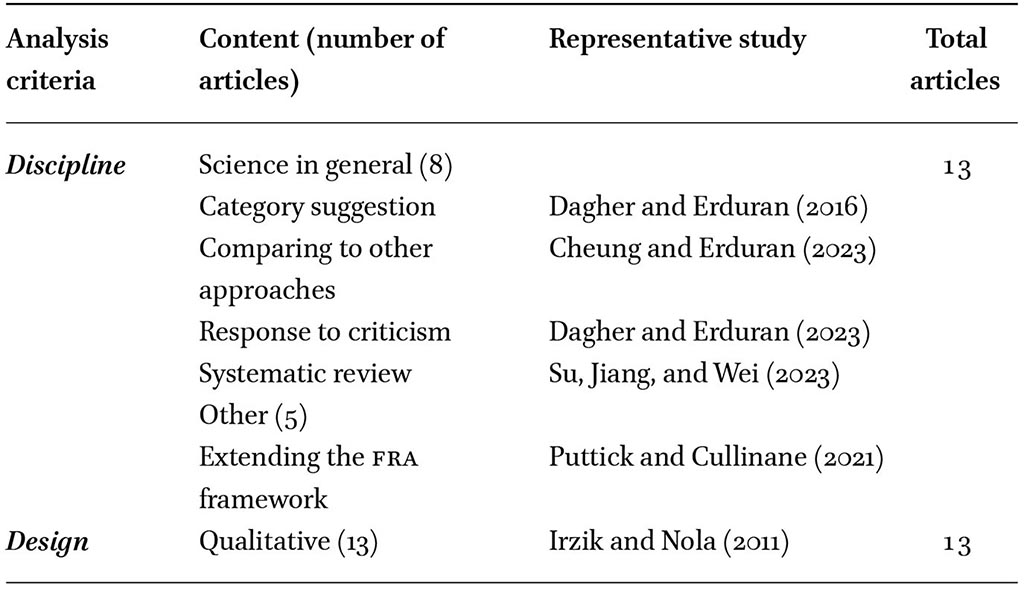
The results of analyzing research trends in theoretical and review studies related to FRA-to-NOS are presented in Table 10.
Research trends in theoretical and review studies
Citation: Asia-Pacific Science Education 10, 2 (2024) ; 10.1163/23641177-bja10083
Of the 13 studies reviewed, eight focused on general discussions of “science” rather than specific disciplines such as physics, chemistry, biology, or geoscience. The remaining five studies applied FRA-to-NOS to reveal the NOS and science education in related fields, such as engineering (e.g., Aydın-Günbatar & Roehrig, 2023; Barak, Ginzburg, & Erduran, 2022), geography (e.g., Puttick & Cullinane, 2021), and STEAM education (e.g., Ortiz-Revilla, Adúriz-Bravo, & Greca, 2020).
First, research has been conducted on the general application and adaptation of FRA-to-NOS in science. Unlike the CV, which provides a fixed list of NOS elements, FRA-to-NOS organizes them into categories that can evolve over time (Irzik & Nola, 2011). This flexibility is a key advantage of FRA-to-NOS over the CV. Since the publication of the initial FRA-to-NOS study in 2011, a steady flow of research has expanded NOS categories (e.g., Dagher & Erduran, 2016; Irzik & Nola, 2011, 2023; Kaya et al., 2018). An early version of FRA-to-NOS categories was introduced by Irzik and Nola (2011), and the 11 categories detailed in Section 2 were later proposed by Dagher and Erduran (2016).
Kaya et al. (2018) further discussed renaming some categories, such as changing “financial system” to “economics of science” and adding an “entrepreneurship” category. Additionally, Irzik and Nola (2023) proposed adding a “reward system” category. Other general science studies focused on analyzing the relative strengths of FRA-to-NOS compared to the CV and other NOS frameworks (e.g., Cheung & Erduran, 2023), contributions to FRA-to-NOS research and responses to critiques (e.g., Dagher & Erduran, 2023; Erduran, Dagher, & McDonald, 2019), and systematic reviews of studies analyzing textbooks and curricula using the FRA framework (Su, Jiang, & Wei, 2023).
Second, FRA-to-NOS has been applied to science and science education discussions in other fields. For example, FRA-to-NOS has been used to define the nature of engineering (e.g., Aydın-Günbatar & Roehrig, 2023; Barak, Ginzburg, & Erduran, 2022) and the nature of geography (e.g., Puttick & Cullinane, 2021). In STEM or STEAM fields, FRA-to-NOS has been employed to compare the nature of multiple subjects and discuss the direction of STEM education (e.g., Ortiz-Revilla, Adúriz-Bravo, & Greca, 2020). Additionally, the “aims and values” category of FRA-to-NOS has been used to explore learners’ ways of knowing in artificial intelligence and science (e.g., Cheung et al., 2024).
In terms of research design, all 13 studies employed qualitative methodologies. FRA-to-NOS fundamentally addresses the question of what science is (e.g., Irzik & Nola, 2011), necessitating an in-depth exploration of the concepts and structures of NOS. This is naturally aligned with qualitative research approaches, which are essential for expanding, renaming, and introducing new categories within FRA-to-NOS. These methods provide a comprehensive and contextual understanding of how scientific knowledge is constructed and validated, which is central to the study of NOS.
5.2.2 Textbook and Curriculum Analysis Research
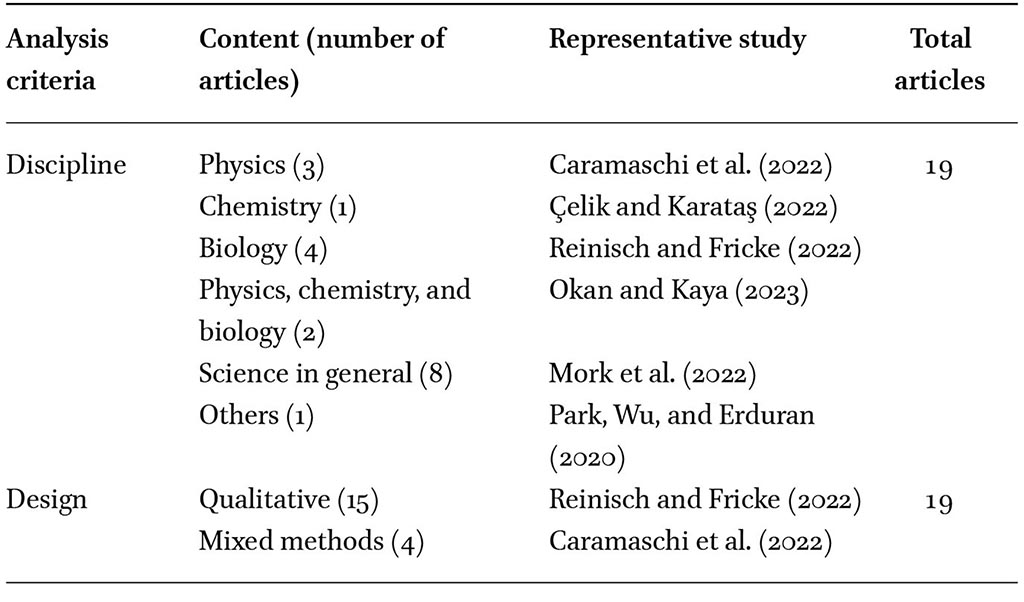
Research on textbook and curriculum analysis using the FRA framework has been conducted across various scientific disciplines, as shown in Table 11.
Research trends of textbook and curriculum analysis research
Citation: Asia-Pacific Science Education 10, 2 (2024) ; 10.1163/23641177-bja10083
Three studies focused on the analysis of physics textbooks or curricula, one on chemistry, and four on biology. Additionally, two studies analyzed curricula in physics, chemistry, and biology simultaneously, while eight studies examined general science curricula or textbooks. One further study analyzed STEM curricula (e.g., Park, Wu, & Erduran, 2020). Although research spans multiple scientific fields, the number of specific studies remains limited across all disciplines.
Considering it has been approximately 13 years since FRA-to-NOS was first introduced, this time frame has been relatively short compared to the broader field of NOS research. Moreover, the first study to propose a strategy for applying the categorical system outlined in FRA-to-NOS for curriculum analysis was published by Kaya and Erduran in 2016, making this research area less than a decade old.
Despite the limited number of studies, the findings are relatively consistent across published papers. For instance, studies analyzing physics curricula (e.g., Caramaschi et al., 2022) have reported that content elements categorized under “science as an epistemic-cognitive system” were more prevalent than those under “science as a social-institutional system.” Specifically, content related to “scientific knowledge,” “scientific practice,” “methods and methodological rules,” and “aims and values” were more prominent, whereas sub-categories related to the “social-institutional system” were less prevalent or, in some cases, entirely absent. Studies analyzing biology textbooks (e.g., Reinisch & Fricke, 2022) have similarly identified a significant lack of content elements from the “science as a social-institutional system” category. Mork et al. (2022), who analyzed general science curricula, found comparable results. Similarly, Çelik and Karataş (2022), in their analysis of chemistry textbooks, suggested that more content elements from the “science as a social-institutional system” category should be incorporated.
In terms of research design, 15 studies employed a qualitative research approach, while four used a mixed-methods approach. In textbook and curriculum analysis studies, qualitative content analysis is commonly used as the primary methodology. In this approach, the 11 sub-categories of FRA-to-NOS serve as coding labels, with sentences in curricula or textbooks being classified according to these categories based on their content. Additionally, previous studies have frequently employed “epistemic network analysis” (Shaffer, Collier, & Russ, 2016) in mixed-methods designs. This methodology provides a visual representation of the structural relationships within the data, allowing researchers to identify not only which NOS sub-categories are present in a course or textbook but also how they are interconnected and emerge as an overall framework (Caramaschi et al., 2022).
As shown in Table 12, we analyzed the countries whose textbooks or curricula each study targeted. Fourteen studies analyzing textbooks and curricula using FRA have been conducted in Asian countries, six in Europe, two in the Americas, and one in Africa. By country, Türkiye and South Korea have the highest number of studies on textbooks and curricula, followed by Norway, Taiwan, Germany, and the United States. Overall, FRA-based studies on textbook and curriculum analysis published between 2011 and April 2024 have primarily focused on Asia, with a significant emphasis on Türkiye and South Korea.
Nation of origin of textbooks and curricula analyzed in studies
Citation: Asia-Pacific Science Education 10, 2 (2024) ; 10.1163/23641177-bja10083
5.2.3 Research on Program Proposals and Analysis of Teaching Methodology Effectiveness
Table 13 presents the trends in studies that proposed training methodologies or developed educational programs and analyzed their effectiveness. The studies spanned various scientific domains: three focused on chemistry, two on biology, one on geoscience, and one addressed physics, biology, and geoscience simultaneously. Additionally, two studies fell under other categories, while 10 discussed science in general. Although the research covered a range of scientific fields, the overall number of studies remained limited.
Research trends in program proposals and teaching methodology effectiveness
Citation: Asia-Pacific Science Education 10, 2 (2024) ; 10.1163/23641177-bja10083
Research in this area has introduced several pedagogical approaches. For instance, Kampourakis (2016) suggested that the CV and FRA-to-NOS are complementary in teaching and learning NOS. Kampourakis proposed using the CV as the starting point for teaching NOS and FRA as the endpoint. His work emphasizes addressing students’ preconceptions about science through the CV and expanding their perspectives with FRA.
The FRA framework has been shown to be effective in improving students’ knowledge and attitudes toward NOS. Çilekrenkli and Kaya (2023) found that science education using the FRA framework was more successful in promoting NOS understanding than regular science classes. Specifically, FRA-based NOS education offers a richer exploration of the socio-institutional aspects of NOS (Akbayrak & Kaya, 2020). Similarly, Satanassi et al. (2023) demonstrated that the FRA framework could shift students’ attitudes toward NOS, encouraging them to appreciate its complexity and multidimensionality. Additionally, research by Ju, Cho, and Paik (2023) showed that FRA-based chemistry education using historical episodes was effective in shaping students’ perceptions of NOS. Other studies proposed models for integrating the FRA framework into biology education.
The research indicated that NOS instruction using the FRA framework should be explicitly presented to students, much like NOS instruction utilizing the CV (Chanetsa & Ramnarain, 2023). The FRA framework also offers strategies for distinguishing science from pseudoscience in teaching programs (Park & Brock, 2022). Iterative case studies based on the FRA framework can build tacit knowledge that helps students differentiate between science and non-science.
Of the 19 studies included in this category, 11 employed qualitative research designs (e.g., Satanassi et al., 2023), while the remaining eight used mixed-methods approaches (e.g., Akbayrak & Kaya, 2020). Understanding NOS can present challenges for elementary and secondary school students (Bybee, 2008). Consequently, quantitative tests have often revealed students’ misunderstandings, leading to varied responses (Ayala-Villamil & García-Martínez, 2021). This highlights the necessity of employing both qualitative and quantitative methods to fully understand students’ perceptions of NOS. Therefore, it is unsurprising that studies relying solely on quantitative approaches were rare.
Of the eight mixed-methods studies, five used the RFNQ, developed by Kaya et al. (2019), as their quantitative instrument. The RFNQ is a 5-point Likert-scale questionnaire with 70 items: 38 to assess “cognitive-epistemic” aspects and 32 to evaluate “social-institutional” aspects of science. Originally designed to investigate PST s’ perceptions, the RFNQ was later adapted for elementary school students (RFN student questionnaire) by Çilekrenkli and Kaya (2023). Of the 64 studies in this review, the RFNQ is the only instrument specifically designed for FRA-to-NOS research, making it the dominant quantitative tool in this field.
Most of the research in this area has focused on PST s. Seven of the 19 studies specifically targeted PST s, while one study each focused on elementary, middle, and high school students. Only one study targeted IST s. The five studies categorized as other took a theoretical approach rather than focusing on the validation of teaching methodologies in school settings (e.g., Kampourakis, 2016). Since teachers’ perceptions of NOS can strongly influence students’ conceptions of science (Gallager, 1991), research on PST s – who will shape future science education – is particularly important. The existence of a validated RFNQ tailored to PST s also makes research in this area more accessible and valuable.
Information on countries with teaching and learning programs or methodologies developed in the context of FRA-to-NOS is shown in Table 14. Research on these programs and methodologies has primarily been conducted in Asia. Five studies took place in European countries, one in the Americas, and one in Africa. Türkiye has the highest number of studies, followed by South Korea and Norway.
Countries where teaching and learning programs (or methodologies) were applied
Citation: Asia-Pacific Science Education 10, 2 (2024) ; 10.1163/23641177-bja10083
5.2.4 Survey Development and Perception Studies
Table 15 presents the results of analyzing trends in survey development and perception studies. All 12 studies fell under the science in general category. Notably, five of the 12 studies focused solely on PST s, while three targeted IST s. Additionally, one study examined both middle school students and IST s, another targeted undergraduates and PST s, one study focused on scientists, and the remaining study was categorized as other.
Research trends in survey development and perception studies
Citation: Asia-Pacific Science Education 10, 2 (2024) ; 10.1163/23641177-bja10083
Nationality of respondents in survey development and perception research
Citation: Asia-Pacific Science Education 10, 2 (2024) ; 10.1163/23641177-bja10083
One key finding in this area comes from studies targeting scientists. Wu and Erduran (2024) explored scientists’ perceptions of NOS, revealing that scientists found the FRA framework to be a suitable model for characterizing NOS. Their views and interpretations of NOS aligned with the FRA framework, highlighting the importance of including scientists’ perspectives in NOS research. Given that NOS research involves defining what science is (Harding & Hare, 2000), understanding how scientists perceive NOS is crucial. Wu and Erduran’s (2024) study validated the FRA framework’s suitability in this context.
Additionally, Takriti et al. (2023) found that PST s in the United Arab Emirates demonstrated a better understanding of the social-institutional aspects of NOS than they did to the cognitive-epistemic aspects. In contrast, Peters-Burton, Dagher, and Erduran (2023) found that their sample of primary and secondary school students in the United States had a weak grasp of the social-institutional aspects of science. These findings suggest that perceptions of NOS vary depending on the target audience and geographic location.
When examining the study designs, three studies employed only quantitative measures, four used qualitative analysis, and five adopted a mixed-methods approach. Of the eight studies that incorporated quantitative measurement tools (either solely quantitative or mixed), half utilized the RFNQ.
There has been consensus that qualitative research is crucial for studying students’ learning activities within specific classroom settings (Creswell, 2007). However, quantitative research, which can identify broader trends (Seong & Si, 2006), also provides valuable insights for FRA-to-NOS studies. Consequently, research in this area has employed diverse study designs, including quantitative, qualitative, and mixed-methods approaches. As highlighted in Section 5.2.3, the RFNQ has been the most widely used tool for perception surveys. For example, Takriti et al. (2022) translated the RFNQ, originally developed in English, into Arabic, opening opportunities for its use in a diverse cultural and linguistic contexts.
The nationality of respondents in survey development and perception research is shown in Table 16. As with other research topics, Asia has the highest number of studies, followed by Europe and the Americas, with no studies conducted in Africa. Türkiye was the most frequently studied country, followed by the United Arab Emirates.
6 Research Gaps
6.1 Need for Further Research across All Areas
According to a previous study by Jho (2018), there were approximately 356 NOS studies indexed in SSCI and A&HCI from 1965 to 2017 in the field of science education. Another study by Lee, Hwang, and Chung (2021) identified 123 NOS studies in Korean science education from 1991 to 2020. In other words, NOS has been relatively well researched within science education. However, NOS studies utilizing the FRA have remained exceedingly rare.
Although many NOS studies have been conducted, most rely on the CV, and this approach is steadily increasing in use (Su, Jiang, & Wei, 2023). However, FRA-to-NOS (or the RFN), which has gained influence since 2011, offers several clear advantages over the CV. FRA-to-NOS allows for a broader understanding of science, provides a more in-depth account of the social-institutional aspects of science, is philosophically neutral, and permits the fluid addition and discussion of NOS categories (Irzik & Nola, 2023). Most importantly, by describing the relationship between disciplines as one of resemblance, FRA-to-NOS allows for a distinction between domain-general and domain-specific sciences, while also providing an integrative perspective (Erduran & Dagher, 2014). Therefore, an increase in research utilizing FRA-to-NOS is necessary to enhance our understanding of this approach and expand knowledge related to its application in the field.
When we advocate for further research across all fields, this includes both topical breadth and geographic diversity. Collectively, Tables 11, 13, and 15 indicate that FRA research has been relatively sparse outside of Asia. Although the volume of FRA studies in Asia has still been small compared to CV-based NOS studies, even fewer attempts have been made in Europe, the Americas, and Africa.
Even within Asia, where most FRA research has been conducted, there is a need to diversify studies across different cultures. It is well known that science tends to be perceived differently across cultures (Ma, 2012; Weinstein, 1998). Asia is home to numerous religions, including Christianity, Buddhism, and Islam, and a range of ethnicities. FRA-to-NOS is more likely than the traditional CV to capture these socio-cultural differences, as it encompasses categories such as the aims and values of science and the social values of science, covering areas from scientific methods to funding structures.
South Korea, in particular, has recently completed a curriculum revision that is set to be implemented in schools. Like the 2015 curriculum, the 2022 curriculum included the requirement to teach the role and value of science and its interaction with society, economy, and culture (MOE, 2022). However, one of the challenges with the 2015 curriculum was the lack of specific teaching and learning strategies for NOS (Kim, Shin, & Noh, 2022). Unfortunately, this issue has persisted in the 2022 curriculum. NOS education based on FRA can help teachers organize their lessons by providing visual aids to facilitate NOS instruction. The “FRA wheel,” mentioned in the introduction, was proposed by Erduran et al. (2021) as both a pedagogical resource and a classroom tool to encourage student discussions. This differs from the CV list, as FRA uniquely makes NOS elements explicit and visualizes their interactions, supporting more comprehensive NOS instruction.
6.2 Subject-Specific Research Is Needed
Current FRA-to-NOS research has been dominated by studies focusing on general science rather than specific scientific disciplines such as physics, chemistry, biology, and earth science. Since FRA-to-NOS is designed to explain the nature of science, it is understandable that much of the discussion is centered around science in general.
However, it is essential for FRA-to-NOS research to focus not only on general science but also on specific disciplines. Previous studies have suggested that NOS should be integrated with the scientific knowledge taught in school science classes, rather than treated as a separate content area (An & Kim, 2011). Embedding NOS within specific scientific contexts enhances student understanding, as it allows NOS to be connected to science content and processes (Cho, Lee, & Paik, 2021). Moreover, school science education in Korea has tended to be organized around distinct disciplines such as physics, chemistry, biology, and geoscience.
For example, FRA-to-NOS lessons organized around the Boyle and Hobbes debate in chemistry were found to be effective (Ju, Cho, & Paik, 2023). Exploring specific scientific histories and debates can help cultivate the NOS perception required by FRA-to-NOS. Similar research – such as developing a teaching and learning model based on FRA-to-NOS for biology classes (Inêz, Brito, & El-Hani, 2023) – would further contribute to the practical application of FRA-to-NOS.
Teaching and learning approaches using FRA-to-NOS can explicitly differentiate science from pseudoscience. Park and Brock (2022) proposed a FRA-to-NOS teaching strategy to separate science from pseudoscience, suggesting that students can gain tacit knowledge of “features of pseudoscience” through case-based learning. These approaches, discussed in general science, need to be adapted and strategized for specific science disciplines. For instance, how do zoology and cryptozoology differ? These kinds of questions can be addressed in the classroom for each scientific discipline.
In summary, theoretical frameworks and teaching strategies discussed within general science need to be adapted to specific subjects such as physics, chemistry, biology, and geoscience. This adaptation would allow for a seamless application of FRA-to-NOS in school settings. According to previous studies, NOS is one of the most challenging areas for science teachers to incorporate into their teaching (Kaya et al., 2019). Therefore, subject-specific research is needed to enhance the applicability of NOS in school curricula and improve students’ awareness of NOS.
6.3 Research Is Needed for Undergraduate and Graduate Students
After analyzing research trends by topic, we identified a significant gap in FRA-to-NOS education for undergraduate and graduate students within the field of science education. The recent pandemic has underscored the importance of understanding NOS. While mainstream media and health authorities disseminated scientifically credible information about COVID-19, much of the public’s exchange of information on social media led to confusion (Bichara, Dagher, & Fang, 2022). In this context, FRA-based NOS education, which targets a broader range of subjects beyond just K-12 students, PST s, and IST s, should be expanded. Regardless of their major, future politicians, economists, philosophers, and sociologists should be equipped to make informed decisions about science-related issues (Akgun & Kaya, 2020).
Additionally, NOS education for science majors at the undergraduate and graduate levels requires further exploration. Previous studies have indicated that understanding of NOS can vary significantly at the graduate level (Jehng, Johnson, & Anderson, 1993). Graduate students play a crucial role in scientific research due to their hands-on scientific experience and potential to become future scientists (Koksal & Sahin, 2013). Likewise, undergraduate science majors need a solid understanding of NOS to conduct epistemologically sound research and make informed decisions in everyday life. Assessing their comprehension of NOS is essential to improving their academic programs (Koksal & Sahin, 2013).
The FRA framework offers a broader understanding of science than the CV. While the CV emphasizes the tentativeness of science, potentially leading to misunderstandings about its reliability, FRA-to-NOS encourages a broader discussion about the trustworthiness of science (Erduran & Dagher, 2014). FRA’s integration of cognitive-epistemic and social-institutional aspects can enhance the reliability of scientific knowledge during the teaching and learning process.
6.4 Need for Research to Diversify Measurement Instruments
The study revealed that the only specialized perception survey tool for FRA-to-NOS is the RFNQ. The RFNQ has been widely used as a quantitative measurement instrument in FRA-to-NOS research, applied to various groups including PST s (e.g., Kaya et al., 2019), IST s (e.g., Schofield et al., 2023), university students (e.g., Akgun & Kaya, 2020), elementary students (e.g., Çilekrenkli & Kaya, 2023), and middle school students (e.g., Akbayrak & Kaya, 2020). This instrument effectively investigates perceptions or tracks changes in FRA-to-NOS (or the RFN) perceptions.
We propose three future research directions. First, RFNQ types should be diversified. Second, researchers must consider different cultural and social contexts when using RFNQ s. Third, new validation tools should be developed alongside RFNQ s. Below, we elaborate on each suggestion.
The RFNQ currently consists of 70 questions, with 54 covering the NOS categories defined by FRA, and an additional 16 questions targeting PST s. Respondents rate their agreement with statements on a 5-point Likert scale. While this scale provides useful data, it may oversimplify students’ responses and fail to capture the complexity of their perceptions of NOS.
Some researchers have begun to address this issue. For instance, Akbayrak and Kaya (2020) supplemented RFNQ questions with interviews, as did Ju, Cho, and Paik (2023). Adding interview protocols to the RFNQ could yield more nuanced insights into students’ perceptions. For future research, scholars can look to instruments like the Views of Nature of Science or Student Understanding of Science and Scientific Inquiry Instrument from CV-based NOS research. Both tools offer a mix of Likert-scale questions and narrative prompts (Ayala-Villamil & García-Martínez, 2021; Liang et al., 2009), which could serve as models for diversifying the RFNQ.
Additionally, researchers must consider linguistic and terminological differences across countries to ensure consistent interpretation of RFNQ results. For example, terms like “scientific practice,” which are explicit in U.S. curricula (e.g., NGSS; NRC, 2013), may not be as familiar to educators in countries like South Korea, where similar concepts are included but not labeled as “scientific practice.” Understanding these differences will help reduce confusion and ensure more accurate cross-cultural comparisons.
Last, there is a need for diverse measurement tools beyond the RFNQ. For example, Barak, Yachin, and Erduran (2023) used drawings to investigate NOS perceptions, while Buber and Coban (2023) developed the Nature of Science Understanding Questionnaire within Associated Approaches, synthesizing FRA-based NOS discussions. Expanding the range of measurement instruments would facilitate FRA-to-NOS research across a variety of classroom contexts.
7 Conclusion
The aim of this study was to analyze research trends in FRA-to-NOS, which was reconceptualized as the RFN, which has recently gained traction in NOS research. To achieve this, we first employed a quantitative bibliometric approach using the Bibliometrix package in R to explore trends in article publication by year, journal information, author details, and citation data. Second, we analyzed trends by categorizing articles based on topic, scientific field, research subjects, and research design type using a literature analysis framework.
The results showed that the field of FRA-to-NOS is growing over time, with the journal Science & Education covering FRA-to-NOS most extensively. We identified the most influential authors and articles in this field. Using the literature analysis framework, we found that “textbook and curriculum analysis research” and “program (or teaching methodology) proposal and effectiveness analysis” were the most researched topics, each with 19 articles, followed by “survey development and perception research,” “theoretical research,” and “review research.” We also observed that current FRA-to-NOS research has focused more on general areas of science rather than specific disciplines such as physics, chemistry, biology, and geoscience and that research designs centering on PST s and mixed methods are most commonly applied. Additionally, the RFNQ is the most utilized perception survey instrument.
Based on these findings, we offer the following suggestions to address the identified research gaps:
First, FRA-to-NOS research should be expanded across all topics and regions. The number of NOS studies based on the CV is vast and continues to grow (Su, Jiang, & Wei, 2023). Given the clear advantages of FRA over the CV, increasing FRA-based NOS research will enhance NOS education significantly. Additionally, research should be conducted across diverse regions, as NOS perceptions can vary based on cultural backgrounds. FRA, with its broader range of categories, is well-suited to capture these cultural differences.
Second, subject-specific research is needed, especially FRA-to-NOS research tailored to physics, chemistry, biology, and geoscience. In school classrooms, students are primarily exposed to science as distinct subjects. Therefore, research is needed on teaching and learning methods that can be practically applied within these specific disciplines.
Third, there is a need for FRA-to-NOS research targeting undergraduate and graduate students. Compared to studies with K–12 students, PST s, and IST s, there are fewer studies involving undergraduate and graduate students in science education. As future decision-makers on scientific issues in society, they require a rich understanding of NOS. NOS education should also target undergraduate and graduate students who will become scientists, as research has suggested that it can improve their research skills (Jehng, Johnson, & Anderson, 1993; Koksal & Sahin, 2013).
Finally, the perception survey instruments should be diversified. The RFNQ consists of 70 questions on a 5-point Likert scale. It may be necessary to add more narrative questions or include specific interview protocols to capture the nuanced perceptions of students. Additionally, the instrument needs to be utilized in multiple cultural contexts. Terms such as ‘scientific practice’ may be common in some countries but either unfamiliar or interpreted differently in others.
8 Implications and Limitations
The ability to discern reliable information from unreliable sources amid a vast array of information is called scientific literacy, and awareness of NOS is essential to developing this literacy. In this context, FRA, which has recently gained attention as an approach to NOS, has the advantage of overcoming the shortcomings of the CV while offering a more dynamic picture of science.
This study can be useful because it presents an overarching view of FRA-to-NOS research. For researchers already working in this area, it provides several research directions, and for newcomers, it offers a comprehensive overview of the field. However, this study has the following limitations. First, the articles covered were those indexed in ESCI, SCI, SCIE, SSCI, and A&HCI, retrieved from the Web of Science up to April 2024. Therefore, many research articles published from May 2024 onward were excluded from the analysis. Additionally, research articles registered in other indexes (e.g., KCI) were also excluded. We also did not summarize the specific implications of each topic as would be done in a systematic review, which remains an area for future research.
Funding
This work was supported by the Ministry of Education of the Republic of Korea and the National Research Foundation of Korea (NRF-2021S1A5C2A04089214).
Ethical Consideration
The data reported in this study does not require human subjects’ approval.
About the Authors
Kyungsuk Bae is a research professor at the Institute of Integrated Science Education at Dankook University. His research interests encompass the philosophy and history of science, systems thinking, and education for sustainability. He is actively engaged in the integration of these areas into science education.
Yeon-A Son is a professor in the Department of Science Education at Dankook University. Her work revolves around the development of educational programs aimed at enhancing the professionalism of both PST s and IST s, with a particular focus on education for sustainable development and integrated science education. Furthermore, she is dedicated to establishing a comprehensive theory and educational model for sustainable happiness education within the community.
References
Abd-El-Khalick, F., Bell, R. L., & Lederman, N. G. (1998). The nature of science and instructional practice: Making unnatural natural. Science Education, 82(4), 417–436.
Akbayrak, M., & Kaya, E. (2020). Fifth-grade students’ understanding of social-institutional aspects of science. International Journal of Science Education, 42(11), 1834–1861.
Akgun, S., & Kaya, E. (2020). How do university students perceive the nature of science? Science & Education, 29, 299–330.
An, Y. L., & Kim, H. J. (2011). Recognition of the nature of science by preservice science teachers on the basis of the atomic model. Journal of the Korean Association for Science Education, 31(4), 539–556.
Aria, M., & Cucurullo, C. (2017). Bibliometrix: An R-tool for comprehensive science mapping analysis. Journal of Informetrics, 11, 959–975.
Ayala-Villamil, L.-A., & García-Martínez, Á. (2021). VNOS: A historical review of an instrument on the nature of science. Interdisciplinary Journal of Environmental and Science Education, 17(2), e2238.
Aydın-Günbatar, S., & Roehrig, G. H. (2023). Elaborating nature of engineering through family resemblance approach. Science & Education. https://doi.org/10.1007/s11191-023-00452-5.
Bae, K., Oh, J. Y., Choi, J. H., Moon, Y. J., & Son, Y. A. (2022). An overview of research trends in ‘aesthetic science-education’: Focused on bibliographic analysis using bibliometrix package in the R program. Journal of the Korean Association for Science Education, 42(5), 543–555.
Barak, M., Ginzburg, T., & Erduran, S. (2022). Nature of engineering: A cognitive and epistemic account with implications for engineering education. Science & Education, 33, 679–697.
Barak, M., Yachin, T., & Erduran, S. (2023). Tracing preservice teachers’ understanding of nature of science through their drawings and writing. Research in Science Education, 53, 507–523.
Bichara, D. B., Dagher, Z. R., & Fang, H. (2022). What do COVID-19 tweets reveal about public engagement with nature of science? Science & Education, 31, 293–323.
Buber, A., & Coban, G. U. (2023). The development of nature of science understanding questionnaire within associated approaches. Science & Education, 32, 1075–1137.
Bugingo, J. B., Yadav, L. L., Mugisha, I. S., & Mashood, K. K. (2024). Improving teachers’ and students’ views on nature of science through active instructional approaches: A review of the literature. Science & Education, 33, 29–71.
Bybee, R. (2008). Scientific literacy, environmental issues, and PISA 2006: The 2008 Paul F-Brandwein lecture. Journal of Science Education and Technology, 17(6), 566–585.
Caramaschi, M., Cullinane, A., Levrini, O., & Erduran, S. (2022). Mapping the nature of science in the Italian physics curriculum: From missing links to opportunities for reform. International Journal of Science Education, 44(1), 115–135.
Çelik, S., & Karataş, F. Ö. (2022). Representation of nature of science in chemistry textbooks: Employing reconceptualized family resemblance approach as a framework. Hacettepe University Journal of Education, 37(3), 1200–1212.
Chanetsa, T., & Ramnarain, U. (2023). The effect of textbook analysis as a teacher professional development tool on teacher understanding of nature of science. Science & Education. https://doi.org/10.1007/s11191-023-00442-7.
Cheung, K. K. C., & Erduran, S. (2023). A systematic review of research on family resemblance approach to nature of science in science education. Science & Education, 32, 1637–1673.
Cheung, K. K. C., Long, Y., Liu, Q., & Chan, H. Y. (2024). Unpacking epistemic insights of artificial intelligence (AI) in science education: A systematic review. Science & Education. https://doi.org/10.1007/s11191-024-00511-5.
Cho, E., Kim, C. J., & Choe, S. (2018). A study on the plurality of nature of science in science education. Journal of the Korean Association for Science Education, 38(5), 721–738.
Cho, E., Lee, J., & Paik, S. H. (2021). A study of pre-service chemistry teachers’ perceptions on NOS – Focusing on Boyle’s air pump experiment –. Journal of the Korean Chemical Society, 65(5), 333–346.
Çilekrenkli, A., & Kaya, E. (2023). Learning science in context: Integrating a holistic approach to nature of science in the lower secondary classroom. Science & Education, 32, 1435–1469.
Clough, M. P. (2011). Teaching and assessing the nature of science: How to effectively incorporate the nature of science in your classroom. Science Teacher, 78(6), 56–60.
Creswell, J. W. (2007). Qualitative inquiry & research design: Choosing among five approaches. Sage Publications, Inc.
Dagher, Z. R., & Erduran, S. (2016). Reconceptualizing the nature of science education: Why does it matter? Science & Education, 25, 147–164.
Dagher, Z. R., & Erduran, S. (2023). To FRA or not to FRA: What is the question for science education? Science & Education, 32, 1247–1264.
Douglas, H. (2023). The importance of values for science. Interdisciplinary Science Reviews, 48(2), 251–263.
Driver, R., Leach, J., Millar, R., & Scott, P. (1996). Young people’s images of science. Open University Press.
Egghe, L. (2006). Theory and practice of the g-Index. Scientometrics, 69, 131–152.
Erduran, S., & Dagher, Z. R. (2014). Reconceptualizing nature of science for science education: Scientific knowledge, practices and other family categories. Springer.
Erduran, S., & Kaya, E. (2018). Drawing nature of science in pre-service science teacher education: Epistemic insight through visual representations. Research in Science Education, 48(6), 1133–1149.
Erduran, S., Dagher, Z. R., & McDonald, C. V. (2019). Contributions of the family resemblance approach to nature of science in science education: A review of emergent research and development. Science & Education, 28, 311–328.
Erduran, S., Kaya, E., Cilekrenkli, A., Akgun, S., & Aksoz, B. (2021). Perceptions of nature of science emerging in group discussions: A comparative account of pre-service teachers from Turkey and England. International Journal of Science and Mathematics Education, 19(7), 1375–1396.
Gallager, J. J. (1991). Prospective and practicing secondary school science teachers’ knowledge and beliefs about the philosophy of science. Science Education, 75(1), 121–133.
Hansson, L., & Yacoubian, H. A. (2020). Nature of science for social justice: Why, what and how? In H. A. Yacoubian & L. Hansson (Eds.), Nature of science for social justice (pp. 1–21). Springer.
Harding, P., & Hare, W. (2000). Portraying science accurately in classrooms: Emphasizing open-mindedness rather than relativism. Journal of Research in Science Teaching, 37(3), 225–236.
Hirsch, J. E. (2005). An index to quantify an individual’s scientific research output. Proceedings of the National Academy of Sciences of the United States of America, 102(46), 16569–16572.
Höttecke, D., & Allchin, D. (2020). Reconceptualizing nature-of-science education in the age of social media. Science Education, 104(4), 641–666.
Inêz, T. G., Brito, B. P. L., & El-Hani, C. N. (2023). A model for teaching about the nature of science in context of biological education. Science & Education, 32, 231–276.
Irzik, G., & Nola, R. (2011). A family resemblance approach to the nature of science for science education. Science & Education, 20, 591–607.
Irzik, G., & Nola, R. (2014). New directions for nature of science research. In M. R. Matthews (Ed.), International handbook of research in history, philosophy, and science teaching (pp. 999–1021). Dordrecht: Springer.
Irzik, G., & Nola, R. (2023). Revisiting the foundations of the family resemblance approach to nature of science: Some new ideas. Science & Education, 32, 1227–1245.
Jehng, J. J., Johnson, S. D., & Anderson, R. C. (1993). Schooling and students’ epistemological beliefs about learning. Contemporary Educational Psychology, 18, 23–35.
Jho, H. (2018). Trends in research on the nature of science: A bibliometric analysis with R-mapping tool. Journal of Learner-Centered Curriculum and Instruction, 18(18), 937–956.
Jho, H., & Lee, B. (2019). Analysis of research trends in energy education using bibliometrics. Journal of Energy and Climate Change Education, 9(3), 241–251.
Ju, H., Cho, E. H., & Paik, S. H. (2023). Impact of materials based on the family resemblance approach on pre-service chemistry teachers’ views of nature of science. Asia-Pacific Science Education, 9(1), 194–225.
Kampourakis, K. (2016). The “general aspects” conceptualization as a pragmatic and effective means to introducing students to nature of science. Journal of Research in Science Teaching, 53(5), 667–682.
Kaya, E., & Erduran, S. (2016). From FRA to RFN, or how the family resemblance approach can be transformed for science curriculum analysis on nature of science. Science & Education, 25, 1115–1133.
Kaya, E., Erduran, S., Aksoz, B., & Akgun, S. (2019). Reconceptualised family resemblance approach to nature of science in pre-service science teacher education. International Journal of Science Education, 41(1), 21–47.
Kaya, S., Erduran, S., Birdthistle, N., & McCormack, O. (2018). Looking at the social aspects of nature of science in science education through a new lens: The role of economics and entrepreneurship. Science & Education, 27, 457–478.
Kim, M., Shin, H., & Noh, T. (2022). The characteristics of NOS lessons by science teachers: In the context of ‘science inquiry experiment’ developed under the 2015 revised national curriculum. Journal of the Korean Chemical Society, 66(5), 362–375.
Kim, Y., Paik, S., Choi, S. Y., Kang, N. H., Maeng, S., & Joung, Y. J. (2015). Analysis on the trends of science education studies related to students’ science learning in Korea. Journal of Korean Association for Science Education, 35(4), 751–772.
Koksal, M. S., & Sahin, C. T. (2013). Understandings of graduate students on nature of science. I.J. Modern Education and Computer Science, 4, 43–48.
Lederman, N. G., Abd-El-Khalick, F., Bell, R. L., & Schwartz, R. S. (2002). Views of nature of science questionnaire: Toward valid and meaningful assessment of learners’ conceptions of nature of science. Journal of Research in Science Education, 39(6), 497–521.
Lederman, N. G., Lederman, J. S., & Antink, A. (2013). Nature of science and scientific inquiry as contexts for the learning of science and achievement of scientific literacy. International Journal of Education in Mathematics, Science and Technology, 1(3), 138–147.
Lee, B., & Jho, H. (2020). An overview of research trends in climate change education by bibliometric analysis. Journal of Energy and Climate Change Education, 10(2), 99–109.
Lee, N. H., Hwang, S. Y., & Chung, Y. L. (2021). Analysis on the trends of science education studies on nature of science in Korea. Journal of Research in Curriculum Instruction, 25(3), 218–233.
Li, C., Yu, J., & Li, G. (2023). Development of the representation of the nature of science in textbooks: The case of high school biology textbooks in mainland China. Science & Education, 21, 1749–1768.
Liang, L. L., Chen, S., Chen, X., Kaya, O. N., Adams, A. D., Macklin, M., & Ebenezer, J. (2009). Pre-service teachers’ views about nature of scientific knowledge development: An international collaborative study. International Journal of Science and Mathematics Education, 7, 987–1012.
Ma, H. (2012). The images of science through cultural lenses: A Chinese study on the nature of science. Rotterdam: SensePublishers.
Matthews, M. R. (2012). Changing the focus: From nature of science (NOS) to features of science (FOS). In M. S. Khine (Ed.), Advances in nature of science research: Concepts and methodologies (pp. 3–26). Dordrecht: Kluwer Academic Publishers.
McComas, W. F., Clough, M., & Almazroa, H. (1998). The role and character of the nature of science in science education. In W. F. McComas (Ed.), The nature of science in science education: Rationales and strategies (pp. 3–39). Dordrecht: Kluwer.
Ministry of Education [ MOE ]. (2022). 2022 Revised science curriculum. Ministry of Education.
Mork, S. M., Haug, B. S., Sørborg, Ø., Ruben, S. P., & Erduran, S. (2022). Humanising the nature of science: An analysis of the science curriculum in Norway. International Journal of Science Education, 44(10), 1601–1608.
National Research Council [ NRC ]. (2013). Next Generation Science Standards: For states, by states. The National Academies Press. https://doi.org/10.17226/18290.
Needham, R. (1975). Polythetic classification: Convergence and consequences. Man, 10(3), 349–369.
Okan, B., & Kaya, E. (2023). Exploring the inclusion of nature of science in Turkish middle school science textbooks. Science & Education, 32, 1515–1535.
Olson, J. K. (2018). The inclusion of the nature of science in nine recent international science education standards documents. Science & Education, 27, 637–660.
Ortiz-Revilla, J., Adúriz-Bravo, A., & Greca, M. (2020). A framework for epistemological discussion on integrated STEM education. Science & Education, 29, 857–880.
Park, E., & Hong, H. (2010). The effects of explicit instruction on nature of science for the science-gifted. Journal of the Korean Association for Science Education, 30(2), 249–260.
Park, W. M. (2020). Suggesting research methods to explore the nature of earth science: Applying the phenomenological approach and family resemblance approach to NOS. Journal of the Korean Association for Science Education, 40(1), 51–60.
Park, W., & Brock, R. (2022). Is there a limit to resemblances? Teaching about science and pseudoscience from a family resemblance perspective. Science & Education, 32, 1265–1286.
Park, W., Wu, J-Y., & Erduran, S. (2020). The nature of STEM disciplines in the science education documents from the USA, Korea and Taiwan: Focusing on disciplinary aims, values and practices. Science & Education, 29, 899–927.
Peters-Burton, E. E., Dagher, Z. R., & Erduran, S. (2023). Students, teacher, and scientists’ views of the scientific enterprise: An epistemic network re-analysis. International Journal of Science and Mathematics Education, 21, 347–375.
Puttick, S., & Cullinane, A. (2022). Towards the nature of geography for geography education: An exploratory account, learning from work on the nature of science. Journal of Geography in Higher Education, 46(3), 343–359.
Reinisch, B., & Fricke, K. (2022). Broadening a nature of science conceptualization: Using school biology textbooks to differentiate the family resemblance approach. Science Education, 106, 1375–1407.
Satanassi, S., Branchetti, L., Fantini, P., Casarotto, R., Caramaschi, M., Barelli, E., & Levrini, O. (2023). Exploring the boundaries in an interdisciplinary context through the family resemblance approach: The dialogue between physics and mathematics. Science & Education, 32, 1287–1320.
Schofield, L., Takriti, R., Rabbani, L., AlAmirah, I., Ioannidou, O., Alhosani, N., Elhoweris, H., & Erduran, S. (2023). Early years education teachers’ perceptions of nature of science. International Journal of Science Education, 45(8), 613–635.
Seong, T., & Si, K. (2006). Research methodology. Seoul: Hakjisa.
Shaffer, D. W., Collier, W., & Ruis, A. R. (2016). A tutorial on epistemic network analysis: Analyzing the structure of connections in cognitive, social, and interaction data. Journal of Learning Analytics, 3(3), 9–45.
Su, R., Jiang, Z., & Wei, B. (2023). Representations of nature of science in science textbooks. Science & Education. https://doi.org/10.1007/s11191-023-00475-y.
Takriti, R., Erduran, S., Tairab, H., Kaya, E., Alhosani, N., Rabbani, L., & Alamirah, I. (2022). Translation and validation of a questionnaire for measuring teachers’ views on nature of science. Research in Science & Technological Education. https://doi.org/10.1080/02635143.2022.2138846.
Takriti, R., Tairab, H., Alhosani, N., Elhoweris, H., Schofield, L., Rabbani, L., & Alamirah, I. (2023). Toward understanding science as a whole: Investigating preservice teachers’ perceptions about nature of science in the United Arab Emirates. Science & Education, 32, 1321–1361.
Weinstein, M. (1998). On the nature of science and its relation to culture. Robot World: Education, Popular Culture, and Science, 49, 23–50.
Wittgenstein, L. (1953). Philosophical investigation. New York: Wiley-Blackwell.
Wu, J-Y., & Erduran, S. (2024). Investigating scientists’ views of the family resemblance approach to nature of science in science education. Science & Education, 33, 73–102.
Xu, H., Cheng, Z., Wang, T., Wu, S., & Xiong, Y. (2022). Mapping neuroscience in the field of education through a bibliometrix analysis. Brain Science, 12, 1454.