


We look to America for the realization of what otherwise will be impossible to obtainâ reform in China.1
âµ
1 A Government in Waiting?
Kangâs vaulting ambitions for the Baohuanghui went far beyond the reach of other overseas Chinese voluntary associations, such as secret societies or clan- or district-based protective associations, to the point of declaring that any of the Chinaâs four hundred million people who were loyal to the emperor, the country, and the Chinese race could be members.2 From the beginning, Kang set no limits on the worldwide expansion of the Baohuanghui, the range of activities it would pursue, or the scale of the national issues it would address. In the 1899 Baohuanghui charter, he confidently promised monetary rewards and official appointments for Baohuanghui donors and leaders to be granted by a grateful Guangxu Emperor when he regained his throne, thus leading one to assume that Kang imagined the Baohuanghui to be laying the organizational foundation for a modern government and a participating citizenry. In North America, the organization came the closest to fulfilling Kangâs vision, but its development between 1900 and 1905 was due primarily to the energy and initiative of Kangâs deputies, local chapters, and members, rather than to Kangâs leadership, which had both constructive and destructive results.
During his five-year absence from North America, Kangâs many deputies traveled widely, leaving new Baohuanghui chapters in their wake. Along with chapters founded on the initiative of local Chinese, Kangâs party enjoyed âa period of phenomenal expansion,â especially between 1899 and 1901, as the reformists outstripped the revolutionaries in their contest for support.3 This strategy of building a party from the grass roots resembled a Western political campaign in which a candidateâs âsurrogatesâ do the legwork with local community leaders. It proved so successful for Kang that Sun later imitated it with his own political organization, the Tongmenghui (Revolutionary Alliance). Kangâs precursors were of such importance in developing the Baohuanghui and in personifying the reform movement for North Americans that their organizing tours in the United States are treated in some detail below.4
Most of Kangâs organizers were his former students, personally and ideologically close to him and trusted to transmit the reform message with both passion and fidelity to Kangâs platform. In only a few cases were newer followers from overseas Chinese communities sent into the field, and these were generally men whom Kang had personally come to know well, although they never earned the same trust as he bestowed on his students.
2.1 Liang Qitian
The first and one of the most indefatigable of Kangâs deputies was Liang Qitian, Liang Qichaoâs cousin and one of his âsworn brotherhoodâ in Japan who had tilted toward revolution. He spent four years organizing and reviving Baohuanghui chapters in North, Central, and South America. Liang arrived in Canada in March 1900, was reported to be in Portland in July and San Francisco in August before traveling widely in the United States. He went to Mexico sometime before June 1901 and probably visited countries in Central and South America before returning to the United States. Liang made a second trip to Mexico, Central, and South America in 1903 followed by a second tour of the United States. That year, he was reported by the Fort Worth Star-Telegram to be the vice president of the Baohuanghuiâs Mexico City chapter, and âwhen his work of organizing societies in the republic [of Mexico] is well-advanced, he will go to Europe, where he will
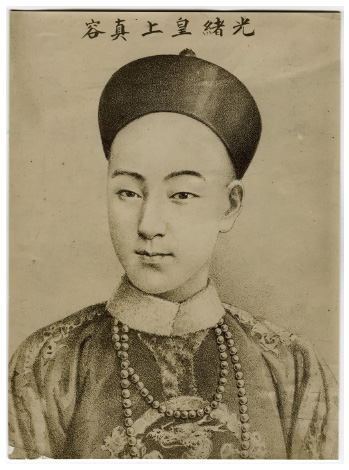
There sailed yesterday from Vancouver on the steamer Empress of India fifty prominent Chinese reformers from New York and Boston, twenty from Seattle and thirty from Vancouver, all bound for Macao and all wearing conspicuously displayed a button photograph of their Emperor,
Kwang Su. The Chinese Empire Reform Association of the World had received a cable dispatch in cipher from its leader, Kwang Yu Wie, instructing the association to send the leading members to Macao at once, where a council of war will be held to consider ways of raising an army among the members of the association to support the allied Powers.8
Wu Tingfang, the ever-vigilant Chinese minister in Washington, DC, notified the U.S. State Department about Liangâs presence and activities in the United States. As a result, when Liang arrived in San Francisco on August 27, 1900, Collector of Customs John P. Jackson investigated and reported to the Treasury Department that, upon having located Liang, he determined that âno actionâ should be taken against him because ânotoriety is just what he wants and I will not aid him in his designs,â and, furthermore, he hadnât violated the law. Jacksonâs report was forwarded to the State Department for consideration.9
Liang was a suitable envoy for Kang, as pictured in a full-page story in the Sunday magazine of the San Francisco Call a few days after his arrivalâa dignified young man in black skullcap and long scholarâs robes studded with buttons from various Baohuanghui chapters around the world.10 Accompanied by a Canadian Chinese who acted as English-language interpreter and political attaché, Liangâs style of travel set the pattern for subsequent Baohuanghui itinerants, blending organization and propaganda work with enthusiastic tourism and detailed observation and reports on anything that could be applicable for exploitation or imitation by the reformers. Liang, in a boast that could not be disproved, presented himself to the Call reporter as âthe only visitor to this shore who has known or even seen the Emperor, Kwang Hsu ⦠Certainly Leung Kai Tin is THE most remarkable Chinaman who has ever visited San Francisco.â Liang told the Call that âI was a student of Kang Yu Wei, and one of the scholars whom the Emperor gathered about him during his six months of busy reform.â He claimed also that he carried letters between the reformers and the emperor when meetings were no longer possible. In fact, during the Hundred Days, it is unlikely Liang Qitian was in Beijing at all, and only
All will soon be changed and the regeneration of China will follow. The inspiration comes from the land of glorious liberty (America), whose hospitality you now enjoy; the land of the flowery banner whose sons were the first great reformers. The immortal father of their country, Washington, has not only liberated Americans, but the history of his deeds is now reforming China.12
Liang Qitian was a prodigious organizer for the Baohuanghui, traveling far beyond cities and larger towns to mining and fishing villages of Montana and the Pacific Northwest (Washington, Oregon, and Idaho), where Liang Qichao later reported thirty-eight chapters by 1903â4.13 In towns where enthusiasm for reform was flagging or membership stagnant, Liang apparently revived chapters and expanded membership.14 Like Kang, Liang apparently reveled in tourism. He and his interpreter Gong Hee were thought to be âthe first tourists of their raceâ in Yellowstone Park and sent a bound, rice-paper Chinese book
Liangâs travels in Latin America will be recounted in Chapter 8, but he appears to have been the first of Kangâs disciples to investigate Mexican business opportunities. In June 1901, he wrote Tom Leung to entice Tom to invest in a land-buying pool that would engage in farming before selling the land at a tremendous profit.16 He also asked Tom to recruit âan agricultural expertâ who could look into raising silkworms on the plentiful mulberry trees, because âMexican people are crazy about Chinese silk goods,â and, with Mexicoâs heavy levies on silk goods, âwe will be able to make a great profit.â In the same letter, Liang said he had traveled to thirteen cities for the Baohuanghui and that the association had been established in Torreón under the initiative of the wealthy landowner and merchant Wong Foon Chuck (Huang Kuanzhuo), who had offered to hire one of Kangâs students as a speaker for the association and pay him $1,000 and expenses.
2.2 Xu Qin
Xu Qin (Xu Junmian, Xueâan, Xu Shiqin or Su Shih Chin, Choy So Kan) left his post as principal of the Datong School in Yokohama to join his classmate Liang Qitian in North America in May 1901. Xu was one of Kangâs first students, and his commitment to Kang was shown as early as the 1890s when he used his family fortune to pay rent for Kangâs school and subsidize the publication of Kangâs books. When Kang fled China, he turned to Xu to look after his family.17 Described by others as the disciple most trusted by Kang, the reliable and loyalâas well as fearlessly bluntâXu would be tapped to wrangle with the Baohuanghuiâs most challenging organizing tasks, traveling almost continuously on Kangâs behalf until 1912.18
Xu Qin arrived in San Francisco on the City of Peking on May 31, 1901, to be greeted at the dock by Consul General He You, who believed that Xu was
Qing officials would never again embarrass themselves by such public protests against the visiting reformers. Records show in 1903 that Chinaâs new minister, Liang Cheng (Liang Zhendong, Chentung Liang Cheng, Liang Pixu), asked the Department of State to exclude Liang Qichao, but for a reason not evident in these documents, Liang was able to enter unobstructed.26 Furthermore, around this time, reform-minded Qing officials and Manchu princes visiting North America began to engage in regular interchange with Baohuanghui members and openly express their support. In the midst of his American tour, Liang Qichao told the New Orleans Times-Picayune: âWhile we were in Washington the whole of the Chinese Legation used to come see us every evening, including the Chinese Minister, and they were all very interested in our work.â27 Chinese Minister Liang Cheng was certainly sympathetic to, if not on occasion directly allied with, the Baohuanghui, on such issues as opposing the Exclusion policies. This reflected both the easing of Qing hostilities toward the Baohuanghui after the inauguration of Cixiâs New Policies (Xinzheng) as well as Liang Chengâs personal history as an Americanized, English-speaking alumnus of Yung Wingâs Chinese Educational Mission.28
2.3 Kang Tongbi
Kangâs most unusual precursor was his second daughter, the charismatic and adventurous Kang Tongbi.30 Kang sent her off from India with these verses:
Kang depended on Tongbi as his most constant companion in exile, with his wives and mother ensconced in Macau and Tongbiâs older sister Tongwei a married woman by 1899. Tongbi often served as Kangâs interpreter as well as his personal and scholarly assistant. When she arrived in North America, she was, by any standard, a precociously modern Chinese woman who must have seemed no less intrepid and sophisticated to the wives of wealthy Chinese merchants, her peers in North America, as to American observers. Unlike her peers, Tongbi walked (and rode horses and test fired a machine gun) unhampered by bound feet; she arrived speaking English reasonably well (and was literate in Japanese and Sanskrit); she had traveled widely and at times on her own; and she easily took on the role as public representative of the Chinese reform movement.32 As with his other daughters, Kang wanted Tongbi to receive a foreign education.33 However, because he also needed her help as a political organizer and a travel escort, it took Tongbi four years of preparation to be admitted to college and once there she was granted status as a âspecial student,â receiving an honorary college degree.34 Tongbiâs public speeches, sense of fashion, and eloquence in newspaper interviews kept her in the American press throughout her stay (1903â9). She studied first in Hartford, ConnecticutâLords Hill School for Girls and Hartford High School, as well as with private tutorsâand then in New York City at Barnard College. Tongbiâs presence on the East Coast
Stirred by her imminent entry into the realm of politics, Kang Tongbi wrote these words before setting sail from Japan to Canada:
The men and women of One World are entirely equal. Through the abolishment of the family, women are no longer burdened with the age-old duties of caring for children, nor are they merely playthings for men. There being no essential differences between men and women as human
beings, women are not regarded any differently than men when it comes to work or to holding office.38
Now for ten and some thousand years and in all the countries of the globe, incalculable, inconceivable numbers of beings who have all alike had human forms, have all alike had human intelligence, who have all been in intimate relation with and loved by men, have been callously and unscrupulously repressed, restrained, kept in ignorance, shut up, imprisoned, and shackled by [these same men]âprevented by men from attaining independence, from taking part in public affairs, from becoming officials, from being citizens, from participating in public assemblies; still worse, from doing scholarly work, from voicing their opinions, from having their names heard by others, from free social intercourse,⦠from [even] leaving the house; and still worse, [forced by men] to bind and constrict their waists, to veil their faces, to deform their feet, to tattoo their bodies â¦40
The influence of such ideas is shown by Kang Tongbiâs advocacy of the emancipation of women when she began an independent life in North America.41 Tongbi arrived in Canada on May, 7 1903.42 Her lectures on reform in Victoria and Vancouver were âthe first occasion on which any Chinese woman has been known to speak in public.â43 She also organized the first chapters of the Chinese Empire Ladies Reform Association (Baohuangnühui or Baojiu Da-Qing Guangxu Huangdi Nühui)âin effect a Baohuanghui womenâs auxiliary, with

Kang Tongbi, Victoria, British Columbia, 1903.

I have organized a society for our sisters in Honolulu, and am glad to inform you I am doing very well. At first people have so much to say against us, but now they saw our object of our aims. I know not whether you have seen our by-laws in Sun Chung Kwock Bow [Sun Chung Kwok Bo, Xin Zhongguo Bao] some time ago. Would you like to have me send a copy to you? I thank you very much in sending me your rules for your society. It is very well done, but I have to [start] from little at a time ⦠We named our society Hua Nü Hequn [Chinese Women Coming Together in a Group].
How often do you meet and where do you hold your meeting? Do you have regular program for the meeting? What topic have you taken up lately? ⦠When I first organize [sic] this society, both men and women said all kinds of badness against us. They did not want women to be so progressive. I started with a few, and I gave them lecture concerning our object of forming this society and I had the constitution published in the newspaper. Now Iâm glad to inform you that I have about forty members. Several American women joined it. My aim is, if we save enough money I would like very much to open a school for women. Knowledge brings happiness.
On August 20, 1903, Tongbi crossed the Canadian border at Port Townsend, Washington, identified as a scholar whose last place of residence was India. She was escorted by Vancouver Baohuanghui leader Charlie Yip Yen (Ye En).49 According to an article datelined Tacoma, Washington, August 24, she had earlier âestablished twelve lodges of the Womanâs Chinese Reform Association, three of them being in Canada.â50 In Seattle, Tongbi joined Liang Qichaoâs entourage for about three weeks, at the end of Liangâs long organizing tour of the eastern and central United States.51 With his broad experience in Australia, HawaiÊ»i, Southeast Asia, and now North America, Liang must have been a welcome guide for Tongbi to Chinatown politics and Baohuanghui organizational practices, many of which he himself undoubtedly originated or refined (see below).52
It is the American womenâs club that will give the open door to the women of China ⦠Organizationâthat is the big lesson I have learned in America. Only American women and girls could teach it to me. It leads the way to more effectual accomplishment than anything else in the world. That is why I choose it to accomplish my purpose, and that is why I know I shall succeed.54
Kang Tongbiâs feminist sensibilities were always on alert, and she asserted herself as an independent woman, even after she became a student. Tongbiâs feminism is observed from her own perspective from a three-week-long fragment of her diary (June 17âJuly 10, 1904), when she made an excursion from Hartford to St. Louis, Missouri.55 Tongbi traveled first to New York City, where she was hosted at the West 86th Street home of an American friend, Pansy Mason, and her family. The Masons were China missionaries, whom Tongbi had met in 1903 in Zion City, a religious utopian community in Illinois. In Chinatown, she first gave a lecture to the New York chapter of the Chinese Empire
After seeing all the members in the Chapter office, I was taken to the home of [Chicago chapter] President Moy Dong Chew (Mei Zongzhou). I was invited to give a speech at 9 [PM] at the association office and finished my speech at 12 [midnight] and then returned to my hotel.
I planned to leave for St. Louis tonight, yet all the comrades made me stay a little longer. The members of the Chicago Ladies Branch invited me to a dinner party. In the evening, I went to their place to give a speech again.
From Chicago Tongbi again traveled by herself to St. Louis. She was met by the local Baohuanghui leaders and hosted at the home of a Pastor Gibson. She had come to see the St. Louis Worldâs Fair, a special occasion since this was the first time China had participated officially in a worldâs fair. Tongbi visited the fair in the company of new American friends, both men and women, and Baohuanghui members from St. Louis and Los Angeles. The splendor of Chinaâs pavilion, a miniaturized replica of an imperial palace, greatly impressed the Americans. However, it was the Chinese Village operated by a Chinese American company in the carnival portion of the fairgrounds that represented China to Tongbi and filled her with shame. When Tongbi encountered two women with bound feet swaying on the streets of the Chinese Village, she felt the women as well as China had been humiliated. She was not the only Chinese disturbed by the American fascination that these women evoked and their unseemly role as entertainers on the midway. The St. Louis Baohuanghui had already raised $400 to send the women back to San Francisco. âYet they still covet every opportunity to get in the village. If there is nobody to stop them, they would stay and make more money.â56 âI was overwhelmed by indignation when I saw this last night and scolded them harshly [for two hours] until I left at 10 PM.â Tongbi also noted with interest the painting of Empress Dowager Cixi by American Katharine Carl, which hung prominently in the international portrait gallery.57 âShe was dressed in a yellow robe, draped in a pearl cape. Her
Tongbiâs first four years in the United States were closely supervised by Yung Wing (Rong Hong) of Hartford, Connecticut. Yung had been charged by his close friend and associate Kang Youwei with arranging and monitoring his daughterâs education and housing. Yung greeted Tongbi in Hartford on October 22, 1903, and hosted her at his home for a time.59 She would spend the better part of the next three years studying under Yung Wing and a physician, Mary Starr Tudor of South Windsor, Connecticut, and lived for most of that time with Dr. Tudor.60 During those years of tutoring in English and normal academic work, she may have had some ties with Trinity College in Hartford.61
Local Baohuanghui leaders put Tongbiâs celebrity to good use and not simply to advocate womenâs rights. After her speech to the wives of powerful New York City Baohuanghui members, three wealthy merchants provided funds sufficient to inaugurate the long-awaited Zhongguo Weixin Bao (Chinese Reform News).62 The first issue appeared on March 10, 1904, and covered a talk by Tongbi organized by the Hartford chapter in a nearby town, which drew more than three hundred people. She argued that China could only be saved by Chinese unifying behind their nationâexplicitly by joining the reform associationâa simple but effective idea that struck home in Chinese communities riven by feuds and mistrust.
Detail from a postcard of Luo Chang, Kang Tongbi, and Dr. Mary Starr Tudor at Tudor farm, Main Street, South Windsor, Connecticut, circa 1905.

Miss Kang spoke of the fierce competition in the world, and if we didnât join together and form organizations, we could not save China. Quarrels are frequent among the compatriots in every city. There is truly great power in solidarity. When she spoke like this, we were very touched. We Han are grandchildren of the Yellow Emperor and must take a lesson from history that we are all kin, forget grudges and embrace righteousness. With a firm heart, do what you can for the reform endeavour â¦63
Tongbi became a central figure for the Baohuanghui and Kang in North America. Just how central is clear from the size and range of her correspondence during just one year of her stay in the United States, from October 1904 to October 1905. This correspondence is part of a remarkable collection that Tongbi left behind in the home of the Starr-Tudor family of South Windsor, Connecticut, where she lived until she went to college in New York City in 1907. The South Windsor Collection includes 220 letters (55 from Kang Youwei); 40 photographs; many miscellaneous items (receipts, Baohuanghui posters, membership rosters, printed reports from Baohuanghui headquarters, newspaper articles, published and unpublished poems and other writings); a portion of Kang Tongbiâs 1904 diary; and what is probably the earliest extant version of Kangâs self-written chronicle (nianpu).66 Kangâs letters to his daughter are
The South Windsor Collection reveals that Kang put Tongbi in charge of managing the design, manufacturing, payment, and distribution of about 20,000 Baohuanghui badges, constantly pestering her with detailed demands and changes in orders. She also was asked to put pressure on the aged Yung Wing to undertake an English translation of Kangâs biography (Wo Zhuan), covering his life to date and his political, philosophical, religious and pedagogical views that Kang wanted the English-speaking world to read. During 1905, when Kang traveled to about fifty American cities, Tongbi became a clearinghouse for the organization receiving frequent updates and requests from Baohuanghui leaders traveling with Kang or from cities hosting him. Tongbi was also kept informed of much larger issues dominating Baohuanghui discussion at that time, the 1905 anti-American boycott, Western Military Academy troubles, and the challenge of Sun Yatsen and his revolutionary followers. Moreover, Tongbi was privy to or intimately involved in various plots to assassinate Cixi and Sun Yatsen, as described in Chapter 4.
On September 12, 1906, Kang Tongbi entered Hartford Public High School for less than half a yearâs study, and then feeling that she needed more âpersonal attention than can be given in a public school,â she left for New York.67
Kang Tongbi audited courses in English, French, history, and education at Barnard. According to Barnardâs dean, âshe not only pursued them with success, but also gained the esteem respect of her instructors.â69 She had at least one article published in a school journal soon after her enrollment. It relived her experience of being lost with her father while riding on horseback from India to Gangtok, the capital of Sikkim, in 1902.70 In the following year, she was courteously included in the senior section of the yearbook listed as âTung Phi Kang, Canton, China, âMistress of herself, though China fall.ââ71
Perhaps because she had been a fervent advocate for Chinese womenâs rights, Kang Tongbi took a different stance than most of her Barnard classmates on whether American women should have the right to vote. âMany people ask my ideas on womanâs suffrage. I believe that America is ripe for it; but this will take time in my country,â she wrote in an essay in the Chicago Tribune published in 1910.72 Tongbiâs outspoken convictions were demonstrated when âin 1908â1909, Miss Kang was one of only 28 students out of a total registration of 498 bold enough to publicly support the radical cause of womenâs suffrage by joining the Barnard College Chapter of the Collegiate Equal Suffrage League of New York.â73
2.4 Liang Qichao
Liang Qichao was certainly Kangâs âprecursorâ of greatest renown. His fame came not only as Kangâs closest disciple but from the clarion call of his prolific political commentary, which appeared in reform newspapers and journals. Accordingly, âhe became an inspiration and an idolâa patriotic hero, whose command of Chinese classical learning together with a remarkable sensitivity
But Liang was also a workhorse for the Baohuanghui, eschewing the pleasures of tourism and scholarly retreat indulged in by his teacher. By the time he arrived in British Columbia on March 3, 1903, Liang had traveled on behalf of the Baohuanghui in Japan, HawaiÊ»i, Hong Kong, Singapore, Ceylon, Australia, and the Philippine Islands. In these travels, he founded new chapters, established or bolstered newspapers and schools, founded publishing and translation businesses, raised funds and promoted Commercial Corporation shares, and built the symbolic and structural bones of the Baohuanghui. Crossing Canada, Liang went to New York, Boston, Washingtonâwhere he and his interpreter Bao Chi met with Secretary of State John M. Hay and President Theodore Rooseveltâand then toured the western and northwestern United States, ending his journey in California in October.75 Liang not only went to major cities in the United States, but made a point of reaching the Chinese population of such localities as rural Idaho.76
After nearly nine months in Canada and the United Statesâfrom early March to the end of November 1903âLiang returned to Japan and in 1904 published his trip journal as Xin Dalu Youji (Travel Notes from the New World).77 Scholars have mined this journal in a number of book chapters and articles, so a detailed account of Liang Qichaoâs sojourn in North America is redundant.78
3 Making âNew Citizensâ
The full extent of Liang Qichaoâs Baohuanghui work is difficult to measure because many elements of the organizational culture cannot be traced to a single creator. However, Liangâs presence in North America in 1903 also coincided with the emergence of a distinct symbolic Baohuanghui identity that directly reflected Liangâs conceptualization of the proper goals of the organization and, by extension, the Chinese nation. Compared to Kang, whose concerns were of a more universal nature, Liang probed deeply into how groups, and especially political associations, were essential to cultivating citizenship and a sense of common nationality.
Before his North American tripâbut after months in Australia and the U.S. territory of HawaiÊ»iâLiang began to write a series entitled Xinmin Shuo (The New Citizen) for his Yokohama newspaper, Xinmin Congbao (Sein Min Choong Bou). According to historian Peter Zarrow, Liang called for the Chinese people âto become more active, assertive, and responsible citizens, capable of contributing to a strong nation.â The New Citizen âadvocated a strong nationalist consciousness and the ideal of devotion to group.â79
Both Kang and Liang saw groups as the building blocks of ever-larger and more powerful aggregations of people. However, whereas Kang sought a one-world Datong as his ultimate goal, the more practical Liang âturned to the
In âSelf-Governmentâ (âZizhiâ), Liang contrasted Chinese who had accepted despotic rule for thousands of years with the Anglo-Saxons who âpossess the greatest capacity for self-government of any race in the world,â thus making Britain globally dominant economically and militarily.83 âLook at how fewer than ten thousand British people live in India today, while they have tamed 200 million Indians to be as obedient as a flock of sheep.â Liang argued that this national power stemmed from self-disciplined, orderly individuals able to formulate and obey both rules governing themselves and laws governing their schools, communities, provinces, and nation. From such self-governance, Liang claimed, âa country of complete and perfect liberty, equality, independence and autonomy [will] be created,â and perhaps more crucially, with the strength to resist foreign intervention. Chinese citizens needed to look to themselves and take responsibility for their nation, rather than vainly hope for âwise rulers and ministersâ to emerge and guide China. Liang condemned this attitude as creating the âmost corrupt government and the weakest peopleâ in Asia.84
3.1 The Baohuanghui Network
Since its initiation in 1899, the Baohuanghui network in North America had grown impressively, with Liang Qichao himself overseeing the founding of about twenty new chapters during his trip, many of them in small towns in the Pacific Northwest as well as in the major cities of Montreal and Toronto. He reported in his journal that there were eighty-six chapters in the Americas and HawaiÊ»i, but party historian Wu Xianzi, whose statistics might be more accurate, added the chapters formed during Liangâs visit and came up with a
Seated, on left, Liang Qichao, on right, Liang Qixun; standing are two unidentified men, Portland, Oregon, 1903.

Only four years after the Baohuanghui was founded, it was well on its way to the approximately two hundred chapters in 1907 cited by Wu in his party history.86 Because many chapter locations are known only by their Chinese names, it is difficult to link them to accepted geographical names. Thus, âMapping the Baohuanghuiâ in Appendix 2 is undoubtedly incomplete.87 However,
The Baohuanghui in the Americas and Hawaiʻi, 1903 (per Liang Qichao and Wu Xianzi)
| Division | Headquarters | No. of chapters | |
|---|---|---|---|
| 1 | Canada | Vancouver | 12 |
| 2 | California | San Francisco | 6 |
| 3 | Northwest U.S. | Portland | 26 |
| 4 | Eastern U.S. | New York City | 6 |
| 5 | Central U.S. | Chicago | 13 |
| 6 | Southern U.S. | New Orleans | 4 |
| 7 | Montana | Helena | 12 |
| 8 | Mexico | Torreón | 9 |
| 9 | Central America | Panama City, Panama | 4 |
| 10 | South America | Lima, Peru | 3 |
| 11 | Hawaiʻi | Honolulu | 8 |
By 1903, some of the chapters Liang visited already boasted their own association halls (many more opened by the time of Kangâs arrival in 1905) to accommodate meetings, lectures, newspaper offices, schools, and Western Military Academy classrooms. These halls had one or more rooms or the entire building. In most cases, the chapter headquarters were located in buildings owned or leased by wealthy merchant members. Liang wrote a pair of scrolls for the new Los Angeles chapter and asked that the Baohuanghui charter be framed and hung.89 He also asked the Los Angeles leaders to make copies of their new charter to send to the Fresno chapter and also to âkeep in constant communication with other cities, especially those nearbyâFresno, Sacramento and Hanfordâso you can encourage themâ (implying their backwardness). San Francisco, Liang observed, âhas made headlong progress,â and described the public election of chapter officers and a state-wide president (zongli), since San Francisco was headquarters for Baohuanghuiâs California division.
The New York chapter occupied several floors above the Port Arthur Restaurant and Soy Kee Company at 7â9 Mott Street in Chinatown. The school (Aiguo Xuetang) and Western Military Academy armory shared space with the Baohuanghui meeting hall.

In spite of Liangâs apparent success at expanding the Baohuanghui network, he was deeply discouraged by his fundraising results and poured out his
Officers and members in Baohuanghui headquarters, 7â9 Mott Street, New York City: seated to right of table is New York chapter president Joseph M. Singleton; standing far right is Li Yiyao. The Aiguo Xuetang [Patriotic Academy] sign is visible through the window.

The networkâs heart was the Baohuanghuiâs official headquarters, which, at various times, was in Macau, Yokohama, or Hong Kong. In actual practice, however, ultimate responsibility lay with Kang, who kept on the move and lacked full trust in his subordinates. The first headquarters was probably shared between Yokohama, where Vice President Liang and the newspaper Qingyi Bao were located, and Macau, with its pioneer Baohuanghui newspaper, Zhixin Bao. But Macau became too dangerous after the failed 1900 Qinwang uprising, and Zhixin Bao was closed under Qing government pressure in early 1901. Hong Kong took over as financial and business headquarters, and although it never had the political power of Macau, a large portion of member dues was sent back to support it and Kangâs activities. After the Huayi Bank (Wah Yick) was set up in New York in 1905, it began to share fiscal responsibility with Hong Kong for dispersing funds to various Baohuanghui projects. The United States became the unofficial âoffshoreâ headquarters of the Baohuanghui by the time Kang Youwei arrived there in February 1905 and was more central to the organization than the official headquarters in Hong Kong and Macau.
Many working-class Chinese men and women in the communities where Baohuanghui chapters were established gave of their hard-earned money to support the Baohuanghui. But Kang and his deputies who visited Canadian, American, and Mexican Chinatowns were an impressive sight. They were well-educated, well-dressed articulate men, and a few women, who were passionate about their cause. They promised not only to restore the emperor but to reform China through the creation of a modern, Western-style constitutional monarchy. These overseas Chinese had memories of their villages and their families who remained and surely hoped for an improvement in Chinaâs place in the world. They were not likely to achieve the reformersâ sophistication and aspirations, but the presence of such distinguished visitors from the
Announcement posted in San Francisco Chinatown that Baohuanghui will celebrate the emperorâs birthday on February 15, 1904; photographer, Arnold Genthe.

3.2 Organizational Style and Identity
The qualities Liang sought to cultivate in Baohuanghui followers to make them into ânew citizensâ are open to speculation. One clue comes from the descriptions of the symbolism of the Baohuanghui flag, which appeared first during Liangâs visit in 1903 and may have been inspired or even designed by him. The flag was unfurled at parades greeting Liang and in association meeting halls he visited. In the years following Liangâs visit, it was carried aloft by marching formations of Western Military Academy cadets, who were part of the Baohuanghui network of paramilitary schools for young Chinese men.
Evoking the American stars and stripes, the Baohuanghui flag was simpler. The earliest versions have a white background and three red stars (the center star sometimes elevated or larger than the other two) between two red stripes. By 1905, the flag sometimes was portrayed in red, white, and blue, with three white stars on blue bordered by two red stripes against a white background. It appears from extant artifacts that each chapter produced its own flags and organizational materials, following a basic design. Kang said later that the flag resembled the tricolore flag of the French Revolution, and the meanings of its stars and stripes as ascribed by Liang do echo the French concepts of liberté, égalité, fraternité.92 As best as can be determined from American newspaper coverage and the ideas behind the flagâlacking description in Baohuanghui primary sourcesâthe stars and stripes symbolized the following ideas, as explicated in writings by Liang Qichao:93
- âEducation, self-edification, or self-knowledge: A new nation could only come from individuals imbued with civic responsibility (gongde, or public morality) who âregard state affairs as their own affairs,â obey the law, and are devoted to acquiring knowledge of the world beyond China.94
- âUnity: Chinese must unite to gain the strength needed to save their country from being divided, instead of caring only about the wellbeing of themselves and their family.
- âEquality: Within Chinese society, men and women and all social classes should be equal; Chinese as a people should be treated equally with other nationalities (a critique of U.S. exclusion policy); and on its own territory Chinaâs sovereignty must be respected.
TWO STRIPES:
- âIndependence (duli), freedom (ziyou), or autonomy: Citizens must seize and protect their political rights, just as nations must assert their independence (sovereignty) in a competitive world.
- âGrouping (hequn), association, state consciousness (guojia sixiang), nationalism: There is strength in groups of citizens gathering together for a common cause; from the group comes the nation.95
Often crossed with the Qing dragon flag, the Baohuanghui flag appeared on Baohuanghui letterhead, menus for Baohuanghui banquets, chapter posters, Baohuanghui newspaper banners, membership badges, stock certificates, and the parapet of at least one Baohuanghui building in Victoria. Symbolic and material manifestations of group identity evolved over time, spurred by the visits to North America of Liang Qichao in 1903 and Kang Youwei in 1905. In the 1899 Baohuanghui charter, Kang promoted identification with the organization through correspondence and exchange of photographs among chapters,
The Baohuanghui flag was reproduced with several designs. Top left: Sketch on envelope of coat of arms for parapet of the Victoria headquarters, 1715 Government St. and found in time capsule. Top right: From dinner menu for Kang Youwei, November 29, 1904, Vancouver. Center: Letterhead of Hartford, Connecticut chapter. Bottom: Letterhead of Victoria âChinese Empire Reform Association Headquarters for the use of the president only.â

Baohuanghui chapter posters, from top left: Marysville, California, 1904. Butte, Montana, 1901. Rossland, British Columbia, 1903.

Historian Theresa Man Lee has observed that âLiang [Qichao], and more generally late-Qing reformers, identified the transformation of subjects into citizens as the most daunting task in modernizing the imperial state.â99 This is clear from Liangâs New Citizen series, which emphasized the deliberate efforts required of individual citizens in each stage of the state-making process. And, Lee astutely notes that this concern with creating citizens and effective political institutions was not shared with Sun Yatsen and the revolutionaries. This was âpuzzling precisely because the revolutionaries advocated outright republicanism as opposed to constitutional monarchy,â and âa republic would most certainly require citizens rather than subjects.â Instead of the elaborate organizational strategies of Kang and Liang to develop a politically conscious citizenry, revolutionaries focused on inspiring ânational pride ⦠first and foremost defined by anti-Manchuism.â This lack of concern with institution-building may be one reason for the rapid disintegration of the Republicâs political integrity after its founding in 1912.
First page of Liang Qichaoâs draft of Los Angeles Baohuanghui charter, November 1903.

This association aims to save China. The efforts of each of the four hundred million Chinese people must be combined in order to carry out the emperorâs 1898 reforms. The purpose of this association is to establish a constitutional government. After the constitutional government is established, we will form a large political party that will always exert itself in the affairs of the nation.
These goals make clear that Liang saw the Baohuanghui as the vanguard of a Chinese political party that would participate in a future constitutional government and, until that time, be the vehicle for fighting to restore Guangxuâs 1898 reform program. A constitutional system was the ultimate aim rather than protecting the emperor.
In the charter, Liang mandates four activities:
- âDispatch our members on speaking tours to promote the principles of our association.
- âRaise funds to establish schools and support our associationâs youth to go abroad to study so that they will become useful talents for the future.
- âDevise means to strengthen businesses in order to recover our nationâs economic rights.
- âCultivate the military qualifications of citizens (guomin) in order to defend the country when it is in trouble.
⦠unite for educational purposes and in a more united way to advance the interests of the Chinese residents of California in order to be better
enabled to more efficiently advance the interests of the Chinese morally and mentally and instruct them along the lines of modern progress, and to place them in a position to assist their countrymen in China to participate in the benefits of enlightenment and learning, and to assist the Emperor and his subjects in such advancement, and to own, buy, sell and mortgage property only sufficient to carry on the work above set out.102
Probably I put in too many details in the section on meeting procedures. This is because Chinese people never had any rules for holding a meeting, and therefore a meeting often ends up with no decision or resolutions. This charter takes the meeting rules of Western meetings of all kinds as a model, and we Chinese should learn from them.104
The Los Angeles charter specified weekly membership meetings on Sunday evenings, and if there was no official business to discuss, âlectures will be given.â Liang listed twelve regulations governing meetings, which were to be run by a
Membership was âopen to any patriotic Chinese ⦠regardless of their surname, native place, or religion,â and each member was obligated to pay dues (one U.S. silver dollar with âadditional donations acceptedâ). âForeignersâ could also become Baohuanghui members if recommended by two members and approved by the chapter president and vice president.105 It is notable that Liang asked the Los Angeles leaders to prepare a list of chapter members and the amount of their donations for publication in the Baohuanghuiâs San Francisco newspaper, Wenxing Bao. It became common practice for such lists to be published periodically in Baohuanghui newspapers, giving chapters and individual members public acknowledgment of their donations as well as spurring competitive giving, a tactic Liang himself had described when he was contemplating organizing Yokohama reformers in early 1899.106 The charter specifies that funds in the chapterâs treasury were to âbe treated like national bondsâ that would be repaid with a share of the profits âin the future when the reforms succeed.â To forestall too much independent action, the chapter was âunder the direction of the general association,â in other words, Kang Youwei.
Among the twelve categories of officers described in the Los Angeles charter were two that consciously projected the organization into the greater community: an English-language clerk to translate documents âthat concern relations with Americansâ and orators âto make speeches to the public to advocate the principles of the association.â Liang also wrote a variety of cross-checking
3.3 Membership Medals and Badges
After Liang Qichaoâs visit, Kang Youwei developed a standard Baohuanghui membership badge. He saw membership badges (huipai) as an important public display of Baohuanghui identity, proof of membership, and a source of funds. Badges were discussed numerous times in Kangâs and othersâ correspondence, and regulations regarding their design and cost were detailed in the 1905 charter (see Chapter 7). One justification for requiring badges was the assertion that persons pretending to be Baohuanghui members had illicitly enjoyed the hospitality of the association when visiting other chapters. Henceforth, Baohuanghui members were required to wear their badges at association functions, both at home and when traveling, âto show they are comrades.â107
Surviving examples of Baohuanghui badges show a variety of metals and designs, in part because there was no centralized production of the badges until Kang became directly involved in late 1904.108 One example has a round shape with a pointed scalloped bottom and a scalloped crest with a loop suspension ring to which a ribbon and pin could be attached. Guangxuâs image is inside a beaded oval frame in the center of the badge. Above the oval frame are two crossed flags: on the left, the three-star, three-stripe Baohuanghui flag, and on the right, the dragon flag of China. This is counter to the description in Section 10 of the Baohuanghui constitution. It stipulated the Qing flag on the left and the Baohuanghui flag on the right. Another example has the initials C.E.R.A. (Chinese Empire Reform Association) vertically on the left rim of the badge. To the right, in Chinese characters, is the inscription Baohuanghui Tongzhi (Baohuanghui comrade). Guangxuâs portrait is in between the inscriptions. The reverse of the badge is plain and the outlines of the stamped images of the flags and Guangxu can be seen. The color is white or nickel; composition unknown.109
Typical Baohuanghui badge found in 1905 time capsule, 1715 Government Street headquarters, Victoria.

Archaeologists found a Baohuanghui badge in Butteâs Chinatown in 2007. The partially corroded badge was one of some 60,000 artifacts recovered during the excavations. The badgeâs design is the same as those discussed above (round shape, scalloped bottom, scalloped crest) and presumably is made of copper-nickel alloy.111
Prior to Kangâs return to North America in 1904, a number of gold-plated and silver medals for special Baohuanghui members had been made in London. These medals (baoxing) were probably the same ones described in the contemporary press.112 One was fabricated as an eight-pointed star with a medallion of the Guangxu Emperor on one side and crossed flags on the reverse (the Qing dragon flag and the Baohuanghui flag). The inscription, in Chinese, said that it had been presented in the Guangxu Emperorâs thirtieth year (1904) by Kang Youwei and also included the characters for Baohuanghui beneath the flags. The medal was said to be made of âsolid silverâ and one of only twelve given to Americans. It was presented to Reverend Frederick Poole of Philadelphia, an ardent American supporter of the Baohuanghui. Kang supposedly made a formal presentation of the award when he was in Philadelphia in June 1905, but Poole only received the actual medal on July 12. A similar silver medal, âin the shape of a star,â was presented to the captain of the Chinese militia company in Butte, Montana, on September 29. âOne side,â it was reported, âbears a raised picture of the young emperor of China and the flag of the reform association, which is similar to the American flag.â113
The London badges include Guangxuâs image beneath crossed Qing and Baohuanghui flags set off with sun rays on the obverse. The reverse has the characters âBaohuanghui tongzhi.â They were made of âyellow copper.â The badges made in the United States eliminated the rays, had the âBaohuanghui tongzhiâ inscription in smaller characters on the obverse (the reverse was left blank), and were to be made of âwhite copper.â114
Membership badges were a constant concern in Kangâs letters to daughter Tongbi, beginning sometime before December 1904.118 It was time to manufacture quantities of badges for the general membership in a cost-effective manner with less attention to fine materials and fancy design. As with most Baohuanghui matters, even the badges were controversial. Kang told Tongbi to obtain quotes from both England and the United States to manufacture 10,000 badges with âeither one or two flags above the Emperor and the five characters for âBaohuanghui Comradeâ.â Kang suggested that the text size be reduced by half, allowing both Chinese and English to be used. To save money and for the sake of egalitarianism, he wanted these badges made of copper and tin âso that everyone will be the same.â119 But after new badges were produced with the modified design, Tang Mingsan of the New York City Baohuanghui said of them: âPeople here think they do not look good and say that they are hard to sell.â However, the limited-edition gold and silver badges were meant for special recipients, not for the general membership. Kang had a few in hand
In late 1904, Kang, while still in British Columbia, wanted Tongbi in Connecticut to oversee the production of the general membership badges. He told her that Tang Mingsan did not know English, and âhe could be cheated by others.â So he directed Tongbi to obtain a cost estimate for the production of 10,000 badges and to purchase the copper and tin needed to produce the medals. Everything about the badges was to be kept secret.121 In a second letter, Kang said the badges should cost fifty cents or less to produce and would be sold for one dollar (about US$35 in 2024 prices), thus the production of 20,000 badges would raise at least $10,000 for the association. Kang was very detail-oriented in this matter. To avoid the heavy expense of customs duties, Tongbi was told to have them fabricated in the United States. He specified the use of a copper-nickel alloy rather than brass. The design was to be modified âwithout rays or make the rays smaller or just use the two flags,â and Baohuanghui tongzhi was to be put on the front of the badge next to the emperorâs portrait and at half the size as on the gold and silver medals. He told Tongbi that an order of several thousand would suffice at first. âDo it quickly,â he ordered her, â[and] I will distribute badges in every town I go to.â122 Tongbi replied by telegram to her fatherâs directives in his first and second December 1904 letters. The telegrams are not extant but it is clear from Kangâs replies what issues confronted her. She asked Kang to send one of the London-made silver medals as a model. He replied that he would send several and that the new copper medals were to be made smallerââeven half the sizeââto lower costs. On a practical note, Kang said he had asked Ye En in Vancouver to arrange âfrom several hundred to a thousand dollars to wire to you to make the medals.â123
Kang questioned Tongbi about the badge order status during the ensuing months and told her to send 2,000 to Vancouver. In January, just before he reached Portland, Oregon, and having not received any badges, he asked Tongbi
In the meantime, the medals made in London were causing problems. Li Fuji in Victoria wrote to Kang Tongbi in late March 1905 saying that the Baohuanghui would have to pay duty of thirty cents per medal, thus adding to the overall cost. Moreover, it was discovered that they were not solid gold or silver but only gold or silver plated. The customs manifest declared them as solid gold and silver, thus the high duty cost. A batch of one hundred medals had been sent from London (presumably to New York), and then shipped onward to Canada (presumably Victoria) at a cost of $29 duty. This must have been the batch Li Fuji complained about. Luo Chang had mailed a package from London in November 1904 to Tang Mingsan at the Chinese Reform News Publishing Company office in New York City. When this second batch âof several hundredâ medals was held up over the duty issue, Kang feared that they might have been confiscated by U.S. customs officials and told Tongbi in April 1905 to not pick them up. Instead she was told to telegraph Luo Chang to send one or two gold medals to Kang and mail the rest to Hong Kong after they had been retrieved from New York.129
Surviving receipts, invoices and correspondence show how many badges were made, how much they cost, and who the supplier was. Kang Tongbi gave the job to the Ernst Schall Company, âJewelers, Silversmiths and Diamond Merchantsâ and purveyors of âFine Watches, Bric-a-Brac and Optical Goodsâ located at 941 Main Street in Hartford.131 Schallâs was once described as âone of the most enterprising and attractive of the many fine businesses of Hartfordâ and âone of the oldest businesses in the city,â having been founded in the early 1860s.132 By all descriptions, the Schall Company was a jewelry business and offered to design âpresentation jewels, badges, emblems [and] class pins.â But evidently the company did not perform foundry work, such as required by the Baohuanghui badges.133 The Schall Company records apparently no longer exist and it may not be possible to determine who actually manufactured the Baohuanghui badges or even if they were made in Hartford. A hint of a possible
One of Kang Tongbiâs interlocutors in the badge business was James R. Stevens, a clerk and later business associate at Schall Company. His business card was found among Kang Tongbiâs personal papers. A letter written to her by Yung Wing in February 1905 said he had heard from an individual in New York City whom he did not identify, âthrough Mr. Stevens,â that the badges could not be manufactured for less than nineteen cents apiece for an order of 6,000. Yung assured Tongbi of the following delivery schedule, pending her approval of the first medal: â2,000 on the 22nd of February; 2,000 on the 28th of Feby; & the final 2,000 of 6th March.â136 In fact, it was later revealed in correspondence, that it was Yung who had made the first inquiry with Schall concerning the badges.137 But who Yungâs proposed provider was is not known, only that James Stevens needed Tongbiâs âassent to this arrangement.â It also was around this time that Kang Tongbi gave a lavish lunar New Year banquet at the King Far Low restaurant for twenty of her friends, including her teachersâYung Wing and two unidentified Hartford physiciansââand a number of ladies from this city.â138
A series of invoices and receipts issued by the Schall Company tell the rest of the story. Kang Tongbi made an initial payment to Schall on March 4, 1905, of $380 and received an invoice acknowledging this amount and that 2,000
With some badges now in hand, Kang directed they be distributed to Baohuanghui chapters in St. Louis, Chicago, and Washington, DC, in advance of his visits so members would be wearing them when he arrived. âOnly in this way,â wrote Kang, âcan we distribute the badges fast and get our investment
Many people here dislike the style of the badges, because they are not resplendent. They are difficult to sell. We are sending out enthusiastic people and will publish notices to try our best to sell them. Chinese
people here have too much freedom, so they open their mouths and complain.151
Tang Mingsan also was unhappy about having to be the distribution point for the United States and had been criticized by Kang for failing to get badges in time to Washington and Pittsburgh. So Tang asked Tongbi to mail the badges directly to the local chapters. Around this time, Tongbi evidently was dissatisfied with the quality of the Hartford-produced badges, and Tang suggested that âmore elegantâ ones could be made at less cost in New York.152
Despite the dissatisfaction, an order for 10,000 more badges was placed with Ernst Schall a few days before May 15. Schall wrote politely to Tongbi that he appreciated the âextreme kindness in giving me preference in making 10,000 medals.â He assured he would do his best in regard to âworkmanship & quality.â He explained again that the more ordered the cheaper the per-badge cost would be and that an order of 20,000 could have been had for fifteen cents each, what he had been led to expect when the subject of the badges originally was discussed with Yung Wing. âSmall lots cost more,â and he asked her to come to his shop the next day so he could explain more clearly that with the smaller-size orders he had âto pay spot cash & can not wait for payment.â Schall preferred a face-to-face meeting rather than a telephone conversation or an exchange of letters. He explained, though, that he no longer would pay for the badges in advance of receiving her checks. âA contract for 20,000 at 15 Cts must be made in writing,â he told Tongbi, and âmust be paid on deliveryâ from the manufacturer to him. He reiterated that he could charge fifteen cents per badge âproviding [the] quantity is furnished for cash on delivery.â153
Invoices from Schall confirm that Kang Tongbi made the required payments but it seems not in advance of Schallâs receiving the badges from the foundry. Two payments totaling $900 were made on June 17 and July 19 but Tongbi remained in arrears for $600 for her orders for a total of 10,000 badges on June 9 and 14 and July 17. And, badges were not the only business she did with Schall; an invoice in early July billed her for a $30 coral necklace and $2.50 to repair a crescent broach. Two months later, Tongbi evidently lost a gold locket
But Tongbi was still learning about American-style business deals. On August 11, Schall wrote to her saying he had shipped more medals to âforeign portsâ (evidently Mexico) and asked where and to whom to ship another 4,000 badges he had in stock. âI also wish that you will kindly send checks for this balance order $600,â wrote Schall. He explained that he âhad to scratch around & pay for them 3 weeks agoâ and that âI need the funds now to pay off taxes and other bills, to pay for the medals when they where [sic] delivered & now I had to pay spot cash & I had to borrow money to do that.â At the end of his missive, he insisted, âI must have the money now â¦â155 Facing her own financial shortfall, Tongbi paid $140 on August 18, with a balance of $460 still due. As of September 13, when Schall sent a second bill, this amount was still in arrears. He added a note at the bottom of the second invoice, saying âThis account must now be settled without delay. I filled the contract according to your order at a low figure & I must have the $460 & I give you this notice to attend to it at once.â156 After five more days, Schall stepped up his demand for payment saying if she did not pay for the 4,000 badges, he would be forced to withdraw the money Tongbi owed from her checking account. It seemed, said Schall, that Tongbi was withholding payment because of the lost or delayed shipment of 1,000 badges sent to Mexico; âthis cannot do any longer. The medals you ordered must now be paid for.â This is the last extant piece of correspondence between Ernst Schall and Kang Tongbi but surely was not the end of their dispute as he threatened to âdraw on your Bank for the Bill that we sent youâ if she
By this time, though, Kangâs travels in the United States were nearly ended and it remains uncertain how his scheme of having the badges sold in advance of his arrival in each locale worked out and what the cost was for each badge. It is obvious that the sale of badges was both an important source of income as well as a heavy drain on expenses.
3.4 Newspapers
Even before their exile, Kang and Liang were pioneers in publishing newspapers for political purposes. Their first effort was in Beijing in 1895 with a daily newssheet for government officials at a time when Kang said that âno one in the capital dared to establish a newspaper to broaden our general understanding of world affairs.â159 Once abroad they found greater freedom to publish and with an expanded readership, focused on education of the general populace (kai minzhi) rather than influencing elite opinion. Altogether, about forty newspapers were published in North America, Asia, and Australia.
Wenxing Bao (Mon Hing Bo or The Chinese World) in San Francisco was established in 1899 and by 1901 had become a daily.160 It was the only Baohuanghui newspaper in the United States in 1903, although by December of that
Banners of three newspapers found in the 1905 time capsule at Baohuanghui founding headquarters, 1715 Government St., Victoria. From top: Sheung Po [Shang Bao], Hong Kong; Sun Chung Kwock Bo [Xin Zhongguo Bao], Honolulu; and The Chinese World or Mon Hing Yat Bo [Wenxing Bao]. San Francisco.

A substantial Baohuanghui newspaper network existed in 1903, including Xin Zhongguo Bao (Sun Chung Kwok Bo, New China News) (Honolulu); Donghua Xin Bao (Sydney); Bincheng Xin Bao (Penang); Tiannan Xin Bao (Singapore); Xinmin Congbao (Yokohama); Yadong Bao (KÅbe); and Yiyou Xin Bao (Manila).162 The Tung Wah News (Donghua Xin Bao), which had been launched in Sydney in 1898 by reformers, became the official Baohuanghui organ in Australia under the editorship of Tang Caizhi and was renamed Tung Wah Times (Donghua Bao) in 1902. This Australian newspaper was published until 1936 and included not only news of Baohuanghui chapters in Australia but from around the world and is the only association organ for which there still exists a complete run.163 Wenxing Bao, like Baohuanghui newspapers in other cities, was the American nerve center for Baohuanghui communications, producing a daily newspaper disseminating the reform message to a wide readership of Chinese in the United States and linking distant chapters with each other and with the central party leaders through the distribution of important documents, such as those written by Liang Qichao. More than any other Baohuanghui leader, LiangâChinaâs most-read journalist and founder of several newspapersâwas responsible for quality control and innovation for the Baohuanghui press network. The newspapers, if not having the highest circulation in the cities of their publication, were avidly read by the community
3.5 Political Movements
Shortly after they were established, the newspapers became a vehicle for mobilizing political action. In the beginning, the newspapers publicized the Baohuanghui circular telegrams in 1899 and in 1900 to forestall the Guangxuâs removal. But beyond publicity, some Baohuanghui newspapers took an activist role in inflaming, if not creating, political movements. Shi Bao, the Baohuanghui newspaper Liang started in Shanghai in 1904, was founded to promote the partyâs reform message inside China. With its graphically interesting and more readable layout, satirical cartoons complete with caricatures, proactive reporting and political editorials, and serialized novels, Shi Bao looked and read differently from other Chinese newspapers.164 In 1905, it became the mouthpiece of the anti-American boycott with daily coverage of the boycott and calls to action. Less known was how Shi Bao editors helped to initiate what became Chinaâs first mass political movement, a topic explored in detail in Chapter 6.
The seeds of the 1905 boycott were planted during Liangâs final days in San Francisco in November 1903, when he helped draft a petitionâno doubt in the form of a circular telegramâsigned by âmore than 100,000 people in more than one hundred American citiesâ through the Six Companies (Zhonghua Huiguan).165 The petition described the rigors of U.S. exclusion laws for Chinese and asked Qing foreign affairs officials to refuse to renew the soon to expire U.S.âChina exclusion treaty. In his letter to Los Angeles Baohuanghui leaders, Liang referred to a public letter he wrote refuting exclusion; it might have been this petition, or perhaps a much-circulated essay, Huagong Jinyue Ji (Notes on the Exclusion of Chinese Laborers) that was published in Xinmin
A succession of transnational political movements, such as the 1908 anti-Japanese boycott and the constitutional petition movement of 1907â10 (detailed in Chapters 10 and 11), were organized by the Baohuanghui in a similar fashion, using newspapers to influence public opinion on the sometimes complex issues behind these movements, disseminate petitions, and support fundraising efforts.
3.6 Civil and Military Education
Educating a new generation of reformers loomed large in the strategies of Kang Youwei and Liang Qichao, the Baohuanghui core leadership having largely come from the students of Kangâs Wanmucaotang in the 1890s. Thus, Liangâs Los Angeles charter specified âraising funds to establish schools and support our associationâs youth to go abroad to study so that they will become useful talents for the future.â168
Liangâs cohort of fellow students followed him into exile in Japan after the Hundred Daysâ reforms, and some became teachers at Liangâs famous Datong (Great Unity) schools, Datong Xuexiao in Yokohama and Tokyo or Tongwen Xuexiao (Common Culture School) in KÅbe.169 These schools were the most-distinguished successors to Kangâs Wanmucaotang, sharing a curriculum and teaching style that combined Confucianism and Western-style education but now focused on motivating and training political activists. Liang dispatched a constant stream of graduates (both men and women) and their teachers to distant posts where they taught in Baohuanghui schools, managed newspapers, or worked in Baohuanghui companies, such as Shanghaiâs Guangzhi Shuju (Diffusion of Knowledge Publishing House). The demand far exceeded the supply, as Liang explained in 1902 when Canadian members asked for a few experienced Datong or Tongwen teachers to come to Canada.
During his time in the United States, Liang openly advocated for the Guangdong Public School in a public letter he wrote in San Francisco. This prospective school in Guangzhou would teach the children of membersâ families remaining in China and was first promoted by Baohuanghui leader Xu Qin, who had repeatedly solicited donations for it from overseas Chinese as early as 1901. The school finally opened in 1905 with ninety students, more than doubled its enrollment in 1906, and made plans to purchase seventeen mu (2.62 acres) of land.172
The Baohuanghui network of schools began in Japan, Guangdong, and Macau and expanded rapidly from 1905 onward, not only in North America (Vancouver, Los Angeles, Fresno, San Francisco, and New York) but also in Southeast Asia (Burma, Java, Penang, and Singapore, including schools
âA Chinese School in New York,â photo in âOriental Schools in New York,â Van Norden: The World Mirror , July 1909.

Baohuanghui school curricula mirrored the organizationâs values and goals, distinguishing the schools from others in local Chinatowns. Historian Belinda Huang notes that âthe Baohuanghui network of paramilitary and elementary schools transformed the educational and political landscape in Chinese North America.â They introduced such timely subjects as Qing current affairs and a more flexible style of teaching, all the while attempting to build ânew citizensâ who were strong physically, morally, and intellectually and dedicated to the reform cause.176 Huang describes how Baohuanghui schools in North America broke with Chinese tradition: âAlthough they continued to emphasize literacy in Classical Chinese, knowledge of Confucian texts, and Confucian ethics, they were among the first institutions inside and outside of China to weave physical education, scientific knowledge, and even domestic arts into the curriculum.â In her examination of Baohuanghui schools in San Francisco, Vancouver, and Victoria, Huang discovered that instructors used such teaching aids as maps, picture charts, and animal rhymes alongside age-graduated textbooks to teach history and Chinese philology written by Chen Zibao, a Kang disciple and early educational reformer.177 In keeping with Kangâs egalitarian ethos, Chen advocated universal literacy and education for women and designed his textbooks with these goals in mind: âHe deliberately chose easily accessible everyday topics that might interest his elementary readers, such as family relations, food, music, and clothing, and he employed easy to understand language, often in the Cantonese vernacular, colloquially spoken, and even in rhymes, to appeal to his audience, an approach very different from the dry and one-book-fits-all-one mentality of previous educators,â according to Huang. From North America, these progressive methods of teaching Chinese language and culture disseminated to Baohuanghui schools worldwide.
The Western Military Academy was unique to North America. One of Kangâs enduring criticisms of the Qing court was its inadequate military preparations. He insisted that âif the nation doesnât prepare itself [for war], then the people must prepare themselves.â Not coincidently, this was part of Kangâs tribute to
In his 1903 Los Angeles charter, Liang Qichao had mandated activities âto cultivate the military qualifications of citizens,â a clear reference to the academy founded early in 1904 in Los Angeles by Homer Lea, a self-proclaimed American military strategist who had won the trust of Baohuanghui leaders to organize a military training program for Chinese cadets taught by American military veterans. In the 1905 Baohuanghui charter, Kang referred directly to âthe more than twenty Academiesâ and states that the local Baohuanghui chapters and academy principals would select the top graduates for further study in American military schools to prepare them to be âfuture commanders and leaders,â to be paid for by the Baohuanghui headquarters.179 Full treatment of the Western Military Academy is in Chapter 4.
Both Kang and Liang said that only persons who had studied abroad were capable of shouldering the responsibility for Chinaâs future.180 Thus a top priority for the Baohuanghui was developing a cadre of young reformers competent in naval and military tactics, science, technology, government, law, business, and finance, which could only be accomplished by study in Japan, North America, or Europe. Liangâs 1903 Los Angeles charter, as well as Kangâs 1905 and 1907 organizational constitutions, reiterated the urgency of this task and the need to raise funds to support it. A handful of people, including Xu Qin, Liang Qichao, Kuang Shoumin (Kuang Shouwen), Tom Leung, and Kang Youwei collected personal and Baohuanghui funds, arranged the transnational logistics for the studentsâfrom making travel arrangements to meeting immigration regulations and selecting appropriate schools abroadâand communicated with one another to coordinate this program. Once the students were abroad, overseas members hosted them in their homes, monitored their studies, involved them in Baohuanghui activities, and, in a few cases, elicited
Tom Leung in Los Angeles had the greatest responsibility for supporting students abroad and conceived of an unusual method of funding their studies. Perhaps noting the popularity of lavish Chinese restaurants patronized by Americans, Tom successfully persuaded Kang that it would be possible to pay for student expenses abroad with profits from such a restaurant. With Kangâs approval and initial investment, Tom opened King Joy Lo (Qiongcailou) in the Chicago Loop in 1906, a restaurant that was both larger than its competitors and profitable enough to survive for twenty years. Yet, in its first three years, only $7,500 appears to have been allocated for payments to fewer than twenty students (see Chapter 9).181 Baohuanghui chapters also donated funds for study abroad. Belinda Huang examined account books for Baohuanghuiâs San Francisco headquarters from 1907 to 1910, which show income from local chapters subsidizing tuition for thirteen people (all men except for Kang Tongbi), with payments ranging from $100 to $1,000.182
Other Baohuanghui leaders advocated that the Baohuanghui give the highest priority to funding education abroad. In 1905, journalist Liu Zhenlin argued, âBecause the traditional examination system has been abolished and a constitutional government is not far away, the future will belong to the students ⦠I would like to suggest that our party send more members abroad to study and prepare for the future. If we donât, we will not be able to play any role in the political arena and will be eliminated by natural selection.â183 Liuâs suggestion that a dedicated fund be set up for study abroad was never accepted. That year, Liang Wenqing, who taught at the New York City Patriotic Academy, recommended the diversion of Commercial Corporation profits to support students rather than reinvesting in business projects, because the
3.7 Commercial Activism
The increasingly elastic boundaries between Baohuanghui business and political or educational arms had not yet emerged in 1903, when Liang Qichao was in North America. But the Commercial Corporation as a formal entity was fashioned in part by Liang during this trip. Its complexity and huge financial burdens were emblematic of Baohuanghui power, appeal and overreach.185
As recounted in Chapter 1, in 1899 Ye En and other Chinese Canadian merchants publicly announced the formation of a large commercial conglomerate for Chinese investors, attempting to jumpstart an idea that Kang had discussed with them before he departed for Europe in early May that year. Only a few days after Kang left British Columbia, the Daily Colonist (Victoria) reported that Kang and the Vancouver Chinese âare figuring on a scheme of gigantic proportions, namely a combine of Oriental trade in Canada, the United States, and Australia.â186 Sixty million dollars in stocks were to be sold by companies to be founded by Kang, who was quoted as overoptimistically estimating that five million Chinese lived in these three countries and Canadian Chinese alone would buy five million dollars in shares. However, upon Kangâs return
This submersion of commercial goals was only temporary. The first indications of this followed Liang Qichaoâs trip to Australia from October 1900 to May 1901, giving speeches and observing political, cultural, and economic conditions.187 After Liang departed, the Chinese merchants in Sydney who had invited him to Australia convened a series of meetings to establish nonpartisan chambers of commerce. The resultant New South Wales Chinese Chamber of Commerce (Huashanghuishe), in turn, supported the Tung Wah Times and promoted Baohuanghui programs. Among the goals of the new chamber of commerce was to develop a common approach among the disparate Chinese Australian businesses in New South Wales and a unified response to the anti-Chinese sentiment, as the White Australia policy became law, effectively ending further Chinese immigration and blocking access to naturalized citizenship to all but White immigrants.188
By 1903 Liang Qichao was already directly operating or overseeing a growing network of Baohuanghui newspapers and publishing companies in Asia. Although most income for these businesses came from book and newspaper sales or large handouts from general organizational coffers, shares had been previously sold for Guangzhi Shuju. Founded in spring 1901 in Shanghai, the company translated and published books for the voracious readers of ânew studiesâ (xinxue or Western political, social and economic thought) who bought whatever was published, causing books to sell out the first day they went on sale.189 Sounding like Kang would years later when talking about his Mexican investments, âno other business is as lucrative as publishing,â wrote Liang in August 1902. âNow there are more than ten new publishing firms in Shanghai. The reason why we can outperform them is because of my
While Liang plunged the Baohuanghui headlong into the bubbling Shanghai publishing market, Kang was developing the justification and organizational structure for a Chinese âEast India Company.â The Commercial Corporationâs original concept and draft charter envisioned massive overseas Chinese investment in China. Such investment, according to one account, was needed to compete for profits with the foreigners who were âseizing rights to such businesses as banks, railroads, mines, overseas transportation and shipping, and foreign exchange.â192 In fall 1902, Kang issued the draft charter for the Commercial Corporation to Chinese communities throughout the world to solicit their comments, stressing that âthe establishment of the Commercial Corporation is the most important thing to which you should give your attention.â193 Kang wrote Li Fuji and his compatriots in Victoria: âThe Commercial Corporation is the base for saving our country. Please do not give up and let foreigners take it.â194
Doubts were not in evidence when Liang Qichao arrived in Canada the next spring, charged with establishing the Commercial Corporation as a going concern. Li Fuji, Ye En, and other Vancouver and Victoria Baohuanghui leaders worked with Liang to revise the bylaws drafted by Kang and Hong Kong headquarters personnel He Suitian and Wang Jueren (Wang Jingyu, Wang Jingru).196 A revised charter for the Chinese Commercial Corporation, or Zhongguo Shangwu Gongsi, was issued in late 1903 in the form of a one-page document, âConcise Rules for Soliciting Shares for the Chinese Commercial Corporationâ (Zhongguo Shangwu Gongsi Zhaogu Jianming Zhangcheng), in the names of Kang as supervisor (duban) and Liang as deputy supervisor (fuduban).197
The âConcise Rulesâ presented a vision of China as the factory of the world and Hong Kong as entrepôt, with Chinese overseas managing an international supply chain linking New York and other cities through control of banks, shipping, warehousing, and marketing, foreshadowing much later investments in China by Chinese in Hong Kong and Taiwan. There is no mention of newspapers or publishing companies, which were to consume much of the Commercial Corporation capital.
An unusually detailed and widely published news story about a âChinese Mercantile Companyâ appeared while Liang was still in the United States, datelined Seattle, October 23, 1903. It quoted a Seattle Baohuanghui leader and businessman Woo Gen (Hu Zhen, Hu Baânan) and described Baohuanghui plans to organize a $25 million company to promote trade between the United
This grand vision for the Commercial Corporation, as portrayed by Woo Gen, had not materialized by early 1905 when Kang arrived in the United States. The bulk of the corporationâs businesses were newspapers, including the newly established Shi Bao in Shanghai and Shang Bao in Hong Kong, and the existing translation publishing company, Guangzhi Shuju in Shanghai (sometimes called Yishu Ju or Translation Bureau). Rice brokerages in Penang and Singapore began operations in 1904, but banks had not yet been set up.202
Kangâs draft charter states the intention to raise 120 million yuan in shares (presumably Hong Kong dollars), a target that must have seemed unobtainable a few months later.204 The âConcise Rulesâ instead declared that âthis company has prepared capital of 10 million yuan divided into 500,000 shares, each share 20 yuan, received in Hong Kong banknotes (yinzhi).â205 In spring 1903, Li Fuji in Victoria reported to North American Baohuanghui members that Liang Qichaoâs persuasive speeches about âthe righteousness of our causeâ had brought spectacular resultsâmore popular enthusiasm and new members than ever before. Moreover, Li said, the Chinese in Vancouver and Victoria had bought $50,000 to $60,000 of Commercial Corporation shares and predicted that â$2 million in shares will not be difficult to raise.â206 But this proved unrealistic. Wu Xianzi reported that Liang collected less than $600,000 in the United States and Canada by the time he left in November 1903, and American and Canadian newspaper reports describe contributions Liang received from âtwo-thirds of the residents of San Francisco Chinatown coming to $150,000.207 Although the âConcise Rulesâ mandated the selling of more Commercial Corporation shares between January 1904 and February 1905, Tom Leung, in a May public letter, written on Kangâs authorization, intimated that this was not done. He said, âOur Commercial Corporation raised only one-tenth of the funds we estimated that we would at the beginning.â208 Although Kang and others were also recruiting shareholders in Southeast Asia, Hong Kong and even in China, it is not known how much they contributed to Commercial Corporation capital
Kangâs first trips to the United States and Mexico in 1905 opened doors to new investments in North Americaâbanks, a restaurant, real estate, and a streetcar lineâwhich took funds and energy away from the Commercial Corporationâs original focus on business in China. Kangâs speculations in Mexico were encouraged both by his Chinese compatriots there and at least one American benefactor, Charles Ranlett Flint, known at the time as the âFather of the Trusts.â The full story and ultimate scope of the Commercial Corporation as well as the troubles it wrought for Kang and the Baohuanghui will be treated in later chapters.
â¦
Motivating Baohuanghui members to play an active role in the organization was foremost in the minds of Kang and his protégésâwhether by donating their hard-earned cash, investing in stock shares, buying membership badges, attending speeches or Chinese-language classes, or risking their lives as political assassins or warriors inside China. The greatest sacrifice was also among the most attractive to fervent nationalists, and Kangâs many (well-publicized) escapes from death no doubt inspired members, both men and women, to follow in his appeals. As the next chapter will explore in depth, violent and militaristic means were part of the Baohuanghui program.
Kang Youwei in an interview while traveling across Canada in 1899; see Bennett Chapple, âKang Yu Wei on the âNew China,ââ The National Magazine (Boston) 10, no. 5 (August 1899): 468.
Kang Youwei, âBaojiu Da-Qing Huangdi Gongsi Xuliâ ä¿æå¤§æ¸ çå¸å ¬å¸åºä¾ [Preface and Regulations for the Company to Protect the Great Qing Emperor], October 1899, in Kang Youwei Quanji 康æçºå ¨é [Collected Works of Kang Youwei], ed. Jiang Yihua and Zhang Ronghua å§ç¾©è¯, å¼µæ¦®è¯ (Beijing: Zhongguo Renmin Daxue Chubanshe, 2007), vol. 5, 152â53.
Jung-pang Lo, âSequel to the Chronological Autobiography,â Kâang Yu-wei: A Biography and Symposium (Tucson: University of Arizona Press, 1967), 258â59 nn8â11.
Their organizing tours in Canada and Latin America are treated in Chapters 1 and 8, respectively.
âChinese Secret Society at Work in this Country,â Fort Worth Star-Telegram, October 24, 1903. Although the revolutionaries established party chapters in Europe, it appears that apart from a chapter in Liverpool, England, the Baohuanghui primarily sent members there for study, including Luo Chang, who graduated from Oxford and married Kang Tongbi.
âTo Revivify the Old China,â Los Angeles Times, January 3, 1904, 5; âChinese Reform Movement,â Marysville Daily Appeal, January 7, 1904, 1; Liang Qitian æ¢åç° to Tan Zhangxiao and Huang Binghu é»å°å£º, January 9, 1904, no. 180 in Fang Zhiqin and Cai Huiyao æ¹å¿æ¬½, è¡æ å ¯, ed., Kang Liang yu Baohuanghui: Tan Liang zai Meiguo Suocang Ziliao Huibian 康æ¢èä¿çæ: èè¯å¨ç¾åæèè³æå½ç·¨ [Kang, Liang, and the Baohuanghui: A Compilation of Materials Collected by Tom Leung in the United States] (Hong Kong: Yinhe Chubanshe, 2008), 168.
âA Notable Chinese,â Hawaiian Star, February 8, 1904, 1. Mo Yunping è«é²å± and Tan Zhangxiao, Los Angeles, to all members, May 1, 1905, no. 579 in Fang and Cai, 226â30. From Torreón, Kang summoned Liang Qitian to North America to supervise the Mexican businesses but he did not return. Kang Youwei to Tom Leung, December 26, 1905, no. 352 in Fang and Cai, 68.
âChinese Reformers at Work: Propaganda by Leong Ki HinâMembers of Association Sail for Macao,â New-York Tribune, August 1, 1900, 3.
Report of John P. Jackson, Collector of Customs, San Francisco, to Commissioner General of Immigration, September 12, 1900, Chinese File 1991, Box 16, Entry 132, RG 85; Oliver L. Spaulding, Acting Secretary of Treasury, to Secretary of State, September 19, 1900, Miscellaneous Letters of the Department of State, RG 59, https://catalog.archives.gov/id/153568951?objectPage=4, accessed May 24, 2024, enclosing a copy of Jacksonâs letter.
âHe was a Fellow-Student of Emperor Kwang Hsu of China,â San Francisco Call, September 9, 1900.
Liang Qitian taught at the Baohuanghuiâs Datong School in Yokohama in 1899.
âLeong Tai Kinn Sheds Tears over the Woes of Kwang Su,â San Francisco Call, September 3, 1900, 2.
See table below of Liang Qichaoâs tabulation for Montana (12 chapters) and the Pacific Northwest (26 chapters).
L. Eve Armentrout Ma, Revolutionaries, Monarchists, and Chinatowns: Chinese Politics in the Americas and the 1911 Revolution (Honolulu: University of Hawaiâi Press, 1990), 79. For Liang Qitian and his Portland, Oregon-based interpreter Gong Heeâs activities in Montana in 1901, see Mark T. Johnson, The Middle Kingdom under the Big Sky: A History of the Chinese Experience in Montana (Lincoln, NE: University of Nebraska Press, 2022), 75â77.
âUnique Railroad Literature,â St. Paul Globe, March 5, 1903, 6.
Liang Qitian to Tan Zhangxiao, June 10, 1901, no. 565 in Fang and Cai, 162.
Nanhai Kang Xiansheng Zibian Nianpu [Chronological Autobiography of Kang Youwei], translated in Lo, Kâang Yu-wei, 57, 128.
Chen Xuezhang é³å¸ç« and Wang Jie çå, âXu Qin yu Hengbin Datong Xuexiaoâ å¾å¤è橫濱大åå¸æ ¡ [Xu Qin and the Datong School in Yokohama], in Kang Youwei yu Jindai Wenhua 康æçºèè¿ä»£æå [Kang Youwei and Modern Culture], ed. Fang Zhiqin and Wang Jieæ¹å¿æ¬½, çå (Kaifeng: Henan Daxue Chubanshe, 2006), 255â69. For Xuâs later career in the United States, see Chapters 10 and 11.
âChina Sends Her Best Men Here,â San Francisco Call, June 1, 1901. The delegation that Xu Qin attached himself to include another reform-minded man whom Xu probably knew, Xue Songying [Sieh Sung Ying, Xue Xianzhou], a government-supported student who entered the University of California. Xueâs teenaged niece, Xue Jinqin, already famous for being the first female to give a political speech in China, was soon to be recruited by Kang as a potential assassin of Cixi (see Chapter 4).
âMinister Wu Scents Treason,â San Francisco Call, June 8, 1901, 14, does not identify the Chinese newspaper.
âLegal Complications are Arising in Case of the Chinese Reformer,â San Francisco Call, June 15, 1901, 14.
âConsul-General and Reformers,â New-York Tribune, July 30, 1900, 3. Tang used the Baohuanghui newspaper, Wenxing Bao (Chinese World) æèå ± to denounce the consul general, who is quoted saying about Tang, âHis relatives were cast into prison, apparently because they were in league with him to overthrow the present dynasty.â
Cui Zijian å´åè© in San Francisco to all honorable and righteous Baohuanghui members, printed letter with seal âMeiguo Zhengbu Baojiu Da-Qing Guangxu Huangdi Hui Yinâ ç¾åæ£å ä¿æå¤§æ¸ å ç·çå¸æå° [Seal of the Head United States chapter of the Society to Protect the Great Qing Emperor Guangxu], 1901 [probably August], no. 506 in Fang and Cai, 358â62. âBan-Naâ was written çæ¿.
âChinese Reformersâ Gift to MâKinley,â San Francisco Chronicle, May 24, 1901, 3.
âSu Shih Chin is Allowed to Land,â San Francisco Call, July 6, 1901.
Hay to Chentung Liang Sheng, April 8, 1903, Notes to Foreign Legation, https://catalog.archives.gov/id/216903560?objectPage=115; Oliver L. Spaulding, Acting Secretary of Treasury, to Hay, March 1, 1900, https://catalog.archives.gov/id/153557989?objectPage=4, and Milton E. Ailes, Acting Secretary of Treasury, to Hay, April 3, 1903, https://catalog.archives.gov/id/153621044?objectPage=181, both in Miscellaneous Letters of the Department of State RG 59, all accessed May 24, 2024.
âNews and Notables at the New Orleans Hotels,â Times-Picayune, July 11, 1903.
Liang Cheng æ¢èª (Liang Pixu æ¢ä¸æ) arrived in 1875 as part of the fourth detachment of students; Edward J. M. Rhoads, Stepping Forth into the World: The Chinese Educational Mission to the United States, 1872â81 (Hong Kong: Hong Kong University Press, 2011), 17, 145â46, 210â11.
Kang Youwei to righteous Baohuanghui comrades in all cities, August 3, 1901, no. 532 in Fang and Cai, 37. Chang Yu-fa writes that Baohuanghui chapters throughout the world, including British Columbia, Panama, and Colombia, carried out several public telegram campaigns addressed to Tao Mo, in summer and fall 1901, to explain the Baohuanghui movement and ask him to protect the emperor. Chang Yu-fa å¼µçæ³, Qingjide Lixian Tuanti æ¸ å£çç«æ²åé« [Constitutionalists of the Late Châing Period: An Analysis of Groups in the Constitutional Movement, 1895â1911] (Taipei: Institute of Modern History, Academia Sinica, 1985), 254.
Kang, âChronological Autobiography of Kâang Yu-wei,â 36, gives Tongbiâs birth year as 1881, but Lo, Kâang Yu-wei, 145 n8, thought this was an error and suggested she was born in 1887. 1881 seems to be the correct birth year, recorded both by Kang Youwei in Nanhai Kang Xiansheng Zibian Nianpu translated by Lo and by Kang Tongbi in her autobiography (although there is a difference of two days between the fatherâs and daughterâs notation of her birth date). It seems unlikely Kang would have misremembered the birth year of his much-loved second daughter, or would have missed the incorrect year when he made multiple checks of the nianpu manuscript. Lo notes that Tongbi wrote in the preface to her fatherâs nianpu that she was eighteen in 1903 when she went to the United States; indeed, many American newspapers reported that she was seventeen when she arrived (and continued to report she was seventeen as the years passed). However, we conjecture that this was a convenient fiction allowing Tongbi to âpassâ as a teenager of American high school age.
Kung-châüan Hsiao, A Modern China and a New World: Kâang Yu-wei, Reformer and Utopian, 1858â1927 (Seattle: University of Washington Press, 1975), 11.
Lo, âSequel to Autobiography,â 190, for 1902, recounts a nine-day horseback ride with her father âover the foothills of the Himalayas to Gangtok, capital of Sikkim.â âMiss Kang Tung Pek Fires Machine Gun,â Hartford Courant, July 18, 1905, 11, describes Kang Youweiâs visit to the Colt Armory in Hartford, where he âspent the greater part of the afternoon yesterday watching his daughter, Miss Kang Tung Pek, firing a Colt automatic machine gunâ and other weapons with much relish and astonishingly good aim.
Both Kang Tongwei and Kangâs adopted daughter, Kang Tonghe, were educated in Japan.
Tongbi missed many classes at Barnard in her two years there. She generally joined her fatherâs travels each summer, several times sailing to Europe.
Kang Tongbiâs educational career seems to have followed this sequence: November 1903 to spring 1904, Lords Hill School for Girls, Hartford; November 1904 to June 1905, private tutoring by Adeline Bartlett Allyn in East Windsor with the goal of helping Tongbi pass college entrance examinations and enter Barnard College in 1906; June 19â24, 1905, college entrance examinations at Trinity College, Hartford; Barnard College report on Tongbiâs failure to pass the examinations in English, American history, Latin grammar and composition, elementary French, elementary algebra, and geography; July 1905 to August 1906, private tutoring with Mrs. Goodwood in English and math; September 1906 to January 1907, enrolled as a junior at Hartford Public High School; February 1907 to June 1909, âSpecial Studentâ and âGuest of the College,â Barnard College; graduated with the 1909 class.
Gongli å ¬ç, the philosophy of the Great Unity, from Datong Shu 大åæ¸, which Kang Youwei had just completed; the original title of Datong Shu was âThe Universal Principles of Mankindâ [Renlei Gongli] 人é¡å ¬ç.
Excerpt from Kang Tongbi 康åç§, âXie Huaiâ å¯«æ· [Reflections], Yomiuri Shimbun (Tokyo), March 12, 1903. Translated by Hongmei Sun, Chi Jeng Chang, and Jane Leung Larson. The martyrs referred to probably include both the six men executed in 1898 and the lives lost in the failed Qinwang attempt in 1900.
Laurence G. Thompson, ed. and trans., Ta Tâung Shu, The One World Philosophy of Kâang Yu-wei (London: George Allen and Unwin, 1958), 39. This book is a partial translation and annotation of the first complete edition of the Datong Shu in 1935.
Hsiao, A Modern China and a New World, 446.
Kang Youwei, Datong Shu, translated in Hsiao, A Modern China and a New World, 447. This translation reads much smoother and is more moving than that in Thompson, Ta Tâung Shu, 149â50, and is thus chosen for use here.
See Chapter 1 for a description of Kang Tongbiâs arrival in Canada and establishment of the Chinese Empire Ladies Reform Association, as well as an analysis of the Victoria womenâs association poster.
âTosa Maru Arrives,â Daily Colonist (Victoria), May 8, 1903, 3.
âA Reformerâs Daughter,â Daily Colonist (Victoria), May 23, 1903.
âChinese Woman Reformer in America,â New York Times, August 25, 1903, 7, states Kang Tongbi had already âestablished twelve lodges of the Womanâs Chinese Reform Association, three of them being in Canada.â According to Province (Vancouver), May 29, 1903, 9, Kang Tongbi formed a womenâs association on May 28 with an inaugural membership of about 40; this chapter subsumed Vancouver and New Westminster.
Zhongping Chen, âKang Tongbiâs Pioneering Feminism and the First Transnational Organization of Chinese Feminist Politics, 1903â1905,â Twentieth-Century China 44, no. 1 (January 2019): 3â32.
âChinese Women are for Reform,â Astorian, September 22, 1903, 4; and âAnxious to be Educated,â Astorian, September 23, 1903, 4. The accompanying womenâs association leaders were Yip May Young of Vancouver and Liu Yulan åçè [Lon Lew] of Seattle. Chen, âKang Tongbiâs Pioneering Feminism,â 22â23.
Hu Ying, Tales of Translation: Composing the New Woman in China, 1899â1918 (Stanford: Stanford University Press, 2000), 198â200.
He Huizhen ä½æ ç [Fui Jin Ho] in Honolulu to Kang Tongbi, December 23, 1904, S-C45 and He Huizhen to Kang Tongbi, February 13, 1905, S-C44, Kang Tongbi South Windsor Collection.
âMiss Kang Bac Tungâ listed no. 3 on lists of Chinese passengers arriving at Seattle and Port Townsend on steamer Majestic, August 20, 1903, M1364, RG85, NA-Washington.
âChinese Lady Reformer,â Daily Colonist (Victoria), August 25, 1903. Clearly most of these chapters were established by local women, not by Kang Tongbi personally.
Liang Qichao æ¢åè¶ , Xin Dalu Youji æ°å¤§é¸éè¨ in Zouxiang Shijie Congshu èµ°åä¸çå¢æ¸ [Series of Books on World Travels], ed. Zhong Shuhe é¾åæ²³ (Changsha: Yuelu Shushe, 1985), 534. Liang mentions that Tongbi was escorted by his younger brother Liang Qixun, a student in Chicago, when they all met in Seattle. âWould Reform China,â Portland Oregonian, September 7, 1903, 5, reports that Liang was arriving in Portland that day and that âwith Leong Chai Chu is traveling a daughter of the great reformer, Yuan, who has a price set upon his head by his home government.â
Tongbi would experience the bitter divisions tearing apart Chinese communities that so appalled Liang; âChinatown Women Divided by War,â Washington Times, December 3, 1903, 2, describes an attempt by a Chinese Christian woman leader in New York City Chinatown to divert membership from the reform movement. âOne-half of the Chinese âfive hundred and fifty,â headed by Kang Tung Bac, the girl orator who held all Chinatown spellbound several weeks ago while she expounded the present political situation and its danger to China, is up in arms against the other half, which has for its leader Mrs. Loo Lin, missionary and teacher.â This break may be an early signal of the future departure of many Chinese Christians from the reform movement to join the revolutionaries led by fellow Christian Sun Yatsen. Ironically the New York City Ladiesâ Association had its first meeting in the Morning Star Mission on Doyers Street, and its president was Mrs. Fung Y. Mow, whose husband was a missionary.
âChinese Women Organize,â New-York Tribune, October 21, 1903, 4.
âThe Weekâs Society Events,â Aberdeen News [Aberdeen, Washington], August 14, 1909, 6 (this article was probably copied from another newspaper).
Kang Tongbi diary, June 17âJuly 10, 1904, no. 001â010, Kang Tongbi South Windsor Collection.
Kang Tongbi diary, July 3, 1904, no. 006, Kang Tongbi South Windsor Collection.
For a photo essay with the portrait and how it was painted see David Hogge, âThe Empress Dowager and the Camera: Photographing Cixi, 1903â1904,â 2011, on the MIT Visualizing Cultures, https://visualizingcultures.mit.edu/empress_dowager/index.html, accessed February 18, 2024.
Kang Tongbi diary, July 5, 1904, no. 007, Kang Tongbi South Windsor Collection.
âDaughter of Pioneer Chinese Reformer Kang, Guest of Yung Wing,â Hartford Courant, October 23, 1903, 5. Yung Wing was described in the article as âan old friend of her fatherâs.â
In her memoirs, Kang Tongbi called Dr. Tudor Qiude Yisheng ç§å¾å»ç. Chi Jeng Chang, email message to author, December 10, 2023.
Letter to J. J. McCook, Acting President, Trinity College, to President, Barnard College, New York, June 14, 1905, Central Records Office, Barnard Collegeâa letter of introduction and recommendation for admission to Barnard.
âChinese to Print a New York Newspaper,â New York Times, December 20, 1903, 24. âA few weeks ago Hong Yu Waiâs daughter, Kang Tung Bek, came here and lectured to Chinese women in the Doyers Street Chinese Theatre ⦠Upon her arrival the question of establishing a Chinese newspaper in New York was revived, and Jue Chue, Lee Yick Yue [Li Yiyao], and John Chantz, three of the wealthiest and most influential merchants in Chinatown, agreed to finance it.â
âNüshi Yanshuoâ 女士æ¼èªª [âThe Ladyâs Speechâ], Zhongguo Weixin Bao ä¸åç¶æ°å ± [Chinese Reform News], March 10, 1904, 11. This inaugural issue also includes an article on the Ladies Association, âJiuguo Nühui Zhangcheng xuâ æå女æç« ç¨æ [Description of the Charter for the Save the Country Womenâs Association].
âThreaten Life of Khang Tung Pek,â Hartford Courant, January 25, 1905, 5.
âKang Tongbi Zizhuanâ 康åå£èªå³ [Autobiography of Kang Tongbi] in Kang Tongbi Yigao: Kang Tongbi Koushu Zhang Cangjiang Zhengli 康åå£éºç¨¿: 康åå£å£è¿°å¼µæ»æ±æ´ç [Posthumous Manuscript of Kang Tongbi: Kang Tongbiâs oral history as told to and organized by Zhang Cangjiang], unpublished manuscript edited by Chi Jeng Chang, Vancouver, Canada, and Zhang Qizhen, Beijing, China. Theodore Roosevelt was the first to call the presidential mansion the âWhite House.â
The cataloging of the collection has been done by Chi Jeng Chang. The original documents are held by various people in China as well as by Robert Worden and Chi Jeng Chang, who purchased Kang Tongbi materials from Robert Starr, III, South Windsor, Connecticut, for a planned donation to an archival institution. A large portion of the materials in China is owned by the Kang Youwei museum in Nanhai, Guangdong. The authors have worked with scans of the full collection, which we have shared online through a Box.com account. Special thanks to Tong Bingxue of Beijing and Virginia Macro, Wood Memorial Library, South Windsor, Connecticut for providing these scans. We cite the documents using item numbers from the scans, date, and Kang Tongbi South Windsor Collection. Item numbers preceded by âS-â were in the possession of the Starr family in South Windsor until 2023. All other item numbers were assigned by a private art investor in Beijing or Hong Kong who bought the larger group of materials, including the nianpu, on eBay in September 2013 from Harold French, an auctioneer in Warner, New Hampshire. These items were resold to several private parties in China through a December 2014 art auction in Shanghai. This portion also originated in the Starr Tudor home in South Windsor and was sold decades ago by a member of the Starr family to the French family auction house, where it remained until Harold French sold it on eBay.
Letter of Edward H. Smiley, Principal, Hartford Public High School, to Miss Gill, Barnard College, February 7, 1907, Central Records Office, Barnard College. Extant Hartford Public High School records list her dates of attendance from September 12, 1906, to February 7, 1907. Letter of C. Duncan Yetman, Principal, Hartford Public High School, to Robert L. Worden, March 9, 1971.
Letter of Dean, Barnard College, to Miss Kang Tung Pih, Windsor, Connecticut, January 14, 1907, a letter of acceptance; and Acting Dean, Barnard College, To Whom It May Concern, November 8, 1909, a certification of attendance and status as a âguest of the College,â Central Records Office, Barnard College.
Acting Dean to Whom it May Concern, November 8, 1909.
Kang Tong Pi [sic], âLost in An Indian Forest,â Barnard Bear 2, no. 3 (May 1907): 3â6.
Barnard College, The Mortarboard (New York: Columbia University Press, 1908), 56.
âMy Experiences in America in Studying for Reform Work,â Chicago Tribune, March 20, 1910, F9.
Katie Portante and Donald Glassman, âKang Tung Pih 1909: Noble Daughter, Global Activist,â August 13, 2008, Barnard Archives and Special Collections, https://barnardarchives.wordpress.com/2008/08/13/kang-tung-pih-class-of-1909/, accessed April 28, 2020.
Wm. Theodore de Bary and Richard Lufrano, comp., âLiang Qichao,â in Sources of Chinese Tradition (New York: Columbia University Press, 2000), vol. 2, 287.
For Liangâs appointment, see Series 9, Desk Diaries, Roll 430, June 20, 1903, Roosevelt Papers, MSS 38299, Manuscript Division, Library of Congress, https://www.loc.gov/resource/mss38299.mss38299-430_0193_1119/?sp=239&st=image&r=0.061,0.031,1.053,0.397,0; the visited was âcommended by Gov. [John L.] Bates of Mass.â Also, Joseph R. Levenson, Liang Châi-châao and the Mind of Modern China (Berkeley: University of California Press, 1967), 2d rev. ed., 68â70. Attending the meeting with Roosevelt were Liang Qichao, Ye En, and Bao Chi, interpreter, see âChinese Reformers,â Daily Colonist (Victoria), June 21, 1903, 2.
Jung-pang Lo, âFootnotes to History, Chinese Reformers in Idaho,â Idaho Yesterdays 5, no. 3 (Fall 1961): 20â21; âNoted Chinese Reformer Coming,â Idaho Statesman (Boise), August 23, 1903, 7; and âNoted Author and Scholar, Leong Kai Cheu, A Distinguished Statesman Visiting in Boise,â Idaho Statesman, August 24, 1903, 2.
Liang Qichao, Xin Dalu Youji in Zouxiang Shijie Congshu, 367â653. Liang left from Victoria, BC, on the R.M.S. Empress of China on November 30, 1903; âLeaders of Chinese Reform Society,â Daily Colonist (Victoria), November 29, 1903.
For example, see K. Scott Wong, âLiang Qichao and the Chinese of America: A Reevaluation of his Selected Memoir of Travels in the New World,â Journal of American Ethnic History 11, no. 4 (Summer 1992): 3â24; Philip C. Huang, Liang Châi-châao and Modern Chinese Liberalism (Seattle: University of Washington Press, 1972), 77â83; and Levenson, Liang Châi-châao, 69â76. For his trip to Canada, see Zhongping Chen, Transpacific Reform and Revolution: The Chinese in North America, 1898â1918 (Stanford: Stanford University Press, 2023), 54â57, and L. Eve Armentrout Ma, âA Chinese Statesman in Canada, 1903: Translated from the Travel Journal of Liang Châi-châao,â BC Studies 59 (Autumn 1983): 28â43. Note that the dates in Liangâs journal (converted from the lunar calendar) rarely match those in the extensive contemporary Canadian and American newspaper reports of Liangâs visits to various cities and instead differ by a few days; most authors writing about Liangâs trip used the journal dates (converted to the Western calendar). The journal contains acerbic criticism of the Chinese in San Francisco and their chaotic Chinatown politics, caused, Liang believed, by too much freedom and a deep-rooted inclination to split into factions and divisions based on clan and regional connections. Many have speculated that Liangâs seemingly abrupt embrace of âenlightened autocracyâ after his North American trip was due to his deep disappointment with the un-citizen-like behavior he observed among Chinese living in a democratic society.
Peter Zarrow, After Empire: The Conceptual Transformation of the Chinese State, 1885â1924 (Stanford: Stanford University Press, 2012), 77.
Zarrow, After Empire, 87â88.
Liang Qichao, Thoughts from the Ice-Drinkerâs Studio: Essays on China and the World, trans. with an introduction and notes, Peter Zarrow (London: Penguin Classics, 2023), 14; more than half the translations in this book are from The New Citizen.
Liang, âPreface to The New Citizen,â Thoughts from the Ice-Drinkerâs Studio, 36.
Liang, âSelf-Government (The New Citizen, chapter 10),â Thoughts from the Ice-Drinkerâs Studio, 98â104.
Liang, âRenewing the People is Chinaâs Most Urgent Task Today (The New Citizen, chapter 2),â Thoughts from the Ice-Drinkerâs Studio, 40â41.
Liang Qichao, Xin Dalu Youji in Zouxiang Shijie Congshu, 553â54; and Wu Xianzi ä¼æ²å, Zhongguo Minzhu Xianzhengdang Dangshi ä¸åæ°ä¸»æ²æ¿é»¨é»¨å² [A Party History of the Chinese Democratic Constitutional Party] (San Francisco: Shijie Ribao [Chinese World], 1952), 26.
Wu, Zhongguo Minzhu Xianzhengdang Dangshi, 8. The year 1907 was one of transition from the Baohuanghui to the Xianzhenghui. Note, as detailed in Chapter 1, that nearly 40 chapters in Canada alone have been documented as of 1907, so the 12 recorded by both Liang and Wu show that their numbers are not comprehensive.
Appendix 2, âMapping the Baohuanghui,â is a table of all verified chapters along with schools, newspapers, womenâs associations, and businesses.
The United States total is the most likely to be underestimated in this count. The numbers of Canadian and Mexican chapters are more accurate because of the extensive research on Canada by Zhongping Chen and Chi Jeng Chang and the relatively few chapters in Mexico.
Liang Qichao to Los Angeles Baohuanghui, November 21, 1903, no. 112 in Fang and Cai, 108â9.
Liang Qichao to Los Angeles Baohuanghui, November 21, 1903, no. 112 in Fang and Cai, 108.
Liang Qichao to Kang Youwei, November 18, 1903, in Ding Wenjiang and Zhao Fengtianä¸ææ±, è¶è±ç°, ed., Liang Qichao Nianpu changbian æ¢åè¶ å¹´èé·ç·¨ [Uncut version of Liang Qichao Life Chronicle] (Shanghai: Shanghai Renmin Chubanshe, 1983), 330â32.
Kang Youwei, âTonggao Gebu Congxin Dingding Guomin Xianzhengdang Dangqi hanâ éååå å¾æ°è¨å®åæ°æ²æ¿é»¨é»¨æå½ [Letter Informing All Chapters of the Change of the Flag of the National Constitutional Party], November 1906, in Kang Youwei Quanji 康æçºå ¨é [Collected Works of Kang Youwei], ed. Jiang Yihua and Zhang Ronghua å§ç¾©è¯, å¼µæ¦®è¯ (Beijing: Zhongguo Renmin Daxue Chubanshe, 2007), vol. 8, 233. See Chapter 10 for description of the new flag Kang envisioned to replace the Baohuanghui flag.
âDream of Big Republic Thrills All Chinatown,â Boston Herald, May 26, 1903, 1; âReformers at Work,â Boston Evening Transcript, May 26, 1903; âChinese Reformer Stirs Race Street,â Philadelphia Inquirer, June 21, 1903, 2.
Liang Qichao, âPublic Morality (The New Citizen, chapter 5),â Thoughts from the Ice-Drinkerâs Studio, 58.
Here we use translations for the Chinese terms duli ç¨ç« [independence] and hequn å群 [grouping], from Liu Boji å伯驥, Meiguo Huaqiao yishi ç¾åè¯åé¸å² [Unofficial history of Chinese Americans] (Taipei: Liming Wenhua Shiye Gufen Youxian Gongsi, 1984), 525, to describe the general meaning of the flagâs design. âChinese Reformer Stirs Race Streetâ describes the stripes as standing for liberty and purity. For Liang Qichaoâs discourse on grouping and state consciousness, see Liang, âPublic Morality,â 53, and âState Consciousness (The New Citizen, chapter 6),â 60â72, in Thoughts from the Ice-Drinkerâs Studio.
âBaojiu Da-Qing Huangdi Gongsi Xuliâ ä¿æå¤§æ¸ çå¸å ¬å¸åºä¾ [Preface and Regulations for the Company to Protect the Great Qing Emperor], October 1899, in Kang Youwei Quanji, vol. 5, 152.
âHot Debates in Chinatown,â New York Sun, November 29, 1908, 9, described the New York City chapter offices had two walls hung with framed group photographs from other chapters.
The posters date from as early as 1901, with most produced from 1903 to 1905. Extant are Vancouver, Victoria, and Rossland, BC; Honolulu; Fresno and Marysville, California; Butte and Marysville, Montana; and the Victoria and Vancouver Ladiesâ Association posters described above.
Theresa Man Lee, âLiang Qichao and the Meaning of Citizenship: Then and Now,â History of Political Thought 28, no. 2 (Summer 2007): 309â10.
âLuosheng Jili Baohuanghui Zhangchengâ ç¾ çæå©ä¿çæç« ç¨ [Charter of Los Angeles Baohuanghui], in Liang Qichaoâs handwriting on Chinese Empire Reform Association letterhead with red and white Association flag, November 1903, no. 111 in Fang and Cai, 384â88.
Prescott later told the Los Angeles Herald that he had been made an honorary Bao-huang-hui member during Liang Qichaoâs visit âSpeaker of Legislature Po Wong Wuey Member,â Los Angeles Herald, June 25, 1905, 4.
Articles of Incorporation, Pow Wong Whui of Los Angeles, filed in the California Office of the Secretary of State, December 12, 1903, GC 1145, Box 133, File 5091, Seaver Center for Western History Research, Natural History Museum, Los Angeles, California.
Liang, âDefects of the Chinese People,â February 1904, in Thoughts from the Ice-Drinkerâs Studio, 167.
Liang Qichao to the comrades and righteous brothers of the Los Angeles Baohuanghui, November 21, 1903, no. 112 in Fang and Cai, 108â9.
Los Angeles Mayor Meredith Snyder, along with several other distinguished White guests at the farewell dinner for Liang Qichao, were made members of the Los Angeles chapter and given membership buttons with the image of the emperor; âSurprise by Wong Whuy,â Los Angeles Times, November 1, 1903, C11.
Gao Weinong é«åæ¿, Ershi Shiji chu Kang Youwei Baohuanghui zai Meiguo Huaqiao Shehui zhong de Huodong äºåä¸ç´å康æçºä¿çæå¨ç¾åè¯å社æä¸çæ´»å [Activities of Kang Youwei and the Baohuanghui among the Chinese in the United States in the First Part of the Twentieth Century] (Beijing: Xueyuan Chubanshe, 2009), 166â70, cites a March 1899 letter from Liang to his wife speculating about how cities might vie with one another to recruit the largest proportion of their communities as members. Gao, 170â71, includes lists of members and their contributions for Boston and other chapters, published in Zhongguo Weixin Bao in 1904, and describes the changes in dues through time as instigated by Kang Youwei.
Section 10, 1905 charter, as cited in Gao, Ershi Shiji chu Kang Youwe Baohuanghui, 80.
An early badge example is seen in chapter posters for Butte and Marysville, Montana, dated 1901, round with an image of the emperor and no apparent writing. A few of the more-Americanized members, for example Guan Xianghuan of Butte, also wore an American flag pin below this badge. Johnson, The Middle Kingdom under the Big Sky, 81, 83.
â1471 Kuang Hsu å ç·: White-metal Medal, ND, (c.1905),â Baldwinâs Auction Archive. A similar badge is at https://www.auctionzip.com/auction-lot/Silver-C.E.R.A.-Chinese-Medallion-Badge_3E540E3A15/, accessed October 8, 2022.
Section 10, 1905 Baohuanghui charter, as cited in Gao, Ershi Shiji chu Kang Youwei Baohuanghui 96. Liang Wenqing æ¢æå¿, New York, to Kang Tongbi, South Windsor, June 17, 1905, no. B-24, Kang Tongbi South Windsor Collection.
The Chinese Empire Reform Association medal is in the collection of the Mai Wah Society Museum, Butte, Montana, https://www.maiwah.org/2013/07/26/aotm-cera-medallion/, accessed July 4, 2021.
âOrder of Kwang Su for Rev. Mr. Poole,â Philadelphia Inquirer, July 13, 1905, 6.
âChinese Reform Party is Going to Spokane,â Anaconda Standard, September 30, 1905, 7.
Kang Youwei, North Vancouver, to Kang Tongbi South Windsor, December 21, 1904, no. S-C47, Kang Tongbi South Windsor Collection.
âTo Revivify the Old China,â Los Angeles Times, January 3, 1904, 5.
On the left, ä¿çæå人æ¬è´ and on the right, æå°è»åå¿æ å. The medal is in the private collection of Joshua Powers in Vermont.
Li Zesheng æ澤ç, Record of Baohuanghui badge distribution, [July 1, 1905; may be lunar], no. Z-8, Kang Tongbi South Windsor Collection.
Kang Youwei, Victoria, to Kang Tongbi, South Windsor, December n.d., 1904, no. S-C46, Kang Tongbi South Windsor Collection, is the first documented mention of badges.
Kang Youwei, Victoria, to Kang Tongbi, South Windsor, December n.d., 1904, no. S-C46, Kang Tongbi South Windsor Collection.
Kang Youwei, Los Angeles, to Tang Mingsan 湯éä¸, New York, to be forwarded to Kang Tongbi, April 21, 1905, 康â11; and Tang Mingsan, New York, to Kang Tongbi, South Windsor, May 3, 1905, no. B-5, Kang Tongbi South Windsor Collection.
Kang Youwei, Victoria, to Kang Tongbi, South Windsor, December n.d., 1904, no. S-C46, Kang Tongbi South Windsor Collection.
Kang Youwei, North Vancouver, to Kang Tongbi South Windsor, December 21, 1904, no. S-C47, Kang Tongbi South Windsor Collection.
Kang Youwei, Vancouver, to Kang Tongbi, South Windsor, December 31, 1904, no. S-C48, Kang Tongbi South Windsor Collection.
Kang Youwei, Vancouver, to Kang Tongbi, South Windsor, January 12, 1905, no. S-C49, and February 6, 1905, no. S-C23, Kang Tongbi South Windsor Collection.
Daniel Barish, Learning to Rule: Court Education and the Remaking of the Qing State, 1861â1912 (New York: Columbia University Press, 2022), 97, describes Kangâs suggestion to Guangxu in 1898 to send his portrait throughout China as âthe strongest statement of [Kangâs] belief in the symbolic role of the emperor.â Kang Youwei, Portland, to Kang Tongbi, South Windsor, March 2, 1905, no. S-C9, Kang Tongbi South Windsor Collection.
Kang Youwei, Portland, to Kang Tongbi, South Windsor, March 11, 1905, no. S-C27, Kang Tongbi South Windsor Collection.
Tang Mingsan, New York, to Kang Tongbi, South Windsor, December 29, 1904, no. S-C50, January 2, 1905, S-C20, and January 4, 1905, no. S-C30, Kang Tongbi South Windsor Collection.
Kang Youwei, Los Angeles, to Kang Tongbi, South Windsor, March 23, 1905, no. 康-21, Kang Tongbi South Windsor Collection. Also see Kang Youwei, Los Angeles, to Kang Tongbi, South Windsor, April 10, 1905, no. 康-17; April 16, 1905, no. 康-9-3; April 19, 1905, no. 康-9-4, Kang Tongbi South Windsor Collection.
Li Fuji æç¦åº, Victoria, to Kang Tongbi, Hartford, March 25, 1905, no. Bâ63. An earlier letter from Li to Tongbi, March 10, 1905, projected a 35-cent duty per badge, no. S-C34, Kang Tongbi South Windsor Collection. For the gold plating, see Tang Mingsan, New York, to Luo Chang ç¾ æ, London, April 13, 1905, no. B-22; Kang Youwei to Tang Mingsan, to be forwarded to Kang Tongbi, April 21, 1905, no. 康-11, all in Kang Tongbi South Windsor Collection.
Tang Mingsan, New York, to Kang Tongbi, South Windsor, May 3, 1905, no. B-5. Also see Returned Letter Office, Mount Pleasant, Clerkenwell, London, to Luo Chong, Oxford, March 16, 1905, no. Z-18-2; Tang Mingsan, New York, to Luo Chang, Oxford, April 13, 1905 [with Luoâs parenthetical comments inserted], no. B-22; and Returned Letter Office, Mount Pleasant, Clerkenwell, London, to Luo Chong, Oxford, May 13, 1905, no. Z-36-1, all in Kang Tongbi South Windsor Collection.
Geerâs Hartford City Directory, July 1897 (Hartford: Hartford Printing Company, 1897), 717 for Schall, incorporated in 1892, and 329 for Stevens, https://babel.hathitrust.org/cgi/pt?id=hvd.hn4ggv&seq=3, accessed July 25, 2015.
Hartford and Its Points of Interest (New York: Mercantile Illustrating Company, 1895), 96, https://archive.org/details/hartforditspoint00merc, accessed October 10, 2022.
Hartford and Its Points of Interest, 175.
Yung Wing [Rong Hong] 容é, Hartford, to Kang Tongbi, South Windsor, May 1, 1905, no. B-53, Kang Tongbi South Windsor Collection.
Geerâs Hartford City Directory; Geerâs Classified Business Directory, 1904, no. 67, July 1904âJuly 1905 (Hartford: Hartford Printing Company, 1904), 658 and 672.
Yung Wing, Hartford, to Kang Tongbi, South Windsor, February 14, 1905, no. E-40, Kang Tongbi South Windsor Collection. The letter was in a hand-carried envelope instructing the bearer to âWait for answer.â
Ernst Schall, Hartford, to Kang Tongbi, South Windsor, no. E-20, Kang Tongbi South Windsor Collection.
âMiss Khang Gives Dinner to Dr. Yung,â Hartford Courant, February 20, 1905, 5. The dinner was held on February 19.
Schall receipt to Kang Tongbi, for $380, March 4, 1905, no. Z-16-3; and invoice, March 7, 1905, no. Z-16-1, Kang Tongbi South Windsor Collection.
Schall invoice to Kang Tongbi, for $90, April 17, 1905, no. Z-16-2, Kang Tongbi South Windsor Collection.
Schall to Kang Tongbi, April 22, 1905, no. E-18, Kang Tongbi South Windsor Collection.
Schall invoice to Kang Tongbi, May 1, 1905, no. Z-16 (2), Kang Tongbi South Windsor Collection.
Schall to Kang Tongbi, April 25, 1905, no. E-17, Kang Tongbi South Windsor Collection.
Schall to Kang Tongbi, April 28, 1905, no. E-19, Kang Tongbi South Windsor Collection.
Kang Youwei, Los Angeles, to Kang Tongbi, South Windsor, April n.d., 1905, no. 康-5, Kang Tongbi South Windsor Collection.
Kang Youwei, Los Angeles, to Kang Tongbi, South Windsor, April 19, 1905, no. 康-9-4, Kang Tongbi South Windsor Collection.
Zhou Guoxian å¨åè³¢, Los Angeles, to Kang Tongbi, South Windsor, April 19, 1905, no. E-26, Kang Tongbi South Windsor Collections.
Kang Youwei, Los Angeles, to Kang Tongbi, South Windsor, May 5, 1905, no. 康-13, Kang Tongbi South Windsor Collection.
Li, Record of Baohuanghui badge distribution, no. Z-8, Kang Tongbi South Windsor Collection.
Kang Youwei, Kansas City, to Kang Tongbi, South Windsor, May 14, 1905, no. 康-20, Kang Tongbi South Windsor Collection.
Tang Mingsan, New York, to Kang Tongbi, South Windsor, May 16, 1905, no. B-6; May 24, 1905; no. B-10; May 27, 1905, no. B-11, Kang Tongbi South Windsor Collection.
Tang Mingsan, New York, to Kang Tongbi, South Windsor, May 16, 1905, no. B-9, and May 27, 1905, no. B-11; Kang Youwei, Washington, DC, to Kang Tongbi, South Windsor, June 22, 1905, no. 康-4, all in Kang Tongbi South Windsor Collection.
Schall to Kang Tongbi, May 15, 1905, no. E-20, Kang Tongbi South Windsor Collection.
Schall invoices to Kang Tongbi, July 1, 1905, no. Z-16 (4), and July 17, 1905, no. Z-19; Yung Wing, Hartford, to Kang Tongbi, South Windsor, August 29, 1905, no. E-39 [written in English], which mentions an ad for $1.10 for four days in Hartford Courant (see âLost,â Hartford Courant, August 25, 1905, 16, and three successive days), all in Kang Tongbi South Windsor Collection.
Schall to Kang Tongbi, August 11, 1905, no. E-21, and September 18, 1905, no. E-22, Kang Tongbi South Windsor Collection, says he had inquired at the local transportation company about a package of 1,000 badges he sent earlier to Mexico. âAll the [sic] said they could do was trace said Pkge & likely you will hear from your party â¦â
Schall invoices to Kang Tongbi, August 18, 1905, and September 13, 1905, no. Z-16 (4), Kang Tongbi South Windsor Collection.
Schall to Kang Tongbi, September 18, 1905, no. E-22, Kang Tongbi South Windsor Collection.
Kang Youwei, Portland, to Kang Tongbi, South Windsor, October 13, 1905, no. 康-28, Kang Tongbi South Windsor Collection.
This newssheet was called Zhongwai Jiwen ä¸å¤è¨è according to Liang Qichao, âChronological Autobiography of Kâang Yu-weiâ in Lo, Kâang Yu-wei, 69, 152. Kang and Liangâs first âpartyâ journal, Qiangxue Bao å¼·å¸å ± [Journal of Self-Strengthening], supported their study society, Qiangxuehui å¼·å¸æ [Society for Self-Strengthening] around the same time in 1895; both papers were superseded in 1896 by Shiwu Bao æåå ± (The Chinese Progress), which for a brief period became an official newspaper to promote Guangxuâs reforms. Joan Judge, Print and Politics: Shibao and the Culture of Reform in Late Qing China (Stanford: Stanford University Press, 1996), 21â23. In 1895, Bincheng Xin Bao (Penang Sin Poe) 檳åæ°å ± was begun in Penang; in 1897, Zhixin Bao (China Reformer) ç¥æ°å ± was established in Macau; after the Hundred Days, Liang Qichao founded Qingyi Bao æ¸ è°å ± in December 1898 in Yokohama.
According to Him Mark Lai, âThe Chinese American Press,â in The Ethnic Press in the United States: An Historical Analysis and Handbook, ed. Sally M. Miller (New York: Greenwood Press, 1987), 32, Wenxing Bao æèå ± was founded in 1891 or 1892 and taken over by the reformers in 1899.
âChinese to Print a New York Newspaper,â New York Times, December 20, 1903, 24. Zhongguo Weixing Bao ä¸åç¶æ°å ± has been lost to historians except for isolated issues. Vol. 1, no. 1, with the English subtitle âChinese Reform News,â appeared on March 10, 1904, and ran through 1937. Ethnic Studies Library, University of California at Berkeley, holds most of this newspaper for 1904, its initial year of publication, AR-44A-B. The New York Public Library had a more extensive collection (1904â8) but discarded it in September 1960 because it âhad deteriorated to such an extent that it could no longer be used.â Letter of John P. Baker, Executive Assistant, Research Libraries, New York Public Library, to Robert L. Worden, Georgetown University, Washington, DC, February 17, 1971.
From âMapping the Baohuanghuiâ and Jung-pang Lo, âSequel to Autobiography,â 258. Not included in this list is the problematic Datong Ribao 大åæ¥å ± (Chinese Free Press), San Francisco, which was more of a Zhigongtang è´å ¬å organ but was established by Tang Qiongchang åçæ and Ou Jujia ææ¦ç² (both involved with Wenxing Bao and the Baohuanghui) in 1903; it was taken over by revolutionaries in 1904.
For Tung Wah News and Tung Wah Times see https://trove.nla.gov.au/newspaper#, accessed May 5, 2023.
Ma Guangren 馬å ä», Shanghai Xinwen Shi, 1850â1949 ä¸æµ·æ°é»å², 1850â1949 [History of Shanghai Newspapers, 1850 to 1949] (Shanghai: Fudan Daxue Chubanshe, 1996), 253. Ma writes that it was said of Shi Bao that it was the first newspaper whose graphic style embodied the meaning of its writing (ç´é¢é«è¼).
âZhishi Fuchi Dajuâ å¿å£«æ¶æå¤§å± [Man of Integrity Supports the Interests of a Nation], Chung Sai Yat Po (Zhongxi Ribao), November 11, 1903, 2.
Liang Qichao to Los Angeles Baohuanghui, November 21, 1903, no. 112 in Fang and Cai, 108.
Wong, âLiang Qichao and the Chinese of Americaâ; âHuagong Jinyue Jiâ è¯å·¥ç¦ç´è¨ in A Ying é¿è±, Fanmei Huagong Jinyue Wenxue Ji åç¾è¯å·¥ç¦ç´æå¸é [A Collection of Literature in Opposition to the American Treaty Excluding Chinese Laborers] (Beijing: Zhonghua Shuju, 1962), 487â522; Six Companies petition reproduced on pages 509â21.
Charter of Los Angeles Baohuanghui, November 1903, no. 111 in Fang and Cai, 384.
Craig A. Smith, âThe Datong Schools and Late Qing Sino-Japanese Cooperation,â Twentieth-Century China 42, no. 1 (January 2017): 3â25.
The three candidates Liang mentioned were his close friend and disciple, Tang Juedun 湯覺é , one of the original Datong School teachers in 1898 and âthe most competent talentâ whom âwe absolutely cannot send to a faraway placeâ; He Qingyi ä½æä¸who worked at Tongwen School; and Wang Jingru çé¡å¦ (Wang Jueren ç覺任), who was in charge of the Macau headquarters. Liang Qichao to Ye En èæ©, Li Fuji, and others, August 14, 1902, no. 540 in Fang and Cai, 99â102.
Strongly opposed by Kang, this failed uprising is described in Chapter 4. It likely involved students educated at a school in Xiamen (Chucai Sishu å²æç§å¡¾) associated with the Baohuanghui. See L. Eve Armentrout, âThe Canton Rising of 1902â1903: Reformers, Revolutionaries, and the Second Taiping,â Modern Asian Studies 10, no. 1 (1976): 83â105.
Xu Qin to Tan Zhangxiao, October 17, 1906, nos. 168 and 167 in Fang and Cai, 138; translated in âNew Source Materials on Kang Youwei and the Baohuanghui,â 180â82. Also see Ruan Fangji, Huang Chunsheng, and Wu Jie é®è³ç´, é»æ¥ç, å³æ´, with materials provided by Tan Jingyi èç²¾æ [Jane Leung Larson], âGuanyu Baohuanghui Shi jian Shougaoâ éæ¼ä¿çæå件æ稿 [Ten Original Documents concerning the Baohuanghui], Jindaishi Ziliao [Modern Historical Materials] 80 (January 1992): 17 n1; and Ding and Zhao, Liang Qichao Nianpu Changbian, 360. The schoolâs name was later changed to Nanqiang Gongxue åå¼·å ¬å¸.
For example, Belinda Huang, âTeaching Chineseness in the Trans-Pacific Society: Overseas Chinese Education in Canada and the United States, 1900â1919,â Ph.D. dissertation, Princeton University, 2009, 117â19, examines Vancouver Aiguo Xuetang 1909 account books, finding tuition fees paid for only 25 percent of the schoolâs budget, with the remainder coming from an active fundraising campaign and local chapter contributions.
Gao, Ershi Shiji chu Kang Youwei Baohuanghui, 230â31 (from Zhongguo Weixin Bao, August 25, 1904). Also see âSchool for Tiny Chinese,â Kansas City Star, December 29, 1905 (originally published in the New York World).
For example, New Yorkâs principal was Tang Zhao (Tong Chew 湯æ or Tang Mingsan 湯éä¸), editor of Zhongguo Weixin Bao, and Vancouverâs principal was Ye Chuntian èæ¥ç°), the national Baohuanghui president for Canada.
Huang, âTeaching Chineseness,â 100, 119â23.
Zhongping Chen, email to Jane Larson, April 14, 2022, notes that the Victoria school was a project of reformists, especially Li Mengjiu, but was not a Baohuanghui school as the leaders did not want to antagonize the Qing government.
Kang Youwei, âZawenâ éæ [Essay] January 28, 1905 in âGancheng Xuexiao Shiâ å¹²åå¸æ ¡å² (History of the Gancheng schools), Chinese Empire Reform Association, AR-3, Ethnic Studies Library, University of California at Berkeley, AAS ARC 2000/78, hereafter AAS ARC 2000/78.
Huang, âTeaching Chineseness,â 109â10.
Lin Keguang, âKang Youwei Jiaoyu Gaige Sixiang ji Shijianâ 康æçºæè²æ¹é©ææ³åå¯¦è¸ [The Ideology and Practice of Kang Youweiâs Education Reforms] in Hu Shengwu è¡ç¹©æ¦, Wuxu Weixin Yundong Shilun ji ææç¶æ°éåå²è«é [Collection of Essays on the History of the 1898 Reform Movement] (Changsha: Hunan Peopleâs Publishing House, 1983), 192â94; and Dong Shouyi è£å®ç¾©, Qingdai Liuxuesheng Yundong Shi æ¸ ä»£çå¸éåå² [A History of the Study Abroad Movement during the Qing dynasty] (Shenyang: Liaoning Peopleâs Publishing House, 1985), 329.
Tan Jingyi èç²¾æ (Jane Leung Larson), âGuanyu Baohuanghui Pai Xuesheng Chu Meiguo Liuxue de Yundong: yi Tan Liang Dangâan wei Zhongxinâ éäºä¿çææ´¾å¸çåºç¾åçå¸çéå: 以èè¯æªæ¡ççºä¸å¿ [The Chinese Empire Reform Associationâs Movement to Send Students Abroad: Evidence from the Papers of Tom Leung], in Wuxu Weixin yu Jindai Zhongguo de Gaige: Wuxu Weixin Yibai Zhounian Guoji Xueshu Taolunhui Wenji ææç¶æ°èè¿ä»£ä¸åçæ¹é©: ææç¶æ°ä¸ç¾å¨å¹´åéå¸æ®è¨è«æè«æé [The Hundred Days of Reform and Modern Chinaâs Reforms: Proceedings of Symposium on the 100th Anniversary of the Hundred Days of Reform], ed. Wang Xiaoqiu çæç§ (Beijing: Shehui Kexue Wenxian Chubanshe, 2000), 473â85.
Huang, âTeaching Chineseness,â 104.
Liu Zhenlin åæ¥¨éº to Tan Zhangxiao, September 19, 1905, no. 195 in Fang and Cai, 195â96.
Wu, Zhongguo Minzhu Xianzhengdang Dangshi, 66â68. According to a letter from Tang Mingsan and other Baohuanghui leaders published in âHuishi Jiwenâ æäºç´è [Member News], Tung Wah Times, September 15, 1906, 3, Kang did deposit US$10,000 in the New York bank in 1906 to pay students in the United States and Europe to translate Western books over their summer vacation, both to support these âhumble studentsâ å¯å£« [hanshi] and to provide new materials in Chinese to teach Chinese citizens ânew studiesâ æ°å¸ [xinxue].
See Chapter 9 for detailed Commercial Corporation analysis, particularly developments after 1903.
âChinese Reformer Thinks Up a Graft,â Daily Colonist (Victoria), May 19, 1899, 2.
Gloria Davies, âLiang Qichao in Australia: A Sojourn of No Significance?â China Heritage Quarterly no. 27 (September 2011), http://www.chinaheritagequarterly.org/articles.php?searchterm=027_liang.inc&issue=027, accessed October 13, 2022.
John Fitzgerald, Big White Lie: Chinese Australians in White Australia (Sydney: University of New South Wales Press, 2007), 102â3, 182â85. Also see Chinese Australian Heritage Resources, âTung Wah Newspaper Index,â https://resources.chineseaustralia.org/tung_wah_newspaper_index, accessed October 13, 2022.
Cai Huiyao è¡æ å ¯, âShilun Baohuanghui Shibai de Neibu Yuanyinâ 試è«ä¿çæ失æçå §é¨åå [On the Internal Reasons for the Failure of the Baohuanghui], Jindai Shi Yanjiu no. 2 (1998): 113â15, details the travails of Guangzhi Shuju over the next eight yearsâits first successful year was followed by an inability to pay dividends, embezzlement by the manager, a continual lack of enough operating funds, pirating of their books, and a publishing market for new textbooks cornered by the Qing Ministry of Education. Liang ultimately took the blame for his poor management of the company.
Generally referred to in correspondence as Shanghui åæ, the same term used for the chambers of commerce promoted by the Qing government but more appropriately translated as âbusiness associationâ as it applies to the Baohuanghui, the formal name was Shangwu Gongsi, or Commercial Corporation.
Liang Qichao to the comrades and righteous brothers in your esteemed cityâs Baohuanghui, copied letter, OctoberâNovember, 1902, no. 544, 103â4, and Liang Qichao to Ye En, Li Fuji, et al., August 14, 1902, no. 540 in Fang and Cai, 100â2.
Dong Qiantai è£è¬æ³°, Li Fuji et al. to the comrades and righteous brothers in your esteemed cityâs Baohuanghui, November 29, 1902, no. 549 in Fang and Cai, 304.
Kang Youwei to Li Fuji, November 10, 1902, no. 546 in Fang and Cai, 44.
Kang Youwei to all members by way of (Li) Fuji, (Liu) Zhangxuan åç« è», (Ye) Huibo èæ 伯 [Ye En èæ©], and (Li) Youshu æç¥æ¨ (all of Canada), December 29, 1902, no. 550 in Fang and Cai, 48.
Kang Youwei to Li Fuji, November 10, 1902, no. 546 in Fang and Cai, 44.
Most likely the version Kang submitted for comments and revision is âZhongguo Shangwu Gongsi Yuanqi fu Zhangchengâ ä¸å½åå¡å ¬å¸ç¼èµ·éç« ç¨ [Introduction to Chinese Commercial Corporation with Charter Attached], 1903, in Kang Youwei yu Baohuanghui 康æçºèä¿çæ [Kang Youwei and the Baohuanghui], ed. Shanghai Shi Wenwu Baoguan Weiyuanhui ä¸æµ·å¸æç©ä¿ç®¡å§å¡æ (Shanghai: Shanghai Renmin Chubanshe, 1982), 266â86.
This version may be the copy at Ethnic Studies Library, University of California at Berkeley, Chinese Empire Reform Association, AR-12: Kang Youwei and Liang Qichao, âZhongguo Shangwu Gongsi Zhaogu Jianming Zhangcheng,â ä¸åååå ¬å¸æè¡ç°¡æç« ç¨ [Concise Rules for Soliciting Shares for the Chinese Commercial Corporation], ca. November 1903 (Liang Qichao wrote Kang on December 19, 1903 enclosing the printed copy).
âOrganize Big Enterprise,â Seattle Times, October 23, 1903, 4; âMove of Reformers,â San Juan Islander, October 29, 1903, 4; âBow Wongâs Great Project,â Hawaiian Star, November 13, 1903, 3.
âSails for the Orient,â Seattle Times, December 15, 1903, 4.
Li Fuji, âXianzhenghui Jishi Shilüeâ 宪æ¿ä¼çºªå§äºç¥ [A Sketch of the Origins of the Constitutional Association], 1909, 4, Chinese Empire Reform Association, AR-22, AAS ARC 2000/78.
Wang Jueren to Tan Zhangxiao, October 12, 1904, no. 149 in Fang and Cai, 149. The Singapore rice brokerage is Huafeng, 1904â7. Tan Zhangxiao, et al., respectfully informing comrades of all cities, May 1, 1905, no. 579 in Fang and Cai, 224, says that âa bank cannot be established and many of our important tasks cannot be pursuedâ because the funds raised were not enough.
Kang Youwei to unknown addressee, FebruaryâMarch 1905 (on stationery of Chinese Empire Reform Association Headquarters, For Use of the President Only.), no. 347 in Fang and Cai, 57.
âZhongguo Shangwu Gongsi Yuanqi fu âZhangcheng,â 1903, in KangYouwei yu Baohuanghui, 279.
Kang and Liang, âZhongguo Shangwu Gongsi Zhaogu Jianming Zhangcheng.â
Dong Qiantai, Li Fuji, et al. to all comrades and righteous brothers in your city, April 28, 1903, no. 562 in Fang and Cai, 311. It is not clear what currency Li was using, Canadian, U.S., or Hong Kong dollars.
Lo, âSequel to Autobiography,â 269; and âChinese Give Money for Reform,â Portland Oregonian, November 25, 1903, 12, and âChinese Reformer Coming,â British Colonist, November 26, 1903.
Tan Zhangxiao, et al., May 1, 1905, no. 579 in Fang and Cai, 224.
Cai, âShilun Baohuanghui shibai,â 103.
Liang Wenqing in New York to Kang Tongbi, February 5, 1905, no. S-C51, Kang Tongbi South Windsor Collection: âThe Elder has sent several telegrams asking me to forward to Vancouver the stock share certificates and other things sent from England ⦠Yesterday I sent someone to the customs office to forward them on.â