


1 The Structure of the Judiciary and Its Transformation
On 8 June 1816, the judiciary of the Free City of Cracow officially commenced its activities. The celebrations associated with this were of a dual character. First, it was religious in nature as a service was held in the Basilica of St Peter and Paul in Grodzka Street. Second, it was of a governmental nature; in the court building in the Collegium Broscianum, not far from the church, the chairman of the courts first welcomed the senators and residents of the Protective Powers, and then, together with the other judges, listened to commemorative speeches by Count Joseph de Sweerts-Spork, the representative of Austria, and Baron Ernest Wilhelm von Reibnitz, representing Prussia. A religious oath was also taken, which was read out by Father Wincenty ÅaÅcucki, the archpriest of the Church of the Blessed Virgin Mary and Professor of Theology at the Academy of Cracow. Józef Nikorowicz, the Chairman of the Court of Appeal, also gave his speech.1
Starting the discussion with a basic issue, i.e. the structure of the judiciary, it should be noted that the decision-makers establishing the Republic of Cracow in no way drew from the solutions of the political model of the Polish-Lithuanian Commonwealth, i.e. Poland before 1795.2 However, one can easily discern the influences characteristic of the two semi-sovereign State formations that emerged from parts of the pre-partition Polish lands, namely the Duchy of Warsaw (1807â14) and the Kingdom of Poland (1815â30). What is important here are both the structural issues â i.e. the division of the judiciary into Courts of the Peace, First Instance Tribunals and the Court of Appeal â as well as the basic principles of its functioning, namely the principle of the independence of the judiciary, the independence of judges and the openness of court proceedings. It was also quite common at the time to require judges to be
The apparatus of the judiciary of the Free City of Cracow was shaped according to the principle of a three-tier system. It was made up of the Courts of the Peace (âConciliation Officesâ), the Tribunal (Court) of First Instance and the Court of Appeal. A Court of Third (Last) Instance was also established, which was in fact a Court of Appeal with an expanded composition (including the partiesâ persons of trust), whose role was to hear appeals against two judgements with different decisions, as well as against judgements identical in their content.7 In the latter case, however, a favourable opinion from the Faculty of
It comes as no surprise, then, that Cracowâs judiciary had its constitutional basis in the form of the Basic Acts of 3 May 1815, 11 September 1818 and 29 July 1833.9 The articles of the Constitution were creatively developed in the so-called âorganisational statutesâ for the judiciary, which dated from 1816, 1833 and 1842.10 It may be added that, although the organisation of the âjudicial magistratusâ in the 1816 statute was intended to be only provisional, it remained in force, with numerous modifications, until the end of the existence of the Republic of Cracow. The administration of justice at the lowest level of territorial division, i.e. municipal and rural communes, was carried out by justices of the peace. One level higher was the Court of First Instance, with three life judges and a number of temporary judges, i.e. appointed as necessary, for a two-year term. Generally, candidates for judges were put forward by the municipal assemblies; it was up to the deputies to the Assembly of Representatives, i.e. the parliament of the Free City of Cracow, to select them.11 The qualifications of the candidates were examined by a special Sejm committee. Re-election of
It was mandatory for three judges to take part in pronouncing judgements in the Court of First Instance, five judges in the Court of Appeal and seven judges in the Court of Third Instance (quasi-Cassation). There were four life judges in the Court of Appeal, including the court chairman and his deputy. The cassation appeals heard by the Court of the Third (Last) Instance involved not only appellate judges, in the usual number, but also three justices of the peace from Cracow, and two persons of trust of each party to the proceedings. In 1833, justices of the peace and persons of trust were replaced by the judges of the Tribunal. It was stipulated at the same time that no judges who had taken part in the judgment at a previous instance could be part of the adjudicating panel. Last but not least, the institution of the opinion of the Faculty of Professors and Doctors of Law of Jagiellonian University was then abolished, hence the admissibility of the appeal (cassation) was henceforth decided on its own by the Court of the Third (Last) Instance. Small civil cases (up to 600 Polish zloty) and cases of the so-called simple police were excluded from its jurisdiction.12 The court was henceforth composed of the Chairman, four life judges and three temporary judges. It was divided into two divisions, with a view to correctly appoint judges for hearings in the Court of Third Instance, i.e. excluding the situation where a judge would be ruling on a case he had already been involved in. From 1833 onwards, the Court of Appeal had three life judges and two temporary judges in addition to the Chairman, with a full panel of five, including the Chairman. In the same year, the procedure for the examination of cassation appeals by the Court of the Third (Last) Instance was also laid

Józef Peszka, portrait of StanisÅaw Wodzicki, (painting, oil on canvas, 1819)
source: national museum in CraCow, mnk ii-a-457; photo in public domain (cc0)
Further significant changes in the Cracow judiciary occurred at the turn of the 1840s. In 1842, the activities of the Court of the Third (Last) Instance ceased, and thus the possibility to appeal against two unanimous verdicts in civil cases by way of cassation disappeared. The place of the former three instances was
2 The Independence of the Judiciary and Supervision over Judges
A few words should also be devoted to an issue fundamental to the proper functioning of the judiciary â regardless of place and time â namely the already mentioned independence of the judiciary and judges. Based on the statements of representatives of governmental spheres, including the Residents of the Protective Powers, but also deputies of various political groups, it can be concluded that this issue was respected by all, remaining outside political disputes. The need to âensure the independence of the judge in expressing his opinionâ was repeatedly written about by the Residents to the Chairman of the Ruling Senate, while making it clear that it was, however, unacceptable for the judiciary to be âcompletely independent of any other powerâ; it was therefore always to be borne in mind that it was part of the âgeneral administrationâ.16
Jan K. KadÅubowski spoke in the Sejm about the benefits to the State of electing officials, including judges, who are âfit, magnanimous, experienced, hard-working and unbending in their conductâ. He also did not fail to raise the problem of the damage caused by lawyers âunfamiliar with the law, self-interested, perverse and maliciousâ. He argued that in the Austrian period, âthe scales of justiceâ were entrusted to âsuitable menâ; nowadays, candidates were not necessarily familiar with the laws, but were too often guided by âthe lust for prestigeâ and exorbitant financial expectations. And yet it can hardly be denied that judges are entrusted with âthe honour and property of the citizensâ, a judge who is âproficient and conscientious is therefore a great assetâ. But on the other hand, proper education was essential (âproficiency needs long experienceâ), KadÅubowski thus stipulated: âlet us not be experienced on our propertyâ and âlet us beware of such [judges] who would be seduced by greed, anger, hatred, forgetful of the principles of law, duties of conscience and religionâ. In addition to experience, knowledge of the laws was essential, as well as âthe ability to unfold innumerable formalities, detect perversity, stop delays, trace the intricate essence of things, discover crimes on criminalsâ. In other words, the correct selection of judicial personnel guaranteed âthe foundation of rest, the certainty of property, social peace, the security and happiness of the Nationâ; it was, in fact, âthe cornerstone of justiceâ.18
Senator Józef Haller drew attention to yet another circumstance. This was the need to observe the constitutional requirements for those applying for a judicial post. The requirement to own real estate provided a guarantee of loyal behaviour and a genuine interest in the fate of the country, while the citizenship criterion was also found in other free city-states (Frankfurt, Hamburg, Bremen, Lübeck), in their âfundamental lawsâ. It was therefore unacceptable to impose judges, including chairmen of the courts, against the will of the people (their will was expressed by the municipal assemblies and the Sejm). Such activities by the Reorganisation Commission and later by the Residentsâ
At this point, then, the question of the disciplinary supervision over judges can be discussed. In the light of the 1816 Statute, it was defined rather vaguely. Supervision in disciplinary matters belonged to the Chairman of the Court of Appeal, in whose hands were the various measures necessary to maintain the âdue order of the serviceâ and to âexpedite the course of justiceâ. Yet, the exercise of âthe rights over tribunals and officials used for justiceâ was entrusted to the Ruling Senate, including its Chairman. For the sake of the constitutional principle of the âindependence of judicial judgmentsâ, the government was, of course, not allowed to interfere with the judgesâ âfreedom to declare their opinion in judgingâ.20
Governmental supervision over the âregularity of the course of casesâ manifested itself in the following forms: (1) the Senate received reports (âperiodic reportsâ) from the Chairman of the Court of Appeal on cases heard by the courts; (2) the Senate could request to see the files of backlogged cases; (3) the Senate could take urgent measures against judges who were disregarding their duties.21
In 1829, modifications were made to the Statute Organising the Senate, whereby its chairman was given the right of supreme supervision over the execution of laws and regulations in all branches of the public service, both judicial and administrative. Accordingly, the heads of offices and chairmen of courts, and more specifically the Chairman of the Court of Appeal, through which the Senate supervised the lower judicial authorities (Article xviii of the Constitution), sent to the Presidential Office of the Senate, every six months, lists describing the reputation of all subordinate officials. The Chairman of the Senate could also request the Senate to suspend an official from office, and
In the 1842 Statute, the Senate retained formal influence over the appointment of chairmen and judges of the courts. De facto, its powers were significantly reduced, as the consent of the Conference of Residents, i.e. the diplomatic representatives of the Protective Powers, was henceforth required for the appointment of a chairman of a court, while the appointment of a judge of the Higher Court or a life judge of the Tribunal, was made conditional on the absence of objection from these Residents. Candidates for the Chairman of the Higher Court, as well as prosecutors and justices of the peace, were put forward by the Chairman of the Ruling Senate; in the case of the Chairman of the Tribunal and judges (as well as lower officials, apart from trainees), the notification was made by the Chairman of the Higher Court to the Senate. It was up to the latter to suspend the chairmen of courts (with the consent of the Residents), judges and prosecutors (after consulting the chairman of the relevant court) and lower officials from office and drawing their salaries (âab officio et salarioâ); the opinion was given by the Chairman of the Higher Court. Removal from office could, in principle, only take place on the basis of a court judgment. Occasionally, an immoral lifestyle or gross disregard of duties could also be the reason; for the dismissal of a judge, the consent of the Residents was necessary (in the case of ordinary officials, the opinion of the Chairman of the Higher Court).23
It was also the Senateâs responsibility to supervise the course of court cases (âsupreme oversight of justiceâ), whereby it received up-to-date lists of civil, criminal and commercial cases, including backlogs, from the Chairman of the Higher Court. Through him, he also exercised authority over those employed by the judiciary (direct supervision was usually exercised by the Chairman of the Tribunal). Opinions on judges and other court officials were thus received by the Senate, in the form of so-called reputation lists.24
Portrait of Piotr Bartynowski (unknown author), (painting, oil on canvas, mid-19th century)
source: jagiellonian university museum, muj-41-m, photo by janusz kozina; permission by jagiellonian university museum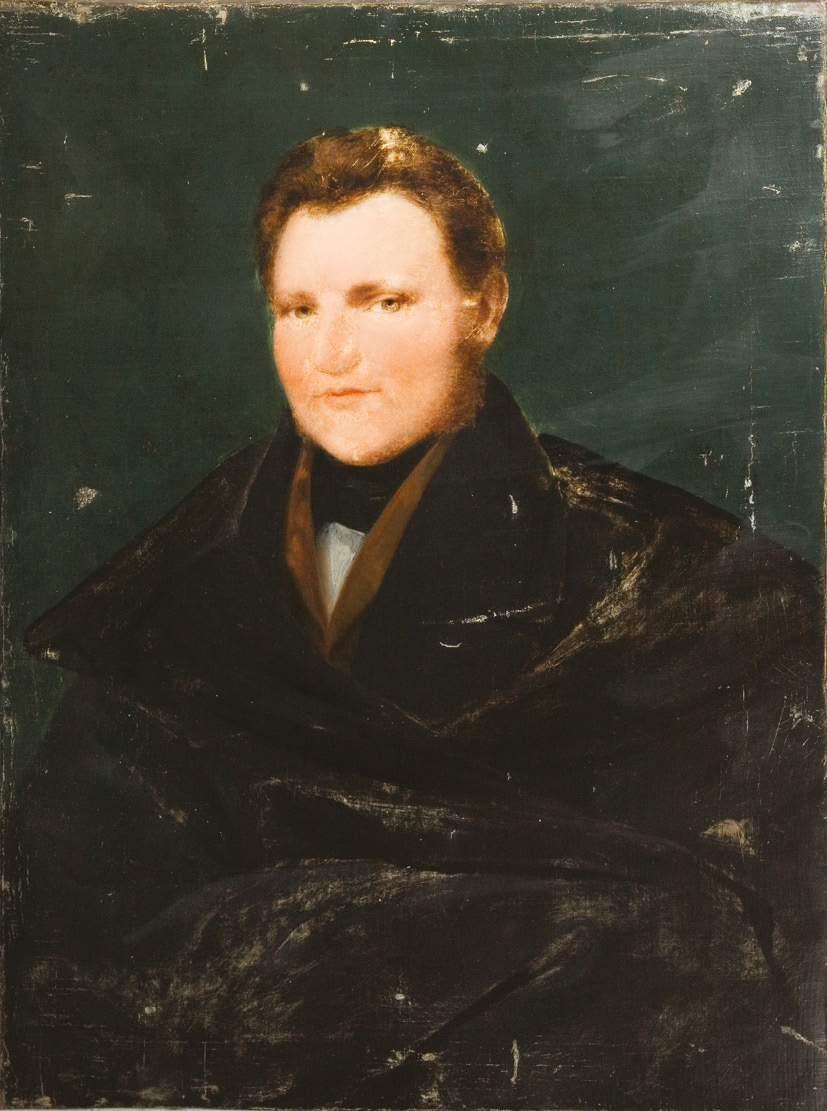
In addition to the high-profile case of Leon Chwalibogowski, prosecutor of the Court of First Instance and court cashier, accused of extorting bribes, and the cases of several justices of the peace,27 records from the period show traces of proceedings implemented against judges, including Onufry MÄciÅski, Jan BÄ kowski and Józef Stróżecki, accused of abuse of office (the Sejm refused to prosecute any of them); and Wojciech SkarżyÅski, who resigned his office and died shortly afterwards, before the criminal proceedings were concluded.28
From 1840, the role of the Sejm Court was taken over by the Supreme Criminal Court. Its jurisdiction encompassed, in addition to ordinary criminal cases, acts almost identical to those heard by the Supreme Sejm Court (abuse of power, âembezzlement of official dutiesâ, exorbitance). In the event of suspicion that any of these offences had been committed, the Residentsâ Conference appointed a commission of inquiry, which was to include judges not only from Cracow but also those representing the Protective Powers. The commission was to initiate investigations, issue qualifying verdicts and then also carry out an âordinary criminal inquisitionâ. If the suspicion of prevarication proved to be well-founded, the perpetrator was to be handed over to the âordinary punishment courtsâ to carry out âcriminal proceedingsâ.29 The number of cases heard by the Supreme Criminal Court concerning clerical offences was small: between 1839â41 there were 20 cases, between 1844â45 there were only two cases.30
3
a judge in the Tribunal was DydyÅski, a pretty stupid nobleman, supported in this dignity by Marcin Badeni, a minister of the Kingdom of Poland. He was simply a bankrupt landowner, who had never dreamt of the law, because he had never observed it and had no relevant education. Having been a judge for several years, he did not even go to courts, being ill or pretending to be, and collected his salary â until death finally took this inutile pondus terrae and freed the Treasury of the Republic from paying this dry beer.
A second similar judge was Józef GoÅuchowski, a man otherwise of good character, but this is not the only condition for the judicial chair. He was, like the above-mentioned, a country farmer, but, successful, he grabbed Themis, never having learned the law. Yet he served for many years, drawing the salary of an appellate judge, and died as a retiree only in 1851.31
The course of justice was swift and cases were dealt with one by one, as they came on the table. No one could accuse the judges of bribery, because these people were from the order of the most moral people called to judicial posts, and morality in this respect was strongly observed.32
It may be added in passing that concerns about judicial qualifications were not unusual in Europe at the time. Even at the end of the 18th century, the work of the judiciary, both in criminal and civil matters, was still the subject of widespread indignation and criticism; complaints were voiced in various social groups about the lengthiness of proceedings and the ruinous cost of seeking justice. Profit-hungry advocates and biased judges were also notorious.34
In the case of the Free City of Cracow, it is enough to become acquainted with the profiles of several judges to become convinced that the judiciary there did in fact comprise both experienced lawyers-practitioners and more ambitious individuals focused on improving their qualifications. For example, in 1833, the Sejm examined the qualifications of three candidates for judges: Wincenty GoÅuchowski, Onufry MÄciÅski and Ignacy Ostaszewski. As it turned out, none of them had any legal education (!), but all of them had a wealth of âexperience in the judicial lineâ, dating back to the Polish-Lithuanian Commonwealth.35 Indeed, Ostaszewski had practised as an advocate at the land courts from 1790, and in 1808 became a notary at the Civil Tribunal of the Kalisz (subsequently Cracow) Department. During the period of the Free City of Cracow, he briefly became a judge of the Tribunal in 1816, then a deputy judge of the Court of Appeal, while in 1817, 1819â20 and 1822â23 he was a deputy to the Assembly of
Józef Nikorowicz (1753â1833) also had a wealth of experience, but he graduated from a university (in his native Lviv) and went on to preside over the nobility courts in Tarnów and Cracow, and at one point even sat on the Vienna Legislative Commission. His successor as the Chairman of the Cracow Court of Appeal was another graduate of Lviv University, Franciszek Borgiasz Piekarski (1759â1834), who was Chairman of the Criminal Court for the Cracow and Radom Departments during the Duchy of Warsaw. In the Republic of Cracow, in addition to the judiciary, he was also active in numerous State institutions (the Peasant Commission, the Mortgage Commission), school institutions, and social organisations (the Charity Society, the Archbrotherhood of Mercy); he was also the author of numerous works on agronomy. Also a graduate from Lviv was Jakub MÄ kolski (1782â1861), the son of a land notary from Cracow, who began his career as a prosecutor at the Criminal Court in Cracow, and went on to head the Court of First Instance and the Court of Appeal (1834).37
At Cracow Academy, but also at the universities of Breslau (present-day WrocÅaw) and Berlin, knowledge was acquired by Piotr Bartynowski (1795â1874). He was a long-time prosecutor and judge, a deputy to the Assembly of Representatives and a senator, in addition to being a lecturer in Roman law at Jagiellonian University (1829â33) and rector of that university (1860â61). Another academic was MikoÅaj Hoszowski (1778â1828); he was a professor at Jagiellonian Universityâs Department of Political Skills, in addition to being Marshal of the Sejms of the Free City of Cracow and a member of the Legislative Committee.38
Walenty LitwiÅski (1778â1823) was also a prosecutor and later a judge, who became famous above all though as an unrelenting defender of the autonomy of Jagiellonian University, of which he was a professor (in the Department
Józef Peszka, portrait of Walenty LitwiÅski, (painting, oil on canvas, 1st half of the 19th century)
source: jagiellonian university museum, muj-93-m, photo by janusz kozina; permission by jagiellonian university museum
Józef Walenty Krzyżanowski (1799â1849) also graduated from Jagiellonian University. He was a prosecutor at the Tribunal, and later the Chairman of the Court of Third Instance. He represented a conspicuously patriotic stance: in
Other graduates of the university in Cracow were Jacek Habowski; he was elected as a deputy judge from 1820, a judge of the Tribunal from 1826, and in the years 1817, 1817/18, 1825/26, a deputy to the Sejm and a member of the Extraordinary Legislative Assembly (1818).42 Kazimierz KozÅowski was a secretary and adviser to the Municipal Office of the City of Cracow, a sub-judge (1810â16), and a judge of the Court of First Instance and Court of Appeal (1820â21), as well as a member of the Assembly of Representatives (1817, 1818/19).43 Marcin SoczyÅski, between 1801 and 1816, was an advocate âin the public serviceâ, then a deputy judge of the Tribunal (1818) and a judge of the Court of Appeal (1820), as well as a deputy member of the Mortgage Commission and a deputy to the Sejm (1817, 1817/18, 1818/19, 1819/20, 1820/21, 1821/22).44
The most versatile lawyer of the Free City of Cracow, however, was certainly Wiktor Kopff (1805â89). In the 1830s, he travelled across Europe, during
It is difficult to state unequivocally whether, in the first half of the 19th century, a judgesâ proper training in the subject matter should also be understood as their ability to adapt the nc (and the other codifications) to the needs of everyday life. The editors of the nc, on the false assumption of its completeness and clarity, directed judges to decide cases in a definitive manner. Its Article 4 left no doubt about this: âThe judge who shall refuse to determine under pretext of the silence, obscurity, or insufficiency of the law, shall be liable to be proceeded against as guilty of a refusal of justiceâ.46 Or perhaps it was sufficient to be able to read the provisions literally, ignoring the historical and theoretical threads? The fact is that between 1800 and 1830, the so-called âexegesis schoolâ also known as the dogmatic or classical school, reigned undivided in French civilist thought. Its founders and disciples believed that the nc constituted a closed whole in which, by means of traditional methods of interpretation, the solution to almost all conceivable cases could be found. The role of lawyers was only to apply it in practice, without the possibility of a freer interpretative analysis of the text.47 However, the issue of the proper interpretation of laws
Notwithstanding the above, it is a fact that, until the early 1830s, the selection of judges was carried out by the Assembly of Representatives, following the opinion of the Sejm selection committee. Applicants for the dignity of a judge had to meet conditions set by criteria of age, education and wealth. These were: being at least 30 years of age, having completed university studies in one of the cities of the former Polish-Lithuanian Commonwealth (later this could also be a university in one of the neighbouring countries) combined with obtaining a doctorate in law, as well as sufficiently long practice with a court scribe and an advocate, and owning real estate with a value of at least 8,000 Polish zlotys, acquired at least one year before taking up the post.49 In addition, due to the complicated nature of the legislation in force in the Free City of Cracow, the judges had to be familiar in practice not only with French law, but also with its numerous modifications made by decrees of the Saxon king, as well as with Austrian law and pre-partition Polish law.50
We also have no reason to doubt that it was only concern for the proper level of judicial personnel that drove the authors of the regulations to introduce Government examinations for those applying for positions in the judiciary. In order to take them, one had not only to have completed a law degree, but also to have completed a three-year judicial apprenticeship, confirmed by an appropriate certificate.51 The statute of 27 January 1842, classified judges as clerks of the third class, alongside advocates, notaries, court scribes as well as prosecutors and sub-prosecutors. All those listed were to prepare for examinations in the following subjects: (1) the Constitutional Act of 1833, together with the organic statutes developing the constitution; (2) decrees, laws and regulations concerning court law and the organisation of courts that were in force in the Free City of Cracow, including those dating from the Austrian era (up
The sets of examination questions are also certainly worth a closer look. The minutes of the judicial examination taken by Maksymilian Grabowski, nota bene the son of the above-mentioned Ambroży, have survived to the present day. The oral questions, on private law only, were as follows: (1) what is renewal, how can it take place under French law, what effect does it have with respect to mortgages, privileges and warranties?; (2) whether and how does it differ under Austrian law?; (3) how could renewal take place under Roman law?; (4) what is the difference between renewal when a new creditor replaces an old one and an assignment of claims?; (5) what is the effect of a transfer under Article 1247 of the nc?; (6) what rights serve the assignee under French and Austrian law?; (7) what is the assignee is obliged to do?; (8) what might be the subject matter of the assignee?; (9) when might a judge be held liable, and in which cases does the law recognise liability under penalty of compensation for damages and lost profits?; (10) when should payment of the bill of exchange
Seal of the Judicial Examination Commision of the Free City of Cracow, (seal matrix, brass, 1st half of the 19th century)
source: national archives in cracow, ank, 29/661/212; photo & permission by national archives in cracow
4 Budgets of the Judiciary, Salaries, Leaves of Absence, Retirement Pensions55
The judiciary was made up not only of judges, but also of so-called oficjaliÅci, i.e. clerical staff paid from the Public Treasury. These included secretaries, clerks and the keepers of the court register (administration journalists), as well as court archivists. A separate group consisted of court scribes, the conservator of mortgages (also known as the Regent of Mortgage Records) and audience ushers, who watched over order in the courtroom. Nor should we forget the delivery ushers, who supported themselves by the fees charged to the parties, as well as prosecutors and bailiffs. Attorneys and notaries, who were closely connected with the judiciary but did not directly belong to it, require a
Consequently, expenditure from the Public Treasury on the judiciary was substantial, although it did not differ significantly from the funds allocated to other branches of Government administration. In the first budget for 1816/
Judgesâ salaries were financed from the State budget (âJudiciaryâ). They were at a good level and were similar to the salaries of senior officials (Chairman of the Ruling Senate, Director of Construction) and mid-level officials (adjunct in the Department of Internal Affairs, Director of the Main Archives). For example, according to the budget for 1820/21, the Chairman of the Court of Appeal earned 10,000 Polish zlotys a year, his deputy 6,000 zlotys, the other judges 5,000 zlotys each. The Chairman of the Tribunal received 8,000 zlotys, life and temporary judges received 4,000â5,000 zlotys each. The salaries of judges of the Court of Third Instance were similar to those of the Court of Appeal.58
As for the salaries of other officials: a Government prosecutor at the Court of Appeal could count on 4,800 zlotys a year, a court clerk received 3,000 zlotys, a secretary 2,400 zlotys, an archivist 2,200 zlotys, a journalist 2,000 zlotys, two clerks 1,500 zlotys each, an usher 700 zlotys, and his assistant-servant 600 zlotys. Also included were the costs of running the court office, for which a lump sum (âsalvo calculoâ) of 2,500 zÅotys was set. The subsidy for the Tribunal Office was considerably higher (6,000 zlotys). The Office of the Conservator of Mortgages received only 600 zlotys. Compared with the previous financial year, in 1820/21 expenditure on the judiciary increased slightly, from 134,500 zlotys to 138,200 zlotys.59 According to the figures for 1833â37, the Chairman of the Court of Third Instance earned 10,000 zlotys, the two life judges 5,000 zlotys each. The following also worked at the court: a prosecutor (4,000 zlotys),
In 1833, the salary of the Chairman of the Court of Appeal was reduced to 8,000 zloty, retaining the 1,000 zloty supplement for Chairman J. MÄ
kolski; the three life judges, as well as the two temporary judges, each received 5,000 zloty. The salary of the prosecutor was reduced to 3,500 zlotys, that of the scribe to 2,800 zlotys, that of the secretary to 2,200 zlotys and that of the journalist to 1,800 zlotys.61 As far as the Court of First Instance is concerned, the salary of the Chairman was reduced to 7,000 zlotys, that of the first life judge (presiding judge in the division) to 4,000 zlotys. Three life judges, like the three temporary ones, received 4,000 zlotys each; the public prosecutor received 3,000 zlotys; a newly appointed sub-prosecutor could expect 2,000 zlotys; two scribes received 2,800 zlotys each; a secretary 2,400 zlotys; an archivist 2,000 zlotys; a journalist 1,500 zlotys; five court clerks 1,200 zlotys each; two ushers 600 zlotys each; two servants 450 zlotys each; the court cashier 2,600 zlotys; and the cashierâs controller 1,500 zlotys (an increase of 300 zlotys); the âsalvo calculoâ office costs were set at 5,000 zlotys. Also on the judiciaryâs staff was the Regent of Mortgage Acts with a salary of 3,600 zlotys (including office costs), who paid a deposit before taking up his post, as well as five justices of the peace and sub-courts.62 The budget of the judiciary passed in 1833 amounted to 192,500 zlotys (the State expenditure reached 1,775,766 zlotys and 15 grosz).63 An analysis of the 1838â41 budget shows that salaries did not change significantly.64 Effective
The 1833 Statute provided that all court officials were entitled to a six-week leave of absence (ârest timeâ) each year, on condition that this did not cause any disruption to the functioning of the courts (that âthe Courts should be in action without interruptionâ).65 In 1836, the Ruling Senate, under the authority of the âProtective Courtsâ, repealed Article 85 of the same Statute, putting court officials on an equal footing with other officials in this respect.66 Further changes were introduced by statute in 1842. The leave of court chairmen, judges and prosecutors was reduced to a maximum of 28 days, with the possibility of it being spread over shorter periods if the functioning of the judiciary was not threatened. The leave was granted by the Ruling Senate. The length of leave for other officials was reduced to only five days, with the possibility to extend it, at the request of the Chairman of the Higher Court and with the approval of the Ruling Senate.67
From 1833 onwards, judges enjoyed the benefits of an old-age pension scheme. Previously, provision for old age depended on the decision of the Sejm and the Government, âin recognition of meritâ. The new arrangement was that, when salaries were paid, the newly created Pension Commission deducted 4 per cent from them as a contribution to the Pension Society, membership of which was compulsory. In the event of shortfalls in the Societyâs coffers, pensions were subsidised from the State budget. The system was based on a progressive method: the amount of the pension, but also of the widowâs and orphanâs allowance, depended on the length of service: working 15 years resulted in a pension entitlement of 25 per cent of the highest salary, 35 years of service up to 100 per cent. In the intermediate period, the pension increased annually by 3/20 of the amount calculated in relation to one-quarter of the basic salary; the right to a pension was granted to the judgeâs wife, as well as to minor children. In order to start collecting the pension, the relevant documentation had to
Among the privileges of judges, as was the case with professors at Jagiellonian University, was the right to wear an official uniform. Its pattern, based on designs from the Duchy of Warsaw, was approved by the Organising Commission in 1816. It was dominated by a navy blue and crimson colour scheme. The uniform consisted of a âtop dress of German cutâ, a white waistcoat, black or white trousers, a âplain hat with a silver safety pin made from a ribbon or cord, and a white bowâ, and buttons with the coat of arms of the Free City of Cracow.70
5 The Day-to-Day Activities of the Courts
As mentioned at the beginning of the chapter, the seat of Cracowâs courts was located in the so-called âpost-Jesuit buildingsâ (Collegium Broscianum) in Grodzka Street. As early as 1796, they housed the offices of the Imperial Royal Court of Appeal for Western Galicia and the Cracovian Court of the Nobility. By the resolution of 20 September 1818, the entire second floor was transferred for the use of the Tribunal and Court of Appeal.71
Seat of courts of the Free City of Cracow (Collegium Broscianum), (drawing, paper, 1871)
source: national archives in cracow, ank, 29/671/182; photo & permission by national archives in cracow
When necessary, renovations were carried out in the courtrooms, or necessary items of equipment (stationery, stamps, tables and chairs, etc.) were purchased.73 For example, in 1850, in response to a request from the Chairman of the Tribunal, the Government authorised the city treasury to purchase four
The daily order of the work of the courts was specified in 1816. The court started its work at 9 a.m. In both its divisions, so-called economic subjects were heard on Monday, civil cases on Tuesday and Thursday, commercial cases on Wednesday and Friday, and criminal and correctional cases on Saturday. A deviation from the above order was only possible in urgent situations (âinadmissible delaysâ).76 The table below gives an idea of the adjudicatory effort of the courts of the Free City of Cracow.
Number of civil cases adjudicated (as regard Courts of the Peace also settled and conciliated cases) by the courts of the Free City of Cracow (1816â44)
Year/type of court |
Courts of the Peace |
Tribunal of First Instance |
Court of Appeal |
Court of Third (Last) Instance |
Total |
|---|---|---|---|---|---|
1816/17a |
941 |
939 |
135 |
12 |
2,027 |
1817/18b |
715 |
726 |
159 |
21 |
1,621 |
1818/19c |
520 |
480 |
114 |
21 |
1,107 |
1819/20 |
1,012 |
506 |
223 |
35 |
1,776 |
1821/22 |
1,046 |
544 |
194 |
41 |
1,825 |
1822/23 |
1,028 |
554 |
212 |
41 |
1,835 |
1823/24 |
1,123 |
556 |
221 |
47 |
1,947 |
1824/25 |
1,156 |
505 |
255 |
50 |
1,966 |
1825/26 |
2,380 |
544 |
285 |
49 |
3,258 |
1826/27 |
4,123 |
686 |
302 |
57 |
5,168 |
1827/28 |
no data |
no data |
no data |
no data |
5,291 |
1828/29 |
no data |
no data |
no data |
no data |
6,053 |
1829/30 |
no data |
no data |
no data |
no data |
5,794 |
1830/31 |
no data |
no data |
no data |
no data |
6,607 |
1831/32 |
no data |
no data |
bd. |
no data |
5,014 |
1832/33 |
4,533 |
667 (incl. commercial cases) |
413 |
72 |
5,685 |
1833/37 |
22,604; on average 5,652 annually |
2,830; on average 707 annually |
1,602; on average 400 annually |
428; on average 107 annually |
27,468; on average 6,867 annually |
1838/39 |
6,259 |
1,057 (incl. criminal cases) |
574 (incl. criminal cases) |
146 |
8,036 |
1843/44 |
9,020 |
2,091 (of which 1,242 as First Instance and 849 as Second Instance) |
138 (as the Higher Court) |
x |
11,249 |
The above data should be supplemented with the information that conciliation judiciary (âeconomic casesâ; voluntary jurisdiction, âiurisdictionis voluntariaâ) also played a very important role in the judicial practice of the Free City of Cracow. According to the data for the period 1 June 1819â31 May 1820 alone, 3,897 cases were heard in the Court of First Instance, and 1,949 in the Court of Appeal. In the reporting year 1824/25, the court dealt with as many as 4,520 economic applications, while the Court of Appeal dealt with 2,396.77
6 Court Officials, Notaries, Advocates
The court archive at the Tribunal was also very active, and as time passed it was also responsible for collecting and storing the files of the other courts. In terms of the filing system, it used a subject-based filing system, which showed the influence of French solutions and those in force in the central offices of the
Court ushers were also officials indispensable to the daily functioning of the judiciary. Following the model of the Duchy of Warsaw, they were divided into two categories: a) delivery ushers, who delivered letters, above all lawsuits and other summonses, to the parties, collecting fees from them; b) audience ushers, who performed an internal and policing service in the court premises. They were all guided by the provisions of the Code of Civil Procedure (Book ii, Title ii âOn lawsuitsâ; Book v âOn the enforcement of judgmentsâ), the decree of 14 October 1811, the Act on Courts of the Peace and the âFee for Officialsâ of 1825.82 As the qualifications of ushers often left much to be desired, in 1842 they were covered by the Judicial Apprenticeship Act. They were henceforth examined on âsubjects concerning theory and practiceâ. In the written examination, candidates also had to demonstrate their ability to âwrite fluentlyâ and write âa specimen of some judicial actâ.83
Government prosecutors were also an institution introduced following the model of the Duchy of Warsaw.87 No doubts were expressed by the members of the Extraordinary Legislative Assembly as to the legitimacy of their continuation under the new political conditions, who agreed to establish prosecutors both before the Tribunal and the Court of Appeal. In contrast, a proposal by one of the priest-deputies of the Sejm, providing for the existence of clerical procurators, who would be appointed by the Holy See and then by diocesan synods, did not meet with approval. Their main task would be to oversee the interests of the Catholic Church, especially the succession of deceased priests, and to participate in the auctioning off of Church property or landed assets encumbered with obligations to ecclesiastical institutes; in addition, they would act as âprotectors of the marriage bondâ among parishioners.88
Since an acute economic problem for the Senate was a lack of sufficient investment necessary to stimulate economic growth (âkeeping credit in the Countryâ),91 the prosecutor was also supposed to investigate the correctness of the establishment of mortgage deeds, the legitimacy of the announcement of so-called âmortgage moratoriaâ or the distribution of debts in instalments. An acute and unresolved problem remained so-called âmerchant bankruptciesâ,
Persons applying for the office of prosecutor at the tribunal had to demonstrate, inter alia, a completed law degree, the passing of a judicial examination and at least three yearsâ service in the judiciary.93 Yet, after 1839, prosecutors could only take part in civil trials.94 It may be added that the tribunalâs prosecutor was also involved (by way of monthly âprison reviewsâ) in the supervision of the Criminal Prisons Building; both prosecutors sat on the management of the House of Forced Labour.95
In terms of the organisation of the notary profession, the French system was in force in the Free City of Cracow. It consisted of notaries who were public officials, appointed to prepare deeds and contracts to which the parties should, or hoped to, receive âthe characteristic of officialdomâ, which entitled them to âacts of public solemnityâ. They also dated documents, stored them and issued main extracts and copies of them. The legal basis for the activities of notaries was the Notarial Act of 16 March 1803.96
Seal of the public notary Marcin Strzelbicki, (seal matrix, brass, 1st half of the 19th century)
source: national archives in cracow, ank, 29/661/75; photo & permission by national archives in cracow
Information on typical notarial activities is provided by the 1826 list of court fees. It indicates, inter alia: (1) the drawing up of protocols for the issuance of extracts and copies of records, including by way of enforcement of a tribunalâs
Notarial fees increased if the preparation of a deed took more than one day (notaries in Cracow were entitled to nine Polish zlotys and in Chrzanów six zlotys). If the action was performed outside the notaryâs office and the parties did not provide the notary with means of transport, he was entitled to reimbursement of travel costs and an additional fee (six and four zlotys); if the âexpeditions and extractsâ prepared by the notary had a length of more than 28 lines and 18 syllables on each page, an additional fee in Cracow was three zlotys for each sheet (two zlotys in Chrzanów). Notaries also had to comply with the so-called âLaw of the Poorâ, which consisted of drawing up deeds free of charge; this usually referred to the so-called âdeeds of respectâ, widely used among the peasant population.98
Before taking office, a notary paid a deposit, which acted as security for any claims arising from his activities. Notaries were appointed for an indefinite period by the Ruling Senate, at the request of the Chairman of the Court of Appeal (later the Chairman of the Court of Third Instance). The qualifications of notaries were specified by the Act of 1803 and by the Decree of 11 July 1809, and later by the Act on Apprenticeships; the supervision of notaries was exercised by the Chairman of the Tribunal. It should be added that there was no notarial self-government in the Free City of Cracow, like a notarial chamber. Between 1816 and 1846 there were a total of 14 notaries in Cracow (three in Chrzanów).99
Court officials also included the so-called Regent of Mortgage Deeds (conservator of mortgages), whose powers included: (1) making entries and deletions of mortgage rights, including entries in the so-called âksiÄga ingrosacyjnaâ (the subject of the entry could be a contract, a court judgment and a receipt); (2) preparing mortgage extracts; (3) issuing certificates on the absence of mortgage encumbrances on real estate; (4) issuing copies from mortgage documents; (5) announcing property auctions and assessments; and (6) supervising the mortgage archive. The regent charged a stamp duty for the deeds drawn
We cannot omit a discussion on professional legal representatives either, i.e. advocates (patrons).102 The distinction in the Duchy of Warsaw between patrons, advocates and attorneys, depending on the type of court at which they were appointed, was abandoned in the Free City of Cracow.103 The rights and duties of advocates were set out, inter alia, in the Code of Civil Procedure and the 1842 Court Statute. The code indicated numerous situations in which a party was obliged to appoint an advocate, which had to be communicated to the court and to the opposing partyâs advocate. In general, the participation of advocates was mandatory in cases before courts of second instance.104
The Statute of 1816 only temporarily allowed advocates with the right to appear in the Tribunal for the Cracow Department to continue to serve âin both tribunals, as well as in the third instance, and even in the Supreme Courtâ.105 In 1818, the Organising Commission expressed the view that it would be necessary to determine at last the number of advocates in the Free City of Cracow, and to decide whether they should enjoy the right to appear before all judicial instances.106 At the same time, the Commission recommended reducing
The issue was problematic in that, according to the Chairman of the Court of Appeal, as many as 17 lawyers were providing their services at Cracowâs courts. They were therefore called upon to make immediate declarations as to whether they wished to continue to appear before the local courts. In an attempt to reach a compromise, the committee proposed a provisional solution, i.e. to keep all 16 advocates (one had not made a declaration), while maintaining the opinion that their number should eventually be reduced to ten.108
In subsequent years, the list of advocates was increased sporadically. For example, in 1821, the Court of Appeal presented for nomination to the Senate a Jan BÄ
kowski, who, having completed his legal studies at Jagiellonian University, took the judicial examination and then âhonourably passedâ the advocateâs examination before the same court (still under the terms of the Decree of 11 July 1809). In addition to the flattering opinion of the president of the court of his âexcellent conduct and moral integrityâ, a clerk of the Department of Internal Affairs also spoke favourably of the candidate. Accordingly, the Senate appointed BÄ
kowski, calling on him to pay the stamp duty and to collect the âcertificate authorising him to perform his dutiesâ.109 It may be added that
The insufficient number of advocates in Cracow was repeatedly brought to the attention of the Senate by the judicial authorities. In 1833, the Chairman of the Court of Third Instance asked the chairmen of the courts whether it would not be beneficial, from the point of view of the efficiency of adjudication and the interests of the parties, to appoint additional advocates, in the persons of Adam GoÅemberski and Józef Stróżecki. The answer was in the affirmative, because, due to a very large number of trials before the courts, at least eight advocates were needed at any one time, and the perceived difficulties of the parties in finding an advocate resulted in âdelays and postponement of casesâ; this was also contrary to the requirement of âhaste in the administration of justiceâ.111
Józef Brodowski, portrait of Adam Krzyżanowski, (painting, oil on canvas, 1st half of the 19th century)
source: jagiellonian university museum, muj-135-m, photo by janusz kozina; permission by jagiellonian university museum
Advocates and notaries were considered to be employees of the judiciary, even though they did not draw a salary from the Public Treasury. This is evidenced by the Senateâs response to a question from the Directorate of Police on the requirement for them to obtain the permission of the Chairman of the Tribunal to be âaway from their dutiesâ before applying to the Directorate for a âforeign passportâ when they intended to take their leave of absence.112
In the Free City of Cracow, the principle of incompatibilitas was in force, prohibiting the combination of professorial dignity with legal professions, above all that of an advocate, notary and judge, but also with other public positions
Among the advocates who were particularly active in the first period of the Free City of Cracow, and who are still remembered well from the old, pre-partition times, one should mention Józef Kalasanty KozÅowski. He was a graduate in law and philosophy from Cracow Academy, then a bailiff at the Commercial Court, and from 1814 a patron at the Tribunal, and an established member of the Sejm (1819â23).114 There was also Onufry MÄciÅski; a patron at Cracowâs courts as early as 1789, a lawyer at the Crown Tribunal in Lublin, and then an advocate at the Cracow Court of Nobility, at the Civil Tribunal of the Cracow Department and in the Republic of Cracow.115
Among Cracowâs lawyers, Adam Krzyżanowski (1785â1847) certainly stood out in his effectiveness. He graduated in philosophy and law from Cracow Academy (doctorate in 1804), after which he taught bills of exchange law, and then the nc. In 1812, he took over the Department of the Civil and Commercial Code, which he headed until 1847. In the years 1814â16 and 1826â33 he was the Dean of the Faculty of Law, and in the years 1845â47 the rector of Jagiellonian University. During his lectures, Krzyżanowski most likely confined himself to interpreting code provisions, and although during the 37 years of his professorship, Krzyżanowski published only one dissertation on the nc, he was rightly considered the foremost expert on this codification in Cracow.116 Thanks to his effective representation of his clientsâ interests, Krzyżanowski became the owner of two tenement houses in Cracow, as well as manors at Czulice and Cudzynowice (in the Kingdom of Poland).117
Another professor of Jagiellonian University, Feliks SÅotwiÅski (1788â1863), was also very active as an advocate, was for several decades (1812â28, 1833â60) the head of the Department of Natural and Church Law, and frequently the Dean of the Faculty of Law. In his case, however, his activity as an advocate did
Portrait of Antoni Matakiewicz (unknown author), (painting, oil on canvas, 1st half of the 19th century)
source: jagiellonian university museum, muj-136-m, photo by janusz kozina; permission by jagiellonian university museum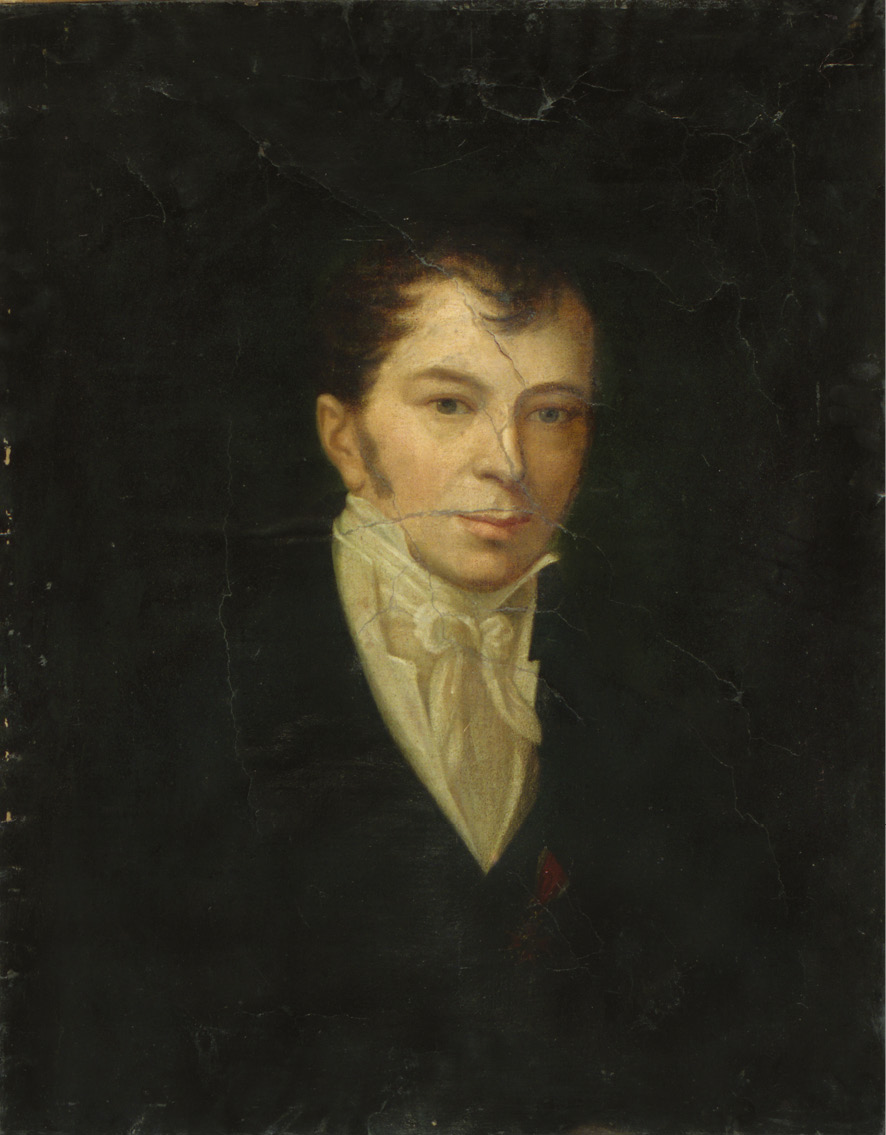
For a full account of the ceremony, see Dz. Rz. wmk: No.47 of 12 June 1816, 577â578 and No. 48 of 16 June 1816, 589â593.
The judiciary of the time was of an estate nature; one could distinguish between nobility courts (land courts, town courts and chamber courts), royal courts and, from the 16th century onwards, also General Tribunals (Crown and Lithuanian Tribunals), in addition to town, village and church courts. This is widely discussed by Uruszczak 2013, 255â271.
With the possible exception of justices of the peace, who were to enjoy the confidence of the public in the first place, and who were usually recruited from among those who, in one way or another, had served the local population. See Chapter 4, Section 3. On the new position of judges in Europe at the turn of the 19th century, see Stolleis 2008, 207â208.
On the activities of the Council of State of the Duchy of Warsaw as a Court of Cassation, see SobociÅski 1982, 141â182; SobociÅski 1984, 5â43; SobociÅski 1988, 97â133; Korobowicz 1998, 397â401.
The organisation and powers of the commercial tribunals were defined by Articles 631â661 of the Commercial Code. On the reasons for their non-implementation in the Republic of Cracow, see Fierich 1917, 148, 186â187.
On the judiciary in the Duchy of Warsaw and the Kingdom of Poland, see Ajnenkiel 2001, 72â73, 100â102, 109â111; Maciejewski 2016, 139â141, 150â151, 159; CichoÅ 2021, 42â43.
The legal nature of an appeal to the Court of Third Instance may raise some doubts. Was it merely an appeal, only formally called a cassation? Fierich 1917, 137â138 correctly observed that the Court of Third Instance combined three elements: the French cassation judiciary, and through the introduction of the institution of university opinions â the German judiciary; and local (âpeculiarâ) elements. However, he placed this court in the category of âordinary courts for civil and criminal casesâ. At the same time, it was, according to Fierich, âa new type of supreme courtâ. In 1827, in the course of work on the procedure before the Faculty of Law of Jagiellonian University, there were complaints that the procedure before the Court of Third Instance was not explicitly defined. However, the Court sometimes applied in practice the provisions of the Instructions for the Court of Cassation of the Duchy of Warsaw of 3 April 1810 (promulgated in dpkw, vol. 2, 151â185). On the other hand, due to the content of Article xv of the 1818 Constitution. (âthe case will once again be sent back to the Court of Appeal but with a strengthened compositionâ), it can be assumed that the appellate procedure of the Code of Civil Procedure should have been applied. In any case, Fierich 1917, 230â231, argued that the Court of Third Instance occupied, in relation to the Court of Appeal, the position of a court of third instance and not of a court of cassation. Indeed, an analysis of the case law allowed Fierich to conclude that, in its decisions, the Court of Third Instance approved the judgments of the courts of Second Instance, amended them within the limits of the conclusions formulated before it, or set aside the contested judgment and sent it back to the lower courts for re-examination. The concept of a cassation appeal does not appear explicitly until the 1833 Statute Organising the Judiciary, in section ii âOn Third-Instance Proceedings by Way of Cassationâ, where the content of a cassation appeal was defined in detail (Article 37). See also footnote 13 below, and Fierich 1917, 255â258.
On this topic, see above Chapter 1. See also Mataniak 2020b, 325â326.
On the constitutional foundations of the judiciary of the Free City of Cracow, see also Goclon 1990, 241, 258â261, 278â279, 284â285; Bartel 1981, 815â820. Older works, see Fierich 1917, 165â176, 182â199.
The UrzÄ dzenie tymczasowego wÅadz sÄ downiczych of 1816 was not included in any of the categories of statutes, the division of which was established by the Organising Commission by resolution of 6 March 1818, promulgated by the Ruling Senate by means of a regulation of 24 March 1818, but was regarded as a transitive act which was to be amended after the new codes had been passed by the Assembly of Representatives. Thus, a distinction was made between: immutable statutes that could not be amended without the consent of the Protective Powers; statutes that could be amended by the Assembly of Representatives on the initiative of the Ruling Senate; statutes that could be amended only by decision of the Ruling Senate; statutes enacted by the Grand Council of Jagiellonian University: Meciszewski 1851, 116â122; Mieroszewski 1886, 351â352; Fierich 1917, 168â169.
On its activity, see Bartel 1984, 143â154.
1833 also saw the establishment of sub-courts (in Polish: sÄ dy podsÄdkowskie), which, however, adjudicated on criminal (minor) cases which are not of interest to us. See Fierich 1917, 255â256.
Statut UrzÄ dzajÄ cy SÄ downictwo of 27 August 1833, DPr.WMK 1833, Chapter vi âOn the Court of Third Instanceâ, Section i âOn Proceedings at Third Instanceâ, Articles 31â35; Section ii âOn Proceedings at Third Instance by way of Cassationâ, Articles 36â60. These provisions were clearly linked to the Enforcement Act of 1823 and the Act on Courts of the Peace of 1825 (Title x âOn an Appeal to the Court of Last Instanceâ, Articles 68â72), which gave the possibility of filing a cassation appeal also against the judgments of these courts, which French legislation did not provide for: Fierich 1917, 190â191.
Statut Organiczny dla WÅadz SÄ dowych of 27 January 1842, DPr.WMK of 1842. Chapter vii. Division ii âOn the Organisation of the Superior Court in Respect of Civil and Commercial Casesâ (Articles 79â80).
Zdanie sprawy o stanie i poÅożeniu Kraju w.m. Krakowa i Jego OkrÄgu w Zgromadzeniu Reprezentantów w r. 1844 przedÅożone przez Senatora do tegoż Zgromadzenia delegowanego, DPr.WMK of 1844, 77â81; ank, 29/200/407 (wmk v-196), 811â816. These solutions were a result of a decree of the Ruling Senate, issued by order of the Conference of Residents. Fierich 1917, 258â259 pointed out that the Higher Court performed the functions of a court of review, and with considerable limitations.
Letter from the Residents to the Chairman of the Ruling Senate of 24 January 1824, ank, 29/200/201 (wmk v-2), 395â396.
Speech of the deputy Father Mateusz Dubiecki, 1820, ank, 29/200/41 (wmk ii-21), 39â40. He also proclaimed that âany arbitrarinessâ was undesirable in judges, as opposed to âunbending of oneâs opinionâ.
Speech by Jan Kanty KadÅubowski, deputy of the Bobrek district municipality, 16 December 1826, ank, 29/200/56 (wmk ii-36), 369â370. The deputy was also the author of witty bon mots: âIt is not the candidate for office but the Nation that should strive for a good officialâ; and âHow can one expect [a judge] to be able to judge, when he cannot judge himselfâ.
Speech by Senator Józef Haller of 5 September 1833, ank, 29/200/202 (wmk v-3 B), 1457â1459. It was therefore inadmissible for the Reorganisation Commission to modify the list of candidates for judges already drawn up. Haller therefore proposed that the Assembly of Representatives request the Ruling Senate to ask the Reorganisation Commission to clarify the provisions of Articles vi, x and xv of the Constitution.
UrzÄ dzenie tymczasowe dla WÅadz SÄ downiczych Wolnego Miasta Krakowa, promulgated by the letter of the Ruling Senate, Nos. 1904 and 1796 dgs, DRRz.WMK of 1816. The document was signed by the Commissioners of the Protective Powers: Ernest Reibnitz, Ignacy MiÄ czyÅski and Joseph Sweerts-Spork.
Konstytucja Wolnego Miasta Krakowa i Jego OkrÄgu of 15 July/11 September 1818, Kallas and Krzymkowski eds. 2006, 188 (Article xviii).
The Chairman of the Ruling Senate and the Chairman of the Court of Appeal thus exercised functions which, during the Duchy of Warsaw, belonged to the Minister of Justice. Fierich 1917, 176; Wachholz 1957, 265.
Statut Organiczny dla WÅadz SÄ dowych of 27 January 1842, DPr.WMK of 1842. Chapter xii âOn the Appointment, Suspending in the Office or Dismissing from it the Judicial Officersâ (Articles 108â112, 114â121). See the letter of the Ruling Senate to the Chairman of the Higher Court of 11 May 1842, âKsiega normaliów SÄ du Wyższego od 1842 r.â, ank, 29/200/4658 (wm 586), 1.
Statut Organiczny dla WÅadz SÄ dowych of 27 January 1842. Chapter xiii âOn Supervision of the Judiciaryâ; Chapter xiv âOn the Supervision of Persons Belonging to the Judiciaryâ (articles 126â129, 132â138).
For more, see PÄksa 1999, 253â261; Fierich 1917, 236â245. The principles of judgesâ liability were also set out in Articles 505â516 of the Code of Civil Procedure.
Statut tyczÄ cy siÄ UrzÄ dzenia ZgromadzeÅ Politycznych of 10 September 1817, promulgated by the letter of the Ruling Senate No. 2845 dgs, DRRz.WMK of 1817. Section vi âOn the Manner of Proceedings in the Supreme Courtâ (Articles 136â147).
Pauli 1970, 126â127.
Letters from the Marshal of the Sejm (presiding in the Assembly of Representatives) to the Ruling Senate: of 15 January 1838, ank, 29/200/62 (wmk ii-42), 603â605; of 18 January 1838, ibidem, 615; Kopff 1906, 16â17.
Statut Organiczny dla WÅadz SÄ dowych of 27 January 1842. Chapter ix âOn Criminal Cases in Which Exceptional Proceedings Take Placeâ (Articles 102â103). The application of the power of pardon by the Ruling Senate was made conditional on the approval of the âHigh Protective Courtsâ, granted through the Residents.
Wykaz rozgatunkowanych zbrodni przekazanych do instrukcji i osÄ dzenia przez TrybunaÅ za 1839 r., ank, 29/200/1627 (wm 114); Wykaz rozgatunkowanych zbrodni przekazanych do instrukcji i osÄ dzenia przez TrybunaÅ za 1840 r., ibidem.
Grabowski 1909, 133, 135; Mataniak 2020b, 329.
Grabowski 1909, 129.
CichoÅ 2012, 45â58. See also Voutyras-Pierre 1992, 127â157.
Sójka-ZieliÅska 2000, 308â309.
âDiariusz Seymu Rzeczypospolitey Krakowskieyâ, 1833. Session 5. As the Chairman of the Selection Committee stated, âtheir school of life was the Bar, which provided training for future lawyersâ.
I. Ostaszewskiâs application to the Qualification Commission of 10 December 1818, ank, 29/200/27 (wmk ii-7), 165â166; Gazeta Krakowska No. 14 of 16 February 1817, 157â158; No. 99 of 12 December 1819, 1091; âDyariusz czynnoÅci Seymu Rzeczypospolitey Krakowskiey roku 1822â, ank, 29/200/46 (wmk ii-26), 10; âDiariusz Seymu Rzeczypospolitey Krakowskieyâ of 1833. Session 5.
Hoszowski 1869, 15â20, 37â47; Wawel-Louis 1977, 170â176; Mataniak 2020b, 328â329.
Å»ukowski 2014, 16â17, 189â190. During his studies in Berlin, Bartynowski had the opportunity to listen to the lectures of Friedrich K. von Savigny, the founder of the historical school in jurisprudence.
LitwiÅski also took care of the universityâs equipment, the proper staffing of the departments and the influx of students from outside Cracow. His conflict with the Chairman of the Ruling Senate, StanisÅaw Wodzicki, aroused great interest even among the statesmen of the Holy Alliance. For LitwiÅski was the spiritus movens of the bourgeois democratic opposition: Patkaniowski 1964, 162â163, 191â192; Å»ukowski 2014, 304â305; psb, vol. xvii, 494â495.
Kasprzyk 2010, 779; Mataniak 2019a, 33â34.
Letter from T. Krzyżanowski to the Qualification Commission of 7 December 1823, ank, 29/200/50 (wmk ii-30), 531â534.
Application from J. Habowski to the Residents of 5 May 1828, ank, 29/200/117 (wmk iii-3), 261â262; Gazeta Krakowska No. 14 of 16 February 1817, 157; No. 5 of 18 January 1818, 49; No. 98 of 7 December 1817, 1191; No. 98 of 7 December 1825, 1215.
Application from Kazimierz KozÅowski to the Qualifying Commission, ank, 29/200/27 (wmk ii-7), 160â161; Lista kandydatów majÄ cych prawem przepisanÄ kwalifikacyÄ na urzÄ d SÄdziego Czasowego SÄ du Apelacyjnego of 13 December 1818, ibidem, 159; Gazeta Krakowska No. 14 of 16 February 1817, 157; No. 99 of 13 December 1818, 1173; No. 102 of 20 December 1820, 1219; No. 101 of 19 December 1821, 1227.
Applications of Marcin SoczyÅski to the Qualification Commission: of 1818, ank, 29/200/27 (wmk ii-7), 189; of 5 December 1823, ank, 29/200/50 (wmk ii-30), 547â548; Gazeta Krakowska No. 14 of 16 February 1817, 158; No. 98 of 7 December 1817, 1191; No. 99 of 13 December 1818, 1173; No. 99 of 12 December 1819, 1091; No. 99 of 10 December 1820, 1181; No. 97 of 5 December 1821, 1177.
psb, vol. xiv, WrocÅawâWarszawaâKraków 1968â69, 18â19 (I. Homola); Mataniak 2017c, 216â217.
The foremost Polish expert on the nc pointed to the abandonment, in the course of the French codification work, of the Enlightenment idea of the judge as a passive executor of laws, following Montesquieuâs advice, in favour of a judge-interpreter, adapting the codifications to the needs of life: Sójka-ZieliÅska 1999, 219â220; Sójka-ZieliÅska 2000, 312â313; Sójka-ZieliÅska 2005, 34â35, 37â41.
Sójka-ZieliÅska 2008, 161â166. Also at the core of the curriculum of the professional law schools of France at the time was a literal reading of the nc. The main representatives of the current of exegesis were Claude-Ãtienne Delvincourt, Jean-Baptiste-Victor Proudhon and Charles Bonaventure Toullier. In the early days of the school, its representatives were guided by the thought of the editors of the nc that it should nevertheless show some connection with social life; hence the interpretation with reference to various sources, e.g. philosophical-legal works. For more, see Gilissen 1979, 473â475; Rémy 1985, 91â105; Atias 1985, 107â123; Gaudemet 1999, 363â366; Basdevant-Gaudemet, Gaudemet 2000, 383â384; Rémy 2003/2004, 22â23; Gordley 2014, 147â148, 153.
Speech by Senator Józef Haller of 5 September 1833, ank, 29/200/202 (wmk v-3B), 1457â1459.
Articles xv, xviiiâxix of the 1818 Constitution. In the case of chairmen of courts and judges of second instance, there was also a requirement of at least two yearsâ judicial practice and the exercise of the mandate of a deputy to the Sejm for one term.
Dziadzio and Mataniak eds. 2022, 11â12; Fierich 1917, 247â248. As acts were drafted in different languages, a good judge had to know French, German and Latin in addition to Polish. On the judicial profession in countries of the Roman-Germanic tradition, see David and Brierley 1985, 139â141.
Candidates also submitted a curriculum vitae (âdescription of life courseâ) and a certificate of graduation.
The detailed requirements were laid down in a regulation of the Ruling Senate of 27 April 1842, No. 2124 dgs, O applikacji i examinach sÄ dowych, DPr.WMK of 1842. The examining commission was to be composed of the Chairman of the Court of First Instance and four Government commissioners. After taking the examination, the candidate received a âcertificate of suitabilityâ, taking into account the following grading scale: excellently disposed, sufficiently disposed, unfit. See Mataniak 2020b, 326â327.
For more, see Patkaniowski 1964, 159â162, 165â167, 171â172, 174â177, 213â214; Mataniak 2022b, 293â296.
ProtokóŠegzaminu przed KomisjÄ SÄ dowo-EgzaminacyjnÄ na urzÄdy ii i iii klasy of 13 May 1851, ank, 29/200/1814 (wm 150), no pagination. The examination took place in the audience hall of the Tribunal, in the presence of the Chairman of the Higher Court, Józef Majer, the judge of the Higher Court, Felicjan Dudrewicz, the judges of the Tribunal, Józef PareÅski and Jan Czernicki, and the prosecutor, Ignacy Ciszewski.
The discussion presented in this section is an abridged and modified version of the article: M. Mataniak 2019b.
Meciszewski 1840, 140.
Resolution of the Organising Commission of 14 June 1816, Zatwierdzenie Budgetu Rozchodów z epoki od 1 vi 1816 do 1 vii 1817, ank, 29/200/66 (wm 15), 202â203. For comparison: 137,160 zlotys were allocated for the Senate, 133,337 zlotys 22 grosz for the Department of Internal Affairs, for the Public Revenue Department 63,633 zlotys, for the Police Department 87,865 zlotys, for the Militia 138,323 zlotys, for retirement salaries 1,200 zlotys, for extraordinary expenses 61,921 zlotys 12 gr.
Budget Rozchodów na Rok 1820/21, âBudgeta oryginalne Przychodów jako Rozchodów Wolnego Miasta Krakowa i Jego OkrÄgu z lat 1817/18â1826/27 przez Zgromadzenie Reprezentantów uchwaloneâ, ank, 29/200/67 (wm 16), 299â300, 310, (Title iii: âJudiciaryâ). Expenditure on the judiciary amounted to 138,200 zlotys, which accounted for c.12 per cent of State expenditure (the expenditure budget totalled 1,329,351 zlotys 29 grosz).
Ibidem. Expenditure on the judiciary of the peace remained unchanged (five scribes earned 2,000 Polish zlotys each, the cost of maintaining five offices was set at 600 zlotys). Budgetary expenditure was reduced from 1,331,692 zlotys 17 grosz to 1,329,351 zlotys 29 grosz.
âBudgeta oryginalne Przychodów jako Rozchodów Wolnego Miasta Krakowa i Jego OkrÄgu z lat 1833/37â1838/41 przez Zgromadzenie Reprezentantów uchwaloneâ, ank, 29/200/71 (wm 20), 130â131. The Reorganisation Commission blocked the creation of the post of a court secretary, which had to be accepted by the Sejm Treasury Committee.
Ibidem, 130â131, 168â169. There was no change in the salaries of the archivist (2,200 Polish zlotys), two clerks (1,200 zlotys each), the usher (700 zlotys), the servant (400 zlotys) and the costs of the court office (2,500 zlotys).
Ibidem, 130â133, 168â169. Five scribes of the courts of peace received 2,000 zlotys each, court premises cost 600 zlotys each, an allowance for the court office in Chrzanów amounted to 200 zlotys, five ushers received 500 zlotys each, the building maintenance cost 500 zlotys. Sub-courts: five sub-judges received 2,000 zlotys each, five sub-scribes received 1,200 zlotys each, five ushers with servants received a total of 2,000 zlotys, the cost of operating one office was estimated at 500 zlotys. The costs of operation of three sub-jails (2,500 zlotys) were transferred to Title x (âNational Buildingsâ, ibidem, 160â161). The salaries of two life assessors of the Tribunal (in 1827/28 they received 3,000 zlotys each) were cancelled.
Ibidem, 70â171. In 1827/28 this was 1,569,724 Polish zlotys 11 grosz. In comparison, in 1833 the expenditure on the Ruling Senate with departments amounted to 266,121 zlotys.
Budget Rozchodu nr Rok 1838/41, czyli na czas od dnia 1 czerwca 1838 do 31 grudnia 1841 roku, ank, 29/200/71 (wm 20), 522â523, 526â531. Title i âNational Administrationâ, § 1: âSalaries of Administrative and Judicial Officers Attached to Personsâ; Title ii âJudiciaryâ. The expenditure budget amounted to 1,812 224 zlotys 3 grosz (ibidem, 562â563).
Statut UrzÄ dzajÄ cy SÄ downictwo of 27 August 1833. Chapter viii âGeneral Solutionsâ (Article 85). The requirement of continuity of office also applied to the Courts of the Peace and sub-courts.
Regulation of the Ruling Senate of 8 November 1836, No. 6538 dgs, UrzÄ dzenie o urlopach UrzÄdników SÄ dowych, DPr.WMK of 1836 (Articles 1â2). They were to receive leave under the terms of Article 13 of the Senate Statute of 1833.
Statut Organiczny dla WÅadz SÄ dowych of 27 January 1842. Chapter xvii âOn Holidays for Judicial Officers and Granting them Permission to be Away from their Dutiesâ (Articles 149, 152).
For more, see Mataniak 2017a, 289â318; Mataniak 2017b, 493â519.
In the years 1841â47 they were successively judges of the Higher Court, Konstanty Hoszowski and Felicjan Dudrewicz. Proclamation of the Presiding Officer of the Pension Commission of 16 June 1844 no. 1538, DRz.WMK No. 81â82 of 3 July 1844, 330â331; Kalendarzyk polityczny krakowski na rok 1844 1844, 56â57; Kalendarzyk polityczny krakowski na rok 1846 1846, 48â49.
Regulation of the Ruling Senate of 14 September 1816 No. 3298 dgs, ank, 29/200/206 (wmk v-7), 39â46; Resolution of the Organising Commission of 2 September 1816 No. 530, ibidem, 39. The pattern of the uniforms was slightly modified in: Regulation of the Ruling Senate of 9 February 1818 No. 372 dgs, ibidem, 111â112, 119. For a depiction of the uniforms and more information, see Mataniak 2022b, 313â317.
Szymborski 2014, 98â100, 104â105. The ground floor and the first floor were left at the disposal of the Government authorities. The monumental wardrobes in which court records were once kept are still preserved in the building.
Inwentarz wszelkich Effektów i Utensyliów do obecnego skÅadu TrybunaÅu i Biór jego przeznaczonych sporzÄ dzony, z 1843 roku, of 3 March 1843, ank, 29/200/1818 (wm 154), no pagination.
See the announcement of the Department of Internal Affairs of April 30, 1833, DRz.WMK No. 11 of 4 May 1833, 39.
Letter from the Chairman of the Administrative Council to the Chairman of the Court of 6 May 1850, No. 5162, ank, 29/200/1818 (wm 154), no pagination; letter from the Chairman of the Tribunal to the Council of 2 May 1850, No. 644, ibidem. The chairs were to be âmade of walnut wood, on springs, upholstered in green leather, green, the backs of all were to be paddedâ.
Wykaz materialiów potrzebnych dla ck. TrybunaÅu na rok 1849, ank, 29/200/1818, (wm 154), no pagination. And also 300 pounds (about 150 kg) of tallow candles, 3 pounds (about 1.5 kg) of amber âfor incenseâ, 36 brooms, 6 brass candlesticks and 13 decanters with glasses.
Announcement by the Chairman of the Court of First Instance, Bernard Dwernicki of 15 June 1816, supplement to DRz.WMK No. 49 of 19 June 1816, 608. Every Monday, Wednesday and Friday, starting at 3 p.m., a separate department was to additionally deal with pre-inquisition matters in criminal and correctional cases, as well as with instructions in these cases.
In the reporting year 1825/26 there were 4,806 and 2,566 cases respectively, in the reporting year 1826/27 there were 4,873 and 2,865 cases.
Statut UrzÄ dzajÄ cy SÄ downictwo of 27 August 1833, Chapter vi âOn the Court of Third Instanceâ (Articles 27, 32â33, 35); Statut Organiczny dla WÅadz SÄ dowych of 27 January 1842, Chapter v âOn the Tribunalâ. Chapter ii âOn the Organisation of the Tribunal with Regard to Civil and Commercial Casesâ (Articles 43â47).
Letter from W. Janicki to the Ruling Senate of 7 September 1833, ank, 29/200/188 (wmk iii-7 B), 1715. His professional career before becoming a scribe had the following course: one and a half years as an apprentice at the Tribunal, two and a half years at a Court of the Peace, including acting as deputy scribe of the same court; two and a half years as an honorary (unpaid) assessor at the Tribunal; and finally as deputy scribe of the Tribunal for one year.
PaÅków 1954, 113â115; UrzÄ dzenie wewnÄtrzne Senatu wmk i Jego OkrÄgu, dated 15 July 1816, promulgated by the letter of the Ruling Senate, No. 2104 dgs, DRRz.WMK of 1816. Chapter vii âOn the Archivistâ (Articles 59â66).
UrzÄ dzenie tymczasowe dla WÅadz SÄ downiczych Wolnego Miasta Krakowa â¦, of 1816. (Article 7(aâe)); Statute of the Organising Commission of 2 June 1818 (to No. 1656 dgs), O urzÄ dzeniu RachunkowoÅci w Wolnym MieÅcie Krakowie, DRRz.WMK of 1818; Regulation of the Ruling Senate of 28 June 1838 No. 2863 dgs, UrzÄ dzenie RachunkowoÅci, ank, 29/200/302 (wmk v-102 B), 1049â1106. For more, see Mataniak 2019a, 221â231.
Decree of 14 October 1811, PowierzajÄ cy funkcje burgrabiów woźnym i komornikom i ustalajÄ cy zwiÄ zane z ich dziaÅalnoÅciÄ przepisy organizacyjne oraz należne opÅaty, dpkw, vol. 3, 407â413; Act of the Extraordinary Legislative Assembly of 17 June 1825, Prawo oznaczajÄ ce postÄpowanie przed SÄ dami Pokoju w kraju Rzeczypospolitey Krakowskiey, announced by a letter of the Ruling Senate No. 3647 dgs, Dz.Pr.rk of 1825 r. Title xi âOn the Enforcement of Judgments of a Justice of the Peaceâ (Articles 73â74); Regulation of the Ruling Senate of 5 May 1826 No. 849 dgs, Ustanowienie tax dla urzÄdników sÄ dowych, Dz.Pr.rk of 1826. Chapter vi âRegulations and the List of Fees for Court Ushersâ (Articles 37â40). For more, see Mataniak 2019b, 83â87.
Regulation of the Ruling Senate No. 2124 dgs, O applikacji i examinach sÄ dowych, DPr.WMK of 1842 (Article 42 (A)(a); Article 45). The ushers were required to be familiar with the following acts: on Courts of the Peace, on enforcement, and on fees, as well as the Code of Civil Procedure, as regards enforcement and how to serve summonses and other letters.
Decree of 14 October 1811, powierzajÄ cy funkcje burgrabiów woźnym i komornikom â¦; Act of the Extraordinary Legislative Sejm of 17 June 1823, O egzekucji sÄ dowej, announced by a letter of the Ruling Senate of 6 August 1823 No. 2116 dgs, Dz.Pr.rk of 1823 (Articles 1, 13). Regulation of the Ruling Senate of 5 May1826 No. 1755 dgs, PostÄpowanie przy licytacjach, inwentacji itp., Dz.Pr.rk of 1826.
Regulation of the Ruling Senate of 9 September 1845 No. 4515 dgs, Instrukcja dla Komorników SÄ dowych, DPr.WMK of 1845.
For more, see Mataniak 2019b, 87â92.
Minutes of the meeting of the Extraordinary Legislative Assembly of 6 February 1818, Gazeta Krakowska No. 19 of 8 March 1818, 217.
UrzÄ dzenie tymczasowe dla WÅadz SÄ downiczych â¦, (Article 2aâd); Bartel 1981, 821â822; SobociÅski 1964, 252â253.
Regulation of the Ruling Senate of 14 June 1826 No. 1137 dgs, Instrukcja dla Prokuratora RzÄ dowego przy SÄ dach i SÄ downictwie w ogólnoÅci, ank, 29/200/219 (wmk v-20 B), 1149â1156. The provisions concerning the duties of prosecutors were scattered over numerous regulations (nc, Commercial Code, Criminal Code of 1803, Code of Civil Procedure, decrees from the time of the Duchy of Warsaw, Provisional Organisation of the Judiciary of 1816).
On the economic situation, see Meus 2016, 29â37, 40â54; Mataniak 2018, 267â298. See also Malec 2004, 79â95.
Regulation of the Ruling Senate of 14 June 1826 No. 1137 dgs, Instrukcja dla Prokuratora RzÄ dowego przy SÄ dach i SÄ downictwie w ogólnoÅci, ank, 29/200/219 (wmk v-20 B), 1152â1153 (Article 14). In consultation with the Senate, a prosecutor could also determine the admissibility of ârestoring the bankrupt to honour and being able to trade againâ.
Statut Organiczny dla WÅadz SÄ dowych, of 27 January 1842. Chapter v âOn the Tribunalâ, Section i âOn the Composition and Organisation of the Tribunalâ (Article 26).
Bartel 1981, 821â822. At that time, the criminal judiciary saw the removal of vestiges from the Duchy of Warsaw. On the prosecution in the Duchy of Warsaw, see SobociÅski 1964, 252â253; SobociÅski 1993.
Regulation of the Ruling Senate of 18 June 1834 No. 3387 dgs, Instrukcja WiÄzieÅ Kryminalnych, DPr.WMK of 1834 (Title vii âOn the inspection of prisonsâ, Article 75); Regulation of the Ruling Senate of 27 October 1841 No. 5804 dgs, Zmiany w zasadach Domu Pracy, DPr.WMK of 1841 r. (Articles 1â2). For more, see Mataniak 2017c, 213â249.
WyciÄ g z Ustawy Francuskiej o Organizacji Notaryatu z stosownymi zmianami, ank, 29/200/204 (wmk v-5), 401â414. The Act consisted of five chapters: âOn the Office and Duties of Notariesâ, âOn Deeds, their Form, Original Deeds, Official Extracts, Certified Copies and Registersâ, âOn the Authorisation of Notaries to Hold Officeâ, âOn the Transfer of the Notaryâs Archives and the Return of the Dueâ, and âGeneral Arrangementsâ. For more on the Notarial Act of 1803, see Halperin 1996, 69â70.
Ustanowienie tax dla urzÄdników sÄ dowych, Chapter ii âRegulations and a List of Fees for Deed Scribes, i.e. Notariesâ (Aricles 13). For these activities notaries charged 6 zlotys in Cracow and 4 zlotys in Chrzanów.
Ibidem (Articles 14â15, 17â19). Disputes over notary fees were settled by the Tribunal of First Instance.
For a detailed description, see Malec 2001, 185â202; Malec 2007, 88â95.
Ustanowienie tax dla urzÄdników sÄ dowych. Title iii âRegulations and a List of Fees for the Conservator of Mortgages, or the Regent of Deedsâ (Article 20).
Act of 1 July 1844, Zaprowadzenie ZwierzchnoÅci Hipotecznej, announced by a letter of the Ruling Senate No. 3002 dgs, DPr.WMK of 1844 (Article 2); Letter from the Chairman of the Higher Court to the Administrative Council of 31 March 1846 No. 509, ank, 29/200/220 (wmk v-21), 749; Malec 2004, 84â85. On the mortgage law of the Free City see below, Chapter 6.
It is worth mentioning that in France, the activities of professional representatives were dealt with by the Act of 13 March 1804 re-establishing the Bar, the Decree of 14 December 1810 tightening state supervision, and the Act of 27 February 1822 introducing their division according to their ability to appear before the Tribunal or the Court of Cassation. Halperin 1996, 44â45, 69â70, 172â173. For more on Cracowâs advocates, see Mataniak 2019b, 98â100.
SobociÅski 1964, 253â254; CichoÅ 2012, 48â49.
Kodex PostÄpowania SÄ dowego Cywilnego â¦, Title iii âOn the Establishment of Patrons and the Reciprocal Presentation of Writs and Defencesâ (Articles 75â76); Statut Organiczny dla WÅadz SÄ dowych â¦, of 27 January 1842. Chapter v. Section ii. âOn the Arrangement of the Court in Respect of Civil and Commercial Mattersâ (Articles 52â54); Chapter vii. Section ii. âOn the Arrangement of the Higher Court with Respect to Civil and Commercial Casesâ (Articles 82â83).
UrzÄ dzenie tymczasowe dla WÅadz SÄ downiczych Wolnego Miasta Krakowa â¦, of 1816 (Article 4). The Chairman of the Court of Third Instance could only increase their number âif absolutely necessaryâ.
Interestingly, during the work of the extraordinary session of the Legislative Assembly in 1818, there was a proposal, by deputy Feliks JaroÅski, that it would be appropriate to ârepeal the privileges of advocates, patrons, etc., and return the former Barâ. Due to the different subject matter of the debate, the proposal was not discussed. Gazeta Krakowska No. 15 of 22 February 1818, 172â173.
Letter from the Chairman of the Court of Appeal to the Ruling Senate, 1 February 1819 No. 324, ank, 29/200/221 (wmk v-22 A), 517â520. The Committee pointed out that due to the poverty of the residents, patrons often have to appear for free, especially in civil cases.
Ibidem, 520â523. The advocates at the time were: Augustyn BoduszyÅski, Józef Borzykowski, Adam Ekielski, Jan Kanty Fachinetty, Józef Jankowski, Teodor Kawecki, MichaÅ Karaszewicz, Wojciech Kowalski, Józef Kalasanty KozÅowski, Adam Krzyżanowski, Hilary Kudlicki, Onufry MÄciÅski, Aleksander NiesioÅowski, Feliks SÅotwiÅski, Franciszek UrbaÅski, Maciej Wojewódzki and Piotr Wiktorowicz. Only F. UrbaÅski did not submit a declaration. Following the resignation of A. BoduszyÅski, who became a senator, Tadeusz Krzyżanowski was authorised to perform the duties of patron on a temporary basis.
Letter from the Court of Appeal to the Ruling Senate, 26 July 1821 No. 2072, ank, 29/200/221 (wmk v-22 A), 471â472; Opinion of the Department of the Internal Affairs of 5 August 1821, ibidem; Letter from the Ruling Senate to the Chairman of the Court of Appeal and BÄ kowski of 7 August 1821, No. 2672, ibidem, 473; Decree of 11 July 1809, w sprawie kwalifikacji zawodowych pracowników wymiaru sprawiedliwoÅci,dpkw, vol. 1, 298â312.
Letter from the Ruling Senate to the Presidium of the Ruling Senate, the Higher Court, the Directorate of Police and the âGovernment Journal of the Free City of Cracowâ of 30 September 1842 No. 5145, ank, 29/200/139 (wmk iii-28 A), 7. âRemoval from Officeâ took place on the basis of Article 121 of the Statute of 1842.
Letter of the Court of Third Instance to the Ruling Senate of 31 October 1833, No. 214, ank, 29/200/221 (wmk v-22 A), 405â408; Opinion of the Department of Internal Affairs of 7 November 1833, No. 7313, ibidem, 406. The need for additional appointments also resulted in the transformation of the Court of Third Instance into a âpermanent magistraturaâ.
Letter of the Ruling Senate to the Presidium of the Ruling Senate, the Higher Court, the Police Directorate and the Department of Internal Affairs of 27 October 1843 No. 5641, ank, 29/200/142 (wmk iii-31 B), 2211.
Patkaniowski 1964, 162â166; Mataniak 2022a, 296â297. Although the Academic Statute of 1833 upheld the prohibition on combining dignities, the Reorganisation Commission relaxed these restrictions, limiting them to future states of affairs.
Letter from J. KozÅowski to the Qualification Commission of 11 December 1823, ank, 29/200/50 (wmk ii-30), 495â496; Gazeta Krakowska No. 99 of 12 December 1819, 1091; No. 99 of 10 December 1820, 1181; No. 97 of 5 December 1821, 1177; âDyariusz CzynnoÅci Seymu Rzeczypospolitey Krakowskiey roku 1822â, ank, 29/200/46 (wmk ii-26), 10.
Letter from O. MÄciÅski to the Qualification Commission of 11 December 1823, ank, 29/200/50 (wmk ii-30), 497â499; Letter from O. MÄciÅski to the Residents of 6 May 1828, ank, 29/200/117 (wmk iii-3), 255â259. MÄciÅski practised as an advocate for 34 years.
Patkaniowski 1964, 206â207; Å»ukowski 2014, 262â263; psb, Vol. xv, 587â588.
Patkaniowski 1964, 188â190, 205â205; Szlachta 2000, 129â134. In his works, SÅotwiÅski became known as an advocate of the law of nature school. For the most recent studies devoted to SÅotwiÅski, see Mostowik 2023, 25â48.
Szpor headed the Department of Political Skills for a short time, while Jankowski, also for a short time, headed the Department of Natural Law and Canon Law (he was a professor in the Department of Philosophy at the Faculty of Philosophy of Jagiellonian University in the years 1818â29 and 1831â47). Å»ukowski 2014, 199â200; psb, Vol. x, 541â542; Malec, Malec 2010, 103â104.
Patkaniowski 1964, 193â196; Å»ukowski 2014, 331â332, 522â523; psb, Vol. xx, 169â170. From 1835 to 1837 Matakiewicz was the Dean of the Faculty of Law, and from 1837 to 1839 the Rector of Jagiellonian University.