


1 The Career of Leopoldo Sebastiani
In 1794 the Dominican scholar Giovanni Battista Audiffredi (1714â1794) referred to the âgreat student of the Greek language, D. Leopoldus Sebastianiâ1 and the following year his name appeared in a list of Classicists consulted by Pietro Pasqualoni in regard to Giuseppe Marottiâs translation of Aeschylusâ Seven against Thebes.2 Although Leopoldo Sebastiani (1770â1843) came to occupy a unique place in the history of early Qajar relations with the Vatican, very little is known of his origins beyond the fact that he was sometimes referred to as âSacerdos Leopoldus Sebastiani romanus.â3 In spite of the fact that many years of his life were apparently spent in travel and missionizing outside of Rome, Sebastiani was a prolific scholar and translator. Working from a manuscript in the Bibliotheca Angelica at Rome, he published an edition of the Epistola ad Apollinarem Laodicenum (Apollinaris of Laodicea) in 1796.4 A year later, he gave his unpublished, three volume commentary on Eustathius of Thessaloniki to Gaspare Saccarelli at the Biblioteca Vallicelliana in Rome for safekeeping5 before embarking on what would turn into a multi-year periplus that took him to Livorno, Cyprus, Syria, Cilicia, Cappadocia, Beirut, Damascus, Amida (Diyarbakir), Mardin, Nineveh, southern Iraq, Persepolis, Shiraz, Isfahan and back to Baghdad where he met the English Resident, Harford Jones. Basing himself on an unpublished letter in the Hereford Record Office, O Flynn stated that the meeting took place in February, 1800.6
Sebastiani himself was vague about the motivations for embarking on this journey, apart from saying that, while he âcomplained bitterly of the unhappiness of the worshippers of the Muses, I was called to carry out sacred missions throughout the East; a most sweet duty to perform, as I had a mind most inclined to the call of God.â7 Considering that he left his Eustathius manuscript in Rome sometime in the course of 1797, Sebastiani is unlikely to have left Europe before that date, and in view of the fact that his Lycophoron was published in 1803, he was almost certainly back in Rome by that point.8
At Baghdad, while preparing for his return to Rome, Sebastiani met two young English noblemen on their way home to England from India, as well as Harford Jones, the English Resident in Baghdad.9 Although Sebastiani did not provide a precise date for this meeting, it could not have been before late Sepember 20th, 1798, when Jones, who had been in England on leave at the time of his appointment, arrived in Baghdad.10 At Jonesâ request, Sebastiani accompanied the two Englishmen on their return journey to Constantinople. Although O Flynn dated this to âc.1803,â11 it is likely to have been earlier for, according to John Barker, the English Consul at Aleppo, âin the year 1800â1, he [Sebastiani] obtained from Lord Elgin a patent of the British protection, in which he was styled English physician, and that he has lately carried on his official correspondence with Toulon, the Catholic Bishop of Constantinople, under cover to Mr. Bartholomew Pisani, first British Interpreter,12 by whom he was recommended last year to my benevolence.â13 So far as we know from his own testimony, Sebastiani did not visit Constantinople, where he would have met Lord Elgin, on his way out to the Near East, only on his return from Baghdad. Of Lord Elgin, who received him so warmly, Sebastiani later wrote âthat he bound me to the English nation with an indissoluble bond of love,â prompting Sebastiani to declare himself âready for every good office to be faithfully rendered in Asia, in Europe, wherever.â14 Sebastianiâs Anglophilia and his ties to Harford Jones were to prove decisive just a few years later.
After returning to Rome Sebastiani went back to Turkey and proceeded, via Smyrna, Beirut, and Sidon to Damascus, where he spent roughly ten months, composing works in Arabic and translating many other works from Arabic into Latin for the benefit of the Christians there.15 This probably occurred in 1799, the date written on two unpublished works of Sebastianiâs.16 When he was on the brink of continuing his journey to Baghdad, however, it became necessary to return to Rome, where his edition of Lycophron was published.17
On October 3rd, 1803, Sebastiani was appointed Prefect Apostolic of the Mission in Persia by Cardinal Stefano Borgia (1731â1804)18 of the Propaganda Fide, on behalf of Pope Pius VII (1800â1809, 1814â1823).19 Roughly a year-and-a-half later, on March 11th, 1805, the German physician and traveller Ulrich Jasper Seetzen (1767â1811) (Fig. 2.1) described meeting him in Aleppo:
I had the good fortune to meet two knowledgeable travellers here, the Englishman Vaughan20 and the Prefect of the Mission of the Propaganda Fide in Persia and Kandahar, D. Leopoldo Sebastiani, a native Roman and well-known philologist thanks to his edition of Lycophronâs Cassandra (Rome 1803, in quarto).21 As the public undoubtedly can anticipate many fine things from them in the future, I think it may not be taken amiss, if I offer some notices of them here. â¦The Mission Prefect Leopoldo Sebastiani pursued his theologial studies in Rome and was sent numerous times on missionary duties to the north coast of Africa, Palestine, Syria, Mosul, Baghdad and so forth. In addition to Italian, Latin, Greek, Hebrew, Syriac and French, he has a deep understanding of Arabic, and also a little knowledge of Turkish. He speaks Arabic fluently, and translates it into Latin with the greatest ease, as demonstrated for instance by his translation of the curious little Arabic work: Drusorum Religio, which he finished here.22 Although both his upbringing and his official duties hindered him from breaking free of certain religious prejudices, he is nonetheless an exceptionally good and respectable man. He is tall, athletic and the picture of health. He is about 40 years old. He will study the Persian language at Isfahan, and I have no doubt that in a very short time he will have mastered it. He knows something of medicine which he practiced at Damascus, Mosul and Diyarbakir. Recently at Rome he studied horology, thinking to practice this profession in Persia in order to earn money, since he receives no salary from Rome, the coffers of the Propaganda having been emptied by the French.23 He expects to spend some years in Isfahan and other Persian cities, and to travel thereafter to Kandahar and perhaps Kashmir. What an excellent means of one day getting the most interesting news from these countries! He heartily wishes to be in communication with you [von Zach] and other German scholars, and finally gave me his address: âSigr. D. Leopoldo Sebastiani, Prefetto delle Missione di Persia. Consegnarsi in Constantinopoli allo illustmo. e revdssmo. Mons. Gio. Battista Fonton, Vicario Apostolico di Constantinopoli.24 Letters in Latin or Italian are preferable, because he does not understand French as well as these languages.25

U.J. Seetzen Russ. Kaiserl. Kammerassessor und Doctor. Frederik Christiaan Bierweiler, 1818
Jever Castle Museum, Germany. CC BY-NC-SA. https://www.europeana.eu/item/2064128/Museu_ProvidedCHO_museum_digital_3535__technical_number_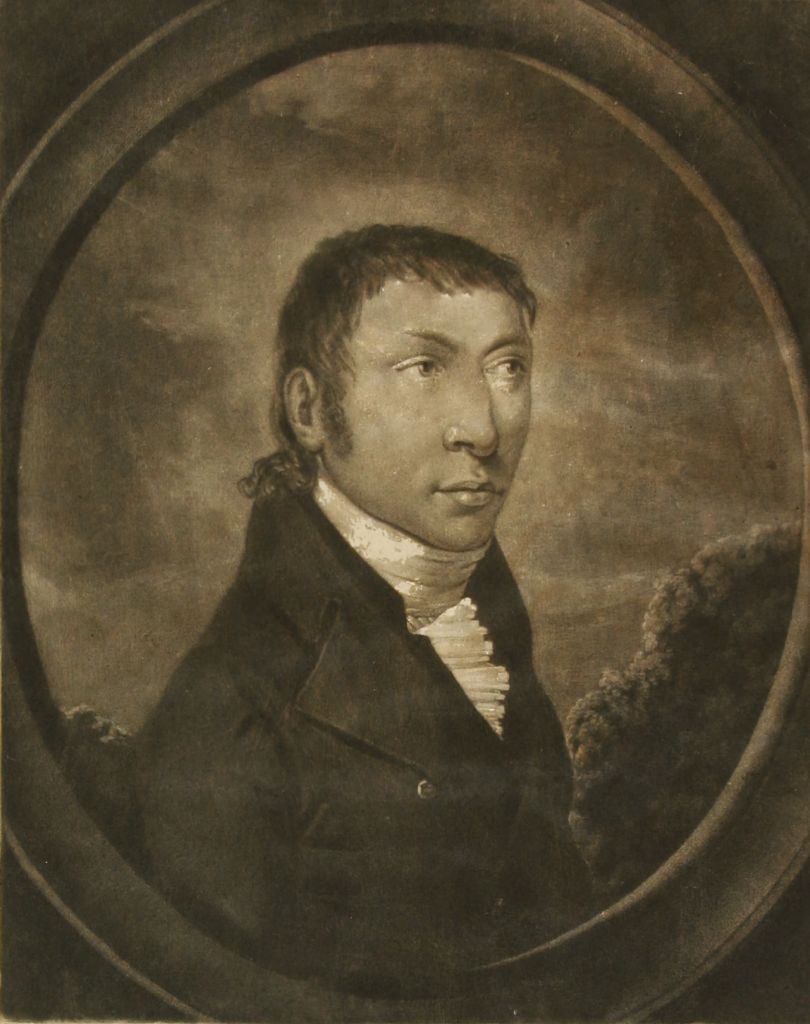
By July Sebastiani was in Iran. Jones, who had befriended him some years earlier, as noted above, received a letter from him dated July 15th, 1805, which he forwarded to Lord Castlereagh on August 12th. Just a few weeks later, however, John Barker, the English Consul at Aleppo, sent Jones a letter, dated September 3rd, 1805, in which he said,
I have obtained, through a neutral channel, the knowledge of circumstances which I am not at liberty to disclose, but which place beyond all doubt the reality of Leopoldo Sebastianiâs agency of a French spy, and of course afford extreme probability that the common talk of the merchants of Aleppo, respecting the connextion between that manâs mission and [Alexandre] Romieuâs,26 is founded in fact.
It is very probable that the clerical character of Sebastiani has served to cloak his political intrigues in Syria ever since the French invasion of Egypt, about which time he first made his appearance in this country as a missionary of the Propaganda, charged with the ostensible duty of regulating some disorders in the Catholic convents of Jerusalem, Damascus, Aleppo, &c.27
Jones was adamant that Barker was fundamentally mistaken about Sebastiani and wrote to Alexander Stratton, the English Minister in Constantinople, on September 14th,
I wish particularly to call His Excellencyâs [Castlereagh] and your attention to the extract of the Consul at Aleppoâs letter to me, dated Antioch, the 3rd September ⦠I must say, as far as regards myself, I was totally without suspicion in respect to Leopoldo Sebastian being employed in the manner Mr. Barker mentions. Mr. Vaughan, who, as you know, travelled with him from Constantinople here, had the same opinion of him I had.28
The part played by Sebastiani in the fraught Anglo-French-Persian politics of the Napoleonic era has been discussed in considerable detail by O Flynn but, even with papal backing, Sebastiani failed to establish a relationship between the Vatican and the Qajar court.29 This is not surprising, given the enormous changes wrought around this time with respect to the Propaganda Fide and the fact that Napoleon made Paris, rather than Rome, and the Lazarists, rather than the Propaganda itself, the center of foreign missionizing activities.30
Upon reaching Iran Sebastiani proceeded, in the first instance, to Isfahan where he engaged in a number of debates with Muslim clerics on theological and scientific questions, both publicly and within thewalls of the religious colleges (madressehs). Writing some four decades later, James Justinian Morier observed, âPadre Sebastiani, a Roman, one of the propaganda, a man of great energy and zeal, invited the Mollahs at Ispahan to argue the cause of religion in their presence, and was nearly put to death by them, owing to the exasperation excited by his superiority.â31 Thanks to a leading doctor (vel sim. astrologer) named âMohammed Achbari,â word of Sebastianiâs intellectual prowess reached Fath Ê¿Ali Shah (Fig. 2.2) and the Shah expressed a desire to meet Sebastiani. As a result, it was said, Fath Ê¿Ali Shah âgranted him many favors.â32
Fath Ê¿Ali Shah. Gregorius, Albert Jakob Frans, âFethaly Chah Empereur des Persansâ (1807). Prints, Drawings and Watercolors from the Anne S.K. Brown Military Collection
Brown Digital Repository. Brown University Library. https://repository.library.brown.edu/studio/item/bdr:231131/
When the Jewish convert-missionary Rev. Joseph Wolff (Fig. 2.3) was in Shiraz almost two decades after Sebastiani had left Iran, Haj Mohammad Hoseyn recalled, âthou, Leopold Sebastiani, thou has kindled a light in Persia which will never go out.33 At Isfahan Wolff observed,
Leopold Sebastiani, a Missionary, sent by the Pope of Rome, resided at Ispahan for several years. The Persians call him Youssuf. From all that I have heard of him, this man has proclaimed faithfully and boldly, Jesus Christ and him crucified! He was, surely, no Jesuit: for he went openly to work; he proclaimed his mission with boldness. The Persians say of him, that he was a man tabiate tund, i.e. of a harsh disposition, and he was almost torn in pieces one day by the mob, for he styled Muhammed a dog and a beast; the Mullahs saved him from the hands of the enraged mob ⦠his moral conduct at Ispahan was blameless and without reproach. Early in the morning he would rise and celebrate the mass, and then he mounted his ass, and rode to Ispahan,34 and conversed with the Mullahs in the colleges, professing boldly the name of Christ. In the evening he used to return to Julfa, where crowds of Mullahs waited for him at his room. Then he was seen kneeling often for hours, in the evening time before the cross of Christ.35
Joseph Wolff (1795â1862)
Photograph by Maull & Polyblank. Wellcome Collection. Source: Wellcome Collection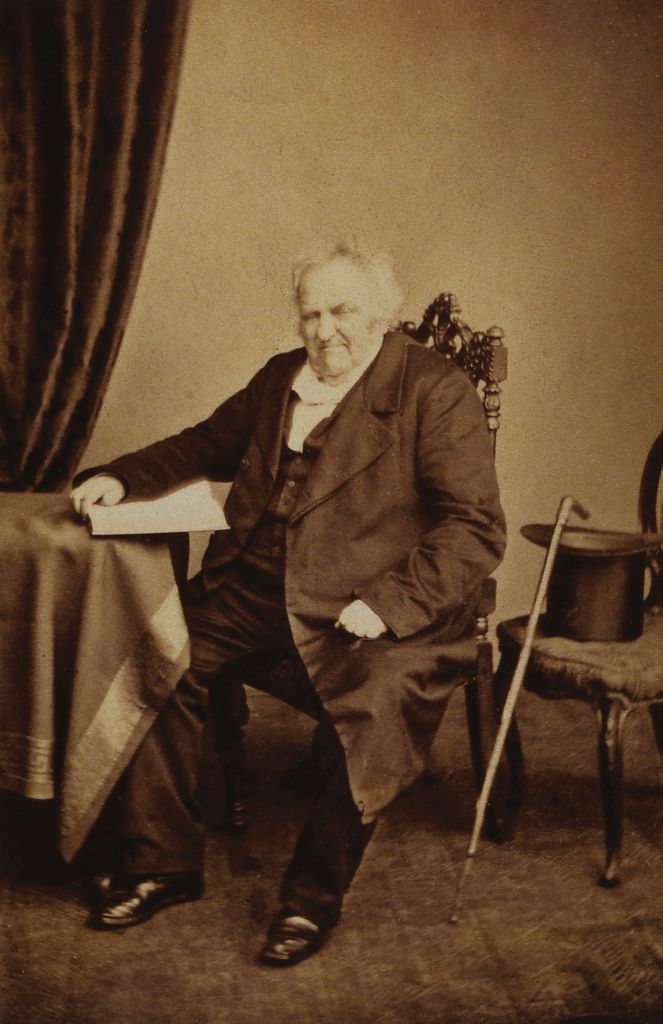
In 1805 Sebastiani received two firmans from Fath Ê¿Ali Shah. The first gave Sebastiani permission to repossess three dilapidated churches that had fallen into unauthorized, i.e. Armenian, hands,36 while the second exempted those repossessed churches from future taxes. In addition, a third firman, dated March 20th, 1806, and signed by the deputy Prime Minister, Mohammad Hoseyn Khan Amin al-Dowleh (1779â1847), was addressed to his son Ê¿Abdollah Khan, the governor of Isfahan at the time. This ordered Ê¿Abdollah Khan to guarantee âthat all the Christians of Isfahan should obey him [Sebastiani] âin accordance with the will of the Pontiff of all Christiansââ and that he be âgranted possession of all churches, oratories, ecclesiastical goods, books and endowments granted by the Shahs in the past to the Catholic Latin liturgical rite ecclesiastics of Julfa.â37
The following year Father Elias Qarabaghian, who had previously studied at the Pontificium Collegium Urbanum de Propaganda Fide in Rome,38 wrote to the Propaganda Fide from Isfahan noting, among other things, that Fath Ê¿Ali Shah âhad declared himself well disposed to the Catholic faith, had expressed friendship for the Pope and was considering sending an ambassador to him.â39 The French, however, considered Sebastiani an âintrigantâ and a tool of the English Resident in Baghdad, Harford Jones. It was also suspected that he colluded with an elderly descendant of the Safavid royal family with a view to restoring them to power, ejecting the Qajars and replacing Islam with Christianity. Sebastiani sent a Latin translation of a letter from the elderly Safavid, who already considered himself the rightful ruler of Iran, to the Propaganda, bearing a seal impression of the âman who would be king,â and in early 1807 received a strict reprimand with orders to quit Isfahan and proceed to Pegu (Burma) which was in need of a missionary. In fact, Sebastiani travelled only as far as Baghdad where he remained a year before returning to Isfahan.40 Despite this rebuke, Sebastiani was counted among the many distinguished correspondents of Cardinal Borgia41 with whom he had an excellent relationship.
This time, however, Sebastiani ran up against the influence of Napoleonâs envoy to Fath Ê¿Ali Shah, General Claude Mathieu Gardane (1766â1818). Accompanied by a handful of military instructors,42 Gardane arrived in Tehran with a long list of objectives given to him by Napoleon. In January, 1808,43 Fath Ê¿Ali Shah signed a commercial treaty with France which has parallels with the earlier Franco-Persian treaty of 1708, but which was roundly criticized by Napoleonâs Foreign Minister, Jean-Baptiste de Nompère de Champagny (1756â1834), who felt that Gardane had exceeded the terms of his mission and considered the treaty less advantageous for France than its precursors of 1708 and 1715.44 With respect to Catholics, the treaty (§15) guaranteed royal protection for priests, on condition that they not interfere in the Muslim religion and not engage in any behavior which ran counter to Islam. Priests, monks and others adhering to the âlaw of Jesusâ were not to be vexed or tormented by anyone, while they in turn were not to stray outside their own sphere of duty or do anything injurious to Islamic belief.45
These stipulations certainly reflected Napoleonâs interest in using missionaries as covert agents, as described above. Gardane, however, would not have been thinking of Sebastiani when this article was drafted, whom he recognized as an ally of the English,46 undoubtedly because of Napoleonâs treatment of the Papal States, and an avowed enemy of France. In fact, Gardane pushed Fath Ê¿Ali Shah to expel Sebastiani from the kingdom, albeit not without causing the Shah some regret.47 Mirza ShafiÊ¿ circulated a firman, dated September 14th, 1808, to all of the provincial governors in Iran calling for Sebastianiâs arrest and expulsion on the grounds of his anti-French activities.48 Thanks to several contacts in Tehran, however, Sebastiani was apprised of the expulsion order two days before a messenger delivered it in writing to him at Isfahan, thus providing him with three daysâ time in which to leave the country.49
That Sebastianiâs stay at Isfahan did not result in any appreciable strengthening of ties between the Papacy and the Qajar court is suggested by the inertia that followed his departure in 1808, and by the account of his conduct at Isfahan related by Wolff. For all his diligence, intelligence and dedication, Sebastiani does not appear to have openly advocated on behalf of the Pope. Rather, as Wolff wrote,
He always spoke of Christ, and only once mentioned the Pope in the presence of Matteus, the Armenian Priest; but he did not speak of him with that fire which animated him, as often as he spake of Jesus Christ. He was mending a pen, and smiling, and with indifference he asked Matteus, what does your bishop here believe of the Pope of Rome, the successor of Peter?50
This does not sound like someone who was actively seeking to enhance the standing of the Papacy in the minds of the âschismaticâ Armenians. Yet it is also possible that Sebastiani was wise enough to realize that a gentle approach, rather than a combative one, was needed if more conversions to Catholicism were to be made among the Gregorian Armenians of New Julfa.
Setting out in mid-November, 1808, with an armed escort who had instructions to kill him,51 Sebastiani nonetheless succeeded in making his way back to Baghdad alive. From there he proceeded to Basra and, after stops in Bombay, Malabar, Sri Lanka and Madras, reached Calcutta on May 24th, 1810. He remained in the Deccan and Bengal from 1810 to May, 1813,52 living for part of that time under the roof of Sir James Mackintosh who âavailed himself of the opportunity to read with him many of the Italian poets;â Chiabrera, Testi, âand, above all Guidi â the Italian Grayâ.â53 In 1812 his translation of the New Testament, âto near the end of the Epistles,â intended âfor the use of the Christians in Persia,â was printed at Serampore.54 Destroyed in a fire at the printing house, it was reprinted in 1813.55 However, this was not quite the end of Sebastianiâs role vis-Ã -vis Fath Ê¿Ali Shah.
Sebastiani remained in India until May, 1813, at which time he embarked on a four-month journey, eventually reaching the former French Seychelles which were, at the time, under British control. From there Sebastiani returned to Iraq where the French consul at Basra and aspiring consul in Baghdad, Jean Raymond,56 is said to have handed him a letter from the Prefect of the Propaganda Fide, Cardinal Lorenzo Litta (1756â1820),57 dismissing him from his position as Prefect Apostolic in Persia on the grounds that he had deserted the care of his Christian flock and fled to India.58 Ciampi suggested that Raymond had previously written to Litta, prompting him to cancel Sebastianiâs appointment,59 but correspondence in the Vatican archives shows that, in 1809, Sebastianiâs departure from Isfahan had been reported by the Armenian informant John Haruthian, âRomeâs âeyes and earsâ among the Catholics in Ottoman Turkish Arabia and Persia since 1783 when he sought refuge in Baghdad,â60 and a warning had been issued to Sebastiani to return to his post, although it is probable that he never received it.61 From Baghdad Sebastiani proceeded to Constantinople which he reached in 1815. There he wrote to Cardinal Litta, rejecting the charges, and received a reply dated June 10th, 1815, calling for his return to Rome.
What happened next is unclear, but from Rome Sebastiani travelled on to London, where his Latin translation of the New Testament received high praise.62 Later Sebastiani returned to Rome where he met Nicholas (later Cardinal) Wiseman (Fig. 2.4), who had been appointed professor of Oriental languages at the Roman University by Leo XII in the late 1820s. Wiseman later wrote, âI had frequently heard from a gentleman, well known in the literary world as a Greek and oriental scholar ⦠He had, in fact, travelled over great parts of Greece expressly with the view of collating manuscripts of the New Testament for a Latin version of it, which he afterwards published.â Wiseman noted that he was âAnxious to collect with greater accuracy the information he had to give,â suggesting that he and Sebastiani were on friendly, collegial terms.63 Around 1829 Wiseman introduced the Protestant German theologian August Tholuck (1799â1877) to Sebastiani when Tholuck was in Rome. Afterwards Tholuck wrote Wiseman to thank him, noting âI have been particularly delighted at the conversation of Mr. Sebastiani; he is indeed one of the ablest missionaries I ever saw, and seems to have a deep knowledge of Arabic and Persian. We did not talk in any language but Arabic.â64 In 1819 Sebastiani published a work âof great research and considerable merit,â on moral philosophy,65 and in 1821 his history of India was published at Rome.66 A treatise on usury, using extensive citations from Classical, Biblical and mediaeval sources, appeared in 1830,67 and two short works on the dates of Abraham, Jacob and Exodus in 1835 and 1836.68
Cardinal Nicholas Wiseman. 1860â1865, maker unknown. Purchased 1999 with New Zealand Lottery Grants Board funds
Te Papa (O.021539)
2 Pope Leo XII Writes to Ê¿Abbas Mirza
Following Sebastianiâs departure from Iran it was not until 1824 that the Propaganda Fide became pro-active when it granted provisional authority over Isfahan to the Bishop of Baghdad, Pierre-Alexandre Coupperie, whom Pius VII had appointed to this position in May, 1820.69 According to an unnamed writer from the Propaganda, âin the course of 1826 the number of Armenian heretics becoming very considerable in Persia, the court of Rome sent some Catholic priests of the same rite in order to labour in the conversion of those erring Christians.â70 Coupperie, however, gave a different version of events. He wrote that, after the Pope named him administrator of the diocese of Isfahan, he âsought a missionary to send to this kingdom,â and, as he said, âIâve had the good fortune to find a good Catholic Armenian priest at Mt. Lebanon.â71 In any case, two missionaries, Hovannes (John/Giovanni) Derderian â âan Armenian Catholic priest from Angora [Ankara]â who had âstudied in Constantinopleâ72 â and Peter (Pierre, Petros) Vartabet (Vardapet),73 arrived on March 10th, 1827, at Khosrova (mod. Khosrowabad) in Azerbaijan in the midst of the Second Russo-Persian War.74 According to Derderian himself, their arrival immediately aroused suspicions and, denounced by some Armenians as government spies, they were imprisoned before being exiled and sent back to Constantinople.75
Derderianâs claim is contradicted, however, in a letter sent by Pope Leo XII (1823â1829) to the crown prince, Ê¿Abbas Mirza (Fig. 2.5), dated October 10th, 1827, a virtual copy of which, almost but not quite identical, was written on September 20th, 1828,76 perhaps because the Pontiff or his advisors feared that the original had not reached its destination. According to these letters, after Derderian had been ordered to leave the kingdom, Ê¿Abbas Mirza countermanded the order and showed the missionaries great benevolence, allowing them to remain in the country for the purpose of prosecuting their appointed tasks, which included preaching the Gospel.
Ê¿Abbas Mirza. Hippolyte Bellangé, âUne revue d Abbas-Mirza, Ser-Bâz (Infanterie régulière) (Perse)â (1835). Prints, Drawings and Watercolors from the Anne S.K. Brown Military Collection
Brown Digital Repository. Brown University Library. https://repository.library.brown.edu/studio/item/bdr:231139/
This prompted the Pope to write to Ê¿Abbas Mirza to thank him warmly for performing this service. Moreover, it is implied in the letters that Ê¿Abbas Mirza had asked Derderian to convey his regards to Leo XII, and had intimated that he valued the Popeâs letters more highly than those of any other prince. Both letters record that all Catholics, most especially the missionaries, âpoured outâ their prayers for Ê¿Abbas Mirza, but only the second letter refers to small presents sent by the Pope to the crown prince as tokens of esteem. Unfortunately, we do not know what those presents may have been, nor how and by whom these letters were conveyed to Ê¿Abbas Mirza. Finally, the letters commend Derderian to Ê¿Abbas Mirza, making a direct, personal appeal for the missionaryâs ongoing protection while in Iran.
To the Most High Prince Abbas Mirsa, Hereditary Prince of the Persians.
Pope Leo XII.
Greetings Prince Most High,77
Following the example of our Predecessors, the Supreme Pontiffs of the Catholic Church, who wrote numerous letters to the Kings and Princes of the Persians, and to your great-grandfathers, as dictated by circumstances, we give these to You, Most High Prince, all the more willingly, because we have no doubt that they will be most pleasing to You. Indeed, we should be seen to be deficient in our service, if we omitted to express our grateful feelings towards you, who have so eminently deserved them, from the Catholic Church and from us. For my beloved Son, John Derderian, an Armenian priest, a man of zeal and evident piety, who had come to Persia for no other reason than to preach the Gospel and sow there the salubrious seed of the Divine Word, yet was treacherously attacked by evil slander, and ordered to be exiled from Persia. You not only declared him exempt from undergoing the punishment of exile, but you decided to allow him to stay where he wanted, to continue wherever he saw fit, to receive comrades, to preach the Gospel freely. By continually including mention of Us to the aforementioned priest (exempted by you so exceedingly humanely), you caused that he send greetings to Us in Your name, and that he add that You looked forward to Our letters as more dear to You than the letters of any Prince whatsoever. It is difficult to say how pleased we are with these signs of how exceedingly inclined your soul is towards the Catholic Church and to us, and how pleased we are with your declarations, and with what close bonds you bind our will to you, Most High Prince. Would that opportune occasions would present themselves to demonstrate to you how much we value your sublime dignity and the most precious dignity of your mind, and with what desire and zeal we burn for returning the favor to you. In the meantime, with all our might, we will not cease to beseech the Lord of Lords, that he may furnish your Highness with every kind of earthly happiness, and, which is of by far the greatest importance, may wish to show you the way to the attainment of eternal life and to fortify you by virtue of his goodness. All the Catholics who live here pour out these prayers together with Us, especially the Missionaries who, seeking not their own, but those of Christ, consign themselves to Persia, all of whom, especially John Derderian, Prefect of the Mission, we entrust, with as much exertion of our soul as we are able, to your patronage, Most High Prince, with the grace which is so deeply engrained in you.
Given at Rome at St. Peterâs under the Fishermanâs Ring78 on October 10th, 1827. In the fifth year of our Pontificate. For Lord Cardinal Albano79 substituted by F. Capaccini.80
To the Most High Prince Abbas Mirsa, Hereditary Prince of the Persians.
Pope Leo XII.
Greetings Prince Most High,
Following the example of our Predecessors, the Supreme Pontiffs of the Catholic Church, who wrote numerous letters to the Kings and Princes of the Persians, and to your great-grandfathers, as dictated by circumstances, we give these to You, Most High Prince, all the more willingly, because we have no doubt that they will be most pleasing to You. Indeed, we should be seen to be deficient in our service, if we omitted to express our grateful feelings towards you, who have so eminently deserved them, from the Catholic Church and from us. For my beloved Son, John Derderian, an Armenian priest, a man of zeal and evident piety, who had come to Persia for no other reason than to preach the Gospel and sow there the salubrious seed of the Divine Word, yet was treacherously attacked by evil slander, and ordered to be exiled from Persia. You not only declared him exempt from undergoing the punishment of exile, but you decided to allow him to stay where he wanted, to continue wherever he saw fit, to receive comrades, to preach the Gospel freely, by continually including mention of Us to the aforementioned priest (exempted by you so exceedingly humanely), you caused that he send greetings to Us in Your name, and that he add that You looked forward to Our letters as more dear to You than the letters of any Prince whatsoever. It is difficult to say how pleased we are with these signs of how exceedingly inclined your soul is towards the Catholic Church and to us, and how pleased we are with your declarations, and with what close bonds you bind our will to you, Most High Prince. Would that opportune occasions would present themselves to demonstrate to you how much we value your sublime dignity and the most precious dignity of your mind, and with what desire and zeal we burn for returning the favor to you. We wish the small presents which will be brought to you in our name, to be a sort of token of our feelings in this regard, and which we trust you will enjoy and accept not so much for themselves, but because they will be an example of our extraordinary benevolence towards you. But of our exertions towards you, the ones that we undertake to be considered paramount by you are our prayers, which we offer incessantly to the Lord of Lords that he may furnish your Highness with every kind of earthly happiness, and, which is of by far the greatest importance, may wish to show you the way to the attainment of eternal life and to fortify you by virtue of his goodness. All the Catholics who live here pour out these prayers together with Us, especially the Missionaries who, seeking not their own, but those of Christ, consign themselves to Persia, all of whom, especially John Derderian, Prefect of the Mission, we entrust, with as much exertion of our soul as we are able, to your patronage, Most High Prince, with the grace which is so deeply engrained in you.
Given at Rome at St. Peterâs under the Fishermanâs Ring on September 20th, 1828. In the fifth year of our Pontificate.
3 Derderianâs Firman
On December 7th, 1827, Coupperie sent a report on the state of Catholicism in Persia to the President of the Central Council of Midi. In it he noted, among other things, that after arriving at Isfahan
From there he went to Tehran; there he found a number of Catholic merchants who come to this capital, for business, from various cities in Asia. Their number varies over time and according to circumstances. He was received with honor and, as their priest, established his residence among them. In the house of one of them he created a chapel, where he holds Mass and performs divine offices according to the Armenian rite, with such decency that the locals permit it.81
Derderianâs main theater of operations, however, was at New Julfa, the Armenian suburb of Isfahan. As Augustin Cluzel later wrote, when he arrived there
Father Derdérianâs only flock was an old woman who had returned from the dispersion several years earlier,82 and who had never wanted to join a schismatic church. She hoped, like the old man Simeon, that she would not die without having seen the Lordâs Christ. Her confidence was not deceived. On the arrival of Father Giovanni Derdérian, she saw herself at the height of her hopes; she hastened to receive all the sacraments from the hands of this good Priest, and a few days later she died content, assisted by him.83
Derderian and his companion were cordially received as representatives of the Roman Pontiff by the âPersian chiefâ of Isfahan and succeeded in regaining possession of the churches that had formerly belonged to the Jesuits, Carmelites and Dominicans with a view to enforcing the earlier firmans of the Safavid rulers, copies of which were still extant in the city archives, respecting their religious freedom. As Derderian wrote,
We were fortunate enough to get possession of the churches of the Jesuits, the Carmelites, and the dominicans; and to find all the ancient decrees of the sovereigns of the Sesefi [Safavid] dynasty, which were preserved in the archives. We immediately gave publicity to those titles of the Pope and missionaries, for they had been almost forgotten by the orthodox inhabitants, and opened a school for boys which was soon well attended; with lessons in orthography we inculcated the Christian doctrine, and twice a week gave instructions in public, which were attended by a great number of adults of both sexes. High mass was sung every Sunday, and a short instruction given after the Gospel. Thus was the perfume of the Catholic faith quickly diffused throughout the city of Djulfa.84
However, in the face of ongoing hostility by the leader of the Gregorian Armenian âheretics,â Derderian collected all of the firmans previously issued in favor of the Catholics and in 1834 took them to Fath Ê¿Ali Shah at Tehran,85 requesting a new firman confirming the provisions of the earlier ones. The Shah willingly complied and the new firman was âcountersigned by the twelve first ministers of the empire, and enregistered in the different archives.â86 Translations of the firman given to Derderian by Fath Ê¿Ali Shah circulated widely in the Western Catholic press:87
Clemency, which is the most beautiful attribute of sovereign power, requires that we protect with all our zeal those subjects of the subjects of other sovereigns who are in our dominions. Now, Father John [Derderian], chosen amongst the learned Christians by the present Pope Gregory [XVI], who is the first and chief of the Bishops of Christendom, having come here to teach religion to persons of his nation, has recourse to our sovereign powers; he is in possession of the decrees of the pious emperors Sesefi [Safavi, i.e. Safavid], from which it results that the missionaries had formerly Catholic churches at Djulfa of Ispahan, in order to fulfill the ministry of preaching, to bless marriages, baptize children, and bury the dead. For these causes, out of affection for the Catholics, and respect for the edicts of the Saesefi, we ordain that the undernamed father, currently at Djulfa of Ispahan, may, according to the regulations and rules of his religion, be employed in the celebration of marriages, the administration of baptism, the burial of the dead, and in preaching to the adherents of the Catholic faith; that if any Christians of another communion wish to assist at his instructions, there may be no hindrance given them; and that if disputes should arise between Catholics and Armenians, they must make their appearance before the lawful judges, who will pronounce in those causes. Moreover, the chief of the Armenians is forbidden to molest Father John. Let our respectable judges and excellent governors obey this order, and regard it as their duty to have it put in execution.88
Before the year was out, however, in the night of October 6thâ7th, 1834, Fath Ê¿Ali Shah died. As for Derderian, he continued his work at Isfahan until his death in 1852.89 Although mentioned in a variety of sources, he remains an elusive character. Charles Stuart, who met Derderian on January 20th, 1836, called him âa venerable man with a long grey beard.â90 The comte de la Guiche, who probably met him in 1839, âfound him to be a witty, enlightened and highly educated man. He knows perfectly well the antiquities of southern Persia; he has studied them conscientiously.â91 The Italian physician Raphael Bertoni,92 who knew Derderian as well,93 was an enthusiastic supporter of his and wrote, in 1840, that he was highly regarded both by the mojtaheds of Isfahan and the Armenians.94 In 1841 the Italian naturalist Gaetano Osculati (1808â1894) stayed with âthe good Father Giovanni Derderianâ at New Julfa and received some samples of a cereal resembling Turkish wheat from him.95 Despite Derderianâs efforts at Isfahan, however, the focus of Catholic missionary activity in Iran would soon shift northward. Although he may not have had a large Catholic community to tend to, Derderianâs arrival was the catalyst for renewed Papal correspondence, initially with the crown prince Ê¿Abbas Mirza, and later with the Court of Tehran.
Audiffredi 1794: 351.
Pasqualoni 1795: 4.
Pennacchi and Piazzesi 1885: 587, 589, âLetter from the S.C. of Propaganda Fide to the Vicarii Apostolici of Persia and Armenia and other countries of the East dated August 3, 1816.â
Sebastiani 1796. Cf. the discussion in Loofs 1898: 71â73, n. 7; Prestige 1956: 35, 55. It was reviewed in Anonymous 1796 which appeared on November 5th.
Although advertised as the continuation of Alessandro Politiâs unfinished edition, published between 1730 and 1735, e.g. in Anonymous 1794: 151â152, this work was never published. See the discussion of Sebastianiâs difficulties in attempting to do so in Andres 1822: 126â127.
O Flynn 2017: 51 and n. 17.
Sebastiani 1803: xxiii.
Thus O Flynn 2017: 48 is unlikely to be correct when he wrote that, âBetween c.1793 and c.1803, Sebastiani spent ten years in Ottoman Turkey and in the Near East as an ecclesiastical agent.â
Sebastiani 1803: xxiiiâxxiv.
Yapp 1967: 327. Fattah 1997: 103, quoted from the official instruction creating Jonesâ position as follows: âit having been judged advisable by the Secret Committee [of the East India Company], with the consent and approbation of His Majestyâs Ministers, under the present state of affairs and the rumors which have prevailed, the French might endeavour to penetrate to India either by the Red Sea or the Persian Gulph, a Resident should be established at the Court of the Pashaw of Bagdad, you have been selected for that purpose.â A âLetter from the Secret Committee of the Court of Directors to the Governments in India,â written on November 26th, 1798, alludes to the fact that, âOur subsequent Advices of July and August, will have informed you of the Appointment of Mr. Jones to reside at the Court of the Pacha of Bagdat.â See Anonymous 1799: 5. Anonymous 1798: 420, wrote, âThe Court of Directors has taken every possible means to inform itself of the progressive state of affairs in Egypt. Besides Mr. Tooke at Aleppo, Mr. Harford Jones is lately appointed the Companyâs agent at Bagdad. A regular monthly communication with this country from the several Presidencies in India is now established.â Alexander 1928: 49 was thus incorrect when she stated that the appointment began in 1797. On the other hand, on August 3rd, 1797, Dr. James Short was âappointed to the medical duties of the Durbar of the Bashaw at Bagdad, acting at the same time under the instructions of the resident and affording him all necessary assistance.â See Moor 1801: xxxv. This suggests that the idea of establishing a Baghdad Residency preceded Jonesâ arrival in 1798. See Rousseau 1809: 15. However, an Ottoman diploma confirming Jones in his position as âConsul in the city of Bagdad and its environsâ was not issued until November 2nd, 1802. See Hughes Thomas 1851: 42.
O Flynn 2017: 51.
For Pisani see e.g. Cunningham 1993: 3â10.
Vane 1851: 434.
Ciampi 1874: 77.
Ciampi 1874: 40.
Ciampi 1874: 40, n. 1, Christiana dogmata arabice defensa et illustrate, and Opusculum graeco arabicum, cui titulus Petra scandali, arabice refutatum, both âDamasci, eodem anno 1799.â
Sebastiani 1803.
Borgia was accompanying Pius VII to Paris for the coronation of Napoleon when he died en route in Lyon. See Williams 1998: 67. For his life see Münter 1805; St.-Barthélemy 1807; Borgia 1843.
O Flynn 2017: 53. The Prefect Apostolic or Apostolic Prefect is explained by Winslow 1924: 6 as follows: âWhen the Holy See sent a band of missionaries to a certain region it generally appointed one of the missionaries as superior and gave him special faculties. The superior was then called prefect of the mission, or prefect apostolic ⦠Prefects apostolic were sent not only to unevangelized territories but also into regions under the jurisdiction of a vicar apostolic or a bishop.â
Charles Richard Vaughan (1774â1849). For a brief biography see Nias 1918: 68â70.
Sebastiani 1803. Nowadays the poem which Sebastiani called Cassandra is known as the Alexandra. It tells the story of the Trojan War and its heroes in the voice of the Trojan Cassandra. The poet Lycophron of Chalcis (fl. 3rd cent. BC) was active in the Library of Alexandria. For a recent study of the Alexandra see McNelis and Sens 2016.
The date of the initial meeting between Seetzen and Sebastiani is unclear but certainly occurred before February 22nd, 1805, when Seetzen sent his German translation of and commentary upon Sebastianiâs Latin work, Drusorum religio, translated from the Arabic by Leopoldo Sebastiani, prefect of the missions of prop. fide in Persia and Kandahâr, together with my notes, to the Orientalische Sammlung in Gotha. See Kruse 1854: xxviii.
As Daughton 2006: 34 noted, âNapoleon shut down the Propaganda fide (Congregation for the Propagation of the Faith) in Rome ⦠The Propaganda fideâs archives were sent to Paris, and some of its property was sold off.â
From 1799 to 1816 the Franciscan Fonton, member of the Franciscan Order of Friars Minor Conventual (O.F.M. Conv. or Ordo Fratrum Minorum Conventualium), bishop of Syra and titular archbishop of Marcianopolis, was Patriarchal Vicar for Latin Catholics at Constantinople. See Belin 1872: 112â113; O Flynn 2017: 55.
Seetzen 1805: 66â70, the authorâs translation is given here. Anonymous 1819 makes no mention of Seetzenâs encounter with Sebastiani. Seetzenâs biographical information on Sebastiani is reviewed in less depth by Wefelmeyer 2019: 103â104 and n. 428.
For Antoine-Alexandre Romieu, who was an agent of Napoleonâs, see Potts 2022c.
Vane 1851: 434.
Vane 1851: 432.
O Flynn 2017. Although admittedly concerned with the history of the Lazarist missions, Frazee 1984: 25ff completely ignored Sebastianiâs relations with Fath Ê¿Ali in his analysis.
On May 22nd, 1804, Napoleon told the Council of State, âIt is my wish to re-establish the institution for foreign missions, for the religious missionaries may prove very useful to me in Asia, Africa, and America, as I shall make them reconnoitre all the countries they visit. The sanctity of their dress will not only protect them, but serve to conceal their political and commercial investigations. The head of the missionary establishment shall no longer reside at Rome, but in Paris. ⦠We all know of what great use as diplomatic spies the âLazaristesâ of the foreign missions were in China, Japan, and all over Asia, â even in Africa and Syria there were some. They do not cost much money â they are respected by the barbarians â and, as they have no official character, they can never commit the interests of government nor compromise its dignity.â See Pelet de la Lozère 1837: 243â244.
Morier 1846: 116, n. *. Capt. E. Frederick, who commanded John Malcolmâs escort during his embassy to Fath Ê¿Ali Shah in 1810, noted in his journal on or shortly after May 8th, 1810, âPaid a visit to Mirza Abdool Cassim wolla the Soofee. ⦠He is looked upon as the head of the Soofees ⦠This was the person who saved M. Sebastiani from destruction when the Mollahs had excited the populace to stone him. ⦠Sebastiani never had the liberality to acknowledge this piece of service.â See Kaye 1937: 717â718.
Ciampi 1874: 78. This would be âHadschi Mirza Mohammed Achbari, a highly erudite man who was also well-versed in the invocation of good and evil spirits, secret numbers, horoscopes and talismans.â See Schlechta-Wssehrd 1864: 18. Cf. Silvestre de Sacy 1819: 213, âAs the Persians like to argue about all kinds of sciences, and particularly about theological matters, our missionary soon found himself engaged in numerous discussions, both verbal and written, not without exposing his life to great danger. As a result, his reputation soon spread throughout Persia, and the king came to hold him in high esteem, granting several firmans in favor of Christians and their churches.â
Wolff 1829: 47.
From New Julfa.
Wolff 1829: 85â86.
Derderjan 1839a: 92â93 distinguished between the Catholic churches in Isfahan proper, and those in the Armenian quarter of Julfa. He wrote, âWe formerly possessed three churches at Ispahan, none of which exists to-day, one was converted into a mosque by the Persians; the other two were razed to the ground. ⦠At Djulfa the Catholics had four churches, of which there remains but one, that of the Dominicans, built in 1705, the other three having been destroyed.â These were presumably three of the âfour Catholic churches, houses and adjoining properties in Julfa which had been taken over by Armenians.â See O Flynn 2017: 65.
O Flynn 2017: 63. Sebastiani arrived at Isfahan on June 12th, 1805, and remained there until November, 1808.
With the bull Immortalis Dei filius, Pope Urban VIII founded the Collegium Urbanum in 1627 to train missionaries. See e.g. Hilling 1909: 80; Lynskey 1952: 54.
O Flynn 2017: 65.
Dupré 1819: 147â149.
St.-Barthélemy 1807: 315, âDans la Perse, le R. Léopold Sebastiani, missionnaire catholique.â
For which see Potts 2023a: 1â161.
For the entire episode and the many undertakings of Gardaneâs staff of military instructors see Potts 2023a: 23â161.
Driault 1901: 145.
For the text see e.g. Martens 1839: 137â138; dâHauterive and de Cussy 1844: 418â419; Thieury 1866: 74; Manet 1877: 488. It is paraphrased in Bugnini 1981: 187 who wrote, âPriests, monks, and religious who follow the law of Jesus who live in Persia to provide services shall enjoy imperial protection and no one may molest them.â
Horne 1821: 233 described him as âjustly celebrated throughout the East, and not altogether unknown in England, for the losses he sustained, and misfortunes he suffered, in consequence of important services which he gratuitously rendered to the British government, while resident in Persia as president of the missionaries sent out by the church of Rome, at the time that Buonaparte attempted to establish relations with the court of Ispahanâ (sic, Tehran).
As Silvestre de Sacy 1819: 214 wrote, âambassador Gardanne, during his mission in Persia, was charged with demanding the expulsion of Father Sebastiani. It pained Fath-Ali-Schah to do this; nevertheless, the ambassador obtained an order from the prime minister, Mirza Schéfi, of which our missionary gives a translation and according to which the provincial governors were enjoined, not only to expel him from the kingdom, but to seize his papers and to turn these over to M. Gardanne.â
O Flynn 2017: 75; Mousavi 2023: 115â116.
Silvestre de Sacy 1819: 214. The details of Sebastianiâs subsequent movements come from the introduction to Sebastiani 1817.
Wolff 1829: 85â86.
âIf one may believe Father Sebastiani, the kingâs messenger, who was charged with conducting him out of the kingdom, swore on the Quran that he had orders to kill him, and if he saved his life, this was only in recognition of a prior service that the missionary had recently performed for him, and to repay this debt.â See Silvestre de Sacy 1819: 214â215. Cf. Ciampi 1874: 42.
De Gubernatis 1875: 76. For the date of his departure see Ciampi 1874: 43. For details of his stay in India see O Flynn 2017: 90â94.
Mackintosh 1835: 6, n. â¡.
Bassett 1890: 335; Piemontese 2011.
Sebastiani 1813. Cf. Darlow and Moule 1911: 1203.
Silvestre de Sacy 1819: 215. For Raymondâs activities in Iraq see Potts 2023a: 143ff. In 1811â1813 he was French consul at Basra. See Potts 2023a: 157.
For his life see Baraldi 1828.
Ciampi 1874: 44.
Ciampi 1874: 81.
O Flynn 2017: 111. Although he resided in Baghdad, Haruthian had the title of âadministrator apostolic of the Latin diocese of Isfahan.â
O Flynn 2017: 80.
Amat di S. Filippo 1882: 531, referring to Sebastiani 1817. As Horne 1825: 225â226 noted, âThe version is made from the Alexandrian manuscript, with which the translator states that he collated several manuscripts and collections of various readings, availing himself also of every critical aid he could procure, and particularly of the writings of the Greek fathers, and the assistance of the most learned of the modern Greek clergy. To obtain the latter, M. Sebastiani expressly travelled through the whole of Greece.â For his travels through Greece we have no exact dates.
See Wiseman 1853: 68â69.
Ward 1897: 61.
Sebastiani 1819.
Sebastiani 1821.
Sebastiani 1830.
Sebastiani 1835, Sebastiani 1836.
Merland 1881: 96. Cf. O Flynn 2017: 111; Filoni 2017: 65â71. Coupperie came from the diocese of La Rochelle, and was a member of the Congregation of Blessed Louis de Montfort. See Altmayer et al. 1900: 236. For his own study of the Chaldaeans, both Catholic and non-Catholic, see Coupperie 1831. Six years after Coupperieâs death his position was filled by Laurent Trioche, previously Vicar Apostolic. See Anonymous 1837a: 160. For Coupperieâs career see Potts n.d.b.
Anonymous 1839a. Cf. Anonymous 1839b: 502, Anonymous 1840c: 43.
Coupperie 1828b: 146. In a letter dated December 6th, 1828, Coupperie wrote that âthe chapel still existsâ at Tehran. See Coupperie 1830: 5.
Boré 1840/2: 479.
For his Europeanized Armenian name see Anonymous 1888b: 92. What appears as his full name, âPetros vardapet,â in fact simply means âmonk Peter.â See Lynch 1901: 35 who recounted meeting another âmonk Peter, or Petros vardapet.â As Boré 1841: 320 wrote, âit is only twelve years since the mission of Djoulfa has been re-established, and its first restorers were three Armenian priests, named Petros, Stephan, and Ohannés. The first of those vartabeds, or doctors, died from sickness shortly after his arrival; the second, who had been educated in the Roman college, was a respectable old man, whose mind was entirely occupied by a careful preparation in this retreat for a happy death. His life having been a continual prayer, with the practice of every mortification, his death was like that of one predestined for the eternal enjoyment of God. Ohannés, who survived them, laboured long and zealously in this ministry, which was exposed to persecution until the arrival of the French embassy.â Coste 1878: 191 referred to Derderian as âDom Joani, priest of the Propaganda of Rome.â
Derderjan 1839b: 505.
Derderjan 1839a: 88â89.
Anonymous 1841c: 27â28 and 44â45. Cf. Anonymous 1884d: 234, âThe dynasty that reigns in Persia today recognizes for its founder Aga Mohammed Khan, who around 1792 became ruler of Persia. His grandson Feh-Aly Shah, who succeeded him, consolidated the throne with prudent and wise conduct. He appointed his third-born son Abbaz-Mirza as Crown Prince, to whom Leo XII addressed two Bills, Oct. 10, 1827 and Sept. 20, 1828, commending Christians to him.â Sincerest thanks are due to my colleague Claire Bubb who considerably improved the English translations of these two letters.
Celsissime Princeps Salutem. By way of comparison note that, when Innocent XII wrote to the last Safavid ruler, Shah Soltan Hoseyn, in 1695, he addressed him as âthe illustrious and most powerful king, salvation and the light of divine graceâ (Illustris ac potentissime rex, salutem et lumen divinae gratiae). See Martinis 1898: 70.
As Aavitsland 2012: 174 noted, âUnder Clement IV (1265â68) we hear for the first time about the annulus piscatoris, the Fishermanâs Ring. This was the popeâs signet ring which was used as a seal on apostolic letters withheld from the chancellery. From about 1300 the Fishermanâs Ring became a permanent part of the popeâs insignia. It was delivered to a newly elected pope by the College of Cardinals and kept in the custody of the college on his death.â
Pietro Francesco Galleffi (1770â1837) was Bishop of Albano from 1820 to 1830. He is listed as âBishop of Albano, Archpriest of the Patriarchal Vatican Basilica, Secretary of the Memorials OF HIS HOLINESS, and Prefect of the Rev. Fabrica of St. Peterâs,â in Anonymous 1823: 3.
Francesco Capaccini. For his life see Gazóla 1845. Capaccini was a notorious papal spy. According to Frattini 2008: 145, âthe classic spy tactics followed by Capacciniâ were considered unsavory by his colleagues and âMany thought that the task of spying on another state or government fell outside their priestly functions.â Nevertheless, âFor his services to the Church Monsignor Francesco Capaccini was raised to cardinal in pectore [âin the breast/in the secret of the heart,â i.e. without having his name revealed] on July 22, 1844, by Pope Gregory XVI. This brilliant agent of the papal espionage service died the next year, on June 15, 1845.â
Coupperie 1828b: 146. In a letter dated December 6th, 1828, Coupperie wrote that âthe chapel still existsâ at Tehran. See Coupperie 1830: 5.
In 1813 according to Cluzel 1876c: 308.
Cluzel 1871a: 166. Cf. Cluzel 1876c: 308. The woman whom Derderian encountered at New Julfa had come from Baghdad in 1813 and died seventeen days after Derderianâs arrival at Isfahan. See Anonymous 1888b: 92.
Derderjan 1839a: 89; Derderjan 1839b: 505.
Anonymous 1840d: 45. Fath Ê¿Ali Shahâs firman was later invoked by Naser al-Din Shah. According to Anonymous 1896e: 552, âNasr ed-Din protected the Catholics in his kingdom by upholding the decree issued by Shah Feth-Ali in 1834, which granted them freedom to practice their religion.â
Derderjan 1839a: 91. Cf. Gratz 1865: 50.
See e.g. Anonymous 1839c: 569. For a German translation see Anonymous 1840d: 45â46. Anonymous 1884d: 234â235, wrote, âGregory XVI obtained permission from the Shah to have the Gospel preached in the kingdom.â It is clear that Gregory XVI had not âobtainedâ the right to preach the Gospel from Fath Ê¿Ali Shah, but rather Derderian.
Derderjan 1839a: 91. Cf. Derderjan 1839b: 508â509.
Anonymous 1888b: 92.
Stuart 1854: 221.
Boré 1840/2: 479. Louis-Henri-Casimir, comte de la Guiche (1777â1843). He had been elevated to a marquisate by Louis XVIII in 1815. See Anonymous 1824: 113â114.
Dr. Raphael Bertoni, âa medical adventurer, born at Lima, and educated at Siennaâ who had been turned âout of Georgia, on account of his radical politicsâ by the Russian government (Stuart 1854: 221). See also Potts n.d.a. The French botanist Pierre Martin Rémi Aucher-Eloy (1792â1838) referred to Bertoni as a âkindly and highly educated man,â who was one of only two Europeans at New Julfa when he visited in late 1837. See Jaubert 1843/1: 470. When Serceyâs mission arrived at Tabriz in 1840, they made the acquaintance of Bertoni who, at the time, was employed as physician by Malek Hasan Mirza. See Couderc 1900: 59.
Bertoni wrote, âI guarantee that by appointing padre Don Giovani Derdérian, current prefect of the Catholic mission, as bishop or archbishop, who knows Persian, has been in the country for thirteen years, enjoys the esteem of all the Mouchetaëtes [mojtaheds] of Ispahan, and is much-appreciated by right-thinking Armenians, I guarantee, I say, that in less than three years, two hundred Armenian families from Djulfa will be in the bosom of our Church.â See Boré 1840/2: 477.
In a letter to Boré, October 6th, 1838, the French botanist Aucher-Ãloy âexpira entre les bras du docteur Bertoni et du père Derdérian, préfet apostolique,â at Julfa. See Jaubert 1843/1: xxvi. He died in 1852 and was buried in the Armenian cemetery at Isfahan. The Armenian epitaph on his tombstone reads, âHere lies the Reverend D.J. Terterian, who restored and made to flourish the Catholic mission, long abandoned. After twenty-four years of apostolic labours he died in the odour of sanctity September 27, 1852.â See Haig 1919: 347. Haig included Derderian in his study of the graves of Europeans in the Armenian cemetery of Isfahan because he was not a local Armenian but a missionary who had come from outside Julfa and Isfahan.
See Osculati 1844: 22 and n. 1. Derderia macrocephala (Jurinea macrocephala) was named after the âvenerable Father Giovanni Derderian, prefect apostolic of the Armenian Catholics, in Persia, Superior of the Monastery of Julfa near Isfahan, in whose arms Aucher-Ãloy died on 6 October 1838.â See Jaubert and Spach 1843: 130.