


1 Introduction
Women have been fundamental, active agents in the socioeconomic structure of many traditional fishing communities worldwide.1 Despite its importance, the role of women has been scarcely considered by the studies on maritime and fishing communities.2 Scholars have systematically interpreted those societies from an androcentric and essentialist perspective, placing economic, functional, and technical aspects at the centre of the discussion.3 Generally, researchers have interpreted womenâs labour in the fishery as ancillary to that of men, relegating womenâs activities solely to the private dimension ashore and, especially, to housework.4 Such perspective has led to a devaluation of womenâs active role and interpreted fishery according to an androcentric categorisation of the spaces, the material culture, and the activities involved. Contrary to this dominant narrative, recent international research â framed within maritime anthropology and in contrast with the gender role approach â has made visible how the contribution of women was â and still is â essential in fishing communities.5
In this context, the studies on Spanish fishing communities have documented male predominance in the extractive activities related to fishing while noting a wide diversity of work traditionally carried out by women, both at sea (i.e., fishing) and, especially, on land (i.e., fish sale, repair of nets). These studies, therefore, highlight the widespread range of productive and reproductive activities carried out by the women within these communities.6
Throughout the 20th century, women in Mallorca (Balearic Islands, Spain) widely dealt with the sale of seafood,7 resulting in a fundamental activity within the fishing context. However, this crucial female task has generally been considered from an androcentric and reductionist perspective, taking into account only its economic dimension.8
In Mallorca, through shared daily practices connected to the sale of fish, fishing communitiesâ women were able to create a more or less heterogeneous community of practice.9 Addressing the question related to social practices and interactions â as well as the modalities through which knowledge transfer occurred â is essential to understand how the emergence of belongingness and identity ties among women occurred. It is also of primary importance for understanding the social capital construction mechanisms within the communities of origin.10 In this context, we must consider that multiple human and nonhuman actors (i.e., spaces, objects, animals, buildings) actively interact in developing daily fish sales practices.11
This aspect requires us to analyse the communities of female practice beyond the human factor, taking into account also the pivotal contribution that, among others, material culture and space have played in their configuration. Finally, we have to appraise the importance of mobility practices in configuring women fishmongersâ communities and creating spaces for dialogue and knowledge transfer.12
Given all these premises, in this chapter, we will analyse the role women played in the different types of fish sales in Mallorca, considering the complex set of actors and practices that contributed to framing this activity. Moreover, we will address how the sale of fish has extended beyond its economic dimension and contributed to developing womenâs social capital and their fishing communities of origin. In this sense, our work will mainly focus on identifying the strategies of socialisation, solidarity, collaboration, and resilience that the women developed thanks to the sale of fish while revealing how those strategies were able to configure a cohesive female community of practice. Finally, we will outline the role of spaces and mobility in creating womenâs social capital.
2 The Sale of Fish in the Context of the Fishing Communities of Mallorca (1900â1985)
The sale of fish was a widespread activity among Mallorcaâs women from the 19th century, resulting as a fundamental element of the culture and traditions of the islandâs fishing villages.13 It experienced significant growth during the first half of the 20th century when the fishing communities in Mallorca had a crucial social, cultural, and economic relevance.14
As for labour organisation, prior to the 1980s, artisanal fisheries were mainly organised cooperatively through fishersâ guilds (confraries)15 that favoured the transfer of knowledge among their members, the regulation of access to resources, and the development of community strategies in management terms.16 Concerning social organisation, fishing communities were robustly structured around the family unit, with many family members directly or indirectly involved in the fishery. In this way, fishing was conceived as a family business organised by assigning well-defined gender roles. While men were involved primarily in the fishery extractive activities, women were mainly in charge of the transport of the catch and the sale of fish.17
Until the 1970s, the fish sale was a decentralised activity that took place â mainly on a small scale â through street sales and, partially, in municipal markets.18 For the most part, sales were made by fishermenâs relatives without intermediaries and according to retail modalities.19 Without state and local regulations, each fishing community actively participated in the management of fish sales, which, for some aspects (i.e. price setting), were monitored by fishersâ guilds.20 In the 1970s, a new marketing model â which consisted of wholesaling and would coexist with the previous one until the end of the 20th century â was enacted. The establishment of the novel model was mainly due to the higher volume of catches derived from the boom in bottom-trawling.21 Gradually, the local authorities started paying attention to fish sales, regulating the primary activities. In this regard, it is important to mention that fish wholesale was centralised in the fish market (Llotja del peix; built between 1936 and 1944) of Palma, the islandâs main city, from the middle of 1970s.22 From then on, the local fishing communities combined the traditional sales channels with the wholesale system managed by the Palma Fish Market until the mid-1980s, when the Spanish authorities decisively and systematically started regulating the fishing sector at a national level. The rise of the centralised and wholesale marketing model, closely associated with the modernisation process of the Balearic fishery and the increasing competitiveness and industrialisation within the fishing sector,23 brought about the progressive weakening and transformation of the traditional fishing communities and their forms of socioeconomic organisation.24 Those profound changes affected the traditional sales channels, particularly street vending, and led to a progressive decrease in the number of women involved in seafood retail.25
3 Case Study, Methodology, and Sources
In this study, we will focus on the situation of six fishing centres of Mallorca: Port of Palma, Port of Sóller, SâEstanyol, Porto Cristo, Port of Pollença, and Port of Valldemossa (Figure 7.1). Our analysis has mainly relied on a qualitative and multidisciplinary analytical framework extensively used in maritime anthropology and based on oral history interviews, photographic and audio-visual sources.26 This methodology allowed us to adopt a historical micro-analysis approach27 to study Mallorca fishing communities and make visible everyday realities (i.e. womenâs labour and gender relations) traditionally disregarded and silenced in the dominant discourses.28

Maps of Mallorca fishing ports and villages mentioned in the text
Created by the authors
The oral history fieldwork was carried out between 2020 and 2022, when we collected 30 semi-structured interviews with women and men from the fishing communities of Mallorca. The participants provided direct and indirect testimonies of fish sales practices in the streets or municipal markets. The interviewees came from families with a long fishing tradition or were linked to the traditional socioeconomic pattern of Mallorca fishing communities. In addition, we also analysed the Antoni Ribas Palau (1926â2002) ethnographic collection at the Historical Archive of the University of the Balearic Islands to complement and expand the information obtained in our interviews.
As for the photographic and audio-visual sources, we relied on the visual anthropology analytical framework.29 Photographs and audio-visual resources allowed us to document and analyse the daily life of maritime-fishing local cultures, as well as to reconstruct maritime landscapes which had disappeared and make emerge social groups and subjectivities rarely considered by the mainstream historical narrations. Furthermore, the semiotic analysis of the images allowed us to analyse the symbolic and cultural aspects associated with the daily practices of fishing communities. The selection of photographs (ca. 50 items) and audio-visual materials30 (ca. six items) was carried out by following a thematic and chronological criterion, compiling exclusively those images that documented womenâs involvement in the sale of fish between 1920 and 1950.31
The information we obtained from the sources mentioned above was analysed by contemplating five indicators we considered essential to investigate and interpret the socioeconomic organisational features of the groups linked to the fish sale. First, we identified the daily practices of fish sales carried out by both women and men. Secondly, we analysed the degree of social organisation necessary for the fulfilment of daily practices (i.e. collective versus individual nature), the scale of social interaction that occurred among individuals, and the types of social ties (i.e. family, community, etc.). Thirdly, we addressed the relationships between men and women in daily practices (i.e. gender relations). In particular, we determined whether gendered divisions of fish sale operations occurred. Fourthly, we identified the learning and knowledge transfer strategies connected with fish sale operations and the people and spaces involved. Finally, we mapped the different spaces related to fish sale operations and analysed how those spaces allowed the development of womenâs social capital. To improve and complete the information, we also relied on local newspaper issues published between 1980 and 2000.32 In this context, the documentation related to the construction and modernisation projects of the islandâs main municipal fish markets was examined too.33
4 Fish Peddling
This sale modality has been documented since the end of the 19th century.34 It consisted of the itinerant fresh fish retail, in which women of the fishing communities on the coast35 came to the islandâs inland to trade the catch. This sale was practised until the 1980s, when the Spanish fishing sector underwent thorough and systematic regulation.
Generally, each fish boat relied on one or two saleswomen to unload the catch, a practice that could also be carried out in groups of men and women.36 Once the fish were unloaded, the vendors planned their distribution itineraries and organised themselves according to the distance they had to travel. In most cases, women first sold the fish within a radius ranging between one and six km (Figure 7.2), starting in the main squares and streets of the fishing village (Figure 7.3; Figure 7.4). The vendors generally travelled on foot in groups of two to five women, transporting their catch in crates and baskets. Sometimes they also moved around with carts.37 Unlike other Spanish fishing contexts, where fish peddling was an eminently female activity,38 in Mallorca, this form of sale was carried out by both men and women who, united by kinship ties, used to sell fish together in the streets near the ports.39
Map of main routes carried out by fishmongers from the Port of Sóller (1920â1950)
Created by the authors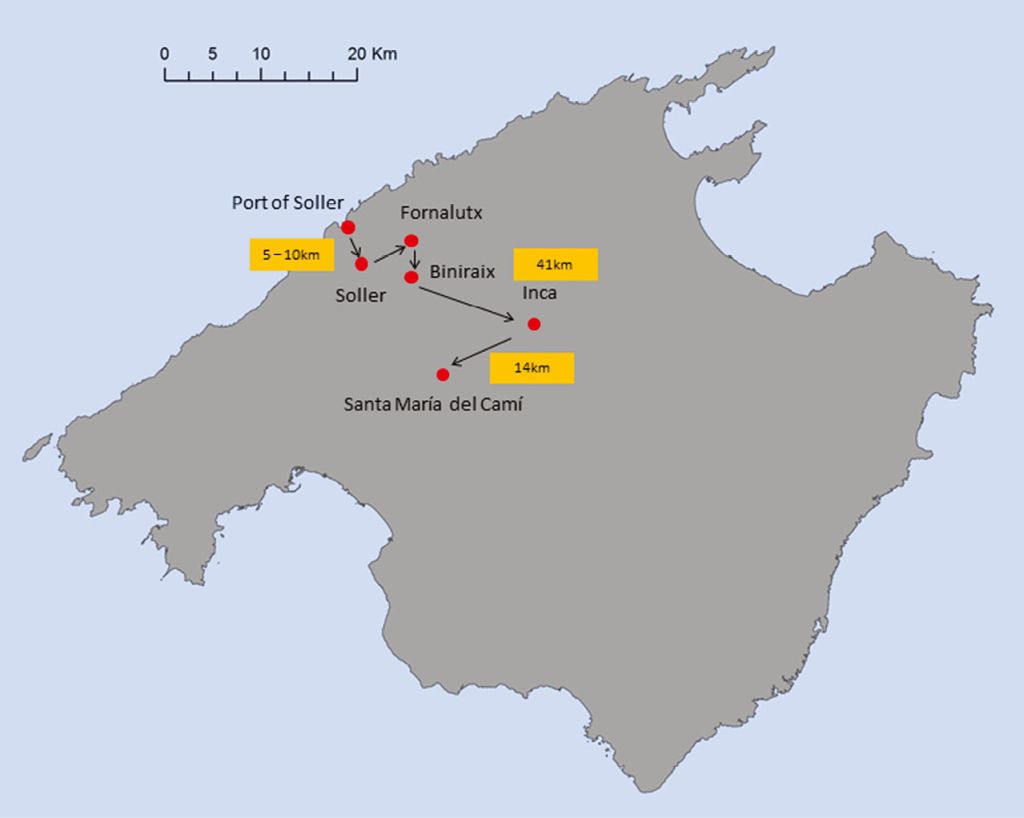
âStreet fishmonger selling fish at the dockâ (n.d.), photograph, Port of Andratx, Balearic Islands
Source: AMA. CFJVC, 44
âGroup of street fishmongers selling fish in the port of Pollençaâ (ca. 1950), photograph, Port of Pollença, Balearic Islands
Source: Archive of the Fishersâ Guild of Port of Pollença
Groups of women also carried out fish peddling at medium and long distances (10â15 km), reaching areas farther from the coast (Figure 7.1 and Figure 7.2).40 The following testimony of an itinerant fish vendor from the Port of Sóller tells us some medium- and long-distance routes that women travelled from their ports to villages located in the island hinterland: âWith a cart, we brought the fish [from the coast] to Sóller ⦠sometimes, we reached also Fornalutx and Biniaraix ⦠in the high season we even sold our fish in Santa MarÃa and Incaâ.41
In the first instance, routes between 10 and 15 km were established that connected the fishing ports with the most immediate inland municipalities. The women covered those distances alone, in pairs or groups, travelling on foot or by bicycle along unpaved roads through mountainous areas and remote farmlands.42 Through these movements, these women drew their own marketing routes and sold their fish to clients located in rural farms (possessions) far from the main population centres. When the catch was particularly abundant, the women went further inland to sell the fish, travelling up to 40 km. Until the 1930s, this long-distance mobility was carried out in groups, with women travelling in carts powered by animal traction. This means of transport was later replaced by cars or trams, favouring the development of more individualised mobility.
There was no unique way to perform itinerant fish peddling. The women adapted their sales plans to the distance they had to travel, land orography, available means of transport, and the seasonality and productivity of artisanal fishing. To successfully overcome the high degree of uncertainty generated by these factors, vendors tended to establish behavioural patterns and strategies aimed at collaboration and mutual support. Couples of vendors organised their respective activities by establishing an equitable distribution of the tasks. While a woman was transporting the fish and attracting customers, the other weighed and prepared the fish.43 Those tasks used to be distributed and organised according to the degree of kinship and experience of the vendors, whereas the preparation of fish was an activity that required more skills and a greater degree of specialisation.44 This complementarity ensured greater speed and sales efficiency, facilitating broader roaming during the fish sale.
On many occasions, the collaboration between women transcended the family dimension and acquired a more collective character. For example, the sellers of the fishing communities of Valldemossa45 and Port of Palma agreed on an equitable distribution of the sales areas adjacent to the port: âwe agreed on the sales areas ⦠there was no rivalry between us; we used to sell each one in different streetsâ.46 Through this kind of agreement, groups of vendors fostered a community organisation based on non-competitive strategies. On the occasion of sales that implied short- and medium-distance transfers, women often helped each other carrying boxes and baskets containing between 15 and 30 kg of fish (Figure 7.3). These forms of mutual help and solidarity, fostered through joint mobility, were maintained even with transportation modernisation. Saleswomen from different fishing families shared a car to travel to the hinterland villages: âThere were only two [women] who knew how to drive, so we used to help each other and we often drove all togetherâ.47 Through these joint trips, the vendors generated bonds of empathy and solidarity that transcended consanguinity ties.
As mentioned earlier, in Mallorca, fish peddling was also characterised by collaboration between genders. Even when men joined women in street fish vending, similar to the case of two female sellers, there was an equitable distribution of the tasks between men and women in transporting, weighing, and preparing the fish.48 This form of teamwork between genders mainly occurred when a couple of peddlers were united by ties of consanguinity or kinship as part of the same fishing household. In those cases, men and women of the same family collaborated in financially supporting the household.
However, male participation in fish peddling went beyond family ties and, sometimes, it might also involve individuals who did not necessarily belong to the fishing community.49 At times, some men lent their carts to women fishmongers and accompanied them on their journeys through the inland villages.50 The involvement of other (male) members of the fishing community in the sale of fish tells us that the socioeconomic relevance of female fish sellers went beyond the family dimension.
5 Fish Sales in the Municipal Markets
In Mallorca, the establishment of municipal markets began at the beginning of the 20th century, coinciding with an increase of foodstuffs and other imports to the island, the modernisation of the primary sector, and the economic development of Mallorca society.51 In this context, the construction of different municipal markets mainly dedicated to selling fish occurred across the island.52
The municipal markets were in key central spaces of the villages, towns, and neighbourhoods (i.e., public squares) and were one of the main places for the sale of fish. They were widely travelled public areas for socialisation, leisure, and public consumption, entailing that they were compulsory places for the fish vendors. Many markets were characterised by their prominent nature,53 as in the case of the Santa Catalina (Palma) municipal market, whose covered buildings occupied almost the entire square. In some coastal towns there were partially covered, permanent points of sale with more modest dimensions. As with the larger markets, these establishments were characterised by being accessible, visible, and central spaces for local society (Figure 7.5).
âFish market of Pollençaâ (1963), photograph, Pollença, Balearic Islands
Source: © MICER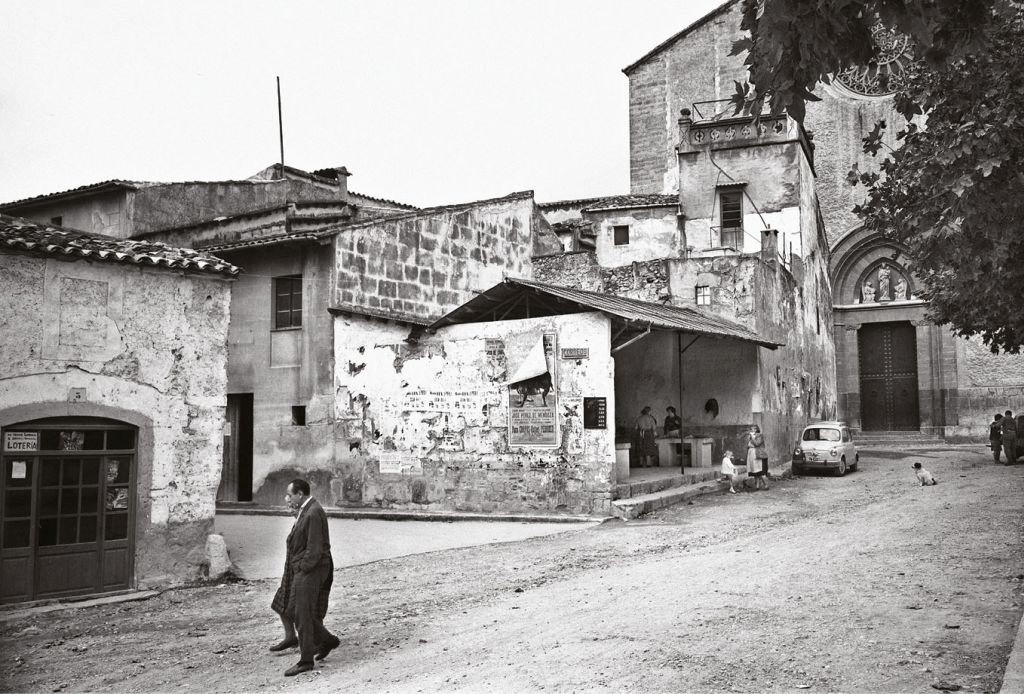
Vendors from different fishing families congregated in these spaces. Our photographs and audiovisual sources show that the fish vendors used to be located within markets, sharing their central space (Figure 7.6). This collective use of sales space was determined, to a large extent, by the internal configuration of the markets themselves. Until the mid-1970s, those spaces were not organised according to commodity criteria, and there was not even any physical separation between one sales position and another.54 The implementation of the first market modernisation measures implied internal modifications. Starting in the mid-1970s, the markets were reorganised, establishing distinct sales areas dedicated to specific products, thus creating new stalls for the sale of fish. The fishmongersâ stalls remained located in the same areas and without physical separation (Figure 7.7).
âGroup of women selling fish at the old fish market of Plaza Mayorâ (1955), photograph, Palma, Balearic Islands
Source: AMP.502FOMSPOS.24
José Valdivia Ferrer, âInterior design of the fish market at the Llucmajor Municipal Market for its renovation and modernization projectâ (1985)
Source: AMLL. 3034.1
Municipal markets were spaces of collective use where fishmongers developed intense interactions through daily practices. In this sense, the material characteristics of those spaces determined, to a large extent, the supportive and collaborative practices linked to the seafood sale.55
A set of those practices was connected to the transfer of knowledge. The female fishmongers we interviewed told us how they learned the trade from other more experienced women of the same community.56 Thanks to discursive strategies and through daily participatory observation, more experienced saleswomen taught and illustrated to younger ones the various sales scenarios and how to deal with the different situations. This kind of knowledge transfer practice was of fundamental importance in the social organisation of the fish sellers, since it allowed them to socialise not only a certain savoir-faire but also specific values and ways of understanding the world.57 In this sense, markets played a role that went beyond their mere economic dimension, becoming the arena where the collective social identity of a specific female community of practice â nominally that of Mallorca fishmongers â found its own physiognomy.
According to several oral testimonies, some vendors were in charge of keeping the money earned by other women.58 This practice was widespread until the mid-1960s and was probably stimulated by the shared use of spaces and their non-segmented internal organisation. The absence of physical separation among sales positions allowed every fishmonger to observe and oversee other saleswomenâs way of working, facilitating the establishment of mutual trust bonds.
Solidarity among fish vendors transcended the sale of fish itself. As the saleswomen had to meet a work schedule that was often incompatible with the care of their children, they were regularly forced to take them to their workplaces.59 So, marketplaces also functioned as sorts of âchild-rearingâ spots, where women cooperated to watch over and educate their colleagueâs children while they were busy selling fish. In that context, vendorsâ children socialised and internalised the vocational sense of the trade.60 Those spaces also functioned as trans-generational key informal learning places in generating a shared identity and a sense of belonging in the fishing community.
Finally, on certain occasions61 women fishmongers used to organise refreshments and parties in the marketsâ spaces: âMy mother and her friends, also fishmongers, used to make paellas in the middle of the market hall; they ate there! Can you imagine it? They had a party ⦠and she dressed up and went all over the marketâ.62 In this case, the possibility of bringing about this type of event was largely conditioned by the spatial and material characteristics of the marketplaces, as well as the central position (literal and metaphorical) that the saleswomen occupied in them and the infrequent occurrence competition mechanisms.
6 Womenâs Social Capital and Resilience
Diverse collaborative strategies were widely put into practice among the women of the fishing communities of Mallorca through the sale of fish. Despite the particularities that each sales modality involves, the collaborative dynamics we have observed reveal a form of organisation with little hierarchy within these communities where women sought to avoid conflict and competitiveness. In both types of sales, the vendors established shared rules and forms of organisation based on mutual reliance and complementarity relationships.
Such a female cooperation and complementarity associated with the sale of fish have been also documented in other contemporary fishing societies. Solidarity and assistance between fish vendors are observed, for instance, in what concerns the shared use of sale routes,63 the development of intergenerational ties in order to facilitate equal access to sales,64 the joint purchase of the fish that will be later marketed,65 and the management of the costs associated with the community celebrations.66
In our case study, the community of practice of fishmongers was conceived as a large family with a strong sense of group belonging that went beyond the origin or age of each vendor: âWe were not co-workers, we were friends ⦠we were a big familyâ.67 We see, therefore, how the social capital articulated through the sale of fish constituted a fundamental element in the structuring of these female communities of practice; it was also essential in enabling a network of stable relationships capable of being maintained over time.68
However, to what extent did this female social capital also generate synergies across the fishing community as a whole?
The social capital developed by the fish sellers was also essential in generating different resilience strategies within the whole local fishing community. This resilience is characteristic of many fishing societies69 and is related to their capacity for adapting and overcoming adverse situations that derive from a high degree of social, ecological, and economic uncertainty.70 Several studies focused on contemporary fishing societies relate the development of resilience among female fish sellers to the survival of the family business through empowerment; in these situations, women assume a greater prominence and involvement in resource management.71 Other scholars recorded how fishwivesâ resilience can be also enhanced through associationism and active socio-political action.72 Such studies address womenâs agency and entrepreneurship as key factors for developing the communityâs resilience in the face of the economic uncertainty stemming from the crisis of the fish sector.73
We must also consider that female resilience strategies are essential in situations of marginalisation of communities with scarce economic resources.74 In this sense, fishing societies are also influenced by their connections with the outside world,75 being often perceived as endogamous communities characterised by their own idiosyncrasies and particular socio-political structures. In addition, fishing societies can also suffer from certain physical marginalisation due to their location in coastal areas that may be far from the main urban population centres.76 A relationship of âothernessâ is, therefore, established between sea and land, as well as between the social groups that compose each of these two domains. In this context, the fishing society is usually stigmatised and considered a sort of lower social class.77
In this framework, one of the resilience strategies usually implemented by fishing communities consists of promoting connections between the members of the fishing group and outsiders. In other words, fishing communities are not isolated at all, but they establish contacts with other sectors of society to ensure their survival and maintenance. The last link in the fisheriesâ chain is the consumer; fish consumers must be, therefore, integrated into the analysis of fishing communities themselves and be understood as key active agents within the seafood supply chain.78 In this regard, there are some studies that point out the fundamental role that fish vendors have in establishing relationships with consumers.79 In our case, street vending allowed fish vendors to create socioeconomic relationships and bonds with people from farmsteads, villages, and towns, many of them located far from the sea. Likewise, our oral testimonies demonstrate that the municipal market was âmuch more than a place to sell fish: it was a space for conversation, relationship, a meeting point (between vendors and consumers)â.80
The markets, streets, and squares of the villages and towns were key meeting and exchange spaces for the majority of the inhabitants, and the fishmongers were present and clearly visible there.81 By means of street vending and their presence in local markets, women became the most visible and accessible actor of the fishing communities of Mallorca. As did occur in other fishing communities,82 the fishmongers of Mallorca established regular connections and permanent ties with their customers. These links were crucial to ensure sales and guarantee the economic survival of the fishing community.
What social and cultural consequences did the interaction between fishmongers and consumers have for the fishing community?
The relationships established between fishmongers and consumers go beyond economic interests and also have a social impact on the fishing community. In some fishing societies, the community as a whole depends on the relationships of material exchange and generosity ties that the fishwives establish with their clients.83 Although this interaction also implies compliance with certain social norms, beliefs, and moral codes that limit the ability of fishwives to act,84 it also enhances womenâs social significance through their involvement in the sale of fish.
In our case study, fishmonger/consumer interactions were key for connecting the maritime fishing world with the rest of society. In their daily routines, the fishwives transferred their knowledge on fishing culture to people not related to the sea. For example, through these close social connections, the fishmongers transmitted to other women key information regarding the local species, as well as tips for preparing, cooking, and cleaning the fish.85 In addition, these women made explicit in these key social spaces (i.e. markets, squares, streets) the interests, needs, and realities of the fishing families. Therefore, such a public visualisation and socialisation of the fishwives was essential to minimise the effects of the marginalisation of the fishing communities on the island. In this way, the women guaranteed the proper functioning of the fishing activity, promoting at the same time the resilience of the community as a whole by connecting it socially and economically with the outside.
7 Conclusion
In this chapter, we explored the modalities through which Mallorcaâs women fishmongersâ communities managed to build networks of relationships and social cohesion thanks to the sale of seafood. That activity evolved in a context initially characterised by the almost total absence of any form of institutional regulation. This circumstance led to the development of various forms of fish marketing characterised by management modes based on cooperation.
There was great cooperation and solidarity among these fish vendors due to their knowledge transfer strategies, mobility strategies, and shared uses of space. Taking these elements into account has allowed us to verify the multiplicity of actors (human and nonhuman) that participated in the social structure of these communities.
Furthermore, our analysis of the practices associated with the sale of fish has made it possible to record the existence of various cooperative strategies that extended beyond gender. In this sense, we have seen how men and women interacted and worked side by side in a wide range of activities related to sales. This type of relationship transgressed the gender roles traditionally contemplated by academia regarding this type of society.
The revealed forms of collective organisation significantly promoted the social capital of the womenâs communities of practice and prevented the development of a competitive sales model. In addition, our investigation has confirmed the existence of established connections between fish vendors and other members of society. The interaction established between the fishmongers and the consumers was essential to put into value these communities in society and minimise the effects of marginalisation and uncertainty that characterised them. In this sense, the social capital generated through the sale of fish was related to the development of resilience strategies concerning the fishing community as a whole.
Finally, we have tried to emphasise the need to approach fishing communities from a social viewpoint, thus overcoming strictly economic perspectives. Analysing the social dimension of these communities â as well as the wide diversity of actors entangled in them â is the best way to value and raise awareness of the importance of fish sellers in their traditional fishing communities and society in general.
Bibliography
Primary Sources
Antoni Ribas Palau Collection. Historical Archive of the University of the Balearic Islands.
Bestard-Cerdà Collection. Pollença Municipal Historical Archive.
Cronista-Fons Collection. Palma Municipal Archive.
Economic report on the construction of the market at Plaza del Olivar (Palma, 1935), Palma Municipal Archive.
Jaume Durà n, Juan Riera and Jaume Brumet Collection. Porto Cristo District Council.
La Veu de Sóller (newspaper).
Llucmajor de Pinte en Ample (magazine).
Majorca Medley: A study of Peasant Life of the Island. Directed by Nettie McGavin. Mallorca: Scottish Association of Amateur Cinematographers 1953 Festival, 1953. National Library of Scotland, Moving Image Archive: https://movingimage.nls.uk/film/0133.
Mallorca, 1964. Directed by Leo Skaarup. [Mallorca]: Luna Media, 1964.
Melchor Guadia Cuarer, Bartomeu Reus Bordoy, and Caas Orthius photographic Collections, Fotos Antiguas de Mallorca.
Memorias de SecretarÃa del Ayuntamiento de Palma (magazine).
My Majorca. Directed by Honyngen-Huene. [Mallorca]: Pacific Pictures, 1955.
Noticiario Español. Palma de Mallorca. [Mallorca]: NOD-O Historical Archive, 19 FebÂruary 1951. Filmoteca Española, NOD-O Historical Archive, Filmoteca Española. https://www.rtve.es/play/videos/nodo/not-424/1487446/.
Oral history interviews collected by Ariana DomÃnguez GarcÃa and Daniel J. Albero Santacreu in various localities on Mallorca Island between June 2020 and July 2022. For more information or details on the interviews collected by the articleâs authors, please get in touch with Ariana DomÃnguez GarcÃa (ariana.dominguez@uib.cat).
Photographic Collection Joana Vila Covas. Andratx Municipal Archive.
Photographs of fishing families from the Port of Pollença Collection. Fishersâ Guild of Port of Pollença Archive.
Postcard Collection. LluÃs Alemany Library (Consell de Mallorca).
Project for the renovation and modernization of the Municipal Fish Market (Llucmajor, 1985), Llucmajor Municipal Archive.
Revista Miramar de Valldemossa (magazine).
Rul·lan Collection. Image and Sound Archive of Mallorca.
Secondary Literature
Abreu-Ferreira, Darlene. âFishmongers and Shipowners: Women in Maritime Communities of Early Modern Portugal.â The Sixteenth Century Journal 31, no. 1 (Spring 2000): 7â23.
Alegret i Tejero, Joan LluÃs, ed. La Comercialització del peix fresc. Palamós: Universitat de Girona, Cà tedra dâEstudis MarÃtims, 2006.
Ameyaw, Anita B., Annette Breckwoldt, Hauke Reuter, and Denis W. Aheto. âFrom fish to cash: Analyzing the role of women in fisheries in the western region of Ghana.â Marine Policy 113 (March 2020): 4â12.
Barceló Pons, Bartolomé. âLa pesca en las Islas Baleares.â Cámara Oficial de Comercio, Industria y Navegación de Palma de Mallorca 625 (1899): 139â167.
Berger, John. Ways of Seeing. UK: Penguin Modern Classics, 2008.
Berger Gluck, Sherna, and Daphne Patai, eds. Womenâs words. The Feminist Practice of Oral History. New York: Routledge, 2016.
Bourdieu, Pierre. âThe Forms of Capital.â In The Handbook of Theory and Research for the Sociology of Education, edited by J.G. Richardson, 241â258. New York: Greenwood Press, 1986.
Breton, Françoise, Fina Lladó, and Anna Badia. âFemmes Pêcheurs et Femmes de Pêcheurs à la Barceloneta (Catalogne).â Anthropologie Maritime 4 (1992): 41â62.
Breton, Yvan. âLâanthropologie sociale et les sociétés de pécheurs. Réflexions sur la naissance dâun sous-champ disciplinaire.â Anthropologie et Sociétés 5 (1981): 7â27.
Broullón-Acuña, Esmeralda. âInclusión social y visibilidad del rol femenino en las sociedades marÃtimo-pesqueras: El estudio de caso de la RÃa de Vigo en época contemporánea.â In El mar vivido. Perfiles sociales de las gentes del mar en la larga duración (siglos XVâXXI), edited by MarÃa Dolores González Guardiola and David Igual Luis, 31â49. Cuenca: Ediciones de la Universidad de Castilla-La Mancha, 2020.
Broullón-Acuña, Esmeralda. âLa polÃtica sexual y la segregación ocupacional en las sociedades pesqueras.â Revista Estudos Feministas 19, no. 1 (April 2011): 73â89.
Burton, Valerie. âFish/Wives: An Introduction.â Signs 37, no. 3 (Spring 2012): 531â532.
Busby, Cecilia. The performance of gender. An Anthropology of Everyday Life in a South Indian Fishing Village. London: Routledge, 2000.
Cabrera Socorro, Gloria E. âLas invisibles mujeres canarias de la costa: vendedoras de pescadora, mariscadoras, jornaleras, barqueras y amas de casa.â XIII Coloquio de Historia Canario-Americana, VIII Congreso Internacional de Historia de America (2000): 1470â1492.
Cahill, Mildred, and Sandra Marland. Women in the Newfoundland Fishery. Ottawa: Communications Department of Fisheries and Oceans, 1993.
Callon, Michel. âActor-Network Theory-The Market test.â In Actor-Network Theory After, edited by J. Hassard, 181â195. Malden: Blackwell, 1999.
Carbonell, Eliseu, and Eulà lia Torra. Les dones i el mar. Barcelona: Museu MarÃtim de Barcelona, 2015.
Carreras, Marta, Marta Coll, Antoni Quetglas, Raquel Goñi, Xavier Pastor, Maria José Cornax, Magdalena Iglesia, Enric MassutÃ, Pere Oliver, Ricardo Aguilar, Andrea Au, Kyrst Zylich, and Daniel Pauly. âEstimates of total fisheries removal for the Balearic Islands (1950â2010).â In Fisheries Centre Research Reports 19, 1â46. Vancouver: University of British Columbia, 2015.
Cohen, Philippa J., Edward H. Allison, Neil L. Andrew, Joshua Cinner, Louisa S. Evans, Michael Fabinyi, Len R. Garces, Stephen J. Hall, Christina Hicks, Terence Patrick Hughes, Svein Jentoft, David Jonathan Mills, Rosalie Masu, Emmanuel K. Mbaru, and Blake D. Ratner. âSecuring a Just Space for Small-Scale Fisheries in the Blue Economy.â Frontiers in Marine Science 6 (April 2019): 1â10.
Cooper Cole, Sally. Women of the Praia. Princeton: Princeton University Press, 1991.
Coulthard, Sarah. âCan We Be Both Resilient and Well, and What Choices Do People Have? Incorporating Agency into the Resilience Debate from a Fisheries Perspective.â Ecology and Society 17, no. 1 (March 2012): 1â13.
Cresswell, Tim. âTowards a politics of mobility.â Environment and Planning D: Society and Space 28, no. 1 (2010): 17â31.
Dobres, Marcia-Anne. Technology and Social Agency. Oxford: Wiley-Blackwell, 2000.
Duran Jaume, Damià . El mode de vida del pescador en Cala Major. Pollença: El Gall Editor, 2004.
Eckert, Penelope, and Sally McConnell-Ginet. âCommunities of practice. Where language, gender, and power all live.â In Locating Power. Proceedings of the Second Berkeley Women and Language Conference edited by Kira Hall, Mary Bucholtz and Birch Moonwomon, 89â99. Berkeley: Berkeley Women and Language Group, 1992.
Fröcklin, Sara, Maricela De La Torre-Castro, Lars Lindström, and Narriman S. Jiddaw. âFish Traders as Key Actors in Fisheries: Gender and Adaptive Management.â Ambio 42, no. 8 (December 2013): 951â962.
Fullana i Puigserver, Pere. El sabor del nostre mar: la tradició marinera i pesquera de les Illes Balears. Palma: Govern de les Illes Balears. Conselleria de Agricultura i Pesca D.L., 2009.
Guindi, Fadwa El. âVisual Anthropology.â In Handbook of methods in Cultural Anthropology, edited by Russell H. Bernard and Clarence C. Gravlee, 439â463. Washington D.C.: Rowman and Littlefield, 2015.
Garau, Jaume, ed. Palma la Ciutat Envaïda: la biografia de Ciutat. Segona part., La Ciutat Moderna. De 1900 a 1936. Palma: Palma XXI, 2018.
Grendi, Edoardo. Polanyi. Dallâantropologia economica alla microanalisi storica. Milano: Etas, 1978.
Grendi, Edoardo. âMicro-analisi e storia sociale.â Quaderni storici 35 (1977): 506â520.
Grendi, Edoardo, ed. âStudi di micro-analisi storica (Piemonte-Liguria secoli XVIXVIII).â Miscellanea Storica Ligure VII, no. 2 (1977): 1â3.
Grendi, Edoardo. Lâantropologia economica. Torino: Einaudi, 1972.
Gustavsson, Madeleine. âWomenâs changing productive practices, gender relations and identities in fishing through a critical feminisation perspective.â Journal of Rural Studies 78 (2020): 36â46.
Gustavsson, Madeleine, Mark Riley, Karyn Morrissey, and Andrew J. Pater. âExploring the socio-cultural contexts of fishers and fishing: Developing the concept of the good fisher.â Journal of Rural Studies 50 (February 2017): 104â116.
Harper, Sara, Dirk Zeller, Melissa Hauzer, Daniel Pauly, and Ussif Rashid Sumalia. âWomen and fisheries: Contribution to food security and local economies.â Marine Policy 39 (May 2013): 56â63.
Ingold, Tim. âSociety and nature and the concept of technology.â Archaeological Review from Cambridge 9, no. 1 (1990): 5â17.
Kleiber, Danika, Leila M. Harris, and Amanda C.J. Vincent. âGender and small-scale fisheries: a case for counting women and beyond.â Fish and Fisheries 16 (2015): 547â562.
Latour, Bruno. We Have Never Been Modern. Cambridge: Harvard University Press, 1993.
Leite, Marta, Helen Ross, and Fikret Berkes. âInteractions between individual, household, and fishing community resilience in southeast Brazil.â Ecology and Society 24, no. 3 (Sep 2019): 1â13.
LluÃs Salvador, Arxiduc dâAùstria. Las Baleares. II, La pesca: Navegación y construcción de buques. Barcelona: Selegram, 1983.
Mas Murray, Ivan. Breu història dâun port de la mediterrà nia. El port de Sóller, de port mariner a port turÃstico-residencial. Port de Sóller: Pregó de les festes de Sant Pere, 2013.
MassutÃ, Miquel, and Gabriel Llompart. Les activitats de la pesca i del gremi dels pescadors a Mallorca (1259â2006). Palma: Institut dâEstudis Baleà rics, 2007.
MassutÃ, Miquel. La CofradÃa de Pescadores de Palma: siglos XIV al XX. Palma: CofradÃa de Pescadores de Palma, D.L. 2004.
MassutÃ, Miquel. La comercialització dels productes de la pesca del mar balear. Palma Govern de les Illes Balears, Conselleria dâAgricultura i Pesca, 1991.
MassutÃ, Miquel. La pesca industrial mallorquina. Palma: Cort, 1973.
Ministerio de Agricultura, Pesca y Alimentación. Comercialización y distribución de productos pesqueros. Madrid: Ministerio de Agricultura, Pesca y Alimentación, 2001.
Montero Llerandi, José Manuel. âSociologÃa de las gentes del mar. Rasgos de marginación.â Revista Eres. Serie Antropológica 2, no. 1 (1990): 115â126.
Mumia Machio, Phyllis, Diana Njeri Kimani, Patrick Chege Kariuki, Alice Muthoni Ngâangâa, and Michael Murigi Njogore. âSocial Capital and Womenâs Empowerment.â Forum for Social Economics (August 2022): 1â20.
Nadel-Klein, Jane. Fishing for heritage. Oxford: Berg, 2003.
Nava Turgo, Nelson. âFishermen, Fishmongers, and the Sea Economic Restructuring and Gender Dynamics in a Philippine Community.â Philippine Studies: Historical & Ethnographic Viewpoints 63, no. 3 (2015): 365â392.
Novajra, Alejandro Miquel. âMar enterrado, mar compartido, mar separado. Distintas formas de ser marinero en las Baleares.â Revista de dialectologÃa y tradiciones populares 54, no. 2 (1999): 197â229.
Oliver, David, and Bartomeu Mas Vera. La mar quotidiana. Cartes dâun pescador. Palma: Miquel Font Editor, 2010.
Pálsson, Gili. âGender and the division.â In AntropologÃa de la pesca. Debates en el Mediterráneo, edited by Ãngel Montel del Castillo, 31â37. Murcia: Universidad de Murcia, 1999.
Quetglas, Antoni, Gorka Merino, Francesc Ondines, Beatriz Guijarro, Antoni Garau, Antoni M. Grau, Pere Oliver, and Enric MassutÃ. âAssessment and management of western Mediterranean small-scale fisheries.â Ocean and Coastal Management 133 (2006): 95â104.
Ransley, Jesse. âMaritime Communities and tradition.â In The Oxford Handbook of Maritime Archaeology, edited by Ben Ford, Donny Lee Hamilton, and Alexis Catsambis, 879â904. New York: Oxford University Press, 2012.
Ransley, Jesse. âBoats Are for Boys: Queering Maritime Archaeology.â World Archaeology 37, no 4. (2005): 621â629.
Reginald, Byron, and Deirdre Chalmers. âThe Fisherwomen of Fife. History, Identity and Social Change.â Ethnologia Europaea 23, no. 2 (July 1993): 97â110.
Rodriguez-Salvador, Beatriz, and Domingo Calvo Dopico. âDifferentiating fish products: Consumersâ preferences for origin and traceability.â Fisheries Research 262 (June 2023): 1â16.
Ross, Natalie. âUnderstanding the fishing community: The role of communities of the mind.â Sociologia Ruralis 55, no. 3 (2015): 309â324.
Rubio-Ardanaz, Juan A. âSardineras: visión antropológica económica de una forma de distribución del pescado.â lan Harremanak 13 (2005): 177â198.
Rubinoff, Janet Ahner. âFishing for status: Impact of development on Goaâs fisherwomen.â Womenâs Studies International Forum 22, no. 6 (NovemberâDecember 1999): 631â644.
Salas, Pere, and Juan Manuel Torres. Història de la Confraria de Pescadors del Port de Pollença: Cent anys de vida marinera. Pollença: El Gall, 2012.
Seguà Aznar, Miguel. Arquitectura contemporánea de Mallorca (1900â1947). Palma: Universitat de les Illes Balears Col·legi Oficial dâArquitectes de les Balears, 1990.
Serrano, Pere B., and Nicolau Cañellas. âLes pescadores.â Miramar: Valldemossa 30 (1997): 36â38.
Sheller, Mimi, and John Urry. âThe new mobilities paradigm.â Environment and Planning 38 (2006): 207â226.
Soejima, Kumi, and Mitsutaku Makino. âThe Development of Women Fishery Entrepreneurship Group in the Japanese Marine Products Distribution Sector.â In Small-scale Fisheries in Japan Environmental and Sociocultural Perspectives, edited by Giovanni Bulian and Yasushi Nakano, 31â52. Venezia: Caâ Foscari Japanese Studies 26, 2018.
Swan, Asa James. âTwilight of Newhaven: The transformation of an ancient fishing village into a modern neighborhood.â PhD diss., University of Kentucky, 2020.
Thompson, Paul. âWomen in the Fishing: The Roots of Power between the Sexes.â Comparative Studies in Society and History 27, no.1 (1985): 3â31.
Thompson, Paul, Tony Wailey, and Trevor Lummis. Living the fishing. London: Routledge & Kegan Paul, 1983.
Velasco Adell, Teresa. âLa flota pesquera de las Islas Baleares.â Revista de GeografÃa 26, no. 1 (1992): 67â86.
Velasco Adell, Teresa. âLa pesca en las Islas Baleares aspectos sociales y económicos.â PhD diss., Zaragoza: Universidad de Zaragoza, 1990.
Wenger, Etienne. Communities of Practice. Learning, Meaning, and Identity. Cambridge, UK: Cambridge University Press, 1998.
Widiawati Kimbal, Rahel, Mister Gidion Maru, Alzefin Sinolungan, and Maria Cyntia Siwi. âWomenâs Social Capital.â SHS Web of Conferences 149 (2022): 1â7.
Cecilia Busby, The performance of gender. An Anthropology of Everyday Life in a South Indian Fishing Village (London: Routledge, 2000); Paul Thompson, Tony Wailey, and Trevor Lummis, Living the fishing (London: Routledge & Kegan Paul, 1983); Françoise Breton, Fina Lladó, and Anna Badia, âFemmes Pêcheurs et Femmes de Pêcheurs à la Barceloneta (Catalogne),â Anthropologie Maritime 4 (1992): 41â62; Sally Cooper Cole, Women of the Praia (Princeton: Princeton University Press, 1991); Mildred Cahill and Sandra Marland, Women in the Newfoundland Fishery (Ottawa: Communications Department of Fisheries and Oceans, 1993); Jane Nadel-Klein, Fishing for heritage (Oxford: Berg, 2003); Darlene Abreu-Ferreira, âFishmongers and Shipowners: Women in Maritime Communities of Early Modern Portugal,â The Sixteenth Century Journal 31, no. 1 (2000): 7â23.
Jesse Ransley, âBoats Are for Boys: Queering Maritime Archaeology,â World Archaeology 37, no. 4 (2005): 621â629; Esmeralda Broullón-Acuña, âInclusión social y visibilidad del rol femenino en las sociedades marÃtimo-pesqueras: El estudio de caso de la RÃa de Vigo en época contemporánea,â in El mar vivido. Perfiles sociales de las gentes del mar en la larga duración (siglos XVâXXI), ed. MarÃa Dolores González Guardiola and David Igual Luis (Cuenca: Ediciones de la Universidad de Castilla-La Mancha, 2020), 31â49.
Jesse Ransley, âMaritime Communities and tradition,â in The Oxford Handbook of Maritime Archaeology, ed. Ben Ford, Donny Lee Hamilton, and Alexis Catsambis (New York: Oxford University Press, 2012), 879â904; Yvan Breton, âLâanthropologie sociale et les sociétés de pécheurs. Réflexions sur la naissance dâun sous-champ disciplinaire,â Anthropologie et Sociétés 5 (1981): 7â27.
Gili Pálsson, âGender and the división of labour,â in AntropologÃa de la pesca. Debates en el Mediterráneo, ed. Ãngel Montel del Castillo (Murcia: Universidad de Murcia, 1999), 31â37; Paul Thompson, âWomen in the Fishing: The Roots of Power between the Sexes,â Comparative Studies in Society and History 27, no. 1 (1985): 3â31; Esmeralda Broullón-Acuña, âLa polÃtica sexual y la segregación ocupacional en las sociedades pesqueras,â Revista Estudios Feministas 19, no. 1 (2011): 73â89.
See Madeleine Gustavsson, âWomenâs changing productive practices, gender relations and identities in fishing through a critical feminisation perspective,â Journal of Rural Studies 78 (2020): 36â46; Danika Kleiber, Leila M. Harris, and Amanda C.J. Vincent, âGender and small-scale fisheries: a case for counting women and beyond,â Fish and Fisheries 16 (2015): 547â562; Eliseu Carbonell and Eulà lia Torra, Les dones i el mar (Barcelona: Museu MarÃtim de Barcelona, 2015).
Sara Harper et al., âWomen and fisheries: Contribution to food security and local economies,â Marine Policy 39 (2013): 56â63; Sara Fröcklin et al., âFish Traders as Key Actors in Fisheries: Gender and Adaptive Management,â Ambio 42, no. 8 (2013): 951â962.
Teresa Velasco Adell, âLa pesca en las Islas Baleares aspectos sociales y económicosâ (PhD diss., Zaragoza: Universidad de Zaragoza, 1990); Miquel MassutÃ, La pesca industrial mallorquina (Palma: Cort, 1973); Damià Duran Jaume, El mode de vida del pescador en Cala Major (Pollença: El Gall Editor, 2004); Pere Fullana i Puigserver, El sabor del nostre mar: la tradició marinera i pesquera de les Illes Balears (Palma: Govern de les Illes Balears. Conselleria de Agricultura i Pesca D.L., 2009); Bartolomé Barceló Pons, âLa pesca en las Islas Baleares,â Cámara Oficial de Comercio, Industria y Navegación de Palma de Mallorca 625 (1899): 139â167.
Joan LluÃs Alegret i Tejero, La Comercialització del peix fresc (Palamós: Universitat de Girona, Cà tedra dâEstudis MarÃtims, 2006); Ministerio de Agricultura, Pesca y Alimentación, Comercialización y distribución de productos pesqueros (Madrid: Ministerio de Agricultura, Pesca y Alimentación, 2001); Miquel MassutÃ, La comercialització dels productes de la pesca del mar balear (Palma: Govern de les Illes Balears, Conselleria dâAgricultura i Pesca, 1991).
Penelope Eckert and Sally McConnell-Ginet, âCommunities of practice. Where language, gender, and power all live,â in Locating Power. Proceedings of the Second Berkeley Women and Language Conference, ed. Kira Hall, Mary Bucholtz, and Birch Moonwomon (Berkeley: Berkeley Women and Language Group, 1992), 89â99.
Pierre Bourdieu, âThe Forms of Capital,â in The Handbook of Theory and Research for the Sociology of Education, ed. John G. Richardson (New York: Greenwood Press, 1986), 241â258; Marcia-Anne Dobres, Technology and Social Agency (Oxford: Wiley-Blackwell, 2000); Etienne Wenger, Communities of Practice. Learning, Meaning, and Identity (Cambridge: Cambridge University Press, 1998); Natalie Ross, âUnderstanding the fishing community: The role of communities of the mind,â Sociologia Ruralis 55, no. 3 (2015): 309â324.
Bruno Latour, We Have Never Been Modern (Cambridge: Harvard University Press, 1993); Michel Callon âActor-Network Theory-The Market test,â in Actor-Network Theory After, ed. John Hassard (Malden: Blackwell, 1999), 181â195.
Tim Cresswell, âTowards a politics of mobility,â Environment and Planning D: Society and Space 28, no. 1 (2010): 17â31; Mimi Sheller and John Urry, âThe new mobilities paradigm,â Environment and Planning A 38 (2006): 207â226.
Miquel Massutà and Gabriel Llompart, Les activitats de la pesca i del gremi dels pescadors a Mallorca (1259â2006) (Palma: Institut dâEstudis Baleà rics, 2007), 200â201; Velasco Adell, La pesca en las Islas Baleares, 748â750.
As for the latter aspect, in 1950, in the Balearic Islands, there were approximately 5,000 fishermen engaged in small-scale fishery and ca. 1,265 artisanal fishing boats that caught nearly 3,000 tons of fish annually. Marta Carreras et al., âEstimates of total fisheries removal for the Balearic Islands (1950â2010),â Fisheries Centre Research Reports 19 (Vancouver: University of British Columbia, 2015), 1â46.
Miquel MassutÃ, La CofradÃa de Pescadores de Palma: siglos XIV al XX (Palma: CofradÃa de Pescadores de Palma, D.L., 2004).
Pere Salas and Juan Manuel Torres, Història de la Confraria de Pescadors del Port de Pollença: Cent anys de vida marinera (Pollença: El Gall, 2012), 70â75.
David Oliver and Bartomeu Mas Vera, La mar quotidiana. Cartes dâun pescador (Palma: Miquel Font Editor, 2010); Pere B. Serrano and Nicolau Cañellas, âLes pescadores,â Miramar: Valldemossa 30 (JanuaryâMarch 1997): 36â38; Ivan Mas Murray, Breu història dâun port de la mediterrà nia. El port de Sóller, de port mariner a port turÃstico-residencial (Port de Sóller: Pregó de les festes de Sant Pere, 2013), 35; Alejandro Miquel Novajra, âMar enterrado, mar compartido, mar separado. Distintas formas de ser marinero en las Baleares,â Revista de dialectologÃa y tradiciones populares 54, no. 2 (1999): 207.
Mas Murray, Breu història, 32â33. Duran Jaume, El mode de vida, 121â129.
Velasco Adell, La pesca en las Islas Baleares, 319â320.
Salas and Torres, Història, 96â105. However, it is necessary to point out that municipalities also played a prominent role in managing public spaces (i.e., municipal markets and streets) for fish sales. For example, between 1950 and 1985, Palma Council focused on controlling fish peddling in public spaces and modernising the main municipal markets. The regulations implemented focused on the sanitary conditions, the permits for the occupation of public spaces, and the modernisation of the fish sale stalls, according to several official municipal records: Memorias de SecretarÃa (Palma: Ayuntamiento de Palma, 1951), 52; Memorias de SecretarÃa (Palma: Ayuntamiento de Palma, 1959), 29; Memorias de SecretarÃa (Palma: Ayuntamiento de Palma, 1976), 191â192.
Carreras, âEstimates of total fisheries removal,â 16.
Miquel MassutÃ, La pesca industrial mallorquina, 115â117; Velasco Adell, La pesca en las Islas Baleares, 766â775.
Teresa Velasco, âLa flota pesquera de las Islas Baleares,â Revista de GeografÃa 26, no. 1 (1992): 67â86.
Salas and Torres, Història, 97â104. Artisanal fishing vessels fell from more than 900 units in the mid-1970s to just 125 units in 2018. Antoni Quetglas et al., âAssessment and management of western Mediterranean small-scale fisheries,â Ocean and Coastal Management 133 (2006): 95â104.
Velasco Adell, La pesca en las Islas Baleares, 319â322.
Busby, The Performance of Gender; Jane Nadel-Klein, Fishing for Heritage (Oxford: Berg, 2003); Broullón-Acuña, âInclusión social,â 31â49.
Edoardo Grendi, Lâantropologia economica (Torino: Einaudi, 1972); Edoardo Grendi, âMicro-analisi e storia sociale,â Quaderni storici 35 (1977): 506â520; Edoardo Grendi, âPremessa a Studi di micro-analisi storica (Piemonte-Liguria secoli XVIâXVIII),â Miscellanea Storica Ligure VII, no. 2 (1977): 1â3; Edoardo Grendi, Polanyi. Dallâantropologia economica alla microanalisi storica (Milano: Etas, 1978).
John Berger, Ways of Seeing (UK: Penguin Modern Classics, 2008); Sherna Berger Gluck and Daphne Patai, eds., Womenâs words. The Feminist Practice of Oral History (New York: Routledge, 2016).
Fadwa El Guindi, âVisual Anthropology,â in Handbook of methods in Cultural Anthropology, ed. Russell H. Bernard and Clarence C. Gravlee (Washington D.C.: Rowman and Littlefield, 2015), 439â463.
My Majorca, dir. Honyngen-Huene (Mallorca: Pacific Pictures, 1955); Mallorca, 1964, dir. Leo Skaarup (Mallorca: Luna Media, 1964); Majorca Medley: A study of Peasant Life of the Island, dir. Nettie McGavin (Mallorca: Scottish Association of Amateur Cinematographers 1953 Festival, 1953).
We analysed the photographic collections of the following public conservation institutions: Postcard Collection (analysed years: 1920â1960), LluÃs Alemany Library (Consell de Mallorca); Rul·lan Collection (analysed years: 1921â1981), Image and Sound Archive of Mallorca; Joana Vila Covas Collection (analysed years: 1940â1960), Andratx Municipal Archive; Bestard-Cerdà Collection (analysed years: 1920â1950), Pollença Municipal Historical Archive; Jaume Durà n, Juan Riera, and Jaume Brumet Collection (analysed years: 1880â1930), Porto Cristo District Council; Cronista-Fons Collection, Palma Municipal Archive; Melchor Guadia Cuarer, Bartomeu Reus Bordoy, and Caas Orthius photographic collections provided by Fotos Antiguas de Mallorca. Audiovisual sources digitalised in public conservation institution such as National Library of Scotland â Moving Image Archive, NOD-O Historical Archive Family photographic archives, mainly belonging to members of the islandâs fishing communities, were also consulted.
La veu de Sóller (1989â1993), Llucmajor de Pinte en Ample (1981â2009) and Revista Miramar (1981â1995).
For example, urban planning files kept in the Municipal Archive of Palma and the Llucmajor Municipal Archive.
Arxiduc dâÃustria LluÃs Salvador, Las Baleares. II, La pesca: Navegación y construcción de buques (Barcelona: Selegram, 1983), 20; Oliver and Mas Vera, La mar quotidiana, 43; Jaume Garau, ed., Palma la Ciutat Envaïda: la biografia de Ciutat. Segona part. La Ciutat Moderna. De 1900 a 1936 (Palma: Palma XXI, 2018), 79.
Serrano and Cañellas, âLes pescadores,â 36â38; Damià Duran Jaume, El mode de vida, 121â129.
As we can see in Port of Andratx, Photographic Collection Joana Villa Covas (1940â1960), Andratx Municipal Archive (henceforth AMA). The same is the case in Port of Pollença: Majorca Medley, dir. McGavin, 14:17:50â55 min., National Library of Scotland, Moving Image Archive, https://movingimage.nls.uk/film/0133 (accessed 11 March 2025).
âMy mother, she was a fishmonger, she went to sell the fish in Llucmajor [â¦] she used to walk the streets with a small cart and blow the horn to call women,â Catalina Tomà s interviewed by Celso Calviño, Franc Jaume, and Joan Jaume. Celso Calviño, Franc Jaume, and Joan Jaume, âDâofici, peixatera,â Llucmajor de Pinte en Ample 165 (1996): 30.
Juan A. Rubio-Ardanaz, âSardineras: visión antropológica económica de una forma de distribución del pescado,â lan Harremanak 13 (2005): 177â198; Gloria E. Cabrera Socorro, âLas invisibles mujeres canarias de la costa: vendedoras de pescadora, mariscadoras, jornaleras, barqueras y amas de casa,â XIII Coloquio de Historia Canario-Americana, VIII Congreso Internacional de Historia de América (2000): 1470â1492.
âMy father used to fish, and my godmother sold it. Both were street vendors in Palma, they went [to sell] using a cart ⦠they sold their fish at the port.â A.C. (retired fishmonger from Palma de Mallorca) to Ariana DomÃnguez, Palma de Mallorca (Balearic Islands, Spain), 29 March 2021, 20:09â21:37. For more information or details on the interviews collected by the articleâs authors, please get in touch with Ariana DomÃnguez GarcÃa.
Serrano and Cañellas, âLes pescadores,â 36â38.
Guillem Casasnovas and his wife (retired fisher from Port of Sóller), Port of Sóller (Balearic Islands, Spain), 1985, 28:51â31:40. Antoni Ribas Palau Collection. Historical Archive of the University of the Balearic Islands.
Duran Jaume, El mode, 121â129.
Mallorca 1964, dir. Skaarup, 4:26â4:30, Fotos Antiguas de Mallorca Collection.
âWhen we arrived to Sóller ⦠My mother used to clean the fish, and she [my cousin] sold it,â Josep Melis Fontagut (retired fisher from Port of Sóller) Port of Sóller (Balearic Islands, Spain), 1986, 32:01â34:10. Antoni Ribas Palau Collection. Historical Archive of the University of the Balearic Islands.
Serrano and Cañellas, âLes pescadores,â 36â38.
M.T. (fishmonger from Palma) to Ariana DomÃnguez, Palma (Palma de Mallorca, Spain), 11 July 2022, 42:15â43:03.
A.S. (retired fishmonger from SâEstanyol) to Ariana DomÃnguez and Daniel Albero Santacreu, sâEstanyol de Migjorn (Balearic Islands, Spain), 20 June 2020, 31:10â31:50.
As can be observed in the photographs taken by the photographer Melchor Guardia Cuader (ca. 1960) in Port of Palma, Fotos Antiguas de Mallorca Collection.
Serrano and Cañellas, âLes pescadores,â 36â38; Duran Jaume, El mode de vida, 121â129.
Serrano and Cañellas, âLes pescadores,â 37.
Miguel Seguà Aznar, Arquitectura contemporánea de Mallorca (1900â1947) (Palma: Universitat de les Illes Balears Col·legi Oficial dâArquitectes de les Balears, 1990).
For example, the Market of Llucmajor (1916), that of Santa Catalina (1920) and, finally, that of lâOlivar (1951).
For example, Municipal Market of lâOlivar construction project (1935) planned a building with 1500 m² of surface area. Economic report on the construction of the market at Plaza del Olivar (Palma, 1935) Palma Municipal Archive (henceforth AMP). Item A-6565/2. In the case of the Municipal Market of Llucmajor, the structure had 160 m² of surface. Project for the renovation and modernization of the Municipal Fish Market (Llucmajor, 1985) Llucmajor Municipal Archive (henceforth AMLL). Item, 3034.1.
In the case of the Municipal Market of lâOlivar, a documentary shows this kind of internal structure: Noticiario Español. Palma de Mallorca, 19 February 1951, 0:37â0:40, NOD-O Historical Archive, Filmoteca Española, https://www.rtve.es/play/videos/nodo/not-424/1487446/ (accessed 12 March 2025).
Callon, âActor-Network Theory,â 181â195.
âThey taught me everything, they told me: âWe will help you ⦠just look, learn and askâ ⦠They taught me how to sell and weigh the fish and how to know itâs price,â A.S. (retired fishmonger from SâEstanyol de Migjorn) to Ariana DomÃnguez and Daniel Albero Santacreu, sâEstanyol de Migjorn (Balearic Islands, Spain), 20 June 2020, 12:01â13:20.
Tim Ingold, âSociety and nature and the concept of technology,â Archaeological Review from Cambridge 9, no. 1 (1990): 5â17.
âIâll send you the money drawer; I know you wonât touch my money [the fishmonger said to my mother]. We are Friends [my mother replied],â C.C. (retired fishmonger from Palma de Mallorca) to Ariana DomÃnguez, Palma de Mallorca (Balearic Islands, Spain), 22 March 2022, 09:30â10:07.
âWhen I was little, I used to go to the market with my mom, because that day she had no one to leave me with and there I was touching the fish ⦠All the fishmongers selling today in the market used to play there as children,â A.M. (fishmonger from Palma de Mallorca) to Ariana DomÃnguez, Palma (Balearic Islands, Spain), 16 March 2022, 09:39â10:10.
âThe market was like an underworld: I used to go to the market as a child, the daughter of another [fishmonger], too. You play there, you become friends while your mothers sell fish, this is how you get into the world of fish),â A.M. (fighmonger from Palma de Mallorca) to Ariana DomÃnguez, Palma (Balearic Islands, Spain), 16 March 2022, 10:30â11:15.
For instance, celebrations related to the life of the fishing community, Saints days (Sant Pere, Virgen del Carmen) or celebrations due to the catch of special fishes.
C.C. (retired fishmonger from Palma de Mallorca) to Ariana DomÃnguez, Palma (Balearic Islands, Spain), 22 March 2022, 09:15â09:23.
Asa James Swan, âTwilight of Newhaven: The transformation of an ancient fishing village into a modern neighborhoodâ (PhD diss., Kentucky: University of Kentucky, 2020), 114â115.
Anita B. Ameyaw et al., âFrom fish to cash: Analyzing the role of women in fisheries in the western region of Ghana,â Marine Policy 113 (2020): 113.
Busby, The performance of gender, 62.
Janet Ahner Rubinoff, âFishing for status: Impact of development on Goaâs fisherwomen,â Womenâs Studies International Forum 22, no. 6 (1999): 641.
C.C. (retired fishmonger from Palma de Mallorca) to Ariana DomÃnguez, Palma (Balearic Islands, Spain), 22 March 2022, 10:15â10:20.
âThe fish stall was like our house, and it was also like a club. Many people gathered there from all over. Selling fish was a philosophy,â J.M. (retired fishmonger from Montuïri) to Ariana DomÃnguez, Palma (Balearic Islands, Spain), 25 January 2022, 41:30â43:05.
Natalie Ross, âUnderstanding the fishing community: The role of communities of the mind,â Sociologia Ruralis 55, no. 3 (2015): 309â324; Madeleine Gustavsson et al., âExploring the socio-cultural contexts of fishers and fishing: Developing the concept of the good fisher,â Journal of Rural Studies 50 (2017): 104â116; Philippa J. Cohen et al., âSecuring a Just Space for Small-Scale Fisheries in the Blue Economy,â Frontiers in Marine Science 6 (2019): 1â10.
Marta Leite, Helen Ross, and Fikret Berkes, âInteractions between individual, household, and fishing community resilience in southeast Brazil,â Ecology and Society 24, no. 3 (2019): 1â13.
Fröcklin et al., âFish Traders as Key Actors in Fisheries,â 952; Ameyaw et al., âFrom fish to cash,â 2; Nelson Nava Turgo, âFishermen, Fishmongers, and the Sea Economic Restructuring and Gender Dynamics in a Philippine Community,â Philippine Studies: Historical & Ethnographic Viewpoints 63, no. 3 (2015): 365â392.
Kumi Soejima and Mitsutaku Makino, âThe Development of Women Fishery Entrepreneurship Group in the Japanese Marine Products Distribution Sector,â in Small-scale Fisheries in Japan Environmental and Socio-cultural Perspectives, ed. Giovanni Bulian and Yasushi Nakano (Venezia: Caâ Foscari Japanese Studies 26, 2018), 31â52.
Sarah Coulthard, âCan We Be Both Resilient and Well, and What Choices Do People Have? Incorporating Agency into the Resilience Debate from a Fisheries Perspective,â Ecology and Society 17, no. 1 (2012): 1â13.
Rahel Widiawati Kimbal et al., âWomenâs Social Capital,â SHS Web of Conferences 149 (2022): 1â7; Phyllis Mumia Machio et al., âSocial Capital and Womenâs Empowerment,â Forum for Social Economics (2022): 1â20.
José Manuel Montero Llerandi, âSociologÃa de las gentes del mar. Rasgos de marginación,â Revista Eres. Serie Antropológica 2, no. 1 (1990): 115â126; Nadel-Klein, Fishing for heritage, 24.
Novarjra, âMar compartido,â 204.
Nadel-Klein, Frishing for heritage, 21â23.
Beatriz Rodriguez-Salvador and Domingo Calvo Dopico, âDifferentiating fish products: Consumersâ preferences for origin and traceability,â Fisheries Research 262 (2023): 3â4.
Busby, The perfomance of gender, 53; Janet Ahner Rubinoff, âFishing for status,â 635; Reginald Byron and Deirdre Chalmers, âThe Fisherwomen of Fife. History, Identity and Social Change,â Ethnologia Europaea 23, no. 2 (2003): 97â110.
J.M. (retired fishmonger from Palma) to Ariana DomÃnguez, Palma (Balearic Islands, Spain), 25 January 2022, 40:01â42:15.
Novarjra, âMar compartido,â 213.
Sojeima and Makino, âThe Development of Women Fishery,â 33â34.
Busby, The perfomance of gender, 62â63; Sojeima and Makino, âThe Development of Women Fishery,â 33â34.
Valerie Burton âFish/Wives: An Introduction,â Signs 37, no. 3 (2012): 531â532; Fröcklin et al., âFish Traders as Key Actors in Fisheries,â 952â958.
âI sold fish, but also the [cooking] recipes. I used to say to my clients, âtake this [fish]. With it you can cook this dishâ. I prepared all they needed, they just have to cook the fish in the pot,â J.M. (retired fishmonger from Palma) to Ariana DomÃnguez, Palma (Balearic Islands, Spain), 25 January 2022, 41:30â43:05.