Abstract
This article explores a phenomenon of a regional startup ecosystem—its key elements, resources and mechanisms needed for the ecosystem development and growth. Despite famous success stories of such regional ecosystems as Silicon Valley, the literature suggests multiple problems to emerge on the ecosystem development pathway. One of the common issues is a relative disconnect between the knowledge subsystem represented by research centers or universities and a business subsystem represented by mainly large firms. The current understanding of the underlying mechanisms helping to bridge the gap between knowledge and business ecosystems in entrepreneurial regions remain limited. Studying the case of one of the oldest science and technology parks in the world, Research Triangle Park in North Carolina, USA, we explore the development of a regional ecosystem—its elements, challenges and mechanisms to address those. Our findings reveal the key elements, with entrepreneurial networks being one of the most crucial, and explain the difficulties in the elements’ interaction.
Arabic
Zachary T Oliver
Michael Hogan
Ekaterina Albats
Chinese
Zachary T Oliver
Michael Hogan
Ekaterina Albats
French
Relier les écosystèmes du savoir et des entreprises: ressources et mécanismes pour le développement entrepreneurial régional
Zachary T Oliver
Michael Hogan
Ekaterina Albats
Résumé
Cet article explore un phénomène d’un écosystème régional de startup- les éléments clés et les ressources et mécanismes nécessaires au développement et à la croissance de l’écosystème. Malgré les célèbres histoires de réussite de tels écosystèmes régionaux comme la Silicon Valley, la littérature scientifique suggère l’émergence de multiples problèmes sur la voie de développement de l’écosystème. L’un des problèmes communs est une relative déconnexion entre le sous-système de savoir représenté par les centres de recherche ou les universités et un sous-système d’entreprises représenté principalement par les grandes entreprises. La compréhension actuelle des mécanismes sous-jacents contribuant à combler l’écart entre les connaissances et les écosystèmes des entreprises dans les régions entrepreneuriales reste limitée. En étudiant le cas de l’un des plus anciens parcs scientifiques et technologiques du monde, le Research Triangle Park en Caroline du Nord, aux États-Unis, nous explorons le développement d’un écosystème régional. Nos résultats révèlent les éléments clés, les réseaux d’entrepreneurs étant l’un des plus cruciaux, et expliquent les difficultés d’interaction entre les éléments.
Mots-clés
parcs scientifiques – entrepreneur – écosystème – écosystème entrepreneurial – soutien entrepreneurial – startups
Portuguese
Conectando os ecossistemas de conhecimento e de negócios: recursos e mecanismos para desenvolvimento empresarial regional
Zachary T Oliver
Michael Hogan
Ekaterina Albats
Resumo
Este artigo explora um fenômeno de um ecossistema regional de startups – seus principais elementos, recursos e mecanismos necessários para o desenvolvimento e crescimento do ecossistema. Apesar das famosas histórias de sucesso de ecossistemas regionais como o Vale do Silício, a literatura sugere vários problemas a surgir no desenvolvimento do ecossistema caminho. Um dos problemas comuns é uma desconexão relativa entre o conhecimento subsistema representado por centros de pesquisa ou universidades e um subsistema de negócios representado principalmente por grandes empresas. O entendimento atual do subjacente mecanismos que ajudam a preencher a lacuna entre o conhecimento e os ecossistemas de negócios nas regiões empresariais permanecem limitadas. Estudando o caso de uma das mais antigas parques científicos e tecnológicos do mundo, Research Triangle Park, na Carolina do Norte, Nos EUA, exploramos o desenvolvimento de um ecossistema regional. Nossas descobertas revelam a chave elementos, com as redes empresariais sendo uma das mais cruciais e explicando as dificuldades na interação dos elementos.
Palavras-chave
parques científicos – empreendedor – ecossistema – ecossistema empreendedor – apoio empreendedor – startups
Russian
Spanish
Uniendo el conocimiento y los ecosistemas empresariales: recursos y mecanismos para desarrollo empresarial regional
Zachary T Oliver
Michael Hogan
Ekaterina Albats
Resumen
Este documento explora un fenómeno de un ecosistema de inicio regional: sus elementos clave, recursos y mecanismos necesarios para el desarrollo y crecimiento del ecosistema. A pesar de las famosas historias de éxito de ecosistemas regionales como Silicon Valley, la literatura sugiere que surjan múltiples problemas en el desarrollo del ecosistema ruta. Uno de los problemas comunes es una relativa desconexión entre el conocimiento.subsistema representado por centros de investigación o universidades y un subsistema empresarial representado principalmente por grandes empresas. La comprensión actual de lo subyacente mecanismos que ayudan a cerrar la brecha entre el conocimiento y los ecosistemas empresariales en las regiones empresariales siguen siendo limitadas. Estudiando el caso de uno de los más antiguos parques científicos y tecnológicos en el mundo, Research Triangle Park en Carolina del Norte, Estados Unidos, exploramos el desarrollo de un ecosistema regional. Nuestros hallazgos revelan la clave elementos, siendo las redes empresariales uno de los más cruciales, y explican el dificultades en la interacción de los elementos.
Palabras clave
parques científicos – emprendedor – ecosistema – ecosistema emprendedor – apoyo emprendedor – startups
1 Introduction
Startup businesses are an important engine of economic growth and innovation, accounting for nearly all net new job creation and almost 20 percent of gross job creation in the United States (Wiens and Jackson 2015). Globally, small and medium-sized enterprises account for more than half of all formal jobs worldwide (World Bank 2016). It is well understood that startups contribute to a dynamic economy by improving competition, creating new innovative products, and delivering new services. Regions and municipalities around the world are working to create conditions that facilitate a thriving startup ecosystem. In order to create the right conditions, regions must understand the networks, resources, programs, and services that help startups flourish.
Despite a growing body of knowledge on regional startup ecosystems, numerous challenges in orchestrating those still exist, which creates avenues for an academic research respectively (Clarysse et al. 2014b; Tripathi et al. 2019). Following the prior works by Powell et al. (2010) and focusing on a regional ecosystem of Flanders in Belgium, Clarysse et al. (2014a) discuss a contrast between knowledge and business ecosystems as subcomponents of a regional startup ecosystem. They found that disconnect between the two may create a startup ecosystem imperfections and limit its efficiency. Furthermore, studying the entrepreneurial ecosystem of Stanford University Etzkowitz (2013) found that lack of a balance in combining top-down and bottom-up initiatives may threaten the ecosystem potential and its development. Following these findings, this paper is aiming to further understand the underlining problems that might exist in a startup ecosystem due to such disconnect as well as resources and mechanisms, which could assist in crossing the chasm between knowledge and business ecosystems. Furthermore, following the future research suggestions by Clarysse et al. (2014a) and Tripathi et al. (2019), this study aims to expand the cohort of regional startup ecosystems studied in-depth and focuses specifically on a Research Triangle Park (RTP) in North Carolina, USA. Accordingly, our research questions are:
RQ1: What are the underlying challenges behind the knowledge and business ecosystems disconnect in the context of a regional startup ecosystem?
RQ2: How those challenges could be addressed in terms of the resources and mechanisms required for a startup ecosystem growth and development?
2 Research Background: a Startup Ecosystem
2.1 Defining and Mapping a “startup ecosystem”
A definition of a “startup ecosystem” is still being shaped by the academic literature (Clarysse et al. 2014b; Haines 2016; Tripathi et al. 2019). There are numerous approaches to defining and mapping startup ecosystems. The Rainforest Scorecard (Brett and Doss 2016) focuses on the interactions, leadership, and culture that occurs in a local area. It also highlights the human capital assets of a region and defines six categories of components of an entrepreneurial ecosystem: leadership, frameworks, infrastructure and policies, resources, activities and engagement, role models, and culture. Startup Genome (2018) approaches regional ecosystems through a life cycle method, where a local ecosystem starts with activation, then moves to globalization, expansion, and integration. Startup Genome looks globally and maps the global connectedness and attractiveness of a region to startups and capital over time. Success factors include funding, talent, attractiveness, market reach, experience, global connectedness, and corporate involvement. The Aspen Institute of Development Entrepreneurs (Aspen 2018) applies the Startup Genome and other methodologies to low-income countries, and surveys both entrepreneurs and support service providers.
Despite the variety of the methodologies, some common characteristics and elements of a startup ecosystem have already been highlighted. First, a startup ecosystem operates in an environment linked to or located at a specific region (Tripathi et al. 2019), which implies a by-default “regional” prefix for a “startup ecosystem” concept. Among the common elements, the ones highlighted by the literature so far include (see Figure 1):
-
startups and entrepreneurs themselves (Ries 2011);
-
supporting factors (as incubators, accelerators and designated workspaces, events, governmental and legal framework, media support and mentors) (Haines 2016; Tripathi et al. 2019);
-
finance (corporates, seed funding, venture capital, banks) (Herring 2016);
-
demography (culture and language, geography, history, GDP, immigration) (Tripathi et al. 2019; Wauters 2014);
-
market (local and global, customers) (Tripathi et al. 2019; Wauters 2014);
-
education (educational system and educational institutions in the region) (Kon et al. 2015);
-
human capital and technology (Tripathi et al. 2019).

Key elements in a startup ecosystem (Tripathi et al. 2019: 18)
Citation: Triple Helix 7, 1 (2020) ; 10.1163/21971927-BJA10008
To sum-up, Tripathi et al. (2019: 18) characterize the startup ecosystem components as:
stakeholders, such as entrepreneurs, investors, and other people with some self-interest in the ecosystem. It also collaborates with supporting organizations, such as funding agencies, governments, academic institutions, and established companies, to create an infrastructure in which a common network that could support and build startups on a smaller scale, as well as increase a country’s domestic product development and job creation on a larger scale, is established.
Clarysse et al. (2014a) distinguish between somewhat higher level of an entrepreneurial ecosystem, or subsystems of it—the knowledge ecosystem and the business ecosystem. The knowledge ecosystem’s key actors are knowledge producers—universities, public research organizations and large organizations with established R&D departments—all of which are usually densely clustered geographically. Business ecosystems are run by large companies, which create or conquer a leading, central position in a business network, which, in turn, is rather distributed globally than clustered. Business ecosystems targeting value creation and delivery—in contrast with knowledge ecosystems (Clarysse et al. 2014a). In the next section we look at the drivers of a startup ecosystem, where knowledge and business subsystems need to co-exist and complement each other.
2.2 Startup Ecosystem Growth Drivers
Entrepreneurial ecosystems are geographic regions that have a combination of factors that contribute to vibrant startup activity. Their growth is not linear nor is it evenly distributed, and their growth is “spiky”, with a high concentration of startup activity in a limited set of locations across the United States and the world. Brad Feld, in his book Startup Communities (2012), outlines three theories for why entrepreneurial ecosystems thrive in certain locations: agglomeration, horizontal networks, and creative class. First, agglomeration effects occur when companies co-located in a region benefit from economies of scale and specialized local resources and infrastructure (Marshall 1920). Agglomeration effects, combined with network effects, help strengthen local economies of scale. Porter (1998) popularized the combination of agglomeration and network effects with his cluster research. Second, a culture of openness and horizontal networks contributes to ongoing disruption and creativity in the local economy, as Saxenian (1994) argued in showing the growth of disruptive startups of Silicon Valley that outpaced those of Boston’s Route 128. Third, as Florida (2002) argued in his seminal creative class thesis, communities had to be tolerant, open, and attractive to individuals he described as part of the creative class of entrepreneurs, artists, innovators, and similar professions. Feld emphasizes that startup communities should be entrepreneur-led.
On a network level, Powell et al. (2010) studying biotech ecosystems, found three key success factors of ecosystems: (1) a diversity of organizational forms (universities, research institutions, large firms, startups, etc.); (2) presence of an anchor tenant, which provides access to resources and connections, but ideally is not competing directly with the key ecosystem actors; and (3) a cross-realm transportation mechanism – e.g. a spillover of logics, knowledge and value across boundaries of the diverse ecosystem organizations (Clarysse et al. 2014a; Powell et al. 2010). If the first two factors relate to rather structural aspects of the ecosystem, which are relatively easy to assess or could be clearly absent, the later one is quite tacit and more complex to nurture and manage (Clarysse et al. 2014a; Tripathi et al. 2019).
Evaluation of entrepreneurial ecosystems focuses on the needs of entrepreneurs, the types of support services that are available to them, and the types of financial and nonfinancial resources that could be improved in the local region (Wauters 2014). Culture and human capital underlie the research on any region (Haines 2016; Tripathi et al. 2019). Other studies include sectors of focus, the types of human capital needed, market segments, and the mechanisms used to access those services (Tripathi et al. 2019).
3 Research Methodology
3.1 Research Approach
The objective of our research was to begin identifying the resources critical to startup success from the perspective of entrepreneurs and of entrepreneurial support organizations (ESOs), highlight relative strengths and gaps in the ecosystem, and determine which resources could be better connected with entrepreneurs.
Given an exploratory nature of this research, we used a single case study approach to address our research questions as this strategy allows grasping the contextual peculiarities (Eisenhardt 1989), which are particularly important in studying regional phenomena (Alizadeh 2010) as entrepreneurial ecosystem is.
3.2 Sampling and Case Description
The body of knowledge on entrepreneurial ecosystems grows continuously with the world leading ones as e.g. Silicon Valley, London or Israel being relatively better explored due to their well-recognized success (Kenney and von Burg 2001; Tripathi et al. 2019). Other regional contexts remain less represented in the literature, which limits our understanding of how the developing entrepreneurial ecosystems evolve and what implications it has for theory development. This study have chosen the Research Triangle Park (RTP), North Carolina, USA, as a focal case. Being one of the oldest science and technology parks in the world, RTP has contributed to the transformation of the regional economy formed by the fast-growing metro areas of Raleigh, Durham, and Chapel Hill. Over the last decade, the 60-year-old research park has been embarking on ways to better facilitate entrepreneurship within the park itself, in addition to the fast-growing, medium-sized cities that comprise the Triangle—Raleigh, Durham and Chapel Hill. Thus, the RTP represent a case of both regional context with a reach history of research development (a developed knowledge sub system as per Clarysse et al. 2014b) and at the same time, a relatively young, developing startup ecosystem.
RTP began as a concept in the 1950s as an effort to attract new industries to North Carolina and counteract a postwar decline in the state’s traditional manufacturing, textiles, and agricultural industries. At the time, North Carolina had some of the lowest per capita income levels in the entire country (Research Triangle Foundation, 2018). The state faced significant obstacles to economic growth and including a “brain drain” of university graduates moving to other areas of the country due to lack of local job opportunities. RTP is somewhat unique in that it was catalyzed by private sector individuals but with a publicly-oriented mission. Leaders in the private sector along with leaders in government saw an opportunity to set up RTP to attract out-of-state companies to locate research facilities in the park. The structure and design of the park allowed for large firms to relocate on large sites and conduct internal R&D in a protected manner. Companies also had access to university scientific talent and a graduate pipeline along with relatively low costs of doing business.
RTP was officially established in 1959 with the Research Triangle Institute (now RTI International) being set up as the first anchor tenant. It took time, but after 5 years the value-proposition started to work and private and public organizations like IBM, Chemstrand, US Environmental Protection Agency, Northern Telecom, and the National Humanities Center had located on the park (Research Triangle Foundation 2018). By 1980, RTP had grown to 10,000 research employees and by 2000 to roughly 40,000 research employees (Link and Scott 2003). Today, RTP is home to 264 companies representing about 46,000 employees (Research Triangle Foundation 2017).
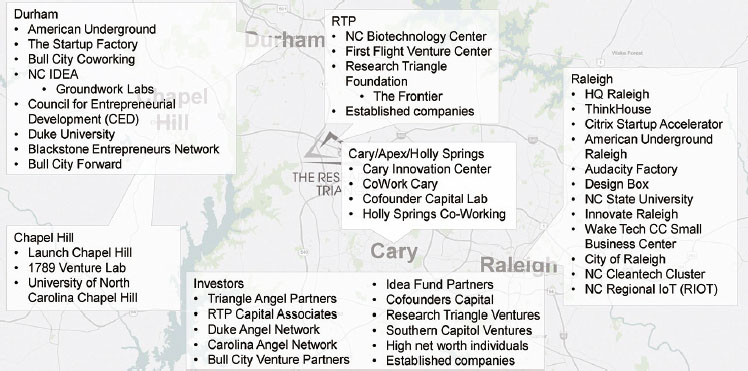
RTP has not traditionally cultivated its startup community. It is better known for its large tenants and as well as substantial activity in spinout companies. In 2015, RTP established a free co-working space called the Frontier that is geared toward startups and collaboration. The Frontier is now developing into its own branded campus and is part of a larger redevelopment strategy to invigorate the largely suburban park with a densified core center of activity. In the broader Research Triangle Region, there are a variety of service providers, incubators, events, university-based programs, funds, and other relevant institutions and programs support startups and entrepreneurs in the region surrounding RTP (see Figure 2).
Examples of entrepreneurial support and resources in the Research Triangle Region
Citation: Triple Helix 7, 1 (2020) ; 10.1163/21971927-BJA10008
Robust data on scalable startups in the region, as in other parts of the world, is a challenge. Using data compiled by a key ecosystem builder in the region, as of early 2018 140 “tweener” startups were identified for the region – companies with at least $1 million per year in sales or at least 10 employees, but with less than $80 million per year and less than 500 employees (Wingo, 2018). This list does not include life science startups. We estimate that these companies employ between 8,000 and 9,000 employees. Prominent startup success stories in the region include Bandwidth that had an IPO in 2017 and a market cap of $580 million and Tranloc commuter transit app who was acquired by Ford for an undisclosed amount. Additionally, data analytics and software giant SAS founded in 1976 by several colleagues from North Carolina State University currently employs 14,000 worldwide including 5,700 in the region ( SAS, 2018). We follow with explain the data we collected and analyzed for this study.
3.3 Data Collection and Analysis
To assure reliability and validity of our study we followed the data triangulation approach (Saunders et al. 2009). We were deploying an online survey to capture the perspectives of entrepreneurs and conducting in-person and phone interviews to capture the perspectives of entrepreneurial support organizations in RTP and the surrounding region. For a meaningful assessment of resources in the region and mechanisms for accessing those resources, we believed it was critical to explore both perspectives to triangulate key issues and understand points of consensus and in some cases disagreement.
We framed our line of questioning around two main areas:
-
Resources are the tools that entrepreneurs use to grow their business, such as financing, sales, mentoring, business planning, legal, etc.
-
Mechanisms are the channels entrepreneurs use to access those tools.
For reference, our complete survey questionnaire and interview guide instruments are included in Appendix A and Appendix B, respectively. We also used secondary data to further triangulate the data. We relied on social media, newsletter, and other outreach campaigns to solicit responses from entrepreneurs which is why we are unable to report a response rate. We focused our interviews on prominent ESOs in the region, the three major Tier 1 research universities, local government, and other knowledgeable stakeholder in the region. Where possible, we targeted individuals in these ESOs who had a longer-term perspective on the evolution of the entrepreneurial ecosystem in the region.
3.3.1 Interviews with ESOs
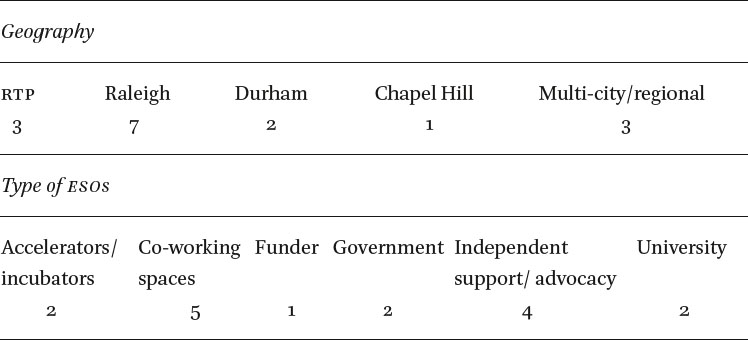
We interviewed a sample of ESOs throughout the region and across different segments of the ecosystem, including government, advocacy, accelerators, incubators, co-working spaces, funders, and universities. The ESOs represented each of the urban centers as well as RTP, totaling 16 individuals from 13 organizations. RTI used its existing networks within RTP to conduct the first interviews and then a snowball referral approach to reach other ESOs for interview. Summary statistics about the characteristics of our interviewees are included in Table 1.
Interviewees were able to speak about the regional ecosystem broadly in terms of various stages of startups, various centers of activity in the region, and various industry sectors. The research team documented interviews in real-time then coded the open-ended interview responses for further analysis.
3.3.2 Survey of Entrepreneurs
We used an online survey to reach as many entrepreneurs at RTI as possible. Acknowledging that the region has an extensive startup ecosystem, we disseminated the survey through various channels, including existing membership lists and organizations, weekly newsletters, social media (such as Twitter, Facebook, and LinkedIn), and personal connections and professional networks through RTI’s partners in the regional startup ecosystem.1 There are two limits to this method: 1) we cannot infer results for all entrepreneurs due to the convenience sample, and 2) our sample size that does not ensure statistical significance. Nevertheless, the data uncovers initial insights and discerns tangible ideas from the perspectives of both support organizations and entrepreneurs—which responds to the exploratory goals of our study. These insights have the potential to shape more robust research and evidence-based practice in the region in the future.
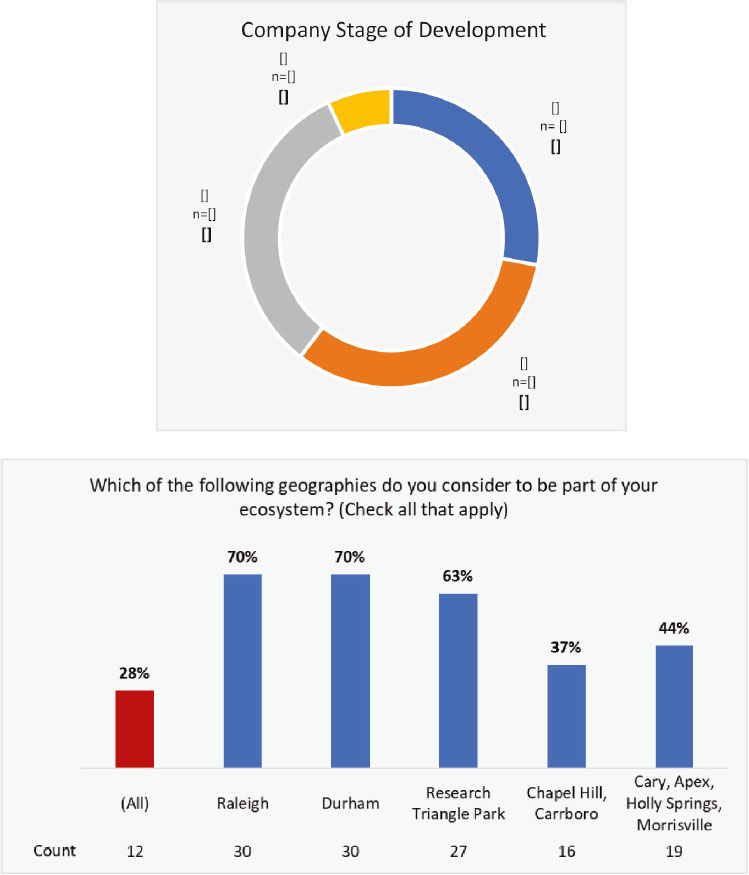
We received a total of 50 unique responses to the survey, 86% of which were from entrepreneurs and startups. Figure 3 summarizes the characteristics of the survey respondents who were entrepreneurs and startups.
Summary of Survey Respondents – descriptive statistics 2
Citation: Triple Helix 7, 1 (2020) ; 10.1163/21971927-BJA10008
4 Results
4.1 Interview Findings
According to our interview sample of ESOs, the region’s resources to support entrepreneurs are abundant and continue to grow. ESOs describe the region’s talented workforce and research from universities as key assets, which act as key inputs to the ecosystem in several ways. Universities build the pipeline of skilled workers and are more recently, historically speaking, developing a specialized pipeline or future entrepreneurs. For example, while North Carolina State university has had an engineering entrepreneurship program since the 1990s, in 2008 it was expanded into a campus wide program called the Entrepreneurship Initiative that includes close ties with the college of business and other areas of the university (NC State University 2016).
The region’s large companies in key industries such as life sciences, clinical research, information technology (IT), and clean technology have created a cluster of talented workers that companies, including startups, can tap into. These large companies also provide a ready customer base and testing ground for B2B products and services. Other infrastructure is also important such as high-speed broadband, IT assets in the region, and physical infrastructure such as startup and co-working spaces and lab space for life science startups.
Despite these strengths, some ESOs point out that the region lacks certain resources and mechanisms necessary to help startups scale effectively. ESOs were quick to point out that the region has fairly well developed resources and programs designed to help early stage startups, but the region lacks resources at the later stages. For example, once a company has proved its concept, established product-market fit, developed early customers and revenues a gap is approaching—further scaling-up steps are difficult to make or achieve, indicating the weaknesses of the startup ecosystem.
As one potential solution to the scale challenge, some ESOs see a need for better pathways for entrepreneurial-minded executives and professionals at established companies in the region to migrate to the startup work specifically to help companies during the growth phase. Others see an opportunity to train founders (who tend to be focused on product) through educational programming so that when the time is right to scale, they are able to shift their orientation toward marketing and business development.
Also, several individuals noted that there have been few high profile exits and the local press does not communicate effectively about them when exits occur. Finally, venture capital in the region could be improved in a variety of ways to help companies scale. The mechanisms for connecting to resources are strong, but insufficient for the ecosystem in its current state. Entrepreneurs value local, entrepreneur-led networks and innovative physical spaces that provide co-working, office space, and lab space. They describe a region with cultural openness and inclusion and explain that others are generally willing to help solve problems. The region’s independent, university, and government institutions are proactively engaged in entrepreneurship.
However, the region’s critical mass of entrepreneurs and abundance of resources are difficult for companies to navigate. In any given week, there are more startup events, functions, and meetups than any single person could attend. The large amount of resources is an important asset for the region, but also creates coordination challenges and can be difficult for entrepreneurs to navigate. For example, a few interviewees indicated that the entrepreneurial ecosystem is less than the sum of its parts due to redundant, uncoordinated, and/or un-curated resources. One support organization called this phenomenon a “negative synergy”. However, it is important to recognize the region’s fortunate position, and coordinate among stakeholders to provide quality information about resources from a trusted information broker.
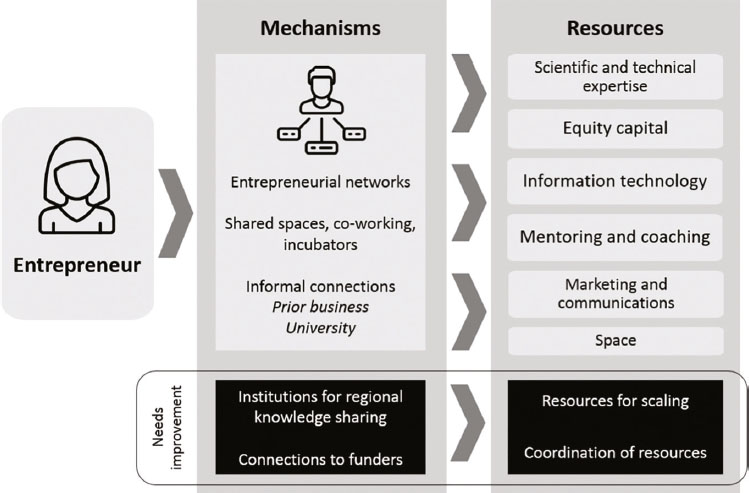
Using a thematic analysis of the interview and survey responses, we explore several overarching resources critical to the success of entrepreneurs and mechanisms that entrepreneurs use to connect with these resources in the region. We also identify resources that could be better connected with entrepreneurs, and we discuss potential mechanisms that stakeholders in the region could use to strengthen these connections. Figure 4 provides an overview of these resources, mechanisms and our overall findings.
Mechanisms and resources in the Research Triangle Regional Entrepreneurial Ecosystem
Citation: Triple Helix 7, 1 (2020) ; 10.1163/21971927-BJA10008
4.2 Survey Findings
Critical resources for entrepreneurial success
Citation: Triple Helix 7, 1 (2020) ; 10.1163/21971927-BJA10008
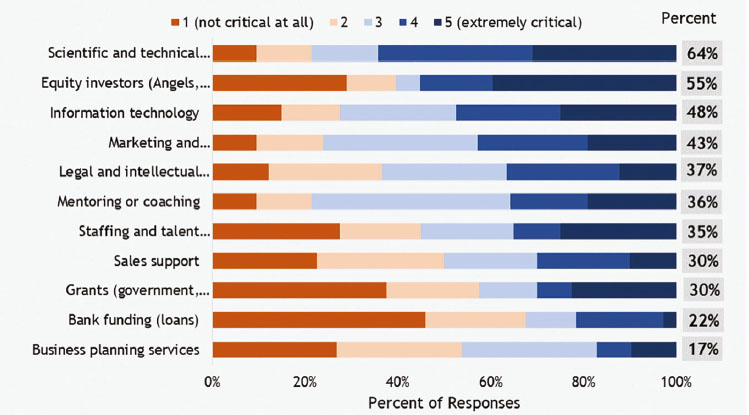
Entrepreneurs surveyed identified several critical resources for success (see Figure 5). They most frequently identified scientific and technical expertise as critical to the success of their business,3 illustrating the high-tech nature of the ecosystem. They were also likely to identify information technology and marketing and communications as critical resources. While entrepreneurs cited equity investors as being the second-most important ingredient to success, the distribution was bi-modal, with a high percentage of companies primarily in the field of professional services, citing equity investors as not critical at all. Mentoring or coaching also emerged as a resource that entrepreneurs were lukewarm about with the highest concentration of responses in the middle.
Entrepreneurs cited entrepreneurial networks as the most beneficial mechanism for fostering connections in the ecosystem, followed by shared spaces. This reflects Brad Feld’s argument that successful entrepreneurial initiatives are entrepreneur-led. Connections through prior business or universities were also important to entrepreneurs, which illustrates the important presence of academic and corporate anchors in the region (Clarysse et al. 2014a; Powell et al. 2010). The mechanisms that received the highest evaluation from survey respondents illustrate an ecosystem whose networks are thriving on organic, informal relationships. In fact, 74 percent of startups surveyed said that at least one of the three informal mechanisms we asked about was critical. Formal channels such as meetups, pitch competitions, and seminars received the lowest evaluations (see Figure 6).
Beneficial mechanisms for fostering connections
Citation: Triple Helix 7, 1 (2020) ; 10.1163/21971927-BJA10008
In summary, the resources most frequently cited as essential by entrepreneurs (talent, capital, information technology), are among the most important for any entrepreneurial ecosystem, and the mechanisms reflected an entrepreneur-led network that thrives on networks, shared spaces, and connections through businesses and universities.
5 Discussion of the Results
Our conclusions, while they do need to be qualified based on our small sample size of entrepreneurs surveyed, were validated by ESOs interviewed. Overall, perspectives converged to describe a startup ecosystem that is evolving. While the region does not yet have all resources and mechanisms that characterize a mature ecosystem, our informants tend to agree that during the last decade the region is going through a concerted process of facilitating and growing the entrepreneurial ecosystem.
5.1 Resources
The region has a strong base of scientific and technical talent (a knowledge sub system, Clarysse et al. 2014a) and information technology infrastructure, which are important assets for the growth of the ecosystem and are cited by entrepreneurs as critical resources. At the same time, connections to funding are one of the most important resources and one of the main pain points for local entrepreneurs (Tripathi et al. 2019). Entrepreneurs and support organizations agree that funding is one of the major areas in which the region can develop better connections. However, they had different opinions on mentoring: entrepreneurs were lukewarm about the importance of it, while support organizations emphasized its value.
5.1.1 Talent—Scientific and Technical Expertise
There are a variety of critical skills, capabilities, interests, and occupations that are needed to help startups meet their potential. In the Research Triangle region, entrepreneurs rated “scientific and technical expertise” as the most critical resource.4 This high rating reflects that this scientific and technical expertise is a key strength in the area. As of 2010, the Raleigh-Cary metropolitan statistical area was ranked seventh in the United States based on the share of residents with college degrees. 41% of residents held a college degree or higher in 2010, up from 14.2% in 1970 (The New York Times 2012). All that, again, reflect a strong, well-developed knowledge ecosystem (Clarysse et al. 2014a).
Interviewees revealed, however, a need for more skills development for startup founders. For example, one support organization commented that founders tend to focus on product development, while lacking skills in management, finance, or sales—exactly the ones responding to the business ecosystem goals—value creation and capture (Clarysse et al. 2014a; Ritala et al. 2013). In addition to greater skills training in this area, they noted a need for founders to connect with executive level talent with experience in marketing and sales—as a mean to cross the chasm between knowledge and business ecosystems.
Entrepreneurial experience in a region is also a dimension of talent that will naturally evolve over time with sustained development of the ecosystem. It will grow faster if experienced entrepreneurs stay in the region, encouraging local stakeholders to make the region a desirable place to live. One selling point is that quality of life and cost of living in gives the Research Triangle region an advantage over more expensive metropolitan areas, though those areas admittedly have other advantages such as more robust ecosystems and greater access to venture funding. As mentioned in the Startup Genome report, entrepreneurial experience—which is both technical and business-oriented—drives the ecosystem size and performance. Entrepreneurial experience in a region also directly influences the ecosystem’s capacity for mentoring (see Mentoring section).
Startups use a variety of mechanisms to connect with talent. Entrepreneurial networks and informal connections continue to be critical. More formal networking and topic-based events also play an important role in helping people with common interests to connect. Finally, university partnerships between startups and startup support organizations in the region are encouraging entrepreneurial minded talent to stay in the region by embedding students in the startup community from an early age. Migration has also been a key mechanism for bringing more talent to the region. Population in the Research Triangle region is growing rapidly, and includes a mix of well-educated migrants from other parts of the country and world. Thus, overall, such critical component of an entrepreneurial ecosystem as human capital (Tripathi et al. 2019) is well developed at the RTP.
Overall, 81% of startups think that the current connections with scientific and technical expertise are sufficient, further demonstrating that talent is a key asset in the region. Pain points were mainly in the area of competition for talent. For example, some startups noted the challenge of attracting talent from larger, more established companies in the region. An emerging analytics company stated that finding software engineers is hard because of the difficulty of matching salaries with more established companies.
5.1.2 Funding
No matter the source, funding is often cited by startups as one of the most critical resources for a company to start and scale (Ries 2011; Tripathi et al. 2019). Nearly all support organizations emphasized the importance of capital for early stage companies. For early-stage software or services companies, non-dilutive funding through a bank loan or line of credit is nearly impossible to obtain due to the collateral requirements and is an unattractive risk for the company. At the same time, they expressed a constant challenge of bringing in equity funding from venture capital firms, which are geographically concentrated in other parts of the country such as Silicon Valley, New York, and Boston. Additionally, high-growth firms in bioscience faced a different challenge when compared to smaller tech firm: the time required for patenting, clinical trials, and government approval means that private investors would have to wait over ten years to see return on investment, outside the time horizon for typical private investors. They expressed the importance of government research grants and matching funds to develop a commercially viable product. Here geographical clustering of the knowledge ecosystem (and related funding sources) clash with the global character of a business ecosystem (Clarysse et al. 2014a; Powell et al. 2012).
Responses on funding were highly polarized among companies surveyed. Some respondents identified equity funding through angels, venture capital, or private investors as one of the most critical resources for success, whereas others said it was not: 39% of those surveyed said it was “extremely critical”, but 29% said it was not critical at all. For the founder, sale of an equity stake to an angel, venture capital investor, or institutional investor implies a partial loss of ownership or control of the company. Very few entrepreneurs identified bank funding as a critical resource. A limited subset, primarily in bioscience, identified research grants as a critical resource.
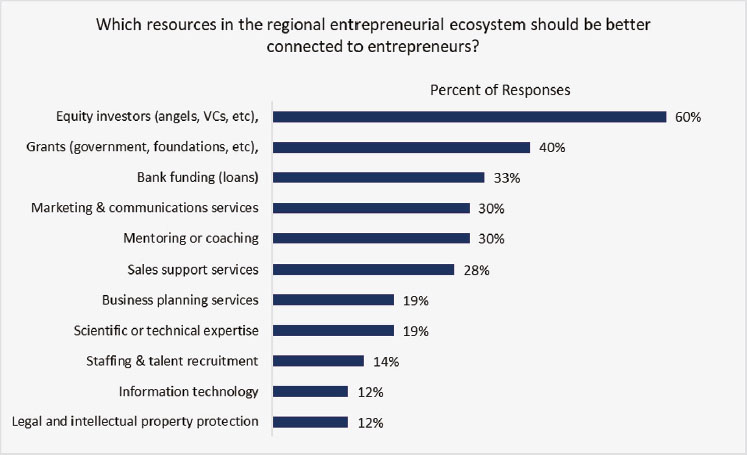
When we asked entrepreneurs which resources needed to be better connected, the three most frequent responses related to financing. Over three-quarters identified one or more funding sources as a resource that needed to be better connected, with the largest share naming equity funding, followed by grants and bank funding. They noted that in addition to better access to funding, the ecosystem needed more consistent and formal introductions to venture capital investors, visibility to investors outside the region, better communication about resources, and one-stop clearinghouse for financial resources. These elements reflect the need for improved communication and information in the regional ecosystem—a lack of a cross-realm transposition mechanism in the knowledge ecosystem (Clarysse et al. 2014a; Powell et al. 2012; Wright et al. 2006). Figure 7 summarizes the survey responses.
Connections to financial resources
Citation: Triple Helix 7, 1 (2020) ; 10.1163/21971927-BJA10008
Although equity funding is one of the topics most frequently discussed around entrepreneurship and economic development in the Research Triangle region, there is little agreement on how to address the challenges. Entrepreneurs surveyed described the difficulty of raising capital, saying that local venture funds were too risk averse, difficult to connect with, or tended to limit their reach to a small circle of companies; consequently, they looked for more connections to venture funds outside of the region. On the other hand, one support organization pointed out that funding was available locally and that grievances about funding were universal, even in the resource-rich entrepreneurial ecosystems of Silicon Valley and Boston. Despite these differences, nearly all of those interviewed stressed the importance of transparency in how to access funds appropriate to the stage, growth trajectory, and industry sector of a company.
5.1.3 Information Technology
For entrepreneurs, information technology (IT) is an indispensable resource, and 48% identified it as critical.5 Those who identified IT as a critical resource tended to cut across sectors, stages of growth, and levels of experience. However, only 12% of respondents identified it as a resource that needed to be better connected to entrepreneurs. This may indicate the presence of a robust IT infrastructure that is serving as a backbone for entrepreneurs. For example, there is good access to broadband and high quality IT services, which companies use to access online sales, online networks, specialized services, and connect remote teams and global customer bases. The regional concentration of large IT companies and investment in IT infrastructure over several decades has made this a quality resource in the region that is fundamental to the entrepreneurial economy (Torres and Souza 2016).
5.1.4 Mentoring
Mentors are experienced and trusted experts who coach entrepreneurs, share ideas, help facilitate connections to other resources, and advise startups on strategic issues, among other things. Mentoring can happen informally through personal networks or programmatically. It is important for startups at various stages, but perhaps most critical for early stage entrepreneurs and startup companies who are trying to develop a concept into a business or who would like to scale. Of those surveyed, 42% of startups said that mentoring or coaching was critical to the success of their business. As a relatively young entrepreneurial ecosystem, the Research Triangle region is only recently getting to the point that it has built up a sufficient base of entrepreneurial experience and that mentoring is taking place on a larger scale. Overall, mentoring and coaching appears to be fairly well-connected to entrepreneurs; only 30% of those surveyed indicated that mentoring and coaching needs to be better connected with entrepreneurs.
Tripathi et al. (2019) in their study highlight mentors as an important sub-element of “supporting factors” in startup ecosystems. However, the mechanisms to be used to make this factor sufficiently developed remain unstudied. Mechanisms that entrepreneurs at RTP use to connect with mentors range from ad hoc entrepreneurial social networks—which was rated the most important of all mechanisms to connect with resources—to organized events that encourage collisions. Whatever the mechanism, robust mentoring requires that a mentor-mentee match be made and that the relationship develops to a sufficient comfort level. In the Research Triangle region, specific mechanisms to connect with mentors include personal networks of advisors, such as the eClinic collaboration between North Carolina State University and HQ Raleigh that connects volunteer mentors with student entrepreneurs, and official communities such as HQ Raleigh, American Underground, and the Council on Entrepreneurial Development that actively work to connect entrepreneurs with mentors through “office hours” and other formats.
Ultimately, mentoring is critical for the formation of entrepreneurial talent in the region, giving less-experienced entrepreneurs the opportunity to develop business acumen and have the confidence to make myriad decisions and take calculated risks. In the region, sometimes mentors turn into business partners, board members, and/or investors so they have a vested interest, but we also heard stories about a culture of experienced entrepreneurs who are willing to “give back” by mentoring peers in the region.
Support organizations and key individuals in the region stressed that mentoring needs to be high-quality which appears to be based on two principal dimensions: (1) the mentor has relevant entrepreneurial experience and (2) the depth of the relationship with the mentee. To the extent that leadership in the region can influence these two dimensions, it may lead to more successful mentoring. Leadership can work to provide more entry points for experienced mentors to get engaged. Ideas discussed for more formal support of mentorship includes providing free space, free mentoring and coaching programs, and special events such as invite only lunches and dinners based on broad interests that connect more seasoned mentors and investors with younger, less-experienced entrepreneurs. These ideas facilitate more connections and strengthen the quality of relationships.
5.2 Mechanisms
Entrepreneurs rated entrepreneurial networks, informal connections, space, and institutions as the most beneficial mechanisms for accessing resources. The ways they form networks in the region illustrates entrepreneur-led connections, facilitated by institutions that provide the enabling environment for collaboration. This section takes an in-depth look at the mechanisms entrepreneurs rated as being most beneficial for accessing resources.
5.2.1 Entrepreneurial networks
Entrepreneurs surveyed identified entrepreneurial networks as the most important mechanism for accessing resources. They comprise both formal and ad hoc social networks, and include membership-based organizations, virtual communities (such as social media networks), personal connections, and other affiliations. These networks are critical to companies at their very early stages, allowing early-stage companies to more effectively navigate the local ecosystem and serve as an informal group of advisors that directly provides value to early-stage companies. These networks require little formal structure, and participants spoke of the value of “cheap beer and pizza” to get entrepreneurs together to form connections.
These networks connect entrepreneurs to workers and funding, two of the key resources for early stage companies. For example, one entrepreneur commented that networks were critical for identifying candidates for key positions and raising equity. However, this entrepreneur also pointed out that having a more actively engaged investor network would help a great deal, and that some investors in the area are not as integrated with the ecosystem because of an age gap and the use of social media platforms.
Additionally, these networks are critical for accessing customers. An education startup indicated that word of mouth is very powerful in the Research Triangle region in terms of building a customer base. Furthermore, one participant noted that the demographics and culture in the region make the market a good testing ground for consumer-oriented startups with new products and services because there is an abundance of early adopters. This is demonstrated by the fact that Raleigh is often an early test market for larger consumer-product companies. Additionally, the presence of larger companies in technology, life sciences, and other sectors provides opportunities for B2B startup services.
Various institutions including city governments and universities are acting to facilitate these networks. Universities in the region are strengthening networks by enhancing entrepreneurship programs and integrating students with entrepreneurial communities. North Carolina State University has created an entrepreneurship clinic located within a prominent local co-working space. This clinic gives entrepreneurs access to free labor hours, and at the same time embeds entrepreneurial-minded students in the ecosystem and provides them with experiential learning opportunities. The creator of this program noticed quickly how his own students’ ideas improved after acquiring more real-world experience in validating and testing ideas for others. Students are also given the opportunity to float their business ideas in informal interactions to get direct feedback. Thus, entrepreneurial networks could become not a stand-alone component of an ecosystem (Clarysse et al. 2014a), but a gluing mechanism for cross-realm transposition (Clarysse et al. 2014a; Wright et al. 2006).
A handful of very talented connectors in the region help startups in these networks access capital and mentorship. However, one startup noted that these connectors have limited time and resources, which ultimately limits the local pipeline of startups. It offers evidence that these connector “nodes” are overloaded, limiting the potential of the network. Additionally, the networks across the region are fragmented, partially due to the expansive geography of the region. A common theme that emerged a feeling of competition rather than “coopetition” (Lechner and Leyronas 2009; Ritala 2012). Many stakeholders and entrepreneurs felt that key organizations do not collaborate and coordinate activities sufficiently. Others described this as a parochial infighting and an inward-looking approach in the major cities, which was inhibiting regional collaboration.
5.2.2 Space
For entrepreneurs, work space is a fundamental resource that can involve a high level of risk (Tripathi et al. 2019). Access to quality, flexible work space is difficult for early stage companies not willing to sign a long-term commercial lease. The co-working spaces in the region—including HQ Raleigh, The Frontier in RTP, and American Underground in Durham—offer affordable space that can be leased without a long-term contract. This allows early stage companies to allocate limited resources to critical business functions. Software, technology, and services startups are concentrating in these attractive spaces with a mix of co-working, small offices, and shared resources such as meeting space, printers, and spaces to interact with potential customers. Entrepreneurs in biosciences or manufacturing are moving into specialized spaces with prototyping space and laboratory equipment, often in conjunction with university labs, which offer space that can be leased to outside tenants for an affordable rate. The region’s primary providers of co-working space also allow the space to be used as a resource for accessing professional services, hosting events, and welcoming clients.
In addition to being a direct resource for companies, space is crucial for accessing other resources. Entrepreneurs ranked space as one of the most important mechanisms for forming connections, and emphasize that spaces allow for a high velocity of interactions in informal settings. Shared spaces are particularly important in the Research Triangle region which is geographically dispersed. Quality space encourages entrepreneurs to interact and share ideas in unstructured or semi-structured ways. Culturally, rigid structures for networking often do not work well in the fast-moving startup world. Entrepreneurs surveyed noted that informal opportunities to interact with other entrepreneurs and members of the ecosystem were lower pressure and allowed trust to form in a non-sales environment.
For urban planners and regional leaders, physical space for entrepreneurial growth will be a challenge moving forward. The region’s successful co-working spaces are attracting talented entrepreneurs from inside and outside of the region, and their growth is putting a strain on the existing urban infrastructure. Access to parking, for example, is becoming scarcer and public transit is limited. While for many years low cost and low congestion were an advantage for the region, economic development leaders today recognize that this advantage is diminishing because of a fast-growing population and increasing cost of living—a common problem for growing entrepreneurial ecosystems (Finkle 2012).
5.2.3 Informal Connection through Prior Business
Entrepreneurs identified connections through prior business as one of the most important mechanisms for connecting with resources, with 56% identifying it as critical. New entrepreneurs use connections from prior jobs to start accessing resources, whereas experienced or serial entrepreneurs leverage their existing clients and entrepreneurial networks. Entrepreneurs commented that prior business success was critical because it was a natural starting point for formative conversations and opening doors. However, one entrepreneur explained that while prior business and university networks are key to early success, they acknowledged that as they worked to expand their networks, they ended up speaking with many of the same people. Others noted that word of mouth was an important way of forming networks, and that although the ecosystem is growing and increasingly diverse, they often found themselves in the same circles of entrepreneurs and support providers. Whether prior network circles create certain path dependency (Storz 2008) in particularly startup ecosystems—is a question to explore in further research.
5.2.4 Institutions
The Research Triangle region has a variety of institutions that provide resources directly and indirectly that help entrepreneurs get connected with resources in the ecosystem. The roles of these institutions have evolved as the region’s population has grown and more entrepreneurs and support organizations open in the region. As the region continues to grow, the roles of private businesses, nonprofit organizations, governments, universities, and business associations have started to overlap which makes it difficult for a new entrepreneur to navigate. One experienced service provider noted that it can take a founder or new CEO up to 6 months to fully understand the variety of institutions in the region and to identify the ones that can provide the best services for a company’s specific needs.
Both survey respondents and interview participants pointed out the important need for an independent, trusted broker in the region that can serve as a guide and network connector for new entrepreneurs. In contrast with the ideas by Clarysse et al. (2014a) proposing university for such a role, our study suggest a dedicated team of brokers for specifically this function in the startup ecosystem. In the past decade, this has become increasingly important because in-migrants are overrepresented in the entrepreneurial ecosystem. For example, one co-working space pointed out that at least three-quarters of their staff and tenants are from a different state or country. However, two institutions stand out as independent network connectors in the region:
-
The Council on Entrepreneurial Development (CED) is the oldest dedicated support organization in the region, with over 35 years of experience and 22,000 contacts. Its role is to act as a neutral player in the ecosystem, forming connections for companies through its vast network of support service providers, funders, and mentors.
-
The NC Biotech Center opened in 1984 and serves as a funder and neutral actor in the region, supporting startups and companies at all stages of development related to bioscience. It can provide matching funding and connections for high-risk bioscience startups that can have difficulty accessing private capital.
The role of these two organizations is evolving, and they form part of an increasingly crowded market of service providers and ESOs. Entrepreneurs and ESOs support the strengthening of independent connectors, arguing that their role is more important than ever. Entrepreneurs require transparent information on high-quality services and resources in the ecosystem, and they emphasized the importance of awareness of resources and how to access them, and the need for quality communicators to share success stories and improve awareness of the region’s entrepreneurial strengths.
6 Conclusions
This article builds on a prior literature about startup ecosystems (Clarysse et al. 2014a; Powell et al. 2010; Tripathi et al. 2019) and illustrates how a disconnect between a knowledge and business ecosystem may limit the potential of the regional entrepreneurial development – as well as how to address the disconnect. The RTP and the region studied in this research, like many others around the world, have many assets in place and is grappling with how to better connect entrepreneurs to resources and how to optimize the ecosystem. Our research informants shared specific ways to improve the mechanisms for connecting with resources. RTP can also learn from other regions that are in similar phase of ecosystem development.
However, RTP is somewhat unique among science and technology parks in that, while a suburban, its geographic location and recent investments to facilitate startups put it in a position to serve as a connector and common ground between the entrepreneurial communities in the surrounding metropolitan areas (Clarysse et al. 2014a). It also provides legitimacy to startups who are seeking to do business with life science, IT, and other large firms in the park. We anticipate the RTP will continue to grow its role in the entrepreneurial ecosystem in the coming years. Other science parks around the world could similarly assess their relationship to their regional entrepreneurial ecosystem, determine where to best add value relying on best practices if they exist, and make the investments.
This article contributes the body of knowledge on entrepreneurial ecosystem building by providing a practical example of such an ecosystem, explaining its resources and mechanisms of its development. It also provides a data collection methodology that other researchers and regions can adapt for their own research and development purposes. Given that this is a pilot study, there are limitations. Our survey of entrepreneurs experienced a low response and would need to have a greater reach in order to provide more confidence in results or to enable differentiating the needs of various industry verticals or technology areas. While we would also like a broaden reach of our interviews, we conducted in-depth interviews with a reasonable cross section of the key ESOs in the region.
Acknowledgements
The authors would like to thank Sara Lawrence, John Hardin, and Christopher Gergen for shaping this research. We would also like to acknowledge HQ Raleigh, The Frontier, InnovateNC, and the Council for Entrepreneurial Development for their support with disseminating our survey.
Endnotes
Correspondence: LeanTaaS, iQueue for Infusion Centers, 11121 Carmel Commons Blvd, Suite 255, Charlotte, NC 28226, USA zackoliver423@gmail.com
RTI received in-kind support from HQ Raleigh, American Underground, Research Triangle Foundation, First Flight Venture Center, The Council for Entrepreneurial Development (CED), NC Biotech Center, North Carolina State University and the Institute for Emerging Issues, Innovate Raleigh, the University of North Carolina at Chapel Hill, NC IDEA, and The North Carolina Department of Commerce, among others.
Percentages do not sum to 100% because multiple selections were allowed.
Survey respondents most frequently assigned a 4 (critical) or 5 (extremely critical) to “scientific and technical expertise” as a service critical to the success of their business.
34% of entrepreneurs assigned scientific and technical expertise a 5 (extremely critical) and another 34% assigned a 4 (critical).
48% of respondents provided a 4 or 5.
References
Alizadeh, T. (2010). Knowledge-Based Development for Cities and Societies. In Metaxiotis, K., Carrillo, F. J., and Yigitcanlar, T., eds, Knowledge-Based Development for Cities and Societies: Integrated Multi-Level Approaches. https://doi.org/10.4018/978-1-61520-721-3.
Aspen. (2018). Rwanda: Entrepreneurial Ecosystem Snapshot. Available at: https://ecosystems.andeglobal.org/snapshot/rwanda/2018/.
Brett, A., and Doss, H. (2016). The Rainforest Scorecard: A Practical Framework for Growing Innovation Potential. Los Altos: Regenwald.
Clarysse, B., Wright, M., Bruneel, J., and Mahajan, A. (2014a). Creating Value in Ecosystems: Crossing the Chasm between Knowledge and Business Ecosystems. Research Policy, 43 (7), pp. 1164–1176. https://doi.org/10.1016/j.respol.2014.04.014.
Clarysse, B., Wright, M., Bruneel, J., and Mahajan, A. (2014b). Creating Value in Ecosystems. ERC—Enterprise Research Centre, 22, pp. 1164–1176. https://doi.org/http://dx.doi.org/10.1016/j.respol.2014.04.014.
Eisenhardt, K. M. (1989). Building Theories From Case Study Research. The Academy of Management Review, 14 (4), pp. 532–551.
Etzkowitz, H. (2013). StartX and the “Paradox of Success”: Filling the Gap in Stanford’s Entrepreneurial Culture. Social Science Information, 52 (4), pp. 605–627. https://doi.org/10.1177/0539018413498833.
Feld, B. (2012). Startup Communities: Building an Entrepreneurial Ecosystem in Your City. Hoboken, NJ: Wiley.
Finkle, T. A. (2012). Corporate Entrepreneurship and Innovation in Silicon Valley: The Case of Google, Inc. Entrepreneurship Theory and Practice, 36 (4), pp. 863–884. https://doi.org/10.1111/j.1540-6520.2010.00434.x.
Florida, R. (2002). The Rise of the Creative Class. New York: Basic.
Haines, T. (2016). Developing a Startup and Innovation Ecosystem in Regional Australia. Technology Innovation Management Review, 6 (6), pp. 24–32. https://doi.org/10.22215/timreview996.
Herring, R. (2016). Luxembourg, Building on Old Habits, Births a Tech Ecosystem. Available at: https://www.redherring.com/finance/luxembourg-building-old-habits-births-tech-ecosystem/.
Kenney, M., and von Burg, U. (2001). Paths and Regions—The Creation and Growth of Silicon Valley. Path Dependence and Creation, pp. 127–148.
Kon, F., Cukier, D., Melo, C., Paulo, S., Hazzan, O., and Technion, H. Y. (2015). A Conceptual Framework for Software Startup Ecosystems: The Case of Israel. Available at: https://www.ime.usp.br/~kon/papers/SoftwareStartupsConceputalFramework-TR.pdf.
Lechner, C., and Leyronas, C. (2009). Small-Business Group Formation as an Entrepreneurial Development Model. Entrepreneurship Theory and Practice, 33 (3), pp. 645– 667. https://doi.org/10.1111/j.1540-6520.2009.00320.x.
Link, A. N., and Scott, J. T. (2003). The Growth of Research Triangle Park. Small Business Economics, 20 (2), pp. 167–175. Small Business Economics, 20(2), 167–165.
Marshall, A. (1920). Principles of Economics. New York: MacMillan.
NCStateUniversity. (2016). NC State Department of Electrical and Computer Engineering: Cool Things from 1990–2009. Available at: https://www.ece.ncsu.edu/wp-content/documents/history/ece-history-1990-2009.pdf.
Porter, M. E. (1998). Clusters and the New Economics of Competition. Harvard Business Review, 76 (6), pp. 77–90.
Powell, W. W., Packalen, K., and Whittington, K. (2010). Organizational and Institutional Genesis: The Emergence of High-Tech Clusters in the Life Sciences. The Emergence of Organizations and Markets, pp. 434–465.
Powell, W. W., Packalen, K., and Whittington, K. (2012). Organizational and Institutional Genesis. The Emergence of Organizations and Markets, pp. 434–465.
Research Triangle Foundation. (2017). 2017 Company Directory. Available at: https://files.rtp.org/wp-content/uploads/2017/04/Front-Desk-Map-2017.pdf.
Research Triangle Foundation. (2018). The Transformative Impact of The Research Triangle Park – A Case Study. Available at: https://www.rtp.org/2018/02/transformative-impact-research-triangle-park-case-study/.
Ries, E. (2011). The Lean Startup: How Today’s Entrepreneurs use Continuous Innovation to Create Radically Successful Businesses. New York: Crown Business.
Ritala, P. (2012). Coopetition Strategy—When is it Successful? Empirical Evidence on Innovation and Market Performance. British Journal of Management, 23 (3), pp. 307–324. https://doi.org/10.1111/j.1467-8551.2011.00741.x.
Ritala, P., Agouridas, V., Assimakopoulos, D., and Gies, O. (2013). Value Creation and Capture Mechanisms in Innovation Ecosystems: A Comparative Case Study. International Journal of Technology Management, 63 (3/4). https://doi.org/10.1504/IJTM.2013.056900.
SAS. (2018). SAS Company Facts and Financials. Available at: https://www.sas.com/en_us/company-information/profile.html.
Saunders, M., Lewis, P., and Thornhill, A. (2009). Research Methods for Business Students. Research Methods for Business Students. https://doi.org/10.1007/s13398-014-0173-7.2.
Saxenian, A. (1994). Regional Advantage: Culture and Competition in Silicon Valley and Route 128. New York: Harvard University Press.
Startup Genome. (2018). Startup Genome 2018 Report. Available at: https://startupgenome.com/report2018/.
Storz, C. (2008). Dynamics in Innovation Systems: Evidence from Japan’s Game Software Industry. Research Policy, 37 (9), pp. 1480–1491. https://doi.org/10.1016/j.respol.2008.05.007.
The New York Times. (2012). Cities with the Most College-Educated Residents. Available at: http://www.nytimes.com/interactive/2012/05/31/us/education-in-metro-areas.html.
Torres, N. N., and Souza, C. R. (2016). A Literature Review about Technology Startups Ecosystems. Proceedings of the XII Brazilian Symposium on Information Systems on Brazilian Symposium on Information Systems: Information Systems in the Cloud Computing Era-Volume 1, pp. 385–392.
Tripathi, N., Seppänen, P., Boominathan, G., Oivo, M., and Liukkunen, K. (2019). Insights into Startup Ecosystems through Exploration of Multi-Vocal Literature. Information and Software Technology, 105 (September), pp. 56–77. https://doi.org/10.1016/j.infsof.2018.08.005.
Wauters, R. (2014). A Look at Europe’s Top Startup Countries: The Good, the Bad and the Ugly. Available at: https://tech.eu/features/3256/europe-top-startup-countries-good-bad-ugly/.
Wiens, J., and Jackson, C. (2015). The Importance of Young Firms for Economic Growth. Entrepreneurship Policy Digest. Available at: https://www.kauffman.org/wp-content/uploads/2019/12/entrepreneurship_policy_digest_september2014.pdf.
Wingo, S. (2018). 2018 Triangle Tweener List. Available at: https://medium.com/@scotwingo/wingo-2018-triangle-tweener-list-fcb78121db85.
World Bank. (2016). Entrepreneurs and Small Businesses Spur Economic Growth and Create Jobs. Available at: http://www.worldbank.org/en/news/feature/2016/06/20/entrepreneurs-and-small-businesses-spur-economic-growth-and-create-jobs.
Wright, M., Lockett, A., Clarysse, B., and Binks, M. (2006). University Spin-out Companies and Venture Capital. Research Policy, 35 (4), pp. 481–501. https://doi.org/10.1016/j.respol.2006.01.005.
Appendix A
A Survey questions for entrepreneurs
These survey questions are intended to help stakeholders in the Research Triangle Region better understand how startups/entrepreneurs are accessing resources that are critical to the success of their businesses. In addition to informing local decision making and programming, we are developing a presentation for IASP 2017 Conference in Istanbul, Turkey to showcase entrepreneurship in the Research Triangle Region.
We sincerely thank you in advance for participating and sharing your valuable thoughts. RTI is leading this effort along with in-kind support from HQ Raleigh, The Frontier, Innovate NC, and The North Carolina Department of Commerce.
If you would like to receive the final survey results, please enter your email address at the end of the survey.
If you have any questions or difficulty with the survey tool, please contact (anonymized) at (anonymized email) and include “Survey Issue” in the subject line.
A.1 Background Questions
This section includes background questions about you and your company.
1) How long have you been an entrepreneur? (years)
2) Are you a full-time or part-time entrepreneur?
3) What is the name of the company in which you spend the majority of your time?
4) What industry (or industries) is your company in? (check all that apply)
-
IT, Tech, Software, AnalyticsIT, Tech, Software, Analytics
-
ManufacturingManufacturing
-
Bioscience/life sciencesBioscience/life sciences
-
Healthcare and relatedHealthcare and related
-
Professional servicesProfessional services
-
Construction and TradesConstruction and Trades
-
OthersOthers
5) Which of the following best describes your company’s stage of development?
-
Emerging (defined broadly as the concept phase; early product development and prototyping, pre-revenue)
-
Established (defined broadly as testing the market; piloting products/services)
-
Growth (defined broadly as gaining market traction and a customer base; growing revenues above $1 million mark; raising some capital, not all organic; ready for next stage of growth; no HR, no sales compensation structure, or other advanced business processes; approximately 10–15 employees)
-
Mature (defined broadly as having moved past the growth phase; have attracted significant financial capital; now in a position to mentor other entrepreneurs in the ecosystem)
6) This survey will include broad questions about the entrepreneurial ecosystem in the Research Triangle Region. Which of the following geographies do you consider to be part of your ecosystem? (Check all that apply)
-
RaleighRaleigh
-
DurhamDurham
-
Research Triangle ParkResearch Triangle Park
-
Chapel Hill/CarrboroChapel Hill/Carrboro
-
Cary/Apex/Holly Springs/MorrisvilleCary/Apex/Holly Springs/Morrisville
-
OtherOther
A.2 Connections and Mechanisms in the Entrepreneurial Ecosystem
This section of the survey explores the importance of various resources in the local entrepreneurial ecosystem as well as the mechanisms to access those resources.
Resources are the tools which entrepreneurs use to grow their business: financing, sales, mentoring, business planning, legal, etc. Mechanisms are the channels they use to access those tools.
7) On a scale of 1 to 5, to what degree have the following services been critical to the success of your business?
Citation: Triple Helix 7, 1 (2020) ; 10.1163/21971927-BJA10008
8) Please provide additional context on why the resources you rated a 4 or 5 are critical to the success of your business.
9) On a scale of 1 to 5, to what degree are the following mechanisms beneficial for fostering connections with the resources above?
Citation: Triple Helix 7, 1 (2020) ; 10.1163/21971927-BJA10008
10) Please provide additional context on why the mechanisms you rated a 4 or 5 are beneficial for fostering connections with resources.
Appendix A
A.3 Strengthening Connections to Resources
This section of the survey explores which connections to resources could be strengthened and how.
11) Which resources in the regional entrepreneurial ecosystem should be better connected to entrepreneurs?
-
Equity investors (Angels, VCs, etc.)
-
Bank funding (loans)
-
Grants (government, foundations, etc)
-
Legal and intellectual property protection
-
Staffing and talent recruitment
-
Sales support
-
Marketing and communications
-
Mentoring or coaching
-
Business planning services
-
Scientific and technical expertise
-
Information technology
-
Other
12) What kinds of mechanisms would be appropriate for strengthening these particular connections?
13) Why is it important to strengthen these particular connections? What are the expected benefits?
A.4 Openness of the Ecosystem
This section of the survey explores how inclusive the region is across several dimensions.
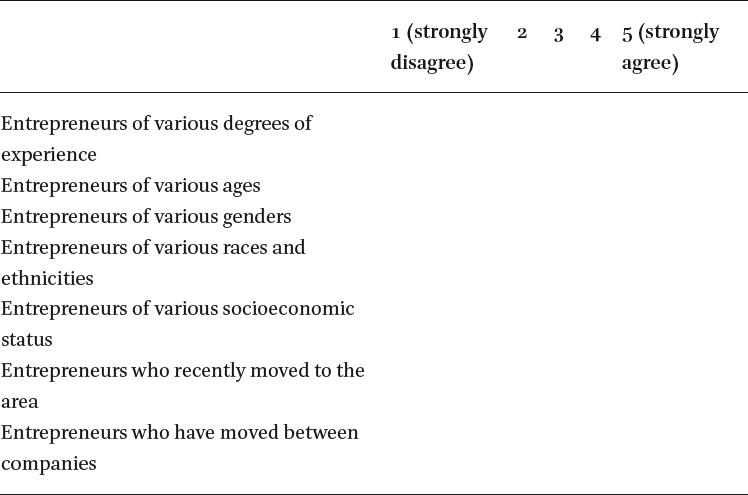
14) To what degree do you agree that the entrepreneurial ecosystem of the region is broadly open to and inclusive of:
Citation: Triple Helix 7, 1 (2020) ; 10.1163/21971927-BJA10008
A.5 Concluding Thoughts
15) What advice do you have for other regions that are trying to better connect startups and entrepreneurs to critical resources?
16) Would you like to share any final thoughts?
17) If you would like to receive a summary of the final survey results, please enter your email address below. We will not use your email address to contact you for any other reason.
Appendix B
B Interview Questions for Support Organizations
B.1 Background on Support Organization and its Role in the Entrepreneurial Ecosystem
This section will address the role the organization serves in the ecosystem.
1) What geographies of the Research Triangle region do you consider to be part of your ecosystem?
2) What local industries are you most familiar with?
3) What role does your organization serve in helping to foster connections between entrepreneurs/startups and other members of the entrepreneurial ecosystem?
4) Do you have any stories or data about how connections between startups/entrepreneurs and critical resources have been made or fostered, how those connections lead to benefits for startups and entrepreneurs, etc.?
B.2 Resources and Mechanisms for Connections in the Entrepreneurial Ecosystem
This section will address the regional ecosystem in general.
Resources are the tools which entrepreneurs use to grow their business: financing, sales, mentoring, business planning, legal, etc. Mechanisms are the channels they use to access those tools.
5) In your opinion, which resources are critical to the success of entrepreneurs and startups in the local entrepreneurial ecosystem?
6) What mechanisms are beneficial in fostering connections?
7) Which resources in the regional entrepreneurial ecosystem should be better connected to entrepreneurs?
8) What kinds of mechanisms would be appropriate for strengthening these connections?
9) Why is it important to strengthen these connections? What do you see as the expected benefits?
B.3 Openness of the Ecosystem
This section will address the regional ecosystem in general.
10) Could you talk about how inclusive or not inclusive the entrepreneurial ecosystem is? (prompt with examples such as people of various degrees of experience, ages, genders, races, socioeconomic status, and people that have recently moved to the area)
11) What barriers are there to participating in the entrepreneurial ecosystem, and do you have any ideas on how those barriers can be overcome to make the ecosystem more inclusive?
B.4 Final Thoughts
12) Given the things we talked about, do you have any advice for areas of innovation around the world as they try to strengthen their entrepreneurial ecosystems?
13) Would you like to share any final thoughts or is there anything that we should have asked?