Abstract
Governments across the world have implemented Industrial Doctoral Training Programmes to stimulate university-industry-government relationships. However, despite the growing academic interest in such programmes, further studies are required to evaluate their effectiveness and to describe the interactions between relevant actors.
The purpose of this exploratory study is to examine the particular case of the Spanish Industrial Doctoral Training Programme (SIDTP). Using qualitative and quantitative data from several sources, we provide a broad characterization of the programme and its funding regime in the period 2014–2022 and a detailed assessment of the first cohort of participants by examining two indicators: rates of programme completion and successful doctoral thesis defence. The SIDTP is an example of a cooperative policy – especially addressed to small to medium-sized businesses – whose implementation requires the interaction of the three helices. Despite the quality of its design, our results show a high drop-out rate and a low number of successfully completed theses.
1 Introduction
Traditionally, the primary purpose of doctoral training has been to prepare the next generation of academics and so sustain the research community (Enders, 2005). However, expansion of the knowledge economy has highlighted the limitations of this training model making it clear that it is not fit to meet the challenges and demands of the 21st century. A common assertion is that traditional models of doctoral training are unable to meet the current human resourcing needs of business and industry – either in terms of qualifications or skills – and furthermore, that it is poor preparation for today’s complex, diverse and ever-changing job market (Germain-Alamartine and Moghadam- Saman, 2020; Kehm, 2007; Kunttu et al., 2018).
In view of this, governments across the world have driven reforms in doctoral training programmes with the intention of making these better adapted to the needs of the economy and society (Grant et al., 2022). These reforms are principally aimed at two goals: producing highly qualified, specialist researchers and giving these researchers key business-oriented skills. Thus, new doctoral programmes (such as industrial doctorates) are designed to produce researchers with enhanced employability in specific non-academic fields (Celis and Acosta, 2016; Kehm, 2007; Bernhard and Olsson, 2023; Grant et al., 2022). Furthermore, even the curricula of more traditional doctoral programmes now aim to provide their students with key managerial and professional competencies during their research training (Germain-Alamartine and Moghadam-Saman, 2020; Kehm, 2007). As a result of these changes, doctoral training now takes place in several learning environments (not just in universities) and has become more complex and diverse (Grant et al., 2022; Roberts, 2018; Wallgren and Dahlgren, 2005, 2007).
In this way, Industrial Doctoral Training Programmes (IDTPs) have proliferated in many European countries over the last two decades (Thune and Børing, 2014). In southern Europe, the Portuguese government, for instance, launched its IDTP in 2012 and the Spanish implemented theirs in 2014. These programmes have an even longer tradition in other European countries. For example, the Danish Industrial PhD initiative (Erhvervsforsker) was started in 1970 while the French Bourses CIFRE (Conventions Industrielles de Formation par la Recherche) started in 1981. Despite the distinctive features of each IDTP, they all operate on a similar basis: a national or regional governmental agency provides funds to an industrial partner (a business) that meets certain eligibility criteria to help them cover part of the costs of doctoral training. During their research training, the doctoral candidate is affiliated to both a university as well as an industrial partner and their thesis research project will be industrially focused and aimed at solving a real-world problem (Thune, 2009; Thune and Børing, 2014). This so-called joint affiliation – to a university and a business – is the essential active ingredient of these programmes enabling doctoral candidates to assume the role of bridge builders between these institutions (Gustavsson et al., 2016; Levy, 2005; Tavares et al., 2020b; Wallgren and Dahlgren, 2005, 2007).
According to a recent systematic review of the literature on IDTPs, although research interest increased dramatically after 2015, the majority of published work has focused on the European context (Compagnucci and Spigarelli, 2024). Furthermore, their review shows that authors have mainly focused on six key themes: the main features and evolution of IDPTs, the design and implementation of IDTPs, the perspective of doctoral candidates, the standpoint of university, the standpoint of industry and IDTPs as policy tools for fostering innovation processes. Thus, as Compagnucci and Spigarelli (2024) point out, despite increasing academic interest in these programmes, more data is required to optimise their design and implementation. Specifically, these authors note the need to characterise each programme as well as the institutional and national contexts in which they are implemented. Additionally, they recommend further analysis of the relationships of collaboration that develop around these programmes and, especially, government-industry- university interactions.
Thus, the purpose of this exploratory study is to examine the Spanish Industrial Doctoral Training Programme (SIDTP) – designed according to the European Commission’s Principles of Innovative Doctoral Training (2011) – as a way to approach these theoretical and empirical gaps. Within this broad purpose, three more specific objectives have been defined. First, to describe the SIDTP highlighting its distinctive characteristics and placing it in the context in which it is implemented. Second, to review the programme’s funding record for the period since its inception in 2014 to 2022. And third, to analyse the outcomes of the programme’s first funding round in terms of two indicators: the rates of programme completion and successful thesis defence. The reason for choosing these two indicators is the following: owing to the fact that industrial partners are taking on the role of training doctoral candidates, it seems appropriate to analyze the same indicators habitually used by universities to measure the success of their doctoral programmes. More specifically, as Groenvynck et al. (2013) indicate, the completion rate is an adequate measure by which to (1) monitor the stock and flow of researchers in the academic job market and (2) evaluate the efficiency and effectiveness of doctoral training. Our use of data provided by the State Research Agency [Agencia Estatal de Investigación, AEI] has not only enabled the presentation of these specific outcomes but also the retrospective tracking of the first cohort of SIDTP participants.
The Triple Helix model provides the theoretical framework for this research. It has been chosen for three reasons. Primarily, because IDTPs constitute an example of a cooperative policy tool that stimulates interaction between the three institutional spheres or helices: government, industry and academia (universities) (Celis and Acosta, 2016; Roolath, 2015). Second, the industrial partners benefitting from IDTP grants perform the role traditionally reserved exclusively for universities (training doctoral students) while maintaining their primary functions and distinctive identities. This demonstrates the presence of a mechanism known as “taking the role of the other” deemed key to innovation activities (Etzkowitz, 2008). Third, IDTPs contribute to the training of future generations of Triple Helix workers since their joint affiliation to the academic and industrial sectors will enable them to become successful bridge builders between these institutions (Bernhard and Olsson, 2023; Kunttu et al., 2018; Lam, 2007; Partha and David, 1994; Thune, 2009, 2010).
Thus, the present study aims to contribute to the developing literature concerning IDTPs and the Triple Helix model. At the theoretical level, we deepen understanding of the dynamics driving collaboration among the three institutional spheres involved in implementing IDTPs. Meanwhile, at the empirical level, we explore the analytical potential of certain indicators widely used to evaluate doctoral training programmes in universities.
This article is divided into four sections. The following section presents the most recent contributions of the Triple Helix model and analyses the IDTPs from this theoretical perspective. The methodology section contains details about our study design and the data used. In the results section, the key features of the Spanish Industrial Doctoral Training Programme (SIDTP) are laid out along with details concerning its implementation and the outcomes of its first cohort. Finally, we finish by discussing our findings and summarizing the study’s main conclusions.
2 Theoretical Framework
2.1 The Triple Helix Model
The Triple Helix model was developed by Etzkowitz and Leydesdorff in 1995. It is a powerful analytical tool with which to explore the innovation dynamics emerging from interactions between the three institutional spheres or helices: academia (generating knowledge), industry (using and consuming knowledge), and government (regulating and promoting economic activity) (Etzkowitz and Leydesdorff, 2000). The purpose of these interactions is to facilitate the production and transfer of scientific/technological knowledge so that industry can innovate and, as a result, society can achieve greater rates of economic growth and social development (Cai and Amaral, 2021).
Etzkowitz and Leydesdorff (2000) propose that successful innovation depends on interactions between the three helices and give a leading role to universities in the transition from an industrialised to a knowledge-based society (Cai and Etzkowitz, 2020). However, these two authors part company concerning the mechanisms that sustain these interactions (Leydesdorff, 2012). On the one hand, Etzkowitz (2008) takes a neo-institutional approach developing the concept of knowledge, innovation and consensus spaces and emphasising how the process of institutional networking occurs at the intersections of such spaces. On the other hand, Leydesdorff (2012) takes a neo-evolutionary perspective arguing that interactions within the Triple Helix require the three spheres to exchange their functions (knowledge production, wealth creation and normative control traditionally performed by universities, business, and government respectively). In a recent development, the neo-Triple Helix model of innovation, Cai (2022) seeks to integrate these two theoretical approaches arguing that the concepts of space and function are, in fact, complementary. In particular, this author maintains that the overlap of spaces produced in the Triple Helix implies that each of the institutional spheres will take on the functions traditionally fulfilled by the others.
With respect to other recent theoretical developments, we should highlight work by Cai and Etzkowitz (2020) which identifies the five aspects that typically characterise the ideal Triple Helix model providing the optimal conditions for innovation. These are as follows:
First aspect: The complex relationships that emerge between actors involved in innovation processes can always be reduced to triadic interactions. This means that while many new models have emerged to explain the social changes that have occurred over the last few decades incorporating ever more helices (for example, adding civil society to form the Quadruple Helix and the environment to make the Quintuple Helix), these can all be decomposed into the simpler triad (Leydesdorff and Lawton Smith, 2012).
Second aspect: Innovation dynamics in the Triple Helix are improved when the three institutional spheres “[take] the role of the other” (Etzkowitz, 2008), that is, each perform functions traditionally executed by others meanwhile preserving their primary functions and distinct identities. For example, entrepreneurial universities assume a mission beyond their functions of teaching and research, that is, the so-called third mission of fostering reciprocal relationships with outside actors to further societal development (Etzkowitz, 1998). According to Compagnucci and Spigarelli (2020), this third mission reflects a range of activities some adjacent to teaching and research (for instance, creating technology transfer offices to commercialise academic knowledge as described by Muscio, 2009), and others related to engaging in the social and cultural life of the wider community. In a similar way, many industrial businesses reinforce their RDI1 activities by investing heavily in training and recruiting highly qualified researchers. In so doing they not only generate new knowledge but also absorb the knowledge produced by other outside organisations (Arora and Gambardella, 1997; Partha and David, 1994). Finally, governments engage in this role exchange when they design and implement public policies to stimulate university-industry interactions, for example, developing industrial doctoral programmes (Celis and Acosta, 2016; Tavares et al., 2020a; Thune, 2009, 2010; Yang, 2022).
Third aspect: The evolution of the Triple Helix model is neither spontaneous nor self-organised. Indeed, quite the reverse, its evolution is pre-structured and coordinated, for example, by the implementation of innovation policies.
Fourth aspect: Interactions among the three institutional spheres require the integration of both top-down mechanisms, these being generally the result of government intervention in its capacity as regulator, and bottom-up initiatives.
Fifth aspect: Optimal development of innovation processes requires convening authority as a sufficient condition and innovation capacity as a necessary condition. Here, the former condition refers to the need for a person or organisation that commands the respect of all actors while the latter relates to the requirement for an existing potential to generate commercialisable knowledge.
Over the last three decades, the Triple Helix model has been used not only in research but also to guide the design of innovation policy (Cai and Etzkowitz, 2020). However, the model has certain limitations or boundaries which must be addressed in future studies (Cai and Amaral, 2022). One important limitation is that the model is not adequate to accommodate the social changes that have taken place since the end of the 20th century. In particular, as Cai and Lattu (2021) explain, while the Triple Helix model was conceived in an era of innovation systems, current processes of innovation take place in innovation ecosystems.
A second limitation lies in the observation that more metrics are required to improve the operationalisation of the Triple Helix model. On the one hand, Cai and Amaral (2021) suggest that it is essential to identify and develop indicators to capture the “taking the role of the other” mechanism. On the other hand, as Jovanović et al. (2022) maintain, it is necessary for empirical studies to include measures of the efficiency of the Triple Helix system, that is, the capacity of each institutional sphere to transform inputs into outputs.
In the discussion section, we will examine how the five aspects of the Triple Helix model (Cai and Etzkowitz, 2020) are present in the design and implementation of the Spanish Industrial Doctoral Training Programme (SIDTP). In addition, we shall evaluate the explanatory power of the indicators selected for the analysis of results obtained from the SIDTP’s first cohort of participants.
2.2 Industrial Doctorate Programmes under the Triple Helix Lens
Doctoral training can be considered simultaneously as a process and a result (Park, 2005). In the case of IDTPs, it can be said that their implementation is a process that relates the three institutional spheres of the Triple Helix while at the same time generates a set of results that can benefit all the actors involved. To explore these two dimensions of analysis, we will first lay out the principal objectives of IDTPs, and look at their main mechanism (joint affiliation), before going on to assess their most important benefits to participants.
According to the literature reviewed, these programmes are designed to pursue three objectives. The first of these is to widen doctoral graduates’ career prospects, especially in non-academic sectors (Celis and Acosta, 2016; Tavares et al., 2019; Thune, 2009). To do this, programmes expose students to a broad variety of experiences, learning environments and real-world problems, promoting the development of professional competencies such as business awareness, troubleshooting, collaborative teamwork, social networking and disruptive thinking, among others (Cardoso et al., 2019; Kunttu et al., 2018; Tavares et al., 2019; Thune, 2010). Their second objective is to strengthen the RDI capacities of businesses (Celis and Acosta, 2016; Tavares et al., 2020a; Thune, 2009). In fact, industrial doctoral students work on an industrial research project to satisfy specific research needs of the business they are working with (Wallgren and Dahlgren, 2005; Yang, 2022). In this regard, funding agencies tend to fund those projects which show the most potential for a long-term, sustainable impact on the business as a whole or its industrial strategy (Thune and Børing, 2014).
The final objective of IDTPs is to foster the kind of collaborative research key to building innovation systems (Thune, 2009). Interestingly, doctoral students in university-industry relationships appear to have three principal functions: to produce scientific knowledge in collaborative research projects, to diffuse it across organisations and, finally to help configure networks in innovation systems (Thune, 2009). Thus, industrial doctoral students have been identified as key stakeholders for stimulating university-industry cooperation since they have a foot in academia and other in the work-life (Bernhard and Olsson, 2023).
Specifically, students undertaking an IDTP will have a joint affiliation and receive joint supervision during their research training (Celis and Acosta, 2016; Gustavsson et al., 2016; Tavares et al., 2020b; Wallgren and Dahlgren, 2005; Yang, 2022). This means that students work onsite with a particular business and interact with its employees to complete their research project receiving feedback and support from an industrial supervisor. At the same time, they also receive academic training at a university in the form of courses and seminars and are supported by an academic supervisor. As a result of this professional socialization in both institutional spheres, the training experience of industrial doctoral students is more complex and diverse than that of their academic counterparts (Thune, 2009). Nevertheless, the dual productivity model of IDTPs (academic/university and commercial/industrial) comes with the expectation of an academic productivity level (number of papers published and presentations given at scientific conferences). Indeed, Thune’s (2009) work confirms that, in general, IDTP students’ publication rate is similar to that of their academic peers. This may be due to the fact that even though these are industry-linked programmes, universities are ultimately responsible for the assessment processes and, consequently, have an interest in ensuring that academic standards are not compromised.
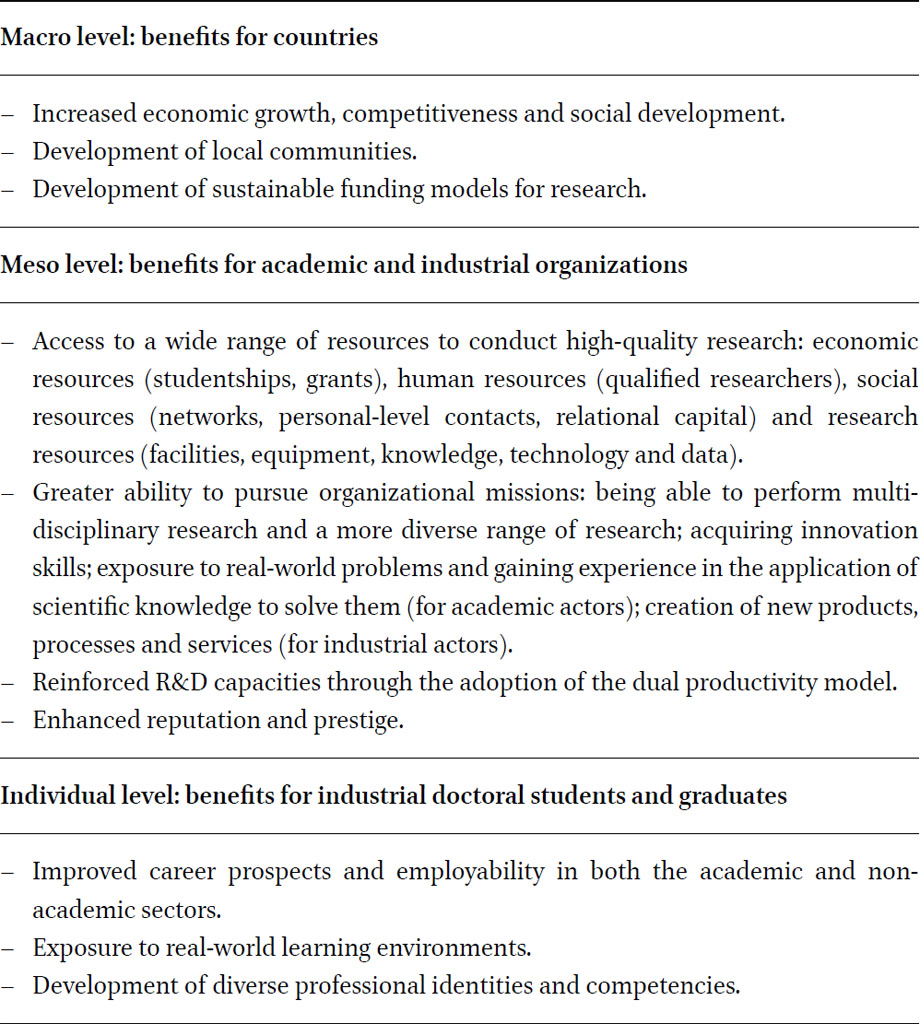
There is a consensus among authors that these programmes generate multiple benefits for all the actors involved (Bernhard and Olsson, 2023; Bröchner and Sezer, 2020; Celis and Acosta, 2016; Germain-Alamartine and Moghadam- Saman, 2020; Kunttu et al., 2018; Thune and Børing, 2014; Yang, 2022). Table 1 summarizes the main benefits mentioned in the literature reviewed, classifying them according to the level at which they make an impact (country, organisation, or individual). The analysis of these benefits shows that IDPTs have the potential to consolidate and expand the Triple Helix in two ways. At the meso-level, the implementation of IDTPs entails internal transformations in organisations that will help them to continue “taking the role of the other” in the future (Etkowitz, 2008). At the micro-level, IDTPs contribute to preparing the next generation of Triple Helix workers (Thune, 2010).

Summary of the benefits of IDTPs according to the available literature
Citation: Triple Helix 12, 2 (2026) ; 10.1163/21971927-bja10062
Based on Bernhard and Olsson (2023); Bröchner and Sezer (2020); Celis and Acosta (2016); Germain-Alamartine and Moghadam-Saman (2020); Kunttu et al. (2018); Thune and Børing (2014); Yang (2022). Authors’ own work.Despite their clear benefits, however, many authors warn of the potential conflicts that can arise between the industrial and academic partners involved in IDTPs. Some common tensions include concerns about how to use the knowledge produced (publishing or protecting it) during an IDTP or how to plan and schedule research tasks (Tavares et al., 2020b). These issues undoubtedly reflect the differences in organisational culture that still persist between universities and industries as well as underlying power struggles between partners (Levy, 2005; Wallgren and Dahlgren, 2007). Furthermore, the highly competitive and constantly evolving market environment in which businesses must operate means that it is difficult for them to assure a stable learning environment for students to conduct a long-term research project and, frequently, changes must be made to their original training offer (Wallgren and Dahlgren, 2007).
3 Methodology
This exploratory study examines the Spanish Industrial Doctoral Training Programme (SIDTP) that has been in place since 2014. To this end, we analyse quantitative and qualitative secondary data from a variety of sources.
In the first place, a general description of the SIDTP is presented providing an overview of its main objectives and characteristics. We will also discuss the relevance of this type of doctoral training programme in the Spanish context. Specifically, the nature of the programme’s grants awarding process is examined and an analysis is made of a selection of key indicators from official statistical sources (primarily EUROSTAT and the Spanish National Institute of Statistics [Instituto Nacional de Estadística, INE]).
Secondly, the programme’s funding record is analysed for the period 2014–2022 to show the innovative input provided by government. Specifically, we report the number of grants awarded, the mean and median values of awards and their distribution across Spain’s Autonomous Communities. This analysis relies on data published on the State Research Agency [Agencia Estatal de Investigación, AEI] website.
Finally, a detailed analysis is made regarding the programme’s first funding round (2014) and its cohort of industrial partners (businesses) and doctoral candidates.2 This analysis is separated into three parts beginning with the definition of a set of principal landmarks for this first cohort and an exploration of industry participation in the programme. This last is achieved using a graphic to show the flow of businesses into the programme as well as their continuity in or departure (drop-out) from it. This enables the identification of four types of outcomes related to the completion of the programme and thesis defence that could be considered as the innovative outputs fostered by collaboration among Triple Helix actors. Secondly, each case (where a case is defined as a grant awarded) is classified in terms of one of the types of outcomes identified. Thirdly, cases are profiled with respect to the characteristics of the industrial partner (the innovation capacities of the region where their business is located and its size), the grant awarded (research area, project type and whether or not the project involved collaboration with other organisations) and the doctoral candidate (sex, country of birth, age at the start of the programme) involved. This final part of the analysis used administrative data collected from the AEI concerning grant management (principally, the grant awards database and the statistical indicators concerning results reported by businesses awarded with a training grant). These data were formally requested from AEI and a statement of intent was signed to the effect that these data would be used confidentially and only for the purposes of this study.
4 Results
4.1 The Spanish Industrial Doctoral Training Programme
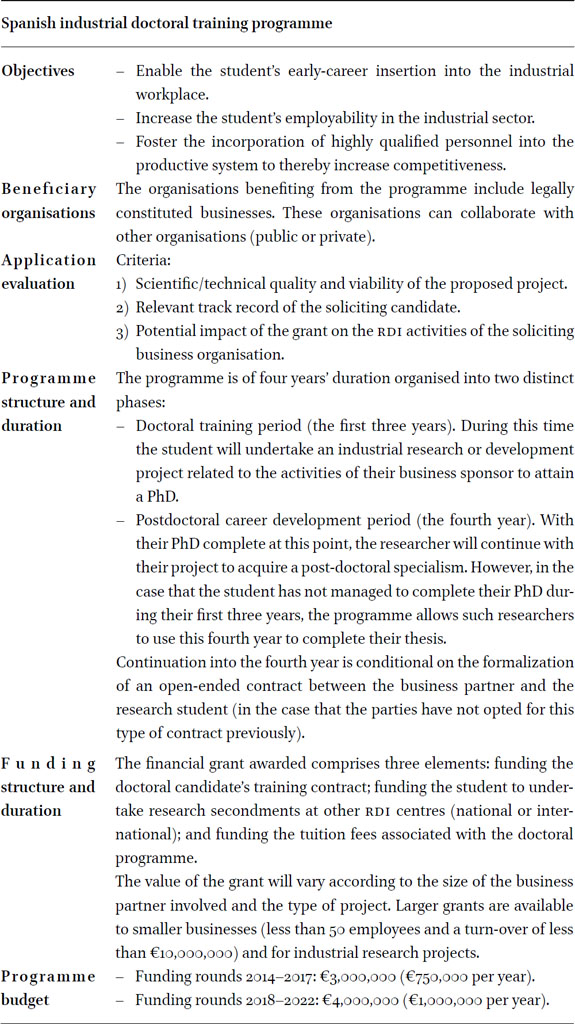
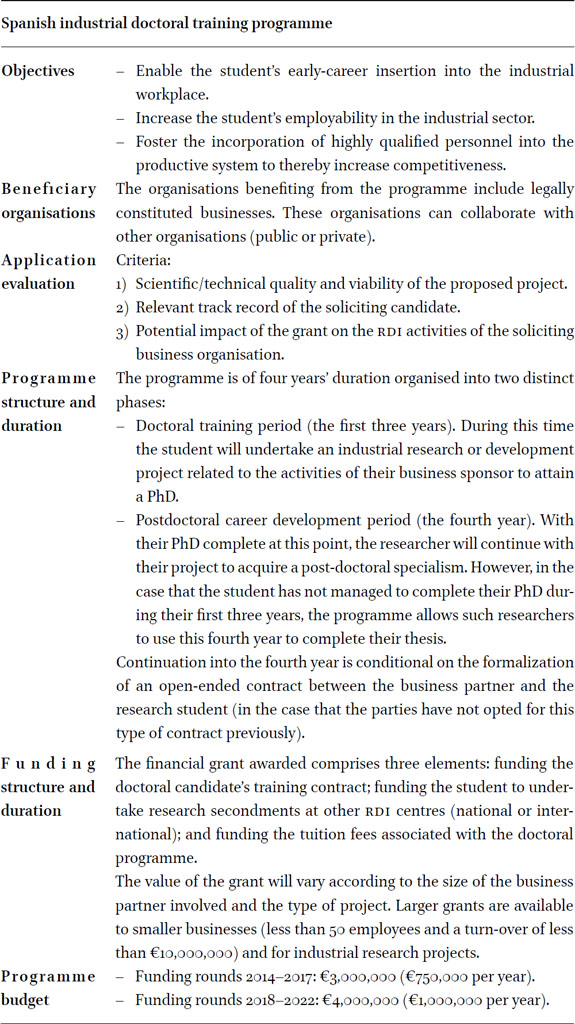
Since 2014, the Spanish government has organised the annual award of financial grants to train researchers in industry under the Spanish Industrial Doctoral Training Programme (SIDTP). This programme has been incorporated in the training strand of successive State Plans for Scientific and Technical Research and Innovation and the concession of grants is managed by the Agencia Estatal de Investigación. Grants are awarded on a competitive basis with eligible industrial partners offering students a range of benefits in exchange for funding to cover part of the costs of a four-year doctoral training period. Successful industrial partners are expected to contract a student as a doctoral candidate and full-time researcher for the period of the grant. The student’s part in the contract is to complete an industrial research or development project and successfully defend a doctoral thesis. It is a requirement of the programme that the research project undertaken not only contributes to enhancing the industrial partner’s RDI activities but also provides the doctoral candidate with professional skills that will improve their employability in a variety of sectors. Table 2 summarises the objectives of the SIDTP and describes its main features.
The SIDTP: main objectives and features
Citation: Triple Helix 12, 2 (2026) ; 10.1163/21971927-bja10062
Source: First funding round for the Spanish Industrial Doctorate Training Programme, published in the Official State Bulletin. Authors’ own workThe SIDTP constitutes an instrument designed to address a range of structural problems that, traditionally, have hampered competitiveness in the Spanish economy. These problems include a productive system containing a low percentage of innovative businesses (especially SMBs); regional inequalities in terms of innovation systems; the existence of multiple barriers to innovation; and imbalances in the labour market for university graduates.
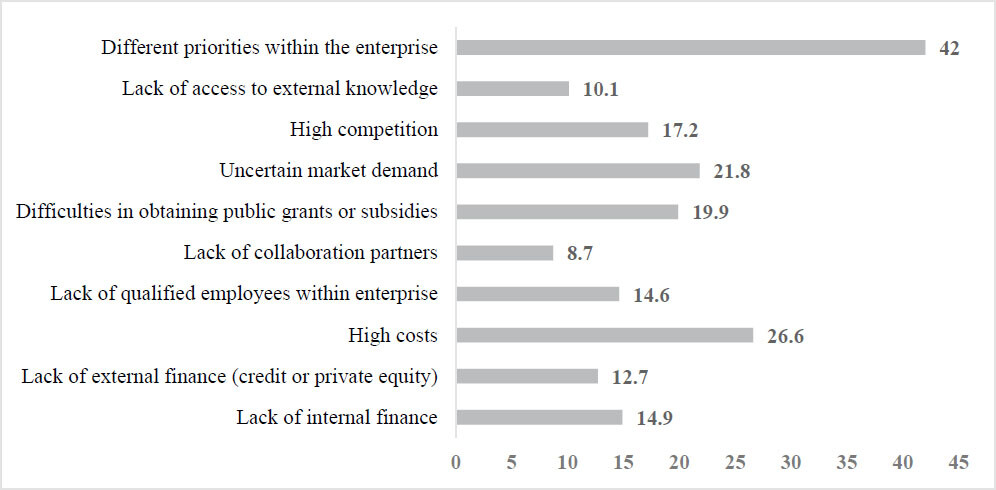
According to data from the Community Innovation Survey (EUROSTAT, 2022), 52.7% of businesses operating in the EU-27 stated that they had completed some form of innovation activity in the period 2018–2020. However, considering only those businesses based in Spain, this percentage is 33.4% which is one of the lowest recorded. As can be seen in Figure 1, 42% of Spanish businesses felt that the lack of innovation was due to the business having other priorities while 26.6% thought it was down to the high costs of innovation, another 21.8% stated that it was a result of uncertainty in market demand. A factor related to the objectives of the SIDTP concerns the lack of qualified personnel with 14.6% of business stating that this was a reason for their failure to innovate. This finding highlights the existence of a gap between the training provided by the educational system and the needs of business and industry (the productive system).
Barriers to innovation in Spanish Industry (% of responses)
Citation: Triple Helix 12, 2 (2026) ; 10.1163/21971927-bja10062
Source: EUROSTAT: Community Innovation Survey, 2018–2020. Authors’ own workData from the Encuesta sobre Innovación en las Empresas (INE, 2020a), a survey of innovation activities in Spanish businesses, highlights how the level of innovation activities varies depending on a business’s size, economic sector and the Autonomous Community where it is based. Concerning business size, fewer smaller businesses invest in innovation than do larger ones: in 2020, 10.6% of small (less than 49 employees) businesses invested in innovation compared to 25.7% of medium-sized (between 40 and 249 employees) businesses and 38.7% of large (more than 250 employees) businesses. Bearing in mind that innovation is fundamental to business survival in our ever more complex, competitive and volatile modern markets (Kunttu et al., 2018), these findings are concerning as they reflect the barriers to innovation experienced by SMBs (99% of businesses in Spain). This was one of the problems the SIDTP was intended to address, specifically, by providing Spanish businesses – especially SMBs – with the necessary resources to enhance their RDI capabilities. The ultimate intention being, then, to develop a more innovative business culture in Spain and ensure that Spanish industry can rely on sufficient highly qualified human capital adapted to its particular strategic needs.
4.2 The Distribution of Grants Awarded under the SIDTP
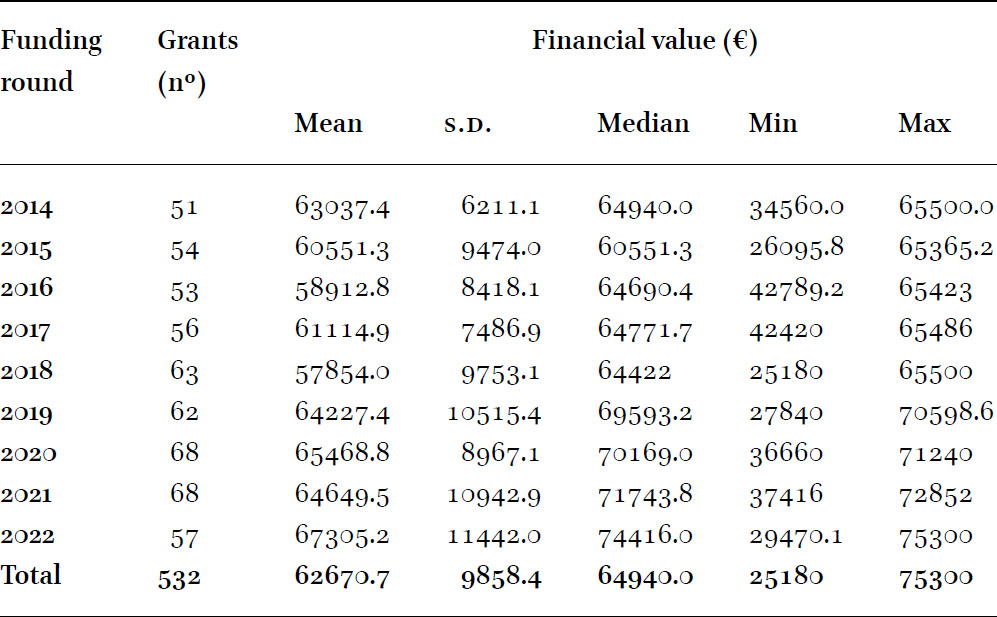
During the period 2014–2022, the Spanish government awarded 532 grants to 418 different businesses, this implies that an average of 59 grants each with a mean value of €62,670 (15,667.5 €/year) were awarded in every funding round (Table 3). That the number of businesses benefiting from these grants is fewer than the number of grants awarded is due to the fact that 80 businesses participated in at least two funding rounds during the period studied. In the nine funding rounds analysed, 23 businesses were identified as high-level participants: 17 businesses received 3 grants; 4 received 4 grants while 2 benefitted from a total of 5 or more grants (one achieved 8 grants). With respect to the value of grants awarded, while the mean value is relatively high, attention should be paid to the maximum and minimum values of awards. These figures demonstrate the considerable variation in financial assistance received by participating businesses. Referring to Table 3, there is a general increase in the number of grants awarded in each consecutive year (and in the corresponding average value of the grant award); the large uptick in grants seen in 2018 may be explained by the fact that this coincides with a rise in the budget allocated to the SIDTP (from €3,000,000 to €4,000,000).
Number of grants awarded and their financial value during the period 2014–2022
Citation: Triple Helix 12, 2 (2026) ; 10.1163/21971927-bja10062
Source: AEI website. Authors’ own workFinally, it is worth mentioning that 66.4% of grants were awarded to businesses located in the following Autonomous Communities: Comunidad de Madrid (19.4%); Cataluña (19%); Comunidad Valenciana (14.3%); and Andalucía (13.7%). These four Autonomous Communities are where 61.2% of Spain’s businesses are located, these businesses being responsible for 71.1% of all innovation investment in 2020 (INE, Directorio Central de Empresas, 2020b; Encuesta sobre Innovación en las Empresas, 2020a).
4.3 Analysis of the SIDTP’s First Funding Round and Initial Cohort of Participants
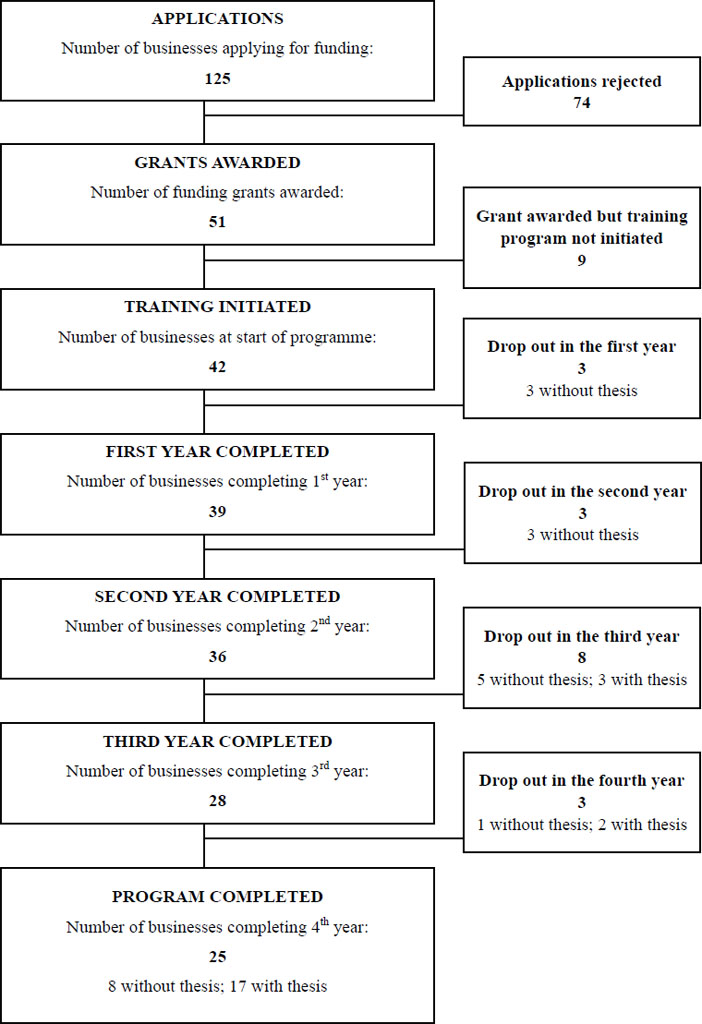
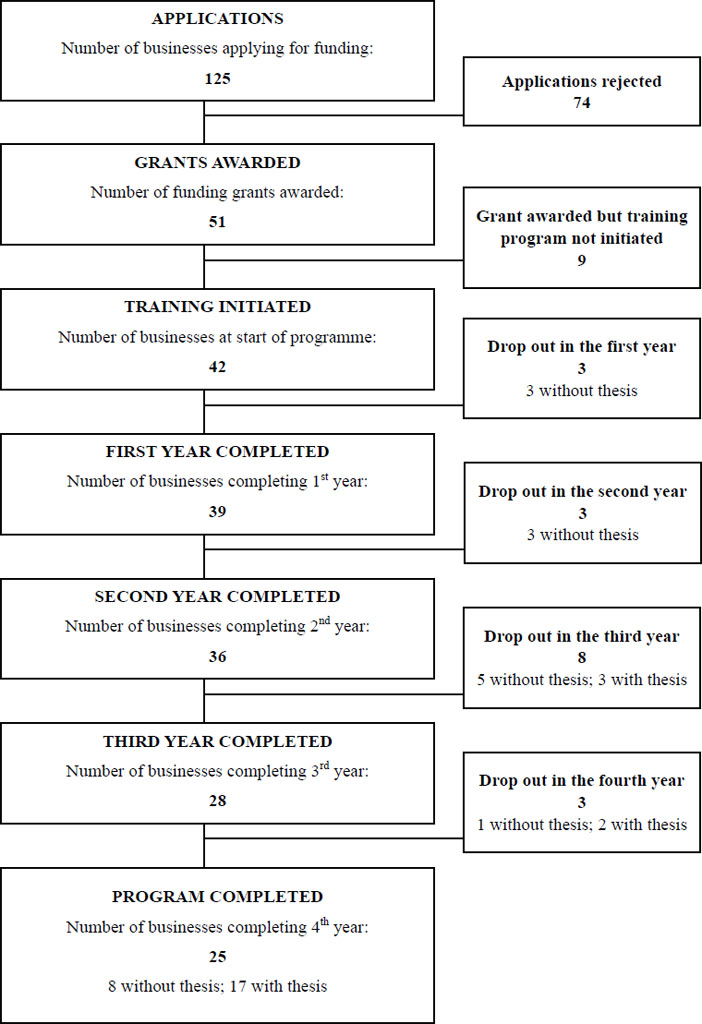
Figure 2 shows the flow of industrial partners into and out of the different phases of the programme from its first year (2014) onwards, that is, from the point at which businesses applied to participate to the end of the four years’ training programme.
Schematic representation of industrial participation in the SIDTP (2014)
Citation: Triple Helix 12, 2 (2026) ; 10.1163/21971927-bja10062
Source: Administrative data collected by AEI. Authors’ own workReferring to Figure 2, there are four observations of interest. Firstly, of the 125 grant applications, 51 were successful (40.8%). Secondly, 9 businesses that were successful in the application process failed to go on to complete the requisite paperwork to start the programme. One possible reason for this is that, during the ten-month grant evaluation process either the industrial partner or the doctoral candidate may have experienced a change of circumstances. Thirdly, only 25 of the businesses who received grants went on to successfully complete the full four-year programme as envisaged. This demonstrates that the SIDTP’s first cohort suffered a significant drop-out rate. That the drop-out rate is most pronounced in the third year of the programme may reflect the fact that this is the point at which businesses are expected to offer their doctoral candidates an open-ended contract (where this has not already happened) to obtain the fourth year of funding. Finally, a total of 22 students (52%) produced and defended a thesis by the end of the programme.
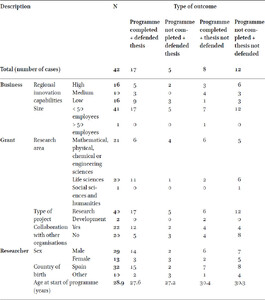
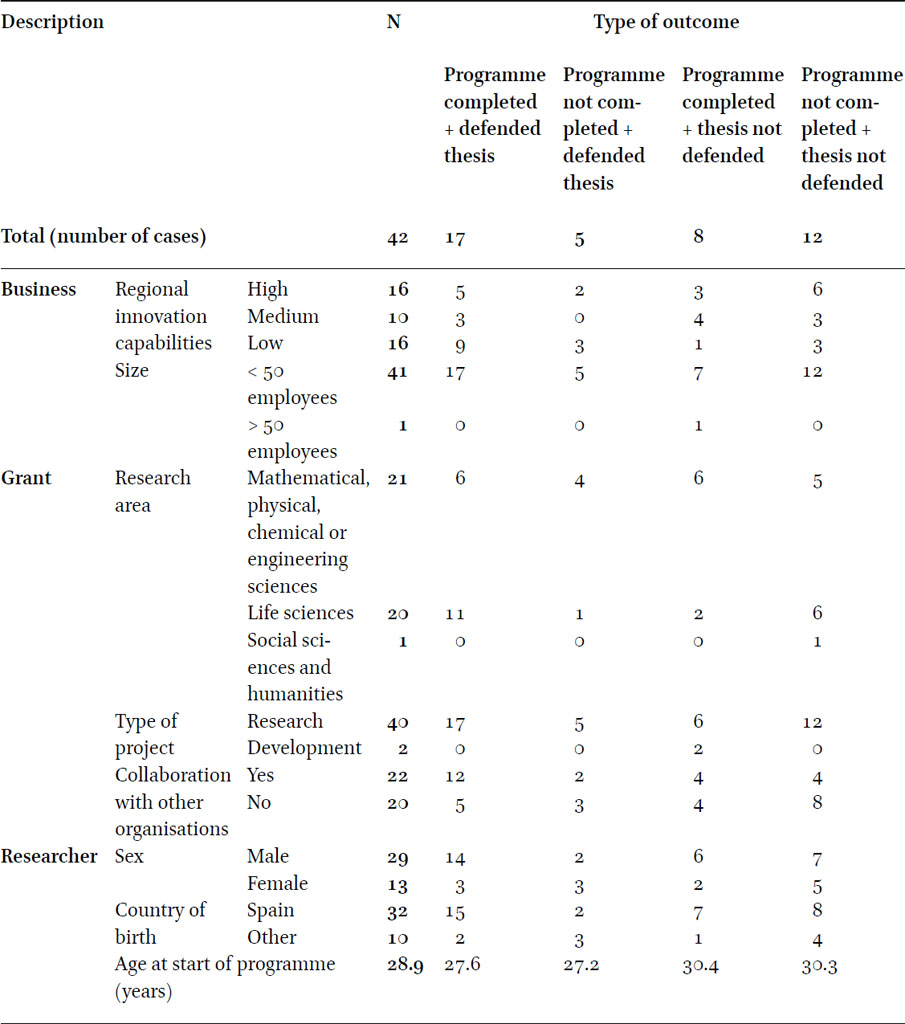
The above description of the SIDTP’s implementation enables the definition of four possible outcomes based around two key indicators: 1) completion, or not, of the programme and 2) production and defence, or not, of a doctoral thesis during the programme. Table 4 summarises the classification of all 42 cases in the programme’s first cohort in terms of the four outcomes defined and profiles each one according to the features of the business in receipt of the grant, the grant awarded and the researcher in training.
Cases in the SIDTP’s first cohort: Description and classification in terms of outcome
Citation: Triple Helix 12, 2 (2026) ; 10.1163/21971927-bja10062
Source: Administrative data collected by AEI. Authors’ own workWith respect to the classification of outcomes, the following distribution is observed for the 42 cases: 17 cases with outcome 1 (completing programme and defending a doctoral thesis); 5 cases with outcome 2 (not completing the programme but defending a doctoral thesis); 8 cases with outcome 3 (completing the programme but not defending a doctoral thesis); and 12 cases with outcome 4 (not completing the programme and not defending a doctoral thesis).
Concerning the profiles of the various cases, here there are certain trends requiring exploration in future research. First, the size and location of the businesses in receipt of grants appear not to affect the type of outcome. This suggests that other factors are at work, such as the organisational culture, the types of innovation undertaken, the innovation strategies pursued, or the modes of organising RDI within the business. Second, the data show that there is a relationship between outcome and the variables research area and collaboration with other organisations. In this respect, for grants awarded in the life sciences (these were, in fact, principally agricultural and biomedical sciences) there is a higher incidence of outcome 1 (completing the programme and defending a thesis) and this outcome is also more likely in cases where the grant holding business collaborates with other organisations. Finally, the majority of researchers in training in this first cohort were male (69%) and born in Spain (76.2%). Furthermore, it seems that younger researchers were more likely to defend a thesis than older candidates.
Finally, Table 4 also shows that 97.6% of the businesses in the SIDTP’s first cohort were SMBs and 95.2% of these used the grant to embark on an industrial research project. In other words, only one of the businesses included in the first cohort had more than 50 employees and only two used the grant to pursue an industrial development project.
5 Discussion
The objective of this section is to examine and interpret our study results from a Triple Helix perspective. Thus, it is pertinent to ask whether or not the design and implementation of the SIDTP represents an example of a cooperative policy tool, that is, does it encompass the five aspects of the ideal Triple Helix (Cai and Etkowitz, 2020).
First, it is clear that the SIDTP is clearly in keeping with the first aspect in that each grant assigned under the SIDTP has the potential to generate a triadic interaction between the Triple Helix’s three institutional spheres. The foundation of this triad is the Spanish government which, through the AEI, defines the process exerting normative control (its primary function) over the design, implementation, monitoring and evaluation processes of the SIDTP. The AEI interacts with businesses that are awarded grants under the programme cofinancing the costs of a researcher’s doctoral training. Furthermore, beyond maintaining close relations with businesses, the AEI receives the help of a commission of experts from several fields to select industrial partners and to provide follow-up regarding the technical/scientific progress of the projects it funds.
With respect to industrial partners in the SIDTP, these collaborate with both of the other two helices throughout the programme implementation period. On the one hand, they must follow the rules set out by the AEI to first secure funding and then ensure its continuation over the four years of the programme. On the other, every industrial partner will interact with at least one university in the provision of doctoral training. Of course, within this process, businesses still maintain their primary function of wealth creation.
Finally, universities preserve their main role as generators of knowledge. In particular, these institutions are responsible for the academic development of researchers inducted into the SIDTP and also ensuring that the doctoral thesis produced by the programme are both beneficial to the industrial partners involved and of sufficient scientific merit (Thune, 2009).
That the triadic interaction seen in the processes of the SIDTP is pre- structured and coordinated by the AEI is in keeping with the third aspect. Evidence of the fourth aspect can be seen in the way the top-down nature of the AEI’s coordination of the programme is then complemented by the bottom-up initiatives instigated by industrial partners and universities to guarantee the adequate training of their researchers. In this way, while the AEI defines the rules of the game, businesses have the autonomy to choose the other actors involved in the programme: their researchers and partner universities.
Regarding the Triple Helix model’s second aspect, the SIDTP enables businesses to perform a role traditionally reserved for universities (the training of a new generation of researchers) while maintaining their primary role as wealth creators and their distinctive characteristics (Etkowitz, 2008). This mechanism of “taking the role of the other” feeds back into the system in the way that the SIDTP, like other similar programmes, aims to create a new generation of Triple Helix workers: bridge builders able to link knowledge and innovation spaces (Thune, 2010; Bernhard and Olsson, 2023).
Finally, with respect to the fifth aspect, we observe the presence of both enabling conditions mentioned by Cai and Etkowitz (2020): the sufficient condition of convening authority and the necessary condition of innovation capacity. Concerning the first condition, the leadership is provided by the AEI due to its position in the institutional framework and its role in coordinating the programme. Regarding the second condition, its fulfilment is ensured by the commission of experts charged with evaluating the merits of each grant application both at the initial selection stage and during the scientific/technical follow-up phases.
Turning to the detailed examination of the SIDTP’s first cohort outcomes, our key indicators show low rates of programme completion and thesis defence. Specifically, of the 51 grants awarded in the first funding round, only 42 industrial partners went on to start the programme. Of these, just 22 projects produced a thesis within the programme’s four-year duration. These results suggest that there is room for improvement in the way SIDTP is implemented to increase its efficiency, especially to reduce student drop-out rate, a challenge also faced by universities offering traditional doctorates (Glorieux et al., 2024). Noteworthily, these authors highlight that the drop-out of doctorate programmes incurs costs and losses at different levels: the financial loss to the State, the social loss in terms of wasted knowledge and talent, and, finally, the psychological and opportunity costs for researchers.
6 Conclusion
Knowledge is a strategic resource and its production, diffusion and application in innovation systems requires collaboration between universities, industries and governments (Etzkowitz and Leydesdorff, 2000). Governments are able to draw on a wide range of expertise and resources putting them in a unique position to successfully regenerate the sources of productivity in RDI through new forms of cooperative relations (Etzkowitz, 2008). The implementation of Industrial Doctoral Training Programmes (IDTPs) through public policy is an integral part of this process (Celis and Acosta, 2016; Tavares et al., 2020a; Thune, 2009, 2010; Yang, 2022). IDTPs not only provide students with a set of professional skills that enhance their employability in a variety of sectors allowing them to act as bridge builders, but they also contribute to reinforcing the innovation capabilities and increasing the relational capital of businesses.
The Spanish Industrial Doctoral Training Programme (SIDTP) has been designed according to the Principles of Innovative Doctoral Training proposed by the European Commission (2011) and the recommendations of academics, and it has been tailored to the particular context of Spain. As a result, this programme is largely directed towards SMBs and gives priority to research that not only addresses real-world industrial problems and challenges but also incentivises innovation in the long-term within the businesses involved. Unfortunately, despite the quality of the SIDTP design, analysis of the outcomes of its first cohort shows a high drop-out rate and a low number of PhD theses completed. These issues have already been identified and measures are in place (Gobierno de España, 2023). In the last call, major changes have been introduced in its design and the budget has been duplicated (from €4,000,000 to €8,000,000) to improve the outcomes achieved and to reach more businesses. As a result, the programme has evolved to overcome the difficulties detected in each round.
The results presented here contribute to the growing literature on IDTPs, albeit with a particular focus on the unique context of the Spanish case. According to Compagnucci and Spigarelli (2024), characterising individual programmes is essential to identifying general good practice in terms of their design, implementation and evaluation. Furthermore, this work also provides some valuable contributions to Triple Helix research since it describes a cooperative policy whose implementation requires the interaction of the three helices. In addition, our analysis of the indicators commonly used by universities to assess their doctoral programmes could be of interest in advancing the operationalisation of the Triple Helix model.
However, it is necessary to recognise that this study has several limitations. First, its methodology does not allow for the description of interactions between actors – individuals or organisations – in each institutional sphere. It is not, therefore, possible to make any microsocial analysis of the functions that each sphere performs within the framework of the SIDTP. Second, while the use of data provided by the AEI has enabled us to gain a detailed picture of the SIDTP’s functioning (both in terms of its implementation process and the outcomes of the first funding round), it provides a somewhat one- dimensional picture. It must be understood that the purpose of data collection in this regard is to manage and monitor grants, thus, as a result it omits many variables that might be of interest to explore factors influencing programme outcomes. Third, due to the small number of industrial partners inducted into the first cohort of the SIDTP, it was not possible to employ any bivariate or multivariate statistical analysis. For this reason, the quantitative results presented here are descriptive rather than explicative.
To address these limitations, we propose a new multi-method research project should be designed and implemented. The first phase of this new research will involve the use of quantitative and qualitative methods integrated into a mixed methods sequential design. This will enable an assessment of whether trends seen in data from the SIDTP’s first cohort are reproduced in subsequent cohorts as well as the identification of additional factors affecting outcomes (for example, the organisational and innovation cultures of businesses, the internal organisation of their RDI activities, the degree to which they collaborate with other organisations and the role of supervisors).3 The second phase will use Qualitative Comparative Analysis (QCA) to identify combinations of conditions that are necessary and/or sufficient to produce different outcomes.
Finally, this work points to a set of recommendations for improving the SIDTPs’ design. Firstly, it is fundamental to encourage real rather than formal collaboration (at the personal and organisational level) between universities and businesses. While the results of this work cannot be entirely conclusive, it seems that, of the businesses involved in the SIDTP, those that engaged in collaboration with other organisations (public or private) had greater success. As other authors point out, the joint affiliation (with joint supervision) of student researchers is one of the active ingredients in the functioning of this kind of training programme (Gustavsson et al., 2016; Levy, 2005; Tavares et al., 2020b; Wallgren and Dahlgren, 2005, 2007).
Secondly, it is necessary to broaden the range of organisations that can participate in the scheme to include, for example, public administration and students from non-STEM backgrounds (something which has already been considered in the SIDTP’s most recent funding round). In this regard, COFRA (Conventions de Formation par la Recherche en Administration), put in place by the French government from 2022, could be used as a point of reference (OECD, 2023). Finally, it is essential to introduce mechanisms to make the programme’s implementation process more flexible and steps have already been taken in this direction with successive cohorts. As Wallgren and Dahlgren (2005) note, businesses operate in an environment that is competitive, complex and changeable which makes it difficult for them to guarantee stable conditions for long-term research projects such as a PhD. As a result, doctoral training needs to be adapted to the unique conditions of the industrial sector; however, this must be done without compromising the quality of the results.
Acknowledgments
The authors are grateful to the State Research Agency [Agencia Estatal de Investigación, AEI] for its cooperation with the transfer of administrative data for analysis and with its continuous support. We sincerely thank and acknowledge Rosario Truchado for technical assistance with the collection and analysis of administrative data of the SIDTS’s first funding round. Finally, the authors would like to thank Hebe Powell (ORCID ID: 0000-0003-4187-4946) and the Servicio de Traducción de la Fundación General de la Universidad de León y de la Empresa for their assistance with the translation and editing of this article.
Declaration of Conflicting Interest
The authors declared no potential conflicts of interest with respect to the research, authorship, and/or publication of this article.
Funding Statement
The authors received no financial support for the research, authorship, and/or publication of this article.
References
Arora, A., and Gambardella, A. (1997). Public policy towards science: picking stars or spreading the wealth? Revue d’économie industrielle 79(1), pp. 63–75. https://doi.org/10.3406/rei.1997.1653.
Bernhard, I., and Olsson, A.K. (2023). One foot in academia and one in work-life – the case of Swedish industrial PhD students. Journal of Workplace Learning 35(6), pp. 506–523. https://doi.org/10.1108/jwl-11-2022-0157.
Bröchner, J., and Sezer, A.A. (2020). Effects of construction industry support for PhD projects: the case of a Swedish scheme. Industry and Higher Education 34(6), pp. 391–400. https://doi.org/10.1177/0950422220904932.
Cai, Y. (2022). Neo-Triple Helix Model of Innovation Ecosystems: Integrating Triple, Quadruple and Quintuple Helix Models. Triple Helix 9(1), pp. 76–106. https://doi.org/10.1163/21971927-bja10029.
Cai, Y., and Amaral, M. (2021). The Triple Helix Model and the Future of Innovation: A Reflection on the Triple Helix Research Agenda. Triple Helix 8(2), pp. 217–229. https://doi.org/10.1163/21971927-12340004.
Cai, Y., and Amaral, M. (2022). Triple Helix Model of Innovation: From Boundaries to Frontiers. Triple Helix 9(2), pp. 107–117. https://doi.org/10.1163/21971927-12340007.
Cai, Y., and Etzkowitz, H. (2020). Theorizing the Triple Helix model: Past, present, and future. Triple Helix 7(2–3), pp. 189–226. https://doi.org/10.1163/21971927-bja10003.
Cai, Y., and Lattu, A. (2021). Triple Helix or Quadruple Helix: Which Model of Innovation to Choose for Empirical Studies? Minerva, 60(2), pp. 257–280. https://doi.org/10.1007/s11024-11021-09453-09456.
Cardoso, S., Tavares, O., and Sin, C. (2019). Can you judge a book by its cover? Industrial doctorates in Portugal. Higher Education, Skills and Work-Based Learning 9(3), pp. 279–289. https://doi.org/10.1108/heswbl-05-2018-0056.
Celis, J., and Acosta, O. (2016). Industrial Ph.D. programs for the strengthening of the industry’s production of innovation in Colombia. Innovar 26(62), pp. 129–146. https://doi.org/10.15446/innovar.v26n62.59393.
Compagnucci, L., and Spigarelli, F. (2020). The Third Mission of the university: A systematic literature review on potentials and constraints. Technological Forecasting and Social Change 161(120284). https://doi.org/10.1016/j.techfore.2020.120284.
Compagnucci, L., and Spigarelli, F. (2024). Industrial doctorates: a systematic literature review and future research agenda. Studies in Higher Education, pp. 1–28. https://doi.org/10.1080/03075079.2024.2362407.
Enders, J. (2005). Border crossings: research training, knowledge dissemination and the transformation of academic work. Higher Education 49(1/2), pp. 119–133.
Etzkowitz, H. (1998). Triple Helix of innovation: introduction. Science and Public Policy 25(6), pp. 358–364. https://doi.org/10.1093/spp/25.6.358.
Etzkowitz, H. (2008). The Triple Helix: university-industry-government innovation in action. New York: Routledge.
Etzkowitz, H., and Leydesdorff, L. (2000). The dynamics of innovation: from National Systems and “Mode 2” to a Triple Helix of university–industry–government relations. Research Policy 29(2), pp. 109–123. https://doi.org/10.1016/s0048-7333(99)00055-4.
European Commission (2011). Principles for Innovative Doctoral Training.
EUROSTAT (2022). Community Innovation Survey, available at https://ec.europa.eu/eurostat/web/microdata/community-innovation-survey (accessed 05 October 2024).
Germain-Alamartine, E., and Moghadam-Saman, S. (2020). Aligning doctoral education with local industrial employers’ needs: a comparative case study. European Planning Studies 28(2), pp. 234–254. https://doi.org/10.1080/09654313.2019.1637401.
Glorieux, A., Spruyt, B., Minnen, J., and van Tienoven, T.P. (2024). Calling it quits: a longitudinal study of factors associated with dropout among doctoral students. Studies in Continuing Education pp. 1–19. https://doi.org/10.1080/0158037x.2024.2314694.
Gobierno de España (2023). Plan de Acción Doctorados Industriales en España. Ministerio de Ciencia e Innovación y Ministerio de Universidades.
Grant, B., Nerad, M., Balaban, C., Deem, R., Grund, M., Herman, C., Mrčela, A.K., Porter, S., Rutledge, J., and Strugnell, R. (2022). The doctoral-education context in the twenty-first century: change at every level. In: M. Nerad, D. Bogle, U. Kohl, C. O’ Carroll, C. Peters and B. Scholz, eds., Towards a Global Core Value System in Doctoral Education, London: UCL Press, pp. 18–42.
Groenvynck, H., Vandevelde, K., and Van Rossem, R. (2013). The PhD track: Who succeeds, who drops out? Research Evaluation 22(4), pp. 199–209. https://doi.org/10.1093/reseval/rvt010.
Gustavsson, L., Nuur, C., and Söderlind, J. (2016). An Impact Analysis of Regional Industry – University Interactions. Industry and Higher Education 30(1), pp. 41–51. https://doi.org/10.5367/ihe.2016.0291.
INE (2020a). Encuesta sobre Innovación en las Empresas, available at Access to metadata (accessed 05 October 2024).
INE (2020b). Directorio Central de Empresas, available at Access to metadata (accessed 05 October 2024).
Jovanović, M., Savić, G., Cai, Y., and Levi-Jakšić, M. (2022). Towards a Triple Helix based efficiency index of innovation systems. Scientometrics 127(5), pp. 2577–2609. https://doi.org/10.1007/s11192-022-04304-x.
Kehm, B.M. (2007). Quo vadis doctoral education? New European approaches in the context of global changes. European Journal of Education 42(3), pp. 307–319. https://doi.org/10.1111/j.1465-3435.2007.00308.x.
Kunttu, L., Huttu, E., and Neuvo, Y. (2018). How Doctoral Students and Graduates Can Facilitate Boundary Spanning between Academia and Industry. Technology Innovation Management Review 8(6), pp. 48–54. https://doi.org/10.22215/timreview/1164.
Lam, A. (2007). Knowledge Networks and Careers: academic scientists in industry–university links. Journal of Management Studies 44(6), pp. 993–1016. https://doi.org/10.1111/j.1467-6486.2007.00696.x.
Levy, R. (2005). Les doctorants CIFRE : médiateurs entre laboratoires de recherche universitaires et entreprises. Revue d’économie industrielle 111(1), pp. 79–96. https://doi.org/10.3406/rei.2005.3083.
Leydesdorff, L. (2012). The Triple Helix, Quadruple Helix, …, and an N-Tuple of Helices: Explanatory Models for Analyzing the Knowledge-Based Economy? Journal of the Knowledge Economy 3(1), pp. 25–35. https://doi.org/10.1007/s13132-011-0049-4.
Leydesdorff, L., and Lawton Smith, H. (2022). Triple, Quadruple, and Higher-Order Helices: Historical Phenomena and (Neo-)Evolutionary Models. Triple Helix 9(1), pp. 6–31. https://doi.org/10.1163/21971927-bja10022.
Muscio, A. (2009). What drives the university use of technology transfer offices? Evidence from Italy. The Journal of Technology Transfer 35(2), pp. 181–202. https://doi.org/10.1007/s10961-10009-9121-9127.
OECD (2023). Promoting diverse career pathways for doctoral and postdoctoral researchers. OECD Science, Technology and Industry Policy Papers 158. Paris: OECD Publishing. https://doi.org/10.1787/dc21227a-en.
Park, C. (2005). New Variant PhD: The changing nature of the doctorate in the UK. Journal of Higher Education Policy and Management 27(2), 189–207. https://doi.org/10.1080/13600800500120068.
Partha, D., and David, P.A. (1994). Toward a new economics of science. Research Policy 23(5), pp. 487–521.
Roberts, A.G. (2018). Industry and PhD engagement programs: inspiring collaboration and driving knowledge exchange. Perspectives: Policy and Practice in Higher Education 22(4), pp. 115–123. https://doi.org/10.1080/13603108.2018.1456492.
Roolaht, T. (2015). Enhancing the Industrial PhD Programme as a Policy Tool for University – Industry Cooperation. Industry and Higher Education 29(4), pp. 257–269. https://doi.org/10.5367/ihe.2015.0259.
Tavares, O., Sin, C., Cardoso, S., and Soares, D. (2019). Are industrial doctorates capable of overcoming skills mismatch? EDULEARN 19 Proceedings, https://doi.org/10.21125/edulearn.2019.0805.
Tavares, O., Sin, C. and Soares, D. (2020a). Building bridges between industry and academia: what is the profile of an industrial doctorate student? In: S. Cardoso, O. Tavares, C. Sin, and T. Carvalho, eds., Structural and Institutional Transformations in Doctoral Education: Social, Political and Student Expectations. Issues in Higher Education, Cham: Palgrave Macmillan, pp. 347–373. https://doi.org/10.1007/978-3-030-38046-5_12.
Tavares, O., Soares, D., and Sin, C. (2020b). Industry–university collaboration in industrial doctorates: a trouble-free marriage? Industry and Higher Education 34(5), pp. 312–320. https://doi.org/10.1177/0950422219900155.
Thune, T. (2009). Doctoral students on the university–industry interface: a review of the literature. Higher Education 58, pp. 637–651. https://doi.org/10.1007/s10734-009-9214-9210.
Thune, T. (2010). The training of “Triple Helix workers”? Doctoral students in university–industry–government collaborations. Minerva 48, pp. 463–483. https://doi.org/10.1007/s11024-010-9158-7.
Thune, T., and Børing, P. (2014). Industry PhD schemes: developing innovation competencies in firms? Journal of the Knowledge Economy 6, pp. 385–401. https://doi.org/10.1007/s13132-13014-0214-0217.
Wallgren, L., and Dahlgren, L.O. (2005). Doctoral education as social practice for knowledge development: conditions and demands encountered by industry PhD students. Industry and Higher Education 19 (6), pp. 433–443. https://doi.org/10.5367/000000005775354446.
Wallgren, L., and Dahlgren, L.O. (2007). Industrial doctoral students as brokers between industry and academia: factors affecting their trajectories, learning at the boundaries and identity development. Industry and Higher Education 21 (3), pp. 195–210. https://doi.org/10.5367/000000007781236871.
Yang, H. (2022). A Triple Helix Model of Doctoral Education: a case study of an Industrial Doctorate. Sustainability 14 (17), pp. 10942. https://doi.org/10.3390/su141710942.
RDI: Research, Development and Innovation.
This study considers two distinct time frames. On the one hand, we consider the period 2014–2022 to evaluate how the programme patterns of grant financing have evolved since the beginning. These might be termed the programme’s inputs. On the other hand, we look at participation in the programme focussing on the first cohort (grants awarded in 2014) to assess the programme’s rates of completion and successful thesis defence. These would be termed the programme’s outputs. It is necessary to highlight that the duration of doctoral training is four years and, in the particular case considered (the SIDTP’s first cohort), this period starts from 2015, when the first grants were initialised, and ends in May 2020, when the last of these first grants terminated.
Considering the first cohort of SIDTP participants has enabled us to establish a base-line which provides a reference for comparisons with the results of subsequent cohorts.