Abstract
This study examines interfaith approaches to fire mitigation in Indonesia in the context of climate change, focusing on Islamic and Confucian perspectives. The Islamic principle of wasathiyah (
Forest and land fires are among the most urgent environmental challenges in Indonesia, especially in regions such as West Kalimantan where peatlands and the dry season exacerbate fire risk. These fires not only damage ecosystems but also endanger public health and the climatic stability of the region. The resulting transboundary haze affects neighboring countries such as Malaysia and Singapore (Fujii et al. 2017; Koplitz et al. 2016). In 2019, air quality in West Kalimantan reached hazardous levels due to widespread fires (Dillayati 2023; Sumaryati 2023). According to Indonesia’s Ministry of Environment and Forestry, forest and land fires contribute around 30 percent of the nation’s annual carbon emissions (Utami Primawardani 2021). The World Health Organization (WHO) also reported that the 2015 fire crisis resulted in more than 500,000 cases of acute respiratory infection across Indonesia (Mokado 2017).
Previous research on wildfire mitigation has primarily focused on three main areas. First, studies have emphasized technical and operational responses, including the development of firefighting technologies and resource management strategies (Tulloch et al. 2016). Second, other research has examined the role of government policy and law enforcement in fire prevention (Wijayanto et al. 2022; Pratiwi and Novriando 2022). Third, researchers have investigated the social and economic impacts of fires on vulnerable communities (Pandey et al. 2022; Desy et al. 2022). However, relatively little attention has been paid to the role of religious values in fire mitigation—particularly in an interfaith context.
This study aims to fill that gap by exploring how the Islamic concept of wasathiyah (
This study argues that integrating wasathiyah and zhong yong fosters a more holistic and value-based approach to disaster risk reduction. These two teachings not only guide individual behavior, but also provide an ethical foundation for collective resilience and interfaith solidarity. By documenting the Bhakti 28 case, this study contributes to the broader discourse on interfaith ecotheology and offers a faith-based climate adaptation model that can be replicated in other multireligious community contexts.
The Principle of Balance as an Interfaith Ethical Framework in Disaster Mitigation
This study develops a comprehensive theoretical approach to explain how two major belief systems—Islam and Confucianism—provide normative and practical contributions to community-based environmental management and disaster mitigation. The primary focus lies on the principle of balance, which serves as an ethical foundation in both traditions.
In Islam, wasathiyah is a foundational principle that embodies justice, moderation, and harmony among humanity, nature, and God. This principle is rooted in Qurʾanic verses such as Al-Baqarah 2:143 and Ar-Rahman 55:7–9. It rejects extremism and emphasizes the importance of ecological balance as part of humanity’s role as khalifah (steward) on earth (Ragozina 2023; Al-Jayyousi et al. 2023). Contemporary scholars like Yusuf al-Qaradawi stress that wasathiyah is the foundation of social ethics that can guide collective behavior toward sustainability. In his book Al-Shaḥwah al-Islāmiyyah bayna al-Juḥūd wa al-Tatharruf (1984), al-Qaradawi asserts that Islam is a religion that promotes a balanced system, rejecting all forms of extremism and excess in every aspect of life (Halilović 2014; Purwanigtyas and Hasanah 2024). This view affirms that balance is not a compromise but rather the core principle of justice and harmony. In this context, moderation is not merely a spiritual ideal but also an eco-social paradigm for addressing the climate crisis.
In Confucianism, zhong yong, often translated as the “doctrine of the mean,” is a central concept in the Liji (Book of Rites). It teaches that true virtue emerges from harmony in social relationships and alignment with Tian (often translated as “Heaven” or understood as natural law). Modern Confucian thinkers such as Tu Weiming and Li Chenyang interpret zhong yong as a moral framework that underpins ecological ethics by harmonizing human society with the cosmos. In his work Confucian Thought: Selfhood as Creative Transformation (1987), Tu explains that being authentically human means establishing harmonious relationships with other people and with nature, wherein moral identity is formed through social and ecological interconnectedness. This assertion affirms the Confucian view that moral values develop through balanced interactions with the environment and the community. It also enriches the philosophical foundation of eco-spiritual practice at the community level (Qiao 2023; Li 2013).
By integrating these two frameworks, this study positions the principle of balance as both a normative and an operational foundation for understanding how the volunteers of Bhakti 28 conceptualize and carry out environmental responsibility. These values are not merely abstract ideals but are translated into concrete wildfire mitigation strategies—such as efficient water use, non- violent approaches toward nature, and strengthened interfaith collaboration. This reflective framework enables religious values to be transformed into practical and sustainable actions.
This integrated framework also underpins four analytical dimensions derived from the theory: (1) technical implementation of religious principles; (2) formation of spiritual identity and motivation; (3) measurable environmental outcomes; and (4) dynamics of interfaith cooperation. Accordingly, the theoretical framework forges a strong link between normative concepts and empirical findings, while maintaining sensitivity to the social and spiritual context of the community under study.
In the context of research on religion and Chinese communities in Southeast Asia, the integration of wasathiyah and zhong yong into community-based disaster mitigation practices—as exemplified by the Bhakti 28 Fire Brigade— constitutes a significant contribution to the development of the literature on religious ecotheology and interfaith social ethics. At the same time, it demonstrates the adaptability of Confucian values in Indonesia, where zhong yong ethics can be practiced harmoniously within a Muslim-majority society (Chen 2020).
Methods
This study employed a qualitative approach with a case study design to investigate how the principles of wasathiyah and zhong yong are implemented in the fire mitigation practices of the Bhakti 28 Fire Brigade in Pontianak, West Kalimantan. This case study was selected due to Bhakti 28’s unique characteristics as an interfaith volunteer community that explicitly integrates religious values into its disaster response activities.
The research was conducted in Pontianak City, a region prone to land fires especially during the dry season. This area has a history of forest and land fires that have had significant impacts on public health and environmental stability. Bhakti 28 was chosen as the unit of analysis because its organizational structure reflects broad religious diversity and grassroots community involvement.
Data collection was carried out over a four-month period (July–October 2024) using multiple techniques: (1) semi-structured in-depth interviews with fifteen key informants, including volunteers from the Muslim and Confucian (Khonghucu) communities as well as local religious leaders; (2) participant observation in firefighting training activities, weekly meetings, and public outreach campaigns; and (3) analysis of internal documents such as activity reports, educational materials, and environmental campaign archives.
All interviews were conducted in Indonesian. In addition to examining technical and organizational practices, the interviews were designed to explore internal dimensions such as the informants’ spiritual motivations, their perceptions of meaningfulness, and the formation of ecological identity—each considered in light of the informant’s own religious value background. Clarifications of Confucian terminology (e.g., zhong yong) were provided directly by Confucian informants; in some instances, such terms were further explained in footnotes to ensure conceptual clarity and cultural contextualization. Gender composition was also considered: both male and female informants from different religious backgrounds were included to capture variations in experience and motivation for participation.
Data analysis followed Miles and Huberman’s (1994) interactive model, encompassing three stages: data reduction, data display, and conclusion drawing/verification. Techniques of source and method triangulation were employed to enhance data validity. Furthermore, verification was conducted through member checking, whereby summaries of the findings were presented to the informants for confirmation.
By adopting this approach, the study not only uncovered faith-based fire mitigation practices but also examined how religious values shape technical strategies, social relations, and ecological identities within a multireligious community context such as that of Bhakti 28.
The research findings indicate that the implementation of wasathiyah and zhong yong principles in Bhakti 28 Fire Brigade’s practices has had significant impacts in three key areas: efficiency in resource use, the formation of robust interfaith collaboration, and heightened ecological awareness within the community. Each of these aspects is elaborated using field data and supported by direct quotations, visual documentation, and quantitative metrics, thereby providing an in-depth and credible empirical foundation.
Resource Use Efficiency
Efficient Use of Water
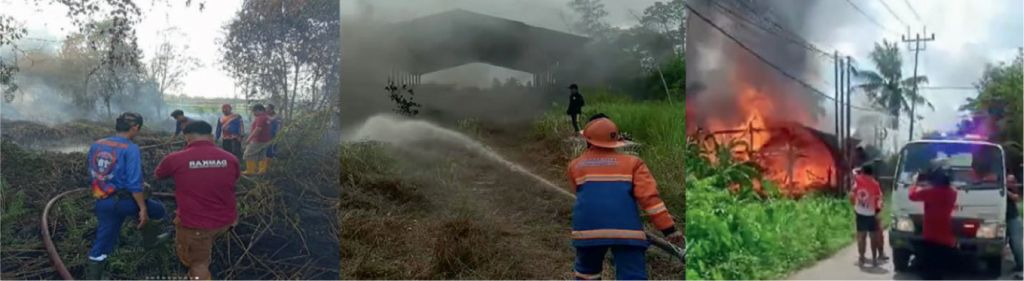
One key indicator of resource use efficiency in firefighting is the efficient use of water. The Bhakti 28 Fire Brigade in Pontianak has implemented fire- suppression techniques that minimize water consumption. For example, they use specially designed fire hose nozzles to optimize water flow and increase pressure, allowing fires to be extinguished with smaller amounts of water. T, a forty-five-year-old Confucian informant and the head of Bhakti 28, linked this practice to Confucian teachings:
According to the teachings of the Confucian Four Books (Si Shu), particularly the doctrine of the mean (zhong yong), if we maintain Harmony and the Middle Way, then well-being will encompass Heaven and Earth and all living beings and things will be preserved, which includes using water efficiently.
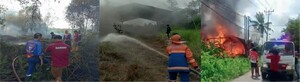
This commitment to efficient water use is evident in various firefighting scenarios handled by Bhakti 28 (Figure 1).

Fire incidents in various residential and commercial areas of Pontianak
Citation: Review of Religion and Chinese Society 11, 2 (2024) ; 10.1163/22143955-12340028
Source: Instagram account @pk.bhakti.28In line with an Islamic emphasis on moderation, one Muslim member of the Bhakti 28 fire brigade, H (age 35, an administrator), explained the team’s effort to avoid wastefulness in firefighting:
Islamic teachings instruct us not to be excessive in anything. We use water efficiently, not just spraying indiscriminately, and we use barriers so the fire does not spread quickly.
This ethos of efficiency is reflected in Bhakti 28’s operational tactics. In addition to water-based suppression, the brigade creates natural firebreaks (known as fire lines) to prevent the fire’s spread, allowing them to use significantly less water than conventional methods. A fire line is a cleared strip of land along the fire’s perimeter from which all vegetation and fuel have been removed, often reinforced with water. Operational records indicate that this strategy has markedly reduced water consumption during firefighting operations in the area.
Use of Environmentally Friendly Fire Suppression Materials
Beyond water efficiency, Bhakti 28 prioritizes environmentally friendly firefighting agents. The brigade deliberately avoids using hazardous chemical suppressants, opting instead for materials and techniques that minimize ecological harm. For instance, they employ a biodegradable foam that leaves no harmful residue, and they often utilize sand or soil from the vicinity of the fire—an effective tactic that also reduces environmental impact.
One Confucian informant, J (age 35, also an administrator), explicitly framed this approach in terms of ethical principle:
We implement the principle of li or susila, meaning we act in accordance with good ethics and proper norms, including in the use of technology and materials that do not harm nature.
Similarly, R (age 25, a Muslim volunteer) stressed the importance of avoiding any additional environmental harm during their operations:
Essentially, we do not want to cause further damage while dealing with this environmental problem. If there is sand near the fire site, we will use it to help contain the fire’s spread.
Thus, Bhakti 28’s firefighting practices demonstrate how religious ethics inform and enhance sustainable environmental action. By adhering to moral principles and leveraging local resources such as sand, the team prevents further ecological damage while combating fires, exemplifying a strong commitment to sustainability and ecological responsibility.
Implementation of a Sustainable Water Management System
Efficient resource utilization is also demonstrated by the implementation of a sustainable water management system. The Bhakti 28 Fire Brigade in Pontianak has developed a water management strategy that ensures an adequate supply of water for firefighting operations without depleting local water resources. They utilize a rainwater harvesting system and recycle the water used during firefighting. This system includes installing large rainwater storage tanks at the brigade’s headquarters and using filtration technology to recycle the used water. The success of this system’s implementation can be measured by the increased efficiency of water usage in firefighting operations.
Informant S (age 36, Confucian) explained,
We built water storage facilities so that water is always available when needed. Fires here are difficult to predict, especially in residential areas, so we must always ensure we have sufficient water reserves.
Similarly, informant I (age 36, Muslim) highlighted the need for water storage in locations with poor water access:
We always store water because many places in Pontianak have difficulty accessing water during fires. This includes plantation areas that are quite far from any water source.
Thus, the Bhakti 28 Fire Brigade proactively prepares water reserves to tackle unforeseen fires, particularly in areas with limited water access. This approach ensures a sufficient water supply and exemplifies a mitigation strategy that is responsive to geographical challenges and local needs.
Harmonious Team Collaboration
Interfaith Cooperation in Training and Operations
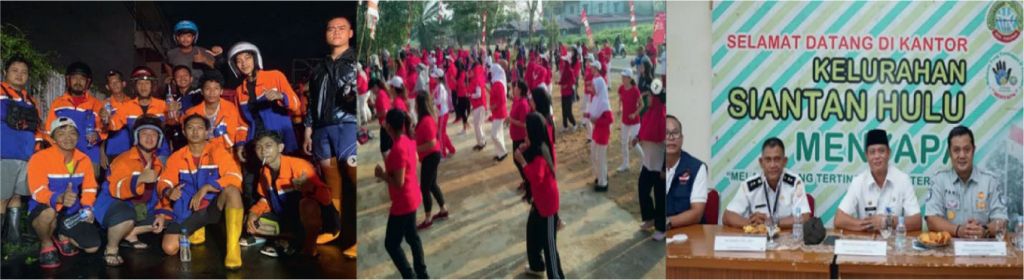
The principle of balance or moderation—known as wasathiyah in Islam and zhong yong in Confucianism—is evident in the harmonious collaboration of the firefighting team, exemplified by interfaith cooperation in training exercises and operations. For example, the Bhakti 28 Fire Brigade of Pontianak, in collaboration with the Siantan Hulu local administration, conducts regular training sessions involving members from diverse religious backgrounds. These sessions include fire simulations, equipment handling drills, and team coordination exercises, ensuring that all members acquire the necessary skills and can work together effectively. Figure 2 illustrates a community outreach and training event focused on public safety, community protection, and forest and land fire prevention.
Interfaith firefighting training and simulation activities
Citation: Review of Religion and Chinese Society 11, 2 (2024) ; 10.1163/22143955-12340028
Source: Tjhin Djie SenRegular Meetings and Open Discussions
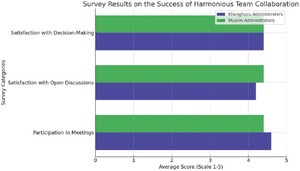
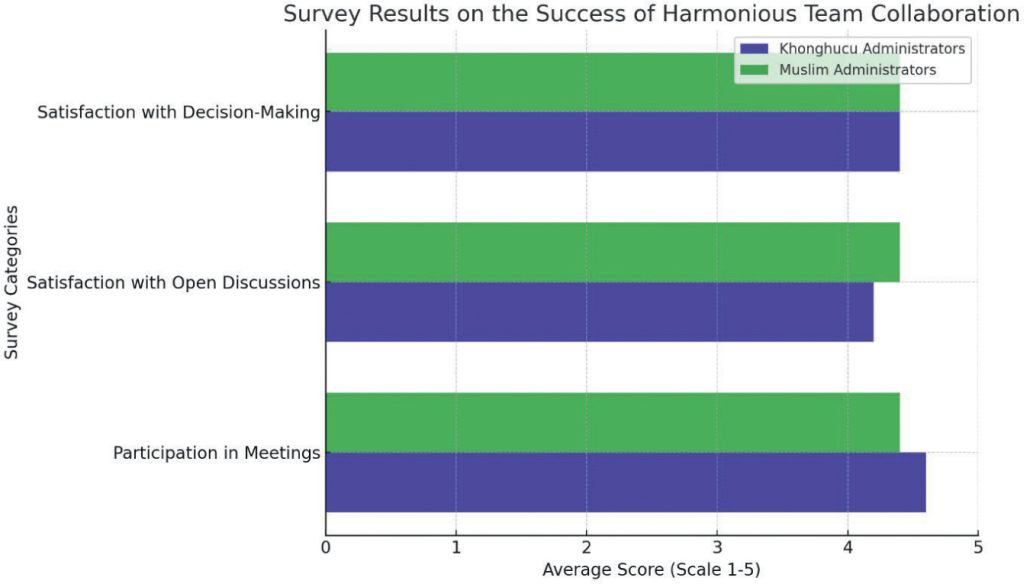
Team collaboration is further reinforced through regular meetings and open forums where firefighting strategies are discussed and experiences are shared among team members. The Bhakti 28 Fire Brigade holds weekly meetings in which members of different faiths present ideas, ask questions, and offer feedback on firefighting operations. This open dialogue fosters an environment of transparency, mutual respect, and a deeper understanding among team members. According to internal survey data, members report high levels of participation and satisfaction, underscoring the effectiveness of this interfaith collaborative approach (see Figure 3).
The success of harmonious team collaboration
Citation: Review of Religion and Chinese Society 11, 2 (2024) ; 10.1163/22143955-12340028
The interview findings indicate the successful collaboration of the team at the Bhakti 28 Fire Brigade in Pontianak, as evidenced by the high levels of member participation and satisfaction. Team members—both those from the Confucian leadership and their Muslim counterparts—consistently demonstrated active engagement and expressed satisfaction with the open meetings and discussions. This outcome affirms the effectiveness of an interfaith approach in the foundation’s operations.
Joint Campaigns and Social Activities
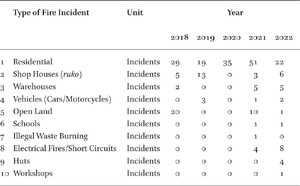
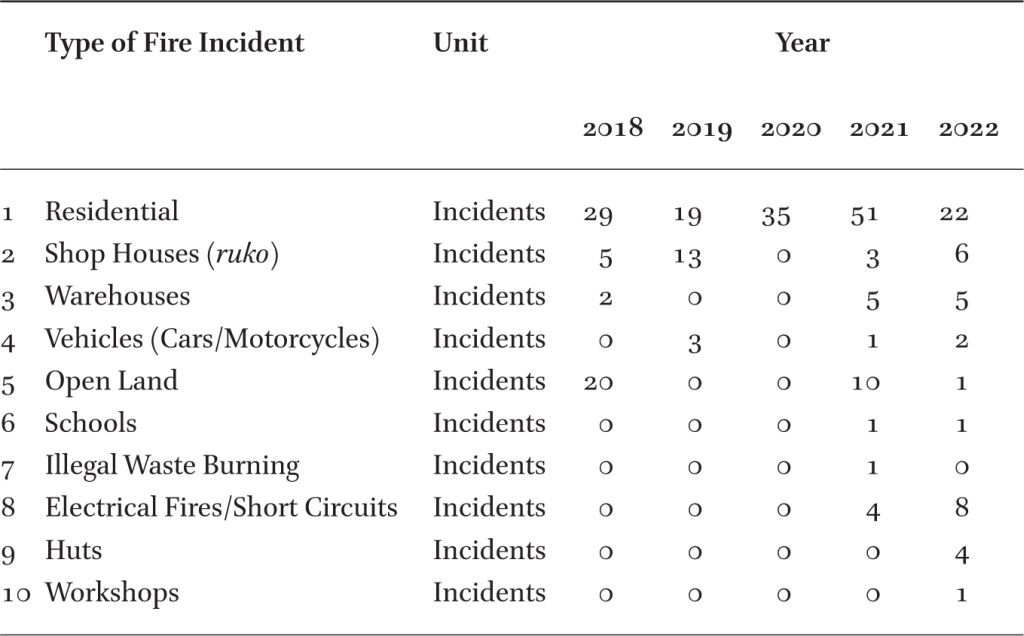
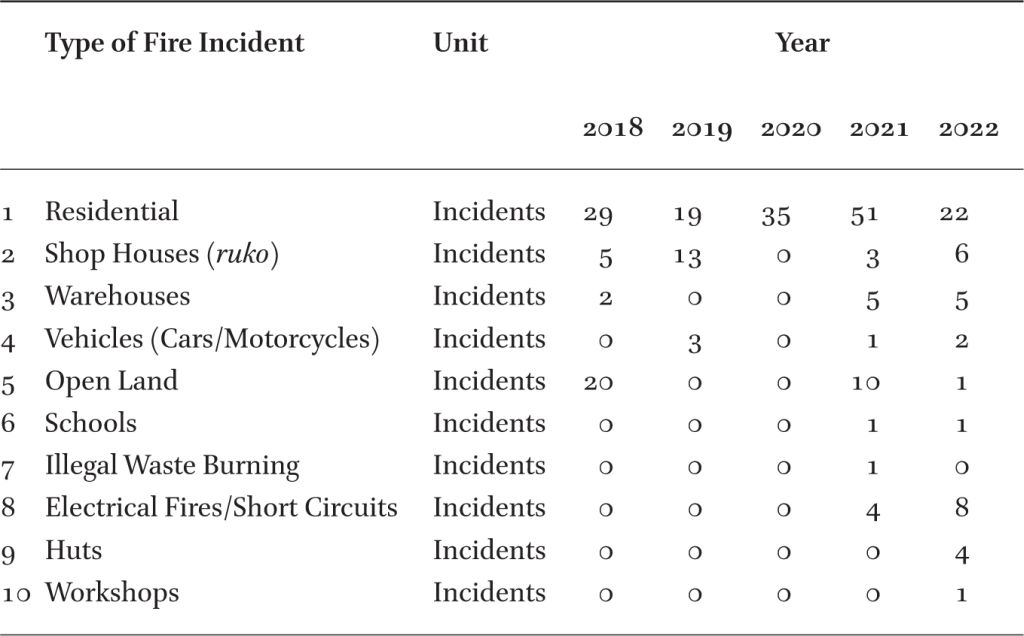
The team’s collaboration was further demonstrated through joint campaigns and social activities that involved all members of the fire brigade and the local community. These activities included fire prevention campaigns, environmental education programs, and other social initiatives aimed at raising public awareness and strengthening social bonds. The effectiveness of these efforts was measured by a reduction in the number of fires attributable to human activities and an increase in public awareness about the importance of fire prevention. Table 1 presents the number of fire incidents recorded in Pontianak City between 2018 and 2022. Official statistics for 2023 and 2024 have not yet been released by the local government.
Fire Incidents in Pontianak City (2018–2022
Citation: Review of Religion and Chinese Society 11, 2 (2024) ; 10.1163/22143955-12340028
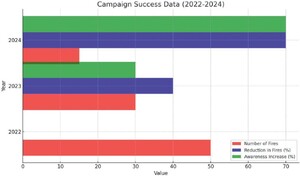
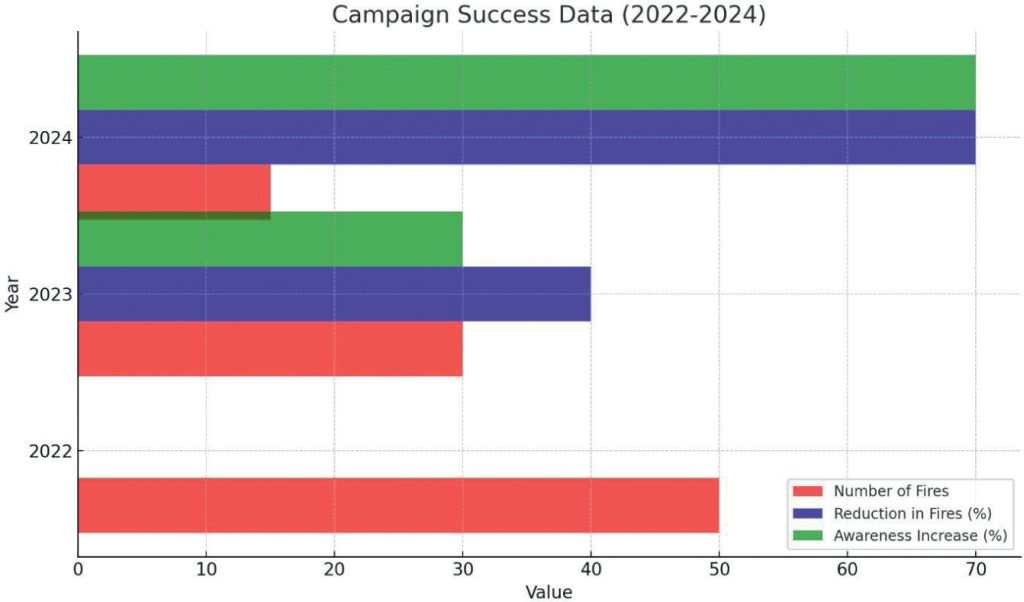
As shown in Table 1, the Bhakti 28 Fire Brigade’s fire prevention campaign has been highly successful over the period 2022–2024. The internal data indicate that the number of fires caused by human activity dropped from 50 in 2022 to 30 in 2023, and further to 15 in 2024. This represents roughly a 40 percent decrease in 2023 and a 70 percent decrease in 2024 (relative to the 2022 baseline). Furthermore, community awareness of the importance of fire prevention is reported to have risen by about 30 percent in 2023 and by 70 percent in 2024, reflecting a significant improvement in public engagement with fire safety practices.
Through these three forms of harmonious team collaboration, the Bhakti 28 Fire Brigade in Pontianak has not only enhanced the operational effectiveness of firefighting efforts but has also strengthened interfaith cooperation and team cohesion. This success is visually represented in the campaign outcomes (Figure 4), which illustrate how this integrated approach offers a model of disaster mitigation that may be adopted by other communities facing similar environmental and social challenges.
Campaign success data, 2022–2024
Citation: Review of Religion and Chinese Society 11, 2 (2024) ; 10.1163/22143955-12340028
Source: author’s documentation, 2024Fire Prevention Campaign: Religious Values-Based Education
Involvement of Religious Leaders in the Campaign
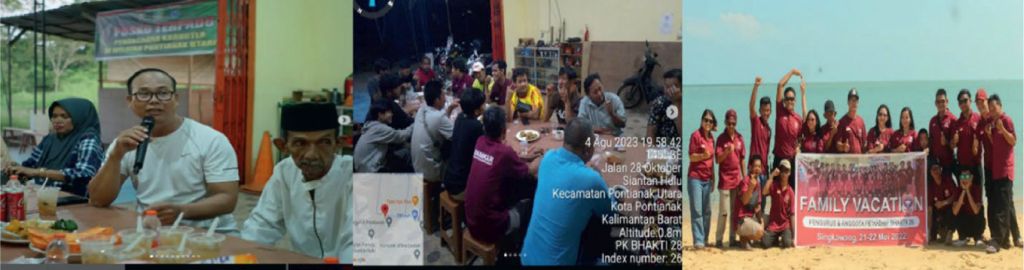
In applying the principle of balance in fire disaster mitigation, the Bhakti 28 Fire Brigade in Pontianak invites religious leaders from various communities to participate in a fire prevention education campaign grounded in religious values. These religious leaders deliver sermons that integrate teachings from their respective faiths about caring for nature, emphasizing the importance of preventing fires. For example, a photograph from the campaign (Figure 5) depicts religious leaders, fire brigade members, and local residents working together to foster a culture of disaster awareness. The image also shows a “family vacation” activity intended to strengthen emotional bonds and harmony among the families of the Bhakti 28 Fire Brigade members.
Interfaith fire prevention education and community capacity-building activities
Citation: Review of Religion and Chinese Society 11, 2 (2024) ; 10.1163/22143955-12340028
Source: Instagram account @pk.bhakti.28Environmental Education Programs in Schools and Places of Worship
The fire prevention campaign also includes environmental education programs at schools and places of worship. The Bhakti 28 Fire Brigade carries out initiatives that educate children and congregation members on how to prevent fires, while also emphasizing the importance of protecting the environment. These programs include public outreach sessions, tree-planting activities, and the creation of fire prevention posters or announcements that are distributed in schools and religious venues. Informant Y (age 39), one of the fire brigade administrators, noted:
Since this brigade was established, we have conducted several environmental education activities for mosque committee members, schoolchildren, and housewives in the surrounding area, including planting fruit trees.
Meanwhile, another informant, R (age 27), a Muslim member of the brigade, described his role in disseminating fire prevention warnings to the public. He is responsible for preparing announcements in public places—such as mosques, temples, churches, government offices, and schools—to urge community vigilance against potential fires during the dry season. As he explained:
Pamphlets or announcements are usually prepared during the dry season, because that is when fires are most likely to occur. So the community needs to know about the dangers of environmental damage.
The Bhakti 28 Fire Brigade’s fire prevention campaign thus combines environmental education in schools and places of worship with activities such as outreach sessions, tree planting, and the distribution of fire prevention posters. These efforts have heightened public awareness of fire risks, especially during the dry season.
Community-Based Outreach and Training
Community-based outreach and training activities involving all members of society have contributed significantly to the effectiveness of Bhakti 28’s fire prevention campaigns. The Bhakti 28 Fire Brigade in Pontianak organized workshops and training sessions that taught fire prevention techniques and emphasized the importance of environmental stewardship from a religious perspective. These sessions were held in village halls and other public venues to ensure accessibility for all community members. The educational programs combined governmental and religious leadership participation, targeting diverse community groups such as youth associations and women’s household networks. Workshops included hands-on field practice, while women participants received training in environmental awareness and basic health maintenance related to fire risk and prevention (Figure 6).
Community training, awareness education, and stakeholder collaboration workshops
Citation: Review of Religion and Chinese Society 11, 2 (2024) ; 10.1163/22143955-12340028
Source: Tjhin Djie SenThe religious values-based fire prevention campaign implemented by Pontianak’s Bhakti 28 Fire Brigade has proven effective in increasing public awareness and participation in fire prevention. At the same time, it has strengthened interfaith cooperation in protecting the environment. This success underscores the potential benefits of incorporating religious values into community-based fire prevention efforts.
These research findings are surprising, as they demonstrate that applying the principle of balance in Islam and Confucianism is not only relevant but also highly effective in improving responses to land fires in Pontianak. Previously, studies on land-fire mitigation predominantly focused on technical approaches (Milke 2016) and regulatory measures (Chubb and Williamson 1999), with little attention to socio-religious aspects. The distinctive contribution of this research lies in its integration of spiritual values with practical actions, a combination that has produced a holistic approach to fire mitigation. This approach shows that local knowledge and religious practices can play a key role in enhancing the effectiveness of mitigation strategies—a factor underexamined in prior literature. Such results pave the way for further studies linking successful disaster mitigation efforts with interfaith collaboration and religious values.
The long-term implications of this interfaith collaboration model are significant. The model not only assists in managing land fires, but also holds the potential to strengthen social cohesion and bolster community resilience in the face of future environmental disasters (Pearce 2003; Norris et al. 2008; Isaeva 2019). The principles underlying this collaboration—such as wasathiyah in Islam and zhong yong in Confucianism—enable communities from different religious backgrounds to work together harmoniously in confronting global challenges like climate change (Mascall 1970; Li 2013). Such collaboration can foster a greater sense of collective responsibility among community members and lead to a more inclusive, sustainable approach to disaster mitigation (Nirupama and Maula 2013; Lalani et al. 2021).
For example, inclusive interfaith dialogue has been shown to strengthen social relations amid diverse challenges, as explained by Zuly Qadir (2004) in the context of interreligious dialogue in Indonesia. Building inclusive religiosity through such collaboration can provide a strong foundation for fostering greater interfaith solidarity to address global issues such as climate change (Qadir 2004). Additionally, lessons drawn from interfaith experiences—such as those highlighted in a study on the experiences of Muslim students in Catholic religious education—demonstrate the importance of interreligious interaction in fostering mutual understanding and more effective cooperation in addressing social challenges (Sagala and Kandedes 2024).
These findings provide compelling evidence that the application of the principle of balance in Islamic and Confucian teachings is not merely symbolic, but also serves as a concrete mechanism in environmental management. Data from other studies on community-based disaster mitigation (Pearce 2003) indicate that social and religious values often act as strong motivators for community engagement (Uslaner 2002). By drawing on social ecology theory (Bailey 1998)—which emphasizes the significance of the relationship between humans and the environment—these findings illustrate that the successful fire mitigation in Pontianak is a concrete example of this theory in practice. This reinforces the argument that integrating religious values into disaster mitigation strategies can enhance community involvement, foster a greater sense of collective responsibility (Nirupama and Maula 2013), and ultimately yield more effective outcomes (Que et al. 2022).
The results of this research not only shed light on what has transpired, but also offer a glimpse into the future of land fire mitigation efforts. These findings signal an urgent need to adopt more inclusive, community-based approaches (Schilderman 2004), in which religious values and interfaith collaboration become integral components of mitigation strategies (McKim 2024). The success of the Bhakti 28 model in Pontianak provides a strong foundation for recommending the development of similar approaches in other regions with comparable social and environmental characteristics. This approach is not only about improving the technical response to fires, but also about building communities that are more resilient and cohesive in the face of future environmental challenges (Norris et al. 2008), Such a perspective aligns with findings from Taiwan, where Buddhist teachings have been successfully translated into an organized and impactful ecological movement (Lee and Han 2021).
To fully comprehend the significance of these findings, it is essential to situate them within Pontianak’s historical and sociological context. The city has a long tradition of cross-religious collaboration, particularly between the Muslim and Confucian communities (Hidayat 2014), who have coexisted for centuries (Sulaiman 2009). This backdrop provides a strong social foundation for the success of faith-based mitigation strategies. From a sociological perspective, the findings indicate that the social capital developed through interfaith relationships can be mobilized to confront environmental challenges (McKim 2024). In other words, communities rooted in shared spiritual values are better able to build solidarity and undertake collective action in the face of disasters (Dueck and Byron 2011; Lalani et al. 2021), an important lesson for other regions seeking to adopt a similar model.
This study shows that incorporating religious values into fire mitigation strategies (Ha 2015) can provide a more inclusive and sustainable framework. The primary recommendation is to extend this model to other areas vulnerable to land fires, especially in regions with multireligious communities. In addition, enhancing capacity-building and implementing ongoing educational programs (Mohapatra 2020) should be prioritized to ensure that all community members possess the knowledge and skills required to participate effectively. By establishing such a framework, governments and local organizations can develop a fire mitigation system that is not only technical but also social, thereby better adapting to local dynamics and fostering greater resilience (Godschalk 2003).
The principal strength of this study lies in its holistic, community-centered approach; nonetheless, it is not without limitations. Its geographic focus on Pontianak means the findings may not be fully generalizable to other regions. Moreover, factors such as weather conditions and government support could serve as confounding variables that influence the outcomes. A comparison with other research indicates that while these findings align with existing literature on the importance of community engagement, they also offer new insights into the role of religious values in disaster mitigation. Future research should focus on applying this model in diverse cultural and geographic contexts and on evaluating its long-term impact to provide more robust evidence of its effectiveness.
Conclusion
This study has revealed the significant role of incorporating principles of balance from both Islam and Confucianism in mitigating land fires. Such an approach not only enhanced the effectiveness of firefighting efforts but also strengthened interfaith cooperation in the Pontianak region. The findings indicate that collaboration grounded in religious values can foster a more holistic and inclusive approach to managing environmental disasters, offering a novel model that integrates spiritual principles with practical action. Furthermore, the results underscore the importance of adopting a multireligious perspective in disaster mitigation efforts—a perspective that can directly contribute to addressing global challenges like climate change. In doing so, the study expands our understanding of how diverse religious communities can work together toward broader environmental goals, an aspect previously underemphasized in the disaster mitigation literature.
The methodology employed in this research—a qualitative case study combining in-depth interviews and document analysis—proved highly effective in investigating the implementation of religious principles within the context of fire mitigation. The concepts of balance, such as wasatiyyah in Islam and zhong yong in Confucianism, were found to be not only theoretically relevant but also empirically validated in practice, particularly evidenced by the success of the Bhakti 28 Fire Brigade in Pontianak. These findings bolster the argument that spiritual values can be effectively integrated into sustainable disaster mitigation strategies, suggesting a viable model that could be applied in other regions facing similar environmental challenges. A values-based approach of this kind offers a flexible yet robust framework that can be adapted across diverse cultural and social contexts.
Despite the significant contributions of this research in illuminating the role of religious values in disaster mitigation, several limitations should also be acknowledged. The geographic focus on Pontianak is narrow and may limit the generalizability of these findings to areas with different socio-environmental characteristics. Additionally, confounding factors such as government support, local weather patterns, and variations in community social structures may have influenced the outcomes. Therefore, further research is needed to test the validity of this model in a variety of geographic and cultural settings. Long-term evaluations are also recommended to assess the sustained impact of implementing these religious principles in climate change mitigation. Such follow-up studies would allow for the continuous refinement of the proposed strategy and facilitate its broader and more effective application.
Acknowledgments
The authors would like to express their gratitude to the management and members of the Bhakti 28 Fire Brigade Foundation in Pontianak for their invaluable support and cooperation during this research. Their willingness to share insights and experiences has significantly contributed to the depth and authenticity of this study.
Conflict of Interest and Funding Statement
The authors declare that there is no conflict of interest regarding the publication of this article. This research received no external funding.
References
Al-Jayyousi, Odeh, Wan Norhaniza Wan Hasan, Shereeza Mohamed Saniff, Seda Duygu Sever, and Evren Tok. 2023. “A Critical Discourse Analysis on Climate Change in a Globalized World: The Nexus of Islam and Sustainable Development.” Sustainability 15 (19): 1–18. https://doi.org/10.3390/su151914515.
Bailey, Kenneth D. 1998. “Social Ecology and Living Systems Theory.” Systems Research and Behavioral Science 15 (5): 421–428. https://doi.org/10.1002/(SICI)1099-1743(1998090)15:5<421::AID-SRES269>3.0.CO;2-B.
Chen, Yong. 2020. “‘The Last Confucian’ in the Rice Paddy of Java.” Review of Religion and Chinese Society 7 (2): 164–178. https://doi.org/10.1163/22143955-00702002.
Chubb, M. D., and R. B. Williamson. 1999. “Value-Based Fire Safety: A New Regulatory Model for Mitigating Human Error.” Fire and Materials 23 (6): 291–296. https://doi.org/10.1002/(SICI)1099-1018(199911/12)23:6<291::AID-FAM701>3.0.CO;2-N.
Dillayati, G., Wahyuni, D., Adriat, R., Azwar, A., & Zulfian, Z. 2024. “Study on the Relationship between Hotspots and Air Pollution Standard Index Based on Carbon Monoxide Concentration in West Kalimantan.” BULETIN FISIKA, 25 (1): 81–88. https://doi.org/10.24843/BF.2024.V25.i01.p11.
Dueck, A. L., and Katie Byron. 2011. “Community, Spiritual Traditions, and Disasters in Collective Societies.” Journal of Psychology and Theology 39 (3): 244–254. https://doi.org/10.1177/009164711103900307.
Fujii, Yusuke, Susumu Tohno, Norhaniza Amil, and Mohd Talib Latif. 2017. “Quantitative Assessment of Source Contributions to PM2.5 on the West Coast of Peninsular Malaysia to Determine the Burden of Indonesian Peatland Fire.” Atmospheric Environment 171: 111–117. https://doi.org/10.1016/j.atmosenv.2017.10.009.
Godschalk, David R. 2003. “Urban Hazard Mitigation: Creating Resilient Cities.” Natural Hazards Review 4 (3): 136–143. https://doi.org/10.1061/(asce)1527-6988(2003)4:3(136).
Ha, Kyoo-Man. 2015. “The Role of Religious Beliefs and Institutions in Disaster Management: A Case Study.” Religions 6 (4): 1314–1329. https://doi.org/10.3390/rel6041314.
Halilović, Safvet. 2014. “Sheikh Yusuf Al-Qaradawi and the Direction of Wasatiyya— Islamic Balance and Moderation.” Zbornik Radova Islamskog Pedagoškog Fakulteta u Zenici (Online), no. 12 (December), 263–281. https://doi.org/10.51728/issn.2637-1480.2014.12.263.
Hidayat, Samsul. 2014. “Understanding Confucianism in West Kalimantan.” Al-Albab. Reviewed by Farninda Aditya. https://doi.org/10.24260/alalbab.v3i1.100.
Isaeva, Valentina B. 2019. “Deprivation Theory as a Tool to Study Non-Traditional Religiousity.” Sotsiologicheskie Issledovaniya 2019 (9): 39–50. https://doi.org/10.31857/S013216250006656-4.
Koplitz, Shannon N., Loretta J. Mickley, Miriam E. Marlier, Jonathan J. Buonocore, Patrick S. Kim, Tianjia Liu, Melissa P. Sulprizio, et al.2016. “Public Health Impacts of the Severe Haze in Equatorial Asia in September–October 2015: Demonstration of a New Framework for Informing Fire Management Strategies to Reduce Downwind Smoke Exposure.” Environmental Research Letters 11 (9). https://doi.org/10.1088/1748-9326/11/9/094023.
Lalani, Nasreen, Julie L. Drolet, Caroline McDonald-Harker, Matthew R. G. Brown, Pamela Brett-MacLean, Vincent I. O. Agyapong, Andrew J. Greenshaw, and Peter H. Silverstone. 2021. “Nurturing Spiritual Resilience to Promote Post-Disaster Community Recovery: The 2016 Alberta Wildfire in Canada.” Frontiers in Public Health 9 (July): 682558. https://doi.org/10.3389/fpubh.2021.682558.
Lee, Chengpang, and Ling Han. 2021. “Taiwanese Buddhism and Environmentalism.” Review of Religion and Chinese Society 9 (1): 44–69. https://doi.org/10.1163/22143955-08020002.
Li, Chenyang. 2013. The Confucian Philosophy of Harmony. London: Routledge. https://doi.org/10.4324/9781315886619.
Mascall, E. L. 1970. Review of The Encounter of Man and Nature: The Spiritual Crisis of Modern Man, by Seyyed Hossein Nasr. Religious Studies 6 (1): 103–104. https://doi.org/10.1017/s0034412500000123.
McKim, Robert. 2024. “Prospects and Possibilities for Interfaith Environmentalism.” Religious Studies 60 (1): 147–159. https://doi.org/10.1017/S0034412523000069.
Miles, Mathew B., Micheal A. Huberman, and Johnny Saldana. 1994. Qualitative Data Analysis: A Method Sourcebook. 3rd ed. Arizona State University: SAGE Publications.
Milke, James. 2016. “Fire Protection as the Underpinning of Good Process Safety Programs.” Journal of Loss Prevention in the Process Industries 40: 329–333. https://doi.org/10.1016/j.jlp.2015.11.021.
Mohapatra, Dr. Niharika. 2020. “Capacity Building for Women in Disaster Management: Lessons from Super Cyclone, Odisha.” International Journal of Scientific and Research Publications (IJSRP) 10 (10): 216–219. https://doi.org/10.29322/ijsrp.10.10.2020.p10632.
Mokado, La Ode Muhammad Al-Jabar. 2017. “Upaya Asean Dalam Penanggulangan Kabut Asap Lintas Batas Melalui Asean Agreement on Transboundary Haze Pollution 2015.” Repository.Uinjkt.Ac.Id. https://repository.uinjkt.ac.id/dspace/bitstream/123456789/41078/1/LAODEMUHAMMADAL-JABARMAKODA-FISIP.pdf.
Nirupama, N., and Amanda Maula. 2013. “Engaging Public for Building Resilient Communities to Reduce Disaster Impact.” Natural Hazards 66 (1): 51–59. https://doi.org/10.1007/s11069-011-0045-9.
Norris, Fran H., Susan P. Stevens, Betty Pfefferbaum, Karen F. Wyche, and Rose L. Pfefferbaum. 2008. “Community Resilience as a Metaphor, Theory, Set of Capacities, and Strategy for Disaster Readiness.” American Journal of Community Psychology 41 (1–2): 127–150. https://doi.org/10.1007/s10464-007-9156-6.
Pandey, Hari Prasad, Narayan Prasad Pokhrel, Prakash Thapa, Naya Sharma Paudel, and Tek Narayan Maraseni. 2022. “Status and Practical Implications of Forest Fire Management in Nepal.” Journal of Forest and Livelihood 21 (1): 32–45. https://doi.org/10.3126/jfl.v21i1.56583.
Pearce, Laurie. 2003. “Disaster Management and Community Planning, and Public Participation: How to Achieve Sustainable Hazard Mitigation.” Natural Hazards 28 (2–3): 211–228. https://doi.org/10.1023/A:1022917721797.
Pratiwi, Helen Sasty, and Haried Novriando. 2022. “Evaluasi Usability Pada Website Monitoring Kebakaran Hutan Menggunakan Metode Webuse.” Jurnal Teknologi Informasi Dan Ilmu Komputer 9 (5): 961. https://doi.org/10.25126/jtiik.2022955436.
Purwanigtyas, Dhita Ayomi, and Zahra Uswah Hasanah. 2024. “Yusuf Al-Qardhawi’s View on Religious Extremism.” Journal of Islamic and Occidental Studies 2 (1): 47–66. https://doi.org/10.21111/jios.v2i1.35.
Qadir, Zuly. 2004. “Problem Dialog Antariman: Membangun Keberagamaan Inklusif.” Millah 4 (1): 1–22. https://doi.org/10.20885/millah.vol4.iss1.art1.
Qiao, Qingju. 2023. “On ‘Ecological Confucianism’ and Its Theoretical and Practical Significance.” Frontiers of Philosophy in China 18 (4): 435–448. https://doi.org/10.3868/s030-012-023-0032-4.
Que, Ting, Yuxin Wu, Shiyu Hu, Jianmin Cai, Nan Jiang, and Huige Xing. 2022. “Factors Influencing Public Participation in Community Disaster Mitigation Activities: A Comparison of Model and Nonmodel Disaster Mitigation Communities.” International Journal of Environmental Research and Public Health 19 (19). https://doi.org/10.3390/ijerph191912278.
Ragozina, S. A. 2023. “Environmentalism in Modern Islamic Philosophy.” RUDN Journal of Philosophy 27 (2): 233–250. https://doi.org/10.22363/2313-2302-2023-27-2-233-250.
Rumadani Sagala and Iin Kandedes. 2024. “The Role of Islamic Education Teachers in Addressing the Negative Impact of the TikTok on Teenagers in Lampung, Indonesia.” Millah: Journal of Religious Studies 23, N (religious studies): 947–990. https://doi.org/DOI:10.20885/millah.vol23.iss2.art14.
Schilderman, Theo. 2004. “Adapting Traditional Shelter for Disaster Mitigation and Reconstruction: Experiences with Community-Based Approaches.” Building Research and Information. https://doi.org/10.1080/0961321042000250979.
Sulaiman, Sulaiman. 2009. “Agama Khonghucu Sejarah, Ajaran, Dan Keorganisasiannya Di Pontianak Kalimantan Barat.” Analisa 16 (1): 50. https://doi.org/10.18784/analisa.v16i1.58.
Sumaryati, Saipul Hamdi, Atep Radiana, Syafrijon, Risyanto, Lambang Nurdiansah, Angga Y. Putra, Estiningtyas Kusumastuti. 2024. “The Impact of Atmospheric Stability Affected by Peat Forest Fire on Surface PM2.5 Concentration in Pontianak Urban Area during La Nina Events 2022,” International Journal of Environmental Science and Development 15 (3): 110–116. https://doi.org/10.18178/ijesd.2024.15.3.1475.
Syswianti Desy, Elang Mohamad Atoilah, Andhika Lungguh Perceka, Hasbi Taobah Ramdani, N. Ai Erlinawati, Herlin Rusyani, and Aceng Ali Awaludin. 2022. “Sosialisasi Mitigasi Bencana Kebakaran Dikampung Harendong Desa Sindanggalih Karangpawitan Kabupaten Garut.” Jurnal Pengabdian Masyarakat DEDIKASI 3 (02): 84–90. https://doi.org/10.33482/ddk.v3i02.55.
Tulloch, Ayesha I. T., Jean Baptiste Pichancourt, Carl R. Gosper, Angela Sanders, and Iadine Chadès. 2016. “Fire Management Strategies to Maintain Species Population Processes in a Fragmented Landscape of Fire-Interval Extremes.” Ecological Applications 26 (7): 2175–2189. https://doi.org/10.1002/eap.1362.
Uslaner, Eric M. 2002. “Religion and Civic Engagement in Canada and the United States.” Journal for the Scientific Study of Religion 41 (2): 239–254. https://doi.org/10.1111/1468-5906.00114.
Utami, Penny Naluria, and Yuliana Primawardani. 2021. “Upaya Pemenuhan Hak Atas Lingkungan Hidup Terhadap Kebakaran Hutan Bagi Masyarakat Riau.” Jurnal HAM 12 (3): 367. https://doi.org/10.30641/ham.2021.12.367-384.
Wijayanto, Adi, Hatta Acarya Wiraraja, and Siti Aminah Idris. 2022. “Forest Fire and Environmental Damage: The Indonesian Legal Policy and Law Enforcement.” Unnes Law Journal 8 (1): 105–132. https://doi.org/10.15294/ulj.v7i1.52812.
Wasathiyah (
Zhong Yong (