Abstract
Edible insects are gaining attention as sustainable protein sources. In Madagascar, where malnutrition and stunting are prevalent, entomophagy is traditional, yet the Black Soldier Fly is not commonly consumed. This study aimed to assess consumer acceptance of three Black Soldier Fly larvae-based products in rural Madagascar (whole larvae, BSF powder, and crackers containing BSF powder), using a white bean soup meal as a virtual control. Further, we intended to identify cultural, sensory, and psychological factors influencing acceptance before and after consumption. A mixed-methods approach combining surveys and focus group discussions was conducted among seventy households from seven villages around the Manombo Special Reserve, a rainforest-dwelling community in south-east Madagascar. Participants exhibited moderate food neophobia (33.78 ± 1.22). Of these, 92% reported having eaten insects, and 88.1% did not consider insect food disgusting. Over half believed that insect consumption offers significant advantages, whereas a minority (9%) expressed concerns about microbes, poisons/toxins, or allergies. Among the tested products, crackers containing BSF powder were most preferred across all sensory criteria (appearance, smell, taste, texture), while whole larvae were least accepted, often rejected due to visual disgust, odour, and difficulty swallowing. Powder received moderate acceptance. 95 and 79% of children liked the crackers and powder, respectively, 84% of children consumed all three products offered to them. Lack of familiarity was cited as a key barrier to acceptance of the larvae; however, providing information about the origin and benefits of BSF was suggested as a means of improving perceptions. Future initiatives should focus on promoting processed BSF products, targeting children for early adoption, and investing in educational programmes that demystify production while highlighting nutritional and environmental benefits.
1 Introduction
As global population growth accelerates, reaching an estimated 9.1 billion by 2050, the demand for protein-rich foods continues to increase (Godfray et al., 2018). However, conventional livestock production presents significant sustainability challenges, including greenhouse gas emissions, land degradation, and high water consumption (Makkar et al., 2014). To address these concerns, alternative protein sources such as edible insects have gained considerable attention as viable and sustainable options (van Huis, 2020).
Insects offer a promising protein alternative due to their high feed conversion efficiency, rapid growth rates, and minimal environmental footprint compared to conventional livestock (Dobermann et al., 2017). Entomophagy, or the consumption of insects, is a longstanding practice in many cultures, particularly in Asia, Africa, and Latin America, where over two billion people include insects in their diet (van Huis et al., 2013). In Africa, edible insects are recognised as a vital component of food security and nutrition, and are often consumed traditionally across diverse regions (Kelemu et al., 2024).
While psychological barriers primarily hinder the adoption of insect-based diets in Western contexts, acceptance in regions with established entomophagic traditions is often contingent upon taste, texture, and preparation methods (Verbeke, 2015). Research on adult consumer acceptance of insect-based foods has revealed mixed attitudes, with strong variation across regions. Studies in Europe and North America frequently report higher levels of disgust and food neophobia, whereas research conducted in parts of Africa and Asia often finds greater baseline familiarity, with acceptance shaped more by preparation methods, taste, and cultural norms (Hartmann and Siegrist, 2016; Sogari et al., 2019b; Tan et al., 2016). Among the various edible insect species, the Black Soldier Fly (Hermetia illucens) has garnered interest not only for its potential as a protein source but also for its ability to upcycle organic waste into valuable biomass (Oonincx et al., 2015). A growing body of research now highlights the nutritional suitability and sensory characteristics of BSF larvae for human consumption (Bessa et al., 2020), yet consumer acceptance remains poorly understood, particularly in sub-Saharan African contexts.
In Madagascar, a country facing acute on chronic food insecurity and malnutrition, insect farming presents an innovative strategy for enhancing nutritional outcomes and fostering sustainable food production. Madagascar has a deep and well-documented history of entomophagy. Historical and contemporary accounts describe the consumption of a wide diversity of species, particularly grasshoppers, locusts, beetle larvae, cicadas, and other seasonally abundant arthropods, which are typically collected from the wild and prepared using familiar techniques such as roasting or frying (Fisher and Hugel, 2022). Insects are often appreciated for their taste and perceived nutritional value, and their harvest can represent an important supplementary food resource during periods of scarcity. However, this tradition is largely opportunistic and dependent on natural availability rather than systematic farming. Species associated with decomposing organic matter, including the black soldier fly (BSF), are not part of customary diets. Consequently, while rural Malagasy communities may express general cultural openness towards eating insects, BSF represents a novel food whose ecological associations, appearance, and production methods may shape perceptions differently from more familiar edible species. The introduction of BSF-larvae-based products may provide a locally adaptable solution that addresses protein deficiencies while minimising environmental pressures linked to conventional agriculture (Kelemu et al., 2024). The Madagascar Biodiversity Center (MBC) and Health in Harmony (HIH) have actively promoted insect-based foods as a sustainable alternative to extractive practices in ecologically sensitive and critical biodiversity areas of primary rainforest, where deforestation and an over-reliance on bushmeat are typically driven by chronic food insecurity and limited livelihood opportunities.
Reflecting this growing momentum, Madagascar recently became the first country to establish a national standard authorising dried Black Soldier Fly larvae and larval powder for direct human consumption (NMG 132-13; Bureau des Normes de Madagascar, 2025). This regulatory milestone establishes BSF as a realistic option for sustainable protein production within Madagascar, and creates an urgent need for evidence on household acceptance, sensory preferences, and the social conditions that will determine successful implementation.
Although BSF larvae have been studied primarily as animal feed, their nutritional profile also supports direct human consumption. BSF larvae are rich in high-quality protein, essential fatty acids, and micronutrients, making them a beneficial source of nutrition for humans (Surendra et al., 2016). Unlike other insect species commonly consumed, such as crickets and mealworms, BSF larvae can be mass-produced at a lower cost, using organic waste streams as feedstock (Barragan-Fonseca et al., 2017). This aspect aligns with circular agricultural models, where food waste is repurposed into nutritious products, further enhancing sustainability.
Children are particularly vulnerable to malnutrition and can suffer long-term consequences, including stunted growth, cognitive impairments, and increased susceptibility to disease (Akombi et al., 2017). Given the significant influence of early-life dietary habits on lifelong food preferences, introducing BSF-based products to children may represent a strategic pathway for normalising insect consumption within households and communities. Exposure to novel foods during childhood can enhance dietary diversity and acceptance of unconventional protein sources (Nicklaus, 2016).
Previous studies on the acceptance of insect-based foods have largely focused on urban populations and high-income countries (Caparros Megido et al., 2016; Tan et al., 2016). Research in African and Southeast Asian rural contexts has highlighted the importance of integrating insect-based foods within culturally familiar culinary practices to enhance consumer acceptance (Cheseto et al., 2020; Ghosh et al., 2017). However, limited data exist regarding consumer acceptance of BSF larvae-based products in Madagascar, where entomophagy has historically been practised but remains poorly documented. Addressing this gap requires a comprehensive understanding of local food beliefs, neophobia levels, and sensory preferences related to insect consumption. Furthermore, investigating how attitudes towards insect-based foods evolve following direct exposure to BSF larvae products can provide insights into potential adoption strategies.
This study aims to assess consumer acceptance of BSF larvae-based products in rural Madagascar, defined here as the willingness of adult household members to consume, incorporate into household meals, and produce BSF products after direct sensory exposure. Adults, particularly women, who typically make household food decisions, are the primary respondents, while children (aged 1-10 years) represent an important secondary group given their nutritional vulnerability and influence on long-term dietary normalisation. The study identifies cultural, sensory, and psychological factors influencing acceptance through baseline knowledge, attitudes, and practices (hereafter KAP), and evaluates shifts in attitudes and perceptions following direct consumption of BSF larvae-based products. By integrating quantitative and qualitative methodologies, this study seeks to inform future initiatives promoting insect-based nutrition in Madagascar and similar low-resource settings, contributing to broader efforts to establish sustainable food systems and improved public health.
2 Methods
Given that quantitative surveys assess the magnitude of acceptance while qualitative research explains the underlying mechanisms, this study employed a mixed-methods approach to assess the acceptance and feasibility of incorporating BSF larvae products into household diets. The quantitative component, based on structured questionnaires, constituted the primary axis of the research, while qualitative, gender-segregated focus group discussions (FGDs) with adults complemented and contextualised the quantitative findings.
Site and participants
The study was conducted in seven communities surrounding the Manombo Special Reserve (MSR) in southeastern Madagascar: Sahamahitsy, Madiorano, Andrafia, Maropanahy, Manombo, Morafeno, and Anivorano. These sites were selected based on logistical convenience (road access) and community willingness to participate.
Stratified random sampling was implemented at both the village and household levels. Stratification occurred first at the village level and then at the household level within villages, ensuring geographic representation while maintaining random selection among eligible households. Within each village, ten households were randomly selected from a list meeting eligibility criterion: permanent residence of at least five individuals, including one adult male and one adult female, and at least one child aged 1 to 10 years. The minimum household size criterion ensured the presence of multiple adults and at least one child, allowing simultaneous assessment of adult perceptions (the primary focus), intra-household sharing, and children’s reactions as a secondary group of interest. This design was essential for understanding adoption dynamics. Exclusion criteria included refusal of consent or reported allergies/intolerances to insect- or crustacean-based products, as determined during face-to-face screening. The survey was administered over several weeks, with participants sampling a different product each week and providing ratings.
A total of 71 and 73 households participated in the pre- and post-consumption surveys, respectively. Overall, 127 adult participants were recruited for surveys and FGDs (Table 1); all participants who completed the pre- and post-surveys were invited to join the FGD without exclusion criteria in place. Data were recorded from 67 children across all villages, with adult respondents reporting children’s preferences in surveys. Adult participant self-reported ages ranged from 16 to 101 years, of whom 55% were women. The complete participant flow, including recruitment, attrition, waiting-list replacements, and analytical sample sizes, is presented in Figure 1.

Demographic characteristics of participants
Citation: Journal of Insects as Food and Feed 2026; 10.1163/23524588-bja10391
Participant flow diagram showing enrolment, recruitment, attrition, waiting-list replacements, and analytical sample sizes for both the quantitative survey and qualitative focus group discussion components of the study.
Citation: Journal of Insects as Food and Feed 2026; 10.1163/23524588-bja10391
During the study sensitization phase, one pre-selected village was replaced by a demographically comparable village after all households declined to provide consent, citing traditional beliefs concerning insect consumption. This replacement happened before the study was initiated.
Tested products
Participants evaluated three novel products: dehydrated whole BSF larvae (whole larvae), BSF larvae powder (BSF powder), and crackers containing BSF larvae powder (BSF crackers), representing non-processed, semi-processed, and processed food items, respectively. A white bean soup (WB) served as a control; WB is familiar to communities, and is a protein-containing, non-insect food with comparable serving style, in combination with rice or cassava, allowing contrast between novelty and habitual diet. BSF crackers were instructed to be eaten as a stand-alone snack. All products were sourced from a local producer adhering to experimental standards and underwent microbiological analysis by an accredited laboratory prior to use.
Data collection
Five structured questionnaires were administered face-to-face to adult participants at their households. A pre-consumption questionnaire collected demographic information, neophobia levels (Pliner and Hobden, 1992), protein source consumption habits, food beliefs and attitudes (adapted from Ruby et al., 2015; with Likert scale), and visual rankings of edible insects. Four post-consumption questionnaires assessed product acceptance (with 5-point hedonic scale – ‘dislike extremely’ to ‘like extremely’), symptomatic experiences, and shifts in food beliefs and attitudes after consuming the three test foods (adapted from Barton et al., 2020; with 5-point Likert scale – ‘strongly disagree’ to ‘strongly agree’). Children’s product preference (with Yes/No Liking response) was assessed based on caregiver observation of one child per household after tasting all products, including the control. A binary response format was used for children because multi-point hedonic scales are not developmentally appropriate for the age range studied (1-10 years), and caregivers reported observed behavioural indicators (consumption, refusal, or requests for more) rather than subjective ratings.
Questionnaires were developed in English, translated into the local dialect, and administered by trained interviewers who had previously engaged with community members. Surveys were conducted in July and August 2024, each lasting approximately 45 minutes. Data collection utilised an application developed in CommCare HQ (2024, Dimagi).
Fourteen gender-segregated Focus Group Discussions (two per community) were conducted in August 2024 in private settings. Gender segregation was implemented to create comfortable discussion environments and reduce potential social inhibition, particularly when discussing food taboos and household decision-making. Discussions, lasting 35-55 minutes, were audio-recorded with participant consent. Each FGD included 4 to 11 participants (average = 6.9) who were also survey respondents. The FGDs were designed to complement the questionnaires, hypothesising that factors such as cultural taboos or neighbourhood influence might contribute to product rejection.
Focus group discussions (FGDs) were conducted in room condition and using a semi-structured format guided by a pre-designed topic guide, after being piloted with local technicians and trained enumerators fluent in the local dialect who would assist with data collection. Each session lasts between 60 and 90 minutes. The main topics covered included: the criteria participants used to make BSF larvae-based products enjoyable; community perception of this new food compared to conventional protein sources and other insects; social influence on participants after consumption; and willingness to farm BSF in the future. Moderators emphasised open participation. The first author, a Malagasy female post-doctorate researcher in food science specialising in food behaviour, supervised data collection, established rapport with participants, and subsequently moderated the FGDs, assisted by a native technician for translation and note-taking. A third researcher from MBC observed for project continuity. Only data from participants who completed all pre- and post-consumption surveys were included in attitude and belief comparisons.
Data analysis
Survey data analysis began with frequency counts for each variable. Enumerators were trained to standardise interpretation. ‘Frequent’ referred to consumption at least once per week, while ‘moderate’ indicated occasional or about once every couple of weeks. ‘For occasional periods only’ referred to festive period; after receipt of salary (once a month). Pearson’s chi-square test assessed significant differences across the tested products. Means and standard deviations were calculated for Liking and Likert scale data. One-way ANOVAs were applied to Liking and Likert scale data to examine variances between groups, followed by the Least Significant Difference (LSD) post hoc test to identify specific significant differences among treatment means. Student’s t-test compared pre- and post-consumption data. Symptomatic experience data were analysed using Factorial Correspondence Analysis to characterise the symptomatic profile of each product. All visual charts and Factorial Component Analysis were generated with R 4.4.1; while statistical analyses were performed using XLSTAT 2023 (Addinsoft) with significance set at
Audio-recorded FGDs were transcribed verbatim in the original language and translated into English. Independent thematic analysis was conducted by the first author and a trained research assistant involved in data collection. Both analysts coded transcripts separately using iterative coding of transcriptions and field notes. Emergent themes were compared, discrepancies were discussed, and final themes were agreed upon through consensus between analysts. FGD results are presented using verbatim quotes translated into English alongside thematic analysis.
Ethical approval was obtained from the Malagasy Academy Ethical Board (No. 2024-65/AM/CMEST-P/). Participants provided written and oral informed consent regarding the objectives and motivations of the research. Confidentiality was maintained through the anonymisation of data.
3 Results
Protein food consumption practices
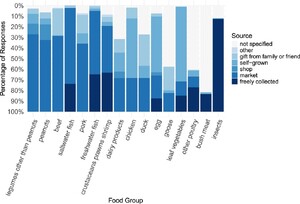
As for protein food consumption patterns, leafy vegetables were the most frequently consumed protein-rich foods, at least once a week (98%), with saltwater fish being frequently consumed (80%). Freshwater fish and legumes were moderately consumed (54 and 47%, respectively). Animal-source proteins such as pork, beef, and insects were rarely consumed (1, 2 and 6%, respectively) (Figure 2). In terms of origins, while beef and pork are usually purchased at markets (open-air markets), leafy vegetables, eggs, and chickens are home-produced by households (Figure 3).
Food consumption patterns of rich-protein foods across all 127 participants.
Citation: Journal of Insects as Food and Feed 2026; 10.1163/23524588-bja10391
Range of origins of rich-protein foods according to the 127 participants across 7 different villages.
Citation: Journal of Insects as Food and Feed 2026; 10.1163/23524588-bja10391
Beliefs and attitudes towards insects as food: pre-consumption results
Before consuming BSF products, 92% of participants reported having eaten insects, while only 2% had consumed insect powder. Of those who had eaten insects, 90% reported liking the taste, and 88% did not consider insect food disgusting.
Of the 8% of participants who had never eaten insects, 6% were willing to try, while 2% reported that the thought of eating insects made them feel sick. Among all participants, 88% considered insects (in any form: plain, powder, chopped) edible. 97% of participants reported that their neighbours and friends ate insects. 95% would try a dish made with insects, while 60% confirmed they would try insect larvae.
More than half of the surveyed participants believed that insect consumption offers significant advantages, with 65% citing health benefits, 50% recognising their nutritional value, and 58% acknowledging their contribution to food diversity. Conversely, a minority (9%) expressed concerns about potential negative effects such as microbes, poisons/toxins, and allergies, with 90% of these specifically highlighting allergies as a concern.
When comparing insects to traditional animal protein sources, a substantial majority (91%) perceived insects as being more cost-effective, and 32% considered them more abundant and readily available.
Regarding the perception of environmental impact, 61% of participants believed that insect farming is beneficial for the environment. Furthermore, there was overwhelming support for further research and programmes related to insects as a food source, with 87 and 87% of participants, respectively, endorsing these initiatives.
Participants visually assessed and ranked five different insects (grasshopper, cricket, beetle, grub, and BSF larvae) based on their visual perception before tasting any insect-based products. A weighted ranking system was used in which the first choice received five points, the second choice four points, the third choice three points, the fourth choice two points, and the fifth choice one point. The total preference score for each insect was calculated by multiplying the number of participants selecting each rank by its corresponding weight. The grasshopper received the highest preference score, followed by the cricket, beetle, and grub, with the BSF being the least preferred. Notably, BSF, being unfamiliar to participants, ranked lowest, suggesting that prior exposure and familiarity significantly influence consumer acceptance of insect-based foods (Figure 4). Higher scores indicate greater visual appeal.
Visual preference ranking for edible insect groups based on images presented during the pre-consumption survey, using a weighted scoring system (n = 127 participants).
Citation: Journal of Insects as Food and Feed 2026; 10.1163/23524588-bja10391
Preference for insect preparation methods based on images presented during the pre-consumption survey (n = 127 participants), showing that processed forms and familiar dishes were preferred over whole insects.
Citation: Journal of Insects as Food and Feed 2026; 10.1163/23524588-bja10391
When presented with images of insect powders, participants expressed a clear preference for lighter-coloured powders, with white being the most preferred, as opposed to darker shades (Figure 5). The majority of participants (96%) indicated their willingness to consume a salted snack that incorporated insect powder.
Comparison of attitudes and beliefs before and after consumption of tested products
On the Food Neophobia Scale (range 10-70), high neophobia is defined as a score of 35 or higher, and moderate neophobia as a score of 25 to 35 (Pliner and Hobden, 1992). Overall, participants had a score of 33.78 ± 1.22 (mean ± SD), indicating moderate food neophobia.
After consuming insect products, regarding positive perceptions, no significant change was found in perceptions of health benefits (
Comparison of beliefs and attitudes pre- and post-consumption (n = 117 for pre- and 164 for post-consumption)
Citation: Journal of Insects as Food and Feed 2026; 10.1163/23524588-bja10391
Acceptance levels of products by participants (n = 119-124)
Citation: Journal of Insects as Food and Feed 2026; 10.1163/23524588-bja10391
Negative perceptions changed significantly, with a significant reduction in perceptions of insects as disgusting (
Adult consumer acceptance and preference for tested products
Statistical analysis using ANOVAs revealed a consistent pattern for all criteria (overall, colour, visual appearance, smell, taste, aftertaste, flavour and texture liking). Post-hoc comparisons revealed three statistically distinct groups, consistent across all eight sensory criteria (
Perception and behaviour among children
The majority of children responded positively to the tested products. 95% of the children expressed a liking for the BSF crackers and the WB, while 79% liked the BSF powder. The BSF larvae received a lower approval rating, with only 59% of the children indicating they liked it. A chi-square test compared the percentages of those who liked and disliked the BSF larvae and found no significant difference, nor a significant association between gender and product liking (
Regarding the amount of each product consumed by the children, 84% of the children consumed all of the products that their parents shared with them. However, a chi-square test revealed a significant association between the specific product and the quantity consumed (
Following consumption, 72% of the children requested additional portions of the products, with a significant association between the willingness to consume more and the specific product (
A chi-square test revealed a significant association between the children’s reactions and the specific product (
Finally, the study examined whether the products were consumed on all three days of the test. A chi-square test showed a significant association between product consumption on all days and the specific product (
Factorial Correspondence Analysis and the symptomatic experiences of each tested product.
Citation: Journal of Insects as Food and Feed 2026; 10.1163/23524588-bja10391
Post-consumption symptoms in adults
Among the participants, 62 and 73% reported that white beans provided a sensation of energy and satiety, respectively. In contrast, these sensations were reported by 30 and 26% of participants consuming BSF crackers, 22% for both sensations regarding BSF powder, and 19 and 13% with BSF larvae. Additionally, 15 and 14% of participants reported experiencing nausea with BSF larvae and BSF powder, respectively, while 9% reported stomach aches with BSF powder. Importantly, none of the products caused illness, allergic reactions, or diarrhoea (Figure 6).
When asked about their willingness to incorporate BSF into their diets and to produce BSF in the future, on average, participants reported that they would be willing to incorporate approximately one and half a spoonful of BSF powder (a mean of 6.7 g, assuming 5 g per spoonful) into a single dish for their own consumption. This figure represents a hypothetical intended amount reported during the post-consumption survey, not a measured intake. Furthermore, 90% expressed a willingness to produce BSF in the future.
Focus group discussions
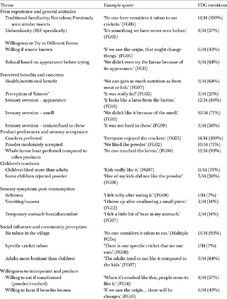
The results of the FGDs are organised into the following themes: prior experience with insects and general attitudes, willingness to try insects in different forms, perceived benefits and concerns, product preferences and sensory acceptance, children’s reactions, sensory symptoms and reactions post-consumption, social influence and community perception, and willingness to incorporate and produce insects. The main results of the FGD are summarised in Table 4 below. To provide more substantial evidence about the mechanisms that contextualise the process through which changes took place between pre- and post-consumption, we explore longer quotes and sections of the dialogues.
Following is a deeper exploration of the dialogues, where participants are coded as: PX-00, where X refers to the Participant ID in the order they first spoke, and -00 refers to the FGD where the conversation took place.
Prior experience with insects and general attitudes: FGDs generally corroborated survey findings, indicating an absence of cultural taboos regarding insect consumption across participant groups. While some acknowledged taboos against consuming other animals within specific subgroups, these prohibitions did not extend to BSF.
- ∙ Facilitator 1: ‘The kids weren’t afraid?’
- ∙ P1-01: ‘There was already something similar to it they’d seen, so they weren’t scared of it anymore.’
- ∙ P2-01: ‘I don’t think anyone here would have a taboo against eating them. They might not like eating them, but they’re not forbidden.’
- ∙ Facilitator 2: ‘Have you ever heard of anyone who considers it taboo to eat crickets? Maybe someone from a different village?’
- ∙ P3-01: ‘No, no one here considers it taboo to eat. We harvest it when the season comes.’
- ∙ P4-14: ‘I liked it with rice, though. The powder, I don’t like eating it raw! But when it’s crushed like this, people seem to like it. The kids in my household really enjoyed it. The powder was very delicious.’
- ∙ P5-14: ‘In our household, I think only three kids liked the larvae. Most of the adults didn’t eat it, or rather, they tried it, but they didn’t like it. It gave them goosebumps. We all liked the powder, though, and we ate it with rice!’
Thematic prevalence across 14 FGDs
Citation: Journal of Insects as Food and Feed 2026; 10.1163/23524588-bja10391
Perceived benefits and concerns: The benefits identified in survey responses, such as health and nutritional value, were frequently echoed by focus group participants. The ‘fatness’ of the larvae was often cited as an indicator of nutritional richness. Concerns expressed in the survey, including potential allergens or microbes, were also reflected in the FGDs through reports of mild adverse symptoms (e.g. itchiness or stomach ache from the powder) and sensory aversions (e.g. undesirable smell or visual resemblance to maggots or latrine larvae). These concerns were predominantly associated with the product’s appearance and unfamiliarity, supporting the quantitative finding that prior exposure significantly influences acceptance.
-
∙
Perception of health and ‘fatness’:
- – P6-08: ‘I mixed it with cassava, and I ate it like I would eat spice. When I ate rice, I poured it into a small spoon. We tried pouring it onto our rice in the beginning, but we felt it was very strong. The day after it was distributed, we used our hands and ate it with rice. I felt it was good for my body. Some people said it was fatty. And full of nutrients. Some people even said that we became more in shape after eating it.’
- – P7-08: ‘We liked it in general because our body remains healthy after eating it, so that’s why we like it.’
- – P8-08: ‘Same as what they said, it tastes fatty when you try it.’
-
∙
Sensory aversion:
- – P4-03: ‘We just loved it [crackers], the taste, the texture, everything. But the recent one, we didn’t really like. Also, the smell was quite strong.’
-
∙
Unfamiliarity:
- – P8-10: ‘There will be changes if we see the source of it. If we see the source of these things, we might like it.’
- – P9-10: ‘I think these things must taste better than the things you’re asking us to compare them to, but the problem is that our minds associate them with bad things. If we see the origin of these things, we might like them more than anything else.’
-
∙
Crackers:
- – P5-03: ‘We really enjoyed the crackers. My kids couldn’t stop eating them; they really, really loved them and kept asking for more.’
-
∙
Powder:
- – P3-04: ‘The powder was our favourite and then the cracker but we did not really like the larvae! We finished all three of them.’
-
∙
Whole larvae:
- – P6-07: ‘All of it. My stomach can’t handle it. I only tried the crackers. Everyone, including my wife and kids, liked it! They also did not like the larvae.’
- – P7-07: ‘Personally, me and my kids liked it! But the larvae, we didn’t like even seeing it!’
- – P4-02: ‘The only small problem was that it passes through the space between our teeth, for those of us who are missing teeth.’
- ∙ P6-05: ‘In our case, all three types of it were appreciated by the kids and others; they couldn’t even wait for the turn to distribute it. I even realised it brought changes to the kids’ bodies ever since they ate it.’
- ∙ P8-03: ‘It feels like you’re adding caterpillars to your meals when you eat it… and we were afraid to eat it. I was scared to see it. When I took it in my hand, I got goosebumps, and I never thought of it as something edible. I really liked the crackers, but I felt stomach pain after eating them. As for the powder, no one in my household liked it, including me.’
- ∙ P8-05: ‘It’s quite difficult to talk about food with someone nowadays! You want to motivate people when you share it with them. They’re also jealous of us receiving it, so they didn’t get it. Surely we’ve heard it [negative rumours], but we still continue to eat it. They said we’re eating nonsense and that it will kill us one day.’
- ∙ P9-05: ‘Yeah, they say a lot of things, but we don’t care.’
- ∙ P10-05: ‘Yeah, they say we’ll die from our curiosity.’
- ∙ P11-05: ‘But we trust that you won’t do that to us.’
- ∙ P12-05: ‘Yes, I heard that [Some people say it causes infertility] from people in Ankazotsararavina. They say that this is family planning. I told them that even if they wanted to do that to us, I already have many kids.’
- ∙ P13-05: ‘Some friends come and ask! And we told them that it’s good!’
- ∙ P14-05: ‘They envy us; they also want to have it! They want to eat it also!’
- ∙ P15-05: ‘Yes, they’re right; people are curious to try it too!’
- ∙ P16-05: ‘I don’t need to go to their home, but they come here asking, and I answer them! Because it is an edible thing, and I give whatever is available to me to my guests! What they do is actually envy us because they also want to benefit from it.’
- ∙ P17-05: ‘I’m ready to farm it.’
- ∙ P18-05: ‘As long as there’s training on how to farm it, I’m ready.’
- ∙ P19-05: ‘I told my friend from the beginning of this that I’m ready, as long as you won’t kill me, I’m ready!’
- ∙ P20-05: ‘Just go ahead and send us the technician because we’re ready.’
- ∙ P21-05: ‘I will make sure to eat first and then sell later. It will be easy to sell if people see the evidence on me and my family.’
4 Discussion
This study represents the first investigation into adult consumer acceptance of BSF-larvae-based products in Madagascar, a context highly relevant given the country’s food security challenges and given that it has become the first country to adopt a national standard authorising dried BSF larvae and larval powder for direct human consumption. By focusing primarily on adults, particularly women, who drive lasting changes in household food habits, the study provides actionable evidence for integrating BSF products into local diets within a One Health framework. Our findings reveal a strong foundation of cultural openness to entomophagy, a clear product preference hierarchy shaped by sensory and psychological factors, and high willingness to both consume and produce BSF at the household level.
The baseline assessment of protein food consumption practices revealed that while leafy vegetables and fish are frequently consumed, animal-source proteins like pork and beef are rare, and insects are consumed by a small minority. This low consumption, however, appears unrelated to cost or general food habits, as insects are often hunted and their taste is not a deterrent for those who have consumed them. Availability emerges as a critical factor influencing current insect consumption patterns, aligning with food choice theories that emphasise availability as a necessary condition for consumption (Fischler, 1990). This finding is significant for Madagascar’s National Office of Nutrition, suggesting that increasing the consistent availability of nutritious food, including BSF, could be a key strategy in combating malnutrition.
In keeping with broader patterns in Africa, a high proportion of participants reported prior experience with eating insects. However, an initial visual ranking indicated that BSF was the least preferred among various insect species, likely due to its unfamiliarity. This highlights the influence of familiarity on food choice, a concept supported by the mere exposure theory, where repeated exposure can transform novel, potentially feared, foods into accepted ones (Zajonc, 1968). Often, the lack of information about the origin of the insect was pointed out as a reason for reluctance. Such psychological factors, alongside sensory and cultural influences, are critical determinants of acceptance, as extensively reviewed in the literature (Sogari et al., 2019a). FGD participants explicitly stated that greater familiarity with BSF would enhance their acceptance, suggesting that educational programmes and controlled exposure could overcome initial aversion. Despite that, participants exhibited a moderate level of food neophobia (average score of 33.78 ± 1.22), reinforcing their openness to novel food experiences.
A significant shift in attitudes and beliefs was observed post-consumption of the tested BSF products. While perceptions of health benefits and nutritional value did not significantly change, there was a highly significant increase in awareness regarding the contribution of insects to food diversity (
Regarding product acceptance, a clear preference hierarchy emerged. White bean soup and crackers containing BSF larvae powder were significantly more preferred than BSF larvae powder and whole BSF larvae. Whole BSF larvae received the lowest acceptance scores, with visual disgust, odour, and texture cited as deterrents. This pattern is consistent with the well-documented ‘yuck factor’ in novel food acceptance, whereby the visible insect form triggers an innate disgust response that overrides rational assessment of nutritional value (Hartmann and Siegrist, 2016). These sensory aversions are frequently reported challenges in consumer acceptance of whole insect forms, particularly for unfamiliar species (Bessa et al., 2020). The clear preference hierarchy, crackers over powder over whole larvae, closely mirrors the degree of cognitive distancing from the recognisable insect form. Crackers achieved the highest acceptance precisely because the familiar snack format rendered the insect ingredient invisible, enabling consumers to evaluate the product on its own sensory merits rather than its entomological origin (Sogari et al., 2019). While the powder was more accepted than whole larvae, it still scored behind the crackers, suggesting that incorporating BSF powder into familiar and palatable food formats can be highly effective for enhancing consumer acceptance.
The moderate acceptance of BSF powder relative to crackers appears to reflect several specific sensory factors. FGD participants identified the powder’s dark colour and strong odour as the primary deterrents, concerns consistent with the survey finding that participants overwhelmingly preferred lighter-coloured insect powders (see Beliefs and attitudes towards insects as food: pre-consumption results in the Results section). Participants also noted the powder’s intense flavour when consumed directly with rice, with some adjusting their dosage or mixing method to moderate the taste. By contrast, the cracker format effectively masked these sensory attributes by embedding the powder within a familiar, flavoured matrix, which may explain its consistently higher scores across all hedonic criteria. These observations suggest that for BSF powder to achieve broader acceptance, processing strategies that lighten colour and reduce odour intensity will be important considerations. Blanching prior to drying, for example, has been shown to inhibit enzymatic browning in edible insects, including BSF larvae (Liang et al., 2024; Rodrı́guez-Rodrı́guez et al., 2022), and could improve the visual and olfactory appeal of the resulting powder.
Children’s acceptance of the tested BSF products, particularly the crackers and control soup, was generally higher, aligning with findings that early-life dietary habits influence food preferences (Nicklaus, 2016). While children were less enthusiastic about whole larvae and powder compared to crackers, their overall positive response and parents’ observations regarding their trust in the food’s health benefits suggest children are a promising target population for BSF promotion. Strategies for promoting BSF consumption among children should consider the importance of repeated exposures (Cooke, 2007).
Despite overall positive attitudes, some participants reported minor symptomatic experiences, such as stomach aches and itchiness that were predominantly associated with powder or whole larvae. These isolated reports, however, were not severe and did not lead to illness, allergic reactions, or diarrhoea, indicating a generally safe consumption profile. The social environment also played a role; despite some negative community rumours (attributed to envy, according to the participants), trust in the project and positive peer experiences fostered continued consumption and willingness to share the products.
The high willingness to incorporate BSF powder into meals and to engage in BSF production presents a significant opportunity. In the context of south-east Madagascar, where food-insecure rural households rely heavily on bushmeat hunting for protein, a practice that threatens already endangered wildlife (Borgerson et al., 2025) while increasing the risk of pathogen spillover, this willingness has direct implications for a One Health approach. Household-level BSF production could provide an accessible, year-round protein source that reduces dependence on bushmeat and, in turn, alleviates pressure on the remaining forest ecosystems surrounding Manombo Special Reserve. This rationale aligns with recent evidence that farming nutrient-rich insects in Madagascar can simultaneously improve food security and reduce biodiversity loss (Borgerson et al., 2021). The fact that participants themselves identified economic benefits, including the potential to sell surplus BSF products, suggests that insect farming may address food insecurity, generate income, and support conservation goals concurrently. FGDs further illuminated that transparency regarding BSF sourcing and processing, coupled with practical training on farming techniques, would bolster acceptance and adoption. Community engagement, knowledge, and empowerment are critical for the sustainable integration of novel foods into local economies and diets. Our results provide empirical guidance for implementing this framework, particularly regarding acceptable product formats, strategies to reduce disgust, and the importance of transparency and trust in household adoption.
Among the main limitations of this study are the comparison of different insect-based products across different meals and varying preparations (WB soup, larvae and powder typically combined with neutral carbs like rice or cassava; and crackers as a standalone snack). These combinations introduce variability that may confound preferences beyond insect-specific attributes and interfere with the interpretation of the findings. While the scientific literature lacks extensive exploration of the impacts of meal experiences on sensory impressions such as appearance, texture, smell, and flavour, classical and traditional preparations often outperform others on hedonic scales, as shown by Głuchowski et al. (2021). The authors therefore opted for a design that mirrors real-world applications, while future research could standardise matrices and further disentangle these factors.
Assessing children’s preferences through caregiver observations of behavioural indicators such as consumption, refusal, and requests for more during and after tasting sessions can pose a limitation of this study. However, this reporting approach minimises recall bias inherent in retrospective surveys and aligns with validated methods for preschool-aged children, who can lack reliable verbal self-report capacity before 8 years of age (National Academies, 2022; Tovar et al., 2016). Considering that caregivers’ accuracy in reporting observed intake reaches 79% concordance with direct observation, this method supports the reliability of assessing behavioural metrics over subjective preference assumptions (Tovar et al., 2016; Wallace et al., 2018). Nonetheless, we acknowledge that proxy reports may not fully capture children’s independent voices, as evidenced by parent-child discordance in food perceptions, particularly among older youth (Frank and Sato, 2024). It should be noted that adults were prioritised as the primary focus group, particularly mothers, as gatekeepers of family feeding practices (Kueppers et al., 2018). Nonetheless, future studies should incorporate child-friendly tools (e.g. pictorial scales) for direct input where feasible, enhancing triangulation while maintaining ecological validity in home settings (National Academies, 2022).
Similarly, we acknowledge that treating households as the primary unit of data collection may introduce intra-household influences on impressions and behaviours among family members, while the data analysis treats individuals as if they were independent. However, this limitation should not undermine the interpretation of results, as changes in food habits are expected to be interconnected and shaped by caregivers (Kueppers et al., 2018). Instead, this highlights opportunities for future research to examine how shared impressions influence food behaviours and contribute to collective household food habits, and the extent to which independent impressions should be considered when implementing new food habits.
5 Conclusion
This pioneering study reveals a high underlying potential for the adoption of BSF larvae products in rural Madagascar and highlights the significant role of direct exposure in shifting negative perceptions. Future initiatives promoting insect-based nutrition should leverage the existing cultural openness to edible insects, consider children as a key target group, and emphasise transparency in production. Educational programmes addressing product origins and offering practical training in BSF farming could further normalise consumption and contribute to sustainable food systems and improved public health within Madagascar, leading to a practical application of the One Health approach.
The study provides compelling evidence that BSF larvae hold substantial potential as a sustainable and acceptable protein source in Madagascar. Future initiatives should focus on promoting processed BSF products, targeting children for early adoption, and investing in educational programmes that demystify BSF production while highlighting its nutritional and environmental benefits. By leveraging these insights, Madagascar can pave the way for BSF to play a significant role in fostering resilient food systems and improving public health in similar settings.
Corresponding author; e-mail: rvonimihaingo@yahoo.fr
Acknowledgements
Brian Fisher and Sakib Burza contributed equally. The authors thank all participants, local authorities, organisations, and individuals who supported the study. This research was supported in part by the Innocent Foundation and King Philanthropies, whose support has helped advance research and community initiatives exploring sustainable insect-based nutrition and food security solutions in Madagascar. This work was supported by the Darwin Initiative [grant number 30-015].
References
Alemu, M.H., Halloran, A., Olsen, S.B., Anankware, J.P., Nyeko, P., Ayieko, M., Nyakeri, E., Kinyuru, J., Konyole, S., Niassy, S., Egonyu, J.P., Malinga, G.M., Ng’ang’a, J., Ng’ong’a, C.A., Okeyo, N., Debrah, S.K., Kiiru, S., Acur, A. and Roos, N., 2023. Promoting insect farming and household consumption through agricultural training and nutrition education in Africa: a study protocol for a multisite cluster-randomised controlled trial. PLoS ONE 18: e0288870. https://doi.org/10.1371/journal.pone.0288870
Borgerson, C., Fisher, B.L., Razafindrapaoly, B.N., Rasolofoniaina, B.J.R., Randriamanetsy, J.M., Razafindrapaoly, B.L., Rajaona, D., Herrera, P., Van Itterbeeck, J., Martinez, K.M. and Aardema, M.L., 2021. A nutrient-rich traditional insect for improving food security and reducing biodiversity loss in Madagascar. Conservation Science and Practice 3: e480. https://doi.org/10.1111/csp2.480
Borgerson, C., Razafindrapaoly, B.N., Rasolofoniaina, B.J.R., Andriamahaihavana, A., Ravololoniaina, F.L., Owen, M.A. and Eppley, T.M., 2025. Wildlife consumption patterns during a complex humanitarian and environmental crisis. Biological Conservation 303: 111106. https://doi.org/10.1016/j.biocon.2025.111106
Bureau des Normes de Madagascar (BNM), 2025. Larves séchées de Black Soldier Fly (Hermetia illucens) et leur poudre, Spécifications. Norme Nationale Malagasy NMG 132-13. BNM, Antananarivo.
Caparros Megido, R., Sablon, L., Geuens, M., Brostaux, Y., Alabi, T., Blecker, C., Drugmand, D., Haubruge, É. and Francis, F., 2016. Edible insects acceptance by Belgian consumers: promising attitude for entomophagy development. Food Quality and Preference 52: 237-243. https://doi.org/10.1016/j.foodqual.2016.05.003
Kueppers, J., Stein, K.F., Groth, S. and Fernandez, I.D., 2018. Maternal and child dietary intake: the role of maternal healthy-eater self-schema. Appetite 125: 527-536. https://doi.org/10.1016/j.appet.2018.01.014
National Academies of Sciences, Engineering, and Medicine, 2022. Approaches to assessing intake of food and dietary supplements in pregnant women and children 2 to 11 years of age: proceedings of a workshop series. The National Academies Press, Washington, DC. https://doi.org/10.17226/26374
Tan, H.S.G., Fischer, A.R.H., van Trijp, H.C.M. and Stieger, M., 2016. Tasty but nasty? Exploring the role of sensory-liking and food appropriateness in the willingness to eat unusual novel foods like insects. Food Quality and Preference 48: 293-302. https://doi.org/10.1016/j.foodqual.2015.11.001
Wallace, A., Kirkpatrick, S.I., Darlington, G. and Haines, J., 2018. Accuracy of parental reporting of preschoolers’ dietary intake using an online self-administered 24-h recall. Nutrients 10: 987. https://doi.org/10.3390/nu10080987