Abstract
The tiger mosquito Aedes albopictus (Skuse, 1894) is an invasive species that is progressively expanding its range in many countries. This study assesses the diversity of mosquito species present in Principat dâAndorra and explores the potential occurrence of the invasive alien species Ae. albopictus. Systematic monitoring was conducted during eight sampling campaigns in JulyâOctober 2025. BG-Sentinel 2 traps and aspirators were used to collect adult mosquitoes, while ovitraps and larval surveys were employed to detect eggs and larvae. Aedes albopictus was detected for the first time in Andorra in summer 2025. Furthermore, the study confirms the presence of the species in all developmental stages (egg, larva, and adult), which suggests it has probably become established. All records were from the southernmost parts of the country: Sant Julià de Lòria, Andorra la Vella, and Escaldes-Engordany. These findings highlight the urgent need for integrated vector management, comprehensive risk assessment, and effective communication strategies to mitigate the potential public health impacts associated with this invasive species.
1 Introduction
The tiger mosquito Aedes (Stegomyia) albopictus (Skuse, 1894) (Diptera: Culicidae) is an invasive species native to southeast Asia (Gratz, 2004; Marabuto and Rebelo, 2018). It is currently regarded globally as the most invasive vector species and in recent decades, has become one of the fastest-spreading animal species (Benedict et al., 2007; Bonizzoni et al., 2013). This mosquito exhibits remarkable ecological plasticity and has successfully colonised temperate and tropical regions on all continents except Antarctica (Bonizzoni et al., 2013; Swan et al., 2022). Its global spread has been largely facilitated by international trade, particularly through the transport of used tyres (Benedict et al., 2007; Gratz, 2004; Swan et al., 2022) and ornamental plants such as lucky bamboo (Bocková et al., 2013; Scholte et al., 2007), both of which provide suitable breeding habitats. In addition, its ability to tolerate low temperatures and exploit diverse habitats further enhance its invasive potential (Goiri et al., 2020). Moreover, its eggs are highly resistant to desiccation, which enhances survival during prolonged dry periods and contributes significantly to the rapid expansion and establishment of this species in new areas (Benelli et al., 2020).
Aedes albopictus was first detected in Europe in 1979, in Albania, and has subsequently spread across much of the continent, including countries such as Italy, France, Spain, and Portugal (Aranda et al., 2006; Bocková et al., 2013; ECDC, 2025; Marabuto and Rebelo, 2018; Scholte et al., 2007; Swan et al., 2022). In areas bordering the Principat dâAndorra, the tiger mosquito has expanded into several neighbouring municipalities in Catalonia, to the south (Departament de Medi Ambient i Sostenibilitat, 2025), as well as into the French departments of Ariège and Pyrénées-Orientales (Ministère du Travail, de la Santé et des Solidarités, 2025).
As a recognised vector of several arboviruses including chikungunya, dengue, and Zika, Ae. albopictus poses a significant threat to public health (Bohers et al., 2024; Bonizzoni et al., 2013; Gratz, 2004). Moreover, autochthonous outbreaks have already been reported in Europe, demonstrating local transmission of some of these diseases in areas where this invasive mosquito has become established (Bohers et al., 2024; Martinet et al., 2019). Its aggressive daytime biting behaviour (Benedict et al., 2007) and ability to thrive in urban environments negatively affect human quality of life and may even have direct economic consequences (Halasa et al., 2014).
In Principat dâAndorra information on mosquito biodiversity has been available since 2004 and 2016 as a result of two comprehensive studies conducted by the former Institut dâEstudis Andorrans (IEA) in collaboration with and under the scientific guidance of the Servei de Control de Mosquits del Consell Comarcal del Baix Llobregat (SCM). These two studies provided valuable data on the biodiversity and distribution of the culicid fauna of Principat dâAndorra, even though neither detected the presence of the tiger mosquito (Aranda and MacÃas, 2016; Escosa and Aranda, 2004).
In light of this information, a new survey of the mosquitos in Andorra was undertaken whose primary objectives were to monitor the potential spread of Ae. albopictus and update and complete the national inventory of vector species.
2 Materials and methods
Study area
The research was conducted in Principat dâAndorra (eastern Pyrenees), a mountainous country with elevations ranging from 848 to 2,942 m a.s.l., located approximately between 42° 25â²-42° 39â² N and 1° 24â²â1° 47â² E (Figure 1). The region has a predominantly sub-continental climate with Mediterranean influences, transitioning to a cold, sub-oceanic climate at higher elevations. Its varied topography and continentality determine precipitation patterns; summer is the wettest season, and the highest elevations receive up to six months of snow cover (NovemberâApril). Pronounced altitudinal gradients and varied terrain generate high habitat diversity within Andorraâs 468 km2, including forests, subalpine and alpine grasslands, screes and rocky outcrops, shrublands, and urban areas. As of 2024, Principat dâAndorra has approximately 88,000 inhabitants (Departament dâEstadÃstica del Govern dâAndorra, 2025).

Map of the geographical situation of Principat dâAndorra showing the presence/absence of Aedes albopictus during the eight sampling campaigns conducted in 2025 in the seven Andorran parishes.
Citation: Journal of the European Mosquito Control Association 44, 1 (2026) ; 10.52004/2054930x-20261034
Methods
This study, which was conducted by Andorra Research + Innovation (AR+I), formerly IEA, in close collaboration with the SCM, and forms part of the mosquito and vector insect monitoring program run in Principat dâAndorra. This program operates within the framework of the One Health Andorran Commission [Interministerial Commission Una Sola Salut (CIUSS)], established by the Andorran Health and Environmental Government Departments (Ministeri de Medi Ambient, Agricultura i Ramaderia, and Ministeri de Salut del Govern dâAndorra). Created in 2025, the commission seeks to address the need for coordinated policies across human, animal, and environmental health sectors (BOPA, 2025).
The study comprised eight sampling campaigns, started in early July to mid-October 2025. It relied primarily on mosquito trap surveillance, complemented by several field surveys targeting larval habitats. Two trap types were employed, both recognised as highly effective for targeted mosquito surveillance: the Biogents Sentinel 2 trap (BG-Sentinel 2, BioGents GmbH, Regensburg, Germany) (Kröckel et al., 2006; Farajollahi, 2009) and an oviposition trap (Becker et al, 2010). Additionally, targeted surveys were conducted at previously identified larval breeding sites including storm drains and stagnant water bodies.
The BG-Sentinel 2 traps were operated biweekly for 24-hour sampling periods, using carbon dioxide (CO2) as an attractant, supplied as dry ice. These traps are widely used due to their efficiency in capturing diurnal mosquito species, particularly Ae. (Stg.) aegypti (Linnaeus, 1762) and Ae. albopictus (Gibson-Corrado et al., 2017; Reegan, 2024). By contrast, oviposition traps are designed to attract female mosquitoes seeking a site to lay their eggs. Each trap consisted of a black plastic container (250 ml volume), filled with dechlorinated water and a rough wooden tongue depressor, which serves as an oviposition substrate. A drainage hole placed 4 cm from the edge prevented overflow in case of heavy rain. Oviposition traps remained in place continuously throughout the four main months of the study (JulyâOctober). The wooden substrate was inspected and replaced every two weeks. These traps were specifically intended to target Ae. albopictus and act as an early indicator of reproductive activity. The locations of both trap types were strategically selected in accordance with the study objectives.
Site selection was based on multiple criteria, including altitude, proximity to livestock, and areas with high traffic density, the latter considered a potential pathway for the accidental introduction of the tiger mosquito (Zayed et al., 2024). Monitoring and control efforts were focused on the parish of Sant Julià de Lòria, located in the southernmost part of the country. This parish borders Catalonia (Spain), where the presence of the tiger mosquito has been confirmed (Departament de Medi Ambient i Sostenibilitat, 2025) and is therefore considered a potential entry site for this invasive alien species. Specifically, BG-Sentinel 2 traps were deployed at 11 sampling locations, with a highest concentration in this southern parish, whereas oviposition traps were installed at 15 sites, prioritising areas with high tourist vehicle traffic, particularly in Sant Julià de Lòria (see Supplementary Table S1 for site details). During fieldwork, adults trying to bite the authors were captured using an entomological aspirator (Prokopack, John W. Hock Company, Gainesville). Larvae were collected using dippers from all water-holding containers found, such as cemetery vases and storm drains.
After collection, samples were preserved to prevent damage or deterioration. Mosquitoes captured with BG-Sentinel 2 traps were killed by freezing at -30 °C, then allowed to dry at room temperature for 2â3 days. Specimens were subsequently stored in sealed containers with silica gel to prevent the build-up of humidity. Wooden sticks collected from Oviposition traps were air-dried at room temperature. For complementary larval surveys, specimens were collected in labelled containers, and then transferred to vials with 70% ethanol for subsequent identification. Following preservation, mosquito specimens from all trap types were identified based on morphological characteristics using a stereomicroscope and the taxonomic keys in Becker et al. (2010) and Schaffner et al. (2001). Wooden sticks for eggs were submerged, and larvae were reared to the fourth instar or adult stage to confirm species identification.
3 Results
Aedes albopictus was recorded for the first time in Principat dâAndorra during the initial campaign in July 2025. Following this initial detection, the species was consistently detected throughout summer and early autumn 2025, with all developmental stages observed, including adults, larvae, and eggs.
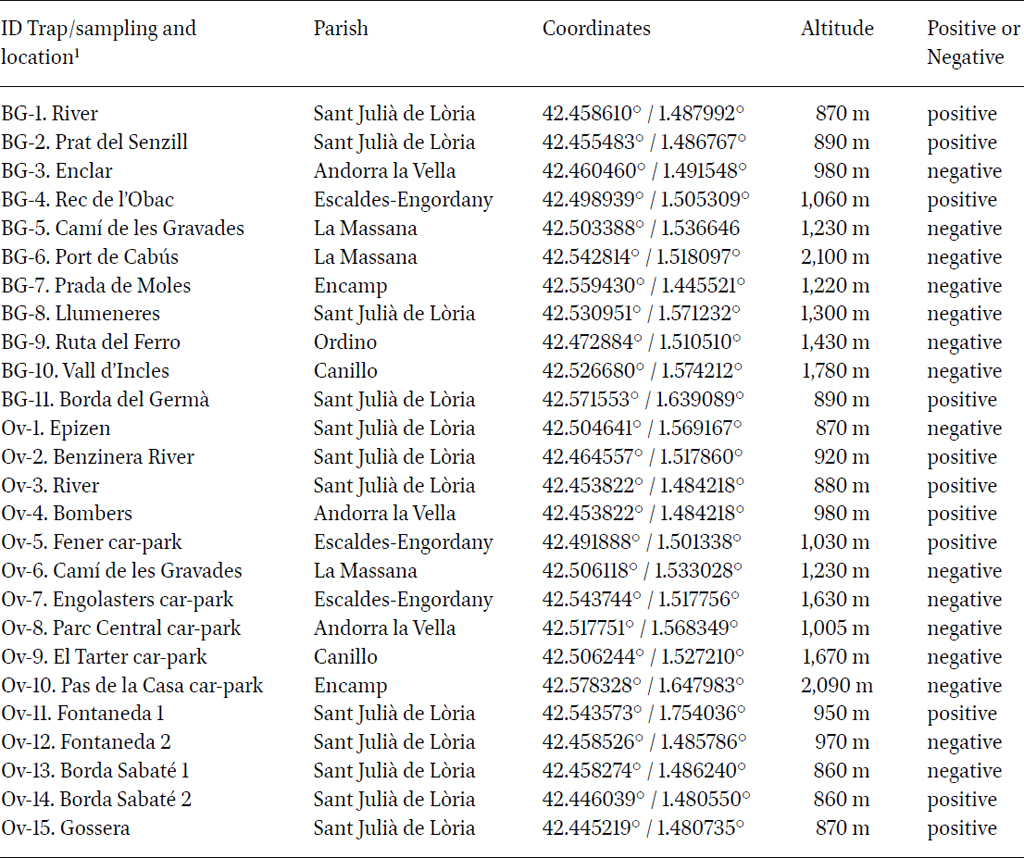
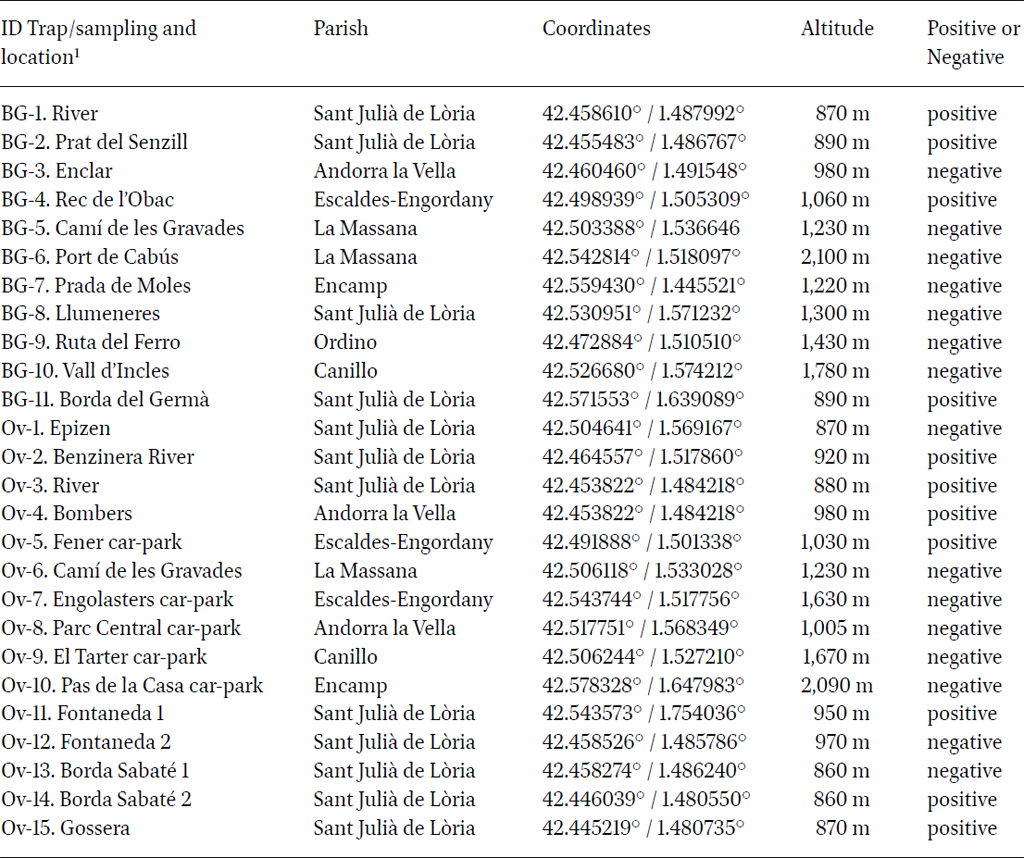
Adult individuals were detected using BG-Sentinel 2 traps and an aspirator during fieldwork (Figure 2). Larvae were detected both in oviposition traps and in artificial water-holding containers, particularly those commonly found in environments such as cemeteries, which are known to provide suitable breeding habitats. Adult specimens were recorded in the parishes of Sant Julià de Lòria and Andorra la Vella, while larvae were detected exclusively in Sant Julià de Lòria. Eggs were recorded at multiple locations across the country. Notably, 59 eggs were recorded on a single wooden stick from an oviposition trap deployed in Sant Julià de Lòria during the final sampling period in late October. Positive Oviposition traps were recorded in the parishes of Sant Julià de Lòria, Andorra la Vella, and Escaldes-Engordany (see Supplementary Table S1 for detailed results).
Adult of Aedes albopictus detected in the Principat dâAndorra.
Citation: Journal of the European Mosquito Control Association 44, 1 (2026) ; 10.52004/2054930x-20261034
All locations where Ae. albopictus was detected are situated in the southern part of the country, specifically in the parishes of Sant Julià de Lòria (42° 28â² N, 1° 29â² E), with its main village at an elevation of 912 m a.s.l., Andorra la Vella (42º 30â N, 1º3 1â E) at 1,035 m, and Escaldes-Engordany (42º 30â N, 1º 32â E) at 1,045 m (Institut dâEstadÃstica dâAndorra, n.d.). These three parishes are predominantly residential, with populations ranging from approximately 25,900 inhabitants in Andorra la Vella to 10,650 in Sant Julià de Lòria (Departament dâEstadÃstica del Govern dâAndorra, n.d.). Sant Julià de Lòria lies approximately 15 km north of the nearest village in Catalonia (Spain), where this mosquito species has also been reported. By contrast, traps deployed in the remaining parishes in the country âall located at greater average altitudesâ yielded negative results across all survey campaigns, and no adults, larvae, or eggs were detected. Positive and negative sites are shown in Figure 2 and Table 1, and further details of each site, including dates of the positive findings, are reported in Supplementary Table S1.
4 Discussion and conclusion
We report the first detection of Ae. albopictus in the Pyrenean country, Principat dâAndorra. This new record challenges the predictions made by Oliveira et al. (2021), who, using a consensus approach combining published habitat suitability models at multiple spatial resolution (1â55 km) classified this region as environmentally unsuitable for the species, despite its proximity to suitable areas such as the northeast of the Iberian Peninsula and southern France. Notably, several territories adjacent to Principat dâAndorra have confirmed the presence of Ae. albopictus, including the Catalan counties of Alt Urgell, Pallars Sobirà , and Cerdanya (Departament de Medi Ambient i Sostenibilitat, 2025), and the French departments of Ariège and Pyrénées-Orientales (Ministère du Travail, de la Santé et des Solidarités, 2025). The proximity of the Principat dâAndorra to these neighbouring territories, combined with intense cross-border human mobility, may have played a significant role in the introduction of this vector species. Previous studies have demonstrated that frequent human and commercial movements between regions can promote the introduction and spread of exotic species, including the tiger mosquito (Martinet et al., 2019; Zayed et al., 2024).
The introduction of Ae. albopictus into Andorra is confirmed by the detection of individuals at all life stages (eggs, larvae, and adults). However, the species cannot yet be considered established, as evidence of local reproduction and overwintering remains lacking (ECDC, 2017). Climatic factors play a decisive role in the successful establishment of the tiger mosquito in new regions (Cunze et al., 2016; Goiri et al., 2020; Ibáñez-Justicia et al., 2020). Among these, mean annual temperature (ideally above 10â11 °C) and mean January temperature (above 0 °C), considered the most critical period for egg survival, are regarded as the most limiting variables for species persistence (Cunze et al., 2016; Goiri et al., 2020). Andorra, with elevations ranging from 848 to 2,942 m a.s.l., hosts the majority of its population concentrated in lower-altitude parishes, particularly in the south. In these southern areas, mean January temperatures exceed 0 °C; however, mean annual temperatures remain below 11 °C (Batalla et al., 2016). In addition, other environmental parameters, such as photoperiod and precipitation also influence establishment success (Ibáñez-Justicia et al., 2020). When comparing climatic and altitudinal conditions with other European mountainous regions, such as the Lazio region in Italy (Romiti et al., 2022), our observation are consistent with the occurrence of Ae. albopitus established populations at elevations of, at least, 900 m a.s.l.. According to these criteria, we consider that Principat dâAndorra presents favourable climatic conditions for the establishment and potential spread of this species, particularly in lower-elevation areas of the country (Batalla et al., 2016). These conditions are comparable to those reported for regions with similar climates, especially when urban microclimatic conditions are considered, such as the canton of Ticino in Switzerland where the tiger mosquito has become established (Neteler et al. 2013; Ravasi et al., 2022). Continued monitoring will be essential to assess population persistence, overwintering capacity, and future expansion within the country.
Positive and negative sites with their coordinates
Citation: Journal of the European Mosquito Control Association 44, 1 (2026) ; 10.52004/2054930x-20261034
Numerous studies support the association between the increasing spread of invasive alien species such as the tiger mosquito â and, consequently, their potential for arbovirus transmission â and increasing temperatures and broader climate change (Laycock et al., 2022; Radici et al., 2025). Oliveira et al. (2021) project that, under future climate scenarios, up to 83% of urban areas worldwide may become suitable habitats for this species. This projection is further reinforced by Laporta et al. (2023), who demonstrated that Europe is becoming increasingly suitable for both Ae. albopictus and Ae. aegypti, thereby increasing the risk of transmission of the arboviruses they vector.
Regardless of the current extent of the Ae. albopictus incursion in Principat dâAndorra, experiences from other countries clearly indicate that once this invasive mosquito becomes established, eradication is both challenging and costly. Accordingly, this study highlights the importance of rapid and coordinated action to prevent the widespread proliferation and long-term establishment of this species in Andorra (ECDC, 2017; Ministerio para la Transición Ecológica y el Reto Demográfico, 2013).
The detection of the tiger mosquito in Principat dâAndorra by this study has important public health and management implications. First, urgent measures should be implemented to prevent the species from becoming established in the country. In addition, the presence of this mosquito â a recognised vector of diseases such as dengue and chikungunya â emphasises the need for robust and proactive public health responses strategies to mitigate the risk of potential future outbreaks in the human population (Marabuto and Rebelo, 2018). These actions should be implemented through a multidisciplinary One Health approach, integrating the human, animal, and environmental health sectors. Furthermore, in line with the agreements established by the interministerial Una Sola Salut commission (CIUSS), the recent detection of Ae. albopictus in Principat dâAndorra as a newly introduced alien species obliges the drafting of a specific control plan. This plan is expected to be developed once additional data on speciesâ distribution become available. The effectiveness of this plan will depend on the commitment and cooperation of local authorities, as well as the timely and efficient implementation of selected measures. Key components should include preventive and control actions aimed at containing and limiting mosquito spread, together with sustained public awareness campaigns. Public engagement is essential, as the adoption of preventive measures in private and domestic environments will be critical to limiting the spread of the mosquito and reducing associated health risks.
Supplementary material
Supplementary material can be found online at https://doi.org/10.52004/2054930X-20261034 at Supplementary materials.
Table S1. Results (positive or negative), coordinates, and habitat characteristics of the sites monitored for the mosquito Aedes albopictus in Principat dâAndorra in JulyâOctober 2025.
Acknowledgements
We would like to thank Anna Bertran, Laura MartÃnez, and Raul MartÃnez from AR+I, as well as Daniel Jiménez, Agustà RuÃz, Alonso Agüera, and Ana Cristina Delgado from SCM, for their support during the fieldwork. We also acknowledge the assistance of our colleague Roger Caritg in the preparation of the figures. We thank the members of CIUSS Andorran commission for their support.
Authorsâ contributions
Conception and design of the study: all authors; Fieldwork: MDM, CA; Scientific guidance: CA; Writing: all authors; Review and editing: CA, CP. All authors have accepted responsibility for the entire content of this manuscript and approved its submission.
Conflict of interest
The authors declare no competing interests.
Data availability
All data generated or analysed during this study are included in this published article and its supplementary information files.
Funding
This study received no specific funding. The activities reported in this study were carried out by Andorra Research + Innovation on behalf of the Andorran Una Sola Salut Interministerial Commission (CIUSS), in collaboration with and under the scientific guidance of the Servei de Control de Mosquits del Consell Comarcal del Baix Llobregat (SCM).
References
Aranda, C. and MacÃas, J., 2016. Resum dels resultats de la campanya per lâestudi dels mosquits a Andorra. Internal document, 10 pp.
Aranda, C., Eritja, R. and Roiz, D., 2006. First record and establishment of the mosquito Aedes albopictus in Spain. Medical and Veterinary Entomology 20(1): 150â152. https://doi.org/10.1111/j.1365-2915.2006.00605.x
Batalla, M., Ninyerola, M., Trapero, L. and Esteban, P., 2016. ACDA: Andorran Climate Digital Atlas (period 1981â2010). Map server. Institut dâEstudis Andorrans (IEA), Universitat Autònoma de Barcelona (UAB). Available at: http://www.acda.ad
Becker, N., PetriÄ, D., Zgomba, M., Boase, C., Madon, M., Dahl, C. and Kaiser, A., 2010. Mosquitoes and their control. Second Edition. Springer, Berlin, Germany.
Benedict, M.Q., Levine, R.S., Hawley, W.A. and Lounibos, L.P., 2007. Spread of the tiger: Global risk of invasion by the mosquito Aedes albopictus. Vector-Borne and Zoonotic Diseases 7(1): 76â85. https://doi.org/10.1089/vbz.2006.0562
Benelli, G., Wilkem A.B.B. and Beier, J.C., 2022. Aedes albopictus (Asian Tiger Mosquito). Trends in Parasitology 36(11): 942â943. https://doi.org/10.1016/j.pt.2020.01.001
Bisia, M., Jeffries, C.L., Lytra, I., Michaelakis, A. and Walker, T., 2020. A comparison of adult mosquito trapping methods to assess potential West Nile virus mosquito vectors in Greece during the onset of the 2018 transmission season. Insects 11(6): 329. https://doi.org/10.3390/insects11060329
Bocková, E., KoÄiÅ¡ová, A. and Letková, V., 2013. First record of Aedes albopictus in Slovakia. Acta Parasitologica 58(4): 603â606. https://doi.org/10.2478/s11686-013-0158-2
Bohers, C., Vazeille, M., Bernaoui, L., Pascalin, L., Meignan, K., Mousson, L., Jakerian, G., Karch, A., de Lamballerie, X. and Failloux, A.B., 2024. Aedes albopictus is a competent vector of five arboviruses affecting human health, greater Paris, France, 2023. Eurosurveillance 29(20): 2400271. https://doi.org/10.2807/1560-7917.ES.2024.29.20.2400271
Bonizzoni, M., Gasperi, G., Chen, X. and James, A.A., 2013. The invasive mosquito species Aedes albopictus: Current knowledge and future perspective. Trends in Parasitology 29(9): 460â468. https://doi.org/10.1016/j.pt.2013.07.003
Butlletà Oficial del Principat dâAndorra (BOPA), 2024. Decret 48/2025, del 19-2-2025, dâaprovació del Reglament de creació, composición, funcionament i organització de la Comissió Interministerial Una Sola Salut.
Cunze, S., Kochmann, J., Koch, L.K. and Klimpel, S., 2016. Aedes albopictus and its environmental limits in Europe. PLoS ONE 11(9): e0162116. https://doi.org/10.1371/journal.pone.0162116
Departament dâEstadÃstica del Govern dâAndorra, 2025. A001. Estimacions de població; A003. EstadÃstica dels censos parroquials. Juny del 2025. Available at: https://www.estadistica.ad/portal/apps/sites/#/estadistica-ca/pages/publicacio?Idioma=ca&Id=33845&IdCat=4
Departament de Medi Ambient i Sostenibilitat, 2025. Municipis amb afectació del mosquit tigre (2017â2024). Generalitat de Catalunya. Available at: https://mediambient.gencat.cat/web/.content/home/ambits_dactuacio/patrimoni_natural/especies_exotiques_medinatural/llista_sp_catalogades/artropodes/doc_enll/municipis-afectats-mosquit-tigre-2024.pdf
Departament dâEstadÃstica del Govern dâAndorra, n.d.. EstadÃstiques i dades. Available at: https://www.estadistica.ad/
Escosa, R. and Aranda, C., 2004. Els mosquits a Andorra. HÃ bitats 8: 12â19. Available at: https://www.iea.ad/images/CENMA/habitats/08/06.pdf
European Centre for Disease Prevention and Control (ECDC), 2017. Vector control with a focus on Aedes aegypti and Aedes albopictus mosquitoes: literature review and analysis of information. Stockholm, ECDC, 63 pp. Available at: https://www.ecdc.europa.eu/sites/default/files/documents/Vector-control-Aedes-aegypti-Aedes-albopictus.pdf
European Centre for Disease Prevention and Control (ECDC), 2025. Aedes albopictus current Distribution. Available at: https://www.ecdc.europa.eu/en/publications-data/aedes-albopictus-current-known-distribution-june-2025
Gibson-Corrado, J., Smith, M.L., Rui-De Xue, R. and Meng, F., 2017. Comparison of two new traps to the Biogents BG-Sentinel trap for collecting Aedes albopictus in North Florida. Journal of the American Mosquito Control Association 33(1): 71â74. https://doi.org/10.2987/16-6601.1
Goiri, F., González, M.A., Goikolea, J., Oribe, M., de Castro, V., Delacour, S., Lucientes, J., Ortega-Araiztegi, I., Barandika, J.F. and GarcÃa-Pérez, A.L., 2020. Progressive invasion of Aedes albopictus in Northern Spain in the period 2013â2018 and a possible association with the increase in insect bites. International Journal of Environmental Research and Public Health 17(5): 1678. https://doi.org/10.3390/ijerph17051678
Gratz, N.G., 2004. Critical review of the vector status of Aedes albopictus. Medical and Veterinary Entomology 18(3): 215â227. https://doi.org/10.1111/j.0269283X.2004.00513.x
Halasa, Y.A., Shepard, D.S., Fonseca, D.M., Farajollahi, A., Healy, S., Gaugler, R., Bartlett-Healy, K., Strickman, D.A. and Clark, G.G., 2014. Quantifying the impact of mosquitoes on quality of life and enjoyment of yard and porch activities in New Jersey. PLoS ONE 9(3): e89221. https://doi.org/10.1371/journal.pone.0089221
Ibáñez-Justicia, A., Alcaraz-Hernández, J.D., van Lammeren, R., Constantianus, J.M., Koenraadt, C.J.M., Bergsma, A., Delucchi, L., Rizzoli, A. and Takken, W., 2022. Habitat suitability modelling to assess the introductions of Aedes albopictus (Diptera: Culicidae) in the Netherlands. Parasites and Vectors 13: 217. https://doi.org/10.1186/s13071-020-04077-3
Institut dâEstadÃstica dâAndorra, n.d.. Geoportal [Website]. IDE Andorra. Retrieved 21/XI/2025. Available at: https://www.ideandorra.ad/geoportal/
Farajollahi, A., Kesavaraju, B., Price, D.C., Williams, G.M., Healy, S.P., Gaugler, R. and Nelder, M.P., 2009. Field efficacy of BG-Sentinel and industry-standard traps for Aedes albopictus (Diptera: Culicidae) and West Nile virus surveillance. Journal of Medical Entomology 46(4): 919â925. https://doi.org/10.1603/033.046.0426
Kröckel, U., Rose, A., Eiras, Ã.E. and Geier, M., 2006. New tools for surveillance of adult yellow fever mosquitoes: Comparison of trap catches with human landing rates in an urban environment. Journal of the American Mosquito Control Association 22(2): 229â238. https://doi.org/10.2987/8756-971X(2006)22[229:NTFSOA]2.0.CO;2
Laporta, G.Z., Potter, A.M., Oliveira, J.F.A., Bourke, B.P., Pecor, D.B. and Linton, Y.M., 2023. Global distribution of Aedes aegypti and Aedes albopictus in a climate change scenario of regional rivalry. Insects 14(1): 49. https://doi.org/10.3390/insects14010049
Laycock, T., Ureña Paniego, C. and Javier, J., 2022. The threat of mosquito-borne arboviral disease in Spain: A bibliographic review. Medicina ClÃnica 158(8): 378â386. https://doi.org/10.1016/j.medcli.2021.10.014
Marabuto, E. and Rebelo, M.T., 2018. The Asian tiger mosquito, Aedes (Stegomyia) albopictus (Skuse), a vector of dengue, chikungunya and zika viruses, reaches Portugal (Diptera: Culicidae). Zootaxa 4413(1): 197â200. https://doi.org/10.11646/zootaxa.4413.1.10
Martinet, J.P., Ferté, H., Failloux, A.B., Schaffner, F. and Depaquit, J., 2019. Mosquitoes of North-Western Europe as potential vectors of arboviruses: A review. Viruses 11(11): 1059. https://doi.org/10.3390/v11111059
Ministère du Travail, de la Santé et des Solidarités, 2025. Cartes de présence du moustique tigre (Aedes albopictus) en France métropolitaine. Available at: https://sante.gouv.fr/sante-et-environnement/risques-microbiologiques-physiques-et-chimiques/especes-nuisibles-et-parasites/article/cartes-de-presence-du-moustique-tigre-aedes-albopictus-en-france-metropolitainesante.gouv.fr
Ministerio para la Transición Ecológica y el Reto Demográfico, 2013. Aedes albopictus. Available at: https://www.miteco.gob.es/content/dam/miteco/es/biodiversidad/temas/conservacion-de-especies/aedes_albopictus_2013_tcm30-69883.pdf
Neteler, M., Metz, M., Rocchini, D., Rizzoli, A., Flacio, E., Engeler, L., Guidi, V., Lüthy, P. and Tonolla, M., 2013. Is Switzerland suitable for the invasion of Aedes albopictus? PLoS ONE 8(12): 10.1371. https://doi.org/10.1371/journal.pone.0082090
Oliveira, S., Rocha, J., Sousa, C.A. and Capinha, C., 2021. Wide and increasing suitability for Aedes albopictus in Europe is congruent across distribution models. Scientific Reports 11: 22440. https://doi.org/10.1038/s41598-021-89096-5
Radici, A., Hammami, P., Cannet, A., LâAmbert, G., Lacour, G., Fournet, F., Garros, C., Guis, H., Fontenille, D. and Caminade, C., 2025. Aedes albopictus is rapidly invading its climatic niche in France: Wider implications for biting nuisance and arbovirus control in Western Europe. Global Change Biology 31(8): e70414. https://doi.org/10.1111/gcb.70414
Ravasi, D., Mangili, F., Huber, D., Cannata, M., Strigaro, D. and Flacio, E., 2022. The effects of microclimatic winter conditions in urban areas on the risk of establishment for Aedes albopictus. Scientific Reports 12: 15967. https://doi.org/10.1038/s41598-022-20436-9
Reegan, A.D., Gandhi, M.R., Balachandar, M., Farajollahi, A., Kesavaraju, B. and Ignacimuthu, S., 2024. Comparative efficacy of Biogents Sentinel and CDC traps for Aedes and Culex mosquito surveillance in India. Journal of Basic and Applied Zoology 85: 46. https://doi.org/10.1186/s41936-024-00402-9
Romiti, F., Casini, R., Magliano, A., Ermenegildi, A. and De Liberato, C., 2022. Aedes albopictus abundance and phenology along an altitudinal gradient in Lazio region (central Italy). Parasites and Vectors 15(1): 92. https://doi.org/10.1186/s13071-022-05215-9
Schaffner, F., Angel, G., Geoffroy, B., Hervy J.P., Rhaiem, A. and Brunhes, J., 2001. The mosquitoes of Europe: an identification and training programme. Paris, IRD and Montpellier, EID. CD-ROM. ISSN 1142-2580
Scholte, E.J., Jacobs, F., Linton, Y.M., Dijkstra, E., Fransen, J. and Takken, W., 2007. First record of Aedes (Stegomyia) albopictus in the Netherlands. Journal of the European Mosquito Control Association 22: 5â9. https://doi.org/10.1163/2054930X-02201002
Swan, T., Russell, T.L., Staunton, K.M., Field, M.A., Ritchie, S.A. and Burkot, T.R., 2022. A literature review of dispersal pathways of Aedes albopictus across different spatial scales: Implications for vector surveillance. Parasites and Vectors 15: 303. https://doi.org/10.1186/s13071-022-05413-5
Zayed, A., Baheshm, Y., Al Amoudi, M., Bin Shabiz, S. and Montgomery, M.J., 2024. The first record of the invasive mosquito species Aedes albopictus in Yemen. Current Research in Parasitology and Vector-Borne Diseases 6: 100233. https://doi.org/10.1016/j.crpvbd.2024.100233