Abstract
The effect of applying two levels of net energy (NE) reduction to a nutrient-reduced, mixed-cereal diet supplemented with two levels of a consensus bacterial 6-phytase variant (PhyG) was evaluated in weaned pigs. In total, 360 TN70 à Tempo (Greater York à Norsvin Landrace) weaned pigs (8.40 ± 0.78 kg) were assigned to 60 floor pens (five treatments, 12 pens/treatment, six pigs/pen) in a randomised complete block design. Diets were formulated in two phases (day 0 to 14 and day 14 to 35) and fed ad libitum in pelleted form. Treatments comprised a nutritionally adequate mixed-cereal positive control (PC) and four negative control (NC) diets. The NC diets were reduced in digestible P, Ca, digestible amino acids (AA) and Na according to the matrix for PhyG added at 1,000 phytase units (FTU)/kg or 2,000 FTU/kg. Each NC was formulated with low (L) or high (H) NE reduction vs PC ((for 0-14 days/14-35 days) L-58/53 or L-65/58 kcal/kg, H-78/73 or H-86/80 kcal/kg with PhyG at 1,000 and 2,000 FTU/kg, respectively). The NC diets were not tested alone without supplementation on ethical grounds. Pigs fed PC had a final body weight (BW) of 23.1 ± 2.0 kg and overall feed conversion ratio (FCR) of 1.34. Pigs fed PhyG-supplemented, NE and nutrient-reduced diets had final BW, average daily gain (ADG), average daily feed intake (ADFI) and FCR responses not different from to or better than the PC group, per phase and overall. Estimated feed costs and carbon footprint (CFP) per kg BW gain (BWG) were lower in PhyG-supplemented treatments vs PC; lowest feed cost for L-NE reduction and PhyG at 2,000 FTU/kg (â5.5% vs PC). The data confirmed that PhyG supplementation could maintain growth per-formance at a reduced feed cost and CFP.
1 Introduction
Exogenous phytase enzymes of microbial origin are commonly added to pig diets for the primary purpose of improving P availability and utilisation from feed (Selle and Ravindran, 2008). Phytase catalyses the hydrolysis of plant-derived phytate (myo-inositol hexakisphosphate), the main storage form of P in seeds, releasing inorganic phosphate (iP) that would otherwise remain largely unavailable because of an insufficiency of endogenous enzymes. Current generation phytases are highly efficacious. In weaned pigs (42 to 70 days of age), a current generation consensus bacterial 6-phytase variant added to a conventional maize-soybean meal-based diet at a dose of 1,000 phytase units (FTU) per kilogram of feed was estimated to have replaced 1.63 g of digestible P from iP (monocalcium phosphate, MCP) based on bone ash responses (Dersjant-Li et al., 2020). In grower pigs (25 to 75 kg BW), the same phytase dosed at 1,000 FTU/kg totally replaced added iP in the diet, maintaining growth performance at a similar level as a non-supplemented, nutritionally adequate diet containing 6.1 to 7.5 g/kg of MCP (Velayudhan et al., 2021).
Phytase can improve the digestibility of other nutrients, including Ca, Na, energy and amino acids (AA). In breaking down phytate in the upper gastrointestinal tract (stomach), phytase reduces the availability of negatively charged phytate molecules to form complexes with basic AA in the stomach and positively charged mineral ions (in particular, Ca2+ ions) in the small intestine, (Selle et al., 2009, 2012), increasing availability for absorption. Increased digestibility for Ca, crude protein (CP), AA, Na, and gross energy has been reported from phytase supplementation in pigs (Adedokun et al., 2015; Cowieson et al., 2017; Espinosa et al., 2021, 2022). The degree of response varies depending on the phytase, due to differences in the specific activity, biochemical and enzymatic characteristics of different phytases (Menezes-Blackburn et al., 2015), as well as due to phytase dose (Almeida and Stein, 2012; Arredondo et al., 2019), variation in ingredient and nutrient composition of the diet (Espinosa et al., 2021; Leske and Coon, 1999; Ravindran et al., 1999; Velayudhan et al., 2022), and animal related factors (such as age).
Matrix values prescribe the reductions in the concentration of each specific nutrient (and energy) that may be applied to the diet formulation to account for the expected nutrient âreleaseâ effected by a given phytase supplemented at a specified dose level. Derived and applied appropriately, matrix values can enable feed cost savings (Bedford and Cowieson, 2020) and increase flexibility in the inclusion of ingredients with more variable nutritional content. In practice, in many cases, a considerable safety margin is applied to the energy matrix value to account for uncertainty and variation that may occur due to, for example, variation in diet composition.
The following study tested the effect two levels of dietary net energy (NE) reduction (that included or omitted a safety margin) in combination with reductions in digestible P, total Ca, digestible AA, and Na at each phytase dose and supplementation of two dose levels of consensus bacterial 6-phytase variant (PhyG) respectively, on the growth performance of weaned pigs fed a mixed-cereal diet. A nutritionally adequate non-supplemented diet was used as the control. This evaluated whether a low L-NE reduction (based on the application of a conservative NE matrix) or high H-NE reduction (based on the application of the full NE matrix for the phytase), in combination with nutrient reductions based on the expected contributions from PhyG dosed at 1,000 or 2,000 FTU/kg, would be effective at maintaining growth performance to a level similar with a nutritionally adequate, control diet. A secondary aim was to compare the overall feed costs and carbon footprint (CFP) of the NE and nutrient-reduced, PhyG-supplemented diets, with the non-supplemented diet, per kilogram of liveweight gain.
2 Materials and methods
The study was carried out by Schothorst Feed Research Ltd (Lelystad, the Netherlands). All experimental protocols were reviewed and approved by the Institutional Animal Ethics Committee (Schothorst Feed Research, Lelystad, the Netherlands). The experiment was conducted in a setting that avoided unnecessary discomfort of the animals and conformed to European Union Guidelines on animal treatment, management, housing husbandry and slaughtering conditions (EC, 2007).
Pigs, housing, and experimental design
The experiment was designed as a randomised complete block design with five dietary treatments and two rounds (blocks). A total of 360 TN70 à Tempo (Greater York à Norsvin Landrace) newly weaned pigs (30 ± 1.1 days of age) of mixed gender [initial body weight (BW) 8.40 kg ± 0.78] were assigned to 60 floor pens (12 pens/treatment, each pen 2.00 à 1.13 m providing 0.38 m2/pig) with six pigs per pen (three male, three female, approximately equal initial average BW per pen). Within each round, 180 pigs were allocated to 30 pens in three environmentally controlled rooms in which temperature was maintained initially at 29 °C on the day of weaning and gradually reduced to 22 °C by the end of the trial (35 days post-weaning). The lighting regime was light:dark (LD) 11.5:12.5 h and rooms were ventilated using outdoor air. Diets and water were provided ad libitum for the duration of the study.
Phytase enzyme and treatment diets
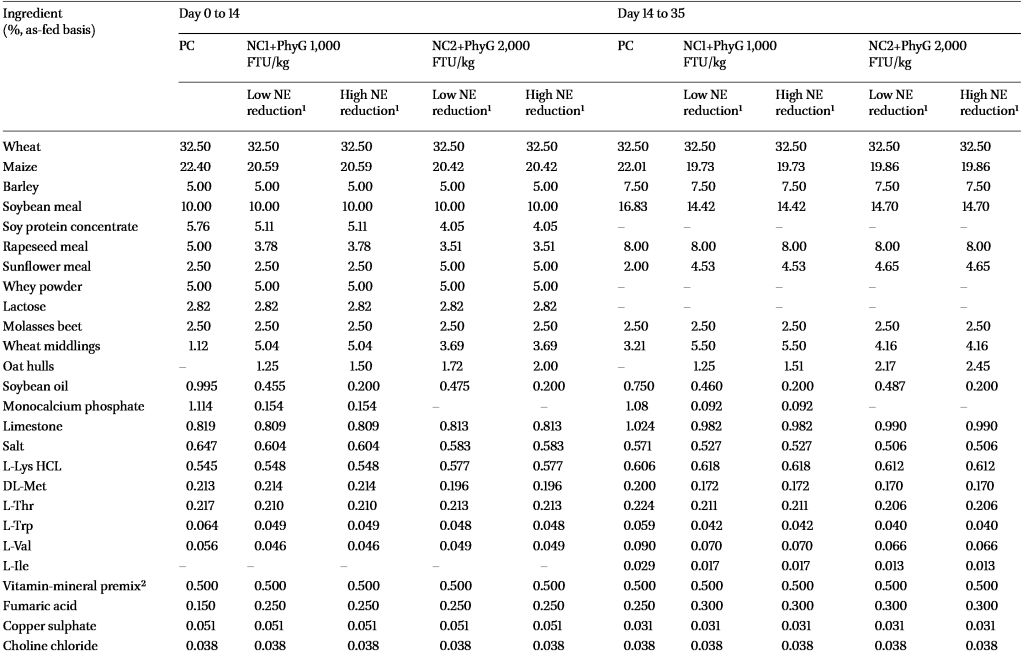
The phytase was a commercially sourced, consensus bacterial 6-phytase variant, PhyG (Danisco Animal Nutrition & Health, IFF, Oegstgeest, The Netherlands), produced using Trichoderma reesei. There were five treatment diets: one unsupplemented positive control (PC) and four negative control (NC) diets, all supplemented with PhyG. All diets were based on wheat, barley, maize, and soybean meal, with added rapeseed meal, sunflower meal, and wheat middlings. The dietary ingredient and calculated nutrient composition of the treatment diets is shown in Table 1.

Ingredient and calculated nutrient composition of the treatment diets (as-fed basis) by phase, excluding phytase.4
Citation: Journal of Applied Animal Nutrition 13, 2 (2025) ; 10.1163/2049257x-20251023
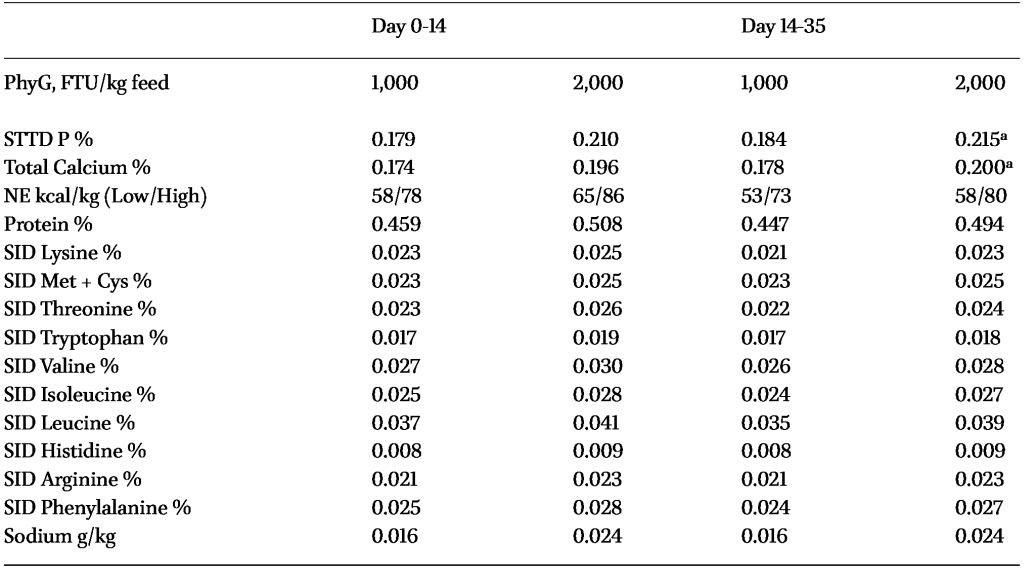
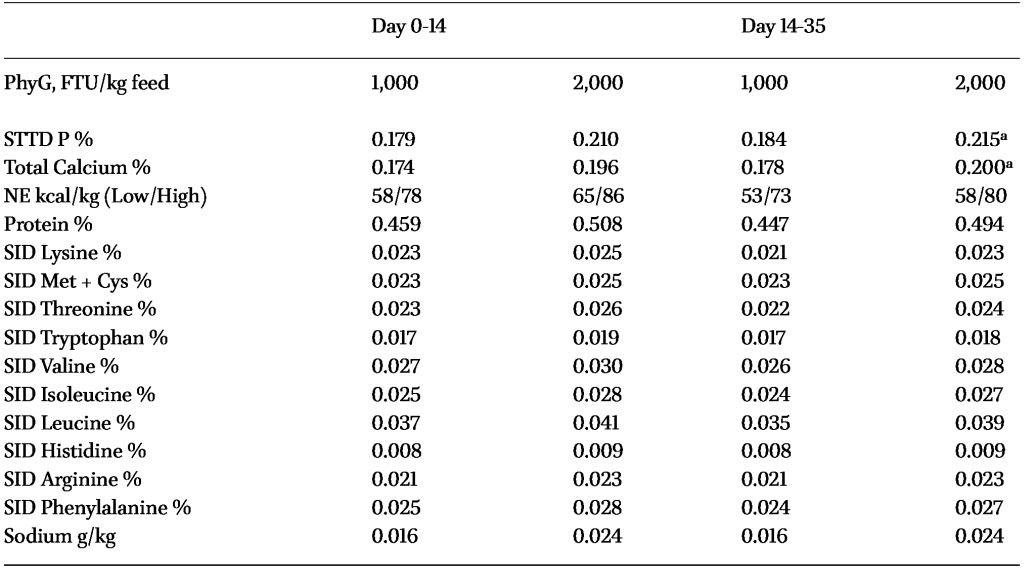
Diets were formulated in two phases (0 to 14 and 14 to 35 day on trial). The PC was formulated to meet the nutrient requirements of weaned pigs according to standards applicable in the Netherlands at the time of the research (CVB, 2023). The NC diets were formulated with reductions (vs. PC) in standardised total tract digestible (STTD) P, total Ca, ileal digestible (SID) AA and Na according to the manufacturerâs recommendations for the supplementation of PhyG at 1,000 FTU/kg (NC1+PhyG1,000) or 2,000 FTU/kg (NC2+PhyG2,000). The contributing values are presented in Table 2. The NC1+PhyG1,000 and NC2+PhyG2,000 diets were each formulated at two levels of NE reduction (vs. PC): high (H) or low (L), where L was â58/53 and â65/58 kcal/kg, H was â78/73 and â86/80 kcal/kg with PhyG at 1,000 and 2,000 FTU/kg, respectively for 0-14/14-35 d; Table 2). This produced four NC diets: NC1L+PhyG1,000, NC1H+PhyG1,000, NC2L+PhyG2,000, NC2H+PhyG2,000. The L and H NE levels were achieved by adjusting and optimising the inclusion levels of each of the main ingredients on the basis of their analysed content of moisture, crude point (CP), ash, starch, crude fibre (CF), crude fat (Cfat), and sugars. Oat hulls were included at the expense of soybean meal to achieve the NE reductions and maintain the total composition at 100%.
The energy and nutrients contributions of PhyG at dose level of 1,000 and 2,000 FTU/kg, applied in feed formulation.
Citation: Journal of Applied Animal Nutrition 13, 2 (2025) ; 10.1163/2049257x-20251023
The diets were manufactured as a basal mix containing the common ingredients (comprising ~92% of the diet). This was split into five equal sub-batches. For the PC diet, the variable ingredients (~8% of the diet) were added separately and mixed. For the NC diets, two additional premixes were prepared (comprising 5-7% of the total diet), one for each phytase dose. The premixes were prepared by adding the corresponding enzyme amount to a mixture of the variable ingredients. The premixes were added to the basal mix prior to individually adding oat hulls or soybean oil as necessary. The final diets were mixed thoroughly to obtain a homogeneous distribution of the phytase and pelleted at <77 °C. Pellet size was 3 mm for both feeding phases.
Measurements and sampling
Pigs were weighed individually at the study outset (day 0) and then again at the end of each phase (day 14 and 35). Pigs were monitored daily for general health and mortality and dead animals were removed and weighed. Feed disappearance was measured at the end of each phase on a pen basis and combined with BW data to calculate feed conversion ratio (FCR) per pen, corrected for mortality. Samples of all final diets were analysed for moisture, CP, ash, Cfat, CF, Ca, P, acid detergent fibre, neutral detergent fibre, phytate, and phytase activity. All analyses were conducted by Schothorst Feed Research except for phytate and phytase activities which were conducted by Danisco Animal Nutrition Research Centre, Brabrand, Denmark.
Chemical analysis
Methods for the analysis of nutrients in final feed were as follows: moisture gravimetrically using method NEN-ISO 6496 (ISO, 1999a); CP by combustion following the Dumas principle using method NEN-EN-ISO 16634-2 (ISO, 2016); crude ash gravimetrically according to method NEN-ISO 5984 (ISO, 2003); Cfat after acid hydrolysis using method NEN-ISO 6492 (ISO, 1999b); CF according to method NEN-EN-ISO 6865 (ISO, 2000); Ca by atomic absorption spectrometry according to method ISO 6869 (ISO, 2000); P by UV-VIS spectrophotometry according to method ISO 6491 (ISO, 1998); acid detergent fibre according to method EN-ISO 13906 (ISO, 2008) and neutral detergent fibre according to method EN-ISO 16472 (ISO, 2006). Phytate in feed was analysed using the HPLC method described by Christensen et al. (2020) modified from Skoglund et al. (1998). Phytase activities in feed were analysed according to a modified version of the 2000.12 AOAC method (Engelen et al., 2001). For this, one FTU was defined as the quantity of enzyme that released 1 µmol of inorganic orthophosphate from a 0.0051 mol/l sodium phytate substrate per minute at pH 5.5 at 37 ºC.
Calculations
The net energy content of the ingredients was calculated according to the following equation (CVB, 2021):
NE (MJ/kg DM) = 11.7 à DCCP à CP + 35.74 à DCCFat à CFat + 14.14 à starch + 12.726 à Sugar à DCsugar + 9.74 à DCNSP à NSP
Where NSP = OM â CP â CFat â starch â sugars à CF_DI; CF_DI = correction factor for disaccharides (0.956); OM = DM â ash, DCsugar = digestibility coefficient of sugar (68.6%); CFat = crude fat (g/kg DM); CP = crude protein (g/kg DM); and DC = apparent digestibility coefficient (%).
These were calculated using in-house table values from Schothorst Feed Research (2023). Where DM = dry matter (g/kg); NSP = non starch polysaccharides (g/kg DM); and OM = organic matter (g/kg DM).
Statistical analysis
Pen was the experimental unit in all data analyses. Data were analysed by one-way ANOVA to determine differences among treatments. Treatment was included as a fixed effect and phase and animal room (three rooms/round) were included as random effects. Tukeyâs HSD test was used for means comparisons. Data analyses were conducted using GenStat version 23 (VSN International Ltd, Hemel Hempstead, UK). When P<0.05, differences were considered statistically significant, whereas 0.05 â¤P< 0.1 was considered a strong trend.
3 Results and discussion
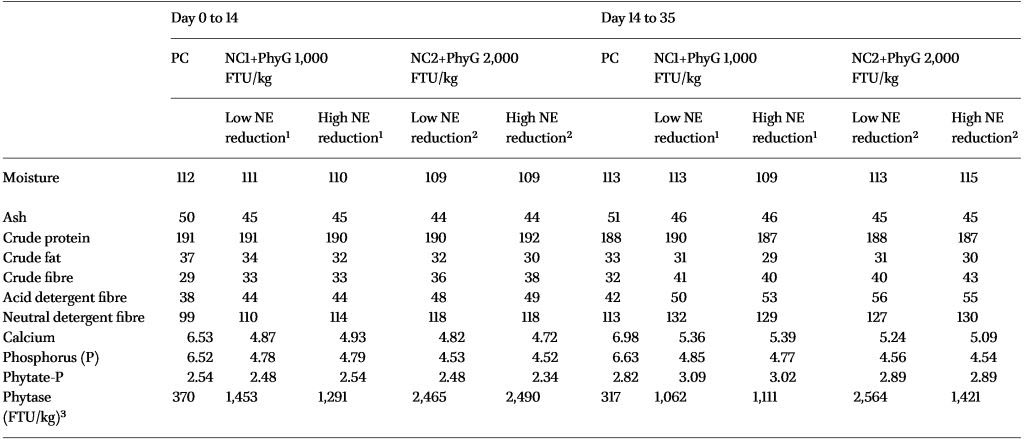
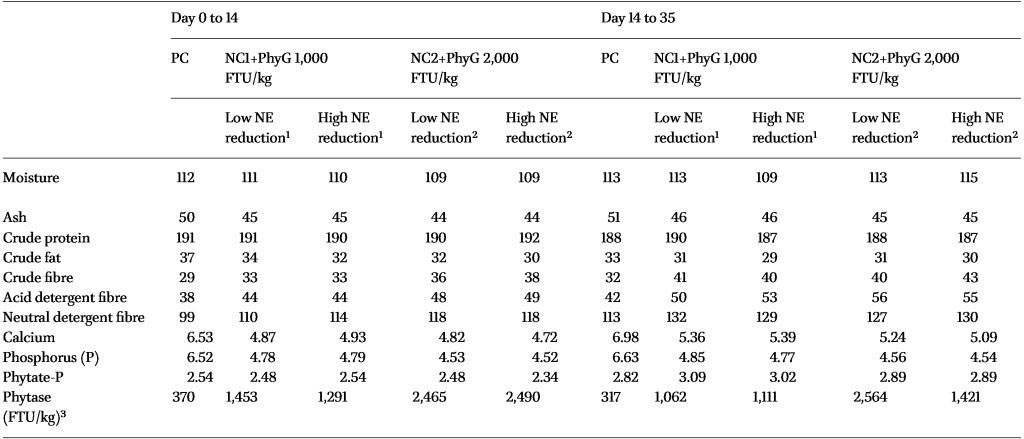
Levels of nutrients and phytase activities in the final diets are presented in Table 3. Analysed values of CP, Cfat, CF, Ca, and P in all diets were in close agreement with (within 15%) calculated values. The lower analysed CP, Cfat, Ca, P, and higher fibre content of the PhyG diets relative to the PC provide a reasonable indication that the nutrient reductions had been approximately achieved. Calculated phytate-P values based on analysed phytate were also consistently within 15% of formulated values across all diets. Phytase activities in the PC diets were 300 to 400 FTU/kg. This reflected the presence of a low level of native phytase within the plant-derived ingredients. After accounting for this, phytase activities in the PhyG supplemented diets were generally within ±15% of target dose levels, except in NC2H+PhyG2,000 from day 14 to 35, in which only 55% of the target dose level was achieved (two feed samples (before and after the feeding period) were analysed in duplicate to confirm low activity). This could have resulted from feed mixing, sampling or analytical error and may have led to a reduced effect of the phytase in this treatment due to the known dose-response effect of the phytase (Dersjant-Li et al., 2020).
Analysed nutrient concentrations (g/kg, as-fed basis) and phytase activities in the treatment diets.
Citation: Journal of Applied Animal Nutrition 13, 2 (2025) ; 10.1163/2049257x-20251023
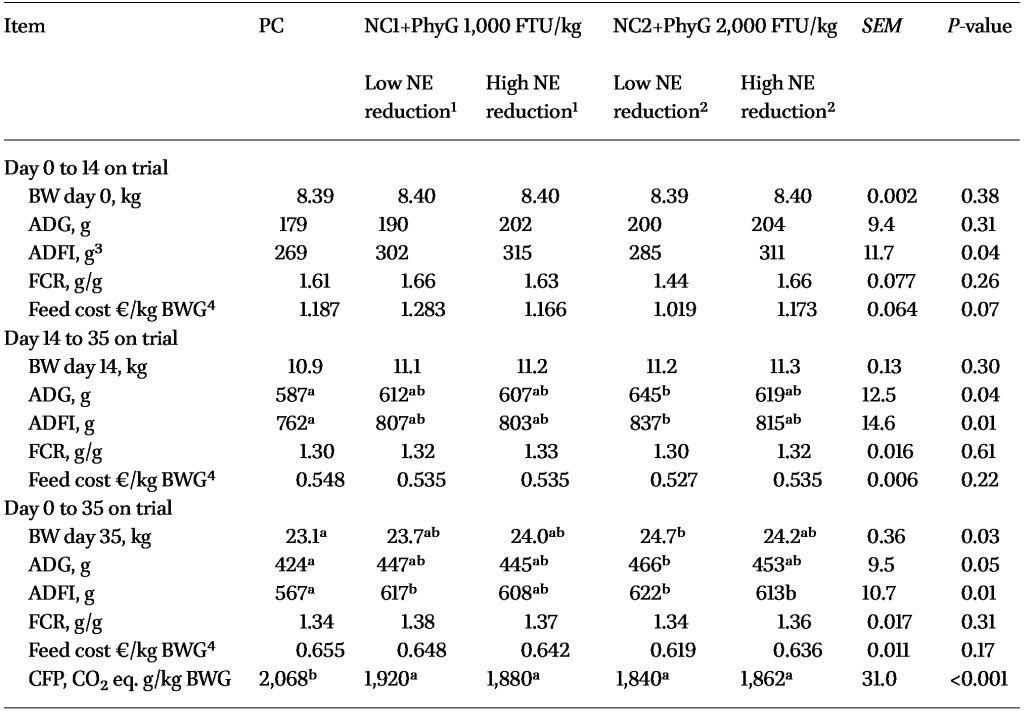
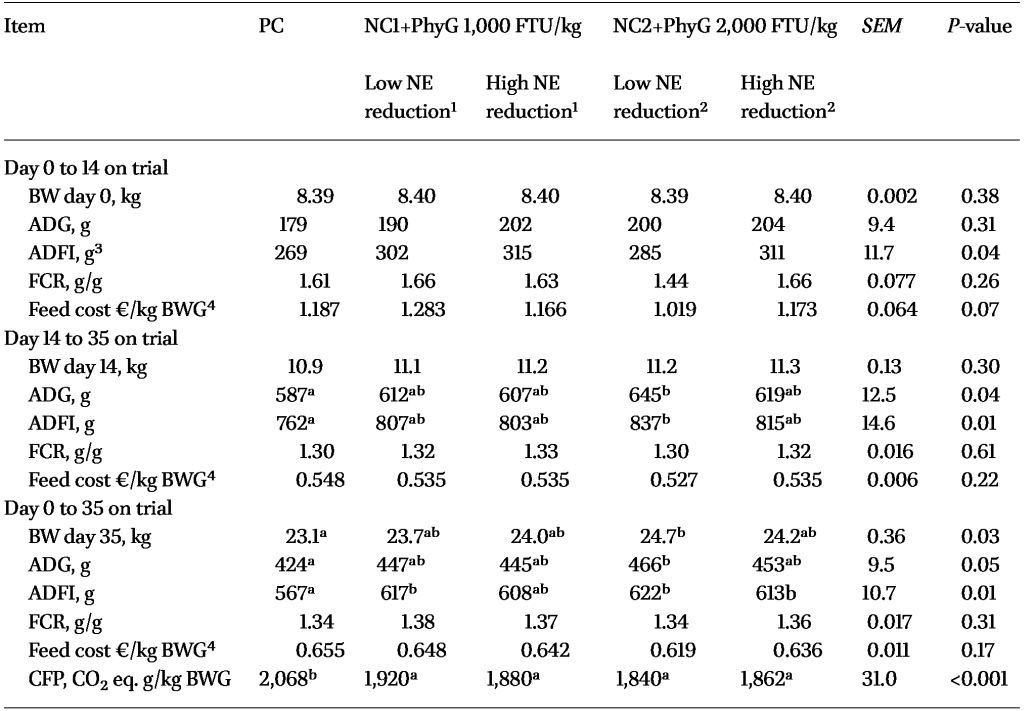
The effects of treatment on growth performance by phase (day 0 to 14 and day 14 to 35) and cumulatively (day 0 to 35) are presented in Table 4. The NC diets were not tested without phytase supplementation due to the severity of the nutrient and energy reductions, which could potentially have led to animal health and welfare issues arising during the study.
Effects of treatment on growth performance, by phase and cumulatively, and on feed costs.
Citation: Journal of Applied Animal Nutrition 13, 2 (2025) ; 10.1163/2049257x-20251023
Mortality among treatments was consistently low (1.7% on average) and unrelated to dietary treatment (data not shown). Faecal score was evaluated on an eight-point scoring system from severe water-thin diarrhoea (score 2) to hard, dry, and lumpy faeces (score 9), with score 6 considered optimal. Results ranged from 4.1 to 5.5 during day 0 to 14 and from 5.3 to 6.7 during day 14 to 35 and were not influenced by the dietary treatment (P>0.05, data not shown).
Pigs fed the nutritionally adequate PC diet achieved a final (day 35) BW of 23.1 ± 2.0 kg and an overall (day 0 to 35) FCR of 1.34.
From day 0 to 14, pigs fed the phytase-supplemented diets, at either dose level and regardless of the NE reduction level, exhibited ADG, FCR and day 14 BW that was not different to those achieved by pigs fed the PC diet. This indicated that bioavailability of nutrients in the reduced diets, enhanced by the presence of the supplemental phytase, was sufficient to support normal weight gain without any impairment to feed efficiency, even in the high NE-reduction treatments. The ADFI during this phase was affected by treatment (P = 0.04) although Tukeyâs HSD test did not reveal significant differences between any pairs of means. The results suggested higher feed intake in the PhyG-supplemented treatments (particularly those with the H NE reduction level applied), or, conversely, that feed intake in the PC was low. An apparent stimulatory effect of phytase on feed intake has been reported previously in nutrient-reduced diets in pigs (Broch et al., 2018; Dersjant-Li et al., 2017; Walters et al., 2019) and could have resulted in higher intake in the PhyG-supplemented treatments. This effect could have resulted from a reduction in the abundance of phytate, which has an appetite suppressing effect in monogastric animals (Cowieson et al., 2011).
From day 14 to 35, FCR in the phytase-supplemented treatments did not differ from the PC, whereas ADG and ADFI during this phase were increased in NC2L+PhyG2,000 compared to PC by 9.9% (645 vs 587 g) and 9.8% (837 vs 762 g), respectively (P<0.05), which were equivalent to the PC in NC2H+PhyG2,000 and in NC1L or high +PhyG1,000 treatments. These results indicated that, during this period, phytase at either dose level fully compensated for the L and H NE reduction levels. This indicated that the phytase was most effective at improving weight gain when administered at the higher dose level (2,000 FTU/kg) with low NE reduction (-58 kcal/kg NE vs PC). This was as expected given that L NE reduction was representative of a conservative NE matrix. There were no significant differences in response measures between the NC2H+PhyG2,000 and NC2L+PhyG2,000 treatments from day 14-35.
For the total experimental period (day 0 to 35), pigs fed the phytase-supplemented, nutrient-reduced diets (regardless of dose level or NE reduction level), exhibited an FCR that was not different from that of pigs fed the PC. However, final BW and ADG were not different from PC in pigs fed NC1L+PhyG1,000, NC1H+PhyG1,000 and NC2H+PhyG2,000 but were increased in NC2L+PhyG2,000 by 6.9% (24.7 vs 23.1 kg) and 9.9% (466 vs 424 g), respectively, vs PC (P<0.05). In addition, ADFI was increased in NC1L+PhyG1,000, NC2L+PhyG2,000, and NC2H+PhyG2,000 (617, 622, and 613 g, respectively, vs 567 g in the PC (P<0.05). The 9.9% increase in overall ADG vs PC in NC2L+PhyG2,000 was consistent with the idea that enzyme improved the bioavailability of energy and nutrients in this diet and their utilisation for weight gain more than compensated for any reductions applied to the diet, relative to the PC. This suggested that the NE-matrix was slightly over conservative in this treatment, as was expected because it incorporated a safety margin. In contrast, ADG was not different from the PC in NC2H+PhyG2,000, despite the level of analysed phytase activity in this treatment being well below the target level of 2,000 FTU/kg. This suggested that the matrix applied in this treatment was appropriate and not over-conservative. In addition, it has been observed that PhyG phytase is effective in improving protein and amino acids digestibility in pigs (Espinosa et al., 2022) and it can be expected that this can reduce the excessive undigestible protein for the growth of pathogenic bacterial. This may have contributed to better gut health, which could explain why some phytase treatments showed improved ADFI and ADG vs PC.
Comparisons with other phytase studies are not meaningful in matrix validation because, by definition, these must be derived uniquely for each phytase. No directly comparable studies using PhyG in mixed-cereal diets in young pigs are currently available. However, a recent study of PhyG added to a nutrient-reduced maize-soybean meal-based diet fed to slightly older pigs (initial BW 17.81 ± 1.71 kg) reported that PhyG at 1,000 FTU/kg increased the apparent ileal digestibility (AID) of gross energy by 6.6% points above a NC (from 69.4% to 76.0%) over an 11-d feeding period (Espinosa et al., 2021). This trial demonstrated that PhyG can improve the digestibility of dietary energy in young pigs and it is this mode of effect that has been implicated in the capacity of the enzyme to maintain performance in the nutrient- and energy-reduced diets in the present study.
The mechanism by which exogenous phytase may improve energy digestibility and utilisation in pigs is not fully understood. There are fewer studies available in this area compared with those relating to effects on mineral and AA digestibility. The accepted reasoning is that improvements in energy digestibility result from a combination of enhanced protein, starch, and fat digestibility (Humer et al., 2015). Although direct phytate-starch interactions have not been observed in pig digesta, protein-starch complexing has been observed (Payling et al., 2019) and binary protein-phytate complexing is known to occur below the isoelectric point of protein in the acidic environment of the upper gastrointestinal tract (Selle et al., 2012). Hence, as pointed out by Selle et al. (2012), starch digestion may be reduced by an excess of phytate due to starch interacting with proteins that are bound to phytate. Indeed, a direct, dose-dependent, positive effect of supplemental PhyG (in the dose range 250 to 4,000 FTU/kg) on the AID of AA and starch in young pigs has been observed (Espinosa et al., 2022). Meanwhile, phytate may form complexes with lipids and their derivatives in the gut which can reduce lipid availability for absorption and utilisation (Kumar et al., 2010). Further studies of phytate interactions with starch and lipids in the presence and absence of phytase are warranted to fully elucidate its mode of effect on energy digestibility in pigs.
The increased overall feed intake observed in three out of four of the PhyG-supplemented treatments were not accompanied by an increase in calculated total feed costs in â¬/kg BWG, exclusive of the cost of the phytase (relative to feed costs associated with the PC). Whilst not statistically significant, the calculated feed costs were consistently lower in all phytase-supplemented treatments vs PC (-1.1 to -5.5% across treatments; Table 4). This was likely caused by the reduced inclusion of conventional high quality feed raw materials and increased inclusion of cheaper co-products (wheat middlings and oat hulls) in the PhyG-supplemented NC diets, enabled by the application of the phytase NE and nutrient matrix. Feed costs in â¬/kg BWG were numerically lowest in NC2L+PhyG2,000 (0.619 vs 0.655 â¬/kg BWG in PC).
The estimated CFP of the treatment diets was calculated (Feedprint 2020, Wageningen University & Research, the Netherlands) and including the carbon footprint from fossil fuels and from land use (Table 4). The CFP of all PhyG-supplemented diets was reduced compared to the PC, at -149 to -228 CO2 g equivalents/kg BW gain or -7.2 to -11.0% vs PC, across treatments (P<0.05). Such reductions are of interest to todayâs producers who are increasingly looking for strategies that maintain growth performance whilst increasing the sustainability of production.
In conclusion, this study demonstrated that supplementation of PhyG phytase at a dose level of 1,000 or 2,000 FTU/kg to a wheat-maize-barley-soybean meal-based diet with a full nutrient matrix applied (reduction in Ca, digestible P, digestible AA, Na and high or low reduction in NE), maintained growth performance of weaned piglets to the level of or above that produced by a nutritionally adequate, non-supplemented diet. This confirmed the appropriacy of the applied NE matrix values except for the low NE reduction applied with PhyG at the higher dose (2,000 FTU/kg) which was slightly over-conservative. In addition, the phytase-supplemented, nutrient- and energy-reduced diets conferred a reduction in total estimated feed costs and reduction in the CFP per kilogram of liveweight gain compared to the non-supplemented control diet. These improvements were greatest with the phytase dosed at the higher level (2,000 FTU/kg) which suggested that increasing the phytase dose level could enable greater reductions in feed costs and CFP. The use of phytase in combination with prescribed nutrient- and energy- reductions may allow increased flexibility in the choice of ingredients in the diet, enabling inclusion of those with lower or more variable nutritional quality than conventional grains and oilseeds.
Acknowledgements
The authors thank Dr Joelle Buck (Newbury, UK) for her assistance with the writing of this manuscript, which was sponsored by Danisco Animal Nutrition and Health, IFF, The Netherlands, in accordance with Good Publication Practice guidelines.
Conflict of interest
The authors E. Vinyeta, D. Velayudhan, R. Hardy and Y. Dersjant-Li are employees of Danisco Animal Nutrition & Health, IFF. The authors L. V. Lagos and F. Molist have no conflicts of interest to declare.
References
Adedokun, S.A., Owusu-Asiedu, A., Ragland, D., Plumstead, P. and Adeola, O., 2015. The efficacy of a new 6-phytase obtained from Buttiauxella spp. expressed in Trichoderma reesei on digestibility of amino acids, energy, and nutrients in pigs fed a diet based on corn, soybean meal, wheat middlings, and corn distillersâ dried grains with solubles. Journal of Animal Science 93: 168â175. https://academic.oup.com/jas/article-abstract/93/1/168/4701055?redirectedFrom=fulltext
Almeida, F.N., and Stein, H.H., 2012. Effects of graded levels of microbial phytase on the standardized total tract digestibility of phosphorus in corn and corn coproducts fed to pigs. Journal of Animal Science 90: 1262â1269. https://doi.org10.2527/jas.2011-4144
Arredondo, M.A., Casas, G.A. and Stein, H.H., 2019. Increasing levels of microbial phytase increases the digestibility of energy and minerals in diets fed to pigs. Animal Feed Science and Technology 248: 27â36. https://doi.org/10.1016/j.anifeedsci.2019.01.001
Bedford, M.R., and Cowieson, A.J., 2020. Matrix values for exogenous enzymes and their application in the real world. Journal of Applied Poultry Research 29: 15â22. https://doi.org/10.1016/j.japr.2019.10.011
Broch, J., Nunes, R.V., Eyng, C., Pesti, G.M., de Souza, C., Sangalli, G.G., Fascina, V. and Teixeira, L., 2018. High levels of dietary phytase improves broiler performance. Animal Feed Science and Technology 244: 56â65. https://doi.org/10.1016/j.anifeedsci.2018.06001
Centraal Veevoederbureau (Netherlands) (CVB), 2020. Booklet of Feeding Tables for Pigs. Nutrient requirements and feed ingredient composition for pigs. CVB-series no. 64 October 2020. Available at: https://www.cvbdiervoeding.nl/bestand/10700/cvb-booklet-of-feeding-tables-for-pigs-2020def.pdf.ashx
Centraal Veevoederbureau (Netherlands) (CVB), 2023. CVB Feed Table 2023 - Chemical composition and nutritional values of feedstuffs. Available at: https://www.cvbdiervoeding.nl/pagina/10081/downloads.aspx
Christensen, T., Dersjant-Li, Y., Sewalt, V., Mejldal, R., Haaning, S., Pricelius, S., Nikolaev, I., Sorg, R.A. and de Kreij, A., 2020. In vitro Characterisation of a Novel Consensus Bacterial 6-Phytase and One of its Variants. Current Biochemical Engineering 6: 156â171. https://doi/org/10.2174/2212711906999201020201710
Cowieson, A.J., Wilcock, P. and Bedford, M.R., 2011. Super-dosing effects of phytase in poultry and other monogastrics. Worldâs Poultry Science Journal 67: 225â236. https://doi.org/10.1017/s0043933911000250
Cowieson, A.J., Ruckebusch, J.P., Sorbara, J.O.B., Wilson, J.W., Guggenbuhl, P., Tanadini, L. and Roos, F.F., 2017. A systematic view on the effect of microbial phytase on ileal amino acid digestibility in pigs. Animal Feed Science and Technology 231: 138â149. https://doi.org/10.1016/j.anifeedsci.2017.07.007
Dersjant-Li, Y., Wealleans, A.L., Barnard, L.P. and Lane, S., 2017. Effect of increasing Buttiauxella phytase dose on nutrient digestibility and performance in weaned piglets fed corn or wheat-based diets. Animal Feed Science and Technology 234: 101â109. https://doi.org/10.1016/j.anifeedsci.2017.09.008 .
Dersjant-Li, Y., Villca, B., Sewalt, V., de Kreij, A., Marchal, L., Velayudhan, D.E., Sorg, R.A., Christensen, T., Mejldal, R., Nikolaev, I., Pricelius, S., Kim, H.S., Haaning, S., Sorensen, J.F. and Lizardo, R., 2020. Functionality of a next generation biosynthetic bacterial 6-phytase in enhancing phosphorus availability to weaned piglets fed a corn-soybean meal-based diet without added inorganic phosphate. Animal Nutrition 6: 24â30. https://doi.org/10.1016/j.aninu.2019.11.003
Engelen, A.J., van der Heeft, F.C., Randsdorp, P.H.G. and Somers, W.A.C., 2001. Determination of phytase activity in feed by a colorimetric enzymatic method: collaborative Interlaboratory study. Journal of AOAC International 84: 629â633. https://doi.org/10.1093/jaoac/84.3.629
Espinosa, C.D., Oliveira, M.S.F., Velayudhan, D.E., Dersjant-Li, Y. and Stein, H.H., 2021. Influence of a novel consensus bacterial 6-phytase variant on mineral digestibility and bone ash in young growing pigs fed diets with different concentrations of phytate-bound phosphorus. Journal of Animal Science 99: skab211. https://doi.org/10.1093/jas/skab211
Espinosa, C.D., Torres, L.J., Velayudhan, D.E., Dersjant-Li, Y. and Stein, H.H., 2022. Ileal and total tract digestibility of energy and nutrients in pig diets supplemented with a novel consensus bacterial 6-phytase variant. Journal of Animal Science 100: skac364. https://doi.org/10.1093/jas/skac364
European Commission (EC), 2007. Council Directive 2007/43/EC of 28 June 2007 laying down minimum rules for the protection of chickens kept for meat production. Official Journal of the European Union L182/19â28 12.7.2007.
Feedprint, 2020. Accessed in October 2023 from https://www.wur.nl/en/show/feedprint-calculate-co2-per-kilogram-meat-milk-or-eggs.htm
Humer, E., Schwarz, C. and Schedle, K., 2015. Phytate in pig and poultry nutrition. Journal of Animal Physiology and Animal Nutrition 99: 605â625. https://doi.org/10.1111/jpn.12258
ISO, 1999. ISO 6496:1999 Animal feeding stuffs â determination of moisture and other volatile matter content. Available at: https://www.iso.org/standard/12871.html
ISO, 1998. ISO 6491:1998. Animal feeding stuffs â Determination of phosphorus content â spectrometric method. https://www.iso.org/standard/12864.html
ISO, 1999. ISO 6492:1999. Animal feeding stuffs â Determination of fat content. Available at: https://www.iso.org/standard/12865.html
ISO, 2000. ISO6865:2000. Animal feeding stuffs â Determination of crude fibre content â Method with intermediate filtration. Available at: https://www.iso.org/standard/13377.html
ISO, 2003. ISO 5984:2002. Animal feeding stuffs â Determination of crude ash. Available at: https://www.iso.org/standard/37272.html
ISO, 2016. ISO 16634-16632:2016. Food products â Determination of the total nitrogen content by combustion according tot he Dumas principle and calculation of the crude protein content â Part 2: cereals, pulses and milled cereal products. Available at: https://www.iso.org/standard/66661.html
ISO, 2000. ISO6869:2000. Animal feeding stuffs â Determination of the contents of calcium, copper, iron, magnesium, manganese, potassium, sodium and zinc â Method using atomic absorption spectrometry. Available at: https://www.iso.org/standard/33707.html
ISO, 2006. ISO 16472:2006. Animal feeding stuffs â Determination of amylase-treated neutral detergent fibre content (aNDF). Available at: https://www.iso.org/standard/37898.html
ISO, 2008. ISO 13906:2008. Animal feeding stuffs â Determination of acid detergent fibre (ADF) and acid detergent lignin (ADL) contents. Available at: https://www.iso.org/standard/43032.html
Kumar, V., Sinha, A.K., Makkar, H.P.S. and Becker, K., 2010. Dietary roles of phytate and phytase in human nutrition: A review. Food Chemistry 120: 945â959. https://doi.org/10.1016/j.foodchem.2009.11.052
Leske, K.L. and Coon, C.N., 1999. A bioassay to determine the effect of phytase on phytate phosphorus hydrolysis and total phosphorus retention of feed ingredients as determined with broilers and laying hens. Poultry Science. 78: 1151â1157. https://doi.org/10.1093/ps/78.8.1151
Menezes-Blackburn, D., Gabler, S. and Greiner, R., 2015. Performance of seven commercial phytases in an in vitro simulation of poultry digestive tract. Journal of Agricultural Food Chemistry 63: 6142â6149. https://doi.org/10.1021/acs.jafc.5b01996
Payling, L., Woyengo, T.A., Nielsen, M., Stein, H.H., Walsh, M.C., Romero, L. and Arent, S., 2019. Microscopy and protein solubilisation of digesta from pigs fed wheat, corn, or soybean meal-based diets, with or without protease and a Bacillus spp. direct-fed microbial. Animal Feed Science and Technology 247: 183â193. https://doi.org/10.1016/j.anifeedsci.2018.11.013
Ravindran, V., Cabahug, S., Ravindran, G. and Bryden, W.L., 1999. Influence of microbial phytase on apparent ileal amino acid digestibility of feedstuffs for broilers. Poultry Science 78: 699â706. https://doi.org/10.1093/ps/78.5.699
Selle, P.H. and Ravindran, V., 2008. Phytate-degrading enzymes in pig nutrition. Livestock Science 113: 99â122. https://doi.org/10.1016/j.livsci.2007.05.014
Selle, P.H., Cowieson, A.J. and Ravindran, V., 2009. Consequences of calcium interactions with phytate and phytase for poultry and pigs. Livestock Science 124: 126â141. https://doi.org/10.1016/j.livsci.2009.01.006
Selle, P.H., Cowieson, A.J., Cowieson, N.P. and Ravindran, V., 2012. Protein-phytate interactions in pig and poultry nutrition: a reappraisal. Nutrition Research Reviews 25: 1â17. https://doi.org/10.1017/S0954422411000151
Skoglund, E.S., Carlsson, N.-G. and Sandberg, A.-S., 1998. High-performance chromatographic separation of inositol phosphate isomers on strong anion exchange columns. Journal of Agricultural and Food Chemistry 46: 1877â1882. https://doi.org/10.1021/jf9709257
Velayudhan, D.E., Gracia, M., Casabuena Rincon, O., Marchal, L. and Dersjant-Li, Y., 2021. Effect of a novel consensus bacterial 6-phytase variant in grower pigs fed corn-soybean meal-based diets formulated with a full nutrient matrix and no added inorganic phosphorus. Journal of Animal Science 99: skab176 https://doi.org/10.1093/jas/skab176
Velayudhan, D.E., Kumar, A., Marchal, L. and Dersjant-Li, Y., 2022. Effect of limestone solubility on mineral digestibility and bone ash in nursery pigs fed diets containing graded level of inorganic phosphorus or increasing dose of a novel consensus bacterial 6-phytase variant. Journal of Animal Science 100: skac179. https://doi.org/10.1093/jas/skac179