Abstract
The use of probiotics as growth promoters in animal production has been extensively studied, yet performance outcomes vary significantly based on the strain and application method. Four dietary treatments – microencapsulated probiotic mixtures (D1 and D2), antibiotics (D3), and copper sulphate (D4) – were compared in terms on piglet growth performance, gut health, and economic profitability in a pre-fattening stage. A total of 108 piglets, aged 21 days and weighing an average of 6 kg, were randomly divided into four groups, each receiving a different diet. The experiment used three replicate pens per treatment, with nine piglets per pen. No significant differences were observed in body weight (BW) across treatment groups; however, feed intake was significantly lower for probiotic-fed piglets (D2) compared to other treatments during phase 1 and cumulatively (P<0.05). Monte Carlo simulations, a method that uses repeated random sampling to model and predict system behaviour under uncertainty, confirmed these findings. This showed that probiotic-supplemented diets delivered higher gross margins (43%) compared to antibiotics (28%) and copper sulphate (40%). Probiotic-fed piglets exhibited significant gut microbiota modulation, characterised by reduced pathogens (e.g. Escherichia coli) and increased beneficial bacteria, like Lactobacillus spp. These diets enhanced microbial diversity, as shown by higher Shannon and Simpson index values, which indicated improved gut resilience and overall health. In contrast, diets supplemented with antibiotics and copper sulphate showed reduced microbial diversity, highlighting the adverse impact of these treatments on gut health. This study demonstrated that encapsulated probiotics are a viable alternative to antibiotic growth promoters, supporting similar zootechnical performance while promoting gut health and enhancing profitability.
1 Introduction
Meat production efficiency is one of the largest challenges of the pork industry. In pig farming, 60% of the costs are associated with feeding (PorkColombia, 2023), and any increase in feeding efficiency significantly impacts the profitability of production. To address this, the modern swine industry has adopted advanced, yet often unnatural, husbandry practices. However, these practices can induce stress in pigs, leading to alterations in the composition of their intestinal microbiota, potentially compromising their resistance to pathogens (Liao et al., 2017).
Since the 1950s, prophylactic antibiotics have been widely used in livestock feed for their therapeutic purposes and as growth promoters (AGP; López-Galvez et al., 2021). However, excessive application in animal nutrition has created serious concerns related to the development of antimicrobial resistance (Lekagul et al., 2019). In addition, there is substantial evidence of a correlation between human and animal infections by the same resistant bacteria (Vidovic et al., 2020). Besides antibiotics, high therapeutic levels of copper trace elements have been commonly employed to prevent diarrhoea in piglets and as growth promoters in diets. However, these minerals can accumulate in soil, resulting in substantial environmental pollution. Additionally, elevated copper concentrations in the feed may contribute to antimicrobial resistance development, interfere with other inorganic mineral uptake and influence the expression of genes modulating piglet’s immune responses (López-Gálvez et al., 2021).
In response to these challenges, attempts have been made to implement additive alternatives such as probiotics, aiming to restore intestinal microbiota. Probiotics play a crucial role in improving management during the critical weaning transition. This period is characterised by oxidative stress caused by factors such as antibiotics, heat stress, high animal densities, and peak performance demands. By addressing these stressors, probiotics alleviate oxidative damage and enhance growth performance in weaned pigs. (Liao et al., 2017; Barba-Vidal et al., 2019; Rendón et al., 2024). When probiotics reach the intestine, they colonise and interact with intestinal microbiota, acting as an essential barrier that interferes with pathogens, thereby suppressing populations of pathogenic bacteria (Servin et al., 2003; Roselli et al., 2017; Pereira et al., 2022). While the mechanisms underlying the effects of probiotics are still being explored, it is evident that they play significant roles beyond merely countering pathogens. Probiotics enhance immunity by stimulating responses and improve gut integrity by reinforcing the mucosal barrier (Kyoung et al., 2023). Probiotics aid digestion through the production of vital enzymes, such as lactase, amylase, lipase, and protease, which support the breakdown of lactose, starch, fats, and proteins, respectively (Kim et al., 2007). One way to ensure that probiotics can reach the intestine, change the microbiota, and improve performance is by protection such as encapsulation (Barajas-Álvarez et al., 2023). Several studies have described the use of probiotics, but the most effective administration method is still unclear (Zhang et al., 2020). The disparities in efficacy between the direct administration of probiotics to animals and their inclusion in extruded or pelleted feed are yet to be fully explored. This arises from the fact that numerous probiotics are thermolabile and susceptible to deterioration when kept for extended storage periods.
The hypothesis of this study is that microencapsulated probiotic additives could effectively replace growth-promoting antibiotics and high concentrations of trace elements (such as copper), leading to improved feed intake and favourable modifications to the intestinal microbiota.
2 Materials and methods
Animal ethics
The feeding trial was carried out in strict compliance with the national legislation that regulates the use, care, and protection of animals in research activities stipulated in the Institutional Committee for the Care, and Use of Animals (CICUA established by the CES University Medellín, Antioquia Colombia. This is under act number 043 of the project: ‘Porcicesbialtecudea: un modelo de optimizacion para la alimentacion de precision en cerdos’ Code: Ae-025. Medellín, November 23, 2020.
Experimental design and animals
A total of 108 of piglets (Landrace × Large White × Duroc) were used. They were weaned at 21 d of age with an average weight of 6 kg and housed on the experimental farm. The piglets were randomly assigned to one of four dietary treatments. Each pen contained nine pigs, and each treatment was replicated three times (nine piglets × four diets × three pen replicates). The pre-fattening experiment lasted from d 21 to 70 of age and was divided into two feeding phases: phase 1 (d 1 to 21 post-weaning) and phase 2 (d 22 to 49 post-weaning). Pigs were weighed individually at the end of each period to calculate body weight gain (BWG), and feed intake (FI), final body weight (FBW), and feed conversion ratio (FCR), average daily feed intake (ADFI) was calculated.
Feeding program and diets
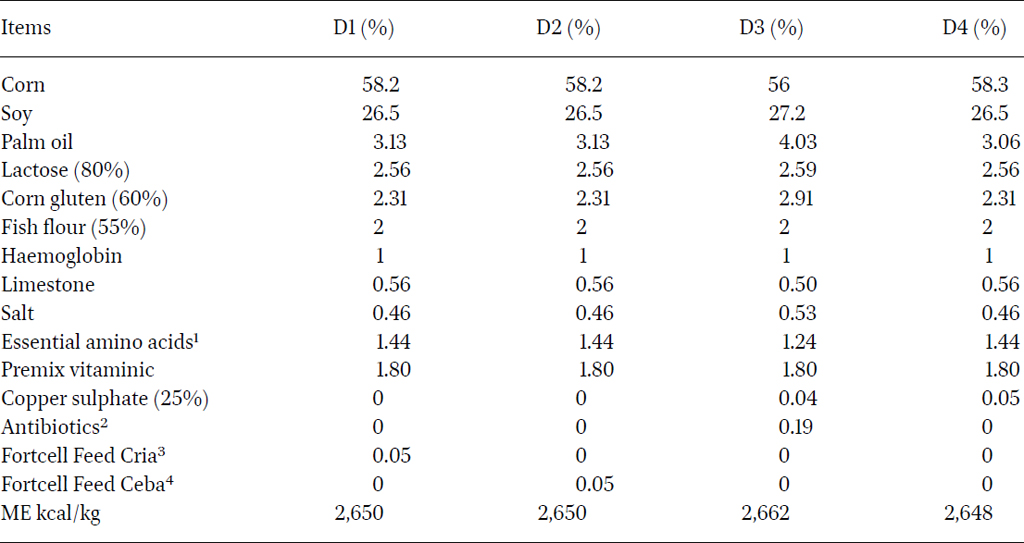
The pigs were provided ad libitum access to feed and water. The experiment used commercial feed supplied by a local mill, which was formulated to meet the nutritional requirements (PIC 2022). All diets were iso-nitrogenous and iso-energetic and were formulated and supplied by Compañia Industrial de productos Agropecuarios – CIPA, Medellín, Colombia; under the trade name of CIPA-Lechón (Table 1). The treatments groups included; diet 1 (D1), supplemented with Saccharomyces cerevisiae (8.5×10⁸ cfu/g), Lactobacillus spp. (2.72×10⁸ cfu/g), Bacillus subtilis (2×10⁸ cfu/g), and Enterococcus faecium (7.5×10⁶ UFC/g; Fortcell Feed® Cría, Bialtec, Medellín, Colombia); diet 2 (D2), supplemented with S. cerevisiae (1.5×10⁹ UFC/g), B. subtilis (1×10⁹ cfu/g), and E. faecium (1.88×10⁷ UFC/g; Fortcell Feed Ceba, Bialtec); diet 3 (D3), supplemented with antibiotics (doxycycline 80 mg/kg + zinc bacitracin 50 mg/kg); and the control diet 4 (D4), supplemented with copper sulphate (12 mg Cu per kg). The microorganisms in D1 and D2 were encapsulated using an emulsion-based formulation stabilised by fatty acids and a pan granulator to produce probiotic microcapsules (Arroyave et al., 2024). These are sold as the commercial product Fortcell Feed and added during the pelletising process at 300 g/ton.

Ingredients and chemical composition of dietary treatments characteristics (% dry weight as fed basis).
Citation: Journal of Applied Animal Nutrition 13, 2 (2025) ; 10.1163/2049257x-20251016
Rectal faeces collection and metataxonomic analysis
In the second replicate, rectal grab samples were collected to assess the microbial profile of faeces. A total of nine pigs per treatment group were randomly selected and divided into three groups per dietary treatment. Samples were collected on d 17, 34 and 51 post-weaning. Additionally, two suckling piglets faecal samples were collected at 10 days of age along with two environmental negative controls to assess baseline microbial internal and external populations and to assess any disease potential. Faecal samples were collected using sterile 20–30-mm cotton swabs (ZymoResearch, Irvine, CA, USA). The swab was inserted into the rectum of each pig and rotated against the intestinal wall to ensure sufficient sample collection. Individual samples were collected from each pig and pooled. Immediately after collection, swabs were placed in DNA/RNA Shield™ lysis tubes provided in the Quick-DNA Fecal/Soil Microbe Kit (ZymoResearch). This ensured sample stabilisation by preserving nucleic acid integrity for subsequent DNA extraction and sequencing. In total, 40 samples were collected during the trial (3 piglets × 4 treatments × 3 time points = 36 pigs), two samples from suckling piglets and two from the environment.
The microbial profile, based on the 16S rRNA, was analysed (BaseClear B.V., the Netherlands) using paired-end reads generated by the Illumina or MiSeq system. The FASTQ files were processed with bcl2fastq2 (v. 2.18) and sequences were filtered for quality, removing those with PhiX signals or partial adapters and trimming to a minimum length of 50 bp. Quality was assessed using FASTQC (v0.11.5). The OTU classification was performed using SNAP v.1.0.23 (Zaharia et al., 2011) aligned to the RDP database (Cole et al., 2014) to give an OTU table. The
Simulation procedures
A Monte Carlo simulation was designed to generate 20,000 data points from the mean and standard deviation and to check whether with the results obtained and with a larger sample it would be possible to find a bigger difference between the dietary treatments. The model was constructed with the following input variables: weaning weight (WW), FBW, and FI and the output variable was FCR, using the following Equation 1.
Citation: Journal of Applied Animal Nutrition 13, 2 (2025) ; 10.1163/2049257x-20251016
Statistical analysis
The growth performance data were dependent variables, including BWG, FI, FBW, and FCR of the starter stage. The R programming language was used to perform a one-way analysis of variance (ANOVA) after verifying normality with Shapiro Wilks. Mean comparisons were made when attaining significance of P≤0.05 by post-hoc Tukey test.
3 Results
Piglet growth
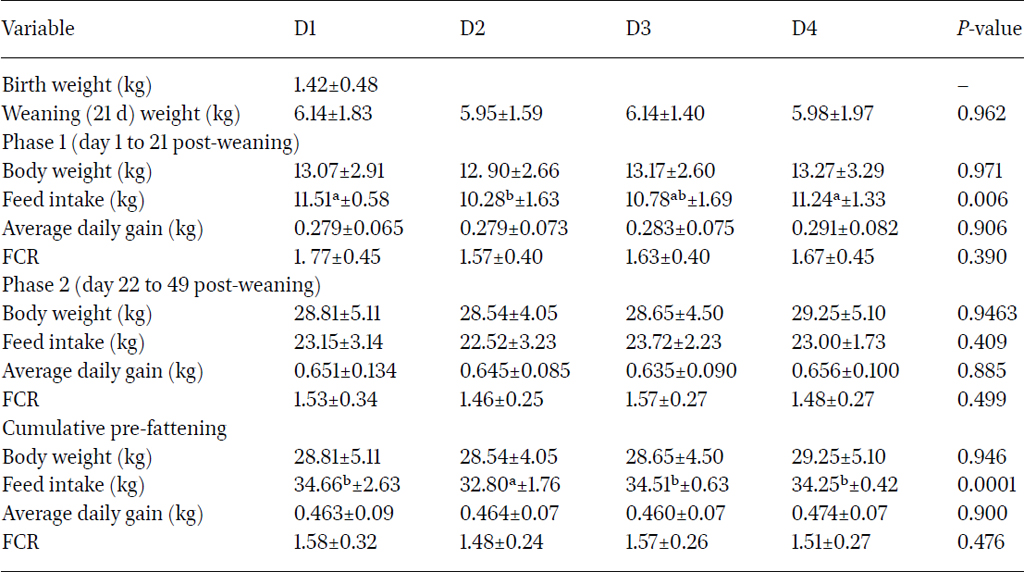
The main effects of the treatments on the growth performance of weaned piglets are shown in Table 2. There were no significant differences among dietary treatments for body weight of the pigs in each phase or for the whole cumulative pre-fattening stage. In phase 1, a significant reduction (P<0.05) was seen in feed intake of pigs fed D2, although no differences were seen compared to D3. In phase 2, no significant differences were observed. Finally, over the whole cumulative pre-fattening period, feed intake was significantly different and lower in pigs fed D2 (P<0.05) vs all the other treatments. The FCR and total body weights were not statistically different.
Performance response of pigs fed with different supplemented diets.1
Citation: Journal of Applied Animal Nutrition 13, 2 (2025) ; 10.1163/2049257x-20251016
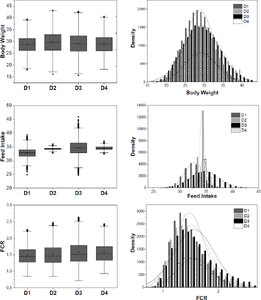
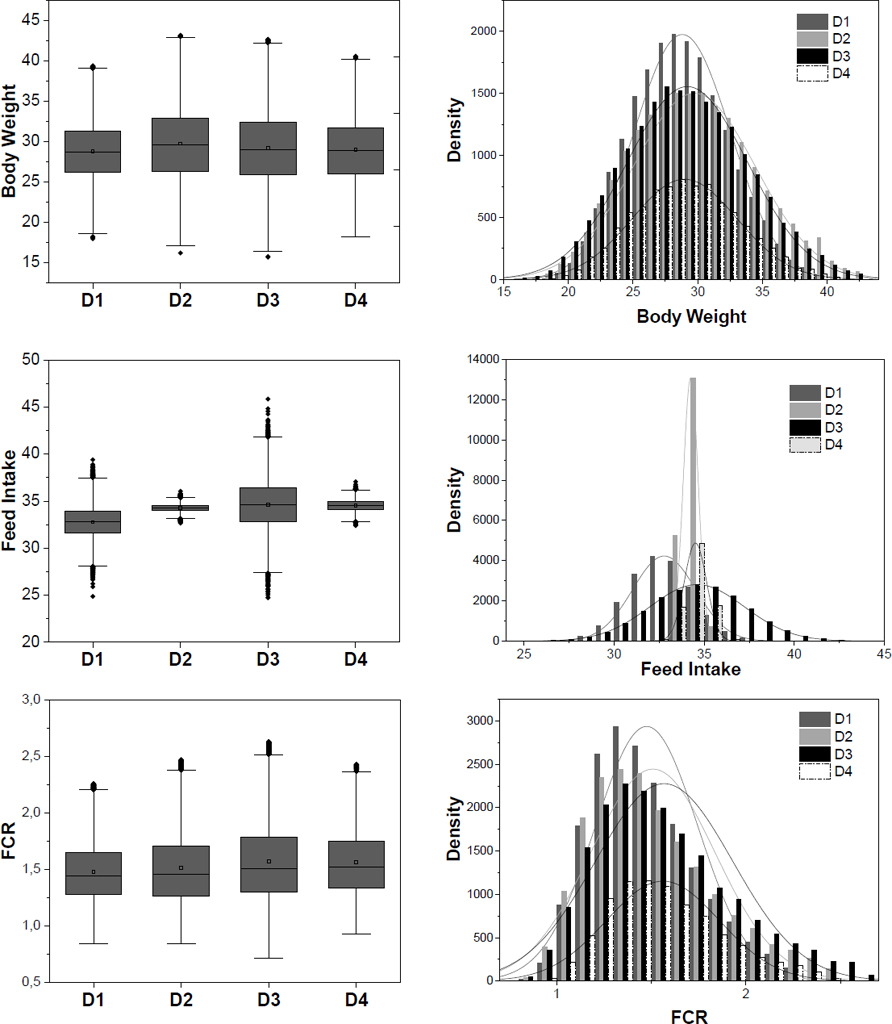
Given the limited number of experimental units, a Monte Carlo simulation was performed to examine the difference between dietary treatments with a larger dataset. The results underwent a filtering process to eliminate outliers, after which they were graphically represented in the form of box plots and frequency histograms (Figure 1). The results showed differences in body weight gain, feed intake and feed conversion ratio in the pre-fattening period (Table 3). Body weight gain for pigs fed the probiotic diet was significantly higher compared to the antibiotics and control diet. Conversely, it was found that feed intake and FCR was lower for pigs fed the probiotic diet compared with antibiotics and the control diet.
Box plot (left) and histogram (right) simulated by Monte Carlo algorithm, comparing the average body weight, feed intake and feed conversion ratio for different dietary treatments.
Citation: Journal of Applied Animal Nutrition 13, 2 (2025) ; 10.1163/2049257x-20251016
Monte Carlo Simulation Results of average body weight, feed intake and feed conversion ratio with different supplemented diets (Means ± standard deviation).1
Citation: Journal of Applied Animal Nutrition 13, 2 (2025) ; 10.1163/2049257x-20251016
The gross margin of piglet production up to 70 days of age was calculated as show in Equation 2. The data showed that diets D1 and D2 yielded the highest gross margin 42% and 43%, respectively. In contrast, D3 and D4 exhibited gross margins of 28% and 40%, respectively.
Citation: Journal of Applied Animal Nutrition 13, 2 (2025) ; 10.1163/2049257x-20251016
where PS was the selling price ($2.17 kg animal), UC the unit cost of each diet (D1 $0.79/kg feed, D2 $0.81/kg feed, D3 $1.01/kg feed, D4 $0.85/kg feed); FCR (kg feed/kg animal).
Alteration of the intestinal microbiota
The diversity of the gut microbiome was analysed across different treatments and phases. There were marked differences in the intestinal microbial populations at the phylum, genus and species level compared among the environment, the suckling piglet and faecal treatments samples. The composition of the gut microbiota changed markedly after piglet weaning. On average, 32.323 reads per sample were obtained and filtered, resulting in an average of 12.460 reads to group into operative taxonomic units (OTU). Most (74.3%) of the reads of the treatment samples were classified at different taxonomic levels. Approximately 42% of the pig samples were classified to the species level.
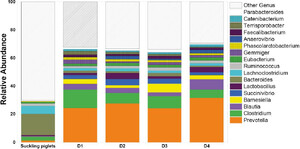
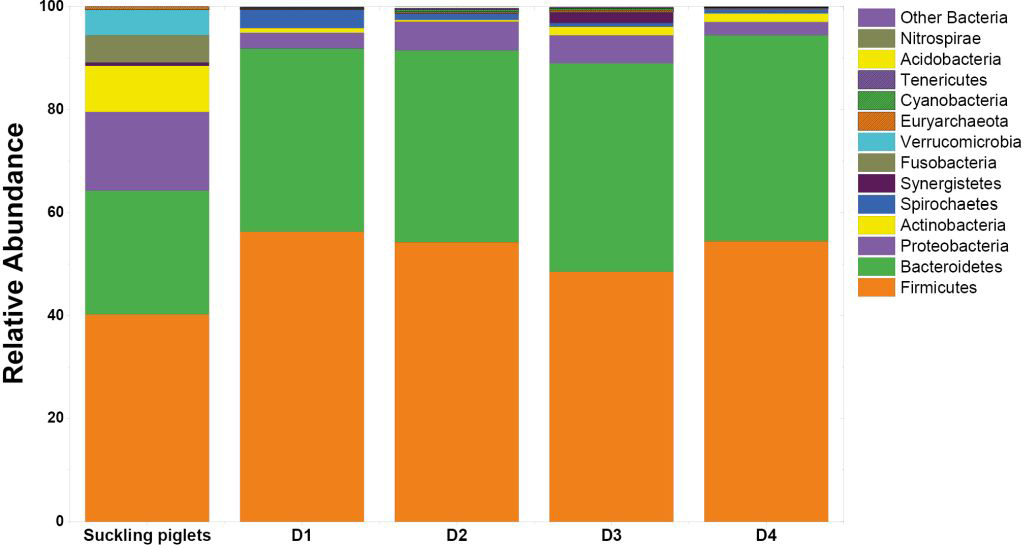
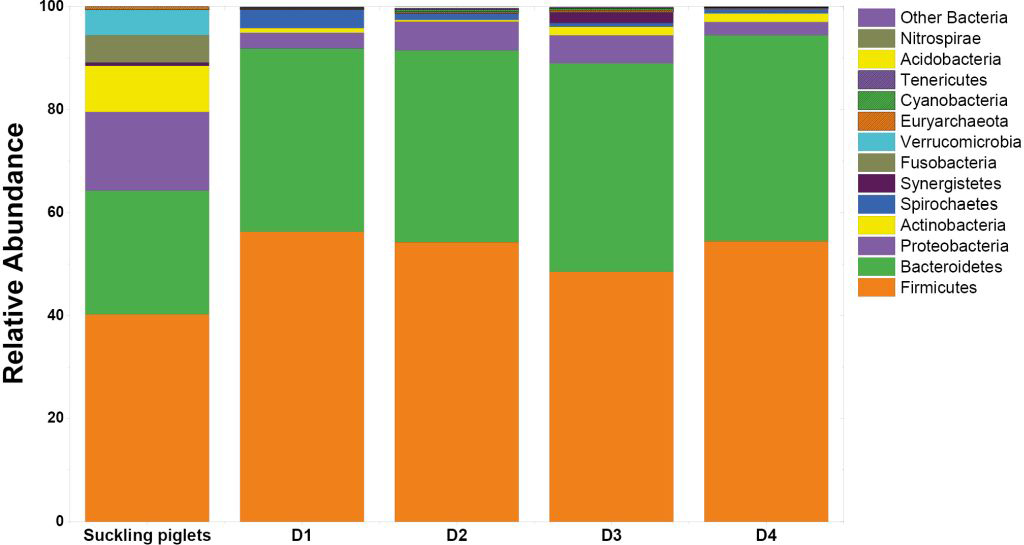
The results of the phyla distributions are shown in Figure 2. A total of 16 phyla were detected in the pig gut community. The dominant bacterial phyla were Firmicutes, Bacteroidetes, Proteobacteria and Actinobacteria, while Spirochaetes, Synergistetes, Fusobacteria, and Verrucomicrobia were present at relatively lower abundance. Firmicutes and Bacteroidetes were enriched but this did not attain significant difference in weaning pigs among all treatments. Interestingly, fewer Proteobacteria was observed in samples from D1 compared with the D3 and D2. However, when the relative abundance of Proteobacteria was compared between samples from D3 and D2, no significant differences were found. The phylum Actinobacteria were less abundant in the probiotic group, but Spirochaetes was more abundant in samples from D1 and D2. Most commensal bacteria, including Fusobacteria and Verrucomicrobia spp. were found to be more abundant in suckling piglets, which have been identified as biomarkers associated with intestinal diseases (Tan et al., 2019). Mainly, a reduction in the abundance of Fusobacteria and Verrucomicrobia spp. was observed after feeding the probiotic diet.
Pig bacterial communities were compared at the genus level (Figure 3). During the suckling period, the dominant genus was Bacteroides, but were gradually replaced by Clostridium and Prevotella spp. as piglets aged. Clostidrium spp. were more numerous in pigs fed probiotic (D1 and D2) and antibiotic (D3) diets, but were higher compared with samples from D4. For Prevotella spp. no significant differences were found among dietary treatments. However, proportions of core members of the swine gut microbiota increased after probiotic administration, namely Succinivibrio spp. and Lactobacillus spp. Interestingly, Blautia spp. was detected across all treatments, exhibiting higher abundance when exposed to therapeutic doses of copper sulphate.
Distribution of bacterial phyla in faecal samples.
Citation: Journal of Applied Animal Nutrition 13, 2 (2025) ; 10.1163/2049257x-20251016
Distribution of bacterial genus in faecal samples.
Citation: Journal of Applied Animal Nutrition 13, 2 (2025) ; 10.1163/2049257x-20251016
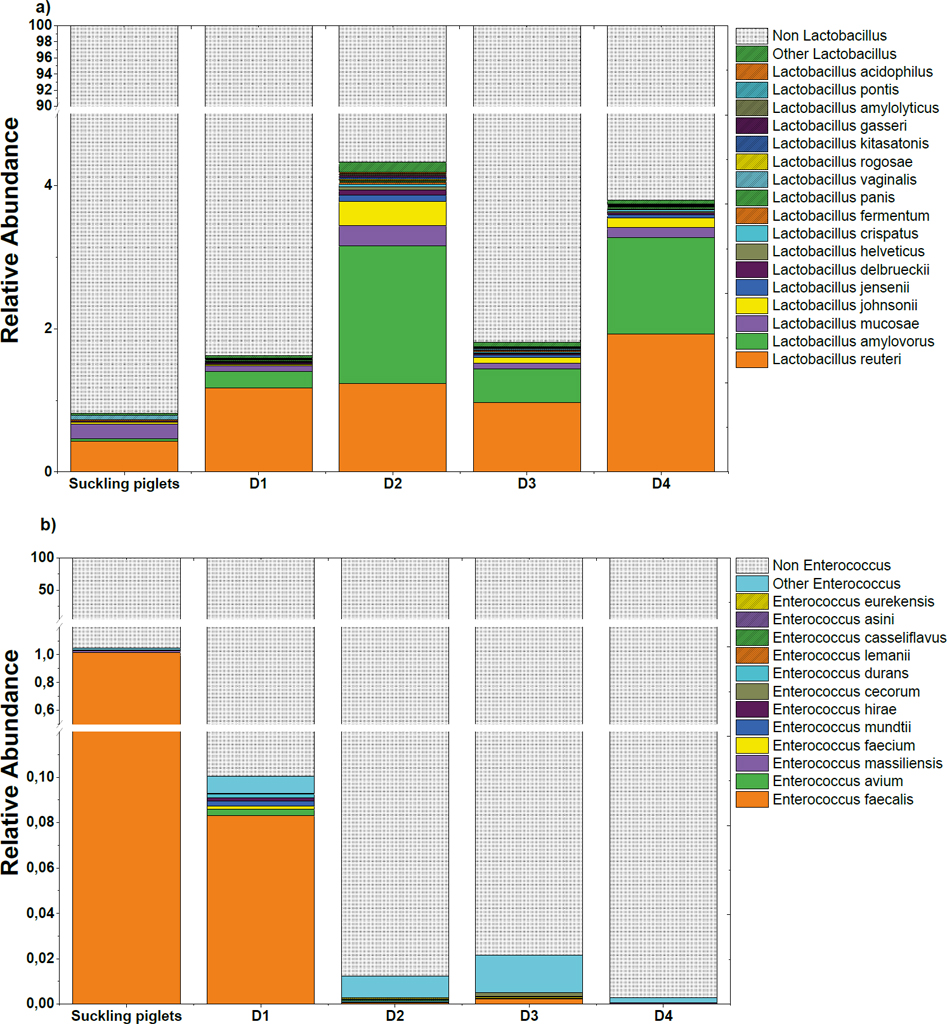
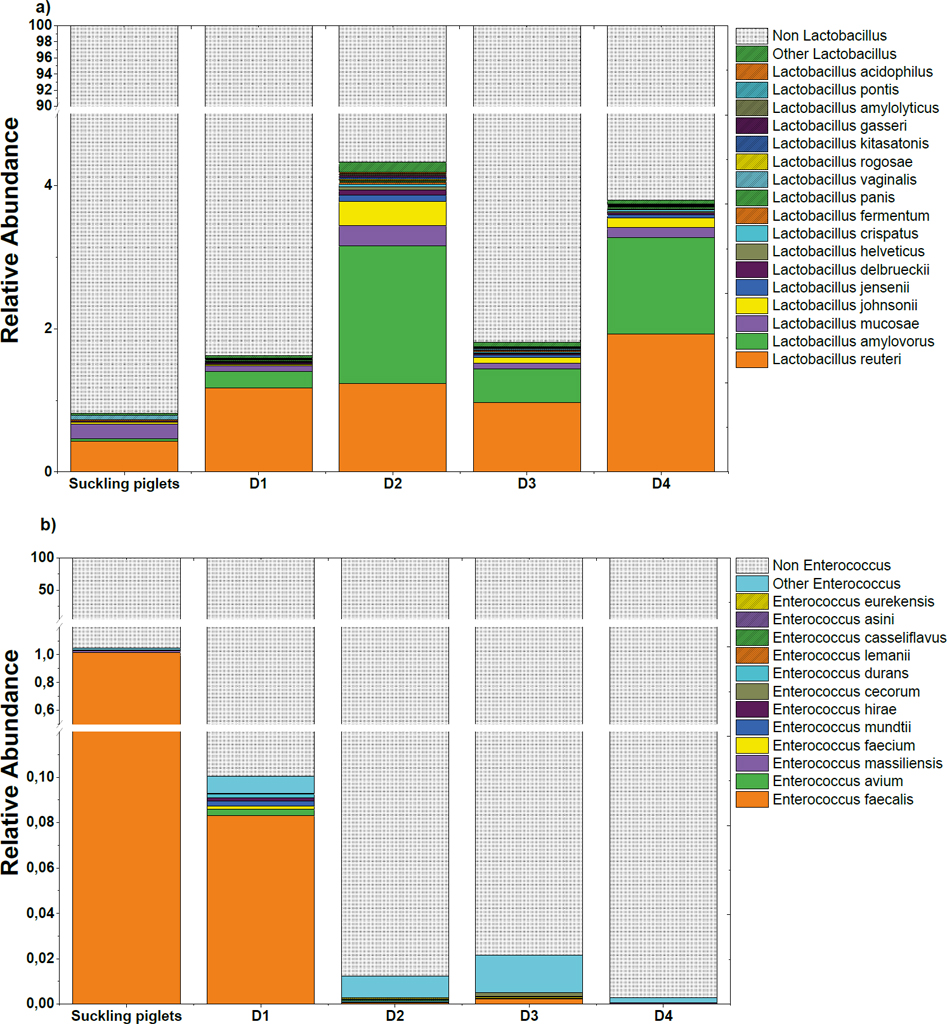
Upon analysis of microbiome phyla and genus, several pertinent aspects at the species level were discovered. The gut microbiota of pigs undergoes rapid ecological succession, shifting its composition substantially after weaning and with dietary treatment. For D3, relevant decreases were observed in the abundances of specific species of the genera Lactobacillus (Figure 4A). In addition, the genetic material of L. amylovorus, L. johnsonii, L. fermentum was detected more frequently in the faeces of animals fed D2 compared to the other dietary treatments (Figure 4A). As expected, detection frequency of these strains was higher in D2 supplementation as they were included as part of the supplementation. On the other hand, in the case of pigs fed D1, Enterococcus faecium was detected with greater frequency as this strain was part of the D1 supplementation (Figure 4B).
The distribution of bacterial genera in faecal samples. (A) Stacked bar graph showing the relative abundance of Lactobacillus. (B) Stacked bar graph showing the relative abundance of Enterococcus.
Citation: Journal of Applied Animal Nutrition 13, 2 (2025) ; 10.1163/2049257x-20251016
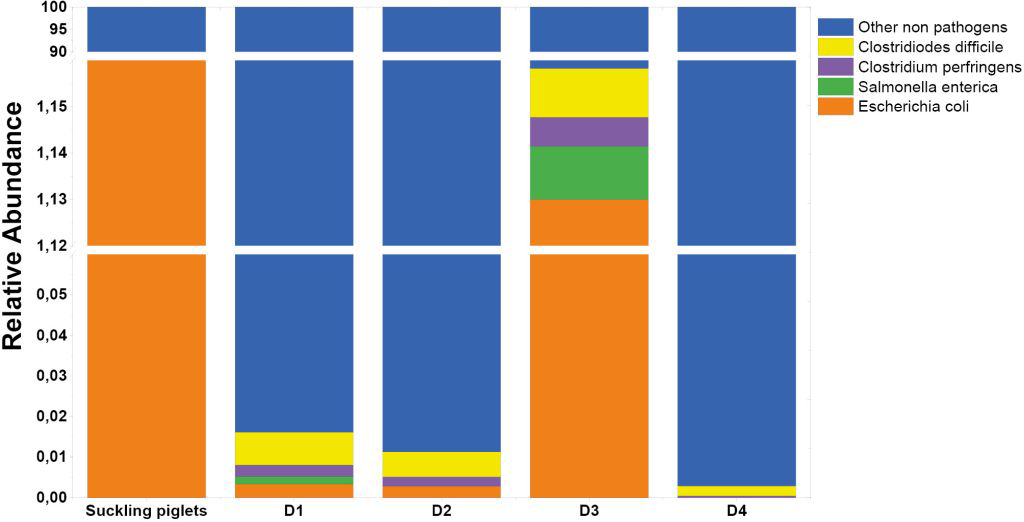
In terms of pathogens, several conditions can increase the incidence of pathogenic bacteria proliferation in the gut. The suckling piglets showed a marked proliferation of Escherichia coli. However, the development of the intestinal microbiota after the suckling period further deviated during growth due to dietary factors. It was interesting to observe that E. coli was more abundant, exceeding 1% in the diet containing antibiotics (D3) compared to those supplemented with probiotics (D1 and D2) or copper (D4; Figure 5). Although the presence of Salmonella enterica, Clostridium perfringens, and Clostridiodes difficile in diets supplemented with probiotics seemed to be larger than in diets with copper, the median relative abundance of these toxigenic species in the gut microbiome was less than 0.008%.
Distribution of pathogenic species in faecal samples.
Citation: Journal of Applied Animal Nutrition 13, 2 (2025) ; 10.1163/2049257x-20251016
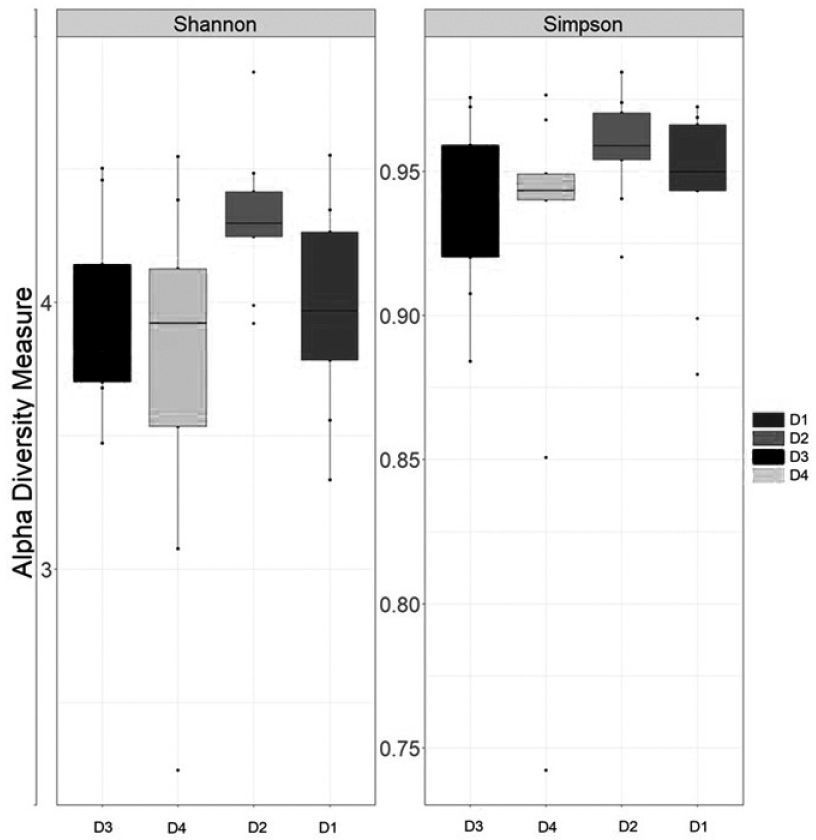
To characterise the levels and patterns of diversity within dietary treatments, the alpha index for the four treatments was compared. The
Shannon and Simpson diversity index of swine faecal communities with and without probiotic supplementation.
Citation: Journal of Applied Animal Nutrition 13, 2 (2025) ; 10.1163/2049257x-20251016
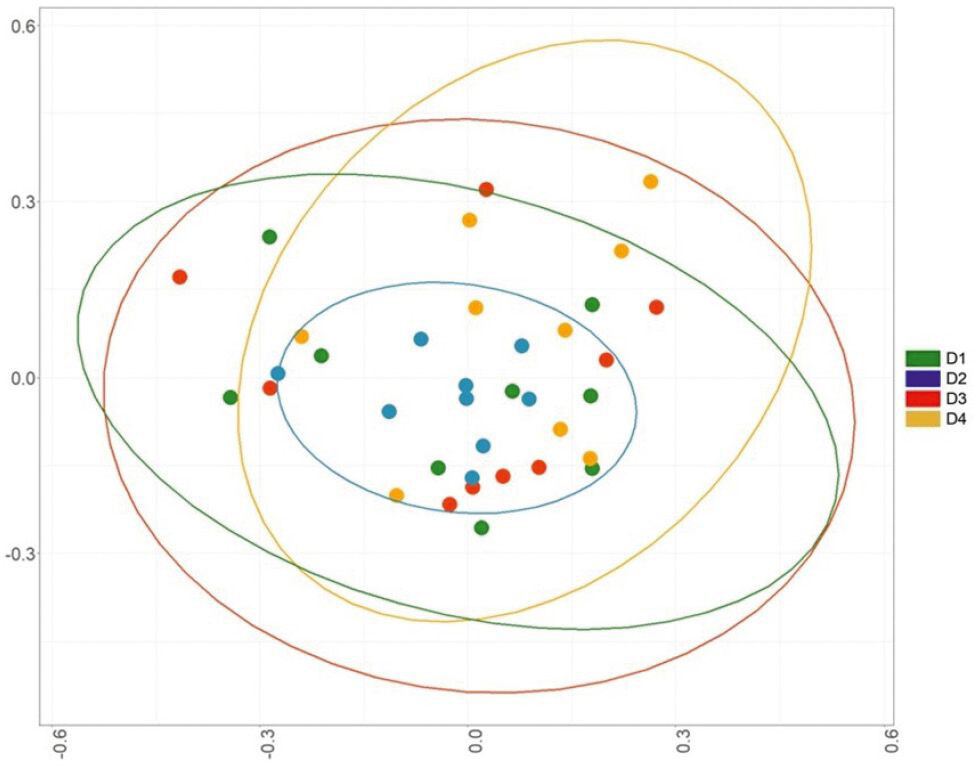
To further investigate micobiome differences between the treatment groups and time points,
Principal coordinate analysis (PCoA) of the weighted UniFrac distances for each dietary treatment group.
Citation: Journal of Applied Animal Nutrition 13, 2 (2025) ; 10.1163/2049257x-20251016
4 Discussion
The impact of dietary supplements on animal growth performance is a complex interplay of various biological and environmental factors, extending well beyond the simple choice of bacterial strains and feeding methods. This study highlighted the potential of probiotics to modulate the microbiome and its impact on pig growth and intestinal health. The results revealed no significant differences in FBW or FCR across all dietary treatments. This underscored the comparable efficacy of probiotics, antibiotics and trace elements in maintaining pig performance. Notably, the reduction in feed intake observed in pigs fed the probiotic (D2) during the initial post-weaning phase suggested enhanced nutrient utilisation. This observation was particularly significant as it implied that certain probiotic formulations could improve gut efficiency, leading to reductions in feed costs and less environmental impact due to lower feed inputs.
Building on these findings, the demonstrated the ability of dietary treatments to influence the gut microbiota, a critical factor in animal health. Despite the dietary treatments inhibiting the growth of potential commensal pathogens such as Fusobacteria and Verrucomicrobia spp., specific pathogenic species as E. coli were less abundant in the probiotic diets (D1 and D2) and copper sulphate (D4). This suggested that probiotics can effectively compete with antibiotics in preventing gastrointestinal infections, while fostering a healthier gut microbiota by encouraging the proliferation of beneficial populations. In line with this, the results revealed a significant decrease in
Further detailed analyses of microbial succession revealed that dietary interventions significantly influence the composition and dynamics of the gut microbiota. Initial outcomes from probiotic treatments aligned with previous studies which showed that, in the gastrointestinal tract of pigs, the presence of Succinivibrio and commensal Clostridum spp. improved the capacity to metabolise diverse carbohydrate substrates, leading to the production of fermentation byproducts like acetate, succinate and butyrate (Guo et al., 2020). These are subsequently converted to propionate via microbial decarboxylation (Bergamashi et al., 2020). Propionate plays a key role in energy metabolism by entering the tricarboxylic acid cycle, enhancing energy utilisation efficiency. These processes are supported by the interaction of other short-chain fatty acids (SCFA), such as butyrate, which strengthen the gut barrier and reduce inflammation facilitating more efficient nutrient absorption. Collectively, these findings highlighted the multifaceted role of probiotics in optimising gut health and energy efficiency, thereby improving growth performance and FCR in pigs.
However, the benefits of probiotics extend beyond these mechanisms, where the diet with probiotics promotes the growth of several beneficial bacteria, namely species of Lactobacillus spp.. This genus is considered a beneficial group of bacteria in the gastrointestinal tract (Valeriano et al., 2017), one of its characteristics being antioxidant properties (Dowarah et al., 2018; Zhao et al., 2023). As Lactobacillus spp. possess antioxidant activity, combinations of these probiotics could increase the capability to regulate redox status changes caused by pathogens (Wang et al., 2017). Particularly, a notable increase in the abundance of L. johnsonii has been observed in the gut of pigs. This is a common inhabitant of the porcine gastrointestinal tract and confers benefits to the host by possessing numerous probiotic properties, including adhesion and survival capabilities within the swine gut. On the other hand, L. amylovorus exhibits proven probiotic properties that foster growth and enhance feed efficiency in farm animals. In addition, L. fermentum had the potential to adhere to intestinal epithelium, inhibit pathogenic bacteria, tolerate gastric juice and bile salts and produce antioxidants in pigs (Pereira et al., 2022).
To ensure the effectiveness of these probiotics, it is critical to minimise cell death during thermal, storage, mechanical and digestive processes. In line with this, a prior study introduced a method for encapsulating microorganisms to provide protection against various adverse conditions (Arroyave et al., 2024). The results indicated that efficient encapsulation of probiotics guarantees their release in the intestinal tract, ultimately affecting changes in the microbial community, which in turn reflects alterations in zootechnical parameters.
In the case of diets supplemented with copper sulphate, it is well known that copper plays a critical role in the host–bacterium interface. Copper deficiency often results in increased susceptibility of hosts to bacterial infections, and increased copper levels at the sites of infection has been detected in response to bacterial infections (López-Gálvez G et al., 2021). Furthermore, the current findings revealed that copper supplementation led to the presence of Blautia, a genus of the Lachnospiraceae family. This genus has been of particular interest due to its contribution in alleviating inflammatory diseases and metabolic diseases and its antibacterial activity against specific microorganisms (Liu et al., 2021). This may explain the observed reduction in pathogenic species in diets supplemented with copper.
However, the biological significance of the current findings extended beyond academic interest, offering practical implications for animal husbandry practices. This study facilitated an investigation into the effects of different combinations of additives on performance metrics. This was related to business profitability resulting from the inclusion of probiotic mixtures, antibiotics and therapeutic doses of trace elements such as copper in the diet. When evaluating growth performance in production animals from a financial perspective, it is crucial to consider both FCR and FBW. The FCR can be used to analyse as gross margin, while FBW represents the volume of income affecting gross profit. Although FCR allow the assessment of efficiency in terms of feed intake or weight gain, obtaining animals with a good FCR but low FBW can negatively impact producer income, similar to a good gross margin but a low gross profit. Optimal results require low FCR alongside high FBW, maximising producer income, margin and gross profit. The zootechnical parameters obtained in this study, specifically FBW and FCR, showed no significant differences among the dietary treatments, indicating comparable feed utilisation efficiency across diets. The ability of probiotics to deliver comparable growth performance to antibiotics and trace elements, combined with their added benefits for gut health, suggested that these ingredients could serve as viable alternatives to traditional growth promoters.
Furthermore, from an economic standpoint, using the Monte Carlo simulation revealed that the probiotics proved to be more efficient compared to antibiotics and copper sulphate in diets. The substantial difference in gross margins between D1 and D2 in contrast to D3 and D4 emphasised the considerable influence of incorporating probiotics into feed formulation on the economics of piglet production. These findings underscored the significance of precision and optimisation in feed formulation practices for enhancing piglet production efficiency.
5 Conclusions
The current study demonstrated that dietary supplementation with encapsulated probiotics maintain certain performance metrics linked to business profitability without negatively impacting feed consumption or zootechnical indicators. The gross margins of the different diets highlighted the critical role of feed formulation in determining economic outcomes. By using microencapsulated probiotics, producers can enhance profitability while promoting the well-being and performance of piglets throughout the critical early growth phase. Additionally, the probiotic treatments promoted a healthier gut microbiome by inhibiting the growth of commensal pathogens and promoting beneficial bacteria such as Lactobacillus and Succinivibrio spp.. Moreover, probiotic supplementation led to increased
Conflict of interest
The authors Javier M. Agudelo, Johanna Uran, J. Camilo Arroyave, Jorge D. Rueda, and Andres J. Acevedo are employee in Bialtec, which supplied the probiotic foods. The authors Juan F. Naranjo, Juan C. Pareja, Luis C. Veloza, Rene Ramírez, Oscar Sáenz, and Ángela R. Martínez declare they have no conflicts of interest with regard to the work presented in this report.
References
Arroyave-Manco, J.M., Agudelo-Rendón, M., Zapata, M., Roiter, T., Ruiz, J.N. and Uran-Velasquez, J.M., 2024. Microencapsulated lactobacillus powder: an approach to produce probiotics resistant to different stress conditions. International Journal of Probiotics & Prebiotics 19: 1–4. https://doi.org/10.37290/ijpp2641-7197.19:1-7
Barajas-Álvarez, P., González-Ávila, M. and Espinosa-Andrews, H., 2023. Recent advances in probiotic encapsulation to improve viability under storage and gastrointestinal conditions and their impact on functional food formulation. Food Reviews International 39: 992–1013 https://doi.org/10.1080/87559129.2021.1928691
Barba-Vidal, E., Martín-Orúe, S.M. and Castillejos, L., 2019. Practical aspects of the use of probiotics in pig production: a review. Livestock Science 223: 84–96. https://doi.org/10.1016/j.livsci.2019.02.017
Bergamaschi, M., Maltecca, C., Schillebeeckx, C., McNulty, N. P., Schwab, C., Shull, C., Fix, J. and Tiezzi, F., 2020. Heritability and genome-wide association of swine gut microbiome features with growth and fatness parameters. Scientific Reports 10: 10134. https://doi.org/10.1038/s41598-020-66791-3.
Cole, J.R., Wang, Q., Fish, J.A., Chai, B., McGarrell, D.M., Sun, Y., Brown, C.T., Porras-Alfaro, A., Kuske, C.R. and Tiedje, J.M., 2014. Ribosomal database project: data and tools for high throughput rRNA analysis. Nucleic Acids Research 42: D633–642. https://doi.org/10.1093/nar/gkt1244
Dowarah, R., Verma, A.K., Agarwal, N., Singh, P. and Singh, B.R., 2018. Selection and characterization of probiotic lactic acid bacteria and its impact on growth, nutrient digestibility, health and antioxidant status in weaned piglets. PLoS ONE 13: e0192978. https://doi.org/10.1371/journal.pone.0192978
Guo, P., Zhang, K., Ma, X. and He, P., 2020. Clostridium species as probiotics: potentials and challenges. Journal of Animal Science and Biotechnology 11: 24. https://doi.org/10.1186/s40104-019-0402-1
Kim, E., Kim, Y., Rhee, M., Song, J., Lee, K., Kim, K., Lee, S., Lee, I. and Park, S., 2007. Selection of Lactobacillus sp. PSC101 that produces active dietary enzymes such as amylase, lipase, phytase and protease in pigs. Journal of General and Applied Microbiology 53: 111–117. https://doi.org/10.2323/JGAM.53.111.
Kyoung, H., Park, K., Kim, Y., Ahn, J., Lee, J., Ha, S., Nam, J., Kim, K., Kang, Y., Park, Y., Shin, I. and Song, M., 2023. PSXIII-4 Effects of probiotic Lactobacillus rhamnosus on intestinal morphology, blood profiles, immune responses and ileal gene expression of weaned pigs. Journal of Animal Science 101 Suppl. 3: 578–579. https://doi.org/10.1093/jas/skad281.676
Lekagul, A., Tangcharoensathien, V. and Yeung, S., 2019. Patterns of antibiotic use in global pig production: A systematic review. Veterinary and Animal Science 7: 100058. https://doi:10.1016/j.vas.2019.100058
Liao, S.F. and Nyachoti, M., 2017. Using probiotics to improve swine gut health and nutrient utilization. Animal Nutrition 3: 331–343. http://dx.doi.org/10.1016/j.aninu.2017.06.007
Liu, X., Mao, B., Gu, J., Wu, J., Cui, S., Wang, G., Zhao, J., Zhang, H. and Chen, W., 2021. Blautia a new functional genus with potential probiotic properties? Gut Microbes 13: 1875796. https://doi.org/10.1080/19490976.2021.1875796
López-Gálvez, G., López-Alonso, M., Pechova, A., Mayo, B., Dierick, N. and Gropp, J., 2021. Alternatives to antibiotics and trace elements (copper and zinc) to improve gut health and zootechnical parameters in piglets: A review. Animal Feed Science and Technology 271: 114727. https://doi.org/10.1016/j.anifeedsci.2020.114727.
Pereira, W.A., Franco, S.M., Reis, I.L., Mendonça, C.M.N., Piazentin, A.C.M., Azevedo, P.O.S., Tse, M.L.P., De Martinis, E.C.P., Gierus, M. and Oliveira, R.P.S., 2022. Beneficial effects of probiotics on the pig production cycle: An overview of clinical impacts and performance. Veterinary Microbiology 269: 109431. https://doi.org/10.1016/j.vetmic.2022.109431
PIC, 2022. Nutrition and feeding guidelines. Handersonville, North Carolina, USA. PIC® North America. Available at: https://www.pic.com/resources/pic-nutrition-and-feeding-guidelines-imperial/
PorkColombia, 2023. Costos de produccion para pequeños productores. Asociación porkcolombia fondo nacional de la porcicultura, Colombia. Available at: https://porkcolombia.co/wp-content/uploads/2024/03/Cartilla-Costos-de-Produccion-Porkcolombia.pdf
Rendón, J.A., Ortiz, C.B., Vasquez, J.E., Velásquez, J.U., Montoya, A.A., Angulo, L.V., Arcila, J.P., Ruíz, O.S., García, R.R. and Ramírez, J.N., 2024. Evaluation of zootechnical performance of pigs associated with diets based on microencapsulated probiotics with and without growth promoting antibiotics. Journal of Applied Animal Nutrition 12: 23–28. https://doi.org/10.1163/2049257x-20230005
Roselli, M., Pieper, R., Rogel-Gaillard, C., Vries, H., Bailey, M., Smidt, H. and Lauridsen, C., 2017. Immunomodulating effects of probiotics for microbiota modulation, gut health and disease resistance in pigs. Animal Feed Science and Technology 233: 104–119. https://doi.org/10.1016/J.ANIFEEDSCI.2017.07.011
Servin, A.L. and Coconnier, M.H., 2003. Adhesion of probiotic strains to the intestinal mucosa and interaction with pathogens. Best Practice & Research Clinical Gastroenterology l17: 741–754. https://doi.org/10.1016/s1521-6918(03)00052-0
Tan, Z., Dong, W., Ding, Y., Ding, X., Zhang, Q. and Jiang, L., 2019. Porcine epidemic diarrhea altered colonic microbiota communities in suckling piglets. Genes 11: 44. https://doi.org/10.3390/genes11010044
Valeriano, V.D., Balolong, M.P. and Kang, D.K., 2017. Probiotic roles of Lactobacillus sp. in swine: insights from gut microbiota. Journal of Applied Microbiology 122: 554–567, https://doi.org/10.1111/jam.13364
Vidovic, N. and Vidovic, S., 2020. Antimicrobial resistance and food animals: Influence of livestock environment on the emergence and dissemination of antimicrobial resistance. Antibiotics 9: 52. https://doi.org/10.3390/antibiotics9020052.
Wang, Y., Wu, Y., Wang, Y., Xu, H., Mei, X., Yu, D., Wang, Y. and Li, W., 2017. Antioxidant Properties of Probiotic Bacteria. Nutrients 19: 521. https://doi.org/10.3390/nu9050521
Zaharia, M., Bolosky, W., Curtis, K., Fox, A., Patterson, D., Shenker, S., Stoica, I., Karp, R. and Sittler, T., 2011. Faster and more accurate sequence alignment with SNAP. Arxiv 1111.5572. https://doi.org/10.48550/arXiv.1111.5572
Zhang, Q., Li J., Cao, M., Li Y., Zhuo, Y., Fang, Z., Che, L., Xu S., Feng, B., Lin, Y., Jiang, X., Zhao, X. and Wu, D., 2020. Dietary supplementation of Bacillus subtilis PB6 improves sow reproductive performance and reduces piglet birth intervals. Animal Nutrition 6: 278–287. https://doi.org/10.1016/j.aninu.2020.04.002
Zhao, K., Yin, H., Yan, H., Tang, W., Diao, H., Wang, Q., Qi, R. and Liu, J., 2023. Dietary supplementation of Lactobacillus johnsonii RS-7 improved antioxidant and immune function of weaned piglets. Animals 13: 1595. https://doi.org/10.3390/ani13101595