Abstract
New systems have been developed over the last three decades, which differ from conventional broiler feeding systems in two ways: (1) the composition of the feed varies daily by blending standard broiler feeds with whole wheat at each chicken house, and (2) the normal 24-h day is divided equally into typically four mini days, each with a light period and a dark period (totalling 6 h), enabling all birds to fill their crops multiple times within each 24 h period. The new systems were evaluated in three phases. In Phase 1 in the1980s, collaboration with an English university made it possible to feed broilers a different diet each day under commercial conditions. In Phase 2, in 1998, work at the Silsoe Research Institute, Bedford UK, developed a control system enabling broilers to be grown along predetermined growth curves. In the 2010s, Phase 3 achieved these growth curves by varying the frequency of meal-time feeding. Following each phase, field trials in the UK showed that the new system decreased mortality by over 20%, increased live weight per bird by 55 g and improved feed conversion efficiency by 0.053. Under controlled conditions these new systems were compared with the conventional system of feeding broilers ad libitum, initially in the UK on commercial farms, and proved superior to conventional systems in terms of standard quantitative performance parameters, leading to better quality litter, cleaner birds, and lower incidence of lameness and metabolic disorders including ascites and the sudden death syndrome. Similar benefits were confirmed from the Phase 3 system with broiler integrators in Australia, South Africa, China, Japan and in several countries in America and Europe.
1 Introduction
Using whole wheat as a low-protein component to vary the diet daily, can replace about 15% of conventional broiler feed, leading to lower feed costs and the requirement for expensive protein-rich feed materials. Feeding during clearly defined mealtimes gives birds all they need but prevents overeating, lowering the incidence of obesity and heart attacks and reduces within and between flock variation. Regulating protein intake reduces excretion of nitrogenous compounds, conserves water and prevents wet litter, dirty birds and obnoxious odours.
Nutritional theory (Fisher, 1970, Fisher et al., 1973) stated that chickens need nutrients for both maintenance and production. The quantities of nutrients for maintenance per day are related to the individual birdâs body weight and for production are related to their daily weight gain. However, broilers are not fed individually, but in flocks of thousands, so it is important to understand how best to feed large groups (âpopulationsâ) of broilers.
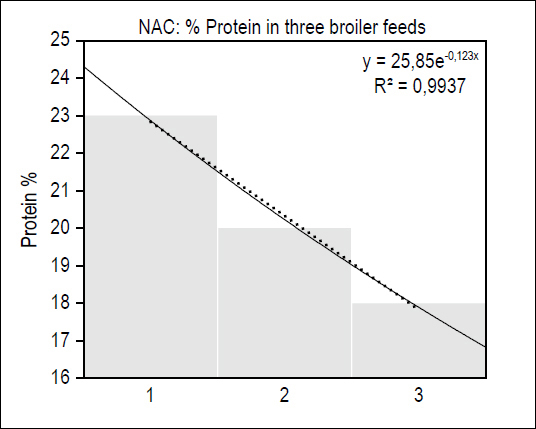
Nutritional requirements for poultry, like those published by the US National Research Council (NRC, 1994), are defined in terms of percentages of critical nutrients in starter, grower, and finisher feeds, each feed being given for about a third of the broilersâ lifetime. Figure 1 shows how protein requirements alter over the lifetime of a growing broiler (NRC, 1994). However, these change daily and the fitted curve shows what they should be.

NRC Broiler protein requirements in starter (1), grower (2) and finisher (3) feeds (adapted from NRC, 1994).
Citation: Journal of Applied Animal Nutrition 12, 1 (2024) ; 10.1163/2049257x-20230004
It is not practical to deliver different diets every day from the feed mill to individual broiler houses, which is why, typically, only three feeds are employed over the production period. As illustrated from the columns in Figure 1, there are only three days in the lives of broilers that the correct level of protein is given. The areas below the fitted curve and the columns for each feed phase show the period when birds receive less than they need to reach their genetic potential. The areas above the fitted curve, show the periods when the birds get more protein than they require, which they then have to excrete. This not only wastes expensive protein, but causes wet litter, which produces ammonia and sulphurous obnoxious odours leading to respiratory and skin lesions, such as foot pad dermatitis (Mayne, 2005). Hence, the protein level is only appropriate for 8% of days in the production period. For around 46% of the time, bird growth is restricted due to insufficient intake and for a concurrent 46%, protein is wasted.
The NRC defines requirements as percentages, but broilers do not eat percentages â they eat quantities. There is therefore a need to define the daily quantities of critical nutrients to be given to a flock of birds to achieve the most economic balance between the cost of their feed and the value of their output. In the case of for broilers, this would be weight gain (Filmer, 2006).
Mathematical work undertaken by Curnow (1973) led to the development of the Reading model, which showed how groups of individuals respond to daily changing nutrient inputs. Whittemore and Fawcett (1976) and Whittemore (1976) showed how ideas and data from different disciplines could be brought together to simulate, using a computer program, the growth of livestock via controlled feeding management (Emmans, 1981). Parks (1970) developed systems in which farm livestock, including poultry, were given free access to a single feed over several weeks. In both systems, the composition of the diet was known and, in the latter system, an estimate was made for consumption, taking environmental factors into account. From this, daily intake of essential amino acids and energy were calculated and, assuming feed digestibility factors and the composition of lean tissue and fat were taken into account, the liveweight gain and body composition was then estimated. All cases assumed commercial practice of feeding a series of feeds over the lifetime of the growing livestock. These ideas provided the basis for the development of a nutrition- based precision livestock farming system (PLF) for broilers, in which the economic output is chicken meat, and the first limiting nutrients are digestible amino acids. Initial work examined digestible lysine as the first limiting amino acid in the 1960s, and defined requirements as curves or tables, showing the amount of digestible lysine (with other amino acids in balance) required per day were produced. This work culminated in the Flockman system for broilers (Belyavin and Filmer, 1990; Filmer, 1991). The PLF system was to feed a different feed every day to meet the specific requirements of nutrients for that day of age based on existing knowledge. This was then compared to broiler flocks fed three conventional compound feeds (starter, grower and finisher) over their lifetime. The new method complied with an important tenet of good animal husbandry practice, namely âMake all changes gradualâ (Filmer, 2011b).
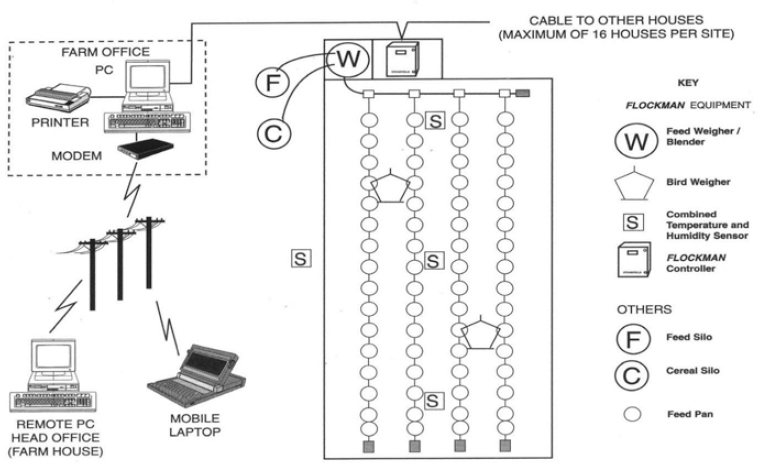
Until farm-based computers were available which could vary the composition of feed every day, PLF was not practical on a commercial scale. It needed individual weighing equipment in each rearing shed to record feed intake as well as the average weights of the birds, both of which had to be developed. Using these data and monitoring the composition of the raw materials and final diet, a computer program was created to blend a high protein compound feed with cereal from two silos at each chicken house, one labelled F, for feed, and the other with a low-protein feed (labelled C, for cereal; Figure 2).
Broiler house with two silos (one with high-protein feed and another with low-protein cereal), to be mixed in different proportions daily.
Citation: Journal of Applied Animal Nutrition 12, 1 (2024) ; 10.1163/2049257x-20230004
The following paper describes how a novel PLF management system was trialled, using nutritional theory, growth modelling, emerging applications of computers on-farm, and traditional animal husbandry practices, and the benefits in terms of productive performance and animal welfare.
2 The original ânew systemâ
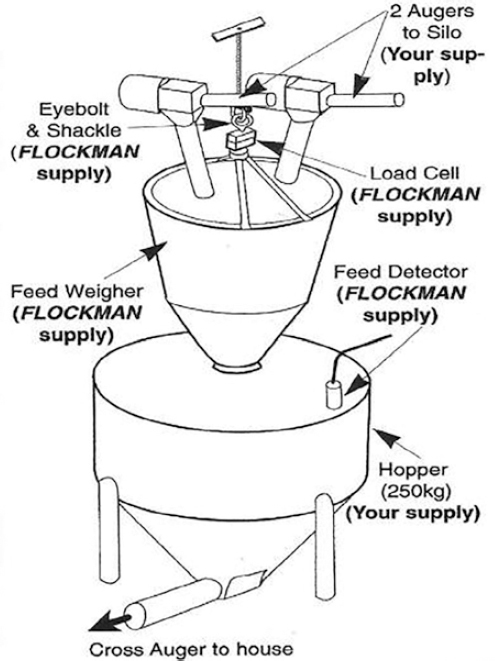
The principle was to deliver, each day, the required quantities of all the limiting amino acids, including digestible lysine, to a flock of chickens. This required calculating the most economic intake one day ahead, throughout the production cycle (Curnow, 1973). This had to take into account the age of the birds, optimal amino acid intake per bird and the number of live birds in the house (after adjusting for any mortality to date). The forecast feed intake was calculated based on the intake from the preceding three days, expressed as a percentage of the target set for the breed company at that time. The average for these days was multiplied by the target intake set for the next day. By knowing the levels of limiting amino acids in the feed and in the cereal, the new program calculated, and then delivered, the correct feed-to-cereal ratio for each specific day and sent the appropriate command to the new developed blender (Figure 3). The blender shown in Figure 3 was first manufactured in the late 1980s and comprised a hopper with a circular hole at the base that opened or closed by a cone, suspended from a load-cell.
The blender developed for compound feed and cereal, to allow variation in daily nutrient intake.
Citation: Journal of Applied Animal Nutrition 12, 1 (2024) ; 10.1163/2049257x-20230004
3 On-farm testing in the UK
The system was tested by conducting on-farm trials in Ireland and in the UK (England, Scotland, Wales, and Northern Ireland), and the results from each flock were recorded.
Testing by a major broiler integrator
A major UK broiler integrator in Lincolnshire with 10 broiler sites near Scunthorpe, each with 10 identical, modern broiler houses holding 30,000 broilers was used in initial trials. The PLF system was retrofitted at five houses on each of the 10 sites for comparison with the integratorâs conventional system that included ad libitum feeding. The broiler houses were arranged in pairs: one, chosen at random, was assigned to the new system and the other to the conventional system. Each pair of houses was stocked on the same day, with the same number of birds from the same parent stock, given the same feed, managed by the same stockperson and slaughtered on the same day. For each house, daily consumption of feed and water, mortality, and culls were recorded, and 100 birds were weighed weekly. Live weight, feed conversion ratio (FCR), European Performance Efficiency Factor (EPEF), and daily weight gain were calculated, as were the cumulative margins over feed costs per bird housed and returns per square metre of floor space per week (based on the feed cost and the value of live weight). Results were assessed using ANOVA according to the methods published by Fisher (1935).
A grower at Colemore, Hampshire had two identical 25,500 bird broiler houses where the PLF system was compared to the conventional system fed ad libitum. In each crop, birds in both houses came from the same parent flock and received the same feed from BOCM Pauls. Birds arrived and were harvested on the same day. Tables 1 and 2 show the benefits in performance, factory rejects and margin per bird from the new system.
Mortality and margins under the new PLF system compared to the conventional system from two broiler houses over nine crops in the UK
Citation: Journal of Applied Animal Nutrition 12, 1 (2024) ; 10.1163/2049257x-20230004
The number of broiler carcasses rejected from the processing unit under the new PLF system compared to the conventional system from two broiler houses over nine crops
Citation: Journal of Applied Animal Nutrition 12, 1 (2024) ; 10.1163/2049257x-20230004
As can be seen, the five rejection criteria were 40, 24, 41, 47 and 24% lower on the new system (average 41%, P = 0.031) compared to the normal control system.
The UK integratorâs Scunthorpe processing unit, analysed carcasses of 20 males and 20 females on both systems, which were dissected into body parts. The results are below in Table 3.
Leg drumstick weights as percentage of total carcass weights of male and female broilers from the normal ad libitum system compared to the PLF system1
Citation: Journal of Applied Animal Nutrition 12, 1 (2024) ; 10.1163/2049257x-20230004
Drumsticks on the new system were 12% heavier for males and 8% heavier for females than recorded for ad libitum fed birds. Percentage drumsticks for males were heavier than females for both feeding systems but did not reach statistical significance. Such heavier leg weight indicated more muscle, stronger legs, better walking ability and reduced lameness.
The major UK integrator had agreed that, if the new system gave an extra margin of at least four pence per bird housed, the company would install the new system across all the other nine sites. Results showed that the production targets had been exceeded. All houses on all sites were equipped with the new PLF system. The company required daily performance data from each house on every site to be available at its head office, and a new software package was developed to present the data in a suitable format. A single screen for each site showed various performance parameters, including weight of feed used (total and per bird), average bird live weight, daily weight gain, FCR, mortality, EPEF and weekly margin over feed cost (pence per bird and per square metre per week) for each house. The values on the head office computer screens for each house on each site were displayed in green if within limits; in red, if not. Thus, the managers could see, at a glance, which house or houses needed attention on any day. If no values were in red, the area supervisor had no need to visit that site at all, representing an extra saving to the company.
Joint testing with the UK government and National Farmers Union
A trial on Mr Staveleyâs farm at Ripon, Yorkshire was recorded and authenticated jointly by ADAS (UK governmentâs Agricultural Development and Advisory Service) and the UK National Farmers Union (ADAS, 1992).
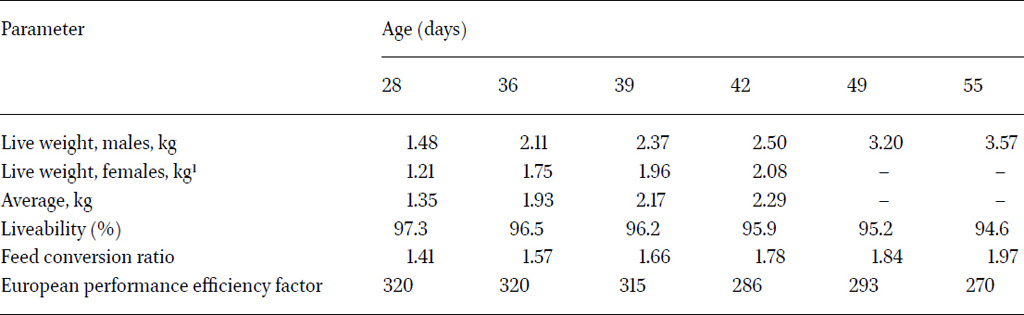
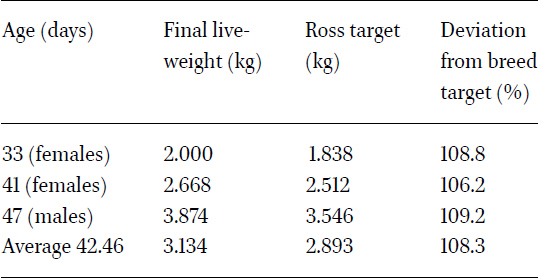
A sexed flock of 30,000 Ross broilers was stocked at 20.3 birds/m2 and housed in Harlow buildings recently fitted with the new PLF nutrition control system that employed a âdigestible lysine daily intake profileâ which increased amino acid intakes above those needed for optimal growth to improve carcass quality as well as on-farm performance. The proportion of whole wheat was changed daily to ensure that nutrition targets were always met. Commercial feeds were obtained from the British Oil and Cake Mills Pauls Ltd. Table 4 shows the results.
Performance results for birds at different ages using the 1980s PLF revised system
Citation: Journal of Applied Animal Nutrition 12, 1 (2024) ; 10.1163/2049257x-20230004
The average weights of female birds were 6 d and male birds were 5 d ahead of the Ross standard. The highest weight (3.57 kg) was reached at 55 d, with an FCR of 1.97, resulting in the highest EPEF of 270 (in 1992). The margin over feed cost was GBP£ 0.683/bird or GBP£ 0.247/kg liveweight. Savings from using wheat, at £50/tonne, itself led to an extra margin of GBP£ 0.03/ bird, which, for a 30,000 house, would be GBP£ 900 per flock.
The ADAS report (ADAS, 1992) stated that the âbreast meat yield (skin off), as a proportion of the eviscerated carcass, was 22.1% for females and 23.7% for males. This was 1.3 and 2.2 percentage units higher than the commercial data set corrected for liveweightâ. The new PLF system resulted in higher yield of breast meat than that obtained from standard management, being 10.2% for male birds and 6.2% for female birds. The processor said âWe are pleased to get wheat fed birds, if it is fed scientificallyâ. The new system required further development to enable birds to grow along a defined and predetermined growth curve so that the desired weight was achieved at slaughter age.
A three-year trial with the UK Ministry of Agriculture
The UK Ministry of Agriculture, Fisheries and Food funded a three-year study on a site of identical houses in Oxfordshire (MAFF, 1998), each with 30,000 birds, all equipped with the new PLF system, including automatic feed and bird weighers in each house. A paired comparison technique was used, one house at random being allocated to the normal PLF system. The other targeted a desired growth curve. Each pair of houses were managed by the same stockperson and harvested on the same day. Birds in both treatments were given a starter, grower, and finisher feeds produced by the same company (BOCM Pauls Ltd., Ipswich, UK).
Previous growth models predicted the growth of broilers based on the nutrient content of the feed and its estimated daily feed intake. This current trial required a different model that would recalculate requirements in real time and the composition of the feed to be fed the next day. This was to ensure that the birds progressed along a predetermined growth curve based on an accurate forecast of their feed intake. This growth model calculated the ratios of the mix between the starter, grower and finisher feeds and the whole wheat that was needed to deliver the appropriate quantity of amino acids to the flocks daily. The next dayâs feed intake was predicted using the method described above. Daily live weight records enabled the actual daily weight gains to be calculated, which were then compared against actual weight gains and the model was automatically revised and updated to minimise such differences by a feedback mechanism, termed âadaptationâ. The adaptation method altered the digestibility coefficient in the new growth model, so that, if a batch of commercial feed delivered was higher or lower in amino acids than the theoretical average, the method would correct for that deviation. This eliminated the need to know the actual nutrient content of the feeds. So, it would have been possible to use the feed compositions recommended for the breed (e.g. Ross or Cobb requirement and target tables), thereby eliminating the need to ask the feed-supplying companies for what they considered to be confidential information.
Stacey et al. (2004) made the following comment on the method: âThe model adaptation procedure gave excellent results for healthy birds. This successful development of a model that is continuously adapted so that it matches the actual performance of a particular flock of birds, was a key step in the development of the real-time model-based controller. A prototype nutrition control system for poultry has been demonstrated successfully. This is apparently the first time that this principle has been demonstrated on a commercial scale for any species of livestock.â In addition, Wathes et al. (2008) reported: âCommercially, the only PLF product that has been sold on a significant scale is the UK developed system for broiler chickens and turkeys.â
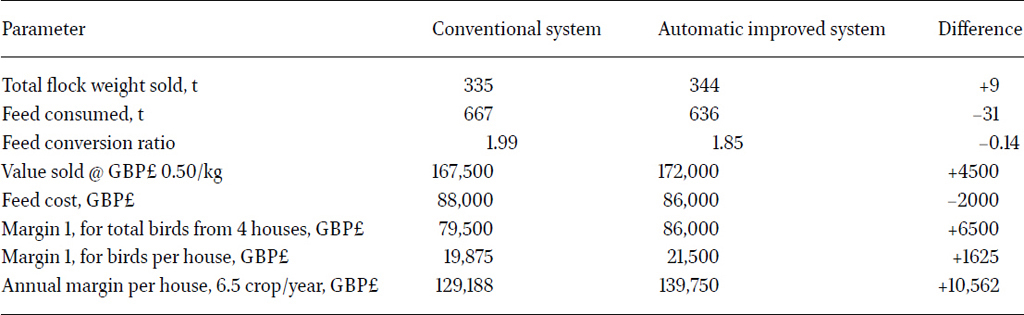
A verification trial was conducted on another integratorâs eight-house farm at Brackley, near Oxford comparing the new PLF system with the previous one. Data were analysed using ANOVA (Stacey et al., 2004) with confidence limits set at 95% (Pâ¤0.05). The new system showed additional financial benefits with a return on investment within six months (Table 5).
Estimated financial outcomes from a trial with four sheds, each housing 30,000 birds raised under the original system or the improved fully automatic PLF improved system (2002 data; Stacey et al., 2004)
Citation: Journal of Applied Animal Nutrition 12, 1 (2024) ; 10.1163/2049257x-20230004
Recently, Moss et al. (2021) commented that precision feeding and precision nutrition may become the new paradigm for feeding broilers.
4 Simplifying the improved PLF system
After the commercial trial (Stacey et al., 2004), it became apparent that integrators and farmers required a much simpler, improved PLF system at a fraction of the cost. To meet this demand, the improved system needed modifying. PLF requires information on daily feed intakes and a mechanism to blend broiler feed with whole wheat. Hence, the simplified software had a time clock and could measure the time that the feed auger had run and the amount of feed or whole wheat delivered per minute, to calculate the weight of intakes each day. Whereas the poultry feed auger was set to run continually when activated, the wheat auger was set to run simultaneously and sporadically for short periods and timed to ensure the correct blend was delivered. Information on the nutrient content of the starter, grower and finisher feeds was sourced from the breed company, and for each farm, it was important to know the number of days that each of the diets were to be fed.
Designing a precision livestock feeding system for broilers
Designing PLF systems for broilers requires knowledge of chicken anatomy and their respiratory, cardiac, nervous, digestive, excretory and immune systems, and the role of the gut microbiome. Broilers are sentient, social creatures and their recent evolution from the Jungle Fowl (Gallus gallus) has conditioned their behaviour, especially relating to feed intake. Three main critical features distinguish the new system from the conventional systems of feeding broilers ad libitum:
Varying the composition of the feed each day.
Dividing the normal 24-h day into mini days, which develop the broilersâ crops fully and reduces mortality and flock variability in liveweight.
Feeding whole cereal, which enables the nutrient composition to be changed daily and develops the birdsâ gizzards, making proteins more digestible. This has the advantage of improving growth and lean meat production and reducing excreta, water intake and offensive odours.
Crops and gizzards, unique to birds, are essential parts of the avian digestive system (Svihus, 2011), which, together, enhance gut microflora and lead to improved digestion, absorption, gut microflora, welfare and health.
Feeding via mini days
The second crucial innovation in the new system is feeding the birds several times a day, which, together with controlled lighting, splits the usual 24-h cycle into several âmini daysâ, starting with four à 6 h. Each mini day starts with the feed pans being filled in the dark, followed by gradually brightening light, which simulates daybreak and is less stressful than abrupt transitions between darkness and light. Lux levels were at the discretion of the grower and company policy. On-farm monitoring was used to determine optimal lighting and feeding strategies, whereby as the lights grow brighter, the birds begin to stir, stretch their legs, and flap their wings. They then all go to the drinkers and the dominant birds then go to the feed pans and eat rapidly. No other birds try to compete, as they know their place in the pecking order or dominance hierarchy (Scarf, 2019). Within five minutes, the dominant birds are sated and their crops are full, and they move away from the feed pans to rest, while the next âechelonâ begins to feed. The rest await their turn, as conditioned by the system, because they have learnt that, if they do so, they all will get enough to eat. Within an hour or so, each bird has had its turn, including those at the bottom of the pecking order. All birds now have full crops and are at rest.
When the system detects that all the birds have filled their crops, the feed pan augers are automatically disabled and not enabled again until the next mini day. Feed pans are soon empty, which prevents birds from eating between times and spoiling their appetites for the next mini day when food is available again. This prevents the biggest, dominant males from eating more than they really need to ensure maximum lean tissue growth. Any more than this results in the extra protein in the feed consumed being excreted. In addition, extra energy consumed would be laid down as fat, resulting in the birds becoming obese. This fat is deposited in the abdomen and is discarded when the birds are eviscerated during processing, and in the arteries. This can become excessive enough to cause heart attacks, resulting in an avoidable increase in flock mortality.
Although birds cannot eat until the next mini day, they are not hungry because they have filled their crops to capacity. The fact that feed pans become completely empty means that there is never a build-up of stale or spoiled feed. When the next mini day begins, the feed pan augers are activated before the lights come on. Because the feed pan augers were disabled when not running, all the delivery pipes between the feed pans are full of feed. So, at the next mini day, the feed in those pipes is immediately delivered to the next pan. Thus, every pan throughout the broiler house is full, preventing bird migration to the near end of the house, which can cause overcrowding and injury.
Having several mini days, each with its feeding and sleep times, are more stimulating for the birds than a conventional regime, under which birds are observed to become listless, their legs get less exercise which leads to poor walking gait and lameness. After feeding, the birds begin to scratch around in the litter for stray food particles, engage in dust baths, and move around, which strengthens their legs (Filmer, 2001a,b). Haslam (2008) noted that the walking ability of birds under the new simplified system was markedly better than that of birds under a conventional system. Lameness was considered the second most important welfare assessment measure in the Unitary Welfare Index (Haslam, 2003), which assessed and compared welfare of broilers under different husbandry systems. Birds with poor walking ability are more likely to suffer from hunger or thirst if they cannot reach the sources of feed and water (Weeks, 2000).
An hour or two after feeding, the birds are ready for their next rest period (Takhtsabzy and Thomsen, 2011). As the light begins to dim gradually, the birdsâ internal time clock anticipates the event, and they start to settle down in small groups. When completely dark, sleep, which is essential for the immune system, takes over, and the mini day is complete.
Role of the crop in digestion
In ad libitum feeding systems, crops are filled only after the single dark period. During periods of light, birds do not need to fill their crops as feed is available ad libitum. With the new system, the mini days ensure intake several times a day, which fully exploits the benefits of a well-developed crop. The crop is not just a storage organ to enable birds to feed quickly to minimise the time spent in the open and the consequent risk of predation, it is a control-release system that supplies food in a steady stream to the gizzard over the feeding cycle, so that digesta movement into the small and large intestine is continuous. The consistency of the contents of an active crop is that of a slurry. Forbes (2003) observed the same consistency when he gave soaked feed to broilers ad libitum, where pelleted feed was soaked in water (1.5 to 2 l/kg of feed) for 2 h. When groups of broilers were fed the wet feed and compared with that of control groups given the normal dry feed ad libitum, dry matter intake in both groups was equal, but the growth of the wet-fed birds was significantly (10.7%) higher, and FCR improved from 1.78 to 1.59. However, feeding wet food in commercial broiler houses is not practical due to spoilage and bacterial and fungal contamination, and is never used in practice. Scott (2002) stated that more research was required to find a practical application of wet feeding to support rapid gain and feed efficiency. The new simplified system achieved these objectives without feeding wet feed, because soaking takes place in the birdâs crop.
Additionally, Svihus (2011) stated that the crop is more functional when birds are subject to intermittent feeding and contributes to improved digestion. Equally important is the bacterial fermentation that occurs in the crop, one of the most important species being Lactobacillus acidophilus. The early establishment of Lactobacilli spp. is key to efficient crop function that contributes to the first line of defence against Salmonella spp. and Escherichia coli by inhibiting their colonisation of the crop and at sites farther down the gastrointestinal tract (Classen et al., 2016). More recently, Fülling et al. (2019) showed a link between beneficial microflora and the feeling of contentment and well-being caused by the vagus nerve that links the gut to the brain.
Cereal as the low-protein feed and role of the gizzard
The third crucial innovation of the new system is the use of whole cereal from day 2â3, to blend with normal broiler feeds to enable the system to deliver nutrients in optimal quantities to the flock each day. Feeding whole cereal activates the birdsâ gizzards. Svihus (2011) summarised the interaction between diet and gizzard function, and the implications of these interactions for nutrition. Zaefarian et al. (2016) cautioned that âparticle size-reducing properties of pelleting processes may result in suboptimal digestion.â It has been confirmed (Gabriel et al., 2008; Svihus et al., 2010) that inclusion of whole wheat in broiler feeds improves digestibility because of better gizzard development and thus a more intensive reflux in the upper part of the gastrointestinal tract by reverse peristalsis. Reflux between the different segments of the small intestine allows more complete digestion and, as a consequence, decreases the quantity of undigested nutrients overflowing into the caecum. Less outflow, particularly low-protein, limits the potential for pathogen colonisation in the lower part of the gastrointestinal tract (e.g. Clostridium perfringens; Drew et al., 2004). Feeding whole cereal results in the birdsâ gizzards becoming the âengineâ of the broilersâ digestive system (Svihus, 2011). Unlike animals, birds have no teeth to chew their feed: their gizzards perform the same role of reducing feed to small particles, thereby presenting digestive enzymes with larger surface areas on which to work. In ad libitum feeding with no cereals, the gizzard has no hard particles in the feed to grind, which renders it redundant and it becomes vestigial.
More complete digestion lowers the quantity of nitrogen and sulphur compounds in excreta, which cause sticky litter and releases atmospheric pollutants and offensive odours â a common source of complaint from nearby households living close to poultry farms. Waste by-products are excreted through the kidneys and require water. Less protein in manure means less water, resulting in drier litter and less pressure on water supplies.
Early studies (Cowan and Michie, 1978; Emmans, 1979) reported that feeding broilers and turkeys a mix of compound feed and whole cereal produced satisfactory results. The ratio of the two are dictated by performance potential, with birds of lower potential choosing a higher proportion of cereal than that chosen those with higher potential. More recently, Forbes and Covasa (2019) showed the benefits of feeding whole cereal. The new system enables each bird to choose how much of each of the two feeds to eat.
Before the normal ad libitum fed broiler production system started, free-range birds were fed twice a day, a mash or dry meal in the morning and a scratch feed of whole grains in the afternoon. Birds ate quickly until their crops were full, a behaviour pattern carried over from the Indian Jungle Fowl (Gallus gallus), the recognised ancestor of todayâs chicken, which ate rapidly only twice a day to avoid the heat of the day (Baker 1928, cited in Collias and Collias, 1967) and to escape predators by limiting their time spent foraging in the open. Broilers fed whole cereals excrete fewer coccidial oocysts (Cumming, 1991) and Cumming concluded that broilers whose feed contained whole grains had stronger and more muscular gizzards. The grinding in the gizzard destroyed oocysts in considerably greater numbers compared to those in birds fed a diet without whole grain.
When whole cereal is consumed, the gizzard grinds other dietary constituents, such as soya meal, making the particles smaller and presenting a greater surface area for digestive enzymes. The gizzard further influences the function of the proventriculus, which produces hydrochloric acid and pepsinogen (Cumming, 1991), making the contents more acidic and ensuring complete digestion. Lower pH benefits gut microflora as it inhibits Salmonella spp. and Escherichia coli (Waterman and Small, 1998). An active gizzard makes digesta less viscous, ensuring better physical contact between enzymes and substrate, thereby increasing breakdown and facilitating absorption of digesta in the small intestine.
More uniform liveweights between houses and over time
Another benefit of the new system is greater uniformity in flocks, because smaller birds have complete access to the feeders, grow faster, and have higher final weight than those reared under ad libitum feeding systems (Filmer, 2006). This is because smaller birds have to compete for trough space with dominant birds. Under the new system, birds higher in the pecking order cannot overeat and, therefore, cannot become obese, because the system disables feed pans between feed times.
Reliable measurement of bird live weights is crucial to evaluate flock uniformity. Weighing systems should predict the live weight of birds (with empty crops) at the end of each day and show their standard deviation. Recorded weights must be used and corrected for the time of day, age and feeding times. Commercially available bird weighers vary in accuracy and reliability and need to be calibrated correctly. This takes time and is often neglected in understaffed operations. Whereas the usual scales need to be calibrated manually, it is possible to develop self- calibrating versions.
Reducing variability by different methods of feed formulation
Linear programming (LP) formulates feeds with an average protein content at the lowest cost. The program calculates the nutrient contributions of each component by multiplying its proportion in the feed by its average protein content and adds up the protein contribution. Feed Samples of normal feed mixtures averaging 20% protein will have 2.5% of all samples ± 2% protein above and below 20%. In this case, above 22% and below 18%.
Quadratic programming (QP) can reduce that normal variation in protein in the content of mixtures using the standard deviation (SD) of nutrients in the ingredients: The QP calculates the contribution of each component by multiplying its percentage in the feed by its SD and then squares the result to give the contribution to the variance of the mixture. The sum of all the components then gives the variance of the entire mixture, and its square root gives the SD of the mix. This means it is possible to program a computer to produce, at least cost, a mixture with no more that 2.5% of all the samples produced with protein content below, say, 18.5% (Filmer, 1989).
By choosing a sensible lower limit below which 2.5% of all products fall, QP can save £1 per tonne of product compared to the formulae obtained through LP. Whereas LP produces a simple formula, such as corn-soya, QP results in many more components, none at high levels. Average protein is lower, but no commercial feed leads to poor performance. Therefore, the performance of flocks of birds becomes more consistent across farms and over time. The benefits of QP are many. The feed compounder saves formulation cost and maintains customer base, because of better flock efficiency and uniformity. The farmer benefits from fewer non-saleable runts and lower mortality, and processors and supermarkets benefit from greater uniformity in bird live weights. The environment benefits from more efficient use of feed and water and lower pollution and offensive odours.
Broiler strains grow rapidly and need greater quantities of feed as they age. To cater for their changing needs, additional profiles, with more than four feeds a day (feed delivered every 6 h) were tested on farms fed four feeds a day to broilers from 2â3 d old to 2â3 weeks old. From the third week, birds with high genetic potential were fed four and a half times a day (nine times/48h) and later, even more frequently. A total of five extra profiles were produced; when four and a half times a day, birds are fed every 5.33 h; when fed five times a day, every 4.8 h; when fed five and a half times a day, every 4.36 h; when fed six times, every 4 h, and finally, when fed three and a half times a day, birds fill their crops every 6.86 h.
In 2023, birds near the end of their growing cycle are expected to weigh more than the breed targets and gain 100â150 g a day, with an FCR of 1.4 and an EPEF of over 500. It is important for growers to manage feeding to keep to target weights by weighing the birds daily for the last 10 days before processing. The simplified system provides a spreadsheet with the desired growth curve so that the grower can see if actual weights are on target. The five profiles were used to help growers meet their target weights on the required day using the 3-d running average. Birds would be fed more frequently if their weights were lower and less frequently if higher than the target. In most cases, however, the targets were exceeded, birds were subsequently fed less frequently. The new system required farm trials to test whether the simpler and cheaper system would prove superior to the normally used ad libitum feeding system.
Large-scale field trials of the new simpler and cheaper system
Field trial with 18 broiler houses and 474,000 birds
Nine pairs of broiler houses, each containing a minimum of 25,000 birds fed on commercial feeds, were used. Farms 1 and 3 used two houses over two crops, Farm 2 used two houses over one crop, and Farm 4 used four houses over two crops. The âpaired comparisonâ technique was used because of known high variability between birds from different parent stock with respect to mortality and performance. Both the houses that formed a pair were identical in terms of equipment, management, breed, sex, parent stock, stocking density, and date of housing. The simplified equipment interfaced with existing feeding and lighting equipment in one house within each pair to enable meal-time feeding instead of ad libitum feeding as well as whole wheat feeding. Live weight, feed consumed, mortality, factory weight, and weight of feed used (together with its cost) were recorded. Statistical analysis of the performance difference between the new system and the control house within each pair was carried out using Students t-test. Financial parameters were analysed the same way. Birds on the new system recorded significantly less mortality, faster growth, and better feed efficiency as measured in terms of both FCR and EPEF (Table 6).
Effects of the new simplified system on performance (2012 data)
Citation: Journal of Applied Animal Nutrition 12, 1 (2024) ; 10.1163/2049257x-20230004
Birds on the new system were visibly cleaner and more active, but this could not be statistically evaluated. Due to commercial sensitivity, growers were unable to disclose the margin of bird value minus feed cost on the controls or the new system.
Commercial testing
A graduate Mr Shepherd with a broiler house near York of 20,000 male Ross birds (far end) and 20,000 female birds (near end) used the new system to evaluate its benefits. A low wire-divider was placed across the house to keep the males and females apart. The divider was moved when males became bigger than females to give the same live weight (kg/m2) at each end and moved when the females were thinned at 33 days of age. It was removed when the remainder of the females were harvested. The first crop recorded an EPEF of over 400. The next three crops were exceptional, such that, of the first four crops, three recorded EPEFs over 400 and one recorded an EPEF of 430, which in 2014 was a record (Filmer, 2015b; Table 7). Average mortality was 3.81%, FCR = 1.651, and EPEF was 430 (n = 40,000).
Results in a tunnel-ventilated broiler house
Citation: Journal of Applied Animal Nutrition 12, 1 (2024) ; 10.1163/2049257x-20230004
International integratorsâ farm trials of the simplified system
Nine large-scale replicated international trials were conducted in Australia, China, Japan, South Africa, American and European countries from 2009 to 2013. In these trials, no whole cereal was fed; only the feeding cycles were applied. The same procedures as in the UK integratorâs trial were used and the differences between the treatments were analysed using ANOVA. Each site had eight, ten, or twelve houses, each containing between 30,000 and 50,000 birds. The nine sites had over 70 houses. All sites showed decreased mortality and significant improvements in bird live weight, FCR, EPEF and profitability (Table 8).
Benefits of applying the PLF system in integrated systems in different countries1
Citation: Journal of Applied Animal Nutrition 12, 1 (2024) ; 10.1163/2049257x-20230004
5 Conclusions
The simplified PLF broiler system is based on sound scientific principles and 35 years of experimental work on the farms of integrators, private growers, and research institutes. The system combines advanced population nutrition science with traditional good husbandry practices to significantly improve bird weights, mortality, FCR, EPEF, and bird welfare and to lower the cost of production.
The PLF system harkens back to earlier management, which studied animal behaviour and applied more flexibility during rearing, creating more uniformity in flocks. It reduces costs of production due to significantly better feed conversion and better growth. This has been attributed to full use of birdsâ digestive organs, better protein digestibility and nutrient absorption. Stronger legs, better gait scores, less lameness, mortality and disorders like Ascites, obesity, breast blisters and black hocks, which, again, increases productivity and income. The PLF system is more sustainable as it reduces the need for expensive feed materials and water. It has environmental benefits, due to less excretion and unpleasant sulphurous odours. Although there has been some resistance to change in feeding management practices away from the conventional ad libitum system, those who have embraced ideas which fit better with birdsâ natural behaviours can reap rewards in terms of animal health and welfare, productive performance and improved income.
Funding
The author acknowledges the financial grant awarded to Silsoe Research Institute by the UK Ministry of Agriculture, Fisheries and Food for the LINK Project (LK0612, 1998), which enabled the original program to be developed to grow broiler chickens along a predetermined growth curve.
References
ADAS, 1992. A study of the performance of chickens reared using the Flockman⢠computer system. Report NL.Filmer.11.
Baker, E.C., 1928. The fauna of British India. 2nd ed., vol. 5., Taylor and Francis, London, UK [cited in Collias and Collias, 1967].
Belyavin, C. and Filmer, D., 1990. Computer assisted control of growth in poultry houses. Proceedings of VIII European WPSA Poultry Conference, 25â28 June 1990, Barcelona, Spain.
Classen, H., Apajalahti, J., Svihus, B. and Choct, M., 2016. The role of the crop in poultry production. Worldâs Poultry Science Journal 1: 1â14. https://10.1017/S004393391600026X
Collias, N.E. and Collias, E.C., 1967. A field study of the red jungle fowl in north-central India. The Condor 69: 360â386. https://doi.org/10.2307/1366199
Cowan, P. and Michie, W., 1978. Choice feeding of the male and female broiler. British Poultry Science 19: 149â152. https://doi.org/10.1080/00071667808416457
Cumming, R., 1991. The nutritional control of coccidiosis. Recent Advances in Animal Nutrition in Australia 1991: 149â152.
Curnow, R., 1973. A smooth population response curve based on an abrupt threshold and plateau model for individuals. Biometrics 29: 1â10. https://doi.org/10.2307/2529671
Drew, M.D., Syed, N.A., Goldade, B.G., Laarveld, B. and Van Kessel, A.G., 2004. Effects of dietary protein source and level on intestinal populations of Clostridium perfringens in broiler chickens. Poultry Science 83: 414â420. https://doi.org/10.1093/ps/83.3.414
Emmans, G., 1979. Free-choice feeding of laying poultry. In: Haresign, W. and Lewis, D. (ed.) Recent advances in animal nutrition. Butterworth-Heinemann, London, UK, pp. 31â39.
Emmans, G., 1981. 3.3 A model of the growth and feed intake of ad libitum fed animals, particularly poultry. BSAP Occasional Publication 5: 103â110. https://doi.org/10.1017/S0263967X00003761
Filmer, D., 1989. Potential nutritional developments and their implications for the future. Colborn-Dawes 13th feed industry conference, 25 October 1989.
Filmer, D., 1991. A new system for livestock feeding. Feeds & Feeding, July/August 1991: 30â33.
Filmer, D., 2001a. Nutritional management of meat poultry. BSAP Occasional Publication No. 28, British Society of Animal Production, Cambridge, UK, pp. 133â146. https://doi.org/10.1017/S1463981500041091
Filmer, D., 2001b. Nutrition and managing growth in managing broiler lameness. University of Bristol, School of Veterinary Science 10 October, pp. 24â38.
Filmer, D., 2006. Putting poultry nutrition into practice: experience from the field. In: Garnsworthy, P.C. and Wiseman, J. (ed.). Recent developments in non-ruminant nutrition Nottingham University Press, Nottingham, UK, pp. 236â251.
Filmer, D., 2011a. The effect of fully functional crops and feed intake control on growth, feed efficiency, mortality and profitability of broilers housed in large, modern, climate-controlled houses. BSAS/ WPSA Occasional meeting. 4 April 2011, Nottingham University, Sutton Bonington, UK.
Filmer, D., 2011b. Knowledge transfer and innovation to reduce mortality and improve welfare of the birds as well as to improve feed efficiency and profit of the chicken meat industry: a case study. BSAS meeting Best-Practice Knowledge Transfer 3 March 2011, Worcester, UK.
Filmer, D., 2015a. Precision livestock farming helps feed the world by producing more broiler meat from less broiler feed. Global Forum for Agriculture Innovations, Abu Dhabi, 9â11 March.
Filmer, D., 2015b. Poultry feeding pioneer. The Farmers Club Summer Journal 256: 14â15. https://issuu.com/farmersclub/docs/14270_fcj_256_summer_2015_web_b76fed1fe370f0
Fisher, C., 1970. Studies on the protein and amino acid requirements of the laying hen. PhD Thesis, University of Reading, Department of Agriculture, Reading, UK.
Fisher, C., Morris, T. and Jennings, R., 1973. A model for the description and prediction of the response of laying hens to amino acid intake. British Poultry Science 145: 469â484. https://doi.org/10.1080/00071667308416054
Fisher, R.A., 1935. The design of experiments. Oliver and Boyd, Edinburgh. https://doi.org/10.1080/00031305.1980.10482701
Forbes, M., 2003. Wet foods for poultry. Avian and Poultry Biology Reviews 14: 175â194.
Forbes, M. and Covasa, M., 2019. Application of diet selection by poultry with particular reference to whole cereals. Worldâs Poultry Science Journal 51: 149â165. https://doi.org/10.1079/WPS19950010
Fülling, C., Dinan, T. and Cryan, J., 2019. Gut microbe to brain signalling: what happens in Vagus. Neuron 101: 998â1002. https://doi.org/10.1016/j.neuron.2019.02.008
Gabriel, I., Mallet, S., Leconte, M., Travel, A. and Paul-Lalles, J., 2008. Effects of whole wheat feeding on the development of the digestive tract of broiler chickens. Animal Feed Science and Technology 142: 144â162X. https://doi.org/10.1016/j.anifeedsci.2007.06.036
Haslam, S., 2003. Welfare assessment systems: need, design criteria and implementation. PhD thesis, Bristol University, Bristol, UK.
Haslam, S., 2008. Welfare assessment of birds in houses three and four at Old Hill Farm, Ross on Wye. Available at: http://www.flockman.com/health.html.
MAAF, 1998. LINK Project (LK0612) Integrated management systems for poultry production. News Release from Silsoe Research Institute, the academic co-ordinator.
Mayne, R.K., 2005. A review of the aetiology and possible causative factors of foot pad dermatitis in growing turkeys and broilers. Worldâs Poultry Science Journal 61: 256â267. https://doi.org/10.1080/00071660701370509
Moss, A.F., Chrystal, P.V., David, J.D., Wilkinson, S.J., Crowley, T.M. and Choct, M., 2021. Precision feeding and precision nutrition: a paradigm shift in broiler feed formulation? https://www.animbiosci.org/journal/view.php?doi=10.5713/ab.21.0034
National Research Council (NRC), 1994. Nutrient requirements of poultry, 9th edition. The National Academy Press, Washington, DC, USA. https://doi.org/10.17226/2114
Parks, J.R., 1970. Growth curves and the physiology of growth. I. Animals. American Journal of Physiology 219: 833â836. https://doi.org/10.1152/ajplegacy.1970.219.3.833
Scarf, D., 2019. Pecking order. In: Vonk, J. and Shackelford, T. (eds.). The encyclopedia of animal cognition and behavior. Springer, Cham, Switzerland. https://doi.org/10.1007/978-3-319-47829-6_1656-1
Scott, T., 2002. Impact of wet feeding wheat-based diets with or without enzyme on broiler chick performance. Canadian Journal of Animal Science 82: 409â417. https://doi.org/10.4141/A01-077
Stacey, K., Parsons, D., Frost, A., Fisher, C., Filmer, D. and Fothergill, A., 2004. An automatic growth and nutrition control system for broiler production. Biosystems Engineering 89: 363â371. https://doi.org/10.1016/j.biosystemseng.2004.07.006
Svihus B., 2011. The gizzard: function, influence of diet structure and effects on nutrient availability. Worldâs Poultry Science Journal 67: 207â224. https://doi.org/10.1017/S0043933911000249
Svihus, B., Sacranie, A., Denstadli, V. and Choct, M., 2010. Nutrient utilization and functionality of the anterior digestive tract caused by intermittent feeding and inclusion of whole wheat in diets for broiler chickens. Poultry Science 89: 2617â2625. https://doi.org/10.3382/ps.2010-00743
Takhtsabzy, B.K. and Thomsen, C.E., 2011. Assessment of sleep quality in power napping. Proceedings of the 33rd Annual International Conference of IEEE Engineering in Medicine and Biology Society, 30 August â 3 September 2011, Boston, MA, USA 2011, pp.769â772. https://doi.org/10.1109/IEMBS.2011.6090176
Waterman, S.R. and Small, P.L.C., 1998. Acid-sensitive enteric pathogens are protected from killing under extremely acidic conditions of pH 2.5 when they are inoculated onto certain solid food sources. Applied Environmental Microbiology 64: 3882â3886. https://doi.org/10.1128/AEM.64.10.3882-3886.1998
Wathes, C., Kristensen, H., Aerts, J. and Berckmans, D., 2008. Is precision livestock farming an engineerâs daydream or nightmare, an animalâs friend or foe, and a farmerâs panacea or pitfall? Computers and Electronics in Agriculture 64: 2â10. https://doi.org/10.1016/j.compag.2008.05.005
Weeks, C., 2000. The behaviour of broiler chickens and its modification by lameness. Applied Animal Science 67: 111â125. https://doi.org/10.1016/S0168-1591(99)00102-1
Whittemore, C.T., 1976. A study of growth responses to nutrient inputs by modelling. Proceedings of the Nutrition Society 35: 383â391. https://doi.org/10.1079/pns19760060
Whittemore, C.T. and Fawcett, R.H., 1976. Theoretical aspects of a flexible model to simulate protein and lipid growth in pigs. Animal Production 2: 87â96. https://doi.org/10.1017/S0003356100035455
Zaefarian, F., Abdollaha, M. and Ravindran, V., 2016. Particle size and feed form in broiler diets: impact on gastrointestinal tract development and gut health. Worldâs Poultry Science Journal 72: 277â290. https://doi.org/10.1017/S0043933916000222Highlights