Abstract
Two experiments were conducted to determine the suitability of tibia bone ash and toe ash as biomarkers of phosphorus (P) status of broilers from day 1 to 21 (Experiment 1) and from day 21 to 49 (Experiment 2). Experimental diets, including sorghum, soybean meal and other minor ingredients, were formulated to meet all nutrient requirements according to the nutrition specification recommended by Aviagen Inc (2022) except for calcium (Ca) and P. The diets contained the same concentrations of Ca of 10.0 and 9.0 g/kg diet for starter and grower/finisher, respectively and graded levels of non-phytate P (NPP) from 2.5 to 5.5 g/kg diet for starter; from 2.0 to 5.0 g/kg diet for grower/finisher in increment of 1.0 g/kg. Each diet was fed to one of five replicate pens (10 chicks per pen), starter from day 1 to 14; grower from day 15 to 28 and finisher from day 29 to 49. Body weight and feed intake were recorded weekly and feed conversion ratios (FCR) calculated. Ash content of tibia bones and toes were determined at the completion of both experiments. The results indicated that the NPP requirement of meat chickens was lower than the NRC (1994) recommendations and values currently used by the industry. Phytase supplementation significantly (P < 0.05) increased body weight of birds fed diets containing the lowest NPP concentrations (2.5/2.0 and 3.5/3.0 g/kg), but had no effect when the NPP levels were 4.5/4.0 and 5.5/5.0 g/kg. Growth performance and FCR are recommended as the primary parameters for evaluating the P requirement of meat chickens. Tibia bone and toe ash contents were poorly correlated with growth performance and were therefore not good biomarkers of dietary P status, especially in finisher birds. Only one Ca concentration was used in the current study and further research on P nutrition with different concentrations of Ca with or without supplemental phytase is warranted.
1 Introduction
Phosphorus (P) is an essential element and the third most costly dietary component in poultry production (Li et al., 2016). Cereal grains and their by-products, the main ingredients for monogastric animals, contain P as phytate, which represents up to 70% of the total P in poultry diets. Poultry cannot efficiently utilise P in this form as birds lack sufficient endogenous phytase to hydrolyse phytate (Li et al., 2016; Nelson, 1967). The necessity of supplementing poultry diets with P, especially those of plant origin, has been recognised for over a century (Kaupp, 1918; Kennard, 1920). However, it is important that diets are not over supplemented with P due to cost, pollution from excretion and difficulties of maintaining the supply to the feed industry due to finite reserves of this essential nutrient (Cordel et al., 2009). Thus, it is important to know the P requirement of broilers. This has been the subject of numerous investigations, but the requirement for this nutrient has not been established with any certainty (David et al., 2022; Li et al., 2016, 2017). This is due in part to published results including many variables, such as broiler strain, age, feed ingredients, phytase supplementation and different Ca and P sources. Moreover, interpretation of published data is further complicated by the different assessment criteria, including body weight gain, feed conversion ratio (FCR), tibia bone breaking strength, tibia bone ash, or toe ash that are used to determine requirements.
In many publications, the P requirements of meat chickens or broilers (David et al., 2022; Dhandu and Angel, 2003; Leske and Coon, 2002; Li et al., 2016; Persia and Saylor, 2006; Waldroup, 1999a,b, 2000; Yan and Waldroup, 2006; Yan et al., 2001) are considerably lower than the NRC (1994) recommendations that were based on research from 40 years ago (Li et al., 2017; Waldroup, 1999b). During this period, the genetics of the broiler have changed with a greater emphasis skeletal development and health in breeding programs (Kapell et al., 2012). Moreover, the widespread addition of microbial phytase to poultry diets has reignited the debate on P requirements. Phytase provides an opportunity to reduce inorganic P supplementation of broiler diets due to increased hydrolysis and improved utilisation of phytate P and reduced environment pollution by excretion of undigested P (Dersjant-Li et al., 2022; Selle and Ravindran, 2007). Moreover, this raises the question of the most appropriate criteria or biomarkers to determine the inorganic P or non-phytate P (NPP) status of diets.
Phosphorus plays an important role in bone mineralisation and, for that reason, ash content of the tibia or toes is used to assess P status. However, there are discrepancies in the literature when these biomarkers are used (Ravindran et al., 1995). This may be related to the age of the bird as the rate of bone development and mineralisation changes as birds develop (Gulizia et al., 2022; Talaty et al., 2009). Hence, the objectives of this study were to examine the suitability of tibia bone ash and toe ash as criteria for determining P status of broilers fed typical Australian broiler diets with or without phytase supplementation. The influence of broiler age on the suitability of these biomarkers was determined at day 21 (Experiment 1) and day 49 (Experiment 2).
2 Materials and methods
All experimental procedures were approved by the Animal Care and Ethics Committee of the University of Queensland and complied with the Australia Code of Practice for the Care and Use of Animals for Scientific Purposes (NHMRC, 2013).
Birds and housing
Ross 308, one-day-old, male, broilers chicks were purchased from a commercial hatchery (Baiada, Tamworth, NSW, Australia). Upon arrival, chicks were placed in floor pens (3.0 × 1.1 m) containing wood shavings, with the brooding temperatures and a lighting regimen recommended by the breeding company (Aviagen Inc, 2014). Prior to each experiment, birds were weighted individually and allocated to a pen containing 10 chicks by stratified randomisation, so that each group of chicks within an experiment had the same initial mean and range of live weights. Chicks commenced Experiment 1 at one-day-old, and Experiment 2, on day 21 post-hatch. The chicks in Experiments 2 were fed a commercial starter diet from day 1 to 14 and a commercial grower diet from day 15 to 21. For the duration of both experiments, birds were monitored twice daily.
Diets and experimental design
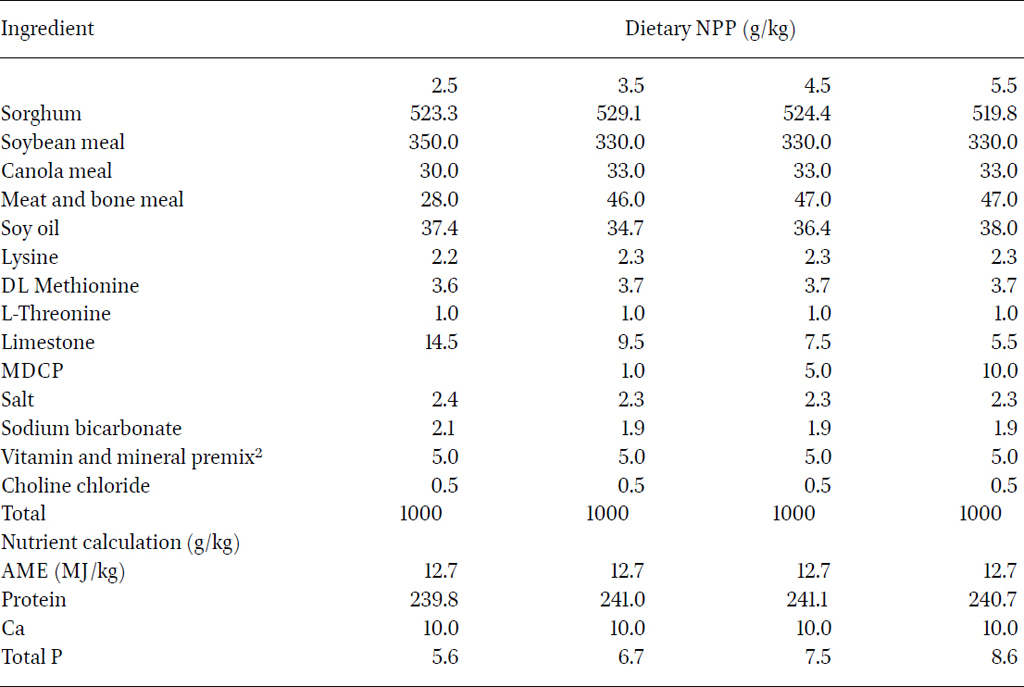
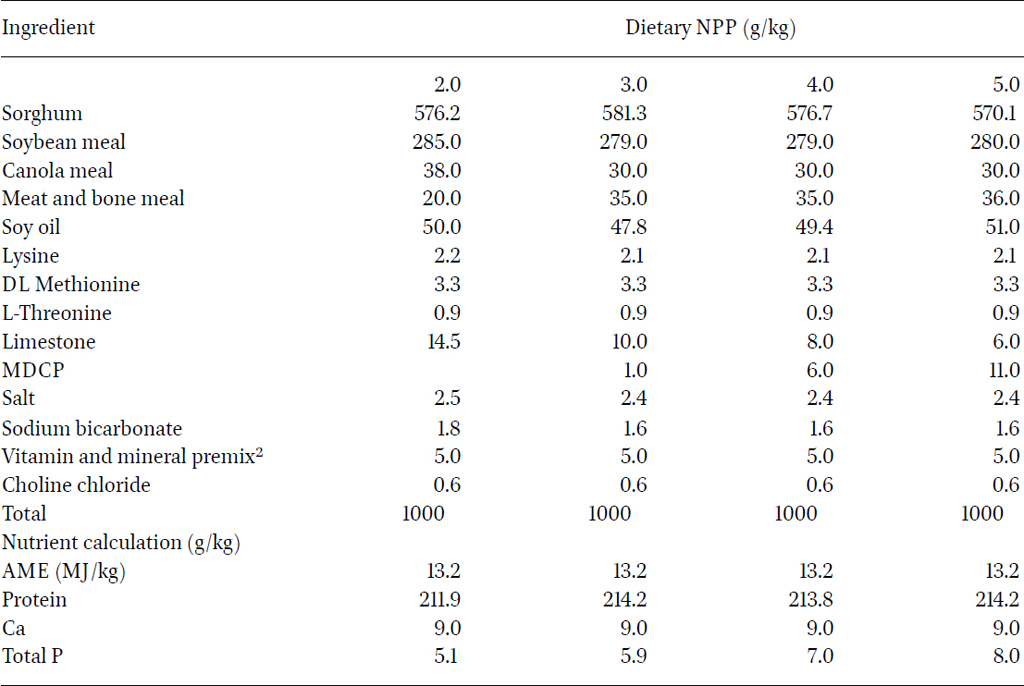
All experimental diets were formulated with sorghum, soybean meal, canola meal and meat and bone meal according to Ross nutrition specifications (Aviagen Inc, 2022) to meet all nutrient requirements, except for Ca and P. The experimental diets contained the same levels of Ca, 10.0 and 9.0 g/kg diet for starter and grower/finisher, respectively. Dietary non-phytate P (NPP) concentrations were graded from 2.5 to 5.5 g/kg diet for starter (Table 1) and from 2.0 to 5.0 g/kg diet for grower/finisher (Tables 2 and 3) in increments of 1.0 g/kg. This wide range of NPP concentrations covered a potential P deficiency status at the lowest level, to the value recommended by NRC (1994). The Ca and P concentrations in the respective diets were achieved by adjusting inclusion levels of meat and bone meat, monodicalcium phosphate (MDCP) and limestone.

Composition (g/kg) of starter diet (Experiment 1)1
Citation: Journal of Applied Animal Nutrition 12, 1 (2024) ; 10.1163/2049257x-20231004
Composition (g/kg) of grower diet (Experiments 1 and 2)1
Citation: Journal of Applied Animal Nutrition 12, 1 (2024) ; 10.1163/2049257x-20231004
Composition (g/kg) of finisher diet (Experiment 2)1
Citation: Journal of Applied Animal Nutrition 12, 1 (2024) ; 10.1163/2049257x-20231004
Both experiments had a factorial design and the experimental diets were prepared either with or without phytase (Feedzyme XP 1000 FTU/g, Danisco Animal Nutrition) inclusion at 500 FTU/kg, where FTU refers to phytase units and is defined as the amount of enzyme required to hydrolyse 1
Measurements and sample collections
Feed intake and body weight were measured weekly and FCR was calculated accordingly. Gait scores (scores 0 to 5; 0 = normal, 5 = Complete lameness) of all birds in each pen were assessed independently by three people according to the system of Garner et al. (2002) from day 13 to 15 in Experiment 1 and day 43 to 45 in Experiment 2. The average of three scores was used for statistical analysis. At the end of each experiment, two birds per replicate were euthanised by an intracardial injection of pentobarbitone sodium. Both tibia bones and left middle toes were collected and all soft tissues removed and the left tibia bone and toe were frozen. The head of the right tibia bone was sliced longitudinally with a scalpel and examined for the incidence and severity of tibia dyschondroplasia (TD). The size of the area with an abnormal mass of cartilage was scored (scores 0 to 5; 0 = normal, 5 = extensive deposition of abnormal cartilage) according to Edwards and Veltmann (1983).
Analysis of tibia bone ash and toe ash content
The left tibia bones were autoclaved at 121 °C and 16 psi for 15 (Experiment 1) and 30 (Experiment 2) min, respectively, to facilitate manual removal of soft tissue. After cleaning, the left tibia bones were weighed into pre-cleaned, -ashed and -weighed crucibles, dried at 105 °C in an oven for 48 h to a constant weight. Crucibles with dried tibia bones were then ashed at 550 °C for 24 h (AOAC, 1990). Left middle toes were cleaned, and dried, and then ashed as described for tibia bones. Tibia bone and toe ash contents were expressed as percentages of dry tibia bone and toe weight, respectively.
Statistical analysis
General linear model and Minitab program (version 16.0, Minitab Pty Ltd., Sydney NSW, Australia) were used to analyse all the data according to Steele et al. (1997). Main factors were dietary NPP level and phytase supplementation. TD scores were transformed using a square root (TD + 0.5) to improve the distribution of the residuals (Zar, 1984) before statistical analysis was conducted. The significant difference level was P < 0.05.
3 Results
In both experiments birds appeared clinically normal for the duration of the studies.
Experiment 1
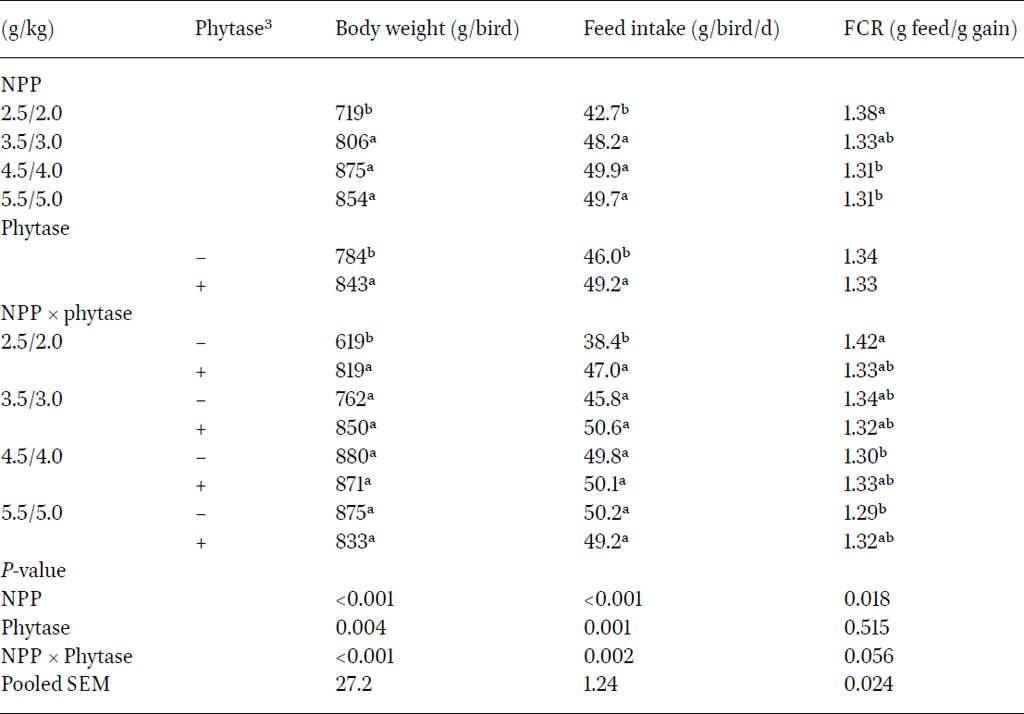
The growth performance of the birds in this study is shown in Table 4. Birds fed on the diet containing the lowest NPP concentration (2.5/2.0 g/kg) without phytase supplementation had significantly (P < 0.05) lower body weight and feed intake than those fed on diets containing higher NPP levels at day 21. Phytase supplementation significantly (P < 0.05) increased body weight and feed intake of birds fed the lowest NPP diet numerically the body weight of the birds fed NPP of 3.5/3.0 g/kg without phytase supplementation was 12% lower at day 21 than the average of birds fed on higher NPP levels and those with phytase supplementation. The FCR was significantly affected by dietary NPP level with 5.3% improvement achieved in birds fed on the two higher NPP levels than those on the lowest NPP level. Birds fed low NPP of 2.5/2.0 g/kg without phytase supplementation had significantly (P < 0.05) higher FCR than those on the high NPP diets (4.5/4.0 and 5.5/5.0 g/kg) without phytase supplementation from day 1 to 21 (Table 4).
Body weight at day 21 (g/bird), feed intake (g/bird/day) and feed conversion ratio (FCR) (g feed/g gain) of the birds from day 1 to 21 post-hatch in Experiment 11,2
Citation: Journal of Applied Animal Nutrition 12, 1 (2024) ; 10.1163/2049257x-20231004
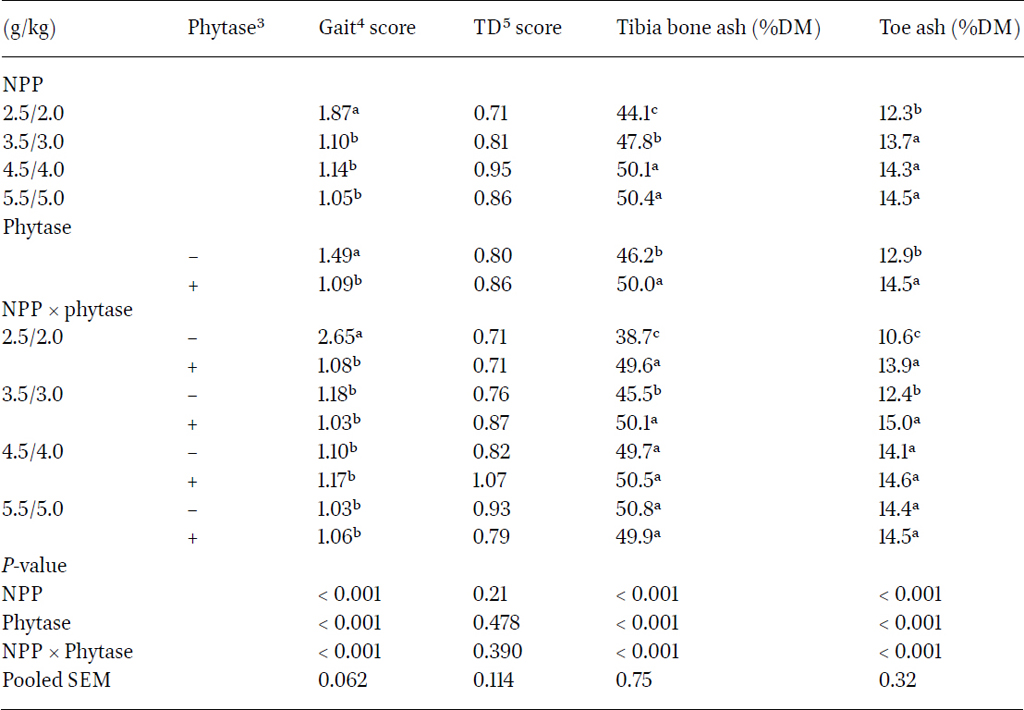
Gait score was higher for birds consuming the low NPP diet (2.5/2.0 g/kg) without phytase than those fed on the other diets (P < 0.05; Table 5). Phytase supplementation significantly (P < 0.001) reduced the gait score of birds fed the low NPP diet (2.5/2.0 g/kg). There were no significant differences in TD scores among the treatments (P > 0.05).
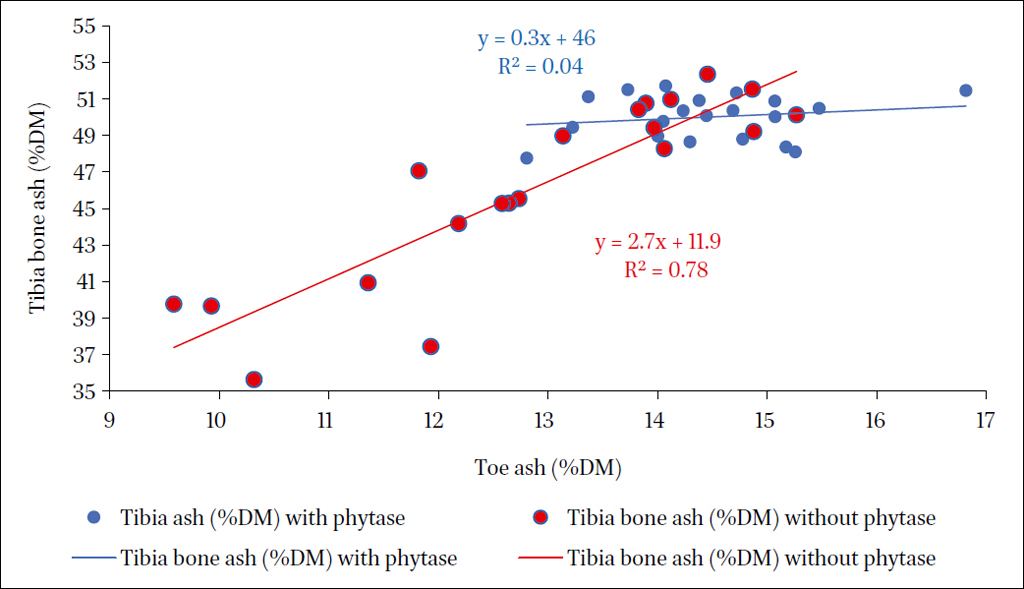
Tibia bone ash and toe ash contents were lower (P < 0.05) in birds fed the low NPP diets (2.5/2.0 and 3.5/3.0 g/kg) without phytase. Phytase supplementation increased tibia bone ash and toe ash contents markedly at the lower levels of NPP (2.5/2.0 g/kg); whereas at higher levels of NPP (4.5/4.0 g/kg) close to the requirement for maximal tibia bone ash, the addition of phytase showed little or no benefit (Table 5). The relationship between the tibia bone ash and toe ash contents (R2 = 0.78, P < 0.01 without phytase; R2 = 0.04, P = 0.04 with phytase) are shown in Figure 1.
Gait score, tibia dyschondroplasia (TD) score, tibia bone and toe ash contents (%DM) in Experiment 11,2
Citation: Journal of Applied Animal Nutrition 12, 1 (2024) ; 10.1163/2049257x-20231004
Correlation scatter plot of percentage tibia bone ash and toe ash contents of birds fed diets with or without phytase supplementation at day 21; Experiment 1
Citation: Journal of Applied Animal Nutrition 12, 1 (2024) ; 10.1163/2049257x-20231004
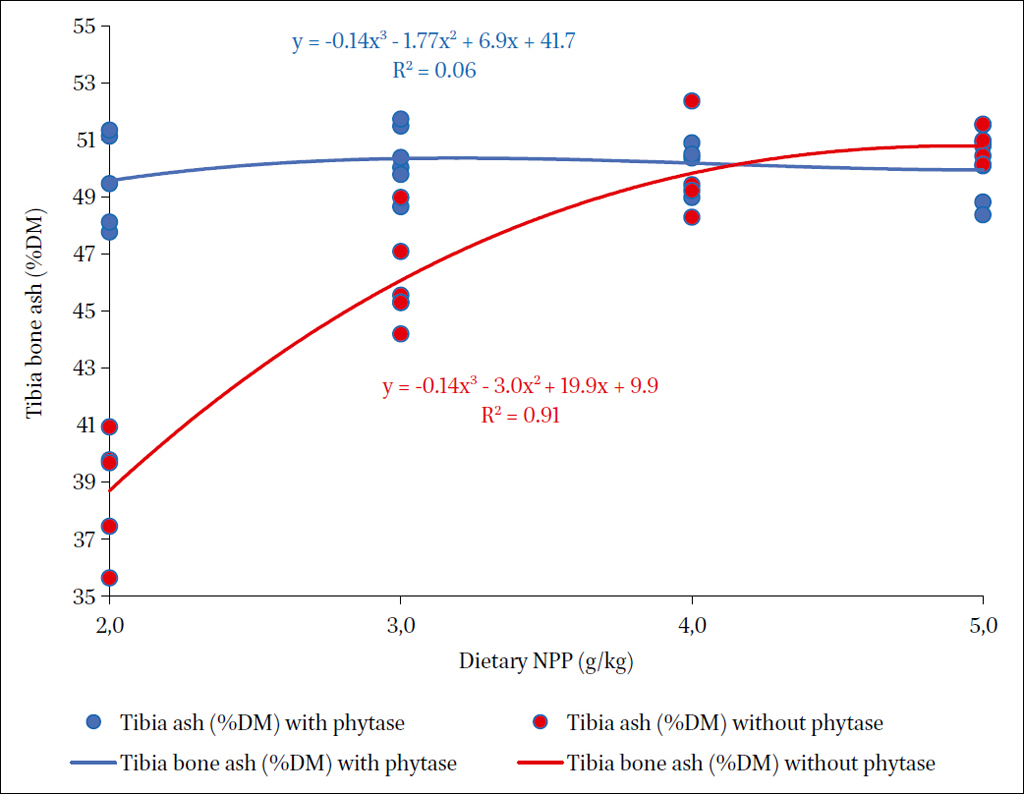
As dietary NPP levels increased, tibia bone and toe ash contents improved. However, this increase appears to plateau when dietary NPP levels increased above 4.0 g/kg (Figures 2 and 3).
Correlation scatter plot of dietary NPP concentration and percentage toe ash of the birds fed diets with or without phytase supplementation at day 21; Experiment 1
Citation: Journal of Applied Animal Nutrition 12, 1 (2024) ; 10.1163/2049257x-20231004
Correlation scatter plat of dietary NPP concentrations and percentage tibia bone ash content of birds fed diets with or without phytase supplementation at day 21; Experiment 1
Citation: Journal of Applied Animal Nutrition 12, 1 (2024) ; 10.1163/2049257x-20231004
Experiment 2
Body weight and FCR were significantly compromised by the lowest dietary NPP level (Table 6) but this was only when phytase was excluded from the diet. Phytase supplementation had significant beneficial effects on birds overall performance (P < 0.05). The body weights of the birds fed diets containing NPP of 2.0 g/kg without phytase supplementation were significantly lower (P < 0.05) than all the other treatments. However, for the birds fed on NPP of 3.0 g/kg without phytase supplementation, body weight was similar to those fed NPP of 2.0 g/kg (P > 0.05; Table 6). Phytase supplementation overcame this performance deficit.
Body weight (g/bird) on day 49, feed intake (g/bird/day) and feed conversion ratio (FCR) (g feed/g gain) from day 21 to 49 in Experiment 21,2
Citation: Journal of Applied Animal Nutrition 12, 1 (2024) ; 10.1163/2049257x-20231004
Feed intake results were not affected by dietary NPP levels (Table 6). The combination of body weight and feed intake led to the FCR value of birds fed diets containing 2.0 g/kg NPP without supplemental phytase to be the highest among all the treatments (Table 6).
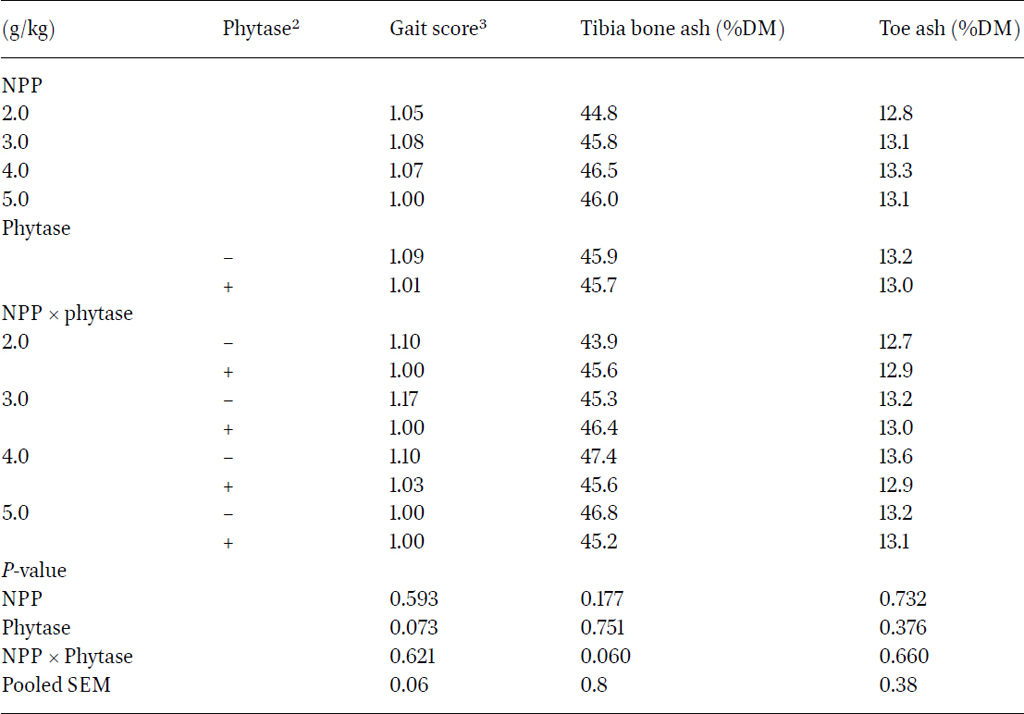
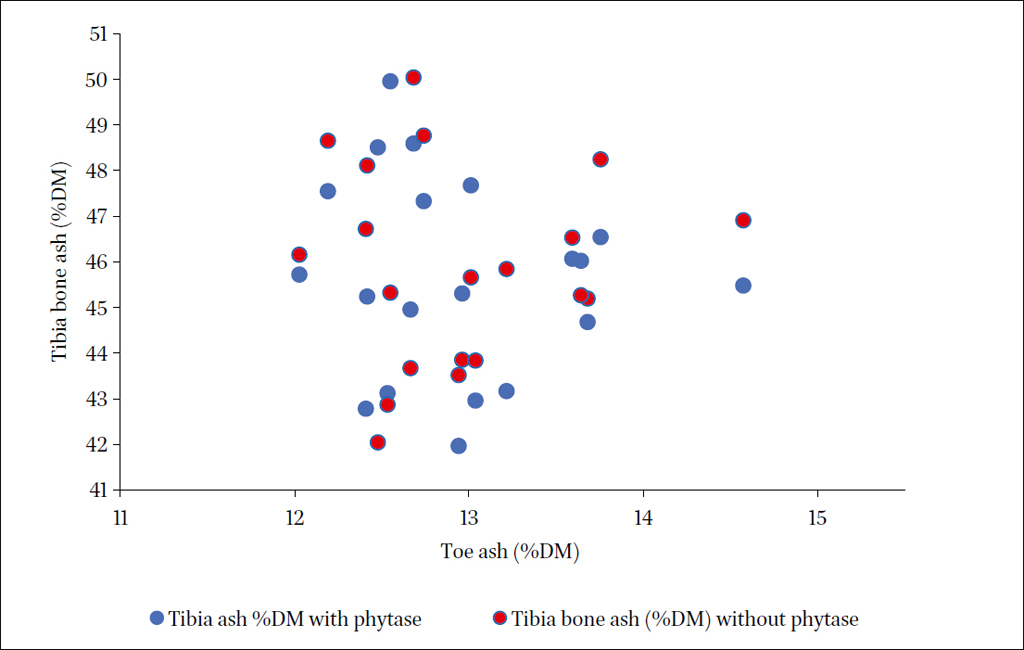
Dietary NPP levels and phytase supplementation had no effects on gait score, tibia bone ash and toe ash contents of birds in Experiment 2 (Table 7). Only one case of TD was detected within all the birds sampled on day 49, therefore, statistical analysis was not conducted. The poor relationship between tibia bone ash and toe ash contents in older birds (d 49) fed with and without phytase supplementation is shown in Figure 4.
Gait score, tibia bone ash and toe ash contents in Experiment 21
Citation: Journal of Applied Animal Nutrition 12, 1 (2024) ; 10.1163/2049257x-20231004
Correlation scatter plot of percentage tibia bone ash and toe ash of birds fed diets with or without phytase supplementation at day 49; Experiment 2
Citation: Journal of Applied Animal Nutrition 12, 1 (2024) ; 10.1163/2049257x-20231004
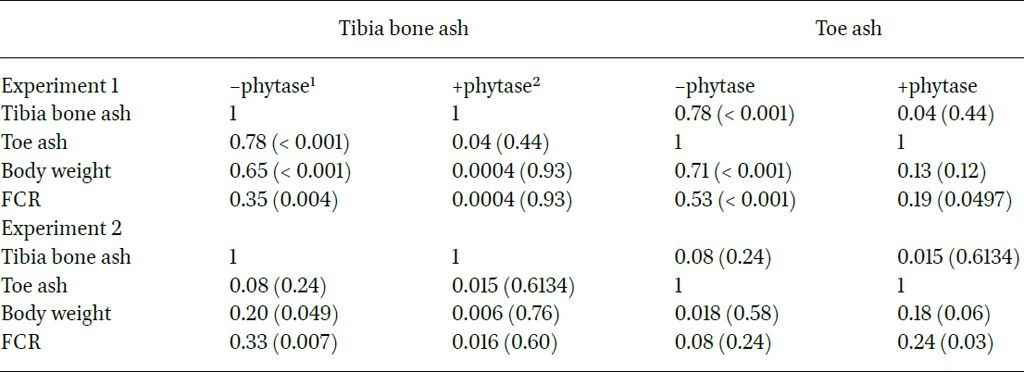
The results of Experiment 2 indicated that phytase supplementation in a diet containing 2.0 g/kg of NPP met the requirement of broilers from day 21 to 49 of age. It was interesting to compare the outcomes of Experiments 1 and 2, and Tables 8 shows correlation coefficients between the various parameters, with and without phytase supplementation, in both experiments.
With no phytase supplementation, the relationship between tibia bone ash and body weight (R2 = 0.65, P < 0.01), tibia bone ash and FCR (R2 = 0.35, P < 0.01), or between toe ash and body weight (R2 = 0.71, P < 0.01), toe ash and FCR (R2 = 0.53, P < 0.01) were significant. Moreover, phytase supplementation reduced the correlations between these parameters (Table 8). After the finisher phase in Experiment 2, the correlation coefficients between tibia bone ash or toe ash contents with body weight and FCR (Table 8) were much lower than observed for Experiment 1, both without and with phytase supplementation.
Correlations (R2) with P-values (in brackets) between percentage tibia bone ash or toe ash and body weight (g/bird) or feed conversion ratio (FCR) (g feed/g gain) in Experiments 1 and 2
Citation: Journal of Applied Animal Nutrition 12, 1 (2024) ; 10.1163/2049257x-20231004
4 Discussion
Phosphorus is essential for skeletal development and bone mineralisation. The dietary requirements of P in the modern broiler would be expected to change as the growth rate of the bird has increased. In addition, the availability of P in poultry diets has increased following routine supplementation with phytase (Selle and Ravindran, 2007). This was demonstrated in this study, where 2.5 g/kg of NPP in the starter (day 1–14), and 2.0 g/kg of NPP in the grower/finisher (day 15–49) supported normal growth performance with dietary inclusion of phytase. In other words, the lowest level of NPP is deficient and the addition of phytase corrects the deficiency. Moreover, these NPP levels were much lower than the breeder recommendations of 0.5–0.42 g/kg for birds from day 0 to 24 and 0.34–0.36 g/kg for various ages after day 24 post-hatch (Aviagen Inc., 2022). However, supplementation of phytase to diets containing NPP levels above 4.5 and 4.0 g/kg for starter and grower/finisher diets, respectively, showed no benefit to bird growth performance. It should be noted that in this study all the experimental diets contained the same concentration of Ca (10.0 g/kg for starter and 9.0 g/kg for grower/finisher). The Ca to P ratio is important in poultry diets (Li et al., 2017; Shafey, 1993) and it is possible that these dietary Ca concentrations in combination with lower dietary NPP caused the detrimental effects on broiler performance noted in this study, as has been documented previously (Keshavarz, 1986, 1999; Li et al., 2017; Yang et al., 2013).
The body pool of P is concentrated in bone and assessment of bone health is an important criterion when assessing P requirements. In this instance three aspects of bone health were examined; TD incidence, gait score, and bone ash content. The lowest NPP concentration resulted in impaired gait scores in the starter phase, as noted by others (Xu et al., 2021) but this was not seen in the finisher phase. There was no effect on the incidence of TD, which is thought to be induced by imbalanced Ca to P ratios (Li et al., 2012). However, there was no evidence of a relationship between dietary Ca and P balance and the incidence of TD in this or other studies (Edwards and Veltmann, 1983; Praul et al., 2000). Therefore, TD score is not a suitable criterion to evaluate the P status of birds.
Tibia bone ash has been widely used as the most meaningful response criteria for assessing P status, determining biological availability of P in feedstuffs (Dersjant-Li et al., 2022; Gillis et al., 1954; Ketels and De Groote, 1988; Potchanacom and Potter, 1987; Potter, 1988; Potter et al., 1995) and the P requirement of birds (David et al., 2022; Malloy et al., 2017; Moran and Todd, 1994; NRC, 1994; Persia and Saylor, 2006; Yan et al., 2001, 2003). Moreover, Rama Rao et al. (2006) reported that the tibia bone ash content was maximal when the dietary Ca to NPP ratio was maintained at 2:1, irrespective of the concentrations of these minerals in the diet. Nevertheless, toe ash content, which is more convenient to measure, has been found to provide a similar bone mineralisation assessment to tibia bone ash (Fritz et al., 1969; Grau and Zweigart, 1953; Malloy et al., 2017; Ravindran et al., 1995; Yoshida and Hoshii, 1977) in response to dietary P concentrations; reflecting changes in its net utilisation.
In the current study there was a relatively high correlation between tibia bone ash and toe ash in birds at day 21 (Figure 1) but this was not evident at day 49 (Figure 4). This discrepancy was evident in other studies (Malloy et al., 2017; Ravindran et al., 1995; Scholey and Burton, 2017) and may reflect the age at which different skeletal components mineralise. Bone mineral density of commercial male and female meat chickens has been shown to peak at day 28 (Talaty et al., 2009). While Barreiro et al. (2009) found that bone ash and mineral percentage were higher at day 22 than day 42, which reflected the higher mineral requirement at this age. Moreover, although relationships between tibia bone ash or toe ash and body weight or FCR were stronger in younger birds than in older birds; neither was robust enough to be used as a criterion to evaluate the P requirement of broilers.
In general, as dietary NPP levels increased the tibia bone ash and toe ash contents increased in a curvilinear manner in Experiment 1 (Figures 2 and 3) but was not apparent in Experiment 2. However, the increase noted in Experiment 1 appeared to peak or plateau when dietary NPP concentration increased to 4.0 g/kg. This non-linear relationship raises a number of questions with regard to interpretation. Which dietary NPP concentration and tibia bone ash or toe ash content are most meaningful in regard to P retention and growth performance, and over what period of the production cycle do these relationships remain valid. Angel et al. (2006) fed various levels of NPP to birds and found differences in P and NPP intakes, bone ash weights and density measurements, but did not observe differences in carcass yield or in the incidence of bruised or broken legs and wings at processing. Therefore, using tibia bone/toe parameters to determine P requirement is challenging as it appears that the maximum is different depending on bird production parameters. Waldroup et al. (2000) suggested that meeting the P requirements for maximum tibia bone ash and body weight gain would provide sufficient P to maximise FCR, which is somewhat more variable than tibia bone ash and body weight gain. In relative terms, the amount of P required to maximise various criteria was in the following order: bone calcification > weight gain > FCR > mortality (Waldroup, 1999a). It appears that P requirement for tibia bone ash is much higher than for weight gain and FCR (Persia and Saylor, 2006; Waldroup, 1999a, 2000; Yan et al., 2001). However, maximal tibia bone ash may be required to sustain optimal production of meat chickens. Ravindran et al. (1995) found that body weight gain and toe ash percentage were equally or a more sensitive criteria for assessment of P availability than tibia bone ash. They found that tibia bone specific gravity, tibia, toe bone and metatarsal shear force were of limited value as response criteria in P availability assays due to large variations and failure to detect statistically significant effects. Blood P and alkaline phosphatase have also been ruled out as suitable criteria since neither are not very sensitive nor show a linear response to the amount of P absorbed (Guéguen, 1994).
5 Conclusions
The results demonstrated that dietary concentration of NPP can be reduced substantially in broiler diets relative to current industry practice provided the diets are supplemented with phytase. Although tibia and toe ash increased with dietary P concentration, the relationships between tibia bone ash or toe ash content and body weight and FCR were not strong enough to be used as criteria or biomarkers to evaluate the NPP status of diets or P requirement of broilers. The minimal concentrations tested in this study were 2.5/2.0 NPP g/kg for starter and grower/finisher diets with only one level of Ca of 10.0/9.0 for starter and grower/finisher diets.
Acknowledgements
This study was supported by the Chicken Meat Program of the RIRDC and the School of Agriculture and Food Sciences, University of Queensland. Phytase was kindly supplied by Feedworks, Australia and the commercial diets by Inghams, Australia. The authors acknowledge the assistance of Peter Isherwood, and Katherine Raymont with chemical analyses and the postgraduate students who helped with the conduct of the bioassays.
Conflict of interest
WLB is a member of the Editorial Board of JAAN but was not involved in the review and editorial process for this paper. The authors have no further conflicts of interest to declare.
References
Angel, R., Saylor, W.W., Mitchell, A.D., Powers, W. and Applegate, T.J., 2006. Effect of dietary phosphorus, phytase, and 25-hydroxycholecalciferol on broiler chicken bone mineralization, litter phosphorus, and processing yields. Poultry Science 85: 1200–1211.
Association of Official Analytical Chemists (AOAC), 1990. Official Methods of Analysis. 15th ed. Association of Official Analytical Chemists, Arlington, VA, USA.
Association of Official Analytical Chemists (AOAC), 2000. Method 2000.12: Phytase Activity in Feed: Colorimetric Enzymatic Method. In: Official Methods of Analysis of AOAC International. 17th edition. Association of Official Analytical Chemists, Arlington, VA, USA.
Aviagen Inc, 2014. Ross 308 Broiler Management Handbook. Aviagen Inc., Huntsville, AL, USA.
Aviagen Inc, 2022. Ross 308 Broiler: Nutrition Specification. Aviagen Inc., Huntsville, AL, USA.
Barreiro, F.R., Sagula, A.L., Junqueira, O.M., Pereira, G.T. and Baraldi-Artoni, S.M., 2009. Densitometric and biochemical values of broiler tibias at different ages. Poultry Science 88: 2644–2648.
Cordel, D., Drangert, J. and White, S., 2009. The story of phosphorus: Global food security and food for thought. Global Environment Change 19: 292–305.
David, L.S., Abdollahi, M.R., Bedford, M.R. and Ravindran, V., 2022. Requirement of digestible calcium at different dietary concentrations of digestible phosphorus for broiler chickens. 2. Broiler growers (d 11 to 24 post-hatch). Poultry Science 101: 102135.
Dersjant-Li, Y., Abdollahi, M.R., Bello, A., Waller, K., Marchal, L. and Ravindran, V., 2022. Effects of a novel consensus bacterial 6-phytase variant on the apparent ileal digestibility of amino acids, total tract phosphorus retention, and tibia ash in young broilers. Journal of Animal Science 100: 1–9.
Dhandu, A.S. and Angel, R., 2003. Broiler nonphytin phosphorus requirement in the finisher and withdrawal phases of a commercial four-phase feeding system. Poultry Science 82: 1257–1265.
Edwards, H.M. and Veltmann, J.R., 1983. The role of calcium and phosphorus in the etiology of tibial dyschondroplasia in young chicks. Journal of Nutrition 113: 1568–1575.
Fritz, J.C., Roberts, T., Bochne, J.W. and Hove, E.L., 1969. Factors affecting the chick’s requirement for phosphorus. Poultry Science 48: 307–320.
Garner, J.P., Falcone, C., Wakenell, P., Martin, M. and Mench, J.A., 2002. Reliability and validity of a modified gait scoring system and its use in assessing tibial dyschondroplasia in broilers. British Poultry Science 43: 355–363.
Gillis, M.B., Norris, L.C. and Heuser, G.F., 1954. Studies on the biological value of inorganic phosphates. Journal of Nutrition 52: 115–125.
Grau, C.R. and Zweigart, P.A., 1953. Phosphatic clay as a phosphorus source for chicks. Poultry Science 32: 500–503.
Guéguen, L., 1994. Determination of availability. Feed Mix Special Issue on phosphates. Page 12–15.
Guinotte, F., Gautron, J., Nys, Y. and Soumarmon, A. 1995. Calcium solubilisation and retention in the gastrointestinal tract in chicks (Gallus domesticus) as a function of gastric acid secretion inhibition and of calcium carbonate particle size. British Journal of Nutrition 73: 125–139.
Gulizia, J.P., Rueda, M.S., Ovi, F.K., Bonilla, S.M., Prasad, R., Jackson, M.E., Gutierrez, O. and Pacheco, W.J., 2022. Evaluate the effect of a commercial heat stable phytase on broiler performance, tibia ash, and mineral excretion from 1 to 49 days of age assessed using nutrient reduced diets. Journal of Applied Poultry Research 31:100276.
Kapell, D.N.R.G., Hill, W.G., Neeteson, A.-M., McAdam, J., Koerhuis, A.N.M. and Avendaño, S., 2012. Twenty-five years of selection for improved leg health in purebred broiler lines and underlying genetic parameters. Poultry Science 91: 3032–3043.
Kaupp, B.F., 1918. Mineral content of southern feeds and mineral requirement of growing fowl. Journal of Agricultural Research 14: 125–134.
Kennard, D.C., 1920. Rations and methods of feeding chicks to prevent loss when grown in confinement. J. Am. Assoc. Instr. and Inv. Poult. Husb. 7: 20.
Keshavarz, K., 1986. The effect of dietary levels of calcium and phosphorus on performance and retention of these nutrients by laying hens. Poultry Science 65: 114–121.
Keshavarz, K., 1999. Phosphorus requirement of laying hens with and without phytase. In: Proceedings of the Cornell Nutrition Conference for Feed Manufacturers, Syracuse, NY, USA, 19–21 October 1999; pp. 81–92.
Ketels, E. and De Groote, G., 1988. The relative bio-availability and the ileal digestibility of phosphorus in mineral and animal sources. In: Proceedings of the 18th World’s Poultry Congress, Nagoya, Japan, pp. 873–875.
Leske, K. and Coon, C.N., 2002. The development of feedstuff retainable phosphorus values for broilers. Poultry Science 81: 1681–1693.
Li, J., Yuan, J., Guo, Y., Sun, Q. and Hu, X., 2012. The influence of dietary calcium and phosphorus imbalance on intestinal NaPi-IIb and calbindin mRNA expression and tibia parameters of broilers. Asian-Australasian Journal of Animal Sciences 25: 552–558.
Li, X., Zhang, D. and Bryden, W.L., 2017. Calcium and phosphorus metabolism and nutrition of poultry: are current diets formulated in excess? Animal Production Science 57: 2304–2310.
Li, X., Zhang, D., Yang, T.Y. and Bryden, W.L., 2016. Phosphorus bioavailability: A key aspect for conserving this critical animal feed resource with reference to broiler nutrition. Agriculture 6: 25.
Malloy, M.N., Stephens, A.G., Freeman, M.E., Jones, M.K., Faser, J.M., Dale, N.M. and Davis, A.J., 2017. Foot ash can replace tibia ash as a quantification method for bone mineralization in broilers at 21 and 42 days of age. Journal of Applied Poultry Research 26: 175–182.
Moran, E.T. Jr. and Todd M.C., 1994. Continous submarginal phosphorus with broilers and the effect of preslaughter transportation: Carcass defects, further-processing yields, and tibia-femur integrity. Poultry Science 73: 1448–1457.
Nelson, T.S., 1967. The utilization of phytate phosphorus by poultry: A review. Poultry Science 46: 1842–1848.
National Health and Medical Research Council (NHMRC), 2013 Australian code for the care and use of animals for scientific purposes. 8th Ed. National Health and Medical Research Council, Canberra, Australia.
NRC, 1994. Nutrient Requirements of Poultry. 9th Edn., National Academy Press, Washington, DC, USA.
Persia, M.E. and Saylor, W.W., 2006. Effects of broiler strain, dietary nonphytate phosphorus, and phyase supplementation on chick performance and tibia ash. Journal of Applied Poultry Research 15: 72–81.
Potchanacom, M. and Potter, L.M., 1987. Biological values of phosphorus from various sources for young turkeys. Poultry Science 66: 505–513.
Potter, L.M., 1988. Bio-availability of phosphorus from various phosphates based on body weight and toe ash measurements. Poultry Science 67: 96–102.
Potter, L.M., Potchanacom, M., Ravindran, V. and Kornegay, E.T., 1995. Bio-availability of phosphorus in various phosphate sources using body weight and toe ash as response criteria. Poultry Science 74: 813–820.
Praul, C.A., Ford, B.C., Gay, C.V., Pines, M. and Leach, R.M., 2000. Gene expression and tibial dyschondroplasia. Poultry Science 79: 1009–1013.
Rama Rao, S.V., Raju, M.V.L.N., Reddy, M.R. and Pavani, P., 2006. Interaction between dietary calcium and non- phytate phosphorus levels on growth, bone mineralization and mineral excretion in commercial broilers. Animal Feed Science and Technology 131: 133–148.
Ravindran, V., Kornegay, E.T., Potter, L.M., Ogunabameru, B.O., Welten, M.K., Wilson, J.H. and Potchanakorn, M., 1995. An evaluation of various response criteria in assessing biological availability of phosphorus for broilers. Poultry Science 74: 1820–1830.
Scholey, D.V. and Burton, E.J., 2017. The effect of bone choice on quantification of mineralization in broiler chickens up to 6 weeks of age. Journal of Applied Poultry Research 26: 485–490.
Selle, P.H. and Ravindran, V., 2007. Microbial phytase in poultry nutrition. Animal Feed Science and Technology 135: 1–41.
Shafey, T.M., 1993. Calcium tolerance of growing chickens: effect of ratio of dietary calcium to available phosphorus. World’s Poultry Science Journal 49: 5–18.
Steele, R.G.D., Torrie, J.H. and Dickey, D.A., 1997. Principles and procedures of statistics – A biometrical approach, 3rd ed. McGraw-Hill, New York, NY, USA.
Talaty, P.N., Katanbaf, M.N. and Hester, P.Y., 2009. Life cycle changes in bone mineralization and bone size traits of commercial broilers. Poultry Science 88: 1070–1077.
Waldroup, P.W., 1999a. Nutritional approaches to reducing phosphorus excretion by poultry. Poultry Science 78: 683–691.
Waldroup, P.W., 1999b. Dietary nutrient allowances for chickens and turkeys. Feedstuffs 71: 66–75.
Waldroup, P.W., Kersey, J.H., Saleh, E.A., Fritts, C.A., Yan, F., Stilborn, H.L., Crum, R.C. Jr. and Raboy, V., 2000. Nonphytate phosphorus requirement and phosphorus excretion of broilers fed diets composed of normal or high available phosphate corn with and without microbial phytase. Poultry Science 79: 1451–1459.
Xu, L., Li, N., Farnell, Y.Z., Wan, X., Yang, H., Zhong, X. and Farnell, M.B., 2021. Effect of feeding a high calcium: phosphorus ratio, phosphorous deficient diet on hypophosphatemic rickets onset in broilers. Agriculture 11: 955.
Yan, F. and Waldroup, P.W., 2006. Nonphytate phosphorus requirement and phosphorus excretion of broiler chicks fed diets composed normal or high available phosphate corn as influenced by phytase supplementation and vitamin D source. International Journal of Poultry Science 5: 219–228.
Yan, F., Kersey, J.H. and Waldroup, P.W., 2001. Phosphorus requirements of broiler chicks three to six weeks of age as influenced by phytase supplementation. Poultry Science 80: 455–459.
Yan, F., Kersey, J.H., Fritts, C.A. and Waldroup, P.W., 2003. Phosphorus requirements of broiler chicks six to nine weeks of age as influenced by phytase supplementation. Poultry Science 83: 294–300.
Yang, T.Y., Setiyawan, E., Li, X., Zhang, D. and Bryden, W.L., 2013. Dietary calcium levels and non-phytate phosphorus requirement of broilers from days 22–49. In: Proceedings of Recent Advances in Animal Nutrition in Australia 2013, University of New England, Armidale, New South Wales, Australia.
Yoshida, M. and Hoshii, H., 1977. Improvement of biological assay to determine available phosphorus with growing chicks. Journal of Poultry Science 14: 33–43.
Zar, J.H., 1984. Biostatistical analysis. Second edition. Prentice-Hall, Englewood Cliffs, NJ, USA.