Abstract
This paper proposes a conceptual framework for understanding how Large Language Models (llms) can be used to facilitate identification with the Other, particularly in the context of inclusive education. While llms have been deployed in various educational roles, there is limited research on their capacity to support processes of identification and othering. The paper situates identity as multiple, hybrid, and constructed through socio-cultural practices and power relations. It highlights how llms, when used in role-play, can both reflect and challenge dominant discourses, offering opportunities for learners to engage with perspectives different from their own. The conceptual framework integrates semiotic, phenomenological, and sociological identifications, and introduces tools for analysing othering and revolutionising processes within discourse and learnersâ and llmsâ negotiation of identity positions during interaction. By fostering deeper engagement with the discourse of both learners and llms, educators can build communities that enable inclusive education.
1 Introduction
Generative artificial intelligence (GenAI) is technology that leverages machine learning and deep learning techniques to autonomously predict an output, generating novel content (e.g. images, music, words, computing code) in response to complex and varied user prompts (e.g. instructions, questions) (Bell et al., 2023; Lim et al., 2023; Yu & Guo, 2023). Large Language Models (llms), a type of GenAI trained on massive quantities of data across different datasets, leverage pattern recognition to generate human-like text, while Multimodal Foundation Models (mfms), another type of GenAI, can generate images, speech, numerical inputs and code (Bell et al., 2023). Nevertheless, there has been a convergence of the functionality of llms and mfms over time. For the purposes of this paper, I refer solely to llms while acknowledging the expansion of their capabilities to include more varied and multimodal outputs.
llms can potentially take on a variety of roles in education, including those of a domain expert, tutor, student, learning partner, dialogic partner or interlocutor, learning tool, administrator or information processor (Hwang & Chen, 2023; Author et al., 2024; Thorne, 2024). llms have been assigned more specific roles in role-playing simulations to facilitate practice opportunities (see Grundmann et al., 2025; Nanda et al., 2025; Timpe-Laughlin et al., 2025). By taking on generic or specific roles, llms can potentially customise and personalise the learning experience for the individual learner in far more nuanced and complex ways. More recently, the roles of llms for users with disabilities have been considered in inclusive education settings (Rappa et al., 2026; Rappa & Nonis, 2026).
Despite the varied roles llms have been designed to take on, there has been limited research on how llms have been used to facilitate identification with the Other, examining othering processes that diminish those who are perceived to be dissimilar from oneself, and revolutionising processes as a means to respond to the discriminatory and alienating practices of othering. The aim of this paper is to propose the application of a conceptual framework to facilitate the examination of the discourse processes of identification and othering in user interactions with llms.
This is particularly important in inclusive education, which refers to access to education for all (unesco, 1994), and entails placement, meeting the social and academic needs of individual learners and all learners and the creation of communities with characteristics that enable that inclusion (Krischler et al., 2019). As Lawthom and Whelan (2012) observe, diversity in terms of age, race, gender, disability, class and sexuality reflects the differing values, positions on issues and agendas held by members of a community that shapes community relations in modern times, dictating membersâ standing within a community and who gets to participate and how and their participation trajectory, thus resulting in inclusionary and exclusionary practices that cohere or fragment a community. Whilst scholars have proposed examining inclusive education from various perspectives, namely, ethical, social, organisational, research (Parrilla, 2002, as cited in GarcÃa-GarcÃa & Cotrina-GarcÃa, 2023) and, most recently, the community (GarcÃa-GarcÃa & Cotrina-GarcÃa, 2023), none have considered the individual perspective, more specifically, a ground up approach that directly addresses individual resistance to inclusive education that collectively across a community can undermine well-intended initiatives and programs to facilitate inclusive education.
The proposed conceptual framework aims to illuminate the beliefs and practices of individuals within class, school and wider communities towards those who are unlike themselves as a first step towards establishing a learning environment conducive to inclusive education. The established conceptual framework, Universal Design for Learning, differentiates pedagogical strategies and curriculum resources for facilitating learner engagement, representation, and action and expression at the levels of access, support and executive function (cast, 2024), but does not provide a means to analyse how individuals position themselves in inclusive education contexts where power differentials are more acute. It is hoped that the proposed conceptual framework in this paper makes this possible.
2 Literature Review
Given Tsokova & Tarrâs (2012) outline of inclusive school communitiesâ commitment to âengaging in/holding confrontation and exchanging different perspectives in a constructive and reflective mannerâ (p.124), identification and othering are concepts integral to examining inclusive school communities. However, there has been very little research in education contexts that considers inclusive education from this perspective. The discussion of the literature on how identities and the Other are constituted sheds light on the theoretical foundation on which the proposed conceptual framework rests.
2.1 Constituting Identities
In this paper, identity is construed as multiple and hybrid identities constructed in discourse with different people for different purposes and in different contexts to reflect our representations of ourselves and othersâ recognition of who we are (Butler, 1993; Gee, 2001; Hall, 1997; Lemke, 2008, 2009). A student with a physical disability may foreground her advanced conceptual knowledge in an economics class, be recognised as a top-performing debater globally, and actively leverage her achievements to advocate for disability groups nationally.
Identity is constituted and situated in socio-historical and socio-cultural repertoires of practices consistent with a communityâs cultural models (Butler, 1990; Gee, 2000; Holland et al., 1998; Lave & Wenger, 1991; Street, 2003; Wenger, 1998). Cultural models are worldviews shared by a communityâs members that shape their ways of thinking, speaking and acting (Quinn & Holland, 2012).
A communityâs cultural models are underpinned by layers of extended social networks and institutions (Norris, 2011). Therefore, the cultural models of the communities to which an individual belongs, and the social networks and institutions that influence these cultural models, are brought to bear on the individualâs identities. In the aforementioned example, the studentâs identities are those of an outstanding member of a localised learning community and an exclusive global club, as well as a vocal and active member of an inclusive community for people with disabilities.
Identities are a resource in service of power, for establishing relational positions and accessing networks (Moje, 2013; Moje et al., 2008). Identity shifts can occur in tandem with the introduction of new forms of cultural resources and participation in new social contexts where identities are recognised, constructed, supported, contested, negotiated, and/or reified (Nasir & Saxe, 2003) such as when the said student graduates to become an economist and discovers new resources and skillsets at her disposal to advocate for disability groups.
First-wave identity theory confines its study to discourse reflecting possibly multiple identity affiliations within a given time and space (Gee, 2001; Holland, et al., 1998; Wenger, 1998) or âidentity-in-the-momentâ (Lemke, 2008, p. 23). Second-wave identity theory also considers âidentity-across-events-and-lifespanâ (Lemke, 2008, p. 23) and, more specifically, processes at different time scales embedded in self-characterisations to facilitate an examination of the historical and relational nature of identity construction (Somers, 1994; Somers & Gibson, 1994). Essentially, the second wave encompasses both identity as performativity and identity as narrativity. An exploration of both forms of identity is needed to facilitate an examination of micro to macro linkages that account for shifts in identity (Lemke, 2008).
To illustrate the distinction between identity as performativity and identity as narrativity, consider the example of a student whose first language is Vietnamese and who has developed fluency in the English language. From the perspective of identity as performativity, that student may volunteer to explain a concept in English and Vietnamese to assist his Vietnamese classmates in an English as a Second Language class, thus performing his role as a bilingual mediator and establishing his identity affiliations with both language communities. As for identity as narrativity, the same Vietnamese student may share his journey of learning English, describing the challenges he faced and the support he received that enabled him to persist in learning English. Identity as narrativity brings to light the slow and complex process of developing competency in the English language and the identity affiliations associated with that competency, while also highlighting the choices made to hold onto, forgo, and reconfigure aspects of his Vietnamese identity.
The actions undertaken to project an identity or have an identity ascribed to oneself (Butler, 1990) are the processes by which identity is constructed as individuals immerse themselves in the community and appropriate these practices (Gee, 2000; Lave & Wenger, 1991; Street, 2003; Wenger, 1998). They are often characterised in reductionist terms that allow for easy classification and demarcation of boundaries. Nevertheless, individuals can simultaneously hold different identity positions along several spectrums (Lemke, 2008), such as being positively stereotyped along the more intelligent-less intelligent spectrum and, simultaneously, being negatively stereotyped along a socially proficient-socially less proficient spectrum. Society bundles together practices associated with these simplified cultural stereotypes and rejects deviations from the norm (Lemke, 2008), resulting in the depiction of the intelligent but socially awkward computer geek in a movie such as The Social Network, and the gentle giant with less intellectual acumen but who is good-hearted, such as Rubeus Hagrid in the Harry Potter series.
Multiple affiliations within the complex social networks of contemporary society have led to identities being constantly in flux and becoming progressively fragmented as they are constructed in multiple ways across discourses, that are unrelated, intersecting or antagonistic (Hall, 1996). For example, individuals whose social and moral conservatism is grounded in their religious beliefs may find themselves at odds with others within the same religious community who also espouse neoliberal views, or individuals arguing that the rights of the individual be upheld may find themselves pitted against those who believe this includes unfettered access to guns.
Varying identity positions along multiple spectrums and multiple identity affiliations across social networks necessitate code-shifting of identity performance (Lemke, 2008) or navigating through hybrid spaces (Moje, 2013) as an identity âlives with and through, not despite, difference; by hybridityâ (Hall, 2006, p. 235). These boundaries of difference are constantly being repositioned in relation to the different frames of reference (Hall, 2006) of ideologically disparate communities, leading to individuals downplaying and accentuating different discourse practices and their associated identities in different contexts. Examples of these would be individuals concealing their sexual orientation or their religious affiliations in specific contexts because of the personal, social and financial repercussions that can result from such identifications. With these multiple and hybrid shifting identities adopted across socio-historical and socio-cultural contexts, individuals are engaged simultaneously in processes of identification and othering, necessitating an examination of how the Other is constituted.
2.2 Constituting the Other
The Other is fundamental to self-constitution through differentiation (Butler, 1993; Derrida, 1981). Identities are constructed through a process of distinguishing how they are distinct from the Other, the constitutive outside (Butler, 1993; Derrida, 1981). As such, representations of the self and Other are mutually constitutive as these representations are judged relative to one another and in terms of how the self represents the Other and the Other the self (Coupland, 2010). However, when differentiating the self from the Other, the Other is often characterised as subordinate, morally inferior, abnormal, foreign and distant (Coupland, 2010; Jensen, 2011). This is because the Other is constituted in power relations. Power differentials are founded on the politics of exclusion by ascribing significance to differences (Bucholtz & Hall, 2005; Hall, 1996). Differing values assigned to different sets of discourse practices and positions lead to differences in mobility and access and persistent pressure on the Other to take on dominant discourse practices and positions (Luke, 2003).
Attributes such as âlazyâ, âcunningâ, âoversensitiveâ and name-calling such as âsnowflakeâ, âedi/diversity hireâ, âhillbillyâ and âtrailer trashâ are ascribed not only to an individual but also typically to an Othered group in the dominant discourse. The corollary of delineating group-based attributes is discrimination and conflict based on group identifications (Coupland, 2010). Given how reductive the portrayal of the Other often is (Coupland, 2010), in identifying the Other, researchers also risk essentialising and reifying the attributes of a group. Nevertheless, a delineation of the Other in terms of group identity can be meaningful because skewed representations, ideological battles and contestations of power hierarchically and horizontally between groups differentiated by their dis/ability, race, gender, class and age still persist (Coupland, 2010; Sandoval, 2000a). Moreover, even shape-shifting individuals cannot conceal differences based on dis/ability, race, gender, class and age. The Other is also a useful analytic concept that would enable researchers to âassess the degree of openness/closure of social identificationâ (Coupland, 2010, p. 257).
An examination is needed of the prevailing representation of Othered groups within possible sites of oppression, to shed light on the values, assumptions and norms underpinning dominant and marginalised discourses. Precautions are needed to ensure this is not the hegemony arising from speaking for or about the Other, which some scholars like hooks (1990) and Trinh (1989) oppose. It is the concerted effort of speaking with the Other (Kitzinger & Wilkinson, 1996; Liddle & Rai, 1993/2005) or speaking as the Other (Rappa, 2015) through which we gain greater insight into identification and othering, representing the first step towards infiltrating the dominant discourse and bridging the gaps. It is also imperative that we examine how these Othered groups respond to such representationsâactively or passively, and embracing, acquiescing or resisting. In identifying discourse practices that lend themselves to othering, new practices can be initiated to alter the dominant discourse. Literature on role-playing with llms will now be examined, highlighting the potential for exploring interactions between self and Other.
2.3 Role-Playing with llms
Researchers have explored the use of a broad range of technological tools to make education more inclusive for targeted populations, and these have yielded substantial benefits for learners; enhancing access to learning content and activities and enabling collaboration and interaction that facilitate active and equitable participation (Navas-Bonilla et al., 2025). While these inclusive technological tools have been crucial for removing barriers to participation, their role has been limited to facilitating access to learning opportunities. Technological tools like llms have tremendous potential not only to enable access for targeted populations but also to enable those playing a critical part in making inclusive education a reality for the marginalised to reflect on the values and beliefs that inform their discourse with the Other through roleplay.
There are two ways to define role-playing in education. The first is from the standpoint of the role-play experience itself where the role-play is an instructional method involving a simulation of facets of actual or fictional scenarios depicting an issue or problem that is currently being studied, to facilitate the achievement of learning objectives through learners adopting specific character roles and working at varying levels of agency to complete specific tasks (Winardy & Septiana, 2023). The second definition is from the individual role-playersâ perspective as they take on characters with specific attributes and functions and control these characters in such a way that they speak and act in ways they consider their characters would (Williams, et al., 2011). Both definitions are salient to role-playing with llms. However, in this instance, llms assume a character role as well to provide a means for learners to play out their role. As such, user interactions with llms in role-playing scenarios involve both the users and the llms engaging in role-play.
In the research thus far where llms facilitate educational role-play, llms offer practice opportunities to (i) develop specific professional competencies, such as conversations between health professionals and patients, counsellors and their clients, conducting negotiations (Dinnar et al., 2025; Fung & Laing, 2024; Gray et al., 2024; Grundmann et al., 2025; Holderried et al., 2024; Maurya, 2023; Rädel-Ablass et al., 2025), (ii) enhance language competence (God-win-Jones, 2024; Timpe-Laughlin, et al., 2025), and (iii) develop social and emotional competence (Nanda et al., 2025; Yan & Xiang, 2025). Despite the varied roles that have been assigned to llms, and nascent literature on perspective-taking and empathy building, there has been limited research on how llms have been used to facilitate identification with the Other and to examine the processes of identification and othering. There is a critical need to dig deeper beyond a surface-level focus on the development of competencies, as implicit within these role-play scenarios are power differentials wherein the learners in their character roles hold more power than the llms in theirs as excluded populations. While a demonstration of advanced competencies might be indicative of greater identification and less othering, researchers cannot determine this without a conceptual framework to facilitate such analysis.
3 Conceptual Framework
The conceptual framework proposed in this paper was first conceptualised by Rappa (2015). The framework should be viewed from the standpoint of the individual interacting with the perceived Other. The framework pulls together the constructs informed by the theoretical and analytical lenses of Lemke (2009), Hall (1997), Nussbaum (1995), Langton (2009), Sandoval (2000a), Bakhtin (1981) and Moje (2013) and accounts for how these constructs are interrelated. The framework is intended to guide the data analysis by focussing on key processes in the discourse and describing the inter-relationships of elements constituting the constructed discourse (Wolcott, 1994).
3.1 The Habitus of Large Language Models: An Overview
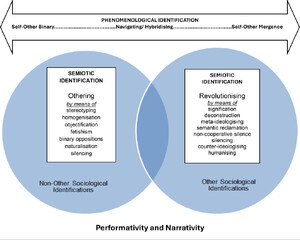
Bourdieuâs notions of habitus, field, distinction, capital and profit of distinction underpin this framework (see Figure 1). Habitus refers to an individualâs ingrained and anticipated ways of thinking, speaking, and acting inculcated through frequent interactions within key social networks (Bourdieu, 1990). The habitus is situated within and shaped by one or more fields. The field is a space of practice (for e.g. education, medicine, law, politics) within which institutional power upholds the values, beliefs and practices of those already possessing valued forms of economic, social and cultural capital. People assume power-related positions within a field based on their access to such capital (Bourdieu, 1977). However, each field also reflects conflicts arising from ongoing contests over the legitimacy and relevance of these different forms of economic, social and cultural capital to the field of practice (Bourdieu, 1984). In an inclusive education context where llms are deployed for role-playing, the habitus of the Other is located within the llmsâ interface. llms representing the Other could potentially be designed to reflect the complex competing discourses within a field. When individuals encounter the meshed fields of familiar and unfamiliar within the llms, they may feel compelled to think, speak and act in ways different from their habitus of the classroom.
Semiotic, phenomenological and sociological identifications of performativity and narrativity are constitutive of this habitus. These types of identifications are drawn from Lemkeâs (2009) work, and concepts and processes associated with these identifications are further developed in the conceptual framework for exploring identification and othering (see Figure 1).
Semiotic and phenomenological identifications can reflect individualsâ sociological identifications or how they align themselves with respect to different social groups. Although individuals have multiple group affiliations complexly related to one another and to the Other, I have simplified these group affiliations into two broad categories to facilitate analysisâNon-Other and Other, as illustrated in the Venn diagram. Tools for analysing semiotic identifications, drawn from the fields of cultural studies (see Hall, 1997) and feminist studies (see Nussbaum, 1995; Sandoval, 2000a), are the processes of othering (see Section 3.3) and revolutionising (see Section 3.4). The two categories of sociological identifications with Non-Other and Other intersect to illustrate the plausibility of individuals at times straddling both groupings.
The continuum illustrates various phenomenological identifications individuals may assume. Their lived experiences during the role-play situated on the continuum may range from a persistent Self-Other binary with no immersion, where semiotic identifications reflect the processes of othering on one end, to Self-Other mergence with full immersion, where semiotic identifications reflect the processes of revolutionising on the other end. Along the continuum between these two poles are variable positions where the individualsâ discourse may be an instantiation of less othering in the non-Other sociological identifications or less revolutionising in Other sociological identifications. Within the intersection of the two broad categories, individuals complexly navigate in and out of these sociological identifications or hybridise their discourse.

A conceptual framework on identifications in the Otherâs habitus
Citation: Innovation and Education 7, 1 (2025) ; 10.1163/25248502-bja00012
Hybridising and navigating represent two possible ways in which resources of a discourse may be employed, and their instantiations are variable. According to Bakhtin (1981), an organic hybrid is a mixture of utterances, styles, languages and systems of meaning-making and beliefs, perpetually evolving with new worldviews. As such, âall our utterances are filled with othersâ words [with] varying degrees of otherness or varying degrees of our-own-nessâ (Bakhtin, 1986, p. 89). Although Bakhtin (1981) believes the organic hybrid has no formal boundary and is essentially âopaqueâ, it is plausible to identify these new internal forms by discerning emerging patterns of hybrid language use.
Mojeâs (2013) theorisations about navigating could account for both hybrid and non-hybrid language use by role-players. Navigating is a deliberate action undertaken by individuals to position themselves within a discourse. It arises from an understanding of the norms and practices valued by different discourse communities in various social contexts.. People navigate within and across spaces and, in so doing, experience moments of hybridity as they confront the in-between, the discourse that is neither their own nor the Otherâs, the practice that they both take up and change. They navigateâor need to learn to navigateâthe positions in which they find themselves or which are made available to them in various spaces.
Through explorations of instantiations and the inter-relation of these instantiations of hybridising and navigating (see Rappa, 2015), I have developed an analytical tool particularly for phenomenological identifications. This will be discussed in Section 3.5.
3.2 Semiotic, Phenomenological and Sociological Identifications
In this section, semiotic and phenomenological identifications are unpacked, and their relationship to sociological identifications is explained. In semiotic identifications, identity is constituted within representations with both corporeal and cultural resources being deployed to signify subjectivities (Butler, 1993; Hall, 1996, 2006). The selection of representational markers is deliberate, such that there is an accumulation of meanings across the chosen semiotic resources serving to distinguish or render more clearly the individualâs relationship to different people and groups. These choices occur in conjunction with the recognition and/or desiring of some commonality or disassociation with characteristics and/or beliefs of another person or group (Hall, 1996; Lemke, 2009). To find acceptance in different social circles, individuals might adopt different linguistic forms, such as using more erudite vocabulary or resorting to boasting or putdowns. Their ability to switch to a different set of linguistic resources as they move between social circles is likely to influence how they are received by their peers. As such, semiotic identifications can convey differing permutations of power and status differentials depending on the community in which one positions oneself (Lemke, 2009). The linguistic resources deployed while role-playing with llms are indicative of such semiotic identifications.
Phenomenological identification constitutes lived experiences (Lemke, 2008) and is mediated by othersâ phenomenological responses to the individualsâ discourse practices, resulting in a series of exchanges as individuals act to refute or negotiate the assigned identity through their subsequent interactions (Norris, 2011). Lemke (2008) suggests that our identities are constructed in response to desires and fears that begin with corporeal wants and needs and extend to those elaborated by our cultures. Hence, an exploration of learnersâ phenomenological identifications would consider how their lived experience within the social space of their role play with llms constitutestheirnegotiation of their identity within power relations. This entails an examination of identity-in-the-moment and identity-across-events or identity-across-the-lifespan through its recurrence (Lemke, 2008).
Both the semiotic and phenomenological can impact the sociological in that we âmobilize these identifications [or cultural capital] to perform the identities we wish to project and have recognized or ratified by others [or increase social capital]â (Lemke, 2009, p. 147) in each community. This is because the ways of knowing, speaking, and acting associated with these semiotic identifications may be labelled in different ways by different communities, for example, confidence or arrogance as opposed to humility or modesty. Such identifications map the trajectory of participation in discursive practices and are, at the same time, circumscribed by the invocation of cultural models through the discursive practices of specific communities (Butler, 1993; Moje & Lewis, 2007; Moje et al., 2008; Wenger, 1998). As such, an examination of sociological identifications involves tracing the constitution of identities in performances and in narratives across social and private spaces. These would include written artefacts in preparation for the role play or following the role play, discourse whilst role-playing with llms, collective and individual reflections post-role play and, more crucially, comparing the constitution of learnersâ identities as they shift between role-playing a character and engaging in out-of-character communication with their group members or in their writing and reflections as a learner within and across different spaces.
Ultimately, the purpose of analysing these different types of identifications, performative and narrative, is to examine pathways that learners have taken as they hybridise or navigate their way from self to Other. If the aim is to facilitate identification with the Other, then the curriculum design for role-playing with llms needs to awaken a sense of responsibility or justice among learners. In discerning the needs of the Other and finding ways to rally resources to address these challenges, the learner would then be prompted to move towards the Other (Derrida, 1992, 1997; Levinas, (1972/2006). However, responsibility and movement towards the Other is contingent on the self having certain capacities such as reflexivity, discernment and recognition (Ricoeur, 1994). These capacities would need to be developed prior to role-playing with llms, providing ample opportunities prior to role-playing for learners to learn about and reflect on the lived experience of Othered groups whose identities the llms would emulate. The llms themselves would need to be trained on data on the specific lived experiences of Othered groups to ensure that their representations of these Othered groups are not themselves a form of othering. The following sections describe the tools that researchers can deploy to analyse these identifications when learners role-play with llms.
3.3 Othering Processes in Semiotic Identifications
This section addresses the processes by which groups and individuals are subject to othering. Othering is essentially a societal rather than an individual problem (Galvin, 2003). It involves constructing dichotomies in which one group dominates and shapes definitional understandings of the other (Derrida, 1981). It is a discursive process exercised by the powerful to characterise the identity of subordinate groups in a reductive and unfavourable way to legitimise the power and position of former and, at the same time, disadvantage the latter (Coupland, 2010; Jensen, 2011). Othering is accomplished by means of analytic strategies to simplify and reduce in order to explicate differences. Some of these strategies are discussed in the following paragraphs, namely, stereotyping, homogenisation, objectification, fetishism, binary oppositions, naturalization and silencing (see Coupland, 2010; Hall, 1997; Langton, 2009; Nussbaum, 1995) (See Figure 1).
Stereotyping is an approach in which a person or group is reduced to their supposed essence through labelling or ascribing traits, as exemplified by blacks being stereotyped negatively or positively as Toms, Coons, Tragic Mulattos, Mammies and Bad Bucks (see Bogle, 1973 in Hall, 1997, p. 251). This frequently occurs in tandem with homogenisation. Homogenisation is achieved through selecting and imbuing a mark of difference with an unfavourable meaning and applying it across the entire group. Some examples include a label such as âIslamic fundamentalistâ, an icon on a road sign depicting two bent figures and one holding a walking stick to represent the elderly and the pronoun âtheyâ accompanied by an ascribed pattern of behaviour (Coupland, 2010).
In more extreme forms, negative objectification and fetishism occur. In negative objectification, people are considered to lack autonomy and agency, and their experiences and feelings are ignored. They may be treated as a tool, as something owned or interchangeable or violable (Nussbaum, 1995). They may be reduced to their body or appearance (Langton, 2009). An example reflecting a combination of these methods of objectification is the male rendering of female virginity as an elixir of youth and, hence, a tradable commodity in Cambodia (Haworth, 2014). This has resulted in young girls being reduced to their bodies, treated as property, sold for cash, and having no say over their bodies, lives, desires and futures. This example is also illustrative of fetishism. Fetishism occurs when the whole is substituted by a part and involves the fragmentation of the Other and a displacement of these parts (Hall, 1997). For example, womenâs genitalia, rather than their whole body, become the focal point in their representation in pornographic materials. These body parts serve as objects of sexual gratification for consumers of such materials. The othering processes I have highlighted in this paragraph illustrate how people are differentiated through a process of dehumanisation.
Differences in corporeal form and practices are then foregrounded through binary oppositions of âgood/bad, civilised/ primitive, ugly/excessively attractive, repelling-because-different/ compelling-because strange-and-exoticâ (Hall, 1997, p. 229). Such binary oppositions deny the plausibility of overlaps (Galvin, 2003). They are used not only to juxtapose the powerful and the disenfranchised, but also to distinguish from among the disenfranchised. In this sense, binary oppositions can even lead to people who are grouped together in social categories being cast as different in relation to one another (Hall, 1997), resulting in distinctions made, for example, in the skin tones or language varieties of individuals within the same community. Receptivity towards these differences is then established and legitimised by a recognised authorityâs tautological statements in the form of aphorisms and maxims (Sandoval, 2000a), normalising (Galvin, 2003) and naturalising or attributing these differences to biological or inherited dispositions to preclude the possibility of change over any time frame (Hall, 1997). It is to render meaning unalterable by securing âdiscursive or ideological âclosureââ (Hall, 1997, p. 245). A case in point is that, although the same language is spoken by individuals from the same community, there are different attributes ascribed to speakers of the variety considered âstandardâ and those of the varieties described as âdialectsâ. A âregime of representationâ (Hall, 1997, p. 232) is established, ritualising these stereotypes and their associated practices and imputing further differentiations based on the initial difference (Goffman, 1963; Hall, 1997). To prevent contestation of these regimes of representation, stereotyped groups are silenced by their internalising these representations (Bourdieu, 1991), through limited access to discourse within these domains or by being rendered invisible in other forms of representation (Coupland, 2010) and by being further labelled as unreasonable or over-imagining or crazy in the event that they might raise their objections (Galvin, 2003; Goffman, 1963). Refer to Table 1 for a summary of the definitions of these analytic processes.
A summary of othering processes
| Revolutionising processes | Definition |
|---|---|
| Stereotyping | Reducing characterisations through labelling or ascribing traits |
| Homogenisation | Imbuing difference with an unfavourable meaning and applying it across the entire group |
| Objectification | Treating a person as a tool, as something owned or interchangeable or violable |
| Fetishism | Substituting the whole person with a part |
| Binary oppositions | Denying the plausibility of similarities |
| Naturalisation | Attributing differences to inborn dispositions |
| Silencing | Limiting access to discourse |
3.4 Revolutionising Processes in Semiotic Identifications
In this section, revolutionising processes are unpacked, pointing the way forward in countering othering processes and facilitating identification with the Other (see Figure 1). The most critical aspect of identifying with the Other, in my view, is that the self needs to engage in dialogue with the Other to internalise the voice of the Other (Ricoeur, 1994). But to do this, one must first hear the voice of this Other, and this voice must not be a subjugated voice but a voice that challenges the dominant discourse. Sandoval (2000a, 2000b) has identified the characteristics of such a voice in the âmethodology of the oppressedâ. This methodology, also termed âoppositional technologies of powerâ, stems from a commitment to a consciousness opposing the oppressive power of the dominant discourse and refers to âa set of processes, procedures and technologies for decolonizing the imaginationâ (Sandoval, 2000a, p. 68). It enables those who are oppressed to discern associations as contrived and arbitrary rather than natural by means of five different technologies.
In line with the purpose of the conceptual framework, I identified three out of the five as revolutionising processes that serve the purpose of unothering, namely, semiotics, deconstruction, meta-ideologizing (Sandoval, 2000a). I also drew on two other linguistic strategies Sandoval describes as ways to counter ideologyâzero degree of language and silence. I propose broader definitions of some of these terms to allow broader applications of these revolutionising processes. From a prior study (Rappa, 2015), I identified other processes termed âsilencingâ, âhumanisingâ and âcounter-ideologizingâ. These processes are explained in the following paragraphs.
The first oppositional technology of power is âsemioticsâ, which specifically refers to attending to and interpreting signs used in cultural productions (Sandoval, 2000a, 2000b). I have renamed this âsignificationâ to avoid confusing the terminology with âsemiotic identificationsâ. The following example illustrates how this technology may be deployed. There are assumptions of incapacitation and dependence associated with the wheelchair. To counter how the wheelchair is framed negatively in dominant discourse, new signs illustrating alternative ways in which the wheelchair is used to underscore the freedom and independence it brings, for example, showing someone hurtling down the racetrack on a wheelchair (see Tan, 2006; Figures 2 and 3) or doing daredevil stunts in his wheelchair (see Moser, 2005). These new signs introduce innovations into discourse in the form of metaphors, which can imbue an object with new meanings to counter prevailing institutional usage (Galvin, 2003).
Disabled access wheelchair
Citation: Innovation and Education 7, 1 (2025) ; 10.1163/25248502-bja00012
Enabled access wheelchair
Citation: Innovation and Education 7, 1 (2025) ; 10.1163/25248502-bja00012
The second technology is âdeconstructionâ, which is a process of âseparating a form from its dominant meaningâ (Sandoval, 2000b, p. 376). This revolutionising process may be used to extract and account for an action undesirably labelled and rendered obscure in the dominant discourse, such as the use of a second or foreign language that reflects affiliations with marginalised groups. I have extended the meaning of deconstruction to encompass the act of making explicit what is tacit to expose the oppressive ideological assumptions and practices of the dominant discourse. This may entail, for example, questioning the practice of ascribing greater value or worth to monolingualism as opposed to bilingualism or multilingualism.
The third technology of power is âmeta-ideologizingâ which transforms dichotomies by extending conventional categories to include âsomething else, something beyond themâ (Sandoval, 2000a, p. 84). This is not the same as enforcing the use of politically correct terminology. Newly-coined terms conceal oppressive realities and can quickly assume negative connotations (Galvin, 2003). Instead, what I understand by this may be illustrated in the current practices of subverting the meaning of derogatory terms. Subversion occurs when an unfavourable word is appropriated and invested with positive meanings to strengthen, heal and re-educate (Fletcher, 1993; Galvin, 2003), such as in the case of conventionally pejorative terms like âgeekâ, âcripâ and âqueerâ. These illustrate the âlanguage of revolutionâ because, in its generative, self-declarative and transparent state, it âtransforms realityâ (Sandoval, 2000a, p. 107). At the same time, the use of terms may be restricted to the members of a community, such as the Black communityâs use of ân---aâ as a marker of in-group solidarity and cultural identity, but where its usage in the wider community is considered offensive (Anderson & Lepore, 2013). In these examples, the language does not exclude ideology as claimed by Sandoval. Instead, it tackles ideology head-on. Such linguistic strategies confer new meanings that reposition Othered groups.
Zero degree of language occurs when individuals can circumvent ideological terms by connecting language to an object through action rather than a person (Sandoval, 2000a). For example, instead of referring to âa homeless man who lives in a tentâ, we can refer to âa man making his home in a tentâ. The person is transitively linked to âhomeâ, and the statement is not about the individual but describes the action. Sandoval (2000a) argues that such a material response liberates the individual from ideology. In a role-play, this entails an examination of whether the emphasis is placed on the material act.
Another strategy is silence, which seeks liberation from ideology through active resistance (Sandoval, 2000a). However, ascribing intentions to silence can be tricky because silence can assume a submissive posture where one cowers in the face of oppressive ideology. As such, it is more accurate to characterise silence as non-cooperative. An example of non-cooperative silence may be found in a memoir by Carly Fleischmann, who refused to type out a response on her laptop to communicate with her parents and caregivers because she felt that the behaviourist techniques they adopted to train her were dehumanising to her (Fleischmann & Fleischmann, 2012).
âSilencingâ as a revolutionising process is the equal and opposite reaction to silencing as a process of Othering. These may include statements in the imperative mood commanding the oppressor to stop the bullying or to get lost. The goal is to stop the propagation of prejudices embedded in the dominant discourse by preventing their articulation. âCounter-ideologisingâ refers to an attempt to marginalise the oppressor in the same way the oppressor has sought to alienate the oppressed. Both silencing and counter-ideologising are controversial because they are confrontational. They do not eliminate power differentials but, instead, seek to transform the discourse by shifting power from the oppressor to the oppressed.
More reconciliatory technologies would be those of âmeta-ideologisingâ (discussed earlier) and âhumanisingâ. âHumanisingâ is a revolutionising process aimed at countering attempts to dehumanise the Other. In this process, the Other gives vent to raw yet relatable emotions to emphasise shared humanity and to elicit empathy from those who are otherwise ignorant, afraid and prejudiced. Life stories of the Other are told as a way to make this Other known and understood. These life stories are a means to underscore the shared experiences and a way to account for differences. The discourse seeks to dispel fear and ignorance by conveying the message âI am like youâ.
These revolutionising processes demonstrate how language can be reformed at the word, symbol, semantic and discourse levels. These reformations are then circulated within the discourse. However, such processes should not be confined only to those who are marginalised. They should be applied to those who hold positions of power to examine how they deploy semiotic, phenomenological and sociological identifications with the Other and whether instances of innovations occurred in their own discourse, which reconstituted their identifications. Refer to Table 2 for a summary of the definitions of these analytic processes.
A summary of revolutionising processes
| Revolutionising processes | Definition |
|---|---|
| Signification | Using signs to alter cultural productions |
| Deconstruction | Separating a form from its dominant meaning |
| Meta-ideologising | Extending the meaning of conventional categories |
| Semantic reclamation | Connecting language to an object through action rather than to a person |
| Non-cooperative silence | Refusing to speak |
| Silencing | Preventing the articulation of prejudice |
| Counter-ideologising | Marginalising the oppressor |
| Humanising | Countering attempts to dehumanise |
3.5 Hybridising/Navigating Phenomenological Identifications
The analytical tool in this section depicts various phenomenological identification processes. This framework shifts identity studies away from identity as typology and towards identification processes, extending it beyond a list of assumed positions and identities to developing metacognitive understandings of identifications and facilitating comparisons with the identity of the Other projected by llms.
The framework drew on Goffmanâs (1981, p. 128) notion of âfootingâ referring to the âalignment, or set, or stance, or posture, or projected selfâ of the role-players, which can be located in an utterance in the form of âcodeswitchingâ or âpitch, volume, rhythm, stress, tonal qualityâ. Goffman (1981, p. 128) emphasises the need for a continuum to illustrate obvious to subtle changes in footing with the ânew footing having a liminal role, serving as a buffer between two more substantially sustained episodesâ. Discourse moves are incorporated into this notion of footing to illustrate how learners positioned their identity relative to the identity of the Other as depicted by the llms, highlighting changes in footing relative to that projected by the llms during the role-play. The terms to describe such discourse moves and their definitions are provided in Table 3.
Definitions of terms used in the footing sequence
| Term | Definition |
|---|---|
| Echoing | Repetition of the Otherâs discourse to depict a similar identity |
| Extending | Using the discourse of the Other to extend the identity of the Other without contradicting that encountered in the Other |
| Reconstituting | Refashioning the discourse of the Other to present a new identity of the Other |
| Circumscribing | Using discourse to present a more limited identity than that depicted by the Other |
| Subverting | Undermining the identity represented by the Other through discourse |
| Inverting | Using discourse to depict an identity opposite to that depicted by the Other |
The learnersâ footing sequences along the self-Other binary â Self-Other Mergence continuum illustrate changes in footing in terms of differences from or similarities with the identity of the Other as they locate themselves on different parts of this continuum for different purposes (see Table 4). A continuum was chosen to illustrate that shifts between these discourse moves can be quite seamless. These discourse moves only provide insights into the individualsâ stance in relation to the Other as depicted by the llms. This framework does not assume uniformity amongst Othered groups and individuals and acknowledges the need to analyse the unique configuration of phenomenological identifications of specific Others.
Phenomenological identification framework depicting discourse moves along the continuum
| Self-Other Binary | Self-Other Mergence | ||||
| Inverting | Subverting | Circumscribing | Reconstituting | Extending | Echoing |
3.6 Eliciting Sociological Identifications
As mentioned previously, individualsâ sociological identifications are complexly linked to multiple communities with similar or competing cultural models, situating these individuals at the intersection of these different group affiliations. These communitiesâ cultural models can help or hinder learnersâ sociological identifications with the Other during their role. At the same time, it is critical to acknowledge the biases inherent in llms (Huang & Huang, 2025; Tao et al., 2024). After conducting a comprehensive examination for cultural bias in five widely used llms across 107 countries and territories, Tao et al. (2024) found that these llms favoured self-expression values, that is, the notion of subjective well-being, of English-speaking and Protestant European countries. They observed that specifying a specific cultural identity in the prompt reduced cultural bias. In line with this finding, scenarios foregrounding a contemporary issue (e.g. youth homelessness) for the role play may not explicitly identify the Othered group (e.g. young people who have a low socioeconomic status). Therefore, there is a need to make explicit the identity of the llm as an Other or a member of an Othered group, as well as reflect the complexity of multiple group affiliations of both the learner and the llm for role-playing to minimise cultural bias and move beyond perfunctory interactions between learners and llms.
In preparation for the role play, the parameters for the llm could be defined by the researcher through instructions on how the llm should respond and the resources that it should draw on to minimise cultural bias. A role-playing session could then begin with the learner in a specific role responding to a series of questions put forth by the llm about how they self-identify, their group affiliations, and their beliefs, values and experiences regarding a contemporary issue before commencing the role play to bring to the fore the sociocultural and economic factors shaping their views and to encourage reflexivity. Upon analysing the learnersâ group affiliations and cultural models, the llm could be instructed to (i) always provide a response grounded in facts to respond to the queries of learners, (ii) customise responses to make the Other more relatable to learners by connecting with one or more of the learnerâs group affiliations to encourage sociological identification and, once a bridge has been established, (iii) offer different or countering beliefs, values and experiences to challenge the learnersâ assumptions about the Other. It is hoped that these steps can assist in identifying the learnerâs existing sociological identifications and facilitate their sociological identification with the Othered group.
3.7 A Hypothetical Example
The hypothetical scenario presented in this section exemplifies how the conceptual framework and the continuum might be deployed to analyse learnersâ othering of or identification with the Other. I have selected youth homelessness as the issue being addressed in a role play, with the learner taking on the role of a policymaker and the llm assuming the identity of a homeless young person.
Prior to role-playing, the learner might complete a brief survey on their views on youth homelessness issued by the lms, which could reveal that they belong to a lower socioeconomic class but live in a stable home environment. To distinguish themselves from homeless young people, they might express the sentiment that young people who are homeless are unwilling to work and prefer a free ride (sociological identifications). The learnerâs views may or may not be evident in the interaction data during the role play. Therefore, the researcher needs to code both the self-description data and the interaction data for stereotyping and homogenisation (semiotic identifications). To counter the stereotype, the llm uploaded with the conceptual framework could autonomously respond to the learner by sharing systemic barriers young people who are homeless face, using the revolutionising processes of signification and humanising (semiotic identifications).
Along the self-Other continuum, some learners may echo the llmsâ language, acknowledging how difficult it is to find work without a stable address, others may reconstitute that identity, emphasising the resilience of these young people instead of positioning them as victims, and yet others may subvert that identity by questioning the authenticity of the narrated experiences (phenomenological identifications). The researcher maps these moves on the continuum, noting shifts towards or away from self-Other mergence. The researcher might observe that those who express a strong affinity for high-performing and ambitious young people might navigate their discourses such that they express more empathy during interactions with the llm and express less empathetic views outside of that discourse. In contrast, those who participate actively in youth advocacy groups might hybridise their discourse, blending their personal experience as a youth advocate with the llm âs narrative (phenomenological and sociological identifications). As such, an analysis of learnersâ discourse would provide insights into the what, how and why of learnersâ identifications. To encourage reflexivity, a co-reflection activity could be undertaken with the llm to unpack their discourse in line with the learning goals of the activity, and this could be followed up with a debriefing session with the educator or researcher and a counsellor to ensure the well-being of learners.
In summary, in presenting comprehensive analytical processes for semiotic, phenomenological and sociological identifications with or othering of the Other, the conceptual framework proposed in this paper addresses the different discourse processes and moves learners might deploy when interacting with the Other as depicted by llms during role-plays, and also the different discourse processes and moves llms could potentially be trained to respond with that could deepen learnersâ experience of engaging with the Other.
4 Conclusion
Going forward, researchers can deploy the conceptual framework to examine (a) the discourse of teachers and students who hold positions of power that shape participation within the class and school community, and encourage reflection on their values and beliefs that influence their identification or othering practices, (b) the discourse of llms representing the students for whom inclusive education is crucial (i) to examine how these models can be trained to avoid deficit representations of Othered groups and (ii) to explore how these models respond; whether they are compliant or can counter attempts at othering, thus serving as non-examples and examples respectively for Othered groups. In their review of studies involving the social participation of students with disabilities in an inclusive education setting, Rademaker et al. (2020) found that to effectively address bias, foster positive contact and promote a shared identity, a combination of contact between ingroups (comprising the regular student population) and outgroups (comprising students with disabilities) to learn about and understand one another and sharing information about disabilities was needed. Therefore, such role-plays may be viewed as a preparation for authentic interactions between real people, a safe space for drilling down, unearthing and questioning participantsâ values, beliefs and assumptions about Othered groups. The ultimate goals are that learners during their role-plays with llms engage in empowering discourse that enables the Other to stand on an equal footing and that alterity can be engaged without fear and ignorance, as people, regardless of their group affiliations, make the effort to understand and respect the differentness and uniqueness of others. This is the essence of inclusive education.
Note
Natasha Anne Rappa is an Associate Professor in the School of Education at Murdoch University, specialising in educational technology. She holds a PhD from the University of Sheffield and an ma from the University of Michigan. Her current research foci are generative artificial intelligence, simulation-based learning in virtual and mixed reality environments and other types of educational technology, digital literacy and 21st-century skills/competencies. She is an Associate Editor and Class Notes Editor of Pedagogies: An International Journal and is the lead guest editor of special issues on Generative Artificial Intelligence by two Q1 journals, the British Journal of Educational Technology and Linguistics and Education.
References
Anderson, L., & Lepre, E. (2013). What did you call me? Slurs as prohibited words. Analytic Philosophy, 54(3), 350â363. https://doi.org/10.1111/phib.12023
Bakhtin, M. M. (1981). The dialogic imagination: Four essays by M. M. Bakhtin (C. Emerson & M. Holquist, Trans.). Austin, T.X.: University of Texas Press.
Bakhtin, M. M. (1986). Speech genres and other late essays (Y. McGee, Trans.). Austin: University of Texas Press.
Bell, G., Burgess, J., Thomas, J., and Sadiq, S. (2023, March 24). Rapid Response Information Report: Generative ai â language models (llms) and multimodal foundation models (mfms). Australian Council of Learned Academies.
Bourdieu, P. (1977). Outline of a theory of practice (R. Nice, Trans.). Cambridge: Cambridge University Press.
Bourdieu, P. (1984). Distinction: A social critique of the judgement of taste (R. Nice, Trans.). Oxon: Routledge.
Bourdieu, P. (1990). In Other Words: Towards a Reflexive Sociology. Stanford: Stanford University Press.
Bourdieu, P. (1991). Language and Symbolic Power (G. Raymond & M. Adamson, Trans.). Cambridge: Polity Press.
Bucholtz, M., & Hall, K. (2005). Identity and interaction: a sociocultural linguistic approach. Discourse Studies, 7(4â5), 585â614. https://doi.org/10.1177/1461445605054407
Butler, J. (1990). Gender trouble: Feminism and the subversion of identity. New York, N.Y.: Routledge.
Butler, J. (1993). Bodies that matter: On the discursive limits of âsexâ. New York, N.Y: Routledge.
cast. (2024). Universal Design for Learning Guidelines version 3.0. Retrieved September 1, 2024, from https://udlguidelines.cast.org
Coupland, N. (2010). âOtherâ representation. In J. Jaspers, J. Verschueren & J.-O. Ãstman (Eds.), Society and Language Use (pp. 241â259). Amsterdam: John Benjamins Publishing Company.
Derrida, J. (1981). Positions (A. Bass, Trans.). Chicago: The University of Chicago Press.
Derrida, J. (1992). Force of law: The mystical foundation of authority (M. Quaintance, Trans.). In D. Cornell, M. Rosenfeld & C. D.G. (Eds.), Deconstruction and the possibility of justice (pp. 3â67). Routledge.
Derrida, J. (1997). The Villanova Roundtable: A conversation with Jacques Derrida. In J. D. Caputo (Ed.), Deconstruction in a nutshell: A conversation with Jacques Derrida. New York: Fordham University Press.
Dinnar, S., Susskind, L., Sibanda, L., & Olaleye, O. (2025). Negotiation backtable bots: using GenAI to improve multiparty negotiation instruction. Negotiation Journal, 41(1), 19â65. https://doi.org/10.1162/ngtn_a_00015
Fleischmann, A., & Fleischmann, C. (2012). Carlyâs voice: Breaking through Autism. NY: Touchstone.
Fletcher, A. (1993). Fighting for the right to be different: The U.K. radical disability movement. New Statesman and Society, 6, 276.
Fung, L., & Laing, R. A. (2024). A proof of concept study on the use of large language models as a client in typed role plays for training therapists. Discover Psychology, 4, 201. https://doi.org/10.1007/s44202-024-00302-7
Galvin, R. (2003). The making of the disabled identity: A linguistic analysis of marginalisation. Disability Studies Quarterly, 23(2), 149â178. https://doi.org/10.18061/dsq.v23i2.421
GarcÃa-GarcÃa, M., & Cotrina-GarcÃa, M. (2023). Generations of the community perspective in todayâs inclusive education. Education Sciences, 13, 1027. https://doi.org/10.3390/educsci13101027
Gee, J. P. (2000). Teenagers in new times: A new literacy studies perspective. Journal of Adolescent & Adult Literacy, 43(5), 412â420. https://www.jstor.org/stable/40017078
Gee, J. P. (2001). Identity as an analytic lens for research in education. Review of Research in Education, 25 (1), 99â125. https://doi.org/10.3102/0091732X025001099
Goffman, E. (1963). Stigma: Notes on the management of spoiled identity. New Jersey: Prentice-Hall.
Goffman, E. (1981). Forms of talk. Oxford: Basil Blackwell Publishers.
Gray, M., Baird, A., Sawyer, T., James, J., Bartlett, M., Krick, J., & Umoren, R. (2024). Increasing realism and variety of virtual patient dialogues for prenatal counseling education through a novel application of ChatGPT: Exploratory observational study. jmir Medical Education, 10, 50705. https://doi.org/10.2196/50705
Grundmann, S., Al Owayyed, M., Bruijnes, M., Vroonhof, E., Brinkman, W.-P. (2025). Lilobot: A Cognitive Conversational Agent to Train Counsellors at Childrenâs Helplines. Journal of Medical Systems, 49, 5. https://doi.org/10.1007/s10916-024-02121-8
Hall, S. (1996). Introduction: Who needs identity? In S. Hall & P. Du Gay (Eds.), Questions of cultural identity (pp. 3â17). London: Sage.
Hall, S. (1997). The spectacle of the âOtherâ. In S. Hall (Ed.), Representation: Cultural representations and signifying practices (pp. 3â17). London: Sage.
Hall, S. (2006). Cultural identity and diaspora. In J. E. Braziel & A. Mannur (Eds.), Theorizing Diaspora (pp. 233â246). Blackwell. (Original work published in 1990)
Haworth, A. (2014, July 6). Virginity for sale: inside Cambodiaâs shocking trade, The Observer. Retrieved 15/09/2025 from http://www.theguardian.com/society/2014/jul/06/virginity-for-sale-cambodia-sex-trade
Holderried, F., Stegemann-Philipps, C., Herrmann-Werner, A., Festl-Wietek, T., Holderried, M., Eickhoff, C., & Mahling, M. (2024). A Language ModelâPowered Simulated Patient With Automated Feedback for History Taking: Prospective Study. jmir Medical Education, 10, e59213. https://doi.org/10.2196/59213
Holland, D., Lachiotte, W., Skinner, D., & Cain, C. (1998). Identity and agency in cultural worlds. Cambridge, M.A.: Harvard University Press.
hooks, b. (1990). Yearning: Race, gender, and cultural politics. Boston: South End.
Huang, L.TL., & Huang, TR. (2025). Generative bias: widespread, unexpected, and uninterpretable biases in generative models and their implications. ai & Society. https://doi.org/10.1007/s00146-025-02533-1
Hwang, G.-J. & Chen, N.-S. (2023). Editorial position paper: Exploring the potential of Generative Artificial Intelligence in education: Applications, challenges, and future research directions. Educational Technology & Society, 26(2), IâXVIII. https://doi.org/10.30191/ETS.202304_26(2).0014
Jensen, S. Q. (2011). Othering, identity formation and agency. Qualitative Studies, 2(2), 63â78. http://ojs.statsbiblioteket.dk/index.php/qual/article/view/5510
Kitzinger, C., & Wilkinson, S. (1996). Theorizing representing the Other. In S. Wilkinson & C. Kitzinger (Eds.), Representing the other: A feminism and psychology reader (pp. 1â32). London: Sage.
Krischler, M., Powell, J. J. W., & Pit-Ten Cate, I. M. (2019). What is meant by inclusion? On the effects of different definitions on attitudes toward inclusive education. European Journal of Special Needs Education, 34(5), 632â648. https://doi.org/10.1080/08856257.2019.1580837
Langton, R. (2009). Sexual Solipsism: Philosophical Essays on Pornography and Objectification. Oxford: Oxford University Press.
Lave, J., & Wenger, E. (1991). Situated Learning: Legitimate Peripheral Participation. Cambridge: Cambridge University Press.
Lawthom, R., & Whelan, P. (2012). Understanding communities. In A. Azzopardi & S. Grech (Eds.), Inclusive communities: A critical reader (pp. 11â22). Sense Publishers.
Lemke, J. (2008). Identity, Development, and Desire: Critical Questions. In C. Caldas-Coulthard & R. Ledema (Eds.), Identity Trouble: Critical Discourse and Contestations of Identification (pp. 17â42). London: Macmillan/Palgrave.
Lemke, J. (2009). Multimodality, Identity, and Time. In C. Jewitt (Ed.), The Routledge Handbook of Multimodal Analysis (pp. 140â150). London: Routledge.
Levinas, E. (2006). Humanism of the other (N. Poller, Trans.). Urbana and Chicago: University of Illinois Press. (Original work published in 1972)
Liddle, J., & Rai, S. (2005). Between Feminism and Orientalism. In M. Kennedy, K. Lubelska & V. Walsh (Eds.), Making Connections (pp. 10â22). London: Taylor & Francis. (Original work published in 1993)
Lim, W. M., Gunasekara, A., Pallant, J. L., Pallant, J. I., & Pechenkina, E. (2023). Generative ai and the future of education: Ragnarok or reformation? A paradoxical perspective from management educators. The International Journal of Management Education, 21, 100790. https://doi.org/10.1016/j.ijme.2023.100790
Luke, A. (2003). Literacy and the Other: A Sociological Approach to Literacy Research and Policy in Multilingual Societies. Reading Research Quarterly, 38(1), 132â141. https://www.jstor.org/stable/4151697
Maurya, R. K. (2023). A qualitative content analysis of ChatGPTâs client simulation role-play for practising counselling skills. Counselling & Psychotherapy Research, 24(2), 614â630. https://doi.org/10.1002/capr.12699
Moje, E. B., Overby, M., Tysvaer, N., & Morris, K. (2008). The complex world of adolescent literacy: Myths, motivations, and mysteries. Harvard Educational Review, 78(1), 107â154. https://doi.org/10.17763/haer.78.1.54468j6204x24157
Moje, E. B., & Lewis, C. (2007). Examining Opportunities to Learn Literacy: The role of critical sociocultural literacy research. In E. B. Moje, C. Lewis & P. Enciso (Eds.), Reframing sociocultural research on literacy; identity, agency, and power (pp. 15â48). Mahwah, N.J.: Lawrence Erlbaum Associates.
Moje, E. B. (2013). Hybrid literacies in a post-hybrid world: Making a case for navigating. In K. Hall, T. Cremin, B. Comber & L. C. Moll (Eds.), International Handbook of Research in Childrenâs Literacy, Learning and Culture (pp. 359â372). Oxford: Wiley-Blackwell.
Nanda, M., Gabriel, R. A., Sakai, T. (2025). Leveraging Large Language Models to enhance emotional intelligence training in anesthesiology. Anesthesiology, 143, 504â508. https://doi.org/10.1097/ALN.0000000000005533
Navas-Bonilla C. D. R., Guerra-Arango J. A., Oviedo-Guado D. A., & Murillo-Noriega D. E. (2025). Inclusive education through technology: a systematic review of types, tools and characteristics. Frontiers in Education, 10. http://doi.org/10.3389/fed-uc.2025.1527851
Nussbaum, M. C. (1995). Objectification. Philosophy and Public Affairs, 24(4), 249â291. https://doi.org/10.1111/j.1088-4963.1995.tb00032.x
Nasir, N. S., & Saxe, G. (2003). Ethnic and academic identities: A cultural practice perspective on emerging tensions and their management in the lives of minority students. Educational Researcher, 32(5), 14â18. https://doi.org/10.3102/0013189X032005014
Norris, S. (2011). Identity in (Inter)action: Introducing Multimodal (Inter)action Analysis. Gottingen: De Gruyter Mouton.
Parrilla, Ã. (2002). Acerca del origen y sentido de la educación inclusiva. Revista de Educación, 327, 11â30.
Quinn, N., & Holland, D. (2012). Culture and cognition. In D. Holland & N. Quinn (Eds.), Cultural Models in Language and Thought (pp. 3â40). Cambridge University Press. https://doi.org/10.1017/CBO9780511607660. (Original work published in 1987)
Rädel-Ablass, K., Schliz, K., Schlick, C., Meindl, B., Pahr-Hosbach, S., Schwendemann, H., Rupp, S., Roddewig, M., & Miersch, C. (2025). Teaching opportunities for anamnesis interviews through ai based teaching role plays: a survey with online learning students from health study programs. bmc Medical Education, 25, 259. https://doi.org/10.1186/s12909-025-06756-0
Rademaker F., de Boer, A., Kupers, E., & Minnaert, A. (2020). Applying the contact theory in inclusive education: A systematic review on the impact of contact and information on the social participation of students with disabilities. Frontiers in Education, 5, 602414. http://doi.org/10.3389/feduc.2020.602414
Rappa, N. A. (2015). Have I become what I beheld? Identity enactments as the hidden Other in a Virtual World. (Publication No. uk.bl.ethos.643641) [Doctoral dissertation, University of Sheffield]. White Rose eTheses Online. https://etheses.whiterose.ac.uk/id/eprint/8654/
Rappa, N. A., Nonis, K., Tang, K.S., Cooper, G., Cooper, M., & Sims, C. (2026). Can Generative AI support the learning agency of students with disability? A case study of an Australian secondary school. British Journal of Educational Technology. https://doi.org/10.1111/bjet.70048
Rappa, N. A. & Nonis, K. (2026). Integrating Generative AI with digital learning tools for inclusive education. In Wang, T.-C. & Keane, T. (Eds.), Artificial intelligence for advancing education quality and inclusion: Practices across educational settings. Springer. https://link.springer.com/book/9783032121738
Ricoeur, P. (1994). Oneself as another (K. Blamey, Trans.). Chicago: The University of Chicago Press.
Sandoval, C. (2000a). Methodology of the oppressed. Minneapolis: University of Minnesota Press.
Sandoval, C. (2000b). New sciences: Cyborg feminism and the methodology of the oppressed. In D. Bell & B. M. Kennedy (Eds.), The cybercultures reader (pp. 374â387). London: Routledge.
Somers, M. (1994). Narrative and the constitution of identity: A relational and network approach. Theory and Society, 23(5), 605â650. https://doi.org/10.1007/BF00992905
Somers, M., & Gibson, G. D. (1994). Reclaiming the epistemological âOtherâ: Narrative and the social constitution of identity. In C. Calhoun (Ed.), Social Theory and the Politics of Identity (pp. 37â99). Oxford: Basil Blackwell.
Street, B. V. (2003). Whatâs ânewâ in New Literacy Studies? Critical approaches to literacy in theory and practice. Current issues in comparative education, 5(2), 77â91. https://doi.org/10.52214/cice.v5i2.11369
Tang, K.S. Cooper, G., Rappa, N., Cooper, M., Sims, C., & Nonis, K. (2024). A dialogic approach to transform teaching, learning & assessment with generative AI in secondary school. Pedagogies, 19(3), 403-503. https://doi.org/10.1080/1554480X.2024.2379774
Tao, Y., Viberg, O., Baker, R. S., & Kizilcec, R. F. (2024). Cultural bias and cultural alignment of large language models. pnas Nexus, 3(9), pgae 346, https://doi.org/10.1093/pnasnexus/pgae346
Thorne, S. L. (2024). Generative artificial intelligence, co-evolution, and language education. Modern Language Journal, 108(2), 567â572. https://doi.org/10.1111/modl.12932
Timpe-Laughlin, V., Divekar, R., Sydorenko, T., Dombi, J., Oh, S. (2025). Intent-based vs. gpt-based conversational agents: Benefits and challenges for practicing and assessing oral interaction. tesol Quarterly. https://doi.org/10.1002/tesq.3409
Trinh, T. M.-h. (1989). Women, native, other: Writing postcoloniality and feminism. Bloomington: Indiana University Press.
Tsokova, D., & Tarr, J. (2012). Diverse perspectives on inclusive school communities. Routledge.
unesco. (1994, June 7â10). Salamanca statement and framework for action on special needs education. World Conference on Special Needs Education: Access and Quality. Salamanca, Spain.
Wenger, E. (1998). Communities of practice: Learning, meaning and identity. Cambridge: Cambridge University Press.
Winardy, G. C. B., & Septiana, E. (2023). Role, play, and games: Comparison between role-playing games and role-play in education. Social Sciences & Humanities Open, 8, 100527. https://doi.org/10.1016/j.ssaho.2023.100527
Wolcott, H. F. (1994). Transforming qualitative data: Description, analysis and interpretation. Thousand Oaks: Sage Publications Inc.
Yan, Z., & Xiang, Y. (2025). Social life simulation for non-cognitive skills learning. Proceedings of the acm on Human-Computer Interaction, 9(2), 1â44. https://doi.org/10.1145/3711068
Yu, H. & Guo, Y. (2023). Generative Artificial Intelligence empowers educational reform: current status, issues and prospects. Frontiers in Education 8, 1183162. https://doi.org/10.3389/feduc.2023.1183162