Abstract
This article explores the innovative use of chatbot technology to promote inclusive and equitable quality education, specifically focusing on teacher professional development (tpd) in challenging environments, where teachers are in short supply and/ or urgently need support on a large scale, such as contexts of mass displacement. It details the design and integration of the Reflect-And-Act Chatbot (Rebo) within Co-designed Massive Open Online Collaborations (CoMOOCs) as an innovative approach to bridge learning in online tpd and application to practice. The article discusses the design rationale of this innovation for supporting teachers in reflecting on their learning and planning for its application to practice, addressing the critical need for effective knowledge transfer in professional learning. Findings from 116 conversations demonstrate Reboâs feasibility for stimulating meaningful reflection and initial insights into knowledge transfer were valuable. While Rebo effectively prompted planning, analysis using the smart goal framework revealed that plans often lacked specificity, measurability, and realism. This study affirms Reboâs potential as a responsible ai innovation, paving the way for future llm integration to enhance goal structuring and responsiveness, ultimately improving equitable access to quality teacher professional development globally.
1 Introduction
As we rapidly approach 2030, the United Nations has reported a deceleration in progress towards meeting Sustainable Development Goal 4, Quality Education (United Nations, 2025). In particular, the out-of-school population has increased by about 21 million since the addition of data from countries severely affected by conflict such as Myanmar (unesco, 2025). In challenging educational contexts such as those affected by conflict and mass displacement, teachers are the single most important factor that can support learners, who have often missed out on school and encountered multiple traumas and hardships (Mendenhall et al., 2018). However, in such circumstances, trained teachers are always in short supply, and untrained volunteers are required to step into the role (Burns & Lawrie, 2015). For these teachers, access to professional development is critical to their capacity to support childrenâs education (Richardson et al., 2018) but is required at a scale that only digital means can meet (Laurillard & Kennedy, 2017).
To help fill the global need for teacher professional development (tpd) for teachers working in challenging contexts, a new model of digitally supported tpd has been created in collaboration with teachers in Lebanon and the Thai-Myanmar border (Kennedy et al., 2022; Pherali et al., 2025) that emphasises co-design, social learning and knowledge sharing in online and blended formats â the CoMOOC or Co-designed Massive Open Online Collaboration (Kennedy & Laurillard, 2024).
However, for professional learning, success is not only measured in what is learnt, but the extent to which the learning can be applied to practice and make a difference in the world. In the case of teachers in challenging environments, the application of newly developed knowledge in the classroom is critical to achieve quality education for underprivileged children and young people. Emerging technologies such as artificial intelligence (ai) based technologies including data analytics and Large Language Models (llms) have been heralded as offering a transformation of access to quality education, but there is a notable gap in understanding how to address real-world needs for supporting learning and education equity. In particular, there is comparatively little research on ai as supporting professional learning in the field (Pammer-Schindler et al., 2022). The development of effective technological innovations must be balanced with the potential costs for society and the environment, and creating a responsible way to evidence effectiveness prior to implementation is critical to this.
This paper presents the development of the Reflect-And-Act Chatbot (Rebo for short) embedded in CoMOOCs as an innovative approach to bridge learning in online tpd and application to practice. Rebo aims to support the vital link between learning and application to practice through supporting Co-MOOC participantsâ process of reflection and planning. Reboâs main goal is to help teachers make practical use of the content from the CoMOOCs by offering teachers an external stimulus and structured framework for reflection and planning to: a) push teachers to reflect on their learning and b) support them to plan how they will apply what they have learnt in their teaching practice. Reboâs secondary purpose is to support research and the future design of innovations that facilitate knowledge transfer from education to workplace practice, by collecting data about the process and impact of knowledge transfer. The research question at the heart of the paper is, therefore, âCan chatbot tools support professionals to plan how to apply knowledge learned in a CoMOOC to their work practice?â
2 MOOCs and CoMOOCs for Scalable Professional Learning
Professional learning refers to the development of knowledge, skills and practices to meet evolving work demands and ensure knowledge and practice that is up-to-date and informed (Shum et al., 2022; Littlejohn, 2021; Littlejohn & Margaryan, 2014). This can be achieved through formal learning, such as workshops or courses or non-formal on-the-job learning that is integrated to work activities and social interactions (Eraut, 2000; Tynjälä, 2008; Eraut, 2004a). Amidst growing economic, technological, and geopolitical pressures, there is an urgent need to upskill professionals such as teachersâin ways that are scalable, flexible, and context-sensitive. Traditional work-integrated learning models often struggle to meet this demand, particularly in fragile contexts such as those affected by crisis, conflict and mass displacement. Massive Open Online Courses (moocs) have emerged as a promising response to this need, offering an alternative model for large-scale professional development with open-access, web-based format, removing barriers of time, cost, and geography (Hood et al., 2015; Kennedy & Laurillard, 2019; Laurillard & Kennedy, 2020).
moocs can do more than conventional professional training models in enabling a learning community, where professionals have access to support and resources from educators and peers with similar learning interestsâopportunities that are often constrained by workplace hierarchies or organisational silos (Billett, 2001). The flexible design of some moocs provide opportunities for professionals to tailor their learning paths to individual needs, workplace demands and evolving contexts. However, to take up this opportunity, professionals need to be highly self-regulated so they can set and achieve their own learning goals (Littlejohn et al., 2016; Kizilcec et al., 2017).
CoMOOCs present an innovation in the development of moocs that foregrounds the exchange of practice-based learning in communities of professionals (Kennedy & Laurillard, 2024). CoMOOCs provide contextualised and situated, social online learning for professionals at a scale appropriate to meeting the United Nations Sustainable Development Goals (unsdgs). CoMOOCs are founded on the idea that professionals, particularly those in the unpredictable settings of crisis and emergency, are best placed to respond to the challenges they face because of their intimate knowledge of their context. As a result, CoMOOCs are co-designed with the professionals, such as teachers, creating a social learning online environment that facilitates participants to enhance and share their own practice, building community knowledge together. Examples of CoMOOCs include Blended and Online Learning Design (bold) and Understanding Education in Conflict and Crisis Settings (ueccs). bold was co-designed with teaching professionals during the covid-19 pandemic to support the shift to online teaching and learning. bold has been running since 2021 and has enrolled over 26,000 participants. More recently, ueccs was co-designed by communities of displaced educators on the Thai-Myanmar border to support the professional development of teachers in migrant and refugee contexts. To date, there have been 750 enrolments, and in addition, the course is being offered in blended format, where teachers engage with digital content, such as videos and activities, at local venues supported by in-person facilitation.
3 Measuring Professional Learning in moocs
Effective learning in moocs requires good self-regulation and proactive agency on the part of the learner (Littlejohn et al, 2016). New knowledge learned in an online course must be translated to the work setting which requires extra effort from professionals as they learn (Markauskaite & Goodyear, 2014) Professionals need to transfer the knowledge or practice learned to their work through, for example, interaction with others in the same profession, engagement with other professionals and people in other professions (Edwards, 2017; Dalsgaard et al, 2019). These engagements take place in the context of the workplace, outside of a mooc and usually after completion.
Existing research has not fully explored these nuanced processes of professional learning in moocs or examined the professional practice changes and knowledge transfer to workplace that moocs can support (Littlejohn et al., 2022). Current evaluation methods have largely prioritised what can be easily measured at scaleâsuch as learner retention, completion rates or clickstream activity (Lu et al., 2017; Shen et al., 2020; Rienties et al., 2015). The usefulness of these âproxies for learningâ has been questioned as they do not necessarily take into account the diversity of learners participating in the moocs, simplifying the realistic learning process and neglecting the situated and applied nature of professional knowledge (Zuboff, 2015; OâRiordan et al., 2021). Such proxies do not take into account the complex learning process that professionals engage with, or the need for application of knowledge to practiceâan essential component of professional learning.
Knowledge transfer from an educational context to professional practice is challenging for professionals (Eraut, 2004b), as real-world problems first need to be matched to textbook problems, or similar problems in other contexts; and then textbook solutions â or solutions from other contexts â need to be adapted to the specific problem at hand. The process of reflection can help with application to practice. As a professional in an educational situation acquires new knowledge, their first task should be to connect this knowledge to pre-existing conceptual knowledge in a process known as knowledge construction. Next, the professional must make the new knowledge relevant and applicable to their work practice, in order to act on its potential and have an impact in the world. The process of continual or repeated re-evaluation of ongoing experience is known as reflection.
Reflection involves the activity of consciously re-evaluating experience in order to guide future activity (Krogstie et al., 2013). During reflection, âexisting knowledge, values, behaviour and practiceâ (Pammer-Schindler & Prilla, 2021) might be changed. A reflection activity can be triggered (but not forced) though new information, salient experiences, perceived incongruencies of knowledge or feelings, as well as external events such as reminders or requests to reflect (Krogstie et al., 2013). Reflection as an activity has both observable aspects, e.g., a single person or a group of people might be observed reflecting and taking notes of the reflection, as well as unobservable aspects such as the internal, cognitive processes of reflection.
Yet little empirical data currently exists that explores how such knowledge transfer from courses (including moocs) to practice happens, and which barriers, challenges and successes professionals experience throughout such transfer. The development of a chatbot to support reflection among professionals could provide precisely the kind of data that is necessary. However, to design something like this, particularly if it will incorporate ai, needs to be carefully thought out to ensure it aligns with the principles of responsible ai.
4 Responsible ai for Professional Learning
Responsible ai in Education (aied) is an approach to the development, design and use of ai tools for learning that align with fundamental human and educational values, such as fairness, equity, privacy, security, non-maleficence, beneficence, agency, autonomy, transparency, and intelligibility (Fu & Weng, 2024). Some researchers argue that a trade-off may be required to balance the benefits of ai for learning with the potential risks ai poses, for example, for learnersâ security and privacy (Pargman et al., 2024). Other researchers propose that co-design and participatory approaches can help to bring greater understanding to learnersâ âneeds, concerns, and preferencesâ which may help address the tensions within the ai landscape (Burriss et al., 2024). In relation to this, a human-centric approach would prioritise ai developments that understand the context of learners and only develop tools that are genuinely useful.
The world of professional learning is striving to make closer connections between both working and learning, and formal and non-formal learning, motivated by the potential offered by technological developments to address these challenges (Littlejohn & Pammer-Schindler, 2022). In order to benefit both professionals and their organisations, technology design needs both be usable and engaging in itself. Doing so will result in responsible design, as it respects professionalsâ culture, values and goals (e.g., learning goals need to be relevant to specific work challenges), and integrates these into existing technical environments (e.g., not be âyet-another-applicationâ, but be integrated into work or learning systems already in place and part of the existing work context). For effective work and learning, it is critical to develop tools responsibly, with attention to human values and educational values. With ai there is an additional responsibility to consider the environmental costs (van Wynsberghe, 2021), for example by using the large amounts of energy required to power ai such as llms only when justified.
Chatbots as digital interventions have the potential to provide multiple forms of support for reflection activities: 1) they can provide an explicit, external impulse to support reflection, for example by prompting professionals (e.g. learners in a CoMOOC) to reflect, 2) they can structure the reflection activity, and 3) they provide (limited) feedback on the learnersâ reflection. Computer-mediated reflection prompts (Fessl et al., 2017) have existed for some time, but traditionally these have consisted of single prompts to learners. More recently, research has emerged that uses a conversational interaction paradigm to structure reflection for learners, and integrate the possibility for automated feedback in the interaction. For example, Kocielnik et al. (2018) explored a reflection chatbot that provides reflective mini-dialogues in the area of personal fitness, using adaptive follow-up questions that are dependent on user answers. Wolfbauer et al. (2022, 2023) structured reflection through a chatbot for apprentices, but did not provide feedback; and reflection analytics research has investigated analysing reflective writings, but has not structured the reflection (Cui et al., 2019; Kovanovic et al., 2018; Ullmann, 2019). Creating an integrated approach provides potential to advance reflection support, and our prior work has been shown that a reflection intervention integrated within a mooc stimulates reasonable conceptual integration of the concepts learned in a mooc with future practice, and that the data provides relevant insights into learnersâ motivations and priorities around how they engage with mooc content (Cicchinelli & Pammer-Schindler, 2021).
ai-based technology has the capability to provide reflection guidance. Our design hypothesis is that a chatbot could be designed to trigger reflection and provide structure and feedback as a way to connect new knowledge from an educational setting with each professionalâs work experience and their work context. This digital technology could provide a way to gather data that brings additional value to educators and professionals, by collecting qualitative data that can be used to evidence the value of mooc content, and provide insights into mechanisms of knowledge transfer that are valuable for professionals and the organisations they work in. A key challenge for researchers in professional online learning environments is that they are severely limited in their ability to understand what happens outside of the course, i.e. in the professional context into which learners will need and want to transfer whatever they learned. This is particularly critical in professional learning settings that require a high degree of contextualisation, such as teaching and education in crisis.
5 Chatbots to Support Professional Learning
Several types of chatbots are being used in workplaces to support professional learning. One of the most common is the training chatbot, designed to guide professionals through structured modules, quizzes, and onboarding processes, offering real-time feedback (Winkler & Söllner, 2018). A similar type of tool is the knowledge-base bot, which provides answers to frequently asked questions in the workplace, reducing the need for professionals to consult more experienced colleagues (Diederich et al., 2019). Using rule-based systems, these chatbots aim to improve efficiency by delivering consistent information and scalable feedback, thereby reducing demands on managers and mentors.
A more advanced form of chatbot is the performance support bot, designed to provide just-in-time guidance during work tasks, enhancing productivity and reinforcing learning on the job (Molenaar & Knoop-van Campen, 2019). One example is a call centre voice analytics chatbot that uses ai to detect signs of customer frustration and then advises the service agent in real time by suggesting de-escalation phrases, which are heard only by the employee. While the goal is to improve real-time performance and learning, such tools can also introduce a sense of constant surveillance, which may lead to increased stress for workers (Bromuri et al., 2021).
Finally, coaching or mentoring chatbots simulate mentoring by offering personalised feedback and reflective prompts, supporting early-career professionals improve how they work (Xu et al., 2021). For example GenBot is a generative-ai coaching chatbot designed to simulate human-like dialogue for workplace mentoring. Unlike rule-based systems, mentoring chatbots tend to use llms to analyse user input and generate adaptive, conversational feedback that feels more natural and engaging. Compared to traditional scripted chatbots, users found GenBot more intuitive and motivating to use, though its impact on goal attainment was comparable to scripted chatbots (van Driel & Peetz, 2024). Reflection guidance chatbots use llms to support learning through reflection by guiding users through structured, introspective dialogue. For example, Rebo Junior was designed to support apprentices in informal professional learning by engaging them in conversation (Wolfbauer et al, 2022). The chatbot used scripted dialogue to stimulate reflection, prompting the apprentices to describe experiences, analyse their performance, and plan how they would attempt work tasks in the future, supporting reflection and professional learning in real-world contexts. The next step is to learn from these instantiations of chatbots to design future tools to support learning and reflection.
6 Rebo: A Chatbot for Supporting Reflection
Building on the concepts that guide the design of chatbots in the previous section, we have designed Rebo, our Reflect-And-Act Chatbot to be embedded within two CoMOOCs, bold and ueccs, to support professionals (in this case, teachers) to engage in reflection activity. The chatbotâs main goal is to help teachers make practical use of the content from the CoMOOCs. Rebo does this by offering prompts and a framework so that professionals can reflect on what they have learnt and plan how they will apply what they have learnt in their teaching practice. The chatbotâs secondary purpose is to support research and the future design of innovations that facilitate knowledge transfer from education to workplace practice, by collecting data about the process and impact of knowledge transfer.
To develop this chatbot, our approach has been to enlist professionals enrolled on the CoMOOCs in a co-design process. We posted a notice in two Co-MOOCs to invite participants to test a âlightâ version of Rebo (one that provided responses that were unable to adapt to the userâs input) to assess the feasibility of the idea. Our aim was to create a proof of concept before enhancing the chatbot with the power of llms to provide more adaptive responses. We made the participants aware of our research and, in addition to chatting with Rebo, invited them to leave comments about their experience in the discussion forum.
7 Methodology
This study has been carried out in the context of two CoMOOCs, namely Blended and Online Learning (bold) and Understanding Education in Conflict and Crisis Settings (ueccs). The paper employs a Design-Based Research (dbr) approach since it is a âsystematic yet flexible methodologyâ well-suited for addressing complex educational problems by iteratively designing, developing, and evaluating interventions (Wang & Hannafin, 2005). dbr aims to bridge the gap between educational research and practice (Brown et al., 2016), explicitly focusing on improving teaching and learning outcomes. It involves a collaborative partnership between researchers and practitioners in real-world settings, leading to the development of contextually-sensitive design principles and theories.
dbr is particularly appropriate for this study because it allows researchers to design and research an innovation simultaneously, which is crucial when developing an innovative digital intervention like the Reflect-And-Act Chatbot (Rebo) within dynamic educational environments, such as contexts of mass displacement. Unlike traditional linear research approaches, dbr acknowledges the âmessy situations of actual learning environmentsâ (Collins et al., 2004) and embraces an iterative refinement process to improve the innovation.
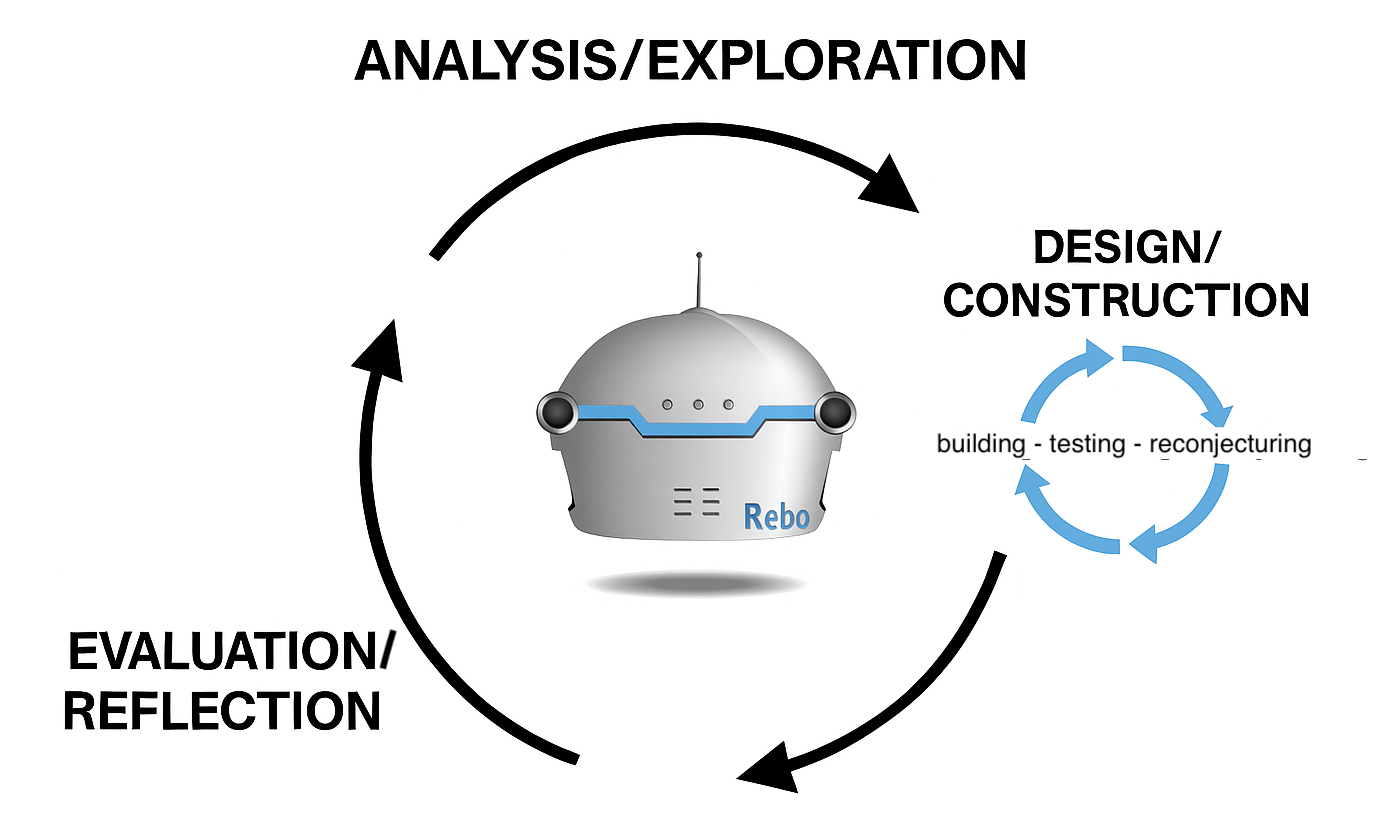
The cyclical process of dbr in this study followed McKenney & Reeves (2012)âs model for design research: analysis/exploration, design/construction, and evaluation/reflection. A summary of the approach taken in this paper follows, using these headings as a guide, represented in Figure 1.

Design Based Research Cycles to Develop Rebo
Citation: Innovation and Education 7, 1 (2025) ; 10.1163/25248502-bja00010
Analysis/exploration: This initial phase involves documenting the current situation and establishing a baseline of existing theories and assumptions regarding the challenges of supporting and supporting the application of learning to practice in online settings (e.g. (Kennedy et al., 2022; Littlejohn et al., 2022; Wolfbauer et al., 2022).
Design/construction: an initial set of âhigh-level design conjecturesâ (Hoadley & Campos, 2022, p.213) were formulated to guide the development and testing of Rebo. This involved mapping out a theory of how the specific features of the chatbot would generate mediating processes (e.g., reflection and planning) that would ultimately lead to desired outcomes, such as improved application of CoMOOC knowledge to professional practice.
An invitation to engage with Rebo was placed at the end of each weekâs learning on the CoMOOCs. Before conversing with Rebo, therefore, participants will have undertaken around 3 hours of learning, comprising video case studies, theoretical and practical readings, discussions, exercises and quizzes. Rebo was designed to provide an explicit, external stimulus to support reflection among CoMOOC participants on the content they have been learning by engaging them in conversation and providing them with a framework to structure the reflection activity. To do this, Rebo offers a friendly greeting and prompts participants to:
Reflect on their CoMOOC learning by asking âwhat did you find particularly interesting and useful for your practice as a teacher this week?â
Plan for transferring this knowledge to their professional practice by asking âCan you think of a particular situation where you will be able to use what you learned?â
From the learnersâ perspective (note that in the context of continued teacher education, learners are practicising teachers), this âplanningâ conversation therefore constitutes a reflection on the online learning in the context of CoMOOC, and planning for changed practice. This process of reflection can be undertood as âreflection-before-actionâ (S. S. Edwards, 2017), which adopts a cyclical perspective on the interplay between reflection and ongoing professional practice (Edwards, 2017; Krogstie et al., 2013). Within this framework, reflection is initiated by specific triggersâsuch as the CoMOOC environment, the integration of the Rebo chatbot, and the questions asked by Reboâwhich prompt professionals to critically evaluate their learning experiences. This reflective activity subsequently informs the planning of changes to future professional actions. In the context under discussion, planning for changed practice specifically entails the transfer of newly acquired knowledge from the educational setting (the CoMOOC) into practical application within professional contexts. Accordingly, the approach adopted here seeks to address the complexities of knowledge transfer from education to practice, as articulated by Eraut (2004b), through the intentional design of reflective processes.
Rebo then invites participants to supply an email address to be reminded of their plan in two weeks. At that point, participants could then return to have a follow- up conversation with Rebo and reflect on how well things went and suggest adjustments.
In the follow-up, Rebo was designed to prompt the learners to reflect on the applied transferred knowledge and to think about how they can integrate it into their future work:
Rebo first presents the learner with what they planned to do with âYou were planning the following:â and then prompts them to reflect on their plan by asking âHow did this go?â.
Then Rebo asks the learner, âWhat is your takeaway for the future?â to support them in integrating the experience they made into their future work.
From the learnersâ perspective, this âreflectionâ conversation therefore constitutes a first reflection on the changed practice.
Building on the previous discussion of the cyclical nature of reflection, it is both expected and beneficial that each episode of reflection, however minor, leads to some degree of change in professional practice. This, in turn, gives rise to further cycles of reflective practice, where moments of reflectionâno matter how briefâare woven into the fabric of everyday professional activity. In this way, reflection becomes a dynamic process that not only connects with but also seeks to change other ongoing activities in a professionalâs life (Pammer-Schindler & Prilla, 2021).
From the perspective of researchers aiming to understand professional learnersâ professional context of applying knowledge, both conversations constitute an opportunity for data collection about processes of knowledge construction and transfer.
This phase of the research consists of recurrent building-testing-reconjecturing cycles, which are fundamental to dbr. Data was collected from interactions with Rebo embedded in bold to refine the initial conjectures and to propose improvements to the chatbot. Following the initial deployment in bold, which indicated viability, Rebo was embedded in ueccs and offered in Burmese as well as English, to test whether Rebo would be successful in a different environment.
Evaluating/Reflecting: This phase involves analyzing all collected data to produce usable knowledge. The reflection process specifically focuses on Reboâs role in facilitating teachersâ reflection and planning for application to practice. This stage triggers new iterations as design principles are elicited.
7.1 Data Collection and Analysis
Data were collected in the two CoMOOCs âBlended and Online Learning Designâ (bold) and âUnderstanding Education in Conflict and Crisis Settingsâ (ueccs) in 2024-5. In total, we collected n = 141 conversations with Rebo (n = 99 in bold and n = 42 in uecs). After removing incomplete and test conversations, 116 complete and valid conversations remained. Most of the conversations (n = 108) followed the first conversation flow (Planning Conversations), and only eight conversations were follow-ups (Reflection Conversations).
Transcripts of conversations with Rebo were collected to understand how teachers engaged with the reflection and planning process. Discussion comments on the CoMOOC platform related to the chatbot within the CoMOOCs were also analysed to provide insights into teacher acceptance, perceived utility, and challenges encountered.
The study employed a hybrid approach to thematic analysis (Fereday & Muir-Cochrane, 2006; Proudfoot, 2023; Swain, 2018) to interpret the qualitative data, integrating both inductive and deductive coding and theme development. In addition, the frequency of the occurrence of codes was combined with analysis of their implicit meanings, as is common in contemporary thematic analysis (Xu & Zammit, 2021).
Inductive analysis focused on the generation of codes and themes directly from the data to allow for the emergence of unexpected insights or nuances not pre-conceived by existing theory. Inductive analysis was applied to both Rebo conversations and discussion forum comments. For example, themes related to the types of content from the CoMOOC that the participants found interesting and useful were constructed, and the range of situations where they were applied. Themes within the forum comments were constructed on the basis of participantsâ attitudes to and experiences of using the chatbot and their perspective on its effectiveness for stimulating and structuring reflection.
Deductive analysis involved the application of pre-determined codes derived from the smart-Goal Evaluation Method (smart-gem), which was developed as a standardised method for writing and assessing planning goals (Bowman & Akcaoglu, 2014). Deductive analysis was applied to Rebo conversations only.
Studies have shown that applying a smart goal strategy has emerged as a commonly used and recommended approach, leading to greater goal attainment and wellbeing (Bahrami et al., 2022). The smart goal strategy supports people to frame goals in terms of five categories corresponding to the letters of the acronym smart: Specific, Measurable, Achievable, Realistic, Time-bound (Doran, 1981). However, the evaluation dimension associated with the letters have changed in various studies. For example, Bowman & Akcaoglu (2014) created a framework for evaluating smart goals which did not require knowledge of the participantâs context, leading them to replace the A dimension with âActivity-relatedâ and replacing the R with âReview dateâ. The codebook developed for this study in Table 1 was based on Bowman & Akcaoglu (2014) and (Martins et al. (2024).
The smart goal framework for deductive analysis of conversations with Rebo with examples from the data
| smart dimension | Code | Description |
|---|---|---|
| Specific | Specific/Non-Specific | Goals are coded as specific when defining exactly what is being pursued (when it covers at least of the following questions 1. Where?/ For what?, 2. When?, 3. For Whom?, 4 .How?) Goals are coded as non-specific when specific details on how they are going to attain those self-set goals are missing. |
| Example | Specific | In developing online courses I will use the tools like Canva and also chunk the content using the template. (User 79 bold) |
| Measurable | Measurable/Non-Measurable | Goals are coded as measurable when including a measure (e.g., frequency or duration) to track learnersâ progress toward goals accomplishment or criteria to evaluate the performance outcome. Goals are coded as non-measurable when no measures to track progress are present. |
| Example | Non-measurable | I regularly teach students and this is online and face-to -face, like a flipped classroom. So yes, I have several instances to use what I have learnt. (User 72 bold) |
| Activity-related | Activity-related / Non-Activity-related | Goals are coded as activity-related when including a description of activities or interventions used (e.g., specific learning methods). Goals are coded as non-activity-related when specific methods are missing. |
| Example | Activity-related | creating the lesson plan and reviewing the lesson plans other [participants] created....to help build confidence in students. (User 16 ueccs) |
| Realistic | Realistic/Non-Realistic | Goals are coded as realistic when they include what needs to be done to achieve the goal and possible constraints. |
| Example | Realistic | In teaching Chemistry, which is my area, I will cover a topic by previously grouping the students in a mixed ability setting. Resources will be given on the day of learning for each group to address a part of the topic. Different groups make presentations based on assigned sub-topic. I will write down important points and other groups are allowed to ask the presenter questions. A comprehensive summary is given which addresses the topic. (User 32, ueccs) |
| Time-bound | Time-bound / Non-timebound | Goals are coded as time-bound when they include a time frame for achieving the goal. Goals are coded as time-bound when they do not include a time frame for achieving the goal. |
| Example | Timebound | [I will implement the idea at] the beginning of the class before things really get going. (User 128 bold) |
Ethical approval for this research was given by ucl ioe research ethics committee for the analysis of anonymised secondary data from the participant interactions with the course. The course platform provider allows university partners to download anonymised data sets including comments, of all participant interactions and contributions for the purposes of research. In order to ensure that it will not be possible to identify the learner by finding the actual comment on the platform, we have taken additional step of paraphrasing or summarising comments to avoid the possibility of identifying their owner in the discussion forum.
8 Findings
Our findings from this first stage of a design-based research study addressed the research question âCan chatbot tools support professionals to plan how to apply knowledge learned in a CoMOOC to their work practice?ââ by investigating how professionals interacted with and responded to Rebo, a conversational chatbot, as they studied in a CoMOOC.
The aim was to provide a proof of concept for Reboâs feasibility and demonstrate how responsibly developed llm-powered innovations can support professional learning, with implications for enhancing equitable access to quality education in challenging circumstances by providing interactive open online teacher education at scale.
8.1 Stimulating reflection
The first objective of Rebo was to stimulate reflection by creating an external impulse to support the process with a conversational prompt. To address this objective, we identified data that provided evidence that participants were willing to engage with Rebo and were able to respond meaningfully to the conversation prompts.
The conversations demonstrated a process of meaningful reflection. Participants were able to identify topics within the CoMOOC that they found interesting and useful. In bold, the topic themes were: learning design frameworks and tools, digital technologies, and strategies for student engagement and interaction:
embedding digital learning design elements into my lesson designs and encouraging colleagues to do the same. (User 44)
I have a better understanding of what learning design is and what teachers can do to give students a better learning experience. (User 118)
How to best do role plays online and how best to implement online peer assessment. (User 79)
different tools for student engagement and responses if we used blended learning as teaching mode. (User 99)
Data from conversations with Rebo in the two CoMOOCs showed common themes among the topics that participants found interesting and useful. In bold the themes were: learning design frameworks and tools, digital technologies, and strategies for student engagement and interaction, e.g.:
embedding digital learning design elements into my lesson designs and encouraging colleagues to do the same. (User 44)
How to best do role plays online and how best to implement online peer assessment. (User 79)
different tools for student engagement and responses if we used blended learning as teaching mode. (User 99)
In ueccs, participants identified topics that were similarly in line with the focus of the course, such as empowering pedagogical approaches, fostering social-emotional learning, creating safe learning environments, using existing resources creatively and teacher collaboration. Examples include:
creating a safe and supportive learning environment and methods for grouping students. (User 61)
the videos and the tips on how teachers can teach in conflict-affected areas and handle these situations in unique and effective ways. (User 18)
⦠to me, the most engaging [learning type] is collaboration where a class is grouped and presentations are made by the learner where the teacher serves as the umpire. It makes students own the learning. (User 32)
The comments of the other teachers, and their experiences of how they had to adapt to their learners. (User 68)
To understand how the learners perceived their interactions with Rebo, we also collected and analysed discussion posts by learners in CoMOOC forums beneath the units where the chatbot was embedded were analysed. The forums contained 71 posts (31 in bold, 40 in uescs).
Forum participants generally reported overwhelmingly positive experiences and sentiments when interacting with Rebo. However, there are some mixed or critical remarks, particularly regarding its maturity and occasional unresponsiveness.
Many forum participants described communication with Rebo as âvery easyâ, âeasy to joinâ, ârelatively easyâ, and âinteractive and easyâ. The chat process was also considered âsystemic and clearâ and âconvenientâ.
To me, conversations with Rebo appeared easier than with other chatbots that I have experienced. (User 3d0)
Rebo was responsive and simple to communicate with. (User 7b6)
The process of talking with Rebo was clearly structured step by step. (User af9)
The majority of participants described chatting with Rebo as enjoyable, nice, or fun. Sentiments expressed included âloved chattingâ, âvery nice to talk toâ, âgood experienceâ, âgreatâ, âfantasticâ, âwonderfulâ, âamazingâ, âvery coolâ, âcomfortableâ and âinterestingâ. Participants appreciated Reboâs quick feedback, saying it was âvery responsiveâ, âreplied to me very quicklyâ, and had a âvery fast responseâ. Overall, Rebo was seen as a helpful tool for reflection, with participants pointing its capacity to support them to clarify their learning and future plans:
Chatting with Rebo gave me a valuable opportunity to reflect on and consolidate the aspects of my learning that I found most engaging and useful. Knowing Iâll receive a reminder email in two weeks adds an extra layer of motivation to apply what Iâve learned in the meantime. (User 3ac)
Rebo is helps you think through and articulate your ideas. (User 621)
I enjoyed chatting with Reboâit gave me a chance to clearly express my plans and intentions. (User aa6)
However, some participants also reported technical issues with Rebo, saying that Rebo seemed âdysfunctional or non-responsiveâ or did not provide âfollow-up emailsâ. One user felt like they were âtalking to a childâ when interacting with Rebo and expressed a hope that Rebo might become more mature as a result of the interactions, making the assumption that ai was already powering the chatbot.
The findings show that participantsâ perceptions of interacting Rebo were overwhelmingly positive, as evidenced by forum feedback, using terms such as âhelpfulâ, âfruitful and thoughtfulâ; âa chance to reflectâ. Importantly, some professionals highlighted the positive impact on their reflection interventions in complex educational problems. One participant in ueccs described how chatting with Rebo was better than leaving a public comment on the CoMOOC forum because they felt they could speak freely without having to be concerned about their comment being judged by Rebo. Reboâs responsiveness, and its potential to foster a sense of psychological safety for free expression represent significant opportunities for the chatbot to stimulate reflection.
8.2 Structuring planning
The second objective in embedding the chatbot was to provide a framework to structure planning by prompting participants to supply details of how they will apply that weekâs learning.
Participants intended to apply their learning in a range of practical contexts, such as planning new online and blended courses, transforming face-toface courses to online, making online courses more engaging, and integrating technologies into their teaching or learning design activities and training colleagues.
For example, some participants provided concrete plans such as:
I am in teacher education, so I can apply this experience in the subjects I teach, particularly Materials design. (User 27, ueccs)
Iâm thinking about how to create a new kind of learning design on my next course, that will support my students (who are teachers) in designing a pedagogically effective form of formative assessment that might use ai in some way. (User 61, ueccs)
[I will use the learning] with a new online English B2 course for teachers in Italy. (User 44, bold)
In developing online courses I will use the tools like Canva and also chunk the content using the template. (User 79, bold)
However, other participants responded with more general scenarios such as âin trainingâ or âmy teachingâ.
The plans were coded using the smart goal framework (Table 1) to determine whether the plans contained all 5 dimensions of a smart goal: Specific, Measurable, Activity-related, Realistic and Time-bound. The most frequently dimension within the plans was that the plan was âActivity-relatedâ, with 62 plans including a description of activities or interventions used. However, there were no plans that were âMeasurableâ and only one plan was coded as âRealisticâ, i.e. containing what needs to be done to achieve the goal. Only a few plans contained two smart dimensions (n = 9) or three (n = 4) dimensions. None of the plans covered four or all five dimensions of the smart goals framework. In summary, we see that participantsâ self-formulated goals often lacked specificity, measurability, and realism. On the other hand, participantsâ goals are plausible, and evidence that Reboâs questions can stimulate reflections on educational content in light of future professional practice, and concrete plans for changed practice, i.e. knowledge transfer. Even at this stage, these goals are helpful for researchers or course designers who are interested to know whether CoMOOC participants are prepared to apply their learning to practice. However, more actionable goals are likely to be put into practice and will enable us to track specific impacts.
8.3 Knowledge transfer
For professional learning, success is measured not only by what is learned but also by the extent to which that learning is applied to practice to make a real-world difference. However, this kind of evidence of impact is very difficult to access since it happens after the course is complete (Kennedy et al., 2022). A notable limitation of the study was the small number of follow-up conversations, where the participant returned to report on what happened when they implemented the plan. Only 8 out of 116 interactions with Rebo were follow-up conversations. The eight follow-up conversations provided fascinating insights into knowledge transfer, for example, in bold user 79 reported back on a plan to gather online learnersâ views in a focus group, saying:
It went very well; they mentioned aspects that can be improved such as more social interaction while online, and less activities to manage their time better. They also pointed out what they enjoyed which was very inspiring. (User 79, bold)
The participant described the takeaway as needing to âget regular feedback and ensure in-person sessions make optimal use of group and pair work, role plays and presentationsâ.
This detailed account was typical of the conversations, which provided details of what happened as a consequence of their learning, and how the techniques participants were implementing were impacting their learners. This data is critical for evaluating professional learning experiences. If the rate of engagement in such follow-up conversation could be improved, this kind of evidence could be highly influential for organisations and governments deciding whether to implement tpd programs using the CoMOOC or other models.
This study therefore highlights the potential of the chatbotâs design and conversation structure to capture (self-reported) evidence for knowledge transfer; but future research is needed to collect a more substantial data basis for further analysis.
9 Discussion
Our analysis of interactions with Rebo shows that learners found Rebo easy to use, engaging and helpful. Of particular interest was the comment highlighting the potential of Rebo to facilitate one-on-one conversations, thereby providing a personal and psychologically safe space for reflection. While our analysis of follow-up reflection conversations was limited due to the number that took part, the eight follow-up conversations did provide insights into knowledge transfer and self-reported evidence of impact on learnersâ practice. This means that the present study can show only the potential of the chatbot to capture knowledge transfer via the reflections, but cannot give substantial evidence for action taken.
However, our analysis of conversations with Rebo and discussion forum feedback shows that the tool elicited detailed accounts of the various ways participants planned to apply their learning. These conversations, which show learnersâ readiness to put ideas into practice, and can also serve as a means of research data collection, yielding qualitative evidence about the value of CoMOOC content and the intricacies of knowledge transfer.
However, while the planning conversations showed clear intentions, the formal structure of these plans, when coded using the smart goal framework, revealed areas for improvement. This suggests that while Rebo successfully prompted professionals (in this case, teachers) to plan for the application of knowledge learned to their work practice, there is an opportunity to further support professionals in articulating more specific, measurable, and realistic plans for knowledge transfer.
The findings affirm the potential of chatbots, even in their âlightâ form, to stimulate reflection, structure the activity, and provide valuable insights into knowledge transfer, paving the way for the development of a more adaptive and impactful llm-powered version.
The study also highlighted areas for further development, such as the small number of follow-up conversations. It is conceivable that the static nature of Reboâs responses did not encourage users to return to have repeated conversations. Alternatively, the lack of smart goals may have hindered participantsâ capacity to implement their plans. In addition, the number of conversation errors indicates that the conversational content would benefit from clarification.
In summary, the study found that Rebo in its present form was capable of supporting participantsâ reflection and planning. This provides a solid evidential basis for developing a more responsive version of Rebo enhanced by ai. The next section describes future plans and discusses the ethical considerations of our approach to development.
10 Responsible ai Developments: Plans for the Future
In order to address the issues highlighted above, we plan to incorporate an Application Programming Interface (api) within Rebo to connect to a llm), which will enable Rebo to respond more naturalistically, and refer to the course content to help clarify the conversational content and keep users focused on the course. In addition, Rebo will support the users to create smart goals by asking users for more Specific, Measurable, Activity-related, Realistic and Time-bound details regarding their plans.
This is important because, although professional learning settings afford important contexts for developing knowledge and practice, opportunities to apply new knowledge in powerful ways may be lost where the focus is on achieving the goals of the organisation/institution, rather than those of each professional (Dron & Anderson, 2007). By focusing on supporting professionals to create their own smart goals, conversation with a llm-enhanced Rebo may support professionals to apply their knowledge more effectively.
The development of Rebo exemplifies a responsible aied approach by prioritizing human and educational values and ensuring the tool is genuinely useful and context-sensitive. Our development process was deliberate in limiting the use of advanced resources, specifically llms, until the conceptâs effectiveness was proven. Crucially, we embarked on a co-design process with professionals enrolled in the CoMOOCs. This participatory approach is vital for understanding learnersâ needs, concerns, and preferences, helping to mitigate potential tensions within the ai landscape and facilitating contextualised learning. We initially deployed a âlightâ version of Rebo that provided non-adaptive responses to assess the ideaâs feasibility and create a proof of concept. This cautious approach ensured that the innovation addressed real-world needs and demonstrated its potential value before investing in the resource-intensive development of an llm-powered version. This iterative, human-centric design, which respects professionalsâ time and goals, is key to responsible technological development in professional learning.
A further ethical consideration arises from a plan to enhance Rebo with ai. Responsible ai requires developers to undertake to design systems that are fair, transparent and clear (Radanliev, 2025). For example, responsible developers are required to ensure that systems do not perpetuate biases or create new ones. For our proposed development, it is important to recognise that we plan to use ai to provide prompts to encourage teachers to improve the smart-ness of their goal setting, rather than to give expert advice on the content plan proposed. For example, Rebo will ask participants to clarify the specifics of their plans and add a timeframe for implementation. This puts the decision-making firmly in the hands of the teacher, and avoids potential ai bias in what steps to take. Where teachers may ask Rebo directly for advice, we will use system prompts to provide suggestions suitable for low resourced environments, with guard rails to also consult the teacher for their judgment.
11 Conclusion
The integration of CoMOOCs and Rebo offers an innovative approach to supporting professional learning at scale through individual conversational interaction, supplementing the social learning approach of the CoMOOC. This technological innovation has the potential, therefore, to increase equitable access to feedback and support through online professional development. By focusing on facilitating knowledge transfer, the Rebo interactions and follow ups have the potential to help professionals, (in this case, teachers) put their learning into practice and positively impact their own studentsâ learning.
The development exemplifies a responsible aied approach through its iterative, human-centric, co-design process, prioritizing genuine usefulness and context-sensitivity. The prototype testing has provided a proof of concept and evidence that teachers found Rebo. This justifies our next steps of embedding a llm api, but we remain mindful of the resource and ethical issues that will follow.
While Reboâs primary goal is to bridge the gap between online learning and its application to practice by prompting reflection and planning, Rebo also serves to collect valuable qualitative data on knowledge transfer for online course designers and researchers. This can provide insight into the specifics of the context into which the professionals learning in the online course need and want to transfer their knowledge. This is particularly relevant in challenging contexts such as teaching in conflict and crisis settings to help us learn more about teachers innovative practice on the ground.
Acknowledgements
This research was partly funded by the UK Economic and Social Research Council, es/w007835/1 relief ii ucl Grand Challenge of Data Empowered Societies Small Grants; and the Austrian Research Promotion Agency ffg under the comet program.
References
Billett, S. (2001). Learning through work: Workplace affordances and individual engagement. Journal of Workplace Learning, 13(5), 209â214. https://doi.org/10.1108/EUM0000000005548
Boud, D., Keogh, R., Walker, D. (1985). Promoting Reflection in Learning: A Model. In: Boud, D., Keogh, R., Walker, D. (eds.) Reflection: Turning Experience into Learning, pp. 18â40. RoutledgeFalmer.
Bromuri, S., Henkel, A. P., Iren, D., & Urovi, V. (2021). Using ai to predict service agent stress from emotion patterns in service interactions. Journal of Service Management, 32(4), 58 1â611.
Burns, M., & Lawrie, J. (2015). Where itâs needed most: Quality professional development for all. http://toolkit.ineesite.org/toolkit/INEEcms/uploads/1162/Teacher_Professional_Development_v1.0_LowRes.pdf
Cicchinelli, A. & Pammer-Schindler, V. (2021). What makes volunteer mentors tick? A case study in a preparatory online training course. Journal of Workplace Learning, Volume 34, Issue 3. https://doi.org/10.1108/JWL-12-2020-0191
Cui Y., Wise, A. F. & Allen, K.L. (2019) Developing reflection analytics for health professions education: A multi-dimensional framework to align critical concepts with data features. Computers in Human Behavior. 100:305 324. https://doi.org/10.1016/j.chb.2019.02.019
Dalsgaard, A., Chaudhari, V., & Littlejohn, A. (2019). Professional learning in open networks: How midwives self-regulate their learning in massive open online courses. In Networked Professional Learning: Emerging and Equitable Discourses for Professional Development (pp. 15â36). Cham: Springer International Publishing.
Diederich, S., Brendel, A. B., & Kolbe, L. M. (2019). On conversational agents in information systems research: Analyzing the past to guide future work. Journal of the Association for Information Systems, 20(9), 157â187. https://doi.org/10.17705/1jais.00557
Dole, J. A., & Sinatra, G. M. (1998). Reconceptalizing change in the cognitive construction of knowledge. Educational Psychologist, 33(2â3), 109â128. https://doi.org/10.1080/00461520.1998.9653294
Doran, G. T. (1981). Thereâs a smart Way to Write Managementâs Goals and Objectives. Journal of Management Review, 70, 35â36.
Dron, J., Anderson, T. (2007). Collectives, Networks and Groups in Social Software for e-Learning. In: Proceedings of World Conference on E-Learning in Corporate, Government, Healthcare, and Higher Education, pp. 2460â2467. AACE, Chesapeake.
Edwards, S. (2017). Reflecting differently. New dimensions: reflection-before-action and reflection-beyond-action. International Practice Development Journal. Volume 7, Issue 1, Article 2. https://doi.org/10.19043/ipdj.71.002
Edwards, A. (2017). Relational expertise: A cultural-historical approach to teacher education. In A companion to research in teacher education (pp. 555â567). Singapore: Springer Singapore.
Eraut, M. (2000). Non-formal learning and tacit knowledge in professional work. British Journal of Educational Psychology, 70(1), 113â136. https://doi.org/10.1348/000709900158001
Eraut, M. (2004a). Informal learning in the workplace. Studies in Continuing Education, 26(2), 247â273. https://doi.org/10.1080/158037042000225245
Eraut, M. (2004b). Transfer of Knowledge between Education and Workplace Settings. In H. Rainbird, A. Fuller, & A. Munro (Eds.), Workplace Learning in Context (pp. 201â221). London: Routledge.
Fessl, A., Blunk, O., Prilla, M. & Pammer, V. (2017). The Known Universe of Reflection Guidance: a Literature Review. International Journal of Technology Enhanced Learning, Vol 9, No 2/3. https://doi.org/10.1504/IJTEL.2017.084491
Harteis, C., & Billett, S. (2008). The workplace as learning environment: Introduction. International Journal of Educational Research, 47(4), 209â212. https://doi.org/10.1016/j.ijer.2008.07.002
Hood, N., Littlejohn, A., & Milligan, C. (2015). Context counts: How learnersâ contexts influence learning in a mooc. Computers and Education, 91, 83â91. https://doi.org/10.1016/j.compedu.2015.10.019
Høyrup, S. (2004). Reflection as a core process in organisational learning. Journal of Workplace Learning 16(8), 13.
Kennedy, E., & Laurillard, D. (2019). The potential of moocs for large-scale teacher professional development in contexts of mass displacement. London Review of Education, 17(2), 141â158. https://doi.org/10.18546/LRE.17.2.04
Kennedy, E., & Laurillard, D. (2024). Online Learning Futures: An Evidence-Based Vision for Global Professional Collaboration on Sustainability. Bloomsbury. https://www.bloomsbury.com/uk/online-learning-futures-9781350324237/
Kennedy, E., Masuda, C., Moussaoui, R. El, Chase, E., & Laurillard, D. (2022). Creating value from co-designing CoMOOCs with teachers in challenging environments. London Review of Education, 20(1), 1â15. https://doi.org/10.14324/LRE.20.1.45
Kizilcec, R. F., Pérez-SanagustÃn, M., & Maldonado, J. J. (2017). Self-regulated learning strategies predict learner behavior and goal attainment in Massive Open Online Courses. Computers and Education, 104, 18â33. https://doi.org/10.1016/j.compedu.2016.10.001
Kocielnik, R., Xiao, L., Avrahami, D. & Hsieh, G. (2018). Reflection Companion: A Conversational System for Engaging Users in Reflection on Physical Activity. Proc. acm Interact. Mob. Wearable Ubiquitous Technol. 2, 2, Article 70, 26 pages. https://doi.org/10.1145/3214273
KovanoviÄ, V., JoksimoviÄ S., Mirriahi, N., Blaine, E. & GaÅ¡eviÄ D, Siemens G, Dawson S (2018) Understand studentsâself-reflections through learning analytics. In: Pardo A, Bartimote-Aufflick K, Lynch G, Shum SB, Ferguson, R, Merceron A, Ochoa X (eds) lak 18: Proceedings of the 8th International Conference on Learning Analytics & Knowledge (lakâ18): Towards User-Centred Learning Analytics: March 5â9, 2018, Sydney, NSW, Australia. The Association for Computing Machinery, New York, New York, pp 389â39.
Krogstie, B.R., Prilla, M., & Pammer, V. (2013). Understanding and Supporting Reflective Learning Processes in the Workplace: The csrl Model. In: Hernández-Leo, D., Ley, T., Klamma, R., Harrer, A. (eds) Scaling up Learning for Sustained Impact. ectel 2013. Lecture Notes in Computer Science, vol 8095. Springer, Berlin, Heidelberg. https://doi.org/10.1007/978-3-642-40814-4_13
Laurillard, D., & Kennedy, E. (2017). The potential of moocs for learning at scale in the Global South (31; Centre for Global Higher Education Working Paper Series, Issue 31). http://www.researchcghe.org/perch/resources/publications/wp31.pdf
Laurillard, D., & Kennedy, E. (2020). moocs and Professional Development: The Global Potential of Online Collaboration. In Changing Higher Education for a Changing World (pp. 157â170). London: Bloomsbury.
Littlejohn, A. (2021). Professional Learning Analytics. In Handbook of Learning Analytics (pp. 141â151). Society for Learning Analytics and Research. https://doi.org/10.18608/hla22.014
Littlejohn, A., & Margaryan, A. (2014). Technology-Enhanced Professional Learning. In nternational handbook of research in professional and practice-based learning (pp. 1187â1212). Springer, Dordrecht.
Littlejohn, A., Hood, N., Milligan, C., & Mustain, P. (2016). Learning in moocs: Motivations and self-regulated learning in moocs. Internet and Higher Education, 29, 40â48. https://doi.org/10.1016/j.iheduc.2015.12.003
Littlejohn, A., Kennedy, E., & Laurillard, D. (2022). Professional learning analytics: Understanding complex learning processes through measurement, collection, analysis, and reporting of mooc data. In Methods for Researching Professional Learning and Development (pp. 557â578). https://doi.org/10.1016/B978-0-12-818793-7.02001-1
Littlejohn, A. & Pammer-Schindler, V. (2022). Technologies for Professional Learning. In: Harteis, C., Gijbels, D., & Kyndt, E. (eds) Research Approaches on Workplace Learning. Professional and Practice-based Learning, vol 31. Springer, Cham. https://doi.org/10.1007/978-3-030-89582-2_15
Lu, O. H. T., Huang, J. C. H., Huang, A. Y. Q., & Yang, S. J. H. (2017). Applying learning analytics for improving students engagement and learning outcomes in an moocs enabled collaborative programming course. Interactive Learning Environments, 25(2), 220â234. https://doi.org/10.1080/10494820.2016.1278391
Markauskaite, L., & Goodyear, P. (2014). Professional Work and Knowledge (S. Billet, C. Harteis, & H. Gruber, Eds.). Springer.
Martins, J., Moreira, T., Cunha, J., Carlos Núñez, J., & Rosário, P. (2024). Be smart: Promoting goal setting with students at-risk of early school leaving through a mentoring program. Children and Youth Services Review, 157. https://doi.org/10.1016/j.childyouth.2023.107423
Mendenhall, M., Gomez, S. & Varni, E. (2018). Teaching amidst conflict and displacement: persistent challenges and promising practices for refugee, internally displaced and national teachers. https://unesdoc.unesco.org/ark:/48223/pf0000266060
Molenaar, I., & Knoop-van Campen, C. A. N. (2019). How technology can support personalized learning in the workplace. Computers & Education, 129, 1â13. https://doi.org/10.1016/j.compedu.2018.12.002
OâRiordan, T., Millard, D. E., & Schulz, J. (2021). Is critical thinking happening? Testing content analysis schemes applied to mooc discussion forums. Computer Applications in Engineering Education, 29(4), 690â709. https://doi.org/10.1002/cae.22314
Pammer-Schindler, V., Ley, T., Kimmerle, J., & Littlejohn, A. (2022). Guest Editorial: Designing Technologies to Support Professional and Workplace Learning for Situated Practice. ieee Transactions on Learning Technologies, 15(5), 523â525. https://doi.org/10.1109/TLT.2022.3207306
Pammer-Schindler, V. & Prilla, M. (2021). The Reflection Object: An Activity-Theory Informed Concept for Designing for Reflection, Interacting with Computers, Volume 33, Issue 3, Pages 295â310, https://doi.org/10.1093/iwc/iwab027
Pherali, T., Chan, M. L., Charoensukaran, W., Chase, E., Kennedy, E., Tyrosvoutis, G., Witthaus, G., & Laurillard, D. (2025). Pedagogical Approaches to Teacher Professional Development in Contexts of Mass Displacement: An Agenda for Research and Practice. Journal of Interactive Media in Education. https://doi.org/10.5334/jime.885
Radanliev, P. (2025). ai Ethics: Integrating Transparency, Fairness, and Privacy in ai Development. Applied Artificial Intelligence, 39(1), 2463722. https://doi.org/10.1080/08839514.2025.2463722
Richardson, E., Macewen, L., & Naylor, R. (2018). Teachers of refugees: a review of the literature. https://www.educationdevelopmenttrust.com/our-research-and-insights/research/teachers-of-refugees-a-review-of-the-literature
Rienties, B., Toetenel, L., & Bryan, A. (2015). âScaling upâ learning design: Impact of learning design activities on lms behavior and performance. acm International Conference Proceeding Series, 16â20-Marc, 315â319. https://doi.org/10.1145/2723576.2723600
Shen, H., Liang, L., Law, N., Hemberg, E., & OâReilly, U. M. (2020). Understanding Learner Behavior through Learning Design Informed Learning Analytics. L@S 2020 â Proceedings of the 7th acm Conference on Learning @ Scale, 135â145. https://doi.org/10.1145/3386527.3405919
Shum, S. B., Littlejohn, A., Kitto, K., & Crick, R. (2022). Framing Professional Learning Analytics as Reframing Oneself. ieee Transactions on Learning Technologies, 15(5), 634â649.
Tynjälä, P. (2008). Perspectives into learning at the workplace. Educational Research Review, 3(2), 130â154. https://doi.org/10.1016/j.edurev.2007.12.001
Ullmann, T.D. (2019). Automated Analysis of Reflection in Writing: Validating Machine Learning Approaches. International Journal of Artificial Intelligence in Education 29:217â257. https://doi.org/10.1007/s40593-019-00174-2
unesco. (2025). sdg4 scorecard progress report on national benchmarks: focus on the out-of school rate. In sdg4 scorecard progress report on national benchmarks: focus on the out-of school rate. GEM Report UNESCO and Unesco Institute of Statistics. https://doi.org/10.54676/skld4888
United Nations. (2025). The Sustainable Development Goals Report. https://unstats.un.org/sdgs/report/2025/The-Sustainable-Development-Goals-Report-2025.pdf
van Driel, L., & Peetz, J. (2024). Generative-ai as a coach: Evaluating a generative-ai chatbot for goal pursuit support. arXiv. https://arxiv.org/abs/2405.15250
van Wynsberghe, A. (2021). Sustainable ai: ai for sustainability and the sustainability of ai. ai and Ethics 2021 1:3, 1(3), 213â218. https://doi.org/10.1007/S43681-021-00043-6
Winkler, R., & Söllner, M. (2018). Unleashing the potential of chatbots in education: A state-of-the-art analysis. In Proceedings of the Academy of Management Annual Meeting. https://doi.org/10.5465/AMBPP.2018.10885abstract
Wolfbauer, I., Bangerl, M. M., Maitz, K., Pammer-Schindler, V. (2023). Rebo at Work: Reflecting on Working, Learning, and Learning Goals with the Reflection Guidance Chatbot for Apprentices. Extended Abstracts of the 2023 chi Conference on Human Factors in Computing Systems (chi ea â23). https://dl.acm.org/doi/abs/10.1145/3544549.3585827
Wolfbauer, I., Pammer-Schindler, V., Maitz, K. and Rosé, C.P., 2022. A script for conversational reflection guidance: A field study on developing reflection competence with apprentices. ieee Transactions on Learning Technologies, 15(5), pp.554â566.
Xu, A., Liu, Z., Guo, Y., Sinha, V., & Akkiraju, R. (2021). A new chatbot for coaching and mentoring in the workplace. acm Transactions on Interactive Intelligent Systems, 11(2), 1â24. https://doi.org/10.1145/3399704
Zuboff, S. (2015). Big other: Surveillance capitalism and the prospects of an information civilization. Journal of Information Technology, 30(1), 75â89. https://doi.org/10.1057/jit.2015.5