Abstract
Geographical indications (GIs), traditionally recognized as symbols of quality, can also positively influence export performance. However, this expectation may not be accurate for some country-product pairs, mainly due to competitive conditions, non-tariff barriers, and the low reputation of the origin country. It is difficult to draw broad generalizations because of the conceptual, perceptual, and market-related differences in each GI-origin and destination country. However, evaluating different products helps to understand the possible dynamics behind this relationship. This paper aims to find out how the GI label affects the export performance of products that dominate world markets and hold varying levels of prominence and market share within the EU, by analyzing Chinese garlic and Turkish figs — observations that have been previously unexplored in the literature. Results show that there is no statistically significant relationship between GI and exports to the EU in both products. These relatively surprising results may have the following plausible explanations: while China has to compete with Spanish GI-protected garlic in the EU, Turkey has to deal with rejection at the border because of aflatoxin in dried figs. Moreover, as both products originate from developing countries and are already dominant in the market, the impact of their GIs may be limited.
1. Introduction
Geographical indications (GIs) are quality signs that signify and guarantee the connection between a product’s characteristics and geographical area of origin. The protection of GIs has developed in diverse ways under national legislations, leading to the absence of a single, standardized terminology (Chandola, 2006). Nevertheless, the definition provided in Article 22 of the Agreement on Trade-Related Aspects of Intellectual Property Rights (TRIPS) (WTO, 1994) is widely recognized at the international level: “Geographical indications are, indications which identify a good as originating in the territory of a member, or a region or locality in that territory, where a given quality, reputation or other characteristic of the good is essentially attributable to its geographical origin.“
The protection of products through GIs is vital for producers, consumers, market regulators, and the entire international trade ecosystem. A compelling argument for GIs is their role in eliminating information asymmetry between buyers and sellers, particularly in unregulated markets, where such disparities can severely compromise consumer choice, as established by Akerlof (1970). This information imbalance means that consumers often struggle to access reliable information from trademarks or brands (Xu et al., 2022). As a result, when high-quality GI producers realize they cannot reap the rewards commensurate with their additional costs and efforts, they are likely to exit the market. This exit paves the way for mediocre or inferior GI imitations to dominate the marketplace (Zhao et al., 2014). The protection of GIs effectively reduces search costs and helps address issues related to information asymmetry for consumers. (Doğan and Gökovalı, 2012).
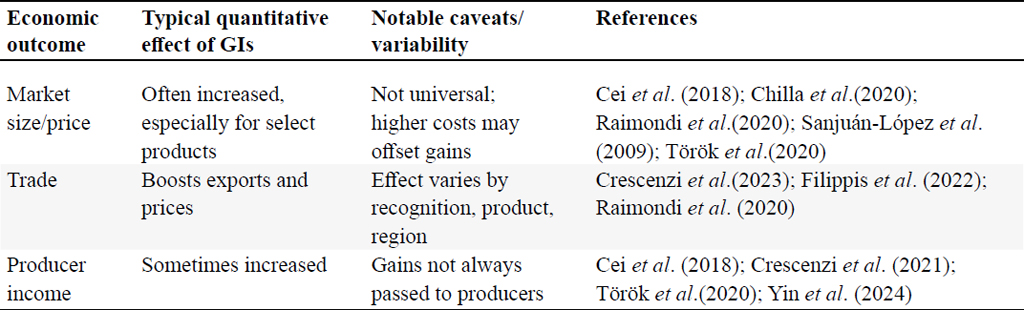
From the perspective of producers of GI-labeled products, geographical indications (GIs) generate substantial monopoly rents for the agrifood sector (Hughes, 2006). GIs permit producers to increase rents through product differentiation within a framework of monopolistic competition (Folkeson, 2005), while also protecting cultural heritage and the environment, preventing violations of intellectual property rights, and reducing unnecessary costs (Chinedu et al., 2017). Moreover, GIs enable greater control over the supply chains of GI products (Wong and Elbegsaikhan, 2020) and stimulate innovation (Stranieri et al., 2023). According to Hajdukiewicz (2014), the collective monopolies1created through institutionalization allow producers in origin-labeled niche markets to safeguard and expand their market presence, transforming added value into economic rent. Consequently, although GIs confer significant advantages on their holders, they may also create barriers to entry for other producers. While these arguments are theoretically well-founded, the limited number of empirical studies — most of which concentrate on specific countries and products — underscores the necessity for further research in this field. In Table 1 some findings are summarized related to the overall economic impact of GI’s.

Quantitative effects of GIs on key economic outcomes
Citation: International Food and Agribusiness Management Review 2026; 10.22434/ifamr.1344
In the European Union (EU), where there is considerable interest in geographical indications, France, Italy and Spain have had similar protections at the national level since the early 20th century (Aceto et al, 2020; Duvaleix et al, 2021; Rodríguez and López, 2018). In the early 1990s, GIs were introduced as part of a policy shift aimed at promoting rural development through improved food quality rather than relying on subsidies (Becker, 2009).
The current EU Regulation No. 2024/1143 of 11 April 2024 on Geographical Indications establishes three categories of product protection (EU Parliament, 2024): Protected Designation of Origin (PDO), Protected Geographical Indication (PGI), and Traditional Specialty Guaranteed (TSG).
To obtain a PDO, all production steps — encompassing production, processing, and preparation — must occur within the same geographical area. In contrast, a PGI requires that at least one production step take place within the defined geographical area. On the other hand, a TSG merely needs to demonstrate a link between traditional manufacturing practices and the product itself (Leufkens, 2017).
Although the literature on GI develops both theoretically and empirically, there exists a limited body of research exploring the impact of GIs on international trade since obtaining data of these products in quantitative studies is a significant challenge. This is especially evident within the European Union (EU), which houses the most prominent and comprehensive GI system (Török, 2018). Because the EU prioritizes GI protection highly, with the regulation aiming to safeguard intellectual property rights, provide consumers with accurate information about these products, and support agricultural and processing activities (Eur-Lex, 2023). Within the EU, a total of 2,158 products are registered under the GI system, as reported by eAmbrosia (Union register of geographical indications) administered by the European Commission as of the end of 2024. However, only 224 of these products, representing approximately 10% of the total, originate from outside the Union. Among these, 99 products are from China, 70 from the United Kingdom (which was previously a member of the EU), and 30 from Turkey. Consequently, Turkey and China emerge as notable non-member countries in the EU’s GI product market. Despite this, empirical evidence examining the impact of these GI products on their exports to the EU remains scarce.
EU’s GI vision seems to be focused on beverages, especially wine. 45,2% of all registered products is wine in 2024. When the spirit drinks are added, the ratio increases to 52,4%. Because of this structure EU Commission classifies wine and spirit drinks separately and all the other agricultural products are in the third and last class (EU, 2024). The literature also accumulates intensely on wine and beverages. Agricultural products, especially the unprocessed ones are the least studied products.
This study aims to investigate the exports of GI-labeled products from developing to developed countries, using Chinese garlic and Turkish figs as case studies. Beyond the fact that these products have not previously been studied in this context, their selection is motivated by their dominant role in global trade, the availability of comparable HS6 digit trade codes, and their differing market structures. Spain constitutes the principal competitor in EU imports for both products. In the garlic sector, China ranks as the second-largest exporter after Spain, whereas in the fig market, Spain follows Turkey as the second-leading supplier. Nonetheless, market structures diverge: Spain does not have a GI for figs, while in the case of garlic it benefits from GI protection. Approximately 96% of Spain’s fig exports are directed to the EU; however, they represent only about 11% of Turkey’s exports to the same market. This reflects Spain’s limited supply capacity and reinforces Turkey’s near-monopolistic dominance in the European fig market. By contrast, the garlic sector presents a more competitive structure: Spain’s exports to Europe are 2.4 times those of China, its closest competitor. According to 2024 figures, Spain total garlic export is $475.5 million, of which nearly $330 million are exports to the EU. With both GI protection and adequate supply capacity, Spain constitutes a strong rival, positioning China within an oligopolistic market environment. Moreover, the presence of additional suppliers, such as the Netherlands and Germany, further intensifies competition in European garlic imports.
The central research question guiding this study is: “Does Geographical Indication protection affect the export performance of Chinese garlic and Turkish figs to the European Union?”. To empirically investigate this question, the hypotheses formulated are presented below together with their underlying rationale.
Considering Chinese garlic, because of the non-luxury nature, the existence of a powerful European competing GI (Spanish) in the same category, and also having a developing country of origin, it is expected that GI doesn’t have an impact on Chinese garlic exports to the EU. Hypotheses for garlic are as follows:
H0: GI protection for garlic has no effect on China’s exports to the EU.
H1: GI protection for garlic has an effect on China’s exports to the EU.
In case of Turkish figs, due to their non-luxury status, quality issues, monopolistic position in the EU market, and the developing country of origin, it is expected that GI does not have a significant impact on Turkish fig exports to the EU. Hypotheses for fig are as follows:
H0: GI protection for fig has no effect on Turkey’s exports to the EU.
H1: GI protection for fig has an effect on Turkey’s exports to the EU.
The statistical analysis does not provide sufficient evidence to reject the null hypotheses. Therefore, the findings suggest that GI protection does not have a statistically significant impact on either Chinese garlic or Turkish fig exports to the EU.
In addition to the GI status of products, the model incorporates broader trade and economic factors, such as the GDP of importing countries, product-specific import levels in the EU, and export volumes from the countries of origin. These variables are included to provide a comprehensive view of the supply and demand dynamics affecting international trade in agricultural goods.
Although Turkey and China share similarities in terms of their level of development, their dominant positions in global markets, and their destination, the results for the two product-country pairs are not directly comparable because they operate within markedly different market structures in Europe. The primary rationale for selecting these cases is to demonstrate the varying contexts in which the presence of GIs fails to translate into measurable export gains. As such, the results of this study are expected to provide valuable contributions to future meta-analyses by shedding light on the heterogeneity and diversity of GI-labeled products in international trade.
The remainder of this study is organized as follows: Section 2 reviews the literature on GIs in international trade. Section 3 outlines the methodology employed. Section 4 reports the empirical results and provides their discussion. Finally, Section 5 concludes with further directions.
2. Literature review
Historically, few issues have sparked as much controversy as GIs in the realm of international trade negotiations (Calboli et al., 2017; Raimondi et al., 2020). The EU first introduced the inclusion of GIs into international trade agreements during the Uruguay Round negotiations, facing strong opposition from the United States and other New World countries (Török et al., 2020). The arguments against GI protection, as outlined by Monten (2006), include the following: (1) GIs are often perceived as generic names for products; (2) the establishment of monopoly positions can lead to increased consumer prices; (3) renaming products may result in consumer confusion and higher administrative costs, ultimately contributing to elevated prices; (4) determining who is authorized to use a GI can be complex and costly; and (5) conflicts may arise among producers from different regions. These concerns are substantiated by research from Sorgho and Laure (2013), which examined GI agro-food import flows among EU member states and discovered that countries with GIs tend to export less to those without them. Additionally, the protection of GIs has a trade-suppressing effect by complicating trade dynamics among EU countries. Moreover, Huysmans (2022) found that EU trade agreements are more inclined to protect GIs from Southern European countries that demonstrate higher sales values, indicating that these protections act as non-tariff barriers. The concepts of “gastropolitics,” defined by Appadurai (1981), and “gastronationalism,” as described by DeSoucey (2010), reference these defensive reactions.
The relationship between GI and export performance is inherently complex. Some research suggests that GIs may positively impact the international trade of certain products. For instance, Balogh and Jámbor (2016) analyzed the domestic cheese trade among EU27 countries and demonstrated a positive correlation between PDO statuses and comparative advantages, indicating that GIs have a competitive edge in the EU internal market. Moreover, GI certification can significantly enhance the technical complexity of exported agricultural products, leading to positive spillover effects on exports (Xu et al., 2022).
However, many empirical studies have also shown that the relationship between GIs and international trade is ambiguous. For example, Curzi and Huysmans (2022) used a gravity model in their study. They found that the protection of GI cheeses stipulated in bilateral free trade agreements (FTAs) did not significantly affect export levels from 2004 to 2019. Similarly, Sorgho and Larue (2017) indicated that the effects of GIs on international trade remain ambiguous. The effectiveness of GIs is affected by various factors, including product characteristics, production systems, firms involved, and characteristics of target markets (Belletti et al., 2007). Consequently, these factors need to be examined in more detail. Logically, the positive impact on international trade can come from an increase in quantity, an increase in price, or both. For these effects to occur, consumers must prefer GI-protected goods over non-GI alternatives. This raises the question: “Are buyers aware of GIs?” If the buyer is an industrial buyer, their evaluation criteria may prioritize technical specifications, with quality being more important than the GI label itself. Industrial buyers are likely to pay a premium for GI-labeled products only if they are confident that the final consumers will appreciate such labels. Otherwise, they may be reluctant to pay extra for them.
In a qualitative study by Rungsaran et al. (2012), gatekeepers in Switzerland, Austria, and Italy expressed reluctance to pay a premium for Thai fruits and coffee. They believed consumers lacked adequate information and experience with these products. Caputo et al. (2018) reinforce this position, indicating that some European consumers are unfamiliar with food quality labels. Additionally, a survey conducted in South Korea revealed similar trends across Asia: 26.5% of respondents were unaware of GIs, 24.0% had purchased GI products, and 49.5% had not (Cho et al., 2009).
If consumers are aware, they may have two motivations for purchasing GI products: a quality guarantee and economic support for local producers (Van Ittersum et al., 2007). Supporting local producers serves as a motivation for domestic GIs, while the promise of quality is expected to apply to both national and international ones. EU regulations also emphasize the importance of a clear quality sign in GIs. However, the connection between these factors is not clearly justified due to the significant diversity among individual GI products (Leufkens, 2018).
According to Rungsaran et al. (2012), for a GI to succeed in the European market, three conditions must be met: (a) the products must be of exceptional quality; (b) exporters must provide accurate information about the story behind the products, including details about the landscape, production area, and working conditions; and (c) food safety certification must comply with EU regulations.
Teuber (2010) also argues that simply having GI protection and high quality is not sufficient to command a strong preference or premium price. Their research evaluated the quality of coffees from Colombia, Guatemala, Rwanda, and Honduras. Although Rwandan and Honduran coffees are both protected by GI status and rated higher in quality than the others, they are often discounted compared to coffees from other origins due to a lack of established reputation. A similar conclusion was drawn by López et al. (2009) regarding saffron in the Spanish market. They found that the Jiloca origin of saffron did not effectively differentiate itself, and its implicit price was even lower than that of other unspecified origins. In contrast, La Mancha’s origin is highly valued in the market. They concluded that marketing communication regarding quality should accompany the GI label. GIs positively influence export prices, aligning with consumers’ perceptions of GI products as higher-quality goods (Raimondi et al., 2020).
Legal protection offered by GIs does not guarantee commercial success. When the collective reputation associated with a GI is favorable, the label becomes a powerful tool for signaling quality. The GI label is particularly valuable when combined with other quality indicators (Loureiro and McCluskey, 2000). These additional quality signals include consumers’ perceptions of the collective reputation of the product and the country of origin (Loureiro and McCluskey, 2000). The attitude towards the country of origin and the image of the regional label jointly influence consumers’ relative attitudes towards GI products, ultimately affecting their willingness to purchase or pay a premium for these items (Van Ittersum et al., 2007).
Consumers with strong ethnocentric values typically hold negative attitudes toward foreign GI-protected products. If the origin of these products are developing countries, the country of origin decreases the purchase intention significantly (Rezvani et al., 2012). Consequently, if domestic GI-protected alternatives are available, these consumers are more likely to choose them. As a result, a domestically produced GI-protected product may decrease the demand for foreign GI-protected items, particularly those from developing countries. Pezoldt et al. (2022) examined the wine trade among European countries using the gravity model, revealing that export volumes are influenced by the importer’s GDP, the distance between countries, the presence of a common language, and the number of protected GIs in the exporting nation.
Numerous studies on GIs have utilized the gravity model as a theoretical framework (e.g., Balogh and Jambor, 2016; Curzi and Huysmans, 2022; Sorgho and Laure, 2013). Geographical proximity may significantly affect attitudes towards the origin of GIs and enhance consumer awareness of these products. Beyond geographical distance, cultural distance may also influence the demand for GI-labeled products. Sorgho and Larue (2013) report that heterogeneity in consumer preferences — arising from tendencies toward local versus foreign product varieties — affects demand for such products. Taken together with Pezoldt et al.’s (2022) emphasis on the role of a common language, this suggests that factors such as cultural proximity and consumer ethnocentrism are likely to mediate this relationship.
The collective reputation, country of origin and the type of product influence the impact of GIs on international trade. De Filippis et al. (2022) found in their meta-analysis that GIs increase trade, with a particularly strong effect observed in the wine sector. Chilla et al. (2020) supported this finding, researching Bavarian asparagus, beer, and carp. They discovered that GIs positively affect sales, especially for beer in international markets, and favorably impact prices primarily for carp at local and regional levels. Additionally, research indicates that Korean consumers are willing to pay a premium for GI-protected products when they are luxury items, such as ginseng, wine, and beef (Cho et al., 2009). A study examining GI-protected wines from Spain, France, and Italy revealed that the highest price premiums are paid by high-income destination markets (Agostino and Trivieri, 2014). The price elasticity of PDO-labeled cheeses was found to be similar to or even higher than that of non-PDO cheeses (Carbone et al., 2014; Hassan et al., 2011). These findings align with luxury consumption patterns. Not surprisingly, hedonic consumption models, which aim to explain the implicit price premiums, are prevalent in the GI literature (e.g., López et al., 2009; Loureiro and McCluskey, 2000; Santos and Ribeiro, 2005; Teuber, 2008). Nevertheless, these conclusions appear to contradict those of Deselnicu et al. (2013), who assert that the highest price premiums are generated by agricultural products and minimally processed foods with short supply chains. Another study revealed significant price fluctuations for non-PGI-certified lambs compared to PGI-certified lambs in Spain from 2011 to 2018 (Ferrer-Pérez et al., 2020). In this context, PGI lamb serves as an effective tool to protect farmers from price volatility.
Researchers are actively investigating the determinants of consumer willingness to purchase GI products or to pay a premium for them. Key factors include consumer awareness and recognition of the GI logos (Doğan and Adanacıoğlu, 2022; Herrmann and Teuber, 2012; Kaya and Akdemir, 2023; Rungsaran et al., 2012), the longevity of supply chains and the processing levels of products (Deselnicu et al., 2013), the characteristics of destination markets (Agostino and Trivieri, 2014; Belletti et al., 2007; De Filippis et al., 2022), variations in consumer preferences (Daiya et al., 2025; Sorgho and Larue, 2017), quality of the products (Aytop and Çankaya, 2022), the country of origin of the GI (Teuber, 2010; El Hadad et al., 2022), and multiple labeling (D’Souza et al., 2024). Given the many factors influencing this relationship, each GI-protected product is unique and merits individual examination. While GIs may play a role in influencing consumer behavior, this role may be subordinate to other quality indicators, such as brand reputation and origin information, and it is substantially context-dependent (Grunert and Aachmann, 2016).
Depending on the previous discussion and findings, a theoretical framework is established regarding the factors affecting GIs impact on international trade in Figure 1. The signs indicated next to the variables illustrate the potential direction in which the demand for GI-labeled foreign products may be influenced. In examination of the figure indicates that the relationship between GIs and international trade is context-dependent and conditional, driven by a complex interplay of product characteristics, the attributes of both origin and destination countries, and the interactions among them. Given the multiplicity of factors at play, it is reasonable to interpret this relationship as inherently context-specific. Accordingly, the extent to which GI protection enhances export performance must be empirically evaluated on a case-by-case basis.
Factors affecting the relationship between GI protection and international trade. Source: Authors’ own elaboration. (+) indicates a positive effect, (–) a negative effect, and (+/–) a context-dependent effect.
Citation: International Food and Agribusiness Management Review 2026; 10.22434/ifamr.1344
Due to the complexity of this issue and the lack of sufficient empirical research on the impact of GIs on international trade, diverse analytical perspectives are necessary. Following the insights of Grunert and Aachmann (2016) and Sorgho and Larue (2017), who posited that the relationship between international trade and GI existence may not be universally applicable across individual products, this study aims to explore two distinct cases.
3. Material and methods
3.1 Data nature and sources
Although the literature on GIs is extensive, a significant portion is theoretical and most of the empirical ones lack methodological soundness because of the data constraints. As Török and Moir (2018) emphasized; even within the EU, where the most prominent GI system exists, there are issues with empirical data to support policies on GI for some products. Since the history of GIs is relatively recent, data availability for most products is relatively limited, fragmented, or discontinuous, particularly for time series or panel data analysis. Moreover, there is no specific Harmonized System Code for each GI labeled products in international trade statistics.
Within these data constraints, researchers that analyze international trade data of GI-labeled products adopt varying data selecting methodologies. Some researchers rely on aggregate agri-food data, as exemplified by Sorgho and Larue (2017). However, this approach has faced criticism, as the use of broad data sets may obscure the specific effects of GIs (Duvaleix et al., 2021; Raimondi et al., 2020). Other scholars have narrowed their focus by utilizing HS6 digit codes, which allow for more targeted analysis of GI products (Curzi et al., 2018; Raimondi et al., 2021; Vaquero Piñeiro and Curzi, 2024). A third approach involves focusing on particular products and countries, which permits the use of detailed national export data for GI-labeled goods (Duvaleix et al., 2021; Irek, 2024). While this approach is often regarded as more prudent and reliable, it limits the scope to a relatively small number of products, predominantly those from developed countries.
When the dependent variable is product based exports, and the dataset includes both GI-labeled and non-labeled products, assessing the validity of the results presents a significant challenge, even when using HS6 codes.
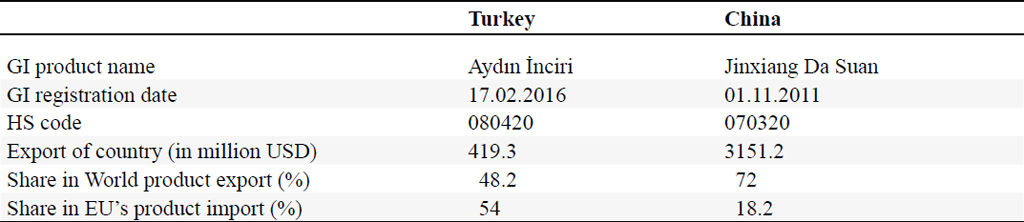
To mitigate these constraints, the selection of product and country pairs in this study has been conducted with particular caution to enhance the reliability of the findings. The analysis focuses on EU imports of two agricultural-GI products from two developing countries: Chinese garlic (HS070320) and Turkish figs (HS080420). Information about these two GI labeled products is presented in Table 2. GI registration dates for both products provide a sufficient temporal scope for the econometric analysis. Also, both products are clearly defined by 6-digit HS code. The rationale behind selecting these products lies in the fact that a substantial share of these countries’ exports originates from the geographical region where the GI label has been granted. As a result, their export activities are largely driven by GI-labeled products. Thus, this study aims to mitigate potential biases in estimation, as exporting countries do not typically report detailed product-specific features. In the case of Jinxiang Da Suan garlic, the Jinxiang province alone accounts for 70% of China’s total garlic exports (Chinadaily, 2023). Given this concentration, it is reasonable to assume that a substantial proportion of the country’s garlic exports consist of GI-labeled products. China has to compete with Spanish GI protected garlic in EU, whose share is nearly 53% in the same year. Similarly, regarding Aydın İnciri (Aydın figs), during the 2023/2024 export season, a total of 59 636 tons of dried figs were exported, of which 50 593 tons — equivalent to 85% — originated from Aydın province (Aydın Ticaret Borsası, 2024). Although it is not possible to assert that all exported garlic and figs from these regions are GI-labeled, the high proportions provide a sufficiently strong basis for making reasonable assumptions, particularly given the constraints of the available data. Since the analysis of export figures of products requires a certain period of time; the study selects products with GI registration of 14 and 9 years for the EU. This provides a strong methodological foundation, enhancing the validity of the findings.
Selected GI-protected products and origin countries’ trade positions (2024)
Citation: International Food and Agribusiness Management Review 2026; 10.22434/ifamr.1344
Unlike Aydın figs, China has to compete with Spanish GI-protected garlic, which has a share of around 53% in the EU. Turkish fresh and dried figs constitute approximately 64% of the EU’s fig imports, indicating that Turkey faces limited competition in this segment. On the other hand, it becomes evident that Turkish figs encounter challenges associated with aflatoxins. Over the past five years, Turkey has received 339 notifications from EU member states, resulting in numerous border rejections. In comparison, China received four notifications concerning garlic. These features provide an invaluable opportunity to evaluate the findings of the study.
We employ quarterly time series data for two economies over the period from the first quarter of 2005 to the first quarter of 2024. Natural logarithmic transformation is considered for all variables — except GI — to ensure robust econometric estimation and mitigate potential heteroscedasticity. By using this transformation, coefficients can be interpreted as elasticities, and the distribution of variables is normalized, thereby enhancing our estimation’s reliability (Wooldridge, 2020). It is important to note that the two-country sample, while focused, provides sufficient degrees of freedom while remaining computationally tractable for our econometric analysis (Table 3).
Description of variables and sources
Citation: International Food and Agribusiness Management Review 2026; 10.22434/ifamr.1344
The variable GI is a binary indicator, taking the value of 1 to denote the presence of GI registration and 0 in its absence. The GI variable is coded as 1 for fig as of the second quarter of 2016 and for garlic as of the first quarter of 2012.
3.2 Econometric methods
In line with the study’s objective, the model, as depicted in Eq. 1, is formulated with exports as a function of imports (IMP), domestic GDP (GDP), EU GDP (GDPU), GI, and inflation (EINF).
Citation: International Food and Agribusiness Management Review 2026; 10.22434/ifamr.1344
Unit root tests are carried out to verify the stationarity of the variables in the dataset based on the following two tests: the Augmented Dickey–Fuller (ADF) test and Phillips–Perron (PP) (Table A1 in the Appendix). After testing and confirming the stationarity properties, we proceed with the ARDL model introduced by Pesaran and Shin (1995). This model is employed because of its nature of capturing and analyzing both short-run and long-run relationships between variables. One of the main advantages of this technique is flexibility — handling variables with different orders of integration (I(0) or I(1)) or a mix of both. Moreover, the ARDL model is particularly effective for small sample sizes (Ali et al., 2017; Rahman and Kashem, 2017). The standard long-run representation of an ARDL model is expressed in Eq. 2:
Citation: International Food and Agribusiness Management Review 2026; 10.22434/ifamr.1344
where
To investigate the short-run and long-run dynamics, we transform the ARDL model into an error correction model (ECM), depicted in Eq. 3:
Citation: International Food and Agribusiness Management Review 2026; 10.22434/ifamr.1344
where
3.3 Diagnostic and robustness tests
To establish the existence of a long-run relationship, we employ the bounds testing procedure using the following null and alternative hypotheses:
H0:
θ 1=θ 2=θ 3=θ 4=θ 5=θ 6=0 (no long-run relationship)H1:
θ 1 ≠θ 2 ≠θ 3 ≠θ 4 ≠θ 5 ≠θ 6 ≠ 0 (long-run relationship exists)
The computed F-statistic is compared with the critical values provided by Pesaran et al. (2001). If the F-statistic exceeds the upper bound critical value, we reject the null hypothesis and conclude that a long-run relationship exists.
We conduct two crucial diagnostic tests to ensure the reliability and validity of our ARDL estimates. First, the Breusch-Godfrey LM test is employed for serial correlation to verify the independence of residuals across periods — the presence of serial correlation could lead to inefficient estimates and potentially biased standard errors. Second, without requiring particular assumptions regarding the kind of heteroscedasticity, White’s test for heteroscedasticity is used to identify both linear and non-linear variance patterns in the residuals.
4. Results and discussion
4.1 Empirical results
In the long-run analysis (Table 4), the EU’s import of garlic from the global market emerges as a primary determinant of the export of garlic to the EU from China. This outcome aligns with the nation’s integral position in global value chains. Notably, other variables, including GI certification, domestic and EU GDP, and Euro inflation, do not exhibit statistically significant long-run relationships with China’s garlic exports. Turkey’s fig export dynamics parallel China’s regarding the significance of fig imports of the EU. The findings indicate a significant negative correlation between EU economic growth and Turkish fig exports, highlighting problems within the European market. This result indicates that Turkish dried figs may exhibit the characteristics of an inferior good among certain EU consumer segments. The fact that the countries in which dried figs are most heavily consumed are predominantly high-income economies suggests that demand forms within a sophisticated market structure in which competition is strong (INC, 2024). As in the Italian case, in dried figs, the tendency of consumers to shift toward more innovative, processed, and value-added snack products as income rises, and the tendency of low-income and price-sensitive groups to remain with cheaper and more basic consumption goods, reinforces this pattern (Monaco et al., 2024). Moreover, European consumer studies show that dried fruits are mostly consumed within composite snack formats such as cereal bars, muesli bars, and cookies, and that among young consumers in particular there is a significant relationship between openness to novelty (neophilia) and dried-fruit preference (Testa et al., 2023). When these findings are evaluated together, the shift of consumers toward more processed, practical, and value-added snack formats as income increases creates a basis for the substitution of demand for Turkish dried figs by premium and innovative alternative products in the high-income segments of the EU market. On the supply side, Turkey fig export shifted from EU over the last several years. The largest importer of Turkish figs has shifted from Germany to the United States as of 2024.
ARDL long-term coefficients.
Citation: International Food and Agribusiness Management Review 2026; 10.22434/ifamr.1344
Table 5 documents the dynamics of short-run coefficients and introduces further intricacies. EU’s import of garlic from the global market has an immediate and positive effect on China’s garlic export to the EU; however, a significant negative relationship is observed in China’s export and lagged GDP changes — possibly reflecting temporary shifts in resource allocation to meet domestic market demands. Turkey, on the other hand, display a marked persistence in their export activities: lagged export of fig to the EU show consistently significant positive coefficients. It is worth mentioning that the negative and significant coefficients for lagged EU’s imports of fig from the global market suggest that past import levels have a substantial inverse effect on the dependent variable — i.e., Turkey’s export of fig to the EU. This pattern might indicate a delayed adjustment mechanism in trade dynamics or production structures influenced by imported inputs.
ARDL short-term coefficients.
Citation: International Food and Agribusiness Management Review 2026; 10.22434/ifamr.1344
The error correction term (ECT) evinces substantial differences in adjustment speeds across the sample countries. Turkey demonstrates faster adjustment to equilibrium at 227.17% per quarter, than China at approximately 66%. These coefficients indicate robust self-correcting mechanisms in response to short-term deviations from long-run equilibrium.
This paper also analyzes the Revealed Comparative Advantage (RCA) scores of Turkey, China, and Spain to assess changes in export and competitiveness. Furthermore, the findings of this analysis serve as a robustness check for the ARDL model estimations. The RCA score is defined as the ratio of a product’s share in a country’s total exports, relative to the product’s share in total world exports. To specifically capture the export trends of these products in the EU market, the RCA scores are calculated using a modified approach. Instead of the ratio of a product’s total export to the country’s total export, the paper uses the ratio of the product’s export to the EU to the country’s total export to the EU. Thus, the calculated RCA scores are specific to the EU market. The RCA scores are calculated for two distinct periods: the average score before and after the GI registration of the products. Table 6 presents the RCA scores for fig and garlic of these three countries.
EU specific average RCA scores of China, Turkey and Spain
Citation: International Food and Agribusiness Management Review 2026; 10.22434/ifamr.1344
The registration dates for Jinxiang garlic and Aydın İnciri are November 2011 and February 2016, respectively. Therefore, the study’s analysis period is divided into pre- and post-registration phases. Specifically, the analysis for garlic covers the periods 2005–2011 and 2012–2024, whereas for fig the periods are 2005–2015 and 2016–2024. The analysis of EU-specific average RCA scores reveals that both China and Turkey are experiencing a decline in their competitive position within the EU market. Conversely, their primary competitor, Spain, has shown an increase in competitiveness based on the calculated RCA scores. The data suggest that the export competitiveness of China and Turkey decreased in the period following the GI registration of these products in the EU.
A particularly significant finding is the consistent statistical insignificance of GI certification’s impact on aggregate exports of garlic, and fig to the EU regarding China and Turkey, respectively — both in long-run and short-run analyses. This result suggests that while GI certification may benefit specific product categories, its influence on overall export performance at the national level remains limited.
4.2 Diagnostic tests results
The Bounds Test shows compelling evidence of cointegration among trade variables for China, and Turkey; it demonstrates statistically significant long-run equilibrium relationships across the countries. These findings are bolstered by F-statistics and t-statistics that exceed the upper critical bounds at both 5 and 1% significance levels (Table 7).
ARDL bounds test results.
Citation: International Food and Agribusiness Management Review 2026; 10.22434/ifamr.1344
The Chinese economy exhibits cointegration with an F-statistic of 5.705 and a t-statistic of –5.306, which are higher than their respective critical bounds — establishing the presence of stable long-term associations among the examined variables. The cointegration strength for Turkey position firmly reject the null hypothesis of a “no levels relationship,” confirming the presence of significant long-run equilibrium dynamics in Turkish trade variables.
The comparative analysis reveals a hierarchical pattern in the strength of cointegration relationships — i.e., Turkey exhibits more pronounced long-run relationships than China. This variation in cointegration magnitudes likely reflects underlying differences in economic structures, policy frameworks, and the relative influence of GIs across these economies.
The reliability of our time-series estimates is contingent upon the absence of serial correlation in the model residuals. The Breusch-Godfrey Lagrange Multiplier (LM) test results across the sample economies show that there is no serial correlation in the residuals (p-value > 0.05). The results of the LM test strongly support the statistical adequacy of the models (Table 8).
Breusch–Godfrey LM test of autocorrelation
Citation: International Food and Agribusiness Management Review 2026; 10.22434/ifamr.1344
The test statistics demonstrate consistent patterns regarding the sample countries. China’s model yields a chi-square statistic of 2.699 (df=4, p=0.6095), while Turkey shows chi-square statistics of 0.744 (df=4, p=0.9458). The substantially higher p-values across all specifications indicate that the study failed to reject the null hypothesis at significance levels.
After analyzing autocorrelation, White’s test is employed to examine the presence of heteroskedasticity across the estimated models — introduced by Cameron and Trivedi’s decomposition for higher-order moment analysis. Under the null hypothesis of homoskedasticity, the test results provide robust evidence supporting the statistical significance of the results. The test statistics demonstrate remarkable consistency across the sample countries. For China, the analysis shows identical chi-square statistics of 73.00 (df=72) with corresponding p-value of 0.4449. Turkey elucidates marginally different results with a chi-square statistic of 74.00 (df=73, p=0.4453). The high p-values across all specifications denote that the analysis failed to reject the null hypothesis of homoskedasticity at the 5% significance level (Table 9).
White’s test results for heteroskedasticity
Citation: International Food and Agribusiness Management Review 2026; 10.22434/ifamr.1344
Cameron and Trivedi’s decomposition analysis supports these findings, indicating no significant deviations from normality with respect to skewness or kurtosis across the three examined economies. This multidimensional validation enhances confidence in the homoskedasticity of the residuals and emphasizes the robustness of the results.
5. Conclusion
GIs seem promising because of their possible effect on the quantity exported or the price of products. However, the current empirical research indicates that geographical indications contribute to export growth only when consumers value and appreciate GI-protected products.
This research examines Chinese garlic and Turkish fig in the context of the EU’s product-specific imports, both of which dominate global markets and originate from developing countries. GIs of these products seem to have no impact on imports of the EU both in the short and long term. These results were expected. To begin with Turkish fig, aflatoxin-related quality problems may have interrupted the relationship between GI labels and Turkish fig exports. This conclusion is parallel to the research asserting that a GI label on its own is not enough for a quality sign (López et al., 2009; Loureiro and McCluskey, 2000; Raimondi et al., 2020; Rungsaran et al., 2012; Teuber, 2010). The developing nature of Turkey may also have a negative perception in the case of the country of origin effect (Rezvani et al., 2012). GIs are designed to reduce information asymmetry in the market (Doğan and Gökovalı, 2012). Yet, if the information disclosed leads consumers to develop negative attitudes, greater transparency regarding product origin may actually discourage purchasing behavior. In such cases, GIs — by providing clear information on origin — may operate as a disadvantage rather than an advantage for sellers. Consequently, the elimination of information asymmetry does not necessarily translate into higher consumer willingness to buy or to pay a premium. Under these circumstances, it may be more appropriate to conceptualize the country-of-origin effect not as a dependent variable but as a mediator variable within the relationship between GIs and consumer demand.
The last argument that may underline the finding is a shift in the target market of the Turkish fig industry. Fig exports were directed to the USA as an alternative to the EU, decreasing the EU’s imports. In 2016, the share of EU in Turkish fig exports was 45% and decreased to 40% in 2023. Meanwhile, the USA’s share increased from 8.6 to 14%, according to UN COMTRADE statistics. When the other independent variables are evaluated, the relationships between fig exports to the EU and the EU’s total fig imports and Turkish total fig exports are verified. However, it is seen that there is a negative relationship between Turkish fig exports and the EU’s GDP. The Turkish suppliers’ shift to alternative markets can also explain this finding.
In the case of Chinese garlic, it is seen that the only significant relationship is between the EU’s total garlic imports and Chinese exports to the EU, meaning that demand is an antecedent. GI has not had an impact on Chinese garlic exports to the EU. Like Turkish fig, Chinese garlic also has some quality issues. It is asserted that Chinese‑produced garlic, given the use of herbicides and chemical products, is not always in line with EU regulations (European Parliament, 2023). In addition, Chinese GI-protected garlic is not competitive enough compared to GI-protected Spanish garlic, which dominates the European market. This finding is consistent with the evidence from Turkish figs, indicating that the elimination of market asymmetry may, in some cases, negatively affect sales. This highlights that transparency mechanisms such as GIs do not necessarily guarantee trade expansion and, under certain conditions, may even constrain market access.
For future research, comparing the GIs of different countries in the same product and target market is recommended. Different cases are included in this research because of the time constraint of the data and the hardship in matching the HS codes and the products. However, in time, Turkish “Aydın chestnut,” which registered GI in 2020, can be compared with Italy’s. Such a design may eliminate the product-type differences and make it easy to make a clear comparison.
In conclusion, it is impossible to assert that GIs positively impact exports of any products. Although it can be true for some products, it cannot be generalized. Our findings support Grunert and Aachmann (2016). Governments that design incentives to take this certification with the expectation of an increase in exports should be sure about the appreciation of the GIs on the customer side. Marketing incentives can be designed to create awareness and a collective reputation for GI-protected products in the target markets. On the other hand, producers should use GIs with other legal or marketing quality signs.
While the study’s findings have clear policy relevance, they also carry direct implications for producers and exporters. To complement the economic and policy discussion, the following discussion outlines the managerial implications of the results, focusing on actionable strategies for industry stakeholders.
The findings of this study underline that relying solely on GI status is insufficient for sustaining or expanding export performance. In the case of Turkish figs, the declining importance of the EU in Turkish dried fig exports illustrates a partial reallocation toward alternative destinations such as the Gulf countries, South Korea, Taiwan, India, Malaysia, Hong Kong, Japan, China, and particularly the United States. State-sponsored programs such as Turquality and UR-GE have reinforced this diversification. From a policy perspective, sustaining long-term competitiveness requires a dual approach. On the one hand, maintaining and regaining market share in the EU demands substantial improvements along the entire supply chain. This includes addressing climate-change-related challenges in crop protection and plant nutrition, improving post-harvest handling, and strengthening drying, storage, and transport practices. Rigorous pre-export testing in ministry laboratories, secondary controls at customs, careful sampling, and strict certification procedures in cases of non-compliance should be maintained to enhance reliability. Complementing GIs with third-party certifications, traceability mechanisms, and internationally recognized quality standards is essential not only for compliance but also for overcoming potential country-of-origin effects that may negatively influence consumer perceptions in high-value markets such as the EU. On the other hand, the increasing orientation toward non-EU markets — especially the U.S. — indicates that a balanced portfolio strategy may be the most effective path forward. Treating the EU as a selective, high-compliance market while leveraging the U.S. and Asian markets for higher trade volumes can mitigate risks, enhance resilience, and provide Turkish exporters with a more sustainable and diversified market base.
In the case of Chinese garlic, the inability of Chinese garlic to obtain a meaningful advantage from GI in the EU market reflects both quality/compliance problems and the strong competition of GI-protected Spanish garlic. For this reason, directly competing with established European GIs provides limited differentiating value. Instead, Chinese producers and exporters need to turn to areas where Spanish dominance is weaker. B2B supply channels, private label sales, and processed/value-added garlic products (for example, black garlic, dried garlic powder, garlic oil capsules, garlic-based snacks) stand out in this context. Furthermore, de-emphasizing the origin itself in branding and retailer-driven standards can help neutralize the negative effects of the country-of-origin bias. In addition, the transition of the sector from quantity to quality is of critical importance. Through standardization, branding, and smart production practices, the development of quality assurance systems will both strengthen compliance with the EU’s residue and chemical use regulations and alleviate negative consumer perceptions stemming from the country-of-origin effect. This transformation can also be made possible with the financial support provided by rural trade banks. In this way, Chinese garlic will become more resilient against possible barriers in the EU market, while at the same time achieving a sustainable competitive advantage with differentiated product strategies.
More broadly, for other country–product pairs that may consider registering GIs, these results emphasize the importance of complementary strategies. GI certification should be integrated with investments in compliance, quality management, and targeted marketing strategies in order to build collective reputation. Producers and governments should not assume that GIs will automatically increase exports; rather, they should ensure that consumers in the target markets value the label, that quality and safety issues are systematically addressed, and that market positioning reflects the competitive dynamics of the sector. Only under these conditions can GIs deliver their potential benefits in international trade.
6. Limitations and future research
While the current study provides important insights into the relationship between GIs and exports, it is not without limitations. In order to better understand the limited impact of the GI label on exports, interviews with all stakeholders ranging from producers to regulators can reveal field perceptions, institutional constraints, and strategic choices, thereby adding depth to the econometric findings. In addition, examining how the impact of the GI label differs between developed and developing countries and comparing it with alternative certifications such as organic, fair trade, or ISO can provide a more holistic and comparative assessment of the competitiveness and effectiveness of GIs.
The study observed no impact of GIs on export performance for the products examined. However, future research may examine in more detail under which conditions the GI–export relationship may emerge in a negative or positive direction. In particular, whether regional conflicts, embargo practices, non-tariff barriers, and political tensions weaken the access of traditional GI products to foreign markets and create a possible negative effect can be tested more systematically in further studies. Conversely, whether the quality and origin assurance provided by GIs, when combined with mechanisms such as the development of distribution channels, the offering of value-added products, and the strengthening of product differentiation, has the potential to positively affect export performance can also be investigated by future empirical research. It would also be useful for future research to examine not only the direction of the effect but also the extent to which it emerges as strong or weak under different market conditions.
Author contributions
All the authors contributed equally to the article. Study conception and design: HT and HS. Literature review: HT and AK. Data collection and analysis: HS and RJ. Interpretation of results: HS, RJ and AK. Manuscript preparation and reporting: HT, HS, AK and RJ. All authors reviewed and approved the final version of the manuscript.
Competing interests
The authors declare that there is no conflict of interest to disclose.
Data availability
The data used in this study were derived from public domain resources, which are listed in Table 3.
Ethical approval
This article does not contain any studies with human participants performed by any of the authors.
Funding declaration
The authors declare that the study received no funding.
References
Agostino, A. and F. Trivieri. 2014. Geographical indication and wine exports: an empirical investigation considering the major European producers. Food Policy 46: 22–36. https://doi.org/10.1016/j.foodpol.2014.02.002
Ali, H.S., A.S. Abdul-Rahim and M.B. Ribadu. 2017. Urbanization and carbon dioxide emissions in Singapore: evidence from the ARDL approach. Environmental Science and Pollution Research 24: 1967–1974. https://doi.org/10.1007/s11356-016-7935-z
Aydın Ticaret Borsası. 2024. 2024/2025 Sezonu Kuru İncir Sektör Toplantısı. Avaliable online at https://www.aydinticaretborsasi.org.tr/31-07-2024-aydin-ticaret-borsasi-nda-2024-2025-sezonu-kuru-incir-sektor-toplantisi-duzenlendi-aydin-ticaret-borsasi-nda-kuru-incir-sektor-toplantisi-gerceklesti
Aytop, Y. and D. Çankaya. 2022. Do consumers intend to purchase the food with geographical indication? New Medit 21(4). https://doi.org/10.30682/nm2204d
Balogh, J.M. and A. Jámbor. 2016. Determinants of revealed comparative advantages: The case of cheese trade in the European Union. Acta Alimentaria 46(3). https://doi.org/10.1556/066.2016.0012
Becker, T. 2009. European food quality policy: The importance of geographical indications, organic certification, and food quality assurance schemes in European countries. The Estey Centre Journal of International Law and Trade Policy 10(1): 111–130. https://doi.org/10.22004/ag.econ.48796
Belletti, G., T. Burgassi, E. Manco, A. Marescotti, A. Pacciani and S. Scaramuzzi. 2007. The impact of geographical indications (PDO and PGI) on the internationalization process of agro-food products. In 105th EAAE Seminar: International Marketing and International Trade of Quality Food Products, Bologna, Italy.
Cei, L., E. Defrancesco and G. Stefani. 2018. From geographical indications to rural development: a review of the economic effects of European Union policy. Sustainability 10(10): 3745. https://doi.org/10.3390/SU10103745
Chandola, H.V. 2006. Basmati rice: geographical indication or mis‐indication. The Journal of World Intellectual Property 9(2): 166–188. https://doi.org/10.1111/j.1422-2213.2006.00273.x
Chilla, T., B. Fink, R. Balling, S. Reitmeier and K. Schober. 2020. The EU food label “Protected Geographical Indication”: economic implications and their spatial dimension. Sustainability 12, 5503. https://doi.org/10.3390/su12145503
China Daily. 2023. Jinxiang county leads global garlic industry. Available online at http://shandong.chinadaily.com.cn/jining/2023-06/01/c_891486.htm
Crescenzi, R., F. De Filippis, M. Giua, L. Salvatici and C. Vaquero‐Piñeiro. 2023. From local to global, and return: Geographical Indications and FDI in Europe. Papers in Regional Science 102: 985–1007. https://doi.org/10.1111/pirs.12758
Crescenzi, R., F. De Filippis, M. Giua and C. Vaquero‐Piñeiro. 2021. Geographical indications and local development: the strength of territorial embeddedness. Regional Studies 56: 381–393. https://doi.org/10.1080/00343404.2021.1946499
Curzi, D. and M. Huysmans. 2022. The impact of protecting EU geographical indications in trade agreements. American Journal of Agricultural Economics 104(1): 364–384. https://doi.org/10.1111/ajae.12226
Curzi, D., C. Falco, V. Raimondi and A. Olper. 2018. Do EU geographical indications affect the quality of EU imports? Strength2Food. Available online at https://www.strength2food.eu/wp-content/uploads/2018/04/D4_6.Do-EU-Geographical-Indications-affect-the-qua.pdf
D’Souza, C., V. Apaolaza and P. Hartmann. 2024. Interplay of multiple labels and willingness to pay. International Journal of Retail and Distribution Management 53(1): 1–15. https://doi.org/10.1108/IJRDM-02-2024-0056
Daiya, A., D. Pramod and K.P. Patil. 2025. Eat well, feel good: the positive impact of blockchain enabled geographic indication (GI) labeling on consumer consumption values. Springer, Singapore. https://doi.org/10.1007/978-981-96-1687-9_50
De Filippis, F., M. Giua, L. Salvatici and C. Vaquero-Piñeiro. 2022. The international trade impacts of geographical indications: hype or hope? Food Policy 112: 102371. https://doi.org/10.1016/j.foodpol.2022.102371.
Deselnicu, O.C., M. Costanigro, D.M. Souza-Monteiro and D. Thilmany. 2013. A meta-analysis of geographical indication food valuation studies: what drives the premium for origin-based labels? Journal of Agricultural and Resource Economics 38(2): 204–219. https://doi.org/10.22004/ag.econ.158285
DeSoucey, M. 2010. Gastronationalism: Food traditions and authenticity politics in the European Union. American Sociological Review 75(3): 432–455. https://doi.org/10.1177/0003122410363565
Doğan, N. and H. Adanacıoğlu. 2022. Consumers’ willingness to pay for traditional products with geographical indication: a case study on pestil from Gümüşhane, Turkey. Food Science and Technology 42. https://doi.org/10.1590/fst.41621
Doğan, B. and Ü. Gökovalı. 2012. Geographical indications: The aspects of rural development and marketing through traditional products. Procedia - Social and Behavioral Sciences 62: 761–765. https://doi.org/10.1016/j.sbspro.2012.09.128
Duvaleix, S., C. Emlinger, C. Gaigné and K. Latouche. 2021. Geographical indications and trade: Firm-level evidence from the French cheese industry. Food Policy 102, 102118. https://doi.org/10.1016/j.foodpol.2021.102118.
El Hadad-Gauthier, F., B.B. Monhoussou, A. Hammoudi and M.A. Perito. 2022. European consumers’ attitudes toward ethnic foods: case of date fruits. Foods 11(15): 2192. https://doi.org/10.3390/foods11152192
European Commission. (n.d.). RASFF - The Rapid Alert System for Food and Feed: Search. European Commission. Available online at https://webgate.ec.europa.eu/rasff-window/screen/search
Eur-Lex. (n.d.). What is the aim of the regulation? Summary of Regulation (EU) No 1151/2012 on quality schemes for agricultural products and foodstuffs. Available online at https://eur-lex.europa.eu
European Parliament. 2023. Response to Question E-9/2023-000282. Available online at https://www.europarl.europa.eu/doceo/document/E-9-2023-000282_EN.html
European Parliament. 2024. Regulation (EU) 2024/1143 of the European Parliament and of the Council of 11 April 2024 on geographical indications, OJ L, 30.4.2024.
Ferrer-Pérez, H., F. Abdelradi and J.M. Gil. 2020. Geographical indications and price volatility dynamics of lamb prices in Spain. Sustainability 12: 3048. https://doi.org/10.3390/su12073048
Folkeson, C. 2005. Geographical indications and rural development in the EU. Master’s thesis, Lund University, Lund.
Grunert, K.G. and K. Aachmann. 2016. Consumer reactions to the use of EU quality labels on food products: a review of the literature. Food Control 59: 178–187. https://doi.org/10.1016/j.foodcont.2015.07.024
Hajdukiewicz, A. 2014. European Union agri-food quality schemes for the protection and promotion of geographical indications and traditional specialities: an economic perspective. Folia Horticulturae 26(1): 3–17. https://doi.org/10.2478/fhort-2014-0001
Hassan, D., S. Monier-Dilhan and V. Orozco. 2011. Measuring consumers’ attachment to geographical indications: Implications for competition policy? TSE Working Paper Series.
Huysmans, M. 2022. Exporting protection: EU trade agreements, geographical indications, and gastronationalism. Review of International Political Economy 29(3): 979–1005. https://doi.org/10.1080/09692290.2020.1844272
INC. 2024. Nuts and dried fruits statistical yearbook 2024. INC, Reus. Available online at https://inc.nutfruit.org/wp-content/uploads/2025/01/Statistical-Yearbook-2024.pdf
Irek, J. 2024. Price premiums for single‐name and compound‐name geographical indications in Swiss cheese trade. Agribusiness: 1-12. https://doi.org/10.1002/agr.21994
Kaya, D. and N. Akdemir. 2023. Kitchen staff’s intention to use geographical indication food products in the context of theory of planned behavior. OPUS Journal of Society Research 20: 1073-1083. https://doi.org/10.26466/opusjsr.1350567
Leufkens, D. 2017. EU’s regulation of geographical indications and their effects on trade flows. German Journal of Agricultural Economics 66(4): 223. https://doi.org/10.22004/ag.econ.303549
Leufkens, D. 2018. The problem of heterogeneity between protected geographical indications: a meta-analysis. British Food Journal 120(12): 2843–2856. https://doi.org/10.1108/BFJ-12-2017-0710
Loureiro, M.L. and J.J. McCluskey. 2000. Assessing consumer response to protected geographical indications. Agribusiness 16(3): 309–320. https://doi.org/10.1002/1520-6297
Monaco, A., M. De Marinis and G. Sali. 2024. Consumers’ attitudes towards whole dried figs attributes: a preliminary study in Italy. Agriculture, 14(12): 2163. https://doi.org/10.3390/agriculture14122163
Pezoldt, K., E.A. Mikheeva, A.G. Koval and M.A. Gubina. 2022. Protection of geographical indications in international trade: prospects for Russia. Ekonomika Regiona/Economy of Regions 18(3): 882–894. https://doi.org/10.17059/ekon.reg.2022-3-18
Rahman, M.M. and M.A. Kashem. 2017. Carbon emissions, energy consumption, and industrial growth in Bangladesh: Empirical evidence from ARDL cointegration and Granger causality analysis. Energy Policy 110: 600–608. https://doi.org/10.1016/j.enpol.2017.09.006
Raimondi, V., C. Falco, D. Curzi and A. Olper. 2020. Trade effects of geographical indication policy: the EU case. Journal of Agricultural Economics 71(2): 330–356. https://doi.org/10.1111/1477-9552.12349
Rezvani, S., G. J. Dehkordi, M. S. Rahman, F. Fouladivanda, M. Habibi and S. Eghtebasi. 2012. A conceptual study on the country of origin effect on consumer purchase intention. Asian Social Science 8(12): 205–215. https://doi.org/10.5539/ass.v8n12p205
Rungsaran, W., M. Canavari, R. Haas and D. Asioli. 2012. Gatekeepers’ perceptions of Thai geographical indication products in Europe. Journal of International Food and Agribusiness Marketing 24(3): 185–200. https://doi.org/10.1080/08974438.2012.691790
Santos, J.F. and J.C. Ribeiro. 2005. Product attribute saliency and region of origin: Some empirical evidence from Portugal. In Proceedings of the 99th Seminar of the European Association of Agricultural Economists, Copenhagen, Denmark.
Sorgho, Z. and B. Larue. 2013. Geographical indication regulation and intra-trade in the European Union. Center for Research on the Economics of the Environment, Agrifood, Transports and Energy Working Paper 2014-1.
Sorgho, Z. and B. Larue. 2017. Do geographical indications really increase trade? A conceptual framework and empirics. Journal of Agricultural and Food Industrial Organization 15(1). https://doi.org/10.1515/jafio-2017-0010
Testa, R., Rizzo, G., Schifani, G., Tinebra, I., Farina, V., Vella, F. and Migliore, G. 2023. Can dried fruits replace unhealthy snacking among millennials? An empirical study on dried fruit consumption in Italy. Sustainability 15(9): 7083. https://doi.org/10.3390/su15097083
Teuber, R. 2010. Estimating the demand for sensory quality: Theoretical considerations and an empirical application to specialty coffee. German Journal of Agricultural Economics 59(3): 173–186. https://doi.org/10.22004/ag.econ.145292
Török, Á. and H.V.J. Moir. 2018. The market size for GI food products: Evidence from the empirical economic literature. Studies in Agricultural Economics 120(3): 134–142. https://doi.org/10.7896/j.1816
Török, Á., L. Jantyik, Z.M. Maró and H.V.J. Moir. 2020. Understanding the real-world impact of geographical indications: A critical review of the empirical economic literature. Sustainability 12, 9434. https://doi.org/10.3390/su12229434
Vaquero Piñeiro, C. and D. Curzi. 2024. Assessing the role of geographical indications in affecting the quality of imports. Journal of Agricultural Economics 75(2): 653–671. https://doi.org/10.1111/1477-9552.12578
Van Ittersum, K., M. T. Meulenberg, H. C. Van Trijp and M. J. Candel. 2007. Consumers’ appreciation of regional certification labels: A Pan-European study. Journal of Agricultural Economics 58(1): 1–23. https://doi.org/10.1111/j.1477-9552.2007.00080.x
Wong, C.Y. and M. Elbegsaikhan. 2020. Geographical indications in development contexts: Function, supply chain, and pursuit of rural industrial development. Journal of World Intellectual Property 23: 712–735. https://doi.org/10.1111/jwip.12169
Xu, Z., Y. Feng and H. Wei. 2022. Does geographical indication certification increase the technical complexity of export agricultural products? Frontiers in Environmental Science 10: 892632. https://doi.org/10.3389/fenvs.2022.892632
Zhao, X., D. Finlay and M. Kneafsey. 2014. The effectiveness of contemporary geographical indications (GIs) schemes in enhancing the quality of Chinese agrifoods: Experiences from the field. Journal of Rural Studies 36: 77–86. https://doi.org/10.1016/j.jrurstud.2014.06.012
Corresponding author
The term “collective monopoly” refers to the group-level market power that arises when independent firms in the same sector coordinate or institutionalize rules on supply, quality, or entry conditions; it encompasses organizational forms such as producer associations, regional cooperatives, and local actor networks, as well as coordinated oligopolistic behavior among firms.