Abstract
Human resource management strategy has remained largely absent from the agribusiness management literature despite its growing importance to agribusiness firms. This study applies the Expectancy Theory of Motivation (ETM) to analyze job satisfaction, willingness to accept promotions, and intergenerational job recommendations among U.S. cattle feeding industry employees. Focusing on feedyard laborers across different sizes of operations, ethnic backgrounds, and departmental roles, we highlight disparities in job satisfaction and promotional readiness. Our study also explores how education, tenure, and perceptions of advancement might influence these outcomes. Findings suggest clear job roles, fair performance evaluations, and transparent reward systems enhance motivation and satisfaction. These insights provide valuable implications for feedyard management practices, aiming to improve employee retention and operational efficiency by aligning with the motivational needs of a diverse workforce.
1. Introduction
Incentivizing and managing labor effectively is a critical challenge and opportunity for enhancing organizational productivity and employee satisfaction (Bitsch and Yakura, 2007). While labor availability and efficiency are not the only determinants of agribusiness profitability, labor gaps can limit agribusiness firm capacity and reduce growth opportunities (Fausti and Diersen, 2020). The threat of labor availability is particularly important as agribusiness profitability hinges on transactions where margins are thin and consumers are largely unaware of the supply chain’s underlying complexity (Sumrow et al., 2023). One such node is the cattle feeding industry, which relies heavily on a robust labor force to maintain and increase operational efficiencies. As the industry faces a tight labor market and thin margins, understanding the factors driving employee motivation, satisfaction, and retention becomes increasingly vital.
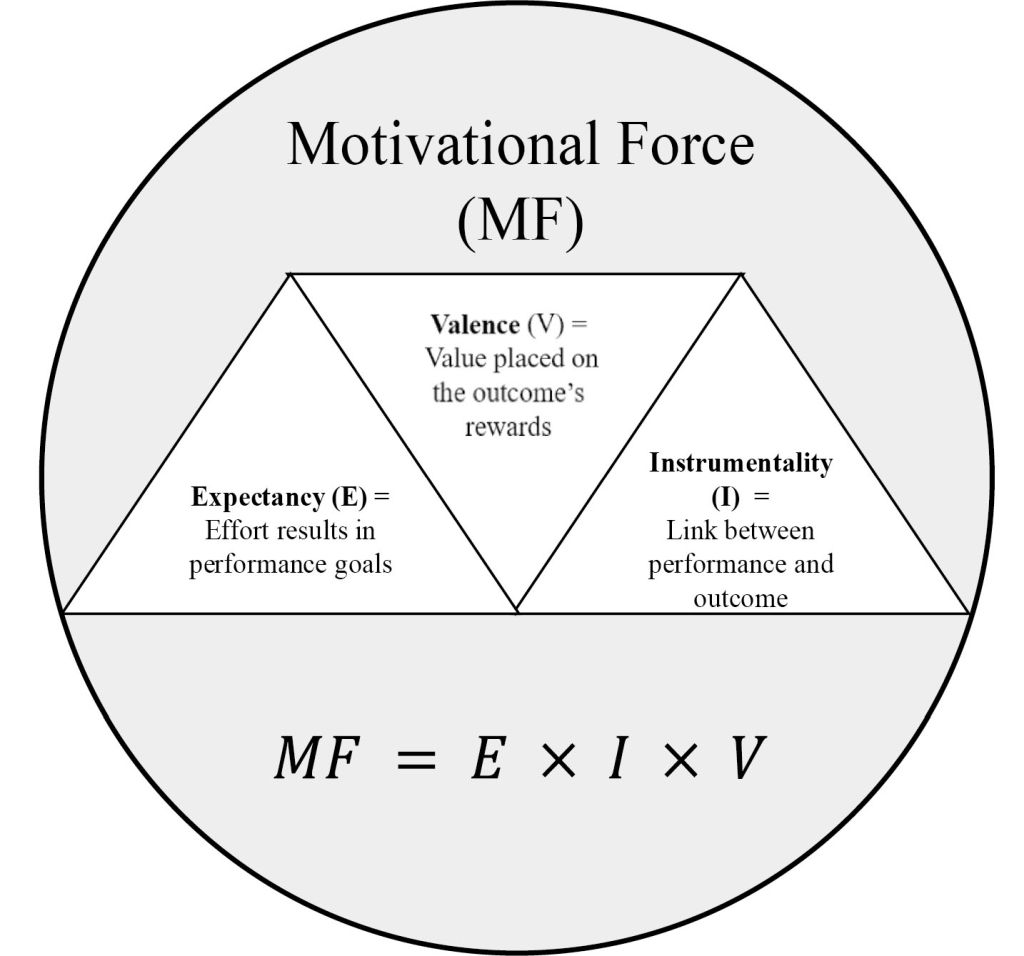
Despite the critical role of labor in the agribusiness sector, there are notable gaps in the literature regarding employee satisfaction and motivation (Bitsch, 2009). These gaps are surprising, as job satisfaction is well-studied in the business management literature (Bowling, 2007). Instead, previous agribusiness studies have primarily focused on issues like “job hopping” in agribusiness and horticulture labor markets, often overlooking the specific contexts and challenges most relevant for labor in commodity supply chains (Bitsch and Hogberg, 2005; Herrera Sabillon et al., 2022; Meyerding, 2017; Tetteh et al., 2021). Our study fills this gap by applying the Expectancy Theory of Motivation (ETM; Figure 1) to analyze the factors affecting job satisfaction and turnover intentions among feedyard employees in Texas, Oklahoma, and New Mexico.

Expectancy Theory of Motivation.
Citation: International Food and Agribusiness Management Review 2026; 10.22434/ifamr.1151
This article’s core objective is to examine these factors using ETM, which posits that an individual’s motivation to engage in a particular behavior is determined by the attractiveness of that result to the individual (Vroom, 1964). This theoretical approach enables a detailed examination of what influences employee behavior. This approach is uniquely valuable for the agribusiness management literature due to the diverse and multicultural workforce that characterizes agribusiness, which often includes differences in ethnicity, educational background, and job role expectations (Van Fleet, 2017). As such, we contribute to the literature in three ways. First, we use ETM to develop a conceptual model to describe how motivation plays out in the day-to-day operations of feedyards. “Building on the seminal work of Vroom (1964), we conduct our analysis through the lenses of Expectancy (the belief that effort leads to performance), Instrumentality (the belief that performance leads to rewards), and Valence (the value placed on those rewards)”, this article then explores what motivates feedyard employees. Finally, we provide a blueprint for how the industry might better meet the needs of the asset most important for sustaining competitive advantage: its people (Mugera, 2012).
The remainder of the article is organized as follows. First, we provide a background of the literature on U.S. cattle feeding. We then develop the conceptual framework of ETM related to labor issues in the cattle feeding industry. The third section describes our methods, which involve primary data collected from feedyard employees through a comprehensive survey about job satisfaction, promotion readiness, and willingness to recommend the job to others. Our results section then provides insights into the real-world application of ETM in this agribusiness sector. The final section concludes with practical insights that feedyard managers can use to enhance employee satisfaction, reduce turnover, and improve operational efficiency.
2. Background
The U.S. livestock industry has expanded from small-scale farms into large, technology-driven systems, resulting in more complex labor demands (Bitsch and Olynk, 2008). While previous research has examined livestock sector challenges broadly, little attention has been given to employee satisfaction and expectations in cattle feeding. This gap is particularly important, as a growing number of immigrant workers face language and cultural barriers that can hinder communication, affecting job satisfaction and retention (Ramos et al., 2018). By applying ETM to this context, we provide a framework to assess how expectations about job outcomes (Valence), beliefs in the correlation between effort and performance (Expectancy), and the perceived likelihood that performance will be rewarded (Instrumentality) vary across different employee groups and contribute to overall job satisfaction and performance.
Labor availability has become an increasingly critical challenge in the cattle industry (Hill et al., 2021). Despite technological and organizational advancements, feedyards rely heavily on skilled labor to maintain efficiency. The modern feedyard is a complex, multi-departmental system overseen by managers who must coordinate diverse and specialized roles (Wagner et al., 2014; Bitsch and Yakura, 2007). However, access to qualified labor has not kept pace with industry growth, with ongoing concerns about worker shortages, safety, and retention threatening long-term operational success (Yi and Ifft, 2019; Ramos et al., 2022; Rutherford, 2011).
After conducting preliminary work in collaboration with industry personnel, this article focuses on five departments, including (1) general administration, (2) cattle, (3) yard, (4) feed mill, and (5) feed distribution.1 Each of these departments plays a critical role in the efficiency and success of feedyard operations. This detailed breakdown of departmental roles highlights the interconnected nature of feedyard operations, where the efficiency of one department directly influences the others, thereby affecting the firm’s overall success. This interconnection is important to understand as livestock are sold to an increasingly consolidated beef processing industry (Saitone et al., 2024).
2.1 General Administration Department
The General Administration Department manages the financial and administrative aspects of the feedyard. This department handles the continuous inflow of feed, commodities, and cattle, which can occur up to seven days a week. It is tasked with maintaining the firm’s financial health via record-keeping, customer billing, and accounts payable, ensuring that all financial transactions are processed efficiently. Employee payroll and human resource benefits also fall under this department, highlighting its role in maintaining employee satisfaction and adherence to labor laws, thus ensuring that the feedyard operates smoothly and compliantly.
2.2 Cattle Department
The Cattle Department is dedicated to ensuring the health and welfare of the livestock. This department is responsible for (1) shipping and receiving cattle, (2) pen riding, where employees monitor the health and well-being of the cattle daily, and (3) providing medical care to ensure the health of the livestock. This tripartite structure allows for specialized attention to animal welfare, essential for feedyard productivity and profitability.
2.3 Yard Department
The Yard Department maintains the physical infrastructure of the feedyard. Employees in this department are tasked with operating machinery and heavy equipment to conduct the daily maintenance tasks that keep the feedyard operational. Responsibilities include water delivery to ensure adequate hydration for the cattle, manure removal to maintain cleanliness and health standards, and the upkeep of fences, gates, and feed bunks to secure the premises and ensure operational efficiency. The effectiveness of this department directly impacts the functionality of other departments, underscoring its importance in the overall maintenance of the feedyard.
2.4 Feed Mill Department
Nutritional management is critical to feedyard profitability, so the Feed Mill Department focuses on producing formulated feed rations. This process requires a high level of accuracy to ensure that dietary requirements for the cattle are met, which is vital for their growth and health. The department is also responsible for the maintenance and functionality of milling equipment, ensuring continuous operation and efficiency in feed production.
2.5 Feed Distribution Department
This department ensures that the feed formulated by the Feed Mill Department is delivered accurately and timely to the cattle, typically involving 2–3 daily feedings. Employees are also responsible for the preventative and routine maintenance of feed trucks, allowing for the smooth operation of feed delivery. The efficiency and reliability of this department are vital for maintaining the strict feeding schedules required for optimal animal health and growth.
3 Conceptual framework
To build a competitive advantage, organizational leaders must evaluate the firm’s scarcity, specialization, and tacit knowledge, which can follow many alternative theories (Bitsch and Yakura, 2007; Coff, 1997). We apply the Expectancy Theory of Motivation (ETM) to analyze employee motivation, satisfaction, and retention within the cattle feeding industry to accomplish this task. ETM is predicated on the belief that workforce behavior is influenced by the expected outcomes of one’s actions and the value of those outcomes to the individual (Vroom, 1964). This theory is particularly useful in this context, as diverse labor dynamics and operational pressures necessitate a thorough understanding of context-specific employee actions and decisions. Feedyards are known for their demanding physical work, long hours, and, in many cases, the need for specialized skills such as animal nutrition or machinery operation. The workforce is typically diverse, including many immigrant laborers, which introduces additional complexities such as language barriers and cultural differences that may affect communication and perceptions of job expectations and rewards.
ETM is structured around three key concepts, which can be measured via survey methods: Expectancy, Instrumentality, and Valence, each of which plays a role in determining employee motivation levels (Isaac et al., 2001). We consider the unique characteristics and challenges of the sector as we apply these components to the cattle feeding industry. Figure 2 develops this conceptual framework as it relates to feedyard management.
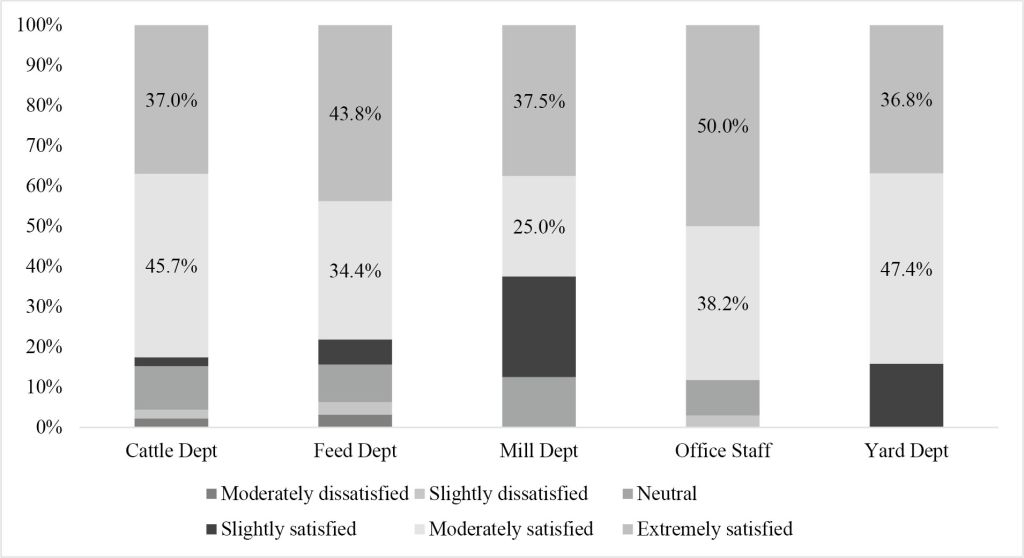
Job satisfaction by department.
Citation: International Food and Agribusiness Management Review 2026; 10.22434/ifamr.1151
3.1 Expectancy
Expectancy is the belief that one’s effort (E) will lead to attaining the desired performance. In the context of cattle feeding operations, this translates into laborers’ perceptions of whether their hard work will effectively lead to achieving their job responsibilities or performance targets. Expectancy might be influenced by factors such as the clarity of job roles, the adequacy of training provided, and the perceived fairness of performance evaluations. It also might be influenced by compensation transparency (Kuhn, 2024). For instance, if feedyard employees believe that the criteria for assessing their performance are clear and achievable and that the management provides adequate support and resources to perform their job effectively, their expectancy levels are likely to be high.
3.2 Instrumentality
Instrumentality (I) is the belief that a desired outcome or reward will follow if one accomplishes the performance expectations. This component examines if employees believe that meeting performance standards will lead to rewards such as promotions, pay raises, or other benefits. Instrumentality in feedyards can be influenced by the transparency and consistency of the reward system. If employees observe a clear and consistent link between job performance and rewards, such as seeing colleagues being promoted for meritorious service, their belief in the instrumental value of their job performance increases. Conversely, a perceived lack of fairness or inconsistency in distributing rewards could diminish Instrumentality.
3.3 Valence
Valence (V) refers to the value or importance that workers associate with the expected reward. It is contingent on the individual’s personal goals and needs. Valence varies widely among employees based on personal values, needs, and goals. For some, financial rewards may be most valued, while others might place higher importance on job security, working conditions, or opportunities for advancement (Fulmer et al., 2023). For example, the perceived value of a pay raise may vary between individuals, depending on their financial situation or career aspirations. Valence is also likely to vary across different age groups (Costanza et al., 2012).
Further exacerbating the issue of understanding this expected reward is that feedyard communication is largely verbal, and most of the workforce is highly dependent on verbal communication. The primary issue arises between Spanish- and English-speaking employees, as immigrant labor comprises nearly half of the labor force, and their English language deficiency may make immigrant laborers less likely to receive training and important information (Ramos et al., 2018).
4 Methods
Effective managers design roles and responsibilities with clear, achievable performance metrics consistent with a transparent and equitably administered reward system. Additionally, understanding the diversity of values among employees can help customize benefits and rewards to meet the varied expectations and needs of the workforce. The feedyard industry offers a valuable case study of this process, as the labor-intensive job requirements make it challenging to find and retain skilled employees, especially in rural communities. To that end, we conducted a survey of feedyard employees in the Texas Cattle Feeders Association (TCFA) region, which encompasses Texas, Oklahoma, and New Mexico.2 This area is known for its cattle-feeding contributions to the beef industry, with a combined 6.3 million animals on feed in 2022 (USDA - National Agricultural Statistics Service, 202). Cattle feeding has been a central feature of the Texas Panhandle and regional economy for decades, as raising cattle for beef production has been a focus since settlers first arrived in Texas in the 1800s (Knowlton, 2017; Pudenz and Schulz, 2024). That said, cattle feeding in Texas, Oklahoma, and New Mexico has only existed at scale since the 1960s, leading to the area becoming one of the country’s most productive beef cattle regions (Crespi and Sexton, 2004). Indeed, the region is responsible for 28 percent of the nation’s fed cattle production (TCFA, 2019).
The survey was deployed in January 2019, with a sample population selected from the TCFA member database, resulting in a total of 101 feedyards receiving labor surveys. The survey itself was distributed in collaboration with the TCFA, an industry group that has represented the region’s cattle feeding industry since its creation in 1967. The labor force is split between English and Spanish-speaking individuals, so all survey materials were developed in both English and Spanish. The survey consisted of thirty questions split into three sections: demographic information, employment satisfaction, and employment perception and opinion. Approximately 29 full-time employees work each 30 000-head feedyard, or approximately one employee per 1034 head (TCFA, pers. commun.). Therefore, within this study region, the feedyard industry is estimated to employ approximately 2721 individuals directly. We mailed 685 individual survey packets to the 101 feedyards selected. Respondents returned 152 usable surveys for a response rate of 22%.
In the demographic section, we asked participants about the size of the feedyard where they worked, which was represented by three separate groups: small (≤28 000 animals), medium (28 001–59 999 animals), and large (≥60 000 animals). The second section of the survey asked respondents to identify their feedyard department, enabling us to determine differences across the five departments: cattle, feed, mill, yard, and office. The last section sorted respondents by ethnicity. Ethnicity was evaluated between the two primary groups (Caucasian and Hispanic/Other) representing feed yard laborers. Some numbered questions had multiple parts, and some had varying response categories. Some had two response categories (e.g., yes or no), whereas others asked for responses on a scale.
The ETM posits that the Expectancy of achieving performance goals drives employee motivation, the Instrumentality of performance leading to rewards, and the Valence of those rewards. This conceptual framework is tied to the survey methods used to assess factors that impact job satisfaction, willingness to accept promotions, and the likelihood of recommending the industry to intergenerational employees. Variables in the survey, such as job role clarity, adequacy of training, and fairness in performance evaluations, are directly linked to the ETM component of Expectancy. These variables assess whether employees believe their efforts will effectively lead to desired outcomes. Instrumentality is examined through questions related to the transparency and consistency of the reward system, probing whether employees see a clear link between their performance and subsequent rewards like promotions or pay raises. Lastly, Valence is explored through demographic data and questions about personal values and goals, which help understand the importance of determining their anticipated rewards. These components are reflected in the survey design, which includes questions tailored to capture each element of ETM and its influence on employee behavior and decisions within the cattle feeding industry.
Because of ongoing concerns about aging rural labor for agribusinesses, we explore how motivation (as defined by ETM) connects to the probability that an employee would encourage their children into the cattle feeding industry. The dependent variable was coded to represent all three possible responses (1=no, 2=unsure, 3=yes). We create and sum relevant variables to create three composite scores consistent with the ETM conceptual framework (Expectancy, Instrumentality and Valence).
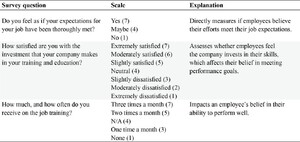
To capture Expectancy in our analysis, we selected three survey questions that reflect key drivers of employees’ beliefs about their ability to perform effectively (Table 1). First, we asked whether employees felt their job expectations had been thoroughly met, which directly gauges whether they believe their efforts align with job requirements. Second, we assessed satisfaction with the company’s investment in training and education, capturing perceptions of organizational support in skill development. Finally, we measured how much and how often employees receive on-the-job training, a practical indicator of whether workers feel equipped to meet performance expectations. These variables collectively capture the extent to which employees feel prepared, supported, and aligned with the demands of their roles—central components of the Expectancy construct.
Survey questions used to measure the expectancy factor
Citation: International Food and Agribusiness Management Review 2026; 10.22434/ifamr.1151
Table 2 presents the questions we included to measure Instrumentality, which assesses whether employees perceive a clear connection between their performance and the rewards they receive. First, we asked whether they were seeking benefits when they applied for their current position, which captures the role of short-term incentives in their employment decisions. Second, we asked whether they believe there is room for advancement at their feedyard—an indicator of whether they view promotion opportunities as attainable outcomes of strong performance. Finally, we included a question about their willingness to accept a promotion, which helps identify whether employees see advancement as a realistic and desirable reward tied to their efforts. These variables provide us a way to evaluate how performance-reward linkages influence motivation in feedyard work environments.
Survey questions used to instrumentality factor
Citation: International Food and Agribusiness Management Review 2026; 10.22434/ifamr.1151
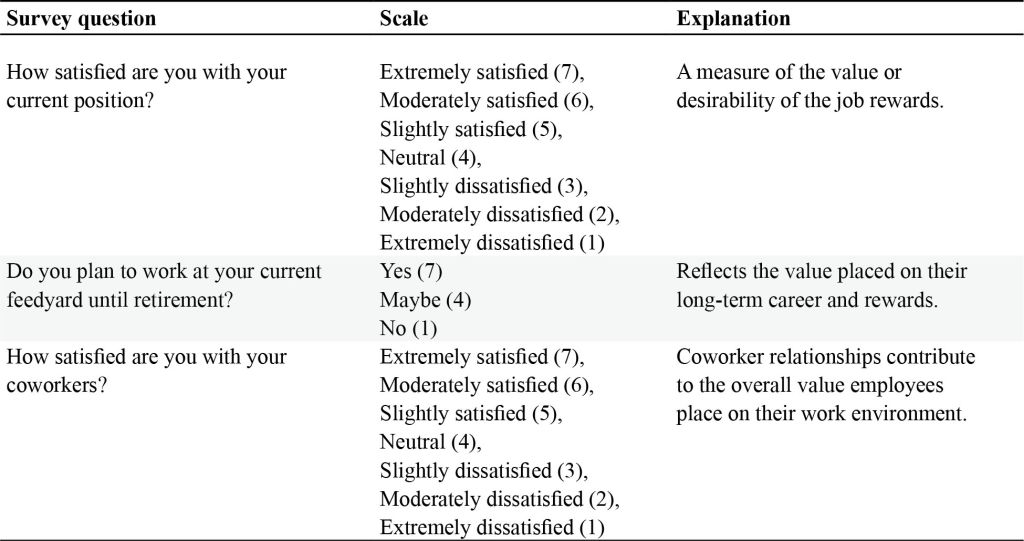
Finally, we evaluate Valence with survey questions that capture the extent to which employees value the rewards associated with their roles. Table 3 presents these questions. We first asked about overall satisfaction with their current position, which reflects how desirable they find the job’s rewards. We then included a question about whether employees plan to remain in their feedyard until retirement, as this indicates the long-term value they place on their career path. Finally, we asked about satisfaction with coworkers, as strong peer relationships can enhance the perceived quality of the work environment. These questions collectively assess how personally meaningful and rewarding employees find their work to be.
Survey questions used to measure the valence factor
Citation: International Food and Agribusiness Management Review 2026; 10.22434/ifamr.1151
Prior to constructing the composite score, we converted all variables to a scale of 1 to 7 to ensure consistency across questions. For example, 7 indicates the affirmative (i.e., yes), 4 indicates the median (i.e., unsure or maybe), and 1 indicates the negative (i.e., no). Empty values were designated with the median (4). We sum the scores of the variables associated with each ETM component. As an example, consider the following responses to the Expectancy questions:
Do you feel as if your expectations for your job have been thoroughly met? (Yes=7)
How satisfied are you with the investment that your company makes in your training and education? (Neutral=4)
How much, and how often, do you receive on the job training? (None=1)
In this case, the respondent’s Expectancy Index value would be: 7+4+1=12. After creating our index value for each of the three motivation factors, we multiply them together to calculate an overall Expectancy score. We then regress this factor on the probability that each person would encourage their children to work in the feedyard industry.
5 Results
Given the exploratory nature of our research and the relatively small sample size, we intentionally prioritized descriptive insights and theoretically grounded interpretation over formal statistical inference. While significance testing can be informative, small sample sizes inherently increase the probability of both Type I and Type II errors, potentially misleading conclusions. Instead, we emphasize effect size patterns and consistency with Expectancy Theory to inform future research and feedyard management strategies. We view this study as a foundation for more robust hypothesis testing in future, larger-sample studies.
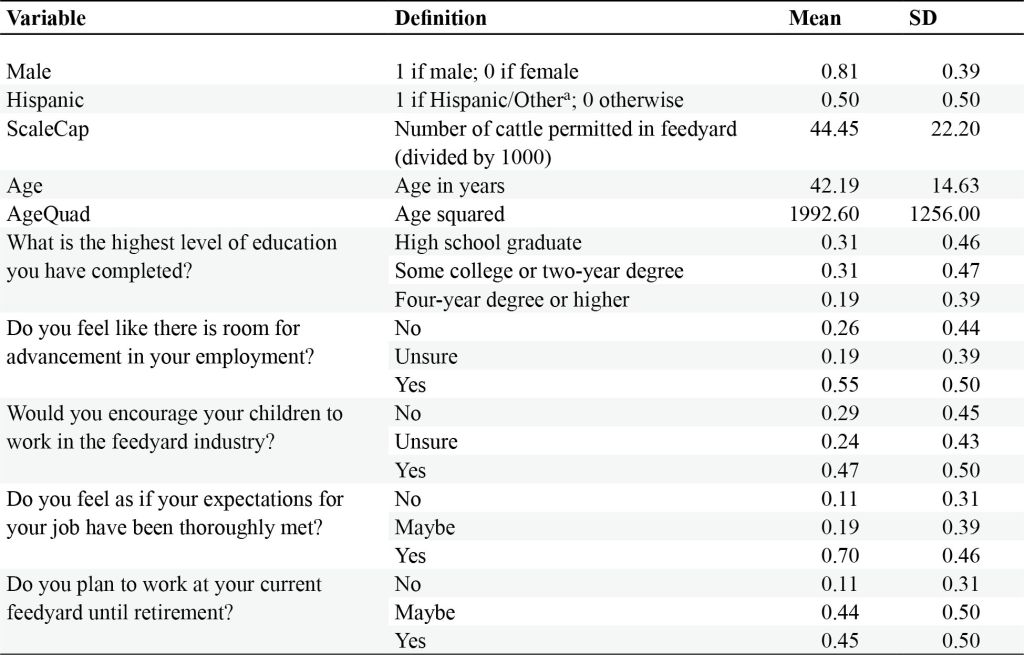
Table 4 presents the relevant demographic variables associated with our sample. Of those respondents, 81% were male, 49% were Hispanic/Latino, 48.7% were Caucasian, with the final two participants identifying as African American and Native American. The average age was 42, and the average respondent had worked 15 years in the industry. Educational attainment was well distributed in our sample, as 31% were high school graduates, 25% had a two or four-year degree, 22% had some college, and 19% did not complete high school. All five departmental areas were covered, with 32% of respondents working in the cattle department, 23% in the office or general administration, 21% in the feed department, 13% in the yard, and 11% in the mill.
Sample demographics
Citation: International Food and Agribusiness Management Review 2026; 10.22434/ifamr.1151
Figures 2–4 present our motivational variables of interest, including the mean results of feedlot employee job satisfaction, willingness to accept a promotion, and the likelihood of encouraging their children to enter the feeding industry. Generally speaking, most employees’ expectations for their jobs were met, and most of them were satisfied with their jobs, coworkers, and the amount of training they had received.
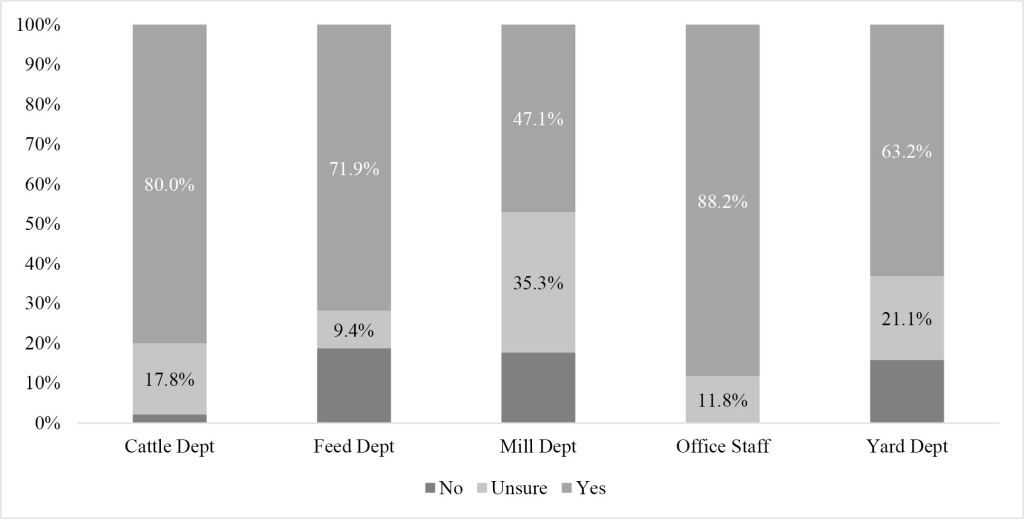
Figure 3 presents responses to the question of whether employees would be willing to accept a promotion, segmented by department. The Office Department showed the highest openness to advancement, with 88.2% of respondents indicating “Yes,” compared to 47.1% in the Mill Department, who had the lowest proportion of “Yes” responses.
Would you be willing to accept a promotion?
Citation: International Food and Agribusiness Management Review 2026; 10.22434/ifamr.1151
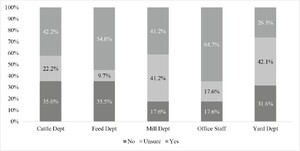
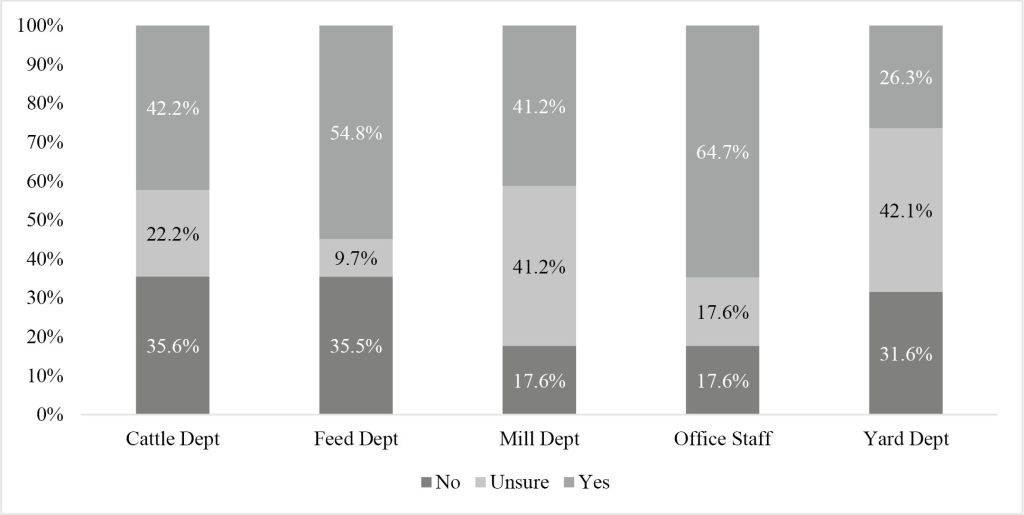
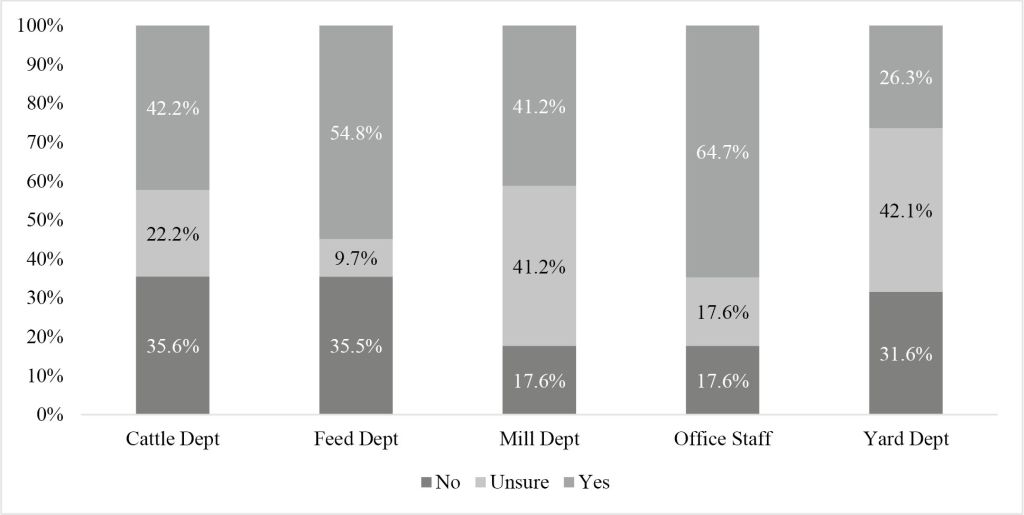
Figure 4 displays responses to the question of whether employees would recommend that their children work in the feedyard, segmented by department. The highest proportion of “Yes” responses came from the Office Staff, where 64.7% of employees expressed support for their children entering the industry, followed closely by the Feed Department (54.8%). The Cattle Department had the highest share of “No” responses at 35.6%, also followed by the Feed Department.
Would you recommend your children work at the feedyard?
Citation: International Food and Agribusiness Management Review 2026; 10.22434/ifamr.1151
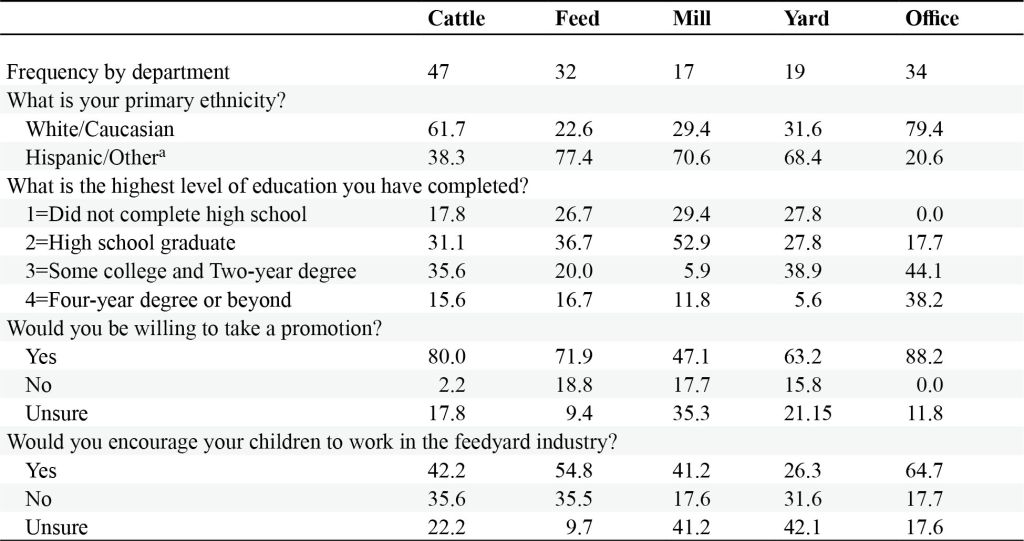
Table 5 presents results categorized by department, which detected a difference in the number of Caucasian and Hispanic/Other employees between the five departments. Our results indicated that, relative to overall feedyard employment, Caucasian employees were generally more represented in the cattle department (62%) and the office department (79%). In contrast, Hispanic/Other employees were more commonly employed in the feed, mill, and yard departments, at 77, 71 and 68%, respectively. All employees in the office department had at least a high school degree, whereas 27% of feed department employees, 29% of mill department employees, and 28% of yard department employees had less than a high school degree. Only 18% of employees within the cattle department had less than a high school degree. When feedyard employees were asked if they would be interested in accepting a promotion, the majority (74%) of employees across all sizes indicated that they would accept if offered. The cattle and office departments were represented by 80% and 88% of employees, respectively, who indicated that they would accept a promotion. Still, only 47% of mill employees would be willing to take the additional responsibility.
Percentage frequencies by department
Citation: International Food and Agribusiness Management Review 2026; 10.22434/ifamr.1151
A notable difference was observed when respondents were asked if they would encourage their children to follow in their footsteps and work in the cattle feeding industry. Office and feed department employees were more willing, at 55 and 65%, to encourage their children to pursue a career in the feedyard industry. The cattle department had the highest frequency of ‘no’ responses (36%). We asked respondents to provide a qualitative follow-up on their opinion regarding why. Survey responses revealed a blend of pride, realism, and concern when feedyard employees were asked whether they would encourage their children to enter the industry. Many who answered “Yes” emphasized values like work ethic, opportunity, and legacy. One wrote, “It is a good place to learn the value of hard work,” while another noted, “Because we provide food for the hungry world… while taking care of the animals.” Several tied their encouragement to family tradition, saying, “I was raised in the feedlot industry and I believe it’s a good way to make a living,” and “Because I would like for them to follow in my footsteps.” However, those who responded “No” often cited concerns about low pay, difficult working conditions, and limited opportunities for advancement. As one cattle department worker put it, “Why would you want your kids to work 60 hours a week to barely make a living?” A feed department worker shared, “It’s a very hard life. I want much better and easier life for them.” A number of “Unsure” responses reflected ambivalence, often balancing appreciation for the work with concerns about long-term career prospects: “Only to learn but not as a career,” and “If they were interested, I would encourage them, but I’d want them to go to college.” These responses illustrate that while feedyard work is respected and valued by many employees, real concerns about compensation and career mobility shape whether they see it as a desirable path for the next generation.
Figure 5 presents the average motivation factors by the respondent’s department. The analysis of motivation variables across various organizational departments reveals discrepancies in Expectancy, Instrumentality, and Valence. Expectancy scores are notably higher in the Yard (14.1) and General Administration (i.e., Office) (14.0) departments, suggesting that employees in these areas believe their efforts are achieving performance targets. Conversely, the Feed department exhibits the lowest expectancy score (13.0), indicating a relative uncertainty or diminished confidence in efforts leading to desired outcomes. Regarding Instrumentality, the Office department scores the highest (12.8), reflecting a perceived correlation between performance and subsequent rewards. This score is closely followed by the Mill department (12.6). The Cattle department, however, records the lowest in this dimension (11.3), suggesting a potential disconnect or ambiguity in the reward systems. Valence, which measures the value employees attribute to these rewards, is elevated in the Office department (17.9), indicative of highly valued rewards. The Yard and Mill departments show comparably high valence scores (16.9), while the Cattle and Feed departments trail slightly at 16.6.
Expectancy Theory of Motivation variables by department.
Citation: International Food and Agribusiness Management Review 2026; 10.22434/ifamr.1151
These patterns suggest that departmental context shapes how employees perceive their roles and rewards. The higher Expectancy scores in the Yard and Office departments may reflect clearer job roles, better communication, or more structured training in those settings, especially important in physically demanding or administrative roles. Meanwhile, the lower Instrumentality score in the Cattle department may indicate that workers in this area struggle to see a direct link between job performance and advancement or compensation, possibly due to a lack of formal recognition systems. The exceptionally high Valence score in the Office department indicates a work environment where rewards, whether social, financial, or long-term, are perceived as particularly meaningful. These findings point to the value of department-specific management strategies that align incentives and communication with the motivational needs of each team.
Taken together, these results indicate heterogeneity in employee sentiment. Over half of the employees in the feed and office departments will encourage their children to work within the industry, while little more than a quarter of mill employees will recommend feedyard employment. Over half of the cattle, feed, yard, and office employees are eager to accept a promotion. Yet, less than half of the mill employees would accept the elevation in duties and responsibility. Results indicate that employees with longer tenure in the industry are more satisfied, perceive that advancement opportunities exist, and are more open to promoting employment to their children. By contrast, male employees who are educated and work in larger feedyards are more likely to experience dissatisfaction with their employment. Further, older employees are less likely to accept a promotion. At the same time, laborers with some college education who plan to retire from the feedyard might be more likely to pursue advancement opportunities. This comparison is important because selecting the wrong employee to promote could deteriorate the culture of the feedyard. At the same time, if an employee is unwilling to accept a promotion, this does not necessarily indicate that the individual is undervalued. While merit increases generally accompany promotions, they also signify additional responsibilities, which is not considered positive for all individuals. Lastly, employees who feel their job expectations have been met and those planning to retire from the industry are more likely to encourage their children to pursue a similar career path. Employees with these characteristics are more likely to engage the next generation of feedyard employees. This finding may help develop an alternative recruitment method and enhance industry employment consistency.
To answer the question of future employment, we created a composite score for the motivation factors from Table 1 (i.e., Expectancy×Instrumentality×Valence) and conducted some simple thematic analysis comparing common themes between scores and responses to the question, “What motivates you to come back to your job each day?” Among individuals with motivation scores above 5000, common themes centered around intrinsic motivation, a sense of purpose, and personal investment in their work. Many described the appeal of challenge and variety, offering responses such as, “Every day is something different,” “The challenges,” and “Keep trying to get to the top.” Others expressed a deep passion for animal care and the industry itself, stating, “I like my job and making the yard better and safer,” and “The willing to make this the top feedyard in the industry.” Strong interpersonal relationships also appeared frequently, with employees citing “The supervisors and line managers I work with are a great group,” and “Comradery with employees.” Several respondents also reflected a strong sense of impact and personal value in their roles, such as “Know that my thoughts and ideas will potentially make a difference,” and “Helping educate where food comes from.” Collectively, these reflections align with all three components of the ETM: the belief that effort leads to performance (Expectancy), that performance is linked to meaningful rewards (Instrumentality), and that those rewards — such as fulfillment, growth, and relationships—carry personal value (Valence).
Among individuals with motivation scores below 2000, responses most often reflected extrinsic, survival-based motivations or a sense of obligation rather than personal fulfillment. Many cited financial necessity as their primary reason for returning to work each day, using brief but telling phrases such as “Bills,” “Paycheck,” “To pay the bills and eat,” “Child support,” and “Insurance.” Others pointed to a lack of alternatives, stating, “Only thing available,” or “I don’t have any other option.” A few mentioned short-term benefits that made the job worthwhile, including “Really good Christmas bonus” and “Almost at retirement.” In contrast to the highly motivated group, few of these responses demonstrated passion for the industry, opportunities for personal growth, or strong interpersonal connections. Instead, work was frequently framed as a means to survive rather than a source of meaning or long-term fulfillment.
We then estimated a simple logit model to determine the relationship between motivation and the potential for recruiting employees from younger generations. Table 6 presents these simple results. This model indicates that the person with the highest Motivation Score (7,497) is 3.4 times more likely to recommend working at the feedlot to their children than the person with the lowest motivation score (144). If we parse this simple model and compare department-level high scores with low scores, we find that relative to the lowest Motivation Score in the Cattle Department (144), the person with the highest motivation score (6,137) is 3.1 times more likely to recommend feedlot employment to his children. In the Feed Department, the value increases by 3.2, increases by 1.9 in the Mill Department, 3.1 in General Administration, and 2.8 times in the Yard Department.
Logit model correlating motivation factors to the probability an employee encourages their children to work in the feedyard industry
Citation: International Food and Agribusiness Management Review 2026; 10.22434/ifamr.1151
6 Conclusion
Integrating stakeholder opinions into academic research often generates more impactful results (Lagoudakis et al., 2020; Malone et al., 2022). This study contributes to that goal by providing a data-driven assessment of employee experiences in the cattle feeding industry, highlighting how motivation and satisfaction vary across feedyard departments, roles, and individual characteristics. While previous literature has emphasized the importance of clear job roles, transparent reward systems, and cultural competency in human resource management, our findings complement this work by illustrating how these principles are applied in actual feedyard settings. Specifically, we demonstrate that departments with higher Expectancy, Instrumentality, and Valence scores are more likely to have employees who are more likely to accept promotions and encourage their children to pursue careers in the industry. These results suggest that aligning workplace practices with employees’ perceptions of support, fairness, and reward value can impact both employee satisfaction and long-term workforce development. Thus, our research builds on existing theory by providing practical, survey-based evidence to inform feedyard management strategies.
As labor costs rise and technology costs fall, feedyard managers face increasing pressure to evaluate capital investments that can reduce their reliance on human labor (Boyer et al., 2024). Our study adds to this conversation by identifying key differences in employee demographics, satisfaction, and perceptions across departments within the feedyard workforce. Notably, our results imply that retention and generational continuity may depend heavily on creating a sense of long-term stability and job fulfillment. Additionally, workers with some college education were more likely to express interest in promotion, while those in the mill department were less likely to accept increased responsibility. These findings suggest that management strategies may focus on targeted career development for mid-skilled workers and explore ways to enhance engagement and perceived opportunities in lower-motivation departments. Rather than adopting a one-size-fits-all approach, feedyard leaders may benefit from tailoring management practices to departmental dynamics and worker backgrounds to foster motivation, reduce turnover, and secure the future workforce.
Some limitations remain. First, not all feedyard cultures, employees, or leadership resources are identical. These differences will likely matter even more as beef supply chains consolidate in the face of more frequent extreme weather events (Crespi and Saitone, 2018; Skidmore, 2023; Sexton and Xia, 2018). Future studies might also evaluate the role of human capital in feedlot risk management and feeder cattle pricing models (Boyer et al., 2023; Martinez et al., 2021). Furthermore, managing human capital is not an isolated feedyard issue, so future research would benefit by exploring the generalizability of our results. For example, dairy employers are also very concerned about employee recruitment and selection, as the lack of skills in the applicant pool has led to multiple poor hires, further exacerbating work environment challenges (Bitsch et al., 2006). Employee selection problems and inadequate employee training led to low performance, commitment, and loyalty, which was believed to lead to decreased job satisfaction and motivation. As such, future studies might focus on developing a greater understanding of the relationship between feedyard managers and employees. This study did not explicitly elicit the laborer’s perspective of satisfaction with feedyard management or vice versa (Durst et al., 2018). This is an important focus, as managers’ leadership values and qualities can impact labor efficiency. In addition, by developing new practices that minimize human labor and maximize labor efficiency, the gap between the declining number of willing and qualified employees and the amount of labor required to produce a product can be narrowed.
Overall, we contend that the agribusiness management literature would benefit from considering this research area more seriously. A promising extension would involve longitudinal or experimental data that might enable researchers to better identify causal pathways between motivational factors and long-run employment outcomes, such as turnover, performance, and intergenerational workforce participation. Such work would build on our initial findings and offer deeper insight into how feedyard managers can tailor human resource strategies to foster a more motivated and resilient workforce.
Acknowledgement
Garrett Robinson, Ty Lawrence, and Bridget Guerrero are equal contributors.
References
Birch, J. and K. Brooks. 2015. Nebraska feedyard labor cost benchmarks and historical trends. Extension Publication EC836, University of Nebraska, Lincoln, NE.
Bitsch, V. 2009. Personnel management research in agribusiness. In 19th Annual World Forum and Symposium of the International Food and Agribusiness Management Association, Budapest: 1–24.
Bitsch, V. and M. Hogberg. 2005. Exploring horticultural employees’ attitudes toward their jobs: A qualitative analysis based on Herzberg’s theory of job satisfaction. Journal of Agricultural and Applied Economics 37(3): 659–671.
Bitsch, V. and N.J. Olynk. 2007. Skills required of managers in livestock production: Evidence from focus group research. Applied Economic Perspectives and Policy 29(4): 749–764.
Bitsch, V. and N.J. Olynk. 2008. Risk-increasing and risk-reducing practices in human resource management: Focus group discussions with livestock managers. Journal of Agricultural and Applied Economics 40(1): 185–201.
Bitsch, V. and E.K. Yakura. 2007. Middle management in agriculture: Roles, functions and practices. International Food and Agribusiness Management Review 10(2): 1–28.
Bitsch, V., G.A. Kassa, S.B. Harsh and A.W. Mugera. 2006. Human resource management risks: sources and control strategies based on dairy farmer focus groups. Journal of Agricultural and Applied Economics 38(1): 123–136.
Bowling, N.A. 2007. Is the job satisfaction–job performance relationship spurious? A meta–analytic examination. Journal of Vocational Behavior 71(2): 167–185.
Boyer, C.N., E. Park, K.L. DeLong, A. Griffith and C. Martinez. 2023. Feeder and fed cattle purchases of livestock risk protection. Agricultural Finance Review 83(5): 720–733.
Boyer, C.N., K.E. Cavasos, J.A. Greig and S.M Schexnayder. 2024. Influence of risk and trust on beef producers’ use of precision livestock farming. Computers and Electronics in Agriculture 218: 1–8.
Coff, R.W. 1997. Human Assets and Management Dilemmas: Coping with hazards on the road to resource-based theory. Academy of Management Review 22(2): 374–402.
Costanza, D.P., J.M. Badger, R.L. Fraser, J.B. Severt and P.A. Gade. 2012. Generational differences in work-related attitudes: a meta-analysis. Journal of Business and Psychology 27: 375–394.
Crespi, J.M. and T.L. Saitone. 2018. Are cattle markets the last frontier? Vertical coordination in animal-based procurement markets. Annual Review of Resource Economics 10: 207–227.
Crespi, J.M. and R.J. Sexton. 2004. Bidding for cattle in the Texas panhandle. American Journal of Agricultural Economics 86(3): 660–674.
Durst, P.T., S.J. Moore, C. Ritter and H.W. Barkema. 2018. Evaluation by employees of employee management on large U.S. dairy farms. Journal of Dairy Science 101(8): 7450–7462.
Fausti, S.W. and M.A. Diersen. 2020. Competitive forces affecting capacity decisions of South Dakota feedlot operations. Agricultural Economics 51(3): 459–473.
Fulmer, I.S., B. Gerhart and J.H. Kim. 2023. Compensation and performance: a review and recommendations for the future. Personnel Psychology 76(2): 687–718.
Herrera Sabillon, B., M. Gerster‐Bentaya and A. Knierim. 2022. Measuring farmers’ well‐being: Influence of farm‐level factors on satisfaction with work and quality of life. Journal of Agricultural Economics 73(2): 452–471.
Hill, A.E., I. Ornelas and J.E. Taylor. 2021. Agricultural labor supply. Annual Review of Resource Economics 13: 39–64.
Isaac, R.G., W.J. Zerbe and D.C. Pitt. 2001. Leadership and motivation: The effective application of expectancy theory. Journal of Managerial Issues 13(2): 212–226.
Knowlton, C. 2017. Cattle Kingdom: The Hidden History of the Cowboy West. HarperCollins, New York, NY.
Kuhn, K.M. 2024. Ambiguity in advertised compensation: Recruiting implications of nominal compliance with pay transparency legislation. Journal of Applied Psychology 109(4): 599–609.
Lagoudakis, A., M.G. McKendree, T. Malone and V. Caputo. 2020. Incorporating producer opinions into a SWOT analysis of the US tart cherry industry. International Food and Agribusiness Management Review 23(4): 547–561.
Malone, T., J. Monahan, K. Nicpon, K.A. Schaefer and M. Cary. 2022. On the strategic creation of extension and outreach content in a new media environment. Applied Economics Teaching Resources 4(2): 29–44.
Martinez, C.C., C.N. Boyer and K.H. Burdine. 2021. Price determinants for feeder cattle in Tennessee. Journal of Agricultural and Applied Economics 53(4): 552–562.
Meyerding, S.G. 2017. Analyzing job satisfaction and preferences of employees: The case of horticultural companies in Germany. International Food and Agribusiness Management Review 20(5): 765–788.
Mugera, A.W. 2012. Sustained competitive advantage in agribusiness: Applying the resource-based theory to human resources. International Food and Agribusiness Management Review 15(4): 27–48.
Pudenz, C.C. and L.L. Schulz. 2024. Multi‐plant coordination in the U.S. beef packing industry. American Journal of Agricultural Economics 106(1): 382–415.
Ramos, A.K., G. Carlo, K.M. Grant, C. Bendixsen, A. Fuentes and R. Gamboa. 2018. A preliminary analysis of immigrant cattle feedyard worker perspectives on job-related safety training. Safety 4: 37.
Ramos, A.K., S. Adhikari, R. Rautiainen and A. Yoder. 2022. Protecting cattle feedyard workers in the Central States region: Exploring state, regional and national data on fatal and nonfatal injuries in agriculture and the beef production sector. Journal of Extension 60(3): 13–20.
Rutherford, B. 2011. Feedyard personnel management: An ongoing challenge. Beef, available online at https://www.beefmagazine.com/cowcalfweekly/0513-feedyard-personnel-management-ongoing-challenge (accessed 4 January 2021).
Saitone, T.L., K.A. Schaefer, D. Scheitrum, S. Arita, V. Breneman, R. Nemec Boehm and J.G. Maples. 2024. Consolidation and concentration in US meat processing: Updated measures using plant-level data. Review of Industrial Organization 64(1): 35–56.
Skidmore, M.E. 2023. Outsourcing the dry season: cattle ranchers’ responses to weather shocks in the Brazilian Amazon. American Journal of Agricultural Economics 105(2): 409–433.
Sexton, R.J. and T. Xia. 2018. Increasing concentration in the agricultural supply chain: implications for market power and sector performance. Annual Review of Resource Economics 10: 229–251.
Sumrow, S., D. Hudson, O. Sarasty, C. Carpio and C. Bratcher. 2024. Consumer preferences for worker and supply chain risk mitigation in the beef supply chain in response to COVID‐19 pandemic. Agribusiness: An International Journal 40(1): 299–315.
TCFA. 2019. History. Available online at https://www.tcfa.org/about-us.html (accessed 19 July 2019).
Tetteh, I., A. Spaulding and M. Ptukhina. 2021. Understanding the job-hopping syndrome among millennial employees in the U.S. food and agribusiness sector: A national survey. International Food and Agribusiness Management Review 24(1): 89–104.
U.S. Department of Agriculture National Agricultural Statistics Service. 2025. Census of Agriculture: Quick Stats. U.S. Department of Agriculture, Washington, DC.
Van Fleet, D.D. 2017. Human capital, workplace violence and human resource management in agribusiness: Review and recommendations. Journal of Agribusiness 35(1): 53–74.
Vroom, V.H. 1964. Work and Motivation. Wiley, Chichester.
Wagner, J.J., S.L. Archibeque and D.M. Feuz. 2014. The modern feedlot for finishing cattle. Annual Review of Animal Biosciences 2: 535–554.
Yi, J. and J. Ifft. 2019. Labor–use efficiency and New York dairy farm financial performance. Agricultural Finance Review 79(5): 646–665.
Corresponding author
This organizational structure is not strictly followed across all feedyards as some combine two or three departments.
A redacted copy of the survey instrument can be found in the Appendix. The survey was approved by the West Texas A&M Institutional Review Board and was distributed in a manner that preserved respondent anonymity, as concerns existed about honest responses if their firm’s administrators received identifiable data.