Abstract
This is a case from the pork industry, pork being one of the most consumed proteins in the world. It presents the challenges and opportunities for a very singular company that has thrived in a highly competitive market with a business model encompassing sustainability in all of its activities and with an approach based on three main pillars: animal health, genetics and feed sourcing. The case study discusses the dilemma that Paulo Cezar Lucion, CEO of Nutribras Alimentos, is facing and the possible next steps for the company. Several issues are constantly challenging the company to stay relevant in the market such as logistics, the rise in production costs, and the uncertainty related to pork consumption trends. It is in this context that he needs to decide between intensification or diversification while maintaining Nutribras’ sustainable model.
1. Introduction
Walking around the farm where the development of his successful company began, Paulo Cezar Lucion, CEO of Nutribras Alimentos, reflects on all the steps that took the company to the current level. Anyone who sees the company today would not imagine that it took years of research and investment in new technologies for Nutribras to become a reference in the main segments in which it operates — agricultural production, animal production, and energy generation — and an example of how to integrate them, sustainably, in a vertical production system.
Paulo thinks about the obstacles faced by his family, such as times of high volatility in grain and input prices — something common in agribusiness and always with the potential to end farmers’ businesses. But he also remembers that it was in one of these moments of crisis that the Lucion family decided to exchange the cold of the South of the country for the high temperatures of the Brazilian Center-West, leaving the interior of Santa Catarina towards the municipality of Sorriso, in the state of Mato Grosso, the heart of Brazilian agribusiness.
In modern agriculture, effectiveness, and efficiency in activities encompassing the environmental, social, and governance spheres are paramount for a company that aims for good results. And Paulo Cezar Lucion knows this very well. After more than 40 years of notable success, with expansion of the production area, verticalization of production, investments in sustainability (such as biogas production), and various projects that contributed to the growth of the state of Mato Grosso, today, Paulo contemplates the more than 30 000 ha of crops, the feed factory, and the slaughterhouse with capacity to slaughter 3000 pigs/day.
Despite being on the right path, a company that wants to stay on top must always look for innovations. Several issues are constantly challenging Nutribras to stay competitive such as logistics, the rise in production costs, and the uncertainty related to pork consumption trends. With an eye to the future, Paulo, alongside his directors, technical staff, and board members, is now planning improvements in the agricultural and industrial segments of his company but is overwhelmed with the decision regarding the next steps of the strategy. Many options are on his mind right now, such as venturing into beef production, augmenting premium pork products, investing in new markets, and others. He knows that it all goes down to deciding between intensification or diversification.
The leadership team of Nutribras knows that not being a multinational company or having a wide range of businesses brings greater liability for them and that one disastrous decision can compromise all the history they have written so far. On the other hand, observing the market and being reactive is not an option in a highly volatile industry, especially with the large and numerous competitors they face in the southern region of Brazil.
2. History
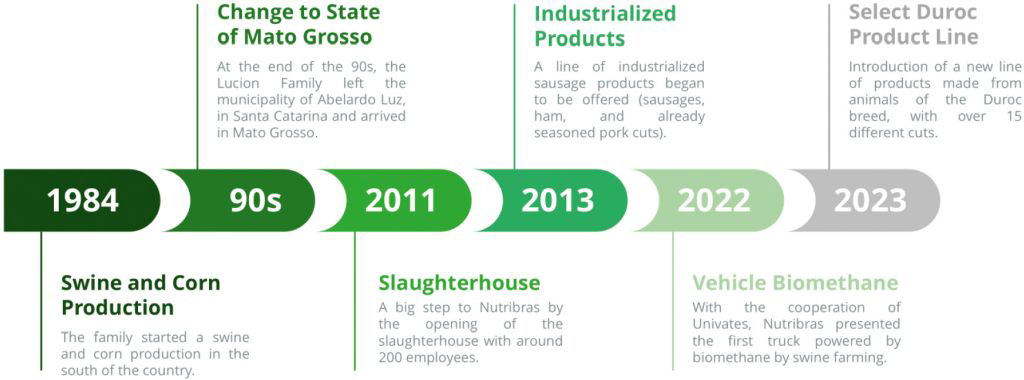
The Lucion family had been a swine producer in the country’s south since 1984. At the end of the 90s, they left the municipality of Abelardo Luz, in Santa Catarina, and arrived in Mato Grosso. The objective of the change was to produce corn in the Center-West and feed the swine production in the South of Brazil, thus increasing competitiveness in production costs. In Sorriso, the farm was installed in an area with enormous potential for expansion due to the degraded pastures on the property.
To do this, Paulo Lucion sought references in large swine production centers in Brazil and worldwide. This allowed him to learn about — and bring in — the best technologies available to implement production adapted to the characteristics of the new production location. However, the infrastructure in the Sorriso and Vera region was lacking when the family members arrived — they only had the land and the climate favorable for the activity.
In 2000, the operation was limited to grain and pork production only. Even at that time, the issue of sustainability was already being addressed and soon other businesses were added (Figure 1).

Major milestones in the history of Nutribras Alimentos. Source: Nutribras.
Citation: International Food and Agribusiness Management Review 29, 2 (2026) ; 10.22434/ifamr.1234
The group was one of the first to produce biogas in the country. At the time, three factors were decisive for the organization’s pioneering spirit: Embrapa, a Brazilian research and innovation company (largely responsible for the expansion of agribusiness to the Central-West region in the 1980s and 1990s), was beginning to study the use of animal waste for biogas production. Furthermore, several international companies were willing to invest in the immense potential of Brazilian agriculture. Last, but not least, the Kyoto Protocol was in force and the signatory countries were seeking a more sustainable use of natural resources. Initially, adapted diesel engines were needed to provide electrical energy and enable the use of biogas.
The company’s big step came with the slaughterhouse opened in 2011. Its processing capacity was to slaughter 800 animals/year and the plant had around 200 employees when it opened.
Soon after, in 2013, a line of industrialized sausage products began to be offered (sausages, ham, and already seasoned pork cuts), adding value and providing more options for distribution partners and consumers. This change meant an important milestone and a change in the company’s revenue level.
In 2016, advances in industrialization continued, with capacity expansion and production improvements along with actions aimed at sustainability. At the beginning of the 2020s, the company made new strides, standing out with the high standard of health in its operations, the focus on the quality of meat and herd genetics, and the new expansion of the product line.
In 2021, Nutribras, with the cooperation of Univates (University of Vale do Taquari), began a study to develop biomethane production technology for vehicle use. In 2022, it was time to complete the project and present the first truck powered by biomethane from swine farming to the market. The company’s next step and focus is to transform all biogas produced (daily production capacity 30 000 m3) into vehicle biomethane.
3. Sector
3.1 Animal proteins
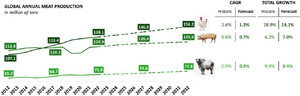
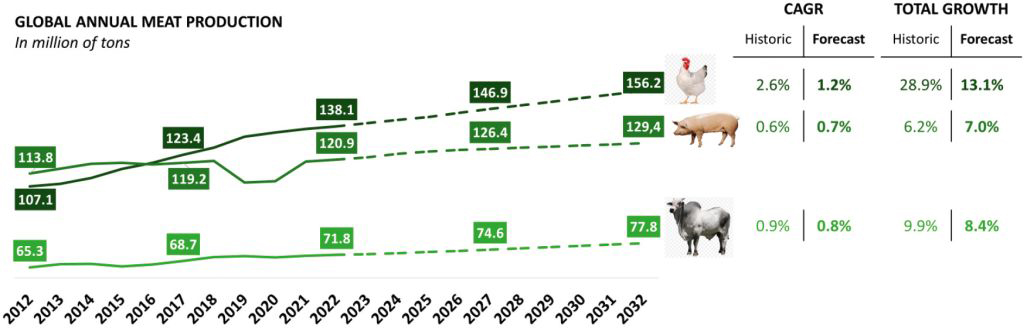
To follow the growth trajectory, it’s important to analyze the global meat panorama, where the growth in demand for animal proteins caused an increase in production, as seen in Figure 2. In the period from 2012 to 2022, global production of the three main animal proteins jumped from 286.2 million tons per year to 330.8 million tons per year, representing a growth of more than 15% (FAO, 2023). If FAO’s projections are confirmed, global meat production will be 363.4 million tons in 2032, which would represent an increase in supply of approximately 10%, lower than the historical period mentioned, but still significant.
Global annual meat production. Source: authors based on FAO (2023).
Citation: International Food and Agribusiness Management Review 29, 2 (2026) ; 10.22434/ifamr.1234
Assessing the global production of these proteins, poultry is in the lead, closely followed by pork, and beef as the third most produced. This podium reflects the consumption trends of the global population. With great social inequality and limited purchasing power, the option for poultry is becoming more accepted globally, as it is the animal protein with the lowest production cost and does not have many religious and/or cultural restrictions.
An encouraging trend for swine producers like Paulo Lucion is consumers’ demand for products that leave a smaller ecological footprint on the planet. With arguments in favor of sustainability, FAO projections for 2032 show pork as the second main chain responsible for the increase in global meat consumption. Per capita consumption of the protein is also expected to grow in Latin America, with more attractive prices for consumers, compared to beef.
In all animal production chains, concerns about animal health epidemics have gained prominence in recent years. In swine farming, the negative highlight is African Swine Fever, which in 2018 and 2019 severely affected the herd of the world’s largest pork producer: China. At the time, 60% of the Chinese squad was decimated by the disease, unbalancing global trade. Brazilian swine farmers who knew how to take advantage of the opportunity increased their exports to the Chinese market and obtained good financial results. As a result of outbreaks such as those mentioned, producers will have to focus more attention and investments on disease control and prevention in the coming years.
3.2 Pork market
Regarding pork, 2022 presented a historic production record, with a total of 114.8 million tons (USDA, 2023). Leading global production, China represented almost 49% of the total produced worldwide. Despite large production, Chinese demand for pork is greater than domestic supply, forcing the country to import the protein, mainly from Brazil. In 2022, Brazilian production was in 4th position globally, behind China, the European Union and the United States, with 4.3 million tons produced (USDA, 2023). In Brazil, production is mostly concentrated in the southern region of the country, with approximately 70% of the country’s production. Although still modest worldwide, Brazilian swine farmers promoted a 30% growth in production in the last 10 years, going from 3.3 million tons produced to 4.3 million tons (CONAB, 2023).
Although Brazilian production is concentrated in the southern region of the country, other states are also highlighted, as is the case of Mato Grosso, which in the first half of 2022, ranked as the 5th largest national producer of pork. The state was only behind Santa Catarina, Paraná, Rio Grande do Sul — the three states in the South region — and Minas Gerais, and totaled a production of 1.4 million heads in the period (ABCS, 2022).
In global trade, data from the USDA shows that total pork exports totaled 10.9 million tons in 2022, a number 10.4% lower than the previous year. Also, according to the organization, the European Union led with 4.2 million tons exported, representing almost 40% of the total traded globally. Similar to production, in terms of exports, Brazil is in 4th place in the global ranking of exporters, behind only the European Union, the United States, and Canada. The main destinations for Brazilian pork in 2022 are mainly countries in Asia and South America, such as China, Hong Kong, the Philippines, Chile, and Singapore (MDIC, 2023)
Still on global trade, the main pork importers in 2022 were mostly Asian countries, totaling three positions in the ranking. Among the five largest buyers are: China, — with projections for a decrease in imports — Japan, Mexico, the United Kingdom and South Korea (USDA, 2023).
Concerning consumption, the European market remained the main global consumer per capita in the year 2022, with a consumption of 30.0 kg/capita per year (FAO, 2023). On the other hand, the Asian market also appears to be a large consumer, and if projections are confirmed, the continent will consolidate itself as the main per capita consumer market for pork by 2032. Another highlight is Brazil, which in 2022 obtained an average of 17.5 kg of pork consumed per captia, which represents an increase of 22.2% concerning the per capita consumption observed 10 years ago, in 2012.
Regarding trends, there are a lot of uncertainties in upcoming market behavior. Vegetarian diets are gaining importance and the preference of younger consumers, and one can see (especially in EU) a substantial increase in demand pressure towards sustainability and animal welfare (Mateos et al., 2024). Because of that, efforts from farmers are constantly seeking to reduce the use of resources both to respond to these trends and to reduce costs. The USA, for instance, were able to diminish 75.9% of land in production and use 25.1% less water in the last fifty years (See, 2024).At the same time, pork is the protein with the smallest projected growth for the future.
In swine production, the main component of production costs is feed expenditure. Consequently, competitiveness in the sector is highly related to the availability of grains. In areas of greater abundance, margins for the producer are increased and profits are enhanced. A study calculated these numbers, highlighting the state of Mato Grosso as a privileged region, given the decrease in food costs compared to regions such as Santa Catarina (the main swine-producing state in Brazil) and also compared to countries such as the United States, Denmark, Canada, Spain and the Netherlands, references in global production (Miele, 2023). This advantage of the state of Mato Grosso can be explained by the climatic factors that contribute to super-productive harvests of corn and other cereals, essential components for preparing swine feed.
3.3 Corn
When talking about animal protein, it is impossible not to mention corn, given its importance in the composition of animal feed, which exceeds 60% of the total share in the diets of poultry, swine, and dairy cattle (Neves, 2021).
In 2022–2023, global corn production was 1.15 billion tons, 5.5% lower than the previous harvest (2021–2022). This decrease can be explained, mainly, by the historic crop failures of production in Argentina and the European Union, due to the long periods of drought that affected crops during the harvest. The leading producer of the 2022–2023 harvest is the United States, with 30% of global production, followed by China and Brazil (24 and 12%, respectively).
Global trade in the 2022–2023 harvest was also weakened, with exports falling from 193.6 million tons in 2021–2022 to 178.1 million in 2022–2023, drop of 8% in total (USDA, 2023). In global exports, the United States lost its position as leader to Brazil, since American production is mainly destined for the domestic market. Brazil took the lead with a total of 53 million tons of corn exported, representing 30% of the world total (USDA, 2023).
4. Nutribras
Within this market context, Nutribras has established itself as an important organization in the sector, currently employing more than 1700 people, divided between agricultural production, slaughterhouses, and other activities such as energy generation, production of inputs, and others. In agriculture alone, soybeans, corn, and beans total 30 000 ha of planted area every year. The advantage of the region in which they are located contributes to this, which allows for up to three harvests in the same year (use of irrigation pivots), rotating between grains.
All corn grain produced is used within the company to feed the animals. The company itself has the structure to manufacture the feed used. It is worth mentioning that the organization aims to be self-sufficient in corn and, as part of this strategy, it has a storage structure compatible with the quantity produced on its farms. This structure also allows Nutribras to operate more efficiently in the market, purchasing corn at times of low prices and storing the grain for times of greatest need.
One of the group’s biggest businesses, however, is the production of swine that will supply the slaughterhouse. There are 18 000 sows in a complete cycle: pregnancy/maternity, nursery, and finishing. The activity guaranteed that 548 000 hogs were fattened, or ready to be slaughtered, in 2022.
All animals produced by the company are “sold” to its slaughterhouse, but the company also purchases other swine from independent producers. Of the total amount of animals sourced, 10% (or around 1.5 million animals each week), are supplied by farmers in the region, totaling 600 000 animals slaughtered every year. This volume generates 60 000 tons of meat annually.
As for biogas, the production process is relatively simple: all swine waste leaves the farms and goes to biodigesters, there through anaerobic digestion a gas is produced that is sent to an engine room for purification and upgrade so that it turns into biomethane and can thus be used as fuel in vehicles to replace Vehicle Natural Gas (fossil fuel).
In the same process, hog waste that has undergone anaerobic digestion also goes through a separation stage and can be transformed into organic fertilizers, both liquid and solid, which can be sold as organominerals if enriched with macronutrients such as NPK.
This fertilizer, used in pivots or self-propelled reels, when used well, brings numerous benefits, such as reducing the erosion process, greater availability of nutrients, greater water retention, a slower and longer-lasting absorption process, lower environmental impact, among others (Santiago and Rossetto. 2022). Additionally, the use of organic fertilizer brings greater cost savings, it is estimated that almost 100% of the approximately 2000 BRL/ha — average value of fertilizers for growing 1st harvest corn in the Sorriso/MT region (FNP, 2023) — can be replaced by these products.
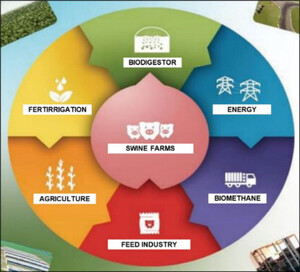
Nutribras was the first Brazilian company to use the self-sustainable swine farming model (Figure 3). The system is based on the concept of circular economy and the products or co-products from one stage of the chain are used as input for the subsequent stages.
Circular system applied by Nutribras. Source: Nutribras.
Citation: International Food and Agribusiness Management Review 29, 2 (2026) ; 10.22434/ifamr.1234
The grains produced are used in the production of animal feed, which in turn, generates waste that, after being transformed into organic fertilizers, biogas/biomethane, and electrical energy, returns to the process again, reducing costs with essential inputs for both agriculture and livestock. With the hogs finished, there is still one last stage of adding value in Nutribras model, which is the production of meat that is sold to more than 5,000 customers in Brazil and around the world.
Nutribras is in four municipalities in the state of Mato Grosso: Sorriso and Vera with swine production and agriculture, while in Nova Ubiratã and Paranatinga, they currently have only agricultural activity. The state is known for being one of the major centers of Brazilian agribusiness, being responsible for the production of 31% of the country’s grains, or 100 million tons in the 2022–2023 harvest, far ahead of the second-largest state, which is obtained less than half (CONAB, 2023).
4.1 Products
The mix of pork products currently includes more than 170 cuts and offal, including, among others, the lines of sausages, bacon, smoked products (loin, ribs and others), seasoned meats (steak, loin, ham and many others), cold cuts (ham and mortadella), and the party line containing special cuts (generally bough for holidays such as Easter). Some examples of the vast portfolio can be seen in Figure 4. In addition to all of these, the newest addition was the Select Duroc meat line.
Nutribras Product Line. Source: Nutribras.
Citation: International Food and Agribusiness Management Review 29, 2 (2026) ; 10.22434/ifamr.1234
4.2 Select Duroc product line
Always looking for expansion, in 2023, a new line of products was introduced to the market, Select Duroc. The line is composed of several cuts produced from animals of the Duroc breed, there are over 15 different cuts, including T-bone, picanha and strip roast.
This breed, originating in the USA, has been called the Angus swine in Brazil, due to the presence of greater marbling and intramuscular fat in the meat of these animals. Furthermore, it is more tender and the color of the meat is more similar to beef. As a result, it has enormous potential to be increasingly included in one of Brazil’s main social events, barbecue, as a protein as tasty as beef and much cheaper and more accessible to the population. Furthermore, Duroc swine have interesting productivity, as their main characteristics are high precocity and ease of weight gain above other popular breeds in the country, bringing advantages to the producer.
All Duroc Select line products have a QR code on their packaging, through which the consumer can scan this label and access information on where and how this product was produced. The available information highlights the company’s philosophy of working towards the sustainability of natural resources, valuing the employees involved, and concerns about animal welfare.
The Duroc line, above all, has proven to be an interesting strategy for opening up markets for the company, bringing with it other lines and products from the company to new distributors.
4.3 Markets and qualifications
As previously mentioned, pork is one of the most consumed proteins worldwide, but in Brazil, it is not yet as important as other meats. Because pork is only the third most consumed in Brazil and due to the low population density of the state of Mato Grosso, there is not enough demand for Nutribras products in the region: approximately 85% of production is destined for the domestic market, yet 30–40% of this ends up leaving the state. Even so, the estimate is that Brazilian pork companies, on average, sell 65% to 70% of their production within the national territory and the remainder is destined for export.
Countries in which the company is licensed are Argentina, Dubai, Hong Kong, Eastern Europe, Uruguay and Vietnam. Soon, China will be another destination in the company’s export portfolio, the organization has already been audited by the Brazilian Ministry and is capable of being qualified and placing China within its scope.
Even though, currently, the risk of trading with China is high, due to pork prices in the Asian country being equivalent to the domestic market price, it is important to have authorization for this importer to take advantage of possible moments of crisis in the Chinese production due to health issues such as African swine fever.
However, another convenient aspect of international operations is that it can even help to promote domestic demand for pork. When working with more mature and demanding markets in terms of cuts, products that were initially developed for export (for example, “matambrito” for a Uruguayan client) also have great acceptance by the national consumer.
4.4 Tocantins farm
Although the Center-West is the region with the highest corn production in Brazil, representing almost 60% of the total produced in the 2022–2023 harvest, a large part of the grain leaves the region and is exported or consumed by other chains and/or Brazilian states (CONAB, 2023). Added to this is the fact that in recent years, swine farmers have received a “new competitor” in the origination of grains: corn ethanol plants. Biofuel production, which currently requires around 8 million tons, will grow at an accelerated pace and estimates are that in the 2030/31 harvest, this number will be greater than 22 million tons (Neves, 2021).
These pressures and recent increases in production costs directly affect the profitability of the activity. Because of that Nutribras constantly seeks ways to reduce risks when purchasing inputs. Considering this and intending to be self-sufficient in corn production by 2025, the company recently acquired a new property in the municipality of Nova Ubiratã in the state of Mato Grosso.
The farm has a total extension of 45 741 ha, of which more than 36 000 ha are Legal Environmental Reserve areas, as required by the Brazilian Forest Code. These areas are legally protected portions of land where native vegetation must be preserved or restored to ensure biodiversity conservation. Of these areas, 14 000 ha are classified as an Ecological Station, highly protected areas that aim to preserve nature with minimal human interference. These stations support scientific research and visitation, such as technical visits with educational purposes (highlighted in darker green in Figure 5).
Tocantins farm. Source: Nutribras.
Citation: International Food and Agribusiness Management Review 29, 2 (2026) ; 10.22434/ifamr.1234
In addition to the environmental side — within the property and highlighted in blue at the top of the map — there is an old village, known as ‘Vila Sinopão’, which was established as a resource support point for travelers in the region, and which remained until the present day. However, the company plans to urbanize this area by allocating land to families and bringing piped water, sewage, and electricity. Additionally, this work could be beneficial to convert part of this population into employees for the company in the future, since the availability of labor is one of the biggest challenges in agribusiness, especially in the Center-West region of Brazil.
This is even a differential of the group, which always seeks to bring development to the communities in which it operates and its employees. In the municipalities of Sorriso and Vera, Nutribras is today the second largest employer in the two cities, bringing significant gains to the region’s population.
There will also be operational benefits, with 75% of the more than 9000 ha of productive area with the potential to be irrigated by pivot systems, the farm has great potential to supply 100% of the corn demand for swine feed, which today is 102 000 tons, but soon, with the planned expansions, it will reach almost 120 000 tons. Another important asset on the farm is a grain storage unit (already in operation) that will allow for better conditions in such an unstable market.
4.5 Strategic alliances
Nutribras also has strategic partnerships in two of the three main strategic areas for its operation (nutrition, genetics, and health), among which the following stand out:
(1) Participation in FairFeed, an animal nutrition company — having a line of products that involves premixes, cores, concentrates, feed, and additives, the company operates with the main livestock production chains such as poultry farming and laying, beef and dairy cattle, in addition, of course, from hog farming. This allows Nutribras access to quality nutrition, with traceability of all ingredients and the possibility of always working with recent launches and technologies.
(2) Participation in DNA Genetics, an American company that exports genetics with advanced programs based on a large database and extensive testing and registration work. It allows the company to bring significant genetic gains, with the Duroc breed being one of the strengths of its operations. Nutribras imports genetic material annually.
4.6 Financial information
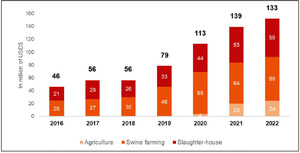
Nutribras’ growth can be seen in the evolution of its revenue in Figure 6. Between 2016 and 2022, there was an increase of 236%, including agriculture-related revenues. Two major moments that stand out were the years 2019 and 2020, in which the annual increase was more significant. This happened due to the expansion in the industrialization process that started being implemented in 2016.
Nutribras Alimentos revenues. Exchange rate: USD 1.00=BRL5.00. Source: Nutribras.
Citation: International Food and Agribusiness Management Review 29, 2 (2026) ; 10.22434/ifamr.1234
Even with the reduction in the participation of slaughterhouses and hog farming in total revenue, an attention point is that the activity is still extremely dependent on one chain: swine. The link and dependence between slaughterhouses and swine farming become more evident when looking at the growth of each business: while slaughterhouses grew 183% in the period, swine farming grew just 2% less (181% between 2016 and 2022). This is also due to Nutribras’ characteristic of having 90% of its supply of animals slaughtered from its farms, but it leaves the company very vulnerable to fluctuations in the market.
Growth is expected to continue in the coming years, however, at lower rates. From 2022 to 2027, the revenue CAGR will be close to 14%, compared to 22% annually between 2016 and 2022.
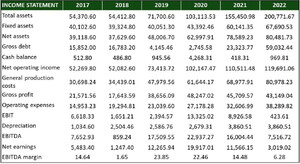
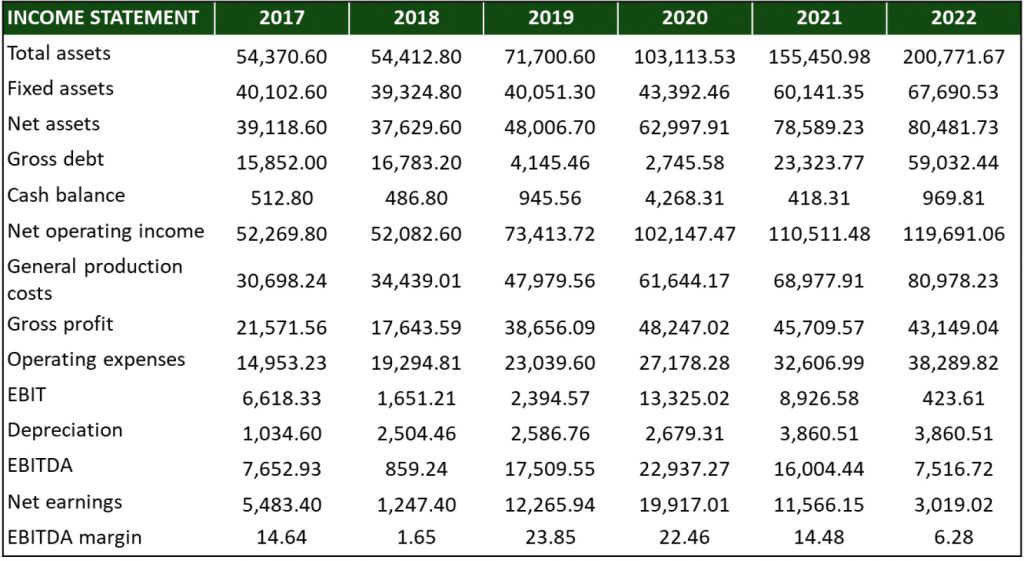
As for the results, the company has been showing a drop in its statements in recent years (Figure 7). Two of the factors behind this were (1) the significant increase in operating expenses; and (2) the increase in debt after 2020, mainly resulting from the acquisition of fixed assets.
Nutribras profit and loss statement (×1000 of dollars) Exchange rate: USD 1.00=BRL5.00. Source: Nutribras.
Citation: International Food and Agribusiness Management Review 29, 2 (2026) ; 10.22434/ifamr.1234
In terms of debt, the company had, in 2020, only 4% of its capital coming from creditors, in the following year it already showed an increase to 30% and, in 2022, almost three-quarters of non-own capital. This increased the interest paid by the company. This debt reflects the pandemic, but also several investments made with the construction of warehouses, acquisition of harvesters, and other significant investments.
Another aggravating factor was the drop in the prices of most agricultural commodities, which significantly affected the entire market. For nine months of 2022, hog production showed a negative result at Nutribras. For 2024, the company seeks to reduce expenses to reverse this situation.
5. Challenges
5.1 Logistics
In addition to the financial challenges, it’s important to note that one of the main challenges to the sector development, which directly affects Nutribras, is the precariousness of Brazilian logistics. The transport matrix is very dependent on road transport, currently more than 60% of cargo transport in Brazil is carried out by road.
It has always been a complaint from agribusiness, especially from players located in the Center-West, that there were more transport options and that existing highways were expanded and improved. As it is a region with low population density and few urban centers, there has never been interest from the private sector in highway concessions while the government has difficulties maintaining and expanding the network, which is largely used by heavy vehicles.
Another point diminishing Mato Grosso’s competitiveness is the distance to the ports. As it is located in the Center West of the country, Mato Grosso has significant distances to travel to reach Brazil’s main shipping ports, Porto de Paranaguá and Porto de Santos when compared to the states of Paraná and Santa Catarina, for example.
An alternative would be to use the ports in the north of the country, but so far there are even fewer transport and access options. Businesspeople in the state hope that there is a project for a 933 km long railway that would make this connection, connecting the municipality of Sinop/MT to Miritituba/PA, where at the terminal it would be transferred to waterways until reaching the seaports.
Although already consolidated, Miritituba’s Port is currently dedicated to the outflow of grains. However, there are already projects to adapt the infrastructure for the export of beef production. The logistical adjustments requested by cattle farming are the same as those necessary to allow the flow of pork, making the state able to compete on greater equality with producers in the south of the country.
5.2 Competition with the south of the country
Even considering supply to the domestic market, the state of Mato Grosso has difficulty being competitive. The reason is competition with the states in the south of the country, Rio Grande do Sul, Santa Catarina and Paraná.
These states maintain the top 3 positions in the country’s production ranking and, again, logistics has its contribution, as the consumer market is also located in the south and southeast of the country, which represent almost 60% of the Brazilian population and with greater purchasing power than other regions (IBGE, 2023).
Historically, these two regions have developed due to a bigger consumer market, but also because of the availability of labor, mainly of immigrants. As a result, the competitive structure of the southern region has become more challenging (with the high presence of competitors), requiring companies located there to constantly surpass themselves and innovate if they want to remain relevant in the market.
The positive aspect for pork producers in the Center-West region is the proximity to national emerging markets. With the population growth and development of cities in the North and Northeast regions, the incipient consumption of pork is also expected to expand, bringing business opportunities. In the competition for these new consumer hubs, distance becomes an advantage for Mato Grosso compared to the southern states.
On the other hand, hog farming in Mato Grosso benefits from being in the Brazilian region which accounts for almost 50% of the country’s grain production (CONAB, 2023). As grain production is a significant cost factor, the margins are more attractive than those of producers in Paraná, Santa Catarina and Rio Grande do Sul states.
Another difference that becomes evident when comparing the two producing regions is the predominantly used production model. Pig farming in southern Brazil is based on the integration model with cooperatives: the integrated farmer receives all the necessary inputs for production from the cooperative and even services such as technical assistance. Their role consists of operating the protocols provided by the buyer. The entire production volume is purchased by the cooperative, which deducts the costs of inputs and services provided and pays the supplier based on the weight gains of the animals (Neves et al., 2016).
Unlike the model applied in the southern region of the country, the production system in Mato Grosso is based on business with verticalized production. This is also a consequence of Brazil’s land structure; in the Center West, there are farmers with vast land holdings, whereas in the South, there are smaller farms with a strong presence of cooperatives. Consequently, for the agribusinesses in Mato Grosso, it is possible to unify all production processes within the organization, from grain cultivation used in feed production to slaughter processes within the company’s facilities.
As a result, in the Mato Grosso system, agribusinesses can generate a higher margin by internalizing all processes. To accomplish this, companies also need to immobilize a significantly larger volume of their investments, while cooperatives in the south do not face this difficulty but need to allocate their funds toward financing integrated producers.
Regarding animal health, as they deal with a smaller number of producers or have their supply, companies like Nutribras handle lower risks and have greater control over herds.
5.3 Labor
When talking about labor, agribusiness has, in recent years, faced considerable problems; farms, cooperatives, and companies complain about both the quantity and quality of the available labor.
One of the explanations for this could be the strong rural exodus that is taking place in the country: a large part of the rural population is gradually leaving the countryside in search of better opportunities in the cities. Not only because of personal desire, but because there has also been a strong concentration of agricultural producers and, increasingly, large farms are consolidating in Brazil.
Another weak point is the education and professional training network, which is even more relevant in the state interior. The best infrastructure of schools, units, and training centers are once again in the capitals or the southeast of the country.
5.4 Sanitary standards
Although Brazil has not presented recent outbreaks of swine fever and African swine fever in commercial animals, the health of the herds is a concern for all participants in the sector, as an epidemic like the one that occurred in China between 2018 and 2019 could decimate herds and halt the marketing of products both on the foreign market and within the national territory, generating immense financial losses across the entire production chain. With this in mind, one of the ongoing projects at Nutribras is compartments.
The compartment model has been officially recognized by the World Organization for Animal Health (WOAH) since 2004. Compartmentalization is a series of processes and operations carried out to ensure that a given area or production is free of diseases. With the compartment model, it is possible to guarantee that animals are “isolated” from the possibility of infection, even in free-range territories where diseases have occurred (Agrishow, 2017).
This occurs because interactions with the environment outside the production unit are minimized by building an infrastructure that includes isolation fences, internal silos for storing feed, sanitary barriers, and limiting access for people and vehicles, among other measures already applied by Nutribras. Once production has been adapted to the system, the necessary documentation must be prepared, proof of the training of the professionals who will work in the compartment and pass the audit to receive certification from the Ministry of Agriculture.
Nutribras is precisely awaiting certification so that it can, in the event of diseases such as swine fever and foot-and-mouth disease in the state of Mato Grosso, continue with its sanitary status as a free area and not have to interrupt its operations and exports. This difference would be extremely important to reduce operational risks and avoid market fluctuations.
5.5 Credit access
Another critical point that affects Nutribras as well as other agribusinesses is the lack of availability and access to credit. Even though agriculture and ag industry require significant volumes of capital, the main reason for entrepreneurs’ difficulties is the conditions of the loan (term, interest rates, among others).
Until the 90s in Brazil, agribusiness financing was extremely dependent on government investment, and even though financial institutions have sought to change this paradigm in recent years, credit for the sector is not yet consolidated in the country and companies count with few lines of credit suited to farmers’ demands (e.g. cash flow needs).
Furthermore, Brazilian interest rates are very high, making some of Nutribras’ initiatives unfeasible. Even considering that it is a pioneering company in sustainable practices and with several projects with this bias, it is difficult to find credit lines that value this type of action with more attractive rates for “green projects”.
6. Next steps
Despite these challenges, Nutribras remains focused on elevating the culture of constant innovation, which means that the company maintains a constant search for new initiatives and investments to keep its business at the forefront of the sector. At the moment, the main next steps that Paulo Lucion plans include the, already mentioned, self-sufficiency in corn production, with the operations of Fazenda Tocantins and a business diversification aimed at reducing dependence on pork business and exposure to market risks, with the development of cattle confinement operations. Furthermore, actions aimed at ESG aspects continue to be a priority and include the project of trucks powered by biomethane and the establishment of sustainable goals for the company (based on the SDGs). However, there are some paths and possibilities that the company will have to evaluate to maintain growth in the coming years:
6.1 Business diversification
Largely due to the high dependence on the pork chain, one strategy could be diversifying into other agribusiness chains and products. In 2022, almost 90% of Nutribras’ revenue came from swine farming or the processing and production of meat in the slaughterhouse, which makes the organization highly susceptible to fluctuations in the market and health risks, for example.
The idea of business diversification would dilute the group’s revenue and it is aligned with initiatives already underway, such as the project to install beef cattle confinement. The proposal is to fatten cattle on the company’s properties and form partnerships with slaughterhouses to outsource the production of beef cuts under the Nutribras brand. However, this diversification into cattle confinement carries inherent risks, including potential strain on operational resources, increased complexity in management systems, and market exposure to beef price volatility.
In any case, beef does not exclude other diversification possibilities, whether through outsourcing or asset ownership. Other possibilities, with synergy, include poultry production (similar production system and same buyers), the production of frozen foods and ready meals (food industry know-how), and the production and commercialization of other crops (use of assets such as land and equipment), among others.
There is also the possibility of working in synergy with existing activities but strengthening them and starting to treat them as distinct businesses. An example is the production of organic fertilizers, which already meet part of the organization’s needs, but its expansion can be evaluated. Working with products with higher added value such as organomineral fertilizers and selling to other producers in the region for instance.
6.2 Intensification and expansion
Another possibility that arises for the future is the intensification of production, which can come from different sources, but with the same goal of generating economies of scale with increased production and/or obtaining greater profitability in current businesses.
Nutribras has the potential to expand its pork production without the need for investment. It is possible to work with an additional 600 animals per day without major changes to the factory, just by increasing the number of sows on the farms. An interesting possibility for the organization is to intensify work with more premium products, such as boneless cuts, seasoned meats, and sausages. In addition to generating revenue, these products also have better margins and can reduce debt (consequently, improving investment capacity).
Another way of intensification could be the acquisition of more properties in the state of Mato Grosso or other Brazilian states to expand plantations or housing pigs, as was done with the acquisition of Fazenda Tocantins. However, except for some specific opportunities to invest in leased land, the company’s leaders identify a lot of room for productivity increases and believe that this is an opportune moment for a paradigm shift: from expanding assets to making them more profitable.
This means improving agricultural productivity, using more organic fertilizer (from pig farming), and achieving better zootechnical indicators in the herd, such as the feed conversion rate, reduction in slaughter time, and the average weight of animals.
Finally, the attempt to incorporate production models from the south of the country may present the worst trade-off. Not only because of the enormous differences in profiles and land structure of the regions but also because working with an integration system would weaken the production model that made Nutribras reach their current level. In the system used in the south, the volume of credit available to Nutribras would be even smaller, as the integrator must provide guarantees and finance the production of these producers. Another negative factor would be the loss of access to hog waste, which is so important for agricultural productivity and the company’s sustainable cycle. Furthermore, it is common for integrated farmers to be unable to achieve productivity and performance as high as the company already has, largely due to the low scale of production.
The sources of intensification can consolidate Nutribras’ position as a large pork company and increase its margins, both by reducing costs and adding value to the products sold.
7. The future of Nutribras
When Paulo arrives home after another long day of work and with many worries still on his mind, he looks at his wife and children thinking about the successful company he has built so far and the legacy he will leave for the next generations of the family. He is aware of the various challenges that surround the company and the sector but the opportunities on the horizon motivate him to return to Nutribras headquarters tomorrow and discuss the best options for the future with the organization’s leaders. Settling down is not an option in a dynamic and competitive environment, so every day counts.
Paulo understands that his constant search for innovation and the group’s concerns with sustainability were the factors that brought them here, but in a competitive and dynamic sector like pork, everything can change in a matter of days. He is confident that by having excellence on three strategic pillars: health, genetics, and nutrition, Nutribras will consolidate itself as one of the leaders in Brazilian agribusiness and a reference for product quality and respect for employees and the environment.
References
ABCS. 2022. Dados de Mercado de Suínos, Primeiro Semestre. Available online at https://abcs.org.br/wp-content/uploads/2022/10/Dados-de-Mercado-Primeiro-Semestre-2022.pdf
Agrishow. 2017. Sistema de compartimentação de suínos: por que ele garantirá maior segurança à suinocultura brasileira? Digital Agrishow. Available online at https://digital.agrishow.com.br/gestao/sistema-de-compartimentacao-de-suinos-por-que-ele-garantira-maior-seguranca-a-suinocultura
CONAB. 2023. Grãos — Por Unidades da Federação. Available online at https://www.conab.gov.br/info-agro/safras/serie-historica-das-safras/itemlist/category/907-graos-por-unidades-da-federacao
Estadão. 2021. Ministério da Agricultura reforça medidas contra a peste suína. Estadão Summit Agro. Available online at https://summitagro.estadao.com.br/saude-no-campo/ministerio-da-agricultura-reforca-medidas-contra-a-peste-suina/
FAO. OECD-FAO Agricultural Outlook 2023-2032. Available online at https://stats.oecd.org/index.aspx
FNP. 2023. Anuário da Agricultura Brasileira 2022. FNP, São Paulo.
IBGE. 2023. Censo 2022. Available online at https://censo2022.ibge.gov.br/
Mateos, G.G., N.L. Corrales, G. Talegón, L. Aguirre, 2024. Pig meat production in the European Union-27: current status, challenges, and future trends. Animal Bioscience 37(4): 755–774. https://doi.org/10.5713/ab.23.0496
MDIC. 2023. ComexStat. Available online at http://comexstat.mdic.gov.br/pt/comex-vis
Miele, M. 2023. Custos de produção de suínos em 2021 nos países da rede InterSWINE. Embrapa Aves e Suínos. Available online at https://ainfo.cnptia.embrapa.br/digital/bitstream/item/252395/1/COT605.pdf
Neves, M.F. 2021. Etanol de milho: cenário atual e perspectivas para a cadeia no Brasil. UNEM, Ribeirão Preto, SP.
Neves, M.F., J.C. Lima Júnior and N. Sá. 2016. Mapeamento da suinocultura brasileira. Serviço Brasileiro de Apoio às Micro e Pequenas Empresas e Associação Brasileira dos Criadores de Suínos, Brasília, DF.
Santiago, A. D. and R. Rossetto. 2022. Adubação orgânica. Available online at https://shre.ink/bhma
See, M.T. 2024. Current status and future trends for pork production in the United States of America and Canada. Animal Bioscience 37(4), 775–785. https://doi.org/10.5713/ab.24.0055
USDA. 2023. Production, supply and distribution. Available online at https://apps.fas.usda.gov/psdonline/app/index.html#/app/advQuery
Corresponding author