Abstract
By applying the PZB gap theorem and its extension of knowledge gap model, this study explores the gaps between the knowledge capabilities needed for social media marketing and what agricultural organizations such as cooperatives or family farms have done from the strategic perception aspect, planning aspect to implementation aspect. This study employs a case study approach combined with a structured questionnaire distributed to top agricultural organizations in Taiwan, focusing on social media marketing within the knowledge management framework. The results of empirical analysis exhibit two gaps significantly impact the corporate performance, namely: the gap between the obtained knowledge capabilities after implementing the social media marketing plan and the actually required ones for the enhancement of corporate competitiveness in social media marketing; the gap between the knowledge capabilities for enhancing corporate competitiveness in social media marketing perceived by senior managers and perceived by employees. Based on the findings, this study suggest the agricultural organizations could try to improve by reducing these two gaps of implementation aspect to improve their performance. Finally, the in-depth interviews with two agricultural organizations could establish a practical understanding of the relationship between these empirical findings and business practices.
1. Introduction
The agriculture industry has long been a crucial part of Taiwan’s economy. With increasing competition, innovation has become essential for agricultural organizations to maintain a competitive edge (Hipp and Grupp, 2005). The rise of the knowledge economy, driven by the internet and information industry, has shifted the focus from traditional production factors like labor and capital to innovation, services, and knowledge (Schneider, 2007). Knowledge, a key intangible asset, is vital for creating firm value (Schneider, 2007). Agricultural organizations face the challenge of generating and sharing knowledge internally to enhance value added (du Plessis, 2007). Research highlights the concept of knowledge gaps — discrepancies between current competencies and those needed for effective knowledge management (Lovrich and Pierce, 1984; Persaud, 2001; Qiu et al., 2014; Tortoriello et al., 2012; Tseng, 2016; Wild et al., 2002). Closing these gaps can significantly improve corporate performance (Lin and Tseng, 2005; Tseng, 2016).The rapid development of the internet has positioned social media as a key tool in future marketing (Leeflang et al., 2014), increasingly serving as the primary channel for customer outreach. This shift has altered interactions between organizations, stakeholders, and social groups. Consequently, agricultural organizations must effectively integrate social media activities to enhance service performance through knowledge management (Lam and Yeung, 2016; McDermott and Prajogo, 2012). This paper uses the PZB model and knowledge gaps framework (Lin and Tseng, 2005), focusing on leading Taiwanese agricultural organizations. It aims to explore knowledge gaps in implementing social media marketing within knowledge management. The goal is to establish a theory of knowledge gaps specific to social media marketing, identifying factors contributing to these gaps and their impact on corporate performance, thereby helping organizations address potential management issues. Subsequent chapters will define the reasons for these gaps and the framework’s basis. Addressing these gaps is crucial for agricultural organizations to enhance the effectiveness of their knowledge management systems. By understanding and resolving these gaps, organizations can improve their social media marketing strategies and ultimately boost overall performance. The solutions proposed in this study are intended to guide agricultural organizations in better aligning their social media activities with knowledge management practices, ensuring a more cohesive and efficient approach to marketing in the digital age. The research framework was designed to explore the relationship between social media marketing strategies and knowledge gaps within the agribusiness sector, utilizing the PZB model as a foundation. The framework identifies five specific knowledge gaps that impact organizational performance, focusing on the alignment between perceived and actual knowledge capabilities required for effective social media marketing. Fundamentally, this study contributes by logically integrating the conceptual PZB model, the practical context of agribusiness, and the core issue of knowledge gaps to develop a theoretically and empirically applicable and valuable framework for examination. In addition to the thought refreshment to the existing literature, the empirical results could also provide good reference value to agribusiness practitioners. We have stated this in the contribution statement.
2. Literature review
2.1 Knowledge management
The concept of knowledge stems from “Epistemology: Theory of Knowledge” in the west. In the past, philosophers categorized knowledge into rationalism and empiricism. Rationalism holds that the source of knowledge is endogenous. It is a product of mind. In contrast, empiricism believes that knowledge is exogenous. It is the knowledge derived by senses (Ragab and Arisha, 2013).
Many scholars have come up with their definitions of knowledge. Nonaka and Takeuchi (1995) introduced the metaphor of a “spiral” of knowledge creation based on the level of technical knowledge implicitness. They emphasized that different levels of knowledge characteristics affect the process of innovation in technology and knowledge. Teece (1996) developed the concept of uncertainty, irreversibility, implicitness, inappropriability, exclusivity and path dependence in the exploration of the relation between these characteristics and technological innovation.
Davenport and Prusak (1998) explained the hierarchical relation of data, information, knowledge and wisdom by referring to the idea of processes and stockpiling. They indicated that data is records of facts. Information is the synthesis of experience and thoughts, stored in files, emails and multimedia. Knowledge is the integration of information as an attempt for value creation. Once knowledge is ingrained into daily life, it becomes routines and norms and affects major decisions and interests. At this juncture, knowledge has become wisdom.
In sum, knowledge starts in the thought of those who possess specific knowledge. In an organization, knowledge is present in documents and storage systems, as well as in day-to-day work, processes, implementation and regulations.
Peter Drucker (1994) introduced the concept of knowledge workers, suggesting that in developed economies, laborers evolve due to higher education, transforming from producers into knowledge workers. The literature on knowledge management is categorized into three main schools: process-based, drivers-based, and capital-based. Bill Gates views knowledge management as the facilitation of management information, ensuring that those who need it receive accurate information to take swift actions. Nonaka and Takeuchi (1995) describe knowledge management as a complex process of creating, collecting, and converting knowledge. Petrash (1996) defines it as delivering the right knowledge at the right time to the right people, enabling optimal decision-making. According to Liebowitz and Megbolugbe (2003), knowledge management is a value creation process using intangible assets within an organization, incorporating artificial intelligence, software engineering, workflow improvements, human resource management, and organizational behavior.
Qiu et al. (2014) emphasize that knowledge is the most important and strategic resource for agricultural organizations, making knowledge management essential for corporate success. Al Saifi (2015) argues that knowledge management helps agricultural organizations maintain a long-term competitive advantage, particularly in today’s rapidly changing environment. Knowledge management involves acquiring, clarifying, and communicating professional perspectives within the organization, facilitating idea exchange among leaders and members. This exchange stimulates thinking and drives innovation in knowledge delivery. Massingham and Massingham (2014) note that significant benefits from knowledge management investments are realized when companies focus on existing and apparent organizational problems. Kim et al. (2014) assert that effective knowledge management systems become the primary source of sustainable competitiveness.
In the knowledge-based economy, it is essential for agricultural organizations to utilize knowledge management in a rapidly changing environment. Agricultural organizations need to constantly develop their knowledge management activities and invest resources in social groups and technologies. The effects of knowledge management on corporate performances can be measured with financial and non-financial metrics (Lin, 2014).
2.2 PZB and the knowledge gap model
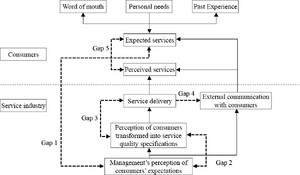
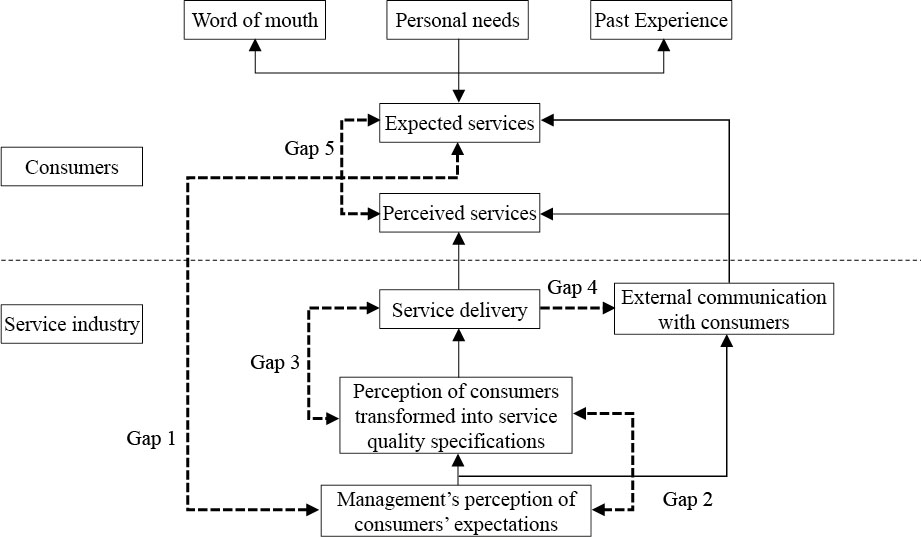
This study utilizes the PZB model (Figure 1), focusing specifically on its application in agribusiness to evaluate service quality gaps within social media marketing strategies, rather than a broad overview of the model. Parasuraman, Zeithaml and Berry (1985) indicate that the quality of services to customers is based on the comparison of their expectations for the services they deserve and their perception of the services they receive. Customers are satisfied with service quality if the perceived quality is better than the expected quality. This was how the PZB Service Quality Model was developed to explore the reasons why service quality falls short of customers’ needs. This is because of the five gaps across the elements from service generation to delivery. To satisfy customers’ needs, it is necessary to eliminate the five service gaps. In particular, the service quality gap is subject to the influence of the other four gaps in the organization.

The PZB model. Source: Parasurman et al. (1985).
Citation: International Food and Agribusiness Management Review 28, 4 (2025) ; 10.22434/ifamr1135
The need for knowledge results in the gap in organizational knowledge (Qiu et al., 2014). Lovrich et al. (1984) explains knowledge gaps with two dimensions: (1) trans-situational attributes for the status of knowledge transmission, i.e. the measurement of knowledge gaps with the characteristics described in socioeconomics; (2) situation-specific characteristics, i.e. the interpretations of knowledge gaps by using the characteristics associated with personal motivations. Tortoriello et al. (2012) believe that the lack of certain prevalent knowledge reduces the volume of absorbed knowledge during the conversion from knowledge sources and knowledge receivers. Agricultural organizations face significant challenges due to insufficient current knowledge, particularly when addressing knowledge gaps during the introduction of new workflows or products. Hall and Andriani describe knowledge gaps as the divide between a company’s existing knowledge base and the future knowledge required. The goal is to enable agricultural organizations to bridge these gaps through internal innovations or external sourcing. Essentially, knowledge gaps represent the difference between the knowledge needed to execute corporate activities and the current knowledge held by organizational personnel. These gaps pertain to both knowledge possession and knowledge inventory, as well as the deployability of that knowledge (McBriar et al., 2003). Knowledge gaps can be further categorized into explicit and implicit types (Panahi et al., 2013).
Zack (1999) uses the SWOT analysis to examine the gaps arising from corporate strategies and knowledge strategies, in order to find ways of closely aligning these two. This is the so-called gap analysis, illustrated in Figure 2. Tiwana (2001) indicates that companies need to elaborate on their strategic objectives in order to define the knowledge required for strategic options and implementations and articulate the gaps between knowledge assets and strategic knowledge. Strategic options refer to the direct influence of technologies, markets, products, services and workflows a company has on knowledge, skillsets and competition in the target markets.
Strategic knowledge gap analysis. Source: Zack (1999).
Citation: International Food and Agribusiness Management Review 28, 4 (2025) ; 10.22434/ifamr1135
The elimination of knowledge gaps to mitigate the impact of environmental changes is one of the most daunting challenges for agricultural organizations (Petersen et al., 2008). Given the increasing risks associated with organizational innovations due to market shifts, the narrowing of knowledge gaps is highly valuable (Qiu et al., 2014). In emerging agricultural economy, knowledge gaps are bound to arise in the process of introducing knowledge management systems (Hall and Andriani, 2002). Therefore, the elimination of knowledge gaps is one of the biggest challenges for agricultural organizations.
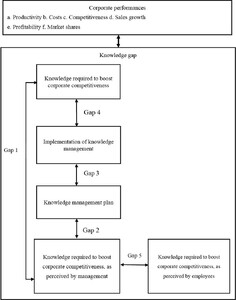
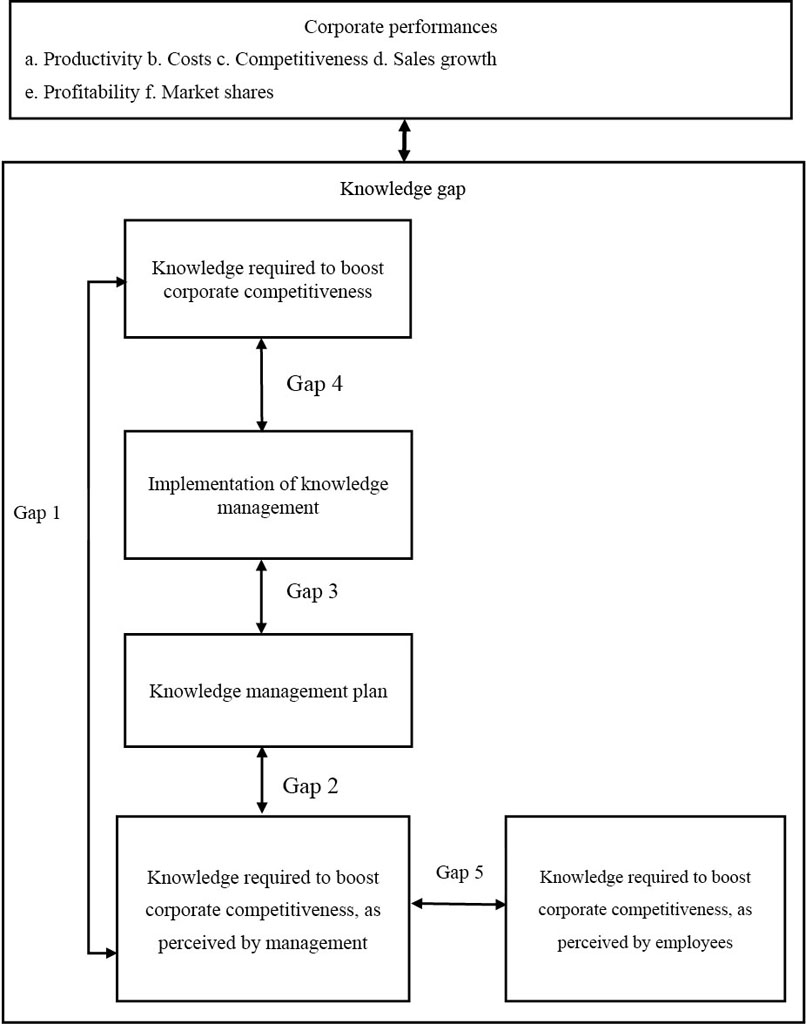
Knowledge gaps occur in agricultural organizations, as well as in such organizations’ relationship with customers. The narrowing of knowledge gaps with customers can effectively boost corporate performances (Tseng, 2016). Qiu et al. (2014) believe that the elimination of knowledge gaps in companies should focus on two issues: (1) the definition of knowledge gaps; (2) the identification of appropriate methods to fill the gap. The research with emphasis on knowledge gap filling is not adequate (Qiu et al., 2014). The effective method will be the understanding of the possible hurdles and difficulties in the promotion of knowledge management and the implementation of measures to overcome these issues. Possible solutions can be found in the knowledge gap model. Lin and Tseng (2005) come up with the knowledge gap model and explores the reasons and solutions for these gaps. The elimination of the knowledge gaps can effectively boost organizational performances (Lin and Tseng, 2005). Figure 3 depicts the knowledge gap model.
Knowledge gap model. Source: Lin and Tseng (2005).
Citation: International Food and Agribusiness Management Review 28, 4 (2025) ; 10.22434/ifamr1135
The above strategy and gap analysis sheds light on the knowledge strategy of organizations as follows:
(1) Strategy gap crisis: The larger the gap in organizational strategy, the higher the risks in organizational operations (Qiu et al., 2014). This means the organization is lacking in the capability needed for sustainable operations. For example, an organization is hoping to upgrade its digital system but has no idea, capability or resources in doing so. The wider the gap, the greater the crisis.
(2) Knowledge management intended to fill in knowledge gaps: Agricultural organizations should have a focus and a sense of directions when it comes to investments in knowledge management. They cannot shell out money randomly. Rather, it is necessary to closely align organizational goals and strategies. Knowledge management cannot stand on its own. Without effective support from strategic initiatives addressing knowledge gaps, it will not be able to boost competitive advantages (Lin and Tseng, 2005). Therefore, the emphasis of knowledge should be on filling the knowledge gaps.
(3) Support system not geared toward current knowledge base: It is essential to devise ways to enhance knowledge for strategic requirements when there is a knowledge gap (Zack, 1999). A head-in-the-sand attitude to make do with existing knowledge bases without looking at strategic needs is wrong.
(4) Full utilization of excess knowledge: If current knowledge exceeds required knowledge, it is called a positive gap or knowledge surplus. At this juncture, it is necessary to devise new ways of utilizing the knowledge.
2.3 Social media and applications in marketing
Social media has fundamentally altered the landscape of consumer behavior and market dynamics, especially in industries like agriculture where traditional marketing channels have historically dominated. Studies have shown that social media platforms not only serve as tools for brand communication but also play a crucial role in shaping consumer perceptions and purchasing decisions. For instance, Agnihotri et al. (2016) highlight that the interactive nature of social media allows consumers to engage with brands more personally, leading to increased trust and loyalty. This is particularly relevant in the agricultural sector, where consumer trust in product quality and sustainability practices is paramount.
Social media is changing the world and has greatly changed the interaction between seller and buyer (Agnihotri et al., 2016), especially for some transforming industries such as modern agriculture. The increasing importance of digital word-of-mouth, as noted by Trusov et al. (2009), underscores the shift from traditional advertising to peer-driven influence. This trend has significant implications for agricultural businesses, which must now manage their online presence more actively to influence consumer perceptions positively. The integration of social media into marketing strategies enables agricultural businesses to reach a broader audience, engage in real-time communication, and gather valuable consumer insights that can inform product development and marketing tactics (Mangold and Faulds, 2009).
However, despite these opportunities, agricultural businesses face unique challenges in adopting social media marketing. One of the primary challenges is the industry’s general resistance to change, as many agricultural organizations are traditionally rooted in practices that prioritize face-to-face interactions and conventional media channels. Furthermore, as noted by Leeflang et al. (2014), there is a significant talent gap within these organizations, particularly in terms of digital literacy and the ability to analyze and leverage social media data effectively. This gap can hinder the successful implementation of social media strategies, making it essential for agricultural businesses to invest in training and development programs that build digital competencies within their workforce.
Another challenge lies in the need for content that resonates with the unique values and concerns of agricultural consumers. Unlike in other industries, where flashy, fast-paced content might dominate, consumers in the agricultural sector may prioritize transparency, sustainability, and the ethical implications of farming practices (Rauschnabel et al., 2012). Therefore, agricultural businesses must carefully tailor their social media content to reflect these values, ensuring that their messaging aligns with the expectations of a more informed and conscientious consumer base.
The connotation of social media is related to Web 2.0. In Web 2.0, social platforms that emphasize “gather, share, and interact” are being widely used. These social platforms can not only create new opportunities for enterprises by increasing the contact time between enterprises, customers, business partners and suppliers, but also provides a new way for the internal operation and collaboration of the enterprises (Culnan et al., 2010).
The benefits of social media applications include not only marketing information transmission, but also demand exploration, customer service, and customer group management, which is to improve the customers’ satisfaction and customers’ rights (Ainin et al., 2015). Furthermore, social media has become a strategic tool of the company rather than just a marketing tool, these brand agricultural organizations are more willing directly contact with consumers, explore their needs, or integrate fans and loyal groups on the platform, then turned into as the corporate resources (Fischer and Reuber, 2011). For example, in social networking platforms such as Facebook, agricultural organizations set up fan pages for consumers to communicate brand image and event promotion (Ainin et al., 2015; Rauschnabel et al., 2012). Leeflang et al. (2014) believe that in the era of the rise of social media, agricultural organizations are facing four marketing challenges: (1) effectively apply customer insights and data to compete in the market; (2) the threatening power by the social media impact the relationship between brands and customers; (3) the ubiquitous new digital metrics and the subsequent effective evaluation criteria for digital marketing activities; (4) the talent gap with analytical capabilities in enterprises is gradually expanding.
In summary, while social media offers powerful tools for enhancing consumer engagement and driving market trends, agricultural businesses must overcome several industry-specific challenges to fully capitalize on these opportunities. Addressing these challenges requires a strategic approach that combines a deep understanding of consumer behavior with the development of digital capabilities within the organization.
3. Methodology
This paper uses the PZB model and the knowledge gap model described by Lin and Tseng (2005) to address the knowledge gap problems in the implementation of social media marketing from the perspective of knowledge management. The purpose is to consolidate and synthesize a modified theory for knowledge gaps in social media marketing.
3.1 Research framework
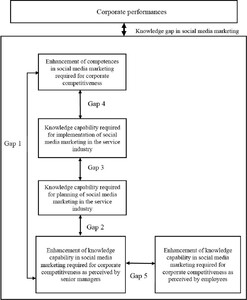
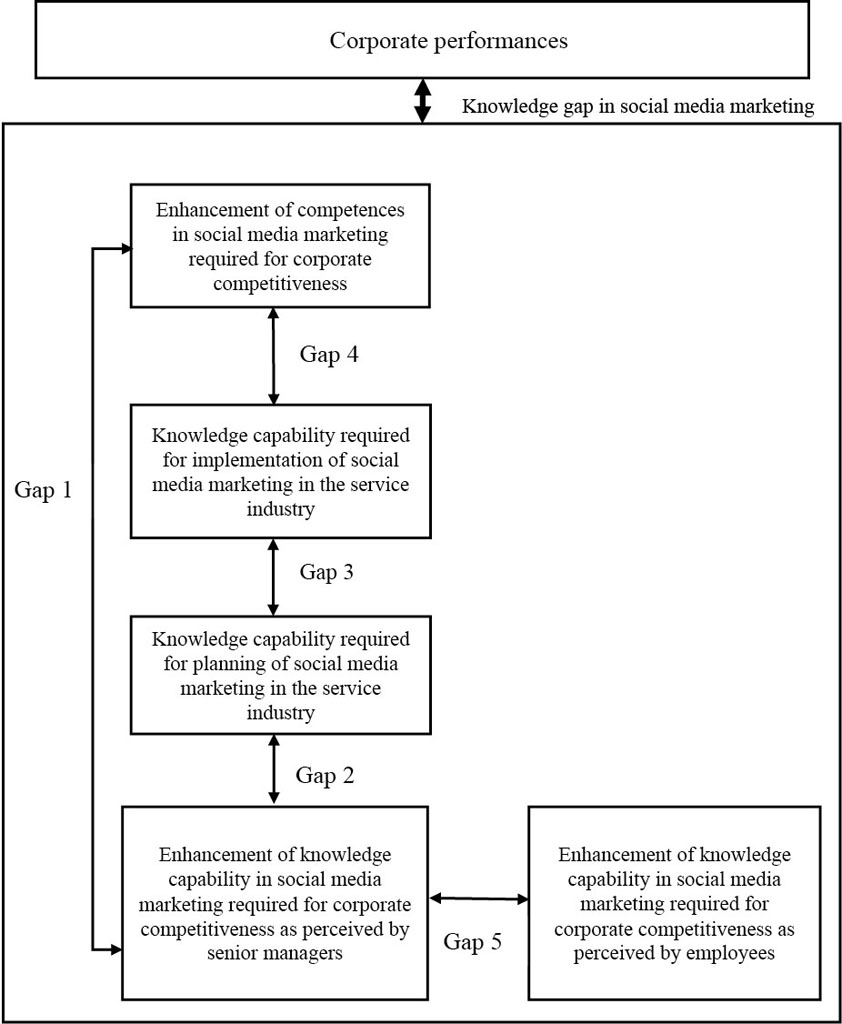
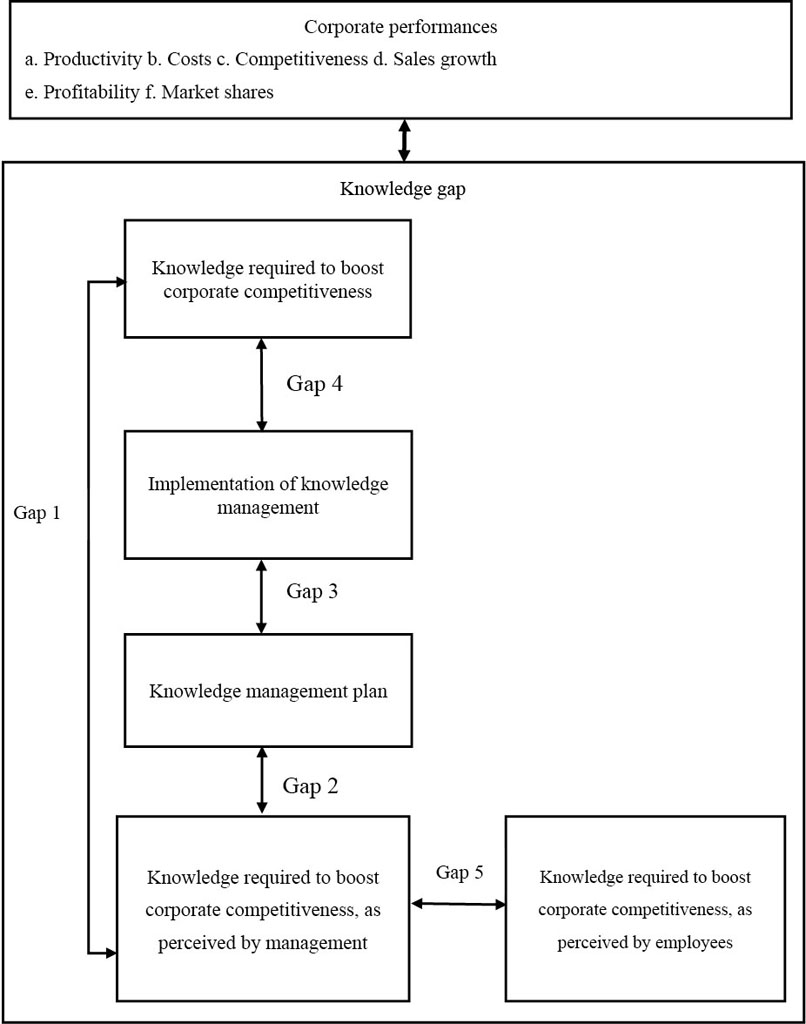
The research framework (Figure 4), based on the knowledge gap model, summarizes the knowledge gap arising from the implementation of social media marketing in the agriculture industry. It consists of two parts: (1) five knowledge gaps (Gap 1–5) in the knowledge management activities for social media marketing in the agriculture industry; (2) whether these knowledge gaps affect organizational performances. In the knowledge management, all knowledge management activities have influence on management activities throughout the company. However, existing competences among management or employees may not be sufficient to support the implementation of knowledge management systems. According to the workflows of knowledge management, this study highlights the possible gaps in the implementation of social media marketing. Each gap is defined as follows:
Research framework.
Citation: International Food and Agribusiness Management Review 28, 4 (2025) ; 10.22434/ifamr1135
Gap 1: For agribusiness enterprises to bridge the knowledge gap in social media marketing, it is essential to accurately identify their core capabilities, understand their position within the industry, and recognize the valuable knowledge they possess. Senior managers often focus predominantly on market and competition analysis, which, while important, can lead to a neglect of the specific knowledge required for developing and maintaining effective social media strategies. This oversight can result in social media initiatives that are misaligned with the company’s actual strengths and market opportunities. Therefore, a more holistic approach is needed to address this knowledge gap. Conducting thorough external environmental reviews, as suggested by Nonaka (1991), allows agribusiness enterprises to gain valuable insights into market trends, customer preferences, and competitive dynamics, which are critical for crafting relevant and impactful social media content. Additionally, gathering hierarchical information feedback from various levels within the enterprise ensures that insights and knowledge from all departments are integrated into the social media strategy, promoting a comprehensive understanding of the company’s capabilities and areas for improvement. Furthermore, engaging in activities outlined in the enterprise knowledge chain model by Lin and Tseng (2005) helps identify, capture, and utilize core knowledge within the organization, ensuring that no critical information is overlooked. This systematic approach to knowledge management ensures that agribusiness organizations can develop more targeted and effective social media strategies that resonate with their audience and enhance their competitive edge. By focusing on these key areas, agribusiness enterprises can effectively bridge the knowledge gap, thereby driving success in the increasingly digital landscape and securing a stronger position in the market.
Gap 2: The gap between the perceived knowledge capabilities of senior managers and their ability to propose a social media marketing plan to enhance corporate competitiveness can significantly hinder an organization’s success. This gap arises from several factors. Firstly, senior managers may not fully understand how to apply social media strategies that utilize the company’s core capabilities and competitive advantages. Without this understanding, social media initiatives may fail to align with the company’s strengths, leading to ineffective marketing efforts. Secondly, there can be a misalignment between the goals of knowledge management and the overall goals of the company. When the objectives of knowledge management do not support the company’s strategic aims, it becomes challenging to leverage knowledge effectively in social media planning. To address and measure this gap, several approaches can be considered. Self-diagnosis within the enterprise, as proposed by Ndlela and Toit (2001), allows organizations to identify internal weaknesses and strengths, providing a clearer picture of where improvements are needed. Additionally, setting clear enterprise goals, as discussed by Rubenstein-Montano et al. (2001), ensures that knowledge management efforts are aligned with the company’s strategic objectives, facilitating more coherent and effective social media strategies. Finally, standardizing knowledge within the enterprise, as suggested by Tiwana (2001), ensures that valuable insights are consistently documented and accessible, enabling more informed decision-making in social media marketing. By focusing on self-diagnosis, goal alignment, and knowledge standardization, companies can bridge the gap between perceived and actual knowledge capabilities, thereby enhancing their ability to create effective social media marketing plans that bolster corporate competitiveness.
Gap 3: The gap between the social media marketing plans proposed by senior managers and the knowledge capabilities required for implementing these plans can significantly affect an organization’s effectiveness in leveraging social media for competitive advantage. Several factors contribute to this gap. One major factor is the discrepancy between the proposal of the plan and its actual implementation. While senior managers may devise comprehensive social media strategies, the execution often falls short due to insufficient alignment with the on-the-ground realities and capabilities of the employees. Another contributing factor is the lack of a comprehensive understanding of the plan’s content by the employees. Without a clear grasp of the strategic objectives and their roles in achieving them, employees may struggle to effectively carry out the proposed social media initiatives. To measure this gap, two key approaches can be employed. First, assessing managers’ commitment to resource input, as discussed by Lin and Tseng (2005), can provide insights into whether adequate resources — such as time, budget, and training — are being allocated to support the implementation of the social media plan. Second, analyzing employee orientation, also suggested by Lin and Tseng (2005), helps determine whether employees are adequately informed, motivated, and prepared to execute the plan. By focusing on these areas, organizations can better understand and address the gap between social media marketing proposals and the knowledge capabilities needed for successful implementation, thereby enhancing their overall social media effectiveness and corporate competitiveness.
Gap 4: The gap between the knowledge capabilities obtained after implementing a social media marketing plan and the knowledge capabilities actually required to enhance corporate competitiveness in social media marketing can hinder an agribusiness organization’s success. This gap often arises from the failure to measure whether the company’s knowledge management system aligns with its strategic goals. In the context of agribusiness, where market dynamics and consumer preferences can be unique and highly specialized, it is especially critical to ensure that knowledge management supports these specific goals. If the knowledge management system is not in sync with the company’s objectives, the knowledge acquired and utilized through social media initiatives may not effectively contribute to competitive advantage. To address this gap, it is crucial to evaluate two key aspects. Firstly, assessing the knowledge stock within the enterprise, as suggested by Nonaka et al. (2000), can provide a comprehensive understanding of the existing knowledge resources. This involves identifying the types of knowledge available, how they are stored, and how accessible they are to those who need them. In agribusiness, this might include knowledge on crop cycles, market trends, consumer preferences, and supply chain logistics. Secondly, conducting thorough knowledge measurement, as proposed by Tiwana (2001), can help determine the effectiveness of the knowledge management system in supporting the company’s goals. This includes evaluating how knowledge is created, shared, and applied within the organization. By focusing on these measures, agribusiness companies can identify discrepancies between the knowledge capabilities they possess and those required for competitive social media marketing, allowing them to make necessary adjustments to their knowledge management systems and strategies. This alignment is essential for leveraging social media effectively to enhance corporate competitiveness and achieve strategic objectives, ultimately leading to more informed decision-making, better market positioning, and improved business outcomes in the agribusiness sector.
Gap 5: The gap between the knowledge capabilities for enhancing corporate competitiveness in social media marketing perceived by senior managers and those perceived by employees can significantly impact the effectiveness of social media strategies in the agribusiness sector. Several factors contribute to this gap. Firstly, the understanding of corporate knowledge by basic-level employees often fails to meet the expectations of senior managers. This discrepancy can result from a lack of proper training or inadequate knowledge dissemination, particularly in an industry as specialized as agribusiness, where technical knowledge about agricultural practices, market trends, and consumer behaviors is crucial. Secondly, traditional organizational structures in agribusiness companies can hinder the development of knowledge management activities, making it difficult for new ideas and knowledge to flow freely within the company. Thirdly, a lack of communication within the company can lead to different perceptions of knowledge capabilities, further exacerbating the gap between management and employees. To address and measure this gap, two key approaches can be employed. The first is assessing teamwork within the enterprise, as suggested by Lin and Tseng (2005). Effective teamwork can facilitate better knowledge sharing and collaboration, ensuring that employees at all levels have a clearer understanding of the corporate knowledge required for social media marketing. In the context of agribusiness, this might involve collaborative projects that integrate insights from agricultural experts, marketers, and frontline employees who interact directly with consumers and understand their preferences and concerns. The second approach is analyzing the perceived differences between senior managers and employees, as proposed by Nonaka (2001). This involves conducting surveys or interviews to gather insights into how both groups perceive the knowledge capabilities within the organization and identifying areas of misalignment. Understanding these perceptions in an agribusiness context might reveal specific gaps in knowledge about sustainable farming practices, supply chain management, or consumer education through social media. By focusing on teamwork and understanding perceived differences, agribusiness companies can better align the knowledge capabilities perceived by senior managers and employees. This alignment is crucial for developing effective social media marketing strategies that enhance corporate competitiveness, leveraging the collective knowledge of the entire organization to achieve strategic objectives in the dynamic agribusiness landscape. Effective social media strategies can help agribusinesses educate consumers about their products, promote sustainable practices, and build stronger brand loyalty, ultimately contributing to the company’s success in a competitive market.
Overall, the idea of knowledge capability comes from the resource-based view by Barney (1991) (Goll et al., 2007). The resource-based view contends that unique resources are the source of competitive advantages. Resources are valuable only when they are scarce, sustainable, inimitable and not tradable (Barney, 1991). The set of the knowledge that allow agricultural organizations to obtain sustainable competitive advantages is knowledge capability. Also, knowledge capability gives agricultural organizations the ability to acquire new knowledge (Goll et al., 2007).
The second part of this paper’s assessment is related to corporate performances. Knowledge is increasingly becoming a key indicator to measure future performances of a company (Zack et al., 2009; Nonaka et al., 2014; Weaven et al., 2014). Many important indicators and measurements have been developed so that senior managers are better equipped to handle this concept. Many scholars try different methods to gauge the contribution of knowledge management (Lin, 2014; Massingham and Massingham, 2014; Ragab and Arisha, 2013). Lin (2014) developed an integrated knowledge management framework to explore how knowledge management and knowledge management strategies affect balanced scorecards, as a set of key indicators of corporate performances. Massingham and Massingham (2014) examine the contribution of knowledge management to companies with both financial and non-financial metrics. In terms of financial metrics, knowledge management can effectively save costs and boost return on investments. As far as non-financial metrics are concerned, knowledge management boasts significant influence on corporate governance, benchmarking, problems solving in the short term and over the long run.
In practice, many managers remain vague about how to balance and manage the knowledge and knowledge management activities and what advantages these efforts can create (Lee and Choi, 2003; Oliva, 2014). It is hardly surprising that managers experience more difficulties in the implementation of knowledge management for social media marketing than in the understanding the role of knowledge management for social media marketing in the corporate. Therefore, this paper seeks to establish the relation between knowledge management activities and corporate performances in terms of social media marketing in the agriculture industry.
Scholars in both schools argued social media marketing (Aimin et al., 2015; Valos et al., 2015) and knowledge management (Barkar et al., 2016; Ye et al., 2016) affect organizational performances by reducing costs, enhancing sales and profitability, and driving corporate innovations. These factors and measurements are incorporated into the questionnaire design (Table 1).
Measurement of organizational performances impacted by KM in social media marketing
Citation: International Food and Agribusiness Management Review 28, 4 (2025) ; 10.22434/ifamr1135
Source: Integrated by this study.3.2 Data collection and analytical methods
This paper collects data with a literature review and a questionnaire survey described as follows:
(1) Research targets: The questionnaires were issued to the personnel in the marketing departments of the top 650 agricultural organizations in the agriculture industry. These people have a more thorough understanding of company strategies and marketing systems and hence they can provide more reliability data.
(2) Questionnaire design: This is a causal study, with a research framework developed with relevant theories and research findings synthesized with a literature review and academic papers. The research dimensions are established and defined according to literature, research background and scenarios. Questions are developed for measurement in the five-point Likert-type scale. The draft questionnaire is reviewed modified before a pre-test. The results from the pre-test are classified and organized in order to amend the unsuitable questions. The finalized questionnaire is then used in the survey.
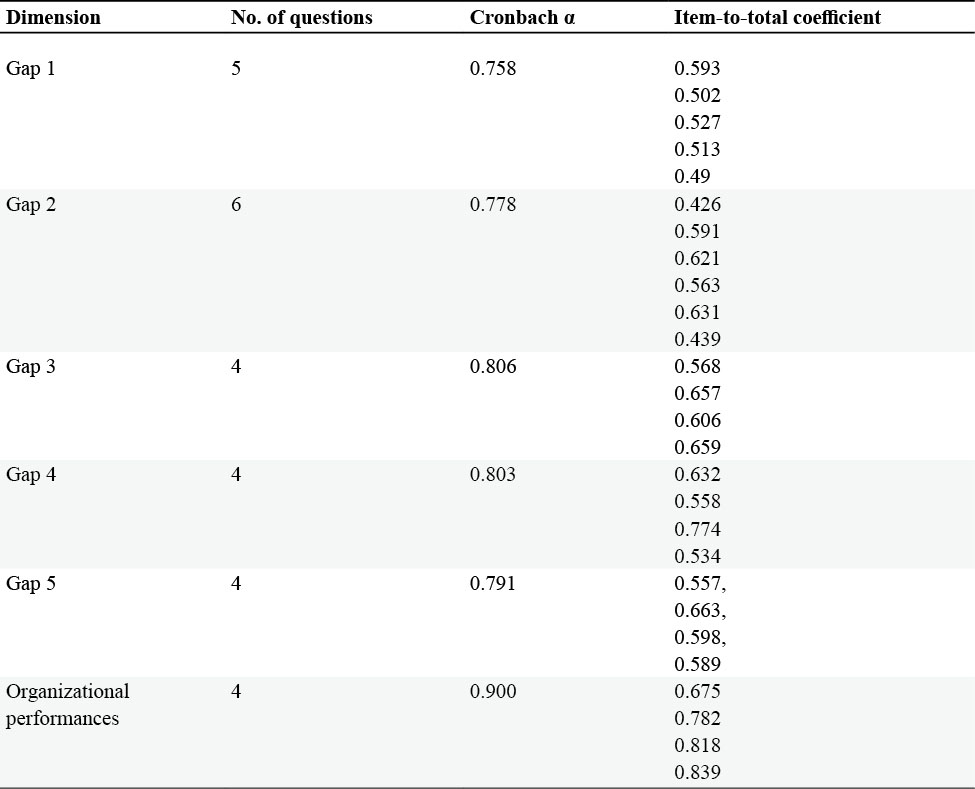
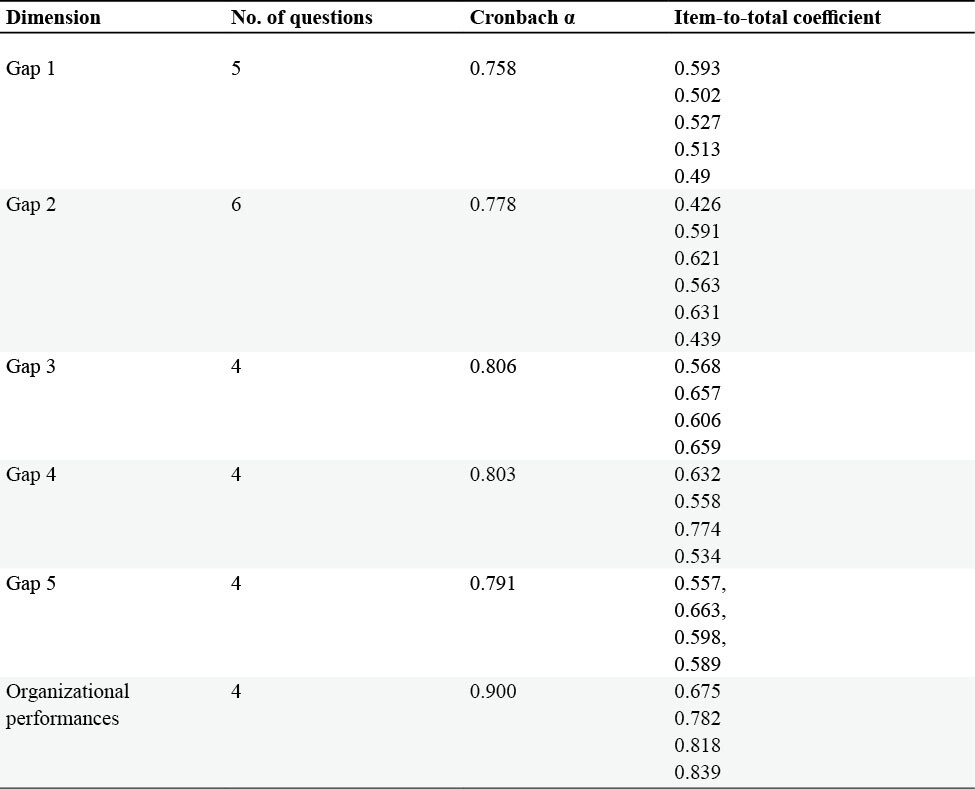
(3) Reliability and validity analysis: This study strives to achieve dependability and confirmability as the validity metrics. In terms of internal validity, the questionnaire is designed in reference to relevant literature, with best efforts to ensure accuracy. Cronbach’s
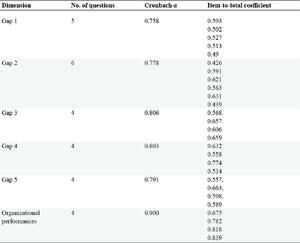
α values and item-to-total coefficients are used to measure factor reliability and variable clustering effects (criterion-related validity). The higher the Cronbach’sα values, the greater the reliability. The typical threshold for Cronbach’sα is set at 0.7. The items with the item-to-total values of lower than 0.4 will be deleted (Hair et al., 2014). All the dimension factors in this study are tested with Cronbach’sα values and item-to-total coefficients for internal consistency. If the results indicate a certain level of internal consistency, this study will continue with follow-up research procedures.(4) Data analysis: This section presents the descriptive statistics and analysis of data.
(1) Cluster analysis: This is the analysis by examining observations grouped together for same attributes. The first step is to determine the number of clusters. This study uses the Ward’s method based on agglomerative coefficients. The second step is to form the clusters by using the K-means method in the non-hierarchical cluster analysis. This study creates clusters based on the size of the gaps from Gap 1 to Gap 5 by deploying a cluster analysis. Squared Euclidean distances are used as the basis for cutoff points (Bierly and Chakrabarti, 1996).
(2) The organizational performances of the clusters are calculated in order to understand the influence of individual gaps on organizational performances.
(3) To further explore the relation between respective gaps and organizational performances, an ANOVA analysis is performed to shed light on the gaps with significant impacts.
4. Data analysis and findings
Based on the research structure and research hypotheses, this paper uses the SPSS17.0 for statistical analysis of the collected questionnaires. Section 1 details the basic data of the sample. Section 2 conducts a reliability and validity analysis. Section 3 performs an ANOVA analysis to examine whether respective knowledge gaps have significant influence on organizational performances.
4.1 Sample data analysis
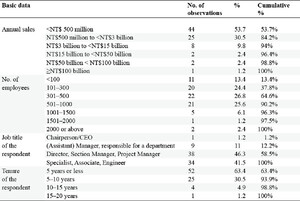
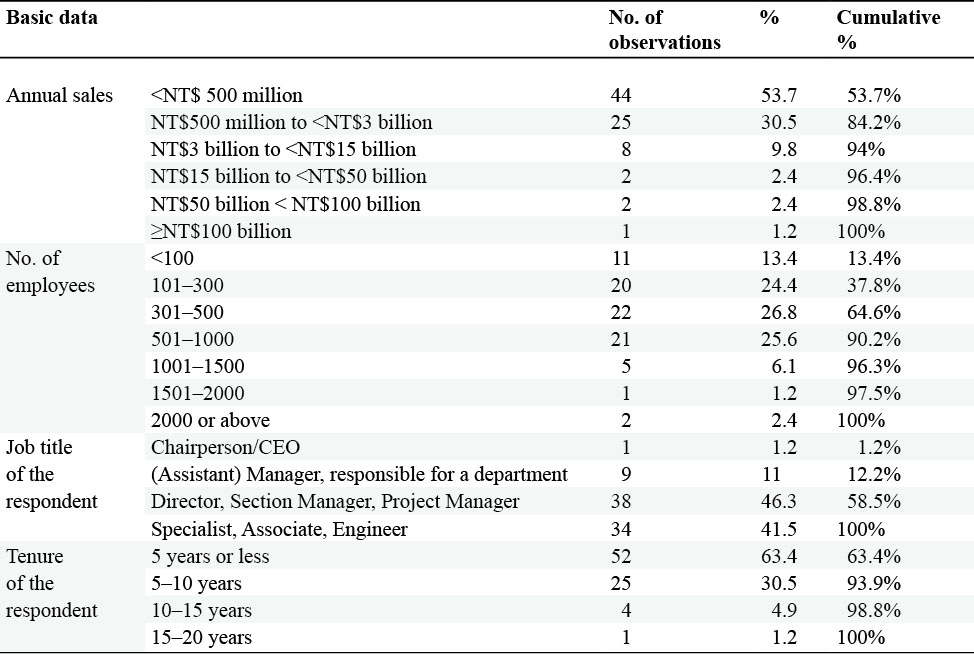
With the questionnaire designed as above, this paper conducts an online survey on the agricultural organizations among the top 650 in the agriculture industry currently engaged in social media marketing. A total of 386 questionnaires are released and 83 are retrieved. After the removal of one invalid questionnaire with incomplete answers, this paper collects 82 effective questionnaires. This study consolidates the basic data of the effective questionnaires and summarizes the annual sales and number of employees of the sampled agricultural organizations, as well as the title and tenure of questionnaire respondents to illustrate the sample structure. The agricultural organizations with an annual revenue of below NT$500 million account for 53.7% of the sample, followed by those with an annual revenue between NT$500 million and less than NT$3 billion (30.5%). In terms of workforce sizes, the agricultural organizations with 301–500 employees account for 26.8% of the sample, followed by those with 501–1000 employees (25.6%). The biggest group of the respondents includes directors, section managers or project managers (46.3%), followed by specialists, associates or engineers (41.5%). As far as tenures are concerned, the biggest group is less than five years (63.4% of the sample), followed by 5–10 years (30.5%). The statistical analysis is shown in Table 2.
Sample basic data
Citation: International Food and Agribusiness Management Review 28, 4 (2025) ; 10.22434/ifamr1135
4.2 Reliability and validity tests
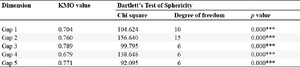
The KMO values of all the questions are greater than 0.5, and all the p values in the Bartlett’s test of sphericity are statistically significant. The numbers shown in Table 3 indicate the suitability for a factor analysis.
KMO values and Bartlett’s Test of Sphericity
Citation: International Food and Agribusiness Management Review 28, 4 (2025) ; 10.22434/ifamr1135
The next step is to conduct a reliability analysis on knowledge gaps, to measure the consistency of questionnaire results. This study uses Cronbach’s
Reliability test.
Citation: International Food and Agribusiness Management Review 28, 4 (2025) ; 10.22434/ifamr1135
4.3 Data analysis and survey results
This study starts with cluster analysis, by examining observations grouped together for same attributes. The first step is to determine the number of clusters based on agglomerative coefficients estimated with Ward’s method. The result suggests the appropriate number of clusters is two. The second step is to form the two clusters by using the K-means method in the non-hierarchical cluster analysis. This study creates clusters based on the level of the gaps from Gap 1 to Gap 5. Squared Euclidean distances are used as the basis for cutoff points to divide the gaps into two groups, Small Group (Group 1) and Large Group (Group 2). According to t-tests, the significance levels of individual groups are all smaller than 0.01. The results are acceptable, with statistically significant differences between the two groups.
To further delve into the influence of gap levels on organizational performances, this study calculates the score of individual groups in organizational performances (Table 5). The results indicate Group 1 outperforms Group 2 in all the metrics.
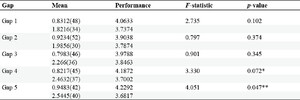
ANOVA of gaps and organizational performances.
Citation: International Food and Agribusiness Management Review 28, 4 (2025) ; 10.22434/ifamr1135
This study performs an ANOVA analysis on the relation between each gap and organizational performances (Table 5). The results suggest that Gap 4 and Gap 5 have significant influence on organizational performances. In other words, Gap 4 (between the knowledge capability required for the planned implementation of social media marketing in the agriculture industry and the enhancement of competences in social media marketing required for corporate competitiveness) and Gap 5 (between the enhancement of knowledge capability in social media marketing required for corporate competitiveness as perceived by senior managers and the enhancement of knowledge capability in social media marketing required for corporate competitiveness as perceived by employees) do affect corporate performances. Also, the values for Gap 1 are also close to statistical significance. It could be the trend. The narrowing of Gap 4 and Gap 5 and the improvement of Gap 1 will significant boost corporate performances. This study does not find statistical significance with Gap 2 or Gap 3.
The above analysis revealed two distinct groups based on the levels of knowledge management gaps within agricultural organizations: A Small Group (Group 1) and a Large Group (Group 2). The analysis showed that Group 1, which exhibited smaller knowledge gaps, outperformed Group 2 across all organizational performance metrics. This finding aligns with existing literature suggesting that organizations with well-managed knowledge resources tend to achieve better performance outcomes (Lin and Tseng, 2005).
The significant differences between the two groups highlight the critical role of effectively bridging knowledge gaps to enhance overall corporate competitiveness. Organizations in Group 1, with smaller gaps, likely benefit from more coherent and aligned knowledge management practices, which in turn support more effective social media marketing strategies. This supports the hypothesis that minimizing knowledge gaps is essential for optimizing organizational performance, particularly in the rapidly evolving landscape of social media marketing.
The discussions for the influence of specific knowledge gaps on organizational performance follows. The ANOVA analysis provided insights into the specific knowledge gaps that significantly influence organizational performance. The results indicate that Gap 4 and Gap 5 have statistically significant impacts on performance metrics, while Gaps 2 and 3 do not. Moreover, Gap 4 represents the gap between the knowledge capabilities required for the planned implementation of social media marketing and the actual capabilities necessary for enhancing corporate competitiveness. The significant influence of Gap 4 suggests that even if organizations have a well-conceived plan, discrepancies in actual knowledge capabilities can severely limit the effectiveness of their social media strategies. This gap highlights the need for continuous assessment and alignment of knowledge capabilities to ensure that the execution of social media marketing plans aligns with the strategic objectives of the organization. Addressing this gap could involve investing in training programs or adopting new technologies that enhance the organization’s ability to implement its social media strategies effectively.
Gap 5 reflects the difference in perceptions between senior managers and employees regarding the knowledge capabilities required for social media marketing. The significance of this gap underscores the importance of internal communication and knowledge sharing within organizations. When senior managers and employees are not aligned in their understanding of the knowledge required, it can lead to inconsistencies in strategy implementation and a lack of coherence in achieving corporate goals. This finding suggests that organizations should prioritize fostering a culture of open communication and collaboration, where knowledge is consistently shared across all levels of the organization. Such an approach could help bridge the perception gap and ensure that all employees are working towards the same objectives with a shared understanding of the necessary knowledge and skills.
We would also like to discuss Implications of Non-Significant Findings. The analysis did not find statistically significant effects for Gap 2 and Gap 3 on organizational performance. Gap 2 relates to the alignment between perceived knowledge capabilities and the ability to propose a social media marketing plan. Gap 3 concerns the gap between the proposed plan and the knowledge capabilities required for its implementation. The lack of significance for these gaps suggests that, within the context of this study, the initial stages of planning and alignment may be less critical than the actual execution and perception alignment highlighted by Gaps 4 and 5.
This finding could imply that while strategic planning and initial alignment are important, the real impact on performance comes from how well the organization can implement its plans and ensure that all members of the organization are aligned in their understanding and execution of these strategies. Organizations may already be doing well in these earlier stages, or the challenges may not be as pronounced as those in the implementation and perception phases. Future research could explore whether this pattern holds true in other contexts or industries, or if different variables might affect the significance of these gaps.
The findings above emphasize the importance of addressing specific knowledge gaps within agricultural organizations to enhance performance, particularly in the context of social media marketing. By focusing on narrowing Gap 4 and Gap 5, organizations can improve their competitiveness and effectiveness in the digital marketplace. The results suggest that while planning and strategic alignment are important, the key to success lies in the execution and internal communication of knowledge capabilities.
5. Conclusions and suggestions
5.1 Conclusions
The research objective is to understand the hurdles for the implementation of social media marketing and identify the key factors contributing to these hurdles. The purpose is to explore the relation between these obstacles and corporate performances by articulating the influence of each gap on corporate performances.
5.1.1 Influence of Gap 1 on corporate performances
Gap 1: The gap between the perceived knowledge capabilities by senior managers and the actually required ones to enhance the corporate competitiveness in social media marketing.
The analytical result on Gap 1 is close to statistical significance. This may suggest a trend. Senior managers examine internal and external factors in order to understand strengths, weaknesses, opportunities and threats, but they may not be able to paint a complete picture. As a result, their perceptions may not completely match the current situations and are unable to boost company performances.
5.1.2 Influence of Gap 2 on corporate performances
Gap 2: The gap between the perceived knowledge capabilities and the capabilities to propose a social media marketing plan to enhance corporate competitiveness.
The research findings show no significant influence from Gap 2. This could suggest agricultural organizations in the agriculture industry are generally doing well in the strategic planning of social media marketing, and Gap 2 as the perception aspect of the KM gap framework (Lin et al., 2005) is not effective.
5.1.3 Influence of Gap 3 on corporate performances
Gap 3: The gap between the plan to implement social media marketing proposed by senior managers and the knowledge capabilities required for the implementation of such plan.
The research findings show no significant influence from Gap 3. This could suggest agricultural organizations in the agriculture industry are generally doing well mostly by the expertise agent in the implementation of strategic planning of social media marketing, and Gap 3 as the plan aspect of the KM gap framework (Lin et al., 2005) is not noticeable.
5.1.4 Influence of Gap 4 on corporate performances
Gap 4: The gap between the obtained knowledge capabilities after implementing the social media marketing plan and the actually required ones for the enhancement of corporate competitiveness in social media marketing.
Research results indicate that Gap 4 exhibits significant influence on corporate performances. Despite full implementations of the strategic plan, the outcome does not seem to be effective in the improvement of corporate performances. Agricultural organizations should strive to resolve these issues in order to alleviate the significant and adverse effects of Gap 4 on corporate performances.
5.1.5 Influence of Gap 5 on corporate performances
Gap 5: The gap between the knowledge capabilities for enhancing corporate competitiveness in social media marketing perceived by senior managers and perceived by employees.
Research results indicate significant influence from Gap 5. The gap between the perception of senior managers and the perception of employees regarding knowledge competence affects corporate performances. The information in the domain of marketing changes and evolves by the day. Therefore, all the employees need to stay informed by constantly learning about new knowledge and discerning the information helpful to agricultural organizations. If employees do not have the passion for learning, the knowledge gap will expand among employees. This may lead to Gap 5 and affect corporate performances.
5.2 Academic and management implications
Academically speaking, this study fills the void in literature on the hurdles for agricultural organizations in the implementation of social media marketing from the perspective of knowledge management. Applying the PZB gap theorem and its extension of knowledge gap model, a total of five possible gaps are identified in the implementation of social media marketing in the agriculture industry. This study explores the factors that contributing to these gaps and confirm the existence of Gap 4 and Gap 5.
In terms of management implications, this study examines the gaps in the implementation of social media marketing by surveying the agricultural organizations in the agriculture industry in Taiwan. Most of the agricultural organizations are facing the business model transformation from OEM to marketing even own branding, the research results of this study could offer the agricultural organizations with same situation in the developing economies in the Southeast Asia some valuable management insights. During the questionnaire survey period, many agricultural organizations indicated their interest in learning about the research findings. In order to further delve into the analytical results and find out the actual situations with individual agricultural organizations, this study conducts in-depth interviews with Company F and Company M interested in learning about research results. It is hoped that these interviews can serve as a reference to the industry.
5.2.1 Management implication of Gap 1
Both Company F and Company M say that it is difficult to stay on top of the environmental changes in the world of marketing. This is the reason why marketing departments typically cooperate with agents who specialize social media marketing. However, this may not always be sufficient. Sometimes agricultural organizations think they are doing well in social media marketing, but competitors simply beat the game. Relatively speaking, this reduces corporate competitiveness.
5.2.2 Management implication of Gap 2 and Gap 3
Both Company F and Company M are pleased with their cooperation with social media marketing agents, given their expertise in planning and implementation.
5.2.3 Management implication of Gap 4
Company M indicates that their social media marketing campaigns aim to increase sales and ROI by promoting new brands and new products and acquiring the list and data of target customers. However, it is difficult to measure the level of attention and goodwill accumulated on social media by marketing new products and new brands. Whilst agricultural organizations want to know whether the brands and products are good, or the marketing is good, or both are good, the answer remains elusive. Online sales and ROI can be measured with click rates and sales records, but it is difficult to measure the contribution of social media to bricks and mortars. Company F uses social media marketing to access customers and customer data. However, their business model makes it impossible to know for sure how many customers are acquired by social media marketing. The only thing for sure is that social media marketing has become indispensable.
In sum, many benefits of social media marketing are difficult to measure, but social media marketing has become essential to the agriculture industry. A good understanding of the benefits of social media can mitigate the adverse effects of Gap 4 on corporate performances.
5.2.4 Management implication of Gap 5
Both Company F and Company M admit that the knowledge gap is wide between senior managers and employees, due to experience, learning new knowledge and knowing about the environmental changes. This even causes high turnovers among entry-level employees. Company M seeks to narrow the gap by enhancing employees’ knowledge base via continued employee training, advocating of sales strategy and business developments by supervisors and constant communication with employees. Company F attempt to develop and nurture new hires via training and education. They also articulate corporate strategy, business goals and management philosophy throughout the hierarchic chain and hope that employees of different levels can fully take on board.
That said, both agricultural organizations still have troubles in bringing entry-level employees up to speed in terms of their knowledge base. As a result, morale and business are low and staff turnovers are high. Company F and Company M are considering recruiting employees with extensive experience in social media marketing to reduce the impact of this problem.
5.3 Limitations and Suggestions to Future Research
This study explores the gaps in social media marketing of the agriculture industry in Taiwan. If resources are available and time constraints are not a problem, it will be a worthwhile exercise to examine the differences of the agriculture industry in Taiwan and other economies. This will allow agricultural organizations in Taiwan pinpoint where they should continue to improve, where they can learn from others, and where they should address shortcomings.
This study explores the relationship between knowledge management and corporate performance in social media marketing from the perspective of knowledge gap. Future research is suggested to use absorptive capacity or dynamic capabilities as the theoretical framework to understand the mechanism deeply. And further discussion on the relationship between other internet issues such as open innovation, crowdfunding, crowdsourcing and knowledge management is suggested.
Furthermore, this paper defines gaps and explores the reasons for these gaps in its knowledge gap model by using the case study method, a qualitative research technique developed by Hammersley (1996). Given a lack of quantitative measures in literature, it is not possible to describe the size of each gap;
Last but not least, the measurement dimensions of the questionnaire were assessed with subjective feelings of respondents. They may be influenced by personal perceptions, experiences, cognition and information. In brief, it is impossible to produce objective answers and hence there are differences between questionnaire findings and real-life situations.
References
Agnihotri, R., R. Dingus, M.Y. Hu and M.T. Krush. 2016. Social media: influencing customer satisfaction in B2B sales. Industrial Marketing Management 53: 172–180.
Ainin, S., F. Parveen, S. Moghavvemi, N.I. Jaafar and N.L. Shuib. 2015. Factors influencing the use of social media by SMEs and its performance outcomes. Industrial Management & Data Systems 115 (3): 570–588.
Alavi, M. and D.E. Leidner. 2001. Review: knowledge management and knowledge management systems: conceptual foundations and research issues. MIS Quarterly 25 (1): 107–136.
Al Saifi, S. A. 2015. Positioning organisational culture in knowledge management research. Journal of Knowledge Management 19 (2): 164–189.
Argote, L. and P. Ingram. 2000. Knowledge transfer: a basis for competitive advantage in firms. Organizational Behavior and Human Decision Processes 82 (1): 150–169.
Ashley, C. and T. Tuten. 2015. Creative strategies in social media marketing: an exploratory study of branded social content and consumer engagement. Psychology & Marketing 32 (1): 15–27.
Bagozzi, R.P. and U.M. Dholakia. 2006. Antecedents and purchase consequences of customer participation in small group brand communities. International Journal of Research in Marketing 23 (1): 45–61.
Bakar, A.H., M.N. Yusof, M.A. Tufail and W. Virgiyanti. 2016. Effect of knowledge management on growth performance in construction industry. Management Decision 54 (3): 735–749.
Barney, J. 1991. Firm resources and sustained competitive advantage. Journal of Management 17 (1): 99–120.
Bierly, P. and A. Chakrabarti. 1996. Generic knowledge strategies in the US pharmaceutical industry. Strategic Management Journal 17 (S2): 123–135.
Chang, C.L.H. and T.C. Lin. 2015. The role of organizational culture in the knowledge management process. Journal of Knowledge Management 19 (3): 433–455.
Chatti, M.A. 2012. Knowledge management: a personal knowledge network perspective. Journal of Knowledge Management 16 (5): 829–844.
Chen, Z.X. and A.M. Francesco. 2000. Employee demography, organizational commitment, and turnover intentions in China: do cultural differences matter? Human Relations 53 (6): 869–887.
Chu, S.C. and Y. Kim. 2011. Determinants of consumer engagement in electronic word–of–mouth (eWOM) in social networking sites. International Journal of Advertising 30 (1): 47–75.
Culnan, M.J., P.J. McHugh and J.I. Zubillaga. 2010. How large U.S. companies can use twitter and other social media to gain business value. MIS Quarterly Executive 9 (4): 243–259.
Dann, S. 2010. Redefining social marketing with contemporary commercial marketing definitions. Journal of Business Research 63 (2): 147–153.
Davenport, T.H., D.W. Long and M.C. Beers. 1998. Successful knowledge management projects. MIT Sloan Management Review 39 (2): 43.
Davenport, T.H. and L. Prusak. 1998. working knowledge: how organizations manage what they know. Harvard Business Press, Cambridge, MA.
Day, G.S. 2011. Closing the marketing capabilities gap. Journal of Marketing 75 (4): 183–195.
du Plessis, M. 2007. The role of knowledge management in innovation. Journal of Knowledge Management 11 (4): 20–29.
Ellison, N.B. 2007. Social network sites: definition, history, and scholarship. Journal of Computer Mediated Communication 13 (1): 210–230.
Fischer, E. and A.R. Reuber. 2011. Social interaction via new social media: (How) can interactions on Twitter affect effectual thinking and behavior? Journal of Business Venturing 26 (1): 1–18.
Goll, I., N. Brown Johnson and A.A. Rasheed. 2007. Knowledge capability, strategic change, and firm performance: the moderating role of the environment. Management Decision 45 (2): 161–179.
Hair, J., W. Black, B.J. Babin and R. Anderson. 2014. Multivariate data analysis. Pearson Education, New York, NY.
Hall, R. and P. Andriani. 2002. Managing knowledge for innovation. Long Range Planning 35 (1): 29–48.
Hammersley, M. 1996. The relationship between qualitative and quantitative research: paradigm loyalty versus methodological eclecticism. In Handbook of Research Methods for Psychology and the Social Sciences. BPS Books, Leicester, pp. 159–174.
He, W., S. Zha and L. Li. 2013. Social media competitive analysis and text mining: a case study in the pizza industry. International Journal of Information Management 33 (3): 464–472.
Hipp, C. and H. Grupp. 2005. Innovation in the service sector: the demand for service–specific innovation measurement concepts and typologies. Research Policy 34 (4): 517–535.
Kaplan, A.M. and M. Haenlein. 2010. Users of the world, unite! The challenges and opportunities of social media. Business Horizons 53 (1): 59–68.
Keinanen, H. and O. Kuivalainen. 2015. Antecedents of social media B2B use in industrial marketing context: customers’ view. Journal of Business & Industrial Marketing 30 (6): 711–722.
Keng, C.J. and H.Y. Ting. 2009. The acceptance of blogs: using a customer experiential value perspective. Internet Research 19 (5): 479–495.
Kim, T.H., J.N. Lee, J.U. Chun and I. Benbasat. 2014. Understanding the effect of knowledge management strategies on knowledge management performance: a contingency perspective. Information & Management 51 (4): 398–416.
Krippendorff, K. 2004. Content analysis: an introduction to its methodology. Sage, Thousand Oaks, CA.
Lam, H.K., A.C. Yeung and T.E. Cheng. 2016. The impact of firms’ social media initiatives on operational efficiency and innovativeness. Journal of Operations Management 47: 28–43.
Lee, H. and B. Choi. 2003. Knowledge management enablers, processes, and organizational performance: an integrative view and empirical examination. Journal of Management Information Systems 20 (1): 179–228.
Leeflang, P.S., P.C. Verhoef, P. Dahlström and T. Freundt. 2014. Challenges and solutions for marketing in a digital era. European Management Journal 32 (1): 1–12.
Liebowitz, J. and I. Megbolugbe. 2003. A set of frameworks to aid the project manager in conceptualizing and implementing knowledge management initiatives. International Journal of Project Management 21 (3): 189–198.
Lin, C. and S.M. Tseng. 2005. The implementation gaps for the knowledge management system. Industrial Management & Data Systems 105 (2): 208–222.
Lin, C., J.M. Yeh and S.M. Tseng. 2005. Case study on knowledge–management gaps. Journal of Knowledge Management 9 (3): 36–50.
Lin, H.F. 2014. A multi–stage analysis of antecedents and consequences of knowledge management evolution. Journal of Knowledge Management 18 (1): 52–74.
Lovrich, N.P. and J.C. Pierce. 1984. “Knowledge gap” phenomena effect of situation–specific and transsituational factors. Communication Research 11 (3): 415–434.
Malterud, K. 2001. Qualitative research: standards, challenges, and guidelines. The Lancet 358 (9280): 483–488.
Mangold, W.G. and D.J. Faulds. 2009. Social media: The new hybrid element of the promotion mix. Business Horizons 52 (4): 357–365.
Massingham, P.R. and R.K. Massingham. 2014. Does knowledge management produce practical outcomes? Journal of Knowledge Management 18 (2): 221–254.
Mayfield, A. 2008. What is social media. Available online at http://www.au.af.mil/au/awc/awcgate/jfq/mayfield_strat_for_soc_media.pdf (accessed 19 October 2016).
Mays, N. and C. Pope. 1995. Rigour and qualitative research. British Medical Journal 311 (6997): 109.
McBriar, I., C. Smith, G. Bain, P. Unsworth, S. Magraw and J.L. Gordon. 2003. Risk, gap and strength: key concepts in knowledge management. Knowledge-Based Systems 16 (1): 29–36.
McCorkle, D.E. and Y.L. McCorkle. 2012. Using LinkedIn in the marketing classroom: exploratory insights and recommendations for teaching social media/networking. Marketing Education Review 22 (2): 157–166.
McDermott, C.M. and D.I. Prajogo. 2012. Service innovation and performance in SMEs. International Journal of Operations & Production Management 32 (2): 216–237.
Mollenkopf, D.A., R. Frankel and I. Russo. 2011. Creating value through returns management: exploring the marketing–operations interface. Journal of Operations Management 29 (5): 391–403.
Ndlela, L.T. and A.S.A. Toit. 2001. Establishing a knowledge management programme for competitive advantage in an enterprise. International Journal of Information Management 21 (2): 151–165.
Nonaka, I. 1991. The knowledge-creating company. Harvard Business Review 69 (6): 96–104.
Nonaka, I. and H. Takeuchi. 1995. The knowledge-creating company: how Japanese companies create the dynamics of innovation. Oxford University Press, Oxford.
Nonaka, I., R. Toyama and N. Konno. 2000. SECI, Ba and leadership: a unified model of dynamic knowledge creation. Long Range Planning 33 (1): 5–34.
Oliva, F.L. 2014. Knowledge management barriers, practices and maturity model. Journal of Knowledge Management 18 (6): 1053–1074.
Paiva, E.L. 2003. Integrating different types of knowledge: an empirical investigation. International Journal of Innovation and Learning 1 (1): 45–55.
Panahi, S., J. Watson and H. Partridge. 2013. Towards tacit knowledge sharing over social web tools. Journal of Knowledge Management 17 (3): 379–397.
Parasuraman, A., V.A. Zeithaml and L.L. Berry. 1985. A conceptual model of service quality and its implications for future research. Journal of Marketing 49 (4): 41–50.
Pashkevich, M., S. Dorai–Raj, M. Kellar and D. Zigmond. 2012. Empowering online advertisements by empowering viewers with the right to choose. Journal of Advertising Research 52 (4): 451–457.
Persaud, A. 2001. The knowledge gap. Foreign Affairs 80 (2): 107–117.
Peter, J.P. and J.C. Olson. 2010. Consumer behavior & marketing strategy. McGraw-Hill, New York, NY.
Petersen, B., T. Pedersen and M.A. Lyles. 2008. Closing knowledge gaps in foreign markets. Journal of International Business Studies 39 (7): 1097–1113.
Petrash, G. 1996. Dow’s journey to a knowledge value management culture. European Management Journal 14 (4): 365–373.
Petts, N. 1997. Building growth on core competences–a practical approach. Long Range Planning 30 (4): 551–561.
Qiu, J., Z. Wang and C. Nian. 2014. An approach to filling firms’ knowledge gaps based on organisational knowledge structure. Journal of Knowledge Management 18 (1): 1–18.
Ragab, M.A. and A. Arisha. 2013. Knowledge management and measurement: a critical review. Journal of Knowledge Management 17 (6): 873–901.
Rauschnabel, P.A., S. Praxmarer and B.S. Ivens. 2012. Social media marketing: how design features influence interactions with brand postings on Facebook. Advances in Advertising Research 3: 153–161.
Rubenstein-Montano, B., J. Liebowitz, J. Buchwalter, D. McCaw, B. Newman, K. Rebeck and T.K.M.M. Team. 2001. A systems thinking framework for knowledge management. Decision Support Systems 31 (1): 5–16.
Schau, H.J., A.M. Muñiz Jr and E.J. Arnould. 2009. How brand community practices create value. Journal of Marketing 73 (5): 30–51.
Schneider, U. 2007. Coping with the concept of knowledge. Management Learning 38 (5): 613–633.
Teece, D.J. 1996. Firm organization, industrial structure, and technological innovation. Journal of Economic Behavior & Organization 31 (2): 193–224.
Thomas, E. and J.K. Magilvy. 2011. Qualitative rigor or research validity in qualitative research. Journal for Specialists in Pediatric Nursing 16 (2): 151–155.
Tiwana, A. and B. Ramesh. 2001. Integrating knowledge on the web. IEEE Internet Computing 5 (3): 32.
Tong, S.T., B.V. Heide, L. Langwell and J. B. Walther. 2008. Too much of a good thing? The relationship between number of friends and interpersonal impressions on Facebook. Journal of Computer Mediated Communication 13 (3): 531–549.
Tortoriello, M., R. Reagans and B. McEvily. 2012. Bridging the knowledge gap: the influence of strong ties, network cohesion, and network range on the transfer of knowledge between organizational units. Organization Science 23 (4): 1024–1039.
Trusov, M., R.E. Bucklin and K. Pauwels. 2009. Effects of word-of-mouth versus traditional marketing: findings from an internet social networking site. Journal of Marketing 73 (5): 90–102.
Tseng, S.M. 2016. The effect of knowledge management capability and customer knowledge gaps on corporate performance. Journal of Enterprise Information Management 29 (1): 51–71.
Valos, M., M.J. Polonsky, F. Mavondo and J. Lipscomb. 2015. Senior marketers’ insights into the challenges of social media implementation in large organisations: assessing generic and electronic orientation models as potential solutions. Journal of Marketing Management 31 (7–8): 713–746.
Vinerean, S., I. Cetina, L. Dumitrescu and M. Tichindelean. 2013. The effects of social media marketing on online consumer behavior. International Journal of Business and Management 8 (14): 66.
Weaven, S., D. Grace, R. Dant and J.R. Brown. 2014. Value creation through knowledge management in franchising: a multi–level conceptual framework. Journal of Services Marketing 28 (2): 97–104.
Wild, R.H., K.A. Griggs and T. Downing. 2002. A framework for e–learning as a tool for knowledge management. Industrial Management & Data Systems 102 (7): 371–380.
Wilson, H.J., P.J. Guinan, S. Parise and B.D. Weinberg. 2011. What’s your social media strategy. Harvard Business Review 89 (7–8): 23–25.
Wright, P.M., G.C. McMahan and A. McWilliams. 1994. Human resources and sustained competitive advantage: a resource-based perspective. International Journal of Human Resource Management 5 (2): 301–326.
Yang, C.C. 2015. The integrated model of core competence and core capability. Total Quality Management & Business Excellence 26 (1–2): 173–189.
Ye, J., B. Hao and P. C. Patel. 2016. Orchestrating heterogeneous knowledge: the Effects of internal and external knowledge heterogeneity on innovation performance. IEEE Transactions on Engineering Management 63 (2): 165–176.
Youtube. 2016. McDonald’s. Available online at https://www.youtube.com/user/McDonaldsUS (accessed 25 November 2016).
Zack, M.H. 1999. Managing codified knowledge. MIT Sloan Management Review 40 (4): 45.
Zack, M., J. McKeen and S. Singh. 2009. Knowledge management and organizational performance: an exploratory analysis. Journal of Knowledge Management 13 (6): 392–409.