Abstract
Anaemia in the elderly increases the risk of cardiovascular disease, cognitive decline, and death. Probiotics have recently been shown to be potentially effective in preventing the onset or improving the condition of anaemia. Here, we retrospectively investigated the relationship between fermented milk intake over the prior 10 years and the risk of developing anaemia during the same period. The participants were community-dwelling Japanese aged 65-94 years who had not developed anaemia in the 10 years prior to the time of the survey. They were divided into two groups based on their intake frequency (<3 or ≥3 days/week, n = 1,186 and n = 238, respectively) of fermented milk products containing Lacticaseibacillus paracasei strain Shirota (LcS products) for the prior 10 years. The incidence and risk of anaemia in the participants were analysed using chi-squared test and Cox proportional hazards regression analysis. The results indicated that incidence of anaemia over the 10-year interval was significantly lower in those who took LcS products ≥3 rather than <3 days/week (anaemia incidence: 0.8% vs 4.0%,
1 Introduction
The incidence of anaemia increases with age 65 years and older; the incidence in this population has been reported to be approximately 17% (Gaskell et al., 2008). Anaemia in the elderly increases the risk of cardiovascular disease (Culleton et al., 2006), decreased quality of life (Den Elzen et al., 2009), cognitive decline (Hong et al., 2013; Lucca et al., 2008), and even mortality (Zakai et al., 2005). The population is rapidly aging worldwide, including in developing regions (Raftery and Sevcikova, 2023), and prevention of anaemia should be addressed to extend both life expectancy and healthy life expectancy in the elderly.
Iron deficiency anaemia, inflammatory anaemia, and renal anaemia are common anaemias that can develop in the elderly (Stauder et al., 2018). Although contributing factors vary, the prevention and treatment of anaemia generally involves dietary guidance regarding iron and folic acid intake or treatment of various chronic diseases (Wicinski et al., 2020). In addition, recent studies have shown that probiotics may be effective in preventing or improving the onset of iron deficiency anaemia. For example, Lactiplantibacillus plantarum 299v (Vonderheid et al., 2019) and Lactococcus lactis subsp. cremoris H61 (Takaragawa et al., 2022) have been reported to promote iron absorption and may inhibit the development or improve the severity of iron deficiency anaemia. However, these studies were performed mainly in younger populations, and the anaemia-preventive effect of probiotics in the elderly has not yet been sufficiently investigated.
Since 2000, we have been conducting an epidemiological study in the community of Nakanojo Town, Gunma Prefecture, Japan (the Nakanojo Study) (Aoyagi et al., 2017, 2019; Aoyagi and Shephard, 2009, 2010, 2011, 2013) to investigate the relationship between health status and lifestyle habits in people aged 65 years and older. In this study, the frequency of consumption of fermented milk products containing Lacticaseibacillus paracasei strain Shirota (LcS products) has been investigated through interviews of participants with nutritionists. LcS is widely consumed around the world as a probiotic strain, showing various beneficial effects on human health, including regulation of intestinal motility (Matsumoto et al., 2006; Nagata et al., 2011, 2016), protection against infection (Gleeson et al., 2011; Kushiro et al., 2019; Nagata et al., 2011; Shida et al., 2017), and immunoregulation (Nagao et al., 2000; Tamura et al., 2007). Some case-control studies have shown that intake of LcS also lowers the risks of bladder (Ohashi et al., 2002) and breast cancers (Toi et al., 2013). Our epidemiological study has previously shown that elderly people who habitually consume LcS products have a lower risk of developing hypertension (Aoyagi et al., 2017) and a lower risk of low frequency of bowel movements (Aoyagi et al., 2019), but the potential benefits of LcS products in preventing or treating anaemia have not been clarified. In this epidemiological study, we investigated the relationship between the intake of lactobacilli and the risk of developing anaemia in the elderly through a retrospective analysis.
2 Materials and methods
Participants
The participants were community-dwelling Japanese volunteers aged 65 years or older who were recruited to the Nakanojo Study (Aoyagi and Shephard, 2009, 2010, 2011, 2013). Inclusion criteria included a willingness to participate, attendance at an annual medical examination, functional independence, and the absence of chronic or progressive conditions that could limit physical activity or have a major effect on the individual’s perceived quality of life (e.g. Parkinson’s disease, Alzheimer’s disease, multiple sclerosis, amyotrophic lateral sclerosis, and dementia) (Aoyagi and Shephard, 2009, 2010, 2011, 2013). In addition, the study excluded participants with anaemia more than 10 years before the time of the survey; those who could not state their age at onset of anaemia; those who were unable to recall the frequency of LcS product intake; or those who had no associated data on smoking, alcohol consumption, or nutrition. Participants provided written informed consent to participate in the study as approved by the Ethics Review Committee of the Tokyo Metropolitan Institute of Gerontology, after the protocol, stresses, and possible risks had been fully explained to them. In the present study, 1,424 participants (683 men, 741 women) aged 65–94 years were selected.
Medical history
Participants were interviewed by a public health nurse or certified nutritionist to determine whether they had been diagnosed with anaemia in accordance with the following criteria: overall physician judgment based on haemoglobin levels below World Health Organization (WHO)-defined reference values (<130 g/l for men, <120 g/l for women) and/or non-specific anaemia symptoms (e.g. fatigue, shortness of breath, pallor, headache). The age at diagnosis was also noted.
Frequency of intake of LcS products
The intake frequency of LcS products was estimated by a certified nutritionist in an interview using pictures of a series of LcS products, including ‘Yakult’, ‘Joie’, ‘Soful’, and ‘Pretio’ (Yakult Honsha, Tokyo, Japan), each of which contains 0.9-100 × 109 live LcS per bottle. Participants were asked how many days/week products of this type were consumed over the prior 10-year period. The frequency of intake of general fermented milk products (hereinafter referred to as ‘overall fermented milk products’), such as yoghurt (and including the above LcS products), was also estimated by the same procedure. The distribution of the intake frequency of LcS products and overall fermented milk products for our population is summarized in Table 1. Participants were classed as consuming a bottle of the product 2 days/week or less (designated as the ‘<3 days/week’ group) or 3 days/week or more (designated as the ‘≥3 days/week’ group), as categorized in the Framingham Heart Study (Wang et al., 2015).

Frequency of consumption of fermented milk products containing Lacticaseibacillus paracasei strain Shirota (LcS) and overall fermented milk products in a sample of 1,424 elderly Japanese individuals
Citation: Beneficial Microbes 2026; 10.1163/18762891-bja00106
Nutrient intake
The nutritional status of the participants was evaluated by nutritionists over a 1-week period using Version 3.5 of the Food Frequency Questionnaire Based on Food Groups (Kenpakusha, Tokyo, Japan) (Takahashi et al., 2001), which is a 20-item questionnaire regarding the consumption of items from 29 food groups and 10 methods of food preparation. On the basis of responses to this questionnaire, the daily consumption of energy, nutrients, and food groups was estimated for the 1-2 month period prior to the start of the study. The estimated nutrients included protein, lipid, carbohydrate, dietary fibre, saturated fatty acids, monounsaturated fatty acids, polyunsaturated fatty acids, cholesterol, sodium, calcium, and iron.
Physical activity patterns and physical health
The average number of steps taken per day was obtained by tracking steps 24 h/day over a 1-month period with a uniaxial acceleration sensor (Lifecorder; Suzuken, Nagoya, Japan), as described previously (Aoyagi and Shephard, 2013). Preferred and maximum walking speeds were determined over a 5-m distance using a stopwatch (SVAE101; Seiko, Tokyo, Japan), as described previously (Aoyagi et al., 2004). Each participant completed two trials for both comfortable and maximum walking speeds; the averaged and the higher velocities were both recorded. Peak handgrip force was assessed for the dominant hand using a Smedley dynamometer (ES-100; Evernew, Tokyo, Japan). Two trials were performed, and the larger of the two readings was recorded. Quantitative ultrasound measurements of the osteosonic index for the calcaneus were made by using an Achilles ultrasonic bone densitometer (AOS-100; Aloka, Musashino, Japan), as described previously (Shephard et al., 2017).
Anthropometric characteristics and blood profiles
The physical characteristics of each participant (including age, height, body mass, body mass index, abdominal circumference, body fat ratio, fat mass, fat-free mass, and muscle mass) were determined by standard anthropometric techniques (Shephard et al., 2013). The biochemical profiles of each participant (red blood cells, haemoglobin, haematocrit, triglyceride, high-density lipoprotein cholesterol, low-density lipoprotein cholesterol, glycosylated haemoglobin A1c, fasting blood sugar, glutamic oxaloacetic transaminase, glutamic pyruvic transaminase, γ-glutamyl transpeptidase, albumin, creatinine, uric acid concentrations, and estimated glomerular filtration rate) were measured by standard methods (Health Sciences Research Institute Inc., Yokohama, Japan).
Statistical analyses
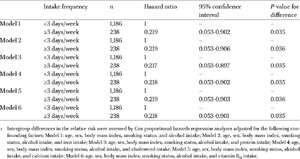
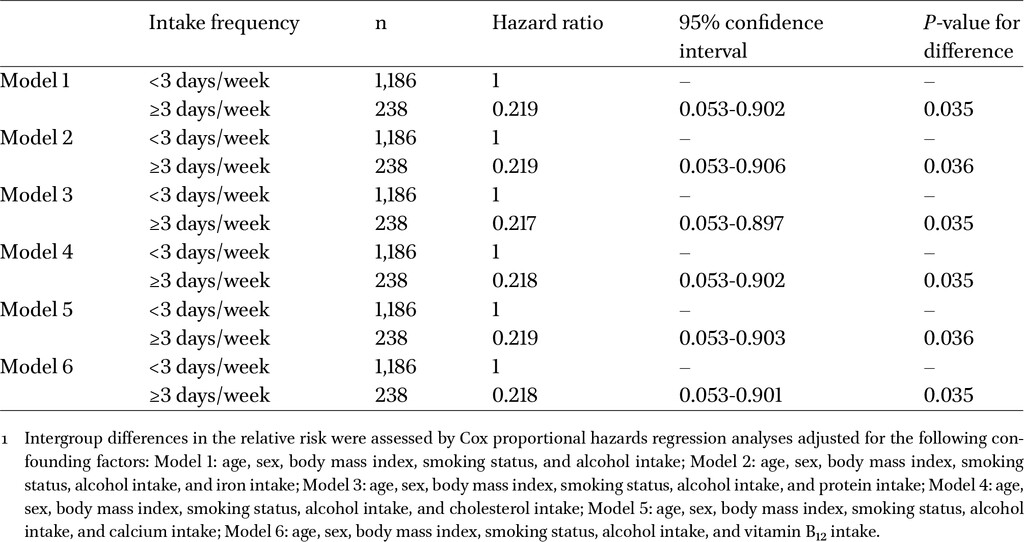
R software Version 4.1.3 (https://cran.r-project.org/) (Ihaka and Gentleman, 1996) was used throughout. Participants were divided into two groups based on the intake frequency of LcS products or overall fermented milk products (<3 and ≥3 days/week). Analysis of covariance was used to assess independent differences between these two groups with respect to anthropometric, physical activity, physical fitness, calcaneal, nutritional, and blood variables after controlling data for age and/or sex. Chi-squared tests were used to assess differences in the male/female ratio, alcohol consumption, smoking, and the incidence of anaemia between the two groups. Kaplan–Meier plots were used to examine changes in the proportion of participants within each group who remained free of anaemia over the 10-year study, and log-rank tests were used to analyse the significance of differences between the two curves. Subgroup analyses for males or females were also performed using the chi-squared test and log-rank test. Cox proportional hazards regression analyses were used to assess independent relationships between intake of LcS products or overall fermented milk products and the estimated risk of anaemia over the 10 years, after controlling for age, sex, body mass index, smoking status, and alcohol consumption (Model 1). In addition, to adjust for differences in the intake of various nutrients between the groups, further analyses were conducted by adding iron (Model 2), protein (Model 3), cholesterol (Model 4), and calcium (Model 5) to the confounding factors in Model 1. Statistical significance was set at the 0.05 threshold.
3 Results
Participant characteristics
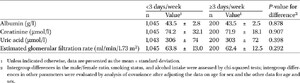
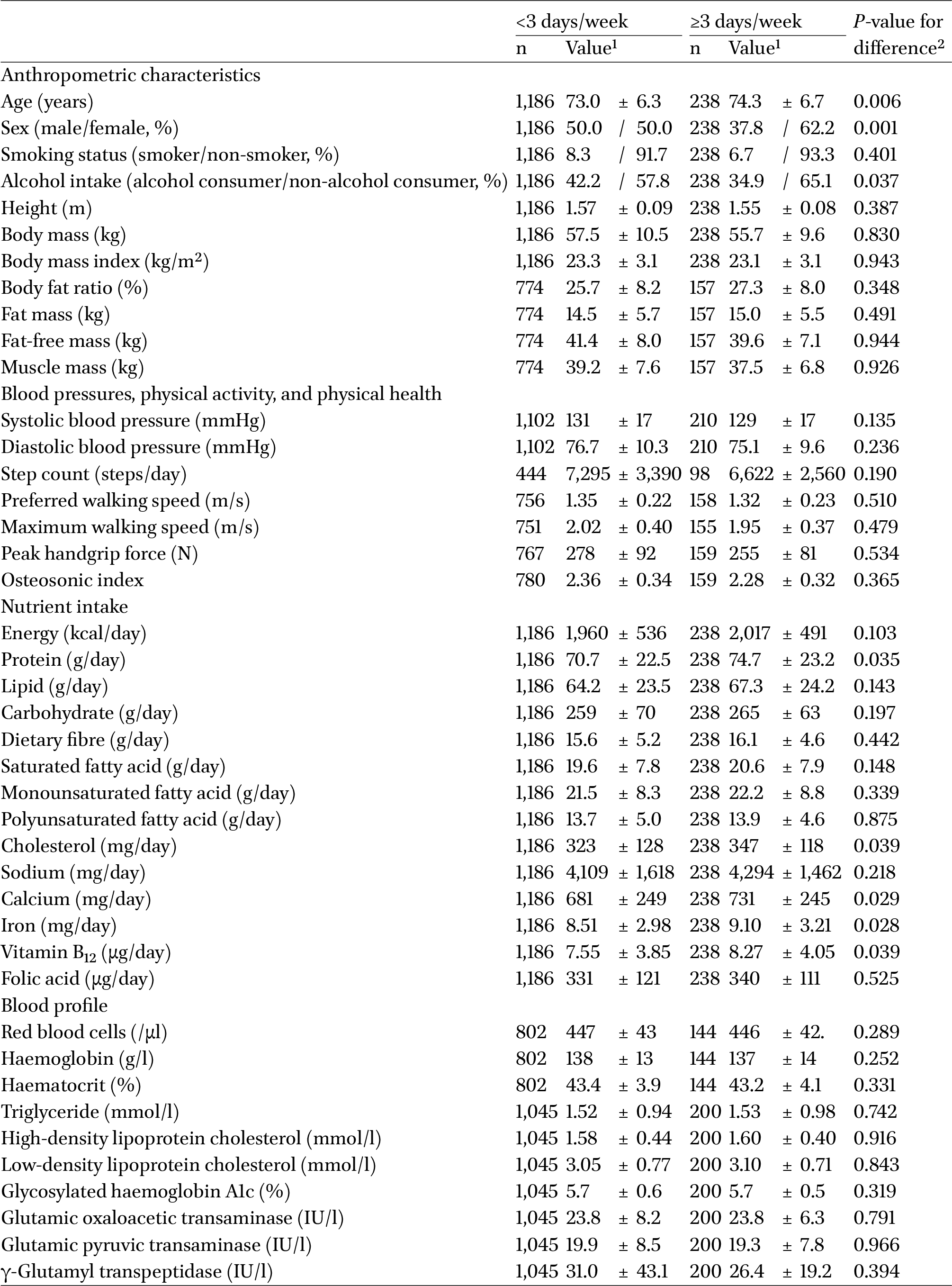
Among the 1,424 Japanese participants aged 65 years or over (mean [±SD] age 73.2 ± 6.4 years), 1,186 and 238 participants consumed LcS products <3 and ≥3 days/week, respectively, and 812 and 612 participants consumed overall fermented milk products <3 and ≥3 days/week, respectively (Table 1). Compared with those who took LcS products <3 days/week, the ≥3 days/week group was older, had a higher percentage of females, and had a lower percentage of habitual alcohol drinkers (Table 2). Daily intake of protein, cholesterol, calcium, iron, and vitamin B12 was also significantly higher in the ≥3 days/week group than in the <3 days/week group (Table 2). There were no differences between groups in blood biochemistry data, including blood anaemia indices (red blood cell count, haemoglobin, haematocrit).
Similar results were observed in the separate analysis for overall fermented milk product and LcS product intake (Supplementary Table S1).
Characteristics of participants consuming LcS products for <3 or ≥3 days per week
Citation: Beneficial Microbes 2026; 10.1163/18762891-bja00106
Relationship between intake of fermented milk products and incidence of anaemia
Over the prior 10 years, 49 participants (28 of 683 males [4.1%] and 21 of 741 females [2.8%]) developed anaemia, with no significant sex differences in incidence. Hence, a sex-integrated analysis was performed as the main result for this study.
The number of participants who developed anaemia in the prior 10 years showed significant group differences (
Males in the group consuming LcS products ≥3 days/week showed a significantly lower incidence of anaemia over the prior 10 years (0 of 90 participants [0%]) than those in the <3 days/week group (28 of 593 participants [4.7%];
Comparison of anaemia risk
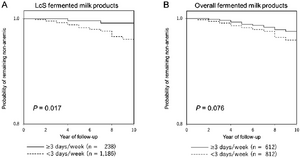
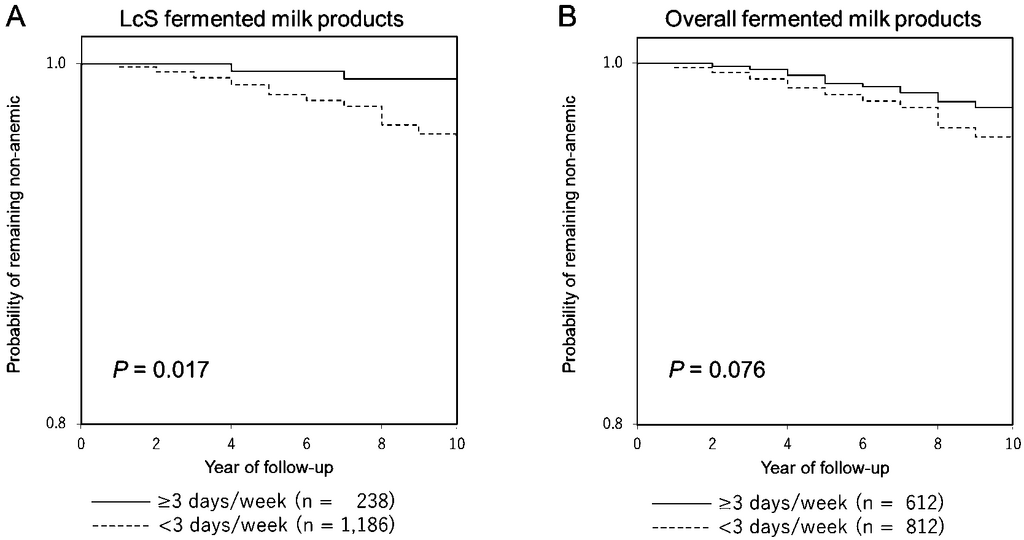
Kaplan-Meier curves showed a significant difference in the rates of individuals without an anaemia diagnosis over 10 years between the groups consuming LcS products <3 and ≥3 days/week (
Kaplan-Meier curves showing the rates of participants without anaemia for the prior 10 years. Log-rank test comparing the rate of participants without anaemia in the groups consuming (A) LcS products or (B) overall fermented milk products ≥3 days/week (solid line) and <3 days/week (dashed line).
Citation: Beneficial Microbes 2026; 10.1163/18762891-bja00106
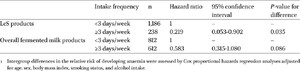
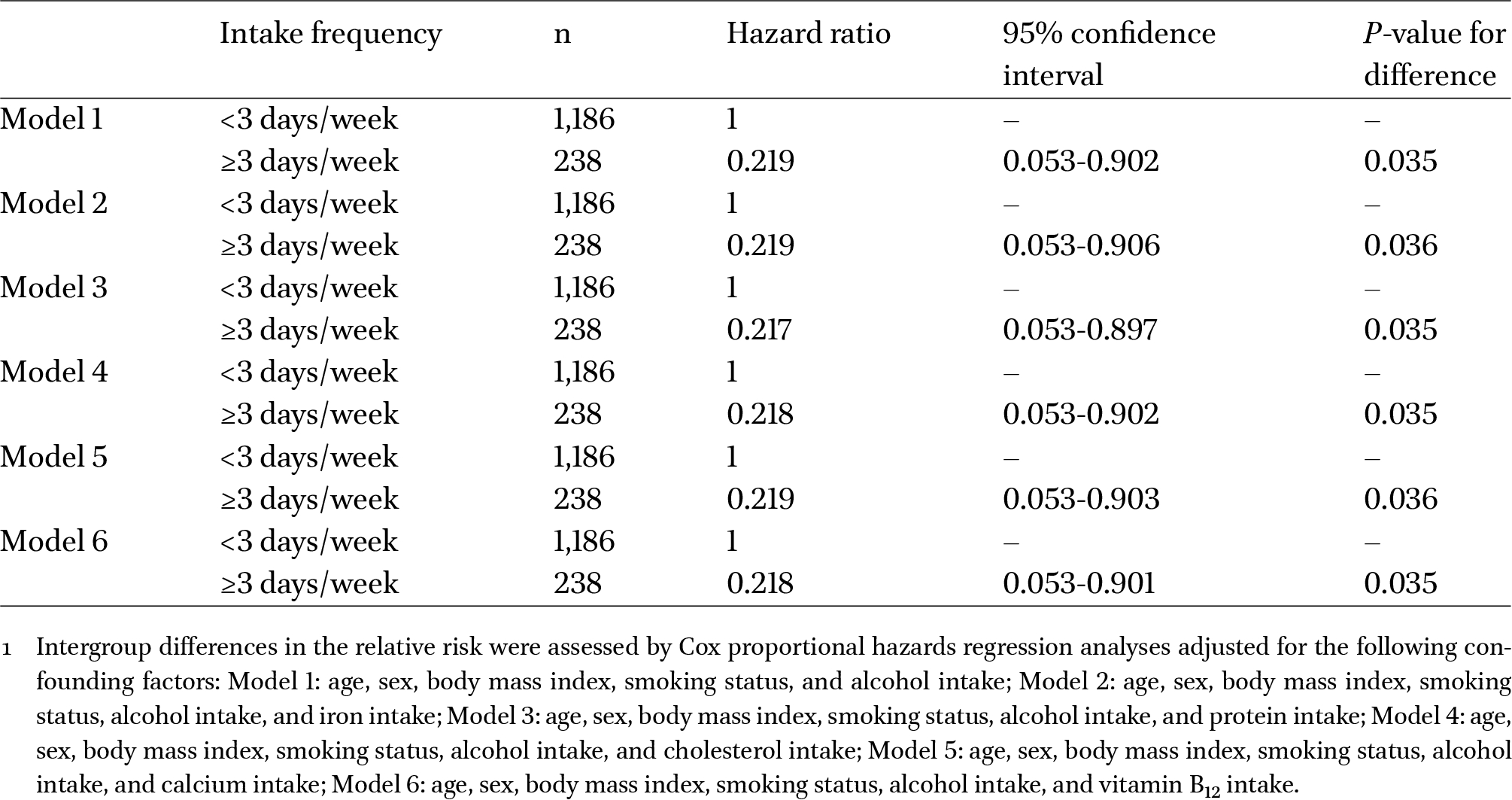
In terms of LcS product intake, a multivariable-adjusted Cox proportional hazards model showed a statistically significant intergroup difference in the incidence of anaemia over the 10-year interval (Table 3), with a substantial advantage to the ≥3 days/week group (hazard ratio [HR] 0.219; 95% confidence interval [CI] 0.053-0.902) relative to the <3 days/week group (
Risk of developing anaemia over the 10-year study in groups consuming LcS products and overall fermented milk products for <3 or ≥3 days per week1
Citation: Beneficial Microbes 2026; 10.1163/18762891-bja00106
Analyses of the intake of various nutrients considering the risk of developing anaemia over a 10-year period among groups consuming LcS products for <3 or ≥3 days per week 1
Citation: Beneficial Microbes 2026; 10.1163/18762891-bja00106
4 Discussion
This retrospective epidemiological study showed that the risk of developing anaemia over the prior 10 years was significantly lower (
The intake of LcS products could suppress the onset of anaemia through several mechanisms, for example by ameliorating iron deficiency, one of the most common causes of nutritional deficiency anaemia (Bergqvist et al., 2006; Camaschella, 2019; Jimenez et al., 2015), which is, in turn, one of the most frequent forms of anaemia. Large amounts of iron are used in the erythropoietic system for haemoglobin synthesis, and a lack of available iron for haematopoiesis leads to anaemia. One effective way to improve iron deficiency is to increase the rate of iron absorption in the body, and lactic acid has been reported to promote iron absorption (Bergqvist et al., 2006; Proulx and Reddy, 2007). Previous studies have shown that lactic acid weakly binds to iron, which maintains iron solubility in the intestinal tract (Scheers et al., 2016). Moreover, more iron is absorbed when lactic acid and iron are co-added to Caco-2 human epithelial cells than when iron alone is added (Bergqvist et al., 2006). LcS produces lactic acid in De Man-Rogosa-Sharpe (MRS) medium, anaerobic International Lactobacillus Sub-committee (ILS) medium, and milk-based culture medium (Makras et al., 2006; Ogawa et al., 2001; Zalán et al., 2010). Because LcS is resistant to gastric and bile acids, which allows it to reach the intestinal tract alive and produce lactic acid (Cook et al., 2023; Koebnick et al., 2003; Takada et al., 2020), it may have enhanced the absorption of iron and prevented anaemia in our study population.
A second possibility is that LcS may have inhibited the anaemia of inflammation. Under chronic inflammation, anaemia develops due to factors such as decreased blood cell lifespan, decreased erythropoiesis in the bone marrow, and inhibition of iron absorption and recycling by hepcidin induced by the proinflammatory cytokine interleukin-6 (Di Paola et al., 2022; Weiss et al., 2019). LcS is known for its unique cell wall polysaccharide, which exhibits anti-inflammatory properties through its anti-IL-6 activity (Matsumoto et al., 2005), and continuous intake of LcS may inhibit the development and exacerbation of chronic inflammation (Okubo et al., 2013). LcS has also been shown to enhance adhesion between epithelial cells of the gastrointestinal tract and inhibits the transfer of intestinal bacteria that cause chronic inflammation into the bloodstream (Sato et al., 2017). Moreover, intake of LcS reduces interleukin-6 production in the blood of patients with chronic inflammation-related diseases, such as allergic rhinitis and depression (Ivory et al., 2008; Zhang et al., 2021). These results suggest that the suppression of chronic inflammation by LcS could contribute to the reduced risk of developing anaemia in habitual consumers of LcS products.
Development of gastrointestinal and other cancers induces anaemia, suggesting a third possibility: that the reduction of anaemia risk by LcS may have been mediated by the inhibitory effect of LcS on cancer development. Cancer patients are known to develop anaemia due to iron deficiency caused by bleeding, decreased blood cell production capacity due to anticancer drugs, and the development of chronic inflammation (Groopman and Itri, 1999; Merchant and Roy, 2012). LcS has shown inhibitory effects against colon cancer, bladder cancer, and breast cancer (Aso et al., 1995; Ishikawa et al., 2005; Ohashi et al., 2002). Although the mechanism by which LcS prevents carcinogenesis has not yet been fully elucidated, the production of toxic substances associated with inhibiting the growth of pathogenic intestinal bacteria (De Preter et al., 2004; Hayatsu and Hayatsu, 1993; Tohyama et al., 1981) and the enhancement of natural killer cells, which inhibit the proliferation of cancer cells (Nagao et al., 2000), may be involved. Although this study could not clarify whether LcS intake reduces the risk of carcinogenesis due to the small number of participants with cancers, the inhibitory effect of LcS on carcinogenesis may consequently lead to the inhibition of the onset of anaemia. Although the relationship between the consumption of overall fermented milk products and the risk of developing anaemia is not clearly defined, differences in the viability of each lactic acid bacterial strain and in their inhibition of chronic inflammation and carcinogenesis may lead to differences in the risk of developing anaemia. It is challenging to indicate that these hypotheses are specific to LcS; however, significant differences were specifically observed with LcS intake (P = 0.035), whereas the consumption of overall fermented milk products demonstrated only marginal significance (
One of the limitations of this study is that it is not possible to discuss the causal relationship between LcS product consumption and the development of anaemia because this was a retrospective epidemiological study. In addition, we have done a sex-specific analysis because the prevalence of anaemia is known to be higher in males than in females among those aged ≥65 years (Bach et al., 2014). However, it was impossible to perform a multivariable analysis due to the low incidence rate of anaemia among the analysed population and the 0% incidence of anaemia among males who consumed LcS products at least 3 days/week. In the female subgroup, the incidence of anaemia was lower in the group consuming LcS products ≥3 days/week, but this difference was not significant. Furthermore, this study did not collect the names of the products consumed, which limits the analysis based on individual product components, such as iron-fortified products. However, because iron-fortified fermented milk and LcS products represent a minor segment of the market, we believe that their effect on our results is likely to be insignificant. Further investigation is needed to determine whether there are sex differences in the relationship between LcS and the development of anaemia.
In conclusion, this retrospective epidemiological study showed that habitual consumption of LcS products on 3 or more days per week may reduce the risk of developing anaemia in the elderly. Anaemia in the elderly is associated with a decline in quality of life and cognitive function, as well as an increased risk of mortality. Our study revealed the potential contribution of habitual intake of a probiotic, such as LcS, to the health of the elderly, although this will need to be substantiated with further research.
Corresponding author; e-mail: aoyagi@tmig.or.jp
Acknowledgements
We gratefully acknowledge the expert technical assistance of the research and nursing staff of the Tokyo Metropolitan Institute of Gerontology, the Yakult Central Institute, the University of Tokyo, and the Nakanojo Public Health Center. We thank the subjects whose conscientious participation made the Nakanojo Study possible. This study was supported by grants [Grant-in-Aid for Encouragement of Young Scientists: 12770037 and Grant-in-Aid for Scientific Research (C): 15500503, (C): 17500493, (B): 19300235, and (B): 23300259] from the Japan Society for the Promotion of Science and grants from the Yakult Honsha Co., Ltd. and the Tokyo Metropolitan Institute of Gerontology.
Authors’ contribution
YA and TS designed the research. TS, RA, KS, SP, SM and HM conducted the research. YA analysed the data. YA and TS drafted the paper. YA has primary responsibility for the final content. All authors critically revised the manuscript for important intellectual content and read and approved the final manuscript.
Conflict of interest
The authors declare that they have no conflict of interest.
References
Aoyagi, Y., Amamoto, R., Park, S., Honda, Y., Shimamoto, K., Kushiro, A., Tsuji, H., Matsumoto, H., Shimizu, K., Miyazaki, K., Matsubara, S. and Shephard, R.J., 2019. Independent and interactive effects of habitually ingesting fermented milk products containing Lactobacillus casei Strain Shirota and of engaging in moderate habitual daily physical activity on the intestinal health of older people. Frontiers in Microbiology 10: 1477. https://doi.org/10.3389/fmicb.2019.01477
Aoyagi, Y., Park, S., Matsubara, S., Honda, Y., Amamoto, R., Kushiro, A., Miyazaki, K. and Shephard, R.J., 2017. Habitual intake of fermented milk products containing Lactobacillus casei strain Shirota and a reduced risk of hypertension in older people. Beneficial Microbes 8: 23-29. https://doi.org/10.3920/BM2016.0135
Aoyagi, Y. and Shephard, R.J., 2009. Steps per day: the road to senior health? Sports Medicine 39: 423-438. https://doi.org/10.2165/00007256-200939060-00001
Aoyagi, Y. and Shephard, R.J., 2010. Habitual physical activity and health in the elderly: the Nakanojo Study. Geriatrics and Gerontology International 10(Suppl 1): S236-243. https://doi.org/10.1111/j.1447-0594.2010.00589.x
Aoyagi, Y. and Shephard, R.J., 2011. A model to estimate the potential for a physical activity-induced reduction in healthcare costs for the elderly, based on pedometer/accelerometer data from the Nakanojo Study. Sports Medicine 41: 695-708. https://doi.org/10.2165/11590530-000000000-00000
Aoyagi, Y. and Shephard, R.J., 2013. Sex differences in relationships between habitual physical activity and health in the elderly: practical implications for epidemiologists based on pedometer/accelerometer data from the Nakanojo Study. Archives of Gerontology and Geriatrics 56: 327-338. https://doi.org/10.1016/j.archger.2012.11.006
Aoyagi, Y., Togo, F., Matsuki, S., Kumazaki, Y., Inoue, S., Takamiya, T., Naka, M. and Shephard, R.J., 2004. Walking velocity measured over 5 m as a basis of exercise prescription for the elderly: preliminary data from the Nakanojo Study. European Journal of Applied Physiology 93: 217-223. https://doi.org/10.1007/s00421-004-1202-6
Aso, Y., Akaza, H., Kotake, T., Tsukamoto, T., Imai, K. and Naito, S., 1995. Preventive effect of a Lactobacillus casei preparation on the recurrence of superficial bladder cancer in a double-blind trial. The BLP Study Group. European Urology 27: 104-109. https://doi.org/10.1159/000475138
Bach, V., Schruckmayer, G., Sam, I., Kemmler, G. and Stauder, R., 2014. Prevalence and possible causes of anemia in the elderly: a cross-sectional analysis of a large European university hospital cohort. Clinical Interventions in Aging 9: 1187-1196. https://doi.org/10.2147/CIA.S61125
Bergqvist, S.W., Andlid, T. and Sandberg, A.S., 2006. Lactic acid fermentation stimulated iron absorption by Caco-2 cells is associated with increased soluble iron content in carrot juice. British Journal of Nutrition 96: 705-711.
Camaschella, C., 2019. Iron deficiency. Blood 133: 30-39. https://doi.org/10.1182/blood-2018-05-815944
Cook, C.M., Makino, H., Kato, K., Blonquist, T., Derrig, L. and Shibata, H., 2023. The probiotic Lacticaseibacillus paracasei strain Shirota (LcS) a fermented milk beverage survives the gastrointestinal tract of generally healthy U.S. Adults. International Journal of Food Sciences and Nutrition 74: 645-653. https://doi.org/10.1080/09637486.2023.2246693
Culleton, B.F., Manns, B.J., Zhang, J., Tonelli, M., Klarenbach, S. and Hemmelgarn, B.R., 2006. Impact of anemia on hospitalization and mortality in older adults. Blood 107: 3841-3846. https://doi.org/10.1182/blood-2005-10-4308
De Preter, V., Geboes, K., Verbrugghe, K., De Vuyst, L., Vanhoutte, T., Huys, G., Swings, J., Pot, B. and Verbeke, K., 2004. The in vivo use of the stable isotope-labelled biomarkers lactose-[15N]ureide and [2H4]tyrosine to assess the effects of pro- and prebiotics on the intestinal flora of healthy human volunteers. British Journal of Nutrition 92: 439-446. https://doi.org/10.1079/bjn20041228
Den Elzen, W.P., Willems, J.M., Westendorp, R.G., de Craen, A.J., Assendelft, W.J. and Gussekloo, J., 2009. Effect of anemia and comorbidity on functional status and mortality in old age: results from the Leiden 85-plus Study. Canadian Medical Association Journal 181: 151-157. https://doi.org/10.1503/cmaj.090040
Di Paola, A., Tortora, C., Argenziano, M., Marrapodi, M.M. and Rossi, F., 2022. Emerging Roles of the Iron Chelators in Inflammation. International Journal of Molecular Sciences 23: 7977. https://doi.org/10.3390/ijms23147977
Gaskell, H., Derry, S., Andrew Moore, R. and McQuay, H.J., 2008. Prevalence of anaemia in older persons: systematic review. BMC Geriatrics 8: 1. https://doi.org/10.1186/1471-2318-8-1
Gleeson, M., Bishop, N.C., Oliveira, M. and Tauler, P., 2011. Daily probiotic’s (Lactobacillus casei Shirota) reduction of infection incidence in athletes. International Journal of Sport Nutrition and Exercise Metabolism 21: 55-64. https://doi.org/10.1123/ijsnem.21.1.55
Groopman, J.E. and Itri, L.M., 1999. Chemotherapy-induced anemia in adults: incidence and treatment. Journal of the National Cancer Institute 91: 1616-1634. https://doi.org/10.1093/jnci/91.19.1616
Hayatsu, H. and Hayatsu, T., 1993. Suppressing effect of Lactobacillus casei administration on the urinary mutagenicity arising from ingestion of fried ground beef in the human. Cancer Letters 73: 173-179. https://doi.org/10.1016/0304-3835(93)90261-7
Hong, C.H., Falvey, C., Harris, T.B., Simonsick, E.M., Satterfield, S., Ferrucci, L., Metti, A.L., Patel, K.V. and Yaffe, K., 2013. Anemia and risk of dementia in older adults: findings from the Health ABC study. Neurology 81: 528-533. https://doi.org/10.1212/WNL.0b013e31829e701d
Ihaka, R. and Gentleman, R., 1996. R: A Language for Data Analysis and Graphics. Journal of Computational and Graphical Statistics 5: 299-314. https://doi.org/10.2307/1390807
Ishikawa, H., Akedo, I., Otani, T., Suzuki, T., Nakamura, T., Takeyama, I., Ishiguro, S., Miyaoka, E., Sobue, T. and Kakizoe, T., 2005. Randomized trial of dietary fiber and Lactobacillus casei administration for prevention of colorectal tumors. International Journal of Cancer 116: 762-767. https://doi.org/10.1002/ijc.21115
Ivory, K., Chambers, S.J., Pin, C., Prieto, E., Arques, J.L. and Nicoletti, C., 2008. Oral delivery of Lactobacillus casei Shirota modifies allergen-induced immune responses in allergic rhinitis. Clin Exp Allergy 38: 1282-1289. https://doi.org/10.1111/j.1365-2222.2008.03025.x
Jimenez, K., Kulnigg-Dabsch, S. and Gasche, C., 2015. Management of iron deficiency anemia. Gastroenterology and Hepatology 11: 241-250.
Koebnick, C., Wagner, I., Leitzmann, P., Stern, U. and Zunft, H.J., 2003. Probiotic beverage containing Lactobacillus casei Shirota improves gastrointestinal symptoms in patients with chronic constipation. Canadian Journal of Gastroenterology 17: 655-659. https://doi.org/10.1155/2003/654907
Kushiro, A., Shimizu, K., Takada, T., Kusunoki, I. and Aiba, N., 2019. Decreased number of days of fever detection and duration of fever with continuous intake of a fermented milk drink: a randomized, double-blind, placebo-controlled study of elderly nursing home residents. Bioscience of Microbiota Food and Health 38: 151-157. https://doi.org/10.12938/bmfh.18-024
Lucca, U., Tettamanti, M., Mosconi, P., Apolone, G., Gandini, F., Nobili, A., Tallone, M.V., Detoma, P., Giacomin, A., Clerico, M., Tempia, P., Guala, A., Fasolo, G. and Riva, E., 2008. Association of mild anemia with cognitive, functional, mood and quality of life outcomes in the elderly: the ‘Health and Anemia’ study. PLoS ONE 3: e1920. https://doi.org/10.1371/journal.pone.0001920
Makras, L., Triantafyllou, V., Fayol-Messaoudi, D., Adriany, T., Zoumpopoulou, G., Tsakalidou, E., Servin, A. and De Vuyst, L., 2006. Kinetic analysis of the antibacterial activity of probiotic lactobacilli towards Salmonella enterica serovar Typhimurium reveals a role for lactic acid and other inhibitory compounds. Research in Microbiology 157: 241-247. https://doi.org/10.1016/j.resmic.2005.09.002
Matsumoto, K., Takada, T., Shimizu, K., Kado, Y., Kawakami, K., Makino, I., Yamaoka, Y., Hirano, K., Nishimura, A., Kajimoto, O. and Nomoto, K., 2006. The effects of a probiotic milk product containing Lactobacillus casei strain Shirota on the defecation frequency and the intestinal microflora of sub-optimal health state volunteers: a randomized placebo-controlled cross-over study. Bioscience and Microflora 25: 39-48. https://doi.org/10.12938/bifidus.25.39
Matsumoto, S., Hara, T., Hori, T., Mitsuyama, K., Nagaoka, M., Tomiyasu, N., Suzuki, A. and Sata, M., 2005. Probiotic Lactobacillus-induced improvement in murine chronic inflammatory bowel disease is associated with the down-regulation of pro-inflammatory cytokines in lamina propria mononuclear cells. Clinical and Experimental Immunology 140: 417-426. https://doi.org/10.1111/j.1365-2249.2005.02790.x
Merchant, A.A. and Roy, C.N., 2012. Not so benign haematology: anaemia of the elderly. British Journal of Haematology 156: 173-185. https://doi.org/10.1111/j.1365-2141.2011.08920.x
Nagao, F., Nakayama, M., Muto, T. and Okumura, K., 2000. Effects of a fermented milk drink containing Lactobacillus casei strain Shirota on the immune system in healthy human subjects. Bioscience, Biotechnology, and Biochemistry 64: 2706-2708. https://doi.org/10.1271/bbb.64.2706
Nagata, S., Asahara, T., Ohta, T., Yamada, T., Kondo, S., Bian, L., Wang, C., Yamashiro, Y. and Nomoto, K., 2011. Effect of the continuous intake of probiotic-fermented milk containing Lactobacillus casei strain Shirota on fever in a mass outbreak of norovirus gastroenteritis and the faecal microflora in a health service facility for the aged. British Journal of Nutrition 106: 549-556. https://doi.org/10.1017/S000711451100064X
Nagata, S., Asahara, T., Wang, C., Suyama, Y., Chonan, O., Takano, K., Daibou, M., Takahashi, T., Nomoto, K. and Yamashiro, Y., 2016. The effectiveness of Lactobacillus beverages in controlling infections among the residents of an aged care facility: a randomized placebo-controlled double-blind trial. Annals of Nutrition and Metabolism 68: 51-59. https://doi.org/10.1159/000442305
Ogawa, M., Shimizu, K., Nomoto, K., Tanaka, R., Hamabata, T., Yamasaki, S., Takeda, T. and Takeda, Y., 2001. Inhibition of in vitro growth of Shiga toxin-producing Escherichia coli O157:H7 by probiotic Lactobacillus strains due to production of lactic acid. International Journal of Food Microbiology 68: 135-140. https://doi.org/10.1016/s0168-1605(01)00465-2
Ohashi, Y., Nakai, S., Tsukamoto, T., Masumori, N., Akaza, H., Miyanaga, N., Kitamura, T., Kawabe, K., Kotake, T., Kuroda, M., Naito, S., Koga, H., Saito, Y., Nomata, K., Kitagawa, M. and Aso, Y., 2002. Habitual intake of lactic acid bacteria and risk reduction of bladder cancer. Urologia Internationalis 68: 273-280. https://doi.org/10.1159/000058450
Okubo, H., Sakoda, H., Kushiyama, A., Fujishiro, M., Nakatsu, Y., Fukushima, T., Matsunaga, Y., Kamata, H., Asahara, T., Yoshida, Y., Chonan, O., Iwashita, M., Nishimura, F. and Asano, T., 2013. Lactobacillus casei strain Shirota protects against nonalcoholic steatohepatitis development in a rodent model. American Journal of Physiology – Gastrointestinal and Liver Physiology 305: G911-918. https://doi.org/10.1152/ajpgi.00225.2013
Proulx, A.K. and Reddy, M.B., 2007. Fermentation and lactic acid addition enhance iron bioavailability of maize. Journal of Agricultural and Food Chemistry 55: 2749-2754. https://doi.org/10.1021/jf0630015
Raftery, A.E. and Sevcikova, H., 2023. Probabilistic population forecasting: Short to very long-term. International Journal of Forecasting 39: 73-97. https://doi.org/10.1016/j.ijforecast.2021.09.001
Sato, J., Kanazawa, A., Azuma, K., Ikeda, F., Goto, H., Komiya, K., Kanno, R., Tamura, Y., Asahara, T., Takahashi, T., Nomoto, K., Yamashiro, Y. and Watada, H., 2017. Probiotic reduces bacterial translocation in type 2 diabetes mellitus: A randomised controlled study. Science Reports 7: 12115. https://doi.org/10.1038/s41598-017-12535-9
Scheers, N., Rossander-Hulthen, L., Torsdottir, I. and Sandberg, A.S., 2016. Increased iron bioavailability from lactic-fermented vegetables is likely an effect of promoting the formation of ferric iron (Fe(3+)). European Journal of Nutrition 55: 373-382. https://doi.org/10.1007/s00394-015-0857-6
Shephard, R.J., Park, H., Park, S. and Aoyagi, Y., 2013. Objectively measured physical activity and progressive loss of lean tissue in older Japanese adults: longitudinal data from the Nakanojo study. Journal of the American Geriatrics Society 61: 1887-1893. https://doi.org/10.1111/jgs.12505
Shephard, R.J., Park, H., Park, S. and Aoyagi, Y., 2017. Objective longitudinal measures of physical activity and bone health in older Japanese: the Nakanojo Study. Journal of the American Geriatrics Society 65: 800-807. https://doi.org/10.1111/jgs.14553
Shida, K., Sato, T., Iizuka, R., Hoshi, R., Watanabe, O., Igarashi, T., Miyazaki, K., Nanno, M. and Ishikawa, F., 2017. Daily intake of fermented milk with Lactobacillus casei strain Shirota reduces the incidence and duration of upper respiratory tract infections in healthy middle-aged office workers. European Journal of Nutrition 56: 45-53. https://doi.org/10.1007/s00394-015-1056-1
Stauder, R., Valent, P. and Theurl, I., 2018. Anemia at older age: etiologies, clinical implications, and management. Blood 131: 505-514. https://doi.org/10.1182/blood-2017-07-746446
Takada, T., Chinda, D., Mikami, T., Shimizu, K., Oana, K., Hayamizu, S., Miyazawa, K., Arai, T., Katto, M., Nagara, Y., Makino, H., Kushiro, A., Oishi, K. and Fukuda, S., 2020. Dynamic analysis of human small intestinal microbiota after an ingestion of fermented milk by small-intestinal fluid perfusion using an endoscopic retrograde bowel insertion technique. Gut Microbes 11: 1662-1676. https://doi.org/10.1080/19490976.2020.1766942
Takahashi, K., Yoshimura, Y., Kaimoto, T., Kunii, D., Komatsu, T. and Yamamoto, S., 2001. Validation of a food frequency questionnaire based on food groups for estimating individual nutrient intake. Japanese Journal of Nutrition and Dietetics 59: 221-232. https://doi.org/10.5264/eiyogakuzashi.59.221
Takaragawa, M., Sakuraba, K. and Suzuki, Y., 2022. Heat-killed Lactococcus lactis subsp. cremoris H61 altered the iron status of young women: a randomized, double-blinded, placebo-controlled, parallel-group comparative study. Nutrients: 14. https://doi.org/10.3390/nu14153144
Tamura, M., Shikina, T., Morihana, T., Hayama, M., Kajimoto, O., Sakamoto, A., Kajimoto, Y., Watanabe, O., Nonaka, C., Shida, K. and Nanno, M., 2007. Effects of probiotics on allergic rhinitis induced by Japanese cedar pollen: randomized double-blind, placebo-controlled clinical trial. International Archives of Allergy and Immunology 143: 75-82. https://doi.org/10.1159/000098318
Tohyama, K., Kobayashi, Y., Kan, T., Yazawa, K., Terashima, T. and Mutai, M., 1981. Effect of lactobacilli on urinary indican excretion in gnotobiotic rats and in man. Microbiology and Immunology 25: 101-112. https://doi.org/10.1111/j.1348-0421.1981.tb00014.x
Toi, M., Hirota, S., Tomotaki, A., Sato, N., Hozumi, Y., Anan, K., Nagashima, T., Tokuda, Y., Masuda, N., Ohsumi, S., Ohno, S., Takahashi, M., Hayashi, H., Yamamoto, S. and Ohashi, Y., 2013. Probiotic beverage with soy isoflavone consumption for breast cancer prevention: a case-control study. Current Nutrition and Food Science 9: 194-200. https://doi.org/10.2174/15734013113099990001
Vonderheid, S.C., Tussing-Humphreys, L., Park, C., Pauls, H., OjiNjideka Hemphill, N., LaBomascus, B., McLeod, A. and Koenig, M.D., 2019. A systematic review and meta-analysis on the effects of probiotic species on iron absorption and iron status. Nutrients 11: 2938. https://doi.org/10.3390/nu11122938
Wang, H., Fox, C.S., Troy, L.M., McKeown, N.M. and Jacques, P.F., 2015. Longitudinal association of dairy consumption with the changes in blood pressure and the risk of incident hypertension: the Framingham Heart Study. British Journal of Nutrition 114: 1887-1899. https://doi.org/10.1017/S0007114515003578
Weiss, G., Ganz, T. and Goodnough, L.T., 2019. Anemia of inflammation. Blood 133: 40-50. https://doi.org/10.1182/blood-2018-06-856500
Wicinski, M., Liczner, G., Cadelski, K., Kolnierzak, T., Nowaczewska, M. and Malinowski, B., 2020. Anemia of chronic diseases: wider diagnostics-better treatment? Nutrients 12: 1784. https://doi.org/10.3390/nu12061784
Zakai, N.A., Katz, R., Hirsch, C., Shlipak, M.G., Chaves, P.H., Newman, A.B. and Cushman, M., 2005. A prospective study of anemia status, hemoglobin concentration, and mortality in an elderly cohort: the Cardiovascular Health Study. Archives of Internal Medicine 165: 2214-2220. https://doi.org/10.1001/archinte.165.19.2214
Zalán, Z., Hudáček, J., Štětina, J., Chumchalová, J. and Halász, A., 2010. Production of organic acids by Lactobacillus strains in three different media. European Food Research and Technology 230: 395-404. https://doi.org/10.1007/s00217-009-1179-9
Zhang, X., Chen, S., Zhang, M., Ren, F., Ren, Y., Li, Y., Liu, N., Zhang, Y., Zhang, Q. and Wang, R., 2021. Effects of fermented milk containing Lacticaseibacillus paracasei strain Shirota on constipation in patients with depression: a randomized, double-blind, placebo-controlled trial. Nutrients 13: 2238. https://doi.org/10.3390/nu13072238