Abstract
In Indonesia, fostering scientific literacy is a central goal of the science curriculum, yet effective instructional approaches have remained a challenge. Socioscientific issue (SSI)-based instruction offers a promising method for enhancing students’ engagement and reasoning skills. To explore how pre-service teachers adopt this approach, this study engaged 45 pre-service biology teachers in an 8-week SSI teaching-oriented course. Data from lesson videos, reflections, and instructional materials were analyzed using the Socioscientific Issues Observation Protocol (SSI-OP). Quantitative findings revealed variation in teachers’ implementation of SSI-based instruction, with strengths in classroom engagement but challenges in instructional planning, argumentation, and integrating science content with social dimensions. Qualitative analysis highlighted difficulties in assessment and resource development. These results offer practical insights for science teacher educators, emphasizing the need for structured training in SSI pedagogy to better prepare teachers for integrating socioscientific discussions into school science curricula.
1 Introduction
A crucial issue faced by science teacher educators, researchers, and teachers in Indonesia has been low student performance in science. Recent initiatives aimed at developing the national curriculum were intended to address this issue and improve science teaching and learning outcomes (Ministry of Education and Culture [MOEC], 2016). In the science education literature, using socioscientific issues (SSIs) as contexts for science teaching and learning has been documented as an effective strategy to enhance scientific literacy in schools (Ratcliffe & Grace, 2003; Zeidler, 2014). Specifically, SSI-based instruction tends to foster students’ understanding of essential science concepts, develop decision-making skills, promote scientific argumentation, and enhance ethical reasoning. These competencies are closely aligned with the national science education goals in Indonesia (Faisal & Martin, 2019).
In Indonesia, the national science curriculum, particularly for biology in senior secondary schools, includes topics relevant to SSI teaching, such as biotechnology, climate change, and ecosystems. However, the curriculum does not explicitly use the term socioscientific issues or address the social implications of these topics (MOEC, 2016). As a result, science teaching within the context of SSIs has not been widely practiced in schools (Faisal & Martin, 2022). In addition, there has been limited research in Indonesian science education that has focused on SSI teaching (Faisal et al., 2020), which may constrain both teachers’ and students’ understanding of and perspectives on SSI. Many teachers also lack practical experience with SSI instruction, as most science education research in Indonesia has emphasized approaches such as problem-based learning, cooperative learning, blended learning, project-based learning, and lesson study rather than SSI-focused methods (Muchson et al., 2024).
To successfully integrate SSI-based instruction, teachers must develop a foundational understanding of its concepts, explore relevant instructional strategies, and create appropriate teaching materials. However, relatively little attention has been paid to the experiences and practices of pre-service biology teachers in Indonesian teacher education contexts (Faisal et al., 2020). SSI-based instruction remains relatively unfamiliar to these pre-service teachers, who often have limited knowledge and experience using SSI s in science classrooms (Nida et al., 2021). Consequently, teacher education institutions (TEI s) must consider how their curricula can address both the theoretical foundations and practical application of SSI instruction. In Indonesia, TEI s offer flexible course programs, which makes them ideal environments for introducing and investigating SSI-based teaching. Given that most educational research in Indonesia has been conducted within TEI s (Faisal & Martin, 2019), examining the implementation of SSI s in this context may provide valuable insights into promoting broader adoption of SSI instruction.
This study explored the experiences of pre-service biology teachers as they planned and implemented SSI-based instructional activities within a science methods course at a national TEI. The Socioscientific Issues Observation Protocol (SSI-OP), developed by Topçu et al. (2018), was selected as the analytical framework to evaluate the teaching practices of pre-service teachers. This instrument offers a structured categorization and includes items that reflect the key aspects of SSI-based instruction. Using the SSI-OP as an analytical framework allows for a comprehensive analysis of both the strengths and challenges encountered by pre-service when implementing SSI-based learning. A detailed description of the SSI-OP is provided in Section 2.4. Gaining insight into their practices and challenges in this context can inform efforts to more effectively integrate SSI s into teacher education, with the broader aim of enhancing science learning in Indonesian schools.
This study was guided by the following research questions:
Which activities identified in the SSI-OP do pre-service biology teachers effectively carry out during SSI-based teaching practice?
What challenges do pre-service biology teachers encounter when planning and implementing the activities outlined in the SSI-OP?
2 Research Background and Theoretical Framing
2.1 Scientific Literacy and SSI-Based Instruction
Scientific literacy, as defined in the Indonesian science curriculum, involves students’ ability to use scientific knowledge to identify questions, acquire new knowledge, explain scientific phenomena, and draw evidence-based conclusions related to real-world science issues (MOEC, 2016). The curriculum emphasizes applying scientific understanding to societal and environmental problems, making SSI-based instruction particularly relevant (Faisal & Martin, 2019).
SSI s are open-ended, controversial societal topics with conceptual ties to science that lack clear solutions due to their ethical, moral, or social dimensions (Sadler et al., 2016). Examples include genetic modification, climate change, and medical ethics. SSI s have been increasingly used in science education because they help bridge theoretical content with everyday life, fostering student engagement and deeper reasoning (Molinatti et al., 2010; Khishfe et al., 2017). By encouraging students to evaluate diverse perspectives and support arguments with scientific evidence, SSI-based instruction can help promote meaningful, relevant learning experiences (Zeidler, 2014). Furthermore, SSI instruction promotes scientific literacy by situating science learning in authentic societal contexts, integrating content knowledge with ethical reasoning, argumentation, and decision-making (Ratcliffe & Grace, 2003; Zeidler, 2014). This approach aligns well with Indonesia’s curricular goals.
Several studies highlight the potential of SSI-based instruction to promote scientific literacy and enhance science teaching and learning in Indonesia. For instance, Wahono et al. (2021) demonstrated that teaching SSIs through a STEM-6E course on genetically modified organisms promoted multi-perspective thinking and improved students’ reasoning and argumentation skills. Similarly, Saija et al. (2022) used inquiry-based learning that integrated local SSI s, enabling students to reflect on their learning and apply scientific principles to real-life situations. Hanifa et al. (2023) found that SSI-based e-worksheets addressing environmental issues stimulated critical thinking and increased awareness of environmental challenges. Susilawati et al. (2020) showed that SSI-based instruction helped pre-service teachers solve problems creatively, collaborate effectively, and communicate solutions with clarity.
2.2 Instructional Models for SSI-Based Teaching and Learning
There are several instructional models that provide structured approaches for integrating SSI s into science teaching. For example, Presley et al. (2013) proposed a framework with three core elements: (1) contextual design, which grounds SSI s in real-world scenarios; (2) learner experiences, involving inquiry, argumentation, and decision-making; and (3) teacher attributes, emphasizing pedagogical content knowledge, adaptability, and discussion facilitation.
Sadler et al. (2017) introduced a three-step model: (1) presenting a focal SSI to engage interest, (2) supporting exploration of scientific and socioscientific reasoning through structured activities, and (3) synthesizing ideas in a culminating task. Friedrichsen et al. (2016) offered a similar model with scaffolded exploration and synthesis stages, emphasizing the integration of scientific and ethical reasoning.
These models informed the course design in this study and were introduced to the pre-service teachers. Participants examined key features of SSI instruction and considered how theoretical frameworks aligned with their teaching experiences. For instance, they reflected on their classroom contexts and how national science education policies might support SSI implementation. The models also allowed for adaptation to the local context, including student characteristics, school infrastructure, and broader learning environments.
2.3 SSI-Based Instruction in Teacher Education Contexts
Research has shown that teacher education and professional development can enhance educators’ capacity to implement SSI-based instruction. For example, Lee and Yang (2019) found that collaborative action research helped teachers develop practical SSI teaching skills, while Saunders and Rennie (2013) highlighted the value of professional development workshops for building pedagogical knowledge related to ethical reasoning in SSI contexts. Çam (2023) reported that a 5-day training program significantly improved pre-service teachers’ understanding of SSI s and familiarity with related instructional approaches.
Studies on pre-service teacher education suggest that structured science methods courses can help future teachers address controversial issues and integrate scientific argumentation and decision-making into their practice (Borgerding & Dagistan, 2018; Cinici, 2016; Namdar, 2018). However, most of this research has been based in Western contexts or school-based settings. In Indonesia, research targeting the development of pre-service teachers’ pedagogical skills has remained limited (Faisal et al., 2020; Faisal & Martin, 2022). Existing studies have focused on teacher perspectives on SSI instruction (Subiantoro, 2021; Nida, 2021) or learning outcomes from SSI-based approaches (Hanifa, 2023), leaving a gap in knowledge about how SSI pedagogies can be meaningfully integrated into TEI s. This study addresses that gap by examining the experiences and challenges of Indonesian pre-service biology teachers in TEI s, thus contributing new insights to the field.
2.4 SSI-OP
The SSI-OP, developed by Topçu et al. (2018), provided the analytical framework for evaluating lesson implementation. This validated instrument includes 22 items organized into five dimensions: focus of instruction, teaching moves, role of the teacher, role of students, and classroom environment.
The focus of instruction dimension assesses how lessons emphasize scientific content, socioscientific reasoning, and ethical considerations. Teaching moves capture strategies used to foster higher-order thinking and argumentation. The role of the teacher dimension looks at how teachers guide discussions, remain neutral, and support reasoning. The role of students addresses their participation in collaborative, critical, and socioscientific reasoning. The classroom environment evaluates student interaction, cooperation, and the overall learning climate.
Topçu et al. (2018) established the SSI-OP as a reliable and valid tool, reporting inter-rater consistency of 87%. The protocol was field tested in multiple countries with both pre-service and in-service teachers, confirming its reliability and applicability across contexts.
In this study, the SSI-OP was chosen for its suitability in analyzing pre-service teacher instruction during single-class sessions (50 to 100 minutes). Its five dimensions align with the study’s objectives, offering a structured lens through which to assess pedagogical strategies and classroom engagement. The specific items used in this analysis are presented in Tables 3 to 4.
3 Methods
3.1 Research Design
This study utilized a mixed-methods research design (Mills & Gay, 2016), combining quantitative and qualitative analyses. This approach was chosen to comprehensively explore pre-service biology teachers’ implementation of SSI-based instruction, providing both numerical representations of instructional practices and rich, descriptive examples of classroom experiences and challenges.
3.2 Research Participants
The study involved 45 pre-service biology teachers enrolled in a compulsory three-credit science methods course at a public TEI in Indonesia. Participants were first-semester master’s students in biology education, divided into two classes (Class A and Class B). Most held initial teaching certifications from their undergraduate studies. All participants provided informed consent in accordance with ethical guidelines approved by the institutional review board (IRB No. 1906/003-007).
3.3 Context of the Study
The science methods course was a compulsory three-credit course offered in the first semester of the biology education program. The course aimed to introduce pre-service teachers to core topics in scientific literacy, SSI s, SSI-based instruction, and scientific argumentation. Drawing from prior research on professional development in SSI instruction, the course was divided into two main components: classroom lecture sessions and SSI teaching practice sessions. This structure enabled participants to explore both theoretical foundations and practical applications of SSI instruction, including relevant instructional strategies and teaching materials.
The first author served as the course instructor, responsible for delivering content, guiding discussions and presentations, providing feedback on assignments, supporting teaching practice, and facilitating post-teaching reflections. Collaborative activities were also integrated throughout the course to enhance peer learning.
3.3.1 Classroom Lecture Sessions
For the first 4 weeks, participants attended weekly 2.5-hour lecture sessions covering foundational content. The first session introduced the 21st-century framework of scientific literacy and its implementation in science classrooms. The second session focused on the definition and controversial nature of SSI s and their educational benefits. The third session explored frameworks for SSI-based instruction, including common features of SSI pedagogy and various teaching strategies. The fourth session centered on scientific argumentation, introducing the Toulmin model of argumentation and pedagogical strategies to support students in constructing arguments. Between sessions, participants completed assignments to deepen their theoretical understanding. Course content was drawn from current literature, emphasizing evidence-based practices.
3.3.2 SSI Teaching Practice Sessions
The SSI teaching practice took place over 4 weeks, with each weekly meeting lasting 2.5 hours. One week was dedicated to planning, followed by 3 weeks focused on lesson implementation and post-teaching reflection. Participants were organized into six groups of seven or eight members. Each group was responsible for designing and delivering an SSI-based lesson that integrated biology topics aligned with the Indonesian senior secondary school biology curriculum. Instructional strategies included argumentation, along with the use of supporting teaching materials such as presentations, instructional media, and reading texts (see Figure 1).

Phases of SSI-based teaching practice
Citation: Asia-Pacific Science Education 11, 2 (2025) ; 10.1163/23641177-bja10098
During the planning phase, each group began by reviewing the Indonesian national biology curriculum to identify appropriate content areas and competencies relevant to SSI s. Building on the instructional models and theoretical content introduced during the lecture sessions, group members engaged in guided discussions to support their lesson planning. These discussions focused on clarifying the characteristics that made their selected issue an SSI, identifying ways to formulate instructional objectives that aligned with both the SSI and the curriculum standards, and choosing instructional activities that could promote socioscientific discourse and argumentation among students. Teachers also discussed how to create a classroom environment consistent with the principles of SSI-based instruction and considered which instructional materials, such as presentations, media, or readings, would most effectively support student learning. After completing this classroom activity, each group continued refining their SSI lesson plan during the following week and selected one group member to serve as the model teacher who would deliver the lesson.
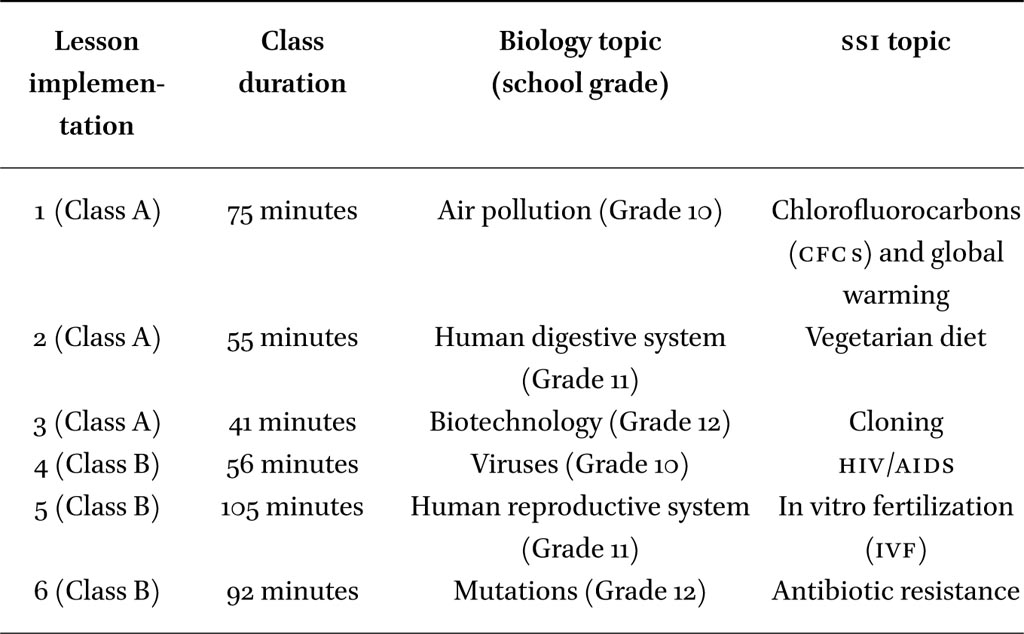
During the Lesson Implementation phase, the designated model teacher enacted the group’s SSI lesson within a typical 90-minute class session. The lesson content was aligned with the Indonesian senior secondary biology curriculum for Grades 10, 11, or 12. Before each lesson, a 30-minute session was provided for the group to present their instructional plan, objectives, and classroom setup. This ensured that all participants understood the context and intentions of the lesson. Each class (Class A and Class B) delivered three different SSI lessons, with one lesson implemented each week over 3 weeks.
Immediately following each lesson, teachers took part in a structured post-teaching reflection session facilitated by the first author. These reflections allowed participants to review their experiences, focusing on the challenges of translating theoretical plans into classroom practice. Teachers reflected both individually and collaboratively, and they also gave feedback to their peers. These exchanges allowed them to share practical insights and strategies from the perspectives of both teachers and learners.
For clarity in data presentation, teacher reflections following each lesson implementation are labelled as “TR [#]”, corresponding to the lesson number. In cases where teachers added reflections after the structured session, such as in follow-up discussions or written responses, these are labelled “PTR” (Post-Teaching Reflection) to distinguish them from immediate responses.
3.4 General Characteristics of Teachers’ Lesson Implementation
This section describes common features observed across the six SSI lessons. Lessons were designed for 90 minutes, though actual durations varied from 41 minutes (Lesson 3) to 105 minutes (Lesson 5). SSI topics were selected to align with biology curriculum standards, including HIV/AIDS (viruses, Grade 10), in vitro fertilization (human reproduction, Grade 11), and cloning (genetic mutations, Grade 12; see Table 1).
Outline of the six SSI lesson implementations
Citation: Asia-Pacific Science Education 11, 2 (2025) ; 10.1163/23641177-bja10098
3.5 Data Collection
Data collection occurred during the 4-week SSI teaching practice. Primary data consisted of video recordings of classroom instruction and post-teaching reflections, enabling detailed analysis of pedagogical practices and classroom interactions. Supplementary materials, including lesson plans, instructional media, and presentations, were also collected to support interpretation and validate findings.
3.6 Data Analysis
Data were analyzed using the SSI-OP (Topçu et al., 2018), a structured tool comprising 22 items across five dimensions: (1) focus of instruction, (2) teaching moves, (3) role of the teacher, (4) role of the students, and (5) classroom environment. These dimensions guided both the quantitative and qualitative analyses of SSI instruction.
3.6.1 Quantitative Data Analysis
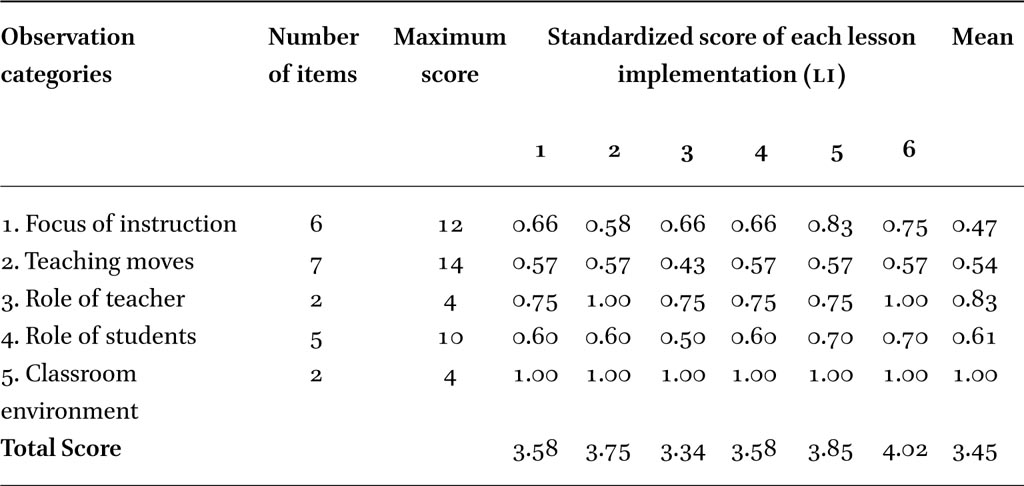
Quantitative analysis followed the SSI-OP’s 3-point scale: 0 (not observed), 1 (observed once), and 2 (observed two or more times). Item scores were summed within each dimension and standardized by dividing by the maximum possible score for comparability. Summed dimension scores yielded an overall score per lesson (see Table 2). Scores from all six lessons were aggregated to identify frequently and infrequently observed instructional practices (see Tables 3–4).
Standardized scores for each SSI lesson implementation
Citation: Asia-Pacific Science Education 11, 2 (2025) ; 10.1163/23641177-bja10098
Items in the focus of instruction and teaching moves categories
Citation: Asia-Pacific Science Education 11, 2 (2025) ; 10.1163/23641177-bja10098
Items in the role of teacher, role of student, and classroom environment categories
Citation: Asia-Pacific Science Education 11, 2 (2025) ; 10.1163/23641177-bja10098
To ensure scoring reliability, two researchers independently coded video recordings. Initially, one video was co-analyzed to establish shared coding criteria. The remaining five videos were coded independently. Inter-rater consistency across the 22 items was 82%. Discrepancies were resolved through discussion to reach consensus.
3.6.2 Qualitative Data Analysis
Qualitative analysis examined classroom discourse and activities that exemplified SSI-OP dimensions. Relevant segments from the video recordings were transcribed verbatim and reviewed iteratively to identify representative examples. Post-teaching reflections were also transcribed and analyzed using inductive coding (Miles et al., 2013). Transcripts were reviewed for evidence of perceived challenges and how participants applied theoretical frameworks in practice.
In the coding process, transcripts were carefully reviewed to identify evidence of teachers’ perceived challenges during lesson implementation and their application of SSI-based theoretical frameworks in practice. One researcher conducted the initial coding, and a second researcher independently reread all transcripts to ensure consistency in interpretation. Following this, the two researchers collaboratively refined the codes and grouped them into representative themes. These themes were then organized according to the five dimensions of the SSI-OP to maintain analytical clarity. Findings from both analyses, including quantitative scores and qualitative examples, are reported in the Results section (Tables 3 and 4).
4 Results
The findings are organized into two subsections, integrating both quantitative and qualitative analyses. The first subsection presents the general characteristics and key features of SSI-based instruction as observed in pre-service biology teachers’ classroom practices, addressing Research Question 1. The second subsection explores the challenges these teachers encountered during the planning and implementation of SSI lessons, addressing Research Question 2. Results are presented according to the categories defined in the SSI-OP.
4.1 Quantitative Result Based on SSI-OP Dimensions
4.1.1 Standardized Scores of Teachers’ Lesson Implementation
Quantitative analysis using standardized scores across the five dimensions of the SSI-OP (see Table 2) showed that the classroom environment dimension received the highest mean score (1.00), indicating that most lessons successfully fostered collaborative and interactive student engagement. In contrast, the teaching moves dimension had the lowest mean score (0.55), suggesting that teachers experienced challenges in applying specific instructional strategies that supported socioscientific reasoning.
A comparison of total standardized scores across the six lesson implementations revealed variation in the extent of SSI-based instructional integration. Lesson Implementation (LI) 5 had the highest total score (4.17), while LI 3 had the lowest (3.26). This difference may be partly attributable to lesson duration, as LI 5 lasted significantly longer and allowed for more opportunities to incorporate SSI instructional elements. However, it is important to note that the overall score does not necessarily reflect the quality or depth of instruction. Teachers were able to implement several key components of SSI-based teaching across all lessons, regardless of total score.
4.1.2 Item Scores Across SSI-OP Dimensions
This section presents the detailed item scores for each dimension of the SSI-OP across the six lesson implementations. Item-level analysis is grouped into two parts.
The first part focuses on two dimensions: focus of instruction and teaching moves. As shown in Table 3, most items within these categories were observed at least once across the lessons, although frequencies varied. Notably, two items under the teaching moves dimension were not observed in any of the lessons, resulting in a score of 0 for those specific activities. This highlights particular instructional strategies that were underutilized or potentially unfamiliar to the teachers.
The second part of the analysis covers the remaining three dimensions: role of the teacher, role of the students, and classroom environment. Overall, the activity items in these dimensions were more consistently and frequently implemented by the teachers, with total scores reaching 12 for each of the six lessons (see Table 4). This indicates that teachers were generally more confident or better supported in managing classroom interactions and student roles within the SSI-based instructional framework.
4.2 Prominent Aspects of SSI-Based Instruction Observed in Teachers’ Practice
4.2.1 Focus of Instruction and Teaching Moves
This section presents findings from two SSI-OP categories: focus of instruction and teaching moves. The analysis highlights specific instructional activities that received the highest total scores across the six lesson implementations, indicating areas where teachers most effectively demonstrated SSI-based instructional strategies (see Table 3).
The results showed that in most classrooms, activities emphasizing the risks and benefits of SSIs were observed more frequently than other instructional strategies (score: 11). For example, in LI 2, the teacher guided students in evaluating the health risks and benefits of a vegetarian diet by explaining nutritional components and their functions in the human body. Similarly, in LI 3, students explored both the positive and negative impacts of cloning technology through a structured discussion.
Teachers also frequently integrated discussions of the social implications of SSIs (score: 10). In LI 1, for instance, students examined the issue of chlorofluorocarbons (CFCs) from both environmental and economic perspectives, considering the consequences of banning CFCs in home appliances. In LI 4, the teacher emphasized the societal impact of HIV/AIDS, highlighting challenges faced by individuals and broader society.
Insights from the post-teaching reflections (PTR) further clarified the instructional focus during implementation. Some groups planned a series of lessons around a single biology curriculum topic, designing particular sessions to explore the social implications of the issue rather than focusing on the underlying science content. Teachers appeared to lack familiarity with how to design SSI lessons that simultaneously address both scientific content and societal dimensions. Additionally, teaching science content related to SSIs was often perceived as difficult, particularly when such content was not fully covered in the curriculum. As a result, teachers frequently prioritized the societal aspects of the issue over its scientific foundations. Teachers described this tendency in their post-teaching reflections:
We thought we should focus to the social aspects of the issue … so we designed this meeting to teach the issue of CFCs and their effects on the atmosphere. (PTR 1)
In the planning, we spent several meetings considering the topic of viruses and selected the subtopic of the infectious diseases caused by viruses in order to present the issue of HIV. (PTR 4)
Our group did not focus on the presentation of biology content because we allocated 60 minutes for the class debate and created a poster. (PTR 6)
In promoting higher-order thinking (score: 10), teachers frequently incorporated role-play and debate activities. For example, in LI 4, students were required to include theoretical explanations of HIV transmission, while in LI 5, they supported their arguments using data related to in vitro fertilization (IVF) programs.
Activities from the focus of instruction category closely aligned with those in the teaching moves category, particularly where teachers used scaffolding strategies to support student reasoning. Items related to scaffolding for higher-order thinking received the highest score in this dimension (score: 12; see Table 3). Teachers employed a range of scaffolding techniques. For instance, in LI 2, the teacher used a jigsaw strategy, assigning students different roles to encourage active engagement with the topic of vegetarian diets.
To provide a structured and coherent learning context, all teachers introduced the SSI topic at the beginning of each lesson and maintained focus on the issue throughout the session. Instructional media supported concept reinforcement, for example, pictures of cloned animals in LI 3 and videos on gene mutations in bacteria in LI 6. Additionally, teachers enriched their instructional presentations and reading materials with diverse sources to help students make connections between scientific concepts and SSI s (score: 11). In LI 1, a YouTube video illustrated the atmospheric effects of CFC pollution, while in LI 3, articles about cloning retrieved from the internet were used to supplement students’ understanding.
4.2.2 Teachers’ and Students’ Roles and the Classroom Environment
This section examines three categories of the SSI-OP: the role of the teacher, the role of the students, and the classroom environment. Activities that were consistently and frequently observed across the six lesson implementations are highlighted in Table 4.
4.2.2.1 Role of the Teacher
As presented in Table 4, teachers consistently assumed the role of learning facilitators (score: 12). For instance, in LI 6, the teacher ensured that all students had opportunities to express their opinions and respond to their peers’ arguments during a class debate on the use of antibiotics for strep throat treatment. Similarly, in LI 2, the teacher provided reading materials describing food nutrients and their functions, which students used to support their arguments in a discussion on vegetarian diets.
To support student participation in SSI discussions, teachers organized classroom activities strategically. In all lessons, teachers assigned students to predetermined roles, such as pro and con debate positions (LI 3 and LI 6) or structured roles in role-play scenarios (LI 1, LI 2, LI 4, and LI 5). These roles were defined in advance rather than left to student choice, enabling teachers to scaffold participation and manage classroom dialogue more effectively. Across all observed lessons, teachers also maintained a neutral stance, intentionally refraining from sharing personal opinions or values on the SSI s being discussed. This approach reflects an effort to create a balanced and inclusive classroom environment.
4.2.2.2 Role of the Students
Analysis of student participation revealed that engagement in higher-order thinking and assessment of risks and benefits were among the most frequently observed activities across lessons (score: 11). These outcomes were consistent with the instructional emphasis placed by teachers in prior planning. Throughout the six implementations, students engaged in various discursive practices that encouraged critical thinking. For example, in LI 1, students used role-play to practice informal reasoning about the environmental impacts of CFC s. In LI 6, students participated in a structured class debate, forming and defending arguments regarding the use of antibiotics for treating strep throat.
Students also regularly analyzed the societal dimensions of SSI s (score: 10). In LI 4, they debated whether individuals’ HIV/AIDS status should be publicly disclosed. In LI 5, students examined the affordability of IVF and discussed its accessibility for low-income families. Teachers supported these discussions by providing relevant data sources, such as global temperature trends (LI 1), HIV transmission statistics in Indonesia (LI 4), and IVF success rates (LI 5). These materials helped students contextualize scientific concepts within broader societal debates.
TR s revealed that the teachers’ own experience as graduate students in biology education contributed to their engagement in these activities. Many noted that their familiarity with lesson structures and instructional strategies enhanced their participation. At the same time, they acknowledged challenges they might face when implementing SSI-based instruction in secondary school settings. Specifically, they expressed concerns about student motivation, reading comprehension, and the level of guidance required for high school students to meaningfully engage in socioscientific discussions. They reflected:
For a high school classroom, the students’ participation may look different from this class. I think most of the students still have low motivation to read academic content. (PTR 1)
If we want to implement this teaching approach in school, I suggest the teacher prepare the reading material well and make sure the students can understand the content. (PTR 3).
To discuss SSI s in school, students need extra guidance from the teacher. … I think high school students do not have deep knowledge about SSI s. (PTR 5)
4.2.2.3 Classroom Environment
Across all six lesson implementations, the classroom environment was observed to be highly interactive, supporting collaboration and positive student engagement (score: 12). Students actively participated in group work, contributed to discussions, and collectively built their understanding of the SSI topics. In LI 5, for example, students worked in groups to prepare presentations on the IVF issue. Each group selected a representative to present their perspectives using PowerPoint in a whole-class session, while the other groups offered feedback, encouraging an exchange of ideas.
Interactions between teachers and students and among students consistently demonstrated mutual respect (score: 12). In LI 2, during a jigsaw discussion on vegetarian diets, students listened attentively to one another, ensuring that diverse viewpoints were acknowledged. Similarly, in LI 6, students engaged in a structured class debate, following the teacher’s instructions to present their arguments and respond to opposing views in a respectful and constructive manner.
4.3 Teachers’ Challenges When Planning and Implementing SSI Lessons
This section identifies the challenges faced by pre-service biology teachers during the planning and implementation of SSI lessons. The analysis focuses on aspects of instruction that were either underrepresented or received lower scores according to the SSI-OP. Two major areas of difficulty emerged, as described below.
4.3.1 Challenges Related to the Teachers’ Focus of Instruction and Teaching Moves
Several instructional elements within the focus of instruction and teaching moves categories were either poorly implemented or not observed at all (see Table 3).
One prominent challenge was the limited emphasis on scientific conceptual understanding in comparison to the attention given to the societal aspects of the selected SSI s (score: 7). Science content was typically introduced briefly at the beginning of lessons, often within a 10- to 15-minute window. For example, in LI 1, the teacher provided a short overview of atmospheric layers and the chemical structure of CFC s. In LI 2, the introduction included an explanation of food nutrients and their functions as a foundation for discussing vegetarian diets.
However, a review of lesson plans revealed inconsistencies between instructional objectives and classroom implementation. While many objectives emphasized both conceptual and procedural understanding, lesson activities tended to focus primarily on societal issues. Sample objectives included: (1) Through discussion, students will be able to identify the effects of CFC s on the atmosphere (LI 1); (2) after the lesson, students will be able to describe the procedures of IVF in relation to the human reproductive system (LI 5); and (3) after the lesson, students will be able to explain the gene mutations caused by antibiotic resistance (LI 6).
This misalignment suggests that while teachers were generally comfortable formulating science-based learning goals, they experienced greater difficulty in designing learning activities that effectively integrated both scientific and societal dimensions with higher-order thinking skills.
Another area of difficulty involved connecting science content to real-world contexts (score: 6). Although some teachers made initial efforts to establish these connections, they were often brief or superficial. In LI 2, the teacher linked nutrients to daily activities, while in LI 6, immune responses were related to symptoms such as fever. These real-world applications, however, were not consistently extended into deeper discussion or analysis.
The nature of science (NOS) was another underrepresented component in both instruction and instructional materials (score: 6). While some NOS themes were embedded in lesson readings, for example, data on IVF success rates (LI 5) and medical professionals’ opinions on antibiotic use (LI 6), the pre-service teachers reported difficulties in selecting and constructing reading materials that accurately represented data and scientific arguments. As noted in post-teaching reflections:
I think one of the challenges was creating the SSI reading material. Our group had a great deal of discussion about the information and data that needed to be included in the reading material and how to organize it. (PTR 2)
We were unsure how to select and present the proportional information between the pro and con groups in the reading materials. (PTR 6)
These challenges hindered their ability to meaningfully integrate NOS elements, such as the tentative nature of science or the role of evidence in scientific debates, into student discussion activities. As noted in their post-teaching reflections, many participants found it difficult to balance curriculum requirements with the inclusion of explicit NOS instruction.
Providing opportunities for student reflection was also inconsistent (score: 6). In LI 2, students wrote personal reflections on vegetarianism, and in LI 6, they created posters addressing antibiotic use. However, such reflective activities were not embedded throughout the lessons, limiting the depth of student engagement with the SSI s.
Linking new learning to prior knowledge was not observed in LI 1 and LI 3 (score: 5). In other lessons, some teachers did prompt recall using phrases such as “As we learned in the previous meeting about …” or “Do you still remember the process of …,” but this strategy was inconsistently applied across the six lessons.
Notably, assessment of conceptual understanding and higher-order thinking was completely absent in all observed implementations (total score: 0). While classroom time was dedicated to discussion and reflection, no structured assessments were used to evaluate how well students integrated scientific knowledge with socioscientific reasoning.
Despite recognizing the importance of assessment, teachers expressed uncertainty about how to develop effective strategies suited to SSI instruction. In post-teaching reflections, several teachers noted this limitation:
I thought we could assess posters that students created about the issue, but our group did not discuss how to assess them. (PTR 1)
Actually, I planned to assess the students’ written personal perspectives about the issue of vegetarian diets. (PTR 2)
I divided students into groups representing different roles because I wanted to assess how they argued about the issue in these roles, but it was difficult to assess. (PTR 5)
A review of the submitted lesson plans revealed that five groups included assessment-related objectives. However, the assessment procedures and criteria were rarely described in detail. This suggests a need for more structured guidance on how to design and implement assessments that align with the goals of SSI-based instruction.
4.3.2 Challenges Related to the Teachers’ and Students’ Roles
During the SSI teaching practice, both the pre-service biology teachers who acted as model teachers and their peers who participated as students encountered challenges in implementing certain aspects of SSI-based instruction. Several elements within this category received lower scores compared to other dimensions of the SSI-OP (see Table 4).
One key challenge was the teachers’ knowledge and understanding of the science content underlying the selected SSI s, which received a (score: 7). Scientific explanations were generally more visible during the early stages of the lessons. For example, in LI 4, the teacher introduced key concepts related to HIV transmission before beginning class discussion. Similarly, in LI 5, the teacher provided a brief explanation of IVF procedures prior to the debate. However, during small-group discussions and classroom debates, teachers offered less scientific input, especially in LI 1, LI 3, and LI 4. This may suggest a lack of familiarity with the scientific foundations necessary for guiding student discourse on these complex issues.
In post-teaching reflections, teachers acknowledged the limitations of textbook content and described difficulties in delivering scientific explanations during lessons:
In the textbook, there is no explanation about CFC s that includes the chemical structure. They are just mentioned as examples of greenhouse gases. (PTR 1)
I do not know much about the nucleus transfer in cloning, and the procedure of cloning is also very complex. … In the textbook, cloning was included in the subtopic of biotechnology. (PTR 3)
IVF was briefly discussed in the textbook as a part of the topic of reproductive technology. (PTR 4)
Another underdeveloped area was the inclusion of ethical considerations in SSI discussions (score: 5). Although many of the topics, such as cloning and IVF, have clear ethical dimensions, these issues were not consistently explored during instruction. A notable exception was LI 5, where students debated ethical questions related to sourcing egg and sperm cells for IVF. More frequent integration of ethical reasoning could support students’ ability to engage in critical reflection on the broader implications of science in society.
Teachers also struggled to guide student argumentation effectively, particularly in LI 1, LI 3, and LI 6. In some cases, discussion prompts were too general to stimulate evidence-based reasoning. For example, in LI 3, the teacher opened the debate with the question: “Do you agree with the use of animal cloning technology? Please explain your opinion.” Without further guidance, students found it difficult to develop arguments grounded in data or theory. Teachers reflected on this limitation during post-teaching reflections. In the following excerpt, a teacher comments on the challenge from the student’s perspective, based on their experience role-playing as a student during the SSI lesson:
Our group (teachers take on the roles of students) was not sure what we needed to discuss as representatives of household consumers when responding to the CFC issue because the teacher only asked whether we were for or against the issue. (PTR 1)
I think I should have explained to students that they needed to include data and theories when they argued about the vegetarian diet issue and asked them to write down their arguments. (PTR 2)
Although all teachers successfully adopted the role of facilitators of learning, their reflections revealed significant challenges related to managing group activities and classroom discussions. In particular, they described logistical and instructional difficulties associated with the jigsaw strategy and student grouping decisions:
I think we needed to consider how to move students from the home group to the expert group and back to the home group [jigsaw method], so we did not spend much time on this activity. (PTR 2)
It is important to allocate an appropriate amount of time for students to discuss information about the issue provided in the reading material, particularly for high school students. (PTR 6)
In school, the teacher needs extra effort to organize group activities because students tend to select smart and vocal friends to be their groupmates. (PTR 1)
For practical reasons, I decided to determine which students should be placed in the pro and con groups. This allowed me to divide students into proportional groups. (PTR 6)
One of the most significant gaps identified in the observed lessons was the complete absence of scientific data collection and analysis (score: 0). None of the six lessons included hands-on investigations, laboratory experiments, or the use of public data sets. Students were not engaged in analyzing real or simulated scientific data, which limited opportunities for data-driven reasoning and inquiry. This finding is supported by lesson plan reviews, which confirmed that data analysis was not included in any instructional plans. Instead, lessons primarily consisted of classroom-based activities, such as debates, group work, and presentations.
To support classroom discourse, some teachers included data excerpts in the reading materials. For example, lesson texts included information such as average global temperature increases (LI 1), HIV transmission rates in Indonesia (LI 4), and IVF success rates in Indonesia (LI 5). While this supplemental data was helpful in supporting discussions, it did not substitute for direct student engagement in analyzing or interpreting data as part of the learning process.
5 Discussions
This study examined how pre-service biology teachers in an Indonesian teacher education program planned and implemented SSI-based instruction, with attention to both instructional strengths and challenges. The findings, organized using the SSI-OP, revealed promising areas of instructional practice, particularly in promoting student engagement, facilitating classroom discourse, and supporting collaborative environments. However, several aspects of SSI teaching, such as integrating scientific content with societal issues, addressing ethical reasoning, and designing assessments, remained underdeveloped. This section discusses these findings in relation to existing literature, highlighting implications for teacher education and suggesting strategies to better prepare future teachers for SSI-based instruction.
5.1 General Characteristics and Prominent Aspects of SSI-Based Instruction in Teachers’ Teaching Practice
Analysis of the lesson implementation videos indicated that most activity items in the SSI-OP were observed across the six lessons, as reflected in the standardized scores. However, closer examination revealed that certain dimensions, particularly teaching moves and role of the students, were underrepresented or inconsistently enacted. This suggests that while pre-service teachers were able to implement several key features of SSI-based instruction, they also encountered challenges, especially in adopting instructional strategies that require active student participation. These findings align with earlier research showing that novice teachers often struggle to implement student-centered approaches within the pedagogical demands of SSI teaching (Sadler, 2009; Saunders & Rennie, 2013). Limited teaching experience may also contribute to difficulties in managing lesson timing and balancing instructional goals (Kinskey & Zeidler, 2020).
An important strength was the ability of pre-service teachers to select and integrate SSI topics that were aligned with the national biology curriculum, including themes such as HIV/AIDS, IVF, and vegetarian diets. Their ability to link SSI s with curriculum standards demonstrates the feasibility of integrating SSI-based instruction into Indonesian science education. However, most selected topics were global in scope rather than focused on national or local concerns. While real-world relevance is a cornerstone of effective SSI instruction (Dawson & Venville, 2009), research underscores the importance of sociocultural context in engaging students meaningfully with SSI s (Sadler & Zeidler, 2005). Indonesian science classrooms offer a rich array of locally relevant issues, including natural disasters, public health, traditional medicine, and environmental impacts of tourism, that could further enhance the relevance of SSI teaching (Wiyarsi & Çalik, 2019). Teachers may design an integrated science curriculum that emphasizes e issues related to Indonesia’s biodiversity and that foster connections between scientific disciplines to address environmental and developmental challenges (Prasoplarb et al., 2024).
Another key pattern observed was the strong emphasis on the social aspects of SSI s and the development of higher-order thinking skills, often at the expense of deeper scientific content. While traditional science instruction in Indonesia has tended to focus on conceptual understanding derived from textbooks (Faisal & Martin, 2019), the SSI-based approach used in this study enabled teachers to foreground ethical reasoning and social discussion. Classroom strategies such as debates and role-playing were particularly effective in promoting student engagement and critical thinking. However, the prioritization of social dimensions limited the time available for robust exploration of scientific content. Typically, scientific concepts were addressed briefly at the beginning of lessons. This tension between content coverage and SSI engagement is a recurring challenge in the literature. Integrating digital learning tools may help alleviate this constraint by enabling students to access and review scientific content independently, which they can then apply to socioscientific contexts (Dayan & Tsybulsky, 2024).
To support student learning, teachers made use of structured scaffolding tools, including debate prompts, role-play formats, and curated reading materials. These resources facilitated student engagement with ethical considerations and the evaluation of risks and benefits associated with SSI s such as IVF and cloning. Structured strategies proved effective in enabling students to reason through complex issues, a finding supported by studies demonstrating the value of cooperative learning and decision-making frameworks in SSI instruction (Sakamoto et al., 2021; Lee & Grace, 2012; Borgerding & Dagistan, 2018). In this study, pre-service teachers adapted these tools effectively to promote reflective dialogue and evidence-based reasoning.
Teachers also enriched their instruction by integrating multimedia resources, including images, videos, and online articles. These materials helped students connect scientific concepts to real-world applications, a key component of SSI pedagogy (Sadler, 2011). Future instruction could be further enhanced by incorporating a wider range of authentic media sources, such as current news stories, documentaries, and local case studies, to deepen student engagement and critical analysis (Ratcliffe & Grace, 2003). The use of guiding questions that prompt risk-benefit analysis and encourage students to consider diverse perspectives also supports meaningful discourse (Genel & Topçu, 2016).
Finally, the findings highlighted the teachers’ success in creating collaborative, respectful, and student-centered classroom environments. Teachers consistently adopted the role of facilitators, guiding discussions while maintaining neutrality. This approach empowered students to participate actively in argumentation and decision-making on issues such as antibiotic resistance, HIV/AIDS, and reproductive technology. As noted in previous research, effective SSI instruction depends on a shift away from traditional teacher-led methods toward learner-centered practices (Saunders & Rennie, 2013). The pre-service teachers in this study demonstrated their readiness to embrace this pedagogical shift, suggesting that structured, practice-based training in SSI instruction can foster inclusive and reflective science teaching.
5.2 Teachers’ Challenges in Planning and Implementing SSI Lessons
Although pre-service biology teachers skillfully implemented several aspects of SSI-based instruction, they encountered significant challenges during both planning and classroom execution. These challenges included effectively teaching scientific concepts within SSI lessons, providing explicit argumentation and ethical reasoning instruction, integrating data collection and analysis, developing reading materials, and assessing student learning outcomes. Addressing these issues requires a comprehensive approach in teacher education and curriculum design to better prepare educators for incorporating SSI instruction in science classrooms.
One major challenge was teaching scientific concepts within SSI lessons. Teachers recognized that SSI instruction should integrate both scientific knowledge and social dimensions, but they struggled to weave scientific explanations into classroom discussions. Often, scientific content was presented only briefly at the beginning of the lesson. Their limited understanding of some concepts, combined with textbook-driven constraints, created difficulties in helping students connect SSI s to scientific knowledge and prior learning. Indonesian science education traditionally relies heavily on textbooks, which made extending discussions beyond prescribed content more challenging. At the same time, scientific literacy remains essential for engaging meaningfully with SSI topics. Zeidler et al. (2011) and Presley et al. (2013) emphasized this requirement. To effectively guide discussions on the societal impact of sexually transmitted diseases, for instance, teachers need a solid understanding of genetics and molecular biology (Sadler et al., 2016). Therefore, expanding teacher education programs to include SSI-specific content knowledge could help pre-service teachers feel more confident in teaching the scientific dimensions of SSI s.
Another challenge involved the lack of explicit instruction on argumentation and ethical reasoning. Although teachers had sufficient instructional time to select strategies that engaged students in higher-order thinking, many struggled to structure debates or facilitate ethical discussions. Guiding questions were often too general, limiting students’ ability to critically examine competing perspectives or moral dimensions of SSI topics. Research has suggested that SSI teaching requires structured pedagogical approaches to help students connect evidence to their arguments, evaluate sources, and consider social justice issues (Rawson et al., 2023). Teachers also need to guide students in analyzing stakeholder conflicts and constructing solutions for deeper engagement with scientific and ethical considerations (Sakamoto et al., 2021). Enhancing pre-service training to include argumentation frameworks and structured debate techniques could better equip teachers to support students in developing reasoned, evidence-based stances on SSI s.
A further limitation was the lack of data collection and analysis activities, despite the central role of scientific evidence in SSI discussions (Dawson & Carson, 2016). None of the lessons included student-led data collection or analysis. Teachers preferred to provide pre-selected materials instead of having students search for and evaluate scientific data themselves. This omission appeared to result from lesson designs that prioritized discussions and debates over empirical investigation, perhaps influenced by classroom time constraints and the complexity of integrating data collection within a single lesson. However, finding and assessing data is a critical skill in SSI-based learning. Teachers can address this gap by organizing structured online or field data-search activities, guiding students to evaluate the reliability of sources, and integrating digital literacy into SSI lessons (Dayan & Tsybulsky, 2024). Professional development should also emphasize connecting real-world data sources to SSI instruction to ensure students engage with authentic evidence.
Teachers also struggled with developing reading materials to support NOS integration in SSI discussions. Crafting balanced materials with multiple perspectives was time-consuming and complex. Some teachers were unsure how to structure pro and con arguments equally, while others found it difficult to select appropriate sources. Providing ready-to-use SSI resource banks or training teachers to curate reading sets could alleviate this concern. Collaborating with interdisciplinary experts, such as environmental scientists, medical professionals, or policy analysts, could also help teachers access accurate, up-to-date information for classroom use.
Finally, assessing student learning outcomes in SSI instruction presented a significant challenge. Although teachers recognized the importance of evaluating both conceptual understanding and higher-order thinking, they did not integrate structured assessments. Instead, lesson reflections were used informally without clear formative or summative assessment strategies. This finding is consistent with Tidemand and Nielsen (2017), who noted that teachers often lack effective methods for assessing complex SSI learning. Since traditional assessments may fail to capture skills in decision-making, ethical reasoning, and argumentation, teachers should explore alternatives such as rubrics for argument quality, peer evaluations, portfolio assessments, and structured reflection exercises. Pre-service training should include explicit instruction in these SSI assessment methods to help teachers evaluate conceptual understanding and socioethical reasoning effectively.
5.3 Expanding Teacher Preparation and Curriculum Support for SSI Instruction
To address the challenges identified in this study, teacher education programs should provide explicit and structured training in the core components of SSI-based instruction. Pre-service teachers need deeper science content knowledge related to relevant SSI s to guide students in understanding both the scientific foundations and social dimensions of these topics. Additionally, training in argumentation and ethical reasoning is essential to prepare teachers to facilitate meaningful classroom discussions, where students are encouraged to evaluate diverse viewpoints and develop well-supported positions.
Given the growing importance of data-informed decision-making in science education, it is also critical to incorporate instruction in data literacy and digital research skills. This training can enable teachers to help students critically assess scientific claims using reliable and varied sources. Furthermore, teachers require support in creating and selecting reading materials that present multiple perspectives and provide clear, accessible information to scaffold SSI discussions. Resources such as curated reading sets or model texts can aid in this effort.
Assessment training should also be a central component of teacher preparation. Moving beyond traditional testing, educators need to learn how to evaluate students’ critical thinking, ethical reasoning, and evidence-based argumentation. Assessment strategies might include performance tasks, structured reflection prompts, and analytic rubrics tailored to SSI competencies.
In addition to changes in teacher preparation, curriculum designers and education policymakers should revise science education frameworks to support greater integration of SSI topics. Flexibility in curriculum planning can allow teachers to incorporate relevant, real-world issues alongside core science content. Access to high-quality SSI instructional resources, including model lessons, interdisciplinary materials, and case studies, can further facilitate implementation. Digital tools that support inquiry-based exploration and real-time data analysis can also enrich student learning.
Finally, promoting interdisciplinary collaboration among science educators, ethicists, and policy experts can enhance the quality and relevance of SSI instruction. By addressing both pedagogical and structural barriers, teacher education programs and educational systems can better prepare future science teachers to deliver SSI lessons that are scientifically rigorous, socially relevant, and pedagogically effective.
6 Conclusions and Limitations
This study offers valuable insights into how participation in an SSI-focused science methods course can enhance pre-service biology teachers’ pedagogical knowledge and instructional skills in implementing SSI-based instruction. Two main contributions emerge from the findings. First, the study demonstrates that pre-service teachers are capable of successfully integrating key features of SSI teaching into their practice, suggesting that SSI-based instruction offers a promising framework for connecting science content with real-world societal issues. Second, the findings highlight the need to address practical challenges in lesson planning and implementation, particularly in equipping teachers to manage complex instructional goals that include scientific content, social reasoning, and ethical dimensions.
In the Indonesian context, where SSI-based instruction remains relatively underexplored, this study underscores the importance of expanding research and teacher support systems to help educators meaningfully engage with both curriculum standards and contemporary societal concerns. As Indonesian science education evolves, incorporating SSI instruction can support broader goals of scientific literacy, civic engagement, and critical thinking.
Despite these contributions, the study has several limitations. One important limitation is that pre-service teachers developed and implemented only a single SSI lesson, and these lessons were conducted in peer settings rather than in actual school classrooms. Future studies should investigate how teachers develop and teach extended SSI units and examine the long-term impact of sustained SSI instruction. Research that follows teachers into their early professional practice could also provide insights into how SSI instruction is adapted in real classroom contexts, including how challenges evolve over time.
Another limitation involves the relatively short duration of the science methods course, which constrained opportunities for deeper exploration of SSI pedagogy. Future research should focus on designing extended professional development programs that offer teachers opportunities to engage in repeated cycles of planning, implementation, and reflection. Studies examining the impact of such programs on teachers’ pedagogical content knowledge, confidence, and long-term instructional practices would further inform the development of effective supports for SSI instruction.
Acknowledgements
We express gratitude to the pre-service biology teachers who participated in the study and for their great contribution to this research.
Funding
This work was supported by the Indonesia Education Scholarship (BPI), the Indonesia Endowment Fund for Education (LPDP), and the Center for Higher Education Funding and Assessment (PPAPT) of the Ministry of Higher Education, Science, and Technology of the Republic of Indonesia.
Ethical Consideration
Approval to conduct this study was granted by the Seoul National University Ethics Review Board. The data collected from this project were obtained with the necessary clearance from the partner institutions, guardians, and the students involved in the study. The names of the school and participants used in this study are all pseudonyms.
About the Authors
Faisal is a lecturer in the Biology Education Department at Universitas Negeri Makassar (State University of Makassar), Indonesia. He earned his doctoral degree in Science Education from Seoul National University, Republic of Korea. He received the Asia-Pacific Science Education Best Paper Award in January 2020 for his research on science education in Indonesia. Faisal’s research primarily focuses on developing effective science teaching strategies and designing teacher professional development programs. He is particularly interested in socioscientific issue (SSI)-based instructional programs for pre-service science teachers in Indonesian teacher education.
B. Nurhayati is a professor in the Biology Education Department at Universitas Negeri Makassar (State University of Makassar), Indonesia. She completed her doctoral degree in Biology Education in 2000 from Universitas Negeri Malang, Indonesia. She serves as an education consultant for several private high schools in Makassar and was head of the Research Centre for Science Education at the State University of Makassar from 2010 to 2016. Her research interests include designing and implementing instructional models, developing biology curricula for schools, and fostering higher-order thinking skills.
Arifah Novia Arifin is a Ph.D. candidate at the Department of Biology, Faculty of Mathematics and Natural Sciences, Universitas Negeri Malang (State University of Malang), Indonesia. She is also a lecturer in the Department of Biology Education, Faculty of Mathematics and Natural Sciences, Universitas Negeri Makassar (State University of Makassar), Indonesia. Her research interests include biology teaching and learning strategies, character education, learning media, and the development of 21st-century skills.
Sonya N. Martin is a professor in the Departments of Science Education and Biology Education at Seoul National University in Seoul, Republic of Korea. Sonya holds a bachelor’s degree in biology from Bryn Mawr College and master’s degrees in elementary education and in chemistry education from the University of Pennsylvania in the United States. She also holds a doctoral degree in science education from Curtin University in Australia. Her research focuses on identifying science teacher practices that promote learning for diverse students and on promoting the professionalization of science teachers through classroom-based participatory research. She is the editor-in-chief of Asia-Pacific Science Education.
References
Çam, A. (2023). Examination of Training on Pre-Service Science Teachers’ Views on Socio-Scientific Issues and Nature of Science. Journal of Educational Research & Practice. 13(1), 163–180. DOI: 10.5590/JERAP.2023.13.1.13.
Cinici, A. (2016). Balancing the pros and cons of GMOs: Socio-scientific argumentation in pre-service teacher education. International Journal of Science Education, 38(11), 1841–1866. https://doi.org/10.1080/09500693.2016.1220033.
Dawson, V., & Carson, K. (2016). Using climate change scenarios to assess high school students’ argumentation skills. Research in Science & Technological Education, 35(1), 1–16. https://doi.org/10.1080/02635143.2016.1174932.
Dawson, V., & Venville, G. J. (2009). High-school students’ informal reasoning and argumentation about biotechnology: An indicator of science literacy. International Journal of Science Education, 31(1), 1421–1445. https://doi.org/10.1080/09500690801992870.
Dayan, E., & Tsybulsky, D. (2024). Designing and teaching socio-scientific issues online: Digital curation in the science classroom. International Journal of Science Education. https://doi.org/10.1080/09500693.2024.2381133.
Faisal & Martin, S. (2019). Science education in Indonesia: Past, present and future. Asia-Pacific Science Education, 1:4, 2019. https://doi.org/10.1186/s41029-019-0032-0.
Faisal & Martin, S. (2022). Promoting pre-service and in-service biology teachers’ perceptions about socioscientific issue-based instruction. Asia-Pacific Science Education, 8(1), 256–291. https://doi.org/10.1163/23641177-bja10042.
Faisal, Gi, G.M., & Martin, S. (2020). Analysis of government funded research in Indonesia from 2014–2018: Implications for research trends in science education. Jurnal Pendidikan IPA Indonesia, 9(2), 146–158. https://doi.org/10.15294/jpii.v9i2.23174.
Friedrichsen, P. J., Sadler, T. D., Graham, K., & Brown, P. (2016). Design of a socio-scientific issue curriculum unit: Antibiotic resistance, natural selection, and modeling. International Journal of Designs for Learning, 7(1), 1–18. https://doi.org/10.14434/ijdl.v7i1.19325.
Genel, A., & Topçu, M. S. (2016). Turkish preservice science teachers’ socioscientific issues-based teaching practices in middle school science classrooms. Research in Science & Technological Education, 34(1), 105–123. https://doi.org/10.1080/02635143.2015.1124847.
Hanifha, S., Erna, M., Noer, A., M., & Talib, C. A. (2023). Socioscientific Issue-Based Undergraduate Student Worksheets on Scientific Literacy and Environmental Awareness. Jurnal Pendidikan IPA Indonesia, 12(4), 504–513. DOI: 10.15294/jpii.v12i4.45817.
Khishfe, R., Alshaya, F. S., BouJaoude, S., Mansour, N., & Alrudiyan, K. I. (2017). Students’ understandings of nature of science and their arguments in the context of four socio-scientific issues. International Journal of Science Education, 39(3), 299–334. https://doi.org/10.1080/09500693.2017.1280741.
Kinskey, M., & Zeidler, D. (2020). Elementary preservice teachers’ challenges in designing and implementing socioscientific issues-based lessons. Journal of Science Teacher Education. https://doi.org/10.1080/1046560X.2020.1826079.
Lee, Y. C., & Grace, M. (2012). Students’ reasoning and decision making about a socioscientific issue: A cross-context comparison. Science Education, 96(5), 787–807. https://doi.org/10.1002/sce.21021.
Lee, H., & Yang, J. E. (2019). Science teachers taking their first steps toward teaching socioscientific issues through collaborative action research. Research in Science Education, 49(1), 51–71. https://doi.org/10.1007/s11165-017-9614-6.
Lee, H., Yoo, J., Choi, K., Kim, S.-W., Krajcik, J., Herman, B. C., & Zeidler, D. L. (2013). Socioscientific issues as a vehicle for promoting character and values for global citizens. International Journal of Science Education, 35(12), 2079–2113. https://doi.org/10.1080/09500693.2012.749546.
Mills, G. E., & Gay, L. R. (2016). Educational Research: Competency for Analysis and Applications. Pearson Education.
Miles, M. B., Huberman, A. M., & Saldaña, J. (2013). Qualitative data analysis: A methods source book. Thousand Oaks, CA: Sage.
MOEC. (2016). Act Ministry of Education and Culture no. 20 of 2016 about competency standards for elementary and secondary education. Jakarta: MOEC. Retrieved from http://bsnp-indonesia.org/wp-content/uploads/2009/04/Permendikbud_Tahun2016_Nomor020_Lampiran.pdf.
Muchson, M., Cobern, W. W., & Saefi, M. (2024) The science education research trends (SERT) in Indonesian secondary schools: a systematic review and bibliometrics study. Cogent Education, 11(1), 1–21. https://doi.org/10.1080/2331186X.2024.2308407.
Molinatti, G., Girault, Y., & Hammond, C. (2010). High school students debate the use of embryonic stem cells: The influence of context on decision-making. International Journal of Science Education, 32(16), 2235–2251. https://doi.org/10.1080/09500691003622612.
Namdar, B. (2018). Teaching global climate change to pre-service middle school teachers through inquiry activities. Research in Science & Technological Education, 36(4), 440–462. https://doi.org/10.1080/02635143.2017.1420643.
Nida, L. S., Mustikasari, V. R., & Eilks, I. (2021). Indonesian pre-service science teachers’ views on socio-scientific issues-based science. EURASIA Journal of Mathematics, Science and Technology Education, 17(1), 1–11. https://doi.org/10.29333/ejmste/9573.
Prasoplarb, T., Faikhamta, C., Khan, S., Lertdechapat, K., Van Bien, N., El Islami, R. A. Z., Xue, S., Khwaengmek, V., & Hennessey, A. (2024). Science and engineering practices: A comparative analysis of Indonesian, Thai and Vietnamese science curricula. Asia-Pacific Science Education, 10(2), 350–380. https://doi:10.1163/23641177-bja10084.
Presley, M. L., Sickel, A. J., Muslu, N., Merle-Johnson, D., Witzig, S. B., Izci, K., & Sadler, T. D. (2013). A framework for socio-scientific issues-based education. Science Educator, 22(1), 26–32.
Ratcliffe, M., & Grace, M. (2003). Science education for citizenship: Teaching socio-scientific issues. Maidenhead, England: Open University.
Rawson Lesnefsky, R., Sadler, T. D., Ke, L., & Friedrichsen, P. (2023). Instructional pathways to considering social dimensions within socioscientific issues. Innovations in Science Teacher Education, 8(2). https://innovations.theaste.org/instructional-pathways-to-considering-social-dimensions-within-socioscientific-issues/.
Sadler, T. D. (2009). Situated learning in science education: Socio-scientific issues as contexts for practice. Studies in Science Education, 45(1), 1–42. https://doi.org/10.1080/03057260802681839.
Sadler, T. D. (2011). Situating socioscientific issues in classrooms as a means of achieving goals of science education. In T. Sadler (Ed.), Socio-scientific issues in the classroom: Teaching, learning and research (pp. 1–9). New York: Springer.
Sadler, T. D., & Zeidler, D. L. (2005). Patterns of informal reasoning in the context of socioscientific decision-making. Journal of Research in Science Teaching, 42(1), 112–138. https://doi.org/10.1002/tea.20042.
Sadler, T. D., Amirshokoohi, A., Kazempour, M., & Allspaw, K. M. (2006). Socioscience and ethics in science classrooms: Teacher perspectives and strategies. Journal of Research in Science Teaching, 43(4), 353–376. https://doi.org/10.1002/tea.20142.
Sadler, T. D., Foulk, J. A., & Friedrichsen, P. J. (2017). Evolution of a model for socioscientific issue teaching and learning. International Journal of Education in Mathematics, Science and Technology, 5(2), 75–87. https://doi.org/10.18404/ijemst.55999.
Sadler, T. D., Romine, W. L., & Topçu, M. S. (2016). Learning science content through socio-scientific issues-based instruction: A multi-level assessment study. International Journal of Science Education, 38(10), 1622–1635. https://doi.org/10.1080/09500693.2016.1204481.
Saija, M., Rahayu, S., Fajaroh, F., & Sumari. (2022). Enhancement of High School Students’ Scientific Literacy Using Local-Socioscientific Issues in OE3C Instructional Strategies. Jurnal Pendidikan IPA Indonesia, 11(1), 11–23. DOI: 10.15294/jpii.v11i1.33341.
Sakamoto, M., Yamaguchi, E., Yamamoto, T., & Wakabayashi, K. (2021). An intervention study on students’ decision-making towards consensus building on socio-scientific issues. International Journal of Science Education, 43(12), 1965–1983. https://doi.org/10.1080/09500693.2021.1947541.
Saunders, K., & Rennie, L. (2013). A pedagogical model for ethical inquiry into socioscientific issues in science. Research in Science Education, 43(1), 253–274. https://doi.org/10.1007/s11165-011-9248-z.
Subiantoro, A. W., Treagust, D., Tang, K-S. (2021). Indonesian Biology Teachers’ Perceptions about Socio-Scientific Issue-Based Biology Instruction. Asia-Pacific Science Education. 7(1), 452–476. doi:10.1163/23641177-bja10032.
Susilawati., Aznam, N., Paidi., Irwanto. (2021). Socio-Scientific Issues as a Vehicle to Promote Soft Skills and Environmental Awareness. European Journal of Educational Research. 10(1), 161–174. https://doi.org/10.12973/eu-jer.10.1.161.
Tidemand, S., & Nielsen, J. A. (2017). The role of socioscientific issues in biology teaching: From the perspective of teachers. International Journal of Science Education, 39(1), 44–61. https://doi.org/10.1080/09500693.2016.1264644.
Topçu, M. S., Foulk, J. A., Sadler, T. D., Pitiporntapin, S., & Atabey, N. (2018). The classroom observation protocol for socioscientific issue-based instruction: Development and implementation of a new research tool. Research in Science & Technological Education, 36(3), 302–323. https://doi.org/10.1080/02635143.2017.1399353.
Wahono, B., Chang, C. Y. & Khuyen, N. T. T. (2021). Teaching socio-scientific issues through integrated STEM education: an effective practical averment from Indonesian science lessons. International Journal of Science Education, 43(16). 2663–2683. https://doi.org/10.1080/09500693.2021.1983226.
Wiyarsi, A., & Çalik, M. (2019). Revisiting the scientific habits of mind scale for socio-scientific issues in the Indonesian context. International Journal of Science Education, 41(17), 2430–2447. https://doi.org/10.1080/09500693.2019.1683912.
Zangori, L., Foulk, J., Sadler, T. D., & Peel, A. (2018). Exploring elementary teachers’ perceptions and characterizations of model-oriented issue-based teaching. Journal of Science Teacher Education, 29(7), 555–577. https://doi.org/10.1080/1046560X.2018.1482173.
Zeidler, D. L., Applebaum, S. M., & Sadler, T. D. (2011). Enacting a socioscientific issues classroom: Transformative transformations. In T. D. Sadler (Ed.). Socioscientific issues in the classroom (pp. 277–305). Netherlands: Springer.
Zeidler, D. L. (2014). Socioscientific issues as a curriculum emphasis: Theory, research, and practice. In N. G. Lederman & S. K. Abell (Eds.), Handbook of research on science education (Vol. II, pp. 697–726). Routledge.