Abstract
This study developed and evaluated an integrated Pathway 3 technological pedagogical content knowledge (TPACK) program for 18 in-service secondary chemistry teachers in Korea. The 12-session program, structured by Niess’s (2009) five-stage model, cultivated pedagogical knowledge (PK) through responsive teaching, content knowledge (CK) through model-based reasoning in acids and bases, and technological knowledge (TK) through creative Scratch authoring. A pre–post design combined domain assessments with rubric-based analysis of lesson plans. Results showed gains across domains, with universal improvements in TK and advances in PK; CK improved more modestly. TPACK scores increased across learning dimensions, although collaboration lagged. Regression on change scores indicated that growth in TK was the sole significant predictor of TPACK improvement, whereas PK and CK were not. Findings highlight the value of discipline-grounded, authoring-focused TK development within an integrated design for strengthening chemistry teachers’ TPACK and inform the design of future programs that embed assessment and collaboration explicitly.
1 Introduction
1.1 Background and Challenges in TPACK Integration in Chemistry
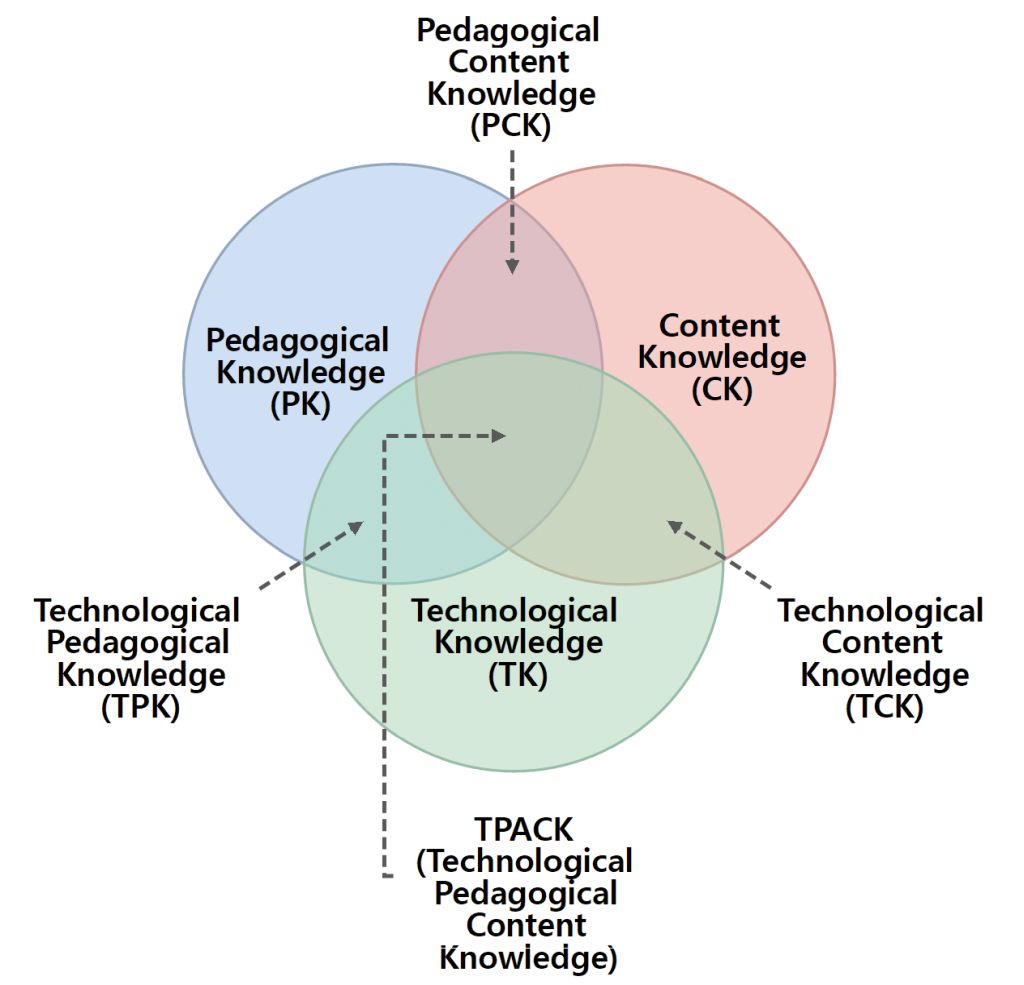
Technology integration has expanded rapidly in schools, yet whether it consistently produces educationally meaningful outcomes remains debated (So & Kim, 2009; Willermark, 2018). Technological pedagogical content knowledge (TPACK) was introduced to describe the knowledge teachers need to integrate technology with pedagogy and content in context. It extends Shulman’s idea of pedagogical content knowledge (PCK), which refers to the specialized knowledge that integrates content understanding with pedagogical strategies for teaching specific topics, including awareness of students’ typical misconceptions and effective instructional representations, by emphasizing how technology knowledge interacts with pedagogy and content rather than functioning as a simple addition (Shulman, 1987; Mishra & Koehler, 2006; Koehler & Mishra, 2009; see Figure 1 for an overview and see Section 2.2 for the pathways framework).

Components of TPACK
Citation: Asia-Pacific Science Education 11, 2 (2025) ; 10.1163/23641177-bja10104
Adapted from Mishra & Koehler, p. 1025In chemistry education, PCK involves understanding how students struggle with abstract concepts such as acids and bases, recognizing common alternative conceptions (e.g., confusing the Arrhenius and Brønsted-Lowry models), and selecting appropriate teaching strategies to address these challenges (Kind, 2009; van Driel et al., 2002). To realize instructional benefits, teachers need TPACK that coordinates content knowledge (CK), pedagogical knowledge (PK), and technological knowledge (TK) (Carr et al., 1998; Koehler & Mishra, 2005; Koehler et al., 2012). The present study addresses this need in secondary chemistry.
We selected acids and bases as the anchoring content because this topic is central to the chemistry curriculum yet persistently challenging for students, who often conflate different acid-base models or struggle to apply them appropriately across contexts (Drechsler & Schmidt, 2005; Nakhleh, 1992). This topic also invites responsive teaching moves that elicit and build on student thinking about proton transfer, equilibrium, and the scope of different models (Carr, 1984; Hand & Treagust, 1991). It supports model-based reasoning about when particular representations apply, for instance, recognizing that the Arrhenius model suffices for aqueous solutions while the Brønsted-Lowry model extends to non-aqueous and gas-phase reactions (Drechsler & van Driel, 2008; as detailed further in Section 2.4). In addition, it lends itself to technology-supported visualization and authoring tools that can make particle-level proton transfer visible and help students select appropriate models for given chemical contexts (Kelly & Jones, 2007; Wu et al., 2001).
Since its introduction, many programs have sought to enhance teachers’ TPACK, yet several limitations recur: a focus on a single component, most often technology knowledge via software training, or an “add technology to PCK” approach that overlooks the nuanced interactions among CK, PK, and TK that define TPACK (Graham et al., 2012; Harris et al., 2009; Koehler & Mishra, 2009). Addressing these limitations is particularly salient for secondary chemistry, where coordination of representations, pedagogy, and technology is central. These concerns motivate a professional development program that coordinates pedagogy, content, and technology within a single disciplinary thread for in-service chemistry teachers. We revisit these models as Pathways 1–3 in Section 2.2.
1.2 Purpose of the Study
Despite widespread interest, many TPACK studies remain conceptual or rely on self-report, with fewer that assess enacted capability through artifacts or practice (Graham et al., 2012; Harris et al., 2009). A systematic review of empirical work from 2011–2016 found a heavy emphasis on teachers’ perceived TPACK rather than objective evidence (Willermark, 2018). In particular, many TPACK programs either focus on a single domain, such as technology workshops, or rely primarily on self-reported data, with limited attention to enacted capability (Ertmer, Ottenbreit-Leftwich, & Tondeur, 2015; Graham et al., 2012; Harris et al., 2009).
To address these limitations, we designed and evaluated a twelve-session Pathway 3 program for in-service secondary chemistry teachers in Korea that supports the concurrent development of pedagogical knowledge (PK; responsive teaching in chemistry, see Section 2.3), content knowledge (CK; models and modeling of acids and bases, see Section 2.4), and technological knowledge (TK; creative authoring with Scratch for particle-level visualization and computational thinking, see Section 2.5). The study examines how growth in each domain relates to integrated TPACK outcomes in the context of chemistry instruction. To move beyond self-report alone, we adapted rubric-based measures to score teacher-designed lesson artifacts, following prior work that emphasizes the value of artifact-based assessment in TPACK research (Koh, 2013; Howland et al., 2012).
This study contributes (a) an integrated program grounded in secondary chemistry content, (b) rubric-based evidence of change across PK, CK, TK, and TPACK, and (c) an analysis of how domain-level changes relate to integrated instructional outcomes.
The study addressed the following research questions:
What effects does the proposed Pathway 3-based TPACK program have on the development of the individual knowledge domains of PK, CK, and TK in in-service secondary chemistry teachers in Korea?
What effects does the program have on the development of integrated TPACK competencies?
How do changes in in-service secondary chemistry teachers’ individual knowledge domains of PK, CK, and TK affect their TPACK development?
2 Theoretical and Research Background
This section situates the study within the TPACK literature and explains how the chemistry content, pedagogical approach, and technology choices informed the program design.
2.1 TPACK Framework and Development Pathways
TPACK extends PCK by articulating how content, pedagogy, and technology interact within specific contexts to support teaching with technology (Koehler & Mishra, 2005; Mishra & Koehler, 2006; Koehler et al., 2012). It comprises three foundational domains: CK, PK, and TK, as well as the integrated knowledge that emerges at their intersections. TPACK is not simply an additive combination of these domains; rather, it represents context-specific knowledge required to teach particular content effectively using technology (Koehler & Mishra, 2009; Mishra & Koehler, 2006).
2.2 Development Pathways in TPACK
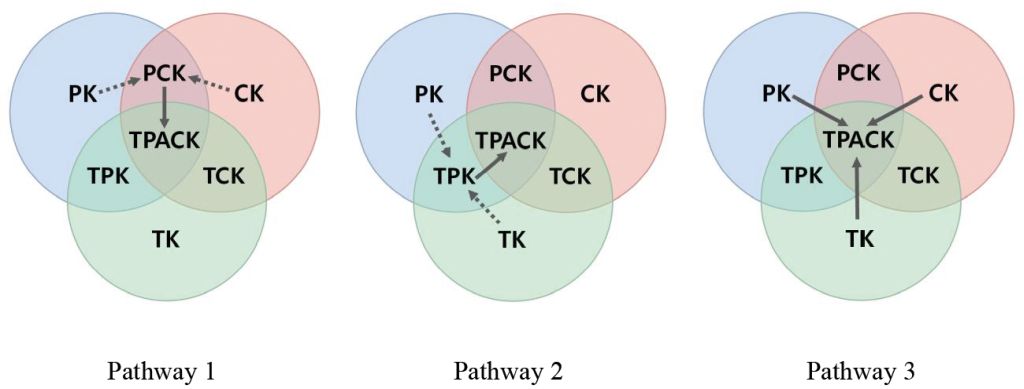
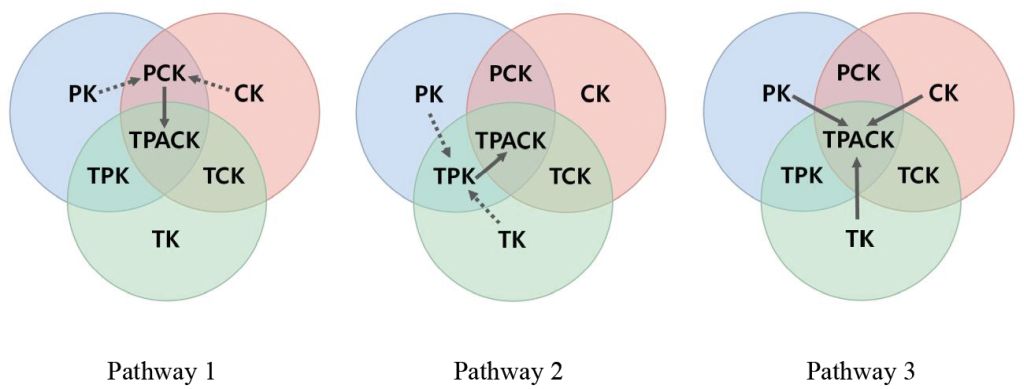
Mishra and Koehler identified three developmental pathways commonly employed in teacher education programs (Mishra & Koehler, 2005, 2006). Pathway 1 involves adding TK to existing PCK. Pathway 2 builds technological pedagogical knowledge (TPK) by combining PK and TK. Pathway 3 simultaneously develops pedagogical, content, and technological knowledge (Mishra & Koehler, 2005; Harris et al., 2009; Niess et al., 2009). Previous TPACK initiatives have frequently adopted either Pathway 1, which adds TK to existing PCK, or Pathway 2, which develops TPK from PK and TK. These approaches often remain technology-additive and may overlook the dynamic interplay among the knowledge domains (Graham et al., 2012; Harris et al., 2009; Koehler & Mishra, 2009).
We selected Pathway 3 to address commonly reported challenges among Korean science and chemistry teachers, including limited responsive teaching, a restricted understanding of models and modeling, and a tendency to use technology in basic or consumptive ways (Choi et al., 2017; Kim & Paik, 2021; Lyu & Paik, 2020). To structure teachers’ progression through Pathway 3, we adopted Niess et al.’s (2009) five-stage TPACK development model, which describes how teachers move from initial awareness to advanced integration. The five stages are: (1) recognizing, or becoming aware of technology’s potential for content teaching; (2) accepting, which involves forming positive attitudes toward technology integration; (3) adapting, or using technology in limited, teacher-directed ways; (4) exploring, which includes experimenting with student-centered technology applications; and (5) advancing, or integrating technology in innovative ways that transform learning. This twelve-session program used the five-stage model to guide sequencing and support.
This developmental framework guided our program design by structuring activities that scaffolded teachers from recognizing the relevance of technology for acid-base instruction, through accepting its value, adapting existing tools, exploring creative applications, and ultimately advancing toward innovative uses that transform how students engage with chemical models (Niess et al., 2009). The program sessions were explicitly designed to support progression through these stages by providing increasingly complex opportunities for technology integration in chemistry-specific contexts. In parallel, we examined whether changes in any single domain could predict integrated TPACK growth.
2.3 Pedagogical Base: Responsive Teaching in Chemistry (PK)
Responsive teaching centers on student thinking and emphasizes eliciting, interpreting, and building on learners’ ideas during instruction (Hammer & van Zee, 2006; Robertson et al., 2015). Teachers often default to transmission-oriented approaches; however, systematic attention to student thinking can enhance sense-making and engagement with disciplinary practices (Coffey et al., 2011; Thompson et al., 2013). In this program, pedagogical activities drew on students’ conceptions of acids and bases to practice responsive strategies such as probing, revoicing, and pressing for evidence, with attention to how these instructional moves influenced subsequent teaching decisions.
TPACK Developmental Pathway Types
Citation: Asia-Pacific Science Education 11, 2 (2025) ; 10.1163/23641177-bja10104
Based on Mishra & Koehler, 2006, pp. 1026–10282.4 Content Base: Models and Modeling in Acids and Bases (CK)
A sophisticated understanding of scientific models as explanatory, predictive, and limited representations is central to chemistry learning (Giere, 2004; Justi & Gilbert, 2002). For acids and bases, teachers must determine when the Arrhenius or Brønsted-Lowry model is appropriate and articulate each model’s scope and limitations in relation to observable phenomena and chemical representations (Lyu & Paik, 2020). The Arrhenius model defines acids as substances that produce H⁺ ions in aqueous solution and bases as substances that produce OH⁻ ions. While this definition is sufficient for many aqueous reactions, it cannot explain gas-phase reactions or those occurring in non-aqueous solvents (Carr, 1984). The Brønsted-Lowry model broadens the definition to proton donors and acceptors, allowing explanation of a wider range of reactions, including NH₃(g) + HCl(g) → NH₄Cl(s), where no water is present (Drechsler & Schmidt, 2005).
Program tasks required teachers to justify their model choices for specific reactions. For example, the reaction between NH₃ gas and HCl gas forming NH₄Cl solid requires the Brønsted-Lowry model, as no aqueous medium is present. In contrast, the neutralization of HCl(aq) with NaOH(aq) can be explained using either model. Teachers were also asked to make model limitations explicit in lesson designs so that students could compare explanations across different contexts. In addition, they analyzed common student misconceptions, such as the belief that all acids are strong or that acid-base reactions only occur in water. Teachers then designed technology-enhanced activities to address these alternative conceptions through model comparison and particle-level visualization (Nakhleh, 1992; Ross & Munby, 1991).
2.5 Technology Base: Creative Authoring and Computational Thinking (TK)
Technology development in this study emphasized creative authoring rather than consumptive use. We used Scratch (Resnick et al., 2009), a visual, block-based programming environment developed at the MIT Media Lab, as the primary platform. Scratch enables users to create interactive stories, animations, and simulations by snapping together code blocks, which removes syntax barriers while maintaining the logic of programming. In chemistry education, Scratch offers valuable affordances for visualizing submicroscopic phenomena and designing adaptive learning experiences (e.g., Suits & Sanger, 2013).
Block-based programming supported the development of computational thinking in three key areas. First, decomposition was used to break down complex acid-base reactions into manageable parts, such as separating proton transfer from spectator ion behavior. Second, pattern recognition helped identify recurring structures across reactions, such as common proton donor-acceptor patterns in Brønsted-Lowry reactions. Third, algorithmic thinking guided the creation of decision-making sequences for model selection. For instance, a simple rule might state: “If the reaction occurs in water and involves OH⁻ or H⁺, then use the Arrhenius model; otherwise, use the Brønsted-Lowry model” (Wing, 2006).
Participants created Scratch animations to visualize particle-level processes in acid-base reactions and developed interactive tools to help students determine which model applies to a given scenario. These activities positioned technology as a medium for modeling and student expression rather than for presentation alone. For example, one teacher designed a Scratch program that animated proton transfer at the molecular level. If students correctly identified the Brønsted-Lowry acid in the NH₃ and HCl reaction, the animation showed detailed proton movement. If not, the program prompted students with scaffolded questions about electron pair donation. This approach illustrates how computational authoring can integrate chemistry content (acid-base models), pedagogy (attention to student thinking), and technology (interactive visualization) in a cohesive manner.
2.6 Meaningful Learning Dimensions and Rubric Adaptation
To evaluate the TPACK demonstrated in teachers’ lesson artifacts, this study drew on the meaningful learning dimensions of active, constructive, authentic, intentional, and cooperative learning (Howland et al., 2012). Koh’s rubric for lesson activities served as the analytic foundation (Koh, 2013). These frameworks guided the development of the scoring instruments used in the study. Details regarding the rubric adaptations and scoring procedures are provided in Section 3.
3 Research Methodology
3.1 Research Participants
This study involved eighteen in-service teachers enrolled in a graduate science education program at a university in North Chungcheong Province, South Korea. The study was approved by the ethics review board of the researchers’ university. All participants received explanations of the purpose, procedures, expected duration, potential benefits, and possible risks of the study. They provided written informed consent and were informed that they could discontinue participation at any time. To protect personal information, all data were processed anonymously, and personally identifiable information was coded and securely managed. Sixteen participants were chemistry teachers and two were integrated science teachers. Twelve teachers had five years or less of experience, three had six to ten years, and three had more than ten years of experience.
3.2 Research Design and Program Development
3.2.1 Design Principles and Theoretical Grounding
The TPACK program was designed using a comprehensive theoretical framework that integrated multiple educational theories and research-based principles. The development process followed backward design (Wiggins & McTighe, 2005), beginning with clearly defined learning outcomes and aligning learning experiences and assessments accordingly.
The program was guided by the cognitive apprenticeship model (Collins et al., 1989), which emphasizes making expert thinking visible through graduated support. This model was operationalized in three phases. In modeling, instructors demonstrated integrated TPACK decision-making during lesson-planning scenarios while verbalizing their reasoning. In coaching, instructors provided targeted feedback to help teachers recognize connections across domains. In fading, support was gradually withdrawn as teachers demonstrated autonomous TPACK integration, culminating in independent lesson-design projects that applied all three domains.
The design also drew on social constructivist learning theory (Vygotsky, 1978). Teachers engaged in cognitive conflict and negotiated meaning by examining diverse perspectives on responsive teaching, comparing applications of acid-base models, and sharing strategies for technology integration. Activities were structured to create zones of proximal development (Vygotsky, 1978) in which teachers with different levels of expertise supported one another’s learning. Reflective practice (Schön, 1983) was incorporated through metacognitive reflection after each session, during which teachers analyzed their evolving understanding of TPACK integration and identified targets for further growth.
3.2.2 Competency Targets in PK, CK, and TK
For PK, the program focused on three core competencies in responsive teaching in chemistry contexts (Hammer & van Zee, 2006; Levin et al., 2019; Robertson et al., 2015). Responsive teaching positions student thinking at the center of instruction and emphasizes eliciting, interpreting, and building on student ideas in real time (Hammer & van Zee, 2006; Robertson et al., 2015). This approach contrasts with transmission-oriented models by treating students as active sense-makers whose initial ideas are productive starting points for learning rather than obstacles (Coffey et al., 2011; Thompson et al., 2013). In this program, teachers practiced responsive moves specifically around acids and bases, for instance, eliciting students’ initial ideas about what makes a substance acidic, interpreting whether those ideas reflect Arrhenius-only thinking or broader Brønsted-Lowry understanding, and building instructional sequences that guide students to recognize model limitations through carefully chosen examples, such as NH₃ functioning as a base despite having no OH⁻ group (Hand & Treagust, 1991; Carr, 1984).
For CK, the emphasis was on developing a sophisticated understanding of scientific models as epistemic tools (Giere, 2004; Justi & Gilbert, 2002). To foster model-based reasoning, teachers examined how models function as explanatory and predictive tools and explored relationships between models and phenomena using specific examples of acid-base interactions. Teachers worked through problem sets that required selecting and justifying the appropriate model for diverse reactions. For example, HCl(aq) + NaOH(aq) → NaCl(aq) + H₂O(l) was identified as explainable by both Arrhenius and Brønsted-Lowry models, with discussion of when one explanation might be more useful than the other. For NH₃(g) + HCl(g) → NH₄Cl(s), teachers recognized that the Arrhenius model fails because no water is present, making Brønsted-Lowry necessary. For CH₃COOH(aq) + H₂O(l) ⇌ CH₃COO⁻ (aq) + H₃O⁺ (aq), teachers analyzed why the Brønsted-Lowry model better illuminates the equilibrium and the role of water as a base (Drechsler & Van Driel, 2008; Lyu & Paik, 2020). These tasks surfaced common limitations in teachers’ content knowledge, such as the misconception that acids always donate protons without recognizing that what counts as an acid depends on the reaction partner and context (Nakhleh, 1992).
For TK, Scratch programming sessions were used to advance creative technology use rather than mere consumption (Resnick et al., 2009; Wing, 2006). To develop computational thinking, activities employed problem-solving approaches that leveraged decomposition, pattern recognition, and algorithmic thinking in chemistry-specific contexts. For example, in decomposition, teachers broke down the complex process of an acid-base neutralization into discrete computational components: the initial state showing separated reactant molecules, the collision and proton transfer event, the formation of products, and the final equilibrium state. Each component was programmed as a separate Scratch sprite behavior before integration into a coherent animation (Resnick et al., 2009).
In pattern recognition, teachers identified recurring structures across multiple acid-base reactions they programmed. For instance, Brønsted-Lowry reactions follow the recurring pattern in which a proton donor loses H⁺ and a proton acceptor gains H⁺. Teachers created reusable code blocks in Scratch that implemented this pattern, then customized them for different reactions, including HCl + H₂O, NH₃ + HCl, and CH₃COOH + H₂O, which demonstrated how recognizing patterns enables efficient programming and deeper understanding of chemical commonalities (Grover & Pea, 2013).
In algorithmic thinking, teachers designed conditional logic for student decision-making tools. One Scratch “model selector” asked students whether a reaction occurred in aqueous solution and whether H⁺ or OH⁻ ions were involved. If both conditions were met, the program indicated that the Arrhenius model applied; otherwise, it guided students to select the Brønsted-Lowry model. This structure made explicit the decision criteria chemists use when selecting models and required teachers to formalize content knowledge as step-by-step logical sequences (Wing, 2006; Wilensky & Reisman, 2006). These Scratch activities positioned technology not as a presentation tool but as a medium for expressing chemical understanding computationally and for creating adaptive learning environments responsive to student thinking, directly integrating CK, PK, and TK (Sengupta et al., 2013).
3.2.3 Program Structure and Implementation
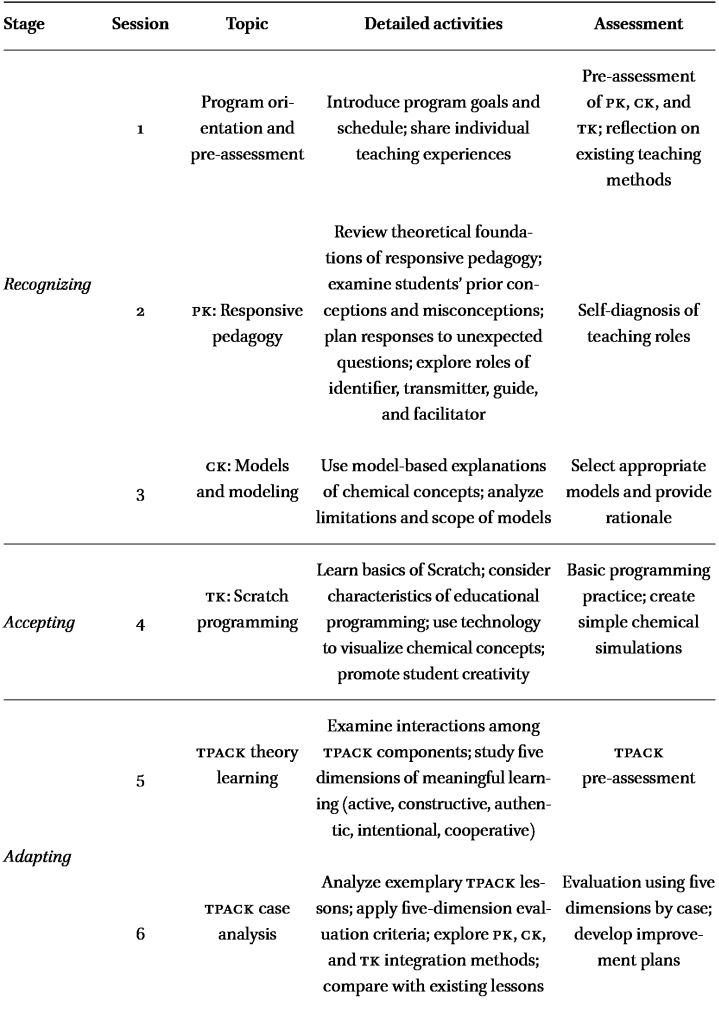
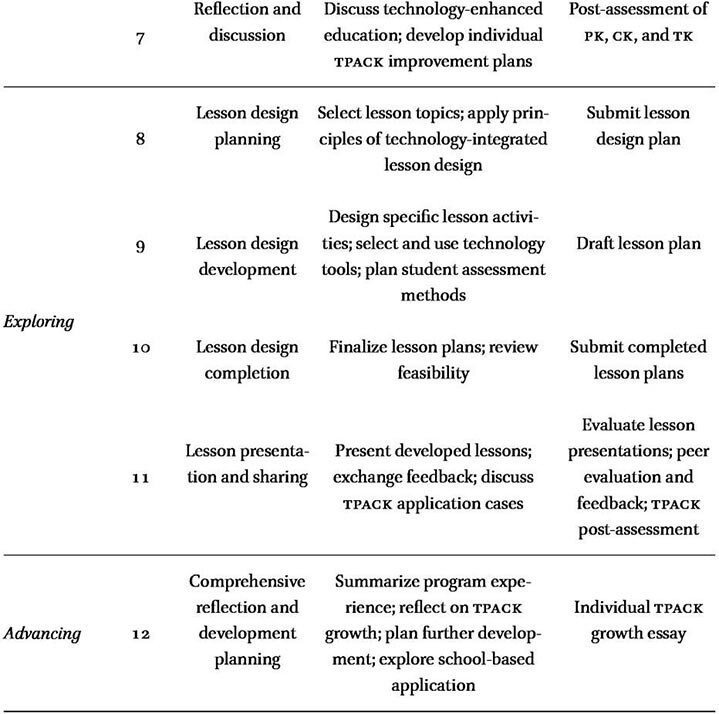
The TPACK program was developed through a systematic process. After establishing the rationale for applying Pathway 3, a twelve-session sequence was designed using Niess et al.’s (2009) five-stage TPACK development model: recognizing, accepting, adapting, exploring, and advancing. Each session included PK work on responsive teaching, CK work on models and modeling, and TK work using Scratch, followed by activities aimed at integrated TPACK development.
Implementation of the five-stage model proceeded as follows. Sessions 1 to 3 focused on examining limitations of existing practices through PK and CK theory and critical reflection. Session 4 provided hands-on TK practice to recognize the educational potential of technology. Sessions 5 to 7 supported integration through TPACK theory learning, case analysis, and individual development planning. Sessions 8 to 11 centered on lesson-design projects that combined the three domains. Session 12 guided metacognitive reflection and planning for continued development.
In this study, PK and CK training preceded TK training to surface limitations in traditional instruction and then consider how technology could address them. This sequencing was intended to demonstrate the effectiveness of technology while encouraging reflection on prior practice.
Structure of the educational program
Citation: Asia-Pacific Science Education 11, 2 (2025) ; 10.1163/23641177-bja10104
Content validity was sought through review by one chemistry education expert, one in-service chemistry teacher, and two chemistry education graduate students. Session activities and evaluation methods were revised based on their feedback.
3.3 Data Collection
3.3.1 Procedures
Data were collected throughout the program to evaluate development in TPACK and in the three base domains. PK, CK, and TK surveys were administered as pre- and post-assessments at the beginning of the program and after instruction on each domain. TPACK was assessed prior to TPACK instruction, and improvement was evaluated by analyzing lesson plans designed by participants after instruction.
3.3.2 Measurement Instruments
Measurement instruments were constructed based on prior literature that assesses PK, CK, TK, and TPACK.
The PK instrument, developed from research on responsive teaching (Cho & Paik, 2020), evaluated how teachers respond to students’ prior conceptions and misconceptions. It consisted of open-ended prompts such as “How do you respond when students have misconceptions?” and “How do you handle unexpected student questions during class?”
CK was assessed using the acid-base model comprehension tool developed by Lyu and Paik (2020). The instrument included eight chemistry problems in which teachers selected the appropriate model, Arrhenius or Brønsted-Lowry, and explained their reasoning. The problems varied in complexity and context to assess teachers’ ability to recognize model applicability. For example, one item asked teachers to identify the acid and base in NH₃(g) + HCl(g) → NH₄Cl(s) and to state which model they used and why the alternative model would be inappropriate, noting that Brønsted-Lowry is necessary and Arrhenius fails due to the absence of aqueous solution. Another item presented the reaction HCl(aq) + NaOH(aq) → NaCl(aq) + H₂O(l) and asked teachers to explain why both models can describe this reaction but might emphasize different aspects, with Arrhenius focusing on H⁺ and OH⁻ in water and Brønsted-Lowry emphasizing proton transfer. A third item asked teachers to analyze the equilibrium CH₃COOH(aq) + H₂O(l) ⇌ CH₃COO⁻(aq) + H₃O⁺(aq) and explain why Brønsted-Lowry better accounts for water’s dual role as reactant and base (Lyu & Paik, 2020). Scoring differentiated between teachers who could only define models (lower CK), those who could apply them correctly in context (intermediate CK), and those who could articulate each model’s scope, limitations, and selection criteria (higher CK).
The TK instrument, based on Kim and Paik (2020), identified the types of technology teachers use in their classes and evaluated the level of utilization. Participants responded to open-ended prompts such as “What technology do you use in your classes?”, “How do you have students utilize technology?”, and “What are the educational purposes of using technology?”
TPACK was measured using approaches suggested by Lyublinskaya and Tournaki (2014) and Kwangsawad (2016). The pre-assessment prompt documented initial perceptions and experiences with technology integration. The post-assessment consisted of analysis of lesson plans designed by participants.
3.4 Data Analysis
3.4.1 Domain-Level Frameworks for PK, CK, and TK
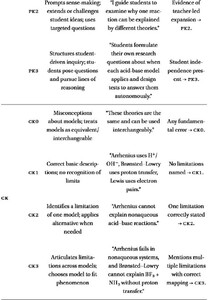
PK levels were adapted from Cho and Paik (2020). Based on responsive teaching stages, participants were iteratively classified into PK0 to PK3 corresponding to discriminator, transmitter, guider, and facilitator. Teachers described their methods before and after the program, with analysis focused on posttest changes. Qualitative coding drew on these descriptions, with discussions and assignments used as supplementary data. While largely consistent with prior studies, some expressions were refined to fit this study’s scope. Iterative analysis revealed additional traits within each level, which informed further refinement of the classification.
CK levels were adapted from Lyu and Paik (2020) and assessed with a customized questionnaire on understanding Arrhenius and Brønsted-Lowry models and their limitations. Eight scenarios required model selection and justification. Scoring followed prior conventions, with level labels adjusted for the study’s objectives, CK0 to CK3.
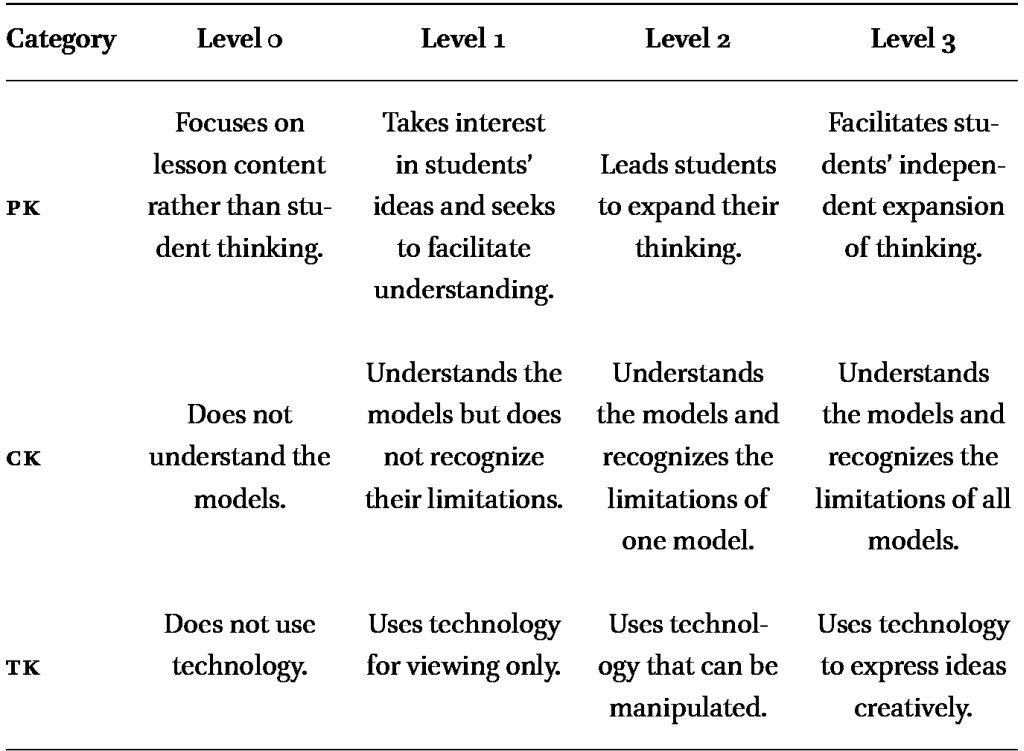
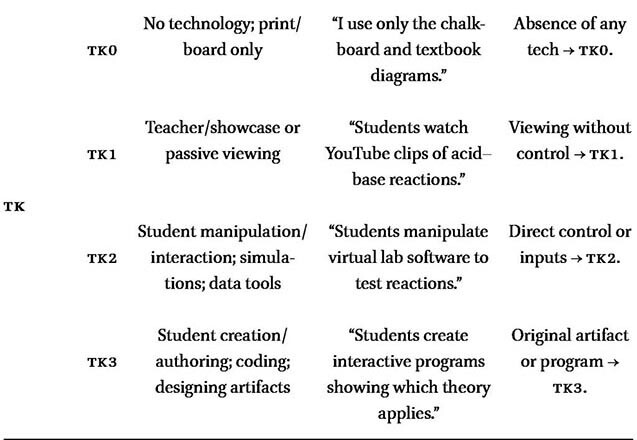
TK levels reflected the types of technology teachers employed, emphasizing student engagement and creative use. Classifications were informed by Kim and Paik (2020), which showed that TPACK development is more effective when programming is incorporated rather than relying on general ICT. Levels were derived from observations of participants and common school technologies, highlighting the added value of programming. Table 2 provides concise level descriptors for PK0 to PK3, CK0 to CK3, and TK0 to TK3.
Reorganized PK, CK, and TK levels
Citation: Asia-Pacific Science Education 11, 2 (2025) ; 10.1163/23641177-bja10104
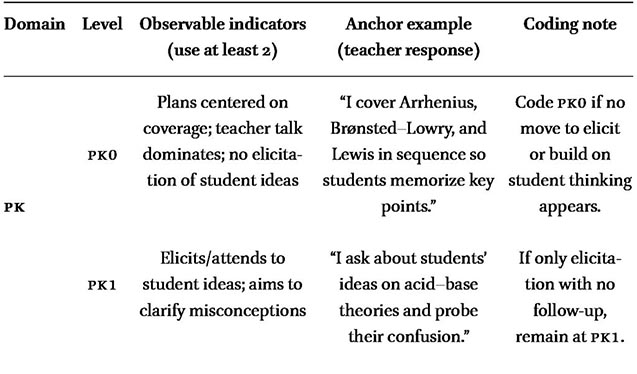
To streamline coding and avoid lengthy prose examples, Table 3 presents observable indicators and anchor responses for each domain and level. The table notes specify the decision rule to assign the highest level with explicit evidence of at least two indicators, handling of mixed evidence, the unit of analysis, and acceptable evidence sources.
Observable indicators and anchor examples
Citation: Asia-Pacific Science Education 11, 2 (2025) ; 10.1163/23641177-bja10104
3.4.2 TPACK Rubric Development and Scoring
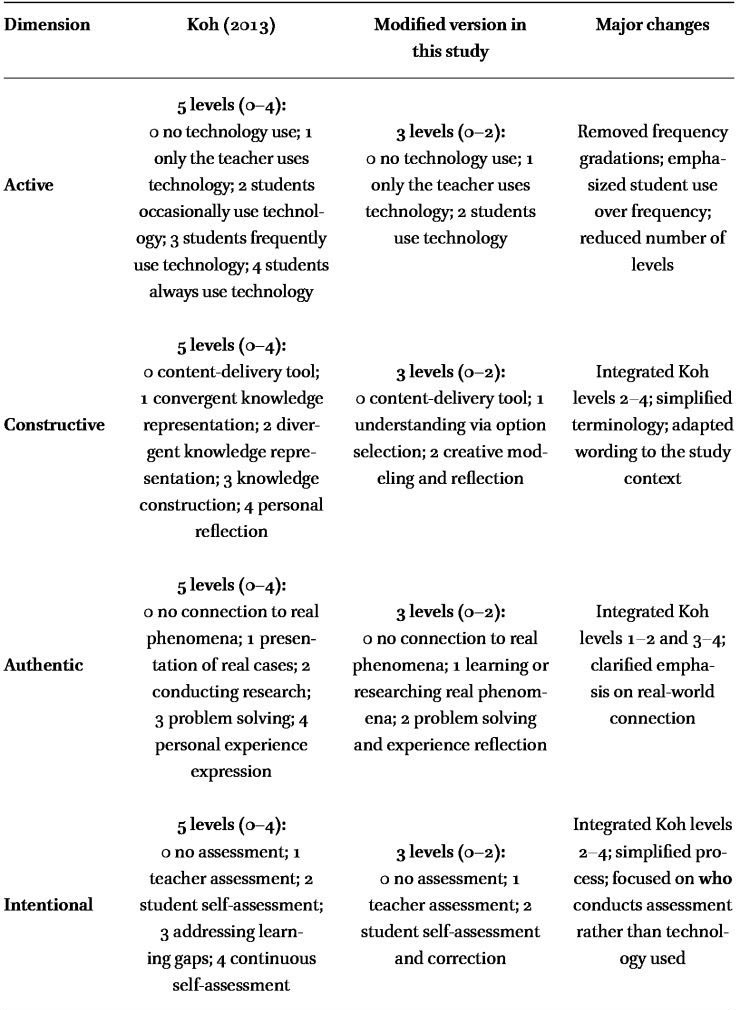
TPACK development was analyzed using the five meaningful learning dimensions identified by Howland et al. (2012) and the rubric developed by Koh (2013). For this study, Koh’s rubric was adapted to improve clarity and scoring reliability with a small sample and lesson-plan evidence. The number of levels was reduced from five to three, criteria were rewritten to emphasize observable teacher and student behaviors visible in lesson plans, terminology was aligned to the present context of science teacher professional development, and the cooperative dimension was revised so it could be applied directly to lesson-plan artifacts. Table 4 compares Koh’s five-level rubric with the three-level version used here and summarizes these changes.
Comparison of original and modified TPACK rubrics
Citation: Asia-Pacific Science Education 11, 2 (2025) ; 10.1163/23641177-bja10104
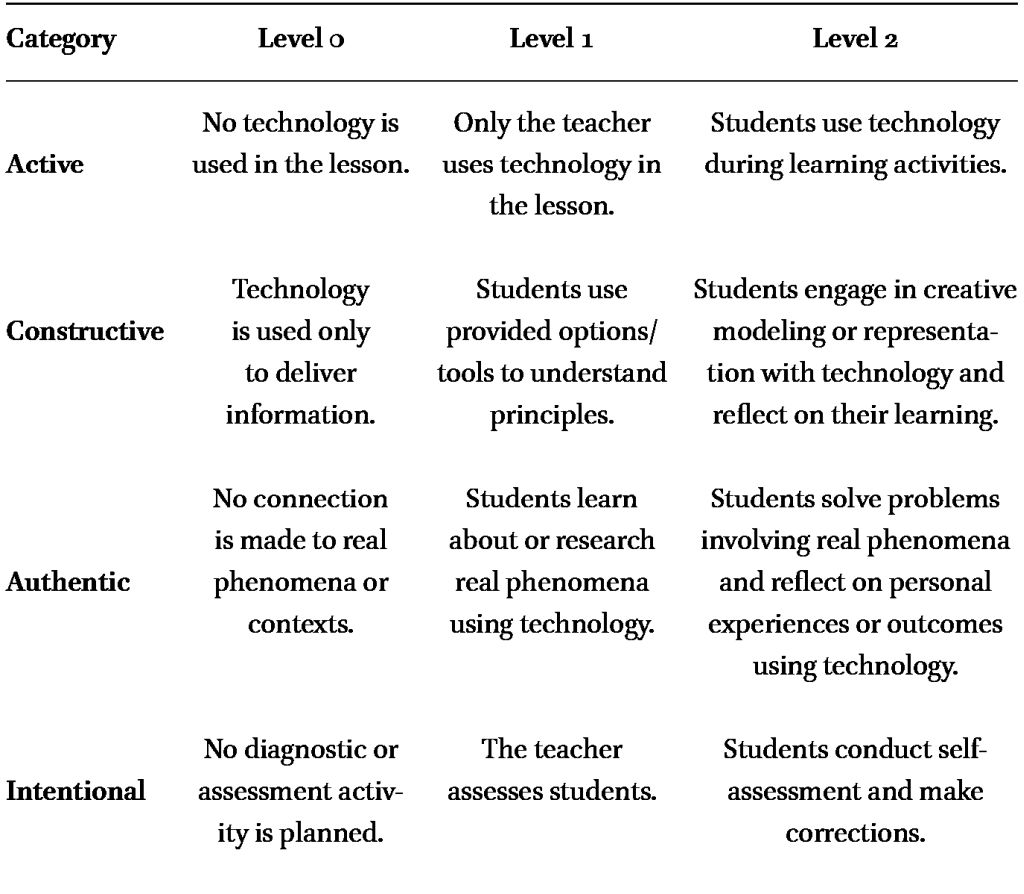
Table 5 presents the final three-level scoring descriptors for the active, constructive, authentic, intentional, and cooperative dimensions (Howland et al., 2012). To focus scoring on concrete evidence, coders assigned levels only when behaviors were explicitly documented in the plan or task description. Disagreements were resolved through consensus meetings; interrater agreement procedures are described in Section 3.5.
Reorganized TPACK assessment rubric
Citation: Asia-Pacific Science Education 11, 2 (2025) ; 10.1163/23641177-bja10104
3.4.3 Application Examples
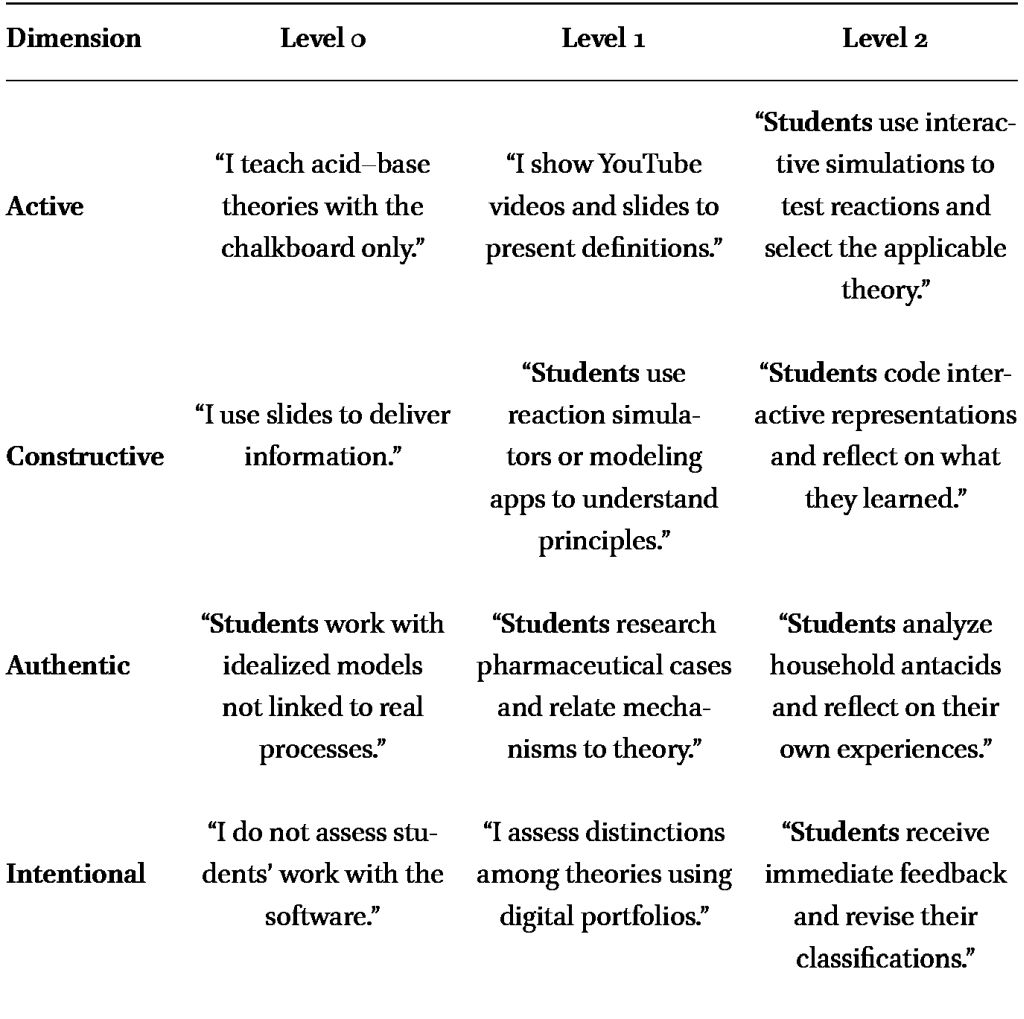
Exemplar statements illustrating typical responses at each level of the five dimensions are provided in Table 6. Coders used these exemplars as guidance; final scores were assigned using the rubric in Table 5 and the decision rules associated with Tables 2 and 3.
Exemplar statements for TPACK rubric levels (by dimension)
Citation: Asia-Pacific Science Education 11, 2 (2025) ; 10.1163/23641177-bja10104
3.5 Reliability and Validity
Grounded theory procedures (Strauss & Corbin, 1998) were applied to analyze questionnaire responses and lesson plans, with triangulation used to help ensure validity of interpretations. When teachers’ responses clearly matched a specific level, they were classified into the corresponding category. When evidence was ambiguous, coders considered the overall response context. To support interrater reliability, one chemistry education expert, one in-service chemistry teacher, and two chemistry education graduate students conducted overlapping evaluations of all data. When evaluators disagreed, final decisions were made through consensus. To further verify reliability, nine additional experts, including three in-service chemistry teachers, one chemistry education doctoral student, two master’s students, one elementary science education doctoral student, one gifted science education doctoral student, and one convergence education master’s student, reviewed and validated the analysis results.
4 Results and Discussion
4.1 RQ1: Effects of the Program on PK, CK, and TK
4.1.1 Pedagogical Knowledge
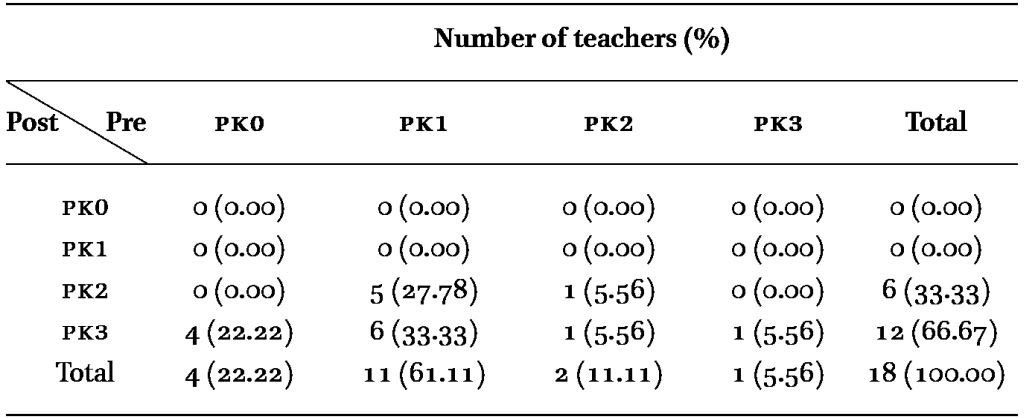
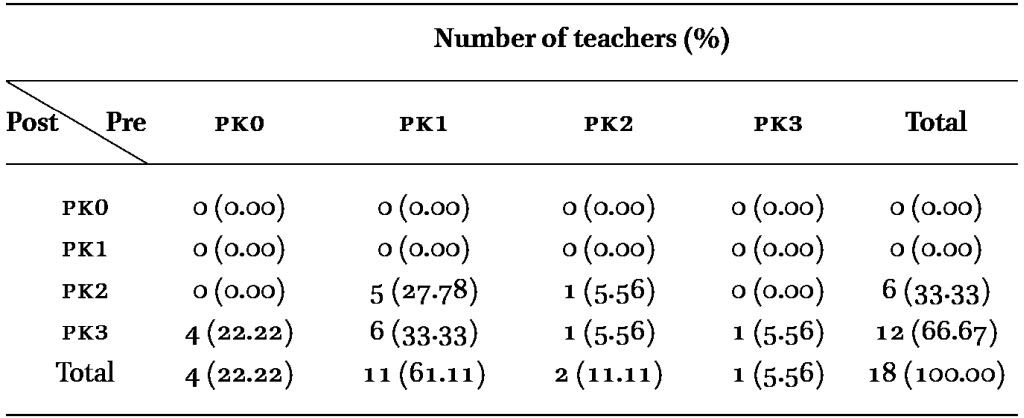
Teachers’ PK development showed substantial movement toward student-centered approaches (Table 7), with twelve teachers (66.7%) reaching the highest responsive teaching level (PK3). These gains are plausibly linked to specific program design features. Sessions 1 to 3 confronted teachers with student work samples showing common acid-base misconceptions. For instance, students who believed “all acids are strong” or “bases must contain OH⁻ groups.” Teachers initially struggled to move beyond correcting these ideas to building on them instructionally (typical of PK0 to PK1). Sessions 5 to 7 then modeled and coached responsive moves, including eliciting student reasoning through targeted questioning (“Why do you think NH₃ is a base even though it has no OH⁻?”), interpreting what those responses reveal about model understanding, and designing instructional sequences that guide students to confront model limitations through carefully chosen chemical examples. By sessions 8 to 11, teachers’ lesson plans incorporated these moves. For example, one teacher designed a Scratch-based activity in which students first predicted acid-base behavior using their initial models, then encountered a counterexample, the gas-phase reaction NH₃ + HCl, that their Arrhenius-only thinking could not explain, prompting model comparison and revision (Hand & Treagust, 1991). This progression from recognizing student ideas to strategically building on them characterizes movement to PK2 to PK3 and reflects the program’s scaffolding from modeling to coaching to fading (Collins et al., 1989).
Changes in teachers’ PK levels (n = 18)
Citation: Asia-Pacific Science Education 11, 2 (2025) ; 10.1163/23641177-bja10104
However, careful interpretation is needed when considering whether changes observed through self-report surveys represent profound changes in actual classroom practice. While teachers demonstrated understanding of responsive teaching in chemistry contexts, translating these insights into sustained classroom practice is a complex process that requires long-term support and reflection (Hammer & van Zee, 2006).
4.1.2 Content Knowledge
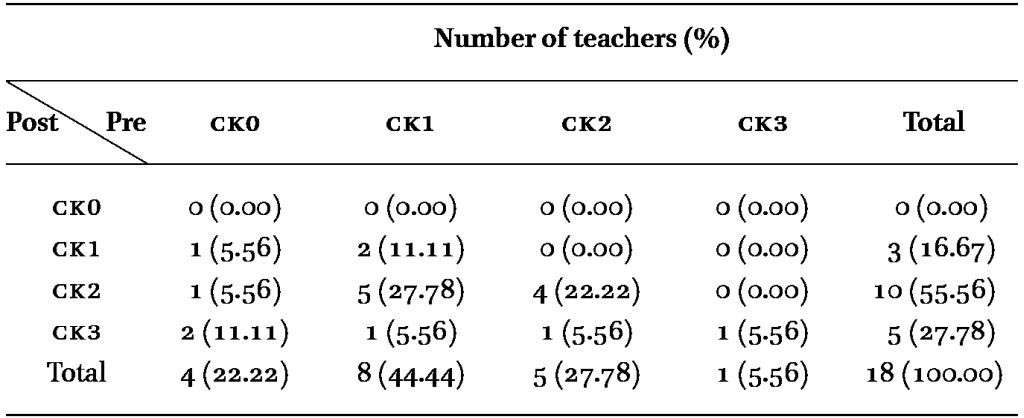
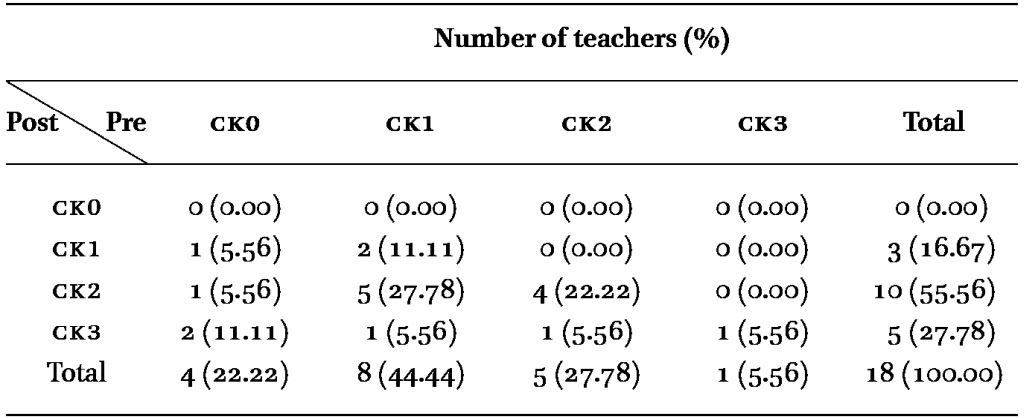
CK development centered on teachers’ understanding of acid-base models as bounded explanatory tools rather than universal truths (Table 8). The most common shift (CK1 to CK2; 27.8%) reflects progression from defining models correctly to recognizing their scope and limitations, a critical step in chemistry teaching (Drechsler & Van Driel, 2008). This progression is attributable to program tasks in sessions 2 to 4 that required teachers to work through problem sets spanning diverse reaction contexts: aqueous neutralizations explainable by either model, non-aqueous reactions requiring Brønsted-Lowry, and weak-acid equilibria where Brønsted-Lowry better illuminates mechanism. Two teachers (11.1%) who advanced from CK0 to CK3 initially conflated the two models or applied them inconsistently, for example, calling NH₃ a base “because it accepts protons” without recognizing that this is Brønsted-Lowry reasoning rather than Arrhenius. After the program, their lesson plans explicitly addressed model selection criteria and designed student tasks that foreground when each model applies, for instance, comparing HCl(aq) + NaOH(aq) (both models work) with NH₃(g) + HCl(g) (only Brønsted-Lowry works) to help students develop principled model-selection strategies (Lyu & Paik, 2020). The magnitude of CK change was smaller than PK and TK gains, likely because model-based reasoning requires deep content transformation that two to three sessions may not fully address (Giere, 2004; Justi & Gilbert, 2002). Future iterations could extend CK development across additional chemistry topics, such as chemical bonding and reaction mechanisms, to reinforce model-as-tool thinking more broadly.
Changes in teachers’ CK levels (n = 18)
Citation: Asia-Pacific Science Education 11, 2 (2025) ; 10.1163/23641177-bja10104
4.1.3 Technological Knowledge
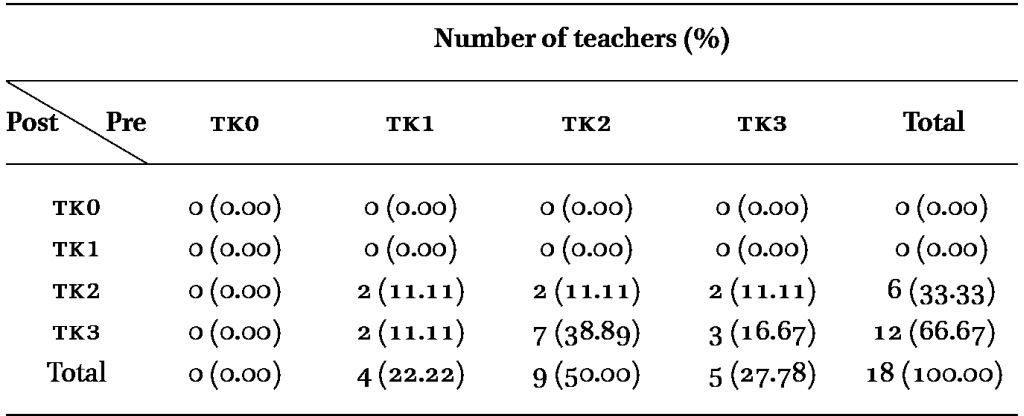
TK gains were universal. All teachers improved at least one level, with twelve teachers (66.7%) reaching TK3 (Table 9). This shift from consumptive technology use (TK1: playing videos; TK2: interactive simulations) to creative authoring (TK3: students designing computational models) is directly traceable to sessions 4 to 11, which scaffolded Scratch programming in chemistry contexts. Initially (session 4), teachers learned basic Scratch mechanics through non-chemistry tasks such as animating sprites and creating loops. Sessions 6 to 8 then challenged them to represent particle-level acid-base processes computationally. For example, animating proton transfer from HCl to NH₃ by programming sprite movement, collision detection, and state changes. This required decomposing the chemical phenomenon into algorithmic steps, thereby integrating CK (proton transfer mechanism) with TK (computational representation) (Sengupta et al., 2013; Wilensky & Reisman, 2006). Sessions 9 to 11 extended to creating adaptive learning tools in which teachers programmed Scratch decision trees that asked students to classify reactions and then provided model-specific feedback. For instance, “Your answer suggests Arrhenius thinking; can you explain this gas-phase reaction without water?” This positioned technology not as a presentation layer but as a medium for making student thinking visible and responsive, embodying TK3 (Resnick et al., 2009). Two teachers (11.1%) who advanced from TK1 to TK3 initially viewed technology as “showing videos,” but by the end of the program had designed student-facing Scratch tasks requiring computational modeling of chemical equilibria, which requires a qualitative reconceptualization of technology’s instructional role in chemistry.
Changes in teachers’ TK levels (n = 18)
Citation: Asia-Pacific Science Education 11, 2 (2025) ; 10.1163/23641177-bja10104
These TK gains are consistent with the program’s sequencing, in which PK and CK foundations were followed by TK practice, and may have positioned technology as a means for representing content and pedagogy rather than as an add-on. The large movement from TK2 to TK3 suggests that programming tasks supported a reconceptualization of technology from using tools to creating with them, a hallmark of the TK3 descriptors in Tables 2 and 3. This pattern also anticipates the overall TPACK results (Section 4.2) and the regression finding that TK change predicted TPACK change (Section 4.3), indicating a plausible pathway from authoring-oriented TK to integrated lesson planning. Notably, the TK gains were chemistry-specific rather than generic programming skills. Teachers did not merely learn Scratch; they learned to use Scratch to represent acid-base chemistry at the particle level, to create decision tools that scaffold model selection, and to design tasks that elicit and respond to student chemical thinking. This disciplinary grounding distinguishes the present approach from generic technology training and aligns with calls for context-specific TPACK development (Mishra & Koehler, 2006; Niess et al., 2009).
Two caveats merit attention. First, with no participants at TK0 initially, a ceiling on detectable gains for novices is possible; replication with lower-TK cohorts would clarify generalizability. Second, TK was assessed through self-reports and lesson plans rather than classroom observation, so sustained enactment remains to be verified (Koehler et al., 2012). Program refinements could include structured deliverables that evidence authoring, such as teacher-created Scratch prototypes or student artifact prompts, and brief supports for troubleshooting and iteration during design.
4.2 RQ2: Effects on TPACK by Dimension
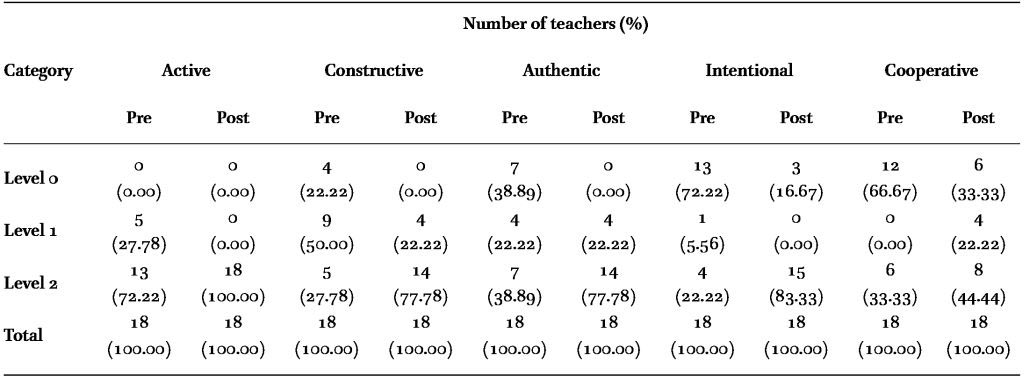
Across dimensions, posttest distributions shifted upward (Table 10). Active showed a ceiling effect, with no Level 0 at pretest and all Level 2 at posttest, indicating high initial acceptance of technology use in chemistry instruction. Constructive and Authentic each reached fourteen teachers (77.8%) at Level 2 posttest, suggesting stronger modeling and meaning-making and more consistent real-world connections, in line with meaningful learning principles (Howland et al., 2012). In chemistry terms, Constructive gains reflect lesson designs in which students actively construct understanding, for example, programming Scratch models to test predictions about acid-base strength rather than passively receiving teacher explanations (Justi & Gilbert, 2002). Authentic gains indicate connections to real-world chemical contexts. One teacher designed a lesson in which students investigated household acid-base products, such as vinegar, baking soda, and antacids, and used Scratch to model why some reactions occur and others do not, linking classroom models to everyday chemistry (Carr, 1984; Kelly & Jones, 2007).
Changes in teachers’ TPACK levels by dimension (n = 18)
Citation: Asia-Pacific Science Education 11, 2 (2025) ; 10.1163/23641177-bja10104
Note. Distributions (n = 18) of Level 0–2 by dimension at pretest and posttest; levels per Table 4; coding rules per Table 2a.
For Intentional, fifteen teachers (83.3%) reached Level 2, while three (16.7%) remained at Level 0, indicating ongoing needs in assessment design and enactment. Cooperative improved least; six teachers (33.3%) remained at Level 0 and eight (44.4%) reached Level 2. Given the delivery format and limited opportunities for concurrent collaboration, change in this dimension may have been constrained. Future iterations should embed structured, technology-supported group tasks and require collaborative artifacts to target this area more directly.
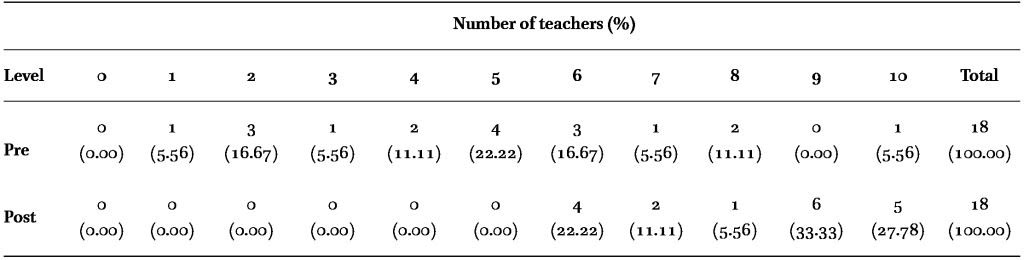
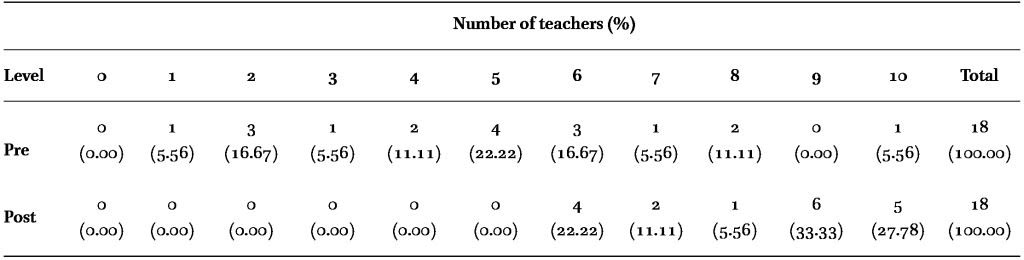
To summarize change across dimensions, an aggregate TPACK score was computed by summing the five dimension levels (range 0 to 10). Pretest scores ranged from 1 to 10, with most teachers clustering at 5 to 6. Posttest, all teachers scored above 6; eleven teachers (61%) reached 9 to 10 (Table 11). The primary limiter among teachers who did not reach higher totals was the Cooperative dimension, suggesting that strengthening collaborative lesson components could further raise the overall index.
Changes in the total TPACK levels of teachers
Citation: Asia-Pacific Science Education 11, 2 (2025) ; 10.1163/23641177-bja10104
4.3 RQ3: Relationships Between PK/CK/TK Change and TPACK Change
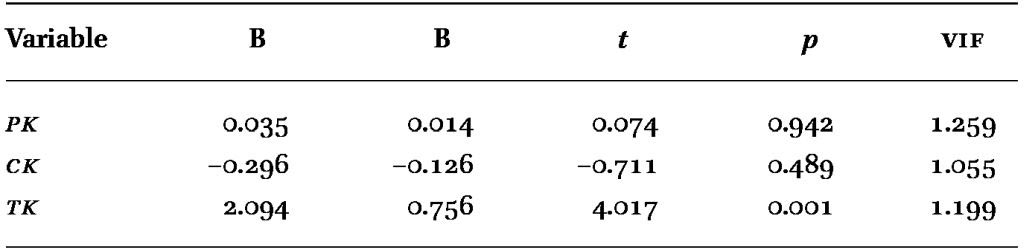
Multiple regression with change scores addressed RQ3. Only TK change significantly predicted TPACK change (
Relationship between changes in PK, CK, and TK and change in TPACK (n = 18)
Citation: Asia-Pacific Science Education 11, 2 (2025) ; 10.1163/23641177-bja10104
These results align with the pattern reported in Section 4.1.3, which showed substantial movement from TK2 to TK3, and help explain the broad posttest gains across the TPACK dimensions in Section 4.2. Within a Pathway 3 design, targeted growth in TK appears to act as a catalyst for integrated lesson planning, echoing the view that TK-focused routes can be effective for certain teacher populations (Harris et al., 2009), while remaining consistent with the interactional nature of the TPACK framework (Mishra & Koehler, 2006). At the same time, improvements were uneven across dimensions, particularly in the Cooperative and Intentional domains, indicating that technological authoring alone does not guarantee change in assessment design or collaborative enactment (Howland et al., 2012). Future iterations might therefore retain the strong emphasis on creative TK while adding structured opportunities and artifacts that target assessment and collaboration within technology-rich tasks.
5 Conclusions and Implications
The developed program had a positive impact on teachers’ PK, CK, TK, and overall TPACK. These results suggest that TPACK professional development programs can effectively raise integrated knowledge and support teacher professionalism. Notably, TK development directly affected TPACK improvement in this cohort. Although the program was designed around Pathway 3, the findings indicate that a Pathway 2 emphasis, prioritizing TK/TPK with extension to TPACK within specific content areas, may be especially effective for some teacher populations.
Examining the program’s effects through a chemistry education lens reveals three specific teaching moves that improved substantially. First, model-based reasoning in acid-base chemistry developed as teachers learned to distinguish when Arrhenius versus Brønsted-Lowry models apply. For instance, teachers recognized that aqueous neutralization reactions (HCl + NaOH) can be explained by either model, whereas gas-phase reactions (NH₃ + HCl) require Brønsted-Lowry reasoning. They incorporated these distinctions into lesson designs, using Scratch to visualize each model’s scope and limitations, for example, animating proton transfer in contexts where Arrhenius definitions fail. This represents growth in CK that directly supported TPACK by making content boundaries technologically explicit (Drechsler & Van Driel, 2008; Lyu & Paik, 2020).
Second, responsive teaching around student acid-base conceptions improved as teachers moved from simply correcting misconceptions to eliciting and building on them. Teachers learned to anticipate common alternative conceptions, such as “all acids are strong” or “bases must contain OH⁻,” and designed instructional responses that treated these ideas as productive starting points. Importantly, teachers embedded responsive moves in technology by creating Scratch decision tools that provided different feedback pathways based on students’ initial model choices, thereby operationalizing responsive pedagogy through computational branching (Hammer & van Zee, 2006; Robertson et al., 2015).
Third, computational modeling of particle-level acid-base processes emerged as the strongest predictor of TPACK growth (Section 4.3). Teachers learned to decompose chemical reactions into programmable steps, including initial state, collision, proton transfer, and product formation, making submicroscopic mechanisms computationally explicit. They created reusable code blocks for proton-transfer patterns and designed algorithmic decision sequences for model selection, for example, “If aqueous and involves H⁺/OH⁻, then Arrhenius; otherwise, Brønsted-Lowry.” This positioned Scratch not as a presentation tool but as a medium for expressing chemical understanding, distinguishing creative authoring (TK3) from passive technology use (TK1) (Sengupta et al., 2013; Wilensky & Reisman, 2006).
These chemistry-specific moves suggest implications for professional development design. Programs should develop technology knowledge through disciplinary content from the outset, for example, introducing Scratch by modeling HCl dissociation rather than with generic animations. Emphasis on creative authoring for particle-level phenomena addresses chemistry education’s persistent challenge of connecting macroscopic, symbolic, and submicroscopic representations (Johnstone, 1982). Additionally, explicit scaffolding of model-based reasoning, when different models apply and how technology can visualize model boundaries, should be incorporated across multiple chemistry topics beyond acid-base content, such as equilibrium, bonding, and kinetics, to strengthen chemistry teachers’ TPACK more broadly.
The program also incorporated a rubric to support self-assessment and growth. By offering clear, practical criteria, the rubric can be used for teacher self-evaluation and for school-level professional development initiatives.
To maximize future program effectiveness, systematic design targeting TK development is recommended. Given that TK gains were strongly associated with TPACK growth and that TPACK development is related to teachers’ self-efficacy beliefs (Choi & Paik, 2020), block-coding activities such as Scratch may help teachers move from using tools to creating with them, thereby strengthening integrated planning. In addition, providing explicit opportunities for teacher self-assessment can further develop the intentional dimension.
Overall, these findings underscore the value of structured TPACK programs for strengthening chemistry teacher professionalism and improving instructional quality in chemistry education. The results may also encourage schools and educational agencies to invest in sustained, high-quality professional learning that supports technology-integrated pedagogy grounded in disciplinary content and pedagogical principles specific to chemistry learning.
6 Limitations of the Study
6.1 Constraints of Online Educational Environment
This study was conducted online, which limited interaction and collaborative learning opportunities for participants and likely contributed to the limited improvement in the cooperative dimension of TPACK. Participation in offline educational programs may result in greater improvement in the collaborative aspects of TPACK.
6.2 Limitations of Study Participants
The limited sample size, eighteen participants, and limited diversity in participant background, all graduate students in chemistry education from a university in North Chungcheong Province, South Korea, constrain the generalizability of the results. Additionally, because the participating teachers already used technology in education, with no teachers at the TK0 level, the effectiveness of the proposed program for teachers with low technological competency requires further validation. Furthermore, the program focused exclusively on acids and bases. While this topic was strategically selected because it supports model comparison and particle-level visualization, generalizability to other chemistry domains, including thermodynamics, organic mechanisms, and electrochemistry, remains to be established. Different chemistry topics may present distinct challenges for TPACK integration, and future research should investigate whether the program design transfers across the chemistry curriculum.
6.3 Constraints of Data Collection Methods
The present study relied on self-report data and lesson plans as primary data sources, which introduces related limitations. First, self-report surveys and assignment responses may not fully capture differences between participants’ subjective perceptions and actual teaching behaviors. Second, assessing teachers’ classroom behaviors based solely on written materials, such as lesson plans, may fail to capture differences between planned activities and actual implementation. To address these issues, future studies should establish environments in which teachers’ instructional processes can be directly observed. Comprehensive and objective assessment of TPACK competencies should employ multiple methods, including classroom observation, teacher interviews, and peer evaluations through triangulation.
Abbreviations
| TPACK |
Technological pedagogical content knowledge |
| PK |
Pedagogical knowledge |
| CK |
Content knowledge |
| TK |
Technological knowledge |
| PCK |
Pedagogical content knowledge |
| TPK |
Technological pedagogical knowledge |
Ethical Consideration
Approval to conduct this study was granted by the Korea National University of Education Ethics Review Board (KNUE-202202-SB-0004-01). The data collected from this project were obtained with the necessary clearance from the partner institutions and the participants involved in the study. All data were processed anonymously, and personally identifiable information was coded and appropriately managed.
About the Authors
Na-Jin Jeong is a researcher at the Convergence Education Research Institute, Korea National University of Education. She received her bachelor of science degree in chemistry education from Gyeongsang National University in 2007, her master of education degree in chemistry education from Korea National University of Education in 2011, and her PhD in education from Korea National University of Education in 2024. Prior to her doctoral studies, she worked as a chemistry teacher in middle and high schools for 12 years. Her primary research interest is on the educational value and effectiveness of modeling activities in science education. She recognizes modeling as a core inquiry process that reflects the essence of science and utilizes it as a valuable educational tool to foster students’ scientific literacy and creativity. Recently, she has expanded her research to modeling education using artificial intelligence and digital tools, exploring future directions in science education.
Ji-Hyeon Lim received her bachelor of science degree in applied chemistry from Seoul National University of Science and Technology in 2021, and her master of education degree in chemistry education from Korea National University of Education in 2023. Her primary research interests focus on strengthening teachers’ expertise and instructional competence in science education. She explores effective teaching and learning approaches that respond to changing educational environments and emphasizes the use of diverse technologies and tools to enrich students’ learning experiences. She is also engaged in developing educational programs and strategies that support the growth of both teachers and students, aiming to contribute to the advancement of future-oriented science education.
Seoung-Hey Paik is a professor in the Department of Chemistry Education at Korea National University of Education. She received her bachelor’s degree in 1987, master’s degree in 1989, and PhD in 1992, all in chemistry education, from Seoul National University. She currently serves as the Director of the Convergence Education Research Institute at Korea National University of Education. Her research focuses on the effectiveness of incorporating philosophy and history of science into chemistry education, modeling-based chemistry inquiry activities, and enhancing chemistry teaching expertise through technology, including AI-integrated chemistry instruction. Through the Convergence Education Research Institute, she pioneers convergence education that integrates science, technology, humanities, society, and the arts, cultivating future-ready talent.
References
Carr, M. (1984). Model confusion in chemistry. Research in Science Education, 14(1), 97–103. https://doi.org/10.1007/BF02356880.
Carr, A. A., Jonassen, D. H., Litzinger, M. E., & Marra, R. M. (1998). Good ideas to foment educational revolution: The role of systematic change in advancing situated learning, constructivism, and feminist pedagogy. Educational Technology, 38(1), 5–14.
Cho, M. H., & Paik, S. H. (2020). Analysis of pre-service science teachers’ responsive teaching types and barriers of practice. Journal of the Korean Association for Science Education, 40(2), 177–189.
Choi, E. S., Lee, Y. J., & Paik, S. H. (2017). The effects of programming-based lessons on science teachers’ perceptions related to TPACK. Journal of the Korean Association for Science Education, 37(4), 693–703.
Choi, K. S., & Paik, S. H. (2020). The effect of lessons considering the TPACK development stage on the self-efficacy and development level of pre-service teachers. Journal of Learner-Centered Curriculum and Instruction, 20(22), 1371–1391.
Coffey, J. E., Hammer, D., Levin, D. M., & Grant, T. (2011). The missing disciplinary substance of formative assessment. Journal of Research in Science Teaching, 48(10), 1109–1136.
Collins, A., Brown, J. S., & Newman, S. E. (1989). Cognitive apprenticeship: Teaching the craft of reading, writing, and mathematics. In L. B. Resnick (Ed.), Knowing, learning, and instruction: Essays in honor of Robert Glaser (pp. 453–494). Lawrence Erlbaum Associates.
Drechsler, M., & Schmidt, H. J. (2005). Textbooks’ and teachers’ understanding of acid-base models used in chemistry teaching. Chemistry Education Research and Practice, 6(1), 19–35. https://doi.org/10.1039/B4RP90002B.
Drechsler, M., & Van Driel, J. H. (2008). Experienced teachers’ pedagogical content knowledge of teaching acid-base chemistry. Research in Science Education, 38(5), 611–631. https://doi.org/10.1007/s11165-007-9066-5.
Ertmer, P. A., Ottenbreit-Leftwich, A. T., & Tondeur, J. (2015). Teacher beliefs and uses of technology to support 21st century teaching and learning. In H. Fives & M. G. Gill (Eds.), International handbook of research on teachers’ beliefs (pp. 403–419). Routledge.
Giere, R. N. (2004). How models are used to represent reality. Philosophy of Science, 71(5), 742–752.
Graham, C. R., Borup, J., & Smith, N. B. (2012). Using TPACK as a framework to understand teacher candidates’ technology integration decisions. Journal of Computer Assisted Learning, 28(6), 530–546.
Grover, S., & Pea, R. (2013). Computational thinking in K–12: A review of the state of the field. Educational Researcher, 42(1), 38–43. https://doi.org/10.3102/0013189X12463051.
Hammer, D., & van Zee, E. (Eds.). (2006). Seeing the science in children’s thinking: Case studies of student inquiry in physical science. Heinemann.
Hand, B., & Treagust, D. F. (1991). Student achievement and science curriculum development using a constructive framework. School Science and Mathematics, 91(4), 172–176. https://doi.org/10.1111/j.1949-8594.1991.tb12073.x.
Harris, J., Mishra, P., & Koehler, M. (2009). Teachers’ technological pedagogical content knowledge and learning activity types: Curriculum-based technology integration reframed. Journal of Research on Technology in Education, 41(4), 393–416.
Howland, J. L., Jonassen, D., & Marra, R. M. (2012). Meaningful learning with technology (4th ed.). Pearson.
Johnstone, A. H. (1982). Macro- and micro-chemistry. School Science Review, 64(227), 377–379.
Justi, R. S., & Gilbert, J. K. (2002). Modelling, teachers’ views on the nature of modelling, and implications for the education of modellers. International Journal of Science Education, 24(4), 369–387.
Kelly, R. M., & Jones, L. L. (2007). Exploring how different features of animations of sodium chloride dissolution affect students’ explanations. Journal of Science Education and Technology, 16(5), 413–429. https://doi.org/10.1007/s10956-007-9065-3.
Kim, J. S., & Paik, S. H. (2020). Development of technological knowledge evaluation criteria for science teachers using computational thinking. Journal of the Korean Association for Science Education, 40(3), 315–325.
Kim, J. S., & Paik, S. H. (2021). Analysis of teaching types and obstacles of chemistry teachers through teacher educational programs for responsive teaching. Journal of the Korean Chemical Society, 65(4), 268–278.
Kind, V. (2009). Pedagogical content knowledge in science education: Perspectives and potential for progress. Studies in Science Education, 45(2), 169–204. https://doi.org/10.1080/03057260903142285.
Koehler, M. J., & Mishra, P. (2005). What happens when teachers design educational technology? The development of technological pedagogical content knowledge. Journal of Educational Computing Research, 32(2), 131–152.
Koehler, M. J., & Mishra, P. (2009). What is technological pedagogical content knowledge (TPACK)? Contemporary Issues in Technology and Teacher Education, 9(1), 60–70.
Koehler, M. J., Shin, T. S., & Mishra, P. (2012). How do we measure TPACK? Let me count the ways. In R. N. Ronau, C. R. Rakes, & M. L. Niess (Eds.), Educational technology, teacher knowledge, and classroom impact: A research handbook on frameworks and approaches (pp. 16–31). IGI Global.
Koh, J. H. L. (2013). A rubric for assessing teachers’ lesson activities with respect to TPACK for meaningful learning with ICT. Australasian Journal of Educational Technology, 29(6), 887–900.
Kwangsawad, T. (2016). Examining EFL pre-service teachers’ TPACK through self-report, lesson plans and actual practice. Journal of Education and Learning, 10(2), 161–170.
Levin, D. M., Hammer, D., & Coffey, J. E. (2019). Novice teachers’ attention to student thinking. Journal of Teacher Education, 70(2), 176–194.
Lyublinskaya, I., & Tournaki, N. (2014). A study of special education teachers’ TPACK development in mathematics and science through assessment of lesson plans. Journal of Special Education Technology, 29(4), 1–15.
Lyu, E. J., & Paik, S. H. (2020). Analysis of chemistry teachers’ cognitive level related to two types of acid–base models based on epistemological and ontological viewpoint. Journal of the Korean Chemical Society, 64(5), 267–276.
Mishra, P., & Koehler, M. J. (2006). Technological pedagogical content knowledge: A framework for teacher knowledge. Teachers College Record, 108(6), 1017–1054.
Nakhleh, M. B. (1992). Why some students don’t learn chemistry: Chemical misconceptions. Journal of Chemical Education, 69(3), 191–196. https://doi.org/10.1021/ed069p191.
Niess, M. L., Ronau, R. N., Shafer, K. G., Driskell, S. O., Harper, S. R., Johnston, C., Browning, C., Ozgun-Koca, S. A., & Kersaint, G. (2009). Mathematics teacher TPACK standards and development model. Contemporary Issues in Technology and Teacher Education, 9(1), 4–24.
Resnick, M., Maloney, J., Monroy-Hernández, A., Rusk, N., Eastmond, E., Brennan, K., Millner, A., Rosenbaum, E., Silver, J., Silverman, B., & Kafai, Y. (2009). Scratch: Programming for all. Communications of the ACM, 52(11), 60–67.
Robertson, A. D., Scherr, R. E., & Hammer, D. (Eds.). (2015). Responsive teaching in science and mathematics. Routledge.
Ross, B., & Munby, H. (1991). Concept mapping and misconceptions: A study of high-school students’ understandings of acids and bases. International Journal of Science Education, 13(1), 11–23. https://doi.org/10.1080/0950069910130102.
Schön, D. A. (1983). The reflective practitioner: How professionals think in action. Basic Books.
Sengupta, P., Kinnebrew, J. S., Basu, S., Biswas, G., & Clark, D. (2013). Integrating computational thinking with K-12 science education using agent-based computation: A theoretical framework. Education and Information Technologies, 18(2), 351–380. https://doi.org/10.1007/s10639-012-9240-x.
Shulman, L. S. (1987). Knowledge and teaching: Foundations of the new reform. Harvard Educational Review, 57(1), 1–23.
So, H. J., & Kim, B. (2009). Learning about problem-based learning: Student teachers integrating technology, pedagogy and content knowledge. Australasian Journal of Educational Technology, 25(1), 101–116.
Strauss, A., & Corbin, J. (1998). Basics of qualitative research: Techniques and procedures for developing grounded theory (2nd ed.). Sage Publications.
Thompson, J., Windschitl, M., & Braaten, M. (2013). Developing a theory of ambitious early-career teacher practice. American Educational Research Journal, 50(3), 574–615.
Van Driel, J. H., De Jong, O., & Verloop, N. (2002). The development of preservice chemistry teachers’ pedagogical content knowledge. Science Education, 86(4), 572–590. https://doi.org/10.1002/sce.10010.
Vygotsky, L. S. (1978). Mind in society: The development of higher psychological processes. Harvard University Press.
Wiggins, G., & McTighe, J. (2005). Understanding by design (Expanded 2nd ed.). Association for Supervision and Curriculum Development.
Willermark, S. (2018). Technological pedagogical and content knowledge: A review of empirical studies published from 2011 to 2016. Journal of Educational Computing Research, 56(3), 315–343.
Wilensky, U., & Reisman, K. (2006). Thinking like a wolf, a sheep, or a firefly: Learning biology through constructing and testing computational theories – An embodied modeling approach. Cognition and Instruction, 24(2), 171–209. https://doi.org/10.1207/s1532690xci2402_1.
Wing, J. M. (2006). Computational thinking. Communications of the ACM, 49(3), 33–35.
Wu, H. K., Krajcik, J. S., & Soloway, E. (2001). Promoting understanding of chemical representations: Students’ use of a visualization tool in the classroom. Journal of Research in Science Teaching, 38(7), 821–842. https://doi.org/10.1002/tea.1033.