


Jump to Content
Brill Logo Brill Logo Brill Logo Brill Logo Brill Logo Brill Logo
  • 中文
  • English
Angemeldet über:
Dar Hadith al Hassania
Anmelden  Registrieren
Titel durchsuchen
Afrika Studien
Amerikanistik
Alter Orient und Ägypten
Kunstgeschichte
Asien-Studien
Bibelauslegung
Biologie
Buchgeschichte und Kartographie
Klassische Altertumswissenschaften
Pädagogik
Geschichte
Menschenrechte und Humanitäres Recht
Internationales Recht
Internationale Beziehungen
Judaistik
Sprache und Linguistik
Biowissenschaften
Literatur- und Kulturwissenschaften
Medienwissenschaft
Nahost- und Islamwissenschaften
Musikwissenschaften
Philosophie
Religionswissenschaften
Slavistik und Russistik
Sozialwissenschaften
Theologie und Christentum

Ein Brill-Autor werden

Veröffentlichungsethik & KI-Richtlinien

Verlagsleitfäden

Allgemeine Open Access Informationen

Für Autor:innen

Für Wissenschaftliche Gesellschaften

Für Bibliotheken

Forschungsförderung

Open Access Preise

Bücher

Zeitschriften

Besondere Produkte

Metadaten: Titellisten, MARC & KBART-Dateien

Kataloge, Prospekte und Preislisten

Zugriff auf Brill-Produkte

Über Brill und seine Geschichte

Imprints

Karriere

Organisation

Gesellschaftliche Unternehmensverantwortung (CSR)

News Archiv

Kontaktpersonen im Vertrieb

Bestellen bei Brill

Lektorat/Programm

Standorte

Presse und Rezensionen

Rechte und Lizenzen

Kursübernahme

Kontaktformular

Hilfe
Brill Logo Brill Logo Brill Logo Brill Logo Brill Logo Brill Logo
Angemeldet über:
Dar Hadith al Hassania
Anmelden  Registrieren
  • 中文
  • English
Titel durchsuchen
Afrikanistik Internationale Beziehungen Nahost- und Islamwissenschaften
Altorientalistik und Ägyptologie Internationales Recht Pädagogik
Amerikanistik Judaistik Philosophie
Asienwissenschaften Klassische Altertumswissenschaft Religionswissenschaft
Bibelauslegung Kunstgeschichte Slawistik und Eurasienkunde
Biologie Literatur- und Kulturwissenschaften Sozialwissenschaften
Biowissenschaften Medienwissenschaft Sprachen und Linguistik
Buchgeschichte und Kartographie Menschenrechte und humanitäres Völkerrecht Theologie und Christentum
Geschichte Musikwissenschaft  

Ein Brill-Autor werden

Veröffentlichungsethik & KI-Richtlinien

Verlagsleitfäden

Allgemeine Open Access Informationen

Für Autor:innen

Für Wissenschaftliche Gesellschaften

Für Bibliotheken

Forschungsförderung

Open Access Preise

Bücher

Zeitschriften

Besondere Produkte

Metadaten: Titellisten, MARC & KBART-Dateien

Kataloge, Prospekte und Preislisten

Zugriff auf Brill-Produkte

Über Brill und seine Geschichte

Imprints

Karriere

Organisation

Gesellschaftliche Unternehmensverantwortung (CSR)

News Archiv

Kontaktpersonen im Vertrieb

Bestellen bei Brill

Lektorat/Programm

Standorte

Presse und Rezensionen

Rechte und Lizenzen

Kursübernahme

Kontaktformular

Hilfe

Illustrations

in Roma Portraits in History
Seiten:
649–668
DOI:
https://doi.org/10.30965/9783657705191_017
Angemeldet über:
Dar Hadith al Hassania
  • PDF herunterladen
  • PDF-Vorschau
  • Vollständiger Text
  • PDF
Nikola Mihailo Mali (? – 1910). Smederevo, Serbia, 1860s.
Fig. 1a

Nikola Mihailo Mali (? – 1910). Smederevo, Serbia, 1860s.

  • Download Figure
  • Download figure as PowerPoint slide
Ferenc Nagyidai Sztojka (1855 – 1929). Austro-Hungarian Empire, 1880s.
Fig. 1b

Ferenc Nagyidai Sztojka (1855 – 1929). Austro-Hungarian Empire, 1880s.

  • Download Figure
  • Download figure as PowerPoint slide
Atanas Dimitrov (1874 – 1916). Bulgaria, 1890s.
Fig. 1c

Atanas Dimitrov (1874 – 1916). Bulgaria, 1890s.

  • Download Figure
  • Download figure as PowerPoint slide
Shakir Pashov (1898 – 1981) as a soldier during WWI. Bulgaria, 1915–1918.
Fig. 1d

Shakir Pashov (1898 – 1981) as a soldier during WWI. Bulgaria, 1915–1918.

  • Download Figure
  • Download figure as PowerPoint slide
Gypsy Theatre. Sliven, Bulgaria, 1927. The text on the photo: “Founders of 1st Gypsy theatre group. 24.03.1927. Sliven”.
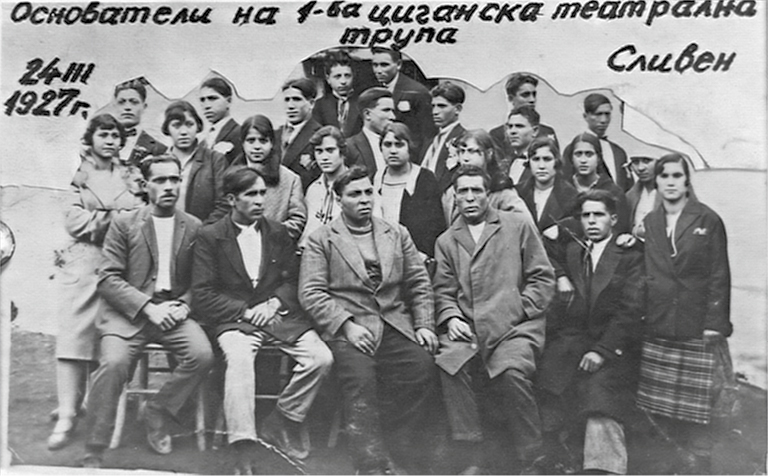
Fig. 2a

Gypsy Theatre. Sliven, Bulgaria, 1927. The text on the photo: “Founders of 1st Gypsy theatre group. 24.03.1927. Sliven”.

  • Download Figure
  • Download figure as PowerPoint slide
Gospodin Kolev (1923 – 2011). Sliven, Bulgaria, 1942. Sliven, Bulgaria, 1942. The text on the back-side of the photograph: “June 8–10, 1942. The Court trial. A police photo, made after the sentencing – June 10, 1942. Three of these who knelt and the first on the left [Gospodin Kolev – authors note] are Gypsies, members of REMS”.
Fig. 2b

Gospodin Kolev (1923 – 2011). Sliven, Bulgaria, 1942. Sliven, Bulgaria, 1942. The text on the back-side of the photograph: “June 8–10, 1942. The Court trial. A police photo, made after the sentencing – June 10, 1942. Three of these who knelt and the first on the left [Gospodin Kolev – authors note] are Gypsies, members of REMS”.

  • Download Figure
  • Download figure as PowerPoint slide
Manifestation of Gypsies after the establishment of the new power on 09.09.1944. Sofia, Bulgaria, autumn 1944. The inscriptions on the posters are: “Down with Racial Differences” and “Long Live the Fatherland Front. Death of Fascism. Gypsy Mahala Sofia”.
Fig. 3a

Manifestation of Gypsies after the establishment of the new power on 09.09.1944. Sofia, Bulgaria, autumn 1944. The inscriptions on the posters are: “Down with Racial Differences” and “Long Live the Fatherland Front. Death of Fascism. Gypsy Mahala Sofia”.

  • Download Figure
  • Download figure as PowerPoint slide
First Serbian Gypsy Association. Belgrade, Yugoslavia, 1929. The field below the photo has an inscription: “A memory from May 22, 1929. Celebration Day of the 1st Serbian Zadruga”.
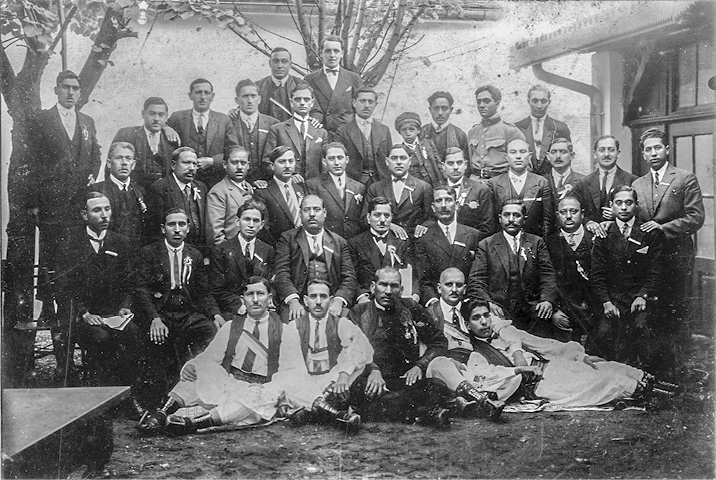
Fig. 3b

First Serbian Gypsy Association. Belgrade, Yugoslavia, 1929. The field below the photo has an inscription: “A memory from May 22, 1929. Celebration Day of the 1st Serbian Zadruga”.

  • Download Figure
  • Download figure as PowerPoint slide
Bibija Celebration. Belgrade, Yugoslavia, 1936. The celebration is at the monument commemorating the Gypsies who died during the wars from 1912 to 1918.
Fig. 4a

Bibija Celebration. Belgrade, Yugoslavia, 1936. The celebration is at the monument commemorating the Gypsies who died during the wars from 1912 to 1918.

  • Download Figure
  • Download figure as PowerPoint slide
Svetozar Simić (1913 – 1979). Belgrade, Yugoslavia, 1935. Student’s index card at Belgrade University.
Fig. 4b

Svetozar Simić (1913 – 1979). Belgrade, Yugoslavia, 1935. Student’s index card at Belgrade University.

  • Download Figure
  • Download figure as PowerPoint slide
Lazăr Naftanailă (1893 – 1968 ?). Romania, 1934.
Fig. 5a

Lazăr Naftanailă (1893 – 1968 ?). Romania, 1934.

  • Download Figure
  • Download figure as PowerPoint slide
Calinic I. Popp Șerboianu (1883 – 1941). Romania, 1920s.
Fig. 5b

Calinic I. Popp Șerboianu (1883 – 1941). Romania, 1920s.

  • Download Figure
  • Download figure as PowerPoint slide
Gheorghe A. Lăzurică (1892 – ?). Romania, 1930.
Fig. 5c

Gheorghe A. Lăzurică (1892 – ?). Romania, 1930.

  • Download Figure
  • Download figure as PowerPoint slide
Gheorghe Niculescu (? – ?). Bucharest, Romania, 1934.
Fig. 5d

Gheorghe Niculescu (? – ?). Bucharest, Romania, 1934.

  • Download Figure
  • Download figure as PowerPoint slide
Constantin S. Nicolăescu-Plopșor (1900 – 1968). Craiova, Romania, 1934.
Fig. 6a

Constantin S. Nicolăescu-Plopșor (1900 – 1968). Craiova, Romania, 1934.

  • Download Figure
  • Download figure as PowerPoint slide
Florica Constantinescu (? – ?). Bucharest, Romania, 1933.
Fig. 6b

Florica Constantinescu (? – ?). Bucharest, Romania, 1933.

  • Download Figure
  • Download figure as PowerPoint slide
The First Congress of General Union of Roma in Romania. Bucharest, Romania, 1933.
Fig. 6c

The First Congress of General Union of Roma in Romania. Bucharest, Romania, 1933.

  • Download Figure
  • Download figure as PowerPoint slide
The Congress of Association General Union of Roma in Romania. Bucharest, Romania, 1935.
Fig. 7a

The Congress of Association General Union of Roma in Romania. Bucharest, Romania, 1935.

  • Download Figure
  • Download figure as PowerPoint slide
Gheorghe Niculescu at the Congress of AUGRR, Bucharest, Romania, 1935.
Fig. 7b

Gheorghe Niculescu at the Congress of AUGRR, Bucharest, Romania, 1935.

  • Download Figure
  • Download figure as PowerPoint slide
Béla Radics (1867 – 1930). Budapest, Austro-Hungarian Empire, 1900s. Postcard.
Fig. 7c

Béla Radics (1867 – 1930). Budapest, Austro-Hungarian Empire, 1900s. Postcard.

  • Download Figure
  • Download figure as PowerPoint slide
Károly Bura (1881 – 1934). Nagyvárad / Oradea, Austro-Hungarian Empire, 1900s.
Fig. 8a

Károly Bura (1881 – 1934). Nagyvárad / Oradea, Austro-Hungarian Empire, 1900s.

  • Download Figure
  • Download figure as PowerPoint slide
Károly Bura as a soldier in the WWI. Nagyvárad / Oradea, Austro-Hungarian Empire, 1914–1918.
Fig. 8b

Károly Bura as a soldier in the WWI. Nagyvárad / Oradea, Austro-Hungarian Empire, 1914–1918.

  • Download Figure
  • Download figure as PowerPoint slide
Bihari Music School. Budapest, Hungary, 1929. Teaching music theory, Károly Bura (background left) and Antal Polgár (forefront right).
Fig. 8c

Bihari Music School. Budapest, Hungary, 1929. Teaching music theory, Károly Bura (background left) and Antal Polgár (forefront right).

  • Download Figure
  • Download figure as PowerPoint slide
František Kýr (1914 – 1985). Strážnice, former Czechoslovakia, 1942. The caption under the photo in the newspaper: “Director Fr. Kýr with two main stars of the Gypsy Youth Theatre”.
Fig. 9a

František Kýr (1914 – 1985). Strážnice, former Czechoslovakia, 1942. The caption under the photo in the newspaper: “Director Fr. Kýr with two main stars of the Gypsy Youth Theatre”.

  • Download Figure
  • Download figure as PowerPoint slide
Jan Daniel (1895 – 1943) and his orchestra. Strážnice, Czechoslovakia, 1935. The photo of the theatre and musical ensemble from Strážnice. Most probably, one of the violinists is Jan Daniel.
Fig. 9b

Jan Daniel (1895 – 1943) and his orchestra. Strážnice, Czechoslovakia, 1935. The photo of the theatre and musical ensemble from Strážnice. Most probably, one of the violinists is Jan Daniel.

  • Download Figure
  • Download figure as PowerPoint slide
Matejasz Kwiek (ca. 1887 – 1937) as a Gypsy King. Warszawa, Poland, 1930s.
Fig. 10a

Matejasz Kwiek (ca. 1887 – 1937) as a Gypsy King. Warszawa, Poland, 1930s.

  • Download Figure
  • Download figure as PowerPoint slide
Janusz Kwiek (? – ?). Warszawa, Poland, 1937. Elections and coronation of the new Gypsy King Janusz Kwiek on April 4, 1937.
Fig. 10b

Janusz Kwiek (? – ?). Warszawa, Poland, 1937. Elections and coronation of the new Gypsy King Janusz Kwiek on April 4, 1937.

  • Download Figure
  • Download figure as PowerPoint slide
Jānis Leimanis (1886 – 1950). Riga, Latvia, 1933. Society’s Čigānu draugs (Friend of Gypsies) choir in concert at the Latvian Conservatoire on 29 April 1933; Jānis Leimanis is in the middle of the second row.
Fig. 10c

Jānis Leimanis (1886 – 1950). Riga, Latvia, 1933. Society’s Čigānu draugs (Friend of Gypsies) choir in concert at the Latvian Conservatoire on 29 April 1933; Jānis Leimanis is in the middle of the second row.

  • Download Figure
  • Download figure as PowerPoint slide
Jānis Leimanis and a “congregation” of Roma holding the newly published Catechism Excerpts, Prayers, and Spiritual Songs in the Gypsy Language translated by him. Riga, Latvia, 1936.
Fig. 11a

Jānis Leimanis and a “congregation” of Roma holding the newly published Catechism Excerpts, Prayers, and Spiritual Songs in the Gypsy Language translated by him. Riga, Latvia, 1936.

  • Download Figure
  • Download figure as PowerPoint slide
Jānis Leimanis with his family. Riga, Latvia, 1931. Sitting from the left: Jānis Leimanis,
mother Lība and wife Elizabete; standing from the left: sons Juris and Kārlis.
Jānis Leimanis with his family. Riga, Latvia, 1931. Sitting from the left: Jānis Leimanis,
mother Lība and wife Elizabete; standing from the left: sons Juris and Kārlis.
Jānis Leimanis with his family. Riga, Latvia, 1931. Sitting from the left: Jānis Leimanis,
mother Lība and wife Elizabete; standing from the left: sons Juris and Kārlis.
Fig. 11b

Jānis Leimanis with his family. Riga, Latvia, 1931. Sitting from the left: Jānis Leimanis, mother Lība and wife Elizabete; standing from the left: sons Juris and Kārlis.

  • Download Figure
  • Download figure as PowerPoint slide
Antti Palm (1874 – 1939). 1910s.
Fig. 12a

Antti Palm (1874 – 1939). 1910s.

  • Download Figure
  • Download figure as PowerPoint slide
Ferdinand Nikkinen (1894 – 1971). 1910s.
Fig. 12b

Ferdinand Nikkinen (1894 – 1971). 1910s.

  • Download Figure
  • Download figure as PowerPoint slide
Aleksander Åkerlund (1893 – 1944) and Ida Blomerus (1890 – 1953). 1910s.
Fig. 12c

Aleksander Åkerlund (1893 – 1944) and Ida Blomerus (1890 – 1953). 1910s.

  • Download Figure
  • Download figure as PowerPoint slide
Kalle Tähtelä (1891 – 1919). 1910s.
Fig. 12d

Kalle Tähtelä (1891 – 1919). 1910s.

  • Download Figure
  • Download figure as PowerPoint slide
Sofia Schwartz (1887 – 1932), first from left, as a teacher. 1910s.
Fig. 13a

Sofia Schwartz (1887 – 1932), first from left, as a teacher. 1910s.

  • Download Figure
  • Download figure as PowerPoint slide
The leadership of All-Russian Union of Gypsies (from left to right Nina Dudarova, Andrey Taranov, Dmitriy Polyakov, Ivan Rom-Lebedev). Moscow, USSR, 1927.
Fig. 13b

The leadership of All-Russian Union of Gypsies (from left to right Nina Dudarova, Andrey Taranov, Dmitriy Polyakov, Ivan Rom-Lebedev). Moscow, USSR, 1927.

  • Download Figure
  • Download figure as PowerPoint slide
Ivan Rom-Lebedev (1903 – 1991). Moscow, USSR, 1920s.
Fig. 14a

Ivan Rom-Lebedev (1903 – 1991). Moscow, USSR, 1920s.

  • Download Figure
  • Download figure as PowerPoint slide
Andrey Taranov (1896 – after 1966). Moscow, USSR, 1920s.
Fig. 14b

Andrey Taranov (1896 – after 1966). Moscow, USSR, 1920s.

  • Download Figure
  • Download figure as PowerPoint slide
Mikhail Bezlyudskiy (1901 – 1970), Moscow, USSR, 1931.
Fig. 14c

Mikhail Bezlyudskiy (1901 – 1970), Moscow, USSR, 1931.

  • Download Figure
  • Download figure as PowerPoint slide
Ilya Gerasimov (1898 – after 1965). Bryansk, USSR, 1950s.
Fig. 14d

Ilya Gerasimov (1898 – after 1965). Bryansk, USSR, 1950s.

  • Download Figure
  • Download figure as PowerPoint slide
Alexander Krikunov (? – ?). Khutor Krikunovo, USSR, 1920s.
Fig. 15a

Alexander Krikunov (? – ?). Khutor Krikunovo, USSR, 1920s.

  • Download Figure
  • Download figure as PowerPoint slide
Alexander German and Ivan Rom-Lebedev. Moscow, USSR, 1930s. Photo of a painting by Abram S. Zadenvark.
Fig. 15b

Alexander German and Ivan Rom-Lebedev. Moscow, USSR, 1930s. Photo of a painting by Abram S. Zadenvark.

  • Download Figure
  • Download figure as PowerPoint slide
Commission for the creation of the Романы азбука (Romani Alphabet). Moscow, USSR, 1927. In middle: Prof. Mikhail Segrievskiy; left Nina A. Dudarova; right: Nikolay A. Pankov.
Fig. 15c

Commission for the creation of the Романы азбука (Romani Alphabet). Moscow, USSR, 1927. In middle: Prof. Mikhail Segrievskiy; left Nina A. Dudarova; right: Nikolay A. Pankov.

  • Download Figure
  • Download figure as PowerPoint slide
Alexander German (1893 – 1955). Kiev, Russian Empire, 1915.
Fig. 16a

Alexander German (1893 – 1955). Kiev, Russian Empire, 1915.

  • Download Figure
  • Download figure as PowerPoint slide
Alexander German (1893 – 1955). Moscow, USSR, 1950s.
Fig. 16b

Alexander German (1893 – 1955). Moscow, USSR, 1950s.

  • Download Figure
  • Download figure as PowerPoint slide
Alexander German (1893 – 1955). Moscow, USSR, 1932.
Fig. 16c

Alexander German (1893 – 1955). Moscow, USSR, 1932.

  • Download Figure
  • Download figure as PowerPoint slide
Nikolay Pankov (1895 – 1959). Moscow, USSR, 1920s.
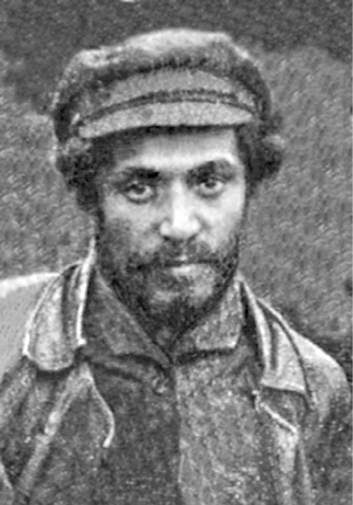
Fig. 17a

Nikolay Pankov (1895 – 1959). Moscow, USSR, 1920s.

  • Download Figure
  • Download figure as PowerPoint slide
Nikolay Pankov (1895 – 1959). Moscow, USSR, 1940s.
Fig. 17b

Nikolay Pankov (1895 – 1959). Moscow, USSR, 1940s.

  • Download Figure
  • Download figure as PowerPoint slide
Students at Gypsy Pedagogical College. Moscow, USSR, 1930s.
Fig. 17c

Students at Gypsy Pedagogical College. Moscow, USSR, 1930s.

  • Download Figure
  • Download figure as PowerPoint slide
Nina Dudarova (1903 – 1992). Moscow, USSR, 1920s.
Fig. 18a

Nina Dudarova (1903 – 1992). Moscow, USSR, 1920s.

  • Download Figure
  • Download figure as PowerPoint slide
Olga Pankova (1911 – 1991). Moscow, USSR, 1930s.
Fig. 18b

Olga Pankova (1911 – 1991). Moscow, USSR, 1930s.

  • Download Figure
  • Download figure as PowerPoint slide
First Gypsy School. Moscow, USSR, 1927.
Fig. 18c

First Gypsy School. Moscow, USSR, 1927.

  • Download Figure
  • Download figure as PowerPoint slide
Political Training, Stalingrad oblast, USSR, 1938. Photo annotation: Gypsy teacher N. P. Pedanova is engaged with a group of collective farmers to study the Regulation on Elections to the Supreme Soviet of the RSFSR.
Fig. 19a

Political Training, Stalingrad oblast, USSR, 1938. Photo annotation: Gypsy teacher N. P. Pedanova is engaged with a group of collective farmers to study the Regulation on Elections to the Supreme Soviet of the RSFSR.

  • Download Figure
  • Download figure as PowerPoint slide
Gypsy Family. Crimea, USSR, 1930. Photo annotation: “Stakhanovite collective farmer of the Gypsy Beshkur Vakuf kolkhoz of the Seytler rayon Dalda Asanov with his family in a new house built for him by the kolkhoz.”
Fig. 19b

Gypsy Family. Crimea, USSR, 1930. Photo annotation: “Stakhanovite collective farmer of the Gypsy Beshkur Vakuf kolkhoz of the Seytler rayon Dalda Asanov with his family in a new house built for him by the kolkhoz.”

  • Download Figure
  • Download figure as PowerPoint slide
Steve Kaslov (ca. 1888 – 1949). New York, USA, 1930s.
Fig. 20a

Steve Kaslov (ca. 1888 – 1949). New York, USA, 1930s.

  • Download Figure
  • Download figure as PowerPoint slide
Helios Gómez (1905 – 1956). Berlin, Germany, 1929.
Fig. 20b

Helios Gómez (1905 – 1956). Berlin, Germany, 1929.

  • Download Figure
  • Download figure as PowerPoint slide
Helios Gómez (1905 – 1956). Camp Montolieu, France, 1940s.
Fig. 20c

Helios Gómez (1905 – 1956). Camp Montolieu, France, 1940s.

  • Download Figure
  • Download figure as PowerPoint slide

Zitierungsangaben

  • Save
  • Cite
  • Inhalt per Mail versenden

    Link teilen


    Sie können einen Link zu dieser Seite per E-Mail senden:
    Inhalt per Mail versenden
    oder den Link direkt kopieren:
    Der Link wurde nicht kopiert. Ihr aktueller Browser unterstützt das Kopieren über diese Schaltfläche möglicherweise nicht.
    Link wurde kopiert

  • Reduzieren
  • Erweitern
  • Nach oben

Roma Portraits in History

Roma Civic Emancipation Elite in Central, South-Eastern and Eastern Europe from the 19th Century until World War II

Cover Roma Portraits in History
ISBN:
9783657705191
Verleger:
Brill | Schöningh
Print-Publikationsdatum:
27 Apr 2022
  • Fachgebiete
    • Slavistik und Russistik
      • Geschichte
Front Matter
Preliminary Material
Copyright page
Acknowledgement
Foreword
Introduction: The Roots
Chapter 1 Bulgaria
Chapter 2 Turkey
Chapter 3 Yugoslavia
Chapter 4 Romania
Chapter 5 Hungary
Chapter 6 Czechoslovakia
Chapter 7 Poland
Chapter 8 Latvia
Chapter 9 Finland
Chapter 10 USSR
Chapter 11 USA
Chapter 12 Spain
Conclusion
Back Matter
Illustrations
Dictionary
References
Bibliography
List of Illustrations
Complete List of the Authors
List of the Authors

Kennzahlen

Insgesamt Letzte 365 Tage In den letzten 30 Tagen
Aufrufe von Kurzbeschreibungen 0 0 0
Gesamttextansichten 600 75 1
PDF-Downloads 495 49 0

Produkt-Informationen

Bücher

Zeitschriften

Besondere Produkte

Metadaten: Titellisten, MARC & KBART-Dateien

Kataloge, Prospekte und Preislisten

Zugriff auf Brill-Produkte

Authors

Ein Brill-Autor werden

Veröffentlichungsethik & KI-Richtlinien

Verlagsleitfäden

Kontakt & Info

Kontaktpersonen im Vertrieb

Bestellen bei Brill

Lektorat/Programm

Presse und Rezensionen

Kontaktformular

Neuigkeiten

Blog

News Archiv

Anmeldung E-Mail-Newsletter

Social Media

Investoren

Ressourcen-Center

Allgemeine Ressourcen

Für Autor:innen

Für Bibliotheken

Rechte und Genehmigungen

FAQ

Allgemeine Geschäftsbedingungen 

Datenschutzrichtlinien 

Cookie Settings 

Erklärung zur Barrierefreiheit

Impressum

Sitemap

Allgemeine Geschäftsbedingungen  |  Datenschutzrichtlinien  |  Cookie Settings  |  Erklärung zur Barrierefreiheit  |  Impressum  |  Sitemap  |  Copyright © 2016-2025

Angemeldet über:
Dar Hadith al Hassania
Powered by PubFactory
  • [216.73.217.86|92.112.192.157]
  • 92.112.192.157
Schließen
Anmerkung bearbeiten

Zeichenbeschränkung 500/500

@!

Zeichenbeschränkung 500/500

Helios Gómez (1905 – 1956). Camp Montolieu, France, 1940s.