Preventive oral supplementation with Bifidobacterium longum 51A alleviates oxazolone-induced allergic contact dermatitis-like skin inflammation in mice
äºBeneficial MicrobesSearch for other papers by W.R. Ribeiro in
Current site
Google Scholar
Search for other papers by A.G. Queiroz in
Current site
Google Scholar
Search for other papers by E. Mendes in
Current site
Google Scholar
Search for other papers by M.B. Casaro in
Current site
Google Scholar
Search for other papers by C.M. Nascimento in
Current site
Google Scholar
Search for other papers by L.S.S.F. Coelho in
Current site
Google Scholar
Search for other papers by F.S. Martins in
Current site
Google Scholar
Therapeutics Research Centre, Translational Research Institute, Diamantina Institute, University of Queensland, 37 Kent St, Woolloongabba, QLD 4102, Australia.
Search for other papers by V.R. Leite-Silva in
Current site
Google Scholar
Search for other papers by C.M. Ferreira in
Current site
Google Scholar
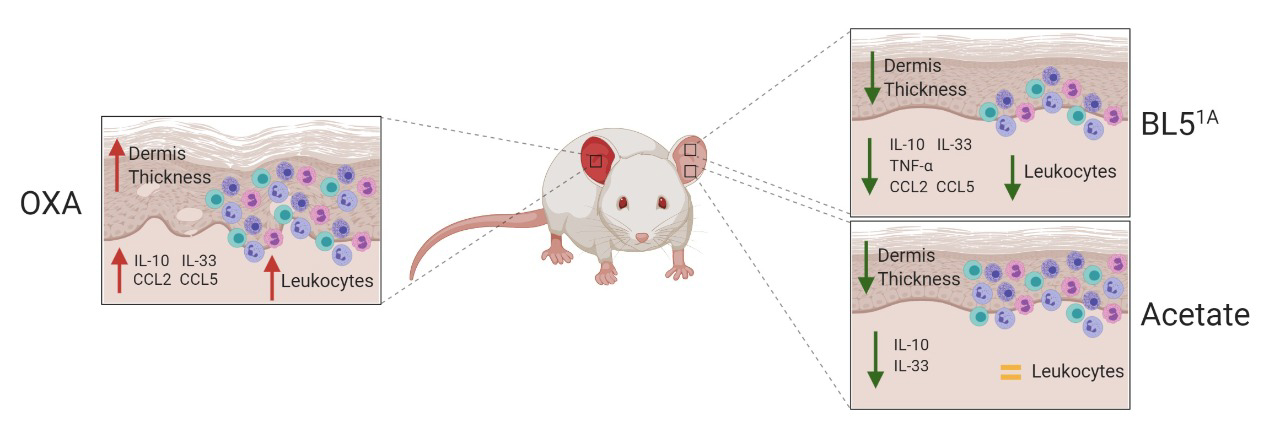
Allergic contact dermatitis (ACD) is a common allergic skin disease that affects individuals subjected to different antigen exposure conditions and significantly impacts the quality of life of those affected. Numerous studies have demonstrated that probiotics suppress inflammation through immunomodulatory effects. In this study, we aimed to evaluate the effect of the probiotic Bifidobacterium longum 51A as a preventive treatment for ACD using an oxazolone-induced murine model. We demonstrated that B. longum 51A exerted a prophylactic effect on oxazolone-induced ACD-like skin inflammation via reductions in ear and dermal thickness and leucocyte infiltration. The administration of inactivated B. longum 51A did not affect oxazolone-induced ACD-like skin inflammation, suggesting that the bacteria must be alive to be effective. Given that B. longum 51A is an acetate producer, we treated mice with acetate intraperitoneally, which also prevented ear and dermal thickening. Moreover, the tissue levels of the inflammatory cytokines and chemokines interleukin (IL)-10, IL-33, tumour necrosis factor-α, chemokine (C-C motif) ligand 2/monocyte chemoattractant protein-1 and chemokine (C-C motif) ligand 5/RANTES were significantly reduced after probiotic treatment, but only IL-33 and IL-10 were reduced when the mice were treated with acetate. These results show that B. longum 51A exerted a potential prophylactic effect on skin inflammation and that acetate represents one potential mechanism. However, other factors are likely involved since these two treatments do not yield the same results.

Purchase
Buy instant access (PDF download and unlimited online access):
Institutional Login
Log in with Open Athens, Shibboleth, or your institutional credentials
Personal login
Log in with your brill.com account
-
Abrantes, F., Nascimento, B., Andrade, M., de Barros, P., Cartelle, C., Martins, F., Nicoli, J., Arantes, R., Generoso, S. and Fernandes, S., 2020. Treatment with Bifidobacterium longum 51A attenuates intestinal damage and inflammatory response in experimental colitis. Beneficial Microbes 11: 47-57.
'Treatment with Bifidobacterium longum 51A attenuates intestinal damage and inflammatory response in experimental colitis ' () 11 Beneficial Microbes : 47 -57.
-
Aebischer, D., Willrodt, A.H. and Halin, C., 2014. Oxazolone-induced contact hypersensitivity reduces lymphatic drainage but enhances the induction of adaptive immunity. PloS One 9: e99297. https://doi.org/10.1371/journal.pone.0099297
-
Antonov, D., Schliemann, S. and Elsner, P., 2016. Methods for the assessment of barrier function. current problems in dermatology 49: 61-70. https://doi.org/10.1159/000441546
-
Arboleya, S., Stanton, C., Ryan, C.A., Dempsey, E. and Ross, P.R., 2016. Bosom buddies: the symbiotic relationship between infants and Bifidobacterium longum ssp. longum and ssp. infantis. Genetic and probiotic features. Annual Review of Food Science and Technology 7: 1-21. https://doi.org/10.1146/annurev-food-041715-033151
-
Banno, T., Gazel, A. and Blumenberg, M., 2004. Effects of tumor necrosis factor-alpha (TNF alpha) in epidermal keratinocytes revealed using global transcriptional profiling. Journal of Biological Chemistry 279: 32633-32642. https://doi.org/10.1074/jbc.M400642200
-
Baugh, J.A. and Bucala, R., 2001. Mechanisms for modulating TNF alpha in immune and inflammatory disease. Current Opinion in Drug Discovery and Development 4: 635-650.
'Mechanisms for modulating TNF alpha in immune and inflammatory disease ' () 4 Current Opinion in Drug Discovery and Development : 635 -650.
-
Becke, F.M., Hehlgans, T., Brockhoff, G. and Männel, D.N., 2001. Development of allergic contact dermatitis requires activation of both tumor necrosis factor-receptors. European Cytokine Network 12: 45-50.
'Development of allergic contact dermatitis requires activation of both tumor necrosis factor-receptors ' () 12 European Cytokine Network : 45 -50.
-
Biedermann, T., Kneilling, M., Mailhammer, R., Maier, K., Sander, C.A., Kollias, G., Kunkel, S.L., Hultner, L. and Rocken, M., 2000. Mast cells control neutrophil recruitment during T cell-mediated delayed-type hypersensitivity reactions through tumor necrosis factor and macrophage inflammatory protein 2. Journal of Experimental Medicine 192: 1441-1452. https://doi.org/10.1084/jem.192.10.1441
-
Bisgaard, H., Li, N., Bonnelykke, K., Chawes, B.L., Skov, T., Paludan-Muller, G., Stokholm, J., Smith, B. and Krogfelt, K.A., 2011. Reduced diversity of the intestinal microbiota during infancy is associated with increased risk of allergic disease at school age. Journal of Allergy and Clinical Immunology 128: 646-652 e641-645. https://doi.org/10.1016/j.jaci.2011.04.060
-
Bjorksten, B., Naaber, P., Sepp, E. and Mikelsaar, M., 1999. The intestinal microflora in allergic Estonian and Swedish 2-year-old children. Clinical and Experimental Allergy 29: 342-346. https://doi.org/10.1046/j.1365-2222.1999.00560.x
-
Brasch, J., Becker, D., Aberer, W., Bircher, A., Kranke, B., Jung, K., Przybilla, B., Biedermann, T., Werfel, T., John, S.M., Elsner, P., Diepgen, T., Trautmann, A., Merk, H.F., Fuchs, T. and Schnuch, A., 2014. Guideline contact dermatitis: S1-guidelines of the German Contact Allergy Group (DKG) of the German Dermatology Society (DDG), the Information Network of Dermatological Clinics (IVDK), the German Society for Allergology and Clinical Immunology (DGAKI), the Working Group for Occupational and Environmental Dermatology (ABD) of the DDG, the Medical Association of German Allergologists (AeDA), the Professional Association of German Dermatologists (BVDD) and the DDG. Allergo Journal International 23: 126-138. https://doi.org/10.1007/s40629-014-0013-5
-
Brown, A.J., Goldsworthy, S.M., Barnes, A.A., Eilert, M.M., Tcheang, L., Daniels, D., Muir, A.I., Wigglesworth, M.J., Kinghorn, I., Fraser, N.J., Pike, N.B., Strum, J.C., Steplewski, K.M., Murdock, P.R., Holder, J.C., Marshall, F.H., Szekeres, P.G., Wilson, S., Ignar, D.M., Foord, S.M., Wise, A. and Dowell, S.J., 2003. The Orphan G protein-coupled receptors GPR41 and GPR43 are activated by propionate and other short chain carboxylic acids. Journal of Biological Chemistry 278: 11312-11319. https://doi.org/10.1074/jbc.M211609200
-
Cait, A., Hughes, M.R., Antignano, F., Cait, J., Dimitriu, P.A., Maas, K.R., Reynolds, L.A., Hacker, L., Mohr, J., Finlay, B.B., Zaph, C., McNagny, K.M. and Mohn, W.W., 2018. Microbiome-driven allergic lung inflammation is ameliorated by short-chain fatty acids. Mucosal Immunology 11: 785-795. https://doi.org/10.1038/mi.2017.75
-
Canavese, M., Altruda, F. and Silengo, L., 2010. Therapeutic efficacy and immunological response of CCL5 antagonists in models of contact skin reaction. PLoS ONE 5: e8725. https://doi.org/10.1371/journal.pone.0008725
-
Cayrol, C. and Girard, J.P., 2018. Interleukin-33 (IL-33): A nuclear cytokine from the IL-1 family. Immunological Reviews 281: 154-168. https://doi.org/10.1111/imr.12619
-
Dhingra, N., Shemer, A., Correa da Rosa, J., Rozenblit, M., Fuentes-Duculan, J., Gittler, J.K., Finney, R., Czarnowicki, T., Zheng, X., Xu, H., Estrada, Y.D., Cardinale, I., Suarez-Farinas, M., Krueger, J.G. and Guttman-Yassky, E., 2014. Molecular profiling of contact dermatitis skin identifies allergen-dependent differences in immune response. Journal of Allergy and Clinical Immunology 134: 362-372. https://doi.org/10.1016/j.jaci.2014.03.009
-
Diepgen, T.L., Ofenloch, R.F., Bruze, M., Bertuccio, P., Cazzaniga, S., Coenraads, P.J., Elsner, P., Goncalo, M., Svensson, A. and Naldi, L., 2016. Prevalence of contact allergy in the general population in different European regions. British Journal of Dermatology 174: 319-329. https://doi.org/10.1111/bjd.14167
-
Ellwood, P., Asher, M. I., GarcÃa-Marcos, L., Williams, H., Keil, U., Robertson, C., Nagel, G. and the ISAAC Phase III Study Group, 2013. Do fast foods cause asthma, rhinoconjunctivitis and eczema? Global findings from the International Study of Asthma and Allergies in Childhood (ISAAC) phase three. Thorax 68: 351-360. https://doi.org/10.1136/thoraxjnl-2012-202285
-
Fang, Z., Li, L., Zhao, J., Zhang, H., Lee, Y.K., Lu, W. and Chen, W., 2020. Bifidobacteria adolescentis regulated immune responses and gut microbial composition to alleviate DNFB-induced atopic dermatitis in mice. European Journal of Nutrition 59: 3069-3081. https://doi.org/10.1007/s00394-019-02145-8
-
Flohr, C. and Mann, J., 2014. New insights into the epidemiology of childhood atopic dermatitis. Allergy 69: 3-16. https://doi.org/10.1111/all.12270
-
Fowler, A.J., Sheu, M.Y., Schmuth, M., Kao, J., Fluhr, J.W., Rhein, L., Collins, J.L., Willson, T.M., Mangelsdorf, D.J., Elias, P.M. and Feingold, K.R., 2003. Liver X receptor activators display anti-inflammatory activity in irritant and allergic contact dermatitis models: liver-X-receptor-specific inhibition of inflammation and primary cytokine production. Journal of Investigative Dermatology 120: 246-255. https://doi.org/10.1046/j.1523-1747.2003.12033.x
-
Fyhrquist, N., Muirhead, G., Prast-Nielsen, S., Jeanmougin, M., Olah, P., Skoog, T., Jules-Clement, G., Feld, M., Barrientos-Somarribas, M., Sinkko, H., van den Bogaard, E.H., Zeeuwen, P., Rikken, G., Schalkwijk, J., Niehues, H., Daubener, W., Eller, S.K., Alexander, H., Pennino, D., Suomela, S., Tessas, I., Lybeck, E., Baran, A.M., Darban, H., Gangwar, R.S., Gerstel, U., Jahn, K., Karisola, P., Yan, L., Hansmann, B., Katayama, S., Meller, S., Bylesjo, M., Hupe, P., Levi-Schaffer, F., Greco, D., Ranki, A., Schroder, J.M., Barker, J., Kere, J., Tsoka, S., Lauerma, A., Soumelis, V., Nestle, F.O., Homey, B., Andersson, B. and Alenius, H., 2019. Microbe-host interplay in atopic dermatitis and psoriasis. Nature Communications 10: 4703. https://doi.org/10.1038/s41467-019-12253-y
-
Girard-Madoux, M.J., Kel, J.M., Reizis, B. and Clausen, B.E., 2012. IL-10 controls dendritic cell-induced T-cell reactivation in the skin to limit contact hypersensitivity. Journal of Allergy and Clinical Immunology 129: 143-150 e141-110. https://doi.org/10.1016/j.jaci.2011.08.032
-
Guerra, P.V., Lima, L.N., Souza, T.C., Mazochi, V., Penna, F.J., Silva, A.M., Nicoli, J.R. and Guimaraes, E.V., 2011. Pediatric functional constipation treatment with Bifidobacterium-containing yogurt: a crossover, double-blind, controlled trial. World Journal of Gastroenterology 17: 3916-3921. https://doi.org/10.3748/wjg.v17.i34.3916
-
Hevia, A., Delgado, S., Sanchez, B. and Margolles, A., 2015. Molecular players involved in the interaction between beneficial bacteria and the immune system. Frontiers in Microbiology 6: 1285. https://doi.org/10.3389/fmicb.2015.01285
-
Hill, C., Guarner, F., Reid, G., Gibson, G.R., Merenstein, D.J., Pot, B., Morelli, L., Canani, R.B., Flint, H.J., Salminen, S., Calder, P.C. and Sanders, M.E., 2014. Expert consensus document. The International Scientific Association for Probiotics and Prebiotics consensus statement on the scope and appropriate use of the term probiotic. Nature Reviews: Gastroenterology and Hepatology 11: 506-514. https://doi.org/10.1038/nrgastro.2014.66
-
Ishimoto, T., Takei, Y., Yuzawa, Y., Hanai, K., Nagahara, S., Tarumi, Y., Matsuo, S. and Kadomatsu, K., 2008. Downregulation of monocyte chemoattractant protein-1 involving short interfering RNA attenuates hapten-induced contact hypersensitivity. Molecular Therapy 16: 387-395. https://doi.org/10.1038/sj.mt.6300360
-
Jeong, J.H., Lee, C.Y. and Chung, D.K., 2016. Probiotic lactic acid bacteria and skin health. Critical Reviews in Food Science and Nutrition 56: 2331-2337. https://doi.org/10.1080/10408398.2013.834874
-
Jin, H., He, R., Oyoshi, M. and Geha, R.S., 2009. Animal models of atopic dermatitis. Journal of Investigative Dermatology 129: 31-40. https://doi.org/10.1038/jid.2008.106
-
Kaplan, D.H., Igyarto, B.Z. and Gaspari, A.A., 2012. Early immune events in the induction of allergic contact dermatitis. Nature Reviews: Immunology 12: 114-124. https://doi.org/10.1038/nri3150
-
Kelleher, M., Dunn-Galvin, A., Hourihane, J.O., Murray, D., Campbell, L.E., McLean, W.H. and Irvine, A.D., 2015. Skin barrier dysfunction measured by transepidermal water loss at 2 days and 2 months predates and predicts atopic dermatitis at 1 year. Journal of Allergy and Clinical Immunology 135: 930-935 e931. https://doi.org/10.1016/j.jaci.2014.12.013
-
Kim, H.J., Lee, S.H. and Hong, S.J., 2020. Antibiotics-induced dysbiosis of intestinal microbiota aggravates atopic dermatitis in mice by altered short-chain fatty acids. Allergy, Asthma and Immunology Research 12: 137-148. https://doi.org/10.4168/aair.2020.12.1.137
-
Kim, H.J., Lee, S.H., Go, H.N., Ahn, J.R., Kim, H.J. and Hong, S.J., 2018a. Effects of kestose on gut mucosal immunity in an atopic dermatitis mouse model. Journal of Dermatological Science 89: 27-32. https://doi.org/10.1016/j.jdermsci.2017.10.006
-
Kim, J.A., Kim, S.H., Kim, I.S., Yu, D.Y., Kim, S.C., Lee, S.H., Lee, S.S., Yun, C.H., Choi, I.S. and Cho, K.K., 2018b. Anti-inflammatory effects of a mixture of lactic acid bacteria and sodium butyrate in atopic dermatitis murine model. Journal of Medicinal Food 21: 716-725. https://doi.org/10.1089/jmf.2017.4116
-
Kim, J.H., Kim, K. and Kim, W., 2019. Cream cheese-derived Lactococcus chungangensis CAU 28 modulates the gut microbiota and alleviates atopic dermatitis in BALB/c mice. Scientific Reports 9: 446. https://doi.org/10.1038/s41598-018-36864-5
-
Komai-Koma, M., Gilchrist, D.S., McKenzie, A.N., Goodyear, C.S., Xu, D. and Liew, F.Y., 2011. IL-33 activates B1 cells and exacerbates contact sensitivity. Journal of Immunology 186: 2584-2591. https://doi.org/10.4049/jimmunol.1002103
-
Kwon, H.K., Lee, C.G., So, J.S., Chae, C.S., Hwang, J.S., Sahoo, A., Nam, J.H., Rhee, J.H., Hwang, K.C. and Im, S.H., 2010. Generation of regulatory dendritic cells and CD4+Foxp3+ T cells by probiotics administration suppresses immune disorders. Proceedings of the National Academy of Sciences of the USA 107: 2159-2164. https://doi.org/10.1073/pnas.0904055107
-
Lee, S.Y., Lee, E., Park, Y.M. and Hong, S.J., 2018. Microbiome in the gut-skin axis in atopic dermatitis. Allergy, Asthma and Immunology Research 10: 354-362. https://doi.org/10.4168/aair.2018.10.4.354
-
Lehtimaki, S., Tillander, S., Puustinen, A., Matikainen, S., Nyman, T., Fyhrquist, N., Savinko, T., Majuri, M.L., Wolff, H., Alenius, H. and Lauerma, A., 2010. Absence of CCR4 exacerbates skin inflammation in an oxazolone-induced contact hypersensitivity model. Journal of Investigative Dermatology 130: 2743-2751. https://doi.org/10.1038/jid.2010.208
-
Mai, W., Lu, D., Liu, X. and Chen, L., 2018. MCP-1 produced by keratinocytes is associated with leucocyte recruitment during elicitation of nickel-induced occupational allergic contact dermatitis. Toxicology and Industrial Health 34: 36-43.
'MCP-1 produced by keratinocytes is associated with leucocyte recruitment during elicitation of nickel-induced occupational allergic contact dermatitis ' () 34 Toxicology and Industrial Health : 36 -43.
-
Man, M.Q., Hatano, Y., Lee, S.H., Man, M., Chang, S., Feingold, K.R., Leung, D.Y., Holleran, W., Uchida, Y. and Elias, P.M., 2008. Characterization of a hapten-induced, murine model with multiple features of atopic dermatitis: structural, immunologic, and biochemical changes following single versus multiple oxazolone challenges. Journal of Investigative Dermatology 128: 79-86. https://doi.org/10.1038/sj.jid.5701011
-
Maruyama, M., Abe, R., Shimono, T., Iwabuchi, N., Abe, F. and Xiao, J.Z., 2016. The effects of non-viable Lactobacillus on immune function in the elderly: a randomised, double-blind, placebo-controlled study. International Journal of Food Science and Nutrition 67: 67-73. https://doi.org/10.3109/09637486.2015.1126564
-
Maslowski, K.M., Vieira, A.T., Ng, A., Kranich, J., Sierro, F., Di, Y., Schilter, H.C., Rolph, M.S., Mackay, F., Artis, D., Xavier, R.J., Teixeira, M.M. and Mackay, C.R., 2009. Regulation of inflammatory responses by gut microbiota and chemoattractant receptor GPR43. Nature 461: 1282-1286. https://doi.org/10.1038/nature08530
-
Matsumoto, M., Aranami, A., Ishige, A., Watanabe, K. and Benno, Y., 2007. LKM512 yogurt consumption improves the intestinal environment and induces the T-helper type 1 cytokine in adult patients with intractable atopic dermatitis. Clinical and Experimental Allergy 37: 358-370. https://doi.org/10.1111/j.1365-2222.2007.02642.x
-
Mendes, E., Acetturi, B.G., Thomas, A.M., Martins, F.D.S., Crisma, A.R., Murata, G., Braga, T.T., Camara, N.O.S., Franco, A., Setubal, J.C., Ribeiro, W.R., Valduga, C.J., Curi, R., Dias-Neto, E., Tavares-de-Lima, W. and Ferreira, C.M., 2017. Prophylactic supplementation of Bifidobacterium longum 5(1A) protects mice from ovariectomy-induced exacerbated allergic airway inflammation and airway hyperresponsiveness. Frontiers in Microbiology 8: 1732. https://doi.org/10.3389/fmicb.2017.01732
-
Ouwehand, K., Scheper, R.J., de Gruijl, T.D. and Gibbs, S., 2010. Epidermis-to-dermis migration of immature Langerhans cells upon topical irritant exposure is dependent on CCL2 and CCL5. European Journal of Immunology 40: 2026-2034. https://doi.org/10.1002/eji.200940150
-
Peiser, M., Tralau, T., Heidler, J., Api, A.M., Arts, J.H., Basketter, D.A., English, J., Diepgen, T.L., Fuhlbrigge, R.C., Gaspari, A.A., Johansen, J.D., Karlberg, A.T., Kimber, I., Lepoittevin, J.P., Liebsch, M., Maibach, H.I., Martin, S.F., Merk, H.F., Platzek, T., Rustemeyer, T., Schnuch, A., Vandebriel, R.J., White, I.R. and Luch, A., 2012. Allergic contact dermatitis: epidemiology, molecular mechanisms, in vitro methods and regulatory aspects. Current knowledge assembled at an international workshop at BfR, Germany. Cellular and Molecular Life Sciences 69: 763-781. https://doi.org/10.1007/s00018-011-0846-8
-
Peng, G., Mu, Z., Cui, L., Liu, P., Wang, Y., Wu, W. and Han, X., 2018. Anti-IL-33 antibody has a therapeutic effect in an atopic dermatitis murine model induced by 2,4-dinitrochlorobenzene. Inflammation 41: 154-163. https://doi.org/10.1007/s10753-017-0673-7
-
Pesonen, M., Jolanki, R., Larese, F., Wilkinson, M., KrÄcisz, B., KieÄ-ÅwierczyÅska, M., Bauer, A., Mahler, V., John, S.M., Schnuch, A., Uter, W. and the ESSCA network, 2015. Patch test results of the European baseline series among patients with occupational contact dermatitis across Europe â analyses of the European Surveillance System on Contact Allergy network, 2002-2010. Contact Dermatitis 72: 154-163.
'Patch test results of the European baseline series among patients with occupational contact dermatitis across Europe â analyses of the European Surveillance System on Contact Allergy network, 2002-2010 ' () 72 Contact Dermatitis : 154 -163.
-
Pootongkam, S. and Nedorost, S., 2014. Allergic contact dermatitis in atopic dermatitis. Current Treatment Options in Allergy 1: 329-336.
'Allergic contact dermatitis in atopic dermatitis ' () 1 Current Treatment Options in Allergy : 329 -336.
-
Prescott, S.L., 2013. Early-life environmental determinants of allergic diseases and the wider pandemic of inflammatory noncommunicable diseases. Journal of Allergy and Clinical Immunology 131: 23-30. https://doi.org/10.1016/j.jaci.2012.11.019
-
Reddel, S., Del Chierico, F., Quagliariello, A., Giancristoforo, S., Vernocchi, P., Russo, A., Fiocchi, A., Rossi, P., Putignani, L. and El Hachem, M., 2019. Gut microbiota profile in children affected by atopic dermatitis and evaluation of intestinal persistence of a probiotic mixture. Scientific Reports 9: 4996. https://doi.org/10.1038/s41598-019-41149-6
-
Reichardt, N., Duncan, S.H., Young, P., Belenguer, A., McWilliam Leitch, C., Scott, K.P., Flint, H.J. and Louis, P., 2014. Phylogenetic distribution of three pathways for propionate production within the human gut microbiota. ISME Journal 8: 1323-1335. https://doi.org/10.1038/ismej.2014.14
-
Richards, J.L., Yap, Y.A., McLeod, K.H., Mackay, C.R. and Marino, E., 2016. Dietary metabolites and the gut microbiota: an alternative approach to control inflammatory and autoimmune diseases. Clinical and Translational Immunology 5: e82. https://doi.org/10.1038/cti.2016.29
-
Rusu, E., Enache, G., Cursaru, R., Alexescu, A., Radu, R., Onila, O., Cavallioti, T., Rusu, F., Posea, M., Jinga, M. and Radulian, G., 2019. Prebiotics and probiotics in atopic dermatitis. Experimental and Therapeutic Medicine 18: 926-931. https://doi.org/10.3892/etm.2019.7678
-
Salzman, N.H., Underwood, M.A. and Bevins, C.L., 2007. Paneth cells, defensins, and the commensal microbiota: a hypothesis on intimate interplay at the intestinal mucosa. Seminars in Immunology 19: 70-83. https://doi.org/10.1016/j.smim.2007.04.002
-
Saraiva, M. and OâGarra, A., 2010. The regulation of IL-10 production by immune cells. Nature Reviews: Immunology 10: 170-181. https://doi.org/10.1038/nri2711
-
Scher, J.U., Ubeda, C., Artacho, A., Attur, M., Isaac, S., Reddy, S.M., Marmon, S., Neimann, A., Brusca, S., Patel, T., Manasson, J., Pamer, E.G. Littman, D.R. and Abramson, S.B., 2015. Decreased bacterial diversity characterizes the altered gut microbiota in patients with psoriatic arthritis, resembling dysbiosis in inflammatory bowel disease. Arthritis and Rheumatology 67: 128-139. https://doi.org/10.1002/art.38892
-
Schwarz, A., Bruhs, A. and Schwarz, T., 2017. The short-chain fatty acid sodium butyrate functions as a regulator of the skin immune system. Journal of Investigative Dermatology 137: 855-864. https://doi.org/10.1016/j.jid.2016.11.014
-
Sheu, M.Y., Fowler, A.J., Kao, J., Schmuth, M., Schoonjans, K., Auwerx, J., Fluhr, J.W., Man, M.Q., Elias, P.M. and Feingold, K.R., 2002. Topical peroxisome proliferator activated receptor-alpha activators reduce inflammation in irritant and allergic contact dermatitis models. Journal of Investigative Dermatology 118: 94-101. https://doi.org/10.1046/j.0022-202x.2001.01626.x
-
Shin, J.H., Chung, M.J. and Seo, J.G., 2016. A multistrain probiotic formulation attenuates skin symptoms of atopic dermatitis in a mouse model through the generation of CD4(+)Foxp3(+) T cells. Food and Nutrition Research 60: 32550. https://doi.org/10.3402/fnr.v60.32550
-
Siegel, P.D., Law, B.F. and Warshaw, E.M., 2020. Chemical identification and confirmation of contact allergens. Dermatitis 31: 99-105. https://doi.org/10.1097/DER.0000000000000498
-
Smith, J.S., Rajagopal, S. and Atwater, A.R., 2018. Chemokine signaling in allergic contact dermatitis: toward targeted therapies. Dermatitis 29: 179-186. https://doi.org/10.1097/DER.0000000000000391
-
Sonnenburg, E.D. and Sonnenburg, J.L., 2019. The ancestral and industrialized gut microbiota and implications for human health. Nature Reviews: Microbiology 17: 383-390. https://doi.org/10.1038/s41579-019-0191-8
-
Strachan, D.P., 1989. Hay fever, hygiene, and household size. BMJ 299: 1259-1260. https://doi.org/10.1136/bmj.299.6710.1259
-
Sugahara, H., Yao, R., Odamaki, T. and Xiao, J.Z., 2017. Differences between live and heat-killed bifidobacteria in the regulation of immune function and the intestinal environment. Beneficial Microbes 8: 463-472. https://doi.org/10.3920/BM2016.0158
-
Sun, Y., Hou, J., Sheng, Y., Kong, X., Weschler, L.B. and Sundell, J., 2019. Modern life makes children allergic. A cross-sectional study: associations of home environment and lifestyles with asthma and allergy among children in Tianjin region, China. International Archives of Occupational and Environmental Health 92: 587-598. https://doi.org/10.1007/s00420-018-1395-3
-
Sundnes, O., Pietka, W., Loos, T., Sponheim, J., Rankin, A.L., Pflanz, S., Bertelsen, V., Sitek, J.C., Hol, J., Haraldsen, G. and Khnykin, D., 2015. Epidermal expression and regulation of interleukin-33 during homeostasis and inflammation: strong species differences. Journal of Investigative Dermatology 135: 1771-1780. https://doi.org/10.1038/jid.2015.85
-
Tan, C.H., Rasool, S. and Johnston, G.A., 2014. Contact dermatitis: allergic and irritant. Clinics in Dermatology 32: 116-124. https://doi.org/10.1016/j.clindermatol.2013.05.033
-
Tan-Lim, C., Esteban-Ipac, N., Mantaring, J., 3rd, Chan Shih Yen, E., Recto, M., Sison, O.T. and Alejandria, M.M., in press. Comparative effectiveness of probiotic strains for the treatment of pediatric atopic dermatitis: a systematic review and network meta-analysis. Pediatric Allergy and Immunology. https://doi.org/10.1111/pai.13305
-
Tang, K.T., Ku, K.C., Chen, D.Y., Lin, C.H., Tsuang, B.J. and Chen, Y.H., 2017. Adult atopic dermatitis and exposure to air pollutants-a nationwide population-based study. Annals of Allergy, Asthma, and Immunology 118: 351-355. https://doi.org/10.1016/j.anai.2016.12.005
-
Ting, W.J., Kuo, W.W., Hsieh, D.J., Yeh, Y.L., Day, C.H., Chen, Y.H., Chen, R.J., Padma, V.V., Chen, Y.H. and Huang, C.Y., 2015. Heat killed Lactobacillus reuteri GMNL-263 reduces fibrosis effects on the liver and heart in high fat diet-hamsters via TGF-beta suppression. International Journal of Molecular Sciences 16: 25881-25896. https://doi.org/10.3390/ijms161025881
-
Trompette, A., Gollwitzer, E.S., Yadava, K., Sichelstiel, A.K., Sprenger, N., Ngom-Bru, C., Blanchard, C., Junt, T., Nicod, L.P., Harris, N.L. and Marsland, B.J., 2014. Gut microbiota metabolism of dietary fiber influences allergic airway disease and hematopoiesis. Nature Medicine 20: 159-166. https://doi.org/10.1038/nm.3444
-
Uter, W., Werfel, T., White, I.R. and Johansen, J.D., 2018. Contact allergy: a review of current problems from a clinical perspective. International Journal of Environmental Research and Public Health 15. https://doi.org/10.3390/ijerph15061108
-
Vieira, A.T., Rocha, V.M., Tavares, L., Garcia, C.C., Teixeira, M.M., Oliveira, S.C., Cassali, G.D., Gamba, C., Martins, F.S. and Nicoli, J.R., 2016a. Control of Klebsiella pneumoniae pulmonary infection and immunomodulation by oral treatment with the commensal probiotic Bifidobacterium longum 5(1A). Microbes and Infection 18: 180-189. https://doi.org/10.1016/j.micinf.2015.10.008
-
Vinolo, M.A., Rodrigues, H.G., Hatanaka, E., Sato, F.T., Sampaio, S.C. and Curi, R., 2011. Suppressive effect of short-chain fatty acids on production of proinflammatory mediators by neutrophils. Journal of Nutritional Biochemistry 22: 849-855. https://doi.org/10.1016/j.jnutbio.2010.07.009
-
Wills-Karp, M., 2001. IL-12/IL-13 axis in allergic asthma. Journal of Allergy and Clinical Immunology 107: 9-18. https://doi.org/10.1067/mai.2001.112265
-
Won, T.J., Kim, B., Lim, Y.T., Song, D.S., Park, S.Y., Park, E.S., Lee, D.I. and Hwang, K.W., 2011. Oral administration of Lactobacillus strains from Kimchi inhibits atopic dermatitis in NC / Nga mice. Journal of Applied Microbiology 110: 1195-1202. https://doi.org/10.1111/j.1365-2672.2011.04981.x
-
Zuccotti, G., Meneghin, F., Aceti, A., Barone, G., Callegari, M.L., Di Mauro, A., Fantini, M.P., Gori, D., Indrio, F., Maggio, L., Morelli, L., Corvaglia, L. on behalf of the Italian Society of Neonatology, 2015. Probiotics for prevention of atopic diseases in infants: systematic review and meta-analysis. Allergy 70: 1356-1371. https://doi.org/10.1111/all.12700
Supplementary Materials
| å ¨é¨æé´ | è¿å»ä¸å¹´ | è¿å»30天 | |
|---|---|---|---|
| æè¦æµè§æ¬¡æ° | 678 | 195 | 14 |
| å ¨ææµè§æ¬¡æ° | 20 | 8 | 0 |
| PDFä¸è½½æ¬¡æ° | 48 | 27 | 0 |
Preventive oral supplementation with Bifidobacterium longum 51A alleviates oxazolone-induced allergic contact dermatitis-like skin inflammation in mice
äºBeneficial MicrobesSearch for other papers by W.R. Ribeiro in
Current site
Google Scholar
PubMed
Search for other papers by A.G. Queiroz in
Current site
Google Scholar
PubMed
Search for other papers by E. Mendes in
Current site
Google Scholar
PubMed
Search for other papers by M.B. Casaro in
Current site
Google Scholar
PubMed
Search for other papers by C.M. Nascimento in
Current site
Google Scholar
PubMed
Search for other papers by L.S.S.F. Coelho in
Current site
Google Scholar
PubMed
Search for other papers by F.S. Martins in
Current site
Google Scholar
PubMed
Therapeutics Research Centre, Translational Research Institute, Diamantina Institute, University of Queensland, 37 Kent St, Woolloongabba, QLD 4102, Australia.
Search for other papers by V.R. Leite-Silva in
Current site
Google Scholar
PubMed
Search for other papers by C.M. Ferreira in
Current site
Google Scholar
PubMed
Allergic contact dermatitis (ACD) is a common allergic skin disease that affects individuals subjected to different antigen exposure conditions and significantly impacts the quality of life of those affected. Numerous studies have demonstrated that probiotics suppress inflammation through immunomodulatory effects. In this study, we aimed to evaluate the effect of the probiotic Bifidobacterium longum 51A as a preventive treatment for ACD using an oxazolone-induced murine model. We demonstrated that B. longum 51A exerted a prophylactic effect on oxazolone-induced ACD-like skin inflammation via reductions in ear and dermal thickness and leucocyte infiltration. The administration of inactivated B. longum 51A did not affect oxazolone-induced ACD-like skin inflammation, suggesting that the bacteria must be alive to be effective. Given that B. longum 51A is an acetate producer, we treated mice with acetate intraperitoneally, which also prevented ear and dermal thickening. Moreover, the tissue levels of the inflammatory cytokines and chemokines interleukin (IL)-10, IL-33, tumour necrosis factor-α, chemokine (C-C motif) ligand 2/monocyte chemoattractant protein-1 and chemokine (C-C motif) ligand 5/RANTES were significantly reduced after probiotic treatment, but only IL-33 and IL-10 were reduced when the mice were treated with acetate. These results show that B. longum 51A exerted a potential prophylactic effect on skin inflammation and that acetate represents one potential mechanism. However, other factors are likely involved since these two treatments do not yield the same results.
| å ¨é¨æé´ | è¿å»ä¸å¹´ | è¿å»30天 | |
|---|---|---|---|
| æè¦æµè§æ¬¡æ° | 678 | 195 | 14 |
| å ¨ææµè§æ¬¡æ° | 20 | 8 | 0 |
| PDFä¸è½½æ¬¡æ° | 48 | 27 | 0 |