Abstract
The beef chain is a target of several criticisms both in Brazil and abroad. It has been characterized by an image of environmental destruction and negative social impacts, while in fact, it has numerous practices, technologies and initiatives that work to boost the balance between production, food supply and environmental conservation. This case uses the Carne do Bem project to demonstrate how it has created an initiative to achieve a purpose to demystify the beef chain, based on data and scientific reports. The case discusses: (1) the main numbers and information that illustrate the beef chainâs sustainability; (2) the pillars where the project was developed; (3) how the initiative came about and was put into practice, as well as its operational management; and (4) invites readers to reflect on the next steps and different applications that this idea can benefit. The study is aimed at specialists and professionals in agribusiness who seek to improve the construction of the positive image of the sector, chain, company, or product through the development of communication plans.
1. Introduction
Talking about beef cattle is talking about food, nutrition, economy, job opportunities, and respect for the environment. In this sector, Brazil holds prominent positions as one of the largest producers and exporters in the world (USDA, 2023). It is, therefore, one of the pillars of the Brazilian economy, with an important role in the social development of many communities.
Furthermore, beef is a product that feeds a world population that continues to grow. The beef cattle sector has evolved over the past decades and remains in a process of constant improvement (Fasiaben et al., 2022). Even so, the activity is sometimes met with resistance and is criticized by those unfamiliar with the sector, being harmed by misleading information that distorts the reality of livestock farming for food production.
In a qualitative survey conducted with customers by the sales team at Nutron, Cargillâs animal nutrition company in Brazil, it was perceived that some Brazilian consumers were changing their consumption habits and opting to reduce the amount of beef in their diets. Some large national organizations (Banco Bradesco, Heineken and Spoletto Alimentação) even ran campaigns for âmeatless daysâ. The justification was that by doing so, people would be contributing to the sustainability of the planet, since cattle farming only generated environmental damage.
It was precisely from the concern of Newton Teodoro, Marketing Manager at Nutron â Cargillâs animal nutrition brand in Brazil â that the Carne do Bem initiative (Figure 1) emerged to show all the work that is done from the field to the consumerâs table, presenting the stories of cattle producers, the day-to-day reality and highlighting the challenges and achievements in the journey of these main players in the beef chain. Newton idealized this project to improve the red meat production chain and change perceptions about the sector.

Carne do Bem logo. Source: Carne do Bem (2023).
Citation: International Food and Agribusiness Management Review 2026; 10.22434/ifamr.1033
The main arguments used to criticize the livestock sector include: (1) that increased cattle production implies an increase in the area of deforestation; (2) that increased cattle production is directly related to global warming; (3) that a large proportion of cattle raised in the country do not receive animal welfare; (4) and that beef is a less nutritious food than other plant-based foods (ABIEC, 2023; Ferreira-Quilice et al., 2023). Although some of these topics are open to discussion and really need improvements, several practices are already part of the sectorâs daily routine, and the campaign was created to reinforce good sustainable practices that counter these arguments.
Uniting knowledge, expertise and sharing the commitment to the responsible development of Brazilian agribusiness, the leaders started this movement that intended to demystify points of the beef production chain, promote the valorization of the sector and, above all, take knowledge based on facts and data to society, besides showing the pride and commitment with the production of healthy and sustainable food through inspiring stories.
2. The Brazilian beef production
2.1 The beef agro-industrial system
When looking at the beef production chain (Figure 2) a complex network of interdependent agents is perceived, each playing a specific role throughout the production system. Three main stages can be highlighted: the pre-farm phase, which involves the supply chain and its inputs; the on-farm stage, where animal production takes place; and the post-farm which covers processing and distribution channels (Neves, 2018).
The beef production chain. Source: elaborated by the authors.
Citation: International Food and Agribusiness Management Review 2026; 10.22434/ifamr.1033
(1) Pre-Farm: This stage represents the supply chain and includes all the necessary inputs required for beef production. It comprehends input industries providing technology, genetics, animal nutrition and health products, infrastructure, among others. Additionally, cooperatives and resellers play a crucial role in facilitating access to products, services, and solutions for farmers.
(2) On-Farm: This stage corresponds to the production of animals that will be processed for beef. In beef cattle farming, calf rearing involves the reproduction and growth of calves until weaning. Subsequently, the growing phase occurs leading to either female reproduction or male finishing (period of maximum weight gain). There are several production systems, such as extensive, semi-intensive, and intensive, which differ in terms of feeding practices, techniques, cycles, and technologies used, depending on the cattle farmer.
(3) Post-Farm: This final stage comprehends the processing and distribution channels within the beef supply chain. Animals can be sent for slaughter to be transformed into food or non-food products (e.g., leather, tallow, intestines), which are then commercialized in retail or food service establishments for consumers. Additionally, live animals can be exported or utilized in other industries.
Furthermore, facilitative agents are present throughout the entire chain, providing essential services for seamless operations. Examples include labor, logistics providers, marketing agencies, certifying bodies, transporters, and financial institutions (Neves, 2018). These services and institutions aim to facilitate operations between different stages or actively contribute to the productive efficiency and sustainability of the chain. The beef supply chain in Brazil is a multifaceted network of interconnected stages and agents, each performing a specific role essential for enhancing food security, environmental preservation, and income generation for the country.
In an increasingly competitive environment, managing relationships throughout the entire chain, from suppliers to end customers, is essential for companies to gain competitiveness. Closer and more coordinated relationships generate greater interdependence among productive agents. Furthermore, supply chain management makes significant contributions to the development of aspects related to sustainability (Galuchi et al., 2019).
2.2 The evolution of livestock and the role of Brazil
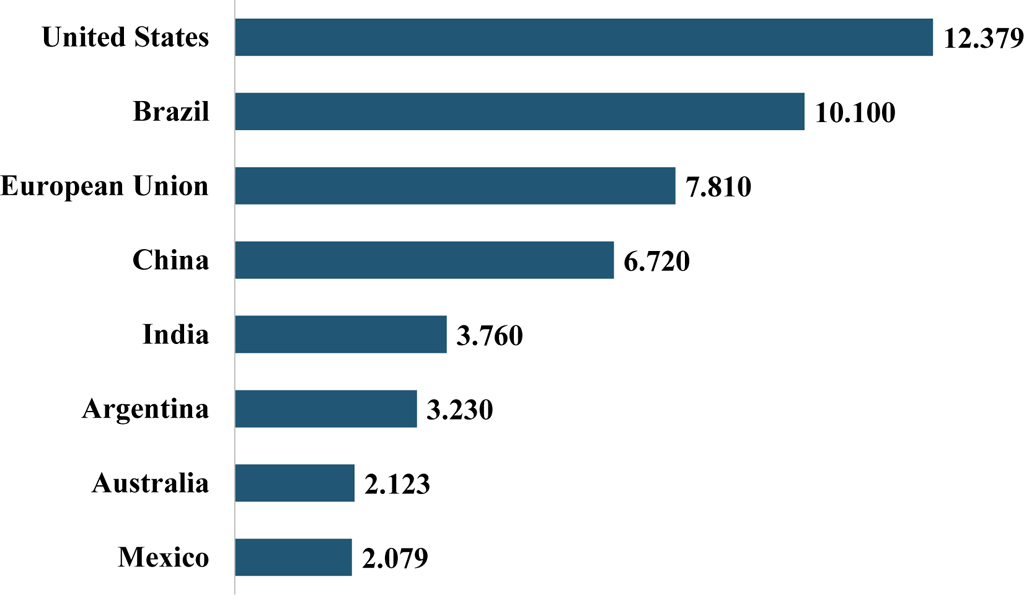
The global production of beef has been growing in recent years, directly related to the increase in global demand approaching 60 million tons. Of the total global production by July 2023, almost 18% of beef is Brazilian, since the country is recognized as the second largest producer in the world, only behind the United States â together, the two countries account for almost 39% of global production (USDA, 2023). Figure 3 shows the production of the countries in tons.
The largest beef producers in 2022 (in thousand tons). Source: USDA (2023).
Citation: International Food and Agribusiness Management Review 2026; 10.22434/ifamr.1033
Between the years 2012 and 2022, productivity in the country increased by 36.8%, reaching 71.4 kg of carcass per acre. In this same period, the pasture areas decreased by 8.7%, and this number is expected to decrease 0.75% p.a. by 2031. Meanwhile, the cattle herd in Brazil reached 202.8 million heads (ABIEC, 2023) (Figure 4).
Evolution of pastureland and beef cattle productivity in Brazil (in millions of acres and @/acres per year). Source: elaborated by the authors based on ABIEC (2023).
Citation: International Food and Agribusiness Management Review 2026; 10.22434/ifamr.1033
Investments in pasture crops, animal nutrition, genetic development and improvement, management platforms, animal welfare and health, production systems, and the adoption of technologies are some of the main factors that contributed to the increase in productivity of the cattle industry together with a reduction in the use and occupation of land by the sector. Most of the time, these areas were destined for producing other crops.
Within this context, Newton also points out that the beef chain is one of the most competitive Brazilian agribusinesses internationally, and that it has been constantly evolving and becoming more professional in terms of sustainability, traceability, health safety, and regulatory issues. What the sector lacks, according to him, is to work on proper communication with consumers so that they can be enlightened with solid information.
2.3 Brazilian beef livestock GDP and exports
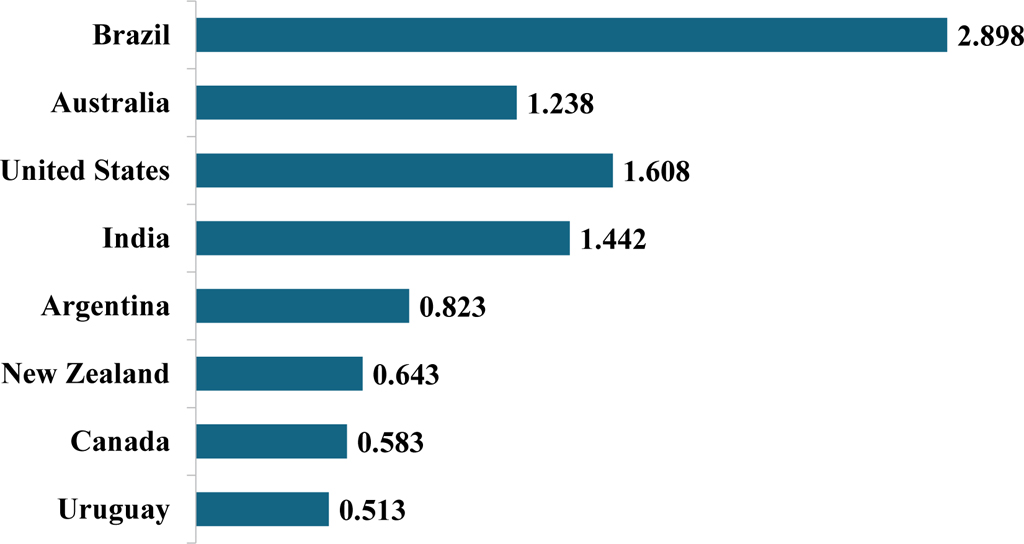
The Gross Domestic Product (GDP) of Beef Cattle in 2021 represented 13% of Brazilâs total GDP. In reais, the sectorâs GDP was BRL 913.1 billion, an increase of 27.6% compared to the BRL 715.3 billion recorded in 2020. As for exports, in 2021 Brazil collected US$ 10.4 billion in beef foreign sales. Compared to the total Brazilian exports of agriculture products, this represents a 40.9% share. In the world, Brazil is the largest exporter of beef, with 20.3% of the global market in 2021 (ABIEC, 2023; MAPA, 2022) (Figure 5).
The largest beef exporters in 2022 (in thousand tons). Source: USDA (2023).
Citation: International Food and Agribusiness Management Review 2026; 10.22434/ifamr.1033
Brazil keeps the tendency to increase the balance between production and consumption, consolidating itself more and more as one of the main beef producers, behind the United States, but with a lower consumption rate than Americans do. The projections indicate a Brazilian production growth of 7.3% by 2032, against a consumption rate growth of 1.3%. For the following years, the USA should increase its exports to meet consumption global demands (FAO, 2023).
In 2032, Brazil should increase the positive balance of production by 15%, going from the current 2.6 million tons to 3.0. This result will allow the country to further increase its participation in the global beef protein market. In this scenario, Brazil will continue to be the largest global supplier of beef in 2032, with an expected growth of almost 16.3% in its global export rate, compared to 2022 (FAO, 2023).
Brazil exports almost 3.1 million tons of protein, followed by Australia (1.8 MT), United States (1.6 MT) and India (1.5 MT). In imports, the tendency is for China to increase its participation and reach a growth of 13% by 2032. China will also continue to be the largest importer in 2031, expanding its share from the current 3.4 to 3.9 million tons. Other highlights will be the countries of Asia and Latin America, which are expected to consume more per capita, increasing their purchases in foreign markets, as well as experiencing population growth, increasing the demand for food (FAO, 2023).
3. ESG in the Brazilian cattle industry
The ESG (Environmental, Social, Governance) criteria have gained increasing notoriety in the business world, thanks to the growing concern of investors about sustainability. These criteria have become essential for risk analysis, which has been putting increasing pressure on companies in all sectors (Pacto Global, 2022).
There are three interrelated sources of information available to stakeholders to assess the level of sustainability of companies (Ferreira-Quilice et al., 2023): â(i) what they say (for example in the sustainability report and on the website); (ii) what third-party organizations say about their sustainability performance (e.g., ESG scores or rankings); and (iii) what companies (in fact) doâ. Regardless of the concept of sustainability adopted, stakeholdersâ knowledge of the sustainability performance of companies is fundamental for the process of transition to sustainability (Ferreira-Quilice et al., 2023).
In 2020, seven European pension funds and asset managers threatened to dispose of beef producers and commodity traders active in Brazil and of Brazilian government bonds if these organizations failed to act to combat deforestation in the Brazilian Amazon (Brice et al., 2022). Investor interventions to address deforestation in meat, dairy and animal feed supply chains â and especially deforestation-related divestments of food companies should not be commonplace. These shareholder resolutions suggest that owners are becoming increasingly inclined to factor tropical deforestation into their management of investee companies and that these interventions may be ensuring changes in the supply chains of food companies.
3.1 The evolution of beef cattle and the importance of circular economy to optimize the results
Value chains demand interaction between actors, cooperation, and coordination to create more value and avoid the risk of opportunities. At the same time, agri-food value chains are changing rapidly, thanks to the rapid development of digital techniques that involve sharing and exchanging data (De Vriese et al., 2023).
In this sense, scientific and technological development has strongly contributed to the increase in the efficiency of the beef cattle industry in Brazil. Some actions that have favored this evolution are the recovery of degraded pastures, advances in animal genetics, supplementary nutrition, zootechnical and veterinary care, pasture rotation grazing systems, and intensive production systems.
The pasture areas, for example, are around 161.9 million acres in Brazil, only 19% of the entire national territory. The tendency is for these numbers to drop even more due to the increase in productivity and production efficiency (UFG, 2022). It is also worth noting that Brazil is one of the countries with the largest area of environmental protection in the world, with about 564.2 million acres allocated to the preservation and protection of native vegetation (66.3% of Brazilian territory), of which almost a third, or 282.8 million acres are located on rural properties (EMBRAPA, 2022).
Another fact worth mentioning is that a study conducted by the Image Processing and Geoprocessing Laboratory of the Federal University of Goiás (Lapig/UFG) found a reduction in the number of properties with degraded pasture areas in the period between 2010 and 2018, which allows for a better balance in the activityâs emissions. In 2010, there were 171, 6 million acres of pastures, against 170.7 million acres in 2018. There were almost 27 million (26.8) acres recovered between 2010 and 2018. This makes the areas of degraded and recovered pasture in Brazil larger than the entire territory of the United Kingdom, representing a drop of 34.6% in 8 years (UFG, 2020).
The evolution of the sector in recent years has contributed to increased productivity and less dependence on the area. Currently, the average carcass productivity per acre is 71.4 kg, 37% higher than it was 10 years ago. About the high water consumption demanded by the sector, less than 10% of the liquid is taken from natural reservoirs. Fifteen thousand liters of water are used to produce 1 kg of beef, 93% of which is green water, i.e. rainwater, 4% blue water, characterized by surface and groundwater, and 3% gray water, which is needed for diluting effluents in the production process, i.e. treated water (Mekonnen and Hoekstra, 2012).
Brazil also takes a leading role in scientific development and sustainability initiatives, such as the Carbon Neutral Brazilian Beef (Figure 6), which refers to the production of beef cattle under integrated systems with the implementation of a forestry component. This practice enables offsetting CO2 emissions from cattle production through tree planting. A study conducted at EMBRAPA Beef Cattle indicated that approximately 200 trees per hectare are sufficient to offset methane emissions from 11 adult cattle per year (EMBRAPA, 2017).
Carbon Neutral Brazilian beef concept-trademark. Source: EMBRAPA (2017).
Citation: International Food and Agribusiness Management Review 2026; 10.22434/ifamr.1033
The label is a concept-trademark, accompanied by a protocol to enable a certification process that verifies the ability of beef produced under specific measurable and certifiable conditions to neutralize its greenhouse gas (GHG) emissions through the incorporation of trees in the system (EMBRAPA, 2017).
Another interesting initiative can be observed in intensive feedlot systems, which engage in multiple activities within a circular economy framework, enabling improved resource utilization across agricultural and livestock farming practices.
The implementation of the circular economy faces a challenge intricately tied to the environment it seeks to transform. This challenge stems from the necessity for a relatively stable economic milieu that ensures the recycling of materials such as biowaste, all the while facilitating the harmonization of economic and environmental performance. Within the agri-food sector, specifically, the circular economy approach is notably constrained. On one hand, itâs confined to appraising organic waste through the lens of market diversification, and on the other, it addresses food waste from a societal standpoint. The prominent solution involves optimizing resource consumption and minimizing wastage, resulting in a diminished flow of matter, water, and energy (Petit et al., 2022).
The circular economy system (CES; Figure 7)) is fundamentally grounded in a âwin-winâ philosophy, where economic prosperity and a thriving environment find reconciliation. In simpler terms, the CES business model in an industrial framework hinge on establishing interconnectedness between aspects like the environment, energy, and CO2 emissions. The paramount benefit of the circular economy lies in its capacity to prolong the retention of product and material value (Velenturf and Purnell, 2021).
Circular economy framework within the beef chain. Source: elaborated by the authors.
Citation: International Food and Agribusiness Management Review 2026; 10.22434/ifamr.1033
Additionally, good examples of the meat industry are found in agricultural crops, such as soybeans and corn, which are directed toward feed production for confined animals. In properties cultivating sugarcane, the straw can be also offered as feed to the animals. At the feed mills, the grains produced from agricultural activities are utilized for formulating balanced and tailored diets that cater to the actual needs of the animals (EMBRAPA, 2017).
With intensive production and a substantial number of animals confined in limited spaces, a significant volume of waste, particularly excrement deposited by cattle during the fattening cycle, is generated. These waste materials can be reused in agriculture for crop fertilization or transformed into gases through biodigesters, facilitating turbine rotation and electricity production. This electricity can be directed to support property activities, reducing costs in other operations, particularly feed production. Furthermore, any surplus electricity can be commercially traded with the common power grid. Figure shows the flows and byproducts of the circular economy within the beef chain.
3.2 Animal welfare
While increasing investor engagement with tropical deforestation reflects relatively recent concerns about economy-wide climate change risks, animal welfare issues have long represented a prominent place of articulation between markets and morality (Brice et al., 2022).
Several studies prove that the adoption of animal welfare practices contributes to the results of livestock in terms of productivity and efficiency in the field, quality, and characteristics of products, and, above all, animal health (Costantino et al., 2021; Robichaud et al., 2019).
There is, therefore, a direct relationship between welfare and performance: if the animal is not well for any reason, it suffers negative impacts in aspects such as weight gain. A state of stress can decrease productive efficiency, especially by reducing feed intake or causing poor nutrient absorption. In short, the more submitted to welfare, the better the results will be (Rosso, 2022).
The growing genetic evolution of the breeds bred in the country uses techniques adopted and approved worldwide, through the performance of rural producers and specialized and qualified technical professionals. Furthermore, the techniques developed from research in genetics, pest and disease control, and pasture improvement have revolutionized Brazilian livestock production with gains in rusticity, resistance to diseases and parasites, performance, efficiency, and quality.
3.3 Innovation and technology
Throughout the project, several technological innovations aimed at the efficiency and quality of beef production were presented. It is worth highlighting the Internet of Things (IoT) sensors that allow through an integrated platform, increased predictability and productivity in management and also contribute positively to environmental sustainability, with the reduction in greenhouse gas emissions (EMBRAPA, 2022). Moreover, another technology that is worth mentioning is the use of artificial intelligence for the identification of animals through computer vision, aiming to replace practices that harm animal welfare (Weber et al., 2020).
And finally, it is impossible not to mention traceability, which has been increasingly requested by consumers, since it aims to bring information about the production process of a product to the shelf, contributing to the choices, evaluations, and perceptions. Beef traceability is also essential to access foreign markets because all meat packing plants that can export meat need to go through an intense certification process and comply with the rules and laws of the international market (EMBRAPA, 2022).
Unified traceability systems can improve the information flow among the agents within the beef supply chain. This scenario can be seen as an opportunity for Brazil to communicate the reliability of the sanitary control and production systems, ensuring the quality and safety of the products (Knoll et al., 2018).
3.4 The sectorâs importance for job creation
Agribusiness accounts for almost one-fifth of all jobs in Brazil. In the year 2021, there were almost 19 million jobs. The livestock and fishing chains employed 2.9 million people, and almost 69% of this total works in beef production. In 2022, the employment registered for beef production was 2.0 million people. In the total agribusiness, beef employs 10.64% of the sector (CEPEA, 2023).
The Gross Production Value (GPV), which is the sum of the primary income from farming businesses, reached almost 1.2 trillion reais in 2022, with BRL 365.0 billion represented by livestock. This amount is invested in the various businesses and companies that make up the sector, generating new investments, new jobs, and opportunities (MAPA, 2022).
The presence of the meatpacking industry in several states also reinforces the generation of jobs in different regions of Brazil. According to the Brazilian Institute of Geography and Statistics (IBGE), there are 224 slaughterhouses (data from 2020) qualified to slaughter cattle in the country, as units inspected by the Federal Inspection Service (FIS). These units can export their products or sell them to other states, moving the Brazilian economy and increasing revenues and tax collection in the states where these companies operate. Still, with the revenue from exports, industries can plan new investments and move the regional economy.
4. The Carne do Bem initiative
4.1 Introduction and project goals
The âCarne do Bemâ movement began in 2020 with the main motivation of clarifying the stigmas and labels about livestock that generate a distorted perception of the activity. To deal with the misinformation about the sector, it was of great importance to create a communication strategy for the final consumer. The next step was to seek a company with know-how and credibility to develop the plan and generate the content.
Carne do Bem is a term in Portuguese that can be translated as âthe good beefâ or âbeef of wellâ, suggesting the positive side of the product. The initiative aims to improve the construction of a positive image of a beef production, chain, company or product through the development of communication plans.
Thus, Newton started the partnership between Nutron and Markestrat. âWe intended to make a neutral project about any commercial interest, with serious companies and partners involved because, with the movement created, other players in the chain could join with the awareness that we need to strengthen ourselves so that this information can reach the final consumer,â says Newton.
Considering Brazilâs importance in the global beef cattle market, the main goal of the Carne do Bem movement is to value the work of cattle producers, addressing various aspects of this market, from production to the arrival of the food on the consumerâs table. The project sought to bring knowledge to the consumer by generating content that shows the seriousness, commitment, and credibility of the work done by the entire livestock chain in the country.
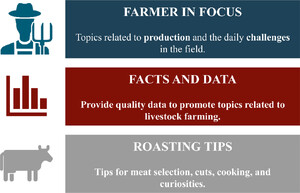
In this context, the target audience is the final consumer of beef, but the project also extends to the entire production chain to clarify doubts through scientific data, studies, and real cases that are part of the activity. For this, three editorial series were developed, which are the pillars of Carne do Bem: Farmer in Focus, Facts and Data, and Roasting Tips. These editorials will be better explained in the next section.
Through the content generated on different platforms, the initiative shows that beef production in Brazil is sustainable and brings several benefits to society and the country, be it job opportunities, tax collection, animal welfare, and advances in production practices that respect the environment.
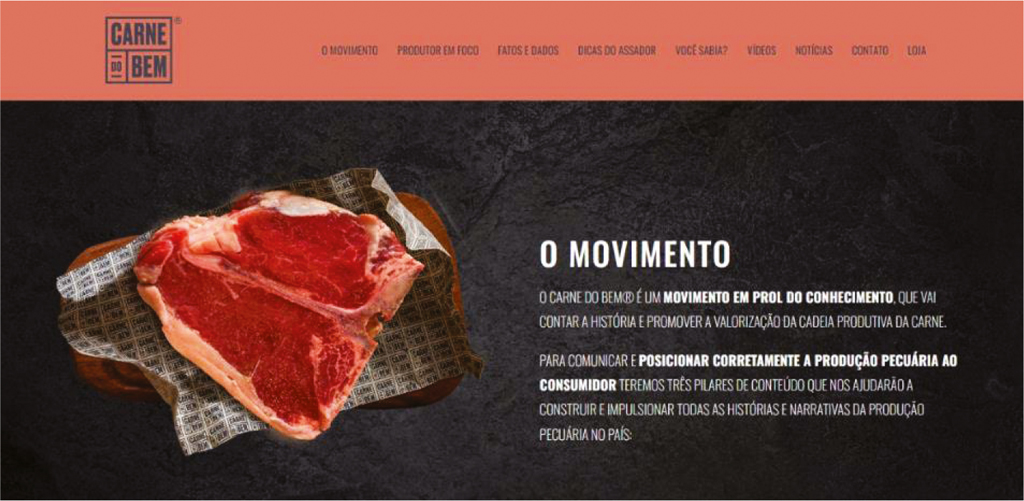
Therefore, in addition, to demystifying points about beef production, the movement generates diverse content concerning the chain, such as tips for preparing meat, curiosities, inspiring stories of producers, and many other relevant issues for the consumer. In this way, the âCarne do Bemâ initiative acts as a disseminator of knowledge and contributes to the educational development of the population, besides highlighting the important role of the professionals involved in the beef production chain. To follow the project content, see www.carnedobem.com (Figure 8).
Carne do Bem website. Source: Carne do Bem (2023).
Citation: International Food and Agribusiness Management Review 2026; 10.22434/ifamr.1033
4.2 Content pillars and main products
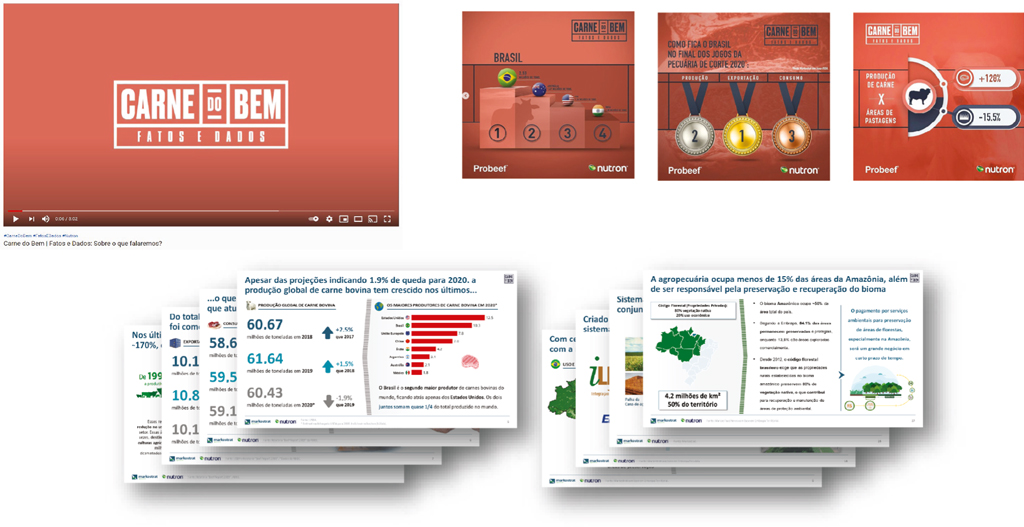
To communicate and place cattle production correctly to the consumer, three pillars of content were created for the Carne do Bem initiative. They are: Farmer in Focus, Facts and Data and Roasting Tips (Figures 9 and 10). Next, we will explain the proposal for each of these pillars.
The three pillars of Carne do Bemâ initiative. Source: elaborated by the authors.
Citation: International Food and Agribusiness Management Review 2026; 10.22434/ifamr.1033
Main products of the Carne do Bem initiative (see www.carnedobem.com and www.youtube.com.br/@NutronBrasil). Source: elaborated by the authors.
Citation: International Food and Agribusiness Management Review 2026; 10.22434/ifamr.1033
Farmer in Focus: From the farmerâs point of view, the perspective of those who live in livestock and know the importance and daily challenges of the sector is presented. In videos produced for Nutronâs YouTube channel, livestock narrates their own trajectories, addressing the most diverse topics, such as women in leadership, animal welfare, vertical growth, ICLF sustainability, integrated production, and production system examples, among others. These are inspiring stories that show commitment, overcoming, entrepreneurship, and pride in producing high-quality meat to feed Brazil and the world.
The following are some testimonials from the producers interviewed:
âLivestock transforms lives. And it was able to transform my life.â Claudia do Val.
âWe live livestock; we live the farm in our blood, in our veins.â Antônio Carlos Meneghetti.
âWhen you have a dream and you manage to do it, to get to where I got to, thatâs too good.â Carlos Reinaldo Meneghetti.
âThe agribusiness workers in Brazil are great winners. They are people who make it happen and have been transforming agribusiness into the activity that Brazil has more vocation, more competitiveness, more productivity.â Grupo Otávio Lage.
âThe serious livestock wants welfare and doesnât set fires or deforest. We want to take everything according to the norms and not only for the law but for our well-being.â Marcos Vinicius Marquez Araújo.
âThat steak that you eat on your plate had a lot of sweat, a lot of commitment, had dedication from a lot of people.â Rodrigo Brunner.
Facts and Data: The goal of this pillar is to show data and facts about the production chain, breaking myths caused by misinformation. Through videos and informative content made available on the projectâs website, topics such as economic importance, sustainable production systems, innovations and technologies, animal welfare, management strategies, and success stories of Brazilian livestock are addressed. The content curation is based on 12 themes:
(1) History and evolution of Brazilian livestock: main figures and results.
(2) Sustainable production systems and environmental protection in beef production.
(3) Projections, prices, and trends for the national and global beef market.
(4) Traceability, seals of origin, and certifications in beef production.
(5) Technologies, connectivity, and applications: revolutionizing the national livestock industry.
(6) Management strategies: welfare practices, genetics, and animal health.
(7) Emissions of gases in beef cattle.
(8) Credit market and green bonds in beef cattle.
(9) EMBRAPA collection: studies and innovations in Brazilian cattle research.
(10) Success stories on environment: environmental initiatives and emission reduction.
(11) Production business success stories: technological and innovation practices.
(12) Industry success stories: product innovation and food marketing.
Roasting Tips: Talking about meat, nutrition, and food is also talking about cooking. Therefore, the The Roasting Tips pillar was created, through which videos of recipes are shared on Nutronâs YouTube channel. The tips range from the best utensils, meats, barbecue, cuts, and ways to prepare them, with tips from a good guest chef, as well as curiosities that make a difference in the preparations and menu compositions.
4.3 Who attends
A brief history of Nutron, Markestrat and Harven Agribusiness School, companies at the forefront of the âCarne do Bemâ movement.
Nutron (Figure 11), Cargillâs animal nutrition brand in Brazil, is a specialist and leader in innovative solutions for animal production through the development of nuclei, premixes, and specialties for the poultry, pork, fish, pets, dairy, and beef livestock segments, and supplements for pasture farming. Since 1995 in the country, the brand has operated close to the producer to meet its demand with convenience, quality, and safety, contributing to the prosperity of each customerâs business. The company also promotes socio-environmental actions in the communities where it operates, acting responsibly for the development and sustainable growth of the entire agribusiness production chain.
Nutron logo. Source: Carne do Bem (2023).
Citation: International Food and Agribusiness Management Review 2026; 10.22434/ifamr.1033
Markestrat (Figure 12), a company dedicated to business consulting, corporate education, and market intelligence, formed by specialists with a high level of knowledge and expertise, masters, and doctors with applied experience. Its mission is to increase the business value of its clients through analysis, planning, and implementation of strategies for market-oriented organizations. It operates in two business areas: Agribusiness and Smart Solutions focused on marketing solutions and strategy.
Markestrat logo. Source: Carne do Bem (2023).
Citation: International Food and Agribusiness Management Review 2026; 10.22434/ifamr.1033
Markestrat Agribusiness has extensive knowledge about agribusiness, acquired over more than 18 years of developing projects for several countries on four continents. Its focus is to develop the leaders of agribusiness companies, collaborating to make more efficient decisions, so that companies prosper and boost their productive systems.
Harven Agribusiness School (Figure 13) is a higher education institution of excellence and high performance to train future leaders with global capabilities, especially for Agribusiness, based on the DNA of Brazilian agro. It was designed to strengthen and improve the application of Science, Social Responsibility and Sustainability in the world of agrobusiness, organizations, and institutions.
Harven Agribusiness School logo. Source: Carne do Bem (2023).
Citation: International Food and Agribusiness Management Review 2026; 10.22434/ifamr.1033
It was established to be Modern, Applied and Global, with the commitment to integrate, through applied knowledge, the main links in the agro production chain, helping to build a solid future for the sector.
4.4 Operational management
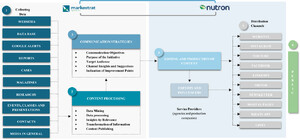
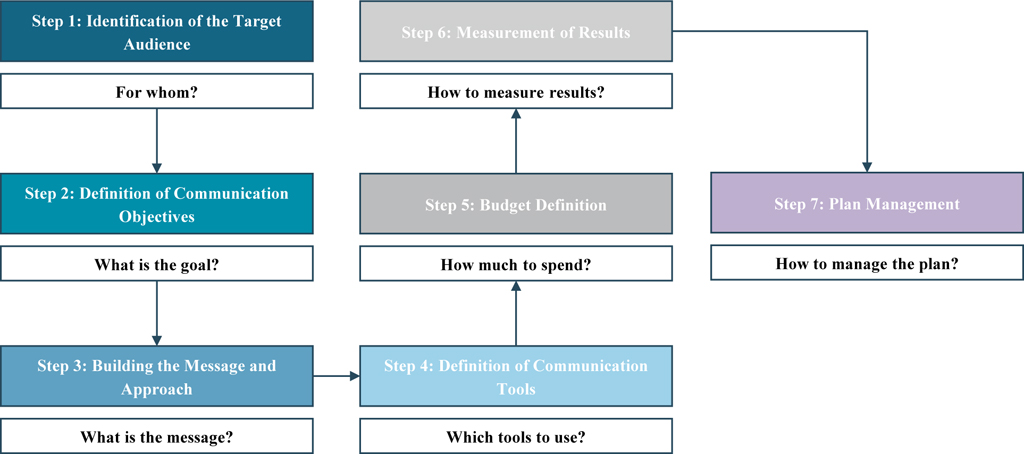
Due to these aspects, throughout the development of the Carne do Bem project, the AgroPlanCom methodology (Neves et al., 2020) (Figure 14) was used to guide the planning and management actions of the initiative. The method consists of seven steps, which are also summarized in questions, to optimize the understanding of their respective objectives, and which were established based on communication and strategic planning literature. The method brings up several aspects specifically related to communication in agribusiness, such as strong themes, sensitive themes, target audiences in the sector (farmers, professionals in the sector) and the media where these audiences are found.
AgroPlanCom method for planning and management of communication. Source: Neves et al. (2020).
Citation: International Food and Agribusiness Management Review 2026; 10.22434/ifamr.1033
This method is composed of seven stages: Identification of the target audience (1); Definition of Communication Goals (2); Development of the Message and Approach (3); Definition of Communication Tools (4); Definition of Budget (5); Result Measurement (6); and Plan Management (7).
The following phases will be detailed according to the premises developed for this project:
(1) The initiative was defined for final consumers of beef as the target audience, in order to adapt and make flexible the tools and the message approach to simplify the understanding of this societyâs niche.
(2) The main goals were outlined to promote the image and positioning of the beef chain before the already established consumer market and potential new customers. To this end, we worked to build a positive image linked to sustainability issues, traceability, certifications, technological innovations, and several other good practices that bring value and recognition to the production chain.
(3) The message was built to raise awareness of the target segment through relevant data and information that is often unknown or little evidenced. For this, it is essential to use an appropriate and consistent approach in order to favor the image of the beef production agents with the help of marketing communication tools to identify the obstacles that prevent the understanding of the subject.
(4) The communication tools are defined in line with the companyâs strategies and marketing decisions since the arguments used must be convincing and consistent with reality for the message to convey confidence and properly reach the target audience. Thus, a website (www.carnedobem.com) of the âCarne do Bemâ project was created, videos were posted on the YouTube channel (www.youtube.com/@NutronBrasil), as well as publications on social media (Instagram: www.instagram.com/NutronBrasil; and Facebook: www.facebook.com/NutronBrasil), and texts about the beef market were made available on the Nutron brand blog (https://blog.nutron.com.br).
(5) After defining the budget, the resources were allocated among the communication tools, considering the type of market, the organizational strategy, the productâs life cycle, and the consumerâs level of chain knowledge.
(6) The people responsible for each action of the project were established so that the integrated use of information and tools could be done in a fluid way, but with risk planning and possible corrections during the process. In addition, performance indicators were defined to measure the results, such as the publicâs views of and interactions with the content made available.
(7) Finally, the last stage closes with an analysis of what can be done through the activities assigned to each team member â committed to the results â in addition to creating the appropriate mechanisms to sustain the projectâs development.
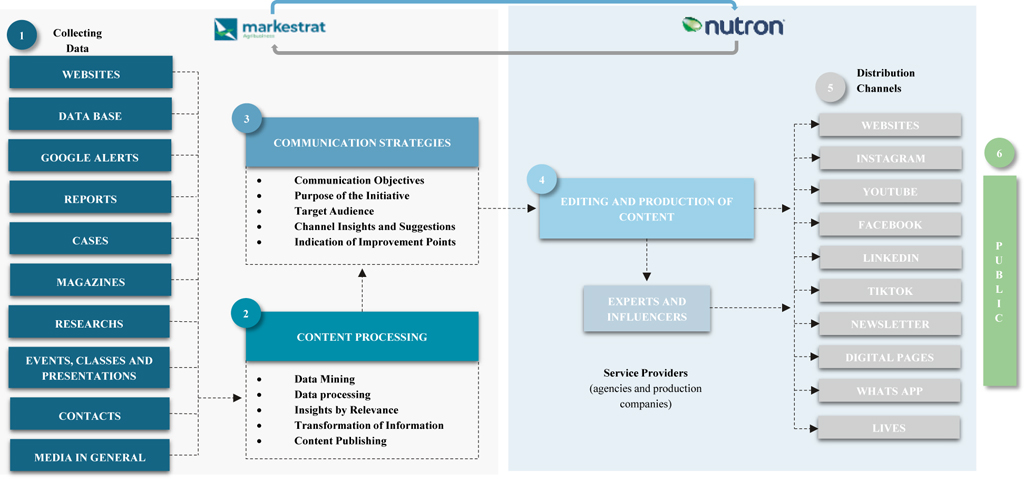
The content production by Markestratâs team for the Carne do Bem initiative is done through an intelligence system, with support in the search for national and international content that can be translated into information to be shared with the projectâs followers, both in beef sustainability and in the production chain. These contents are built based on reports, theses, and studies, in addition to proprietary materials authored by the team.
The teamâs knowledge in production chains, sustainability, agribusiness, communication, and consumer behavior is applied to process this information and transform it into current messages that are easily understood by the target audience. In addition, exchanges and interactions are held with the communication agency that participates in the project for the alignment of the best ways of processing to make the data more acceptable to consumers (Figure 15). Once the content is generated and processed, it is disseminated through videos, infographics, interviews, testimonials, and other formats that are validated with Nutron Cargill, and that have the potential to bring better results and engagement. The operational management strategy works from content curation, followed by the processing and distribution of information in predetermined media and platforms. This process also involves the participation of influencers, experts, scientists, and researchers, to link their images and knowledge to the initiative.
Operational project management. Source: prepared by the authors.
Citation: International Food and Agribusiness Management Review 2026; 10.22434/ifamr.1033
The monthly planning for the collection and analysis of this content follows a schedule that is divided into two moments: a follow-up meeting is held in the first fortnight of each month for a partial presentation of content and insights gathering with the team.
In the second fortnight, a meeting is held for delivery and approval, with the presentation of the final monthly collection and sending of materials to Nutron with the Livestock Bulletin, which contains current data from the sector; the collection of slides, with a compilation of selected content; and videos produced based on Nutronâs schedule. All this content is available on the digital platforms and social networks of the brands Probeef and Nutron Brazil. The initiative also includes actions with the press, partners, and influencers.
5. Main results
The first phase of the Carne do Bem program consisted of producing content to place and communicate the movement to final beef consumers. The launch occurred in the first quarter of 2021. Since then, the project went through the maturation stage, with the engagement of Nutronâs customers and stakeholders in the beef chain, to leverage the movement, with more active positioning in the media and intensification of actions.
By mid-2023, the project had delivered:
67 videos produced and published in the three pillars of the project;
60 000 views on the projectâs YouTube channel, 230 publications on social media (images, infographics, opinion texts and others);12 beef-themed collections (with more than 500 slides)
12 text bulletins analyzing the market situation (more than 100 pages);
80 people involved with the project (farmers, specialists, chefs, operational teams, communications agency and others).
To this end, promotional materials and barbecue kits with the movementâs brand were developed, as well as physical stores of âCarne do Bemâ, whose sales are reverted to social actions. Actions were also carried out in points of sale, such as supermarkets and restaurants, strengthening the presence of the movement for the target public.
Some lessons from the project include:
The target audience is one of the most relevant aspects to be considered when building/defining the message and aspects such as format, time and media.
Objectivity (getting straight to the point) is essential for greater engagement and achievement of communication objectives. People are increasingly with limited time and wide availability of content.
For videos, the usual maximum time is 10 minutes. On average, people watch between 3â5 minutes of material and then migrate to other platforms.
It is essential to transform scientific and complex information into something simple and easy for the public to understand.
Currently, the audio format (Podcast) is one of the most accepted and used by the farmer, since he can listen to it during routine activities.
External people or those who do not know the agro are more apt to block content. In these cases, it is essential to invest in curiosities and objective content.
Otherwise, some challenges persist:
One of the biggest challenges has been the engagement of professionals who are part of the sponsoring organization (hosting) to support the dissemination of content (problem of distribution channels).
In the case of brand communications and agricultural products, it is still quite complex to measure the conversion of communication into purchases, since it still takes place in the countryside (small use of online).
Many digital marketing metrics still fail to deliver some types of personalized information about agriculture: farmer profile, production chain and others.
It is still quite difficult to passively attract people from outside the sector, that is, without the payment to boost the content.
It is also essential to communicate the problems that persist in the sector, although care is needed in the construction of messages and approaches.
6. Conclusions
The purpose behind Carne do Bem is to show that beef production in Brazil is sustainable and brings several benefits to society and the country, including job opportunities, tax revenue, animal welfare, and advances in production practices that respect the environment. This way, consumers can learn about the reality of the chain and feel more confident about consuming this protein.
One of the main challenges of the project was to measure the real reach of the initiative, since the results presented previously do not necessarily indicate that the entire public is truly interested in the initiative. Furthermore, no structured survey was conducted to assess the real impact of the project on consumersâ perception of the image of beef, due to financial limitations in the project.
Even so, the Carne do Bem project presents itself as a reference initiative for the valorization of a sectoral product, and could be an inspiration for other production chains, even if there are areas for improvement to be made.
Acknowledgement
This study was supported financially by DPI/BCE/UnB, Grant Application No. 001/2025 DPI/BCE/UnB.
References
ABIEC, Associação Brasileira das Indústrias Exportadoras de Carnes. 2023. Beef Report 2023. Available online at https://www.abiec.com.br/publicacoes/beef-report-2023-capitulo-01/
Brice, J., G. Cusworth, J. Lorimer and T. Garnett. 2022. Immaterial animals and financialized forests: Asset manager capitalism, ESG integration and the politics of livestock. Economy and Space Review 54 (8): 1551â1568.
Carne do Bem. 2023. Website of Carne do Bem. Available online at https://www.carnedobem.com/
CEPEA. Centro de Estudos Avançados em Economia Aplicada. 2023. Boletim Mercado de Trabalho do Agronegócio Brasileiro. Available online at https://www.cepea.esalq.usp.br/br/mercado-de-trabalho-do-agronegocio.aspx
Costantino, A., E. Fabrizio and S. Calvet. 2021. The role of climate control in monogastric animal farming: the effects on animal welfare, air emissions, productivity, health, and energy use. Applied Sciences 11 (20): 9549. https://doi.org/10.3390/app11209549
Crescitelli, E. and J.M.E. Giraldi. 2009. PaÃses como marcas: dificuldades no desenvolvimento de marca-paÃs. FACEF Pesquisa 12(3): 269â285.
De Vriese, J.R., J.A. Turner, S. Finlay-Smits and A.R.L. Klerk. 2023. Trust in agri-food value chains: a systematic review. International Food and Agribusiness Management Review 26 (2): 175â192. https://doi.org/10.22434/IFAMR2022.0032
EMBRAPA. Empresa Brasileira de Pesquisa Agropecuária. 2017. Carne Carbono Neutro: um novo conceito. Available online at https://www.embrapa.br/en/busca-de-publicacoes/-/publicacao/1056155/carne-carbono-neutro-um-novo-conceito-para-carne-sustentavel-produzida-nos-tropicos
EMBRAPA. Empresa Brasileira de Pesquisa Agropecuária. 2022. Ãreas dedicadas à preservação da vegetação nativa pelo mundo rural em 2021. Available online at https://www.cnpm.embrapa.br/projetos/car/rural2021/
Fasiaben, M.C.R., C.R. Grego, A.S. Moraes and M.M.T.B. Almeida. 2022. Pecuária de Corte na Agropecuária Brasileira: Evolução Segundo os Censos Agropecuários 2006 e 2017. In: Congresso da Sociedade Brasileira de Economia, Administração e Sociologia Rural (SOBER). 8â11 August 2022. Natal, RN, Brazil, PAGE NUMBERS?.
FAO. Food and Agriculture Organization of the United Nations. 2023. OECD Statistics. Available online at https://stats.oecd.org/index.aspx#
Ferreira-Quilice, T., R.M. Hernández-Maestro and R.G. Duarte. 2023. Corporate sustainability transitions: Are there differences between what companies say and do and what ESG ratings say companies do? Journal of Cleaner Production 414: 137520. https://doi.org/10.1016/j.jclepro.2023.137520.
Galuchi, T.P.D., F.P. Rosales and M.O. Batalha. 2019. Management of socioenvironmental factors of reputational risk in the beef supply chain in the Brazilian Amazon region. International Food and Agribusiness Management Review 22 (2): 155â171. https://doi.org/10.22434/IFAMR2018.0004.
Guissoni, L.A. 2009. Proposta de metodologia para a avaliação das Comunicações Integradas de Marketing: uma abordagem focada na gestão baseada em valor. MSc thesis, Universidade de São Paulo, Ribeirão Preto, SP, Brazil.
Knoll, S., A.D. Padula, M.C. Santos, G. Pumi, S. Zhou, F. Zhong and J.O.J. Barcellos. 2018. Information flow in the Sino-Brazilian beef trade. International Food and Agribusiness Management Review 21 (1): 17â38. https://doi.org/10.22434/IFAMR2017.0018
Kotler, P. and K.L. Keller. 2012. Administração de marketing. Pearson Prentice Hall, São Paulo.
Kotler, P. and W.A. Pfoertsch. 2006. Being known or being one of many â the need for brand management for business-to-business (B2B) Companies. Journal of Business and Industrial Marketing 22 (6): 357â362.
MAPA. Ministério da Agricultura, Pecuária e Abastecimento. 2022. Gross Domestic Product (GDP). Available online at https://www.gov.br/agricultura/pt-br/assuntos/politica-agricola/valor-bruto-da-producao-agropecuaria-vbp
Mekonnen M.M. and A.Y.A. Hoekstra. 2012. Global Assessment of the Water Footprint of Farm Animal Products. Ecosystems 15(1): 401â415. https://doi.org/10.1007/s10021-011-9517-8
Neves, M.F. 2018. Carne bovina: plano estratégico para as cadeias produtivas do agronegócio no Estado do Tocantins. Available online at https://doutoragro.com/download/fieto-cadeias-produtivas-carne-bovina/
Neves, M.F., V.N. Marques, L.F. Martinez and V. Cambaúva. 2020. Os Desafios de Comunicação do Agronegócio: O Método âAgroPlanComâ. Revista Agronomia Brasileira 4: 1â10. https://doi.org/10.29372/rab202030
New, S.J. 1997. The scope of supply chain management research. Supply Chain Management: an International Journal 2 (1): 15â22.
Pacto Global. 2022. ESG. Available online at https://www.pactoglobal.org.br/pg/esg
Petit, G., S. Rousselière, S. Duchaine, E. Korbel, V. Cariou, S. Mikhaylin and L.K. Audebrand. 2022. Operationalizing circular economy: Reflections on a by-product upcycling value chain construction in the brewing sector. International Food and Agribusiness Management Review 25 (5): 803â817. https://doi.org/10.22434/IFAMR2021.0154
Robichaud M.V., J. Rushen, A.M. Passillé, E. Vasseur, K. Orsel and D. Pellerin. 2019. Associations between on-farm animal welfare indicators and productivity and profitability on Canadian dairies: I. On freestall farms. Journal of Dairy Science 102 (5): 4341â4351. https://doi.org/10.3168/jds.2018-14817
Rosso, G. 2022. Bem-estar animal impacta na produtividade de carne e leite. Available online at https://www.embrapa.br/busca-de-noticias/-/noticia/46763771/bem-estar-animalimpacta-naprodutividade-de-carne-e-leite
UFG. Universidade Federal de Goiás. 2020. Dinâmica das pastagens brasileiras: Ocupação de áreas e indÃcios de degradação â 2010 a 2018. Available online at https://files.cercomp.ufg.br/weby/up/243/o/Relatorio_Mapa1.pdf
UFG. Universidade Federal de Goiás. 2022. Atlas das Pastagens. Available online at https://atlasdaspastagens.ufg.br/map
USDA. United States Department of Agriculture. 2023. Production, Supply and Distribution Custom Query. Available online at https://apps.fas.usda.gov/psdonline/app/index.html#/app/advQuery
Velenturf, A.P. and P. Purnell. 2021. Principles for a sustainable circular economy. Sustainable Production and Consumption 27: 1437â1457.
Weber F.L., G. Menezes, V.A.M. Weber and A.O. Junior. 2020. Recognition of Pantaneira cattle breed using computer vision and convolutional neural networks. Computers and Electronics in Agriculture 175: 105548. https://doi.org/10.1016/j.compag.2020.105548
Zylbersztajn, D. 1995. Estruturas de governança e coordenação do agribusiness: uma aplicação da nova economia das instituições. Tenure-thesis, Universidade de São Paulo, São Paulo.
Corresponding author