Abstract
Public and private efforts have attempted to increase Rwandan smallholder broiler commercial production to help alleviate poverty and food insecurity. While these interventions have created economic opportunities for producers, many Rwandan consumers still prefer indigenous chicken over commercial broiler chicken. We examined restaurant preferences for purchasing Rwandan-produced broiler meat versus indigenous chicken meat by conducting face-to-face interviews in February 2022 with 100 restaurants in Kigali. Across specified price levels, 73% of restaurants were interested in purchasing broiler chicken meat compared to chicken meat from indigenous breeds. Probit regression results showed that female procurers were more likely to prefer broilers. If respondents considered supplier availability and reliability to be important, they were more likely to purchase broilers. If restaurants were more willing to take risks, preferred to purchase live birds, and considered healthiness and consistency to be important, they were less likely to purchase broilers. The relative price of the broiler compared to the indigenous chicken was not a significant determinant of a restaurantâs decision to purchase broilers. This study provides insights into the factors that influence restaurant preferences for broilers and, hence, the likelihood of success for the domestic commercial poultry industry and smallholder Rwandan broiler farmers.
1. Introduction
Rwanda has experienced remarkable economic growth with significant improvements in living standards despite being relatively small geographically, densely populated, lower-income, and landlocked with mostly hilly terrain. However, poverty and food insecurity among rural households continues to be a concern (Gill et al., 2020; Weatherspoon et al., 2019). Rwanda ranks 165 out of 191 countries according to the Human Development Index (United Nations Development Programme (UNDP), 2023). Almost 16% of the urban population and 43% of the rural population are living in extreme poverty (World Bank, 2020). According to the Global Hunger Index (GHI), Rwanda ranks 102 out of 121 countries with serious hunger concerns (GHI, 2022).
To address these concerns, the Government of Rwanda and supporting organizations have made investments to improve the agricultural sector, with a particular focus on improving livestock production and increasing domestic meat supply. Among the developments are increased investments in commercial broiler production. For instance, the U.S. Agency for International Development (USAID) funded Feed the Future Tworore Inkoko, Twunguke Project (Letâs raise chickens and make a profit in Kinyarwanda) is aimed at increasing the capacity of smallholder broiler farmers in the Musanze District of Rwanda (Gill et al., 2020). Investment in broiler operations is seen as having the greatest potential for addressing animal protein shortages since broilers require less land for production and have a higher feed conversion ratio compared to other livestock (Shapiro et al., 2017). Broilers are also heavier and more dense than indigenous breeds (Dyubele et al., 2010), have a relatively faster growth rate (Wattanachant et al., 2004), and are generally cheaper than other meat sources (Dalle Zotte et al., 2020). While both chicken production and imports have increased in Rwanda in recent years, per capita availability is still very low (1.5kg in 2020) when compared to the global average (Muhammad et al., 2022). Overall meat availability is less than 10 kg/person, which is considerably lower than the annual recommended minimum of 50 kg/person (FAO, 2019).
The Rwanda Livestock Master Plan (LMP) explicitly mentions the transformation of the poultry sector from being dependent on small scale operations of âsemi-scavenging crossbredsâ (i.e., indigenous birds) to larger scale specialized broiler operations. The reason being is that indigenous chickens exhibit poor growth rates and low productivity when compared to broilers, which constrains the potential for the poultry subsector to address food insecurity and animal protein shortages (Kpomasse, 2022). While there have been investments in both large- and small-scale commercial broiler production in Rwanda (Gill et al., 2020), little is known about the demand side of the market (Muhammad et al., 2022). Therefore, it is important to understand consumersâ preferences for broiler chicken meat compared to meat from indigenous birds. Past research throughout Sub-Saharan Africa mainly focused on broiler production efficiency (Cisse et al., 2017), farmer profitability (Ike and Ugwumba, 2011), and characteristics of the broiler production systems (Mahoro et al., 2017; Mbuza et al., 2016, 2017a), with limited research on buying behavior and sales (Muhammad et al., 2022). To ensure the long-term viability of broiler production in Rwanda, it is important to have a better understanding of demand-specific issues and buying behavior.
The overall goal of this analysis is to evaluate hotel and restaurant preferences for Rwandan-produced broilers and indigenous chickens.1 In this study, we focus on restaurant demand since they are the largest buyers of commercial poultry when compared to other retail establishments (e.g., meat shops) (Muhammad et al., 2022). In fact, the rise in the number of quick service restaurants over the last decade is considered a major factor driving the development of the poultry sector throughout the region (Vernooij, 2018). We conducted face-to-face interviews with 100 restaurant owners and operators in Kigali and used the survey results to conduct a probit regression analysis of restaurant preferences for Rwandan-broilers compared to indigenous chickens.
The development of the commercial broiler sector and issues affecting poultry production in Sub-Saharan Africa have been previously studied. Birhanu et al. (2022) conducted a baseline survey, cluster-randomized study, and market survey to evaluate the feasibility of Tropically Adapted Improved Breeds (TAIBs) of chicken in Sub-Saharan Africa. They reported that the majority of the smallholder farmers preferred TAIBs to indigenous chicken. They also found that TAIB chicken-based production systems improved the status of producersâ consumption and income generation. Vernooij et al. (2018) conducted a study on regionalization in poultry development in Eastern Africa. They found that there is steady growth in chicken consumption across East African countries mainly due to rapid urbanization, a growing middle class, increases in disposable income, advancements in farming techniques, and the rise of quick service restaurants. Dyubele et al. (2010) conducted a study in South Africa to evaluate the consumer sensory characteristics of broiler and indigenous chicken meat. They found that consumers gave a higher score for most broiler meat attributes. The consumers also gave higher sensory scores, except for flavor and off flavor, from meat from broilers as opposed to indigenous chickens. Therefore, this analysis will contribute to the literature by examining restaurant demand for Rwandan-produced broilers compared to indigenous birds in Rwanda.
2. Methods
To determine the willingness of restaurants to purchase and offer Rwandan broilers, a survey was conducted in Kigali, the largest city and capital of Rwanda. Kigali is an important cultural, economic, and transportation hub in Rwanda. The survey was programmed onto a tablet using the Harvest Your Data (2023) platform and questions appeared in both English and Kinyarwanda. A non-government agency, Three Stones International (2023), was hired to administer the survey through 100 face-to-face interviews.2 A face-to-face survey was utilized since it has been found to yield a greater response rate than alternative survey methods (Christensen et al., 2014). The survey took approximately 20 minutes to complete and had full University of Tennessee, Knoxville, USA, Institutional Review Board (IRB) approval. The survey was completed in February 2022.
2.1 Contingent Valuation method
There exist various methods for assessing consumer preferences and willingness to pay (WTP) for food products, such as discrete choice experiments (Lewis et al., 2016a, 2017; Syrengelas et al., 2018), contingent valuation (CV) methods (Dobbs et al., 2016; McKay et al., 2019) and incentive-compatible experimental auctions (Lewis et al., 2016b). We chose to utilize the CV method to determine restaurantsâ preferences for Rwandan broilers compared to indigenous chickens, provided it is similar to how restaurants make meat procurement decisions. Dobbs et al. (2016) and McKay et al. (2019) also used the CV approach to determine restaurantsâ preferences for sourcing local meat. We implemented a CV instead of a choice experiment because we were not interested in determining WTP estimates for various poultry attributes which is what choice experiments evaluate. Instead, we were interested in estimating the factors affecting a restaurantâs decision to serve Rwandan broilers. Given the logistical challenges associated with implementing a survey in Rwanda during the aftermath of COVID-19, we did not utilize an experimental auction, which would have been a more labor intensive and costly endeavor. Ultimately, we opted to implement a CV, since this was the most efficient and straightforward way to answer our research question.
There are various approaches to implement CV methods including open- and closed-ended questions. Open-ended questions involve directly asking respondents to provide their estimates of WTP for goods and services. However, open-ended methods are vulnerable to different biases that can impact their accuracy (Dahal et al., 2021; Hoyos and Mariel, 2010). Hoyos and Mariel (2010) reported that the closed-ended approach is more reliable. Among the closed-ended approaches, there are three types: single-bounded, double-bounded, and one-and-one-half-bounded (Hoyos and Mariel, 2010). Consistent with the methodology employed by McKay et al. (2019), we adopted to use the single-bounded CV method. This method was also used since it most accurately reflects the actual scenario of how farmers and middlemen distributors engage restaurants (Miklyaev et al., 2017).
One potential concern in consumer preference studies is the presence of hypothetical bias. Since our data collection approach closely resembles the way in which farmers and wholesalers engage with restaurants in Rwanda, hypothetical bias is likely less of a problem with our study versus surveying general consumers. Furthermore, we explicitly informed the respondents that our study aimed to âbetter assess the market for Rwandan Broiler Chicken.â Thus, we also took measures to minimize hypothetical bias by carefully structuring the survey to make it consequential to the respondents, thereby ensuring they understood the potential impact of the survey results on valued outcomes (Herriges et al., 2010; Lewis et al., 2016; McKay et al., 2019).
2.2 Survey flow
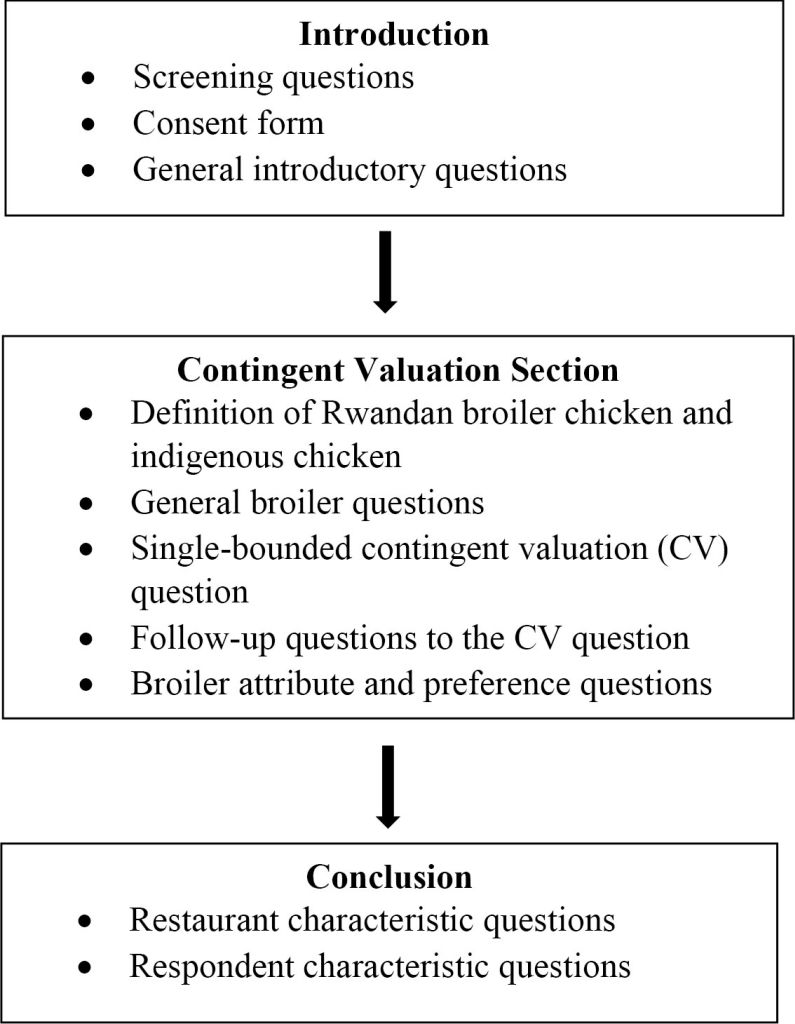
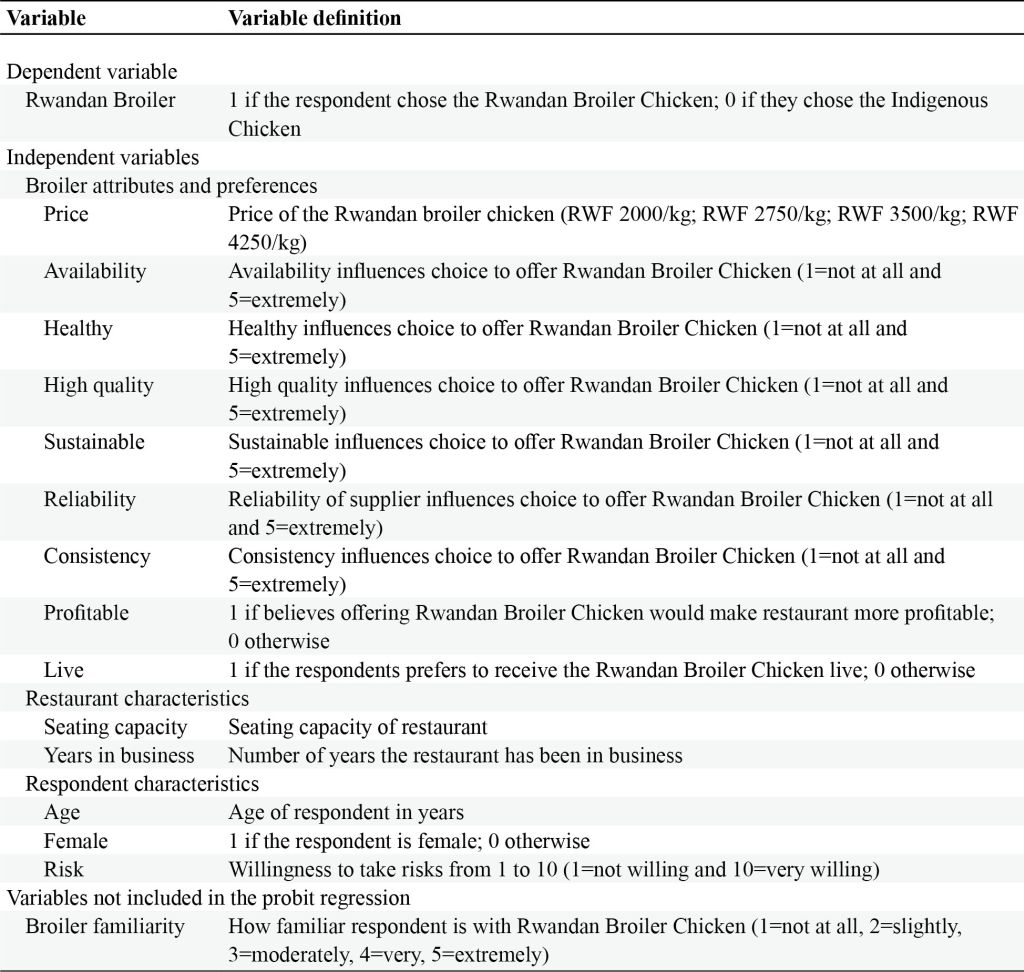
The flow of the survey appears in Figure 1, the variables from the survey are defined in Table 1, and the exact survey questions appear in Appendix A. The survey began with screening questions to ensure the respondent was qualified to take the survey. To qualify for the survey, the restaurant had to serve meat products. Further, individuals answering the survey had to be 18 years or older and the primary decision maker regarding food procurement. If the restaurateur qualified to take the survey, they then completed a consent form and answered general introductory questions (Figure 1). The restauranteur was then provided with definitions of the Rwandan broiler and the indigenous chicken as follows:
âRwandan Broiler Chickenâ declares that the chicken is âa young, tender chicken; less than 10 weeks of age and is from Rwanda. âLocal Birdâ declares that the chicken is âa mature bird of indigenous breedâ from Rwanda.â

Survey flow.
Citation: International Food and Agribusiness Management Review 28, 1 (2025) ; 10.22434/ifamr.1006
Variable names and definitions
Citation: International Food and Agribusiness Management Review 28, 1 (2025) ; 10.22434/ifamr.1006
Next, participants were asked how familiar they are with Rwandan broiler chicken from (1=not at all to 5=extremely) and whether or not they believed offering Rwandan broiler chicken products would make their restaurant more profitable (yes or no). A single-bounded CV question was then posed to the primary purchaser as follows:
âAssume you are purchasing chicken for your restaurant. Which type of chicken would you choose? Please select the choice that is most representative of the decision you would really make for your operation:
(A) Whole Local Bird costing RWF 4900/bird. Assume a 1.4 kg dressed weight. Thus, it costs RWF 3500/kg dressed.
(B) Rwandan Broiler Chicken costing RWF 2000/kg dressed.
(C) Neitherâ
The indigenous chicken was always offered at the same price to all restaurants (i.e., RWF 3500/kg dressed) while the Rwandan broiler was offered at one of four price levels (RWF 2000, 2750, 3500 and 4250/kg). Each of the four price levels were randomly offered to 25 restaurants. Local bird (indigenous chicken) and broiler prices were based on Rwandan market prices at the time of the survey provided by Zamura (2023). Zamura is a limited full-service commercial livestock feed manufacturer that also produces broiler chickens in Rwanda. Through conversations with poultry experts at Zamura, we also designed the CV question such that the indigenous chicken was marketed as a whole bird while the broiler was marketed on a per kilogram basis since this is how they are respectively sold. Because the local bird is always sold as a whole bird, the question provided an assumed weight and conversion, so respondents knew its market price on a per kilogram basis allowing for an accurate price comparison between the two options.
If a respondent chose the indigenous chicken compared to the broiler, they were asked the following open-ended question, âWhy did you choose the Whole Local Bird instead of the Rwandan Broiler Chicken?â Next, all restauranteurs were asked how much they agreed that the following factors (availability, healthy, high quality, reliability of supplier, consistency of product, sustainability) would influence their choice to offer Rwandan broiler chicken at their restaurant (with 1=not at all to 5=influence extremely). They were then asked whether they would prefer the Rwandan broiler chicken as a live bird (yes or no). Finally, the survey concluded with questions about how many years the restaurant had been in business, seating capacity of the restaurant, and respondent characteristics (gender, age). The respondentsâ risk preferences were also elicited following Dohmen et al. (2011) by asking their willingness to take risks from 1=not at all willing to 10=very willing.
2.3 Conceptual and econometric framework
A consumer will purchase one product over another when their utility gained from that product is greater than their utility for the other product. In this decision scenario, the random utility framework is often used to model the decision regarding a consumerâs willingness to purchase (McFadden, 1994). Since we are interested in the decision of a restaurant, not a consumer, we follow the framework of McKay et al. (2019) who extended this framework to a restaurantâs purchasing decision. Since a restaurant is maximizing profits, and not utility, a restaurant, r, would choose the Rwandan broiler chicken (RB) over the indigenous chicken (IC) if the expected profit from purchasing the RB (E(
Estimating the probability (Pr) that a restaurant will choose the RB relates to the probability that the expected profit from serving the RB will exceed the expected profit from serving the indigenous chicken. Thus,
Citation: International Food and Agribusiness Management Review 28, 1 (2025) ; 10.22434/ifamr.1006
where
Citation: International Food and Agribusiness Management Review 28, 1 (2025) ; 10.22434/ifamr.1006
The restaurantâs choice of purchasing the broiler instead of the indigenous chicken is a binary dependent variable that takes the value of zero if the respondent chooses to purchase the indigenous chicken and one if they choose to purchase the broiler. Since the dependent variable is binary, and following similar studies (e.g., Dobbs et al., 2016; McKay et al., 2019), we utilize a probit regression for estimating the factors associated with the decision of a restaurant, r, to purchase the RB as outlined in equation (1).3
The probit log-likelihood function and maximization are described in Stata (2023a). The probit regression was estimated in Stata 17 using the probit command with robust standard errors (Stata, 2023a). Associated average marginal effects for discrete and continuous variables were estimated using the Stata 17 margins command (Stata, 2023b). Using Stata 17, the condition indexes were estimated for the independent variables along with a correlation matrix to examine whether multicollinearity was present. The Stata command coldiag2 was used to estimate the condition indexes. If the condition number of the independent variables is lower than 30, then collinearity issues are not present (Belsley, 1991).
We also estimated the average WTP for RBs using the results of the probit regression with the formula:
Citation: International Food and Agribusiness Management Review 28, 1 (2025) ; 10.22434/ifamr.1006
where
2.4 Explanatory variables and hypothesized results
Table 1 shows the dependent and independent variables in the probit regression. A likelihood ratio test was utilized to determine which variables to use as independent variables. Following demand theory, we hypothesize that as the price of the Rwandan broiler decreases, restaurants would be more likely to purchase the broiler chicken (Table 1). As restaurants consider availability, healthiness, quality, sustainability, reliability of the supplier, and consistency more important, they may have an increased preference for broilers or indigenous chickens (Table 1). Previous research also found the importance of these factors to affect product preferences (Steinhart et al., 2013; Van Loo et al., 2010; Erdem and Swait, 1998; Saleem et al., 2015). It is expected that those believing Rwandan broiler chickens would make the restaurant more profitable would be more likely to choose broilers. Rwandan restaurants likely also have different preferences for how they procure chicken meat, and this will affect their preferences for broilers compared to indigenous birds. For example, indigenous chickens are typically supplied live while broilers are provided in a variety of available cuts (Table 1).
Previous research has documented that individual attitudes and demographics affect food purchasing decisions and that certain restaurant characteristics, like seating capacity, could influence a restaurantâs decision to offer local beef (Carpio and Isengildina-Mass, 2009; Dentoni et al., 2009; Dobbs et al., 2016; Duram and Cawley, 2012; McKay et al., 2019; Selfa and Qazi, 2005; Starr et al., 2003; Telligam et al., 2017). Therefore, it is hypothesized that seating capacity, years in business, and the primary poultry decision makerâs age and gender could affect their decision to purchase broilers (Table 1). Risk has been found to be a predictor of decision making behavior (Angulo and Gil, 2007; Mitchell, 1998); thus, it was hypothesized to influence the decision to offer broilers.
3. Results
3.1 Rwandan restaurant preferences for Rwandan Broiler Chicken
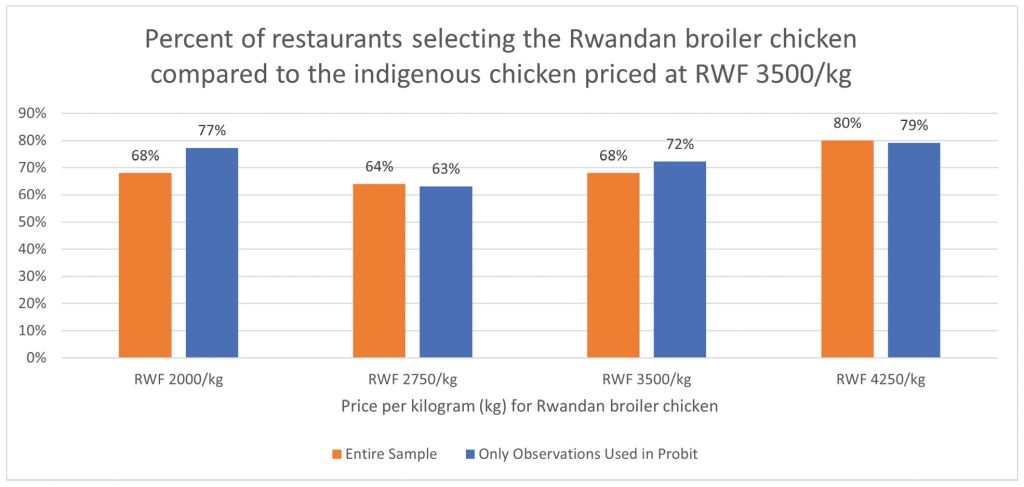
Among the 100 surveyed restaurants in Rwanda, 97 of the surveys were completed face-to-face and three were completed over the phone.4 Of the 100 restaurants completing the survey, 83 of them answered all the questions used in the probit regression. Figure 2 shows the percentage of restaurants selecting the broiler compared to the indigenous chicken at the different price levels for the entire sample, and only the observations used in the probit regression. All restaurants either chose to purchase the broiler chicken or the indigenous chicken and none selected the âneitherâ option in the CV question. The indigenous chicken was priced at RWF 3500/kg in all scenarios and the broiler ranged from RWF 2000 to 4250/kg.
Studentâs t-tests revealed no significant differences for the percentage of restaurantsâ selecting the Rwandan broiler chicken across the four price levels when all observations were used and when only the observations used in the probit were used. The number of observations for each price level was 25 for the entire sample, and the numbers of observations using only the observations in the probit were 22, 19, 18 and 24 for the RWF 2000/kg, 2750/kg, 3500/kg and 4250/kg price levels, respectively.
Citation: International Food and Agribusiness Management Review 28, 1 (2025) ; 10.22434/ifamr.1006
Across the entire sample, at the lowest broiler price (RWF 2000/kg), 68% of the respondents chose to purchase the broiler. At the highest price (RWF 4250/kg), 80% of the restaurants chose the broiler (Figure 2). Results were similar when analyzing only the observations used in the probit regression. For both the entire sample, and when analyzing only the observations used in the probit regression, t-tests revealed there were no significant differences among the percentage of restaurants selecting the broilers compared to the indigenous chickens at the different price levels. This indicates that a restaurantâs decision to offer broilers was not sensitive to price, which is contrary to demand theory. Therefore, results of the probit regression will help determine the factors that do influence a restaurantâs decision to offer broilers.
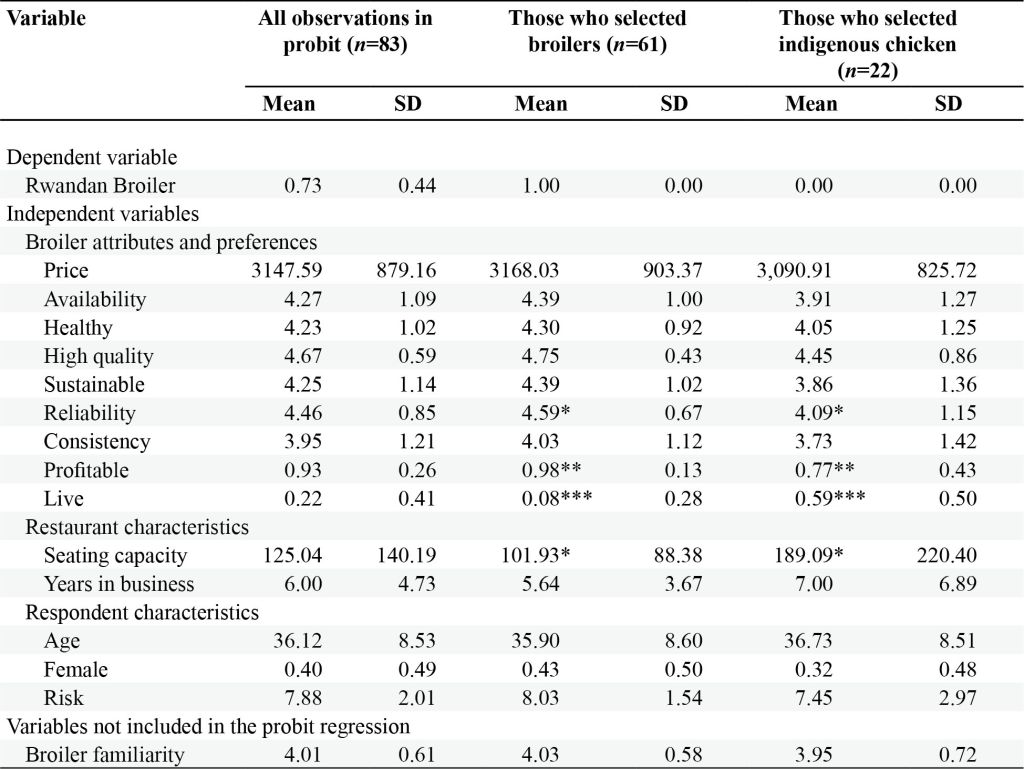
Table 2 presents the descriptive statistics of the variables used in the probit regression model, how they vary across those who selected broilers versus those who selected indigenous chicken, and the level of familiarity respondents had with broilers.5 Among the respondents who answered all the questions, approximately 73% chose the Rwandan broiler over indigenous chickens. The average offered price for the Rwandan broiler in the CV question was RWF 3,147/kg. With an average mean score higher than 3.9, the respondents considered availability, healthy, high quality, sustainability, reliability, and consistency as very influential factors in their choice to offer broilers at their restaurant (Table 2). Those who selected broilers considered reliability of supply as significantly more influential at an average mean of 4.59 compared to 4.09 among those who selected indigenous chicken (p<0.10). Approximately 93% of the respondents believed that offering broilers would make their restaurant more profitable and the perceived profitability of broilers was greater among restaurants that selected broilers (98%) than those who selected indigenous chickens (77%) (p<0.05). On average, only 22% of respondents preferred live broilers compared to processed cuts; this percentage was significantly higher among those who selected indigenous chicken (59%) compared to broilers (0.08%) (p<0.01) (Table 2).
Variable means and standard deviations
Citation: International Food and Agribusiness Management Review 28, 1 (2025) ; 10.22434/ifamr.1006
The average seating capacity of the restaurants was approximately 125. The average seating capacity among restaurants that selected indigenous chickens was significantly higher than those who selected broilers at 189 seats compared to 102 (p<0.10). On average, the restaurants were in business for six years. The average age of the respondent was approximately 36 years and almost 40% of the respondents were female. With a mean score of 7.88, the respondents had a high willingness to take risks. On average, respondents were âveryâ familiar with Rwandan broilers.
3.2 Factors affecting restaurant preferences for Rwandan Broiler Chicken
The condition number of the independent variables was 37.27, which is slightly higher than the ideal cutoff value of 30 (Belsley, 1991). However, as shown by the correlation matrix in Table 3, no two variables had a correlation of greater than 0.70. Together, this suggests that multicollinearity is not an issue (Dancey and Reidy, 2004).
Independent variable correlation matrix
Citation: International Food and Agribusiness Management Review 28, 1 (2025) ; 10.22434/ifamr.1006
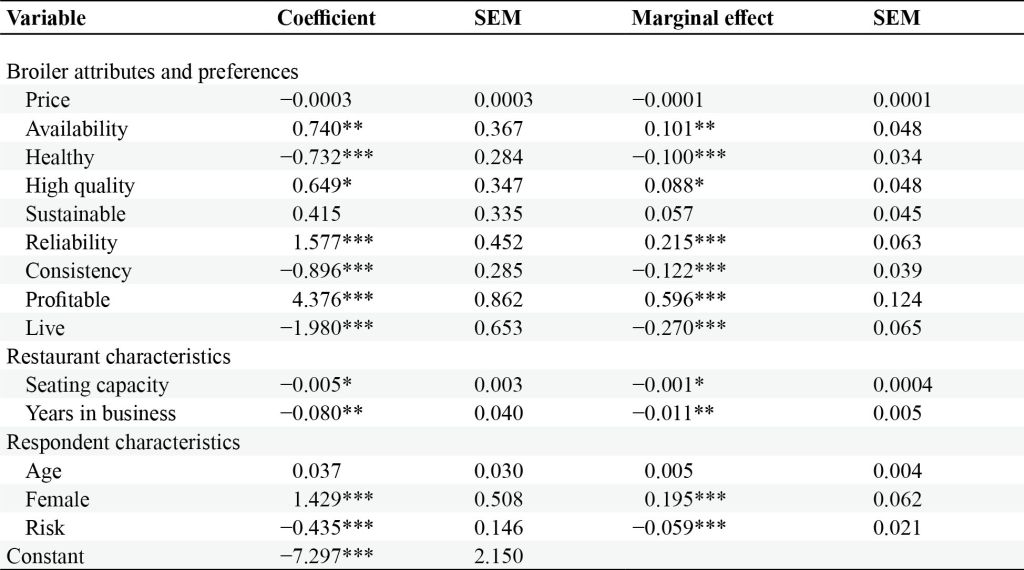
Table 4 presents the probit regression coefficients and marginal effects for the factors affecting a restaurantâs willingness to offer Rwandan broiler chicken compared to indigenous chicken. The estimated probit regression had a pseudo R2 of 0.57, and the Wald
Probit coefficients and marginal effects for factors affecting restaurantsâ decision to offer Rwandan Broiler Chicken
Citation: International Food and Agribusiness Management Review 28, 1 (2025) ; 10.22434/ifamr.1006
As expected from viewing Figure 2, the price of the broiler compared to the indigenous chicken did not have an effect on a restaurantâs preference for the broiler. As a respondent considered availability (p<0.01), high quality (p<0.10), and reliability (p<0.01) to be more influential factors in their choice to offer broilers, they were more likely to select the broiler. For example, as a respondent considered reliability one-unit more influential, they were nearly 22% more likely to select the broiler. This may indicate that restaurants consider the sourcing of broilers to be more reliable and broilers to be of higher quality. Consistent with expectations, if a restaurant believed offering broilers would make the restaurant more profitable, they were nearly 60% more likely to choose the broiler (p<0.01).
Meanwhile, as restaurants considered health benefits (p<0.01) and consistency (p<0.01) more influential factors in their choice to offer broilers, they were less likely to select the broiler. For example, as respondents considered consistency as one-unit more influential, they were approximately 12% less likely to purchase the broiler. This may indicate that restaurants consider broilers to be not of as consistent quality or as healthy as indigenous chickens. If a restaurant preferred live broilers, they were 27% more likely to prefer the ingenious chicken (p<0.01), which makes sense considering indigenous chickens are more likely to be sold live than broilers.
Results indicated that time in business (p<0.05) and seating capacity (p<0.10) decreased the likelihood of choosing broilers over the indigenous bird. If a restaurant was in business one year longer, they were 1% less likely to choose the broiler. If a restaurant had 10 more seats, it was 1% less likely to choose the broiler. Thus, newer and smaller restaurants were more likely to purchase broilers. If the primary poultry purchaser was a female, they were nearly 20% more likely to purchase the broiler (p<0.01). A plausible explanation for this is that more females are involved in poultry production and processing in Sub-Saharan Africa (Aboki et al., 2013). Thus, they might be more knowledgeable about the benefits of broiler chicken. If the primary poultry purchaser was more risk-seeking, they were more likely to choose the indigenous chicken (p<0.01). This result could be explained by broilers typically being more available and cheaper than indigenous chickens (Dalle Zotte et al., 2020).
3.3 Qualitative analysis
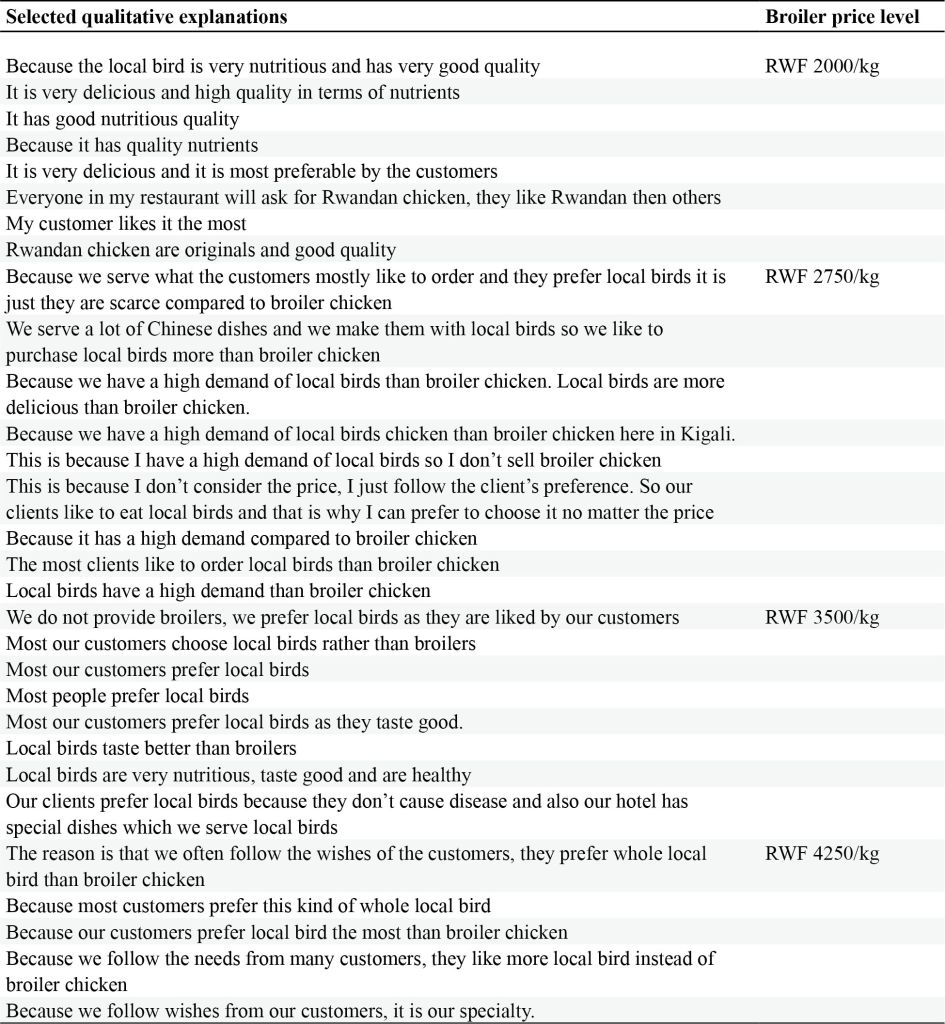
Respondents who chose the indigenous chicken over the broiler were asked a follow-up question of, âwhy did you choose the Whole Local Bird instead of the Rwandan Broiler Chicken?â The qualitative responses to this question are provided in Table 5 to confirm the results of the probit regression. The reasons why about 25% of restaurants preferred the indigenous chicken over the broiler can generally be classified among a few main themes. In general, according to the responses of those preferring indigenous chickens, they believed indigenous chickens have the following attributes: nutritious/more healthy, delicious, high quality, and most preferred by customers (Table 5). Overall, these results conform to the probit regression findings. For example, regression results revealed that as respondents considered health benefits and consistency more influential in their broiler decisions, they were more likely to prefer the ingenious chicken. This is consistent with the qualitative analysis showing that among those who selected indigenous chickens, they were considered more nutritious, healthy, and delicious. Meanwhile, regression results indicate that as availability and reliability were more influential factors in broiler decisions, broilers were more likely to be preferred. This is consistent with the qualitative results indicating that broilers are easier to source than indigenous chickens. Further, regression results indicated that price was not an important factor in poultry purchasing decisions, which is consistent with the explanations in Table 5.
Qualitative explanations for choice of indigenous chicken compared to the Rwandan Broiler
Citation: International Food and Agribusiness Management Review 28, 1 (2025) ; 10.22434/ifamr.1006
3.4 WTP
The mean WTP for broilers was estimated to be RWF 6141/kg, which is RWF 4141/kg higher than the lowest price offered (RWF 2000/kg) to the respondents and RWF 1891/kg higher than the highest price offered (RWF 4250/kg). The mean WTP for broilers is also RWF 2641/kg higher than the provided price of indigenous chicken. This high value for the estimated broiler WTP is likely because price has no significant impact on demand for broilers in the probit regression, and restaurants still preferred broilers over indigenous chicken 80% of the time even at the highest provided price level (RWF 4250/kg). Moreover, Dyubele et al. (2010) reported that consumers in Africa gave higher sensory scores to broilers compared to indigenous chicken. This indicates that restaurants would be willing to purchase broilers at prices even higher than market prices (i.e., up to RWF 6141/kg).
4. Discussion and conclusions
Broiler production in sub-Saharan Africa has become increasingly popular as a means to increase protein consumption while also providing income to rural smallholder farmers. Broilers are often more efficient and cheaper to produce than indigenous chickens; thus, broiler systems have the potential to be an effective way to decrease rural poverty and simultaneously increase protein consumption among producers and the general population by increasing the supply of chicken meat. While previous studies evaluated various characteristics of broiler production systems, such as production efficiencies, smallholder broiler sales, and profitability in Sub-Saharan Africa, few studies have examined consumer preferences for broilers. Therefore, this study examined Rwandan restaurant preferences for sourcing Rwandan broiler chickens compared to indigenous chickens and the factors predictive of a restaurantâs choice to purchase broilers compared to indigenous chickens. Restaurants are an important marketplace where poultry is consumed, and previous research has examined restaurant purchasing behavior to examine the feasibility of new products.
Results from implementing a face-to-face survey with the primary purchasing decision maker of 100 restaurants in Kigali found that about 75% of restaurants preferred broilers compared to indigenous chickens regardless of if the broilers were priced higher or lower than the indigenous chicken. In fact, when broilers were priced at a premium of RWF 750/kg over the indigenous chickens, 80% of restaurants still chose the broiler.
A probit regression was utilized to determine the factors affecting a restaurantâs preference to purchase broilers over indigenous chickens. Broiler price was not found to be significant in the model and did not affect broiler or indigenous chicken adoption by restaurants. Female poultry purchasers, smaller restaurants (in terms of seating capacity), and newer restaurants all preferred broilers compared to indigenous chickens. If a restaurant considered availability, high quality, and reliability influential factors when purchasing broilers, they were more likely to prefer broilers. Restaurants that thought serving broilers would increase their profitability were also more likely to purchase broilers. Meanwhile, restaurants that preferred live poultry and considered consistency and healthiness as influential factors when purchasing chicken were more likely to prefer indigenous chickens.
Restaurant average WTP for broilers was estimated from the coefficients of the probit regression at RWF 6141/kg, which was higher than the market broiler price in Rwanda at the time of the survey. Thus, there exists strong demand for broiler chickens in Rwanda and broiler price was not a significant factor in determining demand. Despite broilers being vastly preferred over indigenous chickens among the surveyed restaurants, there was a clear pattern of factors that emerged for restaurants that were resistant to adopting broilers and instead still preferred indigenous chicken. The 25% of restaurants that preferred indigenous chickens were asked why they preferred them. Qualitative analysis of this question found that the primary reasons for this preference was the perception that indigenous chickens are more nutritious/healthy, delicious, high quality, and preferred by the restaurantâs customers. The qualitative results closely follow the probit regression results.
Taken together, results show the majority of restaurants prefer broilers and price is not a deciding factor in the decision to procure broilers or indigenous chickens at their establishments. While most restaurants prefer broilers, likely because they are readily available and reliable, those that prefer indigenous chickens have strong views about indigenous chickens tasting better and being healthier for consumers. The lack of price sensitivity observed in this study indicates that indigenous chickens and broilers are currently not likely seen as substitutes. Thus, restaurants who currently purchase indigenous chickens will not be swayed to purchase broilers regardless of how cheap they become relative to indigenous chickens. Rather, restaurants currently purchasing indigenous chickens will continue to do so until their clientele no longer prefers them, which is demonstrated by the qualitative analysis. It is possible that when broilers were first introduced to the market, relative prices caused restaurants to begin serving broilers instead of indigenous chickens. However, among our sample, the remaining restaurants serving indigenous chickens were not influenced by relative prices to convert to sourcing broilers. There are other purchasing attribute differences between broilers and indigenous chickens that support their lack of substitutability. For example, in our study restaurants that preferred live birds overwhelmingly preferred indigenous chickens since they are typically sourced live while broilers are not.
Overall, this research found that most restaurants prefer broilers. This bodes well for the growing broiler industry in Rwanda. However, this study is not without limitations. For example, other methods could be utilized to further examine differences in Rwandan preferences for indigenous chickens compared to broilers. Provided the qualitative analysis revealed the restaurants serving indigenous chickens considered their taste and nutrition to be superior to that of broilers, a choice experiment or experimental auction with sensory analysis could be conducted to further examine how preferences are correlated with the actual taste and nutrition of the products. For example, Dyubele et al. (2010) found that consumers in South Africa scored broiler meat attributes, including flavor, higher than indigenous chickens. Future research should examine whether this type of sensory study would produce consistent results in Rwanda, especially among consumers frequenting restaurants that prefer to source indigenous chickens. Future studies should also examine the acceptability of broilers among rural Rwandan communities and consumers to see if results of this study are specific to Kigali restaurants, which likely serve wealthier and urban clients that are not necessarily representative of the average Rwandan citizen. Future research could also survey general consumers to determine which consumer demographics (e.g., household income, geographic location, gender) affect preferences for broiler versus indigenous chicken meat.
Acknowledgements
This work was supported by the U.S. Department of Agricultural, Foreign Agricultural Service through the Scientific Cooperation Research Program. Project Title: Building and Expanding a Viable Broiler Sector in Rwanda; FAS Agreement: FX19SR-10961R009. Funding for open access to this research was provided by University of Tennessee's Open Publishing Support Fund.
References
Aboki, E., A.A.U. Jongur and J.I. Onu. 2013. Productivity and technical efficiency of family poultry production in kurmi local government area of Taraba state Nigeria. Journal of Agriculture and Sustainability 4(1): 180. https://infinitypress.info/index.php/jas/article/view/180
Angulo, A.M. and J.M. Gil. 2007. Risk perception and consumer willingness to pay for certified beef in Spain. Food Quality and Preference 18(8): 1106â1117. https://doi.org/10.1016/j.foodqual.2007.05.008
Belsley, D.A. 1991. A guide to using the collinearity diagnostics. Computer Science in Economics and Management 4(1): 33â50. https://link.springer.com/article/10.1007/BF00426854
Birhanu, M.Y., J.E. Bruno, T. Alemayehu, W. Esatu, K. Geremew, T. Yemane, F.G. Kebede and T. Dessie. 2022. Beyond diffusion to sustained adoption of innovation: A case of smallholder poultry development in Sub-Saharan Africa. International Journal of Agricultural Sustainability 20(6): 1028â1046. https://doi.org/10.1080/14735903.2022.2041235
Carpio, C.E. and O. IsengildinaâMassa. 2009. Consumer willingness to pay for locally grown products: The case of South Carolina. Agribusiness: an International Journal 25(3): 412â426. https://doi.org/10.1002/agr.20210
Christensen, A.I., O. Ekholm, C. Glümer and K. Juel, K. 2014. Effect of survey mode on response patterns: Comparison of face-to-face and self-administered modes in health surveys. European Journal of Public Health 24(2): 327â332. https://doi.org/10.1093/eurpub/ckt067
Cisse, R.S., J.D. Hamburg, M.E. Freeman and A.J. Davis. 2017. Using locally produced millet as a feed ingredient for poultry production in Sub-Saharan Africa. Journal of Applied Poultry Research 26(1): 9â22. https://doi.org/10.3382/japr/pfw042
Dahal, B.R., S. Adhikari and A.R. Khanal. 2021. Willingness to pay for crop insurance: A case from citrus farmers in Nepal. Journal of Agribusiness in Developing and Emerging Economies 12(2): 247â261. https://doi.org/10.1108/JADEE-12-2020-0298
Dalle Zotte, A., E. Gleeson, D. Franco, M. Cullere and J.M. Lorenzo. 2020. Proximate composition, amino acid profile, and oxidative stability of slow-growing indigenous chickens compared with commercial broiler chickens. Foods 9(5): 546. https://doi.org/10.3390/foods9050546
Dancey, C. and J. Reidy. 2004. Statistics without math for psychology: Using SPSS for windows. Prentice Hall, London.
Dentoni, D., G.T. Tonsor, R.J. Calantone and H.C. Peterson. 2009. The direct and indirect effects of âlocally grownâ on consumersâ attitudes towards agriâfood products. Agricultural and Resource Economics Review 38(3): 384â396. https://doi.org/10.1017/S1068280500009631
Dobbs, L.M., K.L. Jensen, M.B. Leffew, B.C. English, D.M. Lambert and C.D. Clark. 2016. Consumer willingness to pay for Tennessee beef. Journal of Food Distribution Research, 47(2): 38â61. https://doi.org/10.22004/AG.ECON.240768
Duram, L.A. and M. Cawley. 2012. Irish chefs and restaurants in the geography of âlocalâ food value chains. The Open Geography Journal 5(1): 16â25. https://doi.org/10.2174/1874923201205010016
Dyubele, N.L., V. Muchenje, T.T. Nkukwana and M. Chimonyo. 2010. Consumer sensory characteristics of broiler and indigenous chicken meat: a South African example. Food Quality and Preference 21(7): 815â819. https://doi.org/10.1016/j.foodqual.2010.04.005
FAO. (2019). Mordenizing Rwandaâs livestock to attract investment and enhance food security. FAO, Rome. Available online at https://www.fao.org/rwanda/news/detail-events/ru/c/1185157/
GHI. (2022). Global Hunger Index 2022: Rwanda. Concern Worldwide and Welthungerhilfe, Bonn. Available online at https://www.globalhungerindex.org/pdf/en/2022/Rwanda.pdf
Gill, T., E. Urban, D. Ader, R. Nisengwe and E. Garner. 2020. Piloting a commercial broiler production model for smallholders in Rwanda. African Journal of Food, Agriculture, Nutrition and Development 20(2): 15660â15676. https://doi.org/10.18697/ajfand.90.18925
Harvest Your Data. 2023. Website. Available online at https://www.harvestyourdata.com/
Herriges, J., C. Kling, C.C. Liu and J. Tobias. 2010. What are the consequences of consequentiality? Journal of Environmental Economics and Management 59(1): 67â81. https://doi.org/10.1016/j.jeem.2009.03.004
Hoyos, D. and P. Mariel. 2010. Contingent Valuation: past, present, and future. Prague Economic Papers 19(4): 329â343. https://doi.org/10.18267/j.pep.380
Ike, P.C. and C.O.A. Ugwumba. 2011. Profitability of small scale broiler production in Onitsha North Local Government area of Anambra State, Nigeria. International Journal of Poultry Science 10(2): 106â109. https://doi.org/10.3923/ijps.2011.106.109
Kpomasse, C.C., Y.A.E. Kouame, O. Nânanle, F.M. Houndonougbo, K. Tona and O.E. Oke. 2023. The productivity and resilience of the indigenous chickens in the tropical environments: improvement and future perspectives. Journal of Applied Animal Research 51(1): 456â469. https://doi.org/10.1080/09712119.2023.2228374
Lewis, K.E., C. Grebitus and R.M. Nayga. 2016a. U.S. consumersâ preferences for imported and genetically modified sugar: Examining policy consequentiality in a choice experiment. Journal of Behavioral and Experimental Economics 65: 1â8. https://doi.org/10.1016/j.socec.2016.10.001
Lewis, K.E., C. Grebitus and R. Nayga Jr. 2016b. The importance of taste in experimental auctions: Consumersâ valuation of calorie and sweetener labeling of soft drinks. Agricultural Economics 47: 47â57. https://doi.org/10.1111/agec.12208
Lewis, K.E., C. Grebitus, G. Colson and W. Hu. 2017. German and British consumer willingness to pay for beef labeled with food safety attributes. Journal of Agricultural Economics 68(2): 451â470. https://doi.org/10.1111/1477-9552.12187
Mahoro, J., T.K. Muasya, F. Mbuza, R. Habimana and A.K. Kahi. 2017. Characterization of indigenous chicken production systems in Rwanda. Poultry Science 96(12): 4245â4252. https://doi.org/10.3382/ps/pex240
Mbuza, F., M. Denis, M. Janvier and R. Xavier. 2016. Characterization of low cost village Poultry production in Rwanda. International Journal of Livestock Production 7(9): 76â82. https://doi.org/10.5897/IJLP2016.0300
Mbuza, F., R. Manishimwe, J. Mahoro, T. Simbankabo and K. Nishimwe. 2017. Characterization of broiler poultry production system in Rwanda. Tropical Animal Health and Production 49(1): 71â77. https://doi.org/10.1007/s11250-016-1160-0
McFadden, D. 1994. Contingent Valuation and social choice. American Journal of Agricultural Economics, 76(4): 689â708. https://doi.org/10.2307/1243732
McKay, L.C., K.L. DeLong, K.L. Jensen, A.P. Griffith, C.N. Boyer and D.M. Lambert. 2019. Estimating restaurant willingness to pay for local beef. Agribusiness: an International Journal 35(4): 610â624. https://doi.org/10.1002/agr.21605
Miklyaev, M., S. Afra and M. Hashemi. 2017. Cost-benefit analysis of Rwandaâs poultry value chains. Development Discussion Paper 2017. JDI Executive Programs, Belfast.
MINAGRI. 2023. Rwandaâs agriculture sector transformation journey over the last 27 years. Ministry of Agriculture and Animal Resources, Kigali. Available online at https://www.minagri.gov.rw/updates/news-details/rwandas-agriculture-sector-transformation-journey-over-the-last-27-years
Mitchell, V. 1998. A role for consumer risk perceptions in grocery retailing. British Food Journal 100(4): 171â183. https://doi.org/10.1108/00070709810207856
Muhammad, A., M. Prince, K.L. DeLong and T. Gill. 2022. Effects of timing, customer, and location on smallholder broiler sales in Rwanda. Journal of Applied Poultry Research, 100268. https://doi.org/10.1016/j.japr.2022.100268
NISR. 2021. Agricultural Household Survey 2020 report. National Institute of Statistics of Rwanda (NISR): The Republic of Rwanda, Kigali. Available online at https://www.statistics.gov.rw/publication/agricultural-household-survey-2020
Saleem, A., A. Ghafar, M. Ibrahim, M. Yousuf, N. Ahmed and S.F. Ahmad. 2015. Product perceived quality and purchase intension with consumer satisfaction. Global Journal of Management and Business Research 15(1). https://globaljournals.org/GJMBR_Volume15/3-Product-Perceived-Quality.pdf
Selfa, T. and J. Qazi. 2005. Place, taste, or faceâtoâface? Understanding producerâconsumer networks in âlocalâ food systems in Washington state. Agriculture and Human Values 22(4): 451â464. https://doi.org/10.1007/s10460-005-3401-0
Shapiro, B.I., G. Gebru, S. Desta and K. Nigussie. 2017. Rwanda livestock master plan. International Livestock Research Institute, Nairobi. Available online at https://cgspace.cgiar.org/handle/10568/104049
Starr, A., A. Card, C. Benepe, G. Auld, D. Lamm, K. Smith and K. Wilken. 2003. Sustaining local agriculture barriers and opportunities to direct marketing between farms and restaurants in Colorado. Agriculture and Human Values 20: 301â321. https://doi.org/10.1023/A:1026169122326
Stata. 2023a. Probit Regression. Available online at https://www.stata.com/manuals13/rprobit.pdf
Stata. 2023b. Margins. Available online at https://www.stata.com/manuals/rmargins.pdf
Steinhart, Y., D. Mazursky and M.A. Kamins. 2013. The process by which product availability triggers purchase. Marketing Letters 24(3): 217â228. https://doi.org/10.1007/s11002-013-9227-4
Syrengelas, K.G., K.L. DeLong, C. Grebitus and R.M. Nayga. 2018. Is the natural label misleading? examining consumer preferences for natural beef. Applied Economic Perspectives and Policy, 40(3): 445â460. https://doi.org/10.1093/aepp/ppx042
Three Stones International. 2023. Website. Available online at https://www.threestonesinternational.com/
UNDP. (2023). Human Development Insights. UNDP Human Development Reports. United Nations Development Programme, New York, NY. Available online at https://hdr.undp.org/data-center/country-insights#/ranks
Van Loo, E., V. Caputo, R.M. Nayga Jr., J.-F. Meullenet, P.G. Crandall and S.C. Ricke. 2010. Effect of organic poultry purchase frequency on consumer attitudes toward organic poultry meat. Journal of Food Science 75(7): S384âS397. https://doi.org/10.1111/j.1750-3841.2010.01775.x
Vernooij, A., M.N. Masaki and D. Meijer-Willems. 2018. Regionalisation in poultry development in Eastern Africa. Wageningen University and Research, Wageningen. Available online at https://library.wur.nl/WebQuery/wurpubs/541134
Wattanachant, S., S. Benjakul and D.A. Ledward. 2004. Composition, color, and texture of Thai indigenous and broiler chicken muscles. Poultry Science 83(1): 123â128. https://doi.org/10.1093/ps/83.1.123
Weatherspoon, D.D., S. Miller, J.C. Ngabitsinze, L.J. Weatherspoon and J.F. Oehmke. 2019. Stunting, food security, markets and food policy in Rwanda. BMC Public Health 19(1): 882. https://doi.org/10.1186/s12889-019-7208-0
World Bank. 2020. Poverty and Equity Brief. Rwanda 2020. World Bank Group, poverty and equity, Washington, DC. Available online at https://databankfiles.worldbank.org/public/ddpext_download/poverty/987B9C90-CB9F-4D93-AE8C-750588BF00QA/SM2020/Global_POVEQ_RWA.pdf
Zamura. 2023. Website. Available online at https://zamura.rw/
Appendix
Survey instrument
1. Ni kukihe kigero umenyereye inyama zâinkoko? How familiar are you with Rwandan broiler chicken?
a. Habe na mba/Not at all
b. Gacyeya/slightly
c. Mu rugero/moderately
d. Cyane/very
e. Bikabije/extremely
2. Utekereza ko gucuruza ibikomoka ku nyama zâinkoko byatuma restora yawe yunguka kurushaho? Do you believe that offering Rwandan Broiler Chicken products would make your restaurant more profitable? (Select one)
Yego / Yes
Oya/No
3. Tekereza ko ugiye guhahira restora yawe inkoko. Ni ubuhe bwoko bwâinkoko wahitamo? Gerageza ukore amahitamo agaragaza ikemezo wafata byâukuri mu gikorwa cyawe. Assume you are purchasing chicken for your restaurant. Which type of chicken would you choose? Please select the choice that is most representative of the decision you would really make for your operation.
A. Inkoko yâinyarwanda yuzuye igura RWF 4900. Ibiro 1.4 ni ibyâinkoko ibaze. Ubwo igiciro ni RWF 3500 ku kiro cyâinkoko iteguye Whole Local Bird costing RWF 4900 per bird. Assume a 1.4kg dressed weight. Thus, it costs RWF 3500/kg dressed.
B. Inkoko (itari inyarwanda) ku giciro cya RWF 2000 ku kiro (inkoko ibaze). Rwandan Broiler Chicken costing RWF 2000/kg dressed (or RWF 2750/kg; RWF 3500/kg; RWF4250/kg)
C. Nta nâimwe. Neither
3A. If answered (A) to question 3
Ese kuki wahisemo inkoko yâinyarwanda yuzuye/yose aho guhitamo inkoko (itari inyarwanda) yuzuye/yose?. Why did you choose the Whole Local Bird instead of the Rwandan Broiler Chicken?
4. Ni kukihe kigero wemera ko izi mpamvu zikurikira zishobora kugira uruhare mu gufata ibyemezo byo guhahira restora yawe inkoko zâinyama? Mbwira niba buri mpamvu mvuze isobanura icyemezo cyawe 1, Nta ruhare na mba; 2=Uruhare ruto; 3=Uruhare rugereranije; 4=uruhare runini; 5=uruhare runini cyane. /How much do you agree that the following factors would influence your choice to offer Rwanda Broiler Chicken at your restaurant? Please tell me whether each factor I name would explain your choice 1, Not at all; 2=influence slightly, 3=influence moderately, 4=influence a lot or 5=influence extremely
Citation: International Food and Agribusiness Management Review 28, 1 (2025) ; 10.22434/ifamr.1006
5. Would you prefer to receive Rwanda Broiler Chicken products as a live bird (select one)? Ni gute wakwifuza kwakira inyama zâinkoko cyangwa se ibizikomokaho ari nzima (hitamo imwe).
Yego/Yes
Oya/No
6. Restora yanyu imaze imyaka ingahe ikora. How many years has your restaurant been in business?
7. Ese restora yanyu yicaramo/yakira abantu bangahe? What is the seating capacity of your restaurant?
8. Nifuzaga gusuzuma uburyo ubushake bwawe bwo guhitamo ibyemezo bigoye. Ku kigero cyo kuva kuri 1 kugera ku 10, 1 ikaba ari âKutifuza guhitamo ibigoye nambaâ, 10 ikaba Kwifuza cyane guhitamo ibigoye, ni uwuhe mubare ugarazaza uko ufata ibyemezo bigoye muri rusange.
Iâd like you to assess your willingness to take risks. On a scale of 1 to 10, with 1 being not at all willing to take risks and 10 being very willing to take risks, what number would you assign to yourself and your willingness to take risk generally?
Citation: International Food and Agribusiness Management Review 28, 1 (2025) ; 10.22434/ifamr.1006
. Imyaka yawe ni ingahe? (Ushobora guhitamo kutayivuga). What is your age? (You can decline to answer this if you prefer not to answer)
10. Igitsina cyawe. What is your gender? (Select one)
A1. Gabo/Male
A2. Gore/Female
A3. Ntago nifuza kubivuga/Prefer not to answer.
Corresponding author
For the remainder of the article, we will refer to hotels and restaurants as simply restaurants.
We surveyed 100 restaurants provided by McKay et al. (2019) and found significant results with sample sizes of 90 and 107 for their study, and given our budget constraints.
As pointed out by a reviewer, we could have also utilized a logistic regression instead of a probit regression. The difference between the two models is that if the error term is distributed normally, then the probit model results; alternatively, if the error term is distributed as a logistic, then the logit model results (Kennedy, 2008).
Provided the survey required the primary poultry purchaser to answer it, in some cases this person was not at the restaurant, so they were contacted by phone to complete the survey.
Respondent familiarity with broilers was not an independent variable used in the probit regression provided its inclusion did not improve the model fit (i.e., a likelihood ratio test was used to determine which independent variables were used in the probit model).