Abstract
Entertaining farm stay in sharing economy has become a unique and feasible accommodation option in China. This paper proposes a comprehensive framework with which to examine the trust-building mechanisms within this emerging sector. Utilizing data from 527 experienced tourists in China, this study conducted a structural equation modeling analysis. The findings indicate that system quality, information quality and service quality, all stemming from platform factors, significantly influence trust. Electronic word-of-mouth, influenced by guest factors, and media richness, influenced by host factors, positively affects perceived usefulness and trust. Notably, while system quality remains positively correlated with trust, its impact on perceived usefulness is diminishing, reflecting the changing information landscape and consumer preferences. This study extends the research on consumer trust on entertaining farm stay in sharing economy. It also provides certain theoretical guidance for trust building in entertaining farm stay market.
1. Introduction
In contrast to traditional private accommodations such as bed and breakfast, farm house, guesthouse, and homestay, entertaining farm stay (EFS) has become a novel accommodation format emerging from the sharing economy (Hossain, 2020). Entertaining farm stay in sharing economy is a new model of accommodation development that takes idle rural houses as carriers, rural tourism as the main driving force, sharing platforms as media, and rural natural ecology and cultural environment as the main attraction (Tao et al., 2022). The novel features and changing tourism consumption concepts of entertaining farm stay in sharing economy has made it an increasingly important choice for tourists (Yang and Mao, 2020).
Compared with traditional online transactions, tourists and hosts in entertaining farm stay markets interact online and meet offline, thereby exposed to higher risks and more uncertainties, requiring a higher level of trust and a more demanding threshold compared to other forms of sharing (Ert et al., 2016; Phua, 2019; Zamani et al., 2019). Trust in the sharing economy will lead to various activities of users, including their intention to participate in sharing economic activities, the intention to continue using, the intention to pay higher prices, the intention to transfer to the other similar sharing economic platforms for consumption (Song et al., 2023). The trust level that tourists place in sharing platform directly influences the smoothness of transactions between hosts and tourists, making it a major challenge for the development of entertaining farm stay to solve the trust bottleneck encountered by current sharing economy in the tourism accommodation market and enhances tourists’ repurchase intention (Yang et al., 2019; Ye et al., 2023).
The Trust building model (TBM), consisting of three elements, namely antecedents, trust and behavioral intentions, stated that antecedent factors affect trust, and trust influences behavioral intentions. The antecedent factors include perceived vender reputation, perceived site quality, and structural assurance of the web; trust refers to trusting intention and trusting beliefs. Behavioral intentions include following the advice of vendors, sharing personal information with vendors online, and purchasing from sites (McKnight et al., 2002). As an evaluation model of trust mechanism, TBM is an effective tool to examine trust formation, and its effectiveness has been verified in previous research (Barraud-Didier et al., 2012; de Vries et al., 2022; Gefen et al., 2003; Lu et al., 2010).
The entities of trust in the sharing economy encompass trust in the product, trust in the platform, and trust in individuals (Jovanović, 2016). Hawlitschek et al. (2016) advocated a multidimensional view of trust, emphasizing dimensions such as ability, integrity, and benevolence.Cheng et al. (2019) distinguish between cognitive and affective trust in the sharing economy. Cognitive trust dominates in trust towards the platform, while affective trust prevails in trust towards service providers. In addition, Liang et al. (2018b) delineate two types of trust: trust propensity and institution-based trust. Mao et al. (2020) focus on the antecedents of these two trust types, namely trust in the platform and trust in the host, and their subsequent effects on behavioral intentions. Li and Tsai (2022) propose antecedents for various forms of trust, categorizing trust entities on Airbnb into hosts, guests, and the platform.
This study aims to explore trust-building mechanisms within entertaining farm stays in China’s sharing economy. China’s market scale is huge, only in 2023 China’s domestic travel reached 4.891 billion trips, annual tourism revenue reached 4.91 trillion yuan, to China’s market as the research object is representative. Utilizing the trust-building model as a theoretical lens, this study employs structural equation modeling to analyze data collected from 527 tourists who have prior experience with entertaining farm stays in China. A comprehensive framework is delineated, grounded in the trust antecedents of the platform, visitors, and hosts, thereby distinguishing entertaining farm stays from other tourism or hotel experiences.
This paper is organized as follows. After the introduction, it provides theoretical background related to repurchase intention and elaborates on research hypotheses. Subsequently, it explicates the empirical methodology and research results in detail. Finally, it discusses findings and concludes with the implications, limitations, and future directions.
2. Theoretical background and hypotheses development
2.1 Theoretical background
Repurchase intention is a crucial concept in marketing that reflects consumers’ willingness to patronize a product or service again in the future. Mao and Lyu (2017) underscores the role of transactional and perceived risks in shaping tourists’ attitudes and repurchase intentions. Liang et al. (2018b) further emphasize the primacy of transaction-based satisfaction over experience-based satisfaction, with trust serving as the bridge between the two and repurchase intention. Multiple factors, including hedonic and utilitarian value, product engagement, price sensitivity, authenticity, and electronic word-of-mouth(eWOM), have been identified as significant influencers of repurchase intention in the context of Airbnb (Lee and Kim, 2018; Liang et al., 2018a; So et al., 2021). Wang and Jeong (2018) delve into the intricacies of personal innovation, host-guest relationships, and amenities, revealing their influence on attitude, trust, and ultimately, the decision to reselect Airbnb. Kim (2019) explores the nexus between satisfaction, trust, and consumer loyalty in the Airbnb context, emphasizing the mediating roles of economic, hedonic, and symbolic benefits. Kim and Kim (2020) present a theoretical framework for understanding the dual mechanisms of dedication and constraint in shaping consumer loyalty, with affective and calculative commitments emerging as key drivers. Wang et al. (2019) investigate the role of service responsiveness, social influences, and reputation in promoting sustainable consumption behaviors. Xie et al. (2019) explore the intricate interplay between host attributes, travelers’ past stay frequencies, and their combined effect on repurchase intention. In addition, Chuah et al. (2022) reveal that while perceived corporate social responsibility does not directly impact repurchase intention, it indirectly influences it through the mediating effects of customer trust and identification with the company.
Geographic regions vary significantly in the drivers of consumer attitudes and satisfaction toward repurchase intention. Factors like perceived value, authenticity, and media richness play crucial roles in shaping these attitudes and satisfaction levels (Braje et al., 2022; Quoquab and Mohammad, 2022). Garrod et al. (2023) examined UK Airbnb users and found that sustainability and familiarity with the platform positively impact their loyalty and satisfaction. Trust is a pivotal factor in tourists’ choice of Airbnb, as they evaluate service providers based on trust-related considerations. This trust can be established with multiple parties involved in the Airbnb experience: hosts, other guests, and the platform (Li and Tsai, 2022). Despite numerous studies on trust, a comprehensive analysis of trust antecedents involving platforms, guests, and hosts remains limited. This study thus presents a comprehensive framework exploring these antecedents and their impact on repurchase intention for entertaining farm stay in sharing economy.
2.2 Hypotheses development
The impact of platform quality on perceived usefulness and trust: Seddon (1997) concluded that platform quality is a critical factor influencing perceived usefulness and user satisfaction. When consumers visit electronic websites to search for products or services, perceived information quality, system quality, and service quality positively impact perceived usefulness and ease of use, as well as attitudes and acceptance of online shopping (Shih, 2004). Liao et al. (2006) mentioned that in the e-commerce domain, website quality and user habits affect trust, perceived usefulness, and sustained usage intentions. Ha and Stoel (2009) also explained the quality of B2C clothing shopping websites directly influences consumers’ perceived usefulness, subsequently affecting their attitudes towards the website and willingness to engage in online shopping. Normalini (2019) advocated that quality attributes of online banking positively impact perceived usefulness, and perceived usefulness, perceived ease of use, and attitude are crucial factors determining continued usage of online banking. Thus, the platform quality encompasses three key aspects: system quality, information quality, and service quality. If these aspects meet the needs of tourists, they will perceive the platform as high-quality, consequently enhancing its perceived usefulness. This study therefore proposes:
H1a: System quality positively affects perceived usefulness
H2a: Information quality positively affects perceived usefulness
H3a: Service quality positively affects perceived usefulness
McKnight et al. (2002) demonstrated that the quality of website design has a significant impact on customer trust and satisfaction. Kim et al. (2011) found the system quality, information quality, and service quality of application service providers significantly influence satisfaction and trust, with trust significantly impacting the intention to continue usage. Chen et al. (2015a) mentioned that the evaluation factors of the overall performance of the website in the C2C online shopping environment include information quality, system quality and service quality, and the perceived website quality significantly affects platform trust, seller trust and purchase intention. The reliability of information quality provided by sharing economy platforms and providers can impact consumer trust by alleviating travel uncertainty and risk, particularly in unfamiliar situations (Teubner et al., 2017). In the context of entertaining farm stay in sharing economy, successful transactions between tourists and hosts rely on the support provided by the platform. Thus, the platform’s quality directly influences tourists’ confidence in its reliability. Therefore, this study proposes the following hypotheses:
H1b: System quality positively affects trust
H2b: Information quality positively affects trust
H3b: Service quality positively affects trust
The impact of eWOM on perceived usefulness and trust: In the e-commerce environment, consumers increasingly rely on eWOM to gather product information. High-quality reviews are more logical and persuasive, influencing consumers’ perception of product usefulness and purchase decisions (Park et al., 2007). Social media data on word-of-mouth in the tourism industry reveals that sender characteristics, information features, and the perceived enjoyment and readability of comments, positively influence the perceived usefulness of eWOM (Liu and Park, 2015). In social e-commerce, word-of-mouth recommendations from others play a significant role in fostering consumer trust. The establishment of consumer trust further encourages individuals to recommend products or services to others (Kim and Park, 2013).
In the sharing economy, users contribute positively to building a trust system through sharing comments and reviews (Yang et al., 2019). By reviewing evaluations from other users, individuals can gain in-depth insights into the service quality and customer experience offered by a specific institution. Thus, users can form a more comprehensive understanding of a particular place, thereby reducing perceived risks. The shared experiences and opinions of others serve as valuable resources, facilitating informed decision-making and enabling individuals to choose institutions with greater confidence (Cheng et al., 2019). Guests typically share their feedback through comments and ratings on the platform’s website, assessing their transaction experience. These reviews not only offer detailed insights into the property but also play a crucial role in shaping other tourists’ trust in the accommodation, aiding them in making more informed booking decisions. Therefore, this study proposes the following hypotheses:
H4a: eWOM positively affects perceived usefulness
H4b: eWOM positively affects trust
The impact of media richness on perceived usefulness and trust: Media richness refers to the ability of communication methods to convey cues and provide feedback. This capability includes the ability to quickly respond to media, convey various cues and judgments, offer multiple language options, and cater to individual attention (Lengel and Daft, 1988). Previous research indicates that increasing media richness can enhance relationship quality and build trust (Vickery et al., 2004). Using rich media visualization can convey more information and is more useful than low media richness visualization (Lu et al., 2014). Employing rich media in electronic communication can offset potential costs and reduce decision-related work by providing more comprehensive support. Zheng and Gu (2022) showed that high media richness can offer more information and functionality, offer users greater assistance and support, and make decision-making easier while reducing the effort and costs associated with decisions.
Yang et al. (2019) state that trust from the demand side to the supply side is primarily based on affective trust. Trust in suppliers relies not only on factors such as reputation, commonalities between parties, and communication interaction but also on emotional factors. Chen et al. (2015b) also explored that Airbnb provide video communication features between hosts and guests to enhance understanding and trust. Guests communicate with hosts through one-on-one messages, phone calls, and emails to negotiate their additional requirements. When guests perceive high media richness and efficient communication with hosts, they develop greater trust. High media richness provides more comprehensive info, catering to tourists’ needs and enhancing trust in the platform and hosts. Therefore, this study proposes the following hypotheses:
H5a: Media richness positively affects perceived usefulness
H5b: Media richness positively affects trust
The impact of perceived usefulness and trust on repurchase intention: Repurchase intention is based on a comprehensive evaluation of the consumer experience and other factors, and reflects their psychological commitment to the service (Zeithaml et al., 1996). In essence, repurchase intention represents consumers’ inclination to continue using or consuming a specific service or product in the future (Dodds et al., 1991). Information Technology Acceptance Model explains that perceived usefulness and perceived ease of use of information technology can promote user acceptance of the technology (Kamrath et al., 2018).
In the field of mobile commerce, predictive factors for consumer trust include perceived usefulness and ease of use (Lee and Jun, 2007). Amin et al. (2014) investigated that perceived usefulness and ease of use of mobile websites influence user satisfaction through trust. Tan and Chen (2021) indicate that consumer trust can enhance consumer loyalty in the online food marketing context. Möhlmann (2015) also highlighted that consumer trust in the platform is also a crucial factor driving the intention to continue usage in the sharing economy. Zhu and Kubickova (2023) asserted that trust in Airbnb platform is influenced by the platform’s functionality and is closely associated with the utility and ease of use of its features.
In the entertaining farm stay in sharing economy, perceived usefulness pertains to tourists’ belief that the information and services offered by the platform can effectively meet their needs. On the other hand, denotes the level of confidence consumers have in both the platform and its providers. Thus, when tourists possess higher perceived usefulness and trust in the platform and hosts, they are more inclined to maintain repurchase intention. Therefore, this study proposes the following hypotheses:
H6: Perceived usefulness positively affects trust
H7: Perceived usefulness positively affects repurchase intention
H8: Trust positively affects repurchase intention
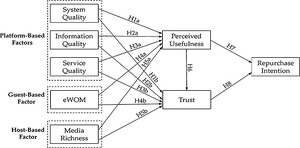
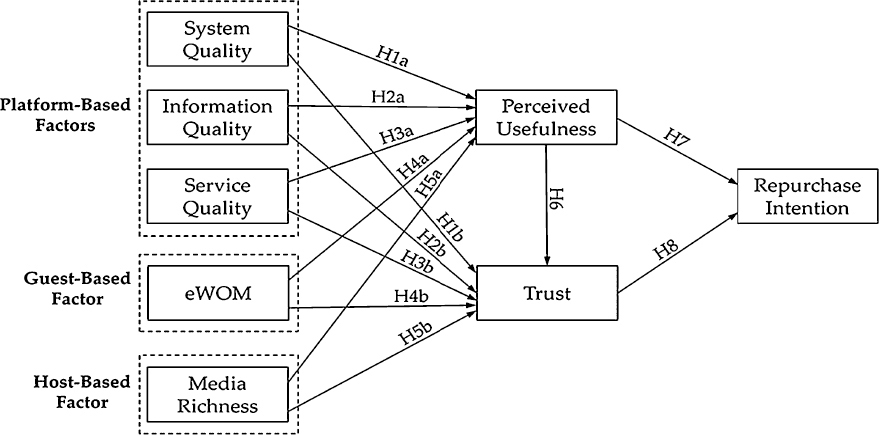
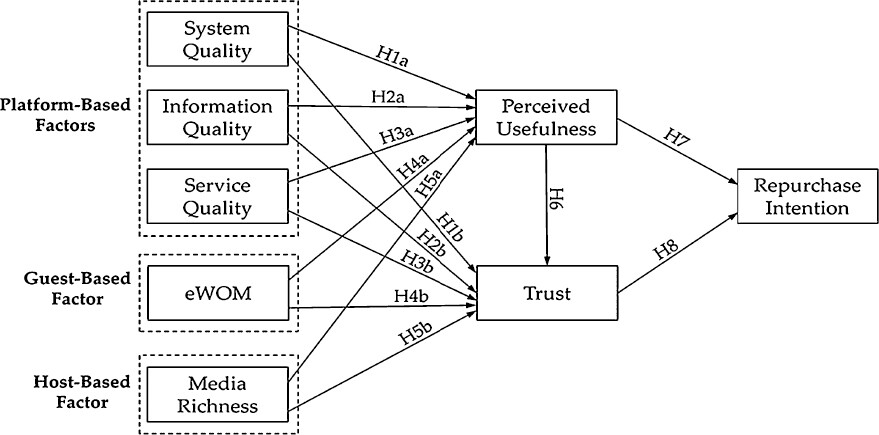
In this study, to validate trust antecedents such as those based on platform, guests, and hosts, as well as the impact of consumer trust and repurchase intention in entertaining farm stay. The model delineates the interrelationships among variables to ascertain the influence of various factors. Figure 1 shows the proposed framework.

The proposed research framework.
Citation: International Food and Agribusiness Management Review 27, 4 (2024) ; 10.22434/ifamr1114
3. Methods
3.1 Measures
The questionnaire measurement items were reviewed and modified by three researchers from the fields of marketing and tourism to reflect the context of entertaining farm stay in sharing economy. To ensure content validity, the modified questionnaire was piloted on 158 college students, and the reliability of all measurement items was confirmed by verifying Cronbach’s alpha (
3.2 Sample and data collection
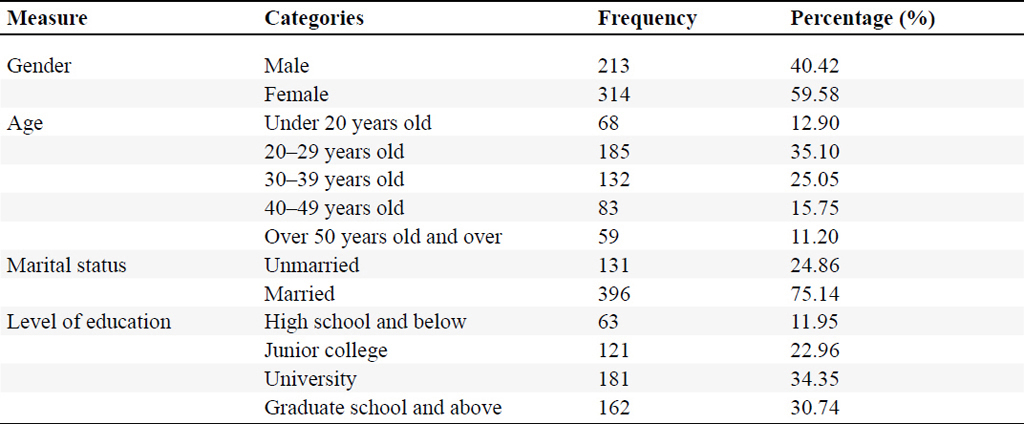
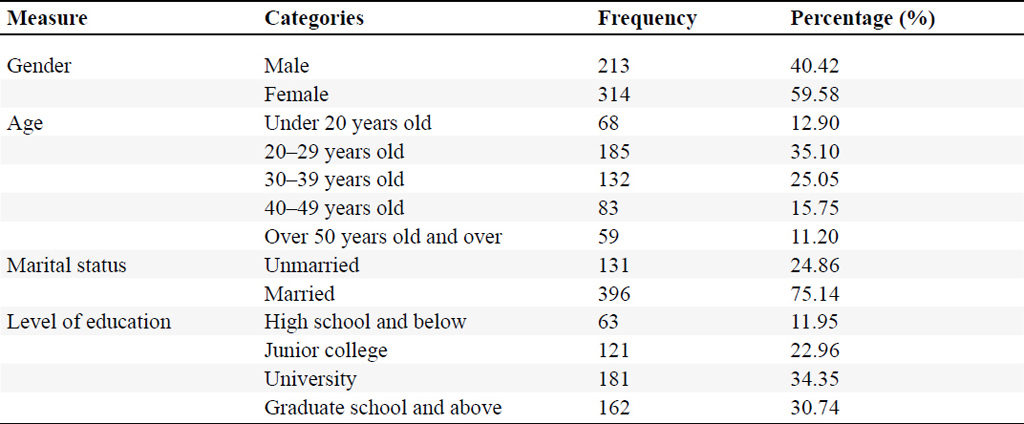
This study conducted a survey of users who have utilized entertaining farm stay platforms in China through an online link. The survey spanned four weeks, resulting in a collection of 550 responses. After excluding incomplete and abnormal responses, 527 responses were considered as the final valid sample. Table 1 illustrates the demographic information of the final respondents. Of the 527 respondents, 59.58% were female, most of the respondents were between 20 and 39 years of age (60.15%), with a bachelor degree or above (65%), and 75.14% of the respondents were married.
Demographic distribution.
Citation: International Food and Agribusiness Management Review 27, 4 (2024) ; 10.22434/ifamr1114
3.3 Data analysis
The aforementioned theoretical model incorporates latent variables, such as perceived usefulness, trust, and repurchase intention, requiring indirect measurement through observable indicators. In addressing this, structural equation modeling (SEM) offers advantages over linear regression models for analyzing both latent and observable variables. Among variance-based SEM techniques, partial least squares (PLS) path modeling stands as the most developed and widely adopted approach (Tan and Chen, 2021). This study utilized Amos 23.0 for the analysis of measurement and structural models. The analysis was conducted in two stages: evaluating the convergent validity, reliability, and discriminant validity of the measurement model, and testing the structural model.
4. Results
4.1 Measurement model
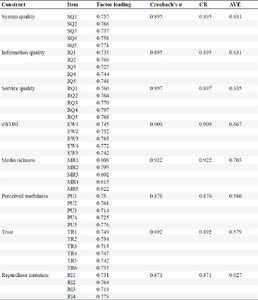
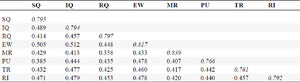
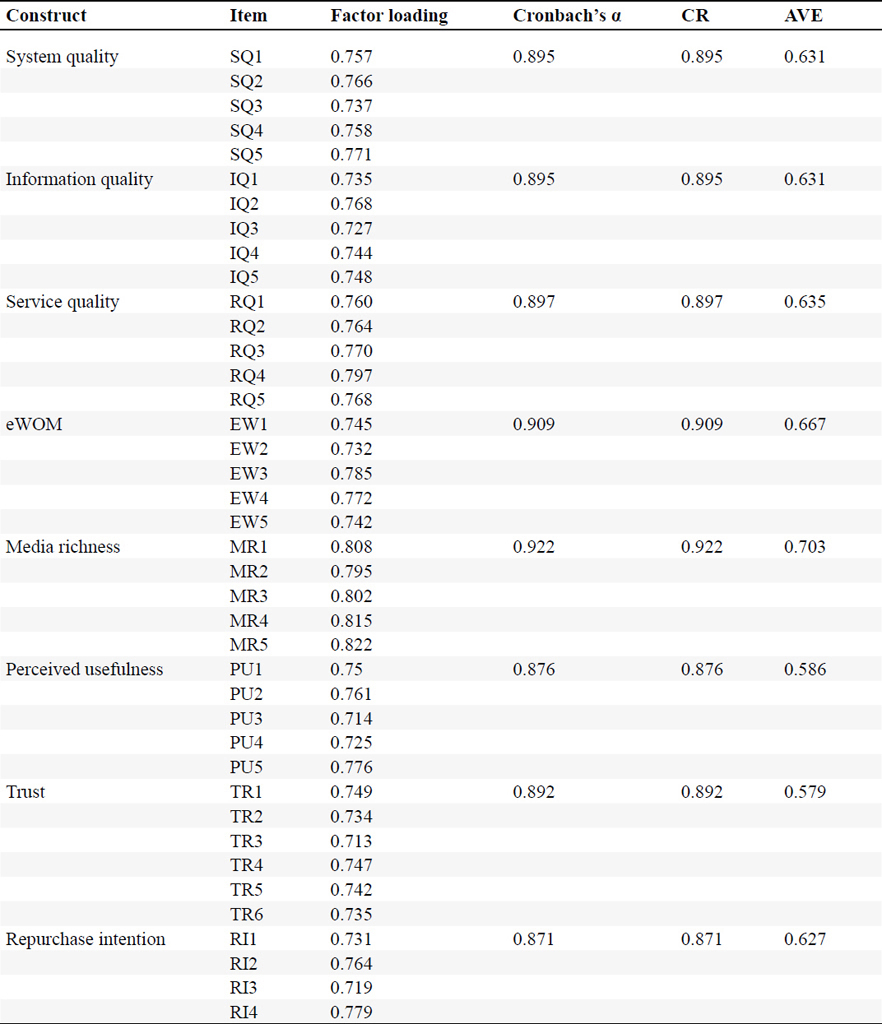
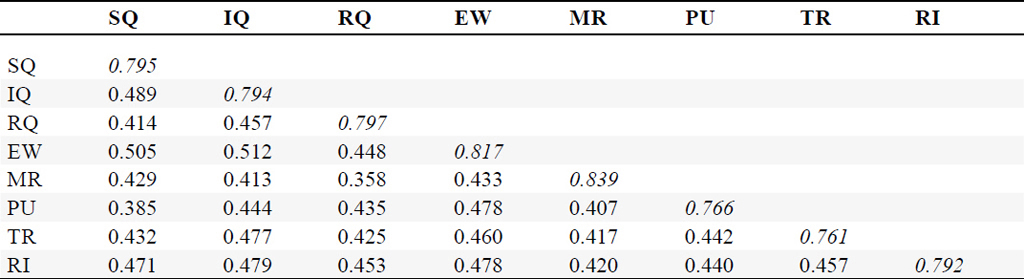
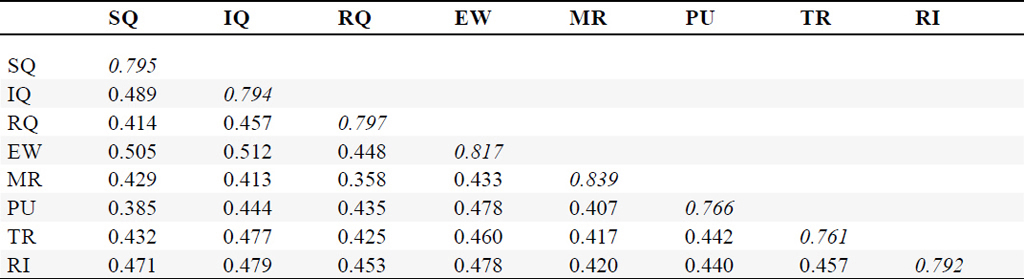
Confirmation factor analysis was employed to assess the convergent validity, reliability, and discriminant validity of the measurement scales. To ascertain the convergent validity, this study scrutinized the factor loading of the measurement items, as presented in Table 2. Factor loading values exceeding 0.6 suggest acceptable convergent validity (Hair, 1998). In this study, all factor loading values surpassed 0.7, thus demonstrating a satisfactory level of convergent validity. To assess the reliability of the structure, the CR and AVE values were examined. In accordance with conventional criteria, the AVE value of at least 0.5 and the CR value of at least 07 are necessary to ensure favorable convergent validity and composite reliability (Fornell and Larcker, 1981). As shown in Table 2, all AVE and CR values exceeded the recommended thresholds. Finally, to assess discriminant validity, the AVE values of individual constructs were compared to the shared variance between constructs. As shown in Table 3, the square root value of AVE is greater than the absolute value of the correlation coefficient with other constructs, which shows that this measurement model has good discriminant validity.
Factor loading, validity and reliability.
Citation: International Food and Agribusiness Management Review 27, 4 (2024) ; 10.22434/ifamr1114
Correlation matrix and discriminant assessment.
Citation: International Food and Agribusiness Management Review 27, 4 (2024) ; 10.22434/ifamr1114
4.2 Structural model analysis
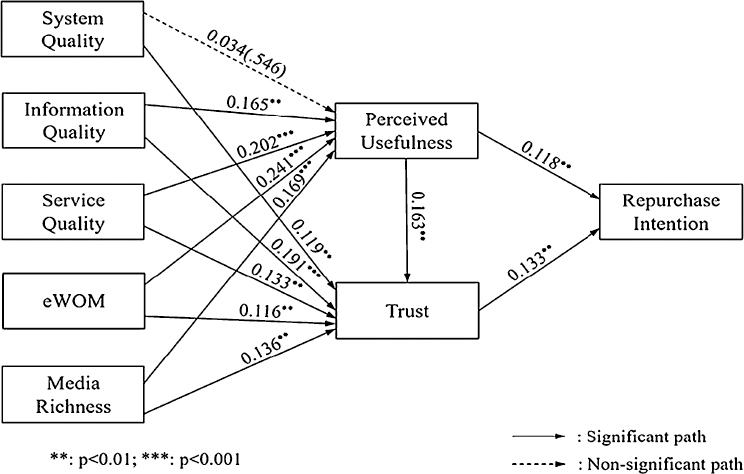
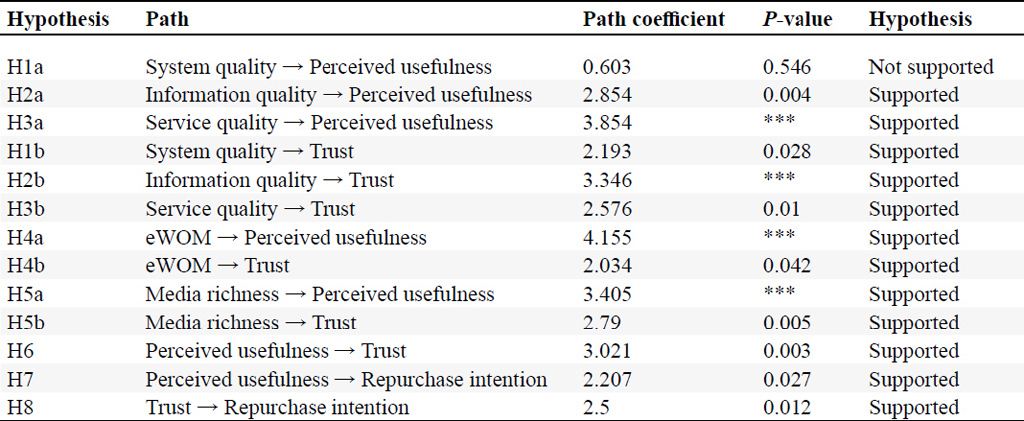
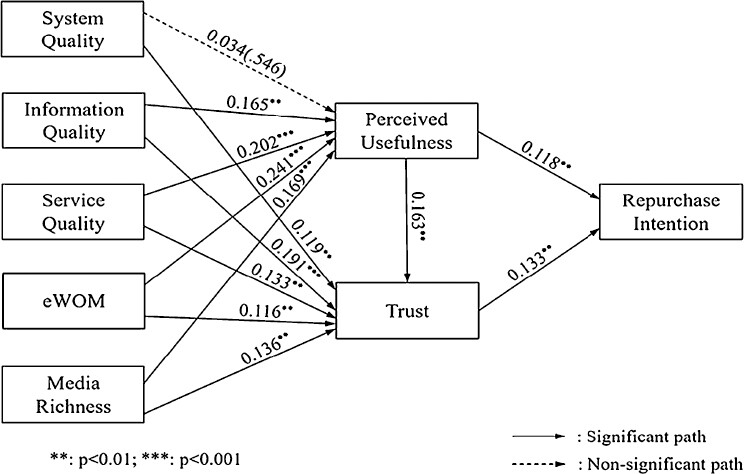
The structural equation model (SEM) was performed with AMOS23.0 to examine the hypothesized relationships between constructs. This study used bootstrap resampling method (500 resamples) to estimate the model path coefficient and test the significance. The results are shown in Figure 2, which shows that the Chi-square degree of freedom ratio (CMIN/DF=1.193) is in the range of 1–3. The root mean square error of approximation (RMSEA) is 0.019, within the excellent range of <0.05. In addition, the test results of comparative fit index (CFI) and Incremental fit index (IFI) have reached an excellent level of above 0.9. The results show that the model has good fit, and the path relationship assumed by the theory is in good agreement with actual measurement data.
Analysis results.
Citation: International Food and Agribusiness Management Review 27, 4 (2024) ; 10.22434/ifamr1114
Summary of the results.
Citation: International Food and Agribusiness Management Review 27, 4 (2024) ; 10.22434/ifamr1114
Table 4 presents a summary of the analysis results, which indicate that except for the insignificant positive influence of system quality on perceived usefulness, failing to support H1a, information quality and service quality, as well as eWOM and media richness all have positive impact on perceived usefulness and trust. Furthermore, consistent with expectations, perceived usefulness positively influences trust, and the both factors contribute positively to the repurchase intention, supporting H6, H7 and H8.
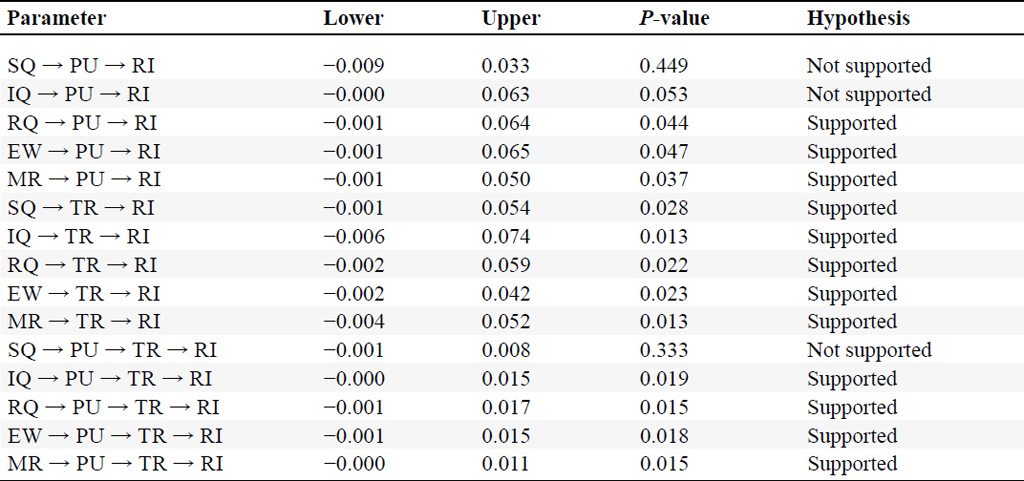
Moreover, Table 5 presented the indirect effect results. Information quality, service quality, eWOM, and media richness indirectly influenced repurchase intention through perceived usefulness and trust. Nevertheless, it is noteworthy that the p-values linked to the paths “platform system quality → perceived usefulness → repurchase intention,” “platform information quality → perceived usefulness → repurchase intention,” and “platform system quality → perceived usefulness → trust → repurchase intention” exceed 0.05. This implies that these mediating effects lack statistical significance.
Indirect effects of antecedents on repurchase intention.
Citation: International Food and Agribusiness Management Review 27, 4 (2024) ; 10.22434/ifamr1114
5. Discussions and implications
5.1 Summary of results
This study has three notable findings. First and foremost, platform system quality positively and significantly influences trust, but has a diminishing impact on perceived usefulness. While it played a pivotal role in the early Internet days (DeLone and McLean, 2003; Lederer et al., 2000), the present results suggest a reduced significance in shaping perceived usefulness. The diminishing importance of system quality in perceived usefulness may stem from changing consumer patterns and the emergence of alternative information channels. In the early Internet era, system quality was pivotal for trust and usefulness. However, with the rise of social media, user reviews, and third-party sources, tourists now rely less on system quality alone to formulate their perceptions. Nonetheless, system stability, reliability, and responsiveness remain critical for building consumer trust in the platform, which is consistent with Mao et al. (2020). Moreover, high-quality information and service on the platform positively influences both perceived usefulness and trust. As previously observed by Li and Tsai (2022) and Chen et al. (2015b), when the platform provides reliable, complete, and clear information that aligns with tourists’ needs, their perception of platform quality is enhanced, and attributes such as response speed, reliability, and security greatly enhance the tourists’ experience, which further elevates their recognition of the platform’s value and builds trust.
Second, eWOM positively impacts both perceived usefulness and trust in entertaining farm stay sector. In accordance with Yang et al. (2019), tourists frequently provide ratings and reviews on the platform, offering valuable insights for other tourists. These reviews represent past tourists’ perspectives on entertaining farm stay in sharing economy products and services and directly influence trust among other tourists. Furthermore, media richness significantly and positively impacts both perceived usefulness and trust. Consistent with Chen and Chang (2018) and Tussyadiah and Park (2018), diverse and rich media formats used by platform hosts clarify accommodation details for the tourists and enhance the perceived usefulness, and thereby increasing consumer trust in both the platform and the hosts.
Third, perceived usefulness and trust positively influences on repurchase intention. Trust is an important predictor of consumer repurchase intention (Liang et al., 2018b), perceived usefulness serves as the primary technical factor positively influencing platform trust (Choi et al., 2019; Ye et al., 2019). Thus, this study reiterates that trust can predict repurchase intention.
5.2 Implications for researchers and practitioners
This study offers several theoretical implications. First, with the rapid growth of entertaining farm stay in sharing economy, it examines the trust-building mechanisms underlying this business model, analyzing the impact of trust antecedents on beliefs and repurchase intentions. The study verifies the applicability of TBM in this context, suggesting its potential application to other sharing economy platforms. Second, it explores multi-dimensional trust antecedents, including platform-based, guest-based, and host-based factor. This analysis enhances our understanding of entertaining farm stay and identifies significant predictors of trust, such as system, information, and service quality, eWOM, and media richness. Third, the study shows that the effect of system quality on perceived usefulness has diminished, reflecting the evolution of consumer preferences influenced by new sources of information. With technological advances and market maturity,consumer expectations of platforms have moved beyond functionality and quality to prioritize factors such as user-friendliness, personalized services and the ability to provide valuable and timely information.
From a practical perspective, this study guides for hosts and platforms enterprises to build consumer trust in the entertaining farm stay market within the sharing economy. First, the platform can introduce a “Superhost” status to reward hosts for excellent service, encouraging them to provide accurate, timely, relevant, and comprehensive information. By implementing a chatbot system that leverages auditory or textual dialogue, platform can promptly address and resolve the consumer issues. A second point is that platform enterprises should introduce a novel incentive-based feature that encourages consumers to share their experiences and provide feedback, offering coupons or points. Third, platforms efficiently present location advantages to consumers, offering a diverse range of lodging situated near stations, parking facilities, and tourist attractions. As for authenticity on platform, platform enterprises can integrate panoramic features and augmented reality videos into lodging listings, enabling hosts to show case their properties more effectively and attract a wider pool of consumer. Through VR panoramic display technology, visitors can be shown a more realistic and comprehensive accommodation and room layout. the model generated by VR panorama is ultimately presented in the mode of link, so the link can be embedded into the platform for publicity and promotion. In addition, the platform encourages active interaction between hosts and tourists, ensures timely feedback, and focuses on emotional communication to enhance trust and repurchase intent.
5.3 Limitations and future works
This study still has several limitations. First, while this study notes a decline in system quality’s influence on perceived usefulness due to changing consumer preferences, it lacks an in-depth exploration of the underlying mechanisms. Future research should analyze socio-economic, cultural, and personal factors to better inform business strategies. Second, despite confirming five factors (system quality, information quality, service quality, electronic word-of-mouth, and media richness) as trust antecedents, there remains room for future research to delve into the exploration of additional potential trust antecedents within the sharing economy. Third, the research sample predominantly consisted of Chinese respondents, raising concerns about the adequacy of the sample size for generalizing the findings to tourists from diverse cultural backgrounds. Thus, it is advisable to promote further research efforts encompassing international tourists in entertaining farm stay market with varied cultural backgrounds to enhance the generalizability of the findings and mitigate this particular limitation. Lastly, this study primarily focused on the trust mechanism from the tourist’s standpoint. Future research should explore trust formation from the host’s perspective, considering it may involve additional factors and yield distinct outcomes.
6. Conclusions
This study underscores the importance of trust in marketing success for entertaining farm stays in the sharing economy. By examining a comprehensive framework encompassing platform, guest, and host-based trust antecedents, it reveals that system quality, information quality, service quality, electronic word-of-mouth, and media richness positively influence trust. Additionally, perceived usefulness and trust enhance repurchase intention. While acknowledging limitations, this study offers valuable theoretical and practical insights for the sharing economy industry.
Acknowledgements
This study was funded by the Social Sciences Foundation of Anhui Province in China (No. 2022AH051818). The interpretations, conclusions, and recommendations, however, are the authors’ and do not necessarily represent the positions of the institution. No conflict of interest exists in the submission of this manuscript, and the manuscript is approved by all authors for publication.
References
Amin, M., S. Rezaei and M. Abolghasemi. 2014. User satisfaction with mobile websites: the impact of perceived usefulness(PU), perceived ease of use(PEOU) and trust. Nankai Business Review International 5(3): 258–274. https://doi.org/10.1108/NBRI-01-2014-0005
Barraud-Didier, M.C. Henninger and A. El Akremi. 2012. The relationship between members’trust and participation in governance of cooperatives: the role of organizational commitment. International Food & Agribusiness Management Review 15(1): 1–24.
Braje, I.N., A. Pechurina, N. Bıçakcıoğlu-Peynirci, C. Miguel, M.d.M. Alonso-Almeida and C. Giglio. 2022. The changing determinants of tourists’ repurchase intention: the case of short-term rentals during the COVID-19 pandemic. International Journal of Contemporary Hospitality Management 34(1): 159–183. https://doi.org/10.1108/IJCHM-04-2021-0438
Chen, C.-C. and Y.-C. Chang. 2018. What drives purchase intention on Airbnb? Perspectives of consumer reviews, information quality and media richness. Telematics and Informatics 35(5): 1512–1523. https://doi.org/10.1016/j.tele.2018.03.019
Chen, X., Q. Huang, R.M. Davison and Z. Hua. 2015a. What drives trust transfer? The moderating roles of seller-specific and general institutional mechanisms. International Journal of Electronic Commerce 20(2): 261–289. https://doi.org/10.1080/10864415.2016.1087828
Chen, D., H. Lou and C. Van Slyke. 2015b. Toward an understanding of online lending intentions: evidence from a survey in China. Communications of the Association for Information Systems 36(1): 316–337. https://doi.org/10.17705/1CAIS.03617
Cheng, X., S. Fu, J. Sun, A. Bilgihan and F. Okumus. 2019. An investigation on online reviews in sharing economy driven hospitality platforms: A viewpoint of trust. Tourism Management 71: 366–377. https://doi.org/10.1016/j.tourman.2018.10.020
Choi, K., Y. Wang and B. Sparks. 2019. Travel app users’ continued use intentions: it’sa matter of value and trust. Journal of Travel & Tourism Marketing 36(1): 131–143. https://doi.org/10.1080/10548408.2018.1505580
Chuah, S.H.-W., R.Y. Sujanto, J. Sulistiawan and E.C.-X. Aw. 2022. What is holding customers back? Assessing the moderating roles of personal and social norms on CSR’S routes to Airbnb repurchase intention in the COVID-19 era. Journal of Hospitality and Tourism Management 50: 67–82. https://doi.org/10.1016/j.jhtm.2021.12.007
DeLone, W.H. and E.R. McLean. 2003. The DeLone and McLean model of information systems success: a ten-year update. Journal of Management Information Systems 19(4): 9–30. https://doi.org/10.1080/07421222.2003.11045748
de Vries, J.R., J.A. Turner, S. Finlay-Smits, A. Ryan and L. Klerkx. 2022. Trust in agri-food value chains: a systematic review. International Food and Agribusiness Management Review 26(2): 175–197. https://doi.org/10.22434/IFAMR2022.0032
Dodds, W.B., K.B. Monroe and D. Grewal. 1991. Effects of price, brand and store information on buyers’ product evaluations. Journal of Marketing Research 28(3): 307–319. https://doi.org/10.1177/002224379102800305
Ert, E., A. Fleischer and N. Magen. 2016. Trust and reputation in the sharing economy: The role of personal photos in Airbnb. Tourism Management 55: 62–73. https://doi.org/10.1016/j.tourman.2016.01.013
Fornell, C. and D.F. Larcker. 1981. Evaluating structural equation models with unobservable variables and measurement error. Journal of Marketing Research 18(1): 39–50. https://doi.org/10.1177/002224378101800104
Garrod, B., A.L. Zhao and N. Koenig-Lewis. 2023. A greener way to stay: The role of perceived sustainability in generating loyalty to Airbnb. International Journal of Hospitality Management 110: 103432. https://doi.org/10.1016/j.ijhm.2023.103432
Gefen, D., E. Karahanna and D.W. Straub. 2003. Trust and TAM in online shopping: An integrated model. MIS Quarterly: 51–90. https://doi.org/10.2307/30036519
Ha, S. and L. Stoel. 2009. Consumer e-shopping acceptance: Antecedents in a technology acceptance model. Journal of Business Research 62(5): 565–571. https://doi.org/10.1016/j.jbusres.2008.06.016
Hair, J. R. A.nderson and R.B. Tatham. 1998. Multivariate Data Analysis. Prentice Hall, Upper Saddle River, NJ.
Hawlitschek, F., T. Teubner and C. Weinhardt. 2016. Trust in the sharing economy. Die Unternehmung 70(1): 26–44. https://doi.org/10.5771/0042-059X-2016-1-26
Hossain, M. 2020. Sharing economy: a comprehensive literature review. International Journal of Hospitality Management 87: 102470. https://doi.org/10.1016/j.ijhm.2020.102470
Jovanović, V. 2016. Trust and subjective well-being: The case of Serbia. Personality and Individual Differences 98: 284–288. https://doi.org/10.1016/j.paid.2016.04.061
Kamrath, C., S. Rajendran, N. Nenguwo, V. Afari-Sefa and S. Bröring. 2018. Adoption behavior of market traders: an analysis based on Technology Acceptance Model and Theory of Planned Behavior. International Food and Agribusiness Management Review 21(6): 771–790. https://doi.org/10.22434/IFAMR2017.0043
Kim, B. 2019. Understanding key antecedents of consumer loyalty toward sharing-economy platforms: the case of Airbnb. Sustainability 11(19): 5195. https://doi.org/10.3390/su11195195
Kim, B. and D. Kim. 2020. Attracted to or locked in? Explaining consumer loyalty toward Airbnb. Sustainability 12(7): 2814. https://doi.org/10.3390/su12072814
Kim, J., S. Hong, J. Min and H. Lee. 2011. Antecedents of application service continuance: A synthesis of satisfaction and trust. Expert Systems with applications 38(8): 9530–9542. https://doi.org/10.1016/j.eswa.2011.01.142
Kim, S. and H. Park. 2013. Effects of various characteristics of social commerce(s-commerce) on consumers’ trust and trust performance. International Journal of Information Management 33(2): 318–332. https://doi.org/10.1016/j.ijinfomgt.2012.11.006
Kong, Y., Y. Wang, S. Hajli and M. Featherman. 2020. In sharing economy we trust: Examining the effect of social and technical enablers on millennials’ trust in sharing commerce. Computers in Human Behavior 108: 105993. https://doi.org/10.1016/j.chb.2019.04.017
Lederer, A.L., D.J. Maupin, M.P. Sena and Y. Zhuang. 2000. The technology acceptance model and the World Wide Web. Decision support systems 29(3): 269–282. https://doi.org/10.1016/S0167-9236(00)00076-2
Lee, S. and D.-Y. Kim. 2018. The effect of hedonic and utilitarian values on satisfaction and loyalty of Airbnb users. International Journal of Contemporary Hospitality Management 30(3): 1332–1351. https://doi.org/10.1108/IJCHM-09-2016-0504
Lee, T. and J. Jun. 2007. Contextual perceived value? Investigating the role of contextual marketing for customer relationship management in a mobile commerce context. Business Process Management Journal 13(6): 798–814. https://doi.org/10.1108/14637150710834569
Lengel, R.H. and R.L. Daft. 1988. The selection of communication media as an executive skill. Academy of Management Perspectives 2(3): 225–232. https://doi.org/10.5465/ame.1988.4277259
Li, C.-Y. and M.-C. Tsai. 2022. What makes guests trust Airbnb? Consumer trust formation and its impact on continuance intention in the sharing economy. Journal of Hospitality and Tourism Management 50: 44–54. https://doi.org/10.1016/j.jhtm.2021.12.001
Liang, L.J., H.C. Choi and M. Joppe. 2018a. Exploring the relationship between satisfaction, trust and switching intention, repurchase intention in the context of Airbnb. International Journal of Hospitality Management 69: 41–48. https://doi.org/10.1016/j.ijhm.2017.10.015
Liang, L.J., H.C. Choi and M. Joppe. 2018b. Understanding repurchase intention of Airbnb consumers: perceived authenticity, electronic word-of-mouth and price sensitivity. Journal of Travel & Tourism Marketing 35(1): 73–89. https://doi.org/10.1080/10548408.2016.1224750
Liao, C., P. Palvia and H.-N. Lin. 2006. The roles of habit and web site quality in e-commerce. International Journal of Information Management 26(6): 469–483. https://doi.org/10.1016/j.ijinfomgt.2006.09.001
Liu, Z. and S. Park. 2015. What makes a useful online review? Implication for travel product websites. Tourism Management 47: 140–151. https://doi.org/10.1016/j.tourman.2014.09.020
Lu, Y., Y. Kim, X.Y. Dou and S. Kumar. 2014. Promote physical activity among college students: Using media richness and interactivity in web design. Computers in Human Behavior 41: 40–50. https://doi.org/10.1016/j.chb.2014.08.012
Lu, Y., L. Zhao and B. Wang. 2010. From virtual community members to C2C e-commerce buyers: Trust in virtual communities and its effect on consumers’ purchase intention. Electronic Commerce Research and Applications 9(4): 346–360. https://doi.org/10.1016/j.elerap.2009.07.003
Mao, Z. and J. Lyu. 2017. Why travelers use Airbnb again? An integrative approach to understanding travelers’ repurchase intention. International Journal of Contemporary Hospitality Management 29(9): 2464–2482. https://doi.org/10.1108/IJCHM-08-2016-0439
Mao, Z.E., M.F. Jones, M. Li, W. Wei and J. Lyu. 2020. Sleeping in a stranger’s home: A trust formation model for Airbnb. Journal of Hospitality and Tourism Management 42: 67–76. https://doi.org/10.1016/j.jhtm.2019.11.012
McKnight, D.H., V. Choudhury and C. Kacmar. 2002. The impact of initial consumer trust on intentions to transact with a web site: a trust building model. The Journal of Strategic Information Systems 11(3–4): 297–323. https://doi.org/10.1016/S0963-8687(02)00020-3
Möhlmann, M. 2015. Collaborative consumption: determinants of satisfaction and the likelihood of using a sharing economy option again. Journal of Consumer Behaviour 14(3): 193–207. https://doi.org/10.1002/cb.1512
Normalini, M.K. 2019. Revisiting the Effects of quality dimensions, perceived usefulness and perceived ease of use on internet banking usage intention. Global Business & Management Research 11(2): 252–261.
Park, D.-H., J. Lee and I. Han. 2007. The effect of on-line consumer reviews on consumer purchasing intention: The moderating role of involvement. International Journal of Electronic Commerce 11(4): 125–148. https://doi.org/10.2753/JEC1086-4415110405
Phua, V.C. 2019. Perceiving Airbnb as sharing economy: the issue of trust in using Airbnb. Current Issues in Tourism 22(17): 2051–2055. https://doi.org/10.1080/13683500.2018.1440539
Quoquab, F. and J. Mohammad. 2022. The salient role of media richness, host-guest relationship and guest satisfaction in fostering Airbnb guests’ repurchase intention. Journal of Electronic Commerce Research 23(2): 59–76.
Seddon, P.B. 1997. A respecification and extension of the DeLone and McLean model of IS success. Information Systems Research 8(3): 240–253. https://doi.org/10.1287/isre.8.3.240
Shih, H.-P. 2004. An empirical study on predicting user acceptance of e-shopping on the Web. Information & Management 41(3): 351–368. https://doi.org/10.1016/S0378-7206(03)00079-X
So, K.K.F., H. Kim and H. Oh. 2021. What makes Airbnb experiences enjoyable? The effects of environmental stimuli on perceived enjoyment and repurchase intention. Journal of Travel Research 60(5): 1018–1038. https://doi.org/10.1177/0047287520921241
Song, X., H. Gu, Y. Li and W. Ye. 2023. A systematic review of trust in sharing accommodation: progress and prospects from the multistakeholder perspective. International Journal of Contemporary Hospitality Management 35(4): 1156–1190. https://doi.org/10.1108/IJCHM-12-2021-1555
Tan, S. and W. Chen. 2021. Building consumer trust in online food marketplaces: the role of WeChat marketing. International Food and Agribusiness Management Review 24(5): 845–862. https://doi.org/10.22434/IFAMR2020.0159
Tao, D., W. Fang, B. Luo and L. Wan. 2022. Which marketer-generated-content is more effective? An experimental study in the context of a peer-to-peer accommodation platform. International Journal of Hospitality Management 100: 103089. https://doi.org/10.1016/j.ijhm.2021.103089
Teubner, T., F. Hawlitschek and D. Dann. 2017. Price determinants on Airbnb: How reputation pays off in the sharing economy. Journal of Self-Governance and Management Economics 5(4): 53–80. https://doi.org/10.22381/JSME5420173
Tussyadiah, I.P. and S. Park. 2018. When guests trust hosts for their words: Host description and trust in sharing economy. Tourism Management 67: 261–272. https://doi.org/10.1016/j.tourman.2018.02.002
Vickery, S.K., C. Droge, T.P. Stank, T.J. Goldsby and R.E. Markland. 2004. The performance implications of media richness in a business-to-business service environment: Direct versus indirect effects. Management Science 50(8): 1106–1119. https://doi.org/10.1287/mnsc.1040.0248
Wang, C.R. and M. Jeong. 2018. What makes you choose Airbnb again? An examination of users’ perceptions toward the website and their stay. International Journal of Hospitality Management 74: 162–170. https://doi.org/10.1016/j.ijhm.2018.04.006
Wang, Y., D. Xiang, Z. Yang and S.S. Ma. 2019. Unraveling customer sustainable consumption behaviors in sharing economy: A socio-economic approach based on social exchange theory. Journal of Cleaner Production 208: 869–879. https://doi.org/10.1016/j.jclepro.2018.10.139
Xie, K.L., L. Kwok and J. Wu. 2019. Are consumers loyal to home-sharing services? Impacts of host attributes and frequency of past stays. International Journal of Contemporary Hospitality Management 31(3): 1066–1085. https://doi.org/10.1108/IJCHM-09-2017-0552
Yang, S.-B., K. Lee, H. Lee and C. Koo. 2019. In Airbnb we trust: understanding consumers’ trust-attachment building mechanisms in the sharing economy. International Journal of Hospitality Management 83: 198–209. https://doi.org/10.1016/j.ijhm.2018.10.016
Yang, Y. and Z. Mao. 2020. Location advantages of lodging properties: A comparison between hotels and Airbnb units in an urban environment. Annals of Tourism Research 81: 102861. https://doi.org/10.1016/j.annals.2020.102861
Ye, S., T. Ying, L. Zhou and T. Wang. 2019. Enhancing customer trust in peer-to-peer accommodation: A soft strategy via social presence. International Journal of Hospitality Management 79: 1–10. https://doi.org/10.1016/j.ijhm.2018.11.017
Ye, S., S. Chen and S. Paek. 2023. Moderating effect of trust on customer return intention formation in peer-to-peer sharing accommodation. Journal of Hospitality & Tourism Research 47(2): 328–353. https://doi.org/10.1177/10963480211014249
Zamani, E.D., J. Choudrie, G. Katechos and Y. Yin. 2019. Trust in the sharing economy: the AirBnB case. Industrial Management & Data Systems 119(9): 1947–1968. https://doi.org/10.1108/IMDS-04-2019-0207
Zeithaml, V.A., L.L. Berry and A. Parasuraman. 1996. The behavioral consequences of service quality. Journal of Marketing 60(2): 31–46. https://doi.org/10.1177/002224299606000203
Zheng, S. and J. Gu. 2022. Effect of media richness on older adults’ routinized use of social media in mobile applications. Mobile Information Systems 2022: 833641. https://doi.org/10.1155/2022/8836431
Zhu, G. and M. Kubickova. 2023. From homeowner to Airbnb host: the role of trust and perceived value. Journal of Quality Assurance in Hospitality & Tourism 24(2): 169–191. https://doi.org/10.1080/1528008X.2021.2024781
Appendix A List of model constructs and items
System quality is derived from Chen et al. (2015b)
SQ1: The platform system is reliable and stable.
SQ2: The platform features a user-friendly interface that is easy to navigate.
SQ3: The platform exhibits fast access and response speeds.
SQ4: The platform acquires information and materials in diverse formats.
SQ5: Members joining the platform can securely access it.
Information quality is derived from Kong et al. (2020)
IQ1: The information from the platform is accurate and real-time.
IQ2: The information from the platform is very helpful to me.
IQ3: The information from the platform is reliable.
IQ4: The information on the platform is clearly described and easy to understand.
IQ5: Platform offers ample and pertinent information for selecting entertaining farm stay.
Service quality is derived from Kim et al. (2011)
RQ1: The platform promptly addresses my inquiries.
RQ2: The platform responds quickly to unexpected problems I encounter.
RQ3: The platform actively addresses my dissatisfaction or opinions.
RQ4: The platform respects my opinions and provides courteous replies.
RQ5: The platform places significant importance on my interests.
eWOM is derived from Mao and Lyu (2017)
EW1: I frequently read online reviews from other guests to assess whether the entertaining farm stays have left a positive impression.
EW2: To ensure I select the appropriate entertaining farm stays, I regularly peruse online reviews from other guests.
EW3: When choosing the entertaining farm stays on the platform, online reviews from other guests assist me in making a well-informed decision.
EW4: Before booking entertaining farm stays, I typically gather information from online reviews provided by other guests.
Ew5: If I neglected to read online reviews from other guests while booking entertaining farm stays, I would harbor concerns about my decision.
Media Richness is derived from Chen and Chang (2018)
MR1: I receive prompt responses from platform hosts.
MR2: I can engage with platform hosts using various communication methods.
MR3: I can establish positive relationships with hosts through the platform.
MR4: I believe direct messaging enhances the efficiency of communication with hosts.
MR5: If I have additional requirements, I can negotiate with hosts through the platform.
Perceived usefulness is derived from Choi et al. (2019)
PU1: Utilizing the platform enables me to save time in exploring entertaining farm stays information.
PU2: Booking entertaining farm stays on the platform is highly convenient.
PU3: Using the platform to book entertaining farm stays aligns with my travel needs.
PU4: Booking entertaining farm stays through the platform can be economically beneficial.
PU5: Utilizing the platform was helpful in completing my entertaining farm stays booking.
Trust is derived from Yang et al. (2019)
TR1: The sharing platform of entertaining farm stay is reliable.
TR2: The sharing platform of entertaining farm stay consistently delivers on the promises to tourists.
TR3: The sharing platform of entertaining farm stay can provide tourists with high-quality services.
TR4: Hosts on the sharing platform of entertaining farm stay are reliable.
TR5: Hosts on the sharing platform of entertaining farm stay are trustworthy.
TR6: Hosts on the sharing platform of entertaining farm stay are more than capable of meeting my needs.
Repurchase intention is derived from Li and Tsai (2022)
RI1: In future travels, I plan to continue using the sharing platform to book the entertaining farm stay.
RI2: When traveling in the future, I will prioritize using the sharing platform for entertaining farm stay bookings.
RI3: I intend to book entertaining farm stay through the sharing platform in my future travels.
RI4: In the future, I will recommend the sharing platform of entertaining farm stay service to others.
Corresponding author