


QUALITY EDUCATION


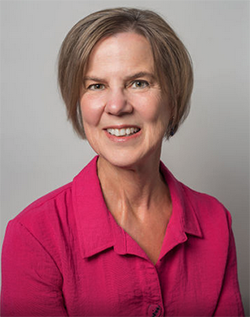
Episode 6: A Guide to Administering Distance Learning, with Dr. Lauren Cifuentes

The pandemic led to a massive shift in the course of education as the world was forced to switch to distance learning. And with the new model comes new barriers, whether institutional, pedagogical, technical, or personal. These need to be solved through inclusive and strategic planning, comprehensive support infrastructure, collaboration among stakeholders, modern digital tools, and the creation of an environment of empathy and motivation both for the students as well as the instructors.
In this podcast, Dr. Lauren Cifuentes discusses her book A Guide to Administering Distance Learning, published by Brill, and talks about how she was preparing for a shift to the online model of education even before the pandemic. She believes that with the right infrastructure and resources it can be better than traditional learning.
Get the full episode here.


Episode 5: Curriculum and Learning for Climate Action, with Radhika Iyengar and Christina T. Kwauk
Education is one of our main weapons in the fight against climate change. The need of the hour, therefore, is to enhance the world’s commitment to climate education and incorporate climate change into our education systems.
In a special episode that combines two of our ongoing themed series, Survival by Degrees and Quality Education, Radhika Iyengar and Christina T. Kwauk, co-editors of the book “Curriculum and Learning for Climate Action,” urge readers to pay attention to climate change in education, not just as a peripheral topic, but as a core part of curriculum design and implementation.
Get the full episode here.


Episode 4: Pandemic, Disruption and Adjustment in Higher Education, with Susana Gonçalves and Suzanne Majhanovich
The pandemic has rapidly changed the world, making it one rife with online activity and information abundance. Education systems must be modified to match this new world. It must cater to the entrepreneurial, competitive, and independent generation that thrives in this world.
In this podcast, Susana Gonçalves and Suzanne Majhanovich discuss their book,“Pandemic, Disruption and Adjustment in Higher Education,” and talk about the changing needs of students today, the challenges of tailoring higher education to be in tandem with the growing world of technology, and how to maintain the integrity and mental health in the face of it all.
Get the full episode here.

Episode 3: How World Events are Changing Education, with Dr. Rosemary Sage and Dr. Riccarda Matteucci
Formal education became widespread only as recently as the end of the 19th century, as a way to train people for jobs created by the boom in industrialization. Today, with most of those jobs phasing out, world politics radically changing at both the individual and macro levels, diverse cultures and disciplines increasingly coming together as communities, and the pandemic catalyzing a global move to predominantly e-learning. It may be time for us to rethink formal education.
In this podcast, Dr. Rosemary Sage and Dr. Riccarda Matteucci discuss their book, “How World Events are Changing Education,” and talk about education in their day, what it has become for Gen Z, and lessons from pockets of the world where robots, online learning, and the science of human interest have been accounted for in education programs.
Get the full episode here.

Episode 2: Homeschooling: A Guidebook of Practices, Claims, Issues, and Implications, with Dr. Jameson Brewer
Over the past few years and especially now—with COVID-19-related lockdowns necessitating that families stay at home—an increasing number of parents have chosen to home-school their children. This choice stems from several reasons: political views and distrust in the education system; anxiety about their children's safety; or simply as an expression of their right to freedom.
In the newest episode of our podcast, Quality Education, Dr. Jameson Brewer, an assistant professor of Social Foundations of Education at the University of North Georgia and an author of, “Homeschooling: A Guidebook of Practices, Claims, Issues, and Implications”, published by Brill, talks in detail about the changing trends in home-schooling practices. His compelling evidence makes us rethink our perception of formal education and lays bare the reality of educating a child without the support of experts or an educational system.
We discuss how COVID-19 and socioeconomic, political, and racial status (among other factors) influence a parent's decision of choosing a school for their child.
Get the full episode here.

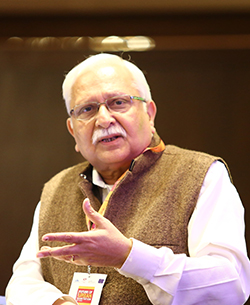
Episode 1: Socially Responsible Higher Education: International Perspectives on Knowledge Democracy, with Dr. Budd Hall and Dr. Rajesh Tandon
With radical changes being engineered in society, education systems everywhere need to match up. As part of our podcast, Humanities Matter, the all-new series, Quality Education, looks at ways to improve these systems.
Higher education has traditionally been viewed as a privilege afforded only to specific strata of society, mainly higher-income groups. However, this trend is now changing, with governments and institutes actively trying to make higher education accessible to all.
In this episode, we chat with Dr. Budd Hall, from the Centre for Global Studies at the University of Victoria, Canada, and Dr. Rajesh Tandon, the Founder-President of the Society for Participatory Research in Asia, a global research and training centre based in New Delhi, India. Dr. Hall and Dr. Tandon are both UNESCO co-chairs of community-based research and social responsibility in higher education.
Drawing insights from their book, ““Socially Responsible Higher Education: International Perspectives on Knowledge Democracy” published by Brill, they talk about the various changes that have been implemented in different countries to ensure social inclusivity in higher education.”
Get the full episode here.