


MIGRATION



Episode 3: Re-orienting the Diaspora–Development Nexus, with Dr. Sarah Peck

One of the outcomes of globalization is the growth of diasporic communities worldwide. This population has continued to face a lot of complexities due to differences in ethnicities. However, these communities have the potential to contribute immensely to a nation’s development through their knowledge and skills. What is needed is to shed the ethnocentric lens for an inclusive one.
In the third episode of our new themed series Migration, Dr. Sarah Peck, a Leverhulme Early Career Research Fellow at the Centre for International Development in Northumbria University, examines the role of diaspora in the development of a state, in the context of her work “Re-orienting the Diaspora–Development Nexus,” published by Brill.

Episode 2: Central Asia Under Brussels’ and Moscow’s Eyes, with Dr. André W.M. Gerrits
The Soviet Republic once held tremendous sway over the politics of Central Asia as the grand hegemon of the region. But now, in the post-Soviet world, geopolitics in this region is influenced by other powers, including the European Union (EU), and Central Asia’s own tilt towards China. In this changed environment, is the EU adjusting its policies to foster strong democracies in the region free from authoritarian influences, both foreign and domestic? Will these changes be enough to ensure regional stability and human security and focus on good governance and development?
In the second episode of our new themed series Migration, Dr. André W.M. Gerrits, a professor of International Studies and Global Politics at Leiden University, talks about the changing political players in the Central Asian region and its implications and the way forward for the EU and Russia, in the context of his work “Central Asia Under Brussels’ and Moscow’s Eyes,” published by Brill.
Episode 1: Schengen Borders and Multiple National States of Emergency: From Refugees to Terrorism to COVID-19, with Dr. Elspeth Guild
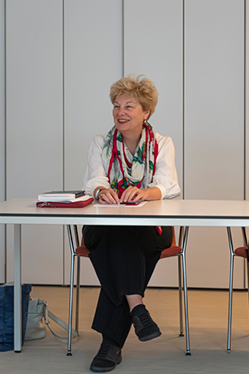
The Schengen area consists of 26 European states, most members of the EU but some not, and consists of two main features: the absence of intra-Schengen state border controls on persons and common external border control on entry into the Schengen area. However, this inclusivity has been threatened over time by events like refugee crises, terrorism, and a global pandemic. In light of the present refugee influx from Ukraine, the issue of border control in Europe merits closer inspection.
In the first episode of our new themed series Migration, Dr. Elspeth Guild, a Jean Monnet Professor ad personal at Queen Mary, University of London, takes us through the trajectory of abolition and re-introduction of border control in the Schengen states from its formation in 1985 to the present day, in the context of her work “Schengen Borders and Multiple National States of Emergency: From Refugees to Terrorism to COVID-19,” published by Brill.
Get the full episode here.