Abstract
Mycotoxins are fungal metabolites that commonly contaminate food crops such as maize. Conducive climatic conditions together with improper crop value chain practices are favorable for mycotoxin contamination. Previous studies in Ethiopia have indicated that mycotoxin contamination in maize is prevalent. For the implementation of proper mycotoxin prevention and control strategies, identifying the current local value chain practices that are related to mycotoxin contamination is needed. This review investigates current preharvest and postharvest management practices of maize cultivation in Ethiopia in relation to mycotoxin contamination and identifies gaps in knowledge and priority areas for future research. Findings indicate that the majority of applied preharvest and postharvest practices of maize in Ethiopia seem to favor mycotoxin contamination. Recent developments in grain drying and storage technologies, which are also potential mycotoxin management strategies, are facing constraints for proper implementation in subsistence farmersâ level.
1 Introduction
Mycotoxins are toxic chemical compounds produced by certain species of fungi upon and after infection of the crop. Most important mycotoxins known to cause human health burden worldwide are aflatoxins and fumonisins (Jallowet al., 2021; Wuet al., 2014). Aflatoxins are mainly produced by the fungal species ofAspergillus flavus andAspergillus parasiticus while fumonisins are mainly produced byFusarium verticillioides,Fusarium proliferatum andAspergillus niger (Wuet al., 2014). Aflatoxin intake through consumed foods can lead to severe human health effects, including liver cancer, acute toxicity and is also predicted to impair the growth of children leading to stunting (Wuet al., 2014) as well as to lower immune responses of the body and protein synthesis (Smithet al., 2012). On the other hand, fumonisin intake causes brain and oesophageal cancer, renal and liver toxicity (Bucciet al., 1998) and neural tube defects (Wuet al., 2014).
Occurrences of mycotoxins in maize in Ethiopia (Zea mays L.), where maize is one of the staple food crops in the country (CSA, 2021a), have been reported, even in concentrations that exceed national or international standards (Alemuet al., 2008; Chauhanet al., 2016; Getachewet al., 2018; Mesfinet al., 2022; Mohammedet al., 2022; Tsehayeet al., 2017). Chauhanet al. (2016) reported that aflatoxin contamination was detected in all the samples collected from 150 maize products bought at local markets in Gedeo zone, South Ethiopia. In all these samples, the quantified aflatoxin concentrations were above EU regulatory limits. In another study, Getachewet al. (2018) identified a total of 127 different mycotoxins and derivatives in maize collected from farmersâ stores in south and southwestern Ethiopia. To mention one, the fumonisin B1 concentration was in the range of 7-11,830Â mg/kg. These reported high levels of mycotoxin contaminations are presumed to cause severe problems for the maize industry in the country (Getachewet al., 2018; Mesfinet al., 2022; Tsehayeet al., 2017).
Several factors may limit effective control of fungal infection and mycotoxin contamination in subsistence maize farming in Ethiopia. First, maize value chains are poorly developed. As a result, subsistence farmers most often use traditional practices, which are prone to fungal infection (Berekaet al., 2022; Beyeneet al., 2016; Getachewet al., 2018; Mesfinet al., 2022; Tsehayeet al., 2017). Secondly, farmers have limited knowledge about mycotoxins and their health impact as well as prevention and control strategies for mycotoxin contamination. This lack of awareness has limited farmers from practicing proper mycotoxin management (Bosheet al., 2020; Mohammedet al., 2022). Finally, the lack of proper facilities (such as for improved drying and storage) in rural areas is another limitation (Berekaet al., 2022). These factors limit the implementation of effective mycotoxin prevention and control in Ethiopia.
To date, studies in Ethiopia had mainly focused on the occurrence of mycotoxins in the postharvest stage of maize, especially the household and market stage. In these studies, the relationship with pre- and postharvest maize practices has not been fully explored. Recently, there is interest in studying these practices such as harvesting and drying, and how they are related to mycotoxin contamination (Berekaet al., 2022; Mohammedet al., 2022). Despite these good starts, most of the preharvest maize management practices such as land preparation, planting and growing treatment have not been given attention.
To prevent fungal infection and mycotoxin contamination of maize, a full understanding of local practices for both preharvest and postharvest stages together with the state-of-the-art knowledge from literature is crucial (Berekaet al., 2022; Beyeneet al., 2016). Such information will help in identifying gaps for further research, and for planning appropriate intervention strategies. Nevertheless, comprehensive information on the local maize production practices in relation to mycotoxin contamination is limited for Ethiopia. Therefore, this study aimed to investigate the current pre- and postharvest management practices of maize in Ethiopia and evaluate the practices in relation to mycotoxin contamination. For this review, preharvest practice is defined to include land preparation, planting, treatment during growth, harvesting, field drying and shelling. The postharvest practice, on the other hand, is defined to include long-term storage practices and processing at household level.
2 Materials and methods
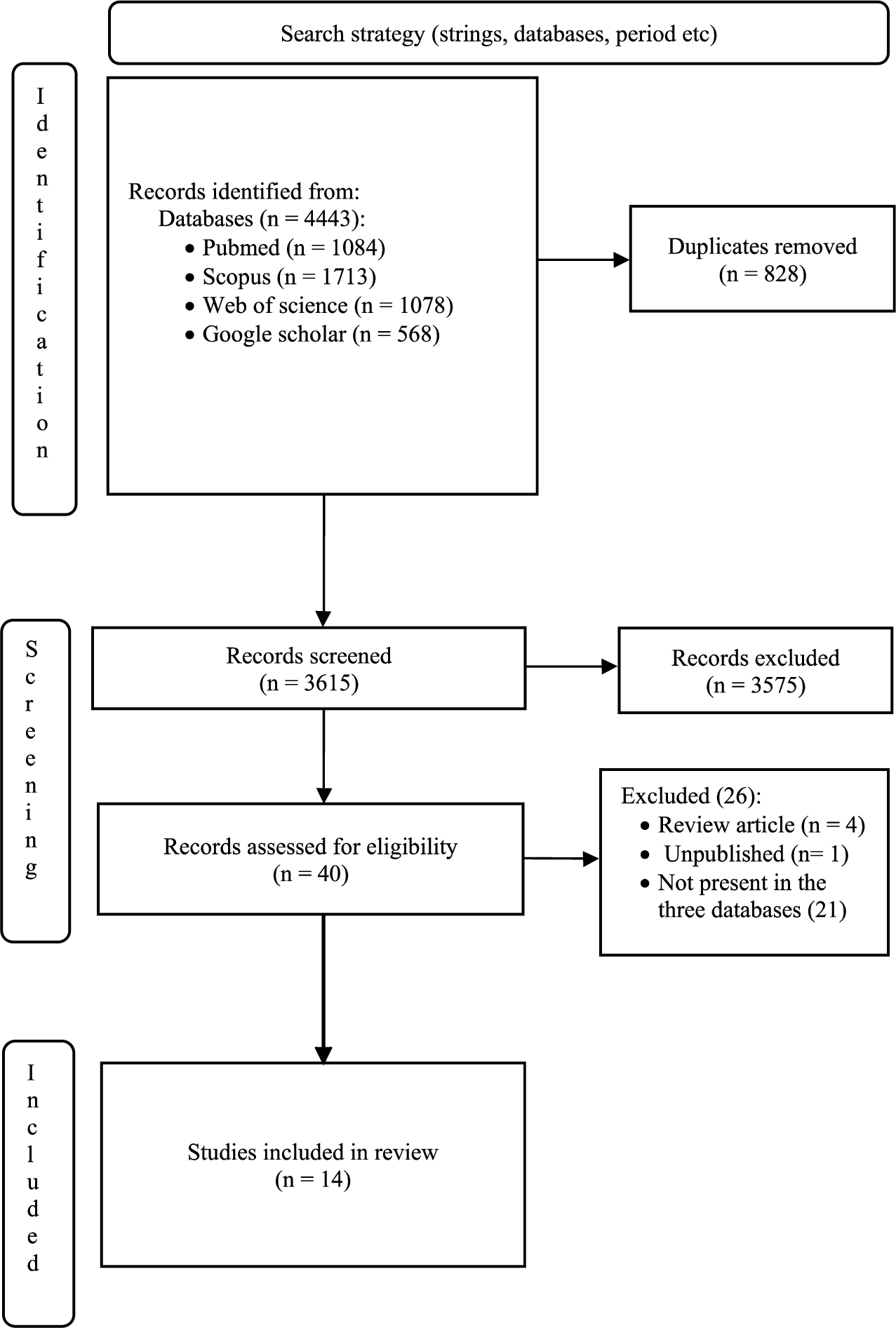
A Prisma 2020 guideline for new systematic reviews was used (Pageet al., 2021) (Figure 1). An extensive literature search was conducted to obtain articles published before November 21, 2022, in the common databases of Web of Science, Pubmed, Scopus and Google Scholar. Only articles published in the English language were considered. Search strings that were used in the search engine included: (maize OR corn OR âzea maysâ) AND (mycotoxin* OR aflatoxin* OR fumonisin*) AND (harvest OR drying OR storage OR consumption). Additional records on indigenous preharvest and postharvest maize management practice were also searched from google using the phrases âland preparation / tillage practiceâ, âagronomy / agricultural production practice of maizeâ and âfungal infection of maizeâ; each in combination with âin Ethiopiaâ. For local practices for which there is not enough information in the literature in relation to mycotoxin contamination, related information from other countries was searched for, using the above search phrases together with âAfricaâ, âdeveloping countriesâ OR âsubsistence farmingâ. All the articles obtained from Google Scholar and Google were considered only if they were confirmed to exist in one of the above databases.

PRISMA flow diagram of literature search.
Citation: World Mycotoxin Journal 16, 3 (2023) ; 10.1163/18750796-20232839
All collected articles were imported to Endnote 20 software (Clarivate, Philadelphia, PA, USA), after which duplicates were removed. Then articles were screened by exploring the title, key words and the abstract based on predefined eligibility criteria. These criteria included: research conducted in Ethiopia, describing local preharvest or postharvest practice in relation to fungal infection and/or mycotoxin contamination in maize, and the presence of the article in one of the three major databases (Web of Science, Pubmed, and Scopus). Review articles or unpublished/theses were excluded.
3 Results and discussion
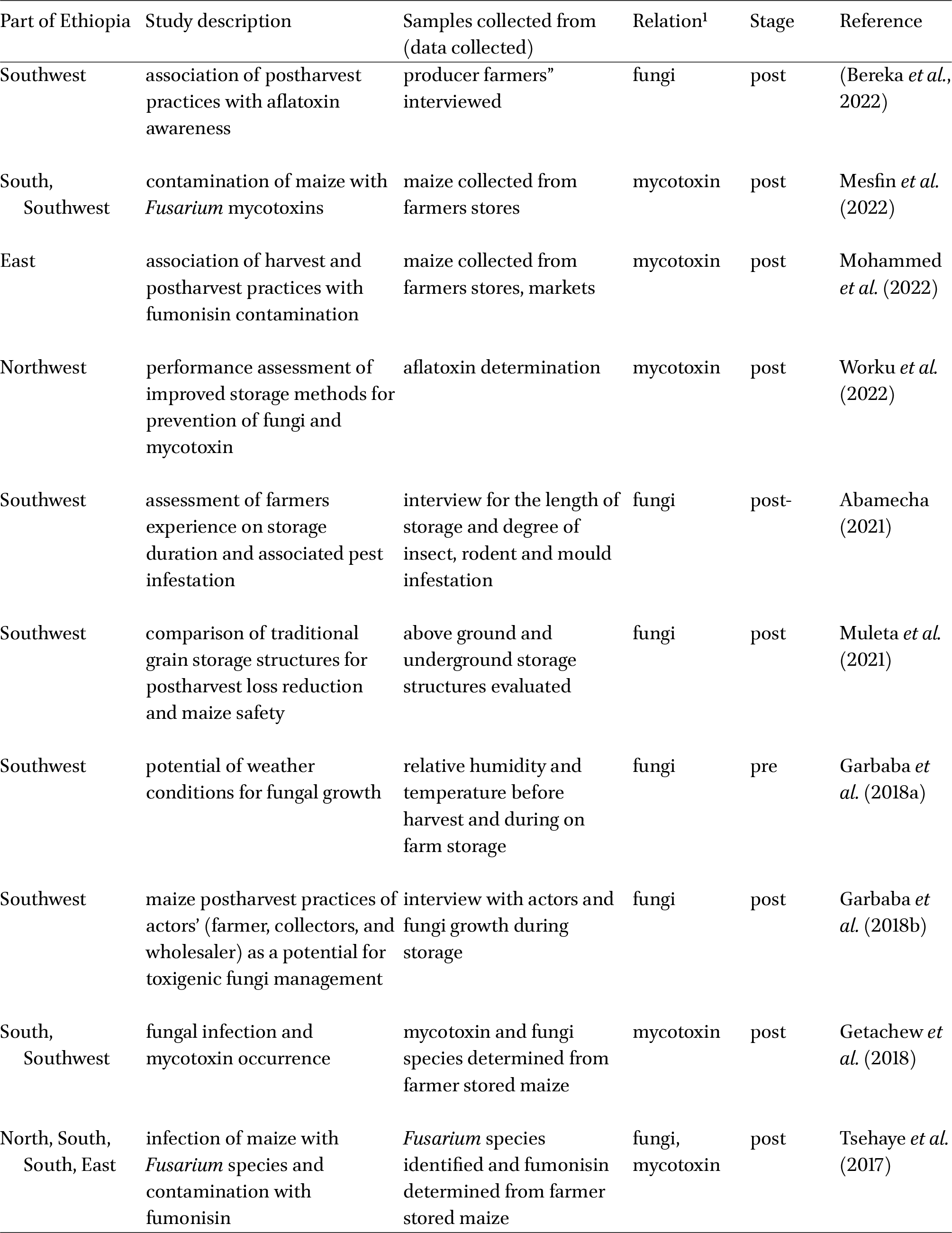
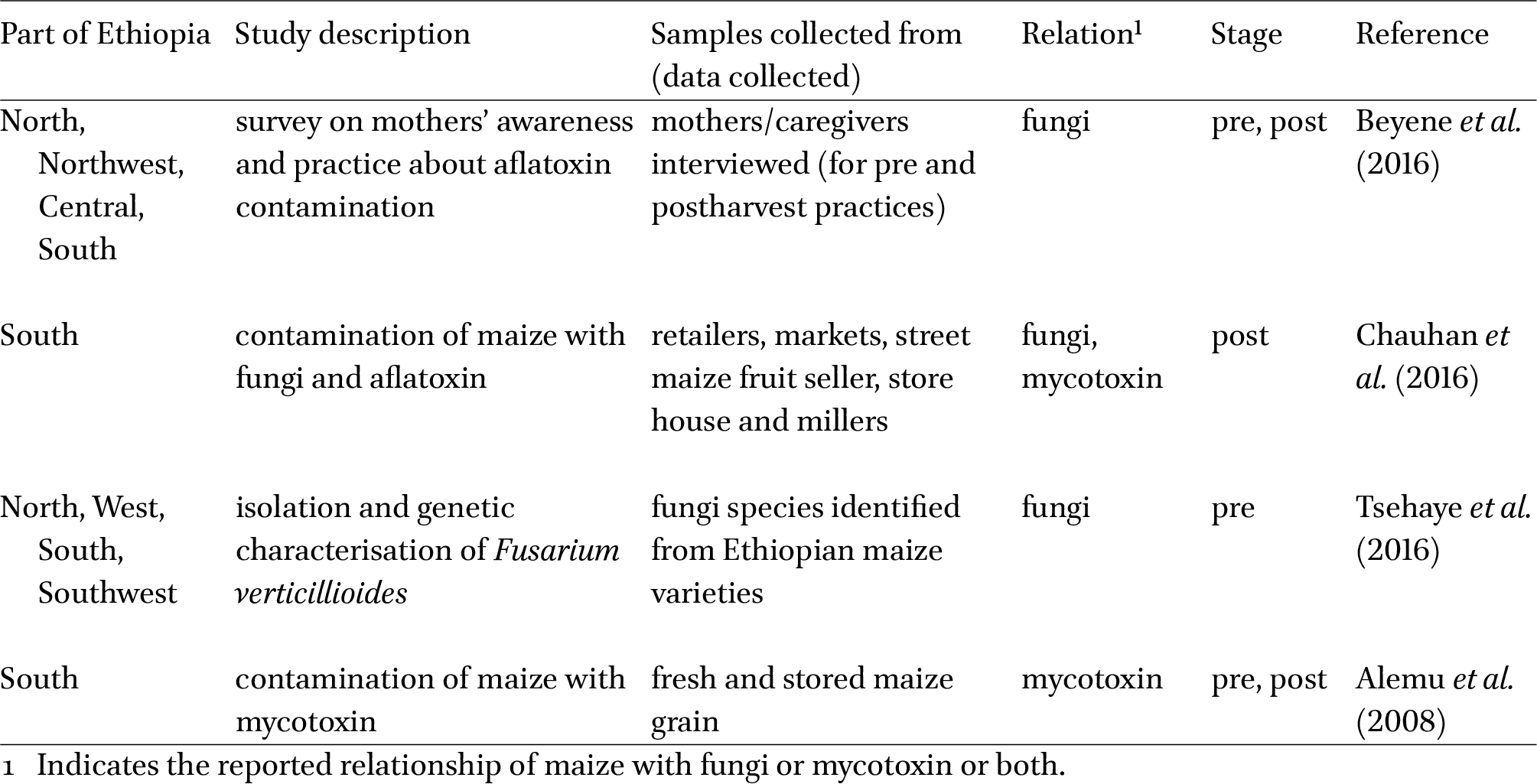
The literature search led to fourteen relevant and eligible articles, which were then used for this review. The major findings of the reported studies, i.e. the association of maize management practices with mycotoxin producing fungi (toxigenic fungi) and/or mycotoxin contamination of maize, were extracted (Table 1).
Eligible articles on the association of maize preharvest (pre) and postharvest (post) practices in relation to mycotoxin contamination in Ethiopia
Citation: World Mycotoxin Journal 16, 3 (2023) ; 10.1163/18750796-20232839
A summary of the studies that have been included is presented in Table 1, showing fungal infection and/or mycotoxin contamination in maize have been reported in samples collected from different parts of the country. This finding indicates the availability of convenient climatic conditions for the growth of toxigenic fungal species, which together with improper pre- and/or postharvest practices, is a contributing factor for mycotoxin contamination. In Ethiopia, maize is cultivated in different parts of the country that belong to 7-20 agroecological zones each varying in their agroecological indicators namely altitude, temperature, and rainfall (Tsehayeet al., 2017; Van Dijket al., 2020). Tsehayeet al. (2017) reported the ranges of these indicators for twenty major maize producer areas in Ethiopia. The elevation, temperature, and rainfall ranges were 1,206-2,490 m, 16-25 °C and 537-1,039 mm, respectively. Indeed, the requirements for fungal growth are related to temperature (10-40 °C) and water activity (above 0.7).
A changing climatic condition because of global warming is predicted to increase the risk of mycotoxin contamination in maize in the future. This is partly because, the incidence of extreme climatic conditions such as drought during the growing period weakens the maize immune system which makes the crop more vulnerable to fungal infection and mycotoxin contamination (Chauhanet al., 2008). Studies related to predicted levels of mycotoxin contamination in maize considering a forecasted future climate change scenarios in Ethiopia are almost absent in the literature.
To achieve the objective of this review, the information presented in Table 1 was processed to arrive at a summary of the findings, per stage of the maize supply chain, considering pre- and postharvest separately. For each stage of the preharvest and postharvest practices, current local practices are described first, followed by their potential relationship with toxigenic fungal infection and related mycotoxin contamination.
Preharvest practices and mycotoxin contamination
Land preparation
In Ethiopia, land is mostly prepared with oxen using an ard or breaking plough (locally called âmareshaâ) and plough to cultivate grains, including maize (Biazinet al., 2011; Goe, 1989; Simeet al., 2015; Worknehet al., 2021). For this purpose, most farmers in the North Eastern part of the country own at least one oxen (Dereseet al., 2017). By using the âmareshaâ and plough method, the topsoil layer can be ploughed to a depth of 0 to 15Â cm (Biazinet al., 2011; Husseinet al., 2019; Simeet al., 2015). This depth of tillage belongs to the minimum tillage category of less than 20Â cm depth (Arinoet al., 2009). The number of ploughing times for growing cereal grains is usually one to more than three times. For example, in Southern Nations and Nationalities and Peoples Region, ploughing time is three or less. On the other hand, more than three times ploughing is common in Amhara and Oromia regions (Beyeneet al., 2016) with the purpose being to improve soil aeration and water infiltration. Manure is added to soil in some areas as part of land preparation to improve soil fertility (Biazinet al., 2011; Simeet al., 2015). According to Destaet al. (2021), about 45% of the total rain fed area in Ethiopia is predicted to be acidic (pHÂ < 6.5). Out of this rain fed agricultural area, 12% is extreme to strong acidic (pHÂ < 5.5), 18% is moderate acidic (5.6Â < pHÂ < 6.0) and 14.6% is slight acidic (6.0Â < pHÂ < 6.5). Recently, treatment of soil acidity using lime has been increasing in the country to improve maize yield (Alemuet al., 2022).
Current land preparation practices in Ethiopia may increase mycotoxin contamination. Proper tillage systems contribute to improved aeration of soil and crop water availability. This reduces crop stress during growth and can reduce incidence of fungal infection (Xuet al., 2022). There are three common types of tillage systems in the world: ploughing with which 30 to 40Â cm of the top layer is inverted: minimum tillage, which involves mixing the crop debris with the top 10 to 20Â cm of soil; and no tilling, in which seed is directly drilled without tilling soil (Arinoet al., 2009). Maize grown in ploughed soil showed slightly lower fumonisins contamination as compared to minimum tillage, which can be explained by the destroying effect of ploughing on fungi (Arinoet al., 2009). In another research, Janusauskaiteet al. (2013) reported about a 12% decrease in fungal population at a minimum tillage level (10 to 20Â cm depth) as compared to 0 to 10Â cm depth. This decrease could be partly associated with a lower quantity of plant residue at the lower depth. Despite the unavailability of information on the relationship of âmareshaâ and ploughing method with mycotoxin contamination in Ethiopia, it seems that this method favours mycotoxin contamination. First, when using this method, the topsoil layer can be inverted to about 15Â cm depth so only minimum tillage is possible (Biazinet al., 2011; Husseinet al., 2019; Simeet al., 2015). At this depth, important fungal growth simulating factors (nutrient and oxygen) are commonly available, which make fungal proliferation possible (Nesciet al., 2006). Second, frequent tillage may increase crop vulnerability to infection. With an increasing number of years of tillage using âmareshaâ and ploughing, soil property deteriorates more. As a result, the soil water infiltration rate decreases and soil moisture loss via evaporation after a rain event increases. Such phenomena may lead to draught stress of the maize plant (Biazinet al., 2011), which further makes it prone to fungal infection. Third, the grazing practice in Ethiopia may increase the area coverage of fungal infection. During grazing, animals may distribute the fungal population from its hot spot area to new areas. Nesciet al. (2006) studied the distribution of three toxigenic fungal species,Aspergillus,Penicillium andFusarium, in soil samples collected from conventional tillage, reduced tillage and no tillage practices, with and without grazing in Argentina. The results indicated thatAspergillus spp. was the most dominantly isolated species in the samples in all tillage methods, for both with and without grazing. In addition, the incidence rate of this species was increased in no tillage method with grazing practice. Maize sowed after 60Â cm manual deep ripping in Ethiopia yielded 6% more maize than the maize sowed at about 15Â cm depth (âmareshaâ and plough method) (Husseinet al., 2019). For long term impact, the conventional âmareshaâ and plough method shall be improved to enable a deeper tillage, and or tractor access via renting service or sale may be established for subsistence farmers. In the literature, information on the relationship of soil treatment with lime with mycotoxin contamination is rarely available. Despite this gap, it is described that untreated acidic soil causes stress to growing maize (Alemuet al., 2022) making the crop vulnerable to fungal infection (Kelleret al., 2022).
Growing period
In Ethiopia, the maize growing period is dependent on the seasonal rainfall (Simeet al., 2015). The common growing period is in the main rainy season, which is from May to December (Tsehayeet al., 2017). This is mainly because about 99% of the maize is produced by using natural rain (Abateet al., 2015). However, in some areas, the growing period may be extended. According to Simeet al. (2015), the cereal cropping season in Ziway area, East Shoa Zone of Oromiya Regional State, is from April to October, with the main season being from June to October. In Ethiopia, the use of irrigation water for maize production is limited. According to the CSA (2021a) and CSA (2021b) report for the 2020/21 cropping season, only about 37 thousand hectares of land from the total area of 3.4 million hectares used for maize production was irrigated.
The growing period affects mycotoxin contamination given the (indirect) relationship with weather conditions during the maize growing season. Delaying the planting date from mid-March to mid-April was reported to reduce preharvest aflatoxin contamination. This was related to the rain fall pattern which rain mostly before mid-April resulting in reduced contamination, and inadequate rain in mid-March leading to moisture stress favouring contamination (Damianidiset al., 2018). According to Arinoet al. (2009), planting of maize in the dry period increasedFusarium species infection and fumonisin contamination as compared to planting in the wet period. Simeet al. (2015) reported that farmers in Ziway area, East Shewa Zone of Oromiya Regional State, Ethiopia, practice cropping mid-maturing maize in April while the main rainy season in the area is from June to October. The authors indicated that this practice has been subjected to moisture stress to the growing maize due to cessation of the rain during late May. The incidence of extreme climatic conditions such as drought during the growing period is reported to weaken the crop immune system; making the crop vulnerable to fungal infection and mycotoxin contamination (Chauhanet al., 2016). When applicable, the use of early/mid maturing maize varieties or irrigation would be helpful in such situations. Early maturing maize varieties were reported to be contaminated with fumonisin to a lesser extent than late maturing varieties, under local climatic conditions in Zimbabwe (Ndemeraet al., 2018).
Planting
Maize planting practices, namely crop rotation, use of improved seed and seeding density have been exercised to different degrees in Ethiopia. According to Beyeneet al. (2016), the majority of farmers from major producer regions practice crop rotation, i.e. alternate growing of maize with another cereal or legume in successive cropping seasons. In another study, Assefaet al. (2021) reported that only about 40% of farmers selected from major maize producer areas in Ethiopia practice crop rotation. For the same cropping season, monocropping has been a common practice (Assefaet al., 2021; Simeet al., 2015) and intercropping has only been used to a limited extent (Abateet al., 2015; Assefaet al., 2021). A three-year survey (2015-2017) on agronomic practices of maize in major producer areas in Ethiopia indicated that the mean plant density for 88% of farmers was below the optimum range suggested for yield (44,444 to 62,500 plants per hectare depending on the cultivar); the other 12% of farmers maintained the suggested optimal range (Balemiet al., 2019). From the total area of land used for maize production in the 2020/21 cropping seasons (about 3.4 million hectares), the area covered with improved seeds was about 1.5 million hectares (44% of total). For the same year, about 520 thousand quintals of improved seed had been used nationally (CSA, 2021b). On the other hand, Assefaet al. (2021) reported that subsistence farmers in major maize producer areas in Oromia and Amhara regions commonly use improved seeds. In another study, Van Dijket al. (2020) reported that only about a quarter of smallholder farmers in the country use improved seeds, and that the level of use of improved seed (25Â kg/hectare) is below the requirement for reaching the optimum yield.
The practices of crop rotation and use of improved seed may affect mycotoxin contamination. Maize crop rotation reduces mycotoxin contamination in two ways; it reduces stress during the maize growth period by improving soil fertility (especially when legumes are used) and breaks a pest-disease cycle (Xuet al., 2022). According to Venteret al. (2016), crop rotation also improves richness and diversity of soil microbial communities. Improvement of the soil microbial community, which can reduce toxigenic fungal infection via competition mechanisms, can reduce mycotoxin contamination (Yinet al., 2008). However, fungal spores can stay dormant in the soil to acts as inoculum for contamination during the next cropping season (Reiset al., 2010; Xuet al., 2022). Yet, as explained above, survival of spores is dependent on the tillage system used for land preparation (Arinoet al., 2009). Farmers in Ethiopia could have access to different maize varieties (Megerssaet al., 2021) including improved varieties such as BH140 (early- to intermediate-maturity breed), BH660 (late maturing breed) and BH661 (draught tolerant breed) (Abateet al., 2015). However, information on the relationship of maize varieties available in the country with fungal infection is rarely available at this moment. Despite this gap, the use of improved seeds that are resistant to fungal infection would be helpful (Xuet al., 2022). Therefore, evaluation of maize varieties available in the country for their tolerance to toxigenic fungal infection during growth in the field would help in identifying the most tolerant cultivars that are applicable to the specific local agronomic and climatic conditions. The reported (sub)optimal maize plant density may imply that plant density may not be related to mycotoxin contamination. When plant population is not crowded, the competition for nutrients will be limited. In this case, the natural resistance of the crop to fungal infection may not be affected (Xuet al., 2022).
Maize treatment practices during growth
Current agronomic treatments used to grow maize are below the required level to reach optimum yield. These treatments include fertiliser application, weed removal and pesticide application. Fertiliser is described as the major limiting factor for maize productivity in Ethiopia. The average amount used (119Â kg/ha nitrogen) is much lower than the required amount for optimal yield (Van Dijket al., 2020). According to Assefaet al. (2021), 90 and 24% of respondents from major maize producer areas in Oromia and Amhara regions use fertiliser and manure, respectively. The same study reported that the use of combinations of fertiliser, improved seed and manure resulted in decreased yield. This situation could be associated to the diluting effect of low-quality manure to the fertiliser (Assefaet al., 2021). However, it is to be noted that additional manure is possible from animals grazing the field (Van Dijket al., 2020). A survey conducted in major maize producer regions in Ethiopia indicated that the occurrence of weed in maize fields was common, with a reported weed density from low (0-20 weeds/m2) to high (41-100 weeds/m2) (Regassaet al., 2020). According to Assefaet al. (2021), during the main cropping season of 2017 and 2018, the use of herbicide was not common, and pesticides were used to a limited extent among subsistence maize producer farmers present in major producer areas in Ethiopia. The authors described that this practice is partly related to farmersâ preferences to use human labour for weeding rather than using herbicides. The limited use of pesticides was associated with the low incident rate of disease/pest in this cropping period.
When optimal growth requirements for maize in Ethiopia are not met, growth stress occurs on the crop which may increase mycotoxin contamination (Kelleret al., 2022). A low level of nitrogen leads to maize nutrient stress creating favourable conditions for fungal infection (Xuet al., 2022). Sub optimal N-fertiliser application to maize was reported to lead to increased contamination of fumonisin contamination in Zimbabwe (Ndemeraet al., 2018). An increase in weed density during maize growth was indicated to result in a decrease in maize yield in Ethiopia, presumed to be due to a competitive effect of the weed for growth factors (Simeet al., 2015). Increase in weed density would also create stress to the growing maize plant making it more vulnerable to fungal infection. Training farmers to control the presence of weed by using manual methods or using recommended pesticides would be helpful. Some mycotoxigenic species may be able to better adapt to stress conditions than others. This feature fundamentally determines ecological dominance in any given environment (Dovenyi-Nagyet al., 2020).
Harvesting
Subsistence farmers in Ethiopia use traditional methods for judging readiness of maize for harvesting. These methods include starting of drying of leaves, colour change from green to yellow, and cob dropping (Garbabaet al., 2018b; Mohammedet al., 2022). Other methods such as the crop calendar method, and observation of kernel dryness and shelling property are also used (Garbabaet al., 2018b). According to CSA (2021a), the harvesting period for main crops â including maize grown in the main cropping season â is from September to February depending on local weather conditions. Both harvesting at the right maturity and late harvesting practices have been reported. Beyeneet al. (2016) reported harvesting has been at the right maturity in the major maize producer areas in the country. Similarly, 99% of farmers around Hawasa city in south Ethiopia (Bosheet al., 2020) and 93% of maize producer farmers from east Ethiopia (Mohammedet al., 2022) harvest their maize at the right maturity. On the other hand, Berekaet al. (2022) reported that all the respondent maize producer farmers in Jimma zone in southwest Ethiopia practice delayed harvesting after maturity, the reason being for further drying. The authors also reported that these farmers wait for sunny days to harvest due to fear of maize produce wetting by accidental rain.
Time of harvesting is described as important agricultural practice to control preharvest mycotoxin contamination. The best time is harvesting at the physiological maturity (Kaayaet al., 2005). Thus, harvesting at the right maturity level in Ethiopia should be encouraged. However, in the traditional practice, knowing the actual level of maturity may not be possible since unstandardised and subjective maturity measurements have been used. Thus, more reliable objective methods of testing maturity, determining moisture content (using low-cost portable devices) shall be promoted to determine maturity. With this method, the right time to harvest can be better estimated to effectively prevent mycotoxin contamination at this stage. The practice of delayed harvesting after physiological maturity, which is reported from Jimma zone, should be discouraged. Despite the benefit of drying with delayed harvesting, this practice may lead to fungal infection (Kaayaet al., 2005). This is because delaying gives fungal spores surviving in the air more chance for contamination. In addition, rainwater and insects play a role for the dispersion of these spores (Dovenyi-Nagyet al., 2020). In these perspectives,Fusarium species are well known for preharvest infection (Ndemeraet al., 2018). Further, insect damage at the preharvest period facilitates fungal infection (Jallowet al., 2021) which is further associated to risk of mycotoxin contamination.
Field drying
Sun drying is the most common drying method in Ethiopia, by using different drying surfaces. For on farm drying, maize drying in a bare ground is quite common (Bosheet al., 2020; Garbabaet al., 2018b; Mesfinet al., 2022). Applying this method, drying is done by spreading the stalks on the ground without detaching the cob or heaping up the stalks (Garbabaet al., 2018b). According to Berekaet al. (2022), farmers in Jimma zone keep drying their maize on the ground for one to two weeks, and about 30% of the respondents practice drying in their home for an extended time. In another study, about 50 and 44% of farmers around Hawassa city are reported for practicing sun drying on bare ground and on top of plastic sheet, respectively. Farmers in this area also use indoor smoke drying to a limited extent (Bosheet al., 2020). For this type of drying, maize cobs are suspended above a fire where the smoke and heat produced provide accelerated drying which enables to a good control of insect damage during storage (Kuyu and Bereka, 2020).
The traditional drying methods in Ethiopia seem to favour mycotoxin contamination. Harvesting moisture contents is important factor for mycotoxin contamination. For safe storage, a product should be dried to less than 13% moisture content (Xuet al., 2022). Garbaba (2018b) reported a moisture content ranging from 16 to 28% for maize samples collected at harvest from Jimma zone of Ethiopia, and the authors described this moisture level makes the grain susceptible to fungi infection. In another research, Getachewet al. (2018) reported a moisture content of 9-14.7% for stored maize samples collected from the south and southwestern Ethiopia. All tested samples in this study were infected withAspergillus,Fusarium andPenicillium species. In the current practices in Ethiopia, objective measurement of drying levels using moisture content has not been used. As a solution to the problem for persistence farmers in Ethiopia, Beyeneet al. (2016) suggested to use scratching of the grain by nail and using the sound during teeth breakage. This method could still be ineffective since it is subjective, and difficult to determine the right level of grain dryness. Similar to insufficient drying, over drying of maize may favour fungal infection since it may lead to cracking of kernels, which makes them vulnerable to fungal infection (Garbabaet al., 2018b). Field drying by stacking maize for too long period is presumed to favour fungi growth. In this regard, the practice of on farm drying for a long period using bare ground should be discouraged (Garbabaet al., 2018b). Leavenset al. (2021) demonstrated the possibility of controlling aflatoxin contamination in maize for small holder farmers in Senegal. The researchers implemented a combined method â training of farmers, using tarp for drying surface and using a farmer friendly portable hygrometer to measure moisture content. This approach seems applicable experience worth sharing to subsistence farmers in Ethiopia.
Shelling
Grain handling in Ethiopia is by using animals and human labour (Garbabaet al., 2018b; Mugaet al., 2019). Maize shelling, i.e. separating the kernel from the cob, in Ethiopia is described by Tekeste and Degu (2019) and Garbabaet al. (2018b). Manual shelling is the common practice. In this method, dry cobs are beaten with stick or rubbed using rough stone. Beating is preferred when the volume of cobs is high (>1,500Â kg) (Tekeste and Degu, 2019). Garbabaet al. (2018b) reported that 82% of farmers in Jimma zone use this method for maize shelling. Shelling is also conducted by using finger palm or putting the cobs in a sack and hitting with stick (Garbabaet al., 2018b).
Current Ethiopia maize shelling practices may increase mycotoxin contamination. According to Garbabaet al. (2018b), a shelling practice where maize cobs are put in a sack which is manually beaten damages the kernels and makes them vulnerable to fungal infection. For subsistence farming situations, separating damaged maize kernels, and using them for immediate consumption while using sound ones for storage seems helpful. In addition, when wetting happens during drying or shelling due to accidental rain, further drying, or using the wet portion for immediate consumption would be helpful, as well as prevention of contact of the maize with soil during shelling. Promoting harvesters and threshers for subsistence farmers could help to reduce fungal infection. These technologies can be made accessible to farmers for renting services through cooperatives. By adopting these technologies complemented with objective moisture measurement tools, maize can be harvested at the right maturity, drying on bare ground can be prevented, contact of maize with soil during threshing can be reduced, and kernel damage can be reduced. As a result, risk of fungal infection and mycotoxin contamination can be minimised.
Postharvest practices and mycotoxin contamination
Off-house storage
Gombisa, a granary, is a commonly used structure for the purpose of both drying and storage of maize. It is common in the southwestern part of Ethiopia (Garbabaet al., 2018a). A gombisa is made up of locally available materials, mostly bamboo. The roof is covered with natural or thatch grass. For bulk drying of maize, its wall is made from permeable wood material. Drying of maize occurs exclusively by wind where wind coming through the walls defuses the moisture from the maize surface (Romanet al., 2020). Berekaet al. (2022) reported that more than 80% of respondents from Jimma area use gombisa for maize storage. According to Megerssaet al. (2021) 10% respondent farmers in North Shewa practice off house hanging of maize cobs. In another research, Dirashe people in southern Ethiopia use gotela for maize storage. Gotela is an off house storage structure made up of bamboo, wood and clay (Sunano, 2020).
In-house storage
For in-house storage, traditional storage structures, such as gotera, polyethylene bags and jute sacks have been used (Beyeneet al., 2016; Bosheet al., 2020; Hengsdijk and De Boer, 2017; Megerssaet al., 2021). A gotera is constructed from wood, mud and straw (Bosheet al., 2020; Hengsdijk and De Boer, 2017). Structures used less often include metal silos (Hengsdijk and De Boer, 2017), plastic bags (Bosheet al., 2020) and clay pots (Megerssaet al., 2021). In-house storage structures are used for both shelled and unshelled maize grain. However, in-house maize storage is most often done in a shelled form (Megerssaet al., 2021). According to Berekaet al. (2022), farmers in Jimma zone prefer to store the unshelled form of maize believing that it prevents insect infestation. Storage structures are commonly disinfected before using them for a new crop, such as by smearing with cow dung or ash (Beyeneet al., 2016), rubbing the inside wall and the bottom wall with hot pepper or smoking with hot pepper, and using cereal straw at the bottom layer of the structure (Kuyu and Bereka, 2020). Disinfection by smoking with leaves from weira (Olea Europea subspecies Africana) and Neem tree (Azadirachta indica) and fumigation are also used, but rarely (Beyeneet al., 2016). According to Bosheet al. (2020) about 64% of respondent farmers around Hawassa city, south Ethiopia disinfect their storage structure before using it for a new harvest. In another research, Garbabaet al. (2018b) reported that 99.5% of maize farmers in southern Ethiopia sanitise their store before using it for a new harvest. Several protection methods against insects and fungi are used for grain storage. For instance, the use of pesticides is common for maize (Hengsdijk and De Boer, 2017; Megerssaet al., 2021). Mohammedet al. (2022) reported that 87% of their respondent maize producer farmers from eastern and western Hareghe zones use insecticide to protect maize during storage. According to Megerssaet al. (2021), celphos, quicphos, deltametrin, malathion dust, deltacal and diazinon obtained from legal or illegal sources are used by farmers in west Showa zone. In another research, Mesfinet al. (2022) reported that about two thirds of maize producer farmers in Jimma zone and Sidama Region use dichloro-diphenyl-trichloroethane (DDT) for maize protection. Botanical plants (Kuyu and Bereka, 2020) and elevation of storage structures (Hengsdijk and De Boer, 2017) are also used to protect maize during storage.
Even though they are meant to protect, both the storage structures and treatment methods seem to contribute to fungal infection and mycotoxin contamination in Ethiopia. The common storage structures are influenced by external environmental conditions, such as moisture migration and oxygen permeability. This enables fungal growth and insect infestation (Garbabaet al., 2018a; Romanet al., 2020). In addition, these structures are prone to internal moisture condensation which also helps fungal growth (Romanet al., 2020). High temperature and relative humidity during storage may favour growth ofAspergillus species and mycotoxin contamination (Chulze, 2010). Despite different treatment and protection methods have been used to prevent fungal infection, mycotoxin contamination in stored maize has been frequently reported in Ethiopia (Bosheet al., 2020; Chauhanet al., 2016; Getachewet al., 2018; Mesfinet al., 2022; Mohammedet al., 2022; Tsehayeet al., 2017). Getachewet al. (2018) identified several species of fungi, includingFusarium andAspergillus, and 127 mycotoxins and derivatives from in-house stored maize in farmers households from south and southwestern part of Ethiopia. In another study, Mohammedet al. (2022) reported that all maize samples collected from farmers in house stores in eastern Ethiopia were contaminated with fumonisins.
For maize grain stored in jute bags and polypropylene bags for 7 months under a laboratory condition, the proportion of maize damaged by weevils increased from 9 to 61% and 5 to 18%, respectively (Kuyuet al., 2022). According to Megerssaet al. (2021), maize farmers in west Showa reported a grain damage up to 75% in the worst case due to storage pests. Control of insects during maize storage is important since insects damage the grain making it vulnerable to fungal infection or their activities create a moisture accumulation which helps for fungal growth and mycotoxin contamination (Chulze, 2010). If used properly, protection chemicals such as herbicides, fungicides and insecticides during storage can reduce mycotoxin contamination (Ndemeraet al., 2018). However, the frequent occurrence of mycotoxin contamination in stored maize in Ethiopia has led us to question the effectiveness of treatment chemicals and methods as well as their application practices.
Maize processing at household level
Sorting out defected maize kernels is an integral part of processing, which is conducted as the first step. Beyeneet al. (2016) reported that sorting out damaged kernels has been practiced at household level among the major regions in Ethiopia with variable extent among the regions. According to Bosheet al. (2020), about 60% of respondents around Hawassa city do not sort out fungal contaminated maize kernels. In Ethiopia, maize is processed to produce several types of foods, such asinjera, and porridge (Mohammedet al., 2022) and alcoholic beverages, such asTella (Berekaet al., 2022). The major processing activities include milling, fermentation, and thermal treatment (baking/boiling/roasting). The detailed processing conditions depend on the specific type of food produced. According to Mesfinet al. (2022), about 22% of households in Sidama region practice dehulling, one of the prior activities for milling, while only 2% of households in Jimma zone apply it. The same study indicated that 2% of the households in Sidama and 23% from Jimma zone practice soaking (washing).
Maize processing practices in Ethiopia may reduce mycotoxin contamination. According to Matumbaet al. (2015), mycotoxins are concentrated in the surface of shrivelled immature, broken and discoloured grains. Implementing Good Manufacturing Practices (GMPs) that are applicable to small holder farmers such as sorting, washing and dehulling can reduce mycotoxin contamination (Jallowet al., 2021). Matumbaet al. (2015) reported a mycotoxin reduction of about 96% by using hand sorting. When combined with washing and dehulling, the reduction level was increased to 99%. Information on maize processing practices to foods and beverages such as soaking, roasting, fermenting, and baking in relation to mycotoxin reduction in Ethiopia is hardly available in the literature. Despite the reducing effect of processing, the occurrence of fumonisins in maize flour collected from local markets and households in east Ethiopia was reported (Mohammedet al., 2022).
Developments to prevent mycotoxin contamination in maize in Ethiopia
Selected intervention options which have been studied for postharvest loss reduction and that have direct or indirect impact on reducing mycotoxin contamination in maize are described below. These are recent developments for maize drying and storage.
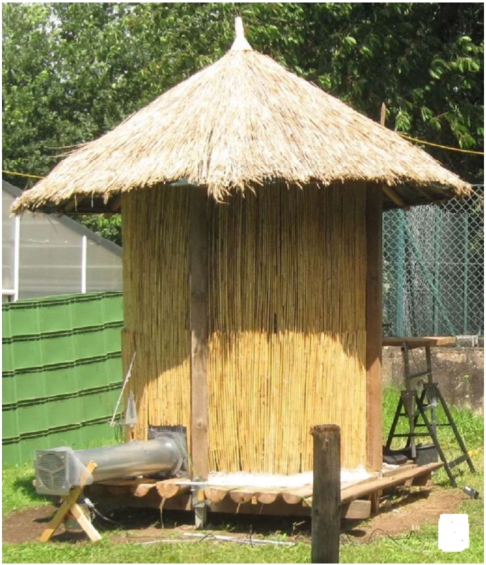
A modified gombisa (photo with permission from Romanet al., 2020).
Citation: World Mycotoxin Journal 16, 3 (2023) ; 10.1163/18750796-20232839
Modified gombisa
In the traditional gombisa, achieving a uniform maize dryness is a problem â relatively faster drying occurs on maize stored in its top. Consequently, this leads to the formation of a microclimate at the centre of the stored maize, which is characterised by its own temperature and relative humidity. Surprisingly, the relative humidity in the centre of the gombisa can remain above 90% for long time (four weeks) including during day times. This phenomenon was reported to happen when the outside relative humidity was lower than 40%. Such a micro-atmosphere could create favourable conditions for fungal growth (Romanet al., 2020). Another problem of the traditional gombisa is moisture leakage to the gombisa, especially during the rainy season with implications for fungal growth (Garbabaet al., 2018b). Once constructed, the same gombisa can be used for 10 years; for about 6 months of storage of a newly harvested crop. Thus, it can be a source of fungal inoculum to a new harvest. To overcome these problems with a subsequent reduction of mycotoxin contamination, the traditional gombisa was modified. A successful pilot scale modification trial was conducted (Romanet al., 2020) in which a photovoltaic panel driven fan ventilation system was used to improve the drying process, and to solve the moisture condensation problem (Figure 2). This modified gombisa reduced the initial moisture content of maize cobs from 22 to 14% (db) in 11 days at its centre while drying took longer times for other locations in the gombisa (Romanet al., 2020). In addition, a metal sheet was used underneath the thatch to prevent water leak during raining. However, the performance of this gombisa under actual field conditions in Ethiopia has not been tested yet. In addition, an economic evaluation under subsistence farming situations including the willingness of farmers to adopt the technology has not been performed yet.
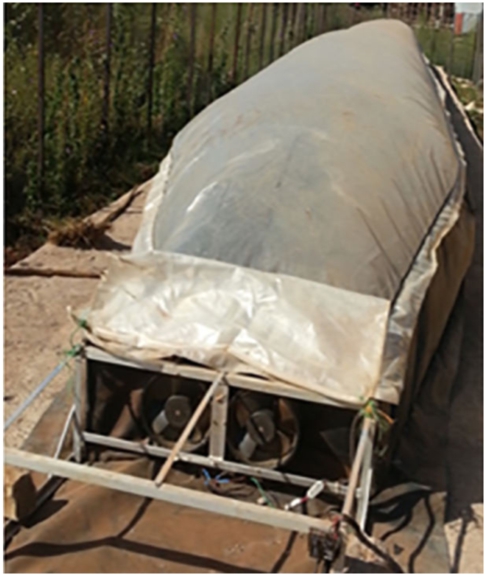
Solar bubble dryer
A novel solar bubble dryer was demonstrated in Ethiopia for on farm maize drying (Figure 3). Using this drier, the moisture content of freshly harvested maize grain was reduced from 22-29 to 13% (wet basis) within 24-39 h under the experimental location conditions (Asemuet al., 2020). Despite its potential in reducing mycotoxin contamination, its practical application is limited. Its availability and relatively high investment cost (cost of land, the system purchasing, installation and operation) are constraints for farmers. Cost benefit studies and the willingness of farmers to adopt the technology have not been researched.
A solar bubble drier (photo with permission from GrainPro®; Asemuet al., 2020).
Citation: World Mycotoxin Journal 16, 3 (2023) ; 10.1163/18750796-20232839
Hermetic storage
Hermetic storage structures which have been recently introduced in Ethiopia are promising techniques for mycotoxin control during storage by subsistence farmers. Purdue Improved Crop Storage (PICs) bag is the most frequently used bag (Mekonen and Wubetie, 2021). Since a bag is the most common storage structure for maize in the country (Hengsdijk and De Boer, 2017), these improved hermetic bags can easily be adopted. According to Berekaet al. (2022), about 8% farmer respondents in their study area use PICs bags to store maize. PICs bags are reported to effectively reduce mycotoxin contamination of maize (Leavenset al., 2021; Workuet al., 2022). As a result, using the PICs bag is one of the recommended GAPs for maize storage (Xuet al., 2022). Interestingly, PICs bags are also proven to reduce maize damage by weevils to below 3.8% during a 7-month storage period in Ethiopia. To compare with, the same study indicated a weevil damage up to 61% of the maize grain stored in a conventional jute bag (Kuyu and Bereka, 2020).
Despite the advantage of reducing mycotoxin contamination, the use of PICS bags for maize storage in Ethiopia faces some supply chain constraints. Mekonen and Wubetie (2021) found that the initial purchase price of PICs bag was a major determinant for the low level of adoption of the bag for maize storage in Burie area, West Gojam Zone. Consequently, farmers in these areas showed preference for using toxic fumigants as cheaper alternatives. A study by Mohammedet al. (2022) indicated that none of the maize producer respondent farmers from eastern and western Harerghe zones use improved storage structures, such as PICs bags, which the authors associated with lack of farmersâ awareness and/or unavailability of the bags in local markets. According to Leavenset al. (2021), sustainable supply chain of PICs bag has been one of the limitations to effectively reduce mycotoxin contamination of maize for long term food safety benefits in Senegal.
4 Conclusions
Most of the retrieved studies in this review focused on mycotoxin contamination in the postharvest stage of maize production. Despite the limited evidence for the occurrence of mycotoxin contamination in the preharvest stages of maize production in Ethiopia, literature evidence from other countries indicated that the current practices of land preparation, planting, growing, harvesting, drying, and shelling are related to mycotoxin contamination. On the other hand, the occurrence of mycotoxin contamination in the postharvest stage of maize production in Ethiopia is well evident. For this stage of maize production, there are some promising intervention options that are directly (indirectly) related to reducing mycotoxin contamination, particularly during drying and storage. However, these developments are not fully implemented by subsistence maize producer farmers in Ethiopia mainly due to availability, affordability, and/or awareness reasons.
Since most of the current pre-and post-harvest maize management practices in Ethiopia favour mycotoxin contamination, implementing a single intervention strategy is not a feasible option. Therefore, developing integrated intervention options by combining Good Agricultural Practices in the preharvest stage and Good Manufacturing Practices in the postharvest stage that are applicable to subsistence farming conditions are suggested. To complement already available evidence in the literature to develop integrated intervention options, further research aimed to identify locally available maize varieties for their tolerance to fungal infection and mycotoxin contamination, to improve the âmareshaâ and plough method for deeper ploughing, to optimise growth treatments, to improve the traditional storage structures and treatments, and to modify processing practices are recommended. Predictive modelling of the growth of toxigenic fungal species considering a forecasted local climatic change scenarios in the future, together with a clear understanding of local pre- and postharvest practices, would help in providing early-stage mitigation strategies to prevent mycotoxin contamination in maize in Ethiopia.
Corresponding author; e-mail:Â jemal.sadik@gmail.com
Acknowledgements
Wageningen Graduate Schools Sandwich PhD programme, Wageningen University, the Netherlands is thanked for partly financing this study.
Authorsâ contribution
Conceptualisation, J.A Sadik, Inge D. Brouwer, H.J van der Fels-Klerx; methodology, J.A Sadik, Netsanet Fentahun, Inge D. Brouwer, Masresha Tessema and H.J van der Fels-Klerx; validation, J.A Sadik; formal analysis, J.A Sadik; resources, J.A Sadik, H.J van der Fels-Klerx; writing-original draft preparation, J.A Sadik; writing review and editing, J.A Sadik, Netsanet Fentahun, Inge D. Brouwer, Masresha Tessema and H.J van der Fels-Klerx; visualisation, J.A Sadik, Netsanet Fentahun, Inge D. Brouwer, Masresha Tessema and H.J van der Fels-Klerx; supervision, Netsanet Fentahun, Inge D. Brouwer, Masresha Tessema and H.J van der Fels-Klerx; project administration, H.J van der Fels-Klerx; funding acquisition, Inge D. Brouwer, H.J van der Fels-Klerx. All authors have read and agreed to the published version of the manuscript.
Conflict of interest
The authors declare no conflict of interest.
Data availability
Data will be available up on request.
References
Abamecha,N.,2021 .A survey of farmersâ perceptions on maize and sorghum storage duration and level of pest infestations in the case of two selected districts of Jimma zone, Ethiopia.International Journal of Food Science 2021:5583387.https://doi.org/10.1155/2021/5583387
Abate,T.,Shiferaw,B.,Menkir,A.,Wegary,D.,Kebede,Y.,Tesfaye,K.,Kassie,M.,Bogale,B.,Tadesse,B. andKeno,T.,2015 .Factors that transformed maize productivity in Ethiopia.Food Security 7:965-981.https://doi.org/10.1007/s12571-015-0488-z
Alemu,E.,Selassie,Y.G. andYitaferu,B.,2022 .Effect of lime on selected soil chemical properties, maize (Zea mays L.) yield and determination of rate and method of its application in Northwestern Ethiopia.Heliyon 8:e08657.
Alemu,T.,Birhanu,G.,Azerefgne,F. andSkinnes,H.,2008 .Evidence for mycotoxin contamination of maize in Southern Ethiopia: the need for further multidisciplinary research.Cereal Research Communications 36:337-411.
Arino,A.,Herrera,M.,Juan,T.,Estopanan,G.,Carramin,J.J.,Rota,C. andHerrera,A.,2009 .Influence of agricultural practices on the contamination of maize by fumonisin mycotoxins.Journal of Food Protection 72:898-902.
Asemu,A.M.,Habtu,N.G.,Subramanyam,B.,Delele,M.A.,Kalsa,K.K. andAlavi,S.,2020 .Effects of grain drying methods on postharvest insect infestation and physicochemical characteristics of maize grain.Journal of Food Process Engineering 43:e13423.https://doi.org/10.1111/jfpe.13423
Assefa,B.T.,Chamberlin,J.,van Ittersum,M.K. andReidsma,P.,2021 .Usage and impacts of technologies and management practices in Ethiopian smallholder maize production.Agriculture 11:938.https://doi.org/10.3390/agriculture11100938
Balemi,T.,Kebede,M.,Abera,T.,Hailu,G.,Gurmu,G. andGetaneh,F.,2019 .Some maize agronomic practices in Ethiopia: a review of research experiences and lessons from agronomic panel survey in Oromia and Amhara regions.African Journal of Agricultural Research in Plant Disease 14:1749-1763.https://doi.org/10.5897/AJAR2019.14338
Bereka,T.Y.,Kuyu,C.G.,Tolera,K.D. andAddis,E.M.,2022 .Current postharvest practices and aflatoxin contamination awareness amongst maize producers in Jimma Zone, Southwest of Ethiopia.World Mycotoxin Journal 15:35-43.
Beyene,A.A.,Woldegiorgis,A.Z.,Adish,A.A.,De Saeger,S. andTolossa,A.L.,2016 .Assessment of mothersâ knowledge and practice towards aflatoxin contamination in complementary foods in Ethiopia: from pre-harvest to household.World Mycotoxin Journal 9:535-544.https://doi.org/10.3920/wmj2016.2088
Biazin,B.,Stroosnijder,S.,Temesgen,M.,AbdulKedir,A. andSterk,G.,2011 .The effect of long-term maresha ploughing on soil physical properties in the Central Rift Valley of Ethiopia.Soil and Tillage Research 111:115-122.https://doi.org/10.1016/j.still.2010.09.006
Boshe,B.,Gebremedhin,S.,Alemayehu,F.,Eshete,M.,Taye,M. andStoecker,B.J.,2020 .Aflatoxin exposure among lactating women in southern Ethiopia.Food Science and Nutrition 8:6738-6745.https://doi.org/10.1002/fsn3.1968
Bucci,T.J.,Howard,P.C.,Tolleson,W.H.,Laborde,J.B. andHansen,D.K.,1998 .Renal effects of fumonisin mycotoxins in animals.Toxicologic Pathology 26:160-164.https://doi.org/10.1177/019262339802600119
Central Statistics Authority of Ethiopia (CSA),2021 a. The Federal Democratic Republic of Ethiopia Central Statistical Agency, Agricultural sample survey, 2020/2021 (2013 E.C.) (September â January 2020/2021), volume VII, Report on crop and livestock product utilization (private peasant holdings,meher season).
Central Statistics Authority of Ethiopia (CSA),2021 b. The Federal Democratic Republic of Ethiopia Central Statistical Agency, Agricultural sample survey, 2020/21(2013 E.C.) 2020/21(2013 E.C.) (September â December, 2020), volume III, Report on farm management practices (private peasant holdings,meher season).
Chauhan,N.M.,Washe,A.P. andMinota,T.,2016 .Fungal infection and aflatoxin contamination in maize collected from Gedeo zone, Ethiopia.SpringerPlus 5:753.https://doi.org/10.1186/s40064-016-2485-x
Chauhan,Y.S.,Wright,G.C. andRachaputi,N.C.,2008 .Modelling climatic risks of aflatoxin contamination in maize.Australian Journal of Experimental Agriculture 48:358-366.https://doi.org/10.1071/ea06101
Chulze,S.N.,2010 .Strategies to reduce mycotoxin levels in maize during storage: a review.Food Additives and Contaminants Part A 27:651-657.https://doi.org/10.1080/19440040903573032
Damianidis,D.,Ortiz,B.V.,Bowen,K.L.,Windham,G.L.,Hoogenboom,G.,Hagan,A.,Knappenberger,T.,Abbas,H.K.,Scully,B.T. andMourtzinis,S.,2018 .Minimum temperature, rainfall, and agronomic management impacts on corn grain aflatoxin contamination.Agronomy Journal 110:1697-1708.https://doi.org/10.2134/agronj2017.11.0628
Derese,S.A.,Shimelis,H.,Laing,M. andMengistu,F.,2017 .The impact of drought on sorghum production, and farmerâs varietal and trait preferences, in the north eastern Ethiopia: implications for breeding.Acta Agriculturae Scandinavica B 68:424-436.https://doi.org/10.1080/09064710.2017.1418018
Desta,G.,Kassawmar,T.,Tadesse,M. andZeleke,G.,2021 .Extent and distribution of surface soil acidity in the rainfed areas of Ethiopia.Land Degradation Development 32:5348-5359.https://doi.org/10.1002/ldr.4113
Dovenyi-Nagy,T.,Racz,C.,Molnar,K.,Bako,K.,Szlama,Z.,Jozwiak,A.,Farkas,Z.,Pocsi,I. andDobos,A.C.,2020 .Pre-harvest modelling and mitigation of aflatoxins in maize in a changing climatic environment â a review.Toxins 12:768.https://doi.org/10.3390/toxins12120768
Garbaba,C.A.,Denboba,L.G.,Mendesil,E.,Ocho,F.L. andHensel,O.,2018 b.Actorsâ post-harvest maize handling practices and allied mycoflora epidemiology in southwestern Ethiopia: potential for mycotoxin-producing fungi management.Journal of Applied Botany and Food Quality 91:237-248.
Garbaba,C.A.,Diriba,S.,Ocho,F.L. andHensel,O.,2018 a.Potential for mycotoxin-producing fungal growth in various agro-ecological settings and maize storage systems in southwestern Ethiopia.Journal of Stored Products Research 76:22-29.
Getachew,A.,Chala,A.,Hofgaard,I.S.,Brurberg,M.B.,Sulyok,M. andTronsmo,A.M.,2018 .Multimycotoxin and fungal analysis of maize grains from south and southwestern Ethiopia.Food Additives and Contaminants Part B 11:64-74.https://doi.org/10.1080/19393210.2017.1408698
Goe,M.R.,1989 .The Ethiopian maresha: clarifying design and development.Northeast African Studies 11:71-112.
Hengsdijk,H. andDe Boer,W.J.,2017 .Post-harvest management and post-harvest losses of cereals in thiopia.Food Security 9:945-958.https://doi.org/10.1007/s12571-017-0714-y
Hussein,M.A.,Muche,H.,Schmitter,P.,Nakawuka,P.,Tilahun,S.A.,Langan,S.,Barron,J. andSteenhuis,T.S.,2019 .Deep tillage improves degraded soils in the (sub) humid Ethiopian highlands.Land 8:159.https://doi.org/10.3390/land8110159
Jallow,A.,Xie,H.,Tang,X.,Qi,Z. andLi,P.,2021 .Worldwide aflatoxin contamination of agricultural products and foods: from occurrence to control.Comprehensive Reviews in Food Science and Food Safety 20:2332-2381.
Janusauskaite,D.,KadzÌieneÌ,G. andAusÌkalnieneÌ,O.,2013 .The effect of tillage system on soil microbiota in relation to soil structure.Polish Journal of Environental Studies 22:1387-1391.
Kaaya,A.N.,Warren,H.L.,Kyamanywa,S. andKyamuhangire,W.,2005 .The effect of delayed harvest on moisture content, insect damage, moulds and aflatoxin contamination of maize in Mayuge district of Uganda.Journal of the Science of Food and Agriculture 85:2595-2599.https://doi.org/10.1002/jsfa.2313
Keller,B.,Russo,T.,Rembold,F.,Chauhan,Y.,Battilani,P.,Wenndt,A. andConnett,M.,2022 .The potential for aflatoxin predictive risk modelling in sub-Saharan Africa: a review.World Mycotoxin Journal 15:101-118.
Kuyu,C.G. andBereka,T.Y.,2020 .Review on contribution of indigenous food preparation and preservation techniques to attainment of food security in Ethiopian.Food Science and Nutrition 8:3-15.https://doi.org/10.1002/fsn3.1274
Kuyu,C.G.,Tola,Y.B.,Mohammed,A.,Mengesh,A. andMpagalile,J.J.,2022 .Evaluation of different grain storage technologies against storage insect pests over an extended storage time.Journal of Stored Products Research 96:101945.https://doi.org/10.1016/j.jspr.2022.101945
Leavens,L.,Bauchet,J. andRicker-Gilbert,J.,2021 .After the project is over: measuring longer-term impacts of a food safety intervention in Senegal.World Development 141.https://doi.org/10.1016/j.worlddev.2021.105414
Matumba,L.,Poucke,C.V.,Ediage,E.N.,Jacobs,B. andSaeger,S.D.,2015 .Effectiveness of hand sorting, flotation/washing, dehulling and ombinations thereof on the decontamination of mycotoxin-contaminated white maize.Food Additives and Contaminants Part A 32:960-969.https://doi.org/10.1080/19440049.2015.1029535
Megerssa,M.,Negeri,M.,Getu,E.,Demissie,G. andSelvaraj,S.,2021 .Farmersâ perceptions, existing knowledge and current control methods of major stored maize grain insect pests in West Showa, Ethiopia.Archives of Phytopathology and Plant Protection 54:1778-1796.https://doi.org/10.1080/03235408.2021.1940648
Mekonen,T.K. andWubetie,B.Y.,2021 .Determinants of the use of hermetic storage bags for maize storage among smallholder farmers in Northwest Ethiopia.Advances in Agriculture 2021:6644039.https://doi.org/10.1155/2021/6644039
Mesfin,A.,Tesfamariam,K.,Belachew,T.,De Saeger,S.,Lachat,C. andDe Boevre,M.,2022 .Multi-mycotoxin profiling in maize reveals prevalence ofFusarium mycotoxins in South and West Ethiopia.World Mycotoxin Journal 15:73-83.
Mohammed,A.,Seid,A.,Terefe,H.,Cervini,C. andVerheecke-Vaessen,C.,2022 .Harvest and post-harvest handling practices associated with fumonisin B1 contamination in maize (Zea mays L.): dietary exposure and risk characterization in eastern Ethiopia.Mycotoxin Research 38:275-287.https://doi.org/10.1007/s12550-022-00468-w
Muga,F.C.,Marenya,M.O. andWorkneh,T.S.,2019 .Effect of temperature, relative humidity and moisture on aflatoxin contamination of stored maize kernels.Bulgarian Journal of Agricultural Science 25:271-277.
Muleta,O.D.,Tola,Y.B. andHofacker,W.C.,2021 .Assessment of storage losses and comparison of underground and aboveground storage for better stability and quality of maize (Zea mays L.) and sorghum (Sorghum bicolor L.) grains in selected districts of Jimma zone, Ethiopia.Journal of Stored Products Research 93:101847.
Ndemera,M.,Landschoot,S.,De Boevre,M.,Nyanga,L.K. andDe Saeger,S.,2018 .Effect of agronomic practices and weather conditions on mycotoxins in maize: a case study of subsistence farming households in Zimbabwe.World Mycotoxin Journal 11:421-436.https://doi.org/10.3920/wmj2017.2227
Nesci,A.,Barros,G.,Castillo,C. andEtcheverry,M.,2006 .Soil fungal population in preharvest maize ecosystem in different tillage practices in Argentina.Soil and Tillage Research 91:143-149.https://doi.org/10.1016/j.still.2005.11.014
Ntwali,J.,Schock,S.,Romuli,S.,Chege,C.G.K.,Banadda,N.,Aseru,G. andMüller,J.,2021 .Performance evaluation of an inflatable solar dryer for maize and the effect on product quality compared with direct sun drying.Applied Sciences 11:7074.https://doi.org/10.3390/app11157074
Page,M.J.,Moher,D.,Bossuyt,P.M.,Boutron,I.,Hoffmann,T.C.,Mulrow,C.D.,Shamseer,L.,Tetzlaff,J.M.,Akl,E.A.,Brennan,S.E.,Chou,R.,Glanville,J.,Grimshaw,J.M.,HroÌbjartsson,A.,Lalu,M.M.,Li,T.,Loder,E.W.,Mayo-Wilson,E.,McDonald,S.,McGuinness,L.A.,Stewart,L.A.,Thomas,J.,Tricco,A.C.,Welch,V.A.,Whiting,P. andMcKenzie,J.E.,2021 .PRISMA 2020 explanation and elaboration: updated guidance and exemplars for reporting systematic reviews.BMJ 372:160.https://doi.org/10.1136/bmj.n160
Regassa,B.,Abraham,A.,Fininsa,C.,Wegary,D. andWoldeHawariat,Y.,2020 .Distribution of maize lethal necrosis epidemics and its association with cropping systems and cultural practices in Ethiopia.Crop Protection 134:105151.https://doi.org/10.1016/j.cropro.2020.105151
Reis,T.A.D.,Zorzete,P.,Pozzi,C.R.,Silva,V.N.D.,Ortegac,E. andCorrea,B.,2010 .Mycoflora and fumonisin contamination in Brazilian sorghum from sowing to harvest.Journal of Science of Food and Agriculture 90:1445-1451.https://doi.org/10.1002/jsfa.3962
Roman,F.,Garbaba,C.A.,Schellert,C. andHensel,O.,2020 .A modification of a traditional Ethiopian maize store for solar powered ambient drying to reduce post-harvest losses.Scientific Reports 10:1-13.
Sime,G.,Aune,J.B. andMohammed,H.,2015 .Agronomic and economic response of tillage and water conservation management in maize, central rift valley in Ethiopia.Soil and Tillage Research 148:20-30.https://doi.org/10.1016/j.still.2014.12.001
Smith,L.E.,Stoltzfus,R.J. andPrendergast,A.,2012 .Food chain mycotoxin exposure, gut health, and impaired growth: a conceptual framework.Advances in Nutrition 3:526-531.https://doi.org/10.3945/an.112.002188
Sunano,Y.,2020 .Traditional storage pit, polota, for storing sorghum as a long-term survival strategy in Dirashe special Worenda, Southern Ethiopia.Agroecology and Sustainable Food Systems 44:536-559.https://doi.org/10.1080/21683565.2019.1631933
Tekeste,S. andDegu,Y.M.,2019 . Performance evaluation of motorized maize sheller. Advances of science and technology, 7th EAI international conference (ICAST 2019) Proceedings, Bahir Dar, Ethiopia, August 2-4, pp. 587-597.
Tsehaye,H.,Brurberg,M.B.,Sundheim,L.,Assefa,D.,Tronsmo,A. andTronsmo,A.M.,2017 .Natural occurrence of Fusarium species and fumonisin on maize grains in Ethiopia.European Journal of Plant Pathology 147:141-155.
Tsehaye,H.,Elameen,A.,Tronsmo,A.M.,Sundheim,L.,Tronsmo,A.,Assefa,D. andBrurberg,M.B.,2016 .Genetic variation among Fusarium verticillioides isolates associated with Ethiopian maize kernels as revealed by AFLP analysis.European Journal of Plant Pathology 146:807-816.
Van Dijk,M.,Morley,T.,Van Loond,M.,Reidsmad,P.,Tesfayee,K. andVan Ittersum,M.K.,2020 .Reducing the maize yield gap in Ethiopia: decomposition and policy simulation.Agricultural Systems 183:102828.https://doi.org/10.1016/j.agsy.2020.102828
Venter,Z.S.,Jacobs,K. andHawkins,H.-J.,2016 .The impact of crop rotation on soil microbial diversity: a meta-analysis.Pedobiologia 59:215-223.https://doi.org/10.1016/j.pedobi.2016.04.001
Workneh,W.A.,Ujiie,K. andMatsushita,S.,2021 .Farmersâ agricultural tractor preferences in Ethiopia: a choice experiment approach.Discover Sustainability 2.https://doi.org/10.1007/s43621-021-00021-2
Worku,A.F.,Kalsa,K.K.,Abera,M.,Tenagashaw,M.W. andHabtu,N.G.,2022 .Evaluation of various maize storage techniques on total aflatoxins prevalence and nutrient preservation.Journal of Stored Products Research 95:101913.
Wu,F.,Groopman,J.D. andPestka,J.J.,2014 .Public health impacts of foodborne mycotoxins.Annual Review of Food Science and Technology 5:351-372.https://doi.org/10.1146/annurev-food-030713-092431
Xu,F.,Baker,R.C.,Whitaker,T.B.,Luo,H.,Zhao,Y.,Stevenson,A.,Boesch,C.J. andZhang,G.,2022 .Review of good agricultural practices for smallholder maize farmers to minimise aflatoxin contamination.World Mycotoxin Journal 15:171-186.https://doi.org/10.3920/wmj2021.2685
Yin,Y.N.,Yan,L.Y.,Jiang,J.H. andMa,Z.H.,2008 .Biological control of aflatoxin contamination of crops.Journal of Zhejiang University, Science B 9:787-792.https://doi.org/10.1631/jzus.B0860003