Abstract
The literature on technology parks is abundant in analyzing the impact on tenants’ allocation. However, the perceived impact of parks remains ambiguous, suggesting a potential need for closer attention to park management. This article investigates the potential innovation support services offered at the managerial level by technology parks. While existing literature tends to emphasize macro-level factors, it often overlooks the role of technology parks in providing innovation support services. Therefore, we have incorporated supplementary literature addressing parks as innovation intermediaries responsible for orchestrating innovation ecosystems. These parks facilitate interaction among actors of the Triple Helix and complementarity among associated companies. We performed a systematic literature review of innovation intermediaries and innovation ecosystems to develop a reference framework for parks’ active support to their members. The final frame indicates two distinct levels of action: one targeting society to establish legitimacy and another focusing on ecosystem members to encourage interactions. We highlight the value of interdependencies among affiliated institutions for the park to effectively and actively add value and foster networks and economies of agglomeration.
1 Introduction
The debate on technology parks is prolific at the level of inter-organizational analysis, public policies, and the performance of these initiatives (e.g., Silva et al., 2020; Faria et al., 2022; Albahari et al., 2022). The predominant literature on technology parks addresses the contribution to one or more organizations, such as associated companies and partner universities. However, these studies often assume that agglomeration and clustering occur naturally without considering the necessary interventions that drive their development.
Concurrently, a notable dearth of scholarly inquiry pertains to the services provided by technology parks, as this subject is tangentially covered due to prevailing research agendas. Even in the section of studies presented, the focus lies more on the park’s objectives, such as establishing a solid network with Triple Helix agents, than on the actions that must be executed by park management for the selection, construction, and maintenance of these relationships. Consequently, the literature on technology parks lacks comprehensive direction regarding their management, requisite operations, and interrelations.
In line with the concept of ‘problematization’ (Sandberg & Alvesson, 2011), we advocate for technology parks’ active role in supporting their tenants’ innovation goals. Given their pivotal position as intermediaries in fostering and orchestrating innovation ecosystems, this study will focus on how the existing literature can inform the enhancement of park services. We propose constructing a theoretical framework at the intersection of the literature on technology parks, innovation intermediaries, and innovation ecosystems.
Innovation intermediaries are facilitators and mediators of connection and collaboration between actors seeking to engage in open innovation (Feser, 2022). They play a significant role in creating innovation opportunities, managing relationships, and leveraging resources (Schepis et al., 2021), thus aiding in overcoming challenges encountered in managing innovation ecosystems and open innovation processes. Various organizations such as consultancies, brokers, incubators, accelerators, and innovation centers act as intermediaries (Howells, 2006).
According to Agogué et al. (2017), there are three types of innovation intermediaries: problem-solving intermediaries, technology transfer intermediaries, and network orchestrators. The first two types operate specifically, guided by clearly defined objectives. On the other hand, network orchestrators are viewed as crucial actors in facilitating innovation at a macroeconomic level for geographical or industrial clusters. Technology parks hold a special prominence among network orchestrators, particularly in the context of complex scientific-technological-based innovations involving relationships between academia and businesses. They are also identified as vectors of regional development (Ziyae & Tajpour, 2016).
The perspective of innovation intermediaries emerges as a promising approach, given the inherent emphasis of this strand on processes and services associated with innovation. However, the literature on intermediaries involves various agents, making it necessary to conduct a detailed analysis to identify the aspects most relevant to a specific agent, in this case, technology parks.
With regard to the adequacy of innovation ecosystems literature, technology parks aim to bring together high-tech companies to collaborate and share knowledge to drive innovation and the success of these companies (Koçak & Can, 2014). Dabrowska and Faria (2020) argue that technology parks have shifted from a real estate focus to becoming orchestrators of innovation ecosystems, emphasizing tacit, multidisciplinary, and cross-sector knowledge. Similarly, Germain et al. (2023) highlight their role in creating, developing, and managing innovation ecosystems, which depends on effective collaboration among Triple Helix actors.
The innovation ecosystem is defined as a dynamic combination of actors, activities, and artifacts that interact collaboratively, complementarily, competitively, and substitutively to achieve success for the involved agents (Granstrand & Holgersson, 2020). Companies competing in dynamic, knowledge-intensive, and technological sectors face challenges managing and organizing innovation activities and knowledge flows within complex networks involving heterogeneous external actors (Gomes et al., 2021). Therefore, innovation ecosystems represent a strategy for structuring company relationships to deal with organizational interdependencies (Gomes et al., 2022) based on the understanding that companies do not act in isolation to achieve their objectives (Moore, 1993).
However, existing literature on innovation ecosystems alone does not fully explain how a park orchestrates such an ecosystem. Much of the current ecosystem research is derived from the digital business ecosystem field, which offers a limited perspective that does not adequately capture the dynamics of non-digital ecosystems, such as those found in technology parks. The orchestration perspective, crucial for understanding how these ecosystems function, remains in its early stages of development, though its core principles provide an initial glimpse into the broader picture.
Therefore, this study aims to investigate the potential innovation support services offered at the managerial level by technology parks to their tenants. To achieve this objective, literature reviews on innovation intermediaries and ecosystems are conducted, integrating the critical elements identified into a reference framework for the active support provided to their members by technology parks. This framework aims to provide a new research perspective at the intersection of these fields and guide the actions of technology parks.
2 The Role of Technology Parks
Science and technology parks, hereafter referred to as technology parks, represent a distinct form of clustering. Specifically, technology parks are deliberate agglomerations, frequently arising from government decisions, designed to foster the establishment and expansion of knowledge and technology-driven enterprises (Germain et al., 2023). Therefore, this type of organization comprises multiple member companies within a shared territory aiming to promote science, technology, and innovation (Ribeiro et al., 2021).
Technology parks adopt various ownership models, including single and hybrid structures. These models typically involve university-owned parks, which emphasize applied research and knowledge transfer; government-owned parks, which focus on regional development and public policy goals; privately owned parks, which prioritize market-driven innovation; and parks anchored by a lead firm, which leverage the firm’s expertise and resources to attract complementary businesses (Silva et al., 2020).
According to Lecluyse et al. (2019), the most cited definition of parks in the literature is provided by the United Kingdom Science Park Association (UKSPA). Parks are initiatives supporting businesses and technology transfer by (i) encouraging and supporting the creation and incubation of innovative, technology-based, high-growth businesses; (ii) providing an environment in which large international companies can develop specific and close interactions with knowledge-generating centers for mutual benefit; and (iii) having formal and operational ties with knowledge-generating centers such as universities, other higher education institutions, and research institutes. Thus, in this study, the term ‘park’ refers specifically to the administrative entity coordinating these activities, while stakeholders include tenant companies and other interacting agents.
Technology parks play a crucial role in facilitating agglomeration effects (Yang et al., 2009; Koçak & Can, 2014), contributing not only to fostering innovation- and knowledge- resources for new businesses but also to expanding the operations of established companies. A substantial body of research emphasizes benefits for parks tenants, including increased sales and employment, as well as improvements in research productivity and innovative performance (e.g., Löfsten & Lindelöf, 2002; Lamperti et al., 2017; Ferguson & Olofsson, 2004). Typically publicly funded, regional authorities often utilize science parks to promote economic growth (Silva et al., 2020; Germain et al., 2023). However, variability in performance outcomes is evident, partly attributed to the diversity of parks’ resources and capabilities. Simple geographical proximity between agents alone is insufficient to foster network development and agglomeration economies (Meseguer-Martinez et al., 2020). Therefore, technology parks have evolved from property management and development zones into entities centered on knowledge production and diffusion, a shift described by Dabrowska and Faria (2020) as “moving from bricks to brains”. These knowledge-based services, especially those related to management and active support, significantly impact the value-added by the park, and some parks have been criticized for failing to offer such services (Löfsten & Lindelöf, 2002).
2.1 Technology Parks Services
According to Meseguer-Martinez et al. (2020), park services are categorized into three main dimensions: physical, linkage, and support. The physical dimension constitutes basic infrastructure, encompassing shared facilities and equipment. These tangible resources include office spaces, common reception areas, conference and meeting rooms, laboratories, state-of-the-art equipment, and recreational facilities (Chandra & Chao, 2016). The linkage dimension refers to formal relationships established with external entities for network building (Lin et al., 2006; Soetanto & Jack, 2013). These external entities may include universities, research centers, higher education institutions, venture capital firms, legal consultancies, and strategic consulting firms (Meseguer-Martinez et al., 2020). These links create numerous opportunities to provide value for the tenants. Cadorin et al. (2020) emphasize the importance of talent management services, enhanced by university connections and access to a diverse pool of academic talent. Finally, the support dimension encompasses services that foster business development and technology transfer (Hommen et al., 2006). These services include business support, incubation, financing, training, consulting, and technology transfer facilitating services (Albahari et al., 2019; Bruneel et al., 2012; Hommen et al., 2006; Liberati et al., 2016).
Parks are perceived as intermediary organizations, bridging the gap between industry and academia by facilitating relationships between tenant firms and academic researchers (Löfsten & Klofsten, 2024). Developing and managing connections among diverse entities and facilitating knowledge transfer are critical features expected of technology parks (Löfsten & Lindelöf, 2002). Therefore, one of the primary objectives of technology parks is to cultivate networks that bring together various stakeholders and nurture innovative, creative, and high-quality development (Anton‑Tejon et al., 2024; Vásquez-Urriago et al., 2016), which is very challenging as organizations have different aims. In this context, stakeholders are interdependent autonomous entities that collectively form the meta-organization known as the innovation ecosystem (Gomes et al., 2021). Among these actors are universities, research institutions, startups, technology-based firms, anchor companies, local government authorities, development agencies, business incubators, professional associations, investment entities, park management teams, technology transfer offices (NITs), other technology parks, and a range of additional relevant organizations (Faria et al., 2022; Germain et al., 2023).
3 Methodology
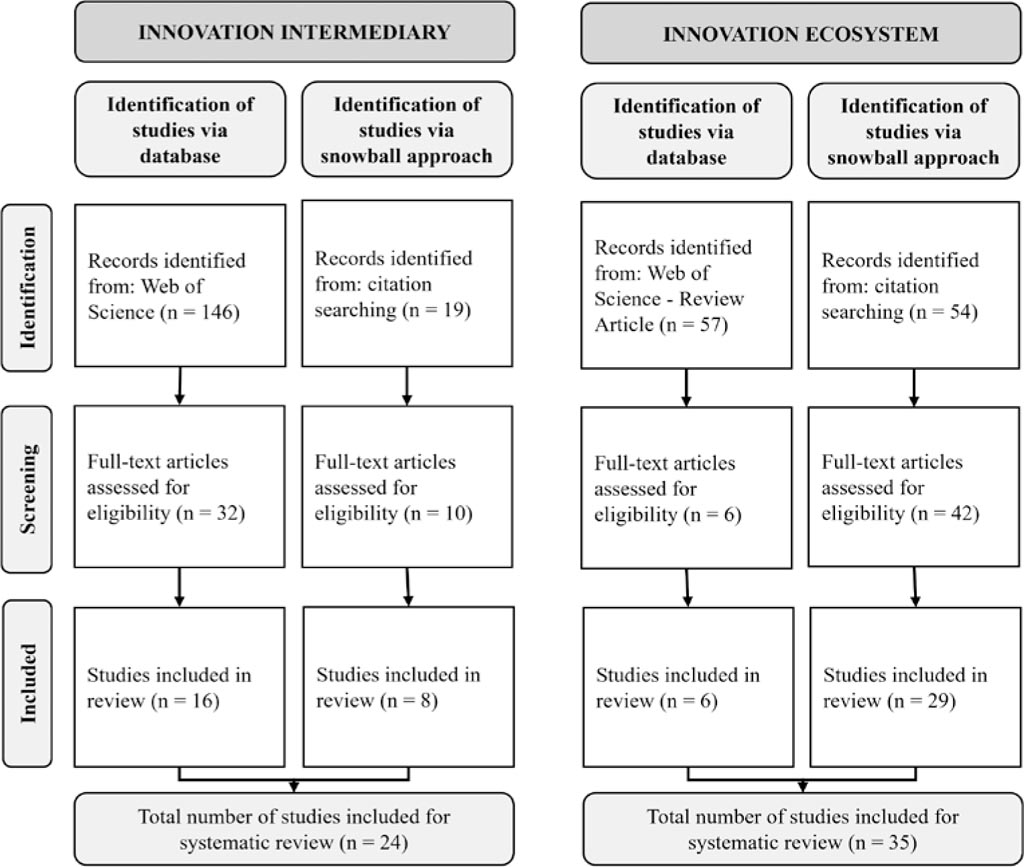
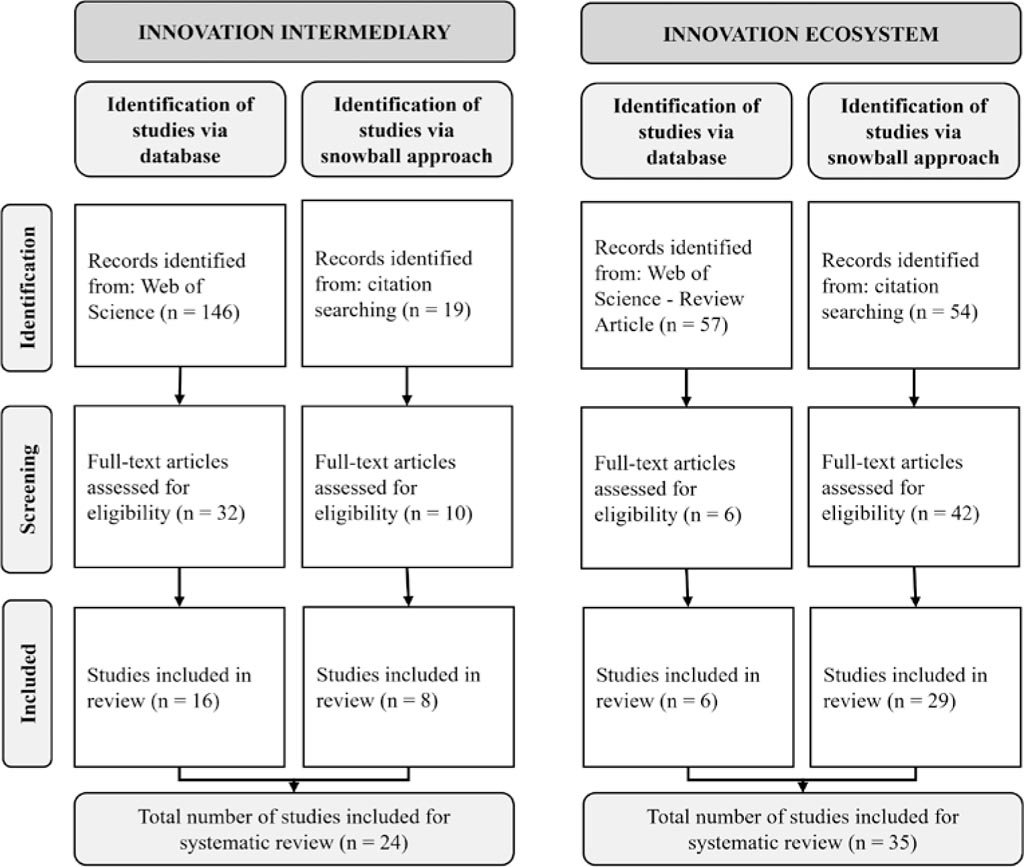
The research began with exploring the Web of Science database to identify articles about innovation intermediaries’ roles and services. This search, conducted on July 10, 2023, was delimited to the terms “innovation intermediar*” within the topic and under the category “management”. 146 documents were retrieved, and titles and abstracts were reviewed. Of these, 32 full-text articles were assessed for eligibility. The selection criteria focused on depicting activities and services provided by these entities. Articles that concentrated on intermediaries involved in specific open innovation interactions or solely on particular services, such as intellectual property (IP) management, were excluded, as this study focuses on a network orchestrator intermediary. After reviewing the full texts, 16 documents were deemed relevant.
Additionally, a snowball approach was adopted to uncover other pertinent articles. This method, commonly employed in systematic literature reviews, entails scrutinizing the bibliographic references of already selected articles to ensure a comprehensive and inclusive search. This phase resulted in the inclusion of eight articles.
For the innovation ecosystems literature, a search was conducted on April 26, 2023, utilizing the Web of Science database with the search terms “innovation ecosystem*” or “business ecosystem*” restricted to the topic within the category of “management”. The search yielded 1,317 results. Although this research focuses on the orchestration of innovation ecosystems, we found it inappropriate to include a specific keyword in the search terms. This decision stemmed from the fragmented nature of the literature on ecosystem management and the lack of a standardized terminology for studying the phenomenon. Due to the extensive number of documents and the initial interest in gaining a general understanding of the subject, only review articles were selected. We read the titles and abstracts of the resulting 57 review articles, considering the focus on the ecosystem orchestration process as a selection criterion. Six initial review articles were subjected to complete reading, and the selected articles were used as a basis for the snowball strategy, including an additional 29 documents. Figure 1 illustrates the methodology flowchart for the article inclusion process.

Methodology flowchart
Citation: Triple Helix 12, 2 (2026) ; 10.1163/21971927-bja10061
Source: the authorsA “bricolage” approach was employed to develop the framework of potential services offered by technology parks (Boxenbaum & Rouleau, 2011). Subsequent data analysis involved the comprehensive reading and examination of the 59 selected articles. During the content analysis of these articles, recurrent themes were identified (Dixon-Woods et al., 2005). Notably, the literature on innovation ecosystems provided an overarching structure regarding the requirements for orchestrating these networks. The literature on innovation intermediaries allowed us to identify the roles and services potentially performed by these intermediaries in fostering innovation.
The authors discussed each proposed action multiple times until a consensus was reached regarding the content and terminology used. Furthermore, multiple iterations of the framework were carried out in collaboration with five park managers, one university representative, and four park tenants. As a result, the framework is not solely based on the authors’ interpretation of the literature; it also incorporates insights from interviews guided by the framework’s categories, which validated its structure.
4 Results
In this section, we present the implications derived from the literature on innovation ecosystems and innovation intermediaries for the innovation support services provided to tenants by the park. Additionally, we developed a conceptual structure that summarizes the key insights obtained from the innovation ecosystem literature, which we subsequently used for framework development. Regarding innovation intermediaries’ literature, as it contributed to the constituent elements of the framework, a summary table of each analyzed article is found in the supplementary information to avoid repetition.
Finally, the section presents the reference framework for active support by technology parks, consolidating these insights into a cohesive structure.
4.1 Innovation Ecosystem
An innovation ecosystem is an evolutionary set of actors, activities, artifacts, institutions, and relationships, encompassing both complementarities and substitutions and playing a significant role in the innovative performance of an actor or a population of actors (Granstand & Holgersson, 2020). It underscores the dissolution of traditional industry barriers and increased interdependence and potential for symbiotic relationships (Moore, 1993). The focus lies in understanding the interaction among interdependent actors for creating and commercializing innovations that benefit the end consumer (Adner, 2012).
An ecosystem is a network that exhibits specific defining characteristics. According to Gomes et al. (2021), an ecosystem is: (i) a meta-organization, (ii) comprising a set of heterogeneous, independent, yet interdependent actors, (iii) bound by complementarities, (iv) collectively generating systemic innovation through the integration of their individual contributions in a coherent manner, and (v) targeting a specific audience. Unlike other types of networks, an ecosystem is distinguished by multilateral, non-generic complementarities among its actors, which are not entirely governed by hierarchical control (Jacobides et al., 2018). Thus, complementarities, reflecting the interdependence among ecosystem members, emerge as a critical element of the ecosystem concept.
Thomas and Autio (2019) propose a typology that includes “entrepreneurial ecosystems”, which facilitate the creation of new ventures. These communities promote collective discovery and the implementation of new and innovative ways to create, deliver, and capture value, such as innovations in business models. Regardless of the adopted typology, ecosystems share distinctive characteristics: i) participant heterogeneity, ii) generativity capacity, and iii) interdependence among those involved (Thomas & Autio, 2019). Thus, the term “innovation ecosystem” will be employed in this article, encompassing business and entrepreneurial ecosystems.
4.1.1 Ecosystem Orchestration
An ecosystem is a meta-organization wherein autonomous organizations carry out collective action, devoid of hierarchical mechanisms, yet share a common goal or specific orientation at the system level (Gomes et al., 2021). Consequently, the resources to be orchestrated transcend the orchestrator’s boundaries (Hou & Shi, 2021). The orchestrator, also referred to as the “keystone” (Iansiti & Levien, 2004) or “ecosystem champion” (Dattee et al., 2018), is the entity that designs, plans, and manages the ecosystem. As the leading actor, it establishes clear rules, monetization mechanisms, and effective partner connections (Jacobides et al., 2018). It fosters the dynamic reconfiguration of the ecosystem by bringing together a diversity of partners with distinct capabilities and experiences (Williamson & Meyer, 2012).
However, the orchestrator provides guidelines and coordinates activities without having complete authority over the partners (Meyer & Williamson, 2020), justifying the orchestra conductor analogy. Innovation ecosystems foster autonomy and collaboration among participants while preserving individual incentives and maintaining flexibility within the system (Meyer & Williamson, 2020). Therefore, understanding what not to do is equally vital to knowing what actions to take. Ecosystem architecture typically involves various niches, each contributing differently to the ecosystem’s overall value. While competition within niches can yield benefits, the ecosystem orchestrator must avoid encroaching upon their partners’ specializations or business activities. Doing so could erode the orchestrator’s credibility, leading potential partners to retreat (Meyer and Williamson, 2020).
Organizations within the same niche exemplify coopetition, where firms simultaneously cooperate to create shared value and compete to appropriate it (Granstrand & Holgersson, 2020; Brandenburger & Nalebuff, 1995). The unique value-creation potential of coopetition is primarily shaped by the shared knowledge of markets and technologies that collaborating parties contribute. While value creation is a collective effort, value appropriation is competitive, as firms strive individually to secure their share of the benefits. This dual dynamic underscores the challenges of balancing collaboration and competition, with evidence suggesting that competitive pressures in end-product markets can negatively impact coopetition outcomes (Ritala & Hurmelinna- Laukkanen, 2009).
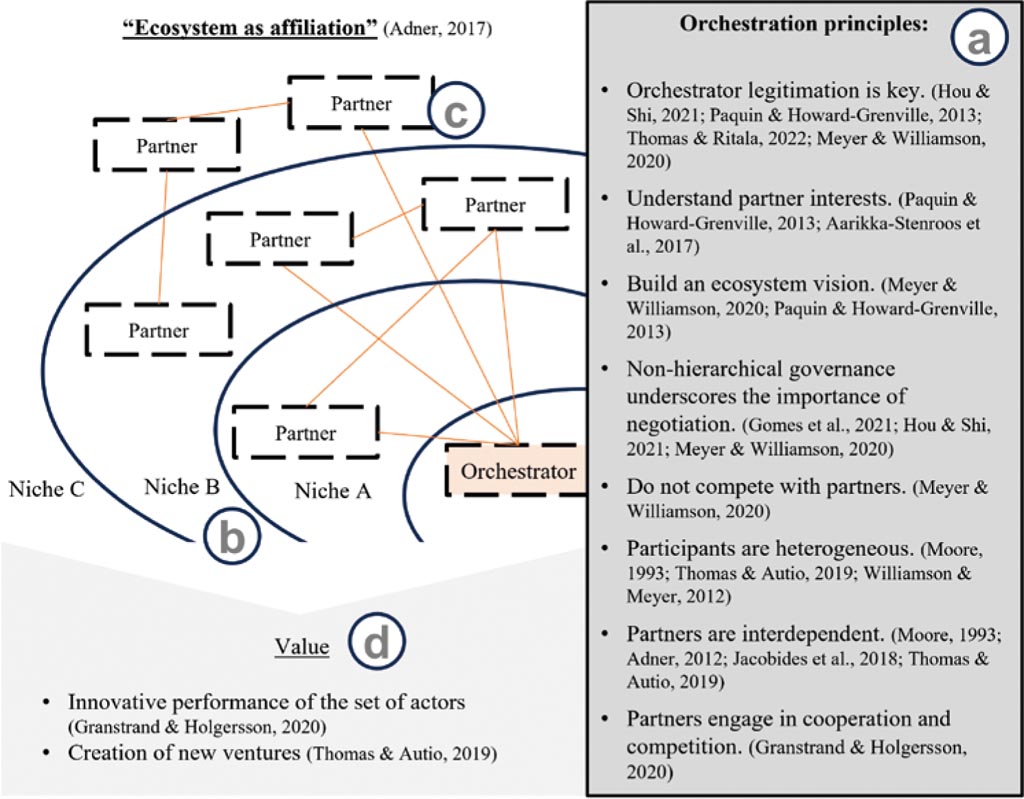
Figure 2 provides the conceptual framework that guides our analysis of innovation ecosystem orchestration. The right-hand section, Figure 2a, highlights vital principles identified in the literature as essential for ecosystem orchestration and their respective references.
Ecosystem orchestration conceptual framework
Citation: Triple Helix 12, 2 (2026) ; 10.1163/21971927-bja10061
Source: the authorsAdopting an ecosystem strategy begins with the premise that knowledge is abundant and widely distributed within and outside the organization (Williamson & Meyer, 2012). While the literature on innovation ecosystems and open innovation have traversed reasonably separate paths over the last two decades, according to Chesbrough (2017), open innovation has evolved to encompass contexts involving multiple collaborations, communities, and ecosystems. Open innovation is a mode of collaborative relationship focused on the innovation process, enabling firms to leverage both internal and external ideas and pathways, internally and externally, for their commercialization (Chesbrough, 2003). The ecosystem depiction emphasizes its architecture, delineating various niches, each with a conjunct of activities carried out by partners and their relationships.
The notion of ecosystem orchestration, reminiscent of open innovation, involves proactively cultivating partnerships with external entities and integrating customers and suppliers into the innovation process (Brunswicker & Chesbrough, 2018) to construct a robust and extensive network (Chiaroni et al., 2011). This strategy demands substantial organizational restructuring, transitioning from closed boundaries to a semi-permeable framework (Arvaniti et al., 2022; Huizingh et al., 2011; Chiaroni et al., 2011). In Figure 2c, the dashed line depicting ecosystem actors signifies the need for semi-permeable boundaries, referencing the representation commonly adopted in open innovation (Alam et al., 2022; Costa & Matias, 2020).
Moreover, partners must share a common objective, as collaboration becomes more complex when diverse stakeholders seek involvement (Bruneel et al., 2010). Therefore, the ecosystem needs to have a collective value. In Figure 2d, we delineate the ecosystem’s critical outcomes, focusing on its operational scope and, consequently, its value proposition.
Addressing the challenges of disciplinary and organizational diversity is essential for fostering effective collaboration (Arvaniti et al., 2022). Thus, establishing inter-organizational ties and navigating conflicts of interest remain significant obstacles in this context (Chesbrough, 2003). Intermediaries can address some of these issues through their involvement. They can foster broad networks, enhance conditions for successful interactions, and facilitate the alignment of compatible collaborators (Arvaniti et al., 2022).
4.2 Innovation Intermediary
Howells (2006) defines innovation intermediaries as organizations that act as agents in any aspect of the innovation process between two or more parties. They catalyze creativity and knowledge by gathering information, expertise, skills, and experiences from diverse actors (Mele & Russo-Spena, 2015). Additionally, intermediaries engage in open innovation activities for other firms intending to foster innovation partnerships (Cantù et al., 2015; Schepis et al., 2021).
Traditionally, intermediaries play bilateral facilitative roles, assisting individual companies in achieving their innovation objectives (Howells, 2006). However, “systemic intermediaries” complement these one-to-one intermediation activities (Kant & Kanda, 2019). These intermediaries do not operate at the level of individual firms or projects but at the network level (Kivimaa, 2014). These collaborative efforts enable the evolution of capabilities and the development of a wide range of infrastructural innovations, including science parks, technology transfer mechanisms, and university-industry interfaces (Pollard, 2006).
Following the preceding statement, Agogué et al. (2017) proposed a typology of innovation intermediaries encompassing three categories: problem-solving intermediaries, technology transfer intermediaries, and intermediaries as network orchestrators. This study focuses on network orchestrators that establish connections among diverse actors. However, the transition of these intermediaries from network to ecosystem orchestrators implies that they are not limited to connecting actors within a specific industry or geographical cluster (Moore, 1993).
Network orchestrator intermediaries are particularly relevant in seeking collaboration partners and providing innovation development support services (Kant & Kanda, 2019). These intermediary organizations play a central role in enhancing cluster efficiency, acting as a “key player” that ensures the continuity and growth of the ecosystem by providing stability, a resource base, and influence over operational and strategic dimensions (Laur et al., 2012). The agent must also offer value-added services (Cantú et al., 2015; Meseguer-Martinez et al., 2020). Furthermore, it is crucial to establish the services provided, as financial independence plays an essential role in sustaining intermediary activities over time (Kant & Kanda, 2019).
4.2.1 Intermediaries Functions and Services
According to Agogué et al. (2017), intermediaries perform four main functions in innovation: connecting actors, mobilizing actors, resolving/preventing conflicts of interest, and actively stimulating the innovation process and outcomes. To promote these functions, Schepis et al. (2021) assert that the intermediary operates at three interconnected levels: industry, network members, and projects. At the industry level, it shapes business interactions and legitimizes partnerships. At the member level, it creates value through trust, compatibilities, and objectives. At the project level, it supports targeted activities.
Similarly, Mele and Russo-Spena (2015) categorize the role of innovation intermediaries into four interdependent levels: engagement, exploration, exploitation, and orchestration. The intermediary operates within the network at the engagement level, identifying partners who can generate new opportunities and disseminate ideas, knowledge, and information. At the exploration and exploitation levels, the intermediary encourages actors to apply their knowledge and creativity in seeking opportunities, changes, and experiences. It fosters utilizing, combining, and refining knowledge and technologies in other contexts. At the orchestration level, the intermediary focuses on creating contexts and conditions that enhance the flow of actions and the process of resource integration. The orchestration of activities seeks to establish a network of connections among individuals, teams, and communities, facilitating the transformation of innovative ideas into technological solutions. By promoting open and non-hierarchical communication, network participants collaborate to support companies in co-creating innovations and strengthening their competitive advantages (Giaccone & Longo, 2016).
Schepis et al. (2021) assert that innovation intermediaries face significant challenges in orchestrating the network and, to overcome them, engage in various activities with diverse organizations to create value for the members. The network orchestration by intermediaries involves three fundamental actions, as highlighted by Mele and Russo-Spena (2015): defining roles, resources, and rules among market actors; mobilizing actors to maintain focus, energy, and commitment to interactions; and enhancing the collective sense of co-creation of innovation. Adopting a continuous and multilateral exchange approach within the network is necessary to achieve successful intermediation rather than pursuing singular goals (Agogué et al., 2017).
In general, the role of the intermediary is to stimulate innovative approaches and to develop and provide conducive conditions for learning and experimentation (Agogué et al., 2017). Intermediaries play a pivotal role in orchestrating industry-centric initiatives, which encompass overarching endeavors aimed at cultivating conducive environments for enterprise interaction, thereby fostering the establishment of necessary network vision and legitimacy to engage a critical mass of potential partners possessing complementary resources (Schepis et al., 2021). Ultimately, the success of cluster initiatives hinges on a shared vision that inspires stakeholders and aligns with their dynamic needs (Laur et al., 2012). Intermediaries assume primary responsibility for such practices owing to their neutral access to businesses, comprehensive knowledge of research center and university focus areas, provision of a neutral and secure physical base for collaboration and representation of a large consortium of companies (Cantú et al., 2015).
Persuasion is essential in convincing and mobilizing technology providers and potential users. Collaboration among organizations necessitates conflict prevention, with intervention by a legitimate intermediary indispensable for resolving conflicts stemming from divergent interests (Agogué et al., 2017). The goals and targets often align well, but the cultural aspects may not. However, the presence of intermediaries can mitigate these boundaries by bridging cultural gaps and addressing any deficiencies in market knowledge and transactional skills (Pollard, 2006). Thus, it becomes imperative for the innovation intermediary to cultivate strategies for legitimization, promote member engagement, and facilitate resource exchange (Schepis et al., 2021). In essence, these intermediaries are tasked with forging common visions, delineating shared objectives, inviting new participants, and providing adequate support to ensure the seamless occurrence of multilateral exchanges within the network (Agogué et al., 2017).
4.3 A Reference Framework for Active Technology Parks Support
We developed a reference framework for active technology park support based on the literature review. The framework integrates the concepts of innovation ecosystems and intermediaries, aiming to foster discussion and understanding of the potential services offered by the management team of technology parks. Article selection was essential for defining fundamental functions and structuring the framework. Although, for synthesis, only the most central contributing documents are referenced, other sources cited in the previous topics contributed to outlining the proposal with principles, concepts, and insights that influenced the development, shaping the selection and grouping of functions.
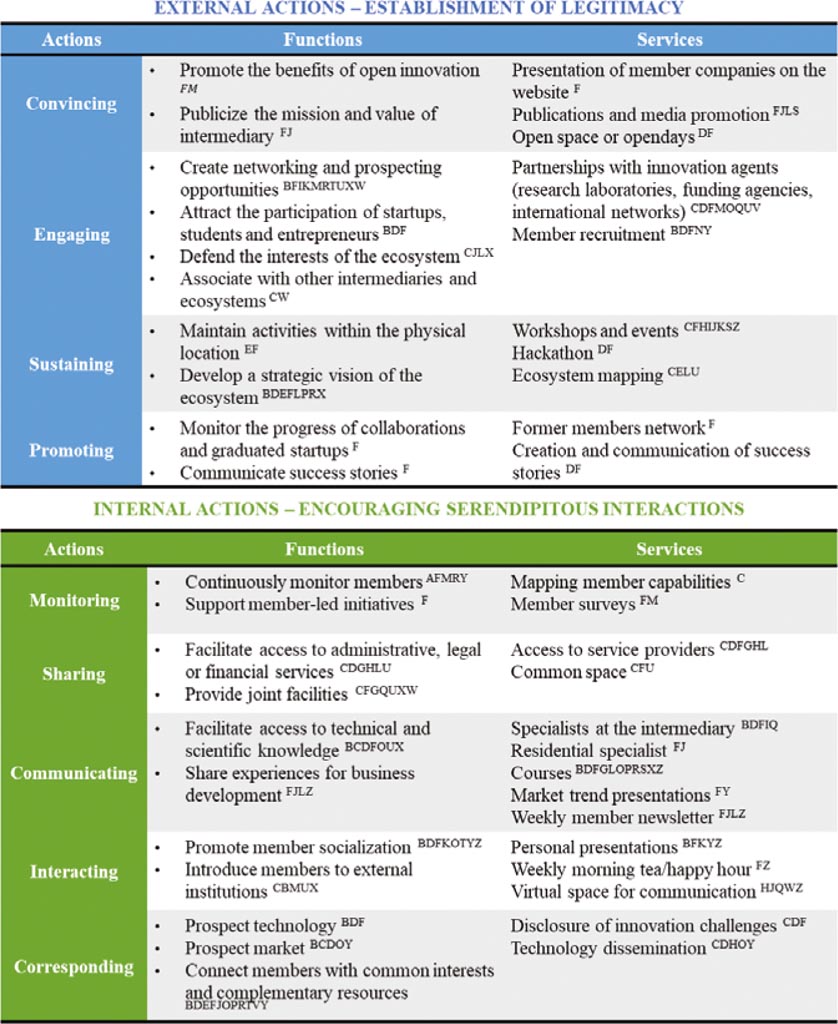
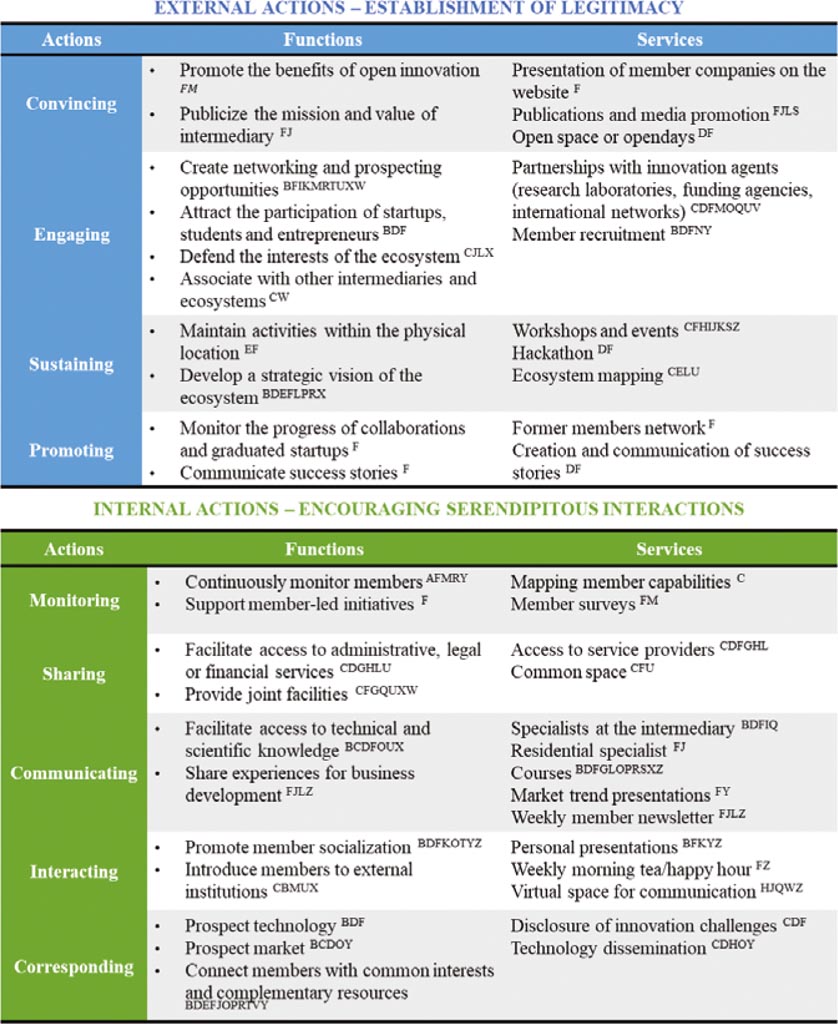
The framework (Figure 3) consists of two main components: external and internal action modules. In this sense, considering the orchestration role of technology parks in the ecosystem, the present study does not include a module supporting specific projects, as proposed by the levels of mechanisms by Schepis et al. (2021), as the ecosystem leader must avoid encroaching on the businesses of its partners (Meyer & Williamson, 2020). Therefore, it proposed that the park function as a “systemic intermediary” (Kant & Kanda, 2019), operating not at the level of individual firms or projects but at the network level (Kivimaa, 2014).
Reference framework for active technology parks support
Citation: Triple Helix 12, 2 (2026) ; 10.1163/21971927-bja10061
Source: The authorsThe architectural framework is organized into distinct modules comprising specific actions, functions, and services. These actions, displayed in the first column, summarize the primary actions undertaken by park management to achieve the parks’ main objectives of “establishing legitimacy” or “encouraging serendipitous interactions”. The functions of the innovation intermediary are outlined in the model’s second column, while the services associated with these functions are detailed in the third column of the model. The functions refer to the micro-objectives related to each action. On the other hand, services are the specific deliverables or resources provided by the intermediary to support these functions. These functions and services are derived from the literature and are denoted by corresponding codes. The terminology was modified from the original references to categorize functions and services from diverse sources and tailor the framework to different contexts.
The module of external actions encompasses actions, functions, and services encompassing society, Triple-Helix agents, and members (the park’s tenants). These actions involve orchestrating the architecture of the innovation ecosystem to establish the legitimacy of ecosystem activities and attract potential partners to form bonds (Paquin & Howard-Grenville, 2013). Four primary actions are underscored as crucial for establishing legitimacy. Convincing indicates that regardless of the level of engagement, organizations must acknowledge the value of open innovation and the innovation ecosystem before being willing to collaborate openly; opportunities for innovation cannot be realized without active engagement (Arvaniti et al., 2022; Meyer & Williamson 2020). Engaging is related to network building and creating relationships with Triple Helix agents. The criteria for member selection and the structure of the ecosystem objective are considered. Sustaining functions pertain to the long-term sustainability of an ecosystem. Achieving this requires maintaining the ecosystem’s relevance through ongoing activities to establish and preserve its continued pertinence, alongside developing a long-term vision for the ecosystem. Ecosystem transformation requires collaborative efforts among interdependent organizations to align aspirations (Paquin & Howard-Grenville, 2013). Promoting involves emphasizing the importance of the ecosystem by showcasing examples of how it generates value for tenants and other network members through case studies. This initiative reinforces the persuasiveness of the argument for legitimacy building.
The legitimacy established by the module of external actions is applied within the module of internal actions, which includes more specific services to create value for members, stimulating successful interactions within the ecosystem. The second module aims to encourage serendipitous interactions and contains five actions. Monitoring is associated with the ecosystem orchestrator’s imperative to understand the needs of its members. Aarikka-Stenroos et al. (2017) emphasize the significance of grasping both individual and collective interests. Furthermore, all subsequent actions are motivated and made possible by this initial understanding. If the orchestrator lacks detailed knowledge of the value proposition of its members, it cannot identify partners with complementary resources or provide adequate services and support.
Sharing is associated with the potential for scalability within conglomerate businesses possessing complementary and analogous characteristics and capabilities. It pertains to accessing standard services and infrastructure needs. Communicating involves sharing knowledge, encompassing management insights, trends, scientific and technical knowledge among network members, and engaging external organizations. Interacting signifies members’ inclination to engage with one another and leverage the orchestrator’s extensive network to identify potential synergies and complementary points. Corresponding relates to brokerage activities aimed at bridging technology and market through broad dissemination of proposals via publicity and targeted connections.
5 Discussion and Implications
The framework highlights the interdependence of activities carried out by the ecosystem orchestrator. Thus, actions are taken with targeted goals for both an external audience to the network and the internal audience, generating a feedback loop. External actions to establish legitimacy are crucial for encouraging serendipitous interactions. Meyer and Williamson (2020) emphasize the role of the orchestrator’s legitimacy in persuading potential partners to foster a collaborative partnership network. They propose pivotal strategies: identifying legitimate foundation partners, providing ecosystem roadmaps, and articulating participation value. Paquin and Howard-Grenville (2013) add that orchestrators must invest in fostering serendipitous interactions while managing targeted connections. Strategies include “developing a strategic vision of the ecosystem”, leveraging partnerships for recruitment (e.g., “member recruitment”), and creating interaction-friendly environments (e.g., “promote member socialization”). They facilitate connections by strategically introducing relevant entities and actively engaging with companies.
The ecosystem-based approach has played a central role in structuring the framework. There is a need to align individual interests with the shared objectives of the ecosystem (Paquin & Howard-Grenville, 2013). The ecosystem leader provides guidance and coordinates activities but does not hold formal authority over partners (Meyer & Williamson, 2020). In situations aiming for significant ecosystem change, the orchestrator cannot unilaterally impose such change; instead, collaboration in novel ways is required among actors to enhance development, where ecosystem changes hinge upon aspirations alignment (Paquin & Howard-Grenville, 2013). Hence, Aarikka-Stenroos et al. (2017) contend that ecosystem management entails understanding the individual and collective interests of involved actors. This illustrates the connection between monitoring actions and the efforts to promote and sustain. It highlights the importance of a balanced approach that considers individual motivations while fostering collaboration and maintaining harmonious relationships. Such an approach ensures that ecosystem management efforts are effective in achieving short-term goals and sustainable in the long run by fostering trust, cooperation, and mutual benefit among all parties involved.
On the other hand, the intermediaries’ perspective provided a better understanding of the micro-elements of potential functions and services. Cantú et al. (2015) assert that intermediaries perform a range of practices since they have neutral access to companies and universities. For example, Howells’ study (2006) identifies ten key functions of innovation intermediaries, including foresight, diagnostics, testing, validation, and training.
5.1 Integrative Character of Functions
A function highly cited in different documents was “create networking and prospecting opportunities”, which was part of the engaging action. Paquin and Howard-Grenville (2013) argue that orchestrators must initially establish the legitimacy of network activities to a broad audience while attracting potential members to foster connections. Therefore, there is a link between this action and convincing, sustaining, and promoting. In nascent ecosystems, akin to other novel organizational structures, there is often a struggle to acquire resources and institutional support due to a reliance on cooperation from unfamiliar parties and a lack of established legitimacy. Subsequently, as outlined by Thomas and Ritala (2022), legitimacy within ecosystems evolves through discursive and performative legitimation processes alongside the construction of ecosystem identity and their interplay.
This study underscores the interdependence among orchestration mechanisms, revealing how they capitalize on the value generated through participation in earlier activities and how value creation at one level is vital for enhancing value at another. This finding resonates with the concept of activity interdependence previously highlighted by Schepis et al. (2021) yet offers a novel application within the realm of technology parks.
Additionally, the study moves towards a framework that organizes the potential services offered by technology parks to a specific stakeholder group: their tenants. However, the framework is not intended to be definitive, as this is not a closed question. It requires further refinement and adaptation to specific contexts. Nevertheless, it serves as a valuable starting point for various scenarios, providing initial guidance and facilitating discussions as a reference “checklist”. While the framework is robust enough to support these initial applications, it remains open to expansion and enhancement, acknowledging the vast diversity within technology parks.
5.2 The Framework as a Reference for the Management Level
Theoretical implications can be deduced from this study. We contribute to the literature on technology parks by examining the potential innovation support services provided at the managerial level to their tenants. In doing so, we elucidate a range of actions, functions, and services that may be utilized, along with their interdependencies for establishing legitimacy and fostering serendipitous interactions. This expands upon prior research that primarily concentrated on parks’ objectives or macro functions rather than specific activities that must be undertaken by park management (Löfsten & Lindelöf, 2002; Meseguer-Martinez et al., 2020). Specifically, we demonstrate potential services offered by park management teams, categorizing them by target audience, primary actions, and functions.
The reference framework for active technology parks support provides insights for structuring a portfolio of services for technology parks, aiming to move beyond being limited agents providing common physical facilities to offering value-added services (Cantú et al., 2015). To this end, it can be used as a checklist to diagnose the fronts of action of these intermediaries. Furthermore, it encourages the articulation of a service portfolio that adapts to the specific characteristics of the innovation environment in which the technology park operates. Flexibility is crucial due to the diversity of legal, economic, and social contexts that influence technology parks (Meseguer-Martinez et al., 2020).
The perspective of technology parks as ecosystem orchestrators allows for expanding knowledge about the services offered by these intermediaries. It emphasizes the need for the leading organization to avoid encroaching on its partners’ businesses. Additionally, according to Albahari et al. (2019), it is common for management and consulting services eventually offered by parks to frustrate the expectations of associated companies. This lack of value may be due to the inferior quality of these services compared to the market. Thus, the proposed approach suggests that partner intermediaries of the technology park should carry out actions directed at specific projects. As the park seeks to facilitate connections between Triple-Helix agents (Faria et al., 2022), adding value to these organizations’ existing structures is essential.
The provision of services should be aligned with the park’s characteristics, but it is advisable to leverage ecosystem partners for service delivery. As Meyer and Williamson (2020) emphasize, ecosystem leaders must take strategic actions to ensure sustainable profit streams from the ecosystems they help develop. The ecosystem must create greater value than any organization could generate on its own, and the services provided, along with their formalization, reflect this. Additionally, the park should charge businesses for access to ecosystem services as physical tenants or through virtual means. Another monetization strategy involves implementing tollgates to capture a share of the value generated by the ecosystem, which may include license fees, royalties, transaction commissions within the ecosystem, or a portion of profits from products or services provided by ecosystem partners.
5.3 Implications for Other Agents
In addition to park management, various stakeholders such as policymakers, technology transfer offices (NITs), parks’ tenants, and other relevant entities stand to gain considerable benefits from this scholarly investigation. Firstly, policymakers can utilize these findings to craft policies that foster the development of technology parks offering a suitable array of services to bolster and exploit innovation ecosystems. Additionally, policymakers can incentivize parks to undertake the diverse activities described, including through targeted funding for specific initiatives.
Secondly, NITs can enhance their technology transfer endeavors by refining their strategies based on the innovation support services and support mechanisms outlined by parks, thus augmenting their role as effective intermediaries in the innovation landscape. Furthermore, tenants of technology parks gain a deeper comprehension of the value proposition provided by these parks, extending beyond mere infrastructure provisions. They are encouraged to actively participate in the collaborative ecosystem facilitated by parks, thereby leveraging synergies and network effects for their innovation pursuits. Improving the parks’ service portfolio has a direct impact on the tenants as well.
6 Conclusion
This study investigated the potential innovation support services offered at the managerial level by technology parks to their tenants. To achieve this objective, literature reviews were conducted on innovation intermediaries and innovation ecosystems to identify convergences, and the findings were integrated into a framework. The reference framework for the active support provided to their members by technology parks contains potential services offered categorically organized by main objectives, primary actions, and functions.
A methodological limitation of this study lies in the inherent ambiguity and subjectivity of the inclusion and exclusion criteria, which impacts the transparency and reproducibility of the research. Additionally, although the Web of Science is recognized for its rigorous indexing, limiting data collection to this single source may result in the omission of more current discussions available in other repositories. For instance, Scopus, which indexes a wide range of conference papers, can capture emerging debates and cutting-edge research that the Web of Science might not yet include. Thus, restricting the search to the Web of Science could bias the review towards more established perspectives, missing out on recent trends. Furthermore, snowball sampling, although helpful in identifying relevant articles through citations, may introduce selection bias by creating a closed citation loop that favors specific authors or perspectives. While effective in uncovering classic works and articles outside the Web of Science, this technique can also reinforce existing biases in the literature. For example, the innovation ecosystem literature often emphasizes its application in the context of digital platforms, while the broader intermediary innovation literature – which involves a diverse range of agents – remains too expansive, potentially diluting the focus on more prescriptive insights. As a result, this method may privilege dominant theoretical perspectives while underrepresenting alternative or emerging viewpoints. Lastly, guiding the selection of innovation ecosystems articles based on prior reviews provides a structured overview but may limit perspective diversity. This approach risks overlooking recent contributions or alternative frameworks that were not adequately highlighted in earlier reviews.
Technology parks operate under various ownership models, which could influence how a specific park adopts the framework’s recommendations. This nuance is challenging to explore fully through the methodology employed in this study. In general, the objective of fostering interaction among the Triple Helix actors suggests that the stakeholders in technology parks are mainly similar. The ownership model, however, determines the distribution of power and influence within the ecosystem managed by the park. Therefore, while the ownership structure may affect how a park applies the framework’s guidelines, the services outlined in the framework are somewhat generalized, with their implementation potentially varying across different cases.
The reference framework for the active support provided to their tenants by technology parks contributes to the literature by providing a deeper understanding of the services provided by innovation intermediaries and their contribution to the development of innovations within organizations associated with their ecosystems. Thus, it serves as a tool for technology parks to identify relevant services to foster innovation. Furthermore, intermediaries must adopt business models based on providing value-added services for regional economic development and their financial sustainability.
Some critical practical implications arise for park managers. Services should not only be directed towards the internal audience. External actions aimed at establishing legitimacy are essential, as to build a network, the orchestrator must generate broad interest and support. Furthermore, orchestration mechanisms exhibit interdependence, meaning that actions taken can influence participation and value creation in other actions (Schepis et al., 2021). The framework presents a set of actions that are more effective if executed simultaneously, as proficiency in some activities and unsatisfactory performance in others may be insufficient.
Future research could build on this study’s proposed framework by refining and adapting it to specific contexts, particularly by evaluating its applicability to the diverse characteristics of technology parks. A promising avenue is the use of the framework to structure a survey and interview protocol involving key stakeholders – technology park management, tenant firms, and external partners. By using the framework’s actions, functions, and services as a guiding structure, this approach would enable a systematic assessment of how the park executes each function from multiple perspectives. Such an evaluation could reveal strategic priorities, operational challenges, and potential misalignments between service provision and user needs, while also quantifying stakeholder satisfaction and the perceived impact of different services. This structured assessment would provide a comparative analysis of how different stakeholders perceive the park’s effectiveness in ecosystem orchestration, helping to identify strengths, weaknesses, and areas for improvement. Additionally, future studies could explore, through case studies and structured assessments, the role of technology park management as an ecosystem orchestrator, examining its modes of operation, governance mechanisms, and service offerings across the different levels of analysis outlined in the framework.
While this study focuses on external relationships, driven by its emphasis on ecosystem orchestration, future research should address internal dynamics, including governance structures and stakeholder engagement. These elements are pivotal to the overall effectiveness of technology parks and their capacity to deliver impactful services. Exploring these aspects would provide more comprehensive guidance for park managers on how to implement the service portfolio outlined in this study.
Acknowledgments
The authors gratefully acknowledge the financial support provided by the Fundação de Amparo à Pesquisa do Estado de Minas Gerais (FAPEMIG), which was instrumental in enabling this research.
References
Aarikka-Stenroos, L., Jaakkola, E., Harrison, D., & Mäkitalo-Keinonen, T. (2017). How to manage innovation processes in extensive networks: A longitudinal study. Industrial Marketing Management, 67, 88–105. https://doi.org/10.1016/j.indmarman.2017.09.014.
Adner, R. (2012). The wide lens: What successful innovators see that others miss (Revised pbk. edition). Portfolio Penguin.
Agogué, M., Berthet, E., Fredberg, T., Le Masson, P., Segrestin, B., Stoetzel, M., Wiener, M., & Yström, A. (2017). Explicating the role of innovation intermediaries in the “unknown”: A contingency approach. Journal of Strategy and Management, 10(1), 19–39. https://doi.org/10.1108/JSMA-01-2015-0005.
Alam, M. A., Rooney, D., & Taylor, M. (2022). From ego‐systems to open innovation ecosystems: A process model of inter‐firm openness. Journal of Product Innovation Management, 39(2), 177–201. https://doi.org/10.1111/jpim.12615.
Albahari, A., Barge-Gil, A., Pérez-Canto, S., & Landoni, P. (2022). The effect of science and technology parks on tenant firms: A literature review. The Journal of Technology Transfer. https://doi.org/10.1007/s10961-022-09949-7.
Albahari, A., Klofsten, M., & Rubio-Romero, J. C. (2019). Science and Technology Parks: A study of value creation for park tenants. The Journal of Technology Transfer, 44(4), 1256–1272. https://doi.org/10.1007/s10961-018-9661-9.
Anton-Tejon, M., Martinez, C., Albahari, A., & Barge-Gil, A. (2024). Science and technology parks and their effects on the quality of tenants’ patents. The Journal of Technology Transfer. https://doi.org/10.1007/s10961-023-10060-8.
Arvaniti, E. N., Dima, A., Stylios, C. D., & Papadakis, V. G. (2022). A New Step-by-Step Model for Implementing Open Innovation. Sustainability, 14(10), 6017. https://doi.org/10.3390/su14106017.
Boxenbaum, E., & Rouleau, L. (2011). New Knowledge Products As Bricolage: Metaphors and Scripts in Organizational Theory. Academy of Management Review.
Brandenburger, A.M. & Nalebuff, B.J. (1995). The right game: use game theory to shape strategy. Harvard Business Review, 73 (4), 57–71.
Bruneel, J., D’Este, P., & Salter, A. (2010). Investigating the factors that diminish the barriers to university – industry collaboration. Research Policy, 39(7), 858–868. https://doi.org/10.1016/j.respol.2010.03.006
Bruneel, J., Ratinho, T., Clarysse, B., & Groen, A. (2012). The Evolution of Business Incubators: Comparing demand and supply of business incubation services across different incubator generations. Technovation, 32(2), 110–121. https://doi.org/10.1016/j.technovation.2011.11.003.
Brunswicker, S., & Chesbrough, H. (2018). The Adoption of Open Innovation in Large Firms: Practices, Measures, and Risks – A survey of large firms examines how firms approach open innovation strategically and manage knowledge flows at the project level. Research-Technology Management, 61(1), 35–45. https://doi.org/10.1080/08956308.2018.1399022.
Cadorin, E., Klofsten, M., Albahari, A., & Etzkowitz, H. (2020). Science Parks and the Attraction of Talents: Activities and Challenges. Triple Helix Journal, 6(1), 36–68. https://doi.org/10.1163/21971927-00601002.
Cantù, C., Ylimäki, J., Sirén, C. A., & Nickell, D. (2015). The role of knowledge intermediaries in co-managed innovations. Journal of Business & Industrial Marketing, 30(8), 951–961. https://doi.org/10.1108/JBIM-02-2014-0032.
Chandra, A., & Chao, C.-A. (2016). Country Context and University Affiliation: A Comparative Study of Business Incubation in the United States and Brazil. Journal of Technology Management & Innovation, 11(2), 33–45. https://doi.org/10.4067/S0718-27242016000200004.
Chesbrough, H. (2017). The Future of Open Innovation: The future of open innovation is more extensive, more collaborative, and more engaged with a wider variety of participants. Research-Technology Management, 60(1), 35–38. https://doi.org/10.1080/08956308.2017.1255054.
Chesbrough, H. W. (2003). Open innovation: The new imperative for creating and profiting from technology. Harvard Business School Press.
Chiaroni, D., Chiesa, V., & Frattini, F. (2011). The Open Innovation Journey: How firms dynamically implement the emerging innovation management paradigm. Technovation, 31(1), 34–43. https://doi.org/10.1016/j.technovation.2009.08.007.
Costa, J., & Matias, J. C. O. (2020). Open Innovation 4.0 as an Enhancer of Sustainable Innovation Ecosystems. Sustainability, 12(19), 8112. https://doi.org/10.3390/su12198112.
Dabrowska, J., & Faria, A. F. (2020). Performance Measures to Assess the Success of Contemporary Science Parks. Triple Helix Journal, 1–43. https://doi.org/10.1163/21971927-bja10006.
Dattée, B., Alexy, O., & Autio, E. (2018). Maneuvering in Poor Visibility: How Firms Play the Ecosystem Game when Uncertainty is High. Academy of Management Journal, 61(2), 466–498. https://doi.org/10.5465/amj.2015.0869.
Dixon-Woods, M., Agarwal, S., Jones, D., Young, B., & Sutton, A. (2005). Synthesising qualitative and quantitative evidence: A review of possible methods. Journal of Health Services Research & Policy, 10(1), 45–53. https://doi.org/10.1177/135581960501000110.
Faria, A. F. de, Haber, J. A., Battisti, A. C. D., Dabrowska, J., & Sediyama, J. A. S. (2022). Technology parks in Brazil: An analysis of the determinants of performance evaluation. International Journal of Innovation, 10(1), 30–67. https://doi.org/10.5585/iji.v10i1.19456.
Ferguson, R., & Olofsson, C. (2004). Science Parks and the Development of NTBFs – Location, Survival and Growth. The Journal of Technology Transfer, 29(1), 5–17. https://doi.org/10.1023/B:JOTT.0000011178.44095.cd.
Feser, D. (2022). Innovation intermediaries revised: A systematic literature review on innovation intermediaries’ role for knowledge sharing. Review of Managerial Science. https://doi.org/10.1007/s11846-022-00593-x.
Germain, E., Klofsten, M., Löfsten, H., & Mian, S. (2023). Science parks as key players in entrepreneurial ecosystems. R&D Management, 53(4), 603–619. https://doi.org/10.1111/radm.12536.
Giaccone, S. C., & Longo, M. C. (2016). Insights on the innovation hub’s design and management. International Journal of Technology Marketing, 11(1), 97. https://doi.org/10.1504/IJTMKT.2016.073318.
Gomes, L. A. de V., Facin, A. L. F., Leal, L. F., Zancul, E. de S., Salerno, M. S., & Borini, F. M. (2022). The emergence of the ecosystem management function in B2B firms. Industrial Marketing Management, 102, 465–487. https://doi.org/10.1016/j.indmarman.2021.12.015.
Gomes, L. A. de V., Flechas, X. A., Facin, A. L. F., & Borini, F. M. (2021). Ecosystem management: Past achievements and future promises. Technological Forecasting and Social Change, 171, 120950. https://doi.org/10.1016/j.techfore.2021.120950.
Granstrand, O., & Holgersson, M. (2020). Innovation ecosystems: A conceptual review and a new definition. Technovation, 90–91, 102098. https://doi.org/10.1016/j.technovation.2019.102098.
Hommen, L., Doloreux, D., & Larsson, E. (2006). Emergence and Growth of Mjärdevi Science Park in Linköping, Sweden1. European Planning Studies, 14(10), 1331–1361. https://doi.org/10.1080/09654310600852555.
Hou, H., & Shi, Y. (2021). Ecosystem-as-structure and ecosystem-as-coevolution: A constructive examination. Technovation, 100, 102193. https://doi.org/10.1016/j.technovation.2020.102193.
Howells, J. (2006). Intermediation and the role of intermediaries in innovation. Research Policy, 35(5), 715–728. https://doi.org/10.1016/j.respol.2006.03.005.
Huizingh, E. K. R. E. (2011). Open innovation: State of the art and future perspectives. Technovation, 31(1), 2–9. https://doi.org/10.1016/j.technovation.2010.10.002.
Iansiti, M., & Levien, R. 2004. The keystone advantage: What the new dynamics of business ecosystems mean for strategy, innovation, and sustainability. Boston, MA: Harvard Business Press.
Jacobides, M. G., Cennamo, C., & Gawer, A. (2018). Towards a theory of ecosystems. Strategic Management Journal, 39(8), 2255–2276. https://doi.org/10.1002/smj.2904.
Kant, M., & Kanda, W. (2019). Innovation intermediaries: What does it take to survive over time? Journal of Cleaner Production, 229, 911–930. https://doi.org/10.1016/j.jclepro.2019.04.213.
Kivimaa, P. (2014). Government-affiliated intermediary organisations as actors in system-level transitions. Research Policy, 43(8), 1370–1380. https://doi.org/10.1016/j.respol.2014.02.007.
Kocak, O., & Can, O. (2014). Determinants of inter-firm networks among tenants of science technology parks. Industrial and Corporate Change, 23(2), 467–492. https://doi.org/10.1093/icc/dtt015.
Lamperti, F., Mavilia, R., & Castellini, S. (2017). The role of Science Parks: A puzzle of growth, innovation and R&D investments. The Journal of Technology Transfer, 42(1), 158–183. https://doi.org/10.1007/s10961-015-9455-2.
Laur, I., Klofsten, M., & Bienkowska, D. (2012). Catching Regional Development Dreams: A Study of Cluster Initiatives as Intermediaries. European Planning Studies, 20(11), 1909–1921. https://doi.org/10.1080/09654313.2012.725161.
Lecluyse, L., Knockaert, M., & Spithoven, A. (2019). The contribution of science parks: A literature review and future research agenda. The Journal of Technology Transfer, 44(2), 559–595. https://doi.org/10.1007/s10961-018-09712-x.
Liberati, D., Marinucci, M., & Tanzi, G. M. (2016). Science and technology parks in Italy: Main features and analysis of their effects on the firms hosted. Journal of Technology Transfer, 41(4), 694–729. https://doi.org/10.1007/s10961-015-9397-8.
Lin, B.-W., Li, P.-C., & Chen, J.-S. (2006). Social capital, capabilities, and entrepreneurial strategies: A study of Taiwanese high-tech new ventures. Technological Forecasting and Social Change, 73(2), 168–181. https://doi.org/10.1016/j.techfore.2004.12.001.
Löfsten, H., & Lindelöf, P. (2002). Science Parks and the growth of new technology-based firms – Academic-industry links, innovation and markets. Research Policy, 31(6), 859–876. https://doi.org/10.1016/S0048-7333(01)00153-6.
Mele, C., & Russo-Spena, T. (2015). Innomediary agency and practices in shaping market innovation. Industrial Marketing Management, 44, 42–53. https://doi.org/10.1016/j.indmarman.2014.10.006.
Meseguer-Martinez, A., Popa, S., & Soto-Acosta, P. (2020). The instrumentation of science parks: An integrative framework of enabling factors. Journal of Intellectual Capital, 22(1), 24–56. https://doi.org/10.1108/JIC-11-2019-0264.
Meyer, A. de, & Williamson, P. J. (2020). Ecosystem edge: Sustaining competitiveness in the face of disruption. Stanford Business Books, an imprint of Stanford University Press.
Moore, J. F. (1993). Predators and Prey: A New Ecology of Competition. Harvard Business Review.
Paquin, R. L., & Howard-Grenville, J. (2013). Blind Dates and Arranged Marriages: Longitudinal Processes of Network Orchestration. Organization Studies, 34(11), 1623–1653. https://doi.org/10.1177/0170840612470230.
Pollard, D. (2006). Innovation and Technology Transfer Intermediaries: A Systemic International Study. In Advances in Interdisciplinary Studies of Work Teams (Vol. 12, pp. 137–174). Emerald (MCB UP). https://doi.org/10.1016/S1572-0977(06)12006-3.
Ribeiro, J. de A., Ladeira, M. B., Faria, A. F. de, & Barbosa, M. W. (2021). A reference model for science and technology parks strategic performance management: An emerging economy perspective. Journal of Engineering and Technology Management, 59, 101612. https://doi.org/10.1016/j.jengtecman.2021.101612.
Ritala, P., & Hurmelinna-Laukkanen, P. (2009). What’s in it for me? Creating and appropriating value in innovation-related coopetition. Technovation, 29(12), 819–828. https://doi.org/10.1016/j.technovation.2009.07.002.
Sandberg, J., & Alvesson, M. (2011). Ways of constructing research questions: Gap- spotting or problematization? Organization, 18(1), 23–44. https://doi.org/10.1177/1350508410372151.
Schepis, D., Purchase, S., & Butler, B. (2021). Facilitating open innovation processes through network orchestration mechanisms. Industrial Marketing Management, 93, 270–280. https://doi.org/10.1016/j.indmarman.2021.01.015.
Silva, S. E., Venâncio, A., Silva, J. R., & Gonçalves, C. A. (2020). Open innovation in science parks: The role of public policies. Technological Forecasting and Social Change, 151, 119844. https://doi.org/10.1016/j.techfore.2019.119844.
Soetanto, D. P., & Jack, S. L. (2013). Business incubators and the networks of technology-based firms. The Journal of Technology Transfer, 38(4), 432–453. https://doi.org/10.1007/s10961-011-9237-4.
Thomas, L., & Autio, E. (2019). Innovation Ecosystems. SSRN Electronic Journal. https://doi.org/10.2139/ssrn.3476925.
Vásquez-Urriago, Á. R., Barge-Gil, A., & Modrego Rico, A. (2016). Science and Technology Parks and cooperation for innovation: Empirical evidence from Spain. Research Policy, 45(1), 137–147. https://doi.org/10.1016/j.respol.2015.07.006.
Williamson, P. J., & De Meyer, A. (2012). Ecosystem Advantage: How to Successfully Harness the Power of Partners. California Management Review, 55(1), 24–46. https://doi.org/10.1525/cmr.2012.55.1.24.
Yang, C.-H., Motohashi, K., & Chen, J.-R. (2009). Are new technology-based firms located on science parks really more innovative? Research Policy, 38(1), 77–85. https://doi.org/10.1016/j.respol.2008.09.001.
Ziyae, B., & Tajpour, M. (2016). Designing a comprehensive model of entrepreneurial university in the science and technology parks. World Journal of Entrepreneurship, Management and Sustainable Development, 12(3), 267–280. https://doi.org/10.1108/WJEMSD-04-2016-0022.