Abstract
This article explores the establishment of research centres as manifestations of academic intrapreneurship, thus challenging the assumption that academic intrapreneurship is solely commercially driven, emphasizing the critical role of early stakeholder engagement, funding, strategic partnerships, effective communication and clearly defined roles. The article contributes to the intrapreneurship literature by contextualizing research centre creation as an intrapreneurial process, exploring how universities develop intrapreneurial capabilities, and identifying the challenges intrapreneurs face. Practical implications suggest investing in training and recognition systems to enhance intrapreneurial skills among faculty, staff, and students.
1 Introduction
Over the past two decades, the expected role of universities and other Higher Education Institutions (HEIs) has undergone significant transformation, from being seen as primarily sources of new knowledge and education to shouldering much broader responsibilities for economic, social and technological development, particularly, innovation and entrepreneurship (Guererro et al., 2016; Klofsten et al., 2024). Much of the academic literature on this transformation has focused on the need for universities to foster entrepreneurship in the form of new business venture creation (Audretsch et al., 2024; Klofsten & Lundmark, 2016), for example through incubators and accelerators (Klofsten et al., 2020), or the importance of involving key stakeholders in their activities, such as the Triple Helix Model (Leydesdorff & Etzkowitz, 1998). The consequence is that the underpinning conceptualisation of entrepreneurship is one where students or staff at universities create new ventures to commercialise the knowledge created at universities or where universities, sometimes in collaboration with government, facilitate the commercialisation of knowledge among existing industry collaborators. These important processes have attracted a substantial amount of research interest. Yet, this literature has overlooked the critical intrapreneurial processes through which academic staff mobilise support for and create new research centres.
Research centers in universities are vital for fostering innovation, knowledge creation, and interdisciplinary collaboration (Boardman & Corley, 2008). They provide a structured environment for researchers to explore new ideas, conduct in-depth studies, and collaborate across disciplines. By bringing together experts from various fields, research cents facilitate the exchange of ideas and the development of groundbreaking research projects (ibid). Establishing these centers involves a complex interplay of institutional, organisational, and individual factors, and require entrepreneurial behaviour of the actors involved. While entrepreneurial behaviour within existing organisations, labelled intrapreneurship, has been studied (Pinchot, 1985), such studies tend to focus on the commercial business context (e.g., Zahra & Covin, 1995; Zahra & Garvis, 2000). Yet, there is a growing strand of research on academic intrapreneurship (De Keyser & Vandenbempt, 2023; Giunti & Duberley, 2023), defined as “any activity that occurs beyond the traditional academic roles of teaching and/or research, is innovative, carriers and element of risk and leads to financial rewards for the individual academic or his/her institution – with financial rewards either occurring directly or occurring indirectly via an increase in reputation, prestige, influence, or societal benefits” (Abreu & Grinevich, 2013, p. 408). However, this literature, like the broader literature on the changing role of universities, has tended to focus on contributions towards commercialisation, such as how academic intrapreneurs contribute to external value through activities like patenting, licensing, and technology transfers to industry, as well as how academics nurture student startups (Hughes et al., 2016; Shekhar et al., 2023). That is, the growing literature on academic intrapreneurship is based on the implicit assumption that academic intrapreneurship is a commercial phenomenon where the goal is to create or expand commercial activities.
In this article, we question this assumption (Sandberg & Alvesson, 2011) by exploring how the research centre creation process, can be understood as an act of academic intrapreneurship. That is, we aim to broaden the understanding of academic intrapreneurship to include acts of centre creation which, we argue, can be seen as an instance of organization creation (Gartner, 1989; Henry & Lahikainen, 2024). Focusing empirically on The Helix Research Centre (HRC), our study aims to unravel the intricacies of research centre creation within the academic setting, viewing it through the lens of intrapreneurial activity. Contributing to the academic intrapreneurship literature, this paper offers the following contributions.
Firstly, it provides a contextual understanding of research centre establishment as an intrapreneurial process. While existing studies have illuminated aspects of academic intrapreneurship dynamics and responses to intrapreneurial processes in the context of commercial activities, our work expands on this by scrutinising how the creation of a research centre, exemplified by HRC, embodies intrapreneurial endeavours.
Secondly, this study focuses on the intrapreneurial process understanding how academic intrapreneurial capabilities are developed within HEIs grounded in both theory and practice (Bergman & McMullen, 2022; Klofsten et al., 2021). This paper addresses this by investigating how academic institutions support intrapreneurship and intrapreneurship processes by fostering intrapreneurial capabilities. Developing a comprehensive understanding of intrapreneurial activities within HEIs and highlighting their intrapreneurial aspects could enhance the effectiveness of third mission delivery. Additionally, it could offer valuable insights for other academic institutions embarking on their intrapreneurial journey.
Thirdly, this study reveals that intrapreneurs frequently encounter challenges on their intrapreneurial journey in a university context. Previous studies suggest that academic organisational conditions not only facilitate initiatives by offering access to resources (Miranda et al., 2017) and supporting knowledge integration and developing mindsets (Klofsten et al., 2019) but also introduce impediments such as bureaucratic obstacles, resource limitations (Johnson et al., 2017), and governance structures (Kivleniece & Quelin, 2012). Consequently, this paper expands the intrapreneurship literature by investigating the main challenges that intrapreneurs must overcome on their journey. Lastly, this paper offers practical management implications and policies to effectively guide intrapreneurs in overcoming academic challenges.
This article is structured as follows. First, we explore the implications of the academic and non-commercial nature of the context for the application of intrapreneurship as lens for understanding research centre creation. Then we provide an overview of the literature on intrapreneurship in general, and academic intrapreneurship in particular, before we present our methodology and findings. We end the article by discussing the implications for theory and future research.
2 Theoretical Background
2.1 The Creation of a Research Centre as an Act or Organisational Creation
There is a range of views on what entrepreneurship is (Lundmark et al., 2019) as well as range of formal definitions in the literature (Aldrich & Ruef, 2006), including the discovery or creation of market opportunities (Chen et al., 2024; Shane & Venkataraman, 2000), the instigation of radical change in markets (Schumpeter, 1934), the emergence of new economic activity (Davidsson & Wiklund, 2001), and the creation of organisations (Gartner, 1989). The latter is the most common operationalisation of entrepreneurship for a range of reasons, not least that one cannot know a priori whether new ventures have identified a market opportunity, will instigate radical change in the market or even survive for very long (Aldrich & Ruef, 2006; Lundmark et al., 2020). The creation of organisations can, however, be observed even before a formal organisation is registered (Honig & Samuelson, 2012). Thus, defining entrepreneurship as the creation of an organisation is well accepted in the mainstream of entrepreneurship research. However, most commonly, studies of entrepreneurship focus on the formation of new business ventures rather than organisations in general (Lundmark et al., 2020). Nevertheless, there is a broader literature that studies how institutions change from an entrepreneurship perspective (Leca & Naccache, 2006). Such so-called institutional entrepreneurship involves the creation of new market categories (Krzeminska et al., 2021) and more broadly changing institutionalised rules, norms and beliefs (Garud et al., 2007). These change processes sometimes involve commercial ventures but often involve logics other than those associated with commercial markets (Garud et al., 2007). Thus, it is accepted that entrepreneurial behaviours are not limited to commercial settings or business creation (ibid).
As universities are commonly seen as institutions, one could see the creation of research centres in a university context as acts of institutional entrepreneurship (c.f. Klofsten et al., 2024). Yet, when we shift perspective, from the creation of organisations to the change of institutions, we are making strong assumptions about the capabilities of the actors instigating and managing the change process (Aldrich, 2010; 2011; Audretsch et al., 2021). That is, the changing of institutions involves a range of macro level phenomena, such as changes to institutionalised norms and rules or increasing global competition, over which single individuals have limited control (Aldrich, 2010; 2011; Audretsch et al., 2021; Cai & Mountford, 2022; Martin et al., 2017). For this reason, we draw on the literature on venture creation, rather than institutional entrepreneurship, to explore the creation of a university-based research centre. We acknowledge that there are important differences between starting a business venture and starting a university-based research centre, yet we argue that there are also many important similarities, which can be leveraged rather than starting the exploration from scratch (or rely on too strong assumptions about individual agency over aggregate structures, Aldrich, 2010; 2011). As we will show, there are many similarities between new business venture start up and the creation of a research centre, including the importance of drawing in a limited but key set of stakeholders, creating a shared vision, motivating action, mobilising and deploying resources and establishing stable operations based on aspects similar to those of commercial ventures (Davidsson & Klofsten, 2003; Klofsten, 1992; 1994; Ollila & Yström, 2024). Yet it is important to note that research centres are rarely started as ex novo organisations, but generally constitute organisational sub-units or organisations connected through ownership to other organisations, commonly universities. Nevertheless, research centre emergence requires champions within (and outside) of the universities from within which they emerge. Therefore, the context in which these academic individuals operate are likely more similar to the context of intrapreneurs than entrepreneurs, for example, they face employment relationships and preexisting organisational norms and incentive structures (Guerrero et al., 2021).
For these reasons, we employ an intrapreneurship lens to explore the creation of research centres. This involves viewing a research centre as an organisation and the key actors driving the creation as organisers (Johannisson, 1987) or more broadly, initiators and creators of an organisation (Gartner, 1989). In the next section, we review the literature on intrapreneurship and how it applies in an academic context.
2.2 Intrapreneurship
Innovative thinking within organisations, referred to as intrapreneurship, stands as a key element refreshing and maintaining a competitive edge (Glinyanova et al., 2021; Pinchot, 1985). There is a growing interest in intrapreneurship as a source of novel ideas, opportunities, and innovative solutions in the academic context (Audretsch et al., 2021; Flores et al., 2024; Guerrero et al., 2021) that address the needs of society and the nation. The actions of academic intrapreneurs are frequently motivated by involvement in and aspirations toward the ‘third mission,’ which involves serving society and engaging with the private sector and beyond conventional roles in research and teaching (Clauss et al., 2019). This necessitates skills such as mobilising resources, networking, collaborating externally, and achieving tangible outcomes (Bienkowska & Klofsten, 2012), along with fostering innovative thinking, idea generation, and managing risk (de Jong et al., 2015). Intrapreneurs successfully achieve their objectives by adapting and refining their skill sets while effectively managing the organizational and institutional frameworks in which they operate. Despite facing significant challenges, including bureaucratic structures and resource limitations in their organisations (Dess, Lumpkin, & McKee, 1999; Kuratko, Montagno & Hornsby, 1990), as well as personal obstacles such as limited networks and insufficient management support (Engzell, 2023; Kuratko et al., 1990; Kuratko et al., 2005), they continue to advance their intrapreneurial initiatives. Universities comprise multifaceted networks of sub-entities, each characterised by distinct organisational frameworks, processes, and cultures. Throughout centuries, academic institutions and researchers have significantly influenced the academic domain, established resilient frameworks and refined unique paradigms that have permeated various societal clusters. By the early 1900s, pioneers of modern academia had delineated conventional roles for scholars and institutional frameworks governing teaching and research (Hattie & Marsh, 1996). The term “logic” encompasses norms, prescribed guidelines, ideological frameworks, and cognitive processes governing scholarly activities within the academic and higher education realms (Thornton & Ocasio, 2008). While scholars traditionally take on responsibilities in both teaching and research domains, Hattie and Marsh (1996) suggest a potential antagonistic relationship between these functions, indicating that conflicting institutional logics and roles may hinder progress. Recent empirical research further supports this notion, revealing that increased teaching commitments correspond with reduced research achievements (Cenamor, 2022), highlighting the trade-offs associated with managing diverse roles and institutional logics. Such findings underscore the lack of synergy between teaching and research roles and frameworks. Nowadays, academics confront an era characterised by “institutional complexity” (Engzell et al., 2024; Greenwood et al., 2011), necessitating adaptation to evolving roles and paradigms.
When several logics are present, so called “institutional complexity” (Greenwood et al., 2011), individuals often experience conflicting working conditions and have difficulties reducing uncertainty, which inhibit innovative behaviour (Oostervink et al., 2016). However, academic intrapreneurs benefit from the autonomy inherent in academia (Reay & Hinings, 2009) and the stability and protection provided by academic institutions (Oostervink et al., 2016). They navigate multiple roles and institutional logics with finesse and skills. It is difficult to separate the academic context from the individual- and organisational level, which is the complexity of institutional logics and individual intrapreneurial navigation (De Keyser & Vandenbempt, 2023). Individuals who can manage and overcome the experienced challenges, into one value system referred to as “hybridisation” (York et al., 2016), they stabilise their institutional complexity and broaden their activities to encompass an intrapreneurial identity (Radu-Lefebvre et al., 2021).
3 Methodology
Our research is based on an exploratory, qualitative case study focusing on a single case (Eisenhardt, 1989), the HRC research centre. We chose this case study approach as it was the most appropriate method for addressing the “how” questions central to our investigation, allowing us to gain a deeper insight into the collaborative process of the establishment of a research centre as an intrapreneurial venture. The HRC research centre, selected for its depth and representativeness, serves as the foundation for this article, which presents an autoethnographic exploration by two former members. Through reflecting on their experiences, they reveal the centre’s origins and development (Edwards, 2021). The HRC research centre is of significant scholarly interest due to its diverse range of stakeholders and its collaborative efforts with civil society, government entities, academic institutions, and regional businesses, highlighting its relevance as an example for interdisciplinary and cross-sector partnerships. Our focus is on studying the early stages of establishing a research centre as an intrapreneurial process.
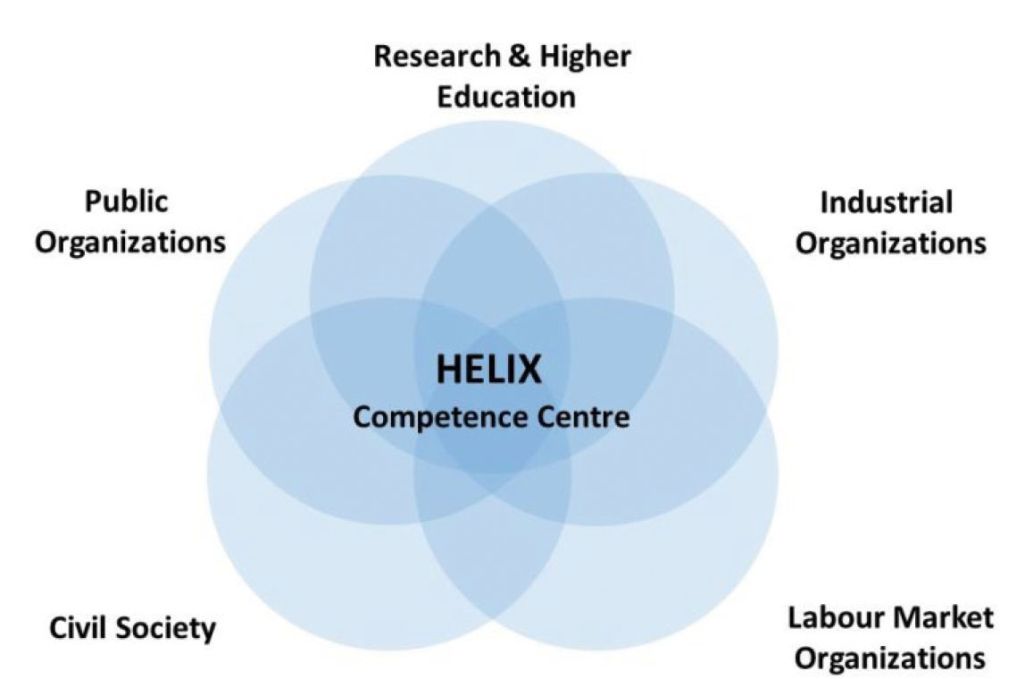
Various data sources, including secondary data and personal autoethnographic reflections, underpin this study, encompassing evaluation data from continuous VINNOVA-initiated assessments conducted over 15 years, reports, materials detailing the centre’s impact on the different partnerships, and published articles outlining HRC’s developmental trajectory (Ellström et al., 2020; Ellström, 2008). Given that HRC built their partnership around five different types of partners – research and higher education, industrial organisations, public organisations, labour market organisations (labour unions and employers’ organisations), and civil-society organisations – rather than the traditional three outlined in the triple helix model (i.e., university, industry and government, Etzkowitz & Leydesdorff, 2000), HRC referred to their models as “the penta-helix model.” It was used as a collaborative framework involving their partners to address complex challenges through interdisciplinary and multi-sectoral partnerships. This model was inspired by the Triple-Helix Model but involved a broader set of stakeholders. Aspects of this broadening of stakeholders reflect the cultural context of HRC. Particularly, Sweden has historically had high labour union participation, even among white-colour workers and a spirit of finding shared interests where possible among unions and employers’ organisations (Kjellberg, 2022; Lundmark & Björkman, 2011). Therefore, both employers’ organisations and unions participated in the HRC partnership as well as civil-society organisations. The principles underpinning HRC’s partnership embraces the idea of inter-sectorial collaboration but incorporates a broader set of actors that reflect the Swedish cultural and legal context.1
The autoethnographic exploration and data analysis allowed for the lived experience of the phenomenon to influence the research process in three ways: first, one author, deeply immersed in HRC’s history, witnessed its inception and dissolution, holding pivotal roles as a council member and research leader; second, another author, joining HRC as a doctoral student, experienced its growth firsthand and contributed to scholarly endeavours; third, past HRC members, involved in data analysis and paper writing, reviewed and enriched the narrative, ensuring its fidelity and validity (Hackley, 2020).
Throughout the data analysis, the authors navigated the methodological challenges and risks associated with autoethnography, conscientiously balancing relational and self-ethics (Delamont, 2007), leveraging personal narratives to gain insights into organisational dynamics and underscore the methodological promise of this approach.
4 The Helix Research Centre
The Helix Research Centre was established in 2006 at Linköping University in Sweden and remained operational for almost 15 years. The centre embodied the framework of interactive research, a methodology that challenged the traditional view of researchers as the exclusive creators of new knowledge (c.f. Ellström et al., 2020). It emphasised collaborative knowledge co-creation between engaged practitioners within organisations and academic researchers. The centre demonstrated a commitment to interdisciplinary research, academic excellence, and cross-disciplinary collaboration.
Collaborations and partnerships contributed to HRC’s research achievements, while the financial and organisational frameworks, designed to align with university goals, fostered a culture of interactive research. The HRC centre exhibited intrapreneurship and entrepreneurial behaviour by converting challenges into opportunities and securing funding through partnerships. It became an intermediary, bridging diverse interests and actors, and disseminating pertinent knowledge to partner organisations and a broader spectrum of national actors within the innovation system. HRC emerged as an intrapreneurial academic organisation, showing different research approaches, diverse collaborations, a commitment to societal impact, and adept navigation of challenges, fostering of partnerships, and integration of internal and external funding sources within the dynamic landscape of workplace dynamics (Ellström et al., 2020).
The centre built a network across academia, industry, government, labour unions, and non-profit organisations, playing a pivotal role in infusing diverse perspectives and expertise into the centre’s research endeavours. What they termed the penta-helix model facilitated diverse perspectives, enriched research, and positioned HRC in interdisciplinary workplace studies. Collaborations with academia ensured robust theoretical foundations, while industry partnerships grounded research in practical applications. Engagements with government and non-profits aligned research with policy goals, influencing discourse on workplace issues.
HRC’s financial structure, blending internal and external funding, reflected Linköping University’s commitment. Core funding from the university and contributions from VINNOVA, the main financier, European Union grants, and private sector investments ensured financial sustainability. The organisational structure supported collaboration and innovation, with the board steering strategic direction and the management team overseeing operations and stakeholder engagement. An interactive collaboration model addressed resource flow challenges and maintained enduring partnerships, positioning HRC for sustained progress. The centre’s journey highlighted its commitment to excellence, collaboration, and innovative research in the dynamic landscape of workplace dynamics.
5 The Start and the People Involved in HRC
The centre was established by a distinguished academic who was deeply committed to interdisciplinary research and innovative methods. The founding director, leveraging extensive experience in managing large-scale projects and a broad network, played an essential role in shaping the centre. The centre had a diverse team of professors from various fields who have cultivated a dynamic and collaborative environment characterised by mutual respect and a shared commitment to exploring new research opportunities. Workshops and meetings played a key role in cultivating team dynamics, facilitating the merging of diverse expertise into a unified research agenda, and were central in establishing a shared understanding and respect for each discipline’s contribution. The centre has assembled more than 30 researchers from diverse disciplines and collaborating partner organisations, including behavioural sciences, management, business and public administration, entrepreneurship, innovation, health, and work sciences.
HRC adopted an interactive research approach as a foundational philosophy, directing its initial goals toward influencing the understanding and improvement of workplace dynamics amidst global challenges. The centre identified numerous opportunities to generate pertinent research questions for both academia and practice and aspired to establish national and international networks for far-reaching influence. The objectives were ambitious yet distinctly focused on conducting academically rigorous, practically relevant, and socially beneficial research.
During the early developmental stages, workshops and meetings were strategically employed to foster team dynamics, facilitating the integration of diverse expertise into a cohesive research agenda. This key process not only established a shared understanding and respect for each discipline’s contribution but also underscored the centrality of an interactive research approach within HRC’s philosophy. Prioritising the utilisation of collective knowledge to address societal issues became a cornerstone of the centre’s overarching research philosophy.
Despite encountering challenges inherent in new initiatives, such as securing funding and garnering institutional support, HRC, under the director’s guidance and the team’s collective determination, adeptly transformed these hurdles into opportunities for evolution and innovation. Celebrating early milestones, the centre secured initial funding grants through well-established relationships with VINNOVA and partnerships with industry and academic institutions. These achievements not only affirmed the centre’s approach but also laid a foundation for its future endeavours, further emphasising the importance of the interactive research philosophy within HRC.
6 Formulating a Vision and an Idea for HRC
The formulation of HRC’s vision and idea involved a deliberate and collaborative effort within the founding team, rooted in theory and practice. The centre’s vision, shaped by collective insights, aimed to establish the foundation for innovative research addressing the complexities of the modern workplace and emphasising the necessity for research beyond traditional academic boundaries.
During the ideation and conceptualisation phase, extensive brainstorming sessions were conducted, where team members contributed ideas from diverse fields. This collaborative effort resulted in the conceptualisation of diverse yet interconnected research themes, reflecting the multifaceted nature of work-life challenges in the 21st century. Grounded in contemporary global trends like digitalisation, globalisation, mobility and demographic shifts, these ideas ensured the relevance and impact of the conducted research.
Central to the visionary approach was a commitment to embracing multidisciplinary perspectives, recognising the interplay among technology, human behaviour, and organisational structures. By integrating insights from different research fields such as learning, innovation, entrepreneurship, psychology, sociology, and management, HRC aimed to construct a comprehensive understanding of workplace dynamics surpassing conventional research approaches. This orientation extended beyond academic exploration, forming an integral part of a broader ambition to translate research into tangible societal impact.
The commitment to both practical and social impact became the guiding force steering the trajectory of the centre’s research agenda. It was not merely about scholarly pursuits; rather, it was a conscious decision to direct efforts towards outcomes that could bring about meaningful transformations. This commitment initially influenced the selection and direction of projects, fostering collaborations aligned with the overarching goal of making a positive and lasting difference in the world. This integrated multidisciplinary approach within the context of complex workplace dynamics served as the cornerstone for a research agenda aiming not only to understand but also to actively contribute to the societal improvement.
7 Partnerships and Internal and External Collaborations at HRC
Recognising the crucial role of partnerships, HRC strategically established an extensive network across academia, industry, government, labour unions, and non-profit organisations (see Figure 1). This innovative model of collaboration proved crucial in infusing diverse perspectives and expertise into the centre’s research endeavours. This implied that the centre collaborated with universities, private firms, and stakeholders from the public sector, labour market, and civil society organisations (Elg et al., 2015). Collaborating with academia provided practitioners access to cutting-edge research and methodologies, ensuring a robust theoretical foundation for research initiatives. Simultaneously, for the academics, partnering with industry actors grounded the research in practical applications, resulting in projects that were both theoretically sound and commercially viable. Over the years, HRC orchestrated a series of ‘Partnership Meetings’ to foster meaningful interactions among researchers and members from diverse organisations. These gatherings were instrumental in advancing HRC’s mission by providing a structured platform for collaborative discussions on pre-defined themes, acting as a catalyst for the exchange of insights, ideas, and expertise among participants, and fostering a dynamic and synergistic environment.

From local SMEs to multinational corporations and other actors in the partnership, HRC’s model of partnership provided a broad spectrum of insights into workplace dynamics. This collaborative effort facilitated the development of projects that bridged the gap between theory and practice, fostering a nuanced understanding of modern workplaces. Engaging with government agencies and non-profit organisations further enriched HRC’s research landscape, aligning it with national and international policy goals. These collaborations not only offered insights into regulatory and societal contexts but also positioned HRC to influence policy decisions and contribute to public discourse on workplace issues.
The interdisciplinary nature of HRC’s approach was significantly enhanced by its diverse collaborations. Each partner brought unique insights, enabling the exploration of various aspects of workplace dynamics. The resulting research themes were comprehensive, addressing a wide range of issues from ergonomic design to organisational behaviour and mental health in the workplace. This interdisciplinary synergy not only contributed to the depth and breadth of HRC’s research but also positioned it as a leader in the field of interdisciplinary workplace studies.
The impact of these collaborations was evident in the numerous joint research projects, publications, and policy influences achieved by HRC. The centre’s collaborative model not only enriched its research outcomes but also established it as a prominent authority in interdisciplinary workplace studies. HRC’s approach to partnerships and collaborations served as a cornerstone, facilitating the conduct of comprehensive and impactful research that effectively addressed the multifaceted challenges of modern workplaces.
8 Financing and Organisational Structure of HRC
HRC’s financial structure integrated both internal and external funding sources, reflecting Linköping University’s dedication to the centre’s practical impact and underscoring the importance of being an integral part of the university. This interconnectedness aligned HRC’s activities with the broader research goals of the University, solidifying its position in interdisciplinary research and innovation and highlighting its commitment to fulfilling the university’s mission. The financial foundation, established through core funding from the university and external contributions from entities such as VINNOVA, which played a crucial and long-term role as the main financier, European Union grants, and private sector investments, ensured financial sustainability and empowered HRC to undertake research initiatives, maintaining a dynamic and sustainable research portfolio.
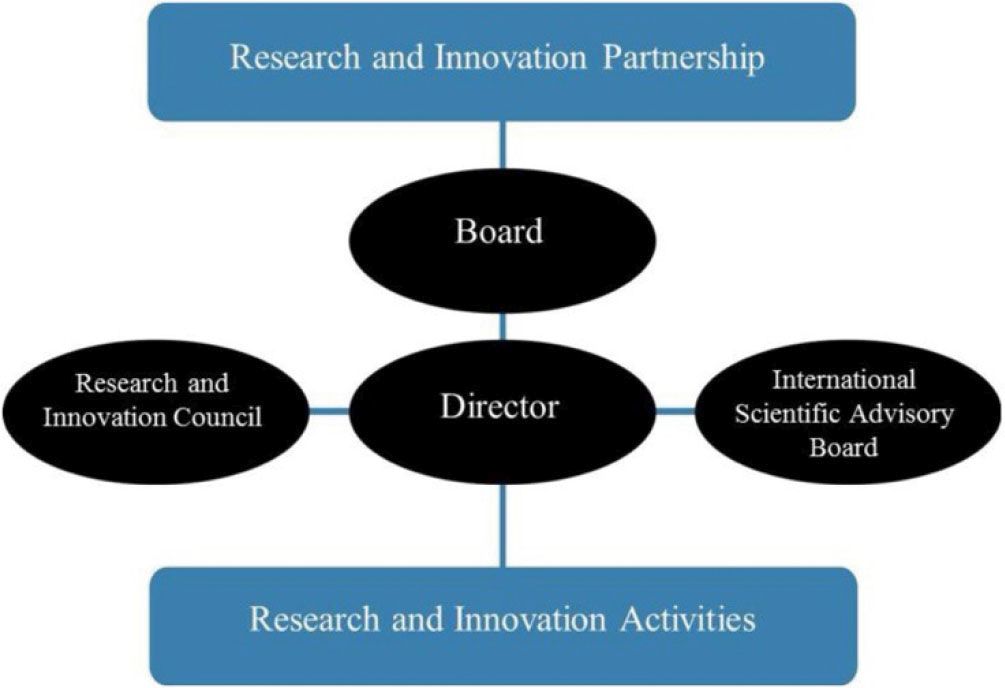
The HRC’s organisational structure as described in Ellström et al. (2020) was designed to cultivate collaboration and innovation, fostering an interactive research approach (Ellström, 2008). The board of directors steered the centre’s strategic direction, ensuring alignment with the university’s research objectives. Overseeing operational activities, project management, and stakeholder engagement, the management team played a crucial role in facilitating efficient decision-making and collaboration across diverse research areas. This team, consisting of the founding director and a small group, contributed significantly to maintaining internal anchoring and promoting interactive research approaches with external partners. The governance of the centre involved a board of directors representing partnership members. This board took charge of decision-making on projects and budgets, adhering to formal rules of procedure in line with the centre’s vision, goals, and strategy (see Figure 2).
The HRCs organisation and structure
Citation: Triple Helix 11, 3 (2024) ; 10.1163/21971927-bja10058
The organisational structure functioned well, with core researchers constituting the research and innovation council. This council was linked to both a national advisory board and an international scientific board, enhancing the centre’s global perspective. The management team, comprising the HRC director and a coordinator/communications officer, implemented decisions made by the board. Their responsibilities included planning and coordinating conferences, seminars, managing the centre’s dissemination activities, and overseeing various initiatives. Led by the founding director, the research and innovation council served as a platform for discussing ongoing projects, testing new ideas, developing research and innovation activities, and supporting knowledge integration. Meeting monthly, this council comprised the seven researchers from the HRC research group.
To address challenges in resource flow and maintain partnerships, HRC strategically allocated resources and capacities to cultivate enduring relationships. This approach, fostering a u-shaped collaboration where both academic and external partners engaged in resource exchange, proved beneficial. HRC’s financing and organisational structure, meticulously crafted, positioned it to advance its vision of pioneering interdisciplinary research in the workplace domain. The commitment to maintaining resource flow, nurturing partnerships, and actively engaging in interactive research with external partners were integral elements for sustained progress.
9 Analysis and Discussion
HRC emerged as a model of innovative thinking within academia, driven by committed academics and guided by a clear vision, overcoming challenges and seizing opportunities to become a centre for interdisciplinary research and collaboration towards societal change. Emphasising communication, customised activities, and defined roles, HRC showcased its organisational effectiveness in pursuing its goals. In the analysis and discussion, HRC’s strategic approach is further examined, investigating such as how its activities, interaction dynamics, critical mass considerations, and organisational strategies contribute to its impact on the academic community.
9.1 Vision to Impact – the Journey towards Societal Transformation
HRC embarked on its journey with a carefully crafted vision, collaboratively developed by its founding team, which combined theoretical insights with practical knowledge. The team exhibited intrapreneurial traits (Blanka, 2019; Engzell, 2021), demonstrating the necessary enthusiasm and dynamism to effect change in line with their vision (Carrier, 1996). This vision served as a guiding compass, leading them to explore innovative research possibilities that exceeded conventional academic boundaries. Despite their roles in academia, they adeptly shifted their focus to engage in HRC project activities while still operating within the academic sphere (Abreu & Grinevich, 2013).
The core idea behind HRC was dynamic, outlining the needs it aimed to address, its target audience, and the required resources. However, this idea evolved through interactions with stakeholders, refining its essence while remaining rooted in its developmental context. This evolution ensured relevance and adaptability for HRC’s future endeavours. During the ideation phase, collaborative brainstorming sessions generated a diverse range of interconnected research themes, influenced by contemporary global trends like digitalisation and demographic shifts. This aligns with the concept of an interactive research approach that builds on collaboration to generate shared conceptualisations and interpretations of the research issue, ideally integrating them into subsequent rounds of practical problem-solving endeavours and further research cycles (Ellström et al., 2020).
Furthermore, HRC’s commitment to embracing multidisciplinary perspectives facilitated a comprehensive understanding of workplace dynamics, surpassing traditional research approaches. Individuals aimed to engage in cross-disciplinary activities without compromising their standing or recognition within the academic community as they transitioned roles, measuring “success” based on their academic logic (Engzell et al., 2024). The visionary approach extended beyond academic exploration; it aimed to translate research into tangible societal impact, guiding collaborations, and projects towards meaningful transformations. The integrated multidisciplinary approach became the cornerstone of HRC’s research philosophy, focusing not only on understanding but also actively contributing to societal improvement. By embodying this concept, HRC fostered a sense of community among its members and facilitated communication with stakeholders and collaboration partners, serving as a focal point for shared aspirations and collective efforts. This case underscores that academic institutional logic not only prioritises the distinct nature of research activities but also considers the interests of the academic community (Grossi et al., 2020).
9.2 Building an Intrapreneurial Hub
The establishment of the centre was led by respected academics committed to interdisciplinary research and innovative methodologies. They demonstrated proficiency in creating, adapting, replacing, or rejecting their capabilities in line with the vision. The founding director, drawing from extensive experience in managing large-scale projects and a broad network, played a crucial role in shaping the centre’s direction. Despite bureaucratic obstacles and resource limitations (Johnson et al., 2017), the director demonstrated persistence and adaptability. Understanding the mechanisms behind the emergence of an intrapreneurial organisation required identifying the organisation’s “intrapreneurial spirit” among individual members willing to experiment and enhance ideas (Jong et al., 2015). Furthermore, fostering a comprehensive intrapreneurial culture within the research centre was necessary. This requires competencies such as resource mobilisation, networking, external collaboration, realisation (Bienkowska & Klofsten, 2012). HRC consisted of a diverse team of professors from various academic backgrounds, cultivating a dynamic and collaborative environment characterised by mutual respect and a shared dedication to exploring new research avenues. Workshops and meetings served as essential platforms for nurturing team dynamics, integrating diverse expertise into a cohesive research agenda, and fostering a collective understanding and appreciation for each discipline’s contributions. With over 30 researchers from diverse research fields and collaborative partner organisations, including behavioural sciences, management, business administration, entrepreneurship, innovation, as well as health and work sciences, HRC developed a rich interdisciplinary ecosystem poised for impactful research activities.
Early involvement of institutions was crucial to HRC’s establishment. Academics and representatives, often senior managers, from each institution actively contributed to centre activities such as workshops, seminars, planning, and strategy meetings, laying a solid foundation for HRC’s success. Within the centre, dedicated members demonstrated the necessary enthusiasm and energy to drive activities and initiate change. The centre’s development focused on creating and managing a network of key stakeholders, leveraging opportunities within the members’ network, and crafting appealing offerings, particularly relevant intrapreneurship-oriented activities. The HRC case presents instances of both formal and informal intrapreneurial activities aimed at generating value, such as strategic collaboration with stakeholders, securing substantial research grants from national or international entities, innovation and commercialisation of novel technologies and concepts, fundraising efforts, and initiation of stakeholder involvement (D’Este & Patel, 2007; Grossi et al., 2020). These initiatives, which exceed conventional academic roles of teaching and research, demonstrated the willingness of the involved intrapreneurs to take risks that could potentially yield financial or reputational benefits for broader academic objectives (Audretsch & Aldridge, 2009).
9.3 Activities and Interaction
The centre recognised the need to offer activities that provided tangible benefits to its members. These activities ranged from training programs to networking initiatives, aimed at expanding contacts and fostering relationships within the HRC network. However, convincing members to participate in activities unrelated to their daily operations posed a challenge, often resulting in a gap between supply and demand (c.f. Klofsten et al., 2015). Despite time constraints, financial limitations, and scepticism regarding the activities’ impact on organisational development, participation levels remained positive.
To address these challenges, HRC strategically established partnerships across research and higher education, industrial organisations, public organisations, labour market organisations (labour unions and employers’ organisations), and civil society organisations. This model of collaboration infused diverse perspectives and expertise into the centre’s research activities. Collaborating with academia provided access to cutting-edge research, while partnering with industry players grounded research in practical applications, resulting in projects that were both theoretically sound and commercially viable. HRC orchestrated ‘Partnership Meetings’ to foster interactions among researchers and members from diverse organisations, facilitating collaborative discussions and exchanging insights. Industry partnerships, ranging from local SMEs to multinational corporations, provided insights into workplace dynamics, bridging the gap between theory and practice.
Engaging with government agencies and non-profit organisations aligned HRC’s research with national and international policy goals, positioning it to influence policy decisions and contribute to public discourse on workplace issues. The interdisciplinary nature of HRC’s approach was enhanced by its diverse collaborations, enabling comprehensive research on various aspects of workplace dynamics. These collaborations resulted in numerous joint research projects, publications, and policy influences, establishing HRC as a prominent authority in interdisciplinary workplace studies. Overall, HRC’s partnership approach facilitated comprehensive and impactful research that effectively addressed the multifaceted challenges of modern workplaces. Policymakers must account for how involvement in intrapreneurial activities, such as through the “third mission,” imposes added requirements on academics’ skill sets and capabilities.
9.4 Critical Mass and Organisational Prowess
Critical mass was pivotal for the centre, laying the groundwork for its effective development. The presence of a sufficient quantity and diversity of members facilitated lively interactions and productive collaborations (c.f. Klofsten et al., 2015). Maintaining a balance between the size and diversity of the centre’s membership was essential to ensure successful collaboration and interaction. However, challenges arose with inadequate or excessive diversity within the centre. A lack of diversity in a small context could limit member interaction, while an excessively large centre with overwhelming diversity might struggle to maintain cohesion among its members. Despite this, HRC successfully navigated these challenges to achieve the desired intrapreneurial outcomes.
Formal and informal networks played a crucial role in fostering communication and collaboration within the centre. Cultivating a culture of trust and openness among members was essential for advancing the centre’s objectives effectively. Moreover, the continuous influx of individuals with diverse backgrounds, experiences, and knowledge propelled the centre’s development and progress. Integrating knowledge, complementarity, and the flow of information were fundamental aspects contributing to the centre’s advancement. Lastly, involving different types of actors, as exemplified by the HRC’s “Penta Helix model,” enriched regional development by offering diverse perspectives. In summary, critical mass served as a foundational concept in the centre’s development, playing a crucial role in promoting member engagement, collaboration, and progress. The case demonstrates how individual and group conditions facilitated the evolution of the intrapreneurial university.
9.5 Organisational and Strategic Approach to Research Centre Development
HRC’s approach to coordinating and advancing research centre activities while managing relationships for its development demonstrates its organisational effectiveness by prioritising the establishment of efficient communication systems among its members. This involves tailoring programs and initiatives to meet member needs and preferences and expanding connections beyond its immediate ecosystem. Clear role definitions within the centre, including financiers, policy influencers, and professional service organisations, are crucial for guiding its activities.
In its early stages, HRC was relatively small, with about a dozen co-workers within a larger network providing additional skills. Its financial structure integrated internal and external funding sources, reflecting Linköping University’s commitment to practical impact and its broader research goals. This funding, from sources such as VINNOVA and the European Union, ensured financial sustainability and empowered HRC to pursue research initiatives.
The organisational structure of HRC was purposefully designed to foster collaboration and innovation, with the board of directors guiding strategic direction and overseeing operational activities. Despite the inherent complexity of universities, characterised by diverse structures and systems, HRC’s organisation was effectively established. The management team played a pivotal role in facilitating efficient decision-making and collaboration across various research areas, while governance involved a board representing partnership members aligned with the centre’s vision and strategy. They adeptly navigated competing structures and logics (Engzell et al., 2024; Kodeih & Greenwood, 2014).
The core researchers established the research and innovation council, enriching the centre’s global perspective through connections to national and international advisory boards. Under the leadership of the founding director, the management team implemented board decisions, overseeing a range of initiatives. Regular council meetings provided platforms for discussing ongoing projects and supporting knowledge integration among researchers. To address resource flow challenges and sustain partnerships, HRC strategically allocated resources, facilitating collaboration between academic and external partners in resource exchange. This financing and organisational structure positioned HRC as a pioneer in interdisciplinary workplace research, emphasising the importance of maintaining resource flow, nurturing partnerships, and actively engaging with external collaborators for sustained progress. The HRC case exemplifies an organisation designed to cultivate collaboration and innovation, promoting an interactive research approach (Ellström et al., 2020). Individuals benefited from the autonomy afforded by minimal organisational interference (Reay & Hinings, 2009), as well as the stability and security provided by Linköping University (Oostervink et al., 2016). Participation in the public service system also encouraged the initiation of intrapreneurial activities. The HRC case underscores how universities integrating intrapreneurial capabilities with internal and external factors are better positioned to evolve into successful entrepreneurial institutions, emphasising the importance of collaborative efforts among different stakeholders in driving organisational success, as depicted in Figure 1, The Penta Helix Model (HRC, 2022).
10 Conclusions
In conclusion, the establishment of an academic research centre signifies an intrapreneurial venture within the internal academic landscape, echoing ongoing discussions of the intrapreneurial university (Henry & Lahikainen, 2024). Cultivating a culture that embraces intrapreneurial behaviours is crucial for driving organisational change and achieving impactful outcomes, as evidenced by Glinyanova et al. (2021) and Bienkowska and Klofsten (2012). Our study emphasises the critical significance of securing financial resources and delineating clear value propositions, echoing recent perspectives from Audretsch et al. (2021). Strategic collaborations with diverse stakeholders not only enrich research endeavours but also foster knowledge exchange and societal impact, aligning with sentiments shared by Guerrero et al. (2021). Effective communication strategies and unambiguous role definitions are essential for fostering collaboration and aligning activities with organisational goals (Henry & Lahikainen, 2024). Moreover, achieving a delicate balance in size, diversity, and resource allocation within academic initiatives is crucial for nurturing cohesion and advancing toward intrapreneurial objectives (Glinyanova et al., 2021). Our examination highlights the multifaceted nature of academic intrapreneurship (De Keyser & Vandenbempt, 2023). Additionally, academic intrapreneurs adeptly navigate through diverse roles and institutional logics, as highlighted by Oostervink et al. (2016), demonstrating their adeptness in managing complex environments with skill. Overall, these insights underscore the importance of employing strategic approaches and fostering collaborative endeavours to drive innovation and achieve impactful outcomes within academic institutions.
11 Practical and Policy Implications
Universities can significantly benefit from investing in training programs and initiatives aimed at cultivating intrapreneurial skills and mindsets among faculty, staff, and students. These initiatives may encompass a range of activities, from workshops and seminars to mentorship opportunities, all geared toward nurturing innovation, encouraging risk-taking, and fostering a proactive approach to seeking growth and development opportunities.
Implementing recognition and reward systems for intrapreneurial efforts can serve as a powerful motivator for further innovation and contribute to fostering a culture of continuous improvement within the academic institution. By acknowledging individuals and teams for their intrapreneurial initiatives, universities can boost morale, enhance motivation, and underscore the value placed on intrapreneurship as a driving force for positive change.
Early engagement of key stakeholders, including institutional leaders, senior managers, and academic faculty, is paramount in laying the groundwork for successful intrapreneurial initiatives. Establishing open channels for regular communication and feedback among stakeholders fosters a sense of ownership and collective responsibility for the success of intrapreneurial endeavours, ensuring alignment with the institution’s overarching goals.
Strategic partnerships with a diverse array of stakeholders, spanning academia, industry, government, and non-profits, can significantly enrich research activities and elevate the quality and relevance of research outcomes. Clear delineation of goals, expectations, and mechanisms for managing conflicts of interest is essential to foster successful collaboration and facilitate effective knowledge co-creation.
Effective communication, tailored initiatives, and well-defined roles are pivotal for promoting collaboration, facilitating decision-making, and aligning activities with organisational objectives. Investment in infrastructure and processes that support transparent communication and coordination across various departments, disciplines, and levels of hierarchy is essential to drive intrapreneurial success within the academic institution.
12 Future Research
Research in the future could examine the effects of various strategies for engaging stakeholders on intrapreneurial outcomes. This could involve assessing how these strategies impact stakeholder buy-in, collaboration, and support, offering valuable insights for organisational leaders.
Additionally, there’s a need for further exploration into the dynamics of partnership formation and evolution within academic settings. Understanding the factors that contribute to successful collaboration and knowledge co-creation can inform strategies for establishing and sustaining effective partnerships over time.
Another area for future research lies in investigating how communication strategies and organisational structures within academic institutions influence intrapreneurial outcomes. Identifying best practices for promoting transparent communication, facilitating decision-making, and fostering collaboration can provide valuable support for intrapreneurial endeavours.
Furthermore, it would be beneficial to explore the relationship between resource allocation strategies, organisational culture, and intrapreneurial performance. Understanding how different approaches to resource allocation impact innovation, productivity, and resilience can inform strategic decision- making and organisational development efforts.
Finally, connecting spaces for innovation within academic institutions to intrapreneurial activities could provide further insights into fostering a culture of creativity and continuous improvement. Creating dedicated environments that encourage experimentation, risk-taking, and collaboration can be instrumental in driving innovation and achieving long-term organisational success. By designing and implementing these innovative spaces, institutions can support the development of new ideas and approaches, facilitating the exchange of knowledge and skills among students, researchers, and practitioners, and such issues could be worth examining in future research (c.f. Ollila and Yström, 2024).
References
Abreu, M., & Grinevich, V. (2013). The nature of academic entrepreneurship in the UK: Widening the focus on entrepreneurial activities. Research Policy, 42(2), 408–422.
Aldrich, H. E. & Ruef, M. (2006). Organizations evolving. Thousand Oaks, CA: Sage.
Aldrich, H. E. (2010). Beam me up, Scott (ie)! Institutional theorists’ struggles with the emergent nature of entrepreneurship. In Institutions and entrepreneurship (Vol. 21, pp. 329–364). Emerald Group Publishing Limited.
Aldrich, H. E. (2011). Heroes, villains, and fools: Institutional entrepreneurship, NOT institutional entrepreneurs. Entrepreneurship Research Journal, 1(2), 1–4.
Audretsch, D. B., & Aldridge, T. T. (2009). Scientist commercialization as conduit of knowledge spillovers. The Annals of Regional Science, 43, 897–905.
Audretsch, D. B., Lehmann, E. E., Menter, M., & Wirsching, K. (2021). Intrapreneurship and absorptive capacities: The dynamic effect of labor mobility. Technovation, 99, 102129.
Audretsch, D. B., Belitski, M., & Scarra, D. (2024). Intrapreneurship activity and access to finance in natural science: Evidence from the UK academic spinoffs. Technovation, 129, 102888.
Bergman, B. J., & McMullen, J. S. (2022). Helping entrepreneurs help themselves: A review and relational research agenda on entrepreneurial support organizations. Entrepreneurship Theory and Practice, 46(3), 688–728.
Bienkowska, D., & Klofsten, M. (2012). Creating entrepreneurial networks: academic entrepreneurship, mobility and collaboration during PhD education. Higher Education, 64, 207–222.
Blanka, C. (2019). An individual-level perspective on intrapreneurship: a review and ways forward. Review of Managerial Science, 13(5), 919–961.
Boardman, P. C., & Corley, E. A. (2008). University research centers and the composition of research collaborations. Research Policy, 37(5), 900–913.
Cai, Y., & Mountford, N. (2022). Institutional logics analysis in higher education research. Studies in Higher Education, 47(8), 1627–1651.
Carrier, C. (1996). Intrapreneurship in small businesses: an exploratory study. Entrepreneurship Theory and Practice, 21(1), 5–20.
Cenamor, J. (2022). To teach or not to teach? Junior academics and the teaching-research relationship. Higher Education Research & Development, 41(5), 1417–1435.
Chen, J., Zhang, S. X., & Lundmark, E. (2024). A Quantum view of entrepreneurial opportunity: moving beyond the Discovery and Creation views. Small Business Economics, 1–15. https://doi.org/10.1007/s11187-024-00887-2.
Clauss, T., Kesting, T., & Naskrent, J. (2019). A rolling stone gathers no moss: the effect of customers’ perceived business model innovativeness on customer value co‐creation behavior and customer satisfaction in the service sector. R&D Management, 49(2), 180–203.
Davidsson, P., & Klofsten, M. (2003). The business platform: Developing an instrument to gauge and to assist the development of young firms. Journal of small business management, 41(1), 1–26.
Davidsson, P. & Wiklund, J. (2001). Levels of analysis in entrepreneurship research: Current research practice and suggestions for the future. Entrepreneurship Theory and Practice, 25(4), 81–99.
Delamont, S. (2007). Arguments against auto-ethnography. Qualitative Researcher, Issue 4, February 2007, 2–4.
D’Este, P., & Patel, P. (2007). University – industry linkages in the UK: What are the factors underlying the variety of interactions with industry? Research policy, 36(9), 1295–1313.
Dess, G. G., Lumpkin, G. T., & McGee, J. E. (1999). Linking corporate entrepreneurship to strategy, structure, and process: Suggested research directions. Entrepreneurship theory and practice, 23(3), 85–102.
Edwards, J. (2021). Ethical autoethnography: Is it possible? International Journal of Qualitative Methods, 20, 1609406921995306.
Eisenhardt, K. M. (1989). Building theories from case study research. Academy of management review, 14(4), 532–550.
Elg, M., Ellström, P. E., Klofsten, M., & Tillmar, M. (2015). Sustainable development in organizations. In Sustainable Development in Organizations (pp. 1–15). Edward Elgar Publishing.
Ellström, P. E. (2008, September). Knowledge creation through interactive research: A learning approach. In Proceedings of the ECER Conference.
Ellström, P. E., Elg, M., Wallo, A., Berglund, M., & Kock, H. (2020). Interactive research: concepts, contributions and challenges. Journal of Manufacturing Technology Management, 31(8), 1517–1537.
Engzell, J. (2021). Intrapreneurship as an Engine of Corporate Renewal: Exploring the Intrapreneur and How Corporate Conditions Influence Intrapreneurial Behavior (Doctoral dissertation, Department of Business Studies, Uppsala University).
Engzell, J. (2023). Beyond the stereotype of an intrapreneur: an exploratory study of different intrapreneurs and various corporate conditions. SN Business & Economics, 3(8), 137.
Etzkowitz, H., & Leydesdorff, L. (2000). The dynamics of innovation: from National Systems and “Mode 2” to a Triple Helix of university – industry – government relations. Research policy, 29(2), 109–123.
Flores, M. C., Grimaldi, R., Poli, S., & Villani, E. (2024). Entrepreneurial universities and intrapreneurship: A process model on the emergence of an intrapreneurial university. Technovation, 129, 102906.
Gartner, W. B. (1989). Who is an entrepreneur? Is the wrong question. Entrepreneurship Theory and Practice, 13(4), 47–68.
Garud, R., Hardy, C., & Maguire, S. (2007). Institutional entrepreneurship as embedded agency: An introduction to the special issue. Organization studies, 28(7), 957–969.
Greenwood, R., Raynard, M., Kodeih, F., Micelotta, E. R., & Lounsbury, M. (2011). Institutional complexity and organizational responses. Academy of Management annals, 5(1), 317–371.
Grossi, G., Dobija, D., & Strzelczyk, W. (2020). The impact of competing institutional pressures and logics on the use of performance measurement in hybrid universities. Public performance & management review, 43(4), 818–844.
Guerrero, M., Urbano, D., Fayolle, A., Klofsten, M., & Mian, S. (2016). Entrepreneurial universities: emerging models in the new social and economic landscape. Small Business Economics, 47, 551–563.
Guerrero, M., Heaton, S., & Urbano, D. (2021). Building universities’ intrapreneurial capabilities in the digital era: The role and impacts of Massive Open Online Courses (MOOCs). Technovation, 99, 102139.
Hackley, C. (2020). The discomfort of autoethnography in academic marketing research. In A. Herrmann (Ed.), The Routledge international handbook of organizational autoethnography (pp. 176–187). Routledge.
Hattie, J., & Marsh, H. W. (1996). The relationship between research and teaching: A meta-analysis. Review of educational research, 66(4), 507–542.
Henry, C., & Lahikainen, K. (2024). Exploring intrapreneurial activities in the context of the entrepreneurial university: an analysis of five EU HEIs. Technovation, 129, 102893.
Honig, B. & Samuelsson, M. (2012). Planning and the entrepreneur: A longitudinal examination of nascent entrepreneurs in Sweden. Journal of Small Business Management, 50(3), 365–388.
Johannisson, B. (1987). Anarchists and organizers: Entrepreneurs in a network perspective. International Studies of Management & Organization, 17(1), 49–63.
Johnson, M., Monsen, E. W., & MacKenzie, N. G. (2017). Follow the leader or the pack? Regulatory focus and academic entrepreneurial intentions. Journal of Product Innovation Management, 34(2), 181–200.
Jong, J. P. D., Parker, S. K., Wennekers, S., & Wu, C. H. (2015). Entrepreneurial behavior in organizations: does job design matter? Entrepreneurship Theory and Practice, 39(4), 981–995.
Kivleniece, I., & Quelin, B. V. (2012). Creating and capturing value in public-private ties: A private actor’s perspective. Academy of management review, 37(2), 272–299.
Kjellberg, A. (2022). The Nordic model of industrial relations. Available at: https://lucris.lub.lu.se/ws/portalfiles/portal/115413346/The_Nordic_Model_of_Industrial_Relations_Kjellberg.pdf.
Klofsten, M. (1992). Early development processes in technology-based firms (Doctoral dissertation, Linköping University, Sweden).
Klofsten, M. (1994). Technology-based firms: Critical aspects of their early development. Journal of Enterprising Culture, 2(01), 535–557.
Klofsten, M., Bienkowska, D., Laur, I., & Sölvell, I. (2015). Success factors in cluster initiative management: Mapping out the ‘big five’. Industry and Higher Education, 29(1), 65–77.
Klofsten, M., & Lundmark, E. (2016). Supporting new spin-off ventures – experiences from a university start-up program. In Academic Spin-Offs and Technology Transfer in Europe (pp. 93–107). Edward Elgar Publishing.
Klofsten, M., Fayolle, A., Guerrero, M., Mian, S., Urbano, D., & Wright, M. (2019). The entrepreneurial university as driver for economic growth and social change-Key strategic challenges. Technological Forecasting and Social Change, 141, 149–158.
Klofsten, M., Lundmark, E., Wennberg, K., & Bank, N. (2020). Incubator specialization and size: Divergent paths towards operational scale. Technological Forecasting and Social Change, 151, 119821.
Klofsten, M., Urbano, D., & Heaton, S. (2021). Managing intrapreneurial capabilities: An overview. Technovation, 99, 102177.
Klofsten, M., Brem, A., Guerrero, M., & Urbano, D. (2024). Intrapreneurial universities in digital times-new ways of thinking and future challenges. Technovation, 135, 103069.
Kodeih, F., & Greenwood, R. (2014). Responding to institutional complexity: The role of identity. Organization Studies, 35(1), 7–39.
Krzeminska, A., Lundmark, E., & Härtel, C. E. (2021). Legitimation of a heterogeneous market category through covert prototype differentiation. Journal of Business Venturing, 36(2), 106084.
Kuratko, D. F., Montagno, R. V., & Hornsby, J. S. (1990). Developing an intrapreneurial assessment instrument for an effective corporate entrepreneurial environment. Strategic management journal, 49–58.
Kuratko, D. F., Ireland, R. D., Covin, J. G., & Hornsby, J. S. (2005). A model of middle – level managers’ entrepreneurial behavior. Entrepreneurship theory and practice, 29(6), 699–716.
Leca, B., & Naccache, P. (2006). A critical realist approach to institutional entrepreneurship. Organization, 13(5), 627–651.
Leydesdorff, L., & Etzkowitz, H. (1998). The triple helix as a model for innovation studies. Science and public policy, 25(3), 195–203.
Leydesdorff, L., & Smith, H. L. (2022). Triple, quadruple, and higher-order helices: historical phenomena and (neo-) evolutionary models. Triple Helix, 9(1), 6–31.
Lundmark, E., & Björkman, H. (2011). New job – new ideas: the relationship between tenure and perceived creative climate. Human Resource Development International, 14(5), 605–621.
Lundmark, E., Krzeminska, A., & Shepherd, D. A. (2019). Images of entrepreneurship: Exploring root metaphors and expanding upon them. Entrepreneurship Theory and Practice, 43(1), 138–170.
Lundmark, E., Coad, A., Frankish, J. S., & Storey, D. J. (2020). The liability of volatility and how it changes over time among new ventures. Entrepreneurship Theory and Practice, 44(5), 933–963.
Martin, G., Currie, G., Weaver, S., Finn, R., & McDonald, R. (2017). Institutional complexity and individual responses: delineating the boundaries of partial autonomy. Organization Studies, 38(1), 103–127.
Miranda, F. J., Chamorro, A., & Rubio, S. (2017). Determinants of the intention to create a spin-off in Spanish universities. International Journal of Entrepreneurship and Innovation Management, 21(4–5), 299–317.
Ollila, S., & Yström, A. (2024). Political behavior in collaborative innovation spaces: outlining triggers, behaviors and shaping mechanisms. R&D Management, 54(2), 261–282.
Oostervink, N., Agterberg, M., & Huysman, M. (2016). Knowledge sharing on enterprise social media: Practices to cope with institutional complexity. Journal of Computer-Mediated Communication, 21(2), 156–176.
Pinchot, G. (1985). Intrapreneuring: Why you don’t have to leave the corporation to become an entrepreneur. Harper & Row.
Radu-Lefebvre, M., Lefebvre, V., Crosina, E., & Hytti, U. (2021). Entrepreneurial identity: A review and research agenda. Entrepreneurship Theory and Practice, 45(6), 1550–1590.
Reay, T., & Hinings, C. R. (2009). Managing the rivalry of competing institutional logics. Organization studies, 30(6), 629–652.
Sandberg, J., & Alvesson, M. (2011). Ways of constructing research questions: gap- spotting or problematization? Organization, 18(1), 23–44.
Schumpeter, J. A. (1934/2008). The theory of economic development: An inquiry into profits, capital, credit, interest and the business cycle. London: Transaction Publishers.
Shane, S. & Venkataraman, S. (2000). The promise of entrepreneurship as a field of research. Academy of Management Review, 25(1), 217–226.
Shekhar, H., Satyanarayana, K., & Chandrashekar, D. (2023). Role and contributions of an incubator in academic intrapreneurship – An examination. Technovation, 126, 102821.
Smith, H. L., & Leydesdorff, L. (2022). Have quadruple and quintuple helices emerged? Metaphors, project titles, and empirical research. Triple Helix, 9(2), 174–183.
Thornton, P. H., & Ocasio, W. (2008). Institutional logics. In R. Greenwood, C. Oliver, K. Sahlin, & R. Suddaby (Eds.), The SAGE handbook of organizational institutionalism (pp. 99–129). SAGE Publications.
York, J. G., O’Neil, I., & Sarasvathy, S. D. (2016). Exploring environmental entrepreneurship: Identity coupling, venture goals, and stakeholder incentives. Journal of Management Studies, 53(5), 695–737.
Zahra, S. A., & Covin, J. G. (1995). Contextual influences on the corporate entrepreneurship-performance relationship: A longitudinal analysis. Journal of Business Venturing, 10(1), 43–58.
Zahra, S. A., & Garvis, D. M. (2000). International corporate entrepreneurship and firm performance: The moderating effect of international environmental hostility. Journal of Business Venturing, 15(5–6), 469–492.
Note that the terminology used by HRC is slightly different to what has traditionally been used in the literature on the Triple-Helix model. For all practical purposes, universities, industry and government are the same categories as the first three types of partners in the Penta-Helix model used by HRC (i.e., “research and higher education” corresponds to universities, “industrial organisations” corresponds to industry, and “public organisations” corresponds to government). For research-based extensions of the Triple-Helix model, see Leydesdorff & Smith (2022) and Smith & Leydesdorff (2022).