Abstract
Translational science describes a process of transferring basic science into applied science. While it carries the term “translation” in its name, the original concept of translation refers to a process of re-contextualisation between languages. In this paper, we try to find out which differences and similarities exist between translating between languages and translating in science. When using this analogy, it becomes evident that applying concepts with a long tradition in translation between languages to translation in science can help structure the path from basic research to applied innovation, e.g. in the area of biomedical science, where the path from preclinical research to novel therapeutics can bring benefit to patients. This means that the methodologies developed for translation between languages can themselves be re-contextualised into another domain.
1 Introduction: Translation between Languages and Translation in Science
In this paper, we try to locate common phenomena in translating in science and between languages. We assume that translation in science can benefit from research accumulated over the past millennia in translation between languages. Such research includes, amongst other benefits, the high precision of terms and definitions used in linguistic translation studies, its systematic procedure and methodology including the use of large corpora as well as computer-assisted translation (CAT) and finally an awareness of the limitations of translation.
Through a comparison of the two very different fields of translation between languages and translation in science, as well as through interdisciplinary discussions between members of these disciplines, we, the authors of this paper, have reached a deeper understanding of our own fields and of the similarities and differences between linguistic translation studies and science, and we have also identified limitations of assumed similarities between the two fields.
2 Translation between Languages: Definitions and Basic Concepts
In the field of translation between languages, translation can be defined as an act of re-contextualisation (House, 2024). We assume that whenever communication is possible between speakers of the same language, it is also possible between speakers of different languages and for the same fundamental reasons, i.e., through relating a text to the context enveloping it (Malinowski, 1935). For a theory of translation as re-contextualisation to be valid and replicable, it must fulfil at least three criteria with reference to the relationship between text and context (House, 2006a):
The theory must account explicitly for the fact that the original and the translation text relate to different contexts
The theory must be formulated in a suitable metalanguage capable of capturing, describing and explaining changes necessitated through the act of re-contextualisation
The theory must explicitly relate features of the original to features of the translation text and to their different contexts.
In acts of re-contextualisation, the meaning of a source text needs to be reconstituted using the inventory of the target language in a new context. This new context includes different recipients in a different linguaculture (House and Kadar, 2021: 5) who tend to have different expectation norms vis a vis a particular text and a particular genre. This means that the translation of an original text, in order to have a comparable effect on its new addressees needs to be ‘culturally filtered’ (House, 2015). A ‘cultural filter’ can be defined as a means of capturing socio-cultural differences in communicative preferences, expectation norms and stylistic conventions in the two linguacultural communities involved. The cultural filter is generally employed in a type of translation called ‘covert translation’ (House, 1981) where it is applied in order to achieve ‘functional equivalence’ of the translation and its original text. Functional equivalence is a key concept in linguistic translation theory. Functional equivalence means that the original and its translation are equivalent – but of course never identical – in their semantic and pragmatic meanings, including the structuring of the information conveyed. The cultural filter should ideally not be based on a translator’s intuition and personal assumptions alone, but rather rely on relevant empirical research. As an example of such research, we may refer to the contrastive pragmatic discourse studies conducted with the language pair German – English over the past decades (for a summary of the results see House, 2006b), using large corpora and many different genres. This research resulted in hypothesizing parameters of cross-cultural German-English discourse preferences displayed in Table 1.
The following examples from different genres illustrate the operation of these deep-seated differences in preferred language use.

Discourse preferences in German and English (adapted from House, 2006b)
Citation: Contrastive Pragmatics 6, 2 (2025) ; 10.1163/26660393-bja10106
3 Examples of Cultural Filtering
Examples of cultural filtering in translation processes between English and German (and vice versa) can be observed in children’s books and in public signs. For instance, in the classic British children’s book ‘Paddington’, there is a scene about the non-availability of the main character Paddington’s preferred marmalade cookies that could not be provided by Paddington’s caretaker, Mr. Brown. In the original English text, we find a personal and apologetic utterance by Mr. Brown addressing Paddington: “I’m sorry they haven’t any marmalade ones, but these were the best I could get”, whereas the German translation appears to be much more factual or even blunt, omitting an apology to Paddington: “Hier gibt es eben nichts mit Marmelade” – Back translation: Here is nothing with marmalade. (For detailed analysis of the translation of children’s books and the use of cultural filtering therein see House 2004). In another genre, public signs, the same phenomenon can be observed. While in English, the imagined addressees are implicitly mentioned (e.g. “Please close the door” or “Please turn off your engine”), in German, the addressees do not seem to play a role at all with objects or actions being foregrounded as in, for instance: “Türe ist geschlossen zu halten” or “Motor abstellen!”
4 Do We Need to Also Consider Re-contextualisation in Translational Science and Medicine?
Translational sciences are typically those that transform a scientific idea or concept into a product that can later be applied in, or used by, humans, or which transforms an idea into innovation. In other words, successful translation creates applied science out of basic science. In basic science, new ideas are being generated and tested, yet not under all circumstances and in all disciplines in the final context – in medicine not even in the targeted species, i.e., in humans (Seyhan, 2019). Reasons for this are manifold: some complex scientific questions require simplification and use surrogates or models to test early hypotheses. In medicine, new treatment principles or pharmaceutical ingredients need to be tested pre-clinically, i.e., in non-human models, in order to examine both their potential benefit, but also their potential risk. Only if the overall benefit-risk ratio is considered favorable, early clinical development in humans is deemed both ethical as well as clinically relevant.
The above implies that by its very nature translational science or translational medicine, major parameters of “context” are different during the process of translation (Cohrs et al., 2015). In translational medicine, for instance, the species for testing efficacy or safety may be the rat or the mouse, while the patient is human. Some diseases which naturally occur in humans, and which often develop over several years need to be artificially induced in animals and validated, such that they can be considered predictive. In basic science, many mechanisms can be tested in isolated cells or other in vitro systems, while when applied to patients, they need to exert their effects in a more complex organism with additional interfering molecules or mechanisms. And even if many of these parameters can be conserved, there are still some examples in which the same molecular target fulfils a different biological role in different species.
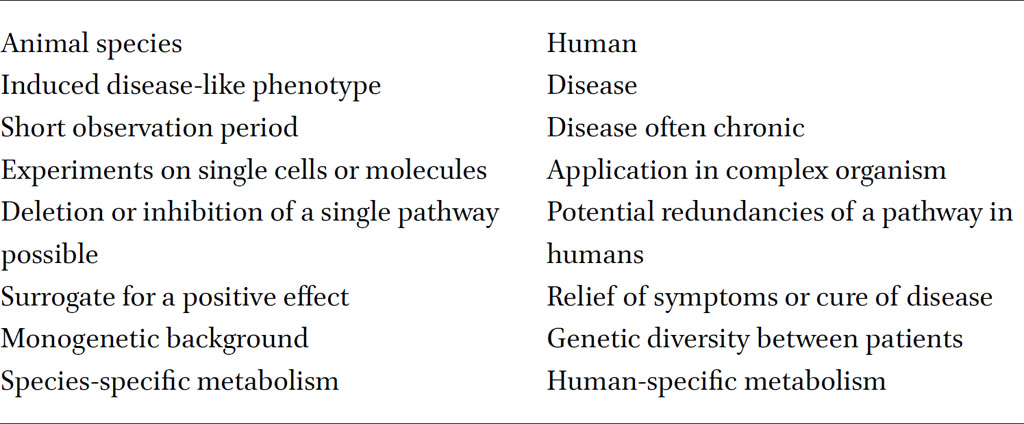
Therefore, translational scientists – just as language translators – need to have transfer competence. This means they need to be aware of the aforementioned complex differences and they need to have an understanding of factors increasing or decreasing the success of transferring positive model data into robust and applicable effects in real life. Examples of differences in context which should be known to translational scientists are included in Table 2.
Context-defining differences between basic science and applied science.
Citation: Contrastive Pragmatics 6, 2 (2025) ; 10.1163/26660393-bja10106
5 Parallels between Translation in Medicine and Linguistics
5.1 Linguistics
In linguistics, we commonly distinguish different levels of language: the level of phonology, the lexical level, i.e., expressions (words, vocabulary), the level of syntax (grammar) and the level of pragmatics, i.e., the use of language in a given context or situation. At all these levels, translation can go wrong. For instance, at the lexical level, the translator may encounter various difficulties, for instance with untranslatable words, i.e., words that do not have an equivalent lexical item in the target language. The English word “underwhelmed” or the German concept of “Schadenfreude”, for instance, do not easily translate into other languages. Whenever such cases occur, different solutions offer themselves: for instance, paraphrases or loan words. In the following, we will present some relevant examples:
Paraphrases
Since there is not a single word to express “underwhelmed” in German, for example, the translator needs to take refuge in using a paraphrase, i.e., to circumscribe the untranslatable word in many words.
Examples:
English: “I was underwhelmed by this presentation”
German: „Meine Erwartungen an diesen Vortrag wurden bei weitem nicht erfüllt“ (Back translation: My expectations regarding this presentation were definitely not met)
German: „Sein Missgeschick erfüllte mich mit Schadenfreude“
English: “I dwelled on his misfortune with malignant pleasure”
Loan words
Loan words enter another language not only because a word that would be equivalent to a word in the source language does not exist in another language, but also because the underlying concept previously did not exist.
Examples:
English: “Start-up”, “Kindergarten” (loan word)
German: „Start-up“ (loan word), “Kindergarten”
False friends
Another difficulty in translating occurs when in two languages deceptively similarly sounding words exist which are, however, not equivalent in meaning.
Example:
The English expressions ‘sensible’ (meaning ‘reasonable’) and ‘sensitive’ (meaning ‘thoughtful’), for instance, cause difficulties for German speakers, since in German, the word ‘sensibel’ exists which is equivalent to ‘sensitive’, but not similar to ‘sensible’, despite being phonetically rather similar.
Synonyms
Synonyms are words that are similar in meaning, but different depending on genre, context or style. For instance, for any process that actively or passively comes to an end we can use the words ‘to finish’, ‘to end’, ‘to stop’ or ‘to terminate’.
5.2 Corresponding Examples from Translational Medicine
Analogies of the aforementioned language levels, but also of the different examples of translational peculiarities and difficulties, can be identified in translational medicine.
A correlate to the lexical level, meaning the single building blocks, could for instance be single cells, organs, proteins, clinical measures, functional parameters and so on. The level of syntax, referring to rules and interactions between these building blocks, can be understood as certain pathways, interactions between cells or subcellular structures, hormones or the nervous system signalling different organs etc. Finally, the contextual level is reflected in genetics, gender, disease versus healthy state, etc. (Boettger, 2022).
Just as in language, there are certain elements in science which cannot be easily translated. For instance, some proteins or receptors are unique to humans. Therefore, no non-human model system, e.g., in the form of an animal experiment, can be employed to substantiate our understanding of a target or mode of action. Another example would be multifactorial diseases which are very complicated to translate from bench to bedside or vice versa, since here, not only one single translational factor such as species, disease versus disease model, animal surrogate versus human endpoint etc. needs to be considered, but also multiple interactions between the different disease-causing factors (for an example in pulmonary arterial hypertension, see Provencher et al., 2018).
As in languages, there may be ways to find workarounds for such non-translatable terms. For instance, referring to the aforementioned example of human-specific targets or mechanisms, model systems can be humanized. A prominent example for this is the so-called humanized liver mouse, in which single cells or the whole liver organ in a mouse are replaced by human cells (Scheer and Wilson, 2016). These animals still have a liver which fulfils its physiological role, but will also metabolize therapeutics like a human liver, such that one can better estimate what will happen in humans, both with regard to metabolites, but also concerning potential side effects these metabolites may cause.
The “false friend” example in translation between languages above can also occur in biology. Here, different species may for instance express identical receptors or other molecules, yet their downstream signalling and thus their function may lead to a completely different physiological outcome. Examples of such differences are prostaglandin receptors, adrenergic receptors, or some cytokines (Scheerlinck, 1999).
In later phases of clinical development, it is often important to show clinical benefit by an improved (long term) survival. However, many early clinical development programs only have a shorter treatment duration, such that also in these cases, translation is necessary from effects seen in shorter studies to long term outcomes. Typically, the translational question to be answered is how predictive a certain short-term measure may be for long term benefit. For instance, in heart failure, one may be able to observe beneficial effects on ejection fraction of the heart, or biomarkers such as N-terminal pro-B-type natriuretic peptide (NT-proBNP) already after few weeks or months (Schmitt et al., 2021). Yet, whether this translates into higher survival rates over a longer treatment period in prospective clinical programs needs to be shown, since this may depend on the mode of action (i.e. the molecular target and/or therapeutic principle that the new drug interacts with) – even if a good correlation could be shown for previous drug development programs.
6 How Can We Tell If a Translation Is Good?
6.1 Translation between Languages
For the evaluation of the quality of a translation between different languages we need to consider the concept of ‘functional equivalence’, which was already mentioned above, as well as the notions of covert translation and overt translation (House, 1981). In covert translation one needs to assess in how far the cultural filter has been appropriately applied i.e., whether it is based on the results of empirical research and not only on the intuition of a translator. Examples of covert translation are children’s books and public signs mentioned above. In cases of overt translation, functional equivalence can never be reached as the original text needs to remain as intact as possible given the fact that the translated text is in another language with its different grammatical, semantic and pragmatic rules. Examples of overt translation are speeches given by famous persons at a particular place and at a certain time which convey a certain message only meant for a dedicated audience. Consider, for instance, a speech given by Winston Churchill on December 5th, 1942, at the town hall in Bradford, UK where Churchill talked to British soldiers admonishing them to keep up the fight against the Germans. Now if this speech is, for instance, translated into German, it will need to be an overt translation where no cultural filter is applied, and the new (German) addressees know quite well that they are not being addressed. Functional equivalence will not and cannot be achieved in such a case.
In any evaluation of a translation, the translation needs to be analysed in detail with a set of analytic categories and then compared to its original text using the same categories. The categories provided in House’s model of translation quality assessment (latest edition see House, 2015) link the original text and the translation to the context enveloping the original text and the translation, respectively. In House’s model the categories are derived from register analysis and systemic functional linguistics; they comprise the notions of Field, Tenor and Mode as well as Genre. They are used to ‘open up’ the textual material and at the same time they provide a link to the context of the texts. The outcome of the analysis is a functional profile which determines the function of the text, and the comparison of the functions of the original text and its translation shows whether and in how far functional equivalence and thus successful re-contextualisation is reached in covert translation. In overt translation, translation quality assessment involves whether and how the translator has managed to keep the translation as much as possible linguistically similar to its original text.
6.2 Quality of Translation and Functional Equivalence in Translational Medicine
Functional equivalence in translational science and/or translational medicine may be defined as the exertion of a beneficial effect by a novel therapeutic principle in the target individual. In medicine, this is the patient. Ideally, one can define a causal chain from the target molecule to the patient suffering from the disease under investigation (see, for instance, Hegyi et al., 2020). Such a causal chain starts with a scientific rationale of how interfering with a molecular target will lead to a benefit in humans. This rationale is typically tested in a simplified model, be it a cellular, tissue or animal model. In such a preclinical research program, a therapeutic agent is developed which changes the target in the desired way, e.g., by inhibiting, activating or modulating it. Measurable parameters and a target range of their changes need to be defined. These should be predictive for influencing symptoms or the disease course in humans in the desired beneficial way. Once the rationale is verified, the therapeutic agent is optimized for human use, for instance by improving its chemical structure leading to increased exposure, reduced structure-related toxicities and/or increased potency on the human molecular target. Final proof of functional equivalence between the preclinical model effects and benefits in patients is typically examined in interventional clinical trials in which respective beneficial effects on respective parameters and endpoints are measured. Depending on the phase of clinical development, these parameters can be indicative of the ultimately desired beneficial effects. As an example: one goal of novel therapeutics may be the prolongation of survival. While in very acute medical conditions such as sepsis or acute respiratory distress syndrome (ARDS) with a high mortality, mortality can be measured in a relatively short observation period. However, in indications that are more slowly progressing, e.g., in heart failure, typically surrogates which are known to be linked to disease progression towards death are being examined, at least in early clinical proof of concept studies.
During this preclinical and clinical development journey, numerous processes of re-contextualisation (as outlined above, e.g., animal to human, model to disease, short to long term, surrogate to final endpoint etc.) need to be successful in order to finally result in a novel therapeutic product. Given the high complexity of this translational process, it is not surprising that the overall success rate in the pharmaceutical industry is relatively small, typically in the single digit percent range (Seyhan, 2019).
In some monogenetically caused diseases, in which a single gene mutation causes similar pathophysiologies in different species, this translational complexity may be substantially smaller. One such example is the development of voretigene neparvovec for an inherited retinal disease named Leber’s congenital amaurosis, representing one of the earliest successful gene therapy developments. In this disease that occurs both in dogs and in humans, the therapeutic agent and the measured endpoints, i.e., visual function, are identical across species (Russell et al., 1998; Aguirre et al., 2017). In contrast, in multifactorial diseases or diseases that may have different underlying pathophysiologies, the complexity of re-contextualisation is increased. One can overcome this complexity by either developing multifactorial models (yet again with more complex translation) or by accepting greater translational risks for these projects (Withaar et al., 2021).
7 Transfer Competence as a Pre-requisite for the Translator to Be Able to Produce a Good Translation
A frequently heard lay opinion is that bilingual persons are automatically also able to translate between the languages they speak because they possess translation competence. It is believed that for bilingual individuals, translation is a sort of natural, even innate skill. This idea probably stems from the observation that young bilingual immigrant children would, when needed, spontaneously act as ‘language brokers’ for their family and friends in simple everyday situations, such as translating personal letters, instructions for use etc. However, these particular examples do not require more than a basic competence with which a bilingual person is able to express messages they receive in one language by means of another language. Bilingual individuals produce here what one may call ‘a version’ of the original text. In general, we can say that bilinguals clearly have a natural predisposition for translating. Bilingualism may thus be called a necessary, but not a sufficient condition for a fully developed translation competence. True translation competence as exhibited by professional translators may be called ‘transfer competence’, which results from effortlessly inhabiting a kind of ‘cognitive interspace’, i.e., a constant cognitive interaction of the two linguistic systems in the translator’s mind. Transfer competence also involves a constant monitoring of the similarities and differences of the source and the target language at all linguistic levels, and it includes knowledge and awareness not only of the two languages involved in translation. Professional translators also need to be equipped with knowledge of extra-linguistic phenomena including knowledge of the world, socio-cultural knowledge, knowledge of cultural similarities and differences relevant for the translation situation on hand, knowledge of a specific field, ability to search for information and corpora, and an ability to master different translation tools.
For the scientist working in the field of translational science, we assume that a similar transfer competence is needed, given the re-contextualisation elements mentioned above. One may thus say that expertise and experience both in preclinical research and in clinical sciences (corresponding to source and target language when translating between languages) are required for translational scientists. Yet, beyond this, knowledge about the peculiarities of different species, different disease models or different contexts is essential when testing and/or applying a novel therapeutic approach. Such knowledge may be derived from the research and development paths of approved human therapies. In addition, failed translations, i.e., therapeutic approaches for which promising preclinical data have not led to clinical benefits in patients, have been used to better understand or even improve the predictivity of such data. However, in comparison to the education of future translators operating between languages, there is no standardized curriculum for translational scientists, at least in medicine, in which examples of successful or failed translation from preclinical to clinical data are being systematically taught.
8 Inequality between Languages and Its Role in Translation: Directionality and English as a Global Language and a Lingua Franca
In translation between languages, directionality is an important factor. It relates to the fact that the languages involved in translation are not equal, rather there are certain languages that are “more equal than others”. Today one of these languages is English. The English language has become ever more important today as a means of communication in many different areas such as commerce, science or entertainment. The reasons for this importance lie in the previous world-encompassing nature of the British Empire, and after the Second World war, when this Empire gradually became less far reaching, it was and is today the global economic and political importance of the USA. Both these factors led to the global reach and communicative importance and dominance of the English language. This means that translations from English into other languages often lead to importing English words, phrases and structures into these languages. Such imports on the lexical level result in the well-known feature of Anglicisms, such as e.g., start-up, flash-back, download, laptop, jogging, diversity, cool, catering and very many others.
Apart from these easily detectable lexical incursions, there is another more hidden influence of the English language on other languages at the pragmatic level of text and discourse. The Project ‘Verdecktes Übersetzen – Covert Translation’ conducted by House and her team at the university of Hamburg looked into this issue on the basis of a multilingual corpus consisting of original English texts in the fields of science and economics (fields most likely to be subject to English influence), original German texts, English translations into German, as well as German translations into English. The results of this longitudinal project showed that there was indeed an influence on the German texts in the corpus in that formerly uncommon German discourse norms were adapted to English ones (see e.g., House, 2014; House, 2017). An example of such translation-induced language change is the significantly more frequent use of the cohesive markers “But” and “And” – “Aber” and “Und” in German in sentence initial position, which used to be uncommon in German. Further, the use of the personal pronouns “Ich” and “Wir” in the German translations of popular science texts was shown to have significantly increased over time. In German popular science texts, the use of impersonal pronouns and the use of the passive voice used to be more common, but now under the influence of the English language this has changed, so there is now often a switch to personal pronouns. And this influence could not only be detected in the translations from English, but also in the original German texts over time.
In the textbook definition of translational medicine which refers to translations of preclinical results into therapies applied in humans, one may consider “preclinical model” and “patient” as the two languages, between which transfer is taking place. Which of the two may be the “lingua franca” may as in languages be related to relative importance. Certainly, successfully treating patients is the ultimate aim of all medical research. Thus, when considering the two “languages” outlined above, the human patient should be the “lingua franca”. Nevertheless, translating in the opposite direction is likewise important, since better and more predictive models can be developed based on functional equivalence parameters which are likely to lead to more successful reverse translation (Ledford, 2008). Thus, the likelihood can be increased that positive data observed in animal, cellular or other models translate into clinical benefit.
9 Current Trends in Linguistic Translation Studies – and How These May Be Transferred to Translation in Science
One of the most important current developments in linguistic translation relates to the rapid improvement of computer-assisted and fully computerized translations, facilitated through the availability of huge corpora, and respective connections between the elements of these corpora. Web-based translation tools such as Linguee, Google Translate and DeepL are now able to provide users with excellent translations. All of these translations are based on a great number of translational choices originally provided by human translators which are used as input to computer programs that enable users with ready-made translations.
When it comes to biomedical science, one may ask whether here too, translation may be facilitated by computation. At present, however, this may be limited by several factors. One such factor is that the corpora of the languages “preclinical model” and “patient” can as yet not be regarded as so-called high-resource languages, i.e., as languages for which abundant texts and contexts exist, let alone their proper representation in the respective target language. Although data sets and thus corpora are massively growing, for instance by large scale proteomics, genetic and other -omics-related knowledge gain (De Maria Marchiano et al., 2021), the respective functional equivalence links, be it between species or between model and disease, can only be grown through translational experimental data. An additional factor limiting the use of the growing corpora is the relative unavailability of interoperable and semantically connected data, i.e., the knowledge on how certain pathways are interconnected in different contexts. Assuming relevant databases are being created, and successful as well as non-successful translational examples can be included, thereby establishing positive and/or negative predictivity (or, in other words, presence or absence of functional equivalence), computer-assisted translation in science may become available in the future. Within single domains of biopharmaceutical research, this is already reality today. For instance, there are artificial intelligence-assisted suggestions for the structure of molecules which are meant to exert a certain action on targets (Shanehsazzadeh et al., 2023).
10 Addressee Specificity in Language and Medicine
Taking account of the preferences of envisaged addressees of a translated text is an important factor when it comes to the desired effect of a translation particularly in business and advertising genres. In a recent relevant study, House and Kadar (2020) examined how the globally operating furniture company IKEA adapts its well-known informal way of addressing its customers with the T-form (from Latin ‘Tu’) to local norms and conventions. They investigated in which countries informal address forms are preferred in translations of the IKEA catalogues and in which countries the formal V-form (from Latin ‘vos’) is employed. Results showed that the T-form used in the original Swedish IKEA catalogue is maintained in the German, Dutch, Belgian Dutch and Hungarian catalogues, whereas there is a switch to the V-form in French, Belgian French and Hong Kong Mandarin. A creative compromise solution to the choice of addressee forms was found in the translations of the Japanese and Mainland Chinese Mandarin catalogues: in the part of the catalogue where the products are described, the T-form was used, but in the part where the customers are directly addressed, the V-form was used. Such adaptations to presumed customer preferences show how important addressee specificity is in the process of translation, not only in business and advertising genres, but also in many other genres where the impact of a translation on its specific addressees is crucial.
In medicine, the development of new therapies also moves towards addressee-specific principles. Ideally, therapies are identified which are tailored specifically to individual patient needs, a concept which is termed ‘precision medicine’. While there may be numerous definitions of ‘precision medicine’, one obvious definition is that a medicine can be considered as “precise” when the patients who benefit from the therapy can be clearly identified and consequently the number of these identified patients who do actually not benefit from treatment (so-called non-responders) is zero or as small as possible. The goal of precision medicine, according to the definition of the United States Food and Drug Administration, is to target the right treatments to the right patients at the right time (see https://www.fda.gov/medical-devices/in-vitro-diagnostics/precision-medicine). Similar to the aforementioned language example, this requires profound knowledge about exactly which intervention leads to which outcome in which individual. Referring back to the previous section on translation between languages, an expansion of corpora will help identifying such clear paths from molecular targets to benefits in particular patients.
11 Similarities and Differences in Translation between Languages and Translation in Science
As outlined above, basic principles of translation such as re-contextualisation and functional equivalence are applicable to both types of translation: translation between languages and translation in science. However, while terminology in translation between languages is typically clearly defined, the much more recent field of translational science in many cases still needs to precisely define the terms and concepts that are used in the field. In the field of translation between languages, the influence of a dominant language on the outcome of translation into a non-dominant language is well established. Dominant languages have a higher communicative value and are used in many different regions of the world, resulting in a plethora of translations into and out of this language. Value in translational medicine, on the other hand, refers to meaningfulness of basic or preclinical research for the human being. The dominant language in this context would be the human being, while insights may have been gained from experiments in different animal species. The latter could be likened to non-dominant languages in the context of translation between languages.
The existence of an ever-growing number of huge corpora of translations between many different languages has led to the possibility of fully automated translations of high quality. Also in translational medicine, the size of corpora is rapidly growing. Once a certain size of corpora, for both preclinical and clinical data has been achieved, as well as a certain level of interconnectedness, this can likewise enable computer-assisted or even fully automated translation in science. As a result, there is a huge potential for improving speed and quality of innovative treatment principles reaching patients.
Coming back to our original question: How may a translational science researcher benefit from drawing a parallel to translation between languages, we will now attempt to give the following answer.
First, in translation between languages there are precisely defined concepts available such as functional equivalence, re-contextualisation and the availability of systematic descriptions of different levels of language such as phonology, morphology, semantics and pragmatics which help structuring and systematizing the complex process of translation between languages. Understanding and applying the aforementioned linguistic concepts and levels may help biomedical researchers to better structure their research and thus improve the translational quality between preclinical and clinical science. This also shows that the concepts used in translation between languages have a far broader applicability than has hitherto been assumed. This means that the methodologies developed over centuries for language translation are now themselves re-contextualised into another domain.
Second, the fact that larger corpora enable faster and higher quality translations should raise awareness that biomedical researchers likewise need to increase the volume of their corpora and make these interoperable.
Finally, the fact that translation between languages operates in both directions can make translational medicine scientists realize that despite the common textbook definition that translational medicine transfers basic science into benefit for humans, it is likewise important to have the human inform the preclinical models. In other words, the human being needs to be both the starting point of biomedical research, as well as the eventual person benefiting from this research.
Acknowledgement
The project ‘Verdecktes Übersetzen-Covert Translation’ which traced the influence of Global English on texts in other languages longitudinally from 1999 to 2012 was generously financed by the Deutsche Forschungsgemeinschaft (DFG) (German Science Foundation).
References
Aguirre, Gustavo D., Victoria Baldwin, Sue Pearce-Kelling, Kristina Narfström, Kunal Ray, Gregory M. Acland. 1998. Congenital stationary night blindness in the dog: common mutation in the RPE65 gene indicates founder effect. Molecular Vision 4: 23.
Boettger, Michael K. 2022. What ‘translating science’ can learn from ‘translating languages’. Drug Discovery Today 27(10): 103313.
Cohrs, Randall J., Tyler Martin, Parviz Ghahramani, Luc Bidaut, Paul J. Higgins, Aamir Shahzad. 2015. Translational medicine definition by the European Society for Translational Medicine. New Horizons in Translational Medicine 2: 86–88.
De Maria Marchiano, Ruggero, Gabriele Di Sante, Geny Piro, Carmine Carbone, Giampaolo Tortora, Luca Boldrini, Antonella Pietragalla, Daniele Gennaro, Maria Tredicine, Alfredo Cesario, Vincenzo Valentini, Daniele Gallo, Gabriele Babini, Marika D’Oria, Giovanni Scambia. 2021. Translational research in the era of precision medicine: where we are and where we will go. Journal of Personalized Medicine 11 (3): 216.
Hegyi, Péter, Ole H. Petersen, Stephen Holgate, Bálint Eross, András Garami, Zsolt Szakács, Dalma Dobszai, Márta Balaskó, Lajos Kemény, Shuang Peng, Joao Monteiro, András Varró, Tara Lamont, Jeffrey Laurence, Zoe Gray, Andrew Pickles, Garret A. FitzGerald, Christopher E. M. Griffiths, Jacek Jassem, Dmitri A. Rusakov, Alexei Verkhartsky, Andrea Szentesi. 2020. Academia Europaea Position Paper on Translational Medicine: The Cycle Model for Translating Scientific Results into Community Benefits. Journal of Clinical Medicine 9 (5): 1532.
House, Juliane. 1981. A Model for Translation Quality Assessment (2nd ed.). Tübingen: Narr.
House, Juliane. 2004. Linguistic Aspects of the Translation of Children’s Books. In: Armin Paul Frank, Norbert Greiner, Theo Hermans, Harald Kittel, Werner Koller, José Lambert, Fritz Paul (eds.), Übersetzung-Translation-Traduction. An International Handbook. Berlin: Mouton de Gruyter, 683–697.
House, Juliane. 2006a. Text and Context in Translation. Journal of Pragmatics 38: 338–358.
House, Juliane. 2006b. Communicative Styles in English and German. Journal of English Studies 10: 249–267.
House, Juliane. 2014. Translation as a Site of Language Contact, Variation and Change. In: Barbara Ahrens, Silvia Hansen-Schirra, Monika Krein-Kuhle (eds.), Translationswissenschaftliches Kolloquium III. Frankfurt/Main: Lang, 155–180.
House, Juliane. 2015. Translation Quality Assessment: Past and Present. London/New York: Routledge.
House, Juliane. 2017. Global English, Discourse and Translation. In: Jeremy Munday and Meifang Zhang (eds.), Discourse Analysis and Translation Studies. Amsterdam: Benjamins, 47–62.
House, Juliane and Dániel Z. Kádár. 2020. T/V Pronouns in Globalized Settings: The Case of ikea catalogues across linguacultures. Journal of Pragmatics 161: 1–15.
House, Juliane and Dániel Z. Kádár. 2021. Cross-Cultural Pragmatics. Cambridge: Cambridge University Press.
House, Juliane. 2024. Translation: The Basics (2nd. ed.). London/New York: Routledge.
Ledford, Heidi. 2008. Translational Research: The full cycle. Nature 453: 843–845.
Malinowski, Bronislav. 1935. Coral Gardens and Their Magic: A study of the methods of tilling the soil and of agricultural rites in the Trobriand Islands: Volume 2: The language of magic and gardening. London: Allen& Unwin.
Provencher, Steeve, Stephen L. Archer, F. Daniel Ramirez, Benjamin Hibbert, Roxane Paulin, Olivier Boucherat, Yves Lacasse, Sébastien Bonnet. 2018. Standards and methodological rigor in pulmonary arterial hypertension preclinical and translational research. Circulation Research 122 (7): 1021–1032.
Russell, Stephen, Jean Bennett, Jennifer A. Wellman, Daniel C. Chung, Zi-Fan Yu, Amy Tillman, Janet Wittes, Julie Pappas, Okan Elci, Sarah McCague, Dominique Cross, Kathlenn A. Marshall, Jean Walshire, Taylor L. Kehoe, Hannah Reichert, Maria Davis, Leslie Raffini, Lindsey A. George, F. Parker Hudson, Laura Dingfield, Xiaosong Zhu, Julia A. Haller, Elliott H. Sohn, Vinit B. Mahajan, Wanda Pfeifer, Michelle Weckmann, Chris Johnson, Dina Gewaily, Arlene Drack, Edwin Stone, Katie Wachtel, Francesca Simonelli, Bart P. Leroy, J. Fraser Wright, Katherine A. High, Albert M. Maguire. 2017. Efficacy and safety of voretigene neparvovec (AAV2-hRPE65v2) in patients with RPE65-mediated inherited retinal dystrophy: a randomised, controlled, open-label, phase 3 trial. Lancet 390 (10097): 849–860.
Scheer, Nico and Ian D. Wilson. 2016. A comparison between genetically humanized and chimeric liver humanized mouse models for studies in drug metabolism and toxicity. Drug Discovery Today 21 (2): 250–263.
Scheerlinck, Jean-Pierre Y. 1999. Functional and structural comparison of cytokines in different species. Veterinary Immunology and Immunopathology 72 (1–2): 39–44.
Schmitt, Walter, Hauke Rühs, Rolf Burghaus, Chrsitian Diedrich, Sulav Duwal, Thomas Eissing, Dirk Garmann, Michaela Meyer, Bart Ploeger, Jörg Lippert. 2021. NT-proBNP qualifies as a surrogate for clinical end points in heart failure. Clinical Pharmacology & Therapeutics 110 (2): 498–507.
Seyhan, Attila A. 2019. Lost in translation: the valley of death across preclinical and clinical divide–identification of problems and overcoming obstacles. Translational Medicine Communications 4: 18.
Shanehsazzadeh, Amir, Sharrol Bachas, George Kasun, John M. Sutton, Andrea K. Steiger, Richard Shuai, Christa Kohnert, Alex Morehead, Amber Brown, Chelsea Chung, Breanna K. Luton, Nicolas Diaz, Matt McPartlon, Bailey Knight, Macey Radach, Katherine Bateman, David A. Spencer, Jovan Cejovic, Gaelin Kopec-Belliveau, Robel Haile, Edriss Yassine, Cailen McCloskey, Monica Natividad, Dalton Chapman, Luka Stojanovic, Goran Rakocevic, Gregory Hannum, Engin Yapici, Katherine Moran, Rodante Caguiat, Shaheed Abdulhaqq, Zheyuan Guo, Lillian R. Klug, Miles Gander, Joshua Meier. 2023. Unlocking de novo antibody design with generative artificial intelligence. bioRxiv. doi: https://doi.org/10.1101/2023.01.08.523187.
Withaar, Coenraad, Carolyn S. P. Lam, Gabriele G. Schiattarella, Rudolf A. de Boer, Laura M. G. Meems. 2021. Heart failure with preserved ejection fraction in humans and mice: embracing clinical complexity in mouse models. European Heart Journal 42 (43): 4420–4430.
Biographical Notes
Michael Boettger is a physician, board certified in physiology, and a scientist working for Bayer AG, Wuppertal, Germany. His research areas are pain, inflammation, cardiovascular disease and the autonomic nervous system. In the pharmaceutical industry, he held positions both in preclinical research as well as in early clinical development. During his career, he has mainly been working in the field of translational medicine, translating basic or preclinical research into novel therapies for patients. He published more than 70 articles in peer-reviewed journals. In his current role as product portfolio lead, he translates medical and commercial demands into viable product strategies.
Juliane House is Professor Emerita at Hamburg University, Germany, Distinguished Professor at Hellenic American University, Nashua, USA and Athens, Greece, as well as Professor at the Hungarian Research Centre for Linguistics, Budapest. Her research interests include translation, contrastive pragmatics, discourse analysis, politeness and English as a lingua franca. She has published widely in all these areas. Her latest books include, Translation: The Basics, 2d. ed. (Routledge, 2024); Linguistics for Translators (Routledge, 2023, with A. Almanna) and Expressions, Speech Acts and Discourse: A Pedagogic Interactional Grammar of English (Cambridge University Press, 2023, with W. Edmondson, D. Kadar).