Abstract
In Kenya, the cost of production and the price of protein-source animal feeds is very high and sometimes prohibitive to low-income farmers. Black soldier fly larvae (BSFL) used as a feed ingredient, could provide a cheaper alternative. BSFL is a sustainable protein source, whose production also contributes to waste management and yields an important organic fertiliser with numerous benefits to the soil, referred to as frass. However, because its use is fairly new in Kenya, information on its acceptability, and adoption bottlenecks is unclear. Characterization of these factors can be used to address interventions that promote its widespread adoption. The main aim of this study is to explore factors influencing awareness and acceptability of using BSFL as a feed ingredient, and also the challenges hindering its use by smallholder farmers in central Kenya. The study employed Principal Component Analysis (PCA), a dimension reduction technique to conduct a needs analysis and the Probit model to analyse factors determining awareness of BSFL as a feed source. The study results show that group membership, having an off-farm income source and education positively and significantly influenced awareness. Moreover, age had a negative significant influence on awareness of BSFL as a feed ingredient, with older people likely to be less aware compared with young people. BSFL acceptability is high, with 76% of farmers willing to produce it. The challenges associated with adoption were related to the low availability of starting materials such as larvae and production kits and the lack of capacity building in the form of training. The study recommends targeting farmers in groups to improve awareness. The provision of technical training on BSFL production should be implemented. Finally, there should be support on acquiring initial production starter kits to encourage uptake and bridge the initial capital requirements.
1 Introduction
Livestock and fish farming have a great potential in Kenya to improve the livelihoods of farmers by generating income and improved nutrition from direct consumption of livestock and fish products (MoALFC, 2021; Munguti et al., 2022). The annual consumption of animal proteins in Kenya is below the recommended consumption levels. For instance, Kenyaâs annual per capita fish consumption is 4.5 kg, far below the FAO recommended consumption of 20 kg per capita (Ogello et al., 2022). Also, the per capita annual consumption of meat in Kenya is lower than the recommended 50 kg by FAO standards (FAO, 2017, 2019). This is a result of its high production costs, reducing meat affordability to low-income consumers (Cornelsen et al., 2016). Thus, the problem of expensive animal proteins for human consumption can be attributed to high animal feed costs (Soma, 2022). Studies show that feed costs account for 60-70% of total production costs (Alfiko et al., 2022; Chia et al., 2019). The supply of fish meal in Kenya, one of the ingredients in animal feed is mainly through importation due to limited local supply, rendering it expensive and unaffordable for livestock and fish farmers especially smallholders, and resulting in low production (Abro et al., 2020; Munguti et al., 2021). Additionally, due to its relatively lower nutrient digestibility and palatability of protein and its negative environmental impacts, Müller et al. (2017) argue that soybean demand for livestock feeding cannot be met by intensive use of the currently available agricultural land. Additionally, the dependence on silver cyprinid (locally referred to as Omena) as an ingredient in fish/animal feeds poses a challenge due to seasonality in production and overfishing, raising questions on its sustainability (Munguti et al., 2021). Consequently, there is a need to move from the current conventional animal protein sources that are scarce and expensive to more sustainable ones (Chia et al., 2019; Tanga et al., 2021). This, coupled with increasing per capita incomes will lead to an increased demand for animal proteins for human use (FAO, 2017).
Given the multiple challenges, environmental, climate and hunger-related limited existing resources, alternative sources of feed proteins are being explored following a local circular economy approach (Sadhukhan et al., 2020). One of the promising alternatives is the black soldier fly (Hermetia illucens) larvae (BSFL), an important protein ingredient for animal feed. The Black Soldier Fly is one of the insects prized for its ability to convert waste into biomass which is a high-value protein source for farmed animals (Terova et al., 2021). BSFL meal is a promising ingredient in formulated diets for fish (Kals et al. 2024; Tippayadara et al., 2021). Past studies have reported the successful inclusion of BSFL meal as a fish meal and soybean substitute in diets of various species of fish, chicken, pigs and ruminants with positive effect or no adverse effects on the quality and performance of animals and their products (Chia et al., 2021; Jayanegara et al., 2017; Lu et al., 2024; Yan et al., 2023). The use of BSFL is an environmentally friendly and socio-economically attractive feed option as the larvae feed on the organic wastes generated by human activity, with experts lauding it as useful, especially in developing countries (Abro et al., 2020) with poor waste disposal mechanisms (Ndambi et al., 2019). BSFL production is also relatively easy, as it depends on locally available materials and requires less land compared to producing other proteins (Siddiqui et al., 2022). It has been argued that BSFL farming has the potential to increase access to sustainable feeds and facilitate waste management and unemployment (Abro et al., 2020). Additionally, the residue from their feeding activities (frass) is used as an organic fertilizer and can reduce the costs of fertilizer to smallholder farmers. The use of BSFL leads to a reduction of feed costs for smallholder farmers and makes it possible to increase local production of nutritious food and hence contribute significantly to food and nutrition security (Soma, 2022). It can be asserted that the use of BSFL as a feed ingredient is still in an early phase in Kenya. Moreover, despite the benefits articulated above, the adoption of BSFL farming is low. This can be attributed to its low awareness among farmers and the technical and financial bottlenecks involved with adopting it. As studies on BSFL contribution to animal feed, perceptions and willingness to pay for BSFL feed by Astuti and Wiryawan (2022), Chia et al. (2019) and Chia et al. (2020) have been done, it is crucial to determine awareness, needs of farmers and challenges associated with its adoption. Studying awareness is critical as it is an important precursor to adoption. The innovation-decision process starts with the knowledge stage, followed by persuasion, decision, implementation and confirmation (Rogers, 1983).
The main aim of this study is to explore factors influencing the awareness and acceptability of using BSFL as a feed ingredient, and challenges hindering its use by smallholder farmers in central Kenya. The study contributes to the literature in the following ways: First, it assesses factors influencing awareness of BSFL as insect feed. Secondly, it explores factors related to needs assessment by applying a characterization approach using the Principal Component Analysis (PCA). Thirdly, it provides a means to guide interventions towards solving feed constraints by listing priority areas for promoting BSFL. Using the PCA, visual differentiation can be done and associations between several statements identified.
2 Materials and methods
Study region
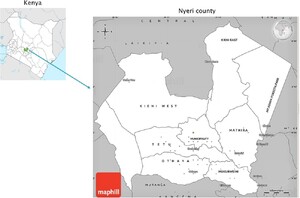
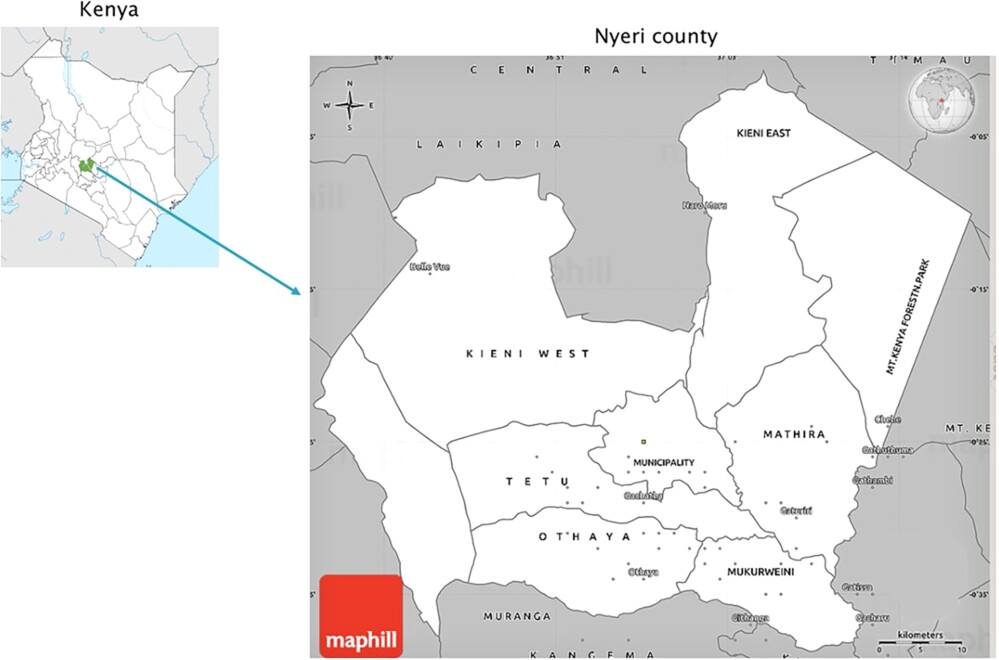
Nyeri County is located in the former Central province of Kenya (Figure 1). The average annual temperature is 19 °C with the daily average temperatures ranging from 17.4 to 21 °C, while the average annual rainfall is around 1200 mm (Weather and Climate, 2024). The main economic activities are farming with tea, coffee, dairy, and horticulture being the main ventures in smallholder farms where multiple farming practices are combined to reduce risks for food and nutrition security (CRA, 2022). Out of a total of 248 050 households in Nyeri county, 122,979 keep livestock while 760 are practising aquaculture, highlighting the crucial animal protein contribution of the sector to livelihoods (KNBS, 2019).

Map of Kenya showing Nyeri County. Sources: Wikipedia (https://ts.m.wikipedia.org/wiki/File:Nyeri_County_location_map.png) and Maphill (http://www.maphill.com/kenya/central/nyeri/simple-maps/gray-map/cropped-outside).
Citation: Journal of Insects as Food and Feed 12, 2 (2026) ; 10.1163/23524588-bja10267
A household survey was conducted among small-scale farmers in Nyeri County in the period October-December 2022, with the last interviewees being finalized on 1 January 2023. The selection of interviewees was centred around small-scale farmer self-help groups, often consisting of about 30 farmers. Cooperatives in each sub-county were contacted and informed about activities taking place among groups, and then interviewers took part in the group meetings and asked them one at a time to respond to the questions. To understand the smallholder perceptions about using BSFL as a feed ingredient on their farms, this study involved a total of 214 respondents, mainly taking part in farmersâ groups of around 30 people, who were interviewed using a semi-structured questionnaire.
Sampling
The questionnaire administered had questions regarding social and economic characteristics such as age, marital status, and main sources of income. In addition, information on sources of animal feeds, questions related to BSFL awareness, barriers to adoption and sources of waste were captured.
Statistical analysis
Besides a descriptive analysis, the study applied two models for its data analysis: Principal Component Analysis (PCA) and the binary probit. The PCA was selected for its ability to compress or reduce a large dataset into smaller sets (principal components) which are easier to visualise and explain while retaining the key trends in the original dataset. Relevant information is extracted from large data and the dimensionality of the data set is reduced by providing new and meaningful variables. This study used the PCA to generate components/factors with patterns explaining farmersâ perceptions of BSFL. Meanwhile, the binary probit model was chosen to analyse the determinants of awareness, a binary outcome variable in this study with only two outcomes: being aware and not being aware. Probit analysis was conducted using Stata Version 16 and SPSS Version 21 was used for the PCA analysis.
Characterization of Opportunities, Needs and Challenges
The Principal Component Analysis (PCA) method: PCA is an important instrument in the analysis of needs since it minimizes the number of variables that are correlated by building a linear combination of variables which are uncorrelated which maximises the total variance explained (Jolliffe and Cadima, 2016). The PCA method was applied in this study to generate factors with patterns explaining farmersâ perceptions of BSFL-related statements. The study had three sets of 5 Likert scale statements. The first set composed of interest in BSFL production questions ranged from; 1Â = I fully disagree, 2Â = I disagree to some extent, 3Â = I do not agree/nor disagree (neutral), 4Â = I agree to some extent and 5Â = I fully agree. The second set denoted needs assessment questions and ranged from 1Â = This is not relevant to our household, 2Â = This is a relevant need 3Â = This is the third most urgent need, 4Â = This is the second most urgent need and 5Â = This is the most urgent need. The third set explored challenges associated with BSFL production and questions ranged from 1Â = This is not relevant to our household, 2Â = This contributes to some extent as a bottleneck, 3Â = This contributes the third most as a bottleneck, 4Â = This contributes the second most as bottleneck 5Â = This contributes the most as a bottleneck.
The use of PCA was validated through the Kaiser-Meyer-Olkin (KMO) measure of sampling adequacy where a value of at least 0.5 is preferred (Kaiser, 1974). Components with eigenvalues of at least 1 are retained based on the Kaiser criterion (Kaiser, 1960). Further, Bartlettâs test of sphericity was applied to validate if the items in each group were related necessitating exploration of the underpinning structure of these variables (Tobias and Carlson, 1969). This is confirmed if Bartlettâs test of sphericity is statistically significant.
Modelling of the Awareness of BSFL
Awareness of agricultural technologies, in this case, BSFL can be modelled using several methods. While the choice of the method depends on the studyâs objectives, it mostly depends on the sequence of the subjectâs adoption decision, i.e., if made in single, double, or triple steps and the nature of the dependent variable. The nature of the dependent variable was measured as a binary, which takes the value of 1 if a farmer is aware and 0 if a farmer is unaware. Logit and Probit models are the commonly used models if the dependent variable is binary. To choose between the two models, a test for model fit is required. The current study utilized the Akaikeâs Information Criteria (AIC) and Bayesian Information Criteria (BIC) tests as explained by Vrieze (2012) The variables for the analysis should also be subjected to a degree of multicollinearity test, where values of Variance Inflation Factor (VIF) that are less than 10 are preferable (Marcoulides and Raykov, 2019). Multicollinearity has the effect of causing biased estimates by increasing the estimate of the standard error of regression coefficients, resulting in wider confidence intervals and increasing the chance of rejecting the significant test statistic (Yoo et al., 2014). Heteroscedasticity which is a violation of the Ordinary Least Squares (OLS) assumption of constant variance of error terms implies that the variance of the error term
Logit model
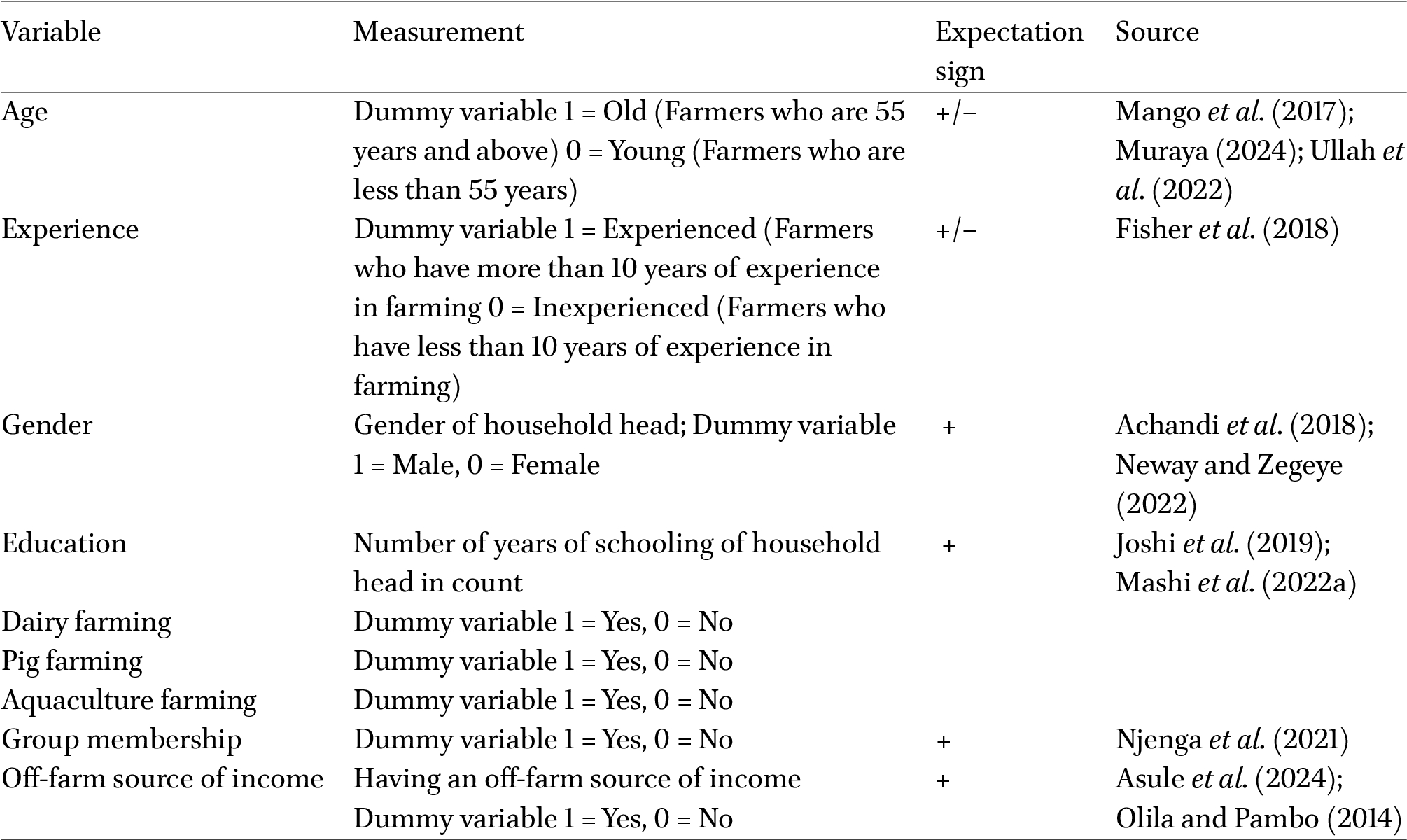
Description of variables used in the probit model
Citation: Journal of Insects as Food and Feed 12, 2 (2026) ; 10.1163/23524588-bja10267
Measurement and description of the variables used in the probit model
Age and experience were measured as dummy variables. The study defined old farmers as those who were 55 years and above and had a value of 1 and 0 if otherwise. Those having farming experience of more than 10 years were considered experienced and were assigned a value of 1 and 0 if otherwise. Age and experience of the household head were expected to have an indeterminate influence on awareness. This is because older and experienced farmers may be exposed to much more knowledge due to their years in terms of innovations hence more likely to be aware of BSFL as feed. On the other hand, younger farmers may be more exposed due to contact with social media and other learning platforms, making them more likely to be aware of BSFL as a feed source. The education of the household head determined by the number of years of formal education the farmer attained was measured as a continuous variable. It was hypothesized to positively influence awareness. This is because highly-educated individuals can decipher and analyse information hence more likely to be aware of BSFL as a feed source, compared with those having lower education levels. The gender of the household head measured as a dummy variable was expected to have a positive influence on awareness. This is because, as men are more likely to own productive resources, they will be on the lookout for technologies that improve their farming ventures hence more likely to be aware of BSFL as a feed source. Group membership was expected to positively influence awareness as groups are sources of information hence members are more likely to be aware of innovations, including BSFL, relative to non-group members. Having an off-farm source of income was also hypothesized to positively influence awareness. Farmers with off-farm sources of income will be more likely to seek out new technologies since they can also afford to invest in those technologies.
3 Results
Socioeconomic characteristics of respondents
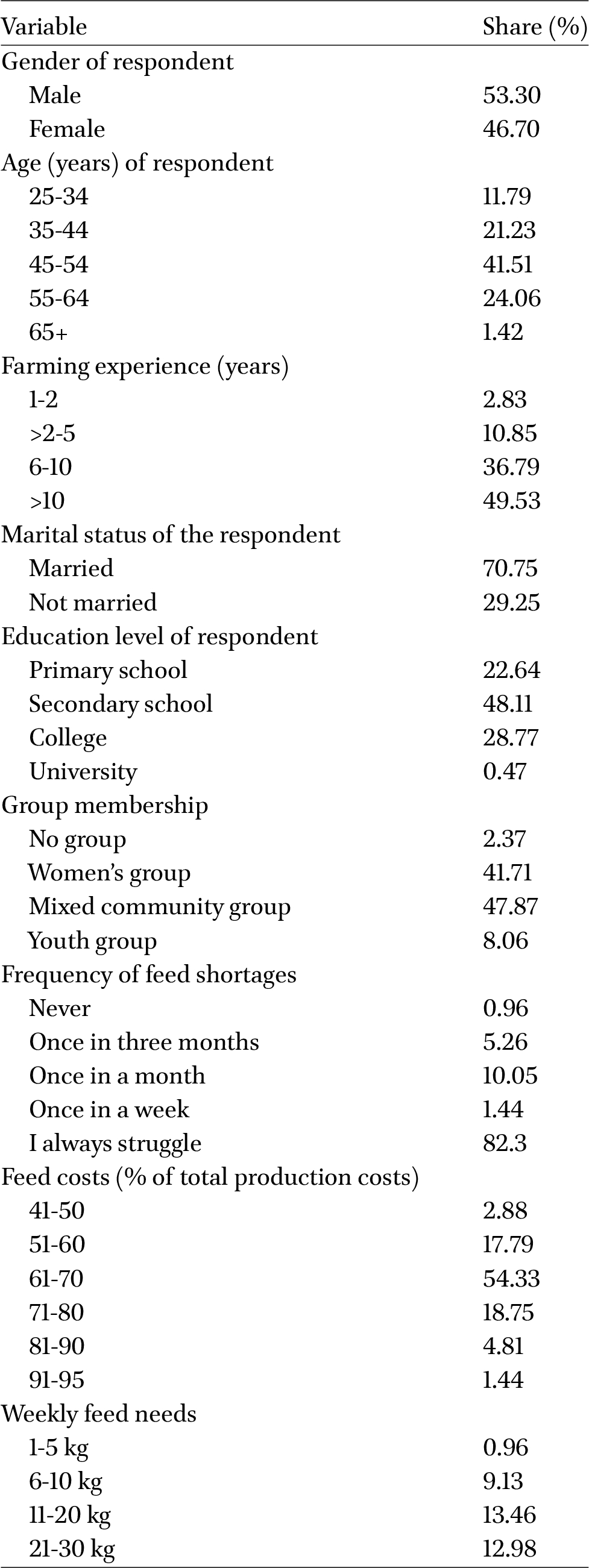
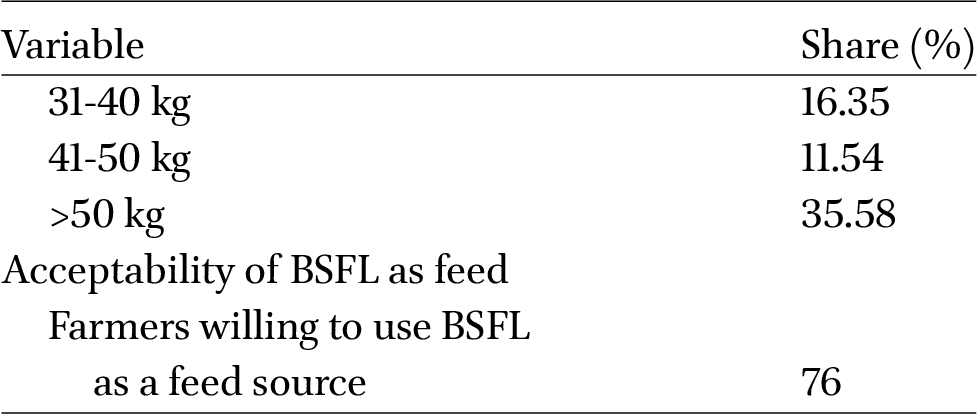
About half of the respondents (50%) were aware of BSFL as a feed ingredient. Approximately 53% were female and 47% were male respondents, a total of 92% affirmed they were in charge of the farm (Table 2). A total of 42% of interviewees were in the age category between 45-54 years old, followed by the age category above (55-64 years) and below (35-44 years), with 24 and 21%, respectively. Only 12% belonged to the youngest category (25-33 years), and only 1% in the oldest category (>64 years).
Socio-economic characteristics of interviewed households
Citation: Journal of Insects as Food and Feed 12, 2 (2026) ; 10.1163/23524588-bja10267
(Continued)
Citation: Journal of Insects as Food and Feed 12, 2 (2026) ; 10.1163/23524588-bja10267
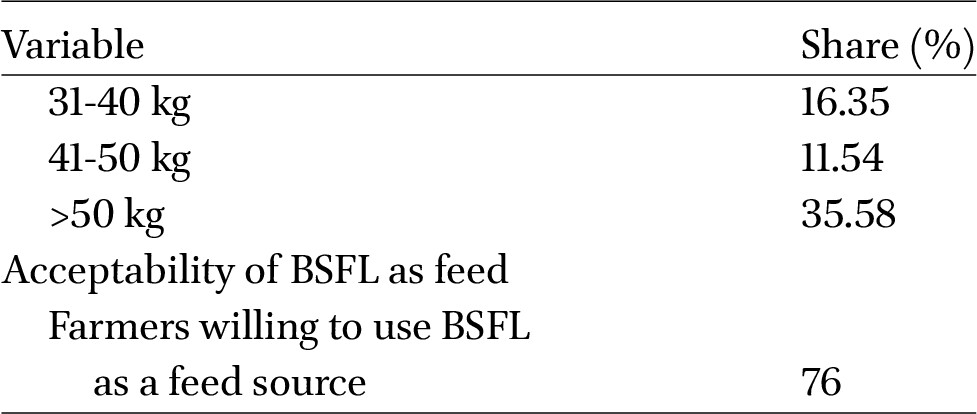
About half of the respondents had completed secondary school, whereas 23% of interviewees had completed primary school, 29% had finished college, and only one had a university degree. Slightly more than half of the respondents (54%) reported that feed costs comprised 61-70% of the total cost of animal production. The weekly needs of concentrate feed by a majority (36%) of farmers was more than 50Â kg. Regarding the frequency of feed shortages, only 1% of farmers said they never experienced feed shortages while a majority (82%) reported that they always had feed shortages.
Sources of waste of small-scale farmers interviewed in Nyeri County
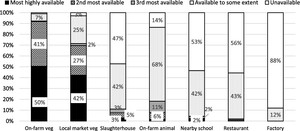
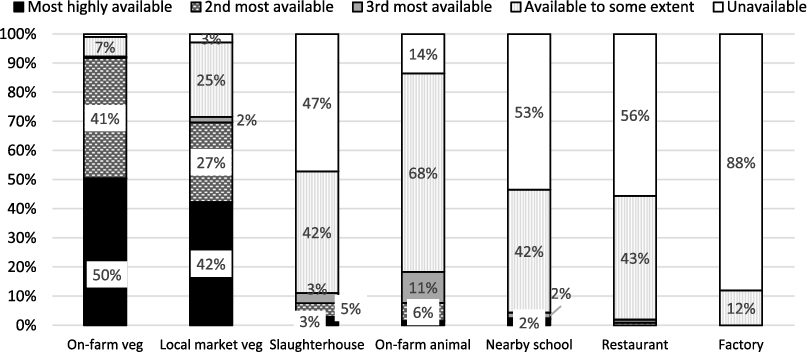
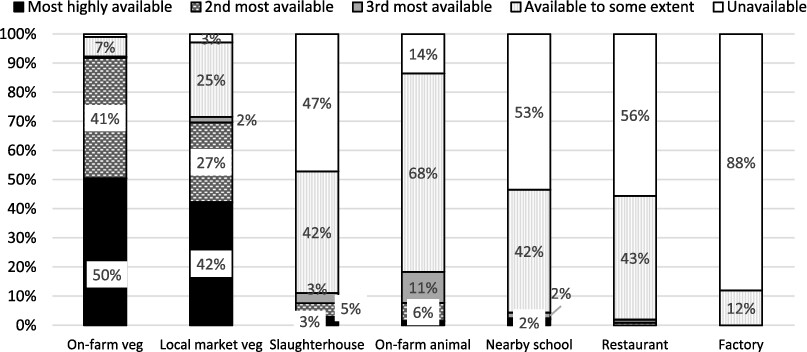
Farmers were questioned on potential sources of waste for use in BSFL production as this study was also interested in the viability and preparedness of farmers regarding BSFL production. In Figure 2, on-farm vegetable waste was the highest available substrate for BSFL production, which was most available to half of the farmers and second most available to 41% of farmers. This was followed by local market waste as the secondmost available source of waste, which was most available to 42% of farmers and the second most available waste to 27% of farmers.
Percentage of smallholder farmers accessing various sources of waste.
Citation: Journal of Insects as Food and Feed 12, 2 (2026) ; 10.1163/23524588-bja10267
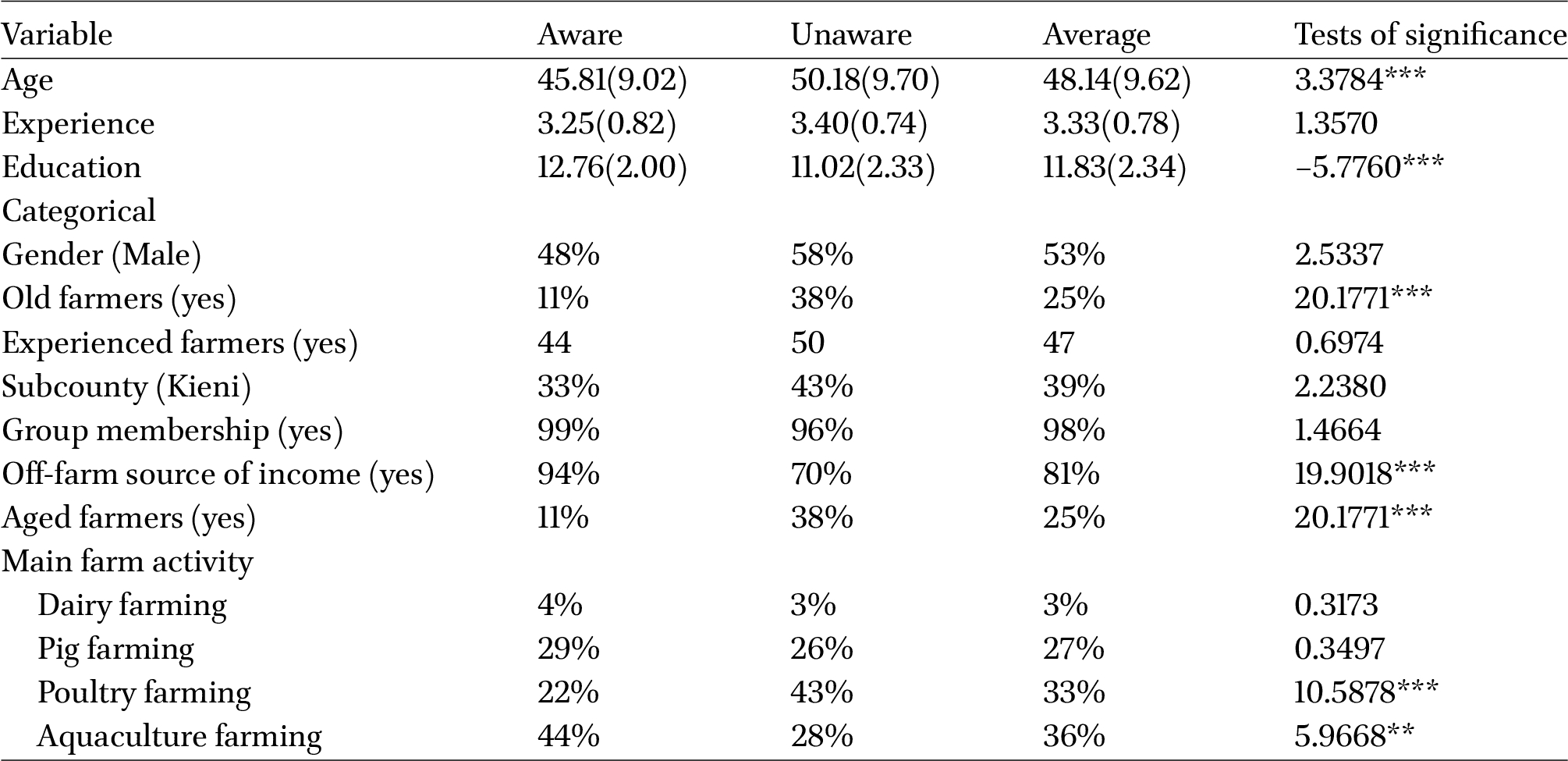
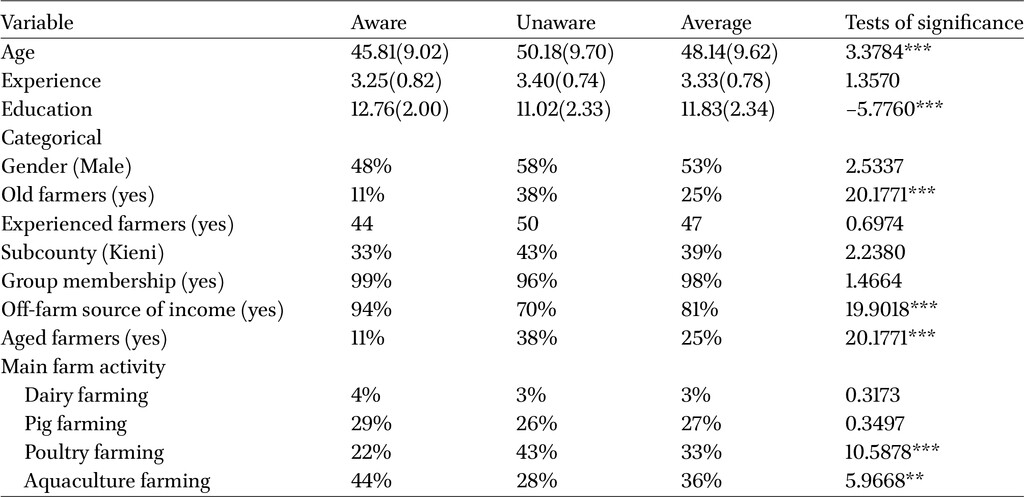
The results of the cross-tabulations of independent variables used in the logit model (Table 3) show that about 11% of BSFL-aware farmers were old (55 years and above) in comparison to (38%) unaware of BSFL-unaware, the difference being statistically significant at 1%. The average duration of education was 13 years for those aware of BSFL as feed, in comparison to 11 years for those unaware. This difference was significant at 1%. About 94% of BSFL-aware farmers had an off-farm source of income in comparison to 70% of BSFL-unaware farmers and this difference was significant at 1%. Farmers practising aquaculture had higher levels of awareness (44%), compared to dairy (4%), pig (29%) and poultry (22%) farmers.
Comparison of BSFL-aware and BSFL-unaware farmers
Citation: Journal of Insects as Food and Feed 12, 2 (2026) ; 10.1163/23524588-bja10267
Fit indices of the Probit and Logistic models
Citation: Journal of Insects as Food and Feed 12, 2 (2026) ; 10.1163/23524588-bja10267
Results on the AIC and BIC
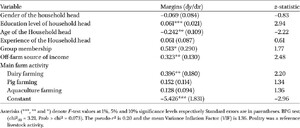
The variables under analysis were subjected to Probit and logistic regressions and the latter was chosen over the former because it had lower values of AIC and BIC (Table 4).
4 Results of logistic regression analysis
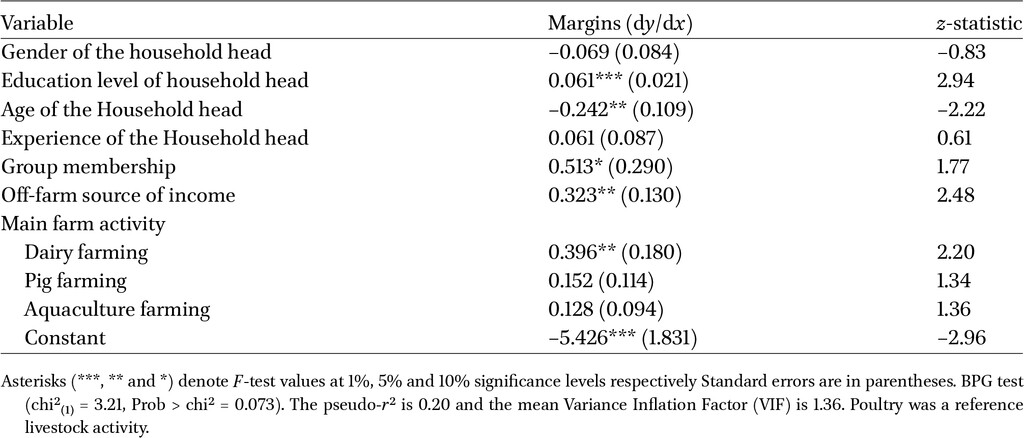
Education had a positive influence on awareness of BSFL as a source of feed (Table 5). Specifically, a one-year increase in the education level of the household head increased the likelihood of awareness by 6%. Group membership also exerted a positive influence on awareness. Precisely, being in a group increased the probability of being aware of BSFL as a source of feed by 51%. Additionally, having an off-farm source of income led to an increase in the likelihood of awareness by 32%. Age had a negative influence on awareness, indicating that older farmers were less likely to be aware of BSFL as a feed ingredient, compared to young farmers. Being a dairy farmer had a positive significant influence on awareness, relative to being a poultry farmer (base variable).
Marginal effects results of the logistic analysis of factors influencing awareness of BSFL as feed
Citation: Journal of Insects as Food and Feed 12, 2 (2026) ; 10.1163/23524588-bja10267
Needs Analysis using Principal Component Analysis (PCA)
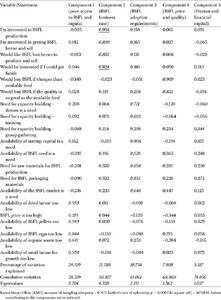
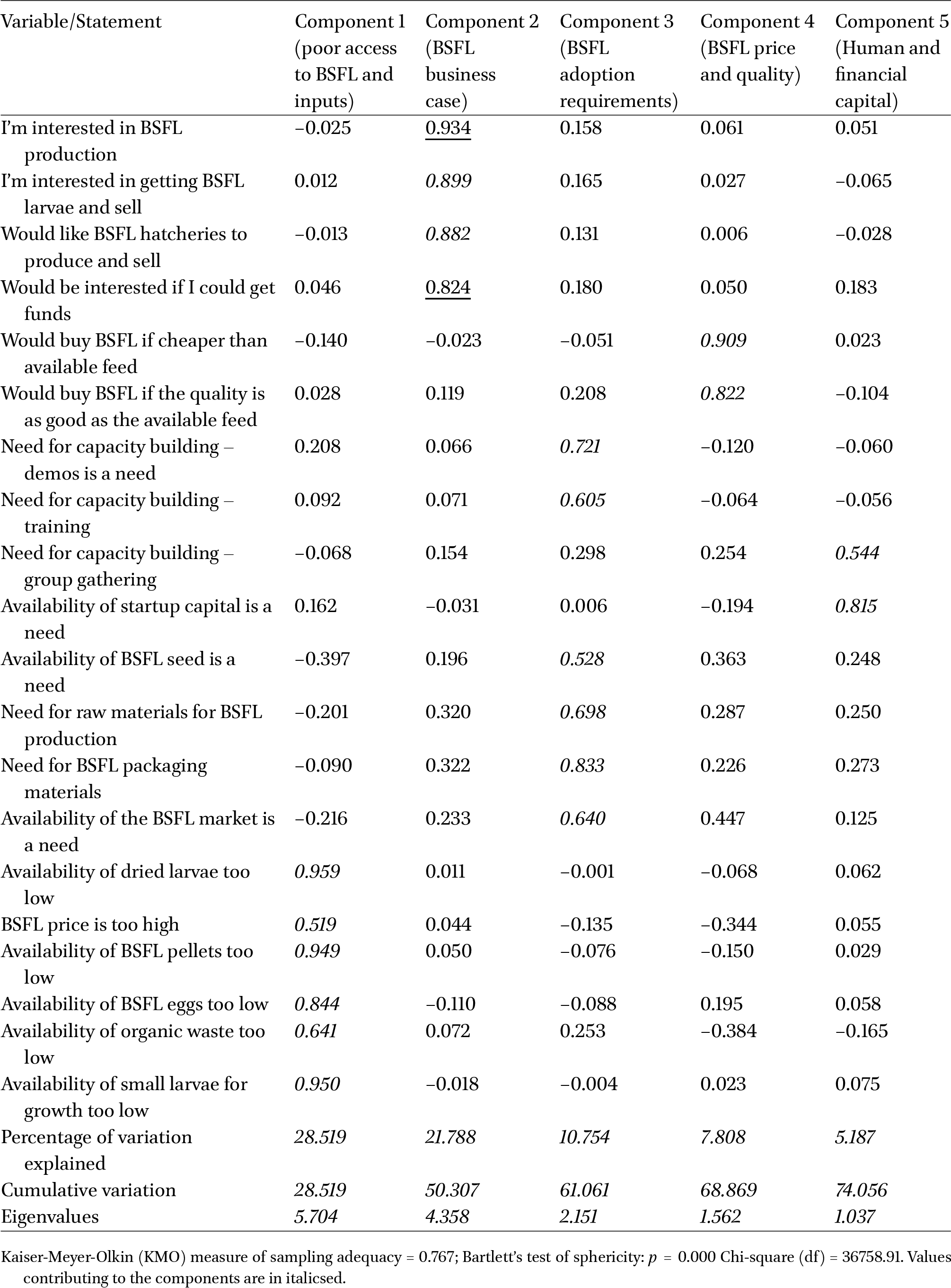
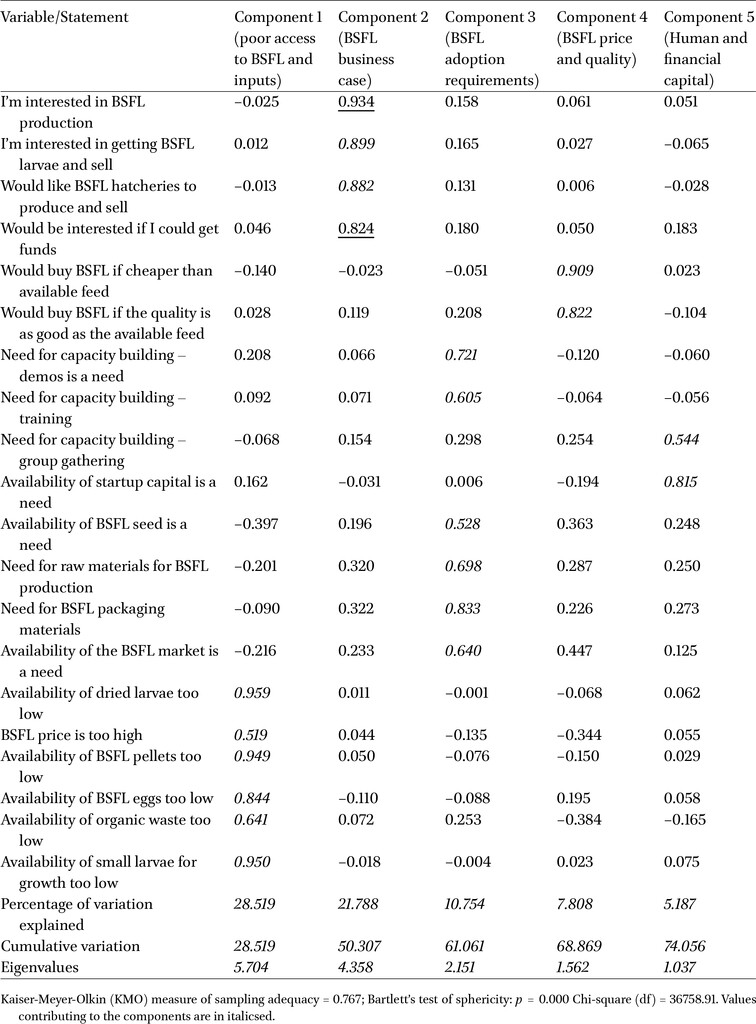
The PCA results are presented in Table 6. A total of five components were retained, and the retained factors explained about 74% of the total variation.
Needs analysis using PCA results across a total of five component analyses
Citation: Journal of Insects as Food and Feed 12, 2 (2026) ; 10.1163/23524588-bja10267
The first component has been named âPoor access to BSFL and inputsâ and it explained 29% of the total variation (Table 6). It was contributed by six statements âAvailable dried larvae too lowâ, Available BSFL pellets too lowâ, âAvailability of BSFL eggs too lowâ, âAvailability of small larvae for growth is too lowâ, âAvailable organic waste is too lowâ, and âBSFL price too highâ. This implies that the current production for BSFL is low while its demand is high. It also shows that there is a shortage of BSFL production components. This is understandable as the use of BSFL is a fairly new concept in animal feeding in Kenya, hence few farmers are involved in it. This suggests that farmers might be willing to take up BSFL production, but challenges associated with sourcing BSFL abound.
The second component has been named âBSFL business caseâ and contributed to 22% of the total variation. This can be summarised with statements such as âIâm interested in BSFL production, âIâm interested in getting BSFL larvae and sellâ, âI would like BSFL hatcheries to produce and sellâ, âIâm interested in BSFL production for own feed demandâ and âI would be interested if I got fundsâ. This is supported by the descriptive statistics results which showed that BSFL acceptability was 76% among the respondents (Table 2).
The third component was summarised as âBSFL adoption requirementsâ and contributed 11% of the total variation. The contributing statements were âAvailability of raw materials for BSFL production is a needâ, âAvailability of BSFL market is a need, âAvailability of packaging materials for BSFL production is a needâ, and âAvailability of BSFL seed (eggs) is a needâ, âCapacity building in the form of demonstrations is a needâ and âCapacity building in form of training is a needâ. This component emphasizes the importance of providing materials and technical expertise which can propel farmers to engage in the enterprise.
The fourth component was termed âBSFL price and qualityâ, and contributed to 8% of the total variation as shown in Table 6. It was contributed by statements such as âI would buy BSFL if itâs cheaper than available feedâ and âI would buy BSFL if quality is as good as available feed.â This component infers that farmers are concerned about the costs and quality of BSFL.
The fifth component has been termed âHuman and financial capitalâ as capacity building factors. This component contributed to 5% of the total variation and was contributed by statements such as âCapacity building in the form of group gatherings would be neededâ and âAvailability of startup capital is a needâ. Capacity building of farmers could potentially improve adoption rates as farmers are provided with initial capital in the form of infrastructure and information in the form of training. It could also involve the creation of BSFL farmer groups as avenues for procuring waste in bulk and sharing production facilities.
5 Discussion
Socioeconomic characteristics of respondents
About three-quarters of the respondents were below 55 years old, indicating a relatively young population, who are more likely to be exposed to innovation than older respondents. The feed needs of farms confirmed that the respondents were mainly smallholders as more than two-thirds of them only required less than 50Â kg of feed. However, feed costs were reported by slightly more than half of the respondents to lie within the range of 61-70% of the total cost of animal production, being a relatively high proportion, also cited by Alfiko et al., (2022). The high proportion of feed costs on the total costs confirms the need for lower-cost and better-quality feeds to reduce the cost of production and the consumer price of animal proteins. This is also emphasised by the very high frequency of feed shortages observed, with almost all (99%) of the respondents having varying intensities of feed shortages.
Sources of waste
On-farm waste and local vegetable waste are the most common sources of waste for smallholder farmers in Nyeri County. Nguyen et al. (2015) also found vegetable and fruits as suitable substrates for BSFL as these substrates yielded BSFL of comparable weight and larval length with BSFL fed on other sources such as poultry feed, pig liver, fish rendering and pig manure. As half of the farmers had indicated that waste from slaughterhouses was available, this indicates that a significant portion of farmers can maximize benefits from both sources of substrates.
Factors influencing BSFL awareness in Kenya
This study shows that around 48% of farmers were aware of the use of BSFL as a feed ingredient (Table 3). This is almost similar to the results of Bulinda et al. (2023), who found that 44% of farmers in Kiambu County were aware of BSFL as feed. This study also reports a 76% acceptability of BSFL as a feed ingredient, similar to Tanga et al. (2021) who reported that over 75% of farmers and feed millers were willing to adopt BSFL production technologies. The cross-tabulation analysis (Table 3) and those of the regression analysis complemented each other. A higher proportion of old farmers (55 years and above) were in the category of BSFL-unaware, compared to those in the category of BSFL-aware. This could be explained by the fact that older farmers are not exposed to diverse sources of information such as social media in comparison to younger farmers, thus missing out on potential sources of knowledge of BSFL as feed. This finding aligns with those of Daberkow and McBride (2003) and Bulinda et al. (2023), who found that older farmers were less likely to be aware of BSFL as feed and in contrast to Ouko et al. (2023) who revealed that age did not have a positive significant influence on awareness of insect-based aqua-feeds in Kenya.
Farmers who were aware of BSFL as a feed ingredient also had a longer duration of formal education and were more likely to have an off-farm source of income in comparison to farmers who were unaware, likely because they could be exposed to numerous sources of information that predispose them to knowledge about BSFL (Asadullah and Rahman, 2009), and can decipher information quickly (Padhy and Jena, 2015), relative to farmers with lower levels of education. This result is similar to Bulinda et al. (2023) and Mashi et al. (2022) who found that education positively influenced the awareness of BSF and Climate Smart Agriculture (CSA) technologies respectively. Nyamuhirwa et al. (2025) also reported that education influenced awareness of BSF by livestock farmers in Sub-Saharan Africa.
Farmers with more income sources and also with off-farm sources of income were more aware of BSFL as they could also have more income and therefore afford to access various forms of information compared to those that had fewer income sources. They may also look out for new technologies as they can afford to invest in them.
Group membership increased the probability of being aware of BSFL as a source of feed. Groups are crucial sources of information (Asule et al., 2024) where farmers can learn from each other or from organisations that work with them in group set-ups, thus increasing their likelihood of awareness, relative to farmers not in groups. Mango et al. (2017) in their study of factors influencing awareness of land, soil and water conservation practices in Southern Africa similarly indicated that group membership is critical in influencing awareness.
Being a dairy farmer had a positive significant influence on awareness, relative to being a poultry farmer (base variable). Dairy farming is a key activity in Nyeri County and due to their more challenging access to feeds as compared to other livestock sectors, farmers practising dairy are on the lookout for new options that will increase feed availability and improve their profitability.
Needs and challenges related to BSFL production
In this study, a circular economy approach was applied aiming at exploring factors influencing awareness and acceptability of using BSFL as feed ingredients, and challenges hindering the use of it as a feed ingredient by smallholder livestock farmers in Central Kenya. This section discusses the factors affecting the future adoption of insect-based feeds such as BSFL in Kenya including (1) the cost of production and quality of BSFL, (2) the availability of local sources of waste/ logistics and (3) the capacity building of farmers to produce BSFL.
Firstly, the cost of production of good quality BSFL must be affordable to ensure accessibility to small-scale farmers. Farmers signal a willingness to adopt BSFL if it is more affordable than other available feeds. Feeds contribute to the bulk of the cost of fish and livestock production, account for 60-70% of total production costs (Abro et al., 2020; Limbu et al.,2022; Hu et al., 2024; Ouko et al., 2023; Soma, 2022). However, farmers perceive the cost of BSFL production to be high, thus solutions aimed at educating farmers on the long-term benefits of reduced costs. Farmers also expressed their interest in using BSFL if its quality is as good as the available feed ingredients, showing that quality is an important perceived attribute of BSFL. As the quality of feed is largely affected by the type of waste that BSFL feed on, quality control measures should be emphasized to ensure BSFL biomass meets the standards for the intended use. The nutritional quality of BSFL feed can, if fed optimally, hence be excellent according to a study by Fiaboe and Nakimbugwe (2017) indicating that tilapia fed for 22 weeks with 33% replacement by BSFL had a 23.4% higher weight increase than conventional feed.
Secondly, the availability of local sources of waste/ logistics is critically important. As seen in Figure 1, the most common potential sources of organic waste were on-farm vegetable waste and local market waste, while the least common sources were processing factories and restaurants. Despite this, farmers contend that the availability of organic waste is too low. Joly and Nikiema (2019) argue that an insufficient supply of waste can make the process not to be economically viable. These local sources of waste tend to fluctuate based on weather, season and other factors. Cost challenges also compound the use of BSFL, for instance sorting costs for wastes. Testing to ensure safety and quality feed is also an added cost, which can be carried out by public institutes, by among others, the Kenya Agriculture and Livestock Research Organization (KARLO) and Kenya Bureau of Standards (KEBS). Many unexplored sources of waste still exist, for instance, less than 50% of waste is collected and less than 10% is recycled, and more than 50% of organic waste remains mainly from households, restaurants, hotels, markets and agro-industrial manufacturing processes (Chia, 2019). Therefore, supply chain solutions for moving waste from highly populated urban areas to rural areas where livestock production activities are done should be explored.
Thirdly, it is crucial to build the capacity of farmers in the production of BSFL. Table 6 reports farmers conveying that capacity building in the form of training/meetings, start-up capital, group meetings and demonstrations is an important need. Training will equip farmers with the necessary technical knowledge required for a successful BSFL unit. Start-up capital is crucial in providing the initial funds while demonstrations help farmers learn by doing. Challenges such as low BSFL, pellets, and organic waste give insight into which interventions should be carried out, which could be the provision of starter kits (Musungu et al., 2023). Abro et al. (2022) argue that BSFL farming will grow because of the high demand for insect-based feeds by farmers, feed dealers, agribusiness startups, NGOs, research organizations and processors.
6 Conclusions and recommendations
Conclusions
Despite the reported benefits, the adoption of insects for feed, particularly BSFL in Kenya remains low. This is largely attributed to the low levels of its awareness. This study analysed factors influencing awareness, challenges hindering BSFL use as a feed ingredient, and farmersâ needs. In this study, a local circular economy approach is put forward to deal with the challenges of hunger, secure environmental resources and reduce climate footprints in future. More precisely, the study investigates smallholders in Nyeri County, Kenya who increase their resiliency through cooperation in groups.
The results revealed that group membership, having an off-farm source of income source, attaining more years of formal education and being young positively influenced awareness of farmers on the use of BSFL as a feed. Five components were extracted by the PCA as needs and challenges to BSFL production: Poor access to BSFL and inputs, BSFL business case, BSFL adoption requirements, BSFL price and quality and Human and financial capital. The key challenge for farmers was access to production inputs such as larvae and wastes. Farmers also expressed their strong need for start-up kits, training and demonstrations, while they were concerned about BSFL quality and cost.
Recommendations
To increase awareness, extension services should target farmers who have low levels of education, and who are aged. Other avenues of sensitization should be explored; for instance, community meetings and local media such as vernacular radios should be used.
Farmer groups should be encouraged as a means for learning, dialogue and capacity building by county/national governments, NGOs and other stakeholders. This could help extend the information, especially to aged people as they were less likely to be aware of BSFL as an animal feed ingredient. A group approach is also necessary for easy procurement of waste and sharing of production facilities.
The study also recommends capacity building to farmers in the form of training and offering start-up production kits, larvae and seeds.
Additionally, it is important to promote relationships between BSFL producers and entities that are sources of waste to ensure consistency in the waste supply and production of BSFL.
Simple cost-effective production structures should be promoted, aiming at reducing the production cost for BSFL.
The government should consolidate policies geared towards developing and implementing regulatory standards for quality BSFL feed.
Finally, partnerships between farmer groups, government institutions/policymakers, and the private sector such as financial providers/manufacturers of production kits should be encouraged. This will ease the governmentâs role to coordinate and invest in BSFL production.
Acknowledgements
We would like to thank Charles M. Kanyuguto for his support in formulating questions and carrying out the interviews with farmers face-to-face.
Corresponding author; e-mail:Â asaah.ndambi@wur.nl
References
Abro, Z., Kassie, M., Tanga, C., Beesigamukama, D. and Diiro, G., 2020. Socio-economic and environmental implications of replacing conventional poultry feed with insect-based feed in Kenya. Journal of Cleaner Production 265: 121871. https://doi.org/10.1016/j.jclepro.2020.121871
Achandi, E.L., Mujawamariya, G., Agboh-Noameshie, A.R., Gebremariam, S., Rahalivavololona, N. and Rodenburg, J., 2018. Womenâs access to agricultural technologies in rice production and processing hubs: a comparative analysis of Ethiopia, Madagascar and Tanzania. Journal of Rural Studies 60: 188-198. https://doi.org/10.1016/j.jrurstud.2018.03.011
Alfiko, Y., Xie, D., Astuti, R.T., Wong, J. and Wang, L., 2022. Insects as a feed ingredient for fish culture: Status and trends. Aquaculture and Fisheries 7: 166-178. https://doi.org/10.1016/j.aaf.2021.10.004
Asadullah, M.N. and Rahman, S., 2009. Farm productivity and efficiency in rural Bangladesh: The role of education revisited. Applied Economics 41: 17-33. https://doi.org/10.1080/00036840601019125
Asule, P.A., Musafiri, C., Nyabuga, G., Kiai, W., Kiboi, M., Nicolay, G. and Ngetich, F.K., 2024. Awareness and adoption of climate-resilient practices by smallholder farmers in central and upper Eastern Kenya. Heliyon 10: e38368. https://doi.org/10.1016/j.heliyon.2024.e38368
Bulinda, C.M., Gido, E.O., Kirscht, H. and Tanga, C.M., 2023. Gendered awareness of pig and poultry farmers on the potential of black soldier fly (Hermetia illucens) farming in Kenya. Sustainability 15: 4. https://doi.org/10.3390/su15043613
Chia, S.Y., 2019. Black soldier fly larvae as a sustainable animal feed ingredient in Kenya. PhD thesis, Wageningen University, Wageningen.
Chia, S.Y., Tanga, C.M., Osuga, I.M., Alaru, A.O., Mwangi, D.M., Githinji, M., Dubois, T., Ekesi, S., van Loon, J.J.A. and Dicke, M., 2021. Black soldier fly larval meal in feed enhances growth performance, carcass yield and meat quality of finishing pigs. Journal of Insects as Food and Feed 7: 433-447. https://doi.org/10.3920/JIFF2020.0072
Cochran, W.G., 1963. Sampling techniques. 2nd ed. Wiley, New York, NY. https://onlinelibrary.wiley.com/doi/abs/10.1002/bimj.19650070312
Cornelsen, L., Alarcon, P., Häsler, B., Amendah, D.D., Ferguson, E., FeÌvre, E.M., Grace, D., Dominguez-Salas, P. and Rushton, J., 2016. Cross-sectional study of drivers of animal-source food consumption in low-income urban areas of Nairobi, Kenya. BMC Nutrition 2: 70. https://doi.org/10.1186/s40795-016-0109-z
CRA, 2022. County fact sheets. 3rd ed. Commission on Revenue Allocation (CRA), Nairobi. Available online at https://cra.go.ke/wp-content/uploads/2022/06/Kenya-County-fact-sheets-Report-Final-Res.pdf
Daberkow, S.G. and McBride, W.D., 2003. Farm and operator characteristics affecting the awareness and adoption of precision agriculture technologies in the US. Precision Agriculture 4: 163-177. https://doi.org/10.1023/A:1024557205871
FAO, 2017. Africa Sustainable livestock 2050 â country brief Kenya. FAO, Rome. Available online at https://www.fao.org/3/i7348en/i7348en.pdf
FAO, 2019. Modernizing Rwandaâs livestock to attract investment and enhance food security. FAO, Rome. Available online at https://www.fao.org/rwanda/news/detail-events/ar/c/1185157/
Fiaboe, K. and Nakimbugwe, D., 2017. INSFEED: Integrating insects in poultry and fish feed in Kenya and Uganda â final technical report. Available online at http://hdl.handle.net/10625/56858
Hu, X., Soma, K., Odinga, B., Obwanga, B., Agricola, H. and Kanyuguto, C.M., 2024. The protein transition â environmental footprints of farmed fish, microalgae and chicken for food, a case study in Kenya. Environment, Development and Sustainability: in press.
Ipara, B.O., Otieno, D.J., Nyikal, R.A. and Makokha, N.S., 2024. Farmersâ awareness and perceptions on Newcastle disease in chicken: evidence from high and low rainfall regions of Kenya. Cogent Food and Agriculture 10: 2292869. https://doi.org/10.1080/23311932.2023.2292869
Jayanegara, A., Novandri, B., Yantina, N. and Ridla, M., 2017. Use of black soldier fly larvae (Hermetia illucens) to substitute soybean meal in ruminant diet: An in vitro rumen fermentation study. Veterinary World 10: 1439-1446. https://doi.org/10.14202/vetworld.2017.1439-1446
Jolliffe, I.T. and Cadima, J., 2016. Principal component analysis: a review and recent developments. Philosophical Transactions of the Royal Society Series A: Mathematical, Physical, and Engineering Sciences 374: 20150202. https://doi.org/10.1098/rsta.2015.0202
Joly, G. and Nikiema, J., 2019. Global experiences on waste processing with black soldier fly (Hermetia illucens): From technology to business. (Resource Recovery and Reuse Series 16) (Resource Recovery and Reuse Series H049395). International Water Management Institute, Colombo. Available online at https://econpapers.repec.org/paper/iwtrerere/h049395.htm
Joshi, A., Kalauni, D. and Tiwari, U., 2019. Determinants of awareness of good agricultural practices (GAP) among banana growers in Chitwan, Nepal. Journal of Agriculture and Food Research 1: 100010. https://doi.org/10.1016/j.jafr.2019.100010
Kaiser, H.F., 1960. The application of electronic computers to factor analysis. Educational and Psychological Measurement 20: 141-151. https://doi.org/10.1177/001316446002000116
Kaiser, H.F., 1974. An index of factorial simplicity. Psychometrika 39: 31-36. https://doi.org/10.1007/BF02291575
Kals, J., Opiyo, M.A., Rurangwa, E., Soma, K., Ndambi, A. and Vernooij, A., 2024. Use of black soldier fly larvae and freshwater shrimp to partly substitute commercial diet for Nile tilapia cultured in smallholder fish farms â a case study in Busia County, Kenya. Frontiers in Sustainable Food Systems 8: 1298551. https://doi.org/10.3389/fsufs.2024.1298551
Khaemba, C.N., Kidoido, M.M., Owuor, G. and Tanga, C.M., 2022. Consumersâ perception towards eggs from laying hens fed commercial black soldier fly (Hermetia illucens) larvae meal-based feeds. Poultry Science 101: 101645. https://doi.org/10.1016/j.psj.2021.101645
KNBS, 2019. 2019. Kenya population and housing census volume IV. KNBS, Nairobi. Available online at https://housingfinanceafrica.org/app/uploads/VOLUME-IV-KPHC-2019.pdf
Limbu, S.M., Shoko, A.P., Ulotu, E.E., Luvanga, S.A., Munyi, F.M., John, J.O. and Opiyo, M.A., 2022. Black soldier fly (Hermetia illucens, L.) larvae meal improves growth performance, feed efficiency and economic returns of Nile tilapia (Oreochromis niloticus, L.) fry. Aquaculture, Fish and Fisheries 2: 167-178. https://doi.org/10.1002/aff2.48
Lu, S., Chen, S., Paengkoum, S., Taethaisong, N., Meethip, W., Surakhunthod, J., Wang, Q., Sorasak, T. and Paengkoum, P., 2024. Effects of black soldier fly (Hermetia illucens L., BSF) larvae addition on in vitro fermentation parameters of goat diets. Insects 15: 343. https://doi.org/10.3390/insects15050343
Mango, N., Makate, C., Tamene, L., Mponela, P. and Ndengu, G., 2017. Awareness and adoption of land, soil and water conservation practices in the Chinyanja Triangle, Southern Africa. International Soil and Water Conservation Research 5: 122-129. https://doi.org/10.1016/j.iswcr.2017.04.003
Marcoulides, K.M. and Raykov, T., 2019. Evaluation of variance inflation factors in regression models using latent variable modeling methods. Educational and Psychological Measurement 79: 874-882. https://doi.org/10.1177/0013164418817803
Mashi, S.A., Inkani, A.I. and Oghenejabor, O.D., 2022. Determinants of awareness levels of climate smart agricultural technologies and practices of urban farmers in Kuje, Abuja, Nigeria. Technology in Society 70: 102030.
MoALFC, 2021. Agricultural policy âfood: our health, wealth and securityâ. Ministry of Agriculture, livestock, Fisheries and Cooperatives, Nairobi. Available online at https://kilimo.go.ke/wp-content/uploads/2022/05/Agricultural-Policy-2021.pdf
Moalkm, D., 1974. The measurement of urban travel demand. Journal of Public Economics 3: 303-328. https://doi.org/10.1016/0047-2727(74)90003-6
Mshelia, A.B., Osman, M. and Misni, N.B., 2022. A cross-sectional study design to determine the prevalence of knowledge, attitude, and the preventive practice of food poisoning and its factors among postgraduate students in a public university in Selangor, Malaysia. PLoS ONE 17: e0262313. https://doi.org/10.1371/journal.pone.0262313
Müller, A., Wolf, D. and Gutzeit, H.O., 2017. The black soldier fly, Hermetia illucens â a promising source for sustainable production of proteins, lipids and bioactive substances. Zeitschrift für Naturforschung C 72: 351-363. https://doi.org/10.1515/znc-2017-0030
Munguti, J., Kirimi, J., Obiero, K., Ogello, E., Sabwa, J., Kyule, D., Liti, D. and Musalia, L., 2021. Critical Aspects of Aquafeed Value Chain in the Kenyan Aquaculture Sector â A Review. Sustainable Agriculture Research 10: 2. https://doi.org/10.5539/sar.v10n2p87
Munguti, J.M., Nairuti, R., Iteba, J.O., Obiero, K.O., Kyule, D., Opiyo, M.A., Abwao, J., Kirimi, J.G., Outa, N., Muthoka, M., Githukia, C.M. and Ogello, E.O., 2022. Nile tilapia (Oreochromis niloticus Linnaeus, 1758) culture in Kenya: Emerging production technologies and socio-economic impacts on local livelihoods. Aquaculture, Fish and Fisheries 2: 265-274. https://doi.org/10.1002/aff2.58
Muraya, D.L., 2024. Determinants of khat farmersâ awareness of agricultural insurance: evidence of Igembe North Sub County, Meru County, Kenya. International Journal of Economics, Business and Management Research 8: 141-151. https://doi.org/10.51505/IJEBMR.2024.8710
Musungu, A.L., Muriithi, B.W., Ghemoh, C.J., Nakimbugwe, D. and Tanga, C.M., 2023. Production, consumption, and market supply of edible crickets: insights from East Africa. Agricultural and Food Economics 11: 28. https://doi.org/10.1186/s40100-023-00272-9
Neway, M.M. and Zegeye, M.B., 2022. Gender differences in the adoption of agricultural technology in North Shewa Zone, Amhara Regional State, Ethiopia. Cogent Social Sciences 8: 2069209. https://doi.org/10.1080/23311886.2022.2069209
Nguyen, T.T., Tomberlin, J.K. and Vanlaerhoven, S., 2015. Ability of black soldier fly (Diptera: Stratiomyidae) larvae to recycle food waste. Environmental Entomology 44: 406-410.
Njenga, M.W., Mugwe, J.N., Mogaka, H., Nyabuga, G., Kiboi, M., Ngetich, F., Mucheru-Muna, M., Sijali, I. and Mugendi, D., 2021. Communication factors influencing adoption of soil and water conservation technologies in the dry zones of Tharaka-Nithi County, Kenya. Heliyon 7: e08236. https://doi.org/10.1016/j.heliyon.2021.e08236
Nyamuhirwa, D.M.A., Feleke, S., Dontsop Nguezet, P.M., Sissoko, D., Moussa, B., Kouakou, A.G., Zakari, S., Abdoulaye, T. and Manyong, V., 2025. Perspectives on the adoption of black-soldier fly larvae for animal feed among livestock farmers in Sub-Saharan Africa. Frontiers in Environmental Economics 4. https://doi.org/10.3389/frevc.2025.1519767
Ogello, E.O., Outa, O.N., Ouma, O.K., Kyule, N.D., Munguti, M.J. and Obiero, O.K., 2022. Socio-economic consequences of imported frozen tilapia in the Kenyan aquaculture value chain: Strategies for optimizing local unexploited potential. African Journal of Food Agriculture Nutrition and Development 22: 21171-21185. Available online at https://ajfand.net/Volume22/No8/Outa21985.pdf
Olila, D.O. and Pambo, K.O. (eds.), 2014. Determinants of farmersâ awareness about crop insurance: evidence from Trans-Nzoia County, Kenya. https://doi.org/10.22004/ag.econ.165997
Ouko, K.O., Mboya, J.B., Obiero, K.O., Ogello, E.O., Mukhebi, A.W., Muthoka, M. and Munguti, J.M., 2023. Determinants of fish farmersâ awareness of insect-based aquafeeds in Kenya; the case of black soldier fly larvae meal. Cogent Food and Agriculture 9: 2187185. https://doi.org/10.1080/23311932.2023.2187185
Padhy, C. and Jena, B.K., 2015. Effect of agricultural education on farmers efficiency: a review. International Journal of Engineering Technology, Management and Applied Science 2: 2349-4476.
Sadhukhan, J., Dugmore, T.I.J., Matharu, A., Martinez-Hernandez, E., Aburto, J., Rahman, P.K.S.M. and Lynch, J., 2020. Perspectives on âgame changerâ global challenges for sustainable 21st century: plant-based diet, unavoidable food waste biorefining, and circular economy. Sustainability 12: 5. https://doi.org/10.3390/su12051976
Siddiqui, S.A., Ristow, B., Rahayu, T., Putra, N.S., Widya Yuwono, N., Nisaâ, K., Mategeko, B., Smetana, S., Saki, M., Nawaz, A. and Nagdalian, A., 2022. Black soldier fly larvae (BSFL) and their affinity for organic waste processing. Waste Management 140: 1-13. https://doi.org/10.1016/j.wasman.2021.12.044
Soma, K., 2022. Ensuring accessibility of insect-based feed to small-scale fish farmers in Kenya and Uganda. In: Stroosnijder, S., Hetterscheid, B. and Castelein, B. (eds.) A journey into the worldâs food systems in search of losses, waste and ways to solve them. Wageningen University and Research, Wageningen, pp. 58-62.
Tanga, C.M., Egonyu, J.P., Beesigamukama, D., Niassy, S., Emily, K., Magara, H.J., Omuse, E.R., Subramanian, S. and Ekesi, S., 2021. Edible insect farming as an emerging and profitable enterprise in East Africa. Current Opinion in Insect Science 48: 64-71. https://doi.org/10.1016/j.cois.2021.09.007
Terova, G., Gini, E., Gasco, L., Moroni, F., Antonini, M. and Rimoldi, S., 2021. Effects of full replacement of dietary fishmeal with insect meal from Tenebrio molitor on rainbow trout gut and skin microbiota. Journal of Animal Science and Biotechnology 12: 30. https://doi.org/10.1186/s40104-021-00551-9
Tippayadara, N., Dawood, M.A.O., Krutmuang, P., Hoseinifar, S.H., Van Doan, H. and Paolucci, M., 2021. Replacement of fish meal by black soldier fly (Hermetia illucens) larvae meal: Effects on growth, haematology, and skin mucus immunity of Nile tilapia, Oreochromis niloticus. Animals 11: 193. https://doi.org/10.3390/ani11010193
Tobias, S. and Carlson, J.E., 1969. Brief Report: Bartlettâs test of sphericity and chance findings in factor analysis. Multivariate Behavioral Research 4: 375-377. https://doi.org/10.1207/s15327906mbr0403_8
Ullah, A., Saqib, S.E. and Kächele, H., 2022. Determinants of farmersâ awareness and adoption of extension recommended wheat varieties in the rainfed areas of Pakistan. Sustainability 14: 6. https://doi.org/10.3390/su14063194
Vrieze, S.I., 2012. Model selection and psychological theory: A discussion of the differences between the Akaike Information Criterion (AIC) and the Bayesian Information Criterion (BIC). Psychological Methods 17: 228-243. https://doi.org/10.1037/a0027127
Wooldridge, J., 2010. Econometric analysis of cross section and panel data. The MIT Press, Cambridge, MA.
Yan, Y., Zhang, J., Chen, X. and Wang, Z., 2023. Effects of black soldier fly larvae (Hermetia illucens larvae) meal on the production performance and cecal microbiota of hens. Veterinary Sciences 10: 364. https://doi.org/10.3390/vetsci10050364
Yoo, W., Mayberry, R., Bae, S., Singh, K., (Peter) He, Q. and Lillard, J.W., 2014. A study of effects of multicollinearity in the multivariable analysis. International Journal of Applied Science and Technology 4: 9-19.