Abstract
This research addresses a knowledge gap in understanding the economic feasibility and ecological benefits of frass in circular agriculture. Its primary objective is to estimate the net change in profit that farmers can expect by adding insect frass to their array of crop and soil health promoters used in Brassica production. As such, the study contributes to estimating the role of circular agricultural practices in promoting environmental sustainability and economic efficiency. Assuming applications of frass occur in the current season, in four years and again in eight years, frass is expected to consistently generate an increase in net profit in Brassica production. Specifically, conventional broccoli production having the highest increase and conventional Brussels sprouts production the lowest increase. Frass is expected to be economically justifiable, even attractive over the years for farmers. While reducing the need for alternative chemical pesticides, frass could contribute to improved soil life and quality. It facilitates balanced and efficient plant growth and contributes to the plantâs systemic resistance to pests and diseases. Frass offers opportunities for arable farmers who are expected to achieve higher profits while using less chemical inputs.
1 Introduction
Shifts in practices to integrate more environmental approaches are becoming increasingly considered within the agriculture sector. This is evident in farms and other production facilities across various sectors, which typically produce by-products alongside their main products, leading to an accumulation of residuals. In response, there is an increasing adoption of circular production systems. These systems emphasize the recycling and repurposing of by-products, aiming to efficiently utilize resources while managing the build-up of residuals (Geissdoerfer et al., 2020). Agriculture is one of the sectors moving towards circularity as opportunities for by-product recycling become more apparent (Dagevos and de Lauwere, 2021).
One opportunity for circularity in agriculture exists between insect producers and arable farmers. Insect production generates frass, consisting of several by-products â molted exoskeletons (exuviae), manure and undigested feed. Insect frass, particularly from the black soldier fly (BSF), presents a promising and environmentally friendly alternative to traditional fertilizers due to its rich chemical-physical characteristics and sustainable production process (Elissen et al., 2023). BSF frass, dependent on the substrate used, typically contains higher organic matter than compost and various manures, with significant macronutrient content and a favorable carbon-to-nitrogen ratio (Elissen et al., 2023). The production of BSF frass contributes to waste reduction, enhanced soil health, and decreased greenhouse gas emissions by recycling organic waste into valuable protein feed and organic fertilizer (Beesigamukama et al. 2022). For example, BSF frass has been shown to effectively support plant growth while reducing nitrogen leaching, thus promoting more sustainable agricultural practices (Beasley et al., 2023). Additionally, frass can improve soil microbial biomass and nutrient cycling, benefiting overall soil health (Watson et al., 2021). In Europe, the production, storage, and utilization of insect frass are regulated under Regulation (EU) 2021/1925, which includes standards for heat treatment and microbiological safety, ensuring its safe use as an organic fertilizer (IPIFF, 2023). These combined advantages underscore the potential of BSF frass in contributing to a circular economy and enhancing sustainability in agriculture.
Frass offers an interesting benefit for crop farming. For instance, it can be recycled as a crop and soil health promoter for use on arable farms (BarragaÌn-Fonseca et al., 2022). For example, given that frass is composed of organic matter, it can be used to supplement the nutritional needs of the crops and soil (Chavez and Uchanski, 2021; Kebli and Sinaj, 2017; Quilliam et al., 2020; Temple et al., 2013; Vickerson et al., 2017). Additionally, frass also exhibits potential added value as a crop and soil health promoter. Research conducted by Bai (2015) showed that when exuviae are integrated into the soil, Bacilli colonization increases by more than fifteen percent after seven weeks. By stimulating specific beneficial microbial groups (e.g. Bacillus or Pseudomonas species), frass can interfere with the performance of various herbivores and suppress various diseases (Andreo-Jimenez et al., 2021; Cretoiu et al., 2013; Kupferschmied et al., 2013; Laurentis et al., 2014; Randall et al., 2020). With fewer pests and diseases present, less crop yield loss would occur. Ultimately, frass could potentially reduce the reliance on chemical insecticides and fungicides while improving crop yield. Researchers continue to test the effectiveness of insect frass as a crop and soil health promoter, though more time is needed to determine its full potential (BarragaÌn-Fonseca et al., 2022).
For frass to play a role in circular agriculture, it should be economically justifiable for farmers to use it. A comprehensive overview of frassâ influence on the pests, diseases and yield for any one crop is currently lacking. Likewise, there is currently no reliable indication of the extent in which frass can reduce the need for chemical crop protection products. The objective of this research is therefore to estimate the net change in profit that farmers can expect by adding insect frass to their array of crop and soil health promoters used in Brassica production. Some of the most recent (and ongoing) research regarding frassâ effectiveness as a crop and soil health promoter stem from experiments that use Brassica crops; we therefore examine Brassica production to best align with these experiments. To meet the objective, three underlying research questions are addressed:
When applying insect frass in Brassica production as a crop and soil health promoter compared to not applying frass,
- 1. by how much is pest and disease presence expected to change?
- 2. by how much is crop yield expected to change?
- 3. by how much is fungicide and insecticide use expected to change?
Experimental research data are not (yet) available to answer our research questions. Therefore, we decided to consult experts. Relying on expert knowledge provides an opportunity to gain insights into insect frassâ performance by extrapolating results from the most recent and on-going studies. Because the current scientific literature provides an insufficient overview of frassâ potential, expert elicitations aid in gaining insights into topics beyond the current knowledge base (Morgan, 2014).
Our research focuses on the use of insect frass in the Netherlands because a great deal of insect production and the development of insects for food and feed occurs in the Netherlands (van Huis, 2013). Additionally, research investigating insect frassâ effectiveness against various pests and diseases in Brassica crops is currently taking place in the Netherlands.
We investigate the net change in profit for two Brassica crops (broccoli and Brussels sprouts). Brassica crops vary greatly in terms of the extent of pesticide use and how long the crops are on the fields. Among the Brassica vegetables, broccoli production utilizes very few active crop protection product ingredients, while Brussels sprouts production utilizes many (KWIN-AGV, 2018). Considering these two extremes is therefore useful for comparing insect frassâ potential economic effects within Brassica production. We consider both conventional and organic production as the allowance for pesticide usage and application schemes differ between the two systems.
2 Methods
Our approach consisted of three parts: (1) elicitation with frass experts, (2) elicitation with crop advisors and (3) the construction of an economic model. Results from the first expert elicitation were discussed with the experts in the second elicitation. The results from the second expert elicitation served as input for the economic model. This model was then used to calculate the net change in profit farmers may expect when utilizing frass compared to continuing their normal practice â the baseline scenario. Figure 1 summarizes the three-step research process.

The three-step process applied in this study.
Citation: Journal of Insects as Food and Feed 11, 2 (2025) ; 10.1163/23524588-00001262
Expert elicitations
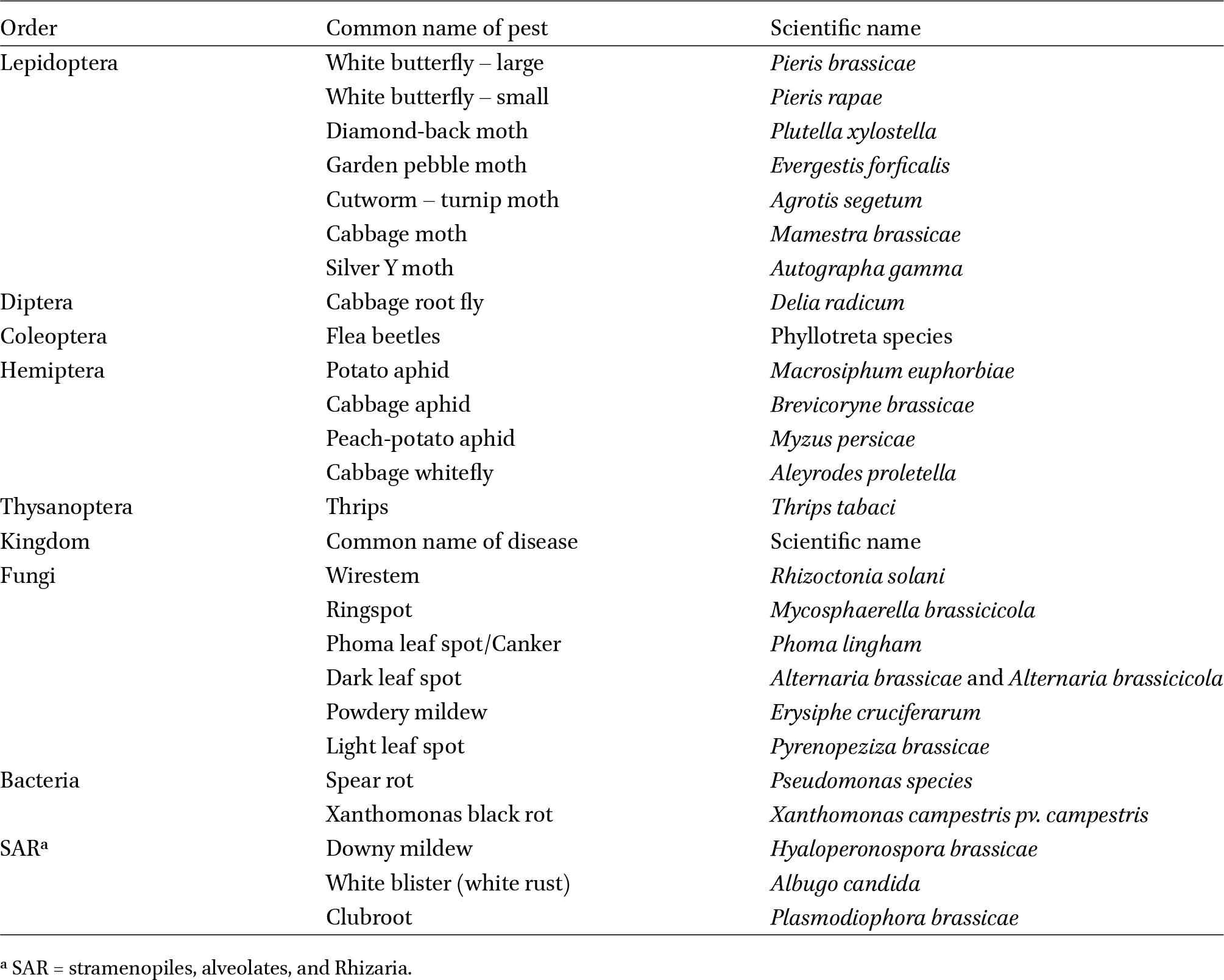
The first two steps in our research approach were expert elicitations. The first expert elicitation consisted of structured individual interviews followed by a group discussion with insect frass experts. The aim of this first elicitation was to address research questions 1 and 2. Insect frass experts were defined as researchers conducting and/or supervising experiments on the effects of insect exuviae (molted skins) or frass on crop and soil health at Wageningen University & Research. Seven frass experts participated in the interviews, of which six then also participated in the subsequent group discussion. During the interviews, experts provided estimations of frassâ effectiveness towards fourteen pests and eleven diseases that are notoriously destructive and common in Brassica production (listed in Appendix A, Table A1) (Agriculture and Horticulture Development Board, 2017). More specifically, they provided lowest, highest and most likely estimations (in percentages) of how much they expect frass to influence (a) the presence of the specified pests and diseases and (b) crop yield in organic and conventional broccoli and Brussels sprouts production. They also gave explanations justifying their estimations. During the subsequent group discussion, experts were presented with a summary of the estimations and explanations given during the interviews. For each pest and disease, experts shortly discussed the summary, after which they provided new individual estimations (via an anonymous online survey).
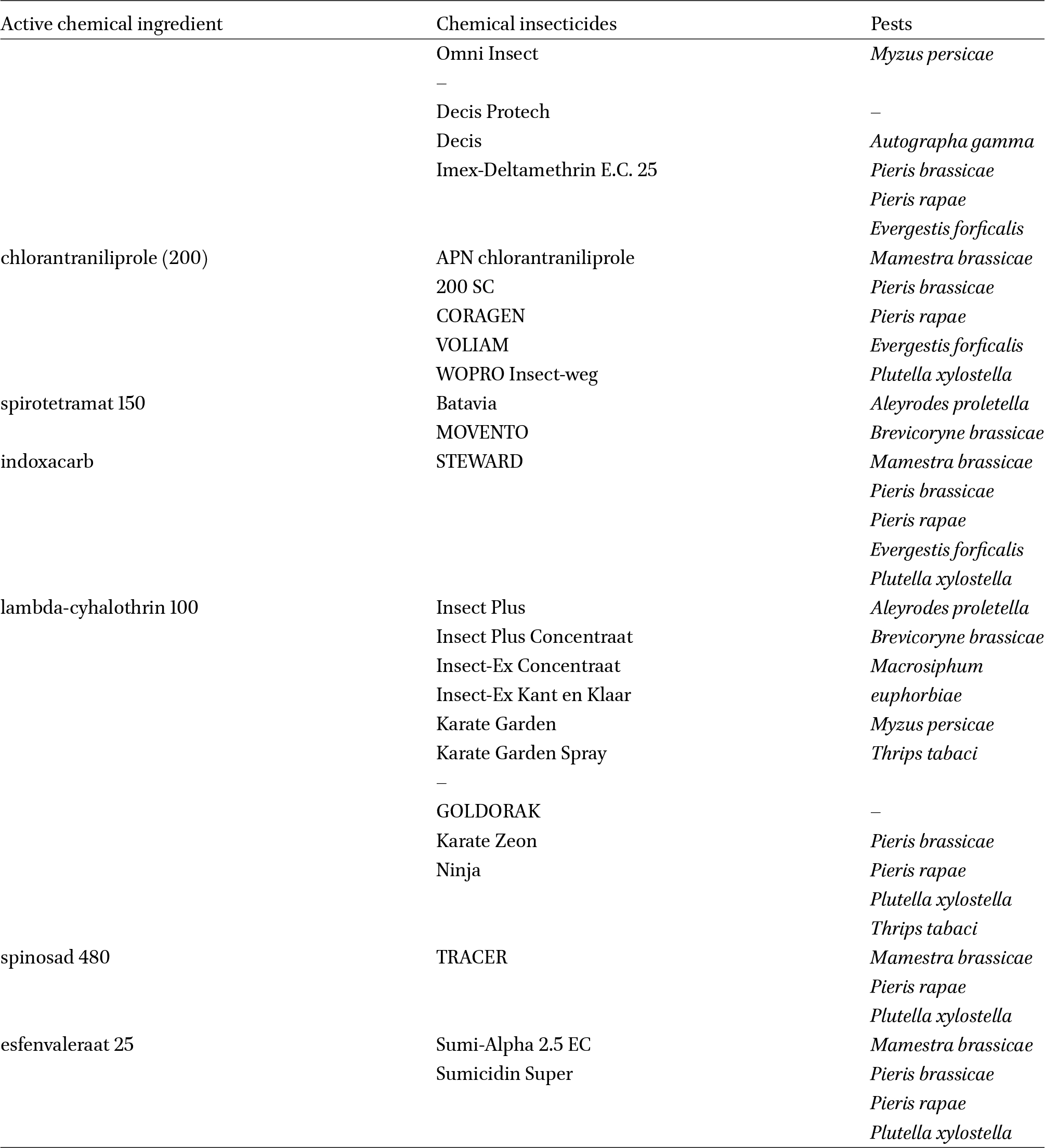
The results of the first expert elicitation were used as a reference for the experts in the second expert elicitation. This second elicitation consisted of individual interviews with crop advisors. The aim was to address research questions 2 and 3. Crop advising experts were defined as people who are hired by farmers for providing advice based on their experience with broccoli and/or Brussels sprouts organic/conventional production in the Netherlands. Three crop advisors participated. The experts provided estimations of frassâ ability to reduce the use of insecticides and fungicides sourced from KWIN-AGV (2018) (listed in Appendix A, Table A2). More specifically, they provided lowest, highest and most likely estimations (in percentages) of how much they expect frass to influence (a) the use of specified insecticides and fungicides and (b) crop yield in organic and conventional broccoli and Brussels sprouts production. They also gave explanations justifying their estimations.
All individual interviews were conducted based on carefully developed and pre-tested interview guides. The group discussion in the first expert elicitation was conducted according to a predefined protocol. Relevant assumptions were established and presented to all experts (see Box 1). The assumptions specified, among other aspects, soil type, weather conditions, and a four-year crop rotation. The assumed four-year crop rotation scheme was taken as an average of reported crop rotation designs involving broccoli (e.g. Velazco, 2013), such as three-year designs (e.g. with clover and grain) and four-year designs (e.g. with potato, legumes, and carrot), and was validated by the crop advising experts. Including the crop rotation was necessary to capture how the net change in profit may differ from year to year as frassâ health promotion effects are expected to change over time (Torgerson et al., 2021). Expertsâ estimations were elicited for the Brassica crops for year 0 (indicating how it is used now, in the current year), and then again in four years and finally after eight years. Notably, the term âfrassâ was discussed in a general context with the experts. This decision stemmed from the fact that the participating experts had been researching frass and exuviae from various insects, including black soldier flies, crickets, and mealworms. They expressed discomfort in extrapolating findings from a single type of frass, as their research did not focus exclusively on one insect. Thus, we collectively agreed to use the broader term âinsect frassâ. We refer to the supplementary material for a more in-depth explanation of the methodological procedures of the expert elicitations.
Citation: Journal of Insects as Food and Feed 11, 2 (2025) ; 10.1163/23524588-00001262
Economic model â a partial budgeting exercise
We developed an economic model that calculated the expected net change in profit for farmers by comparing two scenarios: a baseline and an alternative scenario. The baseline scenario was defined as a representative year of Dutch Brassica production, in which organic and conventional pesticides are utilized. The alternative scenario was defined as a representative year of Dutch Brassica production, in which, in addition to the organic and conventional pesticides that are utilized, frass is also applied. Notably, the applications of pesticides in the alternative scenario can be lower than in the baseline scenario. This is because frass is expected to promote the health of crops and soil and is therefore also expected to decrease the quantities of organic and conventional pesticides applied. The analysis we conduct is referred to as a partial budget, as only the differences in costs and revenues between the two scenarios are considered while all other aspects of the business are considered to remain the same (Kay et al., 2012). Separate partial budgets were made for each year (years 0, 4, and 8). Net change in profit was calculated at these three points in time to estimate the differences in expected profit.
where Y is crop yield (head / hectare or kg / hectare),1
Below, we discuss each term equations (2a-c) in more detail. Furthermore, Figure 2 provides a visual overview of how the multiple data sources are integrated into the model, which will also be discussed in further detail below.
The flow of data and its use in the partial budget.
Citation: Journal of Insects as Food and Feed 11, 2 (2025) ; 10.1163/23524588-00001262
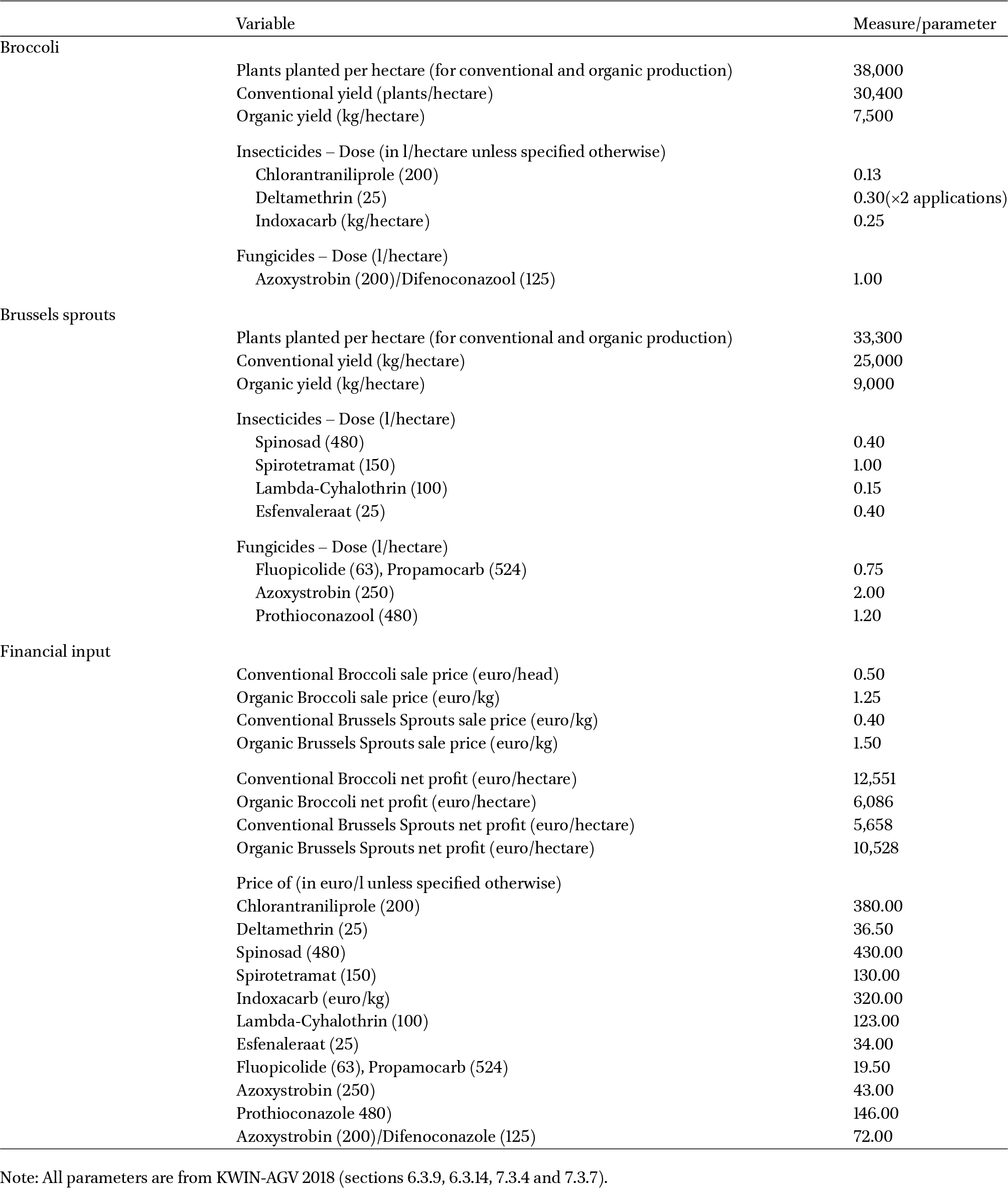
The economic model was built under the assumptions presented in Box 1. The development of the baseline scenario for the partial budget model required data from the KWIN-AGV (Kwantitatieve Informatie â akkerbouw en vollegrondsgroenteteelt; or quantitative information â arable farming and field vegetable cultivation), which contains Dutch agricultural financial data (KWIN-AGV, 2018). More specifically, KWIN-AGV provides an overview of the expected crop yield and quantities and prices for insecticide and fungicide applications for organic and conventional crops. Appendix B provides an overview of the parameters that defined the baseline scenario.
Additional revenue (
Frass may reduce the presence of certain pests and diseases not yet addressed by currently used insecticides and fungicides. As such, additional revenue would be generated from less crop loss. The additional revenue was calculated from the crop advisorsâ averaged lowest, most likely and highest estimations for each crop and for each of the three years considered. Program Evaluation and Review Technique (PERT) distributions were used to represent the averaged lowest, most likely and highest estimates regarding the expected changes in crop yield (in percentages) elicited from the crop advisors with the most weight again attributed to the average most likely estimates. PERT distributions are bell-shaped curves that utilize minimum, maximum and most likely estimates (Malcolm et al., 1959). Such distributions incorporate a weighted mean (μ) where we attribute the most weight to the averaged most likely estimations.
Reduced costs (
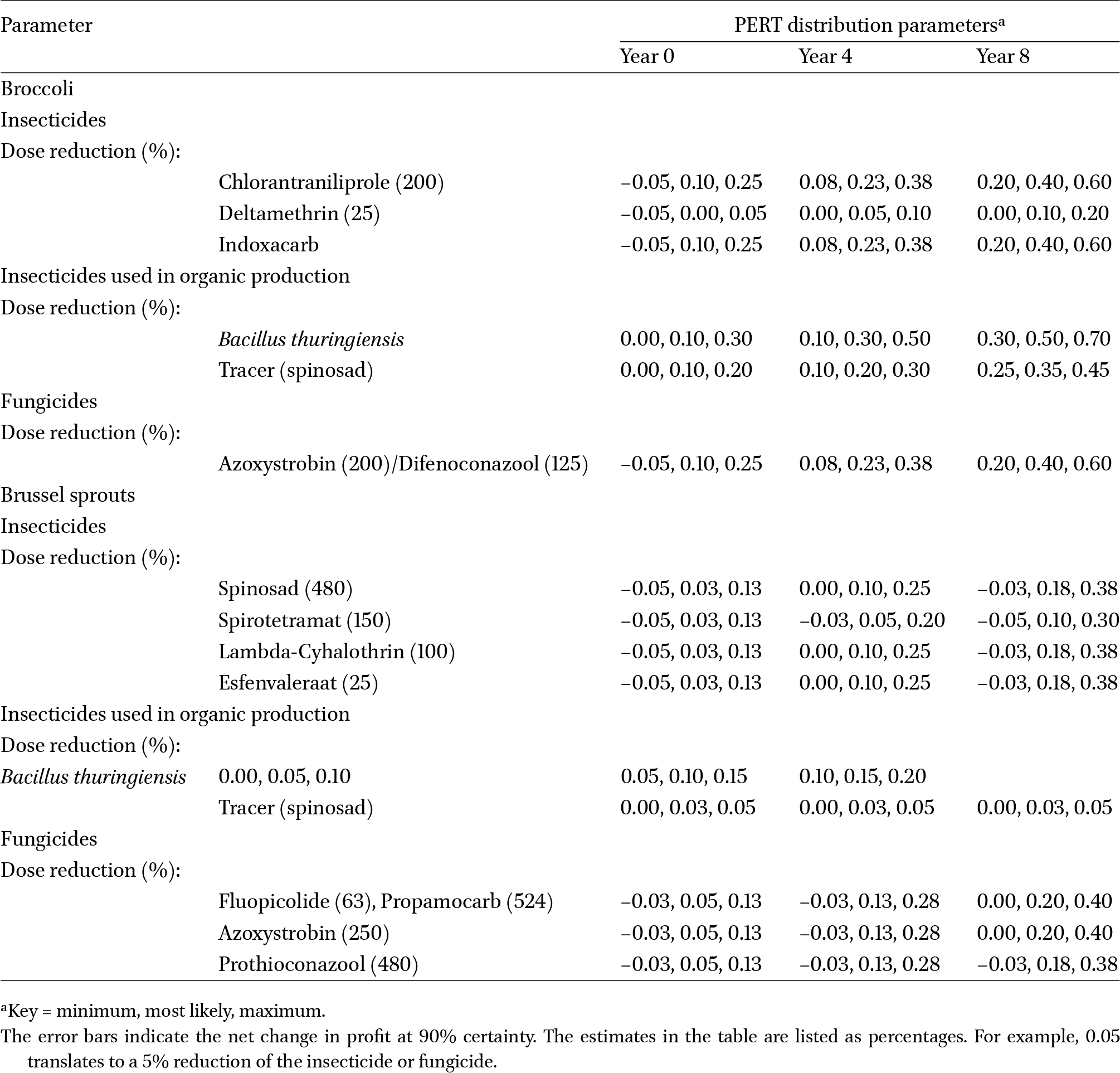
In the alternative scenario, some of the production costs may be lower than in the baseline scenario. For instance, as frass could reduce the presence of various pests and diseases, the costs related to insecticides and fungicides could decrease. Specifically, the estimations provided by the crop advisors regarding reduced insecticides and fungicides were integrated into the model. To do so, the lowest estimates were averaged, as were the most likely, and finally the highest. A PERT distribution was chosen to represent the range of estimations.
Additional costs (
To calculate the additional cost of applying insect frass to the land, two variables were considered: the necessary dose and the purchase price of frass. There is no determined dose of insect frass required to achieve the expected health promoting effects. However, in the experiments conducted by the participating frass experts, doses of one, two and five grams of frass per kilogram of soil were tested where one plant occupied one kilogram of soil. These three doses were integrated into the model using triangular distributions. We opted for a triangular distribution because it is a common choice when there is only limited data available (in this case, a limited number of expert evaluations) with some uncertainty, it is assumed there is one maximum, and one wants to avoid negative values.
Though insect frass is not readily available on the market, there are a few existing exceptions (marketed as âsoil improversâ or fertilizers). Prices of frass (based on black soldier fly4) in the Dutch market as of June 2022 range from â¬1.20-â¬2.85 per kilogram. To capture the range of prices, three prices of frass were used in the model â â¬1.00, â¬2.00 and â¬3.00 per kilogram of frass. Triangular distributions were used to reflect the three prices in the partial budget.
Reduced revenue
Compared to the baseline scenario, the alternative scenario was not expected to result in any reduced revenues. Therefore, no reduced revenues were considered in the partial budget.
Factors not included in the model
Reduced costs due to frass reducing the amounts of compost applied were not considered. Compared to spreading manure or composts (>50 tons/hectare), the contribution of frass in the doses considered is relatively small (<0.2 tons/hectare). As such, the organic matter contribution of frass would have a negligible influence on the amount of compost that would be applied in the baseline scenario.
We do not account for increased or reduced labor needs. As the proposed doses of frass were all less than two hundred kilograms per hectare, such quantities could be applied in the same pass as planting. Similarly, if frass eliminates any late season sprays, reduced costs of the same variables should also be accounted for. Costs of labor were not included as there was not enough information available regarding how frass would be applied and the mechanical implications of its distribution on the field.
Finally, the costs and revenues associated with utilizing insect frass throughout each year of the crop rotation were not estimated. There currently is not enough known regarding frassâ performance in other crops to do so.
Software implementation
The partial budget was created in Excel version 2102 (Microsoft Corp., Redmond, WA, USA) along with the commercially available Excel add-in Palisade @Risk version 8.2 (Palisade Corp., Ithaca, NY, USA), a specialized add-in for risk assessments. This add-in assigns a specified distribution to each input variable to quantify the uncertainty around the outcomes.
Using @Risk, a simulation was conducted with one thousand iterations. Sampling was conducted using the Latin Hypercube method to avoid sampling bias (McKay et al., 1979). The net change in profit was simulated for each type of crop (organic and conventional broccoli and Brussels sprouts) for each of the three years resulting in twelve cases. A positive result indicated that the net change in profit is higher in the alternative scenario than in the baseline scenario; whereas a negative result indicated that the net change in profit is lower in the alternative scenario than in the baseline scenario.
Two additional measures were taken to account for the uncertainty from the expertsâ estimations. First, a 90% confidence interval was calculated with the net change in profit. Second, a sensitivity analysis was performed using tornado graphs generated in @Risk. These graphs show which variables contribute the most uncertainty to the mean outcome, which in our case was the net change in profit. Note that no correlations were conducted among the random variables in the analysis as there was not enough data to justify a correlation matrix.
Finally, a worst case scenario was also calculated to produce a complete overview of the possible outcomes. The worst-case scenario was calculated by utilizing the following inputs: (1) the highest dose scenario (five grams of frass/plant), (2) the highest price scenario of frass (â¬3.00/kg), and (3) the most pessimistic estimates provided by any of the experts.
3 Results
First presented in this section are the results from the expert elicitations with frass experts and crop advisors in the section âExpert elicitationsâ. After, in section âEconomic modelâ, the results from the economic model are presented.
Expert elicitations
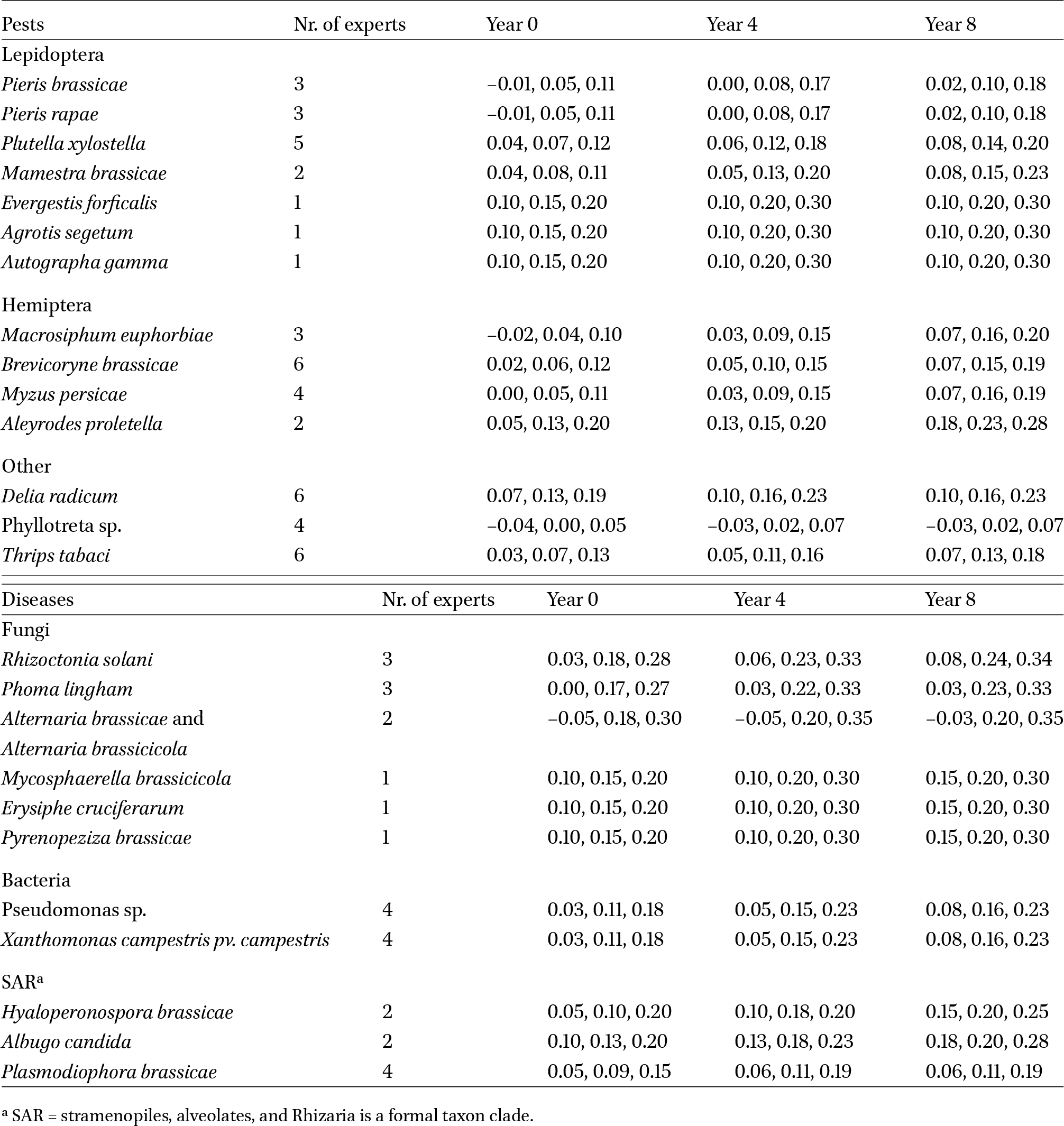
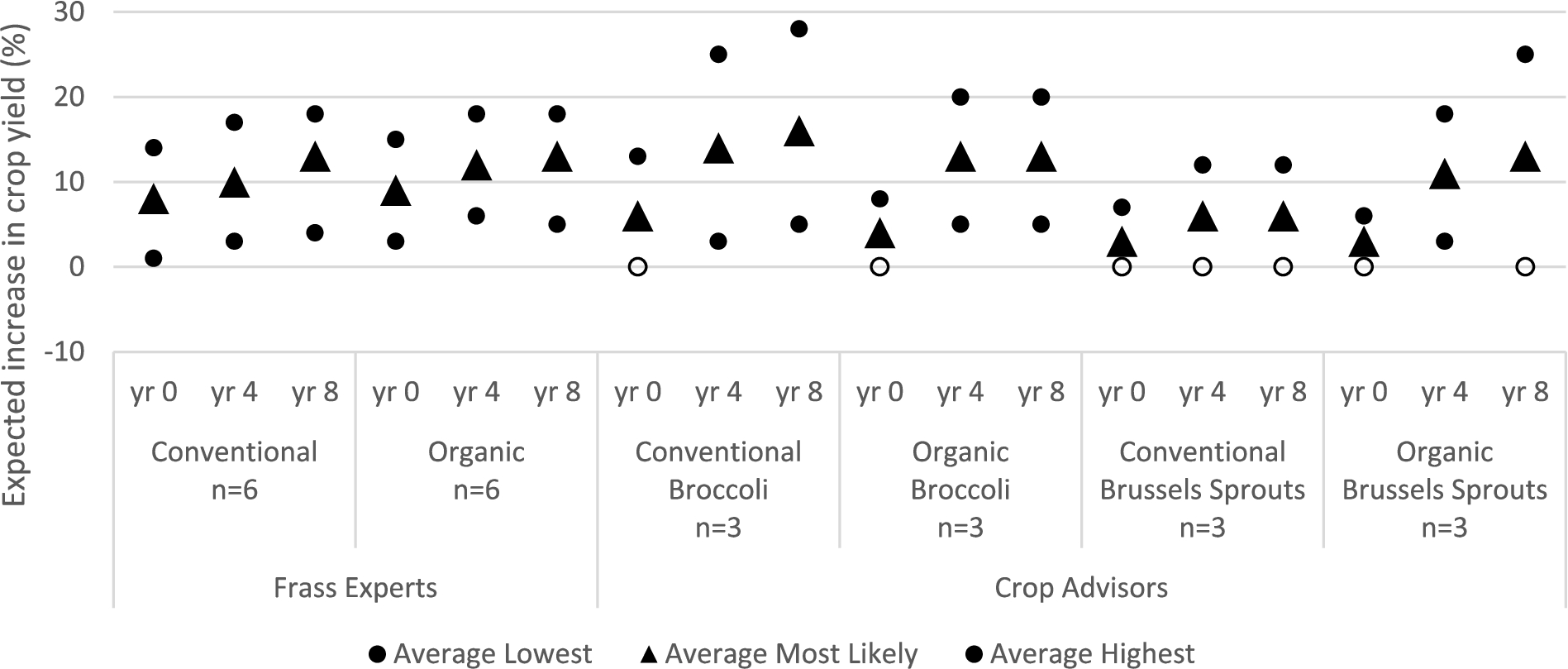
Appendices C-E (Figures C1, D1 and E1) provide a summarized, quantitative overview of the expert elicitation results. The graphs share the general trend that the experts believe that frassâ effects improve overtime; reductions in pests, diseases, insecticides and fungicides are greatest in year 8 and lowest in the first year. Similarly, increases in crop yield are estimated as highest in year 8 and lowest in the first year. Frass experts explained that the anticipated improvement over time is mainly due to the functionalities of frass and its influence on the microbial communities in the soil. As farmersâ use of chemical pesticides reduces and the populations of natural enemies begin to build-up in the soil, more beneficial effects of frass can be expected. Therefore, it takes time for the soilâs environment to become optimal.
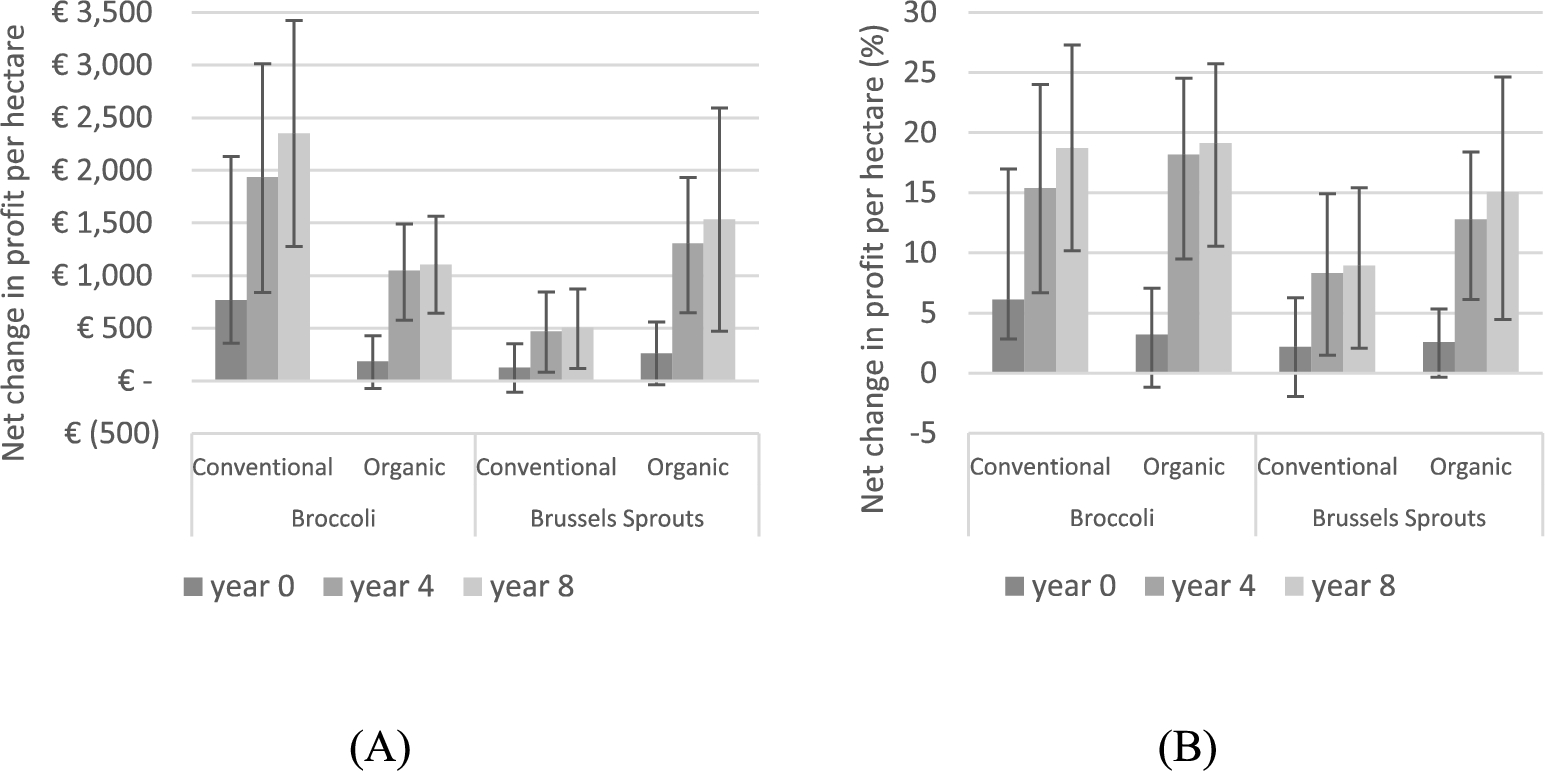
(A) Expected net change in profit per hectare with frass application compared to no frass application. (B) Percent expected net change in profit per hectare with frass application compared to no frass application.
Citation: Journal of Insects as Food and Feed 11, 2 (2025) ; 10.1163/23524588-00001262
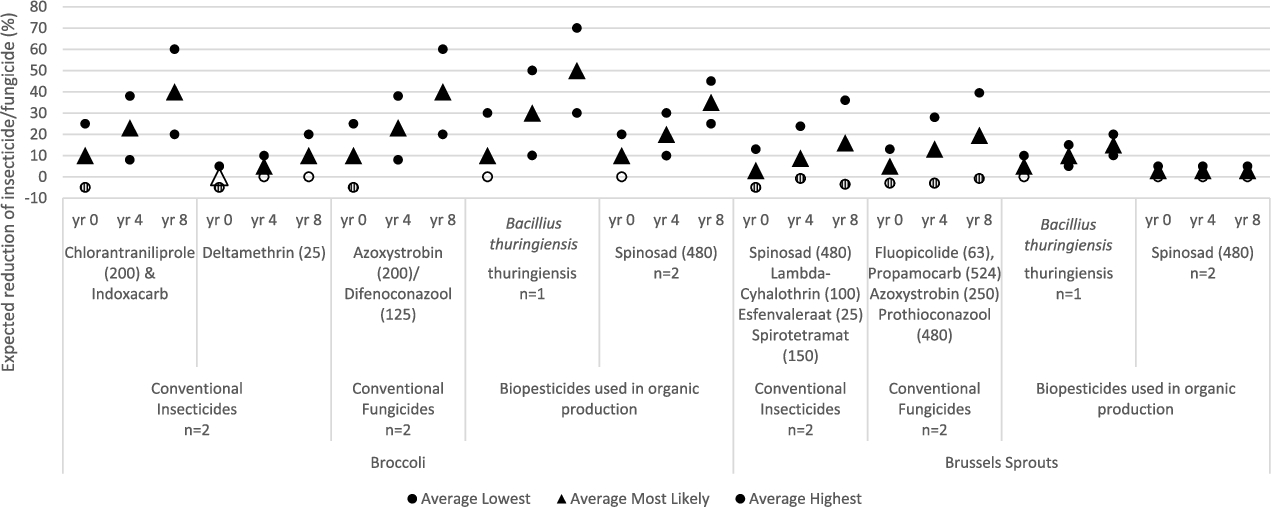
On average, pests were expected to be reduced by 0-15% in the first year and by 2-23% in year 8 (Appendix C). Insect frass experts mentioned that frass will be most effective against pests that induce jasmonic acid pathways. As such, conventional insecticides were expected to be reduced by 0-10% in the first year and by 10-40% in year 8. Organic insecticides showed even higher average reductions (Appendix D).
Disease and fungicide reductions were even slightly more promising. Diseases, on average, were expected to be reduced by 9-18% in the first year by 11-24% in year 8 (Appendix C). Insect frass experts mentioned that frass could delay the onset of (especially soil-borne) diseases. As such, fungicides were expected to be reduced by 5-10% in the first year and by 18-40% in year 8 (Appendix D).
Frass experts expected that frass will reduce the amount of crop lost to caterpillars; crop advisors noted that damage resulting from caterpillars on average renders crops unsellable. Therefore, with less damage from caterpillars, less crop would be lost. Thus, due to less loss from pests and disease, conventional yield was expected to improve, on average, by 3-8% in the first year and by 6-16% in year 8. Organic yield was expected to improve, on average, by 3-9% in the first year and by 13% in year 8 (Appendix E). The higher yields achieved in conventional production can be attributed to the difference in pesticide allowance between the two systems. As an example, crop advisors mentioned that in a representative year, little of the conventional Brussels sprouts crop is lost, especially compared to organic production. Of the 33,300 plants planted per hectare in both systems, organic producers harvest 9,000Â kg of sprouts whereas conventional producers harvest 25,000Â kg.
Economic model
Figure 3a depicts the expected net change in profit in conventional and organic broccoli and Brussels sprouts production in years 0, 4 and 8. Figure 3b shows the expected net change in profit divided by the profit obtained in the baseline scenario (provided in Appendix B). The shaded bars indicate the expected net change in profit per hectare. For each shaded bar, an error bar is also drawn from percentiles 5% and 95% thus indicating the expected net change in profit with 90% certainty. The length of the error bars is primarily attributed to frassâ expected influence on crop yield as was determined in the tornado graphs of the sensitivity analysis. See Appendix F for an example of the generated tornado graphs.
Figure 3a,b shows that the expected net change in profit in the alternative scenario for each form of production is positive, which implies that using insect frass in combination with the various organic and conventional pesticides results in a higher net profit than a normal production system that does not utilize frass. However, considering the confidence intervals, the first year in which frass is used has a chance of returning a negative net profit in three of the four production types. Over time, however, the use of frass is expected to return positive a net change in profit (also at a 90% confidence interval).
Broccoli
Figure 3a shows that the net change in profit when adding frass in conventional broccoli production is about double of that in organic production. One reason is because the frass experts expect that frass will reduce the amount of crop lost to caterpillars. Crop advisors noted that the damage caused by caterpillars to the broccoliâs head often renders crops unsellable. Figure 3b shows that, in terms of change in percent profit, organic and conventional broccoli production are comparable. Granted, the first year of organic production can return a negative profit based on the 90% confidence interval. The differences between organic and conventional production can be mostly attributed to the difference in crop yield obtained in the baseline scenario. Conventional producers harvest about â¬15,000 worth of broccoli per hectare; organic producers harvest about â¬9,000 worth of broccoli per hectare. Therefore, a percent increase in yield has a larger relative impact on profit for conventional production than in organic production. It is useful to note that though frass is expected to influence the amounts of insecticides and fungicides used, financially, the impact of these reductions is minor compared to the financial influence of increasing crop yield.
Brussels sprouts
Figure 3a,b show that, in the first year, the net change in profit in Brussels sprouts is comparable between conventional and organic production. By years 4 and 8, the net change in profit is more than double for organic production. A few variables explain these trends. Though conventional Brussels sprouts obtain almost three times the crop yield than in organic production, organic producers receive almost four times the sales price per kilogram of sprouts. Notably also, conventional producers have higher costs in insecticides and fungicides than organic producers (KWIN-AGV, 2018). Therefore, though crop advisors expect that yield will increase in year 0 by 3% in both conventional and organic, the net change in profit is slightly higher in organic production.
The results show that the net change in profit is lower in Brussels sprouts than in broccoli. The crop advisors noted that, compared to broccoli, Brussels sproutsâ longer time spent on the field makes it more susceptible to pest infestations or diseases. Because frass would be applied at the time of planting (Torgerson et al., 2021), according to the crop advisors, the chance it can reduce the need for late-season pesticide applications in Brussels sprouts is less compared to broccoli.
Worst-case scenario
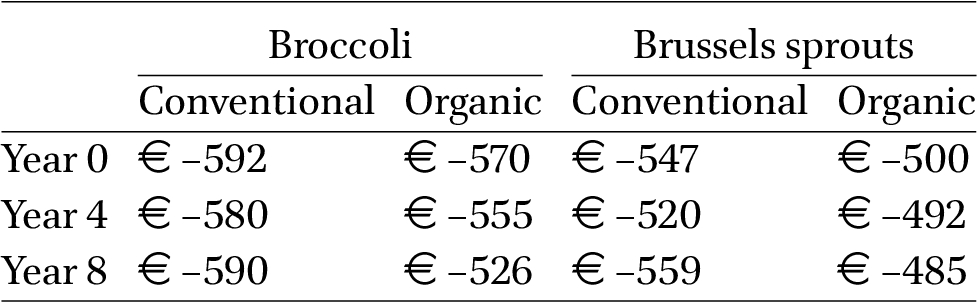
The results of the worst case scenario show that, depending on the type of production and the year, there is a potential loss of â¬-592 to â¬-485 per hectare in net profit (see Table 1). At a dose of five grams of frass per plant and at â¬3.00 per kilogram of frass, the cost of purchasing frass for one hectare of land is â¬500 for Brussels sprouts and â¬570 for broccoli. Note, more broccoli is planted per hectare than Brussels sprouts (38,000 versus 33,300 plants), and therefore more kilograms of frass would be applied to one hectare of broccoli than one hectare of Brussels sprouts. Therefore, much of the loss shown in Table 1 can be attributed to the purchase price of frass.
Worst-case scenario â net change in profit per hectare
Citation: Journal of Insects as Food and Feed 11, 2 (2025) ; 10.1163/23524588-00001262
4 Discussion
The objective of this research was to estimate the net change in profit that arable farmers can expect by adding insect frass to their array of crop and soil health promoters in Brassica production. This research shows that frass has potential as a crop and soil health promoter. As such, it makes the first attempt at quantifying the economic contribution that insect frass could deliver as a crop and soil health promoter. Such estimations are also an important first step for communicating the frassâ potential as a circular agricultural input. Innovative solutions for recycling by-products in agriculture are needed for making the sector more circular. Insect frass is one such solution â connecting insect rearing with arable farming.
The results of this research show that insect frass is expected to generate a positive net change in profit for farmers. This finding aligns with that of Tanga et al. (2022), though notably they investigated frassâ economic potential as fertilizer, not as a health promoter. Their results show that, in addition to mineral fertilizer, the frass treatment resulted in the highest maize yield and highest economic returns.
The results suggest that frass can potentially be most beneficial when applied in types of production that are on the field for shorter lengths of time and are susceptible to late season pests or diseases that are addressed by frass. In addition, the results suggest that by years four and eight, the net change in profit is estimated to improve by more than 2.5 times in conventional production and by more than 5 times in organic.
The uncertainty of applying frass, especially in the first year, should be considered. With the exception of conventional broccoli, in the first year of applying frass, potentially the net change in profit can be positive or negative. As shown in the sensitivity analysis (presented in Appendix F), the amount of uncertainty behind frassâ influence on crop yield accounts for much of the error bars. More research that specifically investigates frassâ influence on crop yield would be useful in reducing the uncertainty behind these findings.
For farmers to make a decision regarding whether or not to trial frass, they may rely on various decision tools. For example, for the more risk averse farmers, decisions on using new products may be based on the worst-case scenario â a safety first approach (Kay et al., 2012). The worst-case scenario for using frass could result in a net loss in profit of â¬500 to â¬600 per hectare. If the worst-case scenario occurred on the trial plot, the farmer could face a profit loss of between 5% (in conventional broccoli and organic Brussels sprouts) and 10% (in organic broccoli and conventional Brussels sprouts). For this reason, a risk averse farmer may not be willing to trial insect frass. However, farmers that make decisions based on the option with the highest, most likely outcome would be more likely to trial the frass.
For those that would choose to trial frass, the first year applying it may also require some learning-by-doing experience from the farmer. For instance, frass can only be effective if the farmer bases pesticide applications on what is observed and determined as necessary during monitoring and not based on a strict spraying schedule. It is critical that the farmer is conscious of how frass is expected to perform. For example, knowing which pests and diseases it is expected to deter and knowing what parasitoids it is expected to be able to recruit would be required to monitor the crop effectively. With this awareness, the farmer can possibly eliminate later applications or act in instances when the frass is not performing as expected.
The economic insights provided in this study can help demonstrate frassâ potential as a circular agricultural input also for policy development. In November 2021, the EU implemented a policy that standardized frassâ processing procedure and permitted its use as an organic fertilizer (EU Commission, 2021). This research along with the continual inflow of new evidence regarding frassâ effectiveness against various pests and diseases can be used to build a case for insect frass achieving more relevant and specified legislation that permits its use as an input on crop land.
Limitations, practical considerations and future research
This research makes a first attempt at valuing frass as a crop and soil health promoter, which required making numerous decisions. For example, we focused on broccoli and Brussel sprouts, but the effects of frass may be even more valuable in other sectors like tree nurseries or greenhouse vegetables. We also made assumptions that the weather conditions are ideal, and the soil type is clay. Modifying these assumptions would be expected to influence frassâ effectiveness. Alternative types of cropping systems, like applying frass in strip cropping, may also influence its effectiveness. Furthermore, future research should explore the effects of frass under alternative assumptions.
In this research, we discuss insect frass generally. However, frass can vary in terms of the insect species reared or the feed the insects are reared on. Furthermore, some specific components of frass (e.g. the shed skins known as exuviae) show even more promising health promotion effects (BarragaÌn-Fonseca et al., 2022). All of these factors could have an influence on the performance of frass as a crop and soil health promoter. Once there is more understanding of how these components affect frassâ performance, an economic feasibility should be conducted to understand their respective financial consequences.
It was assumed that frass would be available in the required quantities. If frass is deemed economically attractive in more forms of production, its availability may come into question. As the insect sector grows, more frass will be generated.
Finally, the construction and interpretation of the resulting net changes in profit rely on the estimations elicited from both the frass experts and the crop advisors. Interpretations of the results should therefore be made under the consideration of the limitations faced by the frass experts (e.g. extrapolating their knowledge from field experience and early research trials) and crop advisors (e.g. combining estimations from frass experts with their own experience with comparable products). To confirm the results of this research, farm trials should be conducted from planting to harvesting that measure pests, diseases, parasitoids and crop yield. Trials that investigate the effects in complete crop rotations over several years would also be required to validate the expected time-related improvements suggested in this research.
5 Conclusion
This research relied on expertsâ knowledge to estimate the net change in profit farmers can expect when using insect frass as a crop and soil health promoter in various types of Brassica production. We conclude that frass is expected to be economically justifiable, even attractive over the years for farmers. While reducing the need for alternative chemical pesticides, frass could contribute to improved soil life and quality. Doing so facilitates balanced, steady and efficient plant growth and contributes to the plantâs systemic resistance to pests and diseases. Granted, frass will only perform for farmers that will implement it correctly in a crop monitoring scheme. The way towards sustainable food production in the future will require the abandonment of predetermined spraying regimens and the implementation of monitoring crops and reacting accordingly. In this way, chemical pesticides can be substituted for more sustainable inputs, and in the case of insect frass, they can be substituted for more circular inputs. Thus, insect frass offers a win-win situation for arable farmers who would be expected to achieve higher profits while using less chemical inputs and for society as agriculture makes another step towards becoming more circular.
Corresponding author; e-mail:Â george.vanvoorn@wur.nl
Fixed, baseline inputs from KWIN; see Appendix B.
Elicited estimations represented by PERT distributions.
Estimations represented by triangular distributions.
Price sources for referencing included (but were not limited to) the following webshops: Amazon.nl. Frassor Insecten Frass. Available at: https://www.amazon.nl/Frassor-Insecten-Frass-Alles-%C9%E9n/dp/B0CR1DXD8J. Accessed July, 2022. Frassor. Webshop â Insecten frass. Available at: https://frassor.com/nl/webshop/. Accessed July, 2022. Organifer. Insectenmest korrels â Black Soldier Fly Frass. Available at: https://organifer.com/nl/p/insectenmest-korrels-black-soldier-fly-frass-20kg-voor-200m2. Access July, 2022. SaltonVERDE. Insect Frassmest zwarte soldatenvlieg | Lurpe. Available at: https://saltonverde.com/nl/producto/insect-frass-lurpe/. Accessed August, 2022.
Supplementary material
Supplementary material is available online at: https://doi.org/10.6084/m9.figshare.26303233
Acknowledgements
We would like to sincerely thank the following experts who contributed their time and expertise to this study: Derk van Balen, Katherine BarragaÌn-Fonseca, Marcel Dicke, Joop van Loon, Azkia Nurfikari, Max Wantulla, Els van de Zande, as well as the other experts who preferred to remain anonymous. We also want to thank Prof. Marcel Dicke and Prof. Alfons Oude Lansink for providing feedback on earlier versions of the manuscript. Experts who participated agreed to the research conduct by signing informed consent forms.
Conflict of interest
The authors have no conflict of interest to declare.
Funding
This work was supported by The Netherlands Organization for Scientific Research NWO [grant number ALWGK.2016.010].
References
Agriculture and Horticulture Development Board, 2017. Crop walkerâs guide â Brassica. Available at: https://horticulture.ahdb.org.uk/knowledge-library/brassica-crop-walkers-guide
Andreo-Jimenez, B., Schilder, M.T., Nijhuis, E.H., te Beest, D.E., Bloem, J., Visser, J.H.M., van Os, G., Brolsma, K., de Boer, W. and Postma, J., 2021. Chitin- and keratin-rich soil amendments suppress Rhizoctonia solani disease via changes to the soil microbial community. Applied and Environmental Microbiology 87. https://doi.org/10.1128/AEM.00318-21
Bai, Y., 2015. Ecological functioning of bacterial chitinases in soil. PhD thesis, Leiden University, the Netherlands. Available at: https://scholarlypublications.universiteitleiden.nl/access/item%3A2858425/view
BarragaÌn-Fonseca, K.Y., Nurfikari, A., van de Zande, E.M., Wantulla, M., van Loon, J.J.A., de Boer, W. and Dicke, M., 2022. Insect frass and exuviae to promote plant growth and health. Trends in Plant Science 27: 646-654. https://doi.org/10.1016/j.tplants.2022.01.007
Beasley, J., Kuehny, J., Gentimis, T. and Fields, J., 2023. Black soldier fly frass supports plant growth and reduces nitrogen leaching during coleus production. HortTechnology 33: 305-312. https://doi.org/10.21273/HORTTECH05093-22
Beesigamukama, D., Mochoge, B., Korir, N., Menale, K., Muriithi, B., Kidoido, M., Kirscht, H., Dirro, G., Ghemoh, C.J., Sevgan, S., Nakimbugwe, D., Musyoka, M.W., Ekesi, S. and Tanga, C.M., 2022. Economic and ecological values of frass fertilser from black soldier fly agro-industrial waste processing. Journal of Insects as Food and Feed 8: 245-254. https://doi.org/10.3920/JIFF2021.0013
Chavez, M. and Uchanski, M., 2021. Insect left-over substrate as plant fertiliser. Journal of Insects as Food and Feed 7: 683-694. https://doi.org/10.3920/JIFF2020.0063
Cretoiu, M.S., Korthals, G.W., Visser, J.H.M. and van Elsas, J.D., 2013. Chitin amendment increases soil suppressiveness toward plant pathogens and modulates the actinobacterial and oxalobacteraceal communities in an experimental agricultural field. Applied and Environmental Microbiology 79: 5291-5301. https://doi.org/10.1128/AEM.01361-13
Dagevos, H. and de Lauwere, C., 2021. Circular business models and circular agriculture: Perceptions and practices of Dutch farmers. Sustainability 13: 1282. https://doi.org/10.3390/su13031282
Elissen, H.J.H., van der Weide, R. and Gollenbeek, L., 2023. Effects of black soldier fly frass on plant and soil characteristics â a literature overview. Report WPR-996, Wageningen Plant Research, Wageningen, the Netherlands. https://doi.org/10.18174/587213
EU Commission, 2021. Commission Regulation (EU) 2021/1925 of 5 November 2021 amending certain Annexes to Regulation (EU) No 142/2011 as regards the requirements for placing on the market of certain insect products and the adaptation of a containment method. Available at: https://eur-lex.europa.eu/eli/reg/2021/1925/oj
Geissdoerfer, M., Pieroni, M.P.P., Pigosso, D.C.A. and Soufani, K., 2020. Circular business models: a review. Journal of Cleaner Production 277: 123741. https://doi.org/10.1016/j.jclepro.2020.123741
International Platform of Insects for Food and Feed (IPIFF), 2023. Insect frass as fertiliser. Available at: https://ipiff.org/insects-frass/
Kay, R.D., Edwards, W.M. and Duffy, P.A., 2012. Farm management. 7th ed. McGraw-Hill, New York, NY, USA.
Kebli, H. and Sinaj, S., 2017. Agronomic potential of a natural fertiliser based on fly larvae frass. Agrarforschung Schweiz 8: 88-95. Available at: https://www.cabidigitallibrary.org/doi/full/10.5555/20183121450
Kupferschmied, P., Maurhofer, M. and Keel, C., 2013. Promise for plant pest control: root-associated pseudomonads with insecticidal activities. Frontiers in Plant Science 4: 1-17. https://doi.org/10.3389/fpls.2013.00287
KWIN-AGV, 2018. Kwantitatieve informatie voor de akkerbouw en groenteteelt in de vollegrond (in Dutch). Proefstation voor de Akkerbouw en de Groenteteelt in de Vollegrond. Lelystad, the Netherlands.
Laurentis, V.L., Bortoli, S., Polanczyk, R., Vacari, A.M., Veiga, A., de Bortoli, S.L. and Volpe, H., 2014. Kluyvera ascorbata: a plant growth-promoting bacteria (PGPB) to manage Plutella xylostella (L., 1758) (Lepidoptera: Plutellidae). International Journal of Research in Agricultural Sciences 1: 340-343. Available at: https://ijras.org/index.php/issue?view=publication&task=show&id=75
Malcolm, D.G., Roseboom, J.H., Clark, C.E. and Fazar, W., 1959. Application of a technique for research and development program evaluation. Operations Research 7: 646-669. https://doi.org/10.1287/opre.7.5.646
McKay, M.D., Beckman, R.J. and Conover, W.J., 1979. A comparison of three methods for selecting values of input variables in the analysis of output from a computer code. Technometrics 21: 239-245. https://doi.org/10.1080/00401706.2000.10485979
Morgan, M.G., 2014. Use (and abuse) of expert elicitation in support of decision making for public policy. Proceedings of the National Academy of Sciences of the United States of America 111: 7176-7184. https://doi.org/10.1073/pnas.1319946111
Quilliam, R.S., Nuku-Adeku, C., Maquart, P., Little, D., Newton, R. and Murray, F., 2020. Integrating insect frass biofertilisers into sustainable peri-urban agro-food systems. Journal of Insects as Food and Feed 6: 315-322. https://doi.org/10.3920/JIFF2019.0049
Randall, T.E., Fernandez-Bayo, J.D., Harrold, D.R., Achmon, Y., Hestmark, K.V., Gordon, T.R., Stapleton, J.J., Simmons, C.W. and van der Gheynst, J.S., 2020. Changes of Fusarium oxysporum f.sp. lactucae levels and soil microbial community during soil biosolarization using chitin as soil amendment. PLOS ONE 15: e0232662. https://doi.org/10.1371/journal.pone.0232662
Stam, J.M., Kroes, A., Li, Y., Gols, R., van Loon, J.J.A., Poelman, E.H. and Dicke, M., 2014. Plant interactions with multiple insect herbivores: from community to genes. Annual Review of Plant Biology 65: 689-713. https://doi.org/10.1146/annurev-arplant-050213-035937
Tanga, C.M., Beesigamukama, D., Kassie, M., Egonyu, P.J., Ghemoh, C.J., Nkoba, K., Subramanian, S., Anyega, A.O. and Ekesi, S., 2022. Performance of black soldier fly frass fertiliser on maize (Zea mays L.) growth, yield, nutritional quality, and economic returns. Journal of Insects as Food and Feed 8: 185-196. https://doi.org/10.3920/JIFF2021.0012
Temple, W.D., Radley, R., Baker-French, J. and Richardson, F., 2013. Use of Enterra Natural Fertilizer (black soldier fly larvae digestate) as a soil amendment. Enterra Feed Corporation, Vancouver, BC, Canada. Available at: https://easyasorganics.com.au/wp-content/uploads/2021/02/I-172_Frass_Research_Final-Report.pdf
Torgerson, K.L., Meijering, J.V., Sok, J., Dicke, M. and Oude Lansink, A.G.J.M., 2021. Towards circular agriculture â exploring insect waste streams as a crop and soil health promoter. Journal of Insects as Food and Feed 7: 357-368. https://doi.org/10.3920/JIFF2020.0095
van Huis, A., 2013. Potential of insects as food and feed in assuring food security. Annual Review of Entomology 58: 563-583. https://doi.org/10.1146/annurev-ento-120811-153704
Velazco, C.L., 2013. Crop rotation design in view of soilborne pathogen dynamics: a methodological approach illustrated with Sclerotium rolfsii and Fusarium oxysporum f. sp. cepae. PhD thesis, Wageningen University and Research, Wageningen, the Netherlands. Available at: https://edepot.wur.nl/284984
Vickerson, A., Radley, R., Marchant, B., Kaulfuss, O. and Kabaluk, T., 2017. Hermetia illucens frass production and use in plant nutrition and pest management. US Patent No. 9,844,223 B2. Available at: https://patentimages.storage.googleapis.com/50/4f/b2/ce5509891ddcb1/US9844223.pdf
Watson, C., PreiÃing, T. and Wichern, F., 2021. Plant nitrogen uptake from insect frass is affected by the nitrification rate as revealed by urease and nitrification inhibitors. Frontiers in Sustainable Food Systems 5: 721840. https://doi.org/10.3389/fsufs.2021.721840
Appendices
A. Pests, diseases, insecticides & fungicides addressed in this research
Pests and diseases of common in Brassica production. The table details the pests and diseases addressed and accounted for in this research
Citation: Journal of Insects as Food and Feed 11, 2 (2025) ; 10.1163/23524588-00001262
Overview of pests and diseases, pesticides and active ingredients. This table details the insecticides and fungicides addressed and accounted for in this research. More specifically, the table overviews the active ingredients in the products (column 1), the commercial names of the products (column 2) and which pests or diseases addressed in this research are targeted by the product (column 3)
Citation: Journal of Insects as Food and Feed 11, 2 (2025) ; 10.1163/23524588-00001262
(Continued)
Citation: Journal of Insects as Food and Feed 11, 2 (2025) ; 10.1163/23524588-00001262
(Continued)
Citation: Journal of Insects as Food and Feed 11, 2 (2025) ; 10.1163/23524588-00001262
B. Fixed parameters
Fixed parameters used in the baseline scenario of the partial budget
Citation: Journal of Insects as Food and Feed 11, 2 (2025) ; 10.1163/23524588-00001262
C. Insect frass expertsâ expectations for frassâ performance in reducing pests and diseases
Expected reduction in pest and disease presence when applying insect frass compared to no frass application
Citation: Journal of Insects as Food and Feed 11, 2 (2025) ; 10.1163/23524588-00001262
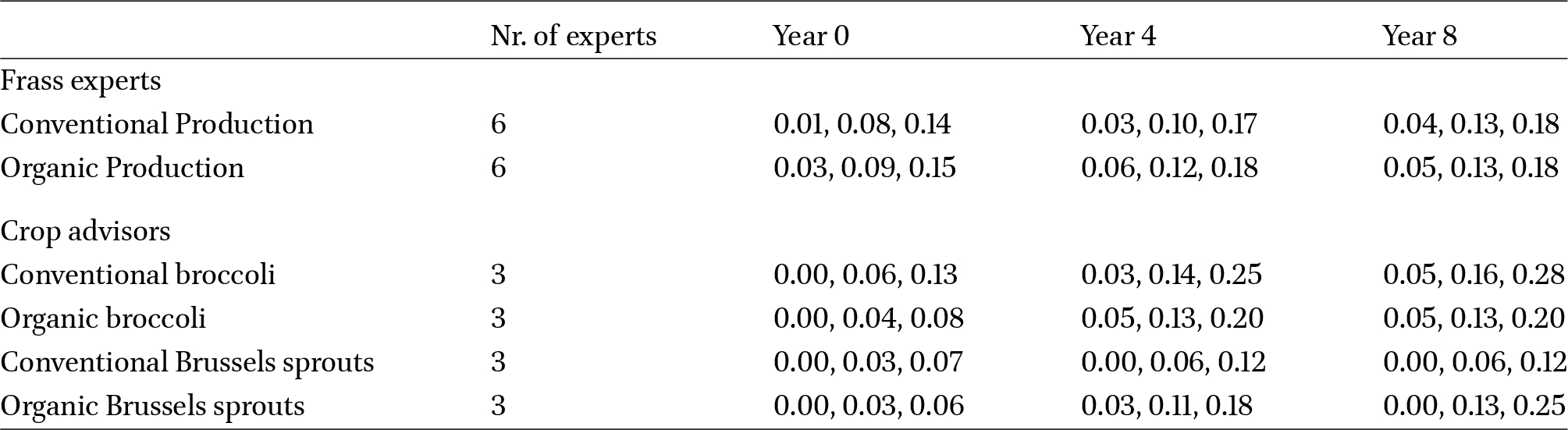
Table C1 provides three estimates per year: average lowest estimate, average most likely estimate, average highest estimate. The estimates in the table are listed as percentages. For example, 0.05 translates to a 5% reduction of the pest or disease.
A negative value means that the presence of the pest or disease is expected to increase when applying insect frass. A positive value means that the presence will decrease the presence of the pest or disease.
Experts voluntarily provided estimations. As such, not all experts were comfortable providing estimations for all pests and diseases. The column ânr. of expertsâ specifies how many of the six experts provided estimations for the given pest or disease.
In addition to the quantitative estimates, experts also explained their reasoning. A key consideration during the discussion on pests was regarding which of the plantâs phytohormonal pathways the pest induces when it feeds on the plant. When the pest feeds on the plant, the plant responds with induced defense that involves the activation of gene expression. In brief, induced gene expression can initiate a direct defense against the pest by triggering the synthesis of defense-related proteins or secondary plant metabolites. Indirectly, it can modify the blend of volatile organic compounds released by the plant, which attracts natural enemies of the pest (Stam et al., 2014). The consensus was that because the mechanism underlying frassâ activity involving the stimulation of plant growth-promoting rhizobacteria requires an active jasmonic acid response, then especially jasmonic acid inducing pests would be affected by frass-mediated resistance (BarragaÌn-Fonseca et al., 2022). Jasmonic acid inducing pests discussed in this research include: flea beetles, thrips, cabbage root flies, and the lepidopteran caterpillars.
Table B2 gives more insight into specific viewpoints.
Justifications for frass performance estimations regarding pests and disease
Citation: Journal of Insects as Food and Feed 11, 2 (2025) ; 10.1163/23524588-00001262
Expected reduction of pests and diseases common in Brassica production when applying insect frass compared to no frass application based on elicitation with frass experts. In the graph, circles represent the averaged upper and lower bounds of the estimates; triangles represent the averaged most likely estimates. A transparent shape fill occurs at 0%, which indicates that frass is not expected to increase nor decrease the pest or disease presence. A negative percentage (noted with vertical line fill) indicates that frass is expected to increase the quantity of the pest or disease presence. Below each category on the x-axis an ânâ is specified, which indicates how many experts were willing and able to provide an estimation.
Citation: Journal of Insects as Food and Feed 11, 2 (2025) ; 10.1163/23524588-00001262
Note, in Figure C1, only pests and diseases with estimations provided by three or more experts are included. The following pests and diseases were omitted from Figure C1 but can be found in Tables C1 and C2: Aleyrodes proletella (cabbage white fly), Autographa gamma (silver Y moth), Mamestra brassicae (cabbage moth), Agrotis segetum (cutworm â turnip moth), Evergestis forficalis (garden pebble moth), Mycosphaerella brassicicola (ringspot), Alternaria brassicae and Alternaria brassicicola (dark leaf spot), Erysiphe cruciferarum (powdery mildew), Pyrenopeziza brassicae (light leaf spot), Hyaloperonospora brassicae (downy mildew) and Albugo candida (white blister/rust).
D. Estimations of frassâ influence on insecticide & fungicide use & qualitative explanation
Stochastic parameters used to model the net profit of applying insect frass as a crop and soil health promoter
Citation: Journal of Insects as Food and Feed 11, 2 (2025) ; 10.1163/23524588-00001262
In addition to the quantitative estimates, experts also explained their reasoning. The use of insecticides and fungicides in organic and conventional broccoli production was expected to be reduced more than in Brussels sprouts production (with the exception of Deltamethrin (25) in conventional broccoli production). The crop advisors emphasized, if frass were able to delay the development of pests or diseases, it would have the most potential to reduce the use of pesticides in broccoli than in Brussels sprouts because broccoli spends less time on the field and therefore has less chance of infestation or infection. Therefore, the chance that frass can delay the onset of pests and diseases in broccoli long enough to reduce the need for future pesticide treatments is greater than for Brussels sprouts.
Justifications for frass performance estimations regarding insecticides and fungicides
Citation: Journal of Insects as Food and Feed 11, 2 (2025) ; 10.1163/23524588-00001262
Expected change in insecticide and fungicide applications for Brassica production when applying insect frass compared to no frass application based on interviews with crop advisors. In the graph, circles represent the averaged upper and lower bounds of the estimates; triangles represent the averaged most likely estimates. A transparent shape fill occurs at 0%, which indicates that frass is not expected to increase nor decrease the quantity of the insecticide or fungicide applied. A negative percentage (noted with vertical line fill) indicates that frass is expected to increase the quantity of insecticide or fungicide applied. Below each category on the x-axis an ânâ is specified, which indicates how many experts were willing and able to provide an estimation.
Citation: Journal of Insects as Food and Feed 11, 2 (2025) ; 10.1163/23524588-00001262
E. Estimations of frassâ influence on crop yield & qualitative explanation
Expected increase in Brassica production yield when applying insect frass compared to no frass application
Citation: Journal of Insects as Food and Feed 11, 2 (2025) ; 10.1163/23524588-00001262
Table E1 provides three estimates per year: average lowest estimate, average most likely estimate, average highest estimate. The estimates in the table are listed as percentages. For example, 0.05 translates to a 5% increase in yield.
A positive value means that the crop yield is expected to increase with the application of frass.
Experts voluntarily provided estimations. Notably all six frass experts and all three crop advisors provided estimations for frassâ expected effects on crop yield (noted in the column ânr. of expertsâ).
In addition to the quantitative estimates, experts also explained their reasoning. The frass experts discussed yield in terms of organic versus conventional production and estimated the yield to most likely improve by between 8-13% in either system. The crop advisors posited that frass would improve conventional broccoli yield more than conventional Brussels sprouts because, compared to broccoli, Brussels sprouts is a more challenging crop in terms of its susceptibility to pests and diseases. In addition, crop loss in broccoli can be severe if caterpillars infest and occupy the flowers of the broccoli; their presence deems the broccoli an unconsumable end product, which cannot be sold. If frass can build up the soilâs resilience and therefore the plantâs natural protection against caterpillars, it can reduce the chance of broccoli loss from caterpillars. Regarding organic yield, crop advisors expected that Brussels sprouts could experience more improved yields than broccoli. As there are few products allowed to be used in organic Brussels sprouts production, there is a lot of potential gain for frass to reduce the amount of crop loss.
Justifications for frass performance estimations regarding yield
Citation: Journal of Insects as Food and Feed 11, 2 (2025) ; 10.1163/23524588-00001262
Expected increase in Brassica crop yield when applying insect frass compared to no frass application based on elicitation with frass experts and interviews with crop advisors. In the graph, circles represent the averaged upper and lower bounds of the estimates; triangles represent the averaged most likely estimates. A transparent shape fill occurs at 0%, which indicates that frass is not expected to increase nor decrease crop yield. No negative percentages were found. Below each category on the x-axis an ânâ is specified, which indicates how many experts were willing and able to provide an estimation.
Citation: Journal of Insects as Food and Feed 11, 2 (2025) ; 10.1163/23524588-00001262
F. Example sensitivity analysis for conventional broccoli (year 4)
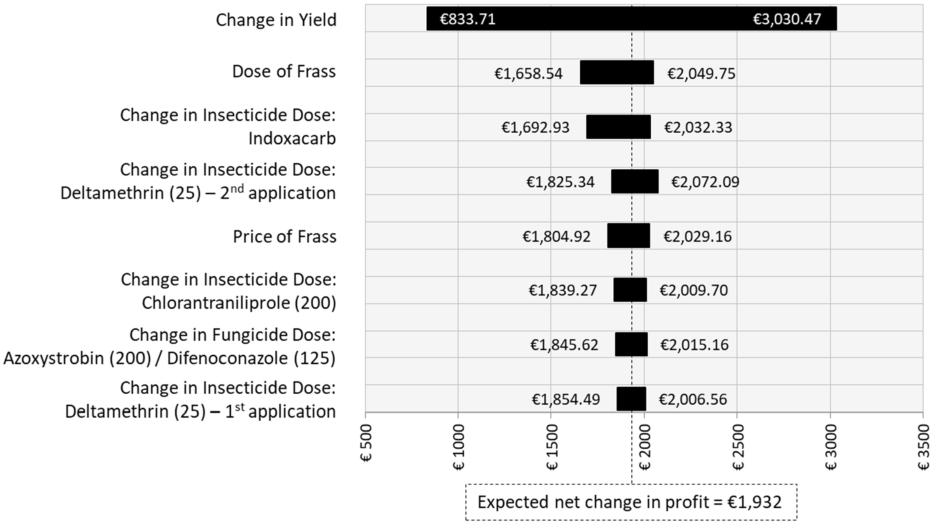
Example net change in profit input sensitivity (tornado) graph â conventional broccoli (year 4).
Citation: Journal of Insects as Food and Feed 11, 2 (2025) ; 10.1163/23524588-00001262
Figure F1 shows a tornado graph of conventional broccoli production in year 4 as an example to illustrate the net change in profitâs sensitivity to yield. The graph shows to which input variables the uncertainty behind the expected net change in profit can be attributed to. In this example, the expected net change in profit for conventional broccoli (year 4) is â¬1,932. The x-axis likewise is a scale for the sensitivity of the expected net change in profit. Each stochastic input that was inserted in the model appears on the y-axis. Next to each input is a horizontal bar of varying lengths. The bar indicates how much the expected net change in profit can differ, holding all other inputs constant and varying the one input only. The longer the bar, the more uncertainty it brings into the calculation of the expected net change in profit.
The inputs on the y-axis are ordered from having the most to the least influence on the expected net change in profit. All the tornado graphs generated for each type of production indicated that the change in yield attributes the most uncertainty to the expected net change in profit.