Abstract
With increasing interest in Hermetia illucens as a model organism for bioconversion, establishing standardized approaches for evaluating and comparing research outcomes is essential. Diets for black soldier fly (BSF) are often based on raw ingredients, which can vary significantly in quality, seasonality and availability, making research difficult to replicate and slowing industry development. To address this variability, we introduce the Sofia diet, an artificial, standardized diet that can be reproduced globally with consistent nutritional composition. Unlike other diets that are used in BSF research, the proposed Sofia diet is engineered to optimize BSF larva performance by following the performance on basic traits (survival and larva weight). Developed using surface mixture experiments, the diet is optimized for application during the larval stage. Hydrolyzed yeast, sucrose, and xanthan gum were identified as core ingredients in a three-step optimization process, followed by refinement of the preparation methodology. The adoption of standardized diets like the Sofia diet offers a valuable tool for enhancing research across diverse scientific disciplines, while supporting industrial efforts to develop efficient BSF rearing systems and high-value products. We also envision that standard diets like Sofia diet could be used to further study insect nutrition in this species. Further optimizations of the diet recipe are also discussed.
1 Introduction
The global feed industry faces rising demand for protein, limited land availability, overfishing, and climate challenges (Kipkoech et al., 2023; van Huis, 2013). Protein demand is expected to increase further with population growth and improving living standards in developing countries (Barragan-Fonseca et al., 2017). Insect production offers a sustainable solution, with insect meal recognized as an alternative to traditional proteins, particularly in aquaculture and animal feed (Abdel-Tawwab et al., 2020; van Huis, 2013). Edible insects have long contributed to food security and livelihoods in many regions, including Africa, Asia and Latin America (Kipkoech et al., 2023). Among these, the black soldier fly (Hermetia illucens, Diptera: Stratiomyidae, Linnaeus, 1758) has gained importance for its larvae (BSFL), which replace fishmeal in aquafeeds while offering protein, lipids, and antimicrobial benefits (Smetana et al., 2019; Wang et al., 2019). Research on H. illucens has expanded to waste bioconversion (Lalander et al., 2018; Liu et al., 2020), chitin extraction (Wang et al., 2020; Wasko et al., 2016), biodiesel (Leong et al., 2016), biogas (Bulak et al., 2020) and fertilizers (Borkent and Hodge, 2021). As BSF protein as animal feed is increasing in industries such as poultry, aquaculture, pigs, and pets (Abdel-Tawwab et al., 2020; Kawasaki et al., 2019; Lei et al., 2019; Yu et al., 2019), understanding and taking advantaged of insect nutrition will be a cornerstone for the growing industry, thus providing common grounds, protocols, methodologies, an standardized diets for collaborative research are sorely needed.
Standardized methodologies are essential to ensure reliability across studies. Deruytter et al. (2023) emphasize the importance of standardization in H. illucens research and propose a unified experimental protocol to facilitate the generation of comparable data. In studies of insect nutrition, the Gainesville diet, developed by Hogsette (1992), remains a common control diet (Bellezza Oddon et al., 2022; Cammack and Tomberlin, 2017; Gligorescu et al., 2018; Miranda et al., 2019, 2020). However, it has limitations when applied to BSF research, as it was originally designed for Musca domestica (house fly), and its recipe has not been intended or optimized for BSF performance. Another limitation of the Gainesville diet is its variability, as the chemical composition of its ingredients can fluctuate seasonally and geographically. In contrast, artificial diets offer standardized composition, which is crucial for harmonizing nutrition studies (Woods et al., 2019). The development of such diets has played an essential role in understanding the extended nutritional requirements of Drosophila melanogaster (Piper, 2017).
Successful artificial diets have been developed for other flies, for example, Mexican fruit fly Anastrepha ludens, Medfly Ceratitis capitata, oriental fruit fly Bactrocera dorsalis and Queensland fruit fly Bactrocera tryoni, among others (HernaÌndez et al., 2010; Kaur et al., 2021; Maset et al., 2022; Moadeli et al., 2017; Pascacio-VillafaÌn et al., 2017). For all those biological systems, the specifically designed diets have been a cornerstone for subsequent rearing efficiencies and biological knowledge. Nonetheless, no specific designed balanced diet for BSF that can be used as a universal positive control in research has yet been established.
In this study, using worldwide available and stable ingredients we developed an artificial diet for Hermetia illucens larvae based, through a series of experimental trials. We focus on designing a diet that supported larval growth from five to twelve days old, which is usually the most intense bioconversion stage (Padmanabha et al., 2020). To our knowledge, this is the first artificial gel diet specifically formulated and optimized for BSF larvae.
2 Materials and methods
BSF larvae
Five-day-old larvae (5 DOL) were provided by the research genetic center of FlyGenetics AD. The young larvae crates were maintained at 29 ± 2 °C with 60 ± 5% relative humidity for five days (0 to 5 DOL); a chicken feed-like diet was used in this stage. Afterward, larvae were separated from the substrate by manually removing the top frass layer, followed by 10-minute automated sieving using attachments with pore sizes of 1.0, 1.2, 1.4 and 1.6 mm to standardize larval size. The largest larvae fraction of 5 DOL was then used in the experimental trials. Three samples of one hundred larvae were weighed at the start of the experiments to establish an average weight, which was then used to calculate the total larval biomass required for each experimental unit.
Artificial diets
The aim of our experiments was to develop an artificial, replicable, and optimal diet for H. illucens research that is easy to handle during experimental manipulations. We incorporated a jellifying agent to produce a substrate that can be easily washed away from the mature larvae at the end of the experiment. In this paper, We focused on designing a diet that supported larval growth from 5â12 days old, which is usually the most intense bioconversion stage (Padmanabha et al., 2020).
Ingredients were selected for exploration taking into consideration the nutritional group, product stability, standard quality, and global availability. Xanthan gum was used as a texturizing agent to create the gel structure, due to its wide use in human nutrition and availability. Sucrose served as a carbohydrate source, and sunflower oil was initially used as a lipid source. As a protein source, two yeast-based isolates were explored, an inactivated dry yeast protein (ALKOSELR397) and later, an enzymatic hydrolyzed protein product (Yella Prosecure) (Supplementary material). Both proteins were sourced from Lallemand animal nutrition division, as it is considered by the authors to be a globally accessible standard protein supplier, although we also recognize other protein sources could be used (data not shown). A mineral-vitamin poultry starter premix (see Supplementary material for composition information) was added in later trials, with the goal of eventually applying the Sofia diet throughout the entire life cycle of the insects. Citric acid was added in minimal amounts to ensure equality of pH values of the feed amongst the experimental units.
Optimization strategy and experimental design
To find a suitable Sofia diet formulation, the effects of the mixture on larvae performance were assessed using a design of experiments (DOE) suitable for surface analysis of mixtures. The experimental designs included a series of optimization trials formulated and analyzed through Design-Expert1 8 software (Stat-Ease, Minneapolis, MN, USA). This applies for design construction, statistical modeling, and calculations. We subdivided the trials in âDiet composition experimentsâ focusing on optimizing the composition of Sofia diet recipe across three phases (texture, nutritional and stabilization goals, see details below), and âorder of mixture experimentsâ, improving through simplification of the technical application of the diet, reducing the time and effort for performing research experiments.
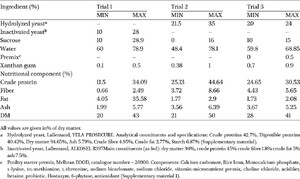
Diet composition experiments: The ingredient content and chemical composition of the diet was optimized in three serial experiment trials (Tables 1 and 2).

Diet composition modification within the three trials
Citation: Journal of Insects as Food and Feed 11, 16 (2025) ; 10.1163/23524588-bja10243
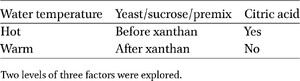
Setup of methodology optimization experiment
Citation: Journal of Insects as Food and Feed 11, 16 (2025) ; 10.1163/23524588-bja10243
The purpose of trial 1 was to determine the borders of optimal variance of each ingredient regarding the texture of the mixture. To assess this, we performed a mixture-design experiment, composed of 33 mixtures, distributed in six blocks (4â6 mixtures per block). Each block represents an independent set of experimental replicates conducted in similar conditions (environmental effect). The initial experimental space was characterized by a dry matter (DM) of the feeding substrate between 20 and 45% (Frooninckx et al., 2024). The trial was performed using larvae with an average weight of 6.5-12.8Â mg, larval density of 0.9Â g of feed per larvae and amount of feed per box ranging between 920 and 980Â g (Brits, 2017).
In the second experimental trial the focus was set on fixing the nutritional composition of the diet in compliance with the larvae needs expressed post factor in the form of optimal growth parameters.
In the third set of experiments, the ingredientsâ ranges were narrowed down to choose the complete optimal diet composition. The criteria were fixed on the stability of the feed along with the growth parameters. A mineral premix (Supplementary material) was added to the diet to promote the proper development of the larvae in the full life cycle of the insect.
The selected optimized diet was tested in triplicate to confirm the results obtained.
Mixture preparation experiments: After defining the diet composition of the 5-12 DOL Sofia diet recipe, the aim was to simplify its multi-step preparation protocol, without a negative effect on the average weight of individual larva and the survival of the animals. The preparation method applied in trials 1-3 used hot water (72 °C), first dissolving xanthan, followed by citric acid to adjust the pH to 3.2â3.8. The yeast, sugar and premix were then dissolved in the xanthan solution.
To identify the optimal preparation methodology, a separate set of trials was conducted using a two-level, three-factor randomized experimental design. The three factors explored were: starting water temperature (âwarmâ at 27 °C or âhotâ at 72 °C), the order of mixing ingredients (Table 2), and pH adjustment with citric acid (yes or no) (Table 1). Yeast, sucrose, and premix were always pre-mixed together in dry form before being added to the other ingredients. While in the diet composition experiments, xanthan was dissolved before adding the yeast/sucrose/premix, this set of trials tested dissolving the yeast/sucrose/premix first, followed by adding xanthan. The experimental design resulted in eight combinations across the three factors.
Sample collection and analysis
After seven days of bioconversion (12 DOL), the dry matter content of the substrate and of the larvae from each experimental unit was measured (MS-70 Moisture Analyzer) to establish Feed Conversion Ratio (FCR) and dry basis biomass yields. The BSF larvae were separated from the frass and weighed. Three samples of 100 larvae were taken for average weight and survival rate evaluation.
Response variables
Statistical analysis
Optimization trials were designed following a mixture screening experiment design of experiments (DOE) approach; hence, experimental diet recipes were calculated by mathematical model to allow the exploration of the mixture space. Response surface analysis fitted for each experimental model were performed. Similarly, the experiment of order of mixture preparation was designed and evaluated using a full factorial experimental design fitted for a three factor and two levels case. Design-Expert software (Stat-Ease) was used for experimental design construction, statistical modeling, and evaluation of the ingredientsâ concentration effect. Statistical significance for all tests was set at a critical level of
3 Results
Diet composition experiments
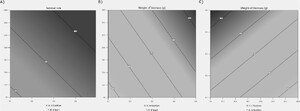
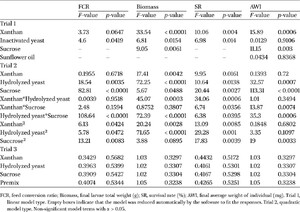
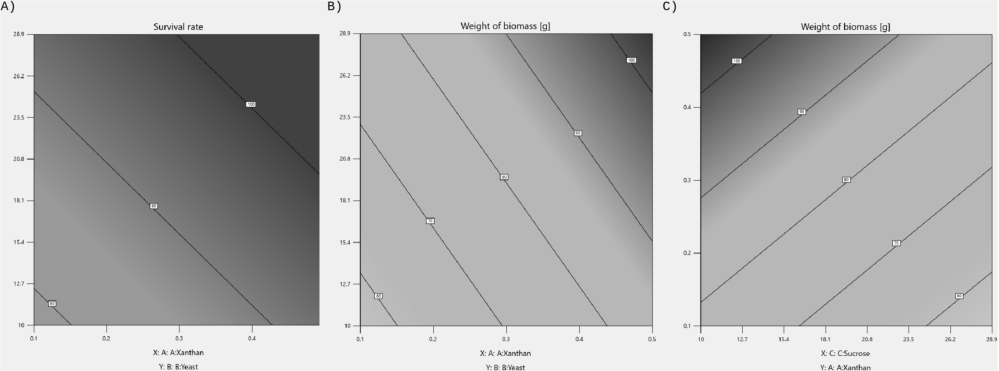
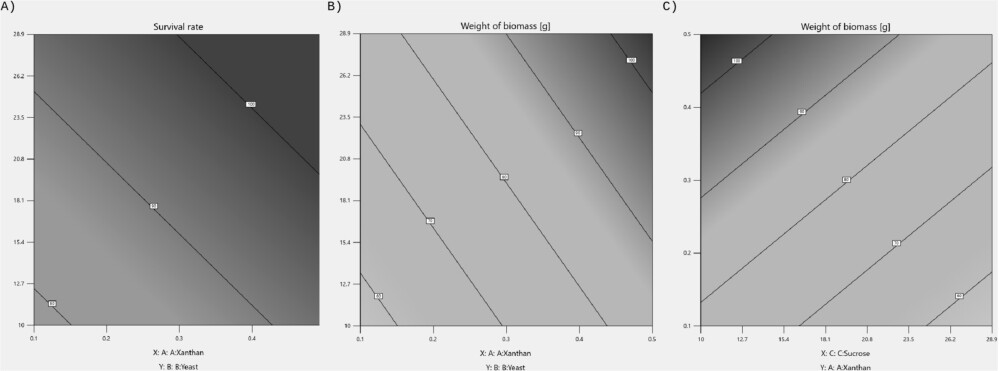
Trial 1: The optimization started by exploring the mixture space that allows a physical texture for sustaining the rearing and development of the animals. Survival was specified as the response with highest priority at this stage of the research and with biggest contribution to the total biomass yield. The lowest observed survival rate was 35% (Table 3), related to the low concentration of the jellifying agent. ANOVA revealed that survival was significantly affected by xanthan and yeast concentrations (
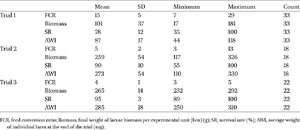
Descriptive analysis of the results for response variables FCR, Biomass, SR and AWI in Trials 1â3
Citation: Journal of Insects as Food and Feed 11, 16 (2025) ; 10.1163/23524588-bja10243
Response variables after the first round of optimization experiments presented as functions of the concentrations of ingredients in the mixture. (A) survival rate in percentage as a function of xanthan (X) and inactivated yeast (Y). (B) Final weight of biomass in grams in fresh matter as a function of xanthan (X) and inactivated yeast (Y) concentrations in the mixture. (C) Final weight of biomass in grams in fresh matter as a function of sucrose (X) and xanthan (Y) concentration in the mixture. Values increase from light to dark gray.
Citation: Journal of Insects as Food and Feed 11, 16 (2025) ; 10.1163/23524588-bja10243
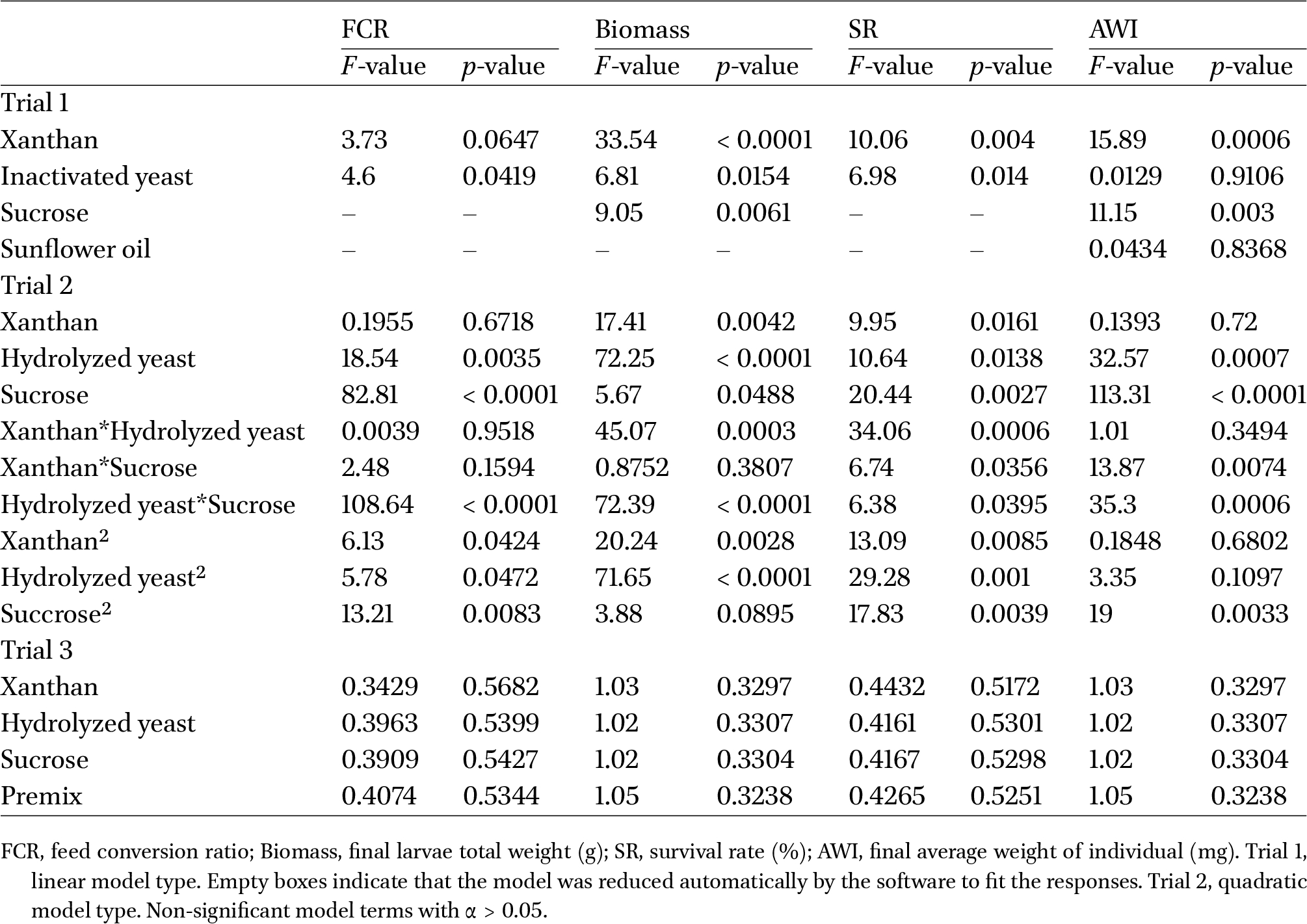
Sunflower oil showed no significant effect on the response variables (Table 4). Nevertheless, it resulted in the formation of a top oil layer in the experimental boxes and was therefore considered a potential factor for an error occurrence connected to aeration differences between the test diets. Sunflower oil was then excluded from the next set of experiments (Table 1).
Statistical results of mixture surface model analysis of the overall models fitted to the response variables considered in the development of the Sofia diet (p-value and F-value are presented in the ANOVA table)
Citation: Journal of Insects as Food and Feed 11, 16 (2025) ; 10.1163/23524588-bja10243
The best results in terms of biomass and survival rate indicated that xanthan concentration above 0.38% and yeast concentration above 21% were the regions of interest to explore further with their upper limits yet to be identified. In the second experimental trial, the xanthan and yeast levels were increased to 1% and 35% for xanthan and yeast, respectively, with consideration for the texture. The sucrose range was shifted to the lower boundary (0â16%).
Trial 2: In this experimental phase, the focus was shifted to the growth parameters of the larvae. Furthermore, a new yeast-based ingredient was introduced in the diet formulation-hydrolyzed yeast instead of inactivated. Consequently, notable progress was observed amongst the responses FCR, AWI and biomass. However, the survival rate increased as well, as a result of the modified diet ranges. We investigated the significant effects of the interconnections between the factors (ingredients), evaluated the tendencies on two-dimensional plots and narrowed down the slots for each ingredient.
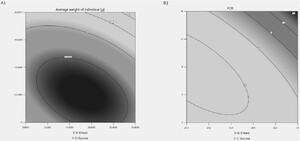
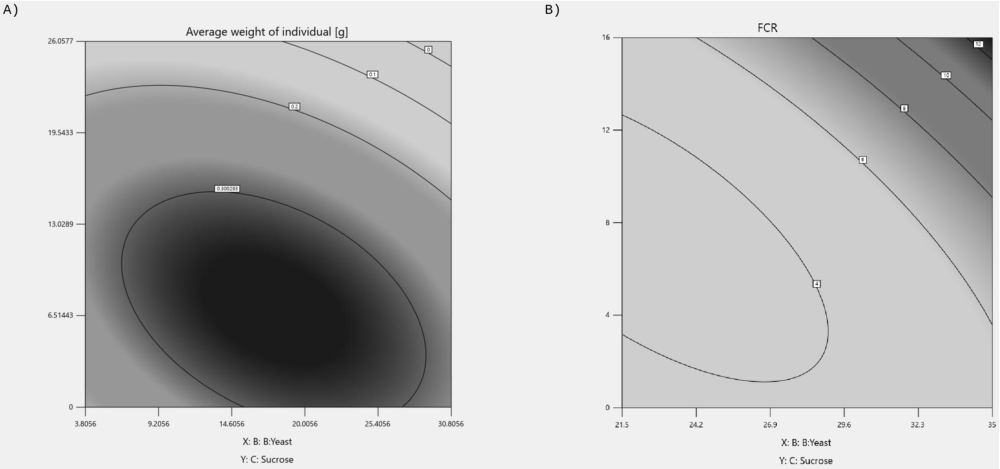
We observed a threefold increase in the mean average weight of individual larva (AWI) in this optimization phase, from 87 to 273Â mg per larva (Table 3). The graphical exploration of the experimental space revealed a peak in the insect individual weight in the center of the explored space (Figure 2A). Sucrose contributed mostly to the individual animal weight (
Response variables after the second round of optimization experiments presented as functions of the concentrations of ingredients in the mixture. (A) Average weight of individual at the end of the trial (mg) as a function of hydrolyzed yeast (X) and sucrose (Y) concentrations in the mixture. (B) Feed conversion ratio in dry matter as a function of hydrolyzed yeast (X) and sucrose (Y). Values increase from light to dark gray.
Citation: Journal of Insects as Food and Feed 11, 16 (2025) ; 10.1163/23524588-bja10243
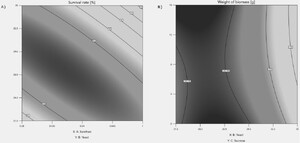
In this second trial the lower boundary of the survival rate escalated from 35 to 55% (Table 3). Quadratic model revealed multiple interactions between the ingredients affecting the animalsÌ survival (Table 4) with xanthan*hydrolyzed yeast being the one of highest significance (Figure 3A). We interpret this result as the texture of the diet being a key factor for BSF larvae resilience. This was visible on the surface of the experimental boxes with lower xanthan inclusion in both trials 1 and 2Â â the insects were not able to move freely and develop in the viscous environment.
Response variables after the second round of optimization experiments presented as functions of the concentrations of ingredients in the mixture. (A) Survival rate (%) as a function of xanthan (X) and hydrolyzed yeast (Y) concentrations in the mixture. (B) Final weight of biomass in grams in fresh matter as a function of sucrose (X) and hydrolyzed yeast (Y). Values increase from light to dark gray.
Citation: Journal of Insects as Food and Feed 11, 16 (2025) ; 10.1163/23524588-bja10243
Sucrose influenced all response variables in this trial (Table 4). Having higher survival rate in this stage of the experiment, the insect performance was highly affected by their nutrition and dependent on the availability of an energy source. Two optimal growth regions were observed on a two-dimensional plot regarding the final biomass (Figure 3B). The higher sucrose region was explored thoroughly in the latter diet optimization trial. This region was chosen with consideration of the economic value of the diet, but also of the diversity of calorie origin.
Deviation reduction was observed amongst all response variables in Trial 2. Two dimensional plots showed optimal values for SR, AWI, FCR and SR in the center of the ranges explored of the components (Figures 2A,B and 3A). Yeast and sucrose were observed to be the ingredients with the highest effect on the growth performance at this stage of the experiment. However, xanthan levels were a powerful regulator of the texture and a crucial factor for the larvaeâs survival. In the next trial all ranges were narrowed down, rather than shifted from the already established space of exploration, with the aim of identifying a stable recipe situated in the middle of the plot (Table 1). A poultry starter premix was added as a new component in the diet complementary to the optimization process to exclude the possibility of limitation of the growth due to deficiencies of microelements.
Trial 3: After finding a region of satisfactory survival and growth, a new experimental trial was set to fix an optimal diet ensuring repetitiveness of the results. All diets tested in this phase of optimization surpassed 89% survival rate and we obtained an overall mean of 95% survival. The lowest standard deviation on results was recovered over the mixtures tested in this trial, indicating a high stability of larva performance and that a further stage of optimization was achieved.
Highest AWI was recorded as 310Â mg, while the mean of the whole region of analysis in this trail was 285Â mg per larva. The mean feed conversion ratio (FCR) was obtained with a value of 4, and the highest biomass yield, at 265Â g, was observed during this trial.
The poultry mineral premix added to the experimental mixtures did not result in any significant effect on the insect performance at this stage (
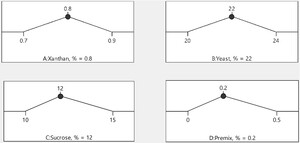
As this third experimental trial narrowed down the exploration range, results between the conditions were too close to establish a significant model (Table 4). The lack of significance amongst the results indicated that we have reached the center of desirability regarding all response variables. This indicates that response variables reached their optimal values during this phase of optimization. Thus, this was the last cycle of optimization experiments performed, and the optimal diet selection was based on the points in the center of the explored space (Figure 4).
Ranges of each ingredient in the third round of optimization experiments, given in percentages. The dot indicates the final concentration of each ingredient in the Sofia diet. Nutritional values, DM: protein, 26.44%; fiber, 4.76%; fat, 1.83%; ash, 4.18%; DM, 33.63%.
Citation: Journal of Insects as Food and Feed 11, 16 (2025) ; 10.1163/23524588-bja10243
An optimal Sofia Diet for 5â12 DOL was identified as consisting of 0.8% xanthan gum, 22% hydrolyzed yeast, 12% sucrose, 0.2% poultry premix, and 65% water.
In a triplicate confirmation run, the selected optimal diet resulted in average weight of the individual larva of 306 ± 2 mg (average ± SE), biomass yield of 315 ± 2 g, FCR = 3.4 ± 0.1 and survival rate of 99.6 ± 0.3%. The final moisture content of the substrate was 69.74 ± 0.42 and pH 7.04 ± 0.1.
Mixture preparation experiments
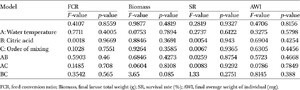
Our experimental results indicated that the total weight of the obtained biomass, average weight of individual, survival rate and FCR were not significantly affected by the tested independent variables concerning the mixture preparation â water temperature, absence or presence of citric acid and order of mixing xanthan with the rest of the ingredients (Table 5).
ANOVA, p-value and F-value of the models fitted to the response variables considered in the optimization of the preparation method of the Sofia diet
Citation: Journal of Insects as Food and Feed 11, 16 (2025) ; 10.1163/23524588-bja10243
The performance of the Sofia diet on the 5-12 DOL stage was not significantly affected by the preparation method. Therefore, a simplified preparation method can be applied in all future experiments. This method involves mixing the dry ingredients together (sucrose, yeast and mineral premix) and homogenizing them in warm water at 27 °C, followed by addition of xanthan (Supplementary material 1). The application of this simplified preparation method in three replicates resulted in an average weight of individual of 316 ± 8 g (SE), biomass yield of 282 ± 5 g, FCR = 3.69 ± 0.15 and a survival rate of 98.1 ± 0.2% (Figure 6).
4 Discussion
This study aimed to develop an optimal artificial diet for H. illucens to support future research. An artificial diet recipe that promotes both growth and survival of the larvae over a seven-day rearing period was founded, using easily accessible ingredients and repeatable formulation. After a series of experimental trials, the optimal 5â12 DOL Sofia Diet recipe was identified as consisting of 0.8% xanthan gum, 22% hydrolyzed yeast, 12% sucrose, 0.2% poultry premix, and 65% water.
Historically, the Gainesville diet has been commonly used in BSF research. For instance, Tomberlin et al. (2002) reported a final larval weight of 157Â mg on the Gainesville diet, while Cammack and Tomberlin (2017) observed prepupae weighing 110Â mg. Deruytter et al. (2023) recorded 63â156Â mg AWI (average weight increase), and Miranda et al. (2020) reported an average prepupal weight of 180Â mg. This highlights the variation on larva weight that could be coming from variance on feed ingredients qualities and diverse experimental conditions. In parallel, by using the proposed Sofia diet recipe outlined in this study, we were able to recover an average weight of individual above 300Â mg as a stable result of experimental units across tests. As the proposed Sofia diet recipe could be easily prepared with minimal quality, physical and nutrition differences all over the world, we believe that less variability could be expected on results between and within laboratories. To further evaluate the performance of the proposed Sofia Diet, a similar approach to the one performed by Deruytter et al. (2023), in which different laboratories are involved in the test, could be used. Further studies could also consider comparing the performance of Sofia diet with that of Gainesville or their own production diet recipes.
In the first phase of the experiment, a broad range of ingredient concentrations were tested to identify the combinations that maximized survival. The results showed a strong correlation between survival rate and the inclusion of xanthan gum and yeast. Xanthan, a texturizing agent, and yeast, a fine nutrient powder, contributed to the substrateâs texture, which plays a critical role in larval well-being and bioconversion efficiency (Yakti et al., 2023). Recent studies have emphasized the importance of physical properties like homogeneity and nutrient distribution for insect performance (Broeckx et al., 2025; Frooninckx et al., 2024; Liu et al., 2023). In addition, sucrose inclusion was negatively correlated with survival, due to its sticky nature which impeded physically larval movement, due to some underling physiological negative effect (e.g. Palanker Musselman et al. 2011) or a combination of both.
Sunflower oil, tested in the first set of experiments, showed no effects on larval survival or growth. According to Hoc et al. (2020), BSF larvae can adapt to a wide range of lipid sources, transforming fats into saturated fatty acids. However, since the larvae had access to fats in their initial substrate during early development, the need for lipid supplementation in their feed substrate may have been reduced. Alternatively, we hypothesized that high lipogenesis could also be behind the lack of need of specific lipid source of this species, which greatly contrast with the strong effect of lipid depletion observed in other flies as Bactrocera tryoni (Moadeli et al., 2018a,b). As the effect of lipid depletion could appear in pupa or adult stages, future research should assess the Sofia dietâs impact across the full life cycle of H. illucens, and cross generation maintenance (data not shown).
After adjusting the texture of the diet mixtures, survival rates increased to 90%, shifting our focus to growth metrics such as feed conversion ratio (FCR) and AWI in the second optimization trial. FCR and AWI improved significantly, suggesting that the optimal ingredient balance had been found. Similar to findings by Pascacio-VillafaÌn (2016) and Barragan-Fonseca (2017), the interaction between carbohydrates (sucrose) and protein (yeast) significantly influenced growth. The switch from inactivated to hydrolyzed yeast, which breaks down proteins into amino acids and peptides, enhanced biomass production (Koopman et al., 2009), although further experiments are needed to confirm this effect and also to test different protein sources (e.g. Moadeli et al., 2018b; Pascacio-Villafan et al., 2017).
In terms of caloric content, sucrose was the primary energy source for the larvae. However, two optimal regions for biomass production emerged after the second trial, one of which suggested that 0â4% sucrose inclusion could suffice. Xanthan gum, being a polysaccharide, may have compensated for the lack of sugar in some mixtures. Nevertheless, sucrose remained in the final recipe, as it provides a flexible carbohydrate source, which is beneficial for future research on sugar digestion in larvae. Similarly, premix was retained on the proposed diet recipe for the potential contribution on later stages of the life cycle, especially on pupation and reproduction.
The third trial yielded the best results, with optimized growth parameters and consistently high survival rates. The final protein content of the Sofia diet was approximately 26% (dry matter), with 67% moisture, consistent with Cammack and Tomberlinâs (2017) findings that higher moisture content benefits growth on protein-rich diets. However, this protein concentration differs from Bellezza Oddon et al. (2022), who found optimal development at 16% crude protein. These discrepancies may be attributed to differences in the physical properties of the substrates used (Yakti et al., 2023) and to the digestibility of the protein source.
At the end of the confirmation trial, the substrateâs dry matter content remained stable, and the dietâs gel structure effectively retained moisture, similar to gel diets used for other insect species (Pascacio-VillafaÌn et al., 2020). The preparation method â particularly water temperature, ingredient mixing sequence, and pH â was also evaluated, but none of these factors significantly impacted survival or growth, suggesting that the simplest preparation method is most practical. The gel diet being easier to separate from the larvae via washing, also improved manipulation efficiency compared to fiber-rich conventional diets, which tend to clog sieves.
In this study, Sofia diet was established as a gel-based artificial diet optimized for H. illucens larvae through a series of trials. These trials included initial ingredient exploration, range adjustments, and final confirmation to narrow down the optimal formulation. Similar to the mixture design used by Pascacio-VillafaÌn (2017) for A. ludens, this approach ensured that the final diet is nutritionally balanced, reproducible, and scalable. The Sofia diet offers a consistent, disease-free, and cost-effective solution for future H. illucens research, supporting full-life-cycle maintenance, genetic studies, and transgenerational research. To our knowledge, this is the first standarized artificial diet specifically tailored and optimized for the needs of H. illucens. Further studies are needed to assess its long-term effects across multiple generations, the stability and performance on early larval stages (in preparation), the optimal insect densities, the effect of microelements, microorganism, ingredient sources, among other improvements and the possibility of further applications.
5 Conclusions
Sofia diet is proposed as a standarized artificial diet optimized for Hermetia illucens larvae on the stronger bioconversion stage. Positive characteristics of this diet are that it offers a nutritionally balanced, reproducible, and scalable alternative for future research. A standard formulation, as the one proposed here, based on widely available ingredients will allow international collaboration and repeatability, empower research on different areas such as nutrition, genetics, and industrial applications. Future research should be performed to explore its suitability to maintain all larval growth and all fly stages, the transgenerational effects, and broader applications in H. illucens research and production.
Corresponding author; e-mail:Â marco.tejeda@nasekomo.life
Acknowledgements
Special thanks to Mihaela Partalozova for her valuable technical assistance and support in data collection and analysis. We are thankful to Alexander Petrov and his team of Flygenetics for kindly providing the animals and the conditions to carry out this research. Thanks to two anonymous reviewers for the constructive review and suggestions during the submission of the manuscript. This project has received funding from the European Union â NextGenerationEU, through the project âNasekomo 3Bâ with contract number BG-RRP-2.006-0017-C01/12.09.2023.
Conflict of interest
The authors declare no conflict of interest.
References
Abdel-Tawwab, M., Khalil, R.H., Metwally, A.A., Shakweer, M.S., Khallaf, M.A. and Abdel-Latif, H.M.R., 2020. Effects of black soldier fly (Hermetia illucens L.) larvae meal on growth performance, organs-somatic indices, body composition and hemato-biochemical variables of European sea bass, Dicentrarchus labrax. Aquaculture 522: 735136. https://doi.org/10.1016/j.aquaculture.2020.735136
Almeida, C., Rijo, P. and Rosado, C., 2020. Bioactive compounds from Hermetia Illucens Larvae as natural ingredients for cosmetic application. Biomolecules 10: 976. https://doi.org/10.3390/biom10070976
Barbi, S., Messori, M., Manfredini, T., Pini, M. and Montorsi, M., 2019. Rational design and characterization of bioplastics from Hermetia illucens prepupae proteins. Biopolymers 110: e23250. https://doi.org/10.1002/bip.23250
BarragaÌn-Fonseca, K.B., 2018. Flies are what they eat: tailoring nutrition of black soldier fly (Hermetia illucens L.) for larval biomass production and fitness. Wageningen University, Wageningen. https://doi.org/10.18174/449739
Bellezza Oddon, S., Biasato, I. and Gasco, L., 2022. Isoenergetic-practical and semi-purified diets for protein requirement determination in Hermetia illucens larvae: consequences on life history traits. Journal of Animal Science and Biotechnology 13: 17. https://doi.org/10.1186/s40104-021-00659-y
Borkent, S. and Hodge, S., 2021. Glasshouse evaluation of the black soldier fly waste product HexaFrass⢠as an organic fertilizer. Insects 12: 977. https://doi.org/10.3390/insects12110977
Brits, D., 2017. Improving feeding efficiencies of black soldier fly larvae, Hermetia illucens (L., 1758) (Diptera: Stratiomyidae: Hermetiinae) through manipulation of feeding conditions for industrial mass rearing. Masterâs Thesis, Stellenbosch University, Stellenbosch. Available online at https://core.ac.uk/download/pdf/188223531.pdf
Broeckx, L., Frooninckx, L., Berrens, S., Goossens, S., Ter Heide, C., Wuyts, A., Dallaire-Lamontagne, M.V. and van Miert, S., 2025. Macronutrient-based predictive modelling of bioconversion efficiency in black soldier fly larvae (Hermetia illucens) through artificial substrates. Insects 16: 77. https://doi.org/10.3390/insects16010077
Bulak, P., Proc, K., PawÅowska, M., Kasprzycka, A., Berus, W. and Bieganowski, A., 2020. Biogas generation from insects breeding post production wastes. Journal of Cleaner Production 244: 118777. https://doi.org/10.1016/j.jclepro.2019.118777
Cammack, J. and Tomberlin, J., 2017. The impact of diet protein and carbohydrate on select life-history traits of the black soldier fly Hermetia illucens (L.) (Diptera: Stratiomyidae). Insects 8: 56. https://doi.org/10.3390/insects8020056
Choi, W., Yun, J., Chu, J. and Chu, K., 2012. Antibacterial effect of extracts of Hermetia illucens (Diptera: Stratiomyidae) larvae against Gram-negative bacteria. Entomological Research 42: 219-226. https://doi.org/10.1111/j.1748-5967.2012.00465.x
Cohn, Z., Latty, T. and Abbas, A., 2022. Understanding dietary carbohydrates in black soldier fly larvae treatment of organic waste in the circular economy. Waste Management 137: 9-19. https://doi.org/10.1016/j.wasman.2021.10.013
Dabbou, S., Ferrocino, I., Gasco, L., Schiavone, A., Trocino, A., Xiccato, G., Barroeta, A.C., Maione, S., Soglia, D., Biasato, I., Cocolin, L., Gai, F. and Nucera, D.M., 2020. Antimicrobial effects of black soldier fly and yellow mealworm fats and their impact on gut microbiota of growing rabbits. Animals 10: 1292. https://doi.org/10.3390/ani10081292
Deruytter, D., Gasco, L., Yakti, W., Katz, H., Coudron, C.L., Gligorescu, A., Frooninckx, L., Noyens, I., Meneguz, M., Grosso, F., Bellezza Oddon, S., Biasato, I., Mielenz, M., Veldkamp, T., Van Loon, J.J.A., Spranghers, T., Vandenberg, G.W., Oonincx, D.G.A.B. and Bosch, G., 2023. Standardising black soldier fly larvae feeding experiments: an initial protocol and variability estimates. Journal of Insects as Food and Feed 10: 1685-1696. https://doi.org/10.1163/23524588-20230008
Diener, S., Studt Solano, N.M., Roa GutieÌrrez, F., Zurbrügg, C. and Tockner, K., 2011. Biological treatment of municipal organic waste using black soldier fly larvae. Waste Biomass Valorization 2: 357-363. https://doi.org/10.1007/s12649-011-9079-1
Forster, I.P., Dominy, W.G., Lawrence, A.L., Castille, F.L. and Patnaik, S., 2010. Optimization of a research diet for the Pacific white shrimp, Litopenaeus vannamei, using mixture model methodology. Aquaculture 298: 260-266. https://doi.org/10.1016/j.aquaculture.2009.10.023
Frooninckx, L., Broeckx, L., Goossens, S., Wuyts, A. and Van Miert, S., 2024. Optimizing substrate moisture content for enhanced larval survival and growth performance in Hermetia illucens: exploring novel approaches. Discover Animals 1: 7. https://doi.org/10.1007/s44338-024-00005-2
Gligorescu, A., Toft, S., Hauggaard-Nielsen, H., Axelsen, J.A. and Nielsen, S.A., 2018. Development, metabolism and nutrient composition of black soldier fly larvae (Hermetia illucens; Diptera: Stratiomyidae) in relation to temperature and diet. Journal of Insects as Food and Feed 4: 123-133. https://doi.org/10.3920/JIFF2017.0080
HernaÌndez, E., Pedro Rivera, J., Orozco-Davila, D., Salvador, M. and Toledo, J., 2010. An artificial larval diet for Rearing of Anastrepha striata (Diptera: Tephritidae). Florida Entomologist 93: 167-174. https://doi.org/10.1653/024.093.0204
Hickin, M., Nadel, H., Schal, C. and Cohen, A.C., 2021. Optimization of a diet for the greater wax moth (Lepidoptera: pyralidae) using full factorial and mixture design. Journal of Economic Entomology 114: 1091-1103. https://doi.org/10.1093/jee/toab039
Hoc, B., Genva, M., Fauconnier, M.-L., Lognay, G., Francis, F. and Caparros Megido, R., 2020. About lipid metabolism in Hermetia illucens (L. 1758): on the origin of fatty acids in prepupae. Scientific Reports 10: 11916. https://doi.org/10.1038/s41598-020-68784-8
Hogsette, J.A., 1992. New diets for production of house flies and stable flies (Diptera: Muscidae) in the laboratory. Journal of economic entomology, 85(6): 2291-2294. https://doi.org/10.1093/jee/85.6.2291
Kaczor, M., Bulak, P., Proc-Pietrycha, K., Kirichenko-Babko, M. and Bieganowski, A., 2022. The Variety of Applications of Hermetia illucens in Industrial and Agricultural Areas â Review. Biology 12: 25. https://doi.org/10.3390/biology12010025
Kaur, S., Singh, S., Mohanpuria, P. and Li, Z., 2021. Successful rearing of Bactrocera dorsalis on a semi-solid artificial diet. Indian Journal of Agricultural Science: 91. https://doi.org/10.56093/ijas.v91i9.116083
Kawasaki, K., Hashimoto, Y., Hori, A., Kawasaki, T., Hirayasu, H., Iwase, S., Hashizume, A., Ido, A., Miura, C., Miura, T., Nakamura, S., Seyama, T., Matsumoto, Y., Kasai, K. and Fujitani, Y., 2019. Evaluation of black soldier fly (Hermetia illucens) larvae and pre-pupae raised on household organic waste, as potential ingredients for poultry feed. Animals 9: 98. https://doi.org/10.3390/ani9030098
Kipkoech, C., Jaster-Keller, J., Gottschalk, C., Wesonga, J.M. and Maul, R., 2023. African traditional use of edible insects and challenges towards the future trends of food and feed. Journal of Insects as Food and Feed 9: 965-988. https://doi.org/10.3920/JIFF2022.0076
Koopman, R., Crombach, N., Gijsen, A.P., Walrand, S., Fauquant, J., Kies, A.K., Lemosquet, S., Saris, W.H., Boirie, Y. and Van Loon, L.J., 2009. Ingestion of a protein hydrolysate is accompanied by an accelerated in vivo digestion and absorption rate when compared with its intact protein. The American Journal of Clinical Nutrition 90: 106-115. https://doi.org/10.3945/ajcn.2009.27474
Laksanawimol, P., Anukun, P. and Thancharoen, A., 2024. Use of different dry materials to control the moisture in a black soldier fly (Hermetia illucens) rearing substrate. PeerJ 12: e17129. https://doi.org/10.7717/peerj.17129
Lalander, C., Diener, S., Zurbrügg, C. and VinneraÌs, B., 2019. Effects of feedstock on larval development and process efficiency in waste treatment with black soldier fly (Hermetia illucens). Journal of Cleaner Production 208: 211-219. https://doi.org/10.1016/j.jclepro.2018.10.017
Lalander, C.H., Fidjeland, J., Diener, S., Eriksson, S. and VinneraÌs, B., 2015. High waste-to-biomass conversion and efficient Salmonella spp. reduction using black soldier fly for waste recycling. Agronomy for Sustainable Development 35: 261-271. https://doi.org/10.1007/s13593-014-0235-4
Lee, Y.H., Kim, S.C., Nam, K.D., Kim, T.H., Jung, B.O., Park, Y.I., Synytsya, A. and Park, J.K., Chitosan isolated from black soldier flies Hermetia illucens: Structure and enzymatic hydrolysis. Process Biochemistry 118: 171-181.
Lei, X.J., Kim, T.H., Park, J.H. and Kim, I.H., 2019. Evaluation of supplementation of defatted black soldier fly (Hermetia illucens) larvae meal in beagle dogs. Annals of Animal Science 19: 767-777. https://doi.org/10.2478/aoas-2019-0021
Leong, S.Y., Kutty, S.R.M., Malakahmad, A. and Tan, C.K., 2016. Feasibility study of biodiesel production using lipids of Hermetia illucens larva fed with organic waste. Waste Management 47: 84-90. https://doi.org/10.1016/j.wasman.2015.03.030
Liu, T., Awasthi, M.K., Awasthi, S.K., Duan, Y. and Zhang, Z., 2020. Effects of black soldier fly larvae (Diptera: Stratiomyidae) on food waste and sewage sludge composting. Journal of Environmental Management 256: 109967. https://doi.org/10.1016/j.jenvman.2019.109967
Liu, Z., Morel, P.C.H. and Minor, M.A., 2023. Substrate and moisture content effects on pupation of the black soldier fly (Diptera: Stratiomyidae). Journal of Insects as Food and Feed 9: 415-425. https://doi.org/10.3920/JIFF2022.0057
Maset, B.A., Demetrio, C.G.B., Lopes, L.A., Costa, M.D.L.Z., Botteon, V.W. and Mastrangelo, T.D.A., 2022. Which artificial larval diet is better for Ceratitis capitata (Diptera: Tephritidae) rearing? Journal of Basic and Applied Zoology 83: 48. https://doi.org/10.1186/s41936-022-00312-8
Moadeli, T., Taylor, P.W. and Ponton, F., 2017. High productivity gel diets for rearing of Queensland fruit fly, Bactrocera tryoni. Journal of Pest Science 90: 507-520.
Moadeli, T., Mainali, B., Ponton, F. and Taylor, P.W., 2018a. Effects of wheat germ oil concentration in gel larval diets on production and quality of Queensland fruit fly, Bactrocera tryoni (Diptera: Tephritidae). Journal of Economic Entomology 111: 2288-2297.
Moadeli, T., Mainali, B., Ponton, F. and Taylor, P.W., 2018b. Evaluation of yeasts in gel larval diet for Queensland fruit fly, Bactrocera tryoni. Journal of Applied Entomology 142: 679-688.
Padmanabha, M., Kobelski, A., Hempel, A.-J. and Streif, S., 2020. A comprehensive dynamic growth and development model of Hermetia illucens larvae. PLoS ONE 15: e0239084. https://doi.org/10.1371/journal.pone.0239084
Palanker Musselman, L., Fink, J.L., Narzinski, K., Ramachandran, P.V., Sukumar Hathiramani, S., Cagan, R.L. and Baranski, T.J., 2011. A high-sugar diet produces obesity and insulin resistance in wild-type Drosophila. Disease Models and Mechanisms 4: 842-849. https://doi.org/10.1242/dmm.007948
Pascacio-VillafaÌn, C., Birke, A., Williams, T. and Aluja, M., 2017. Modeling the cost-effectiveness of insect rearing on artificial diets: A test with a tephritid fly used in the sterile insect technique. PLoS ONE 12: e0173205. https://doi.org/10.1371/journal.pone.0173205
Pascacio-VillafaÌn, C., GuilleÌn, L. and Aluja, M., 2020. Agar and carrageenan as cost-effective gelling agents in yeast-reduced artificial diets for mass-rearing fruit flies and their parasitoids. Insects 11: 131. https://doi.org/10.3390/insects11020131
Piper, M.D., 2017. Using artificial diets to understand the nutritional physiology of Drosophila melanogaster. Current Opinion in Insect Science 23: 104-111. https://doi.org/10.1016/j.cois.2017.07.014
Smetana, S., Schmitt, E. and Mathys, A., 2019. Sustainable use of Hermetia illucens insect biomass for feed and food: attributional and consequential life cycle assessment. Resources, Conservation and Recycling 144: 285-296. https://doi.org/10.1016/j.resconrec.2019.01.042
Soetemans, L., Uyttebroek, M. and Bastiaens, L., 2020. Characteristics of chitin extracted from black soldier fly in different life stages. International Journal of Biological Macromolecules 165: 3206-3214. https://doi.org/10.1016/j.ijbiomac.2020.11.041
Tomberlin, J.K., Sheppard, D.C. and Joyce, J.A., 2002. Selected life-history traits of black soldier flies (Diptera: Stratiomyidae) reared on three artificial diets. Annals of the Entomological Society of America 95: 379-386. https://doi.org/10.1603/0013-8746(2002)095(0379:SLHTOB)2.0.CO;2
van Huis, A., 2013. Edible insects: future prospects for food and feed security, FAO Forestry Paper. FAO, Rome.
Wang, G., Peng, K., Hu, J., Yi, C., Chen, X., Wu, H. and Huang, Y., 2019. Evaluation of defatted black soldier fly (Hermetia illucens L.) larvae meal as an alternative protein ingredient for juvenile Japanese seabass (Lateolabrax japonicus) diets. Aquaculture 507: 144-154. https://doi.org/10.1016/j.aquaculture.2019.04.023
Wang, H., Rehman, K.U., Feng, W., Yang, D., Rehman, R.U., Cai, M., Zhang, J., Yu, Z. and Zheng, L., 2020. Physicochemical structure of chitin in the developing stages of black soldier fly. International Journal of Biological Macromolecules 149: 901-907. https://doi.org/10.1016/j.ijbiomac.2020.01.293
WasÌko, A., Bulak, P., Polak-Berecka, M., Nowak, K., Polakowski, C. and Bieganowski, A., 2016. The first report of the physicochemical structure of chitin isolated from Hermetia illucens. International Journal of Biological Macromolecules 92: 316-320. https://doi.org/10.1016/j.ijbiomac.2016.07.038
Woods, M.J., Hoffman, L.C. and Pieterse, E., 2019. Artificial diets for neonatal black soldier fly (Hermetia illucens) larvae. Journal of Insects as Food and Feed 5: 99-106. https://doi.org/10.3920/JIFF2018.0028
Yakti, W., Müller, M., Klost, M., Mewis, I., Dannehl, D. and Ulrichs, C., 2023. Physical properties of substrates as a driver for Hermetia illucens (L.) (Diptera: Stratiomyidae) larvae growth. Insects 14: 266. https://doi.org/10.3390/insects14030266
Yu, M., Li, Z., Chen, W., Rong, T., Wang, G. and Ma, X., 2019. Hermetia illucens larvae as a potential dietary protein source altered the microbiota and modulated mucosal immune status in the colon of finishing pigs. Journal of Animal Science and Biotechnology 10: 50. https://doi.org/10.1186/s40104-019-0358-1