Abstract
Since ancient times, indigenous communities have depended on traditional and sustainable use of available food sources. Throughout the tropics, the larvae of the palm weevil Rhynchophorus palmarum L. (Curculionidae, Coleoptera) have served this purpose. Several studies have described the ancestral use of R. palmarum as an edible and medicinal insect in the Americas. The use of the grub for food and a system for rearing them are byproducts of the use of palms among several ethnic groups, many of which rely on the same harvesting techniques. The grubs also are used as treatments for several conditions. To better characterise these applications, we developed semi-structured surveys with 58 mostly open-ended questions focused on habitat, food, medicinal use, and commerce of grubs. Respondents were 42 informants from five ethnic groups in Amazonian Ecuador. Analysis indicated that the five groups had similar patterns of use, rearing, and collection of the larvae, but without a structured management plan. Grub collection remains a side activity related to traditional use of palms, but the larvae of this species could offer new opportunities in breeding, commercialisation, and consumption of edible insects as part of a sustainable-use strategy to strengthen food security in Amazonian populations. The potential of the larvae in medicinal use and as a factor in tourism in these regions suggests untapped opportunities with this year-round forest resource.
1 Introduction
Entomophagy dates back to the beginning of civilisation in many regions around the world, mainly in Asia, Africa, and Latin America, where insects have been used for food and medicine. This practice has captured the attention of researchers and managers of biodiversity, with increasing international interest in promoting consumption of insects. The Food and Agriculture Organization of the United Nations (FAO) launched a worldwide program in 2003 to generate knowledge through published reports and communicate the role of insects as food sources (FAO, 2013, 2019, 2021).

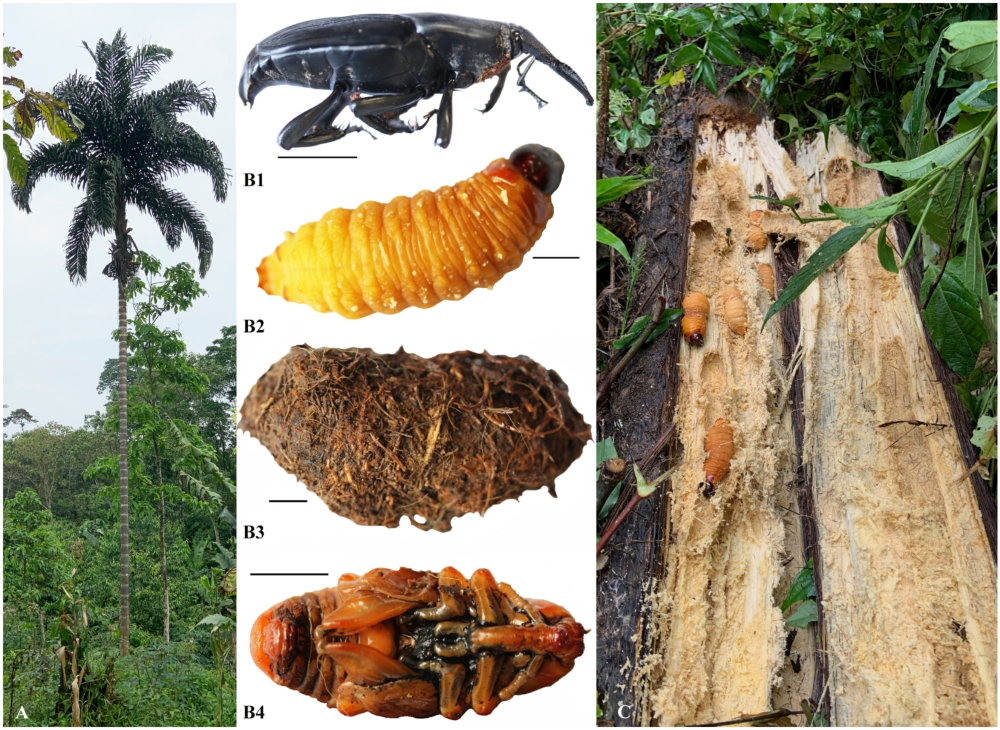
(A) Bactris gasipaes, the most common host for Rhynchophorus palmarum larvae. (B) R. palmarum in different developmental stages: (B1) adult, (B2) larva, (B3) cocoon, (B4) nymph. (C) larvae inside B. gasipaes trunk. Scale bar: 1 cm.
Citation: Journal of Insects as Food and Feed 10, 3 (2024) ; 10.1163/23524588-20230135
Larvae of various palm weevils have been consumed in the Americas, Asia, and Africa (van Itterbeeck and van Huis, 2012). These species represent the main edible insect in the Americas, followed by the larvae of butterflies and ants (Cartay et al., 2020; Choo et al., 2009; Dufour, 1987; Jaramillo-Vivanco et al., 2022). Useful weevil larvae species include Dynamis borassi F., Metamasius hemipterus L., Rhinostomus barbirostris F., and Rhynchophorus palmarum L., all from the family Curculionidae (Lasso et al., 2013; van Itterbeeck and van Huis, 2012). Rhinostomus barbirostris is a small beetle that, like the nymphs of R. palmarum, does not make cocoons. It lives in the bark of the host plants, where it can be seen expelling plant particles similar to sawdust (Choo et al., 2009). Dynamis borassi looks like R. palmarum but feeds only on living tissue in standing palms, and the secondary coloniser R. palmarum feeds on rotten wood (Figure 1; Cuellar-Palacios et al., 2020; Vásquez-Ordónez et al., 2020). Metamasius hemipterus is a smaller beetle, measuring up to 1.5 cm and orange-yellowish with black stains (Giblin-Davis, 2001; Thorn et al., 2019). Rhynchophorus palmarum, R. barbirostris, and M. hemipterus are among the most consumed beetles, particularly those found in palms (Alpizar, 2002; Araujo et al., 2018; Cartay et al., 2020; Cerda et al., 2001; Choo et al., 2009; Guachamı́n-Rosero et al., 2022; Jaramillo-Vivanco et al., 2022; Manno et al., 2018).
Rhynchophorus palmarum is particularly well known because it is a plague in palm monocultures. It damages palm trunks and causes economic losses as a pest, is the main vector of red ring disease, and is associated with bud rot disease (Aldana de la Torre et al., 2017).
The genus Rhynchophorus Herbst (palm weevils, Curculionidae, Coleoptera) includes 10 species distributed in the tropics. Three have attracted special attention as plagues. Rhynchophorus ferrugineus Olivier is native to southern Asia and Melanesia but now has spread over a wide geographical area, including Oceania, Asia, Africa, and the Americas (EPPO, 2020; Ge et al., 2015). The remaining two species of Rhynchophorus are native to the Americas: R. cruentatus Fabricius in Florida and elsewhere in the southeastern United States, and R. palmarum in tropical Mexico, Central and South America, and the Caribbean (EPPO, 2022; Thomas, 2010).
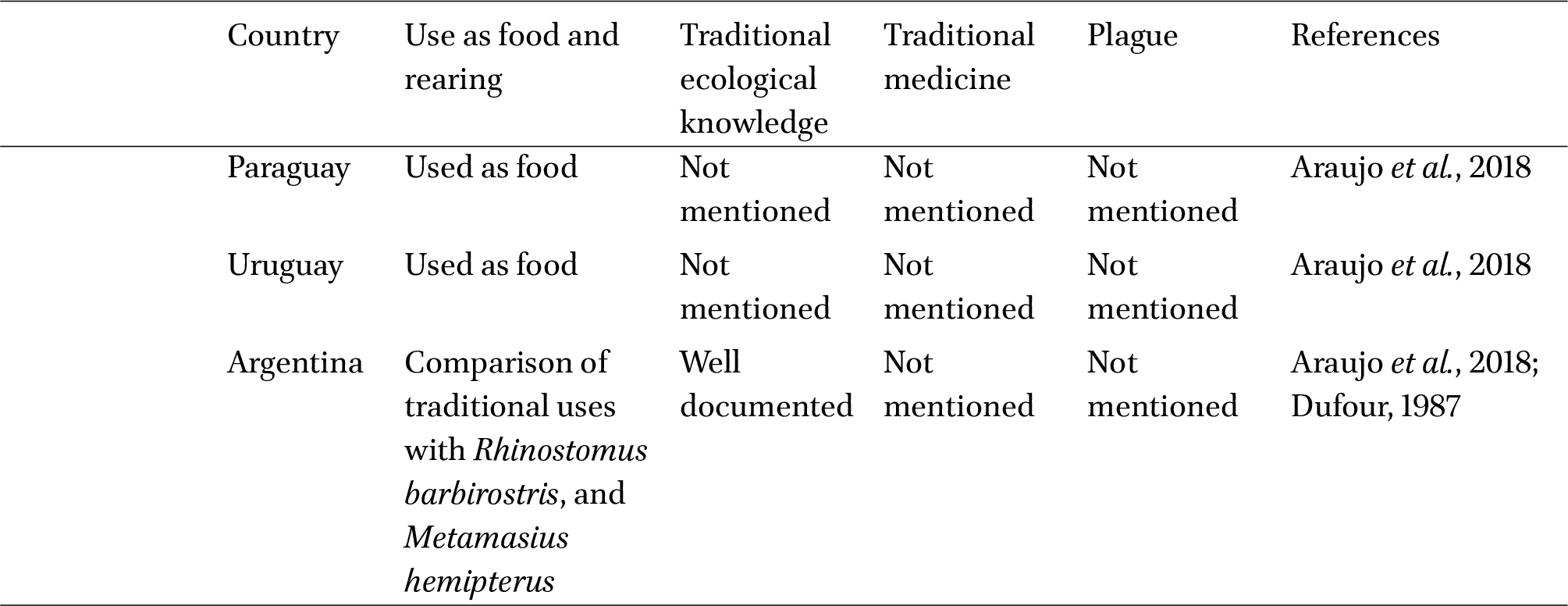
The larvae of R. palmarum are eaten and used for medicine, especially in Venezuela, Colombia, Ecuador, Brazil, Peru, Paraguay, and Argentina. The rearing method is the same among all ethnic groups in the Amazon basin, which cultivate the grubs on different palm species, depending on region. Some ethnic groups use semi-planned collection systems by observing the palm’s growth and adding different substances, e.g. urine, to the holes created by the larvae in the trunk or by moving the larvae close to their villages for easier access to control rearing (Araujo et al., 2018; Cartay et al., 2020; Cedeño Girón et al., 2017; Cerda et al., 1999; Choo et al., 2009; Defoliart, 1999; Delgado et al., 2019; Dufour, 1987; Jaramillo-Vivanco et al., 2022; Manno et al., 2018; Onore 1997; van Huis 2013; van Itterbeeck and van Huis, 2012; Vargas et al., 2013). In Table 1, we summarise the ethnobiology of R. palmarum and the other palm weevils (R. barbirostris, M. hemipterus, and D. borassi).
Traditional uses of Rhynchophorus palmarum, including Rhinostomus barbirostris, Metamasius hemipterus, and Dynamis borassi, in Central and South America
Citation: Journal of Insects as Food and Feed 10, 3 (2024) ; 10.1163/23524588-20230135
(Continued)
Citation: Journal of Insects as Food and Feed 10, 3 (2024) ; 10.1163/23524588-20230135
The Amazon region of Ecuador has 740,000 inhabitants (Mestanza-Ramón et al., 2022). The non-indigenous population is primarily occupied with subsistence agriculture that entails high costs and generally does not yield significant production. In most of the Amazonian area, income among these populations is based on agriculture, livestock, and tourism-related activities (Sancho et al., 2017). The agricultural practices of indigenous groups in the region differ markedly from this model. Of the 11 ethnic groups in Amazonian Ecuador (Achuar, AíCofán, Andwa, Kichwa, Quijos, Sapara, Shiwiar, Shuar, Siekopai, Siona, and Waorani), the Achuar, Kichwa, Shuar, Siona, and Waorani are the largest in population and territory (CONFENIAE, 2022).
As noted, R. palmarum is widely known in different Amazonian indigenous communities, and Ecuador is no exception. However, limited published reports have described the methods for its collection and its uses among the different ethnic groups. The general objective of this study is to document the ethnobiology of R. palmarum, known locally as chontacuro, and its uses among different ethnic groups in Amazonian Ecuador. Specifically, we asked: What is chontacuro? How do the ethnic groups use it for food, medicine, or other purposes? If they commercialise it, where do they find it and how do they collect and rear it? Finally, does this species represent a plague in these indigenous communities?
2 Methods
Study area and data collection
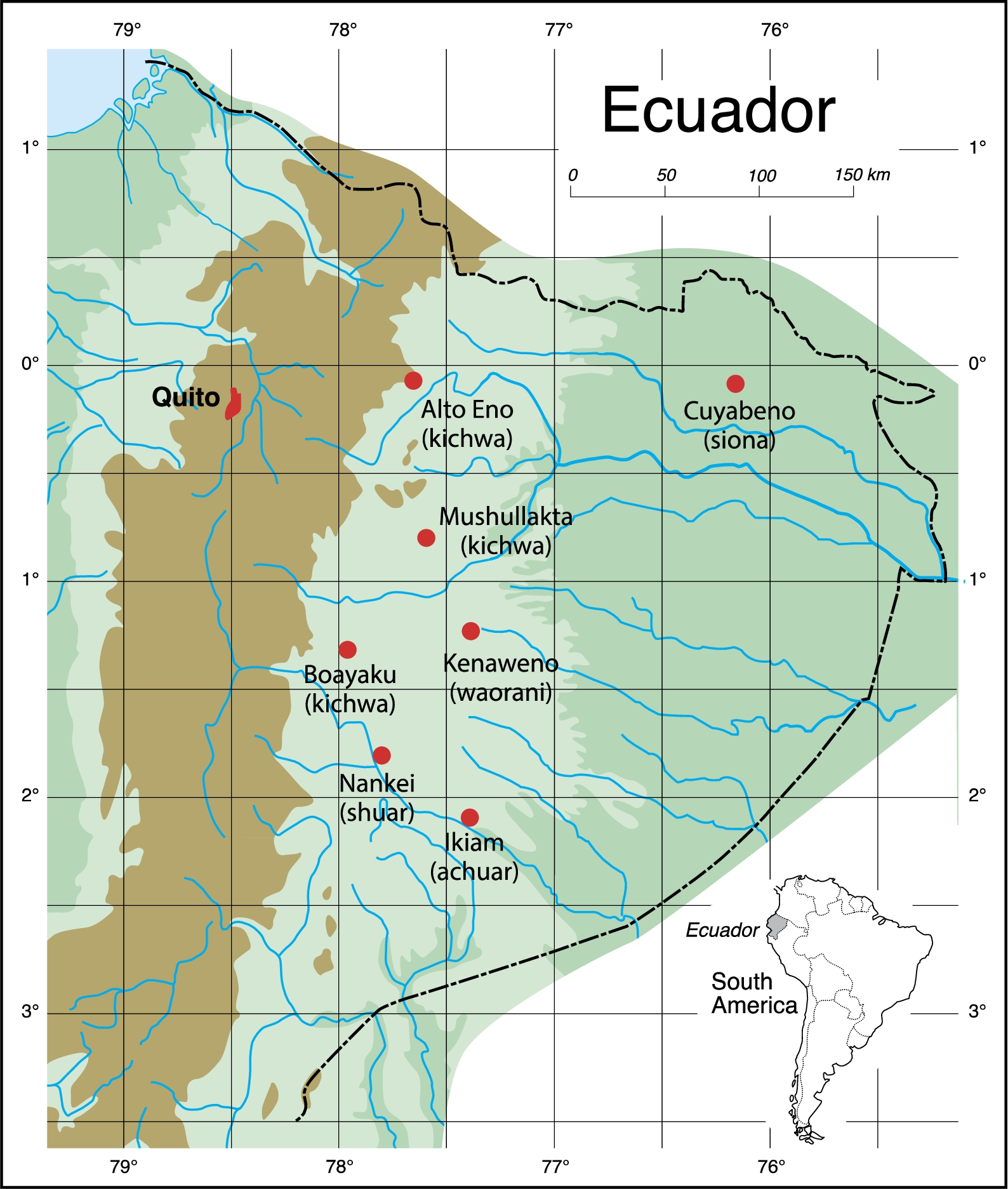
Fieldwork was conducted in northern and central Amazonian Ecuador from March to December 2021 (Figure 2). The livelihood of the villagers is based on agriculture, including the cultivation of plantain, manihot, tropical fruits, and guayusa; a variety of other forest products such as heart of palms; and meat from wild animals, consumed primarily in the most isolated villages. Another source of income is community tourism, which allowed us to be integrated into the community during our field work.
Map of Amazonian Ecuador showing the location of the villages where information about Rhynchophorus palmarum was gathered.
Citation: Journal of Insects as Food and Feed 10, 3 (2024) ; 10.1163/23524588-20230135
The indigenous communities were reached by terrestrial transport (car, 2,800 km total) and canoes (220 km total) and on foot (80 km total). Departure was always from Quito (Ecuador’s political capital).
Our procedure followed the International Code of Ethics (ISE, 2006). Above all, we focused on full disclosure and informed the communities about prior informed consent, confidentiality, respect, reciprocity, mutual benefit, and equitable sharing. In this context, local guides assisted us in each community. Our survey and observations were based on informed consent, signed by local people, that allowed us to photograph and film them in each community and to use the data for non-profit purposes.
Meetings were held to explain the project to the chief of each community in each village, and subsequently the project was explained at a gathering of villagers. During the meetings, the methods and goals of the project were explained so that they were understood by all parties. All visited communities practiced community-based tourism. During our stays, they offered us all of their information related to the consumption of chontacuro (the local name of the R. palmarum larvae), such as guidance on collection and knowledge about its uses and the grubs themselves, as well as providing lodging and transportation services.
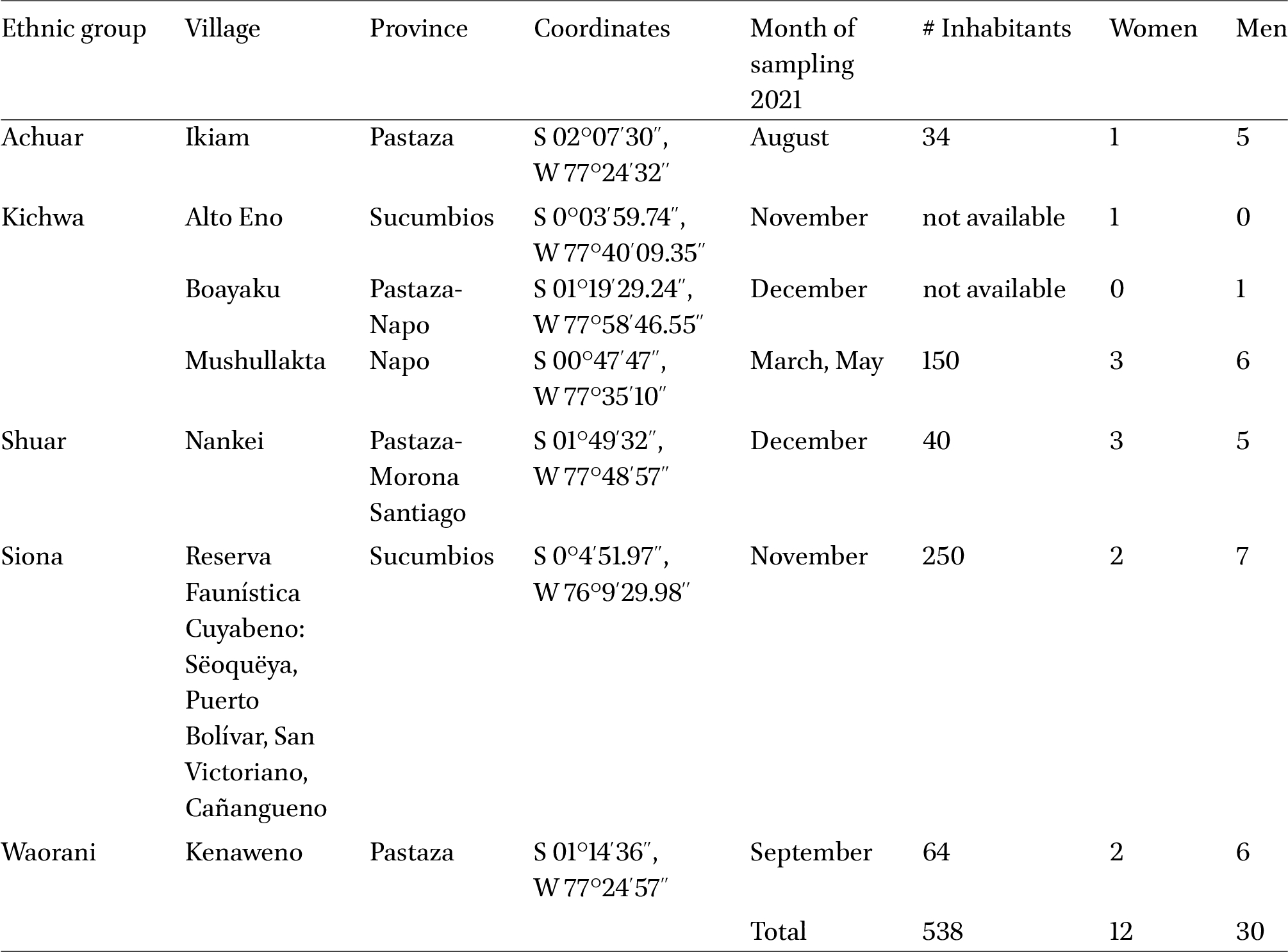
We conducted semi-structured interviews with the heads of families or other village members, with the aim of having representation from two genders and a range of ages. The informants were selected for their role in the community. We attempted to interview at least one member of each family in each village, detailed in Table 2. Some informants appeared to be apprehensive, and with the exception of the Kichwa communities, women had to ask the male head of the household (i.e. father, husband, older brother) for permission to participate. Most informants were bilingual (Spanish/native language) and were interviewed in Spanish, and those who spoke only their native language were interviewed with the help of an interpreter. Finally, we made a verbal agreement with the communities to create a brochure containing the findings from this research, written in simple Spanish and to be distributed to all visited communities.
Villages in Amazonian Ecuador (n = 538) where a total of 42 informants (12 women, 30 men) were interviewed about the use of the larvae of Rhynchophorus palmarum as food and traditional medicine
Citation: Journal of Insects as Food and Feed 10, 3 (2024) ; 10.1163/23524588-20230135
We collected information among five ethnic groups: Achuar, Kichwa, Shuar, Siona, and Waorani distributed un seven communities located in the Ecuadorian Amazon (Table 2). These groups represent variation in culture and population in Amazonian Ecuador. The 42 informants were ages 14–73 years. Each one of the visits was planned considering specific aspects of each community as follows: (1) contact with community leaders, (2) acceptance by the leaders to access, (3) planning the visit considering: (i) difficulties, time, and distance to reach the community, (ii) dates on which we were authorized to access, (iii) availability of the researchers to carry out the field trip, (iv) organization and logistics for the trip.
The survey included 58 questions focused on habitat, food, sensory aspects (e.g. taste, flavour, smell, appearance), medicinal use, and commerce of grubs. During all interviews, a picture of the larval stage of R. palmarum was shown to ensure that the answers related specifically to that grub species. Most questions were open-ended to facilitate the dialogue and create a relaxed atmosphere for the interview.
The methodology applied here was based on the limited literature available and mainly on the expertise of participants and characteristics of the specific group of individual participants in this study. Traditional questionnaires make data interpretation easy through statistical modelling techniques (Biró et al., 2002). In our case, however, with several open-ended questions, statistical analysis was not possible because of the limited number of families in the community.
Sample collection
We contacted the villagers in advance to secure availability of larvae of different species for our study. After the initial meeting in each community, we carried out the interviews and collected the material. We walked to collection areas that were close to the communities in the chakras, which are fields where villagers plant edible crops. On some occasions, we collected larvae in the forest as much as two hours’ walking distance from the village.
The palm species where the villagers found grubs were photographed and later identified in the herbarium QCA at Pontificia Universidad Católica del Ecuador, Quito-Ecuador. This herbarium houses a large collection of palms from Amazonian Ecuador, collected by Henrik Balslev over many years of research (Balslev and Barfod, 1987; Borchsenius et al., 1998).
3 Results
Our findings indicated that the R. palmarum larvae is the most consumed insect in the seven villages among the five ethnic groups we visited. The vernacular name of it is chontakuru, derived from the common plant name for palm (chonta) and the addition of kuru, meaning ‘grub’. An alternative name and the term most often used among the five ethnic groups is chontacuro (in Spanish), but other terms include mayón (Sionas and Shuar) and mojojoy (Sionas). All five ethnic groups were aware that chontacuro is the larval stage of the weevil beetle R. palmarum.
Food
All five ethnic groups consumed the larvae of R. palmarum as food (Figure 3). For the Waoranis, however, eating these grubs did not appear to be a part of a longstanding traditional culture but rather something they had learned from the Kichwa during the past century. Consequently, elderly Waorani do not eat the grub but do use it for medicinal purposes. The interviewed Waoranis told us that they occasionally consume roasted adult beetles, as was also the case among the Kichwas.
The informants did not mention a particular age at which they began consuming the grubs. Most of them had eaten the larvae since childhood, having learned to do so from their parents and grandparents. Most informants also agreed that the grub was a good, nutritious food with a taste they liked, but some also said that they enjoyed eating them as part of their culture. The methods of consumption were generally the same everywhere: raw larvae, cooked in soups, in a stew, fried, or smoked. They also sold the grubs at markets for which the main preparation method was to pinch them onto wooden sticks (i.e. as grilled brochettes) or to package them in a maito (i.e. wrapped in leaves and grilled). The flavour was said to be much better with the inner organs removed, the grubs drained for grease, and a little bit of salt added. The grubs were served mostly with green or sweet plantains, cassava, or heart of palms. There were no clear gender-related patterns, although it appeared that women were more commonly involved in preparation of the larvae.
We did not find any discernible differences among the ethnic groups in the degree of consumption. An interesting explanation for this consistency was that they were trying to conserve the palms because their populations had been decimated, especially in the Kichwa villages.
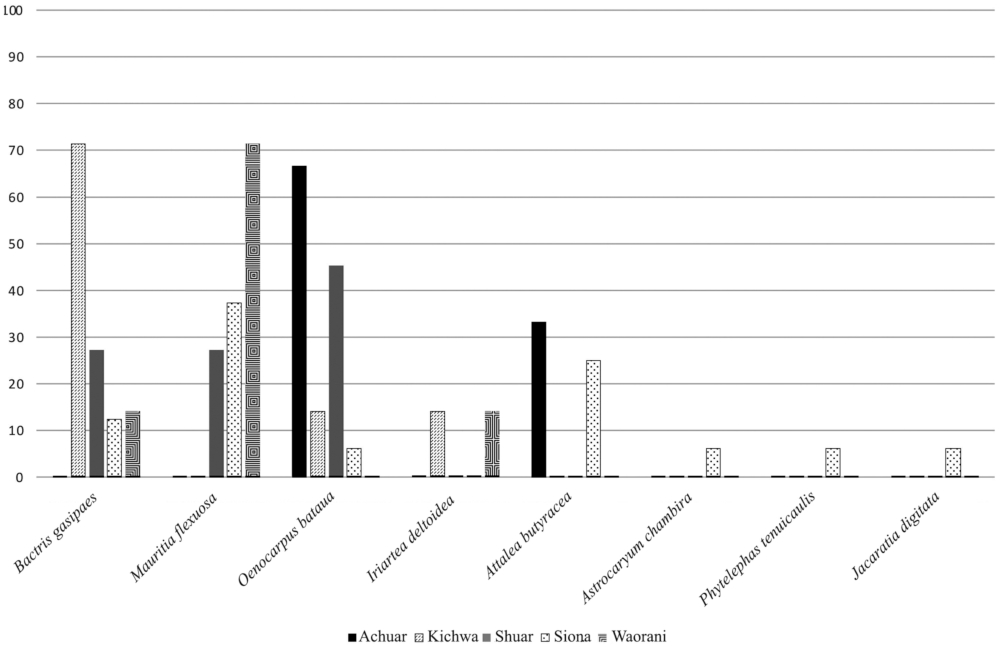
The informants preferred grubs raised in the trunks of Oenocarpus bataua Mart. and Bactris gasipaes Kunth. The source of the preference could be the taste or scent of those larvae or the abundance of a species around a particular village (Figure 4).
Informants from all five ethnic groups reported that if the grub were consumed on an empty stomach, it could produce diarrhoea or dizziness, or make the person ‘lazy’.
Traditional uses of Rhynchophorus palmarum larvae. (A) Grilled brochettes and maitos used by Kichwas. (B) Grilling of R. palmarum larvae by Shuars, who served them with sweet potatoes (Ipomoea batatas (L.) Lam.) and chicha, which is a fermented local drink based on Manihot esculenta Crantz. (C) Commercializing R. palmarum larvae alive in the husk from the palm trunks where they were collected, and the extracted oil in plastic flasks in the Lago Agrio market where they are sold by Kichwas.
Citation: Journal of Insects as Food and Feed 10, 3 (2024) ; 10.1163/23524588-20230135
The host species for Rhynchophorus palmarum grubs, with the percentage of informants from each of the five visited ethnic groups who cited grubs originating from the species as preferred for taste and flavour.
Citation: Journal of Insects as Food and Feed 10, 3 (2024) ; 10.1163/23524588-20230135
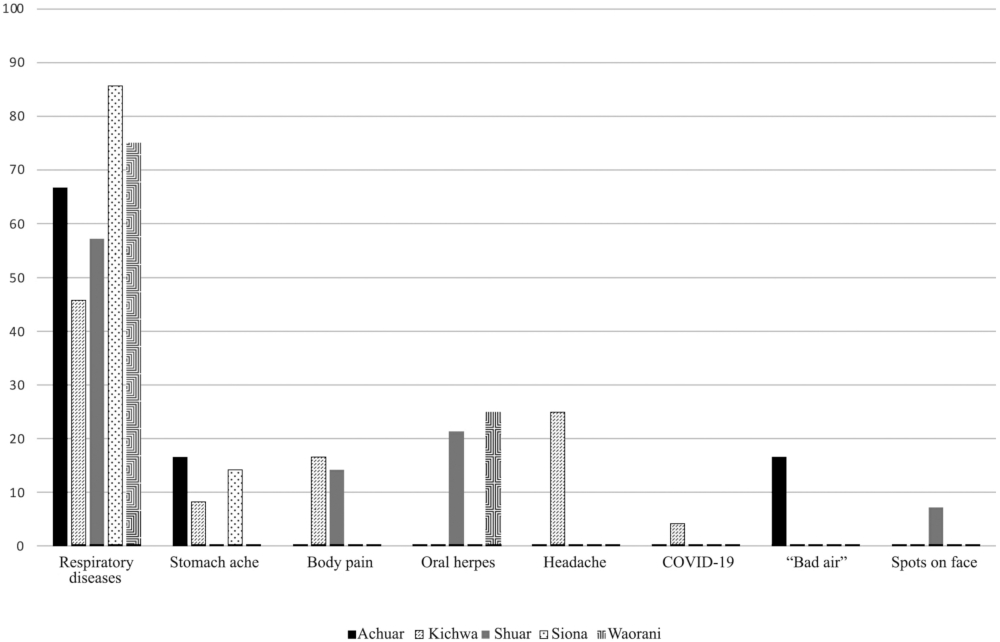
Eight health conditions treated with larvae of Rhynchophorus palmarum in villages in Amazonian Ecuador inhabited by five different ethnic groups. The bars correspond to the percentage of informants in each of the five groups who reported using the grub for a particular health condition.
Citation: Journal of Insects as Food and Feed 10, 3 (2024) ; 10.1163/23524588-20230135
Medicinal use
All five ethnic groups used the larvae as treatment for respiratory diseases. The oil was extracted by cutting open the grubs and then frying them or drying them by exposing them to direct sun on a tin roof. To treat the respiratory problem, users either applied the oily substance to their skin, such as on the chest or back for asthma or tuberculosis, or consumed a teaspoon of it daily. The Achuar and Kichwa performed cleansings that involved rubbing the grubs all over exposed parts of the body and discarding the larvae. In Figure 5, we show the health problems the larvae were used to treat among the five ethnic groups, with respiratory diseases as the most common, including asthma and tuberculosis. In the case of herpes or spots on the face, the oil was applied directly to lesions.
Commerce
None of our informants reared the grubs strictly for commercial purposes. Some of them sold the larvae, but not in any specific location. Sometimes, they would sell the grubs to tourists in nearby towns or in their own villages, usually as both food and medicine, either raw or prepared (Figure 3). The percentage of informants reporting commercialization of R. palmarum by ethnic group was as follows: Achuar, 68%; Kichwa, 38%; Shuar, 74%; Siona, 79%; and Waorani, 62%. The cost varied from US $0.25-0.50 for one grub, depending on location of the sale, their size, and whether the grubs were raw or prepared. The Sionas, whose main income is tourism, charged US $6.00/pound of grubs The highest price per grub was obtained in areas commonly frequented by tourists.
Habitat and rearing
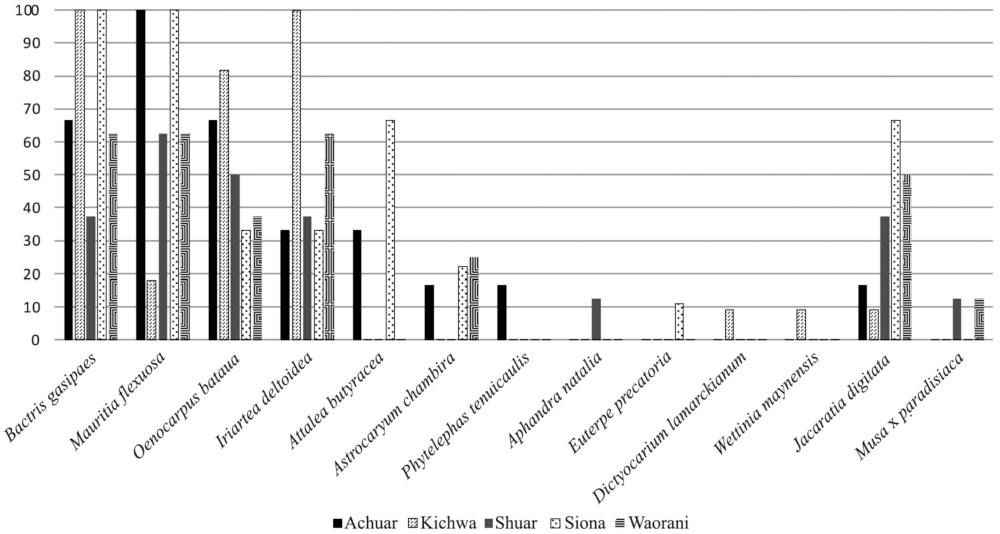
Breeding of R. palmarum was mostly based on a traditional agricultural technique as a byproduct of the use of palms. Most informants understood that the grubs were the larval stage of a beetle (Figure 1). Several of the palm species used for rearing grubs were common around human dwellings in the Amazon lowlands. We registered 11 species of palms (Arecaceae) used for rearing R. palmarum larvae: B. gasipaes, Mauritia flexuosa L.f., O. bataua, Iriartea deltoidea Ruiz & Pav., Attalea butyracea (Mutis ex L.f.) Wess. Boer, Astrocaryum chambira Burret, Phytelephas tenuicaulis (Barfod) A.J. Hend., Aphandra natalia (Balslev & A.J. Hend.) Barfod, Euterpe precatoria Mart., Dictyocaryum lamarckianum (Mart.) H. Wendl., and Wettinia maynensis Spruce. All palms used as hosts for R. palmarum rearing were native to Amazonian Ecuador. The villagers also used two non-palm species for rearing the grubs: Jacaratia digitata Solms (Caricaceae), which is a native of the Amazon basin, and the banana, Musa × paradisiaca L. (Musaceae), an old cultivar in the area that originated in southeast Asia and is now widely cultivated in the Amazon basin and all other tropical regions (Table 3, Figure 6).
Vernacular names of the host palms or trees used for rearing palm weevils, Rhynchophorus palmarum, among five ethnic groups in Amazonian Ecuador
Citation: Journal of Insects as Food and Feed 10, 3 (2024) ; 10.1163/23524588-20230135
After collecting the primary products from felled host trees, the villagers left their trunks so that R. palmarum adults could lay their eggs in them. To facilitate egg deposition, collectors from all ethnic groups made several wedge-shaped incisions with a machete, axe, or chainsaw, every 2 m or more, depending on the length of the trunk. Sometimes, they covered the cuts with leaves so that wild mammals, such as the armadillo (Dasypus novemcinctus L.), would not steal the grubs. The Sionas said that they sometimes did not cut the palm down immediately but instead would make incisions in the trunks of a living tree and then later cut it down to harvest the grubs. This technique prevented the grubs from being eaten by other mammals, and the tree would gain time for its fruits to ripen. There was no precise time for felling the trees, and timing depended on when the fruits or other parts of the palm would be ready for harvest. A pattern in many communities, however, was that the palms were felled at the new moon.
Depending on the season and the species, the grubs would take 1 to 3 months to mature. During that period, villagers would visit the trunk several times to make sure everything was in good order for the eventual harvesting of the grubs. The grubs made tunnels within the fallen trunks, and in chewing with their strong jaws, they made a singular noise. Usually, the harvester would listen for that noise within the trunk before opening the tunnels.
Thirteen plant species noted by the 42 informants as hosts of Rhynchophorus palmarum larvae rearing. The percentage of informants from each ethnic group mentioning the particular species is indicated.
Citation: Journal of Insects as Food and Feed 10, 3 (2024) ; 10.1163/23524588-20230135
Once the grubs were ready to harvest, the harvesters would go to the site, usually a man and a woman followed by or carrying their children. The site could be in the field that they called chakra, where villagers plant the chonta palm, the only domesticated palm in the Amazon basin, or in the forest, where palms had been left. The man usually cut the trunk to expose the grubs from the tunnels, which the women would then harvest. An important custom seems to have been that the collector always used the right hand to manipulate the grubs. All informants said that doing so was mandatory to avoid spoiling the larvae, and most said that not following it would render the grubs inedible. The villagers collected all grubs that were fully grown (ca. 5 × 2.5 cm) and ready to be eaten, which was when they had attained a yellowish colour. Smaller grubs were left in the trunks to be harvested later, which could be after 2 weeks or more. The number of larvae harvested depended on the length and diameter of the trunk. Sometimes as few as 10 larvae were harvested, but hundreds could be extracted from a single trunk depending on the weather and the host tree species.
The grubs were collected along with the detritus inside of the trunk where they had grown. Sometimes grubs were consumed the day that they were harvested, but on other occasions, they were kept for a few days depending on the amount of substrate that had been collected. The grubs were kept in plastic bins or in homemade containers called bijao, constructed from a leaf of a Calathea (Marantaceae) species. The storage needed to be open to the air to allow the grubs to breathe, and they also had to be provided with food to prevent their eating each other.
Two other beetle species shared the same habit: R. barbirostris and M. hemipterus. The Kichwas and Sionas were reported to be consumers of R. barbirostris (the Kichwas under the name wiliam-kuru and the Sionas under the name of suri), but we did not obtain evidence for this. Rhinostomus barbirostris was consumed but not appreciated as much as R. palmarum, possibly because of the size of the larvae. In addition to the beetles, members of all five ethnic groups consumed several species of ants and some consumed the larvae of a butterfly (under the name patas-kuru). The larvae of M. hemipterus was used as bait for fishing.
As a plague
During the interviews, no informant ever mentioned that R. palmarum was a pest or a plague. They knew that it is native and had always been in their habitats and would not consider it a harmful insect.
4 Discussion
In the Amazon basin of Ecuador, the most commonly used insect is the weevil beetle R. palmarum. It is used as food and for medicinal purposes, and it is commercialised. The same beetle grub also is used in other South American countries (Cartay et al., 2020; Choo et al., 2009; Dufour, 1987; Jaramillo-Vivanco et al., 2022; van Huis 2013). In the Waorani community, the older generation refrains from consuming it, but with influence from the Kichwas, it has become an increasingly common food source and medicine among the Waoranis. Apart from this distinction, differences among the ethnic groups with regard to using this beetle larvae basically consisted of different local names assigned to them and geographical variation in host trees.
Other edible weevil grubs include those of R. barbirostris and M. hemipterus, which are used mainly as fishing bait or for human consumption when chontacuro is not available. These two weevils occur throughout South America (Araujo et al., 2018; Cartay et al., 2020; Choo et al., 2009; Dufour, 1987; Giblin-Davis, 2001; Manno et al., 2018; Vargas et al., 2013). The larvae represent an important source of protein and other biochemical compounds that can prevent malnutrition in children, especially in remote areas where protein sources are scarce (Guachamı́n-Rosero et al., 2022; Jaramillo-Vivanco et al., 2022).
Most informants said that the taste of the larvae changed depending on the rearing plant (Figure 4). This association has been reported previously (Cartay et al., 2020) as a flavour preference for grubs reared on O. bataua. The Kichwa and the Waorani also consume the adult weevil, male or female, mainly grilled, as others have reported (Dufour, 1987; Guachamı́n-Rosero et al., 2022).
As the global population marches toward 9 billion by 2050, the global food supply situation is expected to become more critical than it already is (Béné et al., 2015). Insects could represent a quality food, with a high feed conversion ratio and low levels of greenhouse gas emissions involved in their production (FAO, 2013). Rhynchophorus palmarum grubs could be considered a good food product that warrants developing cost-effective and sustainable mass-rearing facilities while reducing contamination and transforming waste for humans or livestock. In addition, the risk of zoonosis from insects is very low.
In Ecuador, the most frequently cited health conditions treated with R. palmarum are respiratory diseases (Figure 5). This use also has been described by Delgado et al. (2019) for Amazonian Peru. A likely explanation of any effectiveness is the presence of linoleic and linolenic acids, which have anti-inflammatory properties (Delgado et al., 2019).
Our findings indicated that none of the interviewed informants had a structured production management plan. Most of the ethnic groups felled the palm to obtain its fruits (palm heart) or to use the leaves or part of the trunk for handicrafts and construction. The subsequent harvesting of R. palmarum larvae was a byproduct of these activities. Adult beetles would visit rotten, fallen trees or the scars on the stems and trunks that collectors left on purpose to encourage the beetles to lay their eggs in them.
The most used palms were B. gasipaes, M. flexuosa, O. bataua, I. deltoidea, and A. butyracea, which were all common in the study area. Astrocaryum chambira, P. tenuicaulis, A. natalia, E. precatoria, D. lamarckianum, and W. maynensis were used for rearing of R. palmarum larvae once or twice during our fieldwork. Among non-palm species, the use of J. digitata is promising, and cultivated B. gasipaes for rearing grubs instead of harvesting them from endangered wild palm species may aid in conservation. If R. palmarum proves to be an innocuous and useful food for humans or cattle, alternative hosts for rearing could include B. gasipaes as the only native palm cultivated in the Amazon basin, J. digitata (Caricaceae), or banana (M. × paradisiaca) (Figure 3, Table 3). Management in which the grubs are a byproduct of other uses of the trees has been commonly reported in other studies on rearing of the grub (Cartay et al., 2020; Guachamı́n-Rosero et al., 2022).
The division of labour related to rearing R. palmarum larvae was not associated with gender, but our impression was that most often, a man managed the axe or machete, and the women would open the trunks if a man was not present. In the Kichwa communities, especially, both men and women quite commonly performed the same tasks. We emphasise that the activity of rearing and using R. palmarum grubs is not a traditional knowledge as delineated by the International Society of Ethnobiology (ISE, 2006). Instead, it can be considered an agricultural technique that is widely known in most Amazonian countries.
Rhynchophorus palmarum is viewed as a pest in monoculture crops in almost all Neotropical countries. It has been reported to be a plague in plantations of coconut, oil palm, and chontaduro or palmheart (B. gasipaes) (Alpizar, 2002; Cartay et al., 2020; Chinchilla et al., 1990). The people in Amazonian Ecuador, however, did not take this view of R. palmarum and did not consider it a plague in the forest or chakras. It is possible that an approach to possibly breeding chontacuro in palm plantations to obtain a higher economic yield could come into conflict with the productivity of these monocultures. However, traditional use by indigenous populations does not pose a risk to these crops and provides income and a major food source for these communities in remote areas. Tourist and settler demand and the high price they are willing to pay for the larvae should guarantee marketable and profitable production (Figure 6).
5 Conclusions
Among the five ethnic groups visited for this study, the patterns of use, rearing, and collection of chontacuros are similar. The use of forest resources by the Amazonian people may guide the undertaking of new productive activities, in this case the breeding, commercialisation, and consumption of R. palmarum larvae in Ecuador. The potential of these edible insects is promotion of sustainable-use strategies with the aim of improving food security and maintaining agricultural knowledge in these communities. Moreover, even if the grubs do not meet all dietary needs, they remain a source of protein and fat, can be used yearlong as medicine, and yield a cash income for ethnic groups in some areas frequented by tourists. The indigenous populations carry out chontacuro breeding in the Ecuadorian Amazon without any structured management plan. For them, grub collection has always been a side activity connected to other traditional uses of the palms and representing a permanent forest resource and year-round agricultural byproduct.
Corresponding authors; e-mail: tatiana.jaramillo@udla.edu.ec; jalvarez@usfq.edu.ec
Acknowledgements
This study was funded by Universidad de Las Américas, Quito, Ecuador (Grant No. AGR.JMA.20.04 to Tatiana Jaramillo-Vivanco). We acknowledge financial assistance from Project OTRI Art. 83, UCM- F. Sabor y Salud (Grant No. 317-2020) to Montaña Cámara and Rosa M. Cámara. This work also was supported by the Danish Council for Independent Research – Natural Sciences (Grant No. 4181-00158 to Henrik Balslev) and through Universidad San Francisco de Quito (POLI Grant ID: 17453 to José M. Álvarez-Suárez).
The authors kindly thank all the individuals who participated, in different ways, in the field trips to Amazonian Ecuador.
Conflict of interest
The authors declare no conflict of interest.
References
Aldana de la Torre, R., Moya Murillo, O., Aldana de la Torre, J. and Gomes, H., 2017. Identificación de riesgos fitosanitarios en palma de aceite. Guı́a de bolsillo para el manejo de Rhynchophorus palmarum. Publicación de la Corporación Centro de Investigación en Palma de Aceite, Cenipalma, Fedepalma. Available at: https://repositorio.fedepalma.org/bitstream/handle/123456789/107657/Gu%C3%ADa%20de%20bolsillo%20para%20el%20manejo%20de%20Rhynchophorus%20palmarum.pdf?sequence=1&isAllowed=y
Alpı́zar, D., 2002. Elementos para el manejo integrado de los picudos (Curculionidae) del palmito. Manejo Integrado de Plagas y Agroecologı́a (Costa Rica) 65: 1-6. Available at: https://repositorio.catie.ac.cr/handle/11554/6197
Andrade Molina, A., Ferreira, M.J., Oyaxaka Suruı́, L., Cabello Norder, L.A., Costa Neto, E.M., Charles, R. and Clement, C.R., 2023. Amazonian invertebrates in the traditional diet of the Paiter Suruı́ in Southeastern Brazil. Human Ecology 51: 209-219. https://doi.org/10.1007/s10745-023-00402-3
Araujo, J.J., Keller, H.A. and Hilgert, N.I., 2018. Management of pindo palm (Syagrus romanzoffiana Arecaceae) in rearing of coleoptera edible larvae by the Guaranı́ of Northeastern Argentina. Ethnobiology and Conservation 7: 1. https://doi.org/10.15451/ec2018-01-7.01-1-18
Balslev, H. and Barfod, A., 1987. Ecuadorean palms – an overview. Opera Botanica 92: 17-35. Available at: https://www.researchgate.net/publication/292219379
Barragán, A., Dangles, O., Cárdenas, R. and Onore, G., 2009. The history of entomology in Ecuador. Annales de la Société entomologique de France (N.S.) 45: 410-423. https://doi.org/10.1080/00379271.2009.10697626
Beckerman, S., 1977. The use of palms by the Barı́ indians of the Maracaibo basin. Principes 21. Available at: https://palms.org/wp-content/uploads/2016/05/v21n4p143-154.pdf
Béné, C., Barange, M., Subasinghe, R., Pinstrup-Andersen, P., Merino, G., Gro-Ingunn, H. and Williams, M., 2015. Feeding 9 billion by 2050 – putting fish back on the menu. Food Security 7: 261-274. https://doi.org/10.1007/s12571-015-0427-z
Biró, G., Hulshof, K. and Ovesen, L., 2002. Selection of methodology to assess food intake. European Journal of Clinical Nutrition 56: S25-S32. https://doi.org/10.1038/sj.ejcn.1601426
Borchsenius, F., Pedersen, H.B. and Balslev, H., 1998. Manual to the palms of Ecuador, Vol. 1. 1st ed. Aarhus Universitat, Aarhus, Denmark, 227 pp.
Cartay, R., Dimitrov, V. and Feldman, M., 2020. An insect bad for agriculture but good for human consumption: the case of Rhynchophorus palmarum: a social science perspective. In: Mikkola, H. (ed.) Edible insects. IntechOpen, pp. 1-17. http://dx.doi.org/10.5772/intechopen.87165
Cedeño Girón, R.J., Hidalgo, G.G., Bravo Garcia, J.E., Pino, E. and Manuel, P., 2017. Exploring the food and nutritional potential of three edibles Amazonian arthropods. Revista Etnobiologı́a 15: 26-31. Available at: https://revistaetnobiologia.mx/index.php/etno/article/view/139
Cerda, H., Martı́nez, R., Briceño, N., Pizzoferrato, L. and Hermoso, D., 1999. Crı́a, análisis nutricional y sensorial del picudo del cocotero de la dieta tradicional indı́gena amazónica. Rearing, nutritional composition, and sensorial analysis of the Rhynchophorus palmarum (Coleoptera: Curculionidae) palm weevil as a food eaten by the Amazonian indians. Ecotropicos 12: 25-32.
Cerda, H., Martinez, R., Briceno, N., Pizzoferrato, L., Manzi, P., Tommaseo Ponzetta, M., Marin, O. and Paoletti, M.G., 2001. Palm worm: (Rhynchophorus palmarum) traditional food in Amazonas, Venezuela – nutritional composition, small scale production and tourist palatability. Ecology of Food and Nutrition 40: 13-32. https://doi.org/10.1080/03670244.2001.9991635
Chagnon, N., 1968. Yanomamö: the fierce people. Holt, Rinehart and Winston, New York, NY, USA.
Chinchilla, C., Menjı́var, R. and Arias, E., 1990. Picudo de la palma y enfermedad del anillo rojo/hoja pequeña en una plantación comercial en Honduras. Turrialba 40: 471-477. Available at: https://repositorio.catie.ac.cr/handle/11554/10550
Choo, J., Zent, E.L. and Simpson, B.B., 2009. The importance of traditional ecological knowledge for palm-weevil cultivation in the Venezuelan Amazon. Journal of Ethnobiology 29: 113-128. https://doi.org/10.2993/0278-0771-29.1.113
Confeniae, 2022. CONFENIAE: Confederación de Nacionalidades Indı́genas de la Amazonı́a Ecuatoriana. Available at: https://confeniae.net/
Cuellar-Palacios, C.M., Gaviria-Vega, J. and Montoya-Lerma, J., 2020. Life cycle and larval growth of Dynamis borassi (Coleoptera: Dryophthoridae), an emerging pest to the peach palm. Annals of Agricultural Sciences 65: 218-224. https://doi.org/10.1016/j.aoas.2020.12.002
de la Torre, L., Navarrete, H., Muriel, P., Macı́a, M. and Balslev, H. (eds.), 2008. Enciclopedia de las plantas útiles del Ecuador. Herbario QCA, Pontificia Universidad Católica del Ecuador, Herbario AAU, Universidad de Aarhus. Available at: https://bibdigital.rjb.csic.es/idurl/1/16016
Defoliart, G.R., 1999. Insects as food: why the western attitude is important. Annual Review of Entomology 44: 21-50. https://doi.org/10.1146/annurev.ento.44.1.21
Delgado, C., Romero, R., Espinoza, R.V., Trigozo, M. and Correa, R., 2019. Rhynchophorus palmarum used in traditional medicine in the Peruvian Amazon. Ethnobiology Letters 10: 120-128. https://doi.org/10.14237/ebl.10.1.2019.1271
Dufour, D.L., 1987. Insects as food: a case study from the Northwest Amazon. American Anthropologist 89: 383-397. Available at: https://www.jstor.org/stable/677762
EPPO (European and Mediterranean Plant Protection Organization), 2020. EPPO datasheet: Rhynchophorus ferrugineus. EPPO Global Database. Avaliable at: https://gd.eppo.int/taxon/RHYCFE/datasheet
EPPO (European and Mediterranean Plant Protection Organization), 2022. EPPO Datasheet: Rhynchophorus palmarum. EPPO datasheets on pests recommended for regulation. EPPO Global Database. Available at: https://gd.eppo.int/taxon/RHYCPA
FAO, 2013. Edible insects. Future prospects for food and feed security, Vol. 171. Food and Agriculture Organization of the United Nations, Rome, Italy, 201 pp. Available at: http://www.fao.org/docrep/018/i3253e/i3253e00.htm
FAO, 2019. The state of the world’s biodiversity for food and agriculture. In: Bélanger, J. and Pilling, D. (eds.) FAO Commission on Genetic Resources for Food and Agriculture Assessments, Rome, Italy, 572 pp. Available at: http://www.fao.org/3/CA3129EN/CA3129EN.pdf
FAO, 2021. Looking at edible insects from a food safety perspective. Challenges and opportunities for the sector. FAO, Rome, Italy. https://doi.org/10.4060/cb4094en
Ge, X., He, S., Wang, T., Yan, W. and Zong, S., 2015. Potential distribution predicted for Rhynchophorus ferrugineus in China under different climate warming scenarios. PLOS ONE 10: e0141111. https://doi.org/10.1371/journal.pone.0141111
Giblin-Davis, R.M., 2001. Borers on palms. In: Howard, F.W., Moore, D., Giblin-Davis, R.M. and Abad, R.G. (eds.) Insects on palms. CABI Publishing, Egham, UK, pp. 267-304. https://doi.org/10.1079/9780851993263.02
Guachamı́n-Rosero, M., Peñuela, M.C. and Zurita-Benavides, M.G., 2022. Indigenous knowledge interaction network between host plants and edible insects in the Ecuadorian Amazon. Journal of Insects as Food and Feed 9: 369-380. https://doi.org/10.3920/JIFF2022.0061
ISE – International Society of Ethnobiolog, 2006. ISE Code of Ethics (with 2008 additions). Available at: http://ethnobiology.net/code-of-ethics/
Jaramillo-Vivanco, T., Balslev, H., Montúfar, R., Cámara, R.M., Giampieri, F., Battino, M., Cámara, M. and Alvarez-Suarez, J.M., 2022. Three Amazonian palms as underestimated and little-known sources of nutrients, bioactive compounds and edible insects. Food Chemistry 372: 131273. https://doi.org/10.1016/j.foodchem.2021.131273
Lasso, C.A., Rial, A. and González, B.V. (eds.), 2013. VII. Morichalesy canangunchales de la Orinoquia y Amazonia: Colombia – Venezuela. Parte I. Serie Editorial. Recursos Hidrobiológicos y Pesqueros Continentales de Colombia. Instituto de Investigación de Recursos Biológicos Alexander von Humboldt. (IAvH). Bogotá, D.C., Colombia. 344 pp. Available at: http://repository.humboldt.org.co/handle/20.500.11761/31423
Manno, N., Estraver, W.Z., Tafur, C.M., Torres, C.L., Schwarzinger, C., List, M., Schoefberger, W., Mejı́a Coico, F., León, J.M., Battisti, A. and Paoletti, M.G., 2018. Edible insects and other chitin-bearing foods in ethnic Peru: accessibility, nutritional acceptance, and food-security implications. Journal of Ethnobiology 38: 424-447. https://doi.org/10.2993/0278-0771-38.3.424
Mestanza-Ramón, C., Cuenca-Cumbicus, J., D’Orio, G., Flores-Toala, J., Segovia-Cáceres, S., Bonilla-Bonilla, A. and Straface, S., 2022. Gold mining in the Amazon region of Ecuador: history and a review of its socio-environmental impacts. Land 11: 221. https://doi.org/10.3390/land11020221
Onore, G., 1997. A brief note on edible insects in Ecuador. Ecology of Food Nutrition 36: 277-285. https://doi.org/10.1080/03670244.1997.9991520
Sancho, D., Álvarez, M. and Fernández, L.R., 2015. Insectos y alimentación. Larvas de Rhynchophorus palmarum L, un alimento de los pobladores de la Amazonı́a Ecuatoriana. Entomotropica 30: 135-149.
Sancho, D., Fernández, L., Alvarez, M., Sarabia, D.P. and Pico, J.P., 2017. Los saberes ancestrales en el desarrollo local. Las larvas de Rhynchophorus palmarum L. como recurso alimentario de los pueblos amazónicos. Revista Amazónica Ciencia y Tecnologı́a 6: 35-44. Available at: https://dialnet.unirioja.es/servlet/articulo?codigo=6145603
Thomas, M.C., 2010. Giant palm weevils of the Genus Rhynchophorus (Coleoptera: Curculionidae) and their threat to Florida palms. Pest Alert DACS-P-01719: 1-2. Available at: https://www.fdacs.gov/content/download/66344/file/pest_alert_-_giant_palm_weevils_of_the_genus_rhynchophorus.pdf
Thorn, M.J., Seltzer, J.L., Hendon, A.G., Keasler, B.L. and Hill, J.G., 2019. The first detection of Metamasius hemipterus (L.) (Coleoptera: Curculionidae) from Coastal Mississippi, USA. Transactions of the American Entomological Society 145: 407-412. https://doi.org/10.3157/061.145.0304
van Huis, A., 2013. Potential of insects as food and feed in assuring food security. Annual Review of Entomology 58: 563-583. https://doi.org/10.1146/annurev-ento-120811-153704
van Itterbeeck, J. and van Huis, A., 2012. Environmental manipulation for edible insect procurement: a historical perspective. Journal of Ethnobiology and Ethnomedicine 8: 1-7. https://doi.org/10.1186/1746-4269-8-3
Vargas, G.E., Espinoza, G., Ruiz, C. and Rojas, R., 2013. Nutritional value of Rhynchophorus palmarum L. larvae: a traditional food from the Peruvian. Revista de la Sociedad Quı́mica del Perú 79: 64-70.
Vásquez-Ordóñez, A.A., Löhr, B.L. and Marvaldi, A.E., 2020. Comparative morphology of the larvae of the palm weevils Dynamis borassi (Fabricius) and Rhynchophorus palmarum (L) (Curculionidae: Dryophthorinae): two major pests of peach palms in the neotropics. Papéis Avulsos de Zoologia 4. https://doi.org/10.11606/1807-0205/2020.60.special-issue.27