Abstract
Dredging is a usual operation in waterways, often necessary to maintain navigability and economic activity of ports. A recent change in the policy governing dredging operations in Ohio, United States, has pressed the investigation on reuse applications of Lake Erie dredged sediments (LES). From a value chain management perspective, this article explores marketing opportunities for substrate products formulated with LES. A mixed-mode research approach departs from a discrete choice experiment (DCE) with Ohio residents to investigate consumer preferences for hypothetical products that claim to aid Lake Erie’s environmental pressure. It also uses a case study methodology and performs a content analysis of archival records and interviews with members of the regional mulch and substrate industry. Results indicate that consumers are willing to pay for verified sustainability claims involving Lake Erie, although significant preference heterogeneity reduces the accuracy of findings. Qualitative results underscore the need for an overarching value chain marketing program and favor the development of a short chain. Three macro strategies and eleven actionable projects of interest to stakeholders were designed and validated to support LES reutilization and value aggregation. This article demonstrates how DCE and the case study methodology can be combined to examine emerging market-oriented sustainable chains.
1. Introduction
Lake Erie, one of the Five Great Lakes of North America, holds a unique status among these prolific and versatile waterways (Council of the Great Lakes Region, 2017; French et al., 2011). Lake Erie not only serves as a source of drinking water but also stimulates tourism and recreational activities. Possessing eight major federal commercial ports, Lake Erie plays a pivotal role in strengthening the regional economy. The flow of goods through the ports contributes to $25 billion in business revenue and sustains 160 000 direct and indirect jobs (French et al., 2011; Ohio Lake Erie Commission, 2021).
To ensure the continued economic growth of Lake Erie ports, an annual dredging effort of around 1.15 million m3 of sediments is required (Ohio Lake Erie Commission, 2021). The dredging operation is necessary for maintaining navigability and removing eroded sediments transported to the mouths of the Maumee, Portage, Sandusky, Cuyahoga rivers and others. Traditionally, the dredging operation encompassed the disposal of sediment residues in open waters far from the shoreline. However, Ohio state authorities passed a bill in July 2021 that banned open-water disposal due to its potential to negatively impact water quality and increase the risk of harmful algal blooms (Great Lakes Commission, 2021; Ohio Revised Code, 2015). Coping with the new law, port authorities currently dispose of the dredged sediments in designated facilities by the shore, where the material dries out and becomes available for reutilization.
Nevertheless, the new dredging procedure is not free of logistical, economic, and environmental complications. Substantial amounts of Lake Erie dredged sediments (LES) pile up in these facilities and continue to threaten the environment due to leaching of particles and contaminants (Bhairappanavar et al., 2018). Furthermore, the designated facilities periodically require expensive maintenance and expansion investments unless creative and proactive LES reutilization alternatives arise. The expansion of facilities on its own is impeded by urbanization in the surrounding areas (Liu and Coffman, 2016), and the continuous allocation of public resources to operate residue facilities does not constitute a sustainable solution. In this context, the present article develops to identify an economically feasible application of LES that is market-oriented (i.e. saves taxpayers’ money) and environmentally sound.
We borrow further motivation for this work from the latest refinements of the circular economy as a concept. Circular economy models aim to address environmental issues by mapping reuse routes for materials that have reached the end of their lifecycle and transforming them into valuable resources (Lewandowski, 2016; Stahel and Clift, 2016). Although the initial focus of circular economy research centers on technical dimensions such as efficient resource use and waste management, recent recognition emphasizes the need for fundamental shifts in business strategies, value chains, and business models (Rosa et al., 2019). We depart from the latter argument and claim that LES can be incorporated feasibly into the existing Ohio mulch and substrate value chain.
Two contemporary conditions on consumer behavior also indicate the opportunity for introducing commercial substrates formulated with LES. First, concerns for environmental well-being and greenhouse gas emissions have led consumers to a greater preference for organic and locally sourced products (Kim and Lee, 2023; Low et al., 2015; Stanton et al., 2018). Second, the growing emphasis on environmental sustainability has fostered new habits and motivates consumer gardening practices. The latter condition is supported by the observed demand growth for packaged substrates, forecasted to reach $1.1 billion by 2023 nationwide and evolve at a 3.3% compound annual growth rate (Freedonia, 2019).
In light of these trends and consumer preferences, the challenges posed by sediment buildup on Lake Erie shores take on a new context. Reusing LES is sustainable as it addresses a severe environmental issue. Furthermore, it resonates with consumers’ concerns over sustainability matters and preferences for local sourcing. A critical question remains unattended, nevertheless: How can LES be efficiently integrated into commercial substrate products while adding value to environmentally conscious consumers? The broad objective of this article is to identify opportunities and challenges associated with the creation of commercial substrate products containing Lake Erie dredged sediments. Our specific goal is to formulate a comprehensive value chain marketing plan for the effective reuse of LES. To achieve this, a mixed-mode research approach encompassing a quantitative and a qualitative analysis is employed. On the quantitative front, we conduct a discrete choice experiment with residents from three Ohio metropolitan areas. The choice experiment tests consumers on the notion of value aggregation that specific environmental claims can reach. In other words, the quantitative portion of this study builds off the behavioral economics literature to estimate end-user preferences and the implied demand for substrate products that help Lake Erie overcome some of its most pressing environmental issues.
On the qualitative portion of the mixed-mode approach, a case study methodology (Yin, 2009) that involves reviewing archival records and interviewing key stakeholders across the existing mulch and substrate value chain was employed. We inquired business owners and top managers about their attitudes and views toward undertaking LES to produce commercial substrates. A qualitative content analysis was performed using interview transcripts, and a rigorous application of the ChainPlan framework (Neves, 2007; Neves et al., 2020) followed to elaborate a strategic marketing plan. In this second portion, the study evaluates how companies embedded in the substrate business perceive the possibility of processing, producing, and trading novel commercial substrates formulated with LES. The article unfolds into the development of a strategic agenda for industry players and entrepreneurs. The agenda is designed to address challenges and facilitate the adoption of environmentally friendly substrate products derived from dredged materials, thereby building on principles of the circular economy.
The next section describes and illustrates how the methodology was applied to achieve the research goals. Following that, we present and discuss the quantitative and qualitative results separately. The following section presents the strategic recommendations and actionable projects developed and validated with industry stakeholders to sustain a market-oriented value chain. Concluding remarks close the article in Section 6.
2. Analytical methodology and data collection
This study employs a mixed-mode research protocol with a quantitative and a qualitative component for data collection and analysis (Creswell and Creswell, 2022). A quantitative-qualitative protocol delivers superior results when statistically supported results from the quantitative method are appropriately combined with the descriptive and interpretative nature of qualitative methods (Corbetta, 2003). Despite the importance of traditional methods, mixed methods frequently produce comprehensive and valuable outcomes taking into account practical considerations and cultural standards (Akimowicz et al., 2018). Our research employs a discrete choice experiment and a case study research method.
2.1 Discrete choice experiment
2.1.1 Recruitment and participation criteria
The primary data for the first method was collected through a digital survey hosted on Qualtrics, validated by academic peers, pre-tested with stakeholders, and reviewed and exempted by the University’s Internal Review Board. A total of 14 386 anonymous survey links were distributed via email to Columbus, Toledo and Cleveland residents. Dynata, a market research company, facilitated survey distribution and participant recruitment, ensuring socio-demographic alignment between the sample and the Ohio population. Similar strategies were employed elsewhere for obtaining representative samples (Lusk, 2003; Olynk and Ortega, 2013; Wilson et al., 2014). Data collection occurred from August 15 to October 14, 2022. Email reminders were sent at three-week intervals to participants with pending responses. The survey included regional quotas to balance sub-samples across the three metropolitan areas while maintaining socio-demographic representation. To access the survey, participants had to meet the following criteria: (1) being at least 18 and responsible for household consumable purchases, (2) having experience growing plants, and (3) having purchased mulch or substrate from a retailer or through a landscaping service provider in the last twelve months. A total of 1705 participants met these criteria. Two security layers, including multiple submissions blocking and bot detection, were kept active during the data collection stage to ensure data integrity. After filtering out suspicious and incomplete responses, 1025 valid responses were submitted to analysis, resulting in a 7.12% response rate.
2.1.2 Survey instrument
The survey instrument consisted of four sections. The first section included the consent form and participation criteria questions. The second section comprised short multiple-choice questions, a cheap talk script (Cummings and Taylor, 1999; Lusk, 2003), and a training question. Multiple-choice questions delved into consumers’ typical behavior when shopping substrate products, addressing aspects like product presentation, point of sale, brand, physical and chemical composition, and price. This approach aimed to contextualize respondents in real-market scenarios, mitigating hypothetical bias (Penn and Hu, 2019) and enhancing ecological validity (Bangcuyo et al., 2015; Schmuckler, 2001). The cheap talk script invited participants to approach the purchase scenarios as if they were in real-life market situations. It emphasized that indicating a choice equated to actual expenditure, reducing their budget for other items. The training question in this section illustrated the attributes and levels considered in the study. The discrete choice experiment was covered in section three of the survey, and section four contained socio-demographic questions.
2.1.3 Experimental design
Choice experiments are frequently used to simulate shopping situations and observe how individuals make decisions among different product alternatives with varying characteristics. Building on the consumer theory of Lancaster (1966), mulch or substrate products can be seen as collections of properties, and consumers are assumed to choose the combination of properties that maximizes their utility within budgetary constraints. To determine the attributes and level variations of substrate products, preliminary research was conducted in Central Ohio involving visits to a wide variety of 12 retail locations. Data on over 50 stock-keeping units (SKUs) and seven major brands across five main product forms (engineered growing media, substrates, topsoil, wooden mulch, and soil amendments) were documented. Attention was focused on attributes present in substrates and topsoil products.
In the experimental design, unlabeled substrate products were defined with five multi-level attributes: brand, indication of use, sustainability claim, verification, and price. Participants were prompted to consider these attributes in three purchase scenarios involving two product alternatives and a “no-buy” option. After evaluating each scenario, participants expressed their discrete preference as if making a real decision. The brand attribute is characterized by three levels: “market leader”, “secondary brand”, and “unknown brand”. The indication of use attribute takes two levels: “present” and “absent”. The sustainability claim attribute takes three levels: “corporate effort”, “It aids Lake Erie”, and “no claim”. The fourth attribute is related to the presence or absence of a product verification entity. The price attribute has four discrete levels: $3.29, $5.59, $7.90 and $9.90, covering the price range per cubic foot for topsoil and substrate products observed in the preliminary research.
The discrete choice experiment utilized an efficient fractional factorial design. A total of 36 hypothetical products and 18 choice scenarios, each containing two product alternatives and a “no-buy” option, were defined (the experimental design obtained an optimal D-efficiency value of 99.75). The inclusion of the “no-buy” alternative removes the market participation assumption and recognizes that consumers face budget constraints or prefer not to make a purchase. Table 1 provides a choice scenario example.

Example of substrate purchasing scenario.
Citation: International Food and Agribusiness Management Review 29, 2 (2026) ; 10.22434/ifamr1175
Two strategies were employed to mitigate bias and ensure data quality. First, the 18 choice scenarios were blocked into six groups, with each participant presented with three choice scenarios. This approach helps reduce survey fatigue bias (Campbell et al., 2015; Tonsor et al., 2005). Second, the number of blocks was doubled and the order of appearance of product alternatives was reversed in the new blocked choice scenarios. A Qualtrics randomization function ensured participants were presented with an even number of blocks, whether the order of product alternatives was reversed or not. This function was necessary for achieving a balanced dataset and maintaining the computed experimental design efficiency. An aggregate of 3075 stated choice observations was used, with 1011 purchase preferences indicated by Columbus residents, 999 by Toledo residents, and 1065 by Cleveland residents.
2.1.4 The empirical model
The primary data collected through the discrete choice experiment was coded using the effects coding procedure (Lusk et al., 2003) and organized in a panel dataset following Train (2009). The data was analyzed using the random parameter logit model (Fiebig et al., 2010), which relies on the theoretical framework put forward by McFadden (1973, 1981). Other econometric models were considered (i.e. multinomial logit, scaled multinomial logit, and generalized mixed logit) but the Akaike Information Criterion (AIC) and Pseudo R-squared coefficient indicated in favor of the RPL model. In McFadden’s theory, individual i — in our case, the end-user of substrate products — is assumed to maximize perceived utility by choosing alternative p* (or the collection of properties as presented by Lancaster in 1966) when P alternatives are presented in scenario t. Each choice scenario yielded one observation (choice). In mathematical notation, the utility function of individual i is specified as follows:
Citation: International Food and Agribusiness Management Review 29, 2 (2026) ; 10.22434/ifamr1175
where α is the nonrandom marginal utility of price, pricept is a continuous variable containing four price levels as presented above, β represents the vector of utility weights measuring N, xpt is the vector of equal length N containing the coded attribute levels of substrate p except price, and ASC is the alternative specific constant of the “no-buy” option. The stochastic error term ε captures any residual utility value that individual i can withdraw from alternative p in scenario t. The error is assumed to be independent from the deterministic utility components and βxpt, and identically distributed across all individuals following an extreme value type I distribution (εipt ~ i.i.d. extreme value).
The greatest advantages of the RPL model over the seminal multinomial logit (MNL) model proposed by McFadden are threefold. First, it allows the model to indicate the presence of heterogeneity in consumer preferences for the observed product characteristics. Second, the RPL model maintains the easy-to-use feature of the original MNL model and has been incorporated into most econometric software packages. Third, the RPL model can approximate the random utility model “to any degree of accuracy” (Lusk and Tonsor, 2016 p. 680). When the RPL specification is utilized, however, a new set of assumptions regarding the distribution of individual preference deviations are in order. In this empirical application, the utility weights captured in β are assumed to be multivariate normal and correlated. More specifically, each β coefficient to be estimated can be expressed as β = β̅ + Γ * M and specified as β ~ N(β̅, Σ). The vector of coefficients β̅ captures the mean preference effects on utility, Γ is the first Cholesky factor associated with the covariance matrix for the random parameters such that Var[β|price, x] = Σ = ΓΓʹ, and M is a vector of standard normal deviations such that m ~ N(0,1). When parameters are free to correlate, the Γ matrix becomes lower triangular with its elements γk employed to compute the implied preference deviations for all random parameters.
The deterministic portion of individual-i’s utility function (Vipt) can be detailed further as:
Citation: International Food and Agribusiness Management Review 29, 2 (2026) ; 10.22434/ifamr1175
where the second through the seventh elements represent the marginal utilities of product properties. The variables SecBrpt and UnkBrpt indicate whether the product manufacturer is a secondary or unknown brand, respectively; IndUsept denotes the presence of a clear indication of use in its package (e.g. “potting mix”); SusClpt indicates whether the product package includes a generic sustainability claim or corporative effort remark toward environmental protection; AidLEpt denotes the presence of the “It aids Lake Erie” claim; finally, Certpt denotes whether the product is verified. While these variables are random and change across individuals, according to the experimental design above, the variables pricept and ASC are treated as non-random. Thus, the RPL model is specified as:
Citation: International Food and Agribusiness Management Review 29, 2 (2026) ; 10.22434/ifamr1175
where Prip*t is the probability of individual i choosing substrate product p* in choice scenario t, f(βi) is the probability density function of the random parameters, and Vipt is the deterministic term of the portion of the utility function.
As specified in equation (3), the model was applied four times: to the entire dataset and to three regional sub-samples containing the responses of Toledo, Cleveland and Columbus residents. The data was analyzed using NLOGIT version 5 to estimate the means and standard deviations for the random coefficients and non-random coefficients for price and ASC. The four models were estimated using a simulated maximum likelihood procedure with 1000 Halton draws. While interpreting the magnitude of the RPL coefficients is discouraged due to the noncardinal nature of utility (Ortega et al., 2012), examining the statistical significance and direction of effects provide useful insights. The coefficient estimates are relative to the reference attribute levels “market leader”, “absent” indication of use, “absent” sustainability claim, and “no” verification.
Further interpretation is possible through the estimation of welfare associated with the modeled attributes. One of the most frequently used welfare measures is the marginal willingness to pay (WTP) (Britwum and Bernard, 2018), which represents the maximum amount a respondent is willing to pay for a specific attribute level. In our application, WTP for the modeled attribute level k is calculated as follows due to effects coding (Lusk et al., 2003):
Citation: International Food and Agribusiness Management Review 29, 2 (2026) ; 10.22434/ifamr1175
where βk represent the marginal utility coefficients estimated in the RPL model; βref denotes the coefficients for the reference levels, and α is the coefficient for marginal utility of price. Because βk are assumed to vary among individuals and follow multivariate normal distributions, the parametric bootstrapping technique of Krinsky and Robb (1986) was employed using 10 000 draws. More precisely, WTPk estimates were computed using a simulation approach based on the mean preference effects on utility (β̅ k) and the Cholesky decomposition matrix (Γ) for the random parameters. The WTP estimates for the three metropolitan regions were then compared using the complete combinatorial method proposed by Poe et al. (2005). The latter analysis allowed us to investigate whether the metropolitan populations perceive value differently from the substrate attributes.
Differences in consumer preferences were further examined by estimating market shares and drawing demand curves of products featuring the Lake Erie sustainability claim. Following an adapted version of the method described in Lusk and Tonsor (2016), we used the estimates for β̅ k and Γ to simulate purchase probabilities for all choice alternatives (36 substrate options plus a “no-buy” option). This simulation was based on equation (3) while maintaining all product prices at $6.67 per cubic foot (the average price from preliminary research and included in the choice experiment). This analysis provided market shares in the metropolitan areas. Subsequently, we constructed demand curves by systematically varying the prices for products with the Lake Erie sustainability claim from ±5% to ±40% while keeping the prices for other products constant at $6.67. Our application compares to Caputo et al. (2020), Van Loo et al. (2020) and Caputo et al. (2023), except by the facts that we estimate market shares and demand curves for a multi-attribute product and departed from a fractional factorial design. The parametric bootstrap computations, market share simulations, and demand curve constructions were conducted using MATLAB.
2.2 The case study method and data
Different types of qualitative research exist, each tailored to the specific context and purpose of the study. One widely used type is the case study research methodology (Yin, 2009), which aims to uncover the unique qualities of a particular phenomenon or situation (Njie and Asimiran, 2014). A case study is typically defined as an in-depth examination of a single entity, which could be an individual, an organization, an event, or a phenomenon. Case studies focus on understanding a set of decisions, why those decisions were made, and how they were implemented. The primary goal is to gain a comprehensive understanding of the subject under investigation, with an emphasis on context, the use of multiple data sources, and a focus on real-life situations.
A case study is well accomplished when three conditions are met. (1) The research question is based on how and why questions; (2) the researcher has no influence or control over the phenomena under analysis; and (3) the phenomena of study are set on contemporary events (Yin, 2009). This article meets these three conditions by conducting in-depth interviews and reviewing archival records in the second method of the mixed-mode research protocol. The qualitative portion of the study seeks to understand the perception and attitudes of substrate value chain participants regarding the introduction of commercial substrate products containing LES. Primary and secondary data were submitted to content analysis (Lune and Berg, 2017), leading to a systematic examination of behavioral patterns and identification of coherent categories. Sequentially, the ChainPlan methodology (Neves, 2007; Neves et al., 2020) was employed to complement the qualitative findings and translate them into actionable strategic recommendations. The integration of content analysis and ChainPlan under the case study methodology fosters a more comprehensive exploration of the qualitative data. In other words, content analysis offers a systemic approach to recognizing patterns and common topics arising from the data, while ChainPlan focuses on designing strategies for agricultural and food value chains. Both methodologies fit the purposes of examining business opportunities and reuse alternatives for LES within the Ohio mulch and substrate value chain.
Primary data was collected from structured interviews with key participants from the mulch and substrate value chain. Secondary data was gathered from archival sources. We reviewed 11 peer-reviewed articles and reports from the Environmental Protection Agency (EPA) with reference to sediment biohazard content, nutrient content, and dredging processes. For the primary data collection, the process began with the development of an interview guide featuring open-ended questions that were adapted as the process of data collection unfolded. Prior to participant selection and interview stages, two important steps were taken to ensure rigor and ethical integrity. First, we subjected the interview guide to a validation process with researchers and industry experts. This step aimed to refine the questions and ensure their relevance and effectiveness in meeting the research goals. Second, the interview guide was submitted for internal review and was deemed exempt from regulations to protect human participants.
Purposive sampling guided the participant selection process as delineated in the content analysis literature (Bryman, 2012; Palinkas et al., 2015). This process counted on the proactive collaboration with EPA and port authority leaders to identify and engage business owners and member companies of the mulch and substrate value chain. The pool of participants was further expanded through an iterative sampling process. During this phase, study participants were asked toward the conclusion of their interviews to indicate other decision-makers who could offer insights about processing, trading, and selling substrate products. This method enriched the diversity of the participant group and helped capture a comprehensive range of perspectives.
In-depth interviews were conducted over the course of ten months, from January 15 to November 1, 2023. The interviews were carried out with a diverse group of stakeholders, each representing a unique set of interests. In total, we interviewed 17 individuals involving the following sectors: four retailers and wholesalers of mulch and substrates, four mulch and substrates processors, two row-crop farmers, two representatives from federal and state regulatory agencies, one port authority manager, two nursery managers focused on production and wholesale operations, one company dedicated to soil bioremediation, and one transportation company. The interviews were documented through voice recording and transcribed to facilitate the interpretation of statements. Analysis commenced as the interviews and follow-ups were conducted, meeting the analytical procedure described by Glaser and Straus (1967) and referred to as constant comparative assessment. Data collection via interviews and analysis continued until no further evidence emerged from the data (Charmaz, 2008; Goulding, 2002).
During the data collection stage, intermediary analysis led to statement patterns and clusters. This dynamic data collection and analytical stage produced new clusters that were treated as subcategories or replaced existing clusters as incoming data was collected (Taylor-Powell and Renner, 2003). Following the transcription and organization of the final interview materials, a systematic analysis of statements focused on identifying and categorizing the patterns and clusters into coherent categories. The categories are definitive at explaining and predicting behavioral and decision patterns within the case under analysis. In this empirical application, anonymized quotes from the interviews are presented as corroborating evidence for the coherent categories identified.
To enhance the interpretation and validation of results by value chain participants, a SWOT (Strengths, Weaknesses, Opportunities and Threats) diagram was prepared. It encapsulated the interviewees’ perceptions regarding the reutilization of LES and the results stemming from the choice experiment in an easy-to-understand format. Leveraging on the quantitative and qualitative findings, the ChainPlan framework was implemented to propose a series of macro-strategies and actionable projects. These proposals were created and validated to aid the mulch and substrate value chain in effectively integrating LES while delivering customer value to substrate users. It is essential to emphasize that the strategic recommendations are rooted in the perspectives and perceptions expressed by the stakeholders.
3. Discrete Choice Experiment: analysis and results
Table 2 presents summary statistics for both the aggregate sample and regional sub-samples. The weighted average household income of $88 500 in the sample compares to the Ohio household income mean of $90 109 (Guzman and Kollar, 2023). However, the aggregate sample underrepresents the lowest and highest income brackets compared to Census data. Sub-sample and regional variations are evident, with the lowest income bracket participants being less represented in the three samples than in their respective metropolitan populations. Conversely, residents of Toledo and Cleveland in the highest income bracket have a larger participation share, indicating a left-skewed probability distribution of income in the samples. In terms of education, participants consistently exhibit higher education levels than the Ohio population. High school or GED represents the highest education level for 32% of the Ohio population, contrasting with 17% in the aggregate sample. Graduate and bachelor’s degree holders account for 32% of the state population against 43% in the sample.
Summary statistics of selected socio-demographic characteristics.
Citation: International Food and Agribusiness Management Review 29, 2 (2026) ; 10.22434/ifamr1175
The survey participation criteria may have contributed to income and education differences between the sample and the population. Households with an annual income below $25 000 tend to prioritize other consumer goods over substrate products. Moreover, the literature consistently demonstrates that attained education levels significantly influence household income (Card, 1999; McElrath and Martin, 2021). Individuals with lower education levels, plausibly belonging to low-income households, may have limited disposable income for spending on substrate products. Their genuine responses may have terminated the survey for not meeting the purchase criteria. Although not as severe, the share difference in the highest income bracket may be explained by not meeting the participation requirements (e.g. the responsibility over landscaping and gardening decisions is contracted out) or not engaging in the survey (e.g. due to time constraints).
Regarding gender, 64% of the sample is comprised of individuals who identify themselves as females. While the participation of women in our study is considerably higher than the Ohio population average, this may be explained by the fact that we asked the person primarily in charge of shopping in the household to complete the survey. Finally, the sample has a median age of 58 years versus a median of 40 in the Ohio population. As far as the authors can see, the obtained sample is deemed appropriate for the intended research goals, and there are no plausible reasons for biased estimates due to sample and population distinctions.
Results from the RPL models using the aggregate and region-specific samples led to the expected directions of effects on utility and probability of choice. The negative signs for the price coefficients indicate that end-users are less likely to buy substrate as prices increase. The mean coefficients for products perceived as secondary or unknown brands have a negative effect on the probability of choice relative to a market-leading brand. A clearly stated indication of use in the product package adds value to consumers, leading to a significantly higher probability of choice versus products with no indication or generic information (e.g. all-purpose).
The coefficient estimates on the presence of a corporative environmental responsibility claim are not statistically significant at a 5% confidence level in most samples. This result indicates that the average consumer is indifferent to generic sustainability remarks. Columbus residents react differently, nevertheless. In the latter sub-sample, the negative coefficient is weakly significant, suggesting that a sustainability statement tends to reduce the probability of choice versus products that do not show a sustainability claim. In practical terms, this result may relate to consumers’ skepticism of vague marketing campaigns that address sustainability issues without demonstrating tangible outcomes.
Conversely, the positive and significant coefficient estimates for “Lake Erie Aid” indicate that Ohio residents value substrate attributes that relate to a local resource. The probability of purchase also increases in the presence of verification, suggesting that credence attributes alone can communicate value to a certain extent. Credence attributes are product features that cannot be observed by consumers before purchase or after use (Darby and Karni, 1973; Dentoni et al., 2009). Finally, the negative coefficient estimates for opt-out indicate that end-users prefer a substrate product alternative relative to the “no buy” option.
Individual deviations in the preference space are also significant for most attributes analyzed. Standard deviations associated with credence attributes, corporative sustainability claim and the “It aids Lake Erie” statement, are greater in magnitude compared to search attributes (i.e. market leader, secondary brand, and unknown brand), or experience attributes (i.e. indication of use and absence of indication) (Nelson, 1974). This indicates that preference heterogeneity is a strong pattern for innovative product characteristics. Table 3 presents the mean coefficients and standard deviations of the random parameters.
Random parameter logit estimates for substrate products by location.
Citation: International Food and Agribusiness Management Review 29, 2 (2026) ; 10.22434/ifamr1175
Further interpretation of the RPL coefficients is discouraged due to the noncardinal nature of utility. For that reason, WTP estimates are computed to allow welfare assessments. Table 4 reports the marginal WTP estimates for the attributes modeled in this study. Consumers, on average, express a willingness to pay $2.98 to $3.02 less for secondary or unknown branded products compared to the perceived market-leading brand. The “Lake Erie Aid” attribute ranks second in importance, with average WTP estimates of $2.10 in the aggregate sample, $2.17 in Toledo, and $3.23 in Cleveland, relative to the absence of a sustainability claim. Verification follows closely, with an average consumer valuing it at $2.00 versus a “not verified” product.
Willingness-to-pay (WTP) estimates and 95% confidence intervals.
Citation: International Food and Agribusiness Management Review 29, 2 (2026) ; 10.22434/ifamr1175
In Columbus, the importance order shifts, reflecting a WTP of $2.32 for verification and $0.91 for the “Lake Erie Aid” attribute relative to “no claim”. This underscores Columbus residents’ skepticism towards sustainability claims, making verification more valuable to them. Sustainability claims, though of lesser importance, still influence WTP. Toledo and Cleveland residents express a WTP of $0.85 and $1.83, respectively, for sustainability claims relative to the absence of a claim. Although Columbus residents are willing to pay less for a product carrying a generic corporative sustainability claim, plausibly due to skepticism, results indicate their willingness to pay a premium for a claim related to Lake Erie. Indication of use consistently adds value, with consumers willing to pay $1.02 for a clearly stated indication on the product package, irrespective of the region.
Two additional results can be withdrawn from Table 4. First, the WTP range, denoted in brackets, reflects varying levels of preference heterogeneity for different attributes. Notably, the WTP range for the indication of use attribute is narrower than that for the “Lake Erie Aid” attribute, indicating consumer convergence to a mean preference with increased attribute familiarity. Second, the comparative analysis of regional WTP estimates does not reveal statistically significant differences among cities, likely due to wide preference heterogeneity for attributes. Despite the lack of significance, notable variations in mean WTP magnitudes for the “Lake Erie Aid” attribute are observed. Toledo and Cleveland residents are willing to pay above $2.17, while Columbus residents average $0.91. This suggests that Columbus residents, possibly more skeptical of sustainability claims and less emotionally attached to Lake Erie, may be influenced by the geographical distance of approximately 190 km from the Lake.
A final resort to explore regional differences in consumer preferences for sustainability claims surrounding Lake Erie is presented below. Departing from Lusk and Tonsor’s method (2016), we simulated the aggregate market share and drew the implied demand curves for 12 products containing the “Lake Erie Aid” attribute while holding prices fixed at $6.67 per cubic foot. Results show that introducing the Lake Erie sustainability claim into the market has the potential to capture 57.2% [43.6%, 70.7%] of the Toledo market for substrate products, 63.6% [57.1%, 69.9%] of the Cleveland market, and 49% [41%, 57.1%] of the Columbus market (Table 5). The broad confidence bands around expected market shares highlight the considerable preference heterogeneity for the “It aids Lake Erie” attribute, with no statistical difference among the analyzed locations.
Estimated market shares by location.
Citation: International Food and Agribusiness Management Review 29, 2 (2026) ; 10.22434/ifamr1175
Demand curves were constructed by relaxing the fixed price assumption used in the market share analysis. The curves depict how region-specific market share estimates vary at different price points per cubic feet of substrate. Prices for products with the “Lake Erie Aid” attribute were set to vary from ±5% to ±40%, and simulations followed as in a conventional sensitivity analysis. Prices for all other products were held fixed at $6.67. The regional demand for substrate products with the Lake Erie sustainability claim is the highest in Cleveland for all price levels simulated. Columbus, on the other hand, shows the smallest expected demand for the introduction of a sustainability claim linking the purchase of substrate products to Lake Erie. When the price is simulated at $8.00 (20% above the average price of the other products), for example, the aggregate market share in Cleveland for all products containing the “Lake Erie Aid” attribute is expected to be 42.5% [35.9%, 50%]. In Toledo, demand would become 37.9% [24.9%, 50.9%] if substrate products with the Lake Erie sustainability claim were charged a 20% premium. Finally, the estimated Columbus market share would reduce to 30.4% [22.7%, 38.1%] compared to 49.0% [41%, 57.1%] if prices were competitive. Figure 1 presents the implied demand curves.
Implied demand curves for substrate products with the Lake Erie sustainability claim.
Citation: International Food and Agribusiness Management Review 29, 2 (2026) ; 10.22434/ifamr1175
4. Case study: analysis and results
Table 6 presents the coherent categories and the supporting statements derived from the transcribed interviews. Results revealed varying degrees of understanding regarding the dredging activity and sediment accumulation. Numerous uncertainties arose among certain participant groups. Most of the limited knowledge revolved around the physical and chemical characteristics of the sediments. Processors raised questions about the regulations linked to the accumulated sediments and the entities responsible for enforcement. Retailers expressed concerns about technical characteristics, including their consistency over time, weight, and nutrient content. Agricultural producers expressed concerns related to nutrient value, potential advantages and drawbacks versus conventional inputs, and the methods and timing required for proper application. Substrate processors contend that final products must meet certain technical criteria such as guaranteed nutrient levels, lightweight, high porosity, good water-holding and infiltration capacity. These results suggest the need for a program to provide clarity on dredging activities, sediment compositions, and the legal pathway for obtaining sediments. Potential adopters of LES emphasized the need for consistent and frequent descriptive reports on sediment batches. It must be stressed that proactive companies do not share the same perspective. Among the pool of participants, two companies process and trade LES-based products currently, indicating that the limited knowledge and sources of uncertainty do not impose major obstacles to their involvement in the beneficial use of LES (1).
Coherent categories and supporting statements derived from the interviews.
Citation: International Food and Agribusiness Management Review 29, 2 (2026) ; 10.22434/ifamr1175
Farmers have been identified by state agencies and port authorities as ideal end-users for the sediments due to their substantial usage of soil-enriching inputs. However, interviewed farmers and experts emphasize that spreadable inputs must be operationally viable. High nutrient value and absence of weed seed are also crucial to ensuring positive effects on crop production. A desirable characteristic would be the capacity of sediments to retain phosphorus and prevent runoff. Moreover, farmers express a need for sediments to enhance soil biological activity, increase organic matter content, and improve water retention capacity. Although farmers seem hesitant to adopt LES as a soil amendment for the most part, interview results indicate possible applications to sandy soils. To further explore this reuse route, accessible and comprehensive reports detailing sediment properties and characteristics are essential (2).
Stakeholder interviews unveiled a prevailing negative perception, posing a significant challenge to their integration into the substrate value chain. Some stakeholders viewed sediments as industrial waste or dirty materials with biohazard content and expressed concerns that consumers might share these negative associations due to limited knowledge about the sediment’s composition and extraction purposes. Despite research demonstrating the benefits of LES in improving soil quality and plant growth (Bhairappanavar et al., 2018; Brigham et al., 2021), this information seems distant from stakeholders and consumers.
Nevertheless, the proactive companies interviewed argue in favor of exploring the positive features of LES (3). The sediments, being an all-natural and recycled raw material associated with a local resource, hold substantial marketing potential for reaching environmentally conscious consumers. Company managers envision that a marketing campaign highlighting the sustainable attributes of LES could shift consumers’ attitudes while facilitating the integration of LES into substrate production and trade. Furthermore, stakeholders believe that the landscaping industry could benefit from incorporating an environment-friendly narrative into their services and products, showcasing a commitment to using recycled materials to address local environmental concerns. Several interviewees pointed to a substrate product already in the market as a benchmark for the LES-based substrate. Although the existing product is not sediment-based, its communication campaign capitalizes on locally sourced and all-natural attributes to enable sales at premium prices and product differentiation. The product is a top-selling substrate and attracts consumers from significant distances (4).
Significant concerns regarding logistic costs were discussed. Companies looking to reuse LES as raw material for substrate production must allocate capital resources in various operation stages, including LES extraction and loading, transportation from port facilities to processing sites, processing (such as drying and screening), and packaging. The transportation industry typically calculates costs based on distance and product weight, which constitute a hurdle for LES. The average bulk density of a commercial substrate ranges from 0.37 to 0.46 g/cm³, while the sediments have a significantly higher bulk density of 0.96 g/cm³. This difference could make transporting LES a notable challenge. Proactive companies acknowledge the logistic challenges but attempt to manage their impact by mixing LES into a formulated substrate and trading LES-based products in the vicinities of their processing facilities (5).
The bureaucratic challenges associated with LES acquisition and permit requirements pose a significant burden to sediment trading. Interested firms must cross a multi-step process, starting with securing a permit issued by the port authority that ensures adequate insurance coverage for excavation activities. After port approval, an “Individual Beneficial Use Permit” must be obtained from Ohio EPA. However, if LES is stored in a confined disposal facility managed by the Army Corps of Engineers (USACE), an additional “408” permit is necessary. This involves providing detailed information to USACE about the final application of the dredged sediments. Interviewees emphasize the need to simplify the permit obtention process, suggesting regulatory agencies create a comprehensive approval system that streamlines and encourages LES reutilization (6).
Port authorities and regulatory agencies mentioned a disparity in incentive programs among ports. The port of Cleveland’s “tipping fee” initiative was mentioned as an example. This program offers private companies’ compensation for each cubic yard of LES removed and put to beneficial reuse. However, financial limitations in certain ports due to funding structures tied to USACE hinder the implementation of similar programs elsewhere. Funding allocation to sustain the “tipping fee” program depends on dredging operation costs and contamination levels, which vary among ports. Despite these differences, port authorities and regulatory agencies are striving to increase private sector involvement in LES reuse and trade (7).
Interviewees emphasized the need for a regional-level program for certifying companies engaged in sediment extraction and reutilization. Stakeholders mentioned that such certification would increase consumer confidence by communicating the safety and reliability of sediment usage. Associating a certification program with the narrative that using sediment-based substrates reduces environmental pressure on Lake Erie could effectively engage consumers. Moreover, a certification program helps prevent opportunistic companies from falsely claiming beneficial sediment use. Although the Ohio EPA expressed hesitations to lead this program, other organizations such as the U.S. Department of Agriculture, the Ohio Department of Agriculture, the Lake Erie Commission, and the Mulch and Soil Council were cited as potential entities to lead the certification process (8).
When discussing the formulation of sediment-based substrates, interviewees drew attention to specific product attributes. They provided insights into ideal product characteristics, noting absence of odor, attractive appearance, and emphasizing the importance of consistency and lightweight properties. While improving soil quality was mentioned as a desirable characteristic in substrate products, stakeholders consider that consumers are primarily concerned with the physical attributes of the product. Lightweight was the most recurring attribute among stakeholders, with some of them considering it the most important attribute (9).
5. Discussion
To translate the qualitative and quantitative findings into practical considerations and foster participation of stakeholders in the development of a value chain marketing plan, results were organized in a SWOT diagram (Table 7). This step sought to facilitate stakeholders’ understanding and set the stage for applying the ChainPlan framework.
SWOT diagram summarizing quantitative and qualitative results.
Citation: International Food and Agribusiness Management Review 29, 2 (2026) ; 10.22434/ifamr1175
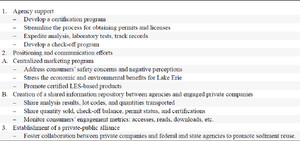
Three macro strategies and eleven actionable projects derived from further investigations in partnership with mulch and substrate value chain stakeholders. The devised strategies aim to guide public agencies and private companies to reutilize LES in value-adding substrate products while meeting consumers’ expectations for locally sourced items of low environmental impact. The strategies focus on agency support, positioning and communication efforts, and the establishment of a public-private alliance.
Four actionable projects are proposed under the agency support macro strategy. The first project involves the development of a certification program, according to indications from the qualitative analysis. The program may serve as a means of communicating to consumers that by choosing LES-based certified products, they are contributing to the reduction of sediment accumulation in Lake Erie shores, therefore helping Lake Erie address an important environmental issue. This action is grounded in three key findings from our research. First, the discrete choice experiment revealed that the probability of purchase and willingness to pay increases in the presence of verification. Second, interviewees consistently emphasized the importance of a certification program. They underlined that having a certification label led by a trustworthy entity would build consumer confidence by assuring them that the product is safe to use and delivers its claims. Third, having an agency-led certification program would deter companies from making false claims about using Lake Erie sediments in their products.
The second action aims to streamline the process of obtaining permits and licenses for accessing LES. Coherent categories extracted from in-depth interviews reveal that the current procedure for accessing LES is time-consuming and unclear. Stakeholders view this as a bureaucratic burden. This action addresses this weakness by proposing to create a single license managed by a designated regulatory agency. The licensing process would offer companies flexibility in obtaining and reusing sediments for various activities, facilitating extraction over an extended period. The goal is to make the process more attractive and encourage entrepreneurial participation.
The third action emphasizes expediting analysis, laboratory tests, and documentation tracking to ensure product consistency. Interview results stressed the importance of consistent chemical and physical properties of raw materials. Regular analyses of sediments, considering chemical composition, physical structure, biological activity, and biohazard content are deemed necessary. Given variations in sediment composition across ports, this action must entail a protocol for detailed and frequent laboratory tests at each port. Eventual variations in LES characteristics may be addressed by processors at the mixing stage if laboratory tests are available at the time of loading and transporting. Expedited analysis is critical for substrate companies to maintain final product consistency.
The fourth action suggests the establishment of a check-off program. Stakeholders involved in trading LES-based substrates may voluntarily contribute a small fee for each unit of the final product sold. The purpose of the financial pool generated by the check-off contribution is to support collaborative marketing initiatives, research, technical analyses, and educational programs targeted at end-users.
Two tactics are proposed under the second macro strategy, which emphasizes positioning and communication efforts. Funded by the value chain check-off pool, a centralized marketing program is suggested. The first marketing program action is to communicate and share information continuously regarding sediment composition and biosafety. The second action focuses on communicating the benefits of reusing LES to alleviate the environmental and economic pressure in Lake Erie. This action would, for instance, educate end-users and the community at large on the importance of dredging the Lake canals and ports to support the regional economy. Well-informed consumers are more likely to engage and purchase substrate products that connect to economic and environmental issues the population is already conscious of. Additionally, the centralized marketing program may promote certified LES-based products through a wide range of communication channels.
The second tactic under the positioning and communication strategy concerns the establishment of a shared information repository that extends to all value chain nodes. By centralizing information related to LES and LES-based product transactions, stakeholders can access real-time data on various aspects of the network. This may include quality and consistency analysis, batch codes, quantities transported, quantities sold, and check-off balance. Stakeholders can use this repository to analyze consumption trends, make predictions, and optimize marketing efforts.
The third macro strategy connects with the previous two in a cohesive and reinforcing model. A proposed public-private alliance between the public agencies and the involved private companies is necessary to delineate responsibilities and benefits. While the public agencies have a clear interest in managing disposal facilities cost-effectively and mitigating environmental issues, it becomes their responsibility to facilitate access to LES, reduce the bureaucratic burden on private companies, provide continuous information on LES quality and consistency, and issue certificates for companies that operate under mutually agreed guidelines. The private companies, in their turn, may enjoy the benefits of premium sales derived from certified LES-based substrate products. Both entity groups should be equally vested in managing the financial resources from the proposed check-off program and the centralized marketing initiatives. Table 8 summarizes the macro strategies and actionable projects proposed for the development of a market-oriented LES-based substrate value chain.
Summary of strategies and actions.
Citation: International Food and Agribusiness Management Review 29, 2 (2026) ; 10.22434/ifamr1175
6. Conclusions
The sediment accumulation in the vicinities of Lake Erie has become a pressing threat to the economic and environmental stability of the Lake and surrounding communities. Recognizing the threat, this article explores feasible and sustainable reuse alternatives for LES. Consumers’ preference for organic and locally sourced products (Kim and Lee, 2023; Low et al., 2015; Stanton et al., 2018), along with new habits in consumers’ gardening practices, suggest a market opportunity for introducing LES-based substrate products through the existing mulch and substrate value chain. This study tests the apparent market opportunity, estimates its potential, and examines regional stakeholders’ perceptions and attitudes toward the opportunity.
A mixed-mode research approach combines a Discrete Choice Experiment and Case Study methodology to determine mulch and substrate end-users’ preferences, estimate demand curves, and uncover the potential opportunities and challenges associated with trading LES-based substrates. Furthermore, three macro strategies and eleven actionable projects are proposed as a result of the ChainPlan framework application.
The DCE results, derived from 1025 valid responses, indicate that consumers are willing to pay a premium for commercial substrates that claim to aid Lake Erie, with no statistically significant variations across the cities assessed. Columbus residents show willingness to pay $0.91, on average, for the “Lake Erie Aid” attribute. On average, Toledo and Cleveland residents are willing to pay $2.17 and $3.23, respectively. Although not supported by the Poe test (2005), these findings suggest that end-users are partially influenced by the geographical distance relative to the Lake. Moreover, the standard deviations associated with the “It Aid Lake Erie” claim were wider compared to search and experience attributes (Nelson, 1974), supporting the evidence that preference heterogeneity is a strong pattern for innovative product attributes. Finally, market shares for substrate products with the Lake Erie sustainability claim were estimated. Results indicate that the metropolitan demands are expected to fall between 57.1% and 69.9% in Cleveland, 43.6% and 70.7% in Toledo, and 41% and 57.1% in Columbus if the prices for LES-based substrate products are competitive.
The case study methodology relied on primary data from 17 in-depth interviews and secondary data from archival records. The content analysis of interview transcripts and archival records resulted in nine coherent categories that revealed a mixed understanding of dredged materials and the surrounding regulatory environment. Limited knowledge among mulch and substrate value chain participants regarding material composition, consistency, application methods, and comparative benefits versus conventional soil amendment products highlighted the need for a program to elucidate processors, manufacturers, and consumers. Moreover, a marketing campaign emphasizing the positive features of LES and a certification program affirming that the LES-based substrates alleviate environmental pressure on the Lake could shift consumers’ attitudes and effectively engage them. Further insights emphasized logistics costs as a challenge for transporting LES and producing LES-based substrates.
The joint interpretation of DCE and case study results led to three macro-strategies organized under regulatory support, positioning and communication, and public-private alliance. The strategies offer a comprehensive framework to guide stakeholders and agencies in developing commercial LES-based substrates and supporting consumers’ awareness and market development. Among several initiatives, the proposed actions encompass a certification program, a check-off program, and the centralization of marketing initiatives. These initiatives are tailored to offer practical pathways for stakeholders to overcome the challenges and promote value-adding substrate products, fostering a sustainable and economically viable LES application.
The joint evaluation of DCE and case study results also point to a regional and short value chain. While distance to environmental issues in Lake Erie and skepticism to sustainability claims from unsustained marketing campaigns seem to influence consumers’ willingness to pay and price premiums, intrinsic characteristics of dredged materials constrain transportation and increase logistic costs. An overarching value chain marketing program, overseen and managed jointly by public agencies and interested private companies, is expected to provide market development support. Transforming LES into value-adding substrates supports the local economy and aligns with principles of the circular economy that suggest a shift in value chains and business models to reduce waste.
Acknowledgements
Preliminary versions of this work were presented to members of the Dredge Research and Innovation in Farming Team, led and organized by the Ohio Environmental Protection Agency. We would like to thank for the comments and suggestions received in those occasions. A thank-you note must be extended to Dr. Vanessa Steigerwald-Dick and Dr. Angelica Vazquez-Ortega. This research was funded by the Ohio Department of Agriculture, Specialty Crop Block Grant Program. The authors declare no conflict of interest.
References
Akimowicz, M., R.J. Vyn, H. Cummings and K. Landman. 2018. An introduction to mixed methods research in agricultural economics: The example of farm investment in Ontario’s Greenbelt, Canada. Journal of Rural Studies 61: 162–174. https://doi.org/10.1016/j.jrurstud.2018.04.012
Bangcuyo, R.G., K.J. Smith, J.L. Zumach, A.M. Pierce, G.A. Guttman and C.T. Simons. 2015. The use of immersive technologies to improve consumer testing: The role of ecological validity, context and engagement in evaluating coffee. Food Quality and Preference 41: 84–95. https://doi.org/10.1016/j.foodqual.2014.11.017
Bhairappanavar, S., R. Liu and R. Coffman. 2018. Beneficial uses of dredged material in green infrastructure and living architecture to improve resilience of Lake Erie. Infrastructures 3(4): 42. https://doi.org/10.3390/infrastructures3040042
Brigham, R.D., S. Pelini, Z. Xu and A. Vázquez‐Ortega. 2021. Assessing the effects of lake‐dredged sediments on soil health: Agricultural and environmental implications for northwestern Ohio. Journal of Environmental Quality 50(2): 494–503. https://doi.org/10.1002/jeq2.20199
Britwum, K. and J.C. Bernard. 2018. A field experiment on consumer willingness to accept milk that may have come from cloned cows. Food Policy 74: 1–8. https://doi.org/10.1016/j.foodpol.2017.10.006
Bryman, A. 2012. Social research methods, 4th edn. Oxford University Press, New York, NY.
Campbell, D., M. Boeri, E. Doherty and W. George Hutchinson. 2015. Learning, fatigue and preference formation in discrete choice experiments. Journal of Economic Behavior and Organization 119: 345–363. https://doi.org/10.1016/j.jebo.2015.08.018
Caputo, V., J.L. Lusk and R.M. Nayga. 2020. Am I getting a good deal? Reference-dependent decision making when the reference price is uncertain. American Journal of Agricultural Economics 102(1): 132–153. https://doi.org/10.1093/ajae/aaz042
Caputo, V., G. Sogari and E.J. Van Loo. 2023. Do plant-based and blend meat alternatives taste like meat? A combined sensory and choice experiment study. Applied Economic Perspectives and Policy 45(1): 86–105. https://doi.org/10.1002/aepp.13247
Card, D. 1999. The causal effect of education on earnings. In: O.C. Ashenfelter and D. Card (eds), Handbook of Labor Economics, Volume 3, part A. Elsevier, San Diego, CA, pp. 1801–1863. https://doi.org/10.1016/S1573-4463(99)03011-4
Charmaz, K. 2008. Grounded theory as an emergent method. In: S. Nagy Hesse-Biber and P. Leavy (eds) Handbook of emergent methods. The Guilford Press, New York, NY, pp. 155–170.
Council of the Great Lakes Region. 2017. The Great Lakes Economy: The Growth Engine of North America. Available online at https://councilgreatlakesregion.org/the-great-lakes-economy-the-growth-engine-of-north-america/
Corbetta, P. 2003. Social research: theory, methods and techniques. SAGE, Thousand Oaks, CA. https://doi.org/10.4135/9781849209922
Creswell, J.W. and J.D. Creswell. 2022. Research design: qualitative, quantitative, and mixed methods approaches. SAGE, Thousand Oaks, CA.
Cummings, R.G. and L.O. Taylor. 1999. Unbiased value estimates for environmental goods: A cheap talk design for the contingent valuation method. American Economic Review 89(3): 649–665. https://doi.org/10.1257/aer.89.3.649
Darby, M.R. and E. Karni. 1973. Free competition and the optimal amount of fraud. The Journal of Law and Economics 16(1): 67–88.
Dentoni, D., G.T. Tonsor, R.J. Calantone and H.C. Peterson. 2009. The direct and indirect effects of ‘locally grown’ on consumers’ attitudes towards agri-food products. Agricultural and Resource Economics Review 38(3): 384–396. https://doi.org/10.22004/ag.econ.59252
Fiebig, D.G., M.P. Keane, J. Louviere and N. Wasi. 2010. The generalized multinomial logit model: Accounting for scale and coefficient heterogeneity. Marketing Science 29(3): 393–421. https://doi.org/10.1287/mksc.1090.0508
Freedonia Focus. 2019. Freedonia Focus on Lawn and Garden Consumables: United States. Available online at https://www.freedoniagroup.com/industry-study/lawn-garden-consumables-us (accessed 27 June 2023).
French, R., L. Cargnelli and M.C. Doyle. 2011. Lake Erie binational nutrient management strategy. Available online at https://www.epa.gov/sites/default/files/2015-09/documents/binational_nutrient_management.pdf
Glaser, B.G. and A. Strauss. 1967. The Discovery of Grounded Theory: Strategies for Qualitative Research. Aldine, Chicago, IL.
Goulding, C. (ed.). 2002. Evolutionary developments and fundamental processes. In Grounded theory: a practical guide for management business and market researchers. Sage, Thousand Oaks, CA, pp. 38–54.
Great Lakes Commission. 2021. Great lakes harmful algal blooms: Current knowledge gaps. Great Lakes HAB s Collaborative. Available online at https://www.glc.org/wp-content/uploads/HABS-Knowledge-Gaps-clean-04.21.2021.pdf
Guzman, G. and M. Kollar. 2023. Income in the United States: 2022. U.S. Census Bureau P60-279 (September). Available online at https://www.census.gov/content/dam/Census/library/publications/2023/demo/p60-279.pdf
Kim, N. and K. Lee. 2023. Environmental consciousness, purchase intention, and actual purchase behavior of eco-friendly products: The moderating impact of situational context. International Journal of Environmental Research and Public Health 20(7): 5312. https://doi.org/10.3390/ijerph20075312
Krinsky, I. and A.L. Robb. 1986. On approximating the statistical properties of elasticities. The Review of Economics and Statistics 68(4): 715–719. https://doi.org/10.2307/1924536
Lancaster, K.J. 1966. A new approach to consumer theory. Journal of Political Economy 74(2): 132–157. https://www.jstor.org/stable/1828835
Lewandowski, M. 2016. Designing the business models for circular economy: Towards the conceptual framework. Sustainability 8(1): 1–28. https://doi.org/10.3390/su8010043
Liu, R. and R. Coffman. 2016. Lightweight aggregate made from dredged material in green roof construction for stormwater management. Materials 9(8): 611. https://doi.org/10.3390/ma9080611
Low, S.A., A. Adalja, E. Beaulieu, N. Key, S. Martinez, A. Melton, A. Perez, K. Ralston, H. Stewart, S. Suttles, S. Vogel, and B.R. Jablonski. 2015. Trends in U.S. local and regional food systems, Report to Congress, AP-068. U.S. Department of Agriculture, Economic Research Service (January). Available online at https://www.ers.usda.gov/publications/pub-details/?pubid=42807
Lune, H. and B.L. Berg. 2017. Qualitative research methods for the social sciences. Pearson, Harlow.
Lusk, J.L. 2003. Effects of cheap talk on consumer willingness-to-pay for golden rice. American Journal of Agricultural Economics 85(4): 840–856. https://www.jstor.org/stable/1244768
Lusk, J.L., J. Roosen and J.A. Fox. 2003. Demand for beef from cattle administered growth hormones or fed genetically modified corn: A comparison of consumers in France, Germany, the United Kingdom, and the United States. American Journal of Agricultural Economics 85(1): 16–29. https://doi.org/10.1111/1467-8276.00100
Lusk, J.L. and G.T. Tonsor. 2016. How meat demand elasticities vary with price, income, and product category. Applied Economic Perspectives and Policy 38(4); 673–711. https://doi.org/10.1093/aepp/ppv050
McElrath, K. and M. Martin. 2021. Bachelor’s degree attainment in the United States: 2005 to 2019. American Community Survey Briefs, ACSBR-009, U.S. Census Bureau. Available online at https://eric.ed.gov/?id=ED612722
McFadden, D. 1973. Conditional logit analysis of qualitative choice behavior. In: P. Zarembka (ed.) Frontiers in econometrics, Academic Press, Cambridge, MA, pp. 105–142.
McFadden, D. 1981. Econometric models of probabilistic choice. Available online at https://eml.berkeley.edu/discrete/ch5.pdf
National Agricultural Statistics Service. 2021. U.S. Department of Agriculture. Surveys: Agricultural chemical use program. Available online at https://www.nass.usda.gov/Surveys/Guide_to_NASS_Surveys/Chemical_Use/
Nelson, P. 1974. Advertising as information. Journal of Political Economy 82(4): 729–754. https://www.jstor.org/stable/1837143
Neves, M.F. 2007. A method for demand driven strategic planning and management for food chains (The Chainplan method). SSRN Scholarly Paper: 1007491. https://doi.org/10.2139/ssrn.1007491
Neves, M.F., R.B. Kalaki, J.M. Rodrigues and A.W. Gray. 2020. Strategic planning and management of food and agribusiness chains: The ChainPlan method (framework). Revista Brasileira de Gestão de Negócios 21: 628–646. https://doi.org/10.7819/rbgn.v21i4.4012
Njie, B. and S. Asimiran. 2014. Case study as a choice in qualitative methodology. IOSR Journal of Research and Method in Education 4: 35–40. https://doi.org/10.9790/7388-04313540
Ohio Lake Erie Commission. 2021. Dredge Material Program. Available online at https://lakeerie.ohio.gov/programs-and-projects/dredge-material-program
Ohio Revised Code. 2015. Section 6111.32. Available online at https://codes.ohio.gov/ohio-revised-code/section-6111.32
Olynk, N.J. and D.L. Ortega. 2013. Consumer preferences for verified dairy cattle management practices in processed dairy products. Food Control 30(1): 298–305. https://doi.org/10.1016/j.foodcont.2012.07.030
Ortega, D.L., H.H. Wang, N.J. Olynk, L. Wu and J. Bai. 2012. Chinese consumers’ demand for food safety attributes: A push for government and industry regulations. American Journal of Agricultural Economics 94(2): 489–495. https://doi.org/10.1093/ajae/aar074
Palinkas, L.A., S.M. Horwitz, C.A. Green, J.P. Wisdom, N. Duan and K. Hoagwood. 2015. Purposeful sampling for qualitative data collection and analysis in mixed method implementation research. Administration and Policy in Mental Health 42(5): 533–544. https://doi.org/10.1007/s10488-013-0528-y
Penn, J. and W. Hu. 2019. Cheap talk efficacy under potential and actual hypothetical bias: A meta-analysis. Journal of Environmental Economics and Management 96: 22–35. https://doi.org/10.1016/j.jeem.2019.02.005
Poe, G.L., K.L. Giraud and J.B. Loomis. 2005. Computational methods for measuring the difference of empirical distributions. American Journal of Agricultural Economics 87(2): 353–365. https://www.jstor.org/stable/3697850
Rosa, P., C. Sassanelli and S. Terzi. 2019. Towards circular business models: A systematic literature review on classification frameworks and archetypes. Journal of Cleaner Production 236: 117696. https://doi.org/10.1016/j.jclepro.2019.117696
Schmuckler, M. 2001. What is ecological validity? A dimensional analysis. Infancy 2(4): 419–436. https://doi.org/10.1207/S15327078IN0204_02
Stahel, W.R. and R. Clift. 2016. Stocks and flows in the performance economy. In R. Clift and A. Druckman (eds.) Taking stock of industrial ecology. Springer, New York, NY, pp. 137–158. https://doi.org/10.1007/978-3-319-20571-7_7
Stanton, J., F.F. Wirth and Y. Dao. 2018. An analysis of consumers’ preferences between locally grown/processed food and organic food. Current Investigations in Agriculture and Current Research 4(1): 1–11. https://doi.org/10.32474/CIACR.2018.04.000180
Taylor-Powell, E. and M. Renner. 2003. Analyzing qualitative data. Program Development and Evaluation, University of Wisconsin, Cooperative Extension, G3658-12. University of Wisconsin, Madison, WI.
Tonsor, G.T., T.C. Schroeder, J.A. Fox and A. Biere. 2005. European preferences for beef steak attributes. Journal of Agricultural and Resource Economics 30(2): 367–380.
Train, K.E. 2009. Discrete choice methods with simulation. Cambridge University Press, Cambridge. https://doi.org/10.1017/CBO9780511805271
Van Loo, E.J., V. Caputo and J.L. Lusk. 2020. Consumer preferences for farm-raised meat, lab-grown meat, and plant-based meat alternatives: Does information or brand matter? Food Policy 95: 101931. https://doi.org/10.1016/j.foodpol.2020.101931
Wilson, R.S., G. Howard and E.A. Burnett. 2014. Improving nutrient management practices in agriculture: The role of risk-based beliefs in understanding farmers’ attitudes toward taking additional action. Water Resources Research 50(8): 6735–6746. https://doi.org/10.1002/2013WR015200
Yin, R.K. 2009. Case study research: Design and methods. SAGE, Thousand Oaks, CA.
Corresponding author