Abstract
This case study explores AirSmat Inc., a Nigerian digital agriculture startup addressing low agricultural productivity. Established in 2019, AirSmat leveraged digital technologies such as artificial intelligence, data analytics, and remote monitoring systems to enhance farm productivity and sustainability. Its flagship digital farm management platform, AnyFarm, integrated precision tools to improve yields, reduce environmental impacts, and promote adoption of climate-smart agricultural practices. Despite its innovative approach, AirSmat faced challenges in balancing financial sustainability with its commitment to Environmental, Social, and Governance (ESG) principles. Operating in a resource-constrained setting characterized by limited ESG regulatory incentives, infrastructural deficits, and low purchasing power, the company exemplifies a pragmatic approach to fostering ESG performance through digital technologies, innovative pricing models and strategic partnerships. This case underscores the often-overlooked contributions of small and medium enterprises (SMEs) to global sustainability goals and highlights the critical role of digital technologies in advancing ESG objectives in emerging markets. It emphasizes AirSmatâs unique approach to ESG in an environment with limited formal regulations, showcasing the importance of partnerships and innovation in achieving dual goals of social impact and profitability. The case invites readers to critically analyze the intersection of technology, sustainability, and business strategy in a rapidly evolving agricultural sector.
1. Introduction
As the first quarter of 2023 unfolded, business activities in Lagos slowed in anticipation of Nigeriaâs upcoming general elections. Soji Sanyaolu, the founder and CEO of AirSmat Inc., and a pioneer in digital agricultural services, was deeply troubled by the 2022 Global Hunger Index report (GHI). The report showed over 133 million Nigerians were severely affected by hunger and malnutrition. Driven by a renewed sense of purpose to address these pressing socio-economic and environmental challenges, Soji was keen on identifying strategies in which his company can assist farmers.
Although oil and solid minerals dominated Nigeriaâs earnings, agriculture remained a key pillar of the economy. In 2023, agriculture contributed 24% of the national GDP and employed approximately 38% of the population mainly in rural areas (NBS Nigeria, 2024; World Bank, 2024a,b). Yet despite its importance, the sector has remained dominated by smallholder farmers who are challenged by climate change and limited access to technology, both contributing to low productivity. Nigeria produced approximately 1.64 tons of cereals per hectare which was significantly lower than the global average of 4 tons per hectare (Ritchie et al., 2022). These low yields translated to low farm income, increased food insecurity, and increased food imports which strained foreign currency reserves.
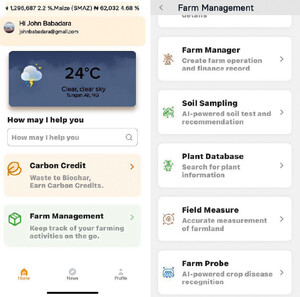
âThe idea of AirSmat came to me in 2017. I was at my workstation, pondering how technology could enhance agrifood productivity and champion sustainability for people and the environment,â Soji recalled. This inspiration took root during a visit to his grandparents, who struggled with poor soil fertility, erratic rainfall, and declining crop yields. Witnessing persistent low yields and mounting environmental damage exacerbated by unpredictable weather patterns, Soji recognized a dire need for intervention. This birthed AirSmat in 2019 in Lagos, Nigeria. AirSmat is a digital agriculture startup at the forefront of integrating farm data, artificial intelligence (AI), and data analytics through a proprietary software named AnyFarm (see Figure 1). The companyâs mission was to help farmers optimize resource utilization, increase crop yields, and enhance overall farm efficiency.

Screen image of AnyFarm application interface, iOS version.
Citation: International Food and Agribusiness Management Review 29, 2 (2026) ; 10.22434/ifamr.1256
Soji partnered with Adeoluwa Ibikunle, now Chief Technology Officer, and Evidence Osikhena, Solution Architect, to co-found AirSmat. Leveraging their expertise in technology, strategic planning, product development, and corporate leadership, Soji led a team of 16 highly motivated employees to develop âAnyFarmâ- an all-in-one digital farm management platform that allows farmers to manage their farm records, track assets, and monitor sales.
Despite Sojiâs pragmatic and forward-thinking leadership, AirSmat faced the challenge of aligning its financial performance with sustainability objectives. Presenting the corporate goals for 2023 to his cofounders, Soji urged them to address critical decisions about the companyâs growth. âWhich market segments should we prioritize for growth?â he asked. Despite years of championing sustainability, AirSmat had yet to achieve substantial rewards. Likewise, Adeoluwa asked âWhat are the benefits and risks of our sustainable business practices in Nigeria?â The challenge of balancing ESG performance with financial sustainability remained central to AirSmatâs mission of advancing sustainable agriculture.
2. Nigeriaâs agriculture in the digital era
Agriculture in Nigeria has been largely characterized by subsistence and smallholder farming, which accounts for 80% of the total agricultural land, while medium and large-scale farmers occupy the remaining 20% (Akinyosoye, 2006; ANAP, 2005; Apata et al., 2018). Crop production dominates the agrifood sector, contributing 85% of total output (Statista, 2021). Staple crops such as cassava, maize, rice, sorghum and yam are vital for domestic food and nutritional security. Emerging as a potential solution, digital agriculture offers the promise of enhanced agrifood productivity, resilience, and sustainability by improving efficiency across agricultural value chains.
Digital agriculture encompasses the collection, storage, analysis, and sharing of electronic data within agri-food systems to enhance efficiency and productivity (Tsan et al., 2019). In recent years, its adoption has grown significantly across low- and middle-income countries (LMICs1) (Mabaya and Porciello, 2022). According to the CTA-Dalberg report (2019), the number of digital agriculture SMEs increased from 156 startups in 2016 to over 390 in 2018, driving systemic shifts toward sustainable agrifood value chains in developing countries. By the end of 2019, sub-Saharan Africa saw this number rise to 437 startups offering digital agriculture innovations (Phatty-Jobe et al., 2020).
As of early 2020, Nigeria was at the forefront of LMICs in leveraging digital agriculture and innovation (Porciello et al., 2022; Priebe, 2022). The widespread adoption of mobile phones and internet connectivity (see Figure 2) across the country has significantly enhanced farmersâ access to market information, agricultural knowledge, and financial services through digital platforms. Innovations such as digital extension services, mobile-based marketplaces, digital finance, and mechanization-sharing platforms continued to reshape Nigeriaâs agricultural landscape (Nwangwu et al., 2024).
Mobile phone subscriptions in Nigeria. Source: World Bank (2023).
Citation: International Food and Agribusiness Management Review 29, 2 (2026) ; 10.22434/ifamr.1256
Companies like AirSmat provided specialized digital tools catering to farmers of varying scales. Smallholder farmers, typically working on plots of up to two hectares, benefited from localized information and resources via digital platforms. Meanwhile, medium- and large-scale farmers gained access to advanced mechanization, precision farming solutions, targeted data insights, and financial tools that support scalability. These innovations were transforming traditional agricultural practices and promoting efficiency and sustainability across the sector.
With a median age of 17.9 years, Nigeria boasted a rapidly growing youthful population, approximately 70% of its 227 million citizens are under the age of 30 (UN World Population Prospect, 2024). This demographic group played a crucial role in driving the digital revolution, acting as innovators, users, content creators, and tech entrepreneurs. The supportive policy environment contributed significantly to the growing interests from diverse stakeholders, including the private sector. Several digital enterprises like Agriache, Agrolinka, Digitized Agro, Extension Africa, FarmSpeak, PlowAfrika, and many others were leveraging these favorable trends to develop and deliver digitally enabled agricultural services. A commonly held opinion among ecosystem enthusiasts was that digital agriculture could play a pivotal role in alleviating food insecurity and climate crises by improving productivity and promoting sustainable practices. The intersection of agrifood and information and communication technologies (ICT) had sparked excitement around the expanded reliance on data to support production and management at all stages of agrifood value chains (Wolfert et al., 2017).
3. ESG regulations and macro-environment in Nigeria
As of 2023, there were no regulatory obligations mandating ESG reporting for small and medium-sized enterprises (SMEs) and emerging companies in Nigeria. The Nigerian Stock Exchange (NSE) encouraged listed companies to voluntarily disclose ESG performance in their annual reports (Agherario and Agbakoba- Onyejianya, 2023). In 2019, the NSE introduced Sustainability Disclosure Guidelines, outlining steps for organizations to integrate sustainability into their operations and reporting standards. This framework aimed to facilitate engagement between investors and companies on ESG risks and opportunities while strengthening the role of market operators and regulators in driving sustainability policies in Nigeria.
The Financial Reporting Council of Nigeria (FRC) had also established an Adoption Readiness Working Group (ARWG) to develop a roadmap for implementing the International Sustainability Standards Board (ISSB) guidelines. These guidelines primarily focused on large companies, ensuring that they meet auditing, valuation, and corporate governance standards. However, SMEs like AirSmat lacked access to similar frameworks, making ESG adoption challenging. While strong corporate ESG performance benefits firms, shareholders, and the broader economy (Heal, 2005; Vartiak, 2016), SMEs often struggle to realize significant financial returns from such efforts. Limited resources further hinder their ability to invest in tracking and disclosing ESG activities (Gholami et al., 2022).
Despite the expanding digital economy, digital enterprises in Nigeria faced a weak business environment characterized by limited access to finance, ineffective intellectual property laws, infrastructural deficits, and challenging macroeconomic conditions. These barriers significantly limited the scalability of digital agriculture innovations. The Nigerian government had introduced policies to address these issues, including the Growth Enhancement Support Scheme (GES), Agriculture Promotion Policy (APP), Nigerian Digital Agriculture Strategy (NDAS), and the National Digital Economy Policy and Strategy. Additionally, sustainability programs such as Reducing emissions from deforestation and forest degradation (REDD+) and the Action Against Desertification (AAD) aimed to mitigate environmental degradation. However, high poverty levels and declining economic opportunities continued to constrain progress, affecting the financial stability of digital agriculture service providers like AirSmat.
The high cost of digital agriculture services remained a significant barrier for many Nigerian farmers, particularly those operating in the informal sector. Approximately 40% of Nigerians lived below $5 per day (UNDP, 2022; NBS Nigeria, 2022), leaving most smallholder farmers unable to afford these services. Recognizing this challenge, AirSmat employed a freemium2 pricing model, providing basic services for free while offering advanced features through paid subscriptions (see Table 1). This approach sought to balance affordability with financial sustainability, but it remained an ongoing challenge in a market where demand is sizeable, but affordability is limited.
4. AirSmatâs role in digitizing sustainable agriculture in Nigeria
Founded in December 2019 and formally incorporated in February 2020, AirSmat launched its minimum viable product (MVP) in July 2020, successfully securing its initial customers. Despite the severe disruption to agriculture supply chains during the COVID-19 pandemic, CEO Soji Sanyaolu seized the opportunity to validate the companyâs concept and capitalize on the rising demand for contact-free agricultural services. Shown in Table 1 is their suite of six farm management and precision tools for farmers and other stakeholders along the agri-food value chain.
AirSmatâs AnyFarm platform was designed to be a flagship all-in-one digital farm solution (see Table 1). The AnyFarm platform enabled farmers to digitize their farm records, track carbon removal and augment efficiency through functionalities such as asset management, sales tracking, and fiscal management. Meanwhile, the precision agriculture features enabled farmers to map their fields accurately for resource planning, actionable insights on plant health, drought, and salinity, and optimize fertilizer usage, among other functions. AnyFarm is readily available for download on both iOS and Google Play stores.
The âfield measureâ feature of AnyFarm empowered farmers to make informed decisions, reducing the risk of suboptimal practices such as poor crop selection, low seed rates, inefficient agrochemical use, and vulnerabilities to climate variability. Using geo-fencing, farmers could gather precise data on field area, elevation, and soil typology to support crop production planning, input use, water requirements, yield projections, and resource mobilization. Furthermore, AirSmatâs âsoil profilingâ service provided tailored recommendations to balance soil nutrients and promote plant growth, minimizing input wastage, reducing environmental pollution, and preventing chemical runoff into water bodies.
âFarm probeâ utilized AI to assist farmers in managing pests and diseases. Farmers could upload images of infested crops to a plant disease database, where the system analyzes the images and delivers actionable recommendations for timely and effective pest and disease management. Recognizing the financial challenges faced by farmers, AirSmat offered essential features like âfield measureâ and âfarm probeâ through a freemium model, aligning with its social impact objectives to support resource-constrained farmers. Advanced services were available through paid packages (see Table 1), primarily targeting medium and large-scale farmers, ensuring a balance between social impact and financial sustainability.
AirSmat product suite
Citation: International Food and Agribusiness Management Review 29, 2 (2026) ; 10.22434/ifamr.1256
5. AirSmatâs organizational structure
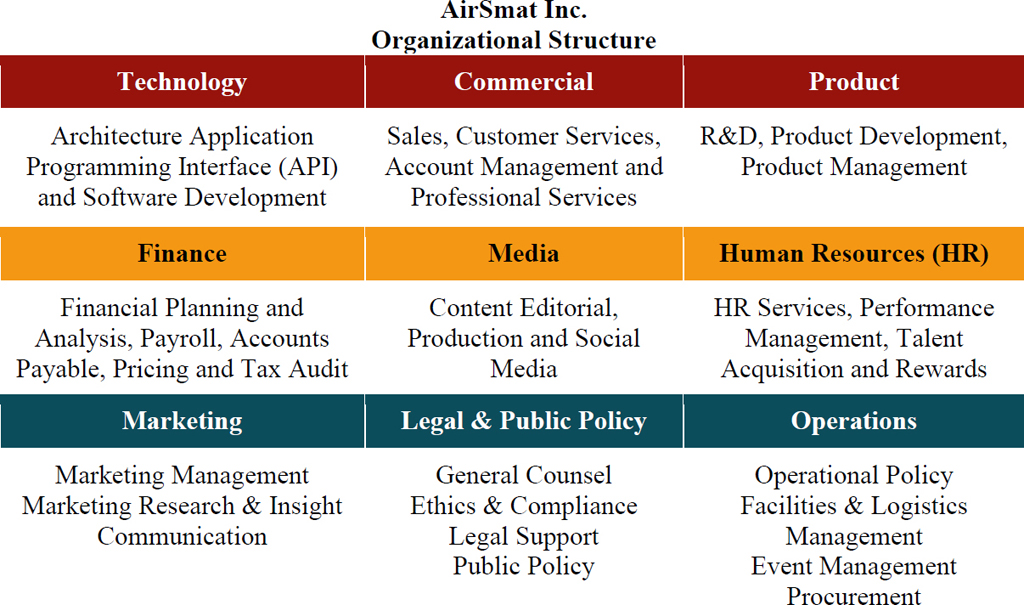
Sojiâs strong leadership as the CEO created an operationally responsive governance structure, fostering an open, collaborative, and adaptable work environment. AirSmat adopted a horizontal organizational structure, comprising nine key divisions with a team of 16 members as illustrated in Figure 3. This diverse team collaborated efficiently across divisions, maximizing their unique skills and talents based on project requirements. The management and marketing teams operated centrally from Lagos, while field staff are strategically deployed in active project locations. Despite its modest size, Soji is forward-thinking by planning its future organizational structure. Many of the team members possessed cross-functional skills, enabling smooth navigation across divisions. The company conducted regular audits, maintained clear HR policies, and engaged all key stakeholders for feedback, ensuring ethical practices and compliance with Nigerian laws.
AirSmatâs responsive governance structure.
Citation: International Food and Agribusiness Management Review 29, 2 (2026) ; 10.22434/ifamr.1256
6. Social impact as core to AirSmat value proposition
AirSmat targeted three primary customer segments, each with a distinct attractiveness profile as seen in Table 2. Smallholder farmers, owning or renting plots up to 2 hectares, use traditional and selected modern production techniques to produce food for their families and sell the surplus. Medium-scale farmers managing larger plots between 2 and 10 hectares, employ a mix of mechanized equipment and manual labor to produce market-oriented crops. Large-scale farmers and agribusiness firms operate fully commercial farms, utilizing mechanized equipment and industrial techniques, with access to lucrative formal markets, domestically and internationally.
Smallholder farmers typically face numerous challenges including limited income and technology readiness (see Table 2). This customer segment relies heavily on subsidies from third parties like development organizations,3 private sector actors and/or government interventions to finance their access to digital agriculture services. Medium and large-scale farmers, and agribusiness firms are more suitable markets to target directly for digital agriculture enterprises due to their operational scale, moderate willingness to pay, and technological readiness. However, in line with AirSmatâs mission to maximize social impact, they have chosen to continue serving smallholder farmers through partners or directly even at a small loss. Since 2020, AirSmat has served more than 10,000 smallholder farmers in Nigeria through strategic partnerships with Sterling Bank PLC (commercial bank offering agribusiness products) and agribusiness firms including Truvis Agro, GoGreen Africa, Helios Postharvest, HerVest, ValueSeed, among others.
Attractiveness of AirSmatâs key market segments
Citation: International Food and Agribusiness Management Review 29, 2 (2026) ; 10.22434/ifamr.1256
AirSmatâs differentiation strategy revolved around meeting potential partners to understand their needs and budget size. This enabled service customization to fit the budget constraints while offering complimentary packages across all customer types with a mission to democratize digital agriculture for sustainable agricultural practices. AirSmatâs milestone achievement came in 2022 when it secured a partnership with Sterling Bank PLC to provide precision agronomic advisory services to 4000 smallholder farmers during the 2023/2024 growing season. Shortly after, AirSmat was selected for the Sustainability Accelerator Bootcamp organized by the Startup Bootcamp to connect visionary founders with experienced mentors and impact investors. Partnership with private sector actors has helped AirSmat to reach farmers who ordinarily could not afford its services, to increase uptake of digital agriculture innovations.
Evidence Osikhena, one of the co-founders at AirSmat, outlined the companyâs structured sales process, focusing on ethical considerations, prospecting, customer engagement, commercial activity, and relationship management. By aligning with customersâ needs, budgets, and business ethics, and collaborating seamlessly with tech and finance teams, the sales team effectively converted engagements into commercial success. This approach enabled AirSmat to attract numerous enterprise-grade customers like Truvis Agro and Sterling Bank PLC, with testimonials and referrals thereby enhancing the companyâs visibility and brand reputation. The synergy between the sales teamâs customer-centric approach and broader organizational process highlighted AirSmatâs commitment to delivering impactful solutions and fostering enduring relationships in the agricultural sector.
Truvis Agro, a private agribusiness firm producing and off-taking crops from farmers utilizing AirSmat services, lauded the significant impact of their services on their farm operations. In a YouTube testimonial (https://www.youtube.com/watch?v=6KDPaWFHlik&t=525s), the company expressed satisfaction with the services, citing cost savings on inputs and water conservation with an increased yield output. Truvis Agro planned to rely on AirSmatâs precision advisory support as they expanded into the tree crops business. Such testimonials underscored the benefits and value for money experienced by enterprise customers using AirSmatâs precision agriculture solutions, aligning with its commitment to sustainability. In 2023, Truvis Agro extended the partnership with AirSmat to sequester 1.5 million metric tonnes of CO2 by deploying biochar on smallholder farmersâ fields across 20 Nigerian states. This initiative provided a unique opportunity for farmers to earn a new income stream through carbon credits, which they could invest in their farm operations and household consumption.
7. Driving ESG as a business model with strategic partners
AirSmatâs mission, as stated on the company website, reads: âWe are committed to fostering sustainability and promoting climate-smart agriculture. Our innovative solutions empower farmers by seamlessly integrating data-driven insights with environmentally conscious practices. Embracing climate-resilient strategies enables farmers to achieve enhanced yields while minimizing their environmental impact.â
AirSmatâs business model was anchored on the recognition that environmental and social well-being are inextricably interlinked. From its inception, the company adopted an innovative approach to environmental sustainability, built on digital technologies integrated with AI, mobile devices, proprietary software, and data analytics. These tools enabled farmers to optimize resource utilization, including groundwater conservation and precision application of fertilizers and agrochemicals. Furthermore, AirSmat actively engaged with the agriculture community through participation in industry events, gathering feedback, and assessing social impact.
Soji acknowledged the enormity of the work needed to accelerate sustainable agriculture in Nigeria. He was intentional about allying with global players driving ESG goals and technological innovation applications in agriculture.
âAt AirSmat, weâre committed to delivering best-in-field solutions to our customers, and sometimes, the best results are achieved by working together. To deliver lasting value, we collaborate with leading companies where we can reach more farmers, and help to enhance their farming productivity, remove carbon and secure future supply chainsâ AirSmat, 2023.
By 2023, AirSmat had established strong partnerships with other industry players, collaborating to drive sustainable impact and innovation. These partnerships enhanced AirSmatâs capabilities in satellite communication, climate data, carbon tracking, and AI-based analytics for agriculture. These included collaborations with GorillaLink, a pioneer in IoT connectivity solutions; CDR.fyi Partner, an expert in carbon removal tracking; ManyCarbon, a platform revolutionizing carbon credits markets; and NVIDIA, a world leader in AI and GPU technologies. These alliances enabled AirSmat to leverage cutting-edge technologies and expertise to enhance its capacity to deliver innovative services. AirSmat had garnered significant support from reputable institutions, underscoring its potential and credibility in the tech ecosystem. Microsoft for Startups had provided technological backing and mentorship, while TVC Labs had offered crucial incubation support. ImpactVest and FMO contributed vital financial resources, enabling AirSmat to scale its operations. The company also benefited from the accelerator programs of StartupBootcamp, gaining valuable insights and networks. Endeavor South Africa played a pivotal role in providing mentorship and access to a global network, while AfricaGrow supported AirSmatâs expansion to other African countries. These partnerships and backing from esteemed organizations were instrumental in AirSmatâs growth trajectory, validating its mission and enhancing its ability to create lasting impact in the sectors it serves.
Many SMEs faced significant barriers to ESG adoption, including limited access to finance, lack of awareness, and inadequate regulatory support (OECD, 2024; Mitra and Bui, 2024). AirSmat had successfully integrated ESG principles by driving sustainable agricultural practices, reducing carbon emissions, and prioritizing community well-being (AirSmat Carbon Project). With carbon removal projects ongoing in multiple farming communities in Nigeria, AirSmat was exposed to social and governance-related risks, such as fraud, corruption, community disputes and executive misconduct, which could have catastrophic consequences for the companyâs reputation and financial stability. Certified by Carbon Standards International as Global Artisan C-Sink Manager, AirSmat safeguarded its corporate reputation and stakeholder trust through an accountable digital Monitoring, Reporting, and Verification (dMRV) system. The dMRV platform was designed for inclusivity featuring multilingual support and an intuitive interface, facilitating transparency in managing carbon projects. It ensured accurate tracking and measurement of carbon sequestration, enabling clear and reliable transactions for users.
As AirSmat navigated the complex interplay of ESG values, it still had to attain financial sustainability by maintaining competitiveness in Nigeriaâs dynamic market. Even though the company ensured its current product suite was affordable and accessible through a freemium package, strategic partnerships and flexible pricing, AirSmat was struggling to boost the adoption of its services among targeted users. Unlike more developed markets in the global north, customers in Nigeria had a low willingness to pay for ESG values. Thus, for a company of the size of AirSmat, safeguarding its market position while promoting ESG values, and attaining financial profitability was an ongoing challenge. The management team of AirSmat had to constantly adjust their strategies and tactics to fit emerging challenges and opportunities in the market.
8. Road to financial sustainability and greater social impact
âBy collaborating with African farmers, we assist our partners in fulfilling the increasing need for carbon offsets while also benefiting farmers. AirSmatâs MRV tools utilize satellite imagery, soil data, and AI to lower costs and time for soil carbon measurement while facilitating biochar use for improved soil health and carbon capture.â AirSmat Corporate Goals 2024
Soji realized that 2023 is the year for the company to consolidate its position and fully harness the growing Nigerian digital agriculture market. Several strategic options were under consideration, including developing complementary non-digital products, exploring partnerships with development organizations in Nigeriaâs agrifood sector, prospecting potential international markets, or refining existing products and business models to align with the Nigerian context. Each of these paths presented unique challenges and opportunities for firm sustainability and ESG expansion, positioning the company to maximize its impact in the evolving agricultural landscape. Going forward, AirSmatâs approach to achieving its ESG objectives remained uncertain, especially given the resource constraints and the fact that ESG performance often yields limited or no financial returns for SMEs in emerging markets.
8.1 Consolidate Nigeria market share
AirSmat owned its AI-enabled proprietary software âAnyFarmâ and a respectable presence in key agricultural regions serving thousands of farmers. Despite its technological prowess and impact-driven business model, a vast portion of the market remained unaddressed, with operations limited to only 8 of Nigeriaâs 36 states. This presented a significant opportunity to broaden AirSmatâs footprint and tap into millions of additional users. However, challenges persisted due to the low purchasing power of many smallholder farmers and the broader economic constraints within Nigeria. Overcoming these hurdles would be crucial to fully capitalizing on this potential expansion.
8.2 Pursue development organizations and leading agribusiness firms
By mid 2023, AirSmat was exploring opportunities to partner with development organizations and institutional actors such as IFAD, TechnoServe, Sasakawa Foundation, AGRA, and Mercy Corps. These entities represented untapped avenues for AirSmat to deliver digital agriculture services at scale. Additionally, targeting major Nigerian agribusiness leaders like Tolaram, Olam International, NASCO Plc, and BUA Nigeria offered another promising market segment. By becoming a digital agriculture services provider for these prominent organizations, AirSmat could unlock several strategic advantages.
Licensing its proprietary technology to well-established development organizations and agribusiness conglomerates could significantly expand AirSmatâs market reach, enhance its financial performance, and advance its sustainability goals. Partnering with such organizations could allow AirSmat to leverage their expansive distribution networks, technical expertise, and financial resources, accelerating the adoption of its AnyFarm software across the agricultural sector. This approach not only enabled more efficient scaling but also helped mitigate challenges associated with direct sales to smallholder farmers and the complexities of market expansion (Nedumaran et al., 2020).
However, collaboration with larger corporations brought additional challenges. Companies with strong ESG commitments, such as Walmart (2022) and Unilever (2020), increasingly required ESG compliance across their supply chains. To align with such expectations, AirSmat had to incorporate ESG reporting into its operations as a standard practice. Without robust ESG disclosure, AirSmat risked losing out on valuable partnerships and business opportunities with firms that prioritized sustainability, potentially constraining its growth prospects. Strategically addressing these challenges could position AirSmat as a preferred partner for both development organizations and private-sector giants, strengthening its role in advancing sustainable agriculture and digital innovation in Nigeria and beyond.
8.3 Product innovation
ESG-based innovation presented significant opportunities for SMEs to create sustainable and relevant value in the market (Cahyono et al., 2024). AirSmatâs innovative approach promoted environmentally friendly practices, including deploying innovations in business models and corporate governance. Leveraging its comparative advantage in innovation development, AirSmat could launch a complementary product to the existing AnyFarm features to defend its market position and improve revenue.
There was a growing trend in the Nigerian digital technology market, where SMEs offered fintech, e-commerce or other market-based solutions with their core product/service. However, the value proposition of AirSmat was so distinct and the target was âfarm-level decision making.â Hence, AirSmat would have to consider if it was time to realign the value proposition to include market or financial innovations. For instance, Soji had begun carbon removal and biochar production initiatives, which farmers could convert into carbon credits to earn extra income to pay for AirSmatâs premium services and household needs. These could foster a deeper engagement between AirSmat and the farmersâ community, encouraging more active interaction with AirSmat digital services. By integrating such tangible non-digital products, AirSmat could mitigate the financial barriers associated with the adoption of its core product, increasing uptake rates. However, product innovation also posed risks, such as upfront costs, marketing strategy realignment, and the potential for resistance from users uncomfortable with change.
8.4 Expand to similar markets outside Nigeria
In light of Nigeriaâs economic uncertainties and evolving political landscape post-2023 elections, Soji was actively exploring opportunities to expand AirSmatâs operations into regional markets such as Rwanda, Benin, and Ghana. These countries shared similar agricultural systems and structural characteristics with Nigeria, particularly in the rise of digital services and the significant role agriculture plays in their economies. Agriculture contributed 20% to Ghanaâs GDP, 24.9% to Rwandaâs, 26.9% to Beninâs, and 24% to Nigeriaâs (World Bank, 2023a,b).
Among these markets, Ghana presented a particularly attractive digital environment, boasting 70% internet usage and high smartphone penetrationâfar surpassing Nigeriaâs 45.5% (Kemp, 2024a,b). Rwandaâs digital infrastructure was even more advanced, with 99% of the population covered by 4G networks and 91 mobile subscriptions per 100 people (Petroc, 2024). Similarly, the Benin Republic offered a strong foundation for digital service adoption, with 116 mobile subscriptions per 100 people amidst a rising internet penetration rate (GSMA, 2024).
While these markets provided substantial opportunities, they also posed significant challenges. Fierce competition was anticipated from established players who are likely ESG-compliant and possessed extensive knowledge of local market dynamics. To successfully penetrate these markets, Soji would have to adapt AirSmatâs strategies to address variations in consumer behavior, regulatory environments, and competitive pressures. This could include tailoring product offerings, engaging with local stakeholders, and forming strategic partnerships to build credibility and expand market reach.
By strategically navigating these challenges, AirSmat had the potential to establish itself as a leading provider of digital agricultural solutions in these promising yet competitive regional markets. This expansion would not only enhance AirSmatâs market presence but also contribute to advancing ESG principles and sustainable agriculture across the region.
9. Looking ahead
Soji remained steadfast in his mission to leverage technology to empower farmers and promote sustainable agriculture for socio-economic development in Nigeria. By delivering data-driven insights, AirSmat helped farmers enhance productivity while contributing to global sustainability goals. Soji envisioned a future where Nigeria achieves food self-sufficiency and addresses socio-economic challenges through improved agricultural services. Beyond technological innovation, AirSmat offered hope, significantly enhancing the livelihoods of underprivileged farmers.
Although not required to adhere to ESG disclosure standards, AirSmat had proactively embraced ESG principles internally and externally. While ESG was not explicitly highlighted in its corporate communications, the companyâs innovative approach inherently promoted environmental sustainability and supports livelihoods within Nigeriaâs agricultural sector. This reflected Sojiâs commitment to responsible business practices and his aspiration to address broader social and environmental challenges. However, implementing the ESG model in an emerging market like Nigeria presented hurdles, including a lack of incentives from customers, government, and investors to reward ESG efforts. Without such support, companies relied heavily on intrinsic motivation, values, and creativity to uphold ESG principles while pursuing financial sustainability. Moreover, the absence of independent verification mechanisms raised concerns about potential âgreenwashing.â
Looking ahead, Soji could refine AirSmatâs ESG reporting to strengthen its credibility and impact. The companyâs dedication to sustainability and supporting communities vulnerable to climate shocks positioned it as a vital social innovator in Nigeria. By maintaining strong social and environmental credentials, AirSmat was strategically preparing for potential ESG regulatory changes while building trust among stakeholders. However, solving the revenue challenge remained critical to ensuring the companyâs long-term sustainability.
Acknowledgements
This research project was supported through a grant from the Cornell Institute for Digital Agricultureâs (CIDA) Research Innovation Fund. The authors extend gratitude to the management team at AirSmat for allowing us to do a critical analysis of their enterprise.
References
Agherario, E. and B. Agbakoba-Onyejianya. 2023. Nigeria: ESG reporting and disclosure obligations: Legal requirements and best practices. Olisa Agbakoba Legal. Available online at https://oal.law/esg-reporting-and-disclosure-obligations-legal-requirements-and-best-practices/
AirSmat. 2023. Harnessing innovation: AirSmatâs impact on climate-smart agriculture in Africa. AirSmat Blog. Available online at https://blog.airsmat.com/?p=409
Akinyosoye, V.O. 2006. Government and agriculture in Nigeria: analysis of policies, programme and administration. MacMillian Nigeria, Ibadan.
ANAP (Assessment of Nigeria Agricultural Policy). 2005. Agriculture in Nigeria: Identifying opportunities for increased commercialization and investment. International Institute of Tropical Agriculture (IITA) Press, Ibadan.
Apata, T.G., Y.G. Nâguessan, K. Ayantoye, A. Badmus, O. Adewoyin, S. Anugwo, A. Borokini, T. Sani, O. Aladejebi, S. Ojedokun, A. Ajakpovi and F. Nwaogu. 2018. Tenacity of small farms and poverty levels: Evidence of relationship among farming households in Nigeria. Research on Crops 19(4): 775â786. DOI: 10.31830/2348-7542.2018.0001.62
Cahyono, P., A.D. Ramadhani, I. Rochmawati, P. Febriyanty and A.K. Masâud. 2024. Leadership and ESG-based innovation: implications for SME performance in the startup environment. Journal of Contemporary Administration and Management 2(3): 591â599. DOI: https://doi.org/10.61100/adman.v2i3.202
FAO. 2023. Crops and livestock products. FAOSTAT. Available online at https://www.fao.org/faostat/en/#data/QCL
GHI. 2022. Nigeria: Global hunger index. GHI Report. Available online at https://www.globalhungerindex.org/nigeria.html
Gholami, A., P.A. Murray and J. Sands. 2022. Environmental, social, governance & financial performance disclosure for large firms: Is this different for SME firms. Sustainability 14(10): 6019. https://doi.org/10.3390/su14106019
GSMA. (2024). Driving digital transformation of the economy in Benin: Opportunities, policy reforms and the role of mobile. GSMA.
Heal, G. 2005. Corporate social responsibility: An economic and financial framework. The Geneva Paper on Risk and Insurance - Issues and Practice 30: 387â409.
Mabaya, E. and J. Porciello. 2022. Can digital solutions transform agri-food systems in Africa? Agrekon 61(1): 67â79.
Mitra, J. and H.T. Bui. 2024. ESG and SMEs: The state of play. A briefing report prepared for the International Network for SMEs (INSME), 20th Annual Meeting, Essex Business School, University of Essex, Colchester.
NBS Nigeria. 2022. Nigeria multidimensional poverty index. National Bureau of Statistics of the Federal Republic of Nigeria, Abuja. Available online at https://nigerianstat.gov.ng/elibrary/read/1241254
NBS Nigeria. 2024. Share of gross domestic production (GDP) generated by the agricultural sector in Nigeria as of 2023. Statista. Available online at https://www.statista.com/statistics/1207940/share-of-gdp-by-agricultural-sector-in-nigeria/
Nedumaran, S., A. Selvaraj, R. Nandi, B. Suchiradipta, P. Jyosthnaa and D. Bose. 2020. Digital integration to enhance market efficiency and inclusion of smallholder farmers: A proposed model for fresh fruit and vegetable supply chain. International Food and Agribusiness Management Review 23(3): 319â338. https://doi.org/10.22434/IFAMR2019.0165
Nwangwu, K.N., C.S. Onyenekwe, P.I. Opata, C.O. Ume and N.N.C. Ume. 2024. Can digital technology promote market participation among smallholder farmers? International Food and Agribusiness Management Review 27(4): 706â728. https://doi.org/10.22434/ifamr2023.0065
OECD. 2024. Financing SMEs and entrepreneurs. An OECD Scoreboard. OECD, Paris. https://doi.org/10.1787/fa521246-en.
Petroc, T. 2024. Mobile-cellular Subscriptions per 100 Inhabitants in Rwanda 2000-2023. Statista.
Phatty-Jobe, A. 2020. Digital agriculture maps: State of the sector in low and middle-income countries. GSMA Agritech Programme, November 10. Available at: https://www.gsma.com/r/wp-content/uploads/2020/09/GSMA-Agritech-Digital-Agriculture-Maps.pdf
Porciello, J., S. Coggins, E. Mabaya and G. Otunba-Payne. 2022. Digital agriculture services in low-and middle-income countries: A systematic scoping review. Global Food Security, 34: 100640.
Priebe, J. 2022. Data-driven advisory services for climate-smart smallholder agriculture. Global System for Mobile Communications Association (GSMA) Report. Available online at https://www.gsma.com/solutions-and-impact/connectivity-for-good/mobile-for-development/wp-content/uploads/2022/09/Data-driven-advisory-services-for-climate-smart-smallholder-agriculture.pdf
Ritchie, H., M. Roser and P. Rosado. 2022. Crop yields. OurWorldInData.org. Available online at https://ourworldindata.org/crop-yields
Statista. 2021. Agriculture in Nigeria. Available online at https://www.statista.com/study/76509/agriculture-in-nigeria/
Tsan, M., S. Totapally, M. Hailu and B.K. Addom. 2019. The digitalisation of African agriculture report 2018â2019. CTA. Available online at https://cta.int/en/digitalisation-agriculture-africa.html
Unilever. 2020. Unilever sustainable living plan 2010 to 2020. Unilever Progress Report. Available online at https://www.unilever.com/files/92ui5egz/production/16cb778e4d31b81509dc5937001559f1f5c863ab.pdf
UNDP. 2022. Global multidimensional poverty index (MPI): Unpacking deprivation bundles to reduce multidimensional poverty. UNDP, New York, NY. Available online at https://hdr.undp.org/content/2022-global-multidimensional-poverty-index-mpi#/indices/MPI
UN World Population Prospect. 2024. World population prospects: Summary of results. United Nations Department of Economic and Social Affairs, Population Division. Available online at https://population.un.org/wpp/
Vartiak, L. 2016. CSR reporting of companies on a global scale. Procedia Economics and Finance 39: 176â183. https://doi.org/10.1016/S2212-5671(16)30276-3
Walmart. 2022. Environmental social and governance summary report FY2022. Walmart Report. Available online at https://corporate.walmart.com/content/dam/corporate/documents/purpose/environmental-social-and-governance-report-archive/walmart-fy2022-esg-summary.pdf
Wolfert, S., L. Gme, C. Verdouw and M.J. Bogaardt. 2017. Big data in smart farming: a review. Agricultural Systems 153: 69â80.
World Bank. 2023a. Agriculture, forestry, and fishing, value added (% of GDP) â Nigeria. World Bank Data. Available online at https://data.worldbank.org/indicator/NV.AGR.TOTL.ZS?locations=NG
World Bank. 2023b World development indicators, mobile cellular subscriptions. World Bank Data. Available online at https://data.worldbank.org/indicator/IT.CEL.SETS.P2?view=chart
World Bank. 2024a. Employment in agriculture: Modeled ILO estimate - Nigeria. World Bank Data. Available online at https://data.worldbank.org/indicator/SL.AGR.EMPL.ZS?locations=NG
World Data. 2024b. Nigeria: Country data and statistics. World Bank Data. Available online at https://www.worlddata.info/africa/nigeria/index.
Corresponding author
LMICs (Low- and Middle-Income Countries) are nations characterized by lower economic development and income levels compared to high-income countries. These countries often face challenges such as limited infrastructure, healthcare access, education, and technological advancement, but they also represent significant opportunities for growth and innovation.
The âfreemium modelâ is a pricing strategy that combines âfreeâ and âpremiumâ to offer selected services or products for free while charging for supplemental or advanced features, functionality and/or benefits.
Development organizations are entities, often non-profit, local or international, dedicated to promoting economic, social, and environmental progress often in underserved regions.