Abstract
Accompanied by the comprehensive promotion of the Internet and the prosperity of e-commerce, e-commerce live streaming of agricultural products is booming and has a promising market prospect. This study presents a research model aimed at investigating the factors influencing consumers repurchases of agricultural products via e-commerce live streaming. The research uses a questionnaire format and structural equation modelling to analyze data from 586 consumers in China. The results of the study show that information quality, product quality, logistics service quality, and ROO image have a positive effect on satisfaction and trust. Both satisfaction and trust have a positive effect on repurchase intention. Satisfaction and trust play a partial mediating role. This research theoretically enriches the influencing factors of consumers repurchase of agricultural products through e-commerce live streaming, and also provides development insights for e-commerce live streaming of agricultural products.
1. Introduction
With the overall popularization of the Internet and the booming development of e-commerce, purchasing through e-commerce live streaming has become an emerging shopping method (Liu et al., 2022; Wang et al., 2022). As e-commerce live streaming has become an important engine of consumer growth (Xin et al., 2023), many merchants have begun to explore and develop their e-commerce live streaming businesses. Among the many categories of e-commerce live streaming, agricultural products e-commerce live streaming has been favored by consumers due to its novelty, entertaining, and practicality, as well as government support. Agricultural products, refers to primary products originating from planting, forestry, animal husbandry and fishery, that is to say, plants, animals, microorganisms and their products obtained in agricultural activities.
E-commerce live streaming is conducive to the increase of farmersâ income and the development of the agricultural economy, and plays an important role in accelerating the realization of rural modernization and rural revitalization (Wen et al., 2021). Applying e-commerce live streaming to the sale of agricultural products can help realize the rural poverty alleviation and complete the industrial upgrading (Li et al., 2019).
In the fierce market competition, how to effectively retain consumers and improve consumersâ willingness to repurchase agricultural products is of great significance for both practical development and academic research. It has been shown that consumer satisfaction positively influences consumersâ willingness to make repurchases (Nabila et al., 2023). Increased consumer satisfaction leads to repurchase intention. And trust is also an important factor influencing consumers repurchase intentions (Waas et al., 2022). Therefore, how to enhance consumer satisfaction and trust so that consumers have a positive intention to make repurchases is a major concern for agricultural product merchants to gain a sustainable competitive advantage online through e-commerce live streaming.
Although the current e-commerce live streaming of agricultural products shows a booming development trend, there are still many problems like varied product quality (Ma et al., 2022; Liu and Kao, 2022) and false information (Dong et al., 2022). Most of the agricultural products are unprocessed fresh commodities with a shorter expiration date. Such product characteristics can lead to consumer satisfaction and trust being greatly affected by logistics services quality (Liu and Kao, 2022; Yu and Zhang, 2022). Luceri et al. (2016) argue that the food industry is inextricably linked to place of origin.
Therefore, six variables, namely, information quality, product quality, logistics service quality, ROO image, satisfaction, and trust, are selected to study the effect of consumers repurchase intention of agricultural products through e-commerce live streaming. This study uses structural equation modelling to analyze data collected from 586 Chinese consumers who had purchased agricultural products by means of e-commerce live streaming. This study aims to improve the competitiveness of agricultural e-merchants by examining the antecedents of consumersâ repurchase intentions.
This study is organized as follows. After the introduction, it provides theoretical background related to repurchase intention, information quality, product quality, logistics service quality, ROO image, satisfaction, trust and elaborates on research hypotheses. Subsequently, it explicates the empirical methodology and research results in detail. Finally, it discusses findings and concludes with the implications, limitations, and future directions.
2. Theoretical background and hypotheses development
2.1 Theoretical background
2.1.1 Repurchase intention
Dodds et al. (1991) believe that consumer repurchase intention refers to the possibility of consumers buying goods again when they have similar needs. Louro et al. (2005) define consumer repurchase intention as the expectation of obtaining the same or better value from purchasing an online brand and the desire to purchase the brandâs products or services again. Koo and Ju (2010) believe that consumers continuous purchase intention is the continuous use and repurchase intention of online shopping platforms. Trivedi and Yadav (2022) consider repurchase intention to mean that the consumer will buy the product or service from the same company again.
According to previous scholarsâ research indicated that repurchase intention is generally influenced by trust (Ginting et al., 2023; Kim et al., 2016), satisfaction (Chatzoglou et al., 2022; Tian et al., 2022), product quality (Junikon and Ali, 2022 ; Rizki et al., 2021), information quality (Wandoko et al., 2022) and logistic service quality (Do et al., 2023).
Among the existing studies, most of them focus on the factors affecting consumers purchase intention, while there are relatively few studies on consumers repurchase intention of agricultural products through e-commerce live streaming. For example, the effect of e-commerce live streaming quality on purchase intention of green agricultural products (Dong et al., 2022); Yu and Zhang (2022) have investigated the effect of consumers level of behavioral belief on purchase intention in e-commerce live streaming of agricultural products. Zheng et al. (2023) have investigated the relationship between anchor influence, promotional activities, interactive entertainment, and consumer purchasing behaviors. However, there are fewer studies examining consumersâ repeat purchase intention, so this study fills this gap to some extent.
2.1.2 Information quality, product quality and logistic service quality
Klein et al. (1997) consider information quality as the suitability of information for information users. Nelson et al. (2005) define information quality as the level of detail, accuracy, relevance, and completeness of information. Zhou (2011) believes information quality affects consumer trust in a website. When shopping through e-commerce live streaming, consumers canât know the material and usage of the product with the help of complete sensory system which includes vision, touch, smell, hearing and taste, as in the case of physical shops, and they can only cognitively process the information presented by the anchors through vision and hearing in order to form a judgment on the product and make a purchasing decision. In e-commerce live streaming, the anchor is the most important provider of information. Therefore, this study adopts the definition of Dong et al. (2022) information quality and defines information quality in this study as the quality of information provided by the anchor. Zhang et al. (2022) argue that anchors guide customersâ consumption behaviors by detailing product information and at the heart of e-commerce live streaming is the anchor, who acts as a new form of influencer to affect customer engagement.
Garvin (1984) has proposed a multidimensional concept of product quality, categorizing it into five dimensions such as performance, characteristics, reliability, conformity and maintainability. This concept provides a more comprehensive understanding of product quality so that quality is no longer limited to a single characteristic but covers several key elements. Aiginger (2001) states that product quality is a characteristic that consumers are willing to pay for and the higher the quality of the product, the more consumers are willing to pay a higher price when purchasing the product. Hallak and Schott (2011) argue that product quality is a product attribute that can improve consumersâ evaluation of the product, mainly from the internal and external forms, external such as packaging, quality, brand, etc., and internal forms such as design concepts, cultural connotations and so on. In short, product quality is a product attribute that usually comes from the design and development of the product, which is designed to attract consumers and make them willing to pay a higher price for the product.
Mentzer et al. (2001) have introduced a model with nine variables and later scholars Vu et al. (2020) have adapted the model accordingly. Christopher (2016) has elaborated in his work on the relationship between logistics and supply chain management, and emphasized the importance of logistics services in the supply chain. He proposes the definition of logistics services, which refers to the ability to achieve efficient, reliable and timely logistics operations in the supply chain. This includes the management and control of product or information flow to meet customer needs and improve customer satisfaction. Logistics services include the transportation, storage, packaging and other links of goods. Rushton et al. (2022) believe logistics service quality includes the management and coordination of each link in the supply chain to ensure smooth product circulation and high-level service levels.
Agricultural products differ from other products in that their logistics requirements are higher due to their perishability and time-sensitive traits. When transported from the origin, its quality decreases with the passage of time and its shelf life is shortened, which can have an impact on the consumer experience. Excessive loss of agricultural products during transport leads to a significant reduction in their profitability (Liu et al., 2019). Song and Zhuang (2017) show that more than hundreds of millions of tons of agricultural products in China deteriorate during transport, resulting in up to 100 million yuan in economic losses, the highest in the world. Therefore, it is essential to select logistics service quality as a research variable among the influencing factors affecting consumers repurchase intention, which has a significant impact on both consumer experience and merchant profitability.
2.1.3 ROO image
Origin refers to the place where a product is manufactured or originates from, and due to human and environmental factors, consumers may perceive the quality of products from the origin to be superior to those from other regions. The so-called âMade in Originâ effect, âCountry of Originâ effect or COO effect, âRegion of Originâ effect or ROO effect, or, in general, the âOriginâ effect, reflects the impact of the geographical origin of a product on its marketing (Chamorro et al., 2015). The geographical origin of a product can have an impact on the consumerâs purchasing decision-making process, like perceived quality, preference or purchase intention. Scholars often use the COO effect or COO image to study consumer preferences, which are generally related to international marketing. Scholars use the ROO effect which is short for region of origin effect or ROO image to study consumer preferences for goods of different geographic origins, which are mostly food products and are more influenced by the natural environment.
Although the ROO effect operates in a similar way to the COO effect, ROO is a determining factor in consumersâ purchasing decisions for certain products. When purchasing certain categories of food, especially those for which it is difficult to assess intrinsic attributes, extrinsic attributes are important in the consumerâs choice process, and a productâs origin or geographic source is one such extrinsic attribute. Examples of products marketed as regional specialties can be found all over the world, in both the food and non-food sectors. Wine, olive oil, etc. are examples of products marketed as regional products (Dekhili and dâHauteville, 2009; Lockshin et al., 2006). The ROO is actively used in the marketing of such goods. Through promotion, these products have special qualities based on, among other things, human expertise and the natural environment of the place of origin. The natural environment of the place of origin, together with the regional image factor and the specific product quality create a unique identity for the product and thus bring added value. The origin studied in this thesis is related to the ROO of agricultural products cultivation area, and the origin of agricultural products due to the natural endowment, its quality due to similar products in other regions, this trait can not be imitated and replicated, it is with the ROO image.
2.1.4 Satisfaction and trust
Anderson and Sullivan (1993) believe that consumer satisfaction is a comprehensive feeling and attitude, which is caused by the feelings, experiences and emotions that consumers got after purchasing and using products or services. San-MartÃn et al. (2015) argue that satisfaction is a psychological state that develops as a result of the sellerâs positive connection to the consumers. Messner (2020) argues that consumer satisfaction is the consumerâs overall, post-consumer emotional response. Li et al. (2022) state that consumer satisfaction is the evaluation and outcome of the userâs perception of a product or service compared to various criteria like expectations, cost, etc.
Pavlou and Gefen (2004) believe that consumer trust is embodied in consumersâ belief that sellers could fulfill product-related commitments, thus meeting consumersâ expectations for products or services. Beldad et al. (2010) believe that in the e-commerce environment, trust refers to the optimistic attitude and expectation of trading partners or platforms to fulfill their commitment obligations in terms of goodwill and ability. McKnight et al. (2011) take information technology itself as the object of trust and propose the concept of technological trust, which is defined as individualsâ belief in the favorable attributes of specific information technology, such as functionality, usefulness, and reliability. Tian et al. (2022) argue that trust represents the acceptance of vulnerability in anticipation of another partyâs favorable future behaviour.
2.2 Hypotheses development
2.2.1 The impact of information quality on satisfaction and trust
Zhou (2013) studies consumersâ continuance intention to use mobile payment services, and analyzes the data through the structural equation model. The results show that information quality is an important factor affecting consumersâ satisfaction with mobile payment. Angelina et al. (2019) verify that information quality has a significant impact on customer satisfaction by applying the DeLone and McLean models. Kim et al. (2004) point out through an empirical study that the information quality of online shopping platforms can significantly improve the trust level of consumers, no matter for potential customers or repurchase customers. Mithas et al. (2006) argue that high-quality information content and design help to convince online consumers that the website is trustworthy, thereby building trust in the products sold on the website. The higher the perceived quality of the consultantâs information, the higher the degree of trust formed by the client (Nicolaou and McKnight, 2006). Kim and Park (2013) also use empirical methods to verify the significant positive impact of information quality on customer trust in the context of social commerce. McKnight et al. (2017) prove that information quality has an impact on trust through experimental data. This study thus proposes:
H1: Information quality positively affects satisfaction.
H2: Information quality positively affects trust.
2.2.2 The impact of product quality on satisfaction and trust
Waluya et al. (2019) have concluded that product quality and brand image have an impact on customer satisfaction through a questionnaire survey on the purchase decision of automobile customers in Indonesia. Kaswengi and Lambey-Checchin (2020) discover the importance of product quality in the retailer-customer relationship by using data on the behavior of French consumers in grocery stores collected during 2015â2016, finding that product quality is an effective driver of consumer satisfaction. Suhaily and Darmoyo (2017) verify that product quality has a positive impact on consumer trust by examining the impact of consumersâ Japanese electronics brand purchase decisions. Hapsoro and Hafidh (2018) verify that product quality has a positive effect on brand trust. Chandrruangphen et al. (2022) conduct a survey of 476 consumers in different areas in Thailand to study which attributes of live streaming affect consumer trust and shopping intention of consumers who engage in fashion apparel consumption, the results show that the product quality as well as whether the price of the product is open and transparent significantly affects the customerâs trust. Therefore, this study proposes the following hypotheses:
H3: Product quality positively affects satisfaction.
H4: Product quality positively affects trust.
2.2.3 The impact of logistics service quality on satisfaction and trust
Kaswengi and Lambey-Checchin (2020) conclude through data analysis that the importance of logistics service quality in the retailer-customer relationship, and find that logistics service quality is an effective driver of consumer satisfaction. Uvet (2020) has demonstrated through an empirical study that five factors of logistics service quality, namely personnel quality contact, order condition, timeliness, order discrepancy handling, and operational information sharing, all of which are important in improving and explaining customer satisfaction. Akıl and Ungan (2022), through a survey of 1562 e-commerce users in Turkey, know that four aspects of logistics service quality, namely timeliness, order condition, order accuracy, and order discrepancy handling, have a positive impact on customer satisfaction. Lien et al. (2014) demonstrate the role of service quality which includes interactivity, physical environment, and outcome quality in influencing trust which includes interaction, physical environment, and outcome quality, through an empirical study of inpatients. Bha and Darzi (2020) conduct a questionnaire survey with 660 randomly selected respondents from a group of online consumers in Jammu and Kashmir and verify that online service quality determinants and perceived usefulness directly influence e-trust. Zhang et al. (2022) investigate the significant mobile shopping service quality dimensions perceived by mobile shoppers and verify that service quality significantly influenced customer trust. Therefore, this study proposes the following hypotheses:
H5: Logistics service quality positively affects satisfaction.
H6: Logistics service quality positively affects trust.
2.2.4 The impact of ROO image on satisfaction and trust
Nainggolan and Hidayet (2020) through a sample of 250 iPhone users in the University of Indonesia, prove that the country of origin, brand image has a significant positive effect on customer satisfaction of iPhone users. Michaelis et al. (2008) verify the impact of country of origin and corporate reputation on initial trust in the transition economy by surveying in the Netherlands assessing different combinations of services in two different service categories. Jiménez and San MartÃn (2014) show that the impact of brand reputation of origin on consumer trust is more significant in emerging markets, while the impact in mature markets is not as significant as in emerging markets. Hapsoro and Hafidh (2018) verify that brand image has a positive effect on brand trust. Khoram et al. (2021) verify the impact of the psychological image of the country of origin of a brand on the formation of brand equity through research, thus generating brand trust in the sports industry. Therefore, this study proposes the following hypotheses:
H7: ROO image positively affects satisfaction.
H8: ROO image positively affects trust.
2.2.5 The impact of satisfaction and trust on repurchase intention
Anderson and Fornell (2000) believe that consumer satisfaction is closely related to repurchase intention. The research of Anderson and Srinivasan (2003) believe that consumer satisfaction, trust and commitment have a significant impact on repurchase intention in e-commerce environment. The study of Yi and La (2004) shows that there is a positive relationship between consumer satisfaction, psychological commitment and perceived value, and these factors jointly affect consumers repurchase intention. Clements et al. (2008) also confirm in the research that consumersâ intention to make repeated purchases will decrease with the decrease of consumer satisfaction. Kitapci et al. (2014) have found that satisfaction had a significant positive effect on repurchase intent through a survey study of 369 patients.
As an important factor affecting consumers repurchase intention, consumer trust has been confirmed by many scholars. In the online shopping environment, unlike traditional offline shopping, consumers cannot directly observe and touch products, and the uncertainty about products is enhanced, so trust can have an important impact on consumer behavior. Wang and Lu (2014) show that consumer trust and perceived complexity are decisive factors affecting repurchase intention. Hsu et al. (2014) use trust theory as the basis for their study of the mechanism influencing consumersâ persistent purchase intentions in the online group-buying model, arguing that both consumers trust in merchants and trust in websites affect consumers repurchase intentions. Waas et al. (2022) study the repurchase intention of Instagram online store by case study, and find that trust is the emotional bond between consumers and sales staff of Instagram online store, and is the lifeblood of online store operation, which will positively affect consumersâ intention to buy the same product. Therefore, this study proposes the following hypotheses:
H9: Satisfaction positively affects repurchase intention.
H10: Trust positively affects repurchase intention.
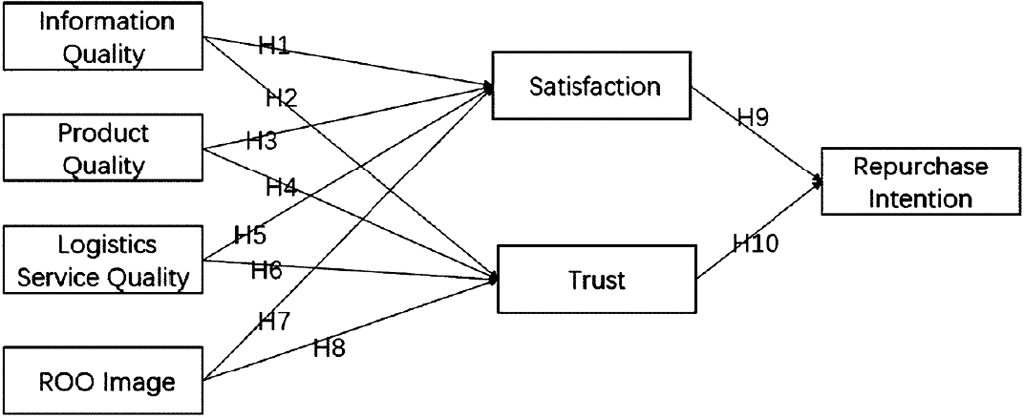
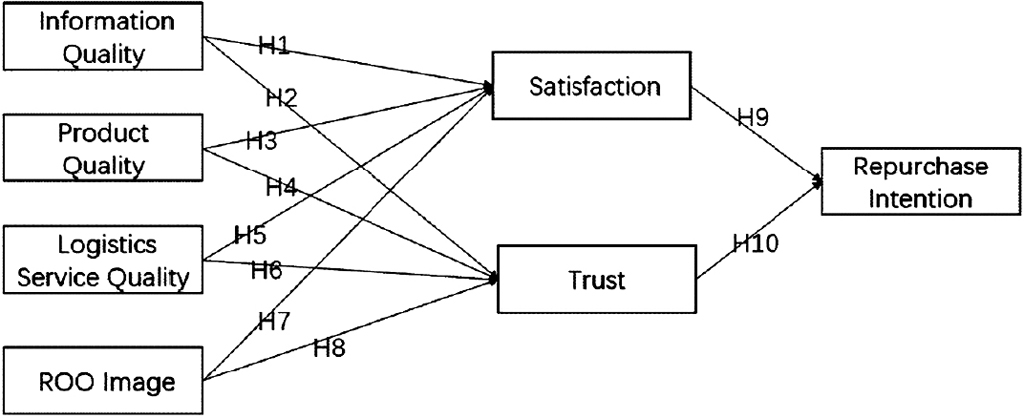
The aim of this study is to verify the impact of information quality, product quality, logistics service quality, and ROO image on satisfaction and trust, as well as the impact of satisfaction and trust on repurchase intention. The model delineates the interrelationships between the variables to determine the impact of the factors. Figure 1 shows the proposed framework.

The proposed research framework.
Citation: International Food and Agribusiness Management Review 28, 4 (2025) ; 10.22434/ifamr.1225
3. Methods
3.1 Measures
In this study, the empirical research method is used to verify the validity of the models and hypotheses by collecting data through questionnaire and analyzing the data. This method is used mainly to ensure the objectivity of the research, the reproducibility of the results, the diversity of the research subjects and the scientific nature of the research design and data analysis. Compared with other research methods, the method used in this study is more in line with the research objectives and content.
In order to ensure the accuracy of the questionnaire, a pilot survey is conducted before the implementation of the formal survey with a total sample size of 193. The reliability and validity of the questionnaire are tested in the pre-survey. No items were dropped from the pilot survey. The questionnaire consists 21 items in total and 3 questions for each variable and aims at respondents who have purchased agricultural products through e-commerce live streaming for last year. The questionnaire scales are all based on a five-point Likert scale, ranging from strongly agree (1) to strongly disagree (5). Detailed measurement items and relevant literature for each section can be found in Appendix A.
3.2 Sample and data collection
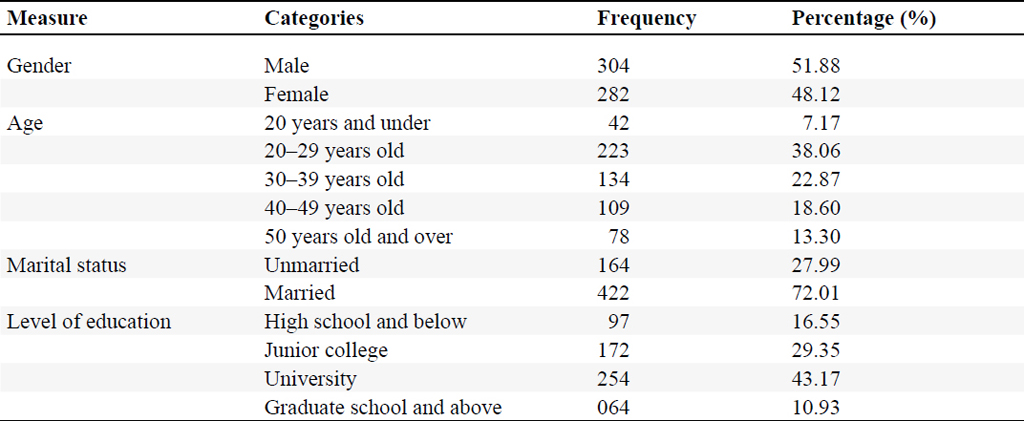
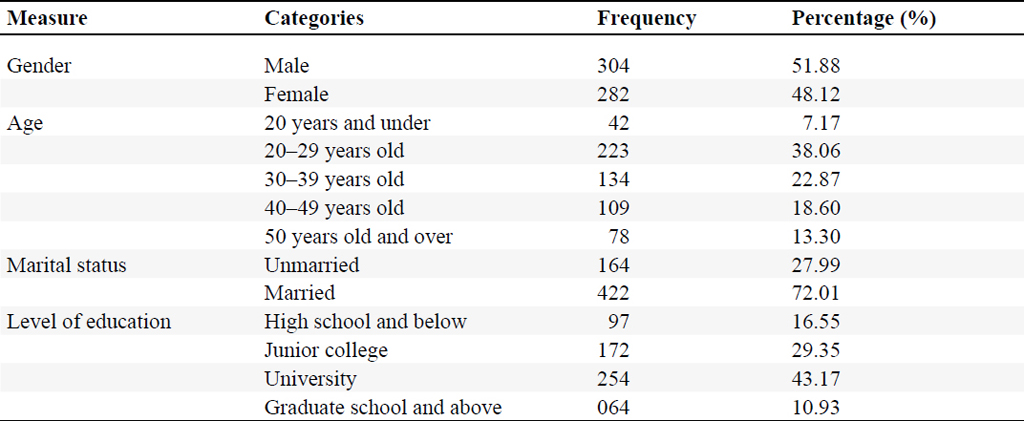
The formal survey is an online survey, which is implemented from 9 to 17 March 2024, after censoring and excluding invalid questionnaires, a total of 586 questionnaires are valid. Table 1 illustrates the demographic information of the final respondents. Of the 586 respondents, 51.88% were male, most of the respondents were between 20 and 29 years of age (38.06%), with a bachelor degree or above (54.1%), and 72.01% of the respondents were married.
Demographic distribution.
Citation: International Food and Agribusiness Management Review 28, 4 (2025) ; 10.22434/ifamr.1225
3.3 Data analysis
This study utilized Amos 23.0 for the analysis of measurement and structural models. The analysis was conducted in two stages: evaluating the convergent validity, reliability, and discriminant validity of the measurement model, and testing the structural model. The hypothesized model was examined in this study through SPSS 25.0 and AMOS 23.0. According to Anderson and Gerbing (1988), the analyses were conducted in two phases: the first phase used validated factor analysis (CFA) to assess the reliability and validity of the measurement model. The second stage assessed the convergent validity, reliability and discriminant validity of the measurement model, as well as examining the structural model.
4. Results
4.1 Measurement model
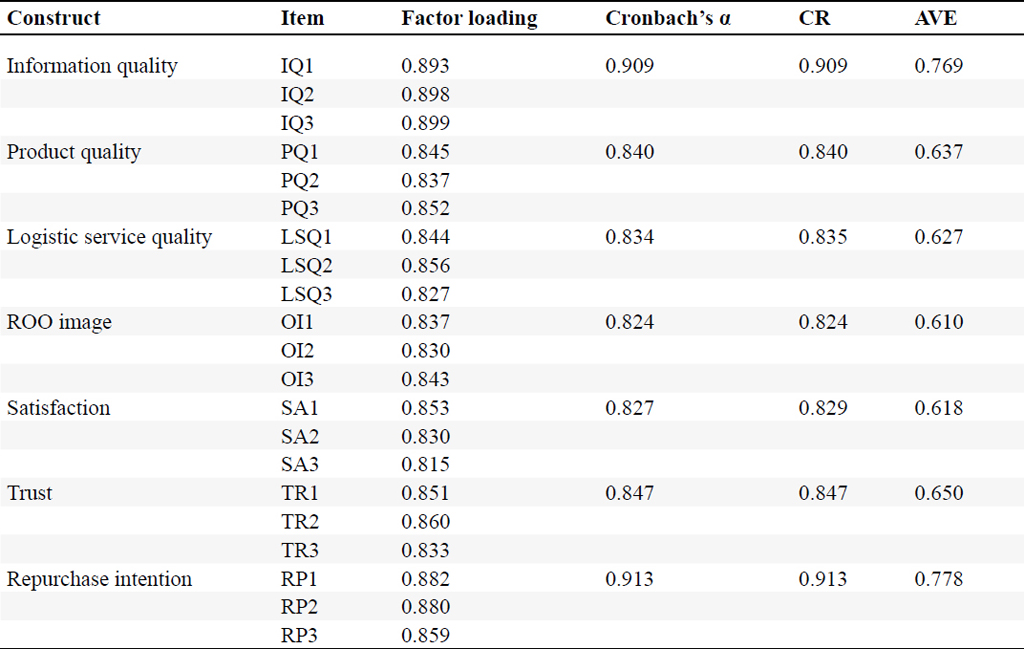
This study used the use of Cronbachâs Alpha (CA) coefficients and Composite Reliability (CR) to check the consistency and reliability of the study variables. The empirical results (Table 2) showed that the CA values for all variables varied between 0.824 and 0.913, and the CR for all variables exceeded 0.8, with both test values above the acceptable limit of 0.7 (Hair et al., 1998). Therefore, it can be said that the internal consistency and reliability of the study variables were adequate and satisfactory (Fornell and Larcker, 1981). As shown in Table 3, the square root of AVE on the diagonal exceeds the values of the other variables off the diagonal, indicating the existence of discriminant validity (Fornell and Larcker, 1981).
Factor loading, validity and reliability.
Citation: International Food and Agribusiness Management Review 28, 4 (2025) ; 10.22434/ifamr.1225
Correlation matrix and discriminant assessment.
Citation: International Food and Agribusiness Management Review 28, 4 (2025) ; 10.22434/ifamr.1225
4.2 Structural model analysis
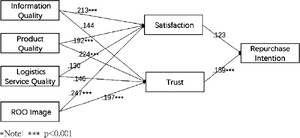
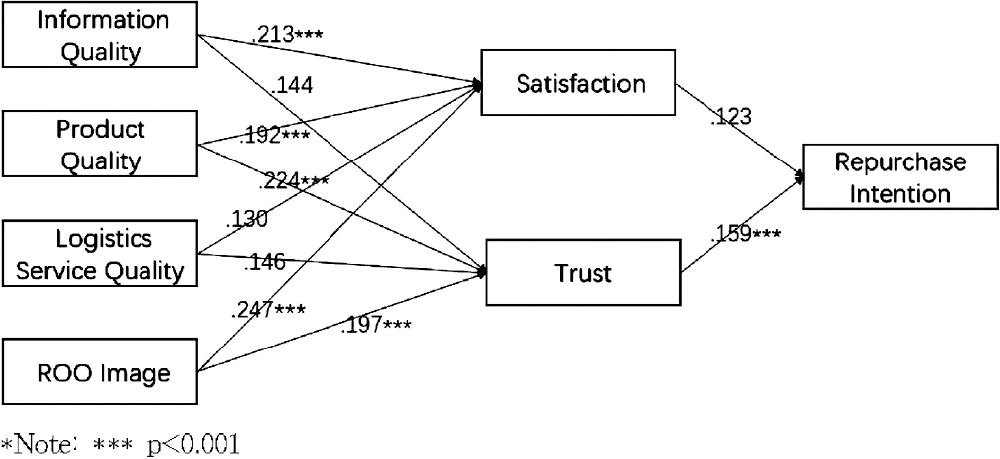
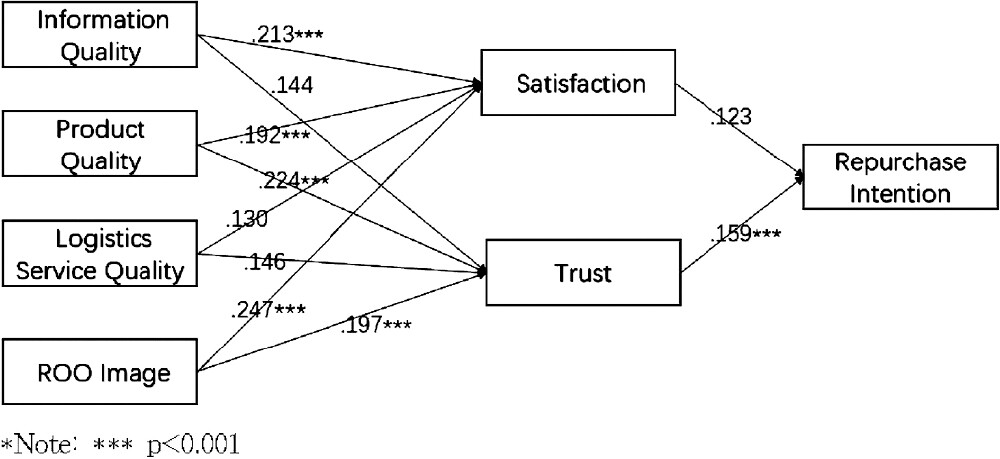
The data collected from the questionnaire are put into AMOS 23.0 software and the model fitting parameters obtained by applying the maximum likelihood estimation method. The fitting indexes are as following: CMIN/DF is 1.179, less than the standard of 3; NFI is 0.951, GFI is 0.949, IFI is 0.978, TLI is 0.973, CFI is 0.978 and AGFI is 0.932, these fitting indices are all above the standard of 0.9; RMSEA is 0.037, less than 0.08. It can be seen that the displayed values of the fitted parameters meet the standard requirements, indicating that the model is fitted very well, so the structural equation model has a good fitting effect for the sample data obtained from the questionnaire (Figure 2).
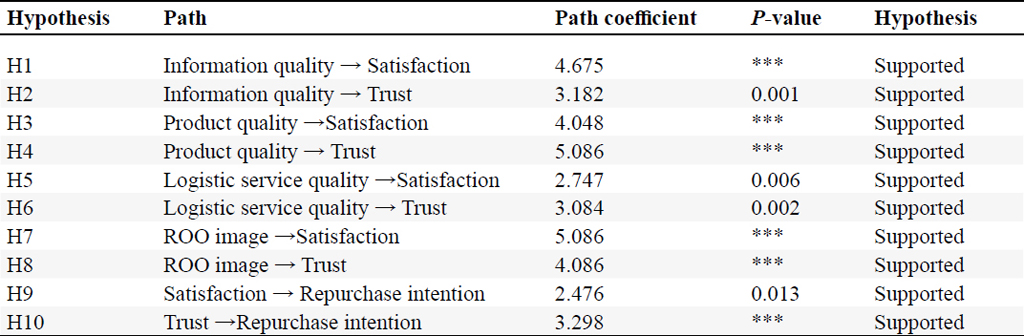
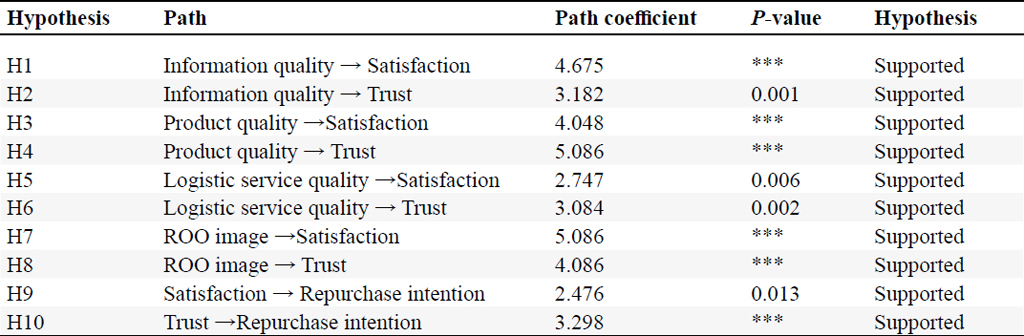
Table 4 summarizes the results of the analysis. The results show that all the hypotheses made in this study are valid. Information quality has a positive effect on satisfaction and trust, H1, H2 hold. Product quality has a positive effect on satisfaction and trust, H3, H4 hold. Logistics service quality has a positive effect on satisfaction and trust, H5, H6 hold. ROO image has a positive effect on satisfaction and trust, H7, H8 hold. In addition, both satisfaction and trust have an effect on repurchase intention, H9, H10 hold.
Summary of the results.
Citation: International Food and Agribusiness Management Review 28, 4 (2025) ; 10.22434/ifamr.1225
Analysis results.
Citation: International Food and Agribusiness Management Review 28, 4 (2025) ; 10.22434/ifamr.1225
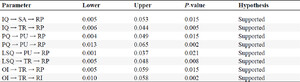
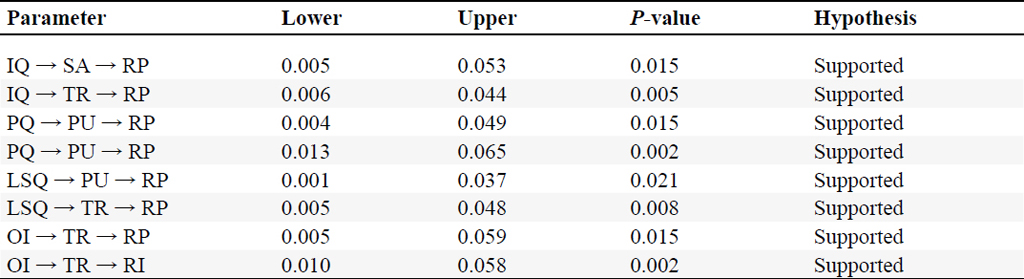
Table 5 shows the results of indirect effects. Information quality, product quality, logistics service quality and ROO image indirectly affect repurchase intention through satisfaction and trust.
Indirect effects of antecedents on repurchase intention.
Citation: International Food and Agribusiness Management Review 28, 4 (2025) ; 10.22434/ifamr.1225
5. Discussion and implications
5.1 Summary of results
This study has three notable findings. First and foremost, Information quality has a positive effect on satisfaction, this finding is consistent with Kim et al. (2021); product quality has a positive effect on satisfaction, this finding is consistent with Tian et al. (2022) that food quality is an important determinant of customer satisfaction; logistics service quality has a positive effect on satisfaction, this finding is in line with Uvet (2020) and Jian et al. (2021); and ROO image has a positive effect on satisfaction. According to the degree of influence, the order is ROO image, information quality, product quality, logistics service quality. Among them, ROO image, information quality, and product quality all reach significant levels on satisfaction, indicating that improving ROO image, information quality, and product quality will have a more significant impact on consumers repurchase intention.
In addition, Information quality has a positive effect on trust, this finding is consistent with that obtained by Zhou (2011); product quality has a positive effect on trust, which is consistent with Chandrruangphen et al. (2022); logistics service quality has a positive effect on trust; and ROO image has a positive effect on trust. According to the degree of influence, product quality, ROO image, information quality, logistics service quality are in order. Among them, both product quality and ROO image reach a significant level on trust, indicating that improving product quality and ROO image will have a more significant effect on consumers repurchase intention.
At last, Satisfaction has a positive effect on repurchase intention, this finding is in line with Law et al. (2022) that consumer satisfaction is directly related to repurchase intention and the higher the satisfaction, the higher the repurchase intention; trust has a positive effect on repurchase intention, this finding is consistent with Saleem et al. (2017) that trust is directly related to repurchase intentions. The effect of trust on consumers repurchases intention has reached a significant level.
5.2 Implications for researchers and practitioners
For theoretical implications, a theoretical modeling framework is constructed in the context of e-commerce live streaming of agricultural products to explore the effects of information quality, product quality, logistics service quality, ROO image, satisfaction, and trust on consumers repurchase intentions. Current research on agricultural products e-commerce live streaming mainly focuses on consumers purchase intention and behaviour, and there is a lack of research on consumers post-purchase behaviour, especially the research involving consumers repurchase intention is still relatively scarce. This study verifies the hypotheses through empirical research, and the results can also be applied to the e-commerce live streaming sales of other products, which enriches the theoretical research on consumer repurchase intention to a certain extent.
For practical implication, this study provides recommendations for agricultural merchants to gain a sustainable competitive advantage online through e-commerce live streaming.
As for the anchors, the cultivation of the anchorsâ professional ability and the enhancement of the anchorsâ knowledge of agricultural products are very necessary. The anchors should be very familiar with the various characteristics of agricultural products, such as the composition of agricultural products, efficacy, taste, food value, planting environment, planting technology, etc., for consumers to popularize some knowledge of the agricultural products, to convey to the consumer useful information, and at the same time to ensure that the quality of agricultural products related information obtained by consumers is accurate.
In improving product quality, for the government, recommending standardized production and strengthening quality supervision can ensure the quality of agricultural products through continuous monitoring during the production process and before they reach the market. Local governments can further build brands and promote the high-quality development of local advantageous and special agricultural products. For farmers, understanding the latest planting technology and advanced professional knowledge has a fundamental impact on continuously improving the quality of agricultural products. For platforms, quality standards are used to monitor and select agricultural products; consumer reviews and merchant qualifications are combined to screen and promote high-quality merchants. Through the joint efforts of the government, farmers and e-commerce live streaming platforms, the problem of agricultural products quality is solved, the quality and safety of agricultural products are improved, and the healthy development of e-commerce live streaming of agricultural products is promoted.
To improve the logistics service quality as e-merchants, the use of professional agricultural cold chain logistics equipment, such as low-temperature sorting and processing, refrigerated transportation, temperature monitoring and other cold chain equipment, and the use of some new technologies such as artificial intelligence, big data and so on in the logistics and transportation process. In terms of responsiveness, provide consumers with all information related to logistics in a timely manner, if some accidents occur, consumers should be informed in time, and try to appease consumersâ emotions, and give consumers the maximum psychological and material compensation.
To enhance the ROO image on consumers, for anchors to improve sales, when introducing agricultural products, anchors should focus on the origin of agricultural products, and can show and introduce more of the growing environment of agricultural products, planting characteristics, or through the introduction of relevant information about the origin, the positive image of the origin will be passed on to the consumer to deepen the impression, which will in turn enhance the consumersâ perception of trust, and promote the consumersâ willingness to buy. For merchants, they should pay more attention to the promotion and introduction of the origin of agricultural products, and improve consumer recognition of the origin through the introduction and promotion of platforms or the training of anchors. For the local government, it can improve the credibility and popularity of agricultural products by organizing exhibitions and officials to sell goods, which will enhance the competitiveness of local agricultural products in the market and promote the purchasing desire of consumers.
5.3 Limitations and future works
There are still some limitations in this study. In terms of data collection, the data collected in this study is only a small sample and a few questions are investigated. And the target of this study is only e-commerce consumers in China, whether it can match the situation in other countries or regions is not yet known. Future research can expand the scope of the survey object and expand the diversity of the survey questions. In terms of influencing factors, although this study verifies the effects of information quality, product quality, logistics service quality, ROO image, satisfaction and trust on consumers repurchase intention, there are still other factors that can influence consumers to repeat purchases of agricultural products through e-commerce live streaming. Future research can explore other influencing factors more deeply. In terms of purchase conversions, this study investigates the consumers repurchase intention, but whether the intention can be converted into actual purchase behaviour is still a question that needs to be verified. Future research can combine real data from e-commerce platforms for further research.
6. Conclusions
This study is an examination of the antecedents of consumers repurchase intentions in agricultural products e-commerce live streaming. This study reveals that information quality, product quality, logistics service quality, ROO image, satisfaction, and trust have a positive impact on repurchase intention. Although there are still shortcomings in the study, this study provides a feasible theoretical framework as well as practical suggestions for agricultural products e-commerce live streaming.
References
Aiginger, K. 2001. Europeâs position in quality competition. Office for Official Publications of the European Communities, Luxembourg, Luxembourg.
Akıl, S. and M.C. Ungan. 2022. E-commerce logistics service quality: customer satisfaction and loyalty. Journal of Electronic Commerce in Organizations 20(1): 1â19. http://doi.org/10.4018/JECO.292473
Anderson, E.W. and C. Fornell. 2000. Foundations of the American customer satisfaction index. Total Quality Management 11(7): 869â882. https://doi.org/10.1080/09544120050135425
Anderson, J.C. and D.W. Gerbing. 1988. Structural equation modeling in practice: a review and recommended two-step approach. Psychological Bulletin 103(3): 411â423. https://doi.org/10.1037/0033-2909.103.3.411
Anderson, R.E. and S.S. Srinivasan. 2003. E-satisfaction and e-loyalty: a contingency framework. Psychology and Marketing 20(2): 123â138. https://doi.org/10.1002/mar.10063
Anderson, E.W. and M.W. Sullivan. 1993. The antecedents and consequences of customer satisfaction for firms. Marketing Science 12(2): 125â143. https://doi.org/10.1287/mksc.12.2.125
Angelina, R.J., A. Hermawan and A.I. Suroso. 2019. Analyzing e-commerce success using DeLone and McLean model. Journal of Information Systems Engineering and Business Intelligence 5(2): 156-162. https://doi.org/10.20473/jisebi.5.2.156-162
Beldad, A., M. De Jong and M. Steehouder. 2010. How shall I trust the faceless and the intangible? A literature review on the antecedents of online trust. Computers in Human Behavior 26(5): 857â869. https://doi.org/10.1016/j.chb.2010.03.013
Bhat, S.A. and M.A. Darzi. 2020. Online service quality determinants and e-trust in internet shopping: A psychometric approach. Vikalpa 45(4): 207â222. https://doi.org/10.1177/02560909211012
Chamorro, A., S. Rubio and F.J. Miranda. 2015. The region-of-origin (ROO) effect on purchasing preferences: the case of a multiregional designation of origin. British Food Journal 117(2): 820â839. https://doi.org/10.1108/BFJ-03-2014-0112
Chandrruangphen, E., N. Assarut and S. Sinthupinyo. 2022. The effects of live streaming attributes on consumer trust and shopping intentions for fashion clothing. Cogent Business and Management 9(1): 2034238. https://doi.org/10.1080/23311975.2022.2034238
Chatzoglou, P., D. Chatzoudes, A. Savvidou, T. Fotiadis and P. Delias. 2022. Factors affecting repurchase intentions in retail shopping: An empirical study. Heliyon 8(9): e10619. https://doi.org/10.1016/j.heliyon.2022.e10619
Chen, Y., F. Lu and S. Zheng. 2020. A study on the influence of e-commerce live streaming on consumer repurchase intentions. International Journal of Marketing Studies 12(4): 48â62. https://doi.org/10.5539/ijms.v12n4p48
Chiu, C.M., Y.H. Fang, H.L. Cheng and C. Yen. 2013. On online repurchase intentions: Antecedents and the moderating role of switching cost. Human Systems Management 32(4): 283-296. https://doi.org/10.3233/HSM-130796
Christopher, M. 2016. Logistics and Supply Chain Management: Logistics and Supply Chain Management. Pearson UK, London.
Chuah, S.H.W., D. El-Manstrly, M.L. Tseng and T. Ramayah. 2020. Sustaining customer engagement behavior through corporate social responsibility: The roles of environmental concern and green trust. Journal of Cleaner Production 262: 121348. https://doi.org/10.1016/j.jclepro.2020.121348
Clements, M.D., R.M. Lazo and S.K. Martin. 2008. Relationship connectors in NZ fresh produce supply chains. British Food Journal 110(4â5): 346â360. https://doi.org/10.1108/00070700810868898
Dekhili, S. and F. dâHauteville. 2009. Effect of the region of origin on the perceived quality of olive oil: An experimental approach using a control group. Food Quality and Preference 20(7): 525â532. https://doi.org/10.1016/j.foodqual.2009.05.008
Do, Q.H., T.Y. Kim and X. Wang. 2023. Effects of logistics service quality and price fairness on customer repurchase intention: The moderating role of cross-border e-commerce experiences. Journal of Retailing and Consumer Services 70: 103165. https://doi.org/10.1016/j.jretconser.2022.103165
Dodds, W.B., K.B. Monroe and D. Grewal. 1991. Effects of price, brand, and store information on buyersâ product evaluations. Journal of Marketing Research 28(3): 307â319. https://doi.org/10.1177/002224379102800305
Dong, X., H. Zhao and T. Li. 2022. The role of live-streaming e-commerce on consumersâ purchasing intention regarding green agricultural products. Sustainability 14(7): 4374. https://doi.org/10.3390/su14074374
Fornell, C. and D.F. Larcker. 1981. Evaluating structural equation models with unobservable variables and measurement error. Journal of Marketing Research 18(1): 39â50. https://doi.org/10.1177/002224378101800104
Garvin, D.A. 1984. Product quality: An important strategic weapon. Business Horizons 27(3): 40â43. https://doi.org/10.1016/0007-6813(84)90024-7
Ginting, Y., T. Chandra, I. Miran and Y. Yusriadi. 2023. Repurchase intention of e-commerce customers in Indonesia: An overview of the effect of e-service quality, e-word of mouth, customer trust, and customer satisfaction mediation. International Journal of Data and Network Science 7(1): 329â340. https://10.5267/j.ijdns.2022.10.001
Hair, J., R. Anderson and R.B. Tatham. 1998. Multivariate Data Analysis. Prentice Hall, Upper Saddle River, NJ.
Hallak, J. C. and P.K. Schott. 2011. Estimating cross-country differences in product quality. The Quarterly Journal of Economics 126(1): 417â474. https://doi.org/10.1093/qje/qjq003
Hapsoro, B.B. and W.A. Hafidh. 2018. The influence of product quality, brand image on purchasing decisions through brand trust as mediating variable. Management Analysis Journal 7(4): 528â539. https://doi.org/10.15294/maj.v7i4.30407
Hsu, M.H., C.M. Chang, K.K. Chu and Y.J. Lee. 2014. Determinants of repurchase intention in online group-buying: The perspectives of DeLone and McLean IS success model and trust. Computers in Human Behavior 36: 234â245. https://doi.org/10.1016/j.chb.2014.03.065
Jain, N.K., H. Gajjar and B.J. Shah. 2021. Electronic logistics service quality and repurchase intention in e-tailing: Catalytic role of shopping satisfaction, payment options, gender and returning experience. Journal of Retailing and Consumer Services 59: 102360. https://doi.org/10.1016/j.jretconser.2020.102360
Jiménez, N. and S. San MartÃn. 2014. The mediation of trust in country-of-origin effects across countries. Cross Cultural Management 21(2): 150â171. https://doi.org/10.1108/CCM-12-2012-0113
Junikon, E. and H. Ali. 2022. The Influence of product quality and sales promotion on repurchase intention and impulsive buying (marketing management literature review). Dinasti International Journal of Management Science 4(2): 297â305. https://doi.org/10.37715/rmbe.v2i1.2909
Kaswengi, J. and C. Lambey-Checchin. 2020. How logistics service quality and product quality matter in the retailerâcustomer relationship of food drive-throughs: The role of perceived convenience. International Journal of Physical Distribution and Logistics Management 50(5): 535â555. https://doi.org/10.1108/IJPDLM-01-2019-0036
Khoram, M.H., M. Moradi and M. Hatami. 2021. The effect of the mental image of the country of origin of the brand on the formation of brand equity resulting in brand trust in the sports industry (case study: shiraz). Sports Marketing Studies 2(1): 1â30. https://doi.org/10.34785/J021.2021.166
Kim, H.W., Y. Xu and J. Koh. 2004. A comparison of online trust building factors between potential customers and repeat customers. Journal of the Association for Information Systems 5(10): 392â420. https://doi.org/10.17705/1jais.00056
Kim, S. and H. Park. 2013. Effects of various characteristics of social commerce (s-commerce) on consumersâ trust and trust performance. International Journal of Information Management 33(2): 318â332. https://doi.org/10.1016/j.ijinfomgt.2012.11.006
Kim, W.G., J.J. Li and R.A. Brymer. 2016. The impact of social media reviews on restaurant performance: The moderating role of excellence certificate. International Journal of Hospitality Management 55: 41â51. https://doi.org/10.1016/j.ijhm.2016.03.001
Kim, Y., Q. Wang and T. Roh. 2021. Do information and service quality affect perceived privacy protection, satisfaction, and loyalty? Evidence from a Chinese O2O-based mobile shopping application. Telematics and Informatics 56: 101483. https://doi.org/10.1016/j.tele.2020.101483
Kitapci, O., C. Akdogan and I.T. Dortyol. 2014. The impact of service quality dimensions on patient satisfaction, repurchase intentions and word-of-mouth communication in the public healthcare industry. Procedia-Social and Behavioral Sciences 148: 161â169. https://doi.org/10.1016/j.sbspro.2014.07.030
Klein, B.D., D.L. Goodhue and G.B. Davis. 1997. Can humans detect errors in data? Impact of base rates, incentives, and goals. Mis Quarterly 21(2): 169â194. https://doi.org/10.2307/249418
Koo, D.M. and S.H. Ju. 2010. The interactional effects of atmospherics and perceptual curiosity on emotions and online shopping intention. Computers in Human Behavior 26(3): 377â388. https://doi.org/10.1016/j.chb.2009.11.009
Law, C.C., Y. Zhang and J. Gow. 2022. Airline service quality, customer satisfaction, and repurchase Intention: Laotian air passengersâ perspective. Case Studies on Transport Policy 10(2): 741â750. https://doi.org/10.1016/j.cstp.2022.02.002
Li, L., K. Du, W. Zhang and J.Y. Mao. 2019. Poverty alleviation through government-led e-commerce development in rural China: An activity theory perspective. Information Systems Journal 29(4): 914â952. https://doi.org/10.1111/isj.12199
Li, S., F. Liu, Y. Zhang, K. Peng and Z. Yu. 2022. Research on personalized product integration improvement based on consumer maturity. Ieee Access 10: 39487â39501. https://doi.org/10.1109/ACCESS.2022.3166480
Lien, C.H., J.J. Wu, Y.H. Chen and C.J. Wang. 2014. Trust transfer and the effect of service quality on trust in the healthcare industry. Managing Service Quality 24(4): 399â416. https://doi.org/10.1108/MSQ-11-2013-0255
Liu, L., H. Wang and S. Xing. 2019. Optimization of distribution planning for agricultural products in logistics based on degree of maturity. Computers and Electronics in Agriculture 160: 1â7. https://doi.org/10.1016/j.compag.2019.02.030
Liu, S., G. Hua, T.E. Cheng and T.M. Choi. 2022. Optimal pricing and quality decisions in supply chains with consumersâ anticipated regret and online celebrity retailers. IEEE Transactions on Engineering Management 71: 1115â1129. https://doi.org/10.1109/TEM.2022.3144482
Liu, X. and Z. Kao. 2022. Research on influencing factors of customer satisfaction of e-commerce of characteristic agricultural products. Procedia Computer Science 199: 1505-1512. https://doi.org/10.1016/j.procs.2022.01.192
Lockshin, L., W. Jarvis, F. dâHauteville and J.P. Perrouty. 2006. Using simulations from discrete choice experiments to measure consumer sensitivity to brand, region, price, and awards in wine choice. Food Quality and Preference 17(3â4): 166â178. https://doi.org/10.1016/j.foodqual.2005.03.009
Louro, M.J., R. Pieters and M. Zeelenberg. 2005. Negative returns on positive emotions: The influence of pride and self-regulatory goals on repurchase decisions. Journal of Consumer Research 31(4): 833â840. https://doi.org/10.1086/426619
Luceri, B., S. Latusi and C. Zerbini. 2016. Product versus region of origin: which wins in consumer persuasion? British Food Journal 118(9): 2157â2170. https://doi.org/10.1108/BFJ-01-2016-0035
Ma, L., Z. Li and D. Zheng. 2022. Analysis of Chinese consumersâ willingness and behavioral change to purchase Green agri-food product online. PLoS ONE 17(4): e0265887. https://doi.org/10.1371/journal.pone.0265887
McKnight, D.H., N.K. Lankton, A. Nicolaou and J. Price. 2017. Distinguishing the effects of B2B information quality, system quality, and service outcome quality on trust and distrust. The Journal of Strategic Information Systems 26(2): 118â141. https://doi.org/10.1016/j.jsis.2017.01.001
McKnight, D.H., M. Carter, J.B. Thatcher and P.F. Clay. 2011. Trust in a specific technology: An investigation of its components and measures. ACM Transactions on Management Information Systems 2(2): 1â25. https://doi.org/10.1145/1985347.1985353
Mentzer, J.T., D.J. Flint and G.T.M. Hult. 2001. Logistics service quality as a segment-customized process. Journal of Marketing 65(4): 82â104. https://doi.org/10.1509/jmkg.65.4.82.18390
Messner, W. 2020. The impact of language proficiency on airline service satisfaction. Journal of Travel and Tourism Marketing 37(2): 169â184. https://doi.org/10.1080/10548408.2020.1740139
Michaelis, M., D.M. Woisetschläger, C. Backhaus and D. Ahlert. 2008. The effects of country of origin and corporate reputation on initial trust: An experimental evaluation of the perception of Polish consumers. International Marketing Review 25(4): 404â422. https://doi.org/10.1108/02651330810887468
Mithas, S., N. Ramasubbu, M.S. Krishnan and C. Fornell. 2006. Designing web sites for customer loyalty across business domains: A multilevel analysis. Journal of Management Information Systems 23(3): 97â127. https://doi.org/10.2753/MIS0742-1222230305
Nabila, E.Y., E. Listiana, B.B. Purmono, Y. Fahruna and T. Rosnani. 2023. Determinants of repurchase intention: A Study on ease of use, trust and e-Satisfaction construct in shopee marketplace. East African Scholars Journal of Economics, Business and Management 6(1): 29â36. https://doi.org/10.36349/easjebm.2023.v06i01.004
Nainggolan, F. and A. Hidayet. 2020. The effect of country of origin, brand image, price fairness, and service quality on loyalty toward iPhone mobile users, mediated by consumer satisfaction. European Journal of Business and Management Research 5(1): 233. https://doi.org/10.24018/ejbmr.2020.5.1.233
Nelson, R.R., P.A. Todd and B.H. Wixom. 2005. Antecedents of information and system quality: an empirical examination within the context of data warehousing. Journal of Management Information Systems 21(4): 199â235. https://doi.org/10.1080/07421222.2005.11045823
Nicolaou, A.I. and D.H. McKnight. 2006. Perceived information quality in data exchanges: Effects on risk, trust, and intention to use. Information Systems Research 17(4): 332â351. https://doi.org/10.1287/isre.1060.0103
Pavlou, P.A. and D. Gefen. 2004. Building effective online marketplaces with institution-based trust. Information Systems Research 15(1): 37â59. https://doi.org/10.1287/isre.1040.0015
Rizki, E.F., R. Juliati and A. Praharjo. 2021. The effect of product quality and service quality on repurchasing intention. Jurnal Manajemen Bisnis Dan Kewirausahaan 1(4): 247â254. https://doi.org/10.22219/jamanika.v1i4.19407
Rushton, A., P. Croucher and P. Baker. 2022. The handbook of logistics and distribution management: Understanding the supply chain. Kogan Page Publishers, London.
Saleem, M.A., S. Zahra and A. Yaseen. 2017. Impact of service quality and trust on repurchase intentionsâthe case of Pakistan airline industry. Asia Pacific Journal of Marketing and Logistics 29(5): 1136â1159. https://doi.org/10.1108/APJML-10-2016-0192
San-MartÃn, S., J. Prodanova and N. Jiménez. 2015. The impact of age in the generation of satisfaction and WOM in mobile shopping. Journal of Retailing and Consumer Services 23: 1â8. https://doi.org/10.1016/j.jretconser.2014.11.001
Song, C. and J. Zhuang. 2017. Modeling a Government-Manufacturer-Farmer game for food supply chain risk management. Food Control 78: 443â455. https://doi.org/10.1016/j.foodcont.2017.02.047
Suhaily, L. and S. Darmoyo. 2017. Effect of product quality, perceived priceand brand image on purchase decision mediated by customer trust (study on Japanese brandelectronic product). Jurnal Manajemen 21(2): 179â194. https://doi.org/10.24912/jm.v21i2.230
Tian, H., A.B. Siddik and M. Masukujjaman. 2022. Factors affecting the repurchase intention of organic tea among millennial consumers: An empirical study. Behavioral Sciences 12(2): 50. https://doi.org/10.3390/bs12020050
Trivedi, S.K. and M. Yadav. 2020. Repurchase intentions in Y generation: mediation of trust and e-satisfaction. Marketing Intelligence and Planning 38(4): 401â415. https://doi.org/10.1108/MIP-02-2019-0072
Uvet, H. 2020. Importance of logistics service quality in customer satisfaction: An empirical study. Operations and Supply Chain Management: An International Journal 13(1): 1â10. http://doi.org/10.31387/oscm0400248
Van der Lans, I.A., K. Van Ittersum, A. De Cicco and M. Loseby. 2001. The role of the region of origin and EU certificates of origin in consumer evaluation of food products. European Review of Agricultural Economics 28(4): 451â477. https://doi.org/10.1093/erae/28.4.451
Vu, T.P., D.B. Grant and D.A. Menachof. 2020. Exploring logistics service quality in Hai Phong, Vietnam. The Asian Journal of Shipping and Logistics 36(2): 54â64. https://doi.org/10.1016/j.ajsl.2019.12.001
Waas, A.C., J.E. Tulung and M.V. Tielung. 2022. Analysis of customer trust on repurchase intention in an online shop on instagram (study case: minishoppaholics. Id). Jurnal EMBA: Jurnal Riset Ekonomi, Manajemen, Bisnis dan Akuntansi 10(1): 289â297. https://doi.org/10.35794/emba.v10i1.37780
Waluya, A.I., M.A. Iqbal and R. Indradewa. 2019. How product quality, brand image, and customer satisfaction affect the purchase decisions of Indonesian automotive customers. International Journal of Services, Economics and Management 10(2): 177â193. https://doi.org/10.1504/IJSEM.2019.100944
Wandoko, W. and I.E. Panggati. 2022. The influence of digital influencer, e-WOM and information quality on customer repurchase intention toward online shop in e-marketplace during pandemic COVID-19: The mediation effect of customer trust. Journal of Relationship Marketing 21(2): 148â167. https://doi.org/10.1080/15332667.2022.2035198
Wang, Q., N. Zhao and X. Ji. 2022. Reselling or agency selling? The strategic role of live streaming commerce in distribution contract selection. Electronic Commerce Research 24: 983â1016. https://doi.org/10.1007/s10660-022-09581-5
Wang, W.T. and C.C. Lu. 2014. Determinants of success for online insurance web sites: The contributions from system characteristics, product complexity, and trust. Journal of Organizational Computing and Electronic Commerce 24(1): 1â35. https://doi.org/10.1080/10919392.2014.866501
Wen, Y., L. Kong and G. Liu. 2021. Big data analysis of e-commerce efficiency and its influencing factors of agricultural products in China. Mobile Information Systems 2021(1): 5708829. https://doi.org/10.1155/2021/5708829
Xin, B., Y. Hao and L. Xie. 2023. Strategic product showcasing mode of E-commerce live streaming. Journal of Retailing and Consumer Services 73: 103360. https://doi.org/10.1016/j.jretconser.2023.103360
Yi, Y. and S. La. 2004. What influences the relationship between customer satisfaction and repurchase intention? Investigating the effects of adjusted expectations and customer loyalty. Psychology and Marketing 21(5): 351â373. https://doi.org/10.1002/mar.20009
Yu, Z. and K. Zhang. 2022. The determinants of purchase intention on agricultural products via public-interest live streaming for farmers during COVID-19 pandemic. Sustainability 14(21): 13921. https://doi.org/10.3390/su142113921
Zhang, S., C. Huang, X. Li and A. Ren. 2022. Characteristics and roles of streamers in e-commerce live streaming. The Service Industries Journal 42(13â14): 1001â1029. https://doi.org/10.1080/02642069.2022.2068530
Zheng, S., X. Lyu, J. Wang and C. Wachenheim. 2023. Enhancing sales of green agricultural products through live streaming in China: what affects purchase intention? Sustainability 15(7): 5858. https://doi.org/10.3390/su15075858
Zhou, T. 2011. Examining the critical success factors of mobile website adoption. Online Information Review 35(4): 636â652. https://doi.org/10.1108/14684521111161972
Zhou, T. 2013. An empirical examination of continuance intention of mobile payment services. Decision Support Systems 54(2): 1085â1091. https://doi.org/10.1016/j.dss.2012.10.034
Appendix A. List of model constructs and items
Information quality is derived from Dong et al. (2022)
IQ1: The information provided by the anchor is accurate.
IQ2: The information provided by the anchor is reliable.
IQ3: The information provided by the anchor is complete.
Product quality is derived from Liu and Kao (2022)
PQ1: The agriculture products received are fresh and taste good.
PQ2: The agriculture products received are consistent with the e-commerce live streaming.
PQ3: The agriculture products received are rarely short of weight.
Logistic service quality is derived from Liu and Kao (2022)
LSQ1: The speed of logistics distribution is fast.
LSQ2: Logistics distribution information can be queried in time.
LSQ3: The agriculture products received are not damaged or rot.
ROO image is derived from Van der Lans et al. (2001)
OI1: The origin of the agricultural products reflects to some extent the higher quality of the products.
OI2: I can engage with platform hosts using various communication methods.
OI3: I can establish positive relationships with hosts through the platform.
Satisfaction is derived from Chen et al. (2020)
SA1: I am very satisfied with the agriculture products brought through e-commerce live streaming.
SA2: I am very satisfied with the buying agricultural products experiences through e-commerce live streaming.
SA3: Overall, I think it is wise to buy agricultural products through e-commerce live streaming.
Trust is derived from Chuah et al. (2019); Dong et al. (2022)
TR1: I trust the quality of agricultural products through live streaming.
TR2: I believe that the agricultural products provided in the live streaming are produced to high standards.
TR3: I felt that buying agriculture products by live streaming was generally dependable.
Repurchase intention is derived from Chui et al. (2013)
RP1: I will be buying agricultural products via live streaming in the future
RP2: I would love to continue buying agricultural products via live streaming.
RP3: Maybe Iâll become a loyal consumer of buying agricultural products via live streaming.
Corresponding author