Abstract
Given that counties encompass approximately 90% of the agricultural population, enhancing agricultural income levels and bridging the urban-rural income (URI) gap constitute fundamental prerequisites for achieving common prosperity. Utilizing panel data from 817 Chinese counties (2014â2019), this study empirically investigates how digital financial inclusion (DFI) influences the URI gap at the county level. The results demonstrate that DFI not only contributes to reducing URI gap through agricultural incomes growth, but also generates significant spatial spillover effect. on neighboring regions. Mechanism analysis reveals that county-level entrepreneurial activity serves as a critical mediating mechanism through which DFI alleviates income disparities. Furthermore, rural development policies â particularly the E-commerce Pilot Program in Agricultural Areas â significantly amplify DFIâs equalizing effects. These findings provide actionable insights for optimizing DFI deployment to advance equitable development and common prosperity within Chinaâs county-level socioeconomic framework.
1. Introduction
Developing countries frequently confront dual challenges of urban-rural income disparities and financial exclusion. As the worldâs largest developing economy, Chinaâs experience in addressing these issues through digital financial innovation provides critical insights for other nations undergoing analogous socioeconomic transitions. Narrowing the urban-rural income gap in developing economies fundamentally depends on elevating income levels in agricultural regions. China, as the the most populous developing country, has achieved significant progress in enhancing agricultural incomes and reducing urban-rural disparities (Kanbur et al., 2021), with the urban/rural income ratio declining from a 3.14 in 2007 to 2.5 in 2021 (Luo et al., 2020). Nevertheless, this ratio remains substantially higher than the global average (Meng et al., 2023; Piketty et al., 2019).
Existing literature predominantly examines Chinaâs urban-rural income (URI) gap at the provincial level or micro-individual scales in China (Li, 2014; Ravallion and Chen, 2022; Shi and Chuliang, 2010; Sicular et al., 2007). However, research on county-level income inequality remains limited (Chen et al., 2024; Lin and Brueckner, 2023; Zhang et al., 2022).The lack of county level analysis may obscure critical imbalances in urban-rural industrial development, hindering sustainable agricultural development. This study argues that focusing on URI gap at the county level â a smaller yet administratively pivotal scale â is imperative for two key reasons:
First, Chinaâs entrenched urban-rural dual structure persists despite reforms (Wei et al., 2021). Counties accommodate approximately 90% of the nationâs agricultural population, making inter-county URI disparities a central determinant of national inequality. Although Chinaâs urban-rural income ratio decreased from 2.99 to 2.56 between 2010 and 2020, 52.5% of counties still exhibited ratios between 2 and 3 by 2020. Addressing county-level disparities is therefore essential for equitable rural development.
Second, Construal-Level Theory (CLT) posits that individuals employ more abstract representations for distant phenomena but focus on concrete details of proximal contexts (Trope and Liberman, 2010). Moreover, income disparity indicators exhibit less variation over larger geographic areas, thereby rendering the detection of subtle changes more challenging(Graham and Felton, 2006). The perception of the relative income gap is largely influenced by the observable and comparable objects within oneâs own environment (Easterlin, 2001). Consequently, it is crucial to bridge the urban-rural divide by enhancing agricultural incomes, which is an effective strategy for improving the well-being of individuals in rural communities engaged in agricultural activities.
To mitigate URI gaps, policymakers must diversify farmersâ income sources through industrial support and market access, facilitated by financial interventions (Yang et al., 2022). While digital financial inclusion (DFI) promotes rural growth by lowering financial service costs and expanding credit access (Geng and He, 2021; Hu et al., 2023). However, the inclusive nature of digital finance does not make it a universal solution.
The role of DFI is contingent upon the advancement of internet infrastructure, the enhancement of regional economic development, and the expansion of digital literacy among users (Lee et al., 2023; Zhu, 2023). Studies have shown that the advent of DFI has the potential to place significant demands on the digital infrastructure, financial ecosystem, and cognitive capabilities of the clientele. Without a robust foundation, the growth of DFI could give rise to geographic disparities and a novel form of digital financial exclusion that might serve to further exacerbate the relative poverty gap between urban and agricultural areas (Goldfarb and Tucker, 2019; Kanga et al., 2022). As a result, the existing literature presents conflicting findings on the potential of digital financial inclusion (DFI) to reduce the URI gap.
In comparison to previous studies, our contributions can be summarized as follows: first, this study aims to examine the influence of DFI on the URI gap at the county level, rather than the provincial level. Additionally, it seeks to investigate the spatial spillover effects between the DFI and URI gap. Secondly, the study examines the impact of county-level entrepreneurial activity on the reduction of the URI gap through the promotion of DFI. Thirdly, this paper explores the impact of the e-commerce pilot policy in agricultural areas on the role of DFI in reducing the URI gap.
This provides a realistic foundation for the subsequent phase of enhancing the relevance of policy implementation. The structure of the paper is organized as follows: the second section includes a theoretical analysis, which presents the research hypotheses; the third section covers the research design, including model construction, indicator selection, and description; the fourth section discusses the baseline model and the analysis of spatial spillover effects; the fifth section concentrates on the mechanism test, with an emphasis on the mediating effect of entrepreneurial activity and the moderating effect of related policies; and the sixth section presents the discussion and main conclusions.
2. Theoretical background
2.1 Impact of DFI on narrowing the URI gap within counties
Traditional financial geography reveals that the spatial exclusivity of financial resource allocation (Leyshon and Thrift, 1995) and rural financial repression (Witcomb, 1974) jointly constitute the institutional roots of urban-rural income disparities. Particularly at the county level, agricultural residents face dual constraints: first, the disruption of the âinnovation-creditâ cycle impedes the upgrading of production factors (Schumpeter, 1934); second, the poverty trap model demonstrates that the lack of collateral triggers financial exclusion, restricting their participation in modern economic activities (Aghion and Bolton, 1997).To narrow the URI gap within the county, it is crucial that the agricultural income growth of rural residents outpaces that of urban residents (Guillaumont Jeanneney and Hua, 2001; Sicular et al., 2007). Compared with urban and suburban populations, those in agricultural areas face increased financial constraints and an underdeveloped financial market. The emergence of e-commerce and digital finance, the most frequently utilized digital economic resources by agricultural residents, will precipitate significant transformations in the trajectory of agricultural economic development (Couture et al., 2021; Guellec, 2021). Consequently, DFI has the potential to enhance the agricultural income of residents to a greater extent (Hu et al., 2023; Liu et al., 2023a).
DFI can offer more flexible and convenient financial support for agricultural residents lacking collateral by reducing financing and transaction costs, aiding in the expansion of their production scale (Li et al., 2024; Shen et al., 2023). Simultaneously, third-party payment platforms, like Alipay and WeChat have facilitated the sale of agricultural products by agricultural residents, thereby increasing their income from agricultural operations(Ding et al., 2018; Zhu, 2023). Empirical evidence demonstrates that a one-standard-deviation increase in county-level digital payment penetration is associated with a 23% improvement in agricultural operational loan accessibility (Li et al., 2024).
Moreover, DFI promotes employment and entrepreneurship among agricultural residents, thereby increasing their non-farm income(Fan et al., 2018; Zhang et al., 2024). Partially, DFI alleviates the mobility constraints faced by the entrepreneurial population. Additionally, DFI not only encourages agricultural entrepreneurship but also stimulates local employment, broadening non-agricultural employment opportunities for agricultural laborers who cannot leave their hometowns for various reasons.
Hypothesis 1: DFI contributes to a reduction in the URI gap within the county.
2.2 The spatial effects of DFI on the narrowing of the URI gap
The inherent digital characteristics of DFI eliminate the need for geospatial constraints on service coverage, leading to evident spatial spillover effects (Ash et al., 2018; Lee et al., 2023; Mastronardi and Cavallo, 2020). Spatial spillover effects are likely to be more pronounced at the county level than at the provincial or municipal levels attributed to counties being geographically closer and sharing more similar production conditions. Specifically, counties located at interprovincial borders, despite being part of different provinces and cities, engage in economic interactions more frequency than those within the same province (MacLeod and Goodwin, 1999).
Hypothesis 2: DFI has a more pronounced spatial spillover effect on the URI gap at the county level.
2.3 The role of DFI in reducing the URI gap within counties.
Emerging entrepreneurs confront an initial capital threshold imposed by liquidity constraints (Evans and Jovanovic, 1989). The conventional financial system exacerbates this challenge through credit rationing mechanisms that stem from information asymmetries (Stiglitz and Weiss, 1981) and are compounded by systemic collateral deficiencies (Banerjee and Newman, 1993). DIF, exemplified by platforms such as Ant Financial Servicesâ, employs multi-dimensional behavioral data analytics to assess creditworthiness, thereby circumventing traditional collateral requirements (Demirgüç-Kunt and Klapper, 2013). According to the 2020 County Entrepreneurship Report, jointly released by 58Town and Tsinghua University, more than half of county entrepreneurs return to their hometowns. The report further indicates that county entrepreneurship is predominantly characterized by home-based enterprises, with the majority of these businesses being small and micro-enterprises. Specially, 25.5% of county entrepreneurs opted for online lending to meet their modest capital needs, with 63.6% obtaining loans of less than RMB 50 000 online. Additionally, mobile payment is a popular choice among county entrepreneurs due to its convenience, efficiency, security, and reliability. Beyond meeting the financing needs of entrepreneurship, DFI can also stimulates labor inflow by offering employment opportunities and raising expected income (Liu et al., 2023b; Reljic et al., 2021), which supports the coordinated development of counties and reduces the income gap between urban and agricultural areas to a certain extent. Consequently, this paper posits the following hypothesis:
Hypothesis 3: DFI has the effect of reducing the URI gap by increasing entrepreneurial activity in the county.
Furthermore, a broad consensus among existing studies suggests that a series of urban-biased policies, implemented since the reform and opening-up, have been a significant contributor to Chinaâs substantial URI gap (Bezemer and Headey, 2008; Nie et al., 2023; Yang, 1999). China has introduced several key policies, including the âVillage to Villageâ project, a pilot program for e-commerce in agricultural areas, network poverty alleviation initiatives, and the pilot project of digital villages. These policies have led to substantial improvements in rural connectivity, with the rate of fiber optic access to administrative villages reaching, and broadband access in impoverished villages and 4G coverage in administrative villages both exceed 99%. Furthermore, comparable network speeds have been achieved in both urban and agricultural areas, stimulating the development vitality of agricultural areas. The rural revitalization strategy, along with other policies, provides institutional support for the widespread distribution of the digital technology dividend through market and social mechanisms (Qian and Chen, 2023; Zeqi et al., 2019). Policy interventions have systematically restructured rural market architectures and stimulated value chain upgrading in agricultural sectors. Aligning with skill-biased technological change theory (Acemoglu, 2002), the proliferation of digital intermediation platforms demonstrates measurable labor market effects, particularly in generating wage premiums for non-agricultural occupations. Concurrently, the spatial expansion of digitized distribution networks has substantially mitigated information asymmetries in agricultural product markets, thereby enhancing producersâ price-setting capabilities. Empirical evidence confirms that rural e-commerce growth operates as: (1) an infrastructure catalyst for logistics modernization; (2) a tertiary sector development multiplier through employment elasticity effects. Furthermore, this digital transition induces occupational specialization by decoupling commercial functions from primary production activities. This structural transformation ultimately contributes to sustainable rural development through productivity gains (Li and Qin, 2022). Consequently, this paper posits that:
Hypothesis 4: The introduction and incremental implementation of the rural-focused pilot policy will promote the realization of the goal of DFI in enhancing financial inclusivity, thereby reducing the URI gap at the county level.
3. Research model and hypotheses
3.1 Variable
(1) URI gap. The existing literature on the income gap between urban and rural residents employs three main approaches: the income ratio between urban and rural residents, the Thiel index, and the Gini coefficient (De Maio, 2007; McCall and Percheski, 2010; Ravallion, 2014). Among these methods, the Gini coefficient is less appropriate for measuring the income gap between urban and rural residents separately (Amiel, 1999; Milanovic, 1997). Conversely, the Thiel index incorporates both the urban-rural population structure and income into a unified measurement of the URI gap(Silber, 2012). However, given the data limitations of this study, which are at the county level with a higher proportion of missing data on urban and rural populations, the Thiel index may not be the most appropriate for this analysis. To ensure sample availability, the paper employs the ratio of urban-rural disposable incomes as the primary indicator for measuring the URI gap. Data on disposable income per capita for urban and rural residents were sourced from the 2015â2020 China County Statistical Yearbook, selected prefecture-level city statistical yearbooks, and the Wind database.
(2) The DFI index. The DFI Index is developed by the Digital Finance Research Center at Peking University in collaboration with the Ant Group Research Institute. The index is composed of 33 specific indicators organized into three dimensions: breadth of digital financial coverage, depth of digital financial use, and degree of digitalization of inclusive finance. The dataset includes 31 provinces, 337 cities above the prefecture level, and approximately 2800 counties at the three aforementioned levels. Additionally, the group offers supplementary indices: the digital finance coverage breadth index, the digital finance use depth index, and the inclusive finance digitization degree index (Guo et al., 2016). To address endogeneity and ensure the robustness of the results, the DFI index is modeled as a logarithmic variable.
(3) Entrepreneurial activity. In the context of counties, a higher level of entrepreneurial activity is indicative of greater economic development vitality and a more conducive innovation atmosphere (Stel et al., 2005; Stoica et al., 2020; Urbano et al., 2019). Furthermore, a higher level of entrepreneurial activity is associated with greater importance placed on addressing county-level employment challenges and raising the income level of residents. In this study, the number of new enterprises registered in the county is used to gauge entrepreneurial activity, with the number of enterprises above the county level utilized as a standardizing reference(Cowden et al., 2024). This indicator of entrepreneurial activity is calculated by dividing the number of new enterprises by the number of enterprises above the county level.
(4) Control variables. To control for the impact of other factors on the URI gap within counties, this paper includes several control variables. Economic growth is a key determinant of income levels and disparities among regional residents (Saunders, 1992). We use per capita GDP as a measure of economic advancement within the county. The growth of the tertiary sector enhances employment opportunities and reduces income disparity between urban and rural regions (Kenessey, 1987). We use the tertiary sectorâs share to gauge the level of industrial sophistication within the county. Furthermore, access to traditional financial loans serves as an indicator of regional development. These factors have also been identified as significant influencers of income disparity between urban and rural residents. We use the countyâs annual loan balance as a percentage of GDP to gauge financial development. Moreover, fiscal spending significantly influences income disparity between urban and rural regions (Carrère and De Melo, 2012). We use the ratio of general budget expenditure to GDP as a proxy for government capacity. Additionally, regional human capital accumulation and infrastructure improvements influence the URI gap (Gennaioli et al., 2012). We use the number of secondary school students per 10 000 people and fixed-line telephones per capita as indicators of human capital and infrastructure levels in counties.
3.2 Data
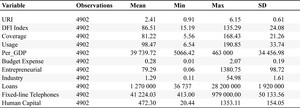
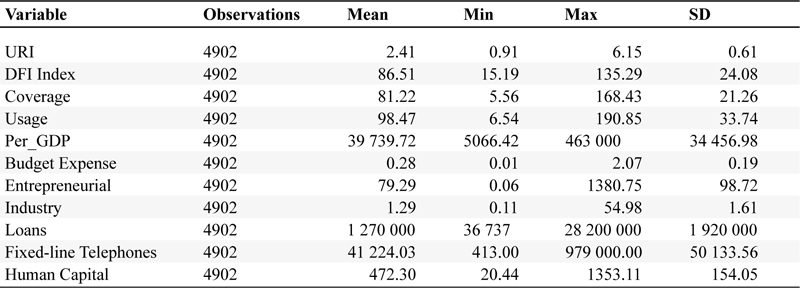
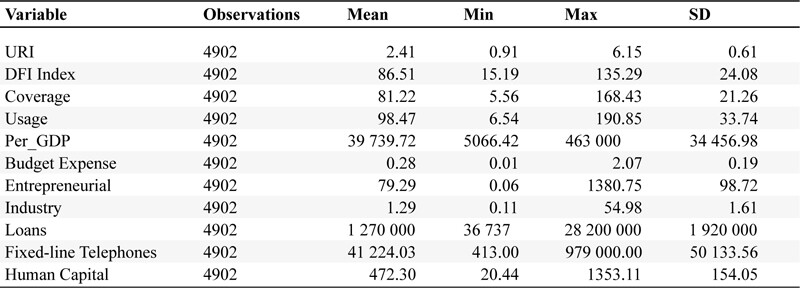
This study constructs a strongly balanced panel comprising 4902 county (district)-year observations for 817 counties (districts) in China from 2014 to 2019. The primary data infrastructure integrates government-published statistical compendiums including the China County Statistical Yearbook and prefecture-level municipal yearbooks, supplemented by market intelligence from the CSMAR database. Notably, the new enterprise registration metrics and Digital Financial Inclusion (DFI) index constitute independently sourced proprietary datasets. All variables demonstrate complete records with <2% missing observations, their distributional characteristics being systematically summarized in Table 1.

Descriptive statistics
Citation: International Food and Agribusiness Management Review 28, 4 (2025) ; 10.22434/ifamr.1264
3.3 Model
We employ a two-way fixed effects model at the county and time level, with the baseline model specified as follows:
ln income _girt =
In this model, ln income_girt represents the logarithm of the URI gap, while ln index denotes the logarithm of the DFI index. M serves as a mechanism variable, encompassing factors such as entrepreneurial activity and the status of a policy pilot. X, on the other hand, denotes control variables at the county level, including the presence of a policy pilot and other mechanism variables.
The model also incorporates time and county fixed effects, denoted by
4. Verification of hypotheses
4.1 Benchmark regression analysis
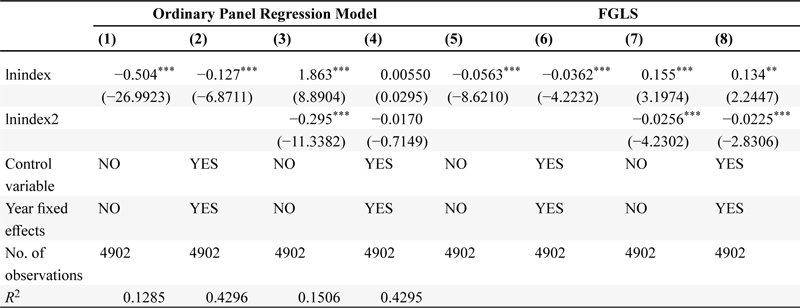
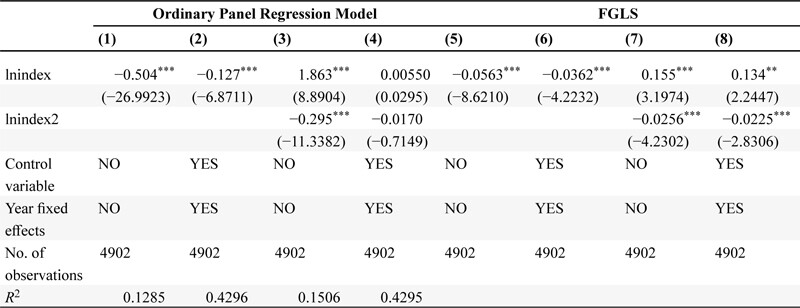
The results of the benchmark regression analysis are presented in Table 2. As noted, economic activities between counties are relatively proximate, suggesting the potential for forward or backward socio-economic correlations. Consequently, interactions between different counties in the same period are anticipated. This study begins by assessing between-groups heteroskedasticity, between-groups contemporaneous correlation, and within-groups autocorrelation on the panel data. The results of the test indicate that the sample counties do not exhibit intergroup heteroskedasticity. Nevertheless, there is a notable presence of intergroup contemporaneous correlation and intragroup autocorrelation. Accordingly, this study employs the feasible generalized least squares (FGLS) approach, which accounts for contemporaneous correlation in estimation, with results presented in models (5)â(8) of Table 2. For comparative purposes, models (1)â(4) in Table 2 present the results of ordinary panel regressions with a fixed-effects model that passes the Hausman test. Among the models, those numbered (1) and (5) regress the effect of the DFI index on the URI gap alone, with significantly negative results. Models (2) and (6) incorporate control variables and year fixed effects, with results remaining significantly negative. Additionally, the modelâs R2 increases with the inclusion of control variables, underscoring their necessity. Isolating the impact of DFI on the URI gap, it is evident that DFI development contributes to reducing this gap.
Results of the benchmark regression
Citation: International Food and Agribusiness Management Review 28, 4 (2025) ; 10.22434/ifamr.1264
To further examine the potential nonlinear relationship between DFI and URI gap within the county, this study incorporates the squared term of DFI in models (3) and (7). Furthermore, models (4) and (8) include control variables and time fixed effects. The findings show that the coefficient of DFI is significantly positive when the squared term is included, while the quadratic term is significantly negative. This suggests that the impact of DFI development on the URI gap within the county is characterized by an inverted âUâ shape, which supports the conclusions of existing studies such as Jiang et al. (2022) and Zhang et al. (2019).
However, the impact of DFI appears to be contradictory in conjunction with the results from Model 6. This study suggests a potential explanation for this outcome: the accelerated expansion of Internet infrastructure in rural China between 2014 and 2019 may have led the influence of DFI on the URI gap to a point of inflection, signaling a monotonic decline. Accordingly, we further calculate the inflection point position of the logarithmic value of DFI to be 3 and obtain the nonlinear fitting graph of the two. The logarithmic values of DFI in the sample counties range from 2.7 to 4.95, placing the majority on the right side of the inflection point. Based on these findings, this study concludes that, while the impact of DFI on the URI gap is nonlinear, the current development trajectory of the sample counties suggests that DFI has started to reduce the URI gap within the county since 2014. Since 2013, the Chinese government has successively implemented the âBroadband China Strategy and Implementation Plan (2013â2020)â and the âNational Internet Poverty Alleviation Program (2016â2020)â. These programs have greatly improved the internet infrastructure in rural China. Relevant data shows that by 2020, the proportion of administrative villages with broadband access reached 98% nationwide. The Construal-Level Theory also points out that the improvement of infrastructure makes it easier for farmers to perceive the direct impact of DFI (such as the convenience of mobile payments), which enhances the effectiveness of policy implementation (Trope and Liberman, 2010).
4.2 Spatial spillover analysis
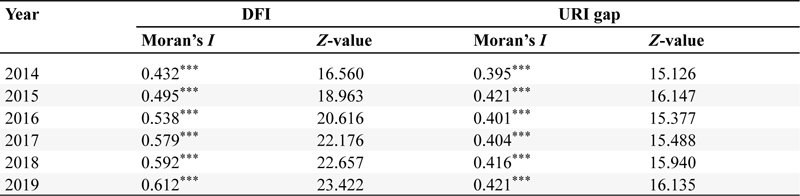
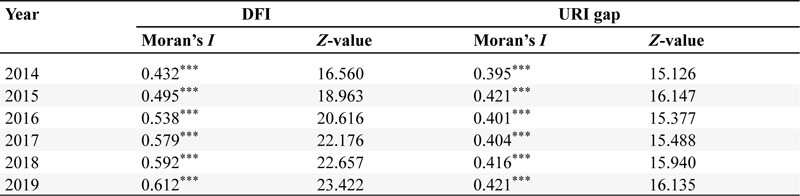
As shown in Table 3, the Moranâs I between the countyâs DFI and URI, weighted by geographic, exhibits a statistically significant positive correlation at the 1% level for the period from 2014 to 2019. This suggests a significant positive spatial correlation between the degree of DFI and URI in the county, along with evidence of spatial clustering in both (Kalogirou and Hatzichristos, 2007; Yamamoto, 2008).Furthermore, the Moranâs I for the preceding years shows an increasing trend, indicating that the degree of spatial agglomeration between regions is increasing and that regional discrepancies are tending to expand. To determine the impact of DFI on the URI gap within counties, a spatial panel model will be utilized for the analysis.
The Spatial Durbin Model (SDM), as a general form of spatial econometric model, allows for the concurrent examination of both the spatially lagged term of the URI gap and the impact of spatially lagged explanatory variables on the URI gap (Anselin, 2010; Mur and Angulo, 2006). Thus, the SDM is formulated as follows:
Citation: International Food and Agribusiness Management Review 28, 4 (2025) ; 10.22434/ifamr.1264
where
The construction of the weight matrix plays a crucial role in determining the modelâs accuracy in characterizing spatial dependence relationships. In this study, three distinct spatial weight matrices are employed to capture multidimensional spatial interaction mechanisms: the 0â1 adjacency matrix, the geographical distance matrix, and the economic distance matrix. The 0â1 adjacency matrix, primarily emphasizing physical proximity (Takahisa and Asao, 2012), serves as a binary indicator to measure geographical contiguity between counties. This matrix assigns a value of 1 to adjacent county pairs and 0 to non-adjacent pairs. However, this approach has limitations in capturing potential associations between non-contiguous spatial units. The geographical distance matrix, constructed using either the threshold method or inverse distance weighting (Kelejian and Prucha, 2010), is particularly suitable for analyzing economic activities sensitive to transportation costs. In contrast, the economic distance matrix utilizes the reciprocal of economic indicator differentials as weights to capture non-geographical spatial associations (Case et al., 1993). This matrix is particularly effective in revealing the core-periphery structure of county economies (Krugman, 1991).The selection and implementation of these matrices enable a comprehensive examination of spatial interactions across different dimensions, providing a robust framework for spatial econometric analysis. Furthermore, the estimation results of the spatial lag model (SAR) with double fixed effects are presented in Table 4 for comparative purposes.
Spatial autocorrelation between DFI and URI gap in counties, 2014â2019
Citation: International Food and Agribusiness Management Review 28, 4 (2025) ; 10.22434/ifamr.1264
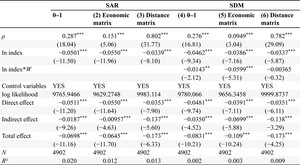
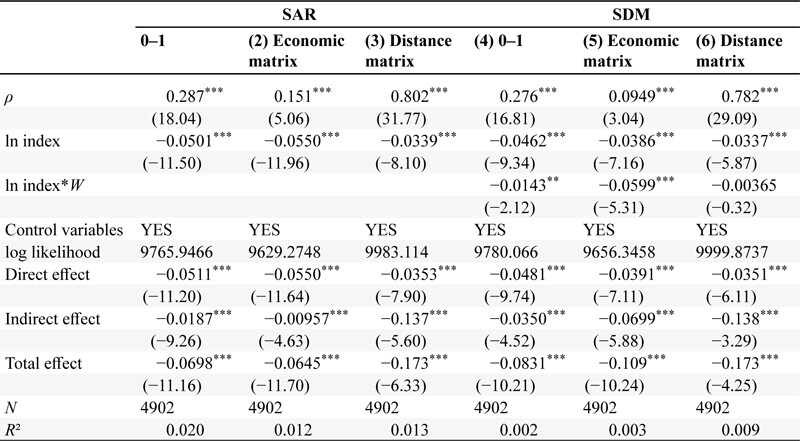
Table 4 reveals that the spatial autoregression coefficients are all significantly positive at the 1% level, suggesting that the county urban-rural per capita income gap exerts a positive spatial spillover effect on itself. Conversely, the coefficient of the spatial interaction term for DFI is negative, indicating that the expansion of DFI in neighboring counties exerts a detrimental influence on the local URI gap. This effect is notably pronounced when considering the economic distance and the adjacency weight matrix.
Spatial spillover effect regression result
Citation: International Food and Agribusiness Management Review 28, 4 (2025) ; 10.22434/ifamr.1264
However, the spatial interaction coefficients do not fully capture the relationship between the two variables. Therefore, further calculation of the marginal effects of these variables is necessary. Table 4 shows that DFI has a profound impact on the URI gap within the county, both directly and indirectly, as well as cumulatively. The direct effect results reveal that the regression results of the three matrices are all significantly negative at the 1% level, suggesting that the level of DFI development within the county significantly reduces the URI gap in the county. Additionally, the indirect effect is significantly negative, indicating that the level of DFI development in neighboring counties contributes to the reduction of the local URI gap. This is consistent with Hypothesis 2.
4.3 Robustness tests
4.3.1 Instrumental variables testing
Studies have shown that the impact of DFI on economic growth is endogenous. Thus, large sample sizes do not preclude the possibility of biased empirical results (Yu et al., 2022). To mitigate endogeneity, instrumental variables including geographic distance, neighboring region digital finance indices, Internet development levels, and historical Internet development can be utilized for DFI (Zhu, 2023).
When determining geographic proximity, we primarily consider the distance from each county to the provincial capital. This is due to the fact that the provincial capital is typically the economic hub of a province and often the epicenter of digital financial advancement. Thus, regions closer to the provincial capital are expected to have more advanced its levels of DFI.
Furthermore, the topographic relief of each county is identified as an instrumental variable (Feng et al., 2008).An inverse relationship exists between topographic relief and the costs associated with installing base stations and fiber optic broadband. With reduced topographic relief and flatter terrain, installation costs decrease, enabling more efficient information transmission. In contrast, areas with higher terrain, such as mountainous regions and counties with elevated topography, incur higher installation costs, which subsequently affects the pace of DFI development.
Since this study employs panel data and both distance and undulation are time-invariant variables, it is essential to apply a logarithmic transformation to the number of provincial mobile Internet users (MIU) during the observation period, for each countyâs respective province. This method captures the dynamic, time-varying aspects of the instrumental variables, thereby ensuring their synchronization with the bidirectional dynamics of time and county-specific factors (Guo et al., 2023; Nunn and Qian, 2014; Tao et al., 2022).
The impact of DFI on the URI gap at the county and district levels remains significantly negative, irrespective of the instrumental variable used, whether distance or slope. This provides further validation for the findings of the preceding analysis, indicating that the conclusions are relatively robust.
4.3.2 Replacement samples
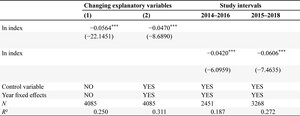
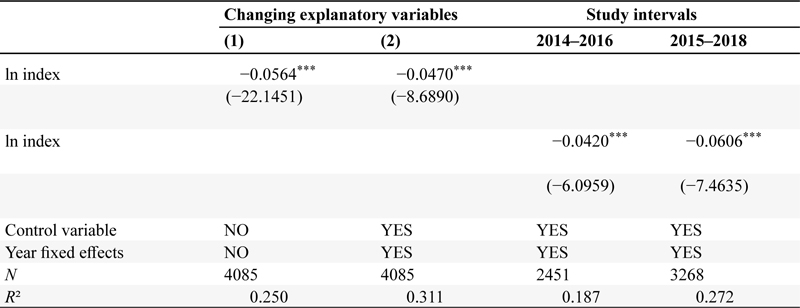
To further verify the robustness of the findings, we performed supplementary regression analyses, altering the set of explanatory variables and the sample periods individually. The specific outcomes of these supplementary analyses are presented in Table 5. Models (1) and (2) replace the explanatory variables with the one-period lagged DFI, while models (3) and (4) segment the research intervals into 2014â2016 and 2015â2018, respectively. As shown in Table 5, all other results exhibit a significantly negative trend.
Changing explanatory variables and study intervals
Citation: International Food and Agribusiness Management Review 28, 4 (2025) ; 10.22434/ifamr.1264
5. Mechanism testing
5.1 Mediating effects of entrepreneurial activity
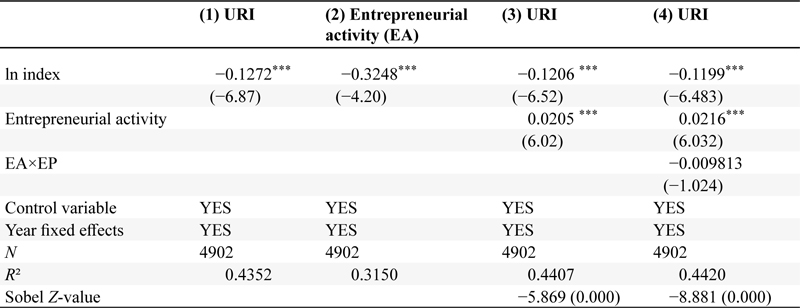
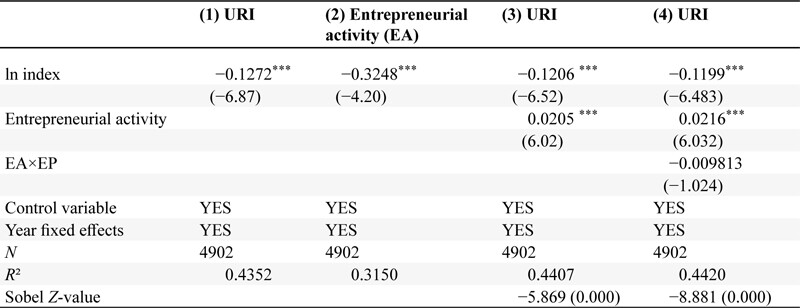
The results of the mediating effect test for entrepreneurial activity in the county are presented in Table 6. Models (1) through (3) aim to test this transmission mechanism. Model (3) presents the regression outcomes with county entrepreneurial activity as a mediating variable. Table 6 illustrates that the Sobel test exhibits a Z-value of â5.869, which successfully passes the 1% significance level test. Furthermore, the coefficient for DFI decreases from 0.127 in the baseline model to 0.121. The Sobel test results suggest that the mediating effect explains 5.25% of the total effect, thereby confirming Hypothesis 3 and corroborating the findings of existing studies.
Mediation effect test of county entrepreneurial activity
Citation: International Food and Agribusiness Management Review 28, 4 (2025) ; 10.22434/ifamr.1264
Additionally, China identified three groups of counties, totaling 351, as pilot regions for the initiative to encourage migrant workers and other individuals to return to their hometowns and start businesses between 2016 and 2017. We can thus conclude that this policy contributes to an increase in entrepreneurial activity in counties. To further validate this conclusion, the paper examines the interaction term between entrepreneurial activity (EA) and entrepreneurial pilots (EP). The outcomes of this analysis, presented in model (4) of Table 6, confirm that the mediating effectâs conclusion is robust.
5.2 Impact of pilot policy
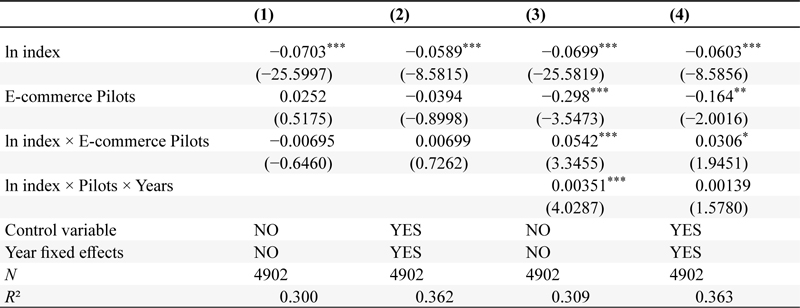
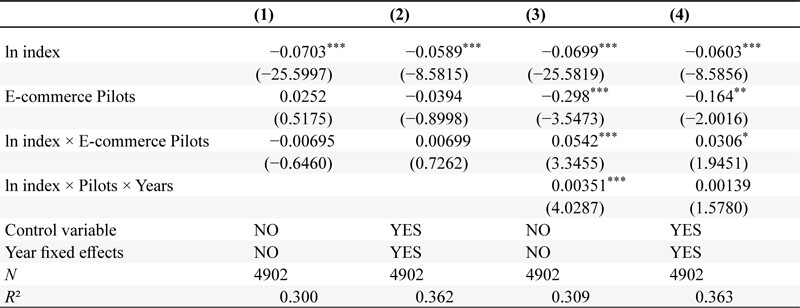
To ascertain the moderating influence of the e-commerce-to-village pilot policy on the impact of DFI on the URI gap, we created an interaction term between the DFI index and the countyâs designation as an e-commerce-to-village pilot. The earlier a countyâs designation as a pilot, the greater the likelihood that the policy exerts a moderating effect. Accordingly, we include the duration of a countyâs pilot status in the model, creating interaction terms for the DFI index, the e-commerce pilot status, and the duration of the pilot status. The results are presented in Model (4) of Table 8. Models (1) and (3) exclude control variables, while Models (2) and (4) include control variables and use two-way fixed effects for cross-sectional and temporal dimensions.
Table 7 shows that the impact of the DFI index on the URI gap within the county remains significantly negative after the introduction of the moderating variable, namely the policy in question. Additionally, the designation of a county as a pilot region for e-commerce initiatives in agricultural areas has been shown to contribute to a reduction in the URI gap. However, concerning the interaction term, the interaction between the pilot counties of e-commerce in villages and DFI is not statistically significant when the number of years of piloting is not considered. Conversely, the coefficient of this interaction term is significantly positive when the number of years of piloting is controlled for. This seems to challenge the preceding hypothesis. However, when the coefficient of the Village E-commerce Pilots counties themselves (â0.298) is considered, the implementation of the Village E-commerce Pilots still reduces the URI gap.
Moderating effects of village e-commerce pilots
Citation: International Food and Agribusiness Management Review 28, 4 (2025) ; 10.22434/ifamr.1264
6. Discussion and conclusions
6.1. Discussion
Initially, differences in regional development levels are examined by categorizing the sample counties based on their geographical location as eastern, central, and western regions. Second, the study compares the differences between impoverished and non-impoverished counties, utilizing the list of 832 nationally-designated poor counties as a reference during the poverty alleviation period. Third, the study assesses the varying impacts of DFI on the URI gap across different dimensions.
Table 8 shows that the implementation of DFI has the effect of reducing the URI gap within the eastern, central, and western counties. However, this impact is more pronounced in the central and western regions of the country. Additionally, the coefficient for impoverished counties is larger than for non-impoverished ones, indicating that the development of DFI is particularly advantageous for counties with lower income levels.
Discussion of impact differences by region
Citation: International Food and Agribusiness Management Review 28, 4 (2025) ; 10.22434/ifamr.1264
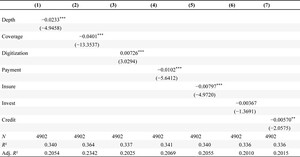
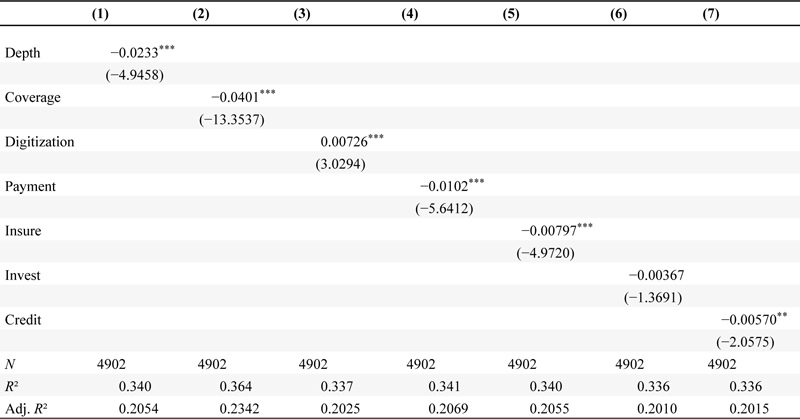
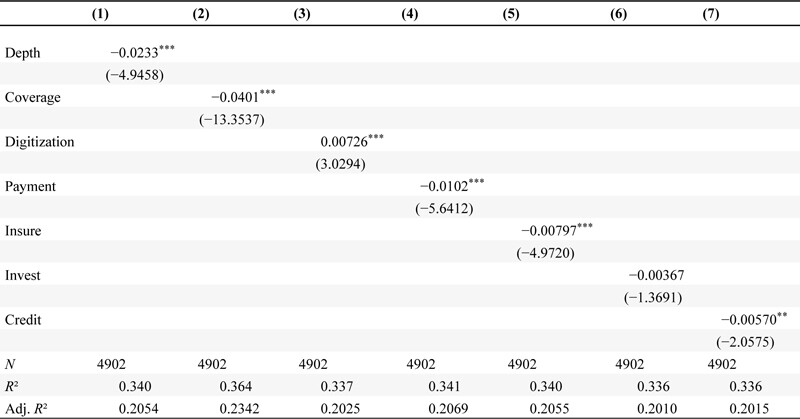
This study focuses on the dimensions of digital finance, examining not only the three dimensions of depth of use, breadth of coverage, and degree of digitization, but also exploring the heterogeneity within the depth of use, which includes payment, insurance, investment, and credit. Table 9 shows that both the depth of use and breadth of coverage of digital finance significantly reduce the URI gap within the county. However, the reverse impact of digitization may be due to the digital infrastructure gap between urban and agricultural areas. Regarding the sub-indicators of the depth of use of digital finance, the coefficients for payment, insurance, investment, and credit are all negative, suggesting that these aspects positively contribute to narrowing the URI gap.
Impact of DFI sub-indicators
Citation: International Food and Agribusiness Management Review 28, 4 (2025) ; 10.22434/ifamr.1264
This result can be attributed to the following factors: First, the development of third-party payment platforms, such as Alipay, can effectively reduce the transaction costs associated with sales and operations for rural residents (Ding et al., 2018), expand the scope of transactions, thereby increasing the income level of farmers (Jensen, 2007). Furthermore, digital credit addresses the need for small-scale financing among rural residents (Li, 2018; Liu et al., 2023a), while digital insurance mitigates the impact of production and market risks faced by farmers (Mottaleb et al., 2017). Nevertheless, the investment function of digital finance is not yet widely utilized among rural residents, limiting its current impact. As digital finance becomes more deeply integrated into rural communities, the income-enhancing potential of the investment function is likely to grow (Kling et al., 2022).
6.2 Conclusions
This study utilizes panel data from 2014 to 2019 at the county level to empirically examine the impact of DFI on the URI gap within counties and the underlying mechanisms. Specifically, the study investigates the mediating impact of county entrepreneurial activity in this process. The analysis employs panel double fixed-effects models, spatial econometric models, and mediating-effects models in a multidimensional and multilevel manner. The principal findings are:
Since 2014, DFI has significantly reduced the URI gap. There is a significant spatial spillover effect of the impact of the development of DFI on the URI gap within counties, which helps to improve the pattern of URI distribution among counties. Regarding the mechanism of action, DFI has reduced the URI gap by spurring entrepreneurial activity at the county level. Additionally, pilot programs promoting e-commerce in agricultural areas enhance the role of DFI in reducing the URI gap. The depth of DFI utilization has a more significant impact on narrowing the URI gap than the level of digitization.
Given that our data covers the critical period of Chinaâs targeted poverty alleviation campaign (2013â2020), the findings provide timely empirical evidence for developing countries implementing the UN Sustainable Development Goals (SDGs), particularly SDG 1 (No Poverty) and SDG 9 (Industry Innovation and Infrastructure). Our findings carry threefold implications for developing countries: first, the demonstrated spatial spillover effects suggest that neighboring counties can form synergistic clusters. This provides empirical support for developing countries to establish regional digital finance hubs instead of isolated county-level interventions. Second, the mediating role of entrepreneurship implies that digital finance policies should be coupled with entrepreneurial training programs â a cost-effective approach for resource-constrained developing nations. Third, the amplified effect under e-commerce pilots underscores the importance of policy sequencing: digital infrastructure development should precede large-scale financial inclusion initiatives.
6.3 Limitations
This paper is limited in several ways. First, due to the data and analytical requirements of this study, a balanced panel dataset of counties was utilized, which inevitably led to a reduction in the analytical sample size. Furthermore, the study does not encompass a complete national sample of counties. Secondly, the selected instrumental variables can only partially address the endogeneity issue. Further research is necessary to ascertain greater explanatory power and to identify more suitable methods to address the endogeneity issue. Third, while the implementation of the digital countryside pilot policy may significantly influence the impact of DFI, the brief duration of policy implementation to date precludes a comprehensive assessment of its policy effects.
Acknowledgements
This work was supported by the Social Science Planning Program in Shandong Province âResearch on Stable Income Growth for Middle and Low-Income Groups in Rural Shandong under the Context of Emerging Digital Business Modelsâ (Grant No. 23CJJJ32).
References
Acemoglu, D. 2002. Technical change, inequality and the labor market. Journal of Economic Literature 40(1): 7â72. https://doi.org/10.1257/jel.40.1.7.
Aghion, P. and P. Bolton. 1997. A theory of trickle-down growth and development. The Review of Economic Studies 64: 151â172. https://doi.org/10.2307/2971707.
Amiel, Y. 1999. The measurement of income inequality: the subjective approach. In J. Silber (ed.), Handbook of Income Inequality Measurement. Springer, Dordrecht, pp. 227â243. http://doi.org/10.1007/978-94-011-4413-1_8.
Anselin, L. 2010. Thirty years of spatial econometrics. Papers in Regional Science 89(1): 3â26. https://doi.org/10.1111/j.1435-5957.2010.00279.x.
Ash, J., R. Kitchin and A. Leszczynski. 2018. Digital turn, digital geographies? Progress in Human Geography 42(1): 25â43. http://dx.doi.org/10.1177/0309132516664800.
Banerjee, A. and A.F. Newman. 1993. Occupational choice and the process of development. Journal of Political Economy 101: 274â298. https://doi.org/10.1086/261876.
Bezemer, D. and D. Headey. 2008. Agriculture, development and urban bias. World Development 36(8): 1342â1364. https://doi.org/10.1016/j.worlddev.2007.07.001.
Carrère, C. and J. De Melo. 2012. Fiscal spending and economic growth: some stylized facts. World Development 40(9): 1750â1761. https://doi.org/10.1016/j.worlddev.2012.04.011.
Case, A.C., H.S. Rosen and J.R. Hines. 1993. Budget spillovers and fiscal policy interdependence: evidence from the states. Journal of Public Economics 52(3): 285â307. https://doi.org/10.1016/0047-2727(93)90036-S.
Chen, X., Z. Huang, C. Luo and Z. Hu. 2024. Can agricultural industry integration reduce the ruralâurban income gap? evidence from countyâlevel data in China. Land 13(3): 332. https://doi.org/10.3390/land13030332.
Couture, V., B. Faber, Y. Gu and L. Liu. 2021. Connecting the countryside via e-commerce: evidence from China. American Economic Review: Insights 3(1): 35â50. http://doi.org/10.1257/aeri.20190382.
Cowden, B., M. Karami, J. Tang, W. Ye and S. Adomako. 2024. The spectrum of perceived uncertainty and entrepreneurial orientation: Impacts on effectuation. Journal of Small Business Management 62(1): 381â414. https://doi.org/10.1080/00472778.2022.2051179.
De Maio, F.G. 2007. Income inequality measures. Journal of Epidemiology and Community Health 61(10): 849â852. https://doi.org/10.1136/jech.2006.052969.
Demirgüç-Kunt, A. and L.F. Klapper. 2013. Measuring financial inclusion: explaining variation in use of financial services across and within countries. Brookings Papers on Economic Activity: 279â340. https://doi.org/10.1353/ECA.2013.0002.
Ding, D., G. Chong, D.L.K. Chuen and T.L. Cheng. 2018. From ant financial to Alibabaâs rural Taobao strategyâhow Fintech is transforming social inclusion. In Handbook of blockchain, digital finance and inclusion, volume 1. Elsevier, Amsterdam, pp. 19â35. https://doi.org/10.1016/B978-0-12-810441-5.00002-6.
Easterlin, R.A. 2001. Income and happiness: towards a unified theory. The Economic Journal 111(473): 465â484. https://doi.org/10.1111/1468-0297.00646.
Evans, D.S. and B. Jovanovic. 1989. An estimated model of entrepreneurial choice under liquidity constraints. Journal of Political Economy 97(4): 808â827. https://doi.org/10.1086/261629.
Fan, J., L. Tang, W. Zhu and B. Zou. 2018. The Alibaba effect: spatial consumption inequality and the welfare gains from e-commerce. Journal of International Economics 114: 203â220. https://doi.org/10.1016/j.jinteco.2018.07.002.
Feng, Z., Y. Tang, Y. Yang and D. Zhang. 2008. Relief degree of land surface and its influence on population distribution in China. Journal of Geographical Sciences 18(2): 237â246. http://doi.org/10.1007/s11442-008-0237-8.
Geng, Z. and G. He. 2021. Digital financial inclusion and sustainable employment: Evidence from countries along the belt and road. Borsa Istanbul Review 21(3): 307â316. https://doi.org/10.1016/j.bir.2021.04.004.
Gennaioli, N., R. La Porta, F. Lopez-de-Silanes and A. Shleifer. 2012. Human capital and regional development The Quarterly Journal of Economics 128(1): 105â164. https://doi.org/10.1093/qje/qjs050.
Goldfarb, A. and C. Tucker. 2019. Digital economics. Journal of Economic Literature 57(1): 3â43. http://doi.org.10.1257/jel.20171452.
Graham, C. and A. Felton. 2006. Inequality and happiness: insights from Latin America. The Journal of Economic Inequality 4: 107â122. https://doi.org/10.1007/s10888-005-9009-1.
Li. and J. Qin 2022. Income effect of rural e-commerce: empirical evidence from Taobao villages in China. Journal of Rural Studies 96: 129â140. https://doi.org/10.1016/j.jrurstud.2022.10.019.
Guellec, D. 2021. Digital Innovation and the Distribution of Income. In C. Corrado, J. Haskel, J. Miranda and D. Sichel (eds), Measuring and Accounting for Innovation in the Twenty-First Century. University of Chicago Press, Chicago, IL, pp. 323â370. http://doi.org/10.7208/chicago/9780226728209.003.0010.
Guillaumont Jeanneney, S. and P. Hua. 2001. How does real exchange rate influence income inequality between urban and rural areas in China? Journal of Development Economics 64(2): 529â545. http://doi.org/10.1016/s0304-3878(00)00149-8.
Guo, B., Y. Wang, H. Zhang, C. Liang, Y. Feng and F. Hu. 2023. Impact of the digital economy on highâquality urban economic development: evidence from Chinese cities. Economic Modelling 120: 106194. https://doi.org/10.1016/j.econmod.2023.106194.
Guo, F., S.T. Kong and J. Wang. 2016. General patterns and regional disparity of internet finance development in China: evidence from the Peking University Internet Finance Development Index. China Economic Journal 9(3): 253â271. https://doi.org/10.1016/j.econmod.2023.106194.
Hu, D., F. Guo and C. Zhai. 2023. Digital finance, entrepreneurship and the household income gap: evidence from China. Information Processing and Management 60(5): 103478. https://doi.org/10.1016/j.ipm.2023.103478.
Jensen, R. 2007. The digital provide: information(technology), market performance and welfare in the south Indian fisheries sector. The Quarterly Journal of Economics 122(3): 879â924. http://doi.org/10.1162/qjec.122.3.879.
Jiang, Q., Y. Li and H. Si. 2022. Digital economy development and the urbanârural income gap: Intensifying or reducing. Land 11(11): 1980. http://doi.org/10.3390/land11111980.
Kalogirou, S. and T. Hatzichristos. 2007. A spatial modelling framework for income estimation. Spatial Economic Analysis 2(3): 297â316. https://doi.org/10.1080/17421770701576921.
Kanbur, R., Y. Wang and X. Zhang. 2021. The great Chinese inequality turnaround. Journal of Comparative Economics 49(2): 467â482. http://doi.org/10.1016/j.jce.2020.10.001.
Kanga, D., C. Oughton, L. Harris and V. Murinde. 2022. The diffusion of fintech, financial inclusion and income per capita. The European Journal of Finance 28(1): 108â136. https://doi.org/10.1080/1351847X.2021.1945646.
Kelejian, H.H. and I.R. Prucha. 2010. Specification and estimation of spatial autoregressive models with autoregressive and heteroskedastic disturbances. Journal of Econometrics 157(1): 53â67. https://doi.org/10.1016/j.jeconom.2009.10.025.
Kenessey, Z. 1987. The primary, secondary, tertiary and quaternary sectors of the economy. Review of income and wealth 33(4): 359â385. https://doi.org/10.1111/j.1475-4991.1987.tb00680.x.
Kling, G., V. Pesqué-Cela, L. Tian and D. Luo. 2022. A theory of financial inclusion and income inequality. The European Journal of Finance 28(1): 137â157. https://doi.org/10.1080/1351847X.2020.1792960.
Krugman, P. 1991. Increasing returns and economic geography. Journal of Political Economy 99(3): 483â499. https://doi.org/10.1086/261763.
Lee, C.-C., R. Lou and F. Wang. 2023. Digital financial inclusion and poverty alleviation: Evidence from the sustainable development of China. Economic Analysis and Policy 77: 418â434. https://doi.org/10.1016/j.eap.2022.12.004.
Leyshon, A. and N.J. Thrift. 1995. Geographies of financial exclusion: financial abandonment in Britain and the United States. Transactions of the Institute of British Geographers 20: 312â343. https://doi.org/10.2307/622654.
Li, D. Y. Wu, C. Gou and T. Yu. 2024. Impact of digital inclusive finance on the innovative activities of new agricultural operating entities: evidence from China. International Journal of Agricultural Sustainability 22(1): 2439114. https://doi.org/10.1080/14735903.2024.2439114.
Li, J., H. Wang and W. Soh. 2024. Digital transformation, financial literacy and rural household entrepreneurship. Finance Research Letters 62: 105171. https://doi.org/10.1016/j.frl.2024.105171.
Li, L. 2018. Financial inclusion and poverty: The role of relative income. China Economic Review 52: 165â191. https://doi.org/10.1016/j.chieco.2018.07.006.
Li, S. 2014. Poverty reduction and effects of pro-poor policies in rural China. China and World Economy 22(2): 22â41. https://doi.org/10.1111/j.1749-124X.2014.12060.x.
Lin, H. and M. Brueckner. 2023. Inequality and growth in China. Empirical Economics. http://doi.org/10.1007/s00181-023-02472-0.
Liu, J., C.-H. Puah, M.A. Arip and M.-C. Jong. 2023. Impacts of digital financial inclusion on urbanârural income disparity: A comparative research of the Eastern and Western regions in China. Economies 11(11): 282. https://doi.org/10.3390/economies11110282.
Liu, T., D. Xue, Y. Fang and K. Zhang. 2023. The impact of differentiated development of the digital economy on employment quality â An empirical analysis based on provincial data from China. Sustainability 15(19): 14176. https://doi.org/10.3390/su151914176.
Luo, C., S. Li and T. Sicular. 2020. The long-term evolution of national income inequality and rural poverty in China. China Economic Review 62. http://doi.org/10.1016/j.chieco.2020.101465.
MacLeod, G. and M. Goodwin. 1999. Space, scale and state strategy: rethinking urban and regional governance. Progress in Human Geography 23(4): 503â527. http://doi.org/10.1191/030913299669861026.
Mastronardi, L. and A. Cavallo. 2020. The spatial dimension of income inequality: An analysis at municipal level. Sustainability 12(4): 1622. https://doi.org/10.3390/su12041622.
McCall, L. and C. Percheski. 2010. Income inequality: New trends and research directions. Annual Review of Sociology 36(1): 329â347. http://doi.org/10.1146/annurev.soc.012809.102541.
Meng, C., B. Gustafsson and J. Knight. 2023. Economic transformation and income distribution in China over three decades. Elements in Development Economics. https://doi.org/10.1017/9781009357616.
Milanovic, B. 1997. A simple way to calculate the Gini coefficient and some implications. Economics Letters 56(1): 45â49. https://doi.org/10.1016/S0165-1765(97)00101-8.
Mottaleb, K.A., D.B. Rahut, A. Ali, B. Gérard and O. Erenstein. 2017. Enhancing smallholder access to agricultural machinery services: Lessons from Bangladesh. The Journal of Development Studies 53(9): 1502â1517 https://doi.org/10.1080/00220388.2016.1257116.
Mur, J. and A. Angulo. 2006. The spatial Durbin model and the common factor tests. Spatial Economic Analysis 1(2): 207â226. https://doi.org/10.1080/17421770601009841.
Nie, C., H. Wang and Y. Feng. 2023. Urban-biased policy, government intervention and urbanârural income gap: evidence from provincial government work reports in China. Kybernetes 53(11): 4929â4947. https://doi.org/10.1108/K-01-2023-0084.
Nunn, N. and N. Qian. 2014. US food aid and civil conflict. American Economic Review 104(6): 1630â1666. http://doi.org/10.1257/aer.104.6.1630.
Piketty, T., L. Yang and G. Zucman. 2019. Capital accumulation, private property and rising inequality in China, 1978â2015. American Economic Review 109(7): 2469â2496. http://doi.org/10.1257/aer.20170973.
Qian, L. and R. Chen. 2023. Where you live determines how you are treated: E-commerce geography and digital inequality in China. Eurasian Geography and Economics: 1â26. https://doi.org/10.1080/15387216.2023.2210596.
Ravallion, M. 2014. Income inequality in the developing world. Science 344(6186): 851â855. http://doi.org/10.1126/science.1251875.
Ravallion, M. and S. Chen. 2022. Is that really a Kuznets curve? Turning points for income inequality in China. The Journal of Economic Inequality 20(4): 749â776. https://doi.org/10.1007/s10888-022-09541-x.
Reljic, J., R. Evangelista and M. Pianta. 2021. Digital technologies, employment and skills. Industrial and Corporate Change: dtab059. https://doi.org/10.1093/icc/dtab059.
Saunders, H.D. 1992. The KhazzoomâBrookes postulate and neoclassical Growth. The Energy Journal 13(4): 131â148.
Schumpeter, J.A. 1934. The theory of economic development; an inquiry into profits, capital, credit, interest and the business cycle. Harvard University Press, Cambridge, MA.
Shen, H., T. Luo, Z. Gao, X. Zhang, W. Zhang and Y.-C. Chuang. 2023. Digital financial inclusion and the urbanârural income gap in China: empirical research based on the Theil index. Economic ResearchâEkonomska Istraživanja 36(3): 2156575. https://doi.org/10.1080/1331677X.2022.2156575.
Shi, L. and L. Chuliang. 2010. Re-estimating the income gap between urban and rural households in China. ProcediaâSocial and Behavioral Sciences 2(5): 7151â7163. https://doi.org/10.1016/j.sbspro.2010.05.068.
Sicular, T., Y. Ximing, B. Gustafsson and L. Shi. 2007. The urbanârural income gap and inequality in China. Review of income and wealth 53(1): 93â126. https://doi.org/10.1111/j.1475-4991.2007.00219.x.
Silber, J. 2012. Handbook of income inequality measurement. Vol. 71: Springer Science and Business Media. https://doi.org/10.1007/978-94-011-4413-1.
Stel, A.v., M. Carree and R. Thurik. 2005. The effect of entrepreneurial activity on national economic growth. Small business economics 24(3): 311â321. http://doi.org/10.1007/s11187-005-1996-6.
Stiglitz, J.E. and A. Weiss. 1981. Credit rationing in markets with imperfect information. The American Economic Review 71: 393â410. https://doi.org/10.1086/261876.
Stoica, O., A. Roman and V.D. Rusu. 2020. The nexus between entrepreneurship and economic growth: A comparative analysis on groups of countries. Sustainability 12(3): 1186. http://doi.org/10.3390/su12031186.
Takahisa, Y. and A. Asao. 2012. One-directional adjacency matrices in spatial autoregressive model: A land price example and Monte Carlo results. Economic Modelling 29(1): 79â85. https://doi.org/10.1016/j.econmod.2011.08.011.
Tao, Z., Z. Zhang and L. Shangkun. 2022. Digital economy, entrepreneurship and high-quality economic development: Empirical evidence from urban China. Frontiers of Economics in China 17(3): 393. http://doi.org/10.3868/s060-015-022-0015-6.
Trope, Y. and N. Liberman. 2010. Construal-level theory of psychological distance. Psychological review 117(2): 440. http://doi.org/10.1037/a0018963.
Urbano, D., S. Aparicio and D. Audretsch. 2019. Twenty-five years of research on institutions, entrepreneurship and economic growth: what has been learned? Small Business Economics 53: 21â49. https://doi.org/10.1007/s11187-018-0038-0.
Wei, H., L. Li and M. Nian. 2021. Chinaâs urbanization strategy and policy during the 14th five-year plan period. Chinese Journal of Urban and Environmental Studies 9(01): 2150002. http://doi.org/10.1142/s2345748121500020.
Witcomb, R.M. 1974. Ronald I. Mckinnon. Money and capital in economic development. The Economic Journal 84(334): 422â423. https://doi.org/10.2307/2231282.
Yamamoto, D. 2008. Scales of regional income disparities in the USA, 1955â2003. Journal of Economic Geography 8(1): 79â103. https://doi.org/10.1093/jeg/lbm044.
Yang, D.T. 1999. Urban-biased policies and rising income inequality in China. American Economic Review 89(2): 306â310. http://doi.org/10.1257/aer.89.2.306.
Yang, X., Y. Huang and M. Gao. 2022. Can digital financial inclusion promote female entrepreneurship? Evidence and mechanisms. The North American Journal of Economics and Finance 63: 101800. https://doi.org/10.1016/j.najef.2022.101800.
Yu, C., N. Jia, W. Li and R. Wu. 2022. Digital inclusive finance and rural consumption structureâevidence from Peking University digital inclusive financial index and China household finance survey. China Agricultural Economic Review 14(1): 165â183. https://doi.org/10.1108/CAER-10-2020-0255.
Zeqi, Q., Z. Shuqin and L. Shiding. 2019. From the digital divide to the connectivity dividend difference: a connectivity capital perspective. Social Sciences in China 40(1): 63â81. https://doi.org/10.1080/02529203.2019.1556475.
Zhang, C., Y. Zhu and L. Zhang. 2024. Effect of digital inclusive finance on common prosperity and the underlying mechanisms. International Review of Financial Analysis 91: 102940. https://doi.org/10.1016/j.irfa.2023.102940.
Zhang, H., M. Chen and C. Liang. 2022. Urbanization of county in China: spatial patterns and influencing factors. Journal of Geographical Sciences 32(7): 1241â1260. https://doi.org/10.1007/s11442-022-1995-4.
Zhang, J., Y. Zhang, M. Cheng, N. Yu, X. Wei and Z. Zhang. 2019. Impact of information access on poverty alleviation effectiveness: evidence from China. IEEE Access 7: 149013â149025. http://doi.org/10.1109/ACCESS.2019.2946652.
Zhu, W. 2023. Digital financial inclusion and the share of labor income: firm-level evidence. Finance Research Letters 56: 104160. https://doi.org/10.1016/j.frl.2023.104160.
Corresponding author