Abstract
With the dynamic and complex changes in the farmers’ living environment and the vigorous development of entrepreneurial activities worldwide, farmer entrepreneurship is experiencing rapid growth. However, whether farmer entrepreneurship enhances the welfare of farmers’ families demands further scrutiny. Utilizing data from the Chinese Family Tracking Survey and drawing on Amartya Sen’s capability approach, this article formulates a farmer family welfare evaluation index system to comprehensively assess the impact of farmer entrepreneurship on farmer families. The research findings reveal the following: (1) Entrepreneurship contributes to enhancing the welfare of farmer families, with entrepreneurial farmer families experiencing higher welfare levels than their non-entrepreneurial counterparts. (2) Farmer entrepreneurship falls short of delivering complete welfare improvements to farmers’ families. While various welfare conditions, such as family economics, social security, living conditions, and psychological conditions, have improved after starting a business, health welfare has seen a decline. (3) Farmland transfer significantly influences the process of farmer entrepreneurship, directly fostering the family welfare of entrepreneurial farmers. (4) Farmers’ entrepreneurial behavior yields greater welfare benefits for the new generation, farmers with higher education levels, and those situated in the central region. Building on these findings, this study proposes relevant improvement suggestions to offer robust support for policy considerations.
1. Introduction
In recent years, the relationship between farmer employment and agricultural change has received increasing attention from scholars. The transition of rural residents from the traditional agricultural sector to urban areas is a crucial element in the development process of developing countries, enabling them to engage in more lucrative economic activities to meet their livelihood needs (Mukhtar et al., 2018). Taking China as an example, the Chinese government has been focusing on the “agriculture, rural areas and farmers” as a priority for economic development, and has put forward the “Mass Entrepreneurship, Mass Innovation” and “Rural Revitalization Strategy” to encourage entrepreneurial activities among all people, with farmers being a key focus. In the current context of the effective linkage connection between consolidation of poverty alleviation achievements and rural revitalization, numerous farmers have chosen to join the team of innovation and entrepreneurship, achieving employment upgrades in the process. Multiple studies have found that entrepreneurship, while solving the entrepreneurs’ own employment issues, can also release more jobs, alleviate the contradiction between the supply and demand of rural labor, explore the potential for rural development, stimulate market vitality, and drive the employment of farmers, realizing the “multiplication effect” (Faria et al., 2010; Savrul, 2017; Van Rooyen, 2014). Furthermore, farmer entrepreneurship significantly contributes to rural economic development, acting as a new force to boost the income of rural households in the original ecological economy and driving prosperity in rural industry, farmers’ lives, and the integrated development of urban and rural areas (Aidin et al., 2022; Hosseini et al., 2020; Niu, 2013; Yang et al., 2023). It serves as a crucial approach to realizing the rural revitalization strategy.
To this end, many countries have consistently implemented diverse entrepreneurial incentive policies and progressively enhanced innovation and entrepreneurial frameworks. Taking China as an example, the State Council promulgated the Opinions on Supporting Farmers to Return Home to Start their Business in 2015, which creates a diversified innovation environment and supports farmer entrepreneurship in returning to their hometowns. In 2018, the State Council issued the Rural Revitalization Strategic Plan (2018–2022) that clearly proposes to develop and expand rural industries, and stimulate the vitality of rural innovation and entrepreneurship. Consequently, China’s rural entrepreneurship environment has been substantially improved, new industries and new business models are emerging, and farmers’ passion for entrepreneurship has never been higher. Being a significant agricultural economy, India places considerable emphasis on farmers and agricultural development. Various entities, including enterprises, governmental agencies, and non-governmental organizations, support rural entrepreneurial vitality through diverse means. One notable example is the National Bank for Agriculture and Rural Development (NABARD), which implements several programs aimed at developing the non-agricultural sector in rural areas. To formalize entrepreneurship and skill development initiatives, National Bank for Agriculture and Rural Development extends financial support to specialized institutions offering entrepreneurial development and skill training to rural youth and women, thereby enhancing outcomes and livelihood opportunities. Being a major agricultural producer, Brazil has augmented financial support for agricultural development, established dedicated managers to deliver services to rural producers, and offered assurances to entrepreneurial farmers.
Affected by recent epidemics, the domestic employment field has changed the traditional pattern of great labor migration. Together with the policy support for poverty alleviation, some migrant workers who have been working in big cities for a long time have also begun to consider staying in their hometowns to start their entrepreneurship. According to the China Good Life Survey (2020–2021), the percentage of rural participants opting for entrepreneurship in 2020 was 3.30%, surpassing that of their urban counterparts (2.47%). Entrepreneurial activity among farmers has been on the rise. However, in comparison with urban entrepreneurs, migrant workers or farmers still lag behind urban workers in cultural quality, social resources, and labor skills (Wang and Sun, 2018; Wang et al., 2022). And rural entrepreneurship faces challenges related to supporting policies, services, and infrastructure compared to urban areas. Simultaneously, challenges such as unsustainable entrepreneurship, low entrepreneurial proficiency, and substantial regional disparities in entrepreneurial incidence have come to light (Li and Ran, 2020). Farmers’ self-employment is a distinctive form of employment. Logically, system designers assume that farmers’ income will be enhanced. In theory, this system can lead to various efficiency improvements. However, the question of whether farmer entrepreneurship can enhance the welfare of farmers’ families requires further study.
With the development of economy, people’s needs are more diversified and the connotation of household welfare is richer. Consequently, the impact of farm household entrepreneurship on household welfare may be more complex. On the one hand, farm household entrepreneurship may increase entrepreneurs’ income, improve their living conditions, and increase life satisfaction by improving their income and creating job opportunities. On the other hand, farm household entrepreneurship may bring more negative emotions such as stress to the entrepreneurs, which not only affects their health, but also reduces their leisure time, leads to deterioration of household relationships, and thus reduces their life satisfaction. Therefore, how does farmers’ entrepreneurial behavior affect farmers’ household welfare in the context of mass entrepreneurship? Is it an effective way to promote the rural revitalization and common prosperity? Is there a differential impact of farmer entrepreneurship on household welfare under different conditions? Research on these questions not only helps to explain farmers’ entrepreneurial choices from a welfare perspective, but also provides a strong support for policy formulation to enhance entrepreneurs’ welfare and encourage entrepreneurship.
Based on this, this study adopts the data from the China Family Panel Studies (CFPS), constructs an evaluation indicator system for farmers’ household welfare according to Amartya Sen’s capabilities approach, and measures the changes in farmers’ household welfare pre and post entrepreneurship through a fuzzy synthetic evaluation (FSE) method. Explore the mechanism of the impact of farmer entrepreneurship on household welfare, and put forward relevant policies and recommendations. The marginal contributions of this study are mainly as follows. Initially, it constructs a correlation system between farmer entrepreneurship and household welfare, and elaborates the theoretical logic of household welfare brought by farmer entrepreneurship. Secondly, to analyze the actual impact of farmer entrepreneurship based on the changes in household welfare before and after farmer entrepreneurship, and the social heterogeneity and regional heterogeneity of farmer entrepreneurship are explored. Based on this, relevant suggestions are proposed to help enhance existing farmer entrepreneurship policies, break down the barriers to farmer entrepreneurship and solve their worries. It will improve the enthusiasm of farmer entrepreneurship, facilitate the transfer of farmland, help to promote rural revitalization and common prosperity, and at the same time provide reference value for other developing countries.
The remaining structure of the study is as follows. Section 2 reviews the literature review and theoretical analysis related to farmer entrepreneurship and household welfare. Section 3 constructs household welfare indicators and provides data and variables. Section 4 presents the fuzzy synthetic evaluation (FSE) model. Empirical results and discussion are shown in Section 5. Section 6 summarizes the main findings of the study and discusses the policy implications.
2. Literature review
Agricultural entrepreneurship has been extensively examined by scholars, yet the concept of “farmer entrepreneurship” lacks standardization. Kalantaridis and Bika (2006) define it as all entrepreneurial activities that take place in a rural area (with a large space and a small population). There are also studies that look at rural entrepreneurship as the establishment of small businesses in rural areas (Lafuente et al., 2007; Vaillant and Lafuente, 2007) as well as the development of micro and small enterprises in rural areas (Dinis, 2006; Meccheri and Pelloni, 2006). Henry and McElwee (2014) characterize rural entrepreneurship as “a business activity located in a rural area that employs others to engage in value-added related activities at a specific location”. While international scholars emphasize the embeddedness of farmers’ entrepreneurial environment, Chinese scholars concentrate on the characteristics of entrepreneurs themselves. Guo (2006) defines farmer entrepreneurship as the process of farmers relying on rural and household organizations or creating new organizations to expand the existing scale of production or engage in new production activities by investing a certain amount of production capital, and ultimately achieve the accumulation of wealth increase and the pursuit of development. Some scholars also define farmer entrepreneurship as the process of realizing value creation by residents in rural areas engaging in self-employed industrial and commercial business activities, starting enterprises or specialty planting and breeding (Luo and Chen, 2014; Zhang et al., 2023). As a result, this study defines farmer entrepreneurship as someone among farmers’ household members engaging in scale production and business activities.
Entrepreneurship, as a particular employment option, plays a crucial role in the overall socioeconomic development of rural areas, but the impact on the entrepreneur’s household is ambiguous (Yue et al., 2018). On the one hand, entrepreneurship may increase farmers’ working hours, diminish time allocated to household care and leisure activities, and lower farmers’ sense of well-being (Fein and Skinner, 2015). Simultaneously, excessive working hours are detrimental to farmers’ physical and mental health (Berniell and Bietenbeck, 2020). On the other hand, the income effect of entrepreneurship achieves wealth accumulation in the entrepreneur’s household, escapes from poverty, and enhances the well-being of the household, thus increasing entrepreneurial household welfare (Bruton et al., 2013; Zhao et al., 2020). Tamvada (2010) using per capita consumption expenditures as a measure of household welfare, found that self-employment, compared to being employed by others, has higher returns and can be a relative escape from poverty. Similarly, scholars using Guangxi, China as an example have found that farmer entrepreneurship can alleviate poverty (Naminse and Zhuang, 2018). Currently, few scholars in China have paid attention to the impact of farmer entrepreneurship on the welfare of farmers’ households, and more studies have been conducted on the well-being effect of farmer entrepreneurship.
Welfare is a highly subjective and divergent concept, and the definition and measurement of welfare is at the heart of welfare economics. Scholars’ understanding of welfare has varied in different contexts. Arthur Cecil Pigou, the founder of the old welfare economics, argued that welfare is all the satisfaction a person can obtain, and he believed that welfare is multifaceted and therefore the interpretations of welfare are complex and diverse. He suggested that material utility can be used to express individual welfare, and that social welfare is a synthesis of individual utility, and therefore social welfare is a synthesis of individual material utility. The new welfare economists believe that welfare is a matter of subjective human preferences and feelings that vary from person to person and cannot be measured uniformly. Welfare can only be measured by sorting, and it is more reasonable to define it in terms of preferences. Sen criticized the “Pareto Comparison” criterion and argued that welfare should not only focus on the total utility of society, but also see the distribution of total utility. He also points out that capability is the combination of possible functional activities that a behavioral individual can potentially achieve (Sen, 2002, 2012). As a result, Sen proposed the capabilities approach on the study of welfare in classical economics, which is not only based on material conditions and economic levels, but also mainly based on the concepts of “function” and “capacity” (Yang, 2018). Among these, “function” refers to the achievements that have been obtained, such as comfortable living conditions, good job opportunities, optimistic mentality, etc., reflecting the state of affairs in an individual’s life. “Ability” is the ability to realize “function”, which represents the freedom of opportunity and choice (Chowdhry et al., 2013; Wang and Zhong, 2014). Sen is concerned not only with the material wealth that people have, but also with the freedom that they derive from it and the capabilities that reflect that freedom (Pugno, 2017). Simultaneously, he pointed out that due to the existence of individual, environmental and other differences, which do not directly generate welfare but indirectly affect the extent to which goods and services are transformed into welfare, such activities are referred to as entrepreneurial influencing factors. Therefore, in the process of studying the impact of farmer entrepreneurship on the welfare of farmers’ households, it is necessary to consider the impact of different entrepreneurial influencing factors on the welfare of households, so that the process of welfare change in farmers’ households can be measured in a comprehensive manner.
In addition to how the concept of welfare is defined, the practical measurement of welfare has also received significant academic exploration and practice. Amartya Sen explains the meaning of welfare and proposes a way of measuring welfare based on the capabilities approach, where welfare should be measured in terms of quality of life, which includes at least two aspects of capabilities and functional activities (Sen, 2002). Martinetti (2000) measures welfare in terms of living conditions, health level, education level, social interaction, psychological activities, and labor participation. Throughout the existing literature, measures for household welfare can basically be categorized into three types: single-indicator measures based on the China’s National Economic Accounting System and its extensions, index measures based on quality of life and social development, and measures based on life satisfaction (He and Lv, 2009). Since the development of welfare economics, the mainstream method of measuring household welfare in the academic world has been to use a fuzzy synthetic evaluation (FSE) method to measure welfare based on a system of household welfare indicators.
The concern in this study is with the welfare effects of farmer entrepreneurship and therefore focuses on the welfare changes after realization. Starting from a value judgment, a value judgment in favor of farmers’ development should likewise be a capability analysis, that is, a viable capability to improve survival. Based on this, this study is justified in choosing Sen’s definition of welfare as the acquisition of capabilities and its extended criteria on welfare.
3. Indicator selection
3.1 Data
The sample data used in this study are sourced from the China Family Panel Studies (CFPS), conducted by the Institute of Social Science Survey (ISSS). The survey covers a wide range of topics, including economic activities, educational outcomes, household assets, and personal health, providing a database for research in related fields, policy analysis, and institutions. At the same time, the project adopts the multistage stratified cluster random sampling method, ensuring the representativeness of the research sample data. For this reason, this study adopts the CFPS 2018 survey data. After data screening, a baseline sample containing 5253 observations is derived. To measure the changes in the household welfare of entrepreneurial farmers’ households before and after entrepreneurship, this study selects the farmers’ households that did not engage in entrepreneurship in 2016 but engaged in entrepreneurship in 2018 as the measurement object. The results of household welfare measurement of in 2016 are defined as pre-entrepreneurship farmers’ household welfare, and the results of farmers’ household welfare measurement in 2018 are defined as post-entrepreneurship farmers’ household welfare.
3.2 Welfare evaluation indicators system
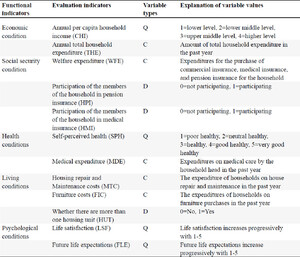
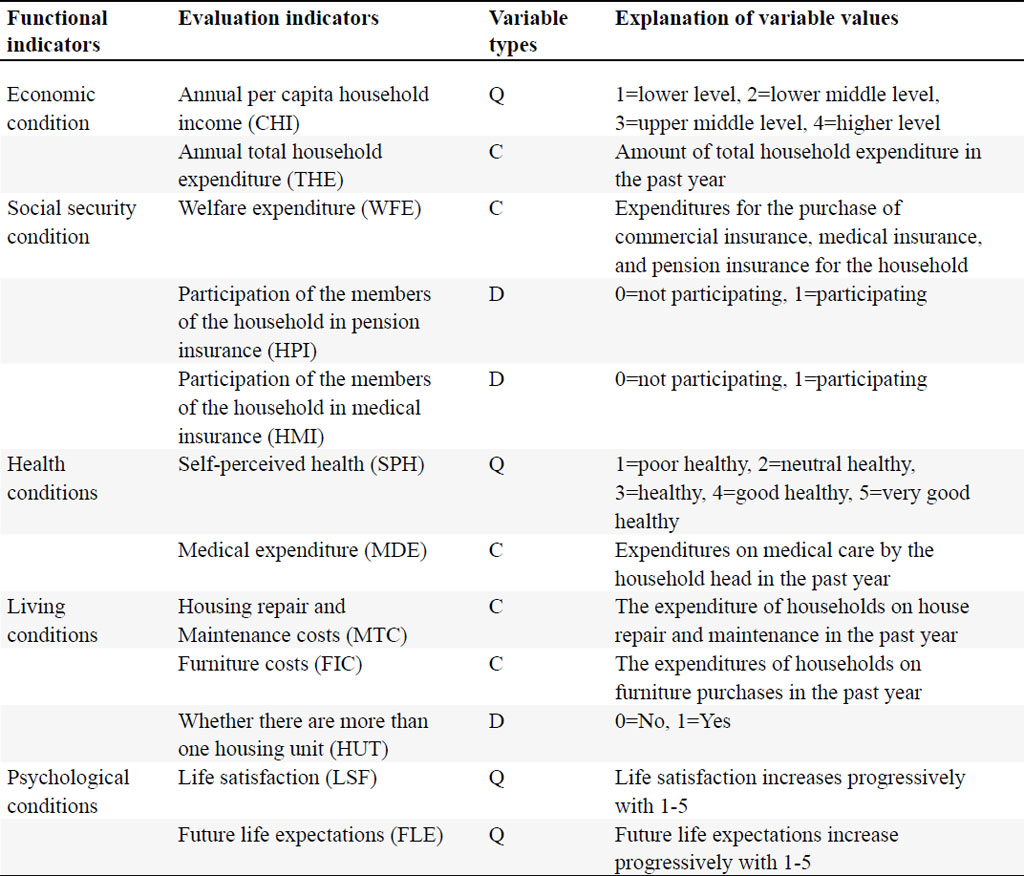
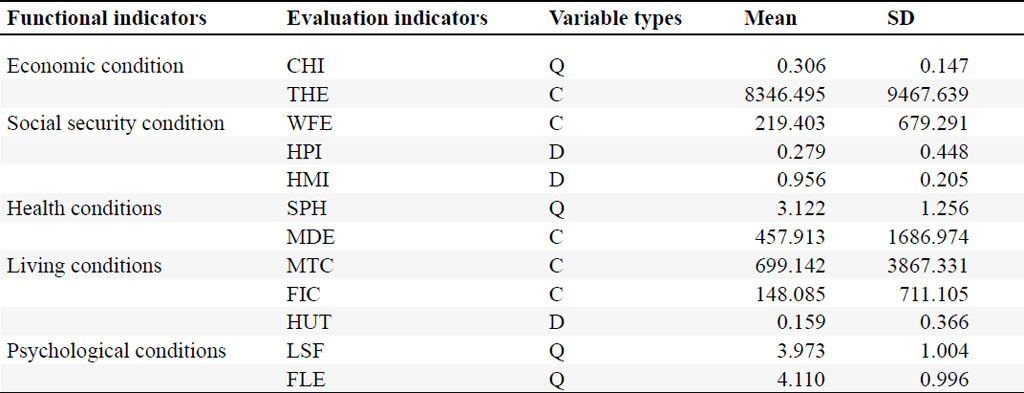
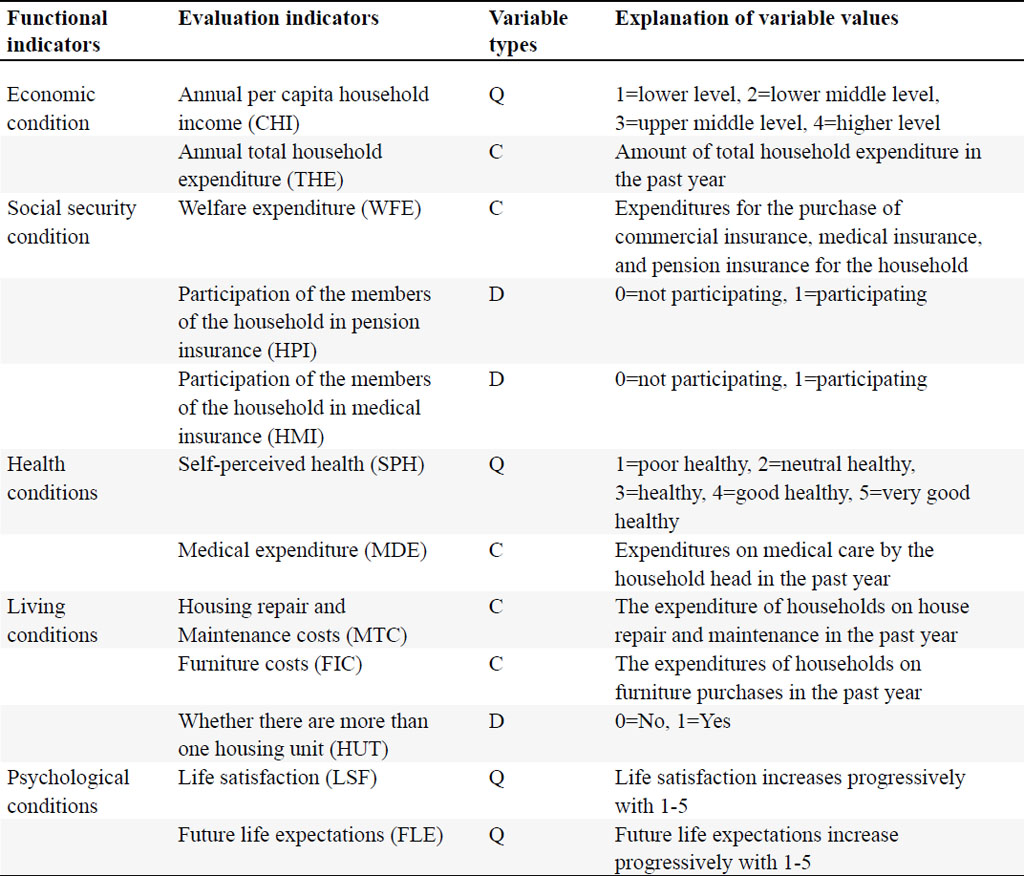
This study develops a measurement model based on Amartya Sen’s capabilities approach, which summarizes five kinds of instrumental freedoms: political freedoms, economic conditions, social opportunities, transparent guarantees, and protective safeguards. This serves as a framework to establish a measurement model for entrepreneurial farmers’ household welfare. Through a comprehensive review of relevant literature, consultation of indicators proposed by established scholars, and consideration of data availability, this study ultimately selected functional domains including economic conditions, social security, health conditions, living conditions, and psychological conditions. These were employed to construct a system for evaluating the welfare of farmer families, and the analysis was conducted based on data from the CFPS, as shown in Table 1.

Indicator selection for household welfare
Citation: International Food and Agribusiness Management Review 28, 4 (2025) ; 10.22434/ifamr1060
Economic Condition Evaluation Indicators
The economy is the foundation, and the economic conditions best reflect the living comfort of farmers’ households and constitute a determining factor in farmers’ lives (Bin and He, 2020). The policy objective of farmer entrepreneurship is to liberate the rural labor force, enhance the economic status of farmers, and improve their employment prospects. As household income increases, the standard of living of farmers’ households will also improve, leading to higher household expenditure. Through the literature review and the actual situation of the research, this study selects the two indicators of annual per capita household income and annual total household expenditure to reflect the economic welfare of entrepreneurial farmers’ households.
Social Security Evaluation Indicators
As a basic social welfare, social security is the basis for guaranteeing farmers’ basic life, especially long-term livelihood (Bin and He, 2020). With the further improvement of the construction of the rural social security system, both the new rural social pension insurance and the new rural cooperative medical insurance can share the risk of entrepreneurial farmers’ household, promote the upgrading of farmers’ consumption structure, and improve the welfare of farmers’ households. Therefore, this study selects the three indicators: family members’ participation in pension insurance and medical insurance, and family welfare expenditures (commercial insurance expenditures) in the past year.
Health Conditions
Health is a special human capital, which plays an important role in improving labor efficiency. Health shocks will indirectly lead to an increase in family medical consumption in the short term, and family members will lose time due to caregiving, thus affecting household welfare (Bao, 2020; Fadlon and Nielsen, 2021). In addition, in terms of livelihoods, risk shocks can also directly affect the subjective welfare of farmers’ families, with the healthier the body, the higher the subjective welfare (Islam and Maitra, 2012; Li and Wang, 2015; Pan et al., 2020). The household head as the main decision maker of the household, his or her physical health has a greater impact on the welfare of the farmers’ household. This study selects the self-perceived health of the household head and the medical expenditure in the past year as the indicators of health condition. The higher the self-perceived health of the household head and the lower the medical expenses, the better the welfare of the farmers’ household.
Living conditions
Living conditions are closely intertwined with individuals’ daily lives, and the quality of life is linked to housing. With the advancement of society and the economy, individuals are no longer content with mere survival and living. As one of the important factors affecting the welfare and well-being of farmers’ households, housing condition is one of the symbols of the status and position of the occupants. This study selects indicators such as whether there are more than one housing unit and the costs associated with housing repair, maintenance, and furniture in the preceding year. A higher count of owned housing units and elevated expenses on housing repair, maintenance, and furniture is indicative of an improved welfare level for the farmer’s household.
Psychological conditions
Welfare involves farmers’ perception of their own lives, and the measurement of psychological factors is more subjective (Li et al., 2022), in the Amartya Sen’s capabilities approach, it is confirmed that psychological well-being, pleasure and joy play an important role in welfare, and that psychological changes in farmer entrepreneurship will affect the welfare status of the household. Therefore, in this study, the two indicators of household head satisfaction with the current state of life and expectation of future life are selected as indicators of judgment.
3.3 Descriptive statistics
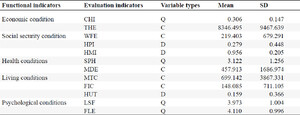
As can be seen from Table 2, firstly, examining the average economic status of farmers’ families reveals that the income level is generally maintained at a medium level. Yet, an examination of the standard deviation of total annual expenditure among farmers’ families highlights a considerable disparity in consumption levels within rural households. Secondly, regarding social security, the coverage rate of medical insurance in rural areas is relatively high, with an average welfare expenditure of approximately 219.403 dollars for rural families in the past year. Thirdly, concerning the health status of household heads, the average self-perceived health level is greater than 3, indicating that most household heads perceive themselves as relatively healthy. Fourthly, regarding living conditions, only a minority of rural households own multiple residences, and there are substantial standard differences in house maintenance expenses, signifying a significant disparity among rural households. Lastly, considering the psychological expectations of household heads, it is evident that they express high satisfaction with current life and harbor optimistic expectations for the future.
Descriptive statistics of farmers’ household welfare indicators
Citation: International Food and Agribusiness Management Review 28, 4 (2025) ; 10.22434/ifamr1060
4. Methods
Considering that the connotation of household welfare has complex and fuzzy characteristics (Cavapozzi et al., 2015), and referring to the household welfare measurement methods of existing studies, this study adopts the Fuzzy Synthetic Evaluation (FSE) Model for assessing the farmers’ household welfare. The state of household welfare among post-entrepreneurial farmers is depicted through a fuzzy set X, wherein the fuzzy subset W signifies the level of household welfare for this demographic. Consequently, the household welfare function for the ith farmer’s household can be articulated as W(i)={x,
4.1 Membership function (MF)
The key to the FSE is to choose the appropriate MF, which is generally of three types: dummy binary variables, continuous variables, and dummy qualitative variables. In practical research, the appropriate MF is usually selected according to the type of indicator.
Among them, the MF of the dummy binary variable is as follows:
Citation: International Food and Agribusiness Management Review 28, 4 (2025) ; 10.22434/ifamr1060
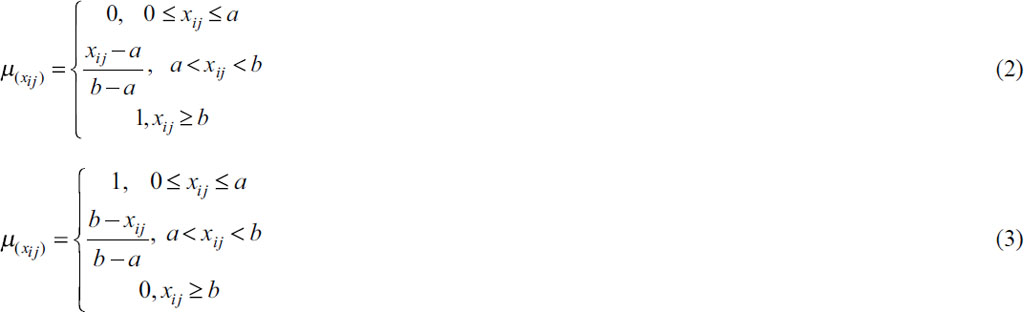
If it is a continuous variable, its MF is divided into two cases, the first: when the indicator xij has a positive relationship with the welfare condition, the MF is Equation (2); the second: when the indicator xij has a negative relationship with the welfare condition, the MF is Equation (3).
Citation: International Food and Agribusiness Management Review 28, 4 (2025) ; 10.22434/ifamr1060
In case of dummy qualitative variables, the MF are as follows:
Citation: International Food and Agribusiness Management Review 28, 4 (2025) ; 10.22434/ifamr1060
Where a denotes the minimum value of the indicator xij and b denotes the maximum value of the indicator xij.
4.2 Indicator weights
The membership level of each secondary indicator is obtained through the MF, and the next step is to sum up the membership level, and the choice of the weighting function has a significant impact on the results of the calculation of capabilities of post-entrepreneurial farmers’ households. Based on other scholars, this study uses the equation proposed by Cheli and Lemmi (1995) to calculate the weights of each indicator. The details are as follows:
Citation: International Food and Agribusiness Management Review 28, 4 (2025) ; 10.22434/ifamr1060
The membership level as well as the weight of each secondary indicator was calculated, and in this study, the membership level of each functional indicator was totaled using the equation proposed by Cerioli and Zani (1990), and the equation is as follows:
Citation: International Food and Agribusiness Management Review 28, 4 (2025) ; 10.22434/ifamr1060
In Equation (6), k indicates that there are k evaluation indicators in the ith functional indicator. As a result, the total membership level of the welfare level of farmers’ households can be calculated by Equation (7) as follows:
Citation: International Food and Agribusiness Management Review 28, 4 (2025) ; 10.22434/ifamr1060
In Equation (7), wi is expressed as the weight of each functional indicator,  , where h represents the number of functional activities.
5. Results and discussion
5.1 Overall farmers’ household welfare
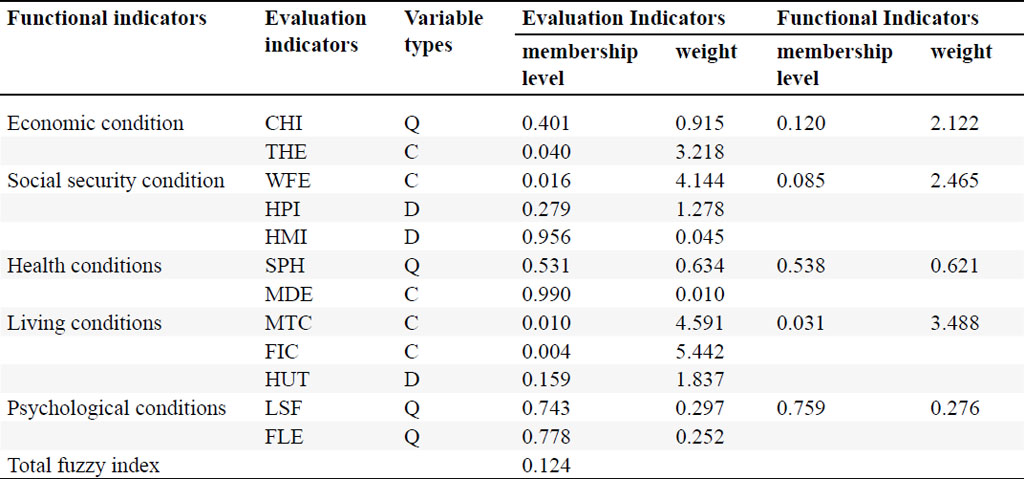
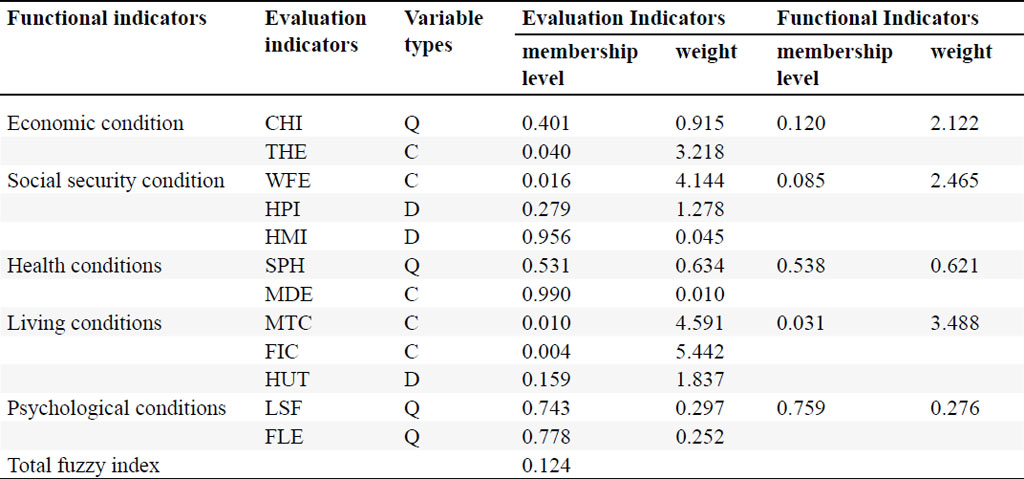
Based on the valid sample data of the 2018 CFPS, the changes in the welfare of the valid samples were analyzed using the FSE, and the results are shown in the Table 3. The measurement results show that the value of the overall welfare of farmers’ households is 0.124, indicating a low overall welfare level that does not reach the general threshold of 0.5. In terms of the membership level of each functional indicator, there is an overall welfare state of better health condition and psychological condition in farmers’ households, with a membership level of 0.538 and 0.759, respectively, which reaches the general welfare level of 0.5. This suggests that, from the perspective of the overall rural samples, farmers have a better health condition and high expectation of life satisfaction and future life. Apart from that, the membership level of farmers’ households in terms of economic condition, social security condition and living condition are lower, indicating that the current economic condition, living condition and social security participation of farmers’ households are poor. There is a significant gap between the rich and the poor, which directly leads to the difference in the general welfare level of farmers’ households.
Results of the overall farmer’s household welfare
Citation: International Food and Agribusiness Management Review 28, 4 (2025) ; 10.22434/ifamr1060
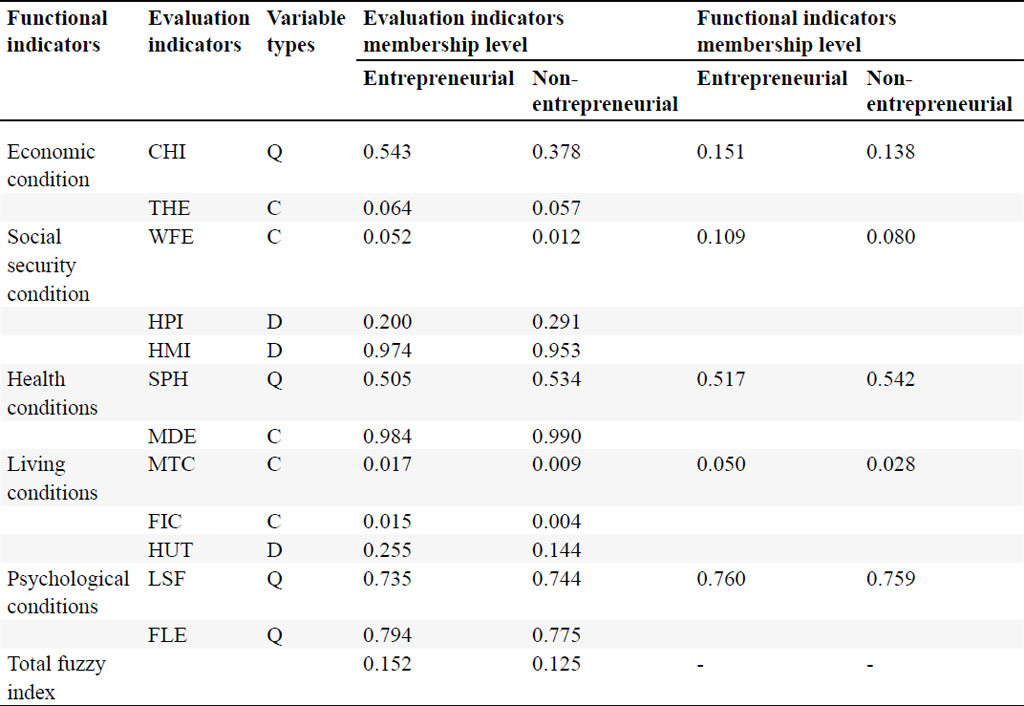
Results of household welfare of entrepreneurial and non-entrepreneurial farmers
Citation: International Food and Agribusiness Management Review 28, 4 (2025) ; 10.22434/ifamr1060
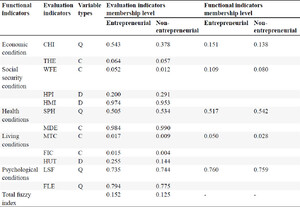
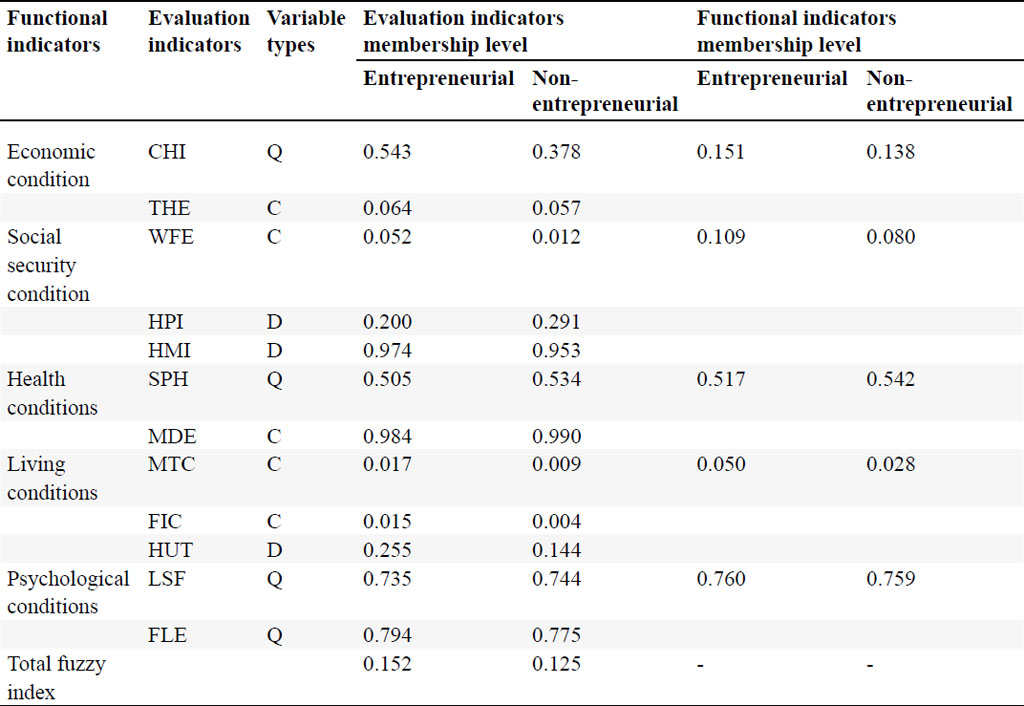
This study distinguishes the sample data into entrepreneurial and non-entrepreneurial farmers according to the entrepreneurial status of farmers’ households, and measures their household welfare separately. The specific results are shown in Table 4. The results show that the total fuzzy welfare indicators of entrepreneurial and non-entrepreneurial farmers’ households are 0.152 and 0.125, respectively. Overall, compared with non-entrepreneurial farmers’ households, the welfare of entrepreneurial farmers’ households is higher. After a detailed analysis of each functional indicator, it is found that entrepreneurial farmers’ households are higher than non-entrepreneurial farmers in terms of economic condition, social security condition, living condition, and future life expectations. However, the health condition is worse than that of non-entrepreneurial farmers, with the self-perceived health of the household head being significantly lower than that of non-entrepreneurial farmers, and there is not much difference in actual medical expenditures with the non-entrepreneurial household.
In the measurement of secondary indicators, it was observed that the annual per capita household income of entrepreneurial farmers exhibited a membership level of 0.543, surpassing the general level of 0.5. In contrast, non-entrepreneurial farmers’ households had a lower membership level of only 0.378. Furthermore, concerning the living condition of farmers’ households, a notable disparity was observed between the two types of farmers’ households. The membership level for entrepreneurial farmers’ households owning more than one housing was 0.255, although not reaching the level of 0.5, it is approximately 0.11 higher than that of non-entrepreneurial farmers’ households.
5.2 Effects of entrepreneurship on the household welfare measurement
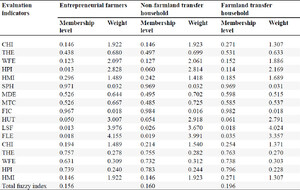
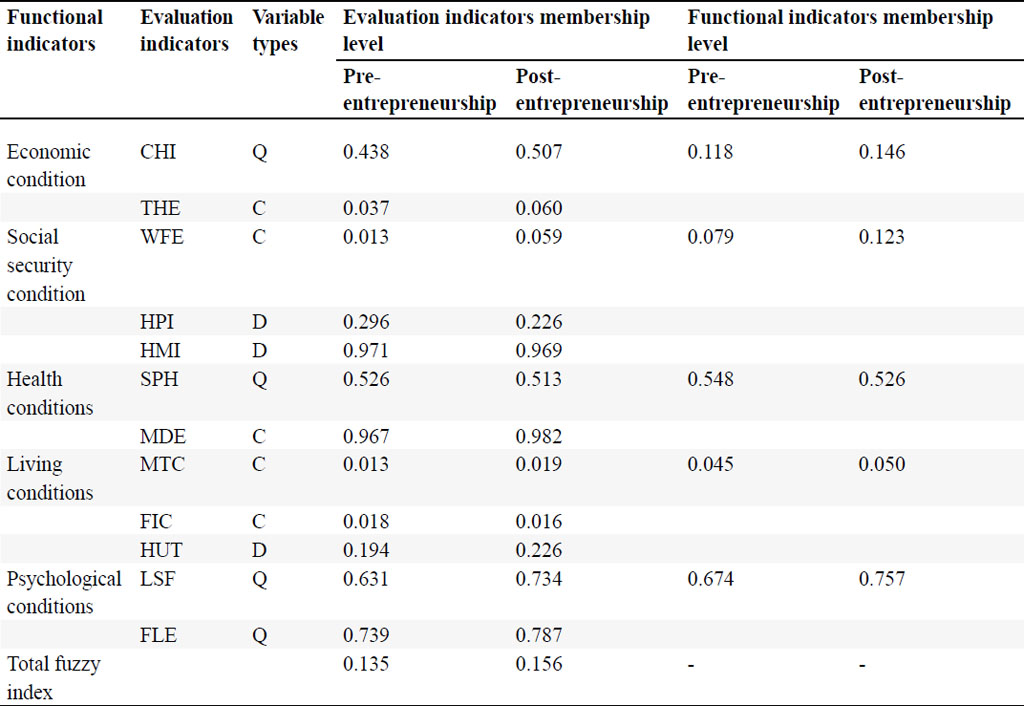
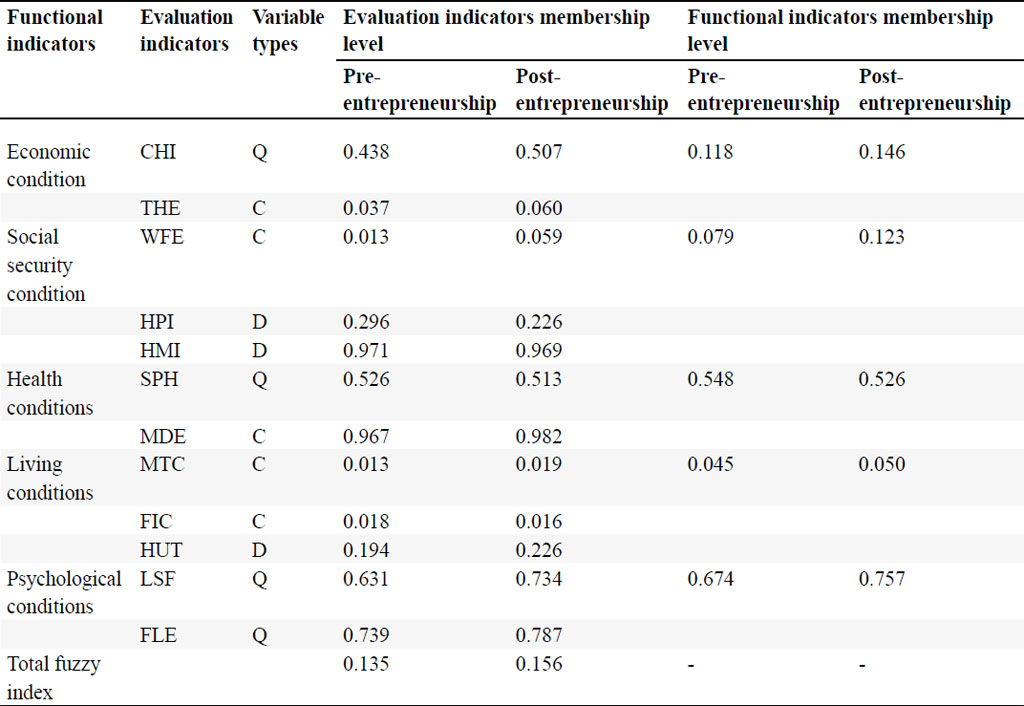
Using FSE, the welfare changes of the farmers’ households in the sample who started their enterprises were analyzed. Regarding the total membership level, it is observed that overall, the conditions of farmers’ households have improved after entrepreneurship, as reflected in the increase of household welfare from 0.135 before entrepreneurship to 0.156. In terms of changes in each functional indicator, the welfare of farmers’ households in economic condition, social security condition, living condition, and psychological condition has increased after entrepreneurship, with the greatest improvement in psychological condition. However, health condition has decreased, and the results are presented in Table 5.
Results of household welfare of entrepreneurial farmers
Citation: International Food and Agribusiness Management Review 28, 4 (2025) ; 10.22434/ifamr1060
As can be seen from Table 5:
(1) Economic condition. It is shown that the economic condition of entrepreneurial farmers’ households has improved to some extent, although not significantly. This is evidenced by the increase in the membership level of economic situation from 0.118 before entrepreneurship to 0.146. Entrepreneurship has improved the income liquidity of the farmer’s household and realized upward movement of income. Consequently, the membership level of annual per capita household income has increased from 0.438 before entrepreneurship to 0.507, and the total household expenditure has also increased from 0.037 to 0.060.
(2) Social security condition. The social security indicators of farmers’ households have improved after entrepreneurship, with the membership level increasing from 0.079 to 0.123. However, in terms of the indicators of social security, the membership level of welfare expenditures has increased to 0.059, while participation in pension insurance has declined to 0.226, and participation in medical insurance has declined to 0.969, which is a relatively small change in the membership level.
(3) Health condition. In this study, the self-perceived health and medical expenditure were selected as the evaluation indicators of the health condition. Entrepreneurship makes the health condition welfare of farmers’ households decline, and the membership level decreases from 0.548 before entrepreneurship to 0.526. However, the overall health condition remains higher than the general welfare level of 0.5. Entrepreneurship, as a special occupation, is characterized by high workload and long working hours, and the prolonged presence of stress and the above problems can lead to health problems. Additionally, the health condition tends to decline with age. Calculations show that the membership level of self-perceived health of the household head decreases from 0.526 to 0.513, while according to the objective indicator of medical expenditure, its membership level increases from 0.967 to 0.982.
(4) Living condition. In terms of living condition, the living welfare of farmers’ households has improved after entrepreneurship, but the change is not obvious, and the membership level has increased from 0.045 to 0.050. After entrepreneurship, the economic condition of farmers’ households has improved to some extent, and with the increase of income, farmers’ households will pay more attention to the standard of living and improve the living environment. The welfare of house repair and maintenance costs in the past year have not changed much, from 0.013 to 0.019, respectively. In terms of the number of houses, the membership level has risen from 0.194 to 0.226.
(5) Psychological condition. There is a significant increase in the psychological welfare of farmers’ households after entrepreneurship, with the membership level increasing from 0.674 to 0.757. It is evident that after entrepreneurship, farmers’ households have improved their economic condition and residential condition, leading to higher satisfaction with present life and increased expectations for the future. Specifically, the life satisfaction and future life expectations of the household head have increased, with the membership level rising from 0.631 to 0.734 and 0.739 to 0.787, respectively.
5.3 Effects of farmland Transfer on the household welfare measurement
China employs a dual urban-rural land public ownership structure where urban land is state-owned, while rural land is collectively owned by farmers. In the context of China’s collective land ownership system, rural land assumes a distinctive role as a special natural resource for farming families, serving as a crucial safeguard for both their livelihoods and agricultural production and exerting multifaceted effects on farmers. Based on the assumption that farmers are limited rationality economic man, the farmland transfer is necessarily a decision made to maximize household income, thus affecting the welfare of farmers’ households. To analyze the impact of farmland transfer behavior on the household welfare of entrepreneurial farmers, in this part, entrepreneurial farmers are divided into households that carried out farmland transfer and households that did not carry out farmland transfer in 2018. Farmland transfer households refer to households that have transferred farmland out or in in the past year, and vice versa, households that have not transferred farmland. According to the Table 6, it can be seen that in the sample of entrepreneurial farmers, the household welfare fuzzy index of farmers who carry out farmland transfer is higher than that of families who have not carried out farmland transfer, which is 0.196. After analyzing in detail the membership level of each evaluation indicator, it can be seen that, in the sample of entrepreneurial farmers, those who have carried out farmland transfer is better than families who have not. This further clarifies that the implementation of farmland transfer and the promotion of farmer entrepreneurship are of great significance in improving the welfare of farmers’ households.
Results of entrepreneurial farmer household welfare in farmland transfers
Citation: International Food and Agribusiness Management Review 28, 4 (2025) ; 10.22434/ifamr1060
5.4 Effects of entrepreneurial influencing factors on the household welfare measurement
Entrepreneurial influencing factors are important factors affecting the welfare of farmers’ households, and the ability of farmers to obtain welfare will be different due to the differences between individuals and farmers’ households. Based on the China Family Panel Studies, this study selected the age of the household head, the level of education of the household head, and the region where the household is located as the evaluation indicators of the entrepreneurial influencing factors to explore how the welfare of non-entrepreneurial farmers and entrepreneurial farmers varies with the different entrepreneurial influencing factors. The specific calculation results are as follows:
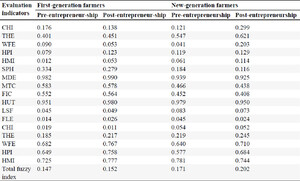
(1) The age of the household head. The sample of this article selects data from rural households whose heads are under 60 years old. Age can reflect the labor situation to a certain extent; the younger group is full of vitality. However, with the progression of age, farmers’ attitudes toward entrepreneurship tend to become conservative, and they may be unwilling to engage in entrepreneurial activities with relatively high risk. Consequently, age exerts a significant influence on the welfare of entrepreneurial households. With reference to Yin et al. (2020) and Zhao and Liu (2021), this study divides the sample into first-generation farmers (household head born before 1980) and new-generation farmers (household head born in 1980 and after).
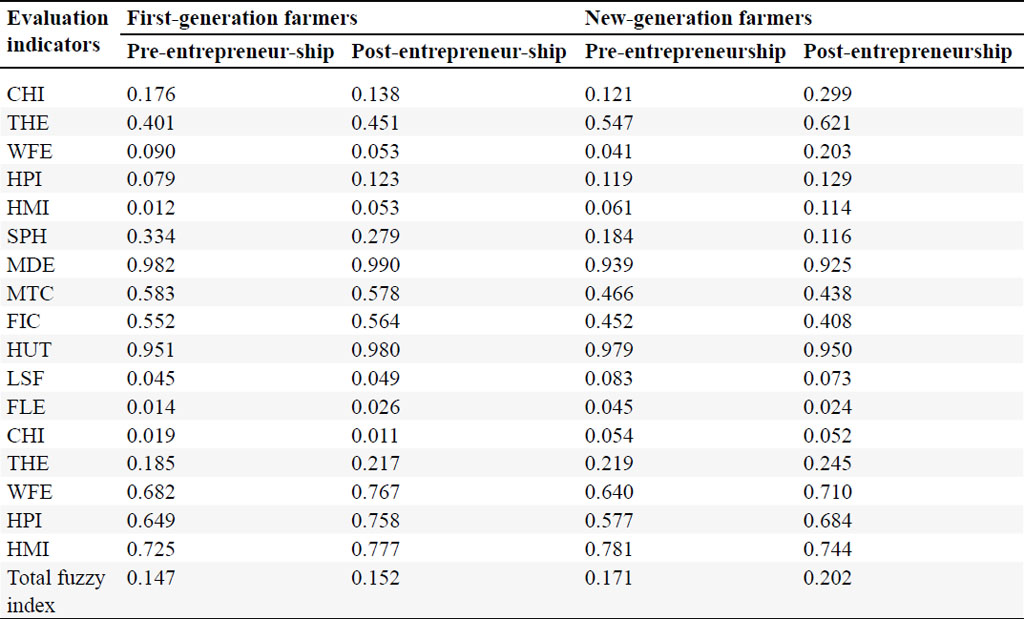
According to the results of the total fuzzy index of household welfare, the household welfare of both the new-generation farmers and the first-generation farmers have been improved to different degrees after entrepreneurship, as shown in Table 7. Among them, the total fuzzy index of first-generation farmers increased from 0.147 to 0.152, while new-generation farmers increased from 0.171 to 0.202. As far as entrepreneurial behaviors are concerned, new-generation farmers generally exhibit higher education levels and quicker skill learning, resulting in greater benefits from entrepreneurship compared to first-generation farmers. From the perspective of each functional indicator, the economic condition membership level of new-generation farmers increases from 0.121 before entrepreneurship to 0.299, while the economic condition membership level of first-generation farmers after entrepreneurship shows a decreasing trend from 0.176 before entrepreneurship to 0.138. Entrepreneurship brings higher economic welfare to new-generation farmers’ household than that of first-generation farmers. In addition, the health welfare of farmers declined after entrepreneurship for both first-generation and new-generation farmers, and the health welfare of new-generation farmers declined more, from 0.466 before entrepreneurship to 0.438. The social security condition and the psychological condition of the household did not differ significantly between the two age groups, and both increased after entrepreneurship.
Household welfare of entrepreneurial farmers under different ages
Citation: International Food and Agribusiness Management Review 28, 4 (2025) ; 10.22434/ifamr1060
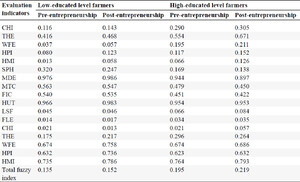
(2) Educational level of the household head. The degree of education, to a certain extent, reflects a person’s learning ability, the stronger the learning ability, the higher the possibility of generating income. This study categorizes the education level of the household head into a low education level group (those with an education level below junior high school) and a high education level group (those with an education level of junior high school and above).
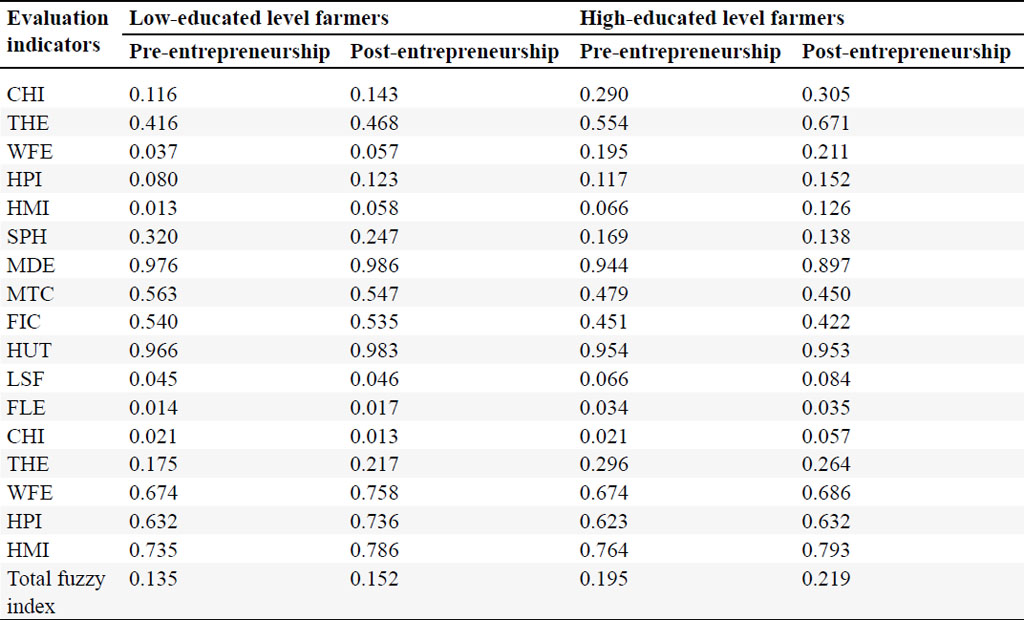
The welfare of entrepreneurial farmers’ households is rising along with the increase in the level of education of the household head, as shown in Table 8. Among them, the total fuzzy index of low-educated level farmer households is lower than that of high-educated level. Given that higher levels of education result in greater absorption of relevant knowledge, the benefits of entrepreneurship are higher for more educated farmers. Regarding the total fuzzy index of entrepreneurial farmers’ household welfare, the total fuzzy index for low-educated households increased from 0.135 to 0.152, while that for high-educated households increased from 0.195 to 0.219. Improvement is observed in the economic condition, social security condition, living condition, and psychological condition of farmers’ households with both low and high education levels. However, the health condition shows that the health of heads of households with low and high education levels declined after the entrepreneurship.
Household welfare of entrepreneurial farmers under different education levels
Citation: International Food and Agribusiness Management Review 28, 4 (2025) ; 10.22434/ifamr1060
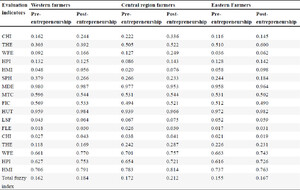
(3) Different regions. The functional activities accessible to individuals in distinct regions are closely linked to the local economic conditions. Variances in the level of regional economic development lead to diverse general environments or social development contexts within which they are situated. Consequently, various opportunities become accessible to farmers. In this study, the sample regions are primarily categorized into three regions: western region, central region, and eastern region
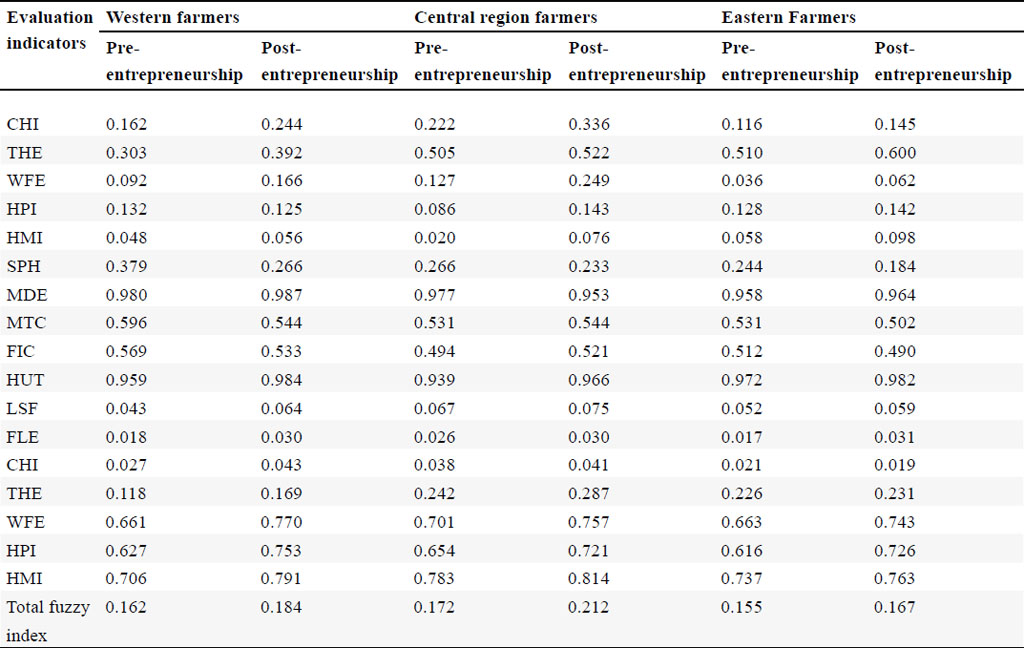
The welfare impact of entrepreneurship varies across different regions. According to the 209, the total fuzzy index of household welfare in the central region after entrepreneurship has the greatest increase, from 0.172 before entrepreneurship to 0.212. This was followed by farmers in the west, with the total fuzzy index increasing from 0.162 to 0.184, and finally farmers in the east, with the total fuzzy index increasing from 0.155 to 0.167. This phenomenon may be attributed to the fact that, firstly, the eastern region of China serves as a vanguard in economic development and boasts a high level of urbanization. Consequently, when farmers in the eastern region embark on entrepreneurial endeavors, their welfare enhancements appear relatively modest, given the already elevated economic foundation. Secondly, the Chinese government has implemented numerous favorable policies to stimulate the growth of the central and western regions, resulting in substantial improvements in the entrepreneurial welfare of farmers in these areas. In addition, the data on the functional indicators show that after entrepreneurship, unlike farmers in the eastern and western regions, the health of farmers in the central region improved to some extent, and farmers in the east showed the greatest decline in health.
Household welfare of entrepreneurial farmers under different regions
Citation: International Food and Agribusiness Management Review 28, 4 (2025) ; 10.22434/ifamr1060
6. Conclusion and policy implications
The existing literature is ambiguous in its discussion of the effects of farmer entrepreneurship on household welfare, although this is crucial to understanding the significance of farmers’ entrepreneurial activities. Therefore, this study constructs the farmers’ household welfare indicator system under Amartya Sen’s capabilities approach, taking the entrepreneurial farmers’ households in the sample of the CFPS as the research object, and analyzes the changes in the welfare of these farmers’ households before and after entrepreneurship.
Based on the calculation results, firstly, the entrepreneurial behavior of farmers significantly impacts household welfare, leading to a substantial improvement after entrepreneurship. In terms of the functional indicators, entrepreneurship improved the economic, social security, living and psychological condition of the farmers’ households. However, the results of the study also support the concern that farmer entrepreneurship fails to bring about a total welfare improvement in farmer households, and the results of the study found that entrepreneurship also led to a reduction in the health welfare of farmer households. Further analysis shows that the effects of farmers’ entrepreneurial behavior on household welfare are stronger among the new-generation farmers than among the first-generation farmers. One possible reason for this is that the new-generation farmers have a higher level of education, which makes them more capable of entrepreneurship and business management, and therefore leads to stronger welfare effects. In addition, the positive benefits of entrepreneurial welfare are stronger for farmers with higher levels of education than for those with lower levels of education. This finding is consistent with the expectation that farmers with higher levels of education are more aware of market opportunities and business strategies, and are more likely to apply efficient technologies, which helps them to run their businesses better, thus increasing the welfare effect. The study also found that farmers in the central region had the highest welfare enhancement after entrepreneurship compared to the east and west. This phenomenon may stem from the higher economic foundation and greater urbanization level in the eastern region, resulting in relatively limited welfare improvement. Simultaneously, the Chinese government has implemented numerous favorable policies to foster the development of the central and western regions.
Our research holds significant policy implications, not only for China but also for other nations grappling with similar challenges in farmers’ entrepreneurship. Firstly, pertinent countries and municipalities should enhance agricultural policies, with a specific focus on fostering sustainable development capabilities in rural areas. Simultaneously, they should explore diverse forms of farmer entrepreneurship systems to enhance agricultural production efficiency. Secondly, farmers engaged in entrepreneurship confront the prolonged uncertainty of employment and heightened demand, potentially resulting in health-related issues. Entrepreneurial farmers make health a prerequisite for labor, collectively choosing to trade health for income. Nevertheless, safeguarding the health rights and interests of most farmers presents notable challenges. Addressing urgent institutional deficiencies hindering the health rights of farmers and other demographic groups is imperative. To realize economic growth predicated on farmers’ health and sustain the stable development of rural innovation and entrepreneurship, developing countries should fortify the protection of farmers’ health rights, ensuring their inclusion in the health service system on equal footing with urban residents. Finally, countries and cities need to develop different policies based on different groups of farmers. Policies could focus on providing financial support for entrepreneurship as well as advanced agricultural technology and equipment to new-generation farmers and farmers with high levels of education. For first-generation farmers and those with low levels of education, resource upgrading programs could be provided to help them upgrade old agricultural equipment and infrastructure, in addition to strengthening their social protection. Welfare measurement results further substantiate the existence of notable regional disparities in the welfare impact of entrepreneurship. Each region should propose effective measures based on its unique development and resource conditions.
Acknowledgements
This research received financial support from the National Social Science Fund of China (23BSH106); the Zhejiang Provincial Natural Science Foundation of China (LZ22G030005); the Humanity and Social Science Foundation of Ministry of Education of China (23YJA630121); and the National Natural Science Foundation of China (71874151).
References
Bao, Y.Y. 2020. Health shock, labor participation and welfare level of rural families-An empirical analysis based on China household income project (CHIP2013). Economic Survey 37(2): 44–51. https://doi.org/10.15931/j.cnki.1006-1096.2020.02.007 (in Chinese)
Berniell, I. and J. Bietenbeck.2020. The effect of working hours on health. Economics & Human Biology 39: 100901. https://doi.org/10.1016/j.ehb.2020.100901
Bruton, G.D., D.J. Ketchen Jr. and R.D. Ireland. 2013. Entrepreneurship as a solution to poverty. Journal of Business Venturing 28(6): 683–689. https://doi.org/10.1016/j.jbusvent.2013.05.002
Cavapozzi, D., W. Han and R. Miniaci. 2015. Alternative weighting structures for multidimensional poverty assessment. The Journal of Economic Inequality 13: 425–447. https://doi.org/10.1007/s10888-015-9301-7
Cerioli, A. and S. Zani. 1990. A fuzzy approach to the measurement of poverty. In: Dagum, C., Zenga, M., eds., Income and Wealth Distribution, Inequality and Poverty. Springer, Berlin, pp. 272–284.
Cheli, B. and A. Lemmi. 1995. A “totally” fuzzy and relative approach to the multidimensional analysis of poverty. Economic Notes 24(1): 115–134.
Chowdhry, B., R. Roll and K. Saxena. 2013. Development and freedom as risk management. Finance Research Letters 10(3): 103–109. https://doi.org/10.1016/j.frl.2013.07.001
Dinis, A. 2006. Marketing and innovation: Useful tools for competitiveness in rural and peripheral areas. European Planning Studies 14(1): 9–22. https://doi.org/10.1080/09654310500339083
Fadlon, I. and T. H. Nielsen. 2021. Family labor supply responses to severe health shocks: Evidence from Danish administrative records. American Economic Journal: Applied Economics 13(3): 1–30. https://doi.org/10.1257/app.20170604
Faria, J.R., J. C. Cuestas and E. Mourelle. 2010. Entrepreneurship and unemployment: A nonlinear bidirectional causality? Economic Modelling 27(5): 1282–1291. https://doi.org/10.1016/j.econmod.2010.01.022
Fein, E. C. and N. Skinner. 2015. Clarifying the effect of work hours on health through work–life conflict. Asia Pacific Journal of Human Resources 53(4): 448–470. https://doi.org/10.1111/1744-7941.12065
Guo, J.Y. 2006. Study on the Peasants Entrepreneurship in China. PhD-thesis, Nanjing Agricultural University, Nanjing.
He, Q. and G. M. Lv. 2009. Review of research on welfare measurement methods. Research on Financial and Economic Issues (7): 31–36. (in Chinese)
Henry, C. and G. McElwee. 2014. Defining and conceptualising rural enterprise. In: Exploring rural enterprise: New perspectives on research, policy & practice. Emerald, Leeds, pp. 1–8.
Hosseini, E., M. Tajpour and M. Lashkarbooluki. 2020. The impact of entrepreneurial skills on manager’s job performance. International Journal of Human Capital in Urban Management 5(4): 361–372. https://doi.org/10.22034/IJHCUM.2020.04.08
Islam, A. and P. Maitra. 2012. Health shocks and consumption smoothing in rural households: Does microcredit have a role to play? Journal of Development Economics 97(2): 232–243. https://doi.org/10.1016/j.jdeveco.2011.05.003
Kalantaridis, C. and Z. Bika. 2006. Local embeddedness and rural entrepreneurship: Case-Study evidence from Cumbria, England. Environment and Planning A 38(8): 1561–1579. https://doi.org/10.1068/a3834
Lafuente, E., Y. Vaillant and J. Rialp. 2007. Regional differences in the influence of role models: Comparing the entrepreneurial process of rural Catalonia. Regional Studies 41(6): 779–796. https://doi.org/10.1080/00343400601120247
Li, H., X. Zhang and H. Li. 2022. Has farmer welfare improved after rural residential land circulation? Journal of Rural Studies 93: 479–486. https://doi.org/10.1016/j.jrurstud.2019.10.036
Li, J. and Y.J. Wang. 2015. Analysis of the relationship between health and farmers’ subjective well-being–based on a survey of 1,000 farmers in 5 provinces (regions) across the country. Chinese Rural Economy (10): 80–88. (in Chinese)
Li, X.L. and G.H. Ran. 2020. Have enhanced rural financial services promoted the integrated development of agricultural industry? An empirical analysis based on the perspective of regional differences. Research of Agricultural Modernization 41(3): 453–463. https://doi.org/10.13872/j.1000-0275.2020.0029 (in Chinese)
Luo, M.Z. and M. Chen. 2014. Personality traits, entrepreneurial learning and farmers’ entrepreneurial performance. Chinese Rural Economy (10): 62–75. (in Chinese)
Martinetti, E.C. 2000. A multidimensional assessment of well-being based on Sen’s functioning approach. Rivista internazionale di scienze sociali 108(2): 207–239.
Meccheri, N. and G. Pelloni. 2006. Rural entrepreneurs and institutional assistance: an empirical study from mountainous Italy. Entrepreneurship & Regional Development 18(5): 371–392. https://doi.org/10.1080/08985620600842113
Mukhtar, U., Z.B. Zhong, B.H. Tian, A. Razzaq, M. Naseer and T. Hina. 2018. Does rural–urban migration improve employment quality and household welfare? Evidence from Pakistan. Sustainability 10(11): 4281. https://doi.org/10.3390/su10114281
Naminse, E.Y. and J. Zhuang. 2018. Does farmer entrepreneurship alleviate rural poverty in China? Evidence from Guangxi Province. PLoS ONE 13(3): e0194912. https://doi.org/10.1371/journal.pone.0194912
Niu, J. 2013. Problems and countermeasures and suggestions in the process of farmers’ entrepreneurship. Chinese Agricultural Science Bulletin 29(17): 146–150. (in Chinese)
Pan, T., M. Palmer, A. Mahal, P. Annear and B. McPake. 2020. The long‐run effects of noncommunicable disease shocks. Health Economics 29(12): 1549–1565. https://doi.org/10.1002/hec.4154
Pugno, M. 2016. Scitovsky meets Sen: endogenising the dynamics of capability. Cambridge Journal of Economics 41(4): 1177–1196. https://doi.org/10.1093/cje/bew050
Salamzadeh, A., M. Tajpour and E. Hosseini. 2022. Measuring the impact of simulation-based teaching on entrepreneurial skills of the MBA/DBA students. In: Hyams Sekasi, D., Yasin, N. (eds). Technology and entrepreneurship education. Palgrave Macmillan, Basingstoke, pp. 77–104.
Savrul, M. 2017. The impact of entrepreneurship on economic growth: GEM data analysis. Journal of Management Marketing and Logistics 4(3): 320–326. https://doi.org/10.17261/Pressacademia.2017.494
Sen, A. 2002. Viewing development with freedom. Renmin University of China Press, Beijing.
Sen, A. 2012. Rationality and freedom. Renmin University of China Press, Beijing.
Tamvada, J.P. 2010. Entrepreneurship and welfare. Small Business Economics 34: 65–79. https://doi.org/10.1007/s11187-009-9195-5
Vaillant, Y. and E. Lafuente. 2007. Do different institutional frameworks condition the influence of local fear of failure and entrepreneurial examples over entrepreneurial activity? Entrepreneurship and Regional Development 19(4): 313–337. https://doi.org/10.1080/08985620701440007
Van Rooyen, C. 2014. Towards 2050: Trends and scenarios for African agribusiness. International Food and Agribusiness Management Review 17: 19–39. https://doi.org/10.22004/ag.econ.179487
Wang, B. and X.H. Zhong. 2014. Tracking measurement of urban residents’ multidimensional welfare—from the perspective of capability approach. Urban Problems (5): 2–8. https://doi.org/10.13239/j.bjsshkxy.cswt.140501 (in Chinese)
Wang, J., Z.J. Cai and X. Ji. 2022. Digital literacy, farmer entrepreneurship and relative poverty alleviation. E-Government (8): 15–31. https://doi.org/10.16582/j.cnki.dzzw.2022.08.002
Wang, J. and Z. Sun. 2018. Three-dimensional capital, entrepreneurial environment and entrepreneurial enterprise performance of new agricultural entrepreneurial talents. Chinese Rural Economy 2: 81–94. (in Chinese).
Yang, C., J. Yan., X. He and S. Tian. 2023. What determines the survival of farmer entrepreneurship: Micro-evidence from China. International Review of Economics & Finance 86: 334–348. https://doi.org/10.1016/j.iref.2023.03.026
Yang, Y. 2018. Study on farmland circulation influence farmer welfare changes effect. Master-thesis, Hunan Agricultural University, Hunan.
Yin, Z.C., T.X. Liu and X.Q. Wang. 2020. Does rural income inequality restrain farmers’ entrepreneurship? Chinese Rural Economy (5): 76–95. (in Chinese)
Yue, Y.Y., C.Y. Wan and T. Zhao. 2018. Study of relationship between entrepreneurship and happiness of migrant workers–Research based on CFPS data. Journal of Anhui Normal University (Humanities & Social Sciences) 46(5): 55–63. (in Chinese) https://doi.org/10.14182/j.cnki.j.anu.2018.05.008
Zhang, L., W. Gao, X. Ma and R. Gong. 2023. Relationship between disaster shock experience and farmers’ entrepreneurial inclination: Crisis or opportunity? Agriculture 13(7): 1406. https://doi.org/10.3390/agriculture13071406
Zhao, D., J. Jiang and Z. Yin. 2020. Can entrepreneurship bring happiness? Evidence from China. Economic Modelling 91: 679–686. https://doi.org/10.1016/j.econmod.2019.12.009
Zhao, J. and C.P. Zhao. 2021. Promoting or suppressing: Land transfer and non-agricultural entrepreneurship of households. Finance and Trade Research 32(8): 57–67. https://doi.org/10.19337/j.cnki.34-1093/f.2021.08.005 (in Chinese)
Corresponding author