Abstract
Armenia’s wine sector, steeped in a 6000-year-old vinicultural heritage, is undergoing a profound shift as it contends with modern-day pressures of sustainability and digitalization. This article examines the sector through the lens of “digitainability,” exploring how emerging technologies from IoT sensors to Artificial Intelligence to blockchain-based traceability can address systemic issues, including fragmented supply chains, financial constraints, and inconsistent quality standards. The research incorporates survey responses from 35 wineries and 20 in-depth interviews with industry stakeholders, ensuring a robust assessment of digital adoption trends and barriers. The quantitative analysis employs descriptive statistics, correlation analysis, and multiple regression modeling, while qualitative data are examined using thematic analysis. Findings reveal significant disparities in digital literacy and resource availability between large and small producers. While larger wineries exhibit higher adoption rates of digital tools, smaller producers face considerable financial and infrastructural barriers. The study also highlights opportunities for wineries to leverage digital solutions for enhanced resource efficiency, market differentiation, and sustainable growth. However, challenges remain, including limited policy support, inadequate technical knowledge, and concerns over the return on investment in digital infrastructure. This research contributes to both academic and practical discussions. From a theoretical perspective, it enriches the understanding of digital transformation in transitioning economies, drawing on concepts from the Resource-Based View and Dynamic Capabilities frameworks. For industry practitioners and policymakers, it provides actionable recommendations such as investing in digital literacy programs, fostering collaborative knowledge-sharing platforms, and integrating digital solutions with global sustainability initiatives like the European Green Deal. By illustrating how Armenian wineries navigate the intersection of tradition, economic transition, and technological innovation, we shed light on broader lessons in the global agri-food domain.
1. Introduction
The wine sector, with its ancient roots, represents an intersection of cultural heritage and economic significance. Its journey from ancient vineyards to modern tables mirrors changes in agricultural practices and social values (Ducman et al., 2023). The first systematic cultivation of grapevines for wine is likely to have taken place between and to the south of the Black and Caspian Seas thousands of years ago (Anderson et al., 2019), and Armenia prides itself on a vine-growing and wine-processing history of over 6000 years (Bitsch et al., 2024).
Yet, this enduring industry is at a pivotal juncture, facing challenges driven by shifting consumer preferences, climate change, labor shortages, and intensifying global competition (Loose, 2024). These issues are further intensified in regions like Armenia, where historical legacies and contemporary constraints intersect uniquely. While Armenian viticulture benefits from a rich biodiversity of indigenous grape varieties and a resurgent winemaking tradition, its small-scale, fragmented production structure and reliance on traditional practices hinder its ability to compete globally.
Amid these challenges, two transformative forces — digitalization and sustainability — offer pathways to resilience and growth. Together, they form the foundation of “digitainability,” an emerging concept at the intersection of technological innovation and sustainable development (Gupta et al., 2020). Digitainability emphasizes the integration of digital tools, such as Internet of Things (IoT) sensors, blockchain technology (BCT), and artificial intelligence (AI), to enhance operational efficiency, resource management, and supply chain transparency while simultaneously advancing environmental, economic, and social goals. For the Armenian wine sector, adopting digitainable solutions could address pressing issues, from labor shortages and inconsistent quality control to climate-driven resource constraints.
However, digital adoption in the wine sector is not merely a question of technological availability but of strategic capability development. The Resource-Based View (RBV) suggests that firms’ ability to integrate and utilize digital tools depends on their unique resources, knowledge, and organizational capabilities (Barney, 1991). Meanwhile, the Dynamic Capabilities framework (Teece et al., 1997) emphasizes that firms must continuously adapt, reconfigure, and innovate to remain competitive. In a fragmented wine sector like Armenia’s, digitalization depends on learning, stakeholder engagement, and regulatory alignment, rather than mere technological access (Richter and Hanf, 2023).
The adoption of digital technologies in agriculture is also a socio-economic transformation. Research shows that successful adoption depends as much on stakeholder trust, regulatory alignment, and perceived economic benefits as it does on technological capability (Yadav et al., 2021). In agri-food supply chains, blockchain, IoT, and AI are often promoted as solutions for traceability, fraud prevention, and resource efficiency. Yet, their implementation is shaped by cost considerations, industry-wide collaboration, and the need to balance transparency with commercial confidentiality (Costa et al., 2013; Klerkx et al., 2019).
While the adoption of digital technologies has been studied in agriculture, there is a lack of empirical insights on how wineries in transitioning economies navigate digitalization, the barriers they face, and the institutional and economic conditions shaping their adoption process.
This article addresses these gaps by providing an empirical assessment of digital adoption in the Armenian wine sector, a region where technological uptake is still in its early stages and thereby offering insights that can inform digitalization strategies in other emerging wine regions.”
As part of a wider study on the status of digitalization in the Armenian wine sector, this paper explores the state of digitalization and sustainability, with a focus on identifying challenges, opportunities, and pathways for transformation. Drawing on data collected through surveys and on-site interviews with Armenian wine producers, it evaluates the sector’s readiness for digital adoption and highlights the barriers that must be overcome. Key findings reveal significant disparities in digital literacy and resource availability between large and small producers, as well as systemic issues such as limited market data and the absence of enforceable quality standards.
Building on these findings, this study proposes actionable recommendations tailored to the unique needs of the Armenian wine sector. These include implementing integrated digital vineyard management systems, fostering knowledge-sharing platforms, and leveraging blockchain-based solutions for traceability and standardization. By aligning these initiatives with global sustainability frameworks, such as the European Union’s Green Deal (European Commission, 2019), the Armenian wine sector has the potential to emerge as a model for digitainable transformation in transitioning economies.
Through the lens of the Armenian wine sector, this research contributes to the broader discourse on the digitainability of agri-food systems, offering insights that extend beyond national borders. It underscores the critical role of digitalization in addressing sector-specific challenges while paving the way for sustainable growth. Ultimately, this paper seeks to inform policymakers, industry stakeholders, and researchers on how to effectively integrate digital and sustainable practices to enhance competitiveness and resilience in the agri-food sector.
This work is organized as follows: The second section consists of a literature review using academic work and other sources of information in order to integrate practitioners’ insights with the objective of on one hand outlining the wine sector of Armenia and the country’s digital transformation, and, on the other hand, providing the framework on digitalization and sustainability in the agri-food sector. Following this, the third section details the employed methodology. The fourth section presents the results of our empirical work followed by a discussion. The paper closes with a conclusion that contains key findings and directions for future research.
2. Literature review
The convergence of digitalization and sustainability, coined as “digitainability,” is increasingly recognized as a transformative force in agri-food systems (Gupta et al., 2020). This dual transition, driven by technological innovations and global sustainability imperatives, has profound implications for traditional industries such as viticulture and winemaking (Lichtenthaler, 2021). In this context, the Armenian wine sector offers a compelling use case for examining how digital tools can address entrenched inefficiencies to enhance sustainability outcomes. In particular, since despite the growing importance of technology in overcoming structural constraints, research on digital adoption in transitioning wine economies remains limited, as studies on digitalization in the wine sector have largely focused on established markets (Bastard and Chaillet, 2023; Festa et al., 2023; Loose, 2024; OIV, 2021).
2.1 Armenia’s wine sector
Armenia’s wine industry can be traced back over 6000 years, supported by an extensive pool of around 500 indigenous grape varieties. Historically, the country produced mainly table grapes and wine until its membership in the Soviet Union, when Armenia was redirected to concentrate on spirits production; this shift resulted in 80–90% of its grapes being used for brandy, whereas other Soviet republics like Georgia and Moldova specialized in still wine (Bitsch et al., 2018; Khachatryan and von Oppen, 1999). The prioritization of brandy led to a marked change in the Armenian wine culture, which continues to shape the sector’s structure and market orientation.
In 1991, Armenia declared independence and underwent the transition from a centrally planned economy to a market economy. Although the reorganization allowed theoretically for private wine estates that could bottle wines under their own labels, many grape producers owned only small plots of land, lacked the capital to build modern winemaking facilities, and faced restricted market access (Shanoyan et al., 2014). Consequently, some halted grape production, while others remained reliant on selling grapes to large wineries or distilleries connected to former Soviet supply chains. As of 2022, the Organization Internationale de la Vigne et du Vin (OIV) reported that Armenia’s total vineyard area was 16 500 ha, but only about 15% were devoted to wine production, with the remainder used primarily for brandy grapes and table grapes (Bitsch et al., 2022).
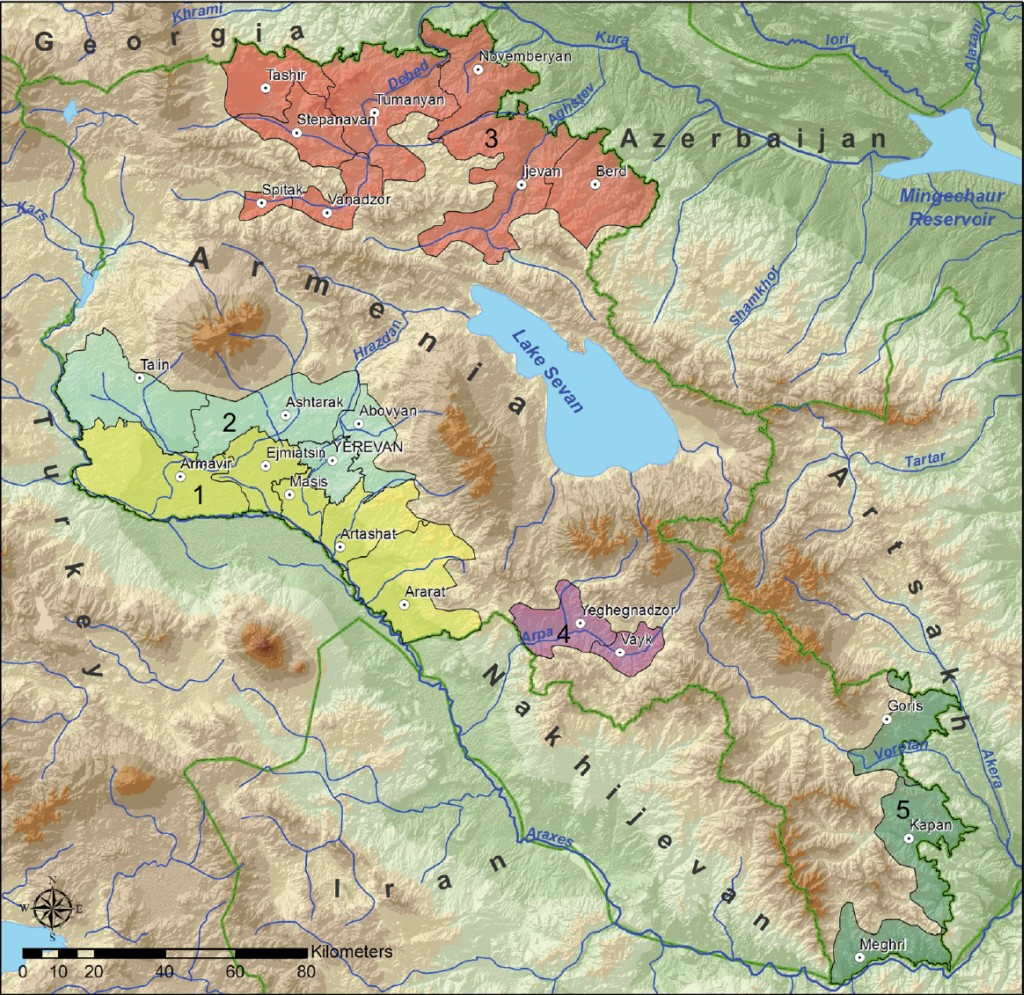
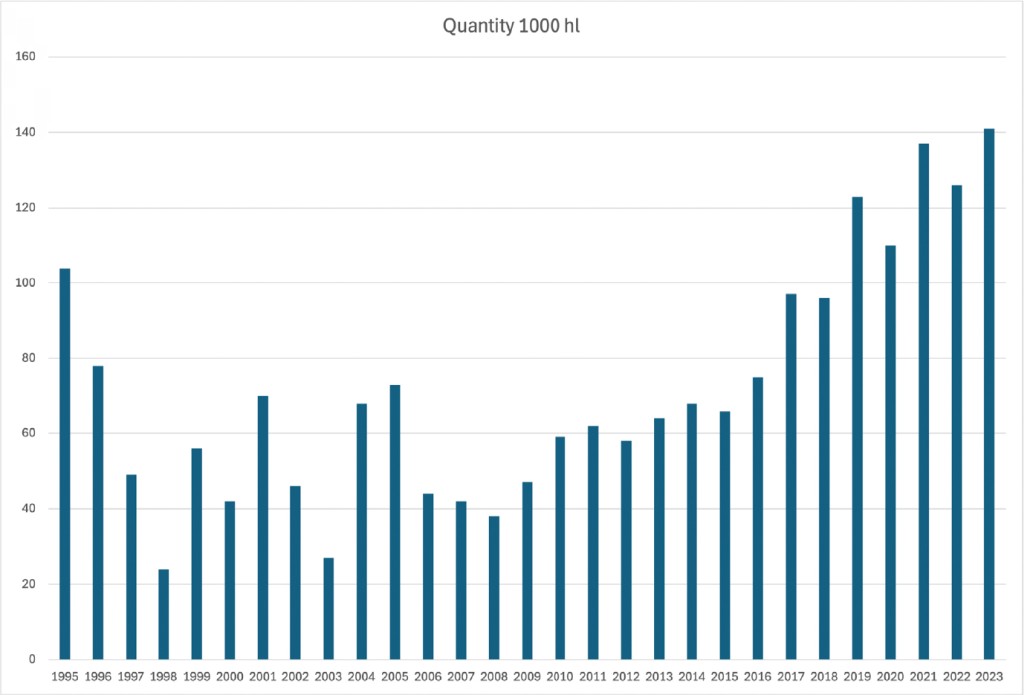
Despite this legacy, there has been gradual growth in Armenia’s wine-producing acreage (see Figure 1 and Table 1) and yields (see Figure 2), with the sector undergoing positive development (Bitsch et al., 2020; VWFA, 2019).

Map of main viticulture regions within the Republic of Armenia: (1) Ararat Plain; (2) foothills of the Ararat depression; (3) northeastern region; (4) Vayots Dzor region; (5) Syunik (Zangezur) region (source: Dallakyan et al., 2020).
Citation: International Food and Agribusiness Management Review 28, 3 (2025) ; 10.22434/ifamr.1269
Armenia wine sector key industry data 2022
Citation: International Food and Agribusiness Management Review 28, 3 (2025) ; 10.22434/ifamr.1269
Source: authors based on OIV data.Annual wine production of Armenia (×1000 hl) from 1995 to 2023 (Source: OIV).
Citation: International Food and Agribusiness Management Review 28, 3 (2025) ; 10.22434/ifamr.1269
Modern Armenian wineries are increasingly capturing international attention. In 2012, for instance, an Armenian red wine made it onto Bloomberg’s “Top 10 Wines in 2012” list (McCoy, 2012), a milestone that has driven wineries to focus on export strategies. Although global competition is intense and necessitates clear points of differentiation, domestic competition remains comparatively moderate, a factor potentially favorable to producers looking to build brand recognition (Bitsch et al., 2022).
Grape production itself often involves numerous small-scale growers working with traditional methods on fragmented parcels of land. Sales frequently occur through oral agreements or short-term contracts, complicating quality management of raw materials. Long-term relationships based on written contracts remain uncommon. Moreover, the sector’s rich biodiversity can be both an asset and a challenge for production and marketing. Due to Armenia’s historic specialization in brandy, domestic wine consumption remains relatively low, and export markets and especially Russia still dominate sales channels (Rytkönen, 2024).
In this context, digital transformation emerges as a strategic opportunity for Armenian viticulture and winemaking. Technologies such as precision agriculture, blockchain-based traceability, and direct-to-consumer sales platforms can enhance efficiency, boost transparency, and expand market reach. With climate change increasingly affecting grape yields and quality, data-driven innovations enable more adaptive and informed vineyard management. In parallel, rising consumer demand for sustainability underscores the value of technologies that track production processes from vineyard to bottle, strengthening market credibility.
Wines in Armenia range from entry-level supermarket offerings to premium bottles, with many falling in the €10 to €30 bracket, particularly at the Wines of Armenia store established by the Vine and Wine Foundation of Armenia (VWFA) to serve EU, Swiss, Liechtenstein, and UK markets (Wines of Armenia, 2024). Maintaining these price points requires consistently high-quality grapes and careful production practices, which further highlights the importance of technological integration (Bitsch et al., 2024; Khojoyan, 2024).
2.2 Armenia’s digital transformation and entrepreneurial ecosystem
Armenia has been actively positioning itself as a technological innovation hub and fostering a dynamic start-up ecosystem, boasting the highest level of entrepreneurial activity in its region. Its thriving entrepreneurial culture builds on a robust math and science foundation established during the Soviet era (Kuriakose, 2013). Over the past decade, the government has introduced several policies to encourage entrepreneurship, bolster digital infrastructure, and promote collaboration among universities, research centers, and private enterprises, and Armenia has made significant progress in the path of digital transformation since the early 2000 (Beglaryan et al., 2024; Muradyan et al., 2024)
Key policy documents — such as the Armenian Development Strategy (2014–2025), the Armenia Digital Transformation Agenda (2017), and the Digital Transformation Strategy (2021–2025) — demonstrate the country’s commitment to harnessing technology for economic growth, social development, and global competitiveness. Step by step, Armenia has leveraged innovation to support development and enhance its digital landscape, bolstering economic growth through a national strategy, stakeholder workshops, and training initiatives. These efforts are part of a broader aim to achieve regional digital leadership by 2030 (Karyan and Karyan, 2024).
2.3 Digitalization in the agri-food sector
Digitalization in agriculture encompasses the adoption of technologies such as IoT, blockchain, AI, and smart farming tools (Huck et al., 2024). These innovations aim to enhance productivity, resource efficiency, and supply chain transparency (Klerkx et al., 2019). In the wine industry, IoT devices monitor vineyard conditions, AI algorithms predict optimal harvest times, and blockchain ensures traceability and authenticity from grape to bottle (Bastard and Chaillet, 2023). However, the adoption of these technologies remains uneven, particularly in small and medium-sized enterprises (SMEs), where financial and technical barriers are pronounced.
The Resource-Based View (RBV) provides insight into the varying rates of digital adoption by highlighting that firms with stronger financial, technological, and human capital resources are more likely to integrate digital solutions effectively (Barney, 1991). Meanwhile, the Dynamic Capabilities framework underscores the need for firms to develop continuous learning mechanisms, collaborative networks, and adaptive strategies to sustain digital transformation (Teece et al., 1997).
Studies highlight the potential of digital tools to address critical challenges in wine production, such as labor shortages, climate variability, and market competition. For example, IoT-based precision viticulture optimizes irrigation and pest control, reducing costs and environmental impact (Schnebelin et al., 2021). Blockchain enhances consumer trust by providing immutable records of production practices, a feature increasingly demanded in premium wine markets (Kramer et al., 2024). However, barriers such as high implementation costs, digital literacy gaps, and fragmented regulatory frameworks hinder widespread adoption (Saberi et al., 2019; Rijanto, 2021).
2.4 Sustainability in the agri-food sector
Sustainability in the agri-food sector is guided by the principles of the triple bottom line: economic viability, environmental responsibility, and social equity (Boström et al., 2015). Digitalization offers a pathway to achieving these goals. Tools such as AI-powered analytics and IoT sensors enable better resource management, while e-commerce platforms expand market access, supporting economic sustainability (Annosi et al., 2020).
However, it is crucial to consider sustainability from the perspective of a country whose recent history has been shaped by territorial conflicts. Post-conflict countries (PCC) often prioritize the restoration of socioeconomic conditions, relegating ecological sustainability objectives to a secondary concern (Suarez et al., 2018). In the case of Armenia, more than 30 years of dispute in Nagorno-Karabakh culminated in a rapid, large-scale displacement of over 100 000 refugees to Armenia. Since 1991, Nagorno-Karabakh (also known as Artsakh) had functioned as a de facto state predominantly inhabited by ethnic Armenians. Renewed conflict erupted on 19 September 2023, following a military offensive by Azerbaijan, leading to a Russian-mediated ceasefire on 20 September. On 28 September the enclave’s authorities announced the formal decision to dissolve the region’s government by the end of the year. As a result, nearly the entire Nagorno-Karabakh population fled westward to Armenia, increasing the country’s population of 2.8 million by more than 3% in less than a week (Markosian et al., 2024).
The newly displaced population faces markedly higher unemployment rates and lower consumption levels than local residents, as well as limited access to land for cultivation (Holtzman and Nezam, 2004). Consequently, government policies may prioritize certain dimensions of sustainability over others. For instance, the Armenia Development Strategy for 2014–2025 in response to previous developments strongly emphasizes poverty reduction — and ultimately, its elimination — highlighting how social and economic stability can take precedence in the face of ongoing and unresolved conflicts.
Bearing these challenges in mind and how in such regions the perspective on sustainability may differ to the one in more stable economies, it is essential to consider how the three dimensions of this framework apply in the Armenian agricultural, and particularly its wine sector, considering its relevance for the overall economy and the employment of the rural population (Bitsch et al, 2022).
In general, for the wine industry, the principles of the triple bottom line translate to practices that minimize resource use, reduce waste, and ensure fair labor practices while maintaining profitability (Gilinsky et al, 2015). Digitalization offers a pathway to achieving these goals. Tools such as AI-powered analytics and IoT devices enable better resource management, while e-commerce platforms expand market access, supporting economic sustainability (Annosi et al., 2020).
However, achieving sustainability is not without challenges. Climate change poses significant risks to viticulture, including shifts in grape yield and quality (Hrustek, 2020). In this context, adaptive strategies such as climate-resilient rootstocks and precision agriculture become critical. Furthermore, social sustainability requires addressing labor shortages and fostering equitable growth, particularly in regions with fragmented production structures like Armenia (Bitsch et al., 2022).
2.5 Digitalization and sustainability in the agri-food sector
Digitainability as the merger of digitalization and sustainability represents a strategic shift in how agricultural and food systems integrate technological advancements to enhance economic, environmental, and social outcomes (Piot-Lepetit, 2023; Šermukšnyte-Alešiuniene and Melnikiene, 2024).
The literature emphasizes that Industry 4.0 technologies, including AI, IoT, blockchain, and big data analytics, are reshaping traditional agricultural practices by increasing efficiency, reducing waste, and improving traceability (Sharma et al., 2024; Sridhar et al., 2023). Studies highlight that precision farming technologies and digital platforms optimize resource use, contributing directly to the Sustainable Development Goals (SDGs), particularly SDG 2 (Zero Hunger), SDG 12 (Responsible Consumption and Production), and SDG 13 (Climate Action) (Ammar et al., 2024; Sridhar et al., 2023).
Moreover, open innovation ecosystems are driving the integration of digital sustainability solutions. Startups play a crucial role in this transformation by pioneering digital sustainability initiatives, fostering collaboration with established firms, research institutions, and policymakers (Otter and Robinson, 2024; Piot-Lepetit, 2023). Digital solutions, such as blockchain-based supply chain transparency and AI-driven predictive analytics, are increasingly being adopted to enhance environmental sustainability, food security, and resilience to climate change (Finger, 2023).
Despite these advancements, the impact of digitalization on sustainability is not uniformly positive. Some researchers highlight concerns regarding energy consumption, e-waste from digital devices, and widening digital divides, particularly in regions with limited access to digital infrastructure (Sharma et al., 2024). This underscores the need for context-specific digital adoption strategies that balance technological innovation with socio-economic and environmental considerations.
2.6 Drivers and barriers for digital adoption
The adoption of digitalization in agriculture and food systems is facilitated by several key drivers. Economic benefits play a significant role, as digital tools enhance efficiency, reduce operational costs, and optimize supply chains, leading to higher profitability for farmers and agribusinesses (Guandalini, 2022; Sharma et al., 2024). Regulatory and policy support further promotes digital sustainability through funding, incentives, and infrastructure development, as seen in initiatives such as the European Green Deal and the Farm to Fork Strategy (Otter and Robinson, 2024). Technological innovations in AI, remote sensing, and IoT-based monitoring contribute to precision farming, yield optimization, and real-time decision-making, enhancing overall productivity (Ammar et al., 2024). Additionally, consumer demand for transparency has been increasing, driving the adoption of blockchain-enabled supply chain solutions to ensure traceability and sustainability in food production (Finger, 2023; Perez et al., 2022). Climate change adaptation also serves as a crucial driver, as digitalization supports resilience through predictive analytics for weather forecasting, water management, and soil health monitoring (Sridhar et al., 2023).
Despite its transformative potential, digital adoption in agriculture faces numerous barriers. Financial constraints, lack of technical expertise, and resistance to change are frequently cited obstacles (Gupta et al., 2020). Limited digital literacy and training further exacerbate the issue, particularly for farmers in developing regions and small-scale operations, who often lack the technical skills necessary to adopt and efficiently use digital technologies (Otter and Robinson, 2024). Infrastructure gaps also remain critical constraints, as poor internet connectivity and unreliable electricity access hinder adoption in sub-Saharan Africa, parts of Asia, and rural areas of Latin America (Sridhar et al., 2023). Data privacy and security concerns present additional challenges, as the integration of digital platforms raises questions about data ownership, cybersecurity risks, and trust among stakeholders in agribusiness networks (Sharma et al., 2024; Finger, 2023). Finally, fragmented regulatory frameworks contribute to inconsistent adoption rates and operational inefficiencies, as the lack of standardized digital governance policies across regions complicates digital transformation efforts (Otter and Robinson, 2024).
In the Armenian wine sector, these challenges are compounded by systemic issues such as fragmented production, reliance on traditional methods, and limited access to reliable market data (Hanf et al., 2016). Studies emphasize the need for targeted interventions, such as financial incentives, knowledge-sharing platforms, and pilot projects, to bridge these gaps (Chkarat et al., 2023).
The role of collaborative networks in overcoming adoption barriers is also critical. Partnerships between wineries, technology providers, and industry associations have been shown to facilitate knowledge transfer and resource sharing, reducing the burden on individual producers (Solaimani and van der Veen, 2022). For Armenian wineries, fostering such collaborations could enhance access to digital tools and build the technical capacity needed for sustainable transformation.
2.7 Regional and global contexts of digitalization in the agri-food sector
The digitainability agenda is also shaped by regional dynamics and global frameworks, resulting in significant variations. In Europe, initiatives such as the European Union’s Green Deal and Common Agricultural Policy (CAP), emphasize digitalization and sustainability as key pillars of agricultural development (Del Rio Castro et al., 2021). These policies can be used to provide a design for integrating technology and sustainability in transitioning economies like Armenia. Comparative studies of digital adoption in other wine-producing regions, such as France and Italy, highlight the importance of aligning local practices with international standards to remain competitive (Florez et al., 2022). In the United States and Canada, agribusinesses are investing in AI-powered precision agriculture, drone-based crop monitoring, and blockchain-based food traceability (Abbasi et al., 2022; Radočaj et al., 2023). Large agritech firms collaborate with research institutions and technology startups to accelerate innovation (Adesiyan and Raffington, 2024; Stock and Gardezi, 2022). However, concerns regarding data privacy and corporate control over digital platforms are growing (Ibrahim and Truby, 2023). In sub-Saharan Africa, digital adoption is driven by mobile-based agricultural information services, IoT-enabled weather prediction, and blockchain for market access (Abban and Abebe, 2022). However, barriers such as inadequate infrastructure, limited farmer training, and affordability constraints hinder large-scale implementation (Sridhar et al., 2023). Government-led initiatives and partnerships with international organizations aim to bridge these gaps (Abdulai, 2022; Gavrilova, 2023). Asian countries exhibit diverse digital adoption trends. China and India lead in agricultural AI, IoT-based smart irrigation, and digital marketplaces for smallholder farmers (Akhter et al., 2022; Fu et al., 2022; Puppala et al., 2023; Radočaj et al., 2023). In contrast, Southeast Asia faces infrastructure limitations and policy fragmentation, slowing down widespread adoption (Montesclaros et al., 2023). Countries like Brazil and Argentina are adopting precision farming technologies at scale, with a focus on sustainable resource management (Cherubin et al., 2022; Silvi et al., 2021). However, land inequality and financial barriers pose challenges for smallholder farmers (Gröbli, 2022; Perez et al., 2022).
3. Methodology
3.1 Research design
This study employs an approach to comprehensively assess the digitalization and sustainability landscape within the Armenian wine sector using quantitative and qualitative methods. The purpose of this research design is to capture both broad trends and detailed insights. In the first phase, a structured survey was distributed to gather quantitative data on technology use, barriers to digital adoption, and knowledge of digital trends among wine producers. The survey targeted 47 wineries of varying sizes out of a total of 102 companies operating in the wine sector at the time of investigation (VWFA, 2024), yielding 35 responses, representing a response rate of 74% in relation to the wineries contacted.
In the second phase, in-depth interviews and on-site visits were conducted with 20 producers. This qualitative component aimed to validate survey findings, explore contextual challenges, and gain a deeper understanding of producers’ operational realities.
Conducting the survey first allowed for the identification of key barriers, adoption patterns, and stakeholder perspectives. These findings were then used to structure the semi-structured interviews, ensuring that qualitative discussions focused on the most pressing challenges and opportunities identified in the survey responses.
3.2 Survey instrument
The survey was designed to collect a wide range of information, including company size, production scale, current technology use, familiarity with digital trends, and operational challenges. Respondents rated their experiences and perceptions using a five-point Likert scale, facilitating the identification of patterns and trends. The questions covered various aspects of digital technology adoption, from winery management software to blockchain-based traceability and AI-powered predictive analytics.
To ensure clarity and reliability, the survey instrument was pre-tested with a subset of industry experts and winery owners. The final questionnaire was distributed electronically, with follow-up calls to improve response rates.
3.3 Interview protocol
The qualitative phase was designed to complement the survey by capturing deeper insights through semi-structured interviews and on-site observations. Interviews were conducted with owners, managers, and key decision-makers, focusing on their experiences with digital tools, perceptions of barriers, and aspirations for growth. The interviews also explored practical issues, such as labor management, resource use, and market access, providing a comprehensive view of each participant’s operational context.
To ensure consistency, a standardized interview guide was used, covering topics such as digitalization readiness, perceived benefits and risks of adopting new technologies, and future development plans. However, the semi-structured format allowed for flexibility to delve into specific challenges or opportunities unique to each producer. On-site observations of vineyards and wineries further enriched the data, highlighting variations in technological integration and operational setups.
3.4 Data analysis
Descriptive analysis
The survey data were analyzed using descriptive statistics to identify trends in technology adoption, barriers, and knowledge gaps. Measures such as mean, median, and standard deviation were computed to assess central tendencies and dispersion. Key findings highlighted that digital adoption remained limited among Armenian wine producers, with significant disparities based on production scale. Thematic clustering of responses provided a structured overview of how different winery sizes approached digitalization.
Correlation and regression analysis
To explore relationships between digital adoption and key factors such as winery size, financial constraints, and digital literacy, a correlation analysis was conducted. Pearson’s correlation coefficients were computed to assess the strength of associations between technology adoption and operational characteristics. The results indicated positive correlations between digital literacy and technology adoption, while financial constraints exhibited a negative correlation with investment in digital tools.
Building on this, multiple regression analysis was performed to determine the predictive value of different factors influencing digital adoption. The initial regression model suggested a modest relationship (R²=0.167) between the independent variables (winery size, financial constraints, digital literacy) and technology adoption. An improved model, incorporating additional variables related to digital awareness and market orientation, yielded a stronger predictive value (R²=0.388). The revised model indicated that familiarity with digital tools and financial capacity were the strongest predictors of technology adoption.
Qualitative analysis
Qualitative data from interviews and on-site observations were analyzed thematically. Transcripts were coded to identify recurring patterns related to labor shortages, scalability, and sustainability. Thematic analysis revealed three key areas influencing digital transformation: (1) economic constraints limiting technology investments, (2) skepticism toward digital solutions due to lack of familiarity, and (3) infrastructural challenges, including unreliable internet access in rural vineyards.
The obtained data must be interpreted within the study’s methodological constraints. Information was obtained only from producers willing to participate, potentially introducing sampling bias toward those more open to digitalization. Additionally, survey responses relied on self-reported data, which might not always fully align with actual practices. These limitations were mitigated through triangulation, comparing survey responses with interview insights and observational data.
By integrating quantitative and qualitative findings, this methodological framework provides a robust basis for analyzing the Armenian wine sector’s digital transformation and sustainability efforts. The multi-faceted approach ensures that the study captures both broad adoption patterns and deeper contextual factors shaping producers’ decision-making processes.
All quantitative data analysis, including descriptive statistics, correlation analysis, and multiple regression modeling, was conducted using Microsoft Excel. For qualitative data, ChatGPT-assisted thematic analysis was employed to support the identification of key patterns, categorization of themes, and structuring of insights from interview transcripts and field notes. ChatGPT was used as a computational tool to assist in the initial phase of organizing qualitative data, enhancing efficiency in identifying recurring themes. Manual cross-validation was then performed to ensure that themes accurately reflected the perspectives of participants and aligned with theoretical constructs related to digital adoption and sustainability. This combined approach helped balance computational efficiency with interpretative depth, ensuring methodological rigor.
4. Results
4.1 Current use of technology
The results indicate limited adoption of digital tools across the Armenian wine sector, with significant disparities between small, medium, and large producers. Survey responses revealed that most producers rely on traditional methods in vineyard and winery operations. Only 14% reported using advanced technologies such as IoT devices or precision agriculture tools for vineyard management. The use of digital tools in winemaking, including fermentation tracking software and automated temperature control, was sporadic, with an average utilization score of 2.51 on a five-point scale (see Table 1). Larger producers demonstrated slightly higher adoption rates, while smaller wineries largely relied on manual practices.
Overview of digital technology adoption across Armenian wineries, displaying average usage scores
Citation: International Food and Agribusiness Management Review 28, 3 (2025) ; 10.22434/ifamr.1269
In sales and marketing, traditional channels such as wine fairs, direct deliveries, and local wine shops dominated, with an average importance rating of 4.4. In contrast, digital sales channels, including e-commerce platforms and wine club memberships, were underutilized. 32% of respondents reported not using these channels at all, highlighting a significant opportunity for digital transformation.
4.2 Knowledge of digital trends
The survey and interviews revealed substantial knowledge gaps regarding advanced digital tools. Awareness of IoT applications, such as soil moisture sensors and weather stations, was low, with an average score of 2.40. Integration of these tools in vineyard management was even lower, reflecting both a lack of familiarity and perceived complexity. Blockchain technology, often regarded as a solution for traceability and authenticity in global wine markets, was largely unfamiliar to participants, with an average awareness score of 2.14. Larger producers showed greater interest in blockchain’s potential for meeting export market requirements but had not yet implemented such systems and do not currently plan to do so as shown in Table 3.
Knowledge and adoption levels of digital tools among Armenian wineries, displaying familiarity, perceived importance, and actual usage scores.
Citation: International Food and Agribusiness Management Review 28, 3 (2025) ; 10.22434/ifamr.1269
Awareness of AI and its role in predictive analytics and customer personalization was similarly limited (average score 2.22). Producers identified a lack of training opportunities as a significant barrier to adopting these technologies. Digital marketing tools, such as social media and CRM platforms, were somewhat more familiar, particularly among larger wineries, but their use remained inconsistent.
4.3 Operational challenges
The Armenian wine sector faces several systemic challenges that impede growth and digital adoption. Labor shortages emerged as a critical issue, with producers reporting difficulties in attracting and retaining agricultural workers. This challenge was particularly acute for small wineries in remote regions, which rely heavily on manual processes. Resource management, especially water use and pest control, was another recurring concern. Most producers relied on traditional methods in the absence of automated irrigation systems and real-time monitoring tools.
Limited access to market data and consumer insights hindered strategic decision-making. Producers emphasized the need for tools to analyze consumer preferences and trends, which they viewed as essential for improving market access and competitiveness. Additionally, the lack of enforceable quality standards and inconsistent production practices were highlighted as barriers to scaling operations and competing in premium wine markets.
Table 4 illustrates the strong interest in digital tools (mean 4.10) and openness to training (mean 4.00), indicating a readiness for adoption despite existing barriers.
Opportunities for digital transformation in Armenian wineries, highlighting interest, perceived benefits, and sustainability potential.
Citation: International Food and Agribusiness Management Review 28, 3 (2025) ; 10.22434/ifamr.1269
4.4 Correlation and Regression Analysis
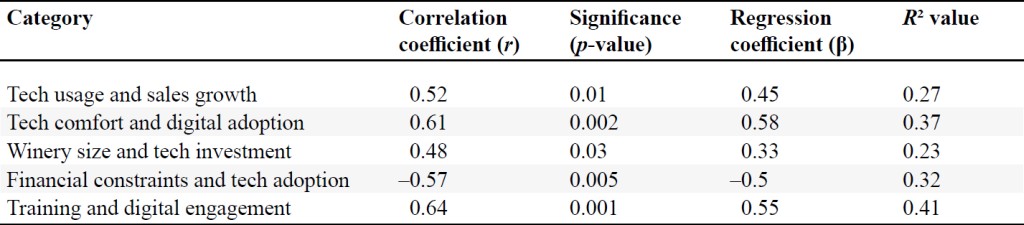
Correlation analysis (Table 5) highlights key factors influencing digital adoption:
Winery size (vineyard hectares, annual production) exhibits a positive correlation with digital adoption (r=0.58 and 0.76, respectively), suggesting that larger wineries are more likely to integrate technology.
Financial constraints negatively impact digital adoption (r=–0.40), reinforcing the role of cost and knowledge barriers.
Digital literacy indicators such as IoT familiarity (r=0.57), AI familiarity (r=0.53), and e-commerce familiarity (r=0.74) show strong positive relationships with technology usage.
Openness to training (r=0.65) and interest in digital tools (r=0.59) are also significantly associated with adoption.
Correlation and regression analysis results, showing relationships between key winery characteristics and digital adoption trends.
Citation: International Food and Agribusiness Management Review 28, 3 (2025) ; 10.22434/ifamr.1269
The multiple regression analysis improves the explanatory power of the model, with an adjusted R² of 0.388, indicating that 38.8% of the variance in digital adoption is explained by the selected predictors. The strongest predictor is IoT familiarity (p=0.004, coefficient=0.685), showing a significant positive effect on digital adoption. Financial constraints (p=0.080, coefficient=-0.516) negatively impact adoption, while interest in digital tools (p=0.100, coefficient=0.513) also shows a positive effect, though marginally significant. Other factors, including AI familiarity and openness to training, are not statistically significant.
4.5 Barriers to digital adoption
Participants identified multiple barriers to adopting digital tools, with financial constraints being the most frequently cited. High initial costs of technology and limited access to affordable financing were significant obstacles, particularly for small and medium-sized producers. Knowledge and training gaps were another major challenge, with many producers lacking awareness of available digital solutions and expressing uncertainty about their practical applications.
Infrastructure limitations also played a role, with poor internet connectivity in rural areas hindering the adoption of IoT devices and cloud-based technologies. Additionally, producers expressed concerns about the complexity of integrating digital tools into existing workflows and the potential for disruption during the transition process.
As presented in Table 6, financial constraints (mean 3.80) and knowledge gaps (mean 3.60) were the most significant barriers to digital adoption, while operational disruptions (mean 3.20) were of relatively lower concern.
Key barriers preventing digital adoption in Armenian wineries, based on financial, knowledge, and operational challenges.
Citation: International Food and Agribusiness Management Review 28, 3 (2025) ; 10.22434/ifamr.1269
4.6 Opportunities for transformation
Despite these challenges, there was strong interest among producers in exploring digital solutions. Many expressed enthusiasm for participating in pilot programs to test new technologies, particularly those focused on vineyard management and resource efficiency. Producers also highlighted the need for collaborative platforms that could facilitate knowledge sharing and access to digital tools. Such platforms were seen as vital for overcoming individual resource constraints and building collective capacity.
Sustainability emerged as a key area of interest, with producers recognizing the potential of digital tools to optimize resource use, reduce environmental impact, and enhance their market appeal. While smaller producers were primarily motivated by cost efficiency, larger wineries viewed sustainability as a strategic advantage in premium markets.
4.7 Observational insights
On-site visits provided valuable context, illustrating the practical realities of technology use in vineyards and wineries. Most vineyards relied on manual practices for irrigation, pest control, and foliage management, with limited integration of IoT sensors or weather stations. A few larger wineries employed advanced practices, such as automated irrigation and temperature control, but these remained exceptions rather than the norm.
In winemaking, stainless-steel tanks were commonly used, but temperature control was often managed manually. QR code labeling for export markets was standard practice, highlighting the potential for integrating blockchain systems to enhance traceability.
The findings provide a detailed snapshot of the Armenian wine sector’s current digitalization landscape, setting the stage for a discussion of strategic pathways for overcoming barriers and leveraging opportunities for transformation.
5. Discussion
5.1 Addressing operational challenges through digitalization
Armenia’s wine sector faces a range of operational challenges, particularly labor shortages, inefficiencies in resource management, and constrained market access. These challenges are not unique to Armenia but are shared by many wine-producing regions with limited access to capital and digital training programs. These challenges provide opportunities for digital innovation. Yet, the results show limited digital adoption, particularly in winemaking technologies (mean 2.51) and IoT-based vineyard management (mean 2.40). This suggests that perceived usefulness alone is insufficient, and adoption is also shaped by ease of use, infrastructure, and stakeholder influence.
The findings reinforce that stakeholders play a crucial role in shaping digital transformation. The VWFA emerges as a key enabler, fostering knowledge-sharing, capacity-building, and financial incentives to encourage digital adoption. As the technology adoption process often follows a two-speed approach, with innovators and early adopters leading the way while others remain skeptical, targeted interventions should focus on supporting first-movers while creating a demonstration effect for hesitant stakeholders (Kramer et al., 2021).
In this context, RBV and Dynamic Capabilities provide a useful lens. Wineries that effectively integrate digital tools into their business processes (e.g., data-driven decision-making, smart irrigation, digital marketing) develop new competencies that differentiate them from competitors. The results indicate that larger producers, who already have stronger resource endowments, are better positioned to leverage digital tools, whereas smaller wineries require additional support to build digital capabilities. Developing dynamic capabilities such as learning, technological adaptation, and collaboration will be essential for sustaining competitive advantage in a rapidly evolving market.
5.2 Overcoming barriers to digital adoption
While there is a strong interest in digital tools (mean 4.10), financial constraints (mean 3.80), knowledge gaps (mean 3.60), and infrastructure challenges (mean 3.40) significantly hinder adoption. The correlation analysis confirms a strong negative relationship between financial constraints and digital adoption (r=–0.57, p=0.005), reinforcing that wineries, especially smaller ones, face systemic challenges in securing investment.
Considering factors for technology adoption, government-backed financial schemes, subsidies, and leasing models can improve the perceived ease of adoption. However, the results suggest that awareness of these opportunities remains limited. VWFA, along with industry associations and financial institutions, could bridge this knowledge gap by offering training on financing options, cost-benefit analyses, and digital business modeling.
From an RBV perspective, wineries that invest in digital infrastructure and workforce training develop unique intangible resources, such as technological know-how and data-driven market insights, which enhance long-term competitiveness. The dynamic capability of continuous learning becomes critical in this process — firms that can adapt, integrate, and reconfigure their digital capabilities will be better positioned to overcome operational bottlenecks and exploit new market opportunities.
5.3 Opportunities for enhancing ecological sustainability
The results indicate strong awareness of digital tools for sustainability (mean 3.85) but low actual adoption (mean 2.00 for IoT usage), suggesting that wineries acknowledge the benefits but face adoption hurdles. Dynamic Capabilities Theory highlights that firms must develop the ability to sense opportunities, seize them, and reconfigure resources. For sustainability, this means investing in precision agriculture, real-time monitoring, and predictive analytics to enhance resource efficiency and climate resilience.
The findings also emphasize the strategic value of aligning with global sustainability frameworks such as the European Green Deal. This suggests that Armenian wineries could leverage digital tools not just for cost savings but also as a competitive differentiator in premium markets. The VWFA could play a key role in linking digital sustainability initiatives to export incentives, certifications, and global best practices, creating tangible business benefits for early adopters.
5.4 Variations in digital readiness
The results underscore significant disparities in digital readiness, with larger wineries leading adoption in e-commerce (mean 3.22) and digital marketing (mean 3.08), while smaller wineries remain cautious. The correlation analysis confirms that larger firms are more likely to invest in digital tools (r=0.48, p=0.03), aligning with RBV’s argument that resource availability determines a firm’s ability to pursue competitive differentiation.
From a Technology Adoption perspective, wineries at different readiness levels require customized interventions. This means that for early adopters support in scaling up digital capabilities, AI-driven analytics, and international market expansion is required; hesitant adopters, however, seek low-cost, easy-to-use solutions (e.g., plug-and-play e-commerce platforms, social media marketing tools) that reduce the perceived complexity of adoption; lastly, for skeptics, awareness campaigns and peer-learning initiatives showcasing successful use cases and ROI calculations should be considered.
Dynamic Capabilities also play a role in bridging the gap between early adopters and laggards. Firms that develop organizational learning mechanisms — such as knowledge-sharing networks, cross-industry partnerships, and sector-wide digital literacy programs — can accelerate adoption and create collective industry benefits.
5.5 Role of collaboration in driving digital adoption
Collaboration emerges as a critical enabler of digital transformation. The strong correlation between training and digital engagement (r=0.64, p=0.001) suggests that learning opportunities significantly increase adoption likelihood. Considering enablers of technology adoption, stakeholder-driven initiatives including training hubs, pilot projects, and public-private partnerships (PPPs) can help mitigate barriers related to cost, knowledge, and technical uncertainty.
RBV further supports the role of collaboration in resource sharing and competency building. Wineries that participate in joint technology investments, shared e-commerce platforms, and blockchain-based traceability systems can collectively enhance their market position while reducing individual risk. The Vine and Wine Foundation could take a leadership role in coordinating industry-wide digital adoption strategies, ensuring that the benefits of innovation extend beyond large firms to smaller producers.
Pilot programs that demonstrate measurable efficiency gains, cost savings, and market expansion opportunities can help overcome skepticism and create a sector-wide momentum toward digitalization. Such collaborative initiatives align with the principles of Dynamic Capabilities, enabling wineries to develop, refine, and scale their digital competencies in response to evolving industry demands.
6. Conclusion
This study has shown that the Armenian wine sector, with its rich heritage and unique challenges, stands at a critical juncture where digitalization and sustainability must converge to ensure long-term competitiveness and resilience. It provides an in-depth examination of the sector’s readiness for digital transformation, revealing significant gaps in technology adoption, resource management, and market access. Despite these challenges, a strong interest in digital tools and sustainability initiatives among producers offers a favorable foundation for change, at least from the perspective of the wine sector, provided that adequate support mechanisms are in place.
Key findings highlight limited use of advanced digital tools, particularly among small and medium-sized wineries, where resource limitations restrict investment in IoT, AI, and blockchain solutions. The regression analysis confirms that financial constraints significantly hinder adoption, while digital literacy and openness to training positively correlate with greater integration of digital solutions. These insights underscore the importance of targeted interventions, including capacity-building programs, accessible financial models, and collaborative frameworks that foster knowledge-sharing and technological adaptation.
A supportive policy framework, aligned with national and international priorities, is essential for realizing digital transformation and sustainability goals. Aligning agricultural policies with global benchmarks such as the European Green Deal and the Sustainable Development Goals could guide the sector toward resource efficiency and reduced environmental impact. At the same time, investments in rural infrastructure, tailored education initiatives, and robust quality standards, for example, supported by digital traceability systems, would advance market credibility and consumer trust, especially in the premium wine segments the sector generally targets.
Collaboration across the wine value chain remains a fundamental driver of digital transformation. The results highlight the role of key stakeholders, such as the Vine and Wine Foundation of Armenia, in shaping adoption trends and acting as a central enabler of technological capacity-building. Public-private partnerships (PPPs), producer cooperatives, and sector-wide pilot programs could provide cost-sharing mechanisms and incentives for technology adoption, particularly for smaller producers. Structured digital innovation hubs and technology incubators could facilitate hands-on demonstrations, resource pooling, and tailored solutions that address industry-specific digitalization needs. Moreover, continuous monitoring and evaluation frameworks should be established to track adoption trends, assess sustainability outcomes, and refine strategies based on empirical evidence.
This study contributes to the broader discourse on “digitainability” by illustrating how digital tools can enhance resource efficiency, environmental sustainability, and market competitiveness in transitioning economies. Using Armenia as a case to illustrate the barriers and opportunities faced by wineries in transitioning economies, the findings highlight challenges that are not exclusive to Armenia but are prevalent in other regions with fragmented production structures, financial constraints, and digital literacy gaps, thereby serving as a reference point for policymakers, industry stakeholders, and researchers examining how actors in similar contexts can overcome adoption barriers and enhance sustainability through technology.
However, further research is needed to deepen the understanding of digital transformation in traditional industries. Future studies should adopt interdisciplinary approaches to explore the interplay of technological, economic, and social factors, as well as longitudinal methodologies that assess the long-term impacts of digital adoption.
Comparative studies, both within the South Caucasus and across established wine-producing regions, could offer valuable insights into best practices and common barriers, providing actionable recommendations for industry stakeholders. Additionally, targeted research on policy interventions, financial models, and digital literacy programs could inform strategies to overcome connectivity limitations, capital constraints, and cultural skepticism surrounding digitalization.
Methodologies for measuring environmental and social impacts of digital adoption, particularly concerning sustainability certifications and export market requirements, could further support strategic decision-making for producers aiming to align with global standards.
Finally, cost-benefit analyses of blockchain-based traceability, AI-powered analytics, and IoT-assisted vineyard management could clarify the economic viability of digital solutions for small and medium-sized wineries, ensuring that technological advancements remain accessible and scalable. By pursuing these future directions, researchers and practitioners alike can generate actionable insights that extend beyond Armenia’s wine sector, contributing to the broader agri-food industry’s digital and sustainable transformation.
Acknowledgements
This research study forms part of a wider project with the objective of needs assessment of the wine sector of Armenia funded with support by the Vine and Wine Foundation of Armenia and Deutsche Gesellschaft für Internationale Zusammenarbeit (GIZ). During the preparation of this work the corresponding author used the ChatGPT 4o large language model to improve readability and language of the work as well as for reference management. After using this tool, the corresponding author reviewed and edited the content as needed and takes full responsibility for the content of the publication. We acknowledge support by the Open Access Publishing Fund of Geisenheim University.
References
Abbasi, R., P. Martinez and R. Ahmad. 2022. The digitization of the agricultural industry – a systematic literature review on Agriculture 4.0. Smart Agricultural Technology 2: 100042. https://doi.org/10.1016/j.sat.2022.100042
Abdulai, A.-R. 2022. Toward digitalization futures in smallholder farming systems in sub-Saharan Africa: a social practice proposal. Frontiers in Sustainable Food Systems 6: 866331. https://doi.org/10.3389/fsufs.2022.866331
Adesiyan, J.S. and A.E. Raffington. 2024. Agritech revolution: next-generation supply chain in America’s agriculture. International Journal of Environment and Climate Change 14(2): 254–272. https://doi.org/10.9734/ijecc/2024/v14i21790
Akhter, R. and S.A. Sofi. 2022. Precision agriculture using IoT data analytics and machine learning. Journal of King Saud University-Computer and Information Sciences 34(8): 5602–5618. https://doi.org/10.1016/j.jksuci.2022.02.002
Ammar, E.E., S.A. Aziz and X. Zou. 2024. An in-depth review on the concept of digital farming. Environmental Development and Sustainability. https://doi.org/10.1007/s10668-024-05161-9
Anderson, K., D. Norman and G. Wittwer. 2019. Globalisation of the World’s Wine Markets. In: K. Anderson (ed.), Wine Globalization: A New Comparative History. World Scientific, Singapore. https://doi.org/10.1142/9789811202094_0002
Annosi, M.C., F. Brunetta, F. Capo and L. Heideveld. 2020. Digitalization in the agri-food industry: the relationship between technology and sustainable development. Management Decision 58(8): 1737–1757. https://doi.org/10.1108/MD-09-2019-1328
Bastard, A. and A. Chaillet. 2023. Digitalization from vine to wine: successes and remaining challenges — a review. BIO Web of Conferences 68: 01034. https://doi.org/10.1051/bioconf/20236801034
Beglaryan, M., A. Drampyan and P. Sargsyan. 2024. The impact of digitalization on promoting business during crisis: Evidence from Armenian SMEs. Journal of Science and Technology Policy Management 16(10): 57–78. https://doi.org/10.1108/JSTPM-12-2023-0307
Bitsch, L., B. Richter and J.H. Hanf. 2022. The competitive landscape in transitioning countries: the example of the Armenian wine industry. Wine Economics and Policy 11(1): 31–45. https://doi.org/10.36253/wep-10657
Bitsch, L., J.H. Hanf and I. Kottmann. 2024. Wine tourism in developing countries – the case of Armenia. Journal of Agribusiness in Developing and Emerging Economies (ahead-of-print). https://doi.org/10.1108/JADEE-12-2021-0311
Bitsch, L., S. Ghvanidze and J. Hanf. 2018. Die Wiege des Weinbaus – weinwirtschaftliche Entwicklungen im Kaukasus. In: Deutsches Weinbaujahrbuch 2019, pp. 144–149.
Boström, M., A.M. Jönsson, S. Lockie, A.P.J. Mol and P. Oosterveer. 2015. Sustainable and responsible supply chain governance: challenges and opportunities. Journal of Cleaner Production 107: 1–7. https://doi.org/10.1016/j.jclepro.2014.11.050
Cherubin, M.R., J.M. Damian, T.R. Tavares, R.G. Trevisan, A.F. Colaço, M.T. Eitelwein, M. Martello, R.Y. Inamasu, O.H.C. Pias and J.P. Molin. 2022. Precision agriculture in Brazil: The trajectory of 25 years of scientific research. Agriculture 12(11): 1882. https://doi.org/10.3390/agriculture12111882
Chkarat, H., T. Abid and L. Sauvée. 2023. Conditions for a convergence between digital platforms and sustainability in agriculture. Sustainability 15: 14195. https://doi.org/10.3390/su151914195
Dallakyan, M., S. Esoyan, B. Gasparyan, A. Smith and N. Hovhannisyan. 2020. Genetic diversity and traditional uses of aboriginal grape (Vitis vinifera L.) varieties from the main viticultural regions of Armenia. Genetic Resources and Crop Evolution 67(4): 999–1024. https://doi.org/10.1007/s10722-020-00901-2
Del Rio Castro, G., M.C. Gonzalez Fernandez and C.A. Uruburu. 2021. Unleashing the convergence amid digitalization and sustainability towards pursuing the sustainable development goals (SDGs): a holistic review. Journal of Cleaner Production 280: 122204. https://doi.org/10.1016/j.jclepro.2020.122204
Ducman, A.A., V. Diaconita, I. Simonca, A. Belciu and A.M.I. Corbea. 2023. Government oversight and economic impacts: sustainability in the vineyard and the evolution of wine regulations, trade and production. Agronomy 13: 2991. https://doi.org/10.3390/agronomy13122991
European Commission. 2019. The European Green Deal. Available at: https://commission.europa.eu/strategy-and-policy/priorities-2019-2024/european-green-deal_en (accessed on 3 December 2024).
FAO and ITU. 2022. Status of digital agriculture in 47 sub-Saharan African countries. Rome. https://doi.org/10.4060/cb7943en
Festa, G., D’Amato, A., Palladino, R., Papa, A. and Cuomo, M.T. 2025. Digital transformation in wine business – from Marketing 5.0 to Industry 5.0 in the world of wine adopting artificial intelligence, European Journal of Innovation Management. https://doi.org/10.1108/EJIM-04-2024-0465
Florez, M., I. Piot-Lepetit, I. Bourdon and K. Gauche. 2022. How do French agri-tech start-ups contribute to the sustainability of food value chains? Journal of International Council for Small Business 3: 79–93. https://doi.org/10.1080/26437015.2021.1989993
Fu, W. and R. Zhang. 2022. Can digitalization levels affect agricultural total factor productivity? Evidence from China. Frontiers in Sustainable Food Systems 6: 860780. https://doi.org/10.3389/fsufs.2022.860780
Gavrilova, N.G. 2022. Impediments to the digitalization of agriculture in Africa. IOP Conference Series: Earth and Environmental Science 981(3): 32014. https://doi.org/10.1088/1755-1315/981/3/032014
Gilinsky, A., S.K. Newton and R. Fuentes Vega. 2016. Sustainability in the global wine industry: concepts and cases. Agriculture and Agricultural Science Procedia 8: 37–49. https://doi.org/10.1016/j.aaspro.2016.02.006
Gupta, S., J. Campos Zeballos, G. del Río Castro, A. Tomičić, S.A. Morales, M. Mahfouz, I. Osemwegie et al.2023. Operationalizing digitainability: Encouraging mindfulness to harness the power of digitalization for sustainable development. Sustainability 15(8): 6844. https://doi.org/10.3390/su15086844
Gupta, S., M. Motlagh and J. Rhyner. 2020. The digitalization sustainability matrix: a participatory research tool for investigating digitainability. Sustainability 12: 9283. https://doi.org/10.3390/su12219283
Hanf, J.H., V. Marquardt, V. Urutyan and A. Babayan. 2016. The impact of foreign direct investment on the agribusiness of transition countries: the example of the Armenian wine business. International Journal of Business and Globalisation 16(4): 423–447. https://doi.org/10.1504/IJBG.2016.078172
Hrustek, L. 2020. Sustainability driven by agriculture through digital transformation. Sustainability 12: 8596. https://doi.org/10.3390/su12208596
Huck, C., A. Gobrecht, T. Salou, V. Bellon-Maurel and E. Loiseau. 2024. Environmental assessment of digitalisation in agriculture: a systematic review. Journal of Cleaner Production 472: 143369. https://doi.org/10.1016/j.jclepro.2024.143369
Ibrahim, I.A. and J.M. Truby. 2023. FarmTech: Regulating the use of digital technologies in the agricultural sector. Food and Energy Security 12(4): e483. https://doi.org/10.1002/fes3.483
Karyan, A. and V. Karyan. 2024. The concept, goal, and solutions of business digital tokenisation in developing countries, on the examples of Armenia. Journal of Economy: 131.
Khachatryan, N. and M. von Oppen. 1999. Bewertung des Marktpotentials des in Armenien hergestellten Branntweins. In: Deutscher Tropentag 1999 in Berlin: Partizipative Wissens- und Technologieentwicklung.
Khojoyan, S. 2024. Evaluating the influence of national branding on consumer behavior towards Armenian wines with fuzzy DEMATEL approach. ICARE Foundation.
Klerkx, L., E. Jakku and P. Labarthe. 2019. A review of social science on digital agriculture, smart farming and agriculture 4.0: new contributions and a future research agenda. NJAS — Wageningen Journal of Life Sciences 90–91: 100315. https://doi.org/10.1016/j.njas.2019.100315
Kramer, M.P., J. Heussner and J.H. Hanf. 2024. Exploring the use of blockchain-based tokens in the wine industry. International Food and Agribusiness Management Review 27(2): 271–290. https://doi.org/10.22434/ifamr2023.0080
Kramer, M.P., L. Bitsch and J.H. Hanf. 2021. The impact of instrumental stakeholder management on blockchain technology adoption behavior in agri-food supply chains. Journal of Risk and Financial Management 14(12): 598. https://doi.org/10.3390/jrfm14120598
Lichtenthaler, U. 2021. Digitainability: the combined effects of the megatrends digitalization and sustainability. Journal of Innovation Management 9(2): 64–80. https://doi.org/10.24840/2183–0607_009.002_0006
Loose, S. 2024. Digitalisation of the wine sector – current status and future development”, https://www.prowein.com/en/Media_News/Press/Special_Report_on_ProWein_Business_Survey_2024_Digitalisation_of_the_wine_sector_–_current_status_and_future_development
Loose, S. 2024. ProWein Business Report: Weinbranche vor großen Herausforderungen. Die Winzer- Zeitschrift 3: 41–43.
Margaryan, I. 2023. Research and Innovation in Armenia: Are We On the Right Path? In: EVN Report. Available at: https://evnreport.com/creative-tech/research-and-innovation-in-armenia-are-we-on-the-right-path/
Markosian, C., K. Hekimian, K. Garber, A. Darzi and S. Shekherdimian. 2024. Can Armenia’s refugee crisis catalyse health-system reforms? The Lancet 403(10424): 347. https://doi.org/10.1016/S0140-6736(24)00095-3
McCoy, E. 2012. Top 10 Wines of 2012 From Burgundy to Armenia to Sonoma. Available at: https://www.bloomberg.com/news/articles/2012-12-17/top-10-wines-of-2012-from-burgundy-to-armenia-to-sonoma
Montesclaros, J.M.L. and P.S. Teng. 2023. Digital technology adoption and potential in Southeast Asian agriculture. Asian Journal of Agriculture and Development 20(2): 7–30. https://doi.org/10.22004/ag.econ.332254
OIV Digital Transformation Observatory Hub. 2021. Digital trends applied to the vine and wine sector: a comprehensive study on the digitalization of the sector. Available at: https://www.oiv.int/public/medias/8593/digital-trends-applied-to-the-vine-and-wine-sector.pdf
Otter, V. and D.M. Robinson. 2024. Transparency and changing stakeholder roles in the digital age of sustainable agri-food supply chain networks. Frontiers in Sustainable Food Systems 8: 1449684. https://doi.org/10.3389/fsufs.2024.1449684
Pastore, C., T. Frioni and M.P. Diago. 2022. Editorial: resilience of grapevine to climate change: from plant physiology to adaptation strategies. Frontiers in Plant Science 13: 994267. https://doi.org/10.3389/fpls.2022.994267
Pellegrini, G., C.S. de Mattos, V. Otter and G. Hagelaar. 2023. Exploring how EU agri-food SMEs approach technology-driven business model innovation. International Food and Agribusiness Management Review: 1–20. https://doi.org/10.22434/IFAMR2022.0122
Piot-Lepetit, I. 2023. Digitainability and open innovation: How they change innovation processes and strategies in the agrifood sector? Frontiers in Sustainable Food Systems 7: 1267346. https://doi.org/10.3389/fsufs.2023.1267346
Puppala, H., P.R.T. Peddinti, J.P. Tamvada, J. Ahuja and B. Kim. 2023. Barriers to the adoption of new technologies in rural areas: The case of unmanned aerial vehicles for precision agriculture in India. Technology in Society 74: 102335. https://doi.org/10.1016/j.techsoc.2023.102335
Radočaj, D., A. Šiljeg, R. Marinović and M. Jurišić. 2023. State of major vegetation indices in precision agriculture studies indexed in Web of Science: A review. Agriculture 13(3): 707. https://doi.org/10.3390/agriculture13030707
Richter, B. and J.H. Hanf. 2023. Competitive parity as strategic dimension–little to gain, much to lose. International Food and Agribusiness Management Review 26(4): 597–613. https://doi.org/10.22434/ifamr2022.0141
Rijanto, A. 2021. Business financing and blockchain technology adoption in agroindustry. Journal of Science and Technology Policy Management 12(2): 215–235. https://doi.org/10.1108/JSTPM-03-2020-0065
Rytkönen, P. 2024. The Armenian Wine Industry: Entrepreneurship, History, Legacy and Institutions. In: New Perspectives on Swedish Economic History: Institutions, Infrastructure and Finance. Springer Nature, Cham, pp. 299–321.
Saberi, S., M. Kouhizadeh and J. Sarkis. 2019. Blockchains and the supply chain: Findings from a broad study of practitioners. IEEE Engineering Management Review 47(3): 95–103. https://doi.org/10.1109/EMR.2019.2931172
Schnebelin, É., P. Labarthe and J.M. Touzard. 2021. How digitalization interacts with ecologization? Perspectives from actors of the French agricultural innovation system. Journal of Rural Studies 86: 599–610. https://doi.org/10.1016/j.jrurstud.2021.06.007
Šermukšnytė-Alešiūnienė, K. and R. Melnikienė. 2024. The effects of digitalization on the sustainability of small farms. Sustainability 16(10): 4076. https://doi.org/10.3390/su16104076
Shanoyan, A., R.B. Ross, H.R. Gow and H.C. Peterson. 2014. Investment responses to third-party market facilitation in Armenia. Journal of Agribusiness in Developing and Emerging Economies 4(2): 98–114. https://doi.org/10.1108/JADEE-01-2014-0003
Sharma, M., R. Antony, S. Vadalkar and A. Ishizaka. 2024. Role of Industry 4.0 technologies and human- machine interaction for de-carbonization of food supply chains. Journal of Cleaner Production 468: 142922. https://doi.org/10.1016/j.jclepro.2024.142922
Silvi, R., L.G.R. Pereira, C.A.V. Paiva, T.R. Tomich, V.A. Teixeira, J.P. Sacramento, R.E.P. Ferreira et al. 2021. Adoption of precision technologies by Brazilian dairy farms: The farmer’s perception. Animals 11(12): 3488. https://doi.org/10.3390/ani11123488
Solaimani, S. and J. van der Veen. 2022. Open supply chain innovation: an extended view on supply chain collaboration. Supply Chain Management: An International Journal 27(5): 597–610. https://doi.org/10.1108/SCM-09-2020-0433
Sridhar, A., M. Ponnuchamy, P.S. Kumar, A. Kapoor, D.V.N. Vo and G. Rangasamy. 2023. Digitalization of the agro-food sector for achieving sustainable development goals: A review. Sustainable Food Technology 1(6): 783–802. https://doi.org/10.1016/j.susfoo.2023.783802
Stock, R. and M. Gardezi. 2022. Arrays and algorithms: Emerging regimes of dispossession at the frontiers of agrarian technological governance. Earth System Governance 12: 100137. https://doi.org/10.1016/j.esg.2022.100137
Teece, D.J., G. Pisano and A. Shuen. 1997. Dynamic capabilities and strategic management. Strategic Management Journal 18(7): 509–533. https://doi.org/10.1002/(SICI)1097-0266(199708)18:7<509::AID-SMJ882>3.0.CO;2-Z
Wine of Armenia. 2024. Online Store with News and Blogs. Available at: https://winesofarmenia.store/en
Yadav, V.S., A.R. Singh, A. Gunasekaran, R.D. Raut and B.E. Narkhede. 2022. A systematic literature review of the agro-food supply chain: Challenges, network design, and performance measurement perspectives. Sustainable Production and Consumption 29: 685–704. https://doi.org/10.1016/j.spc.2021.10.021
Corresponding author