Abstract
Farm digitalization is transforming agriculture by enhancing productivity, sustainability, and efficiency through advanced technologies like sensors, AI, and data platforms. However, its adoption generates both opportunities and challenges, shaped by stakeholders’ diverse perceptions of costs and benefits. This study explores these dynamics using insights from 18 living labs across Europe, where farmers, policymakers, and technology providers co-developed digital solutions. Findings reveal digitalization’s potential to optimize decision-making, promote sustainability, and foster innovative business models while also highlighting significant financial, social, and operational barriers. Economic concerns — such as high initial costs, unequal access, and fears of technological obsolescence — emerged as critical adoption barriers, particularly for small farms. Non-economic challenges include steep learning curves, trust deficits, and the risk of alienating farmers from hands-on practices. The study underscores the need for inclusive policies, targeted financial support, infrastructure development, and farmer-centred training programs to address these challenges. By fostering trust, collaboration, and equitable access, stakeholders can ensure that farm digitalization benefits all, aligning with European sustainability goals. This paper offers actionable insights for policymakers, agribusiness leaders, and researchers seeking to navigate the complexities of digital transformation in agriculture.
1. Introduction
Farm digitalization is increasingly recognized as a transformative force in modern agriculture, with the potential to enhance productivity, efficiency, and sustainability (e.g., Ceccarelli et al., 2022; European Commission, 2021). By integrating advanced technologies such as sensors, drones, robotics, and data-driven decision-making tools, digitalization enables farmers to optimize resource use, improve yields, and address pressing challenges such as climate change and food security (e.g., European Commission, 2020a; Finger, 2023). However, the adoption of digital technologies is not without its complexities, especially when viewed through the diverse perspectives of stakeholders involved in agricultural systems (e.g., Hilbeck et al., 2022). Farmers, technology providers, policymakers, cooperatives, and advisors often approach digitalization with varying expectations, priorities, and concerns, resulting in both opportunities and tensions (e.g., Carolan, 2017; Zscheischler et al., 2022). This study examines these dynamics, focusing on stakeholders’ perceptions of the costs and benefits of digitalization in agriculture.
Despite growing attention to farm digitalization in academic and policy discourses, there is limited understanding of how stakeholders collectively perceive the trade-offs associated with this transition. While existing studies have highlighted the potential benefits associated with the adoption of digital tools in agriculture — such as improved decision-making, resource efficiency, and market access (e.g., Krutilin et al., 2020; Njuguna et al., 2025) — they have also pointed to significant challenges, including high upfront costs, infrastructure deficits, data security concerns, and unequal access to technology (Ajena et al., 2020; Carolan, 2017; de Vries, 2023; Rotz et al., 2019; Stone, 2022). These issues are particularly pronounced in the context of Europe’s agricultural sector, which is marked by diverse farm sizes, production systems, and socio-economic contexts (European Union, 2020b). This paper builds on and extends this body of literature by exploring stakeholder perceptions in 18 living labs across Europe, encompassing a wide range of agricultural settings and digital technologies.
The concept of living labs — real-life, user-centred innovation ecosystems — provides a unique methodological lens for this study. These labs bring together farmers and other stakeholders to co-create and test digital solutions, fostering an environment for shared learning and problem-solving. By analyzing insights from 18 focus group discussions conducted within these labs, this paper uncovers critical insights into stakeholders’ concerns and priorities. Particular attention is given to understanding the trust dynamics between farmers and other stakeholders, the resource and skill requirements for successful digital adoption, and the broader implications of digitalization for agricultural practices and governance systems.
The findings presented in this paper are not only timely but also crucial for informing the design and implementation of policies and interventions that support equitable and sustainable farm digitalization. As Europe seeks to modernize its agricultural sector in line with the European Green Deal and other sustainability initiatives, understanding stakeholder perspectives is essential to address barriers to adoption and foster collaborative approaches. The paper aims to contribute to this effort by presenting a nuanced analysis of the costs and benefits of digitalization as perceived by diverse stakeholders.
The subsequent sections outline the methodology employed in this study, present the key findings from the focus group discussions, and engage in a critical discussion of the results, situating them within the broader context of farm digitalization literature. Finally, the paper concludes with practical recommendations for policymakers, technology developers, and researchers, emphasizing the importance of trust-building, capacity development, and inclusive governance in advancing digitalization in agriculture.
2. Perceptions of the costs and benefits of farm digitalization: literature review
Farm digitalization marks a transformative era in modern agriculture, incorporating advanced technologies such as precision farming tools, digital irrigation systems, and data analytics to enhance farm management practices (e.g., Hareendran and Albaaji, 2024). The integration of these innovations entails diverse costs and benefits, perceived differently by various stakeholder groups, including farmers, policymakers, agricultural enterprises, cooperatives, researchers, consultants, and other experts. This literature review explores academic insights into stakeholder perspectives on the adoption and impact (perceptions of costs and benefits) of farm digitalization.
2.1 The perceptions of benefits and opportunities of digitalization
From an economic standpoint, digitalization enables farmers to lower costs through the efficient use of inputs such as water, fertilizers, and pesticides. Ferrari et al. (2022) highlight that the deployment of novel information and communication technologies (ICT) in rural areas prioritizes cost reduction alongside productivity enhancements (Barnes et al., 2019; Barrett and Rose, 2022; Van Evert et al., 2017). For instance, precision farming facilitates real-time crop monitoring, enabling targeted interventions that conserve resources while boosting yields. Similarly, another study found that 84% of surveyed Brazilian farmers recognized productivity gains as a significant advantage of adopting digital technologies (Bolfe et al., 2020). Additionally, Schroeder et al. (2024) reported that German stakeholders viewed digitalization as a means to enhancing the agricultural sector’s public image, optimize costs, and drive productivity improvements. The use of digital technologies in farm management is shown to improve the profitability of farming enterprises. Studies by Van Evert et al. (2017) and Weersink et al. (2018) indicate that smart farming technologies generate higher returns on investment by improving productivity, thereby increasing profitability for farmers and benefiting stakeholders across the agricultural value chain.
Digitalization offers the potential to increase farm productivity by improving access to valuable knowledge (Klerkx et al., 2019) and enhancing the speed and precision of decision-making and practices (Astill et al., 2020; Eastwood et al., 2019; Klerkx et al., 2019; Rose and Bruce, 2018).
Digital technologies transform labour in agriculture by reducing the reliance on manual work, thereby making farming less labour-intensive and enabling farmers to concentrate on strategic decision-making. These advancements offer a solution to the agricultural sector’s skilled labour shortage, as robots and machines increasingly take on tasks traditionally performed by workers (Bac et al., 2014; Lowenberg-DeBoer et al., 2020). In the horticultural sector, Schroeder et al. (2024) observed that digitalization improved working conditions, reduced physical strain, and helped address labour shortages. This aligns with broader automation trends, where robotics and machines substitute human labour in high-intensity areas such as greenhouses and fruit production (Carolan, 2020; Rotz et al., 2019). From a socio-economic perspective, the advantages include reduced manual labour, increased productivity (Ferrari et al., 2022), decreased burdensome tasks, and enhanced time management (Regan, 2019). Giua et al. (2022) found that Italian farmers exhibit a strong preference for adopting smart farming technologies (SFT) believed to enhance productivity, cost efficiency, and sustainability, particularly when these tools are user-friendly and endorsed by trusted individuals within their social networks, such as peers and fellow farmers. For agricultural employees, technological integration contributes to improved job satisfaction, reduced stress, and alleviation of physically demanding tasks (Schroeder et al., 2022).
Environmental benefits represent a significant advantage of digitalization in agriculture. Precision farming technologies reduce the environmental impact by curbing the overuse of inputs, which can otherwise degrade soil and water quality, offering a pathway toward environmental sustainability (Edan et al., 2023; Garske et al., 2021; Koutsos and Menexes, 2019). Zanin et al. (2022) demonstrated that precision technologies effectively decreased pesticide uses without compromising yields. Furthermore, automation facilitates the targeted and efficient application of water and fertilizers, reinforcing sustainable agricultural practices (Edan et al., 2023; Garske et al., 2021). These automated efficiencies, along with foundational digital innovations like mobile-based advisory services, contribute significantly to the sustainable intensification of agriculture (Lindblom et al., 2017; Silvestri et al., 2021). By enhancing precision and control, technology minimizes long-term human impact on ecosystems, including vegetation and animal populations (da Rosa Righi et al., 2020; Rolandi et al., 2019).
2.2 The perceptions of costs and challenges of digitalization
Despite the numerous advantages, farm digitalization presents significant costs and challenges. A primary obstacle lies in the financial burden of adopting advanced technologies. Barnes et al. (2019), Regan (2019), and Ferrari et al. (2022) highlight that the high initial investment required for purchasing machinery, equipment, and software often discourages farmers, particularly smaller operators with limited financial resources. Bolfe et al. (2020) and Geppert et al. (2024) observed that farmers in Brazil and stakeholders in Germany, respectively, identified the high costs of acquiring machinery, equipment, software, and connectivity as major barriers to the widespread adoption of digital tools. This issue is further supported by Schroeder et al. (2024), who noted that larger farms benefit more from digitalization and are less impacted by the high costs associated with adopting new technologies. Moreover, the substantial initial costs tied to implementing precision agriculture technologies remain a critical challenge to broader adoption (Barnes et al., 2019; Barrett and Rose, 2022).
Another significant challenge facing farm digitalization relates to the digital divide. Limited internet access in rural areas presents a substantial barrier to adopting IoT-based technologies, which depend on stable connectivity for optimal performance (Bacco et al., 2019). In regions with poor or unstable internet connections, such as remote rural areas, farmers experience isolation and struggle to fully utilize digital platforms (Hackfort, 2021). This issue is also identified as a key impediment to technology adoption by farmers and agricultural service agencies in both Germany (Geppert et al., 2024) and sub-Saharan Africa (Choruma et al., 2024). In addition to connectivity and cost challenges, digitalization raises concerns about data security and privacy. As the agricultural sector becomes increasingly reliant on data-driven technologies, issues surrounding data ownership, management, and security have gained prominence (Ferrari et al., 2022; Geppert et al., 2024). Van der Burg et al. (2019) and Regan (2019) note that uncertainty over control of farm data can erode trust, potentially delaying the adoption of smart farming tools. Moreover, the ethical and social implications of technology, including the risks of data exploitation and market monopolization by large ag-tech companies, have emerged as significant concerns (Zscheischler et al., 2022).
Socio-cultural factors significantly influence resistance to digitalization in agriculture. Traditional farming values, particularly among older or less tech-savvy populations, often conflict with the adoption of new technologies. In Ireland, adherence to traditional agricultural practices and scepticism towards technology could hinder digitalization efforts (Regan, 2019). Trust issues further complicate adoption, as noted by Van der Burg et al. (2019) in their study on the ethics of smart farming. Additional challenges include the lack of digital communication processes for data transfer within local authorities and ministries, along with persistent incompatibility between digital devices and existing agricultural technologies (Geppert et al., 2024). These cultural barriers are often compounded by educational gaps, as many farmers lack the technical skills required to effectively operate digital tools (Ferrari et al., 2022; Robertson et al., 2007). To address these challenges, Geppert et al. (2024), Ranjan et al. (2022), and Kernecker et al. (2020) emphasize the critical role of educational initiatives and training programs in overcoming the obstacles faced by farmers in adopting Digital Smart Technologies (DTS).
3. Methodology
3.1 Data collection
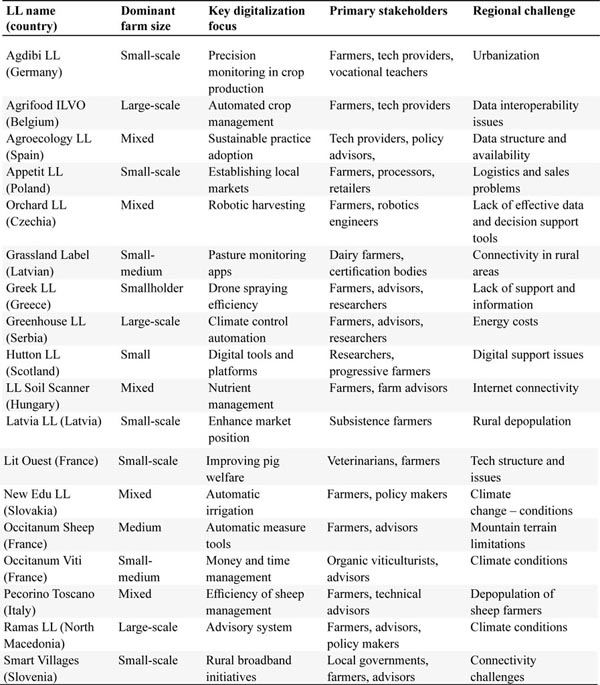
This study employed a qualitative research approach to examine stakeholder perceptions of the social, economic, and environmental costs and benefits of farm digitalization. Data were gathered through 18 focus group (FG) meetings conducted in 18 Living Labs (LLs) across Europe from late 2023 to early 2024. The 18 Living Labs (LLs) spanned diverse European agroecological zones: Northern/Continental (e.g., Germany, Belgium) emphasized precision tools, while Southern/Mediterranean LLs (e.g., Greece, Italy) prioritized labour inclusivity. Smallholder-dominant LLs (Latvia, North Macedonia) faced acute cost barriers, contrasting with cooperative-rich LLs (France, Spain) where shared platforms mitigated risks. The key characteristics of the digitalization technologies of each living lab are summarized in the Appendix (Table A1).
The focus groups were structured to capture stakeholder insights on the challenges and opportunities posed by increasing farm digitalization, including specific costs, benefits, and anticipated future issues. A follow-up round of focus group meetings is planned for 2025 to capture the dynamic evolution of these perceptions.
Participants were selected by LL leaders following criteria designed to ensure diversity in age, gender, professional roles, and levels of influence. Focus groups included farmers (with and without experience in farm digitalization), policymakers, farm advisors, and other specialists such as technology providers and researchers. Each group comprised 6–10 participants and lasted 45–90 minutes, moderated by trained facilitators to foster an inclusive and candid discussion environment. Brief reports summarizing insights were prepared shortly after each event and, together with translated transcripts, were reviewed independently by two researchers to ensure consistency.
Two online training sessions were conducted for LL leaders and facilitators in July and September 2023, led by knowledgeable researchers. The first session provided guidance on identifying and inviting stakeholders, creating a conducive discussion environment, and logistical preparations. The second session focused on moderating discussions effectively and post-event reporting. Detailed instructions, including a list of semi-structured questions, were provided to ensure consistency across LLs. Prior to this, the research team obtained ethics approval by the Ethics Committee of their organization.
The focus group discussions addressed topics such as the implications of digitalization for farming activities, environmental sustainability, income and welfare, gender equality, and associated costs and benefits. Moderators were instructed to ensure participant anonymity and to debrief after each session to summarize key insights. Transcripts or detailed notes, translated into English, were submitted to the research team subsequently.
After collecting data from each focus group, transcripts and debriefing notes were categorized by country and Living Lab (LL). Three researchers documented the economic, social, and environmental costs and benefits identified in participants’ responses, along with the problems anticipated as agricultural digitization advances. Each researcher conducted the documentation independently, and the results were cross-checked to ensure accuracy. Entries included participants’ occupations and details of the farm digitalization technologies introduced in each LL.
The methodology aimed to analyze focus group discussions to understand stakeholders’ perceptions of the costs and benefits of farm digitalization. The analysis followed thematic-content data analysis principles, ensuring a thorough examination of qualitative data (Blakeman et al., 2013).
Data analysis involved open coding and categorization based on the research questions. Transcripts were read multiple times to identify key themes related to participants’ perspectives (Adler and Clark, 2011). Words and phrases from participants were grouped into thematic categories, with themes derived inductively from the discussion topics (economic, social, and environmental costs and benefits of digitalization). Two researchers conducted independent reviews, noting phrases and ideas addressing each question. They subsequently collaborated to generate and refine major and minor thematic categories. This collaborative process ensured that the identified themes accurately represented participants’ views on the costs and benefits of farm digitalization.
A summary of the emergent themes and other findings was sent to participants for validation. They did not correct or identify any unaccounted-for themes.
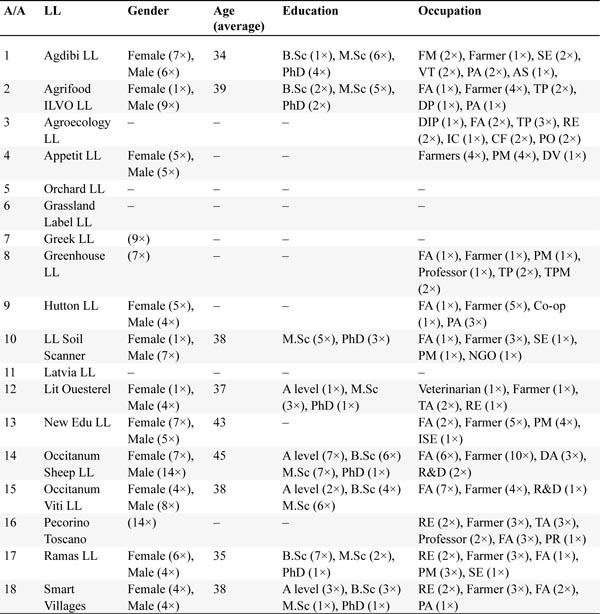
In this paper, all quotations from participants are indicated in italics, with the respondent identified by living lab and, whenever available, profession, gender and age. Abbreviations on each professional occupation are listed in Table 1.

The key characteristics of focus group participants.
Citation: International Food and Agribusiness Management Review 28, 3 (2025) ; 10.22434/ifamr.1274
4. Results
A total of 148 Individuals participated in the focus group discussions. The median age was 48 years (range 22 to 57 years). Seventy participants (47.30%) identified themselves as female, and 48 (20.27%) as male, while the remaining 30 participants (20.28%) chose not to disclose their gender. Professions represented in the sample are listed in Table 1. In the discussion on the benefits of farm digitalization, three key themes emerged, whereas the subsequent discussion on its costs revealed nine distinct themes.
4.1 Perceptions of the benefits of farm digitalization
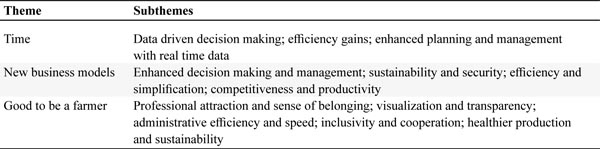
The benefits of digitalization are clustered around improving operations, opening up new business opportunities, and redefining the social and professional image of farming. Time savings and decision-making support stood out most prominently, often overlapping with broader goals of efficiency and competitiveness (Table 2).
Focus group themes and subthemes: benefits of farm digitalization
Citation: International Food and Agribusiness Management Review 28, 3 (2025) ; 10.22434/ifamr.1274
Time
The theme of Time emerged prominently in the focus group discussions, underscoring the transformative potential of digitalization in agricultural practices through data-driven decision-making, efficiency gains, and real-time data utilization. Participants across different countries consistently emphasized the ability of real-time data and automation to cut down manual effort, enhance planning, and support quicker decisions. These insights suggest that the perceived time benefits of digitalization are both practical and strategic, contributing directly to long-term farm sustainability. Illustrative quotes for this theme are provided in Appendix Table A2.
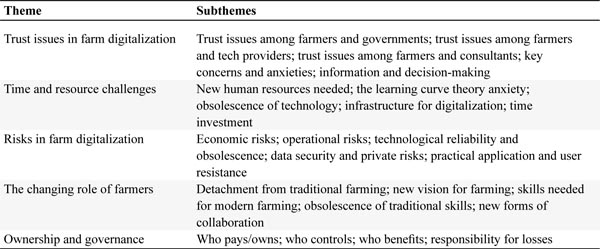
Focus group themes and subthemes: Costs of farm digitalization
Citation: International Food and Agribusiness Management Review 28, 3 (2025) ; 10.22434/ifamr.1274
New business models in agriculture
Digitalization is enabling transformative business models in European agriculture, enhancing decision-making, sustainability, and efficiency through precision technologies like sensors and data analytics. These innovations improve productivity (e.g., optimized feed systems in France, soil scanners in Hungary) while modernizing agriculture’s image to attract diverse talent and markets. Beyond operational gains, digital tools foster direct consumer engagement and circular practices — signalling a shift from pure production to value-driven, resilient farm enterprises. Illustrative quotes for this theme are provided in Appendix Table A3.
Good to be a digital farmer
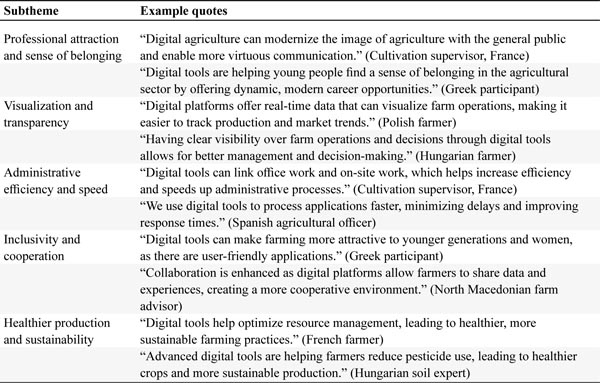
The advent of digital technologies has transformed the agricultural sector, offering significant advancements. Digital tools are making farming a more attractive, efficient, and sustainable profession. Key benefits include enhanced job satisfaction, streamlined operations, and greater inclusivity — helping modernize agriculture’s image and engage younger generations. These advancements demonstrate how technology can revitalize the sector while supporting environmental and social sustainability. Illustrative quotes for this theme are provided in Appendix Table A4.
Across the themes of time efficiency, emerging business models, and professional identity, the benefits of digitalization are widely acknowledged. However, many of these advantages depend on effective implementation, trust in systems, and the ability of farms — especially smaller ones — to adapt. These conditions often preview the challenges discussed in the subsequent section.
4.2 Perceptions of the costs of farm digitalization
The focus group discussions on the costs of farm digitalization highlighted nine major themes: trust issues, time and resource challenges, risks in farm digitalization, the changing role of farmers, energy concerns, ownership and governance, access issues, information for decision making, and state support and education (Table 3).
Trust issues in farm digitalization
Trust barriers significantly hinder agricultural digitalization, with farmers often viewing governments, tech providers, and consultants with scepticism. Concerns range from inadequate infrastructure and hidden costs to unreliable post-sale support, creating an “us vs. them” dynamic. Restoring confidence will require transparent communication, user-centric designs, and demonstrable reliability to align stakeholder priorities and enable successful technology adoption. Illustrative quotes for this theme are provided in Appendix Table A5.
Time and resource challenges
Small farms face disproportionate challenges in adopting digital agriculture, including limited staffing, steep learning curves, and inadequate infrastructure. While larger operations can absorb these demands by hiring specialists, smaller producers often find digital tools create more complications than benefits due to interoperability issues, rapid obsolescence, and poor connectivity. Targeted support programs, simplified technologies, and improved rural infrastructure are essential to make digitalization viable for farms of all scales. Illustrative quotes for this theme are provided in Appendix Table A6.
Risks in farm digitalization
The adoption of digital technologies in agriculture faces significant barriers, including economic burdens, technological obsolescence, data security risks, and operational complexity. Smaller farms are particularly vulnerable, struggling with high upfront costs, maintenance demands, and integration challenges. Additionally, regulatory compliance and resistance to changing practices further hinder adoption. To ensure equitable digitalization, policymakers and providers must address these concerns through financial support, training, interoperable technologies, and transparent governance frameworks. Illustrative quotes for this theme are provided in Appendix Table A7.
The changing role of farmers
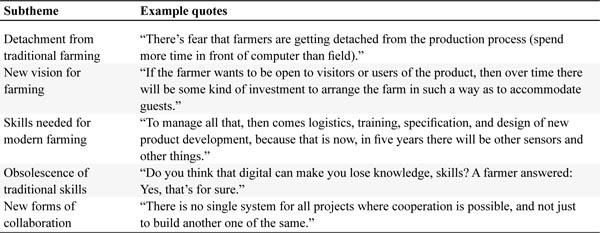
Digitalization is transforming farmers’ roles, shifting focus from hands-on labour to hybrid skills in technology management and data-driven collaboration. While this transition enhances efficiency, it risks detaching farmers from traditional fieldwork and requires continuous upskilling to keep pace with evolving tools. Successful adaptation depends on support systems that bridge conventional expertise with digital competencies, foster collaborative platforms, and promote lifelong learning — ensuring agriculture’s sustainability without losing its foundational practices. Illustrative quotes for this theme are provided in Appendix Table A8.
Ownership and governance
Farm digitalization raises critical governance questions regarding cost distribution, control, and benefit-sharing among stakeholders. Farmers face financial burdens and uncertainty over technology ownership, data rights, and risk liability, with concerns that agribusinesses may disproportionately benefit. Clear governance frameworks, equitable financing models, and protective policies are needed to ensure fair participation and risk mitigation for all actors in the digital transition. Illustrative quotes for this theme are provided in Appendix Table A9.
The focus group discussions on the costs of farm digitalization uncovered a multifaceted landscape of challenges, ranging from trust and governance issues to resource limitations and access barriers. These themes underscore the complex interplay between technological advancements and the structural, social, and economic contexts in which they are implemented. The following section synthesizes the findings, placing them within a broader discussion to explore their implications and potential pathways forward.
5. Discussion
The findings from the focus group discussions underscore the significant benefits that farm digitalization brings to the agricultural sector, particularly in enhancing decision-making efficiency, fostering sustainability, and enabling the emergence of innovative business models. A comparative analysis reveals both shared and unique insights across the 18 Living Labs, aligning with and expanding upon existing literature.
To strengthen the alignment with existing scholarship, this section expands on how our findings both confirm and challenge prior studies. For instance, while Van Evert et al. (2017) and Ferrari et al. (2022) emphasized the efficiency benefits of precision farming, our results highlight regional nuances — such as the emphasis on transparency in Southern Europe — that extend their conclusions. Similarly, while Eastwood et al. (2019) discuss cloud-based farm advisory systems, our findings point to gaps in institutional trust that remain unresolved, especially in smallholder contexts. These insights suggest that trust and usability remain underdeveloped aspects in the current literature.
The theme of time emerged as a central benefit of digitalization. Participants across Europe emphasized how real-time data and AI-powered tools expedite decision-making processes, streamline operations, and enhance planning precision. These findings resonate with Ferrari et al. (2022), who highlight digital tools’ ability to reduce time spent on repetitive tasks and improve resource management. Specific examples, such as France’s focus on the reliability of real-time data and Germany’s use of AI to process large datasets, illustrate practical applications of these benefits. Similarly, Bolfe et al. (2020) noted productivity gains stemming from improved decision-making facilitated by digital technologies.
These findings align with the Technology Acceptance Model (TAM) (Davis, 1989) and Diffusion of Innovations theory (Rogers, 2003), which posit that perceived usefulness and ease of use are critical to adoption. The emphasis on timesaving and efficiency gains reflects TAM’s core construct of perceived usefulness, while regional variations in adoption priorities (e.g., technical efficiency vs. inclusivity) resonate with Rogers’ emphasis on compatibility with local values. However, the persistent cost and trust barriers highlight gaps in these frameworks, suggesting the need to integrate institutional trust (Feldman and Quick, 2009) and resource-based view (Barney, 1991) theories to explain disparities in digitalization uptake. This theoretical synthesis underscores that benefits alone are insufficient; structural and perceptual factors mediate the translation of potential into practice.
Furthermore, stakeholders in Hungary and Italy highlighted how digitalization not only saves time but also enhances transparency and accountability. This supports Van Evert et al.’s (2017) conclusion that precision farming technologies improve the speed and accuracy of decision-making, enabling timely interventions. Additionally, Schroeder et al. (2024) observed similar advantages in Germany, where stakeholders identified digitalization as a tool for managing complexity and optimizing labour.
Digitalization is fostering new business models that prioritize efficiency, sustainability, and competitiveness, a trend confirmed by the discussions. Innovations like precision farming and integrated data platforms are revolutionizing farm operations. For example, French participants cited the profitability gains of precise feed delivery systems, while Hungarian stakeholders discussed soil scanners’ role in optimizing fertilizer use. These findings align with Rose and Bruce (2018), who emphasize that smart farming technologies contribute to higher returns on investment and greater economic resilience.
The focus on sustainability in the discussions also corresponds with studies such as Edan et al. (2023), which link precision technologies to reduced environmental impacts. Polish stakeholders’ emphasis on traceability enhancing food safety mirrors findings by Zanin et al. (2022), who demonstrated the potential for digital tools to minimize pesticide use without compromising yields. Moreover, the potential of digital tools to attract new talent, particularly younger generations and women, supports Schroeder et al. (2024), who documented how digitalization reshapes agriculture’s image and workforce.
The discussions also revealed how digital tools promote inclusivity and cooperation, particularly by reducing physical labour demands and fostering collaboration through shared platforms. Participants from Greece and Italy emphasized the accessibility of agriculture to women and youth, a perspective echoed by Regan (2019), who notes that technological integration alleviates burdensome tasks and improves job satisfaction. Additionally, environmental benefits, such as resource efficiency and reduced chemical inputs, align with Garske et al. (2021), reinforcing the role of digitalization in advancing sustainable farming practices.
These findings provide a detailed understanding of the benefits of farm digitalization, confirming previous research while also highlighting regional differences and practical examples that enrich our knowledge of its transformative potential. The findings also highlight a complex interplay of perceptions regarding the costs of farm digitalization, shaped by financial, temporal, operational, and social considerations. Across the 18 living labs, stakeholders — particularly farmers — consistently raised concerns about the economic and non-economic costs associated with digital transformation. These findings echo and extend existing research on the financial and operational burdens of adopting agricultural technologies while shedding light on stakeholder perspectives.
Economic concerns dominated the discussions, with farmers emphasizing the substantial financial investment required for adopting and maintaining digital technologies. This aligns with studies by Klerkx et al. (2019) and Bronson (2021), which similarly highlighted high initial costs and ongoing maintenance expenses as significant barriers to digital adoption in agriculture. Farmers in smaller operations were particularly vocal about affordability challenges, noting that while larger farms might absorb the costs by employing specialized staff, smaller farms often lack the resources for such investments. This disparity reflects findings in the literature that highlight a widening gap in technology adoption between small and large farms, contributing to uneven digitalization across agricultural systems (Regan, 2020).
A noteworthy addition from the focus groups is the apprehension about technological obsolescence. Farmers fear that rapid technological advancement will render their investments obsolete within a few years, a concern not extensively covered in earlier studies. For example, while previous research has addressed the financial risks of adopting emerging technologies, less attention has been paid to how the pace of technological change exacerbates these risks. Farmers’ experiences suggest that strategies to enhance the longevity and adaptability of digital tools are urgently needed.
The results also underscore the significant non-economic costs of digitalization, particularly in terms of time and required skills. Farmers expressed frustration with the steep learning curves and the additional workload introduced by digital technologies, such as managing data and maintaining devices. These findings are consistent with Eastwood et al.’s (2017) analysis, which found that the time-intensive nature of adopting and utilizing digital tools often deters farmers from embracing them. However, the present study goes further by highlighting the intersection of time constraints with farmers’ sense of professional identity. Many participants lamented the shift from hands-on farming to screen-based tasks, which they perceive as alienating.
The need for continuous training and upskilling was another recurring theme. Similar to the findings of Higgins et al. (2017), participants emphasized the importance of equipping farmers with digital competencies. Yet, the focus group discussions add depth to this discourse by revealing how smaller farms, in particular, struggle to keep up with these demands. This highlights the need for tailored training programs and support mechanisms that address the unique challenges faced by different farm sizes and contexts.
The discussions also revealed significant social costs, particularly trust-related issues, which further complicate the adoption of digital technologies. Farmers expressed scepticism toward technology providers, governments, and even consultants, citing concerns over transparency, hidden costs, and a lack of reliable post-sale support. These findings align with studies by Rotz et al. (2019), which emphasize the role of trust in shaping farmers’ willingness to adopt new technologies. However, the degree of distrust reported in the focus groups appears to be particularly pronounced, pointing to an urgent need for more transparent and accountable practices from stakeholders involved in the digitalization process.
Notably, trust-related challenges also intersect with economic concerns, as farmers perceive hidden costs and inefficiencies as threats to their financial stability. The fragility of trust, as captured in the statement “A farmer’s trust is hard to gain and easy to lose,” underscores the delicate balance required to foster collaboration and confidence in the digital transition. This finding suggests that addressing trust issues should be a cornerstone of strategies aimed at facilitating digital adoption in agriculture.
Although transaction cost economics (TCE) offers valuable tools for designing governance systems to address contractual hazards and, thus, mitigate lack of trust issues, our data suggest this may be insufficient. Emotional and moral dimensions of trust also play a pivotal role. Farmers consistently raised concerns about fairness, transparency, and post-sale support — elements that extend beyond formal governance. Integrating perspectives from relational governance and institutional trust may offer a more comprehensive framework for future studies and policy design.
The findings emphasize the need for multi-pronged approaches to mitigate the perceived costs of farm digitalization. Financial incentives, such as subsidies or low-interest loans, could help offset the initial investment and maintenance expenses, particularly for smaller farms. At the same time, fostering collaboration among farmers, technology providers, and policymakers is essential to build trust and develop user-centric solutions. Infrastructure improvements, such as enhancing internet connectivity and integrating digital systems, are equally critical for reducing operational burdens.
Additionally, the results highlight the importance of education and training programs tailored to farmers’ diverse needs. Such programs should focus not only on technical skills but also on building farmers’ confidence in navigating digital tools. Finally, addressing technological obsolescence through modular and upgradable solutions could alleviate fears of wasted investments, ensuring that digital tools remain relevant and cost-effective over time.
Several categories — including collaboration, technological infrastructure, and labour transformation — emerged as both benefits and costs across different Living Labs. This duality reflects context-dependent framing. For example, while collaboration was seen as beneficial in Spain due to strong cooperative structures, it was perceived as burdensome in more individualistic contexts such as Germany or the UK. This highlights the importance of stakeholder engagement quality and regional institutional capacity as key moderators of perception.
For managers in cooperatives, ag-tech firms, and farm service providers, the results of this study underscore the importance of investing in long-term relationships, user-centered design, and transparency. Managers should prioritize interoperability across platforms, support multilingual and low-literacy interfaces, and create pricing models that accommodate small-scale users. Equally, advisors and consultants should consider embedding trust-building activities, such as co-evaluation or participatory pilots, within their engagement strategies.
This study extends the existing literature by providing a nuanced understanding of the financial, temporal, and social costs of farm digitalization from a multi-stakeholder perspective. The findings underscore the importance of equitable and inclusive approaches to digital transformation, ensuring that the benefits of digitalization are accessible and sustainable for all stakeholders in the agricultural sector.
We provide the following detailed and stakeholder-specific strategies to mitigate perceived costs and enhance the equitable benefits of farm digitalization (Table 4).
Recommendations
Citation: International Food and Agribusiness Management Review 28, 3 (2025) ; 10.22434/ifamr.1274
This study has several methodological and contextual limitations. First, the focus group approach, while valuable for capturing interactive insights, is inherently shaped by group dynamics, moderator styles, and potential recruitment bias — such as the overrepresentation of early adopters or cooperative members, which may skew findings toward more optimistic perspectives (Acocella, 2012). Additionally, while prioritizing heterogeneity within groups helped identify shared experiences, it may have obscured nuanced differences between stakeholder subgroups. Second, as the study spanned multiple European regions, translation and transcription processes, despite rigorous protocols, could have diluted subtle cultural or linguistic nuances. Finally, the cross-sectional design limits our ability to assess how perceptions evolve over time; longitudinal studies would strengthen causal inferences. Like all qualitative research, these findings require contextual interpretation alongside broader literature to assess generalizability, particularly given agriculture’s diverse regional and operational landscapes.
6. Conclusions
The findings from the focus group discussions across Europe reveal that digitalization in agriculture holds transformative potential, offering significant benefits in terms of time savings, efficiency, and the emergence of new business models. While digital tools are universally recognized for their role in enhancing data-driven decision-making, improving planning precision, and supporting sustainable practices, the application and perceived benefits vary by region. Northern and Central European countries often prioritize technical efficiency and precision, while Southern European regions emphasize inclusivity, market adaptation, and modernization. The growing perception that it is “Good to Be a Digital Farmer” further underscores how digitalization is reshaping agriculture into a more attractive and inclusive profession, helping to reduce labour intensity, improve work-life balance, and promote environmental sustainability. However, despite these advancements, significant challenges remain, particularly concerning costs, trust, and equitable access to digital tools.
This study reveals that digitalization in agriculture holds transformative potential — but its costs, benefits, and perceptions are deeply context-dependent. Regional conditions, trust dynamics, and governance models shape whether digital tools are seen as empowering or burdensome. To ensure that farm digitalization enhances sustainability, inclusivity, and competitiveness across Europe, policy frameworks must be sensitive to these local realities. Future research should investigate longitudinal outcomes and co-design practices that strengthen farmer agency and trust.
The perception of costs associated with farm digitalization reflects a complex interplay of financial, technical, and social barriers. Stakeholders across the 18 living labs expressed concerns over the high upfront costs, ongoing maintenance expenses, and the digital divide between larger and smaller farms. The lack of reliable infrastructure, mistrust in technology providers, and the burden of legal compliance were recurring issues that hindered the adoption of digital tools. To overcome these challenges, targeted financial support, investments in infrastructure, and transparent communication between stakeholders are essential. Additionally, fostering inclusivity, improving data security and ownership practices, and creating collaborative platforms for resource-sharing can help ensure that the benefits of digitalization are accessible to all farmers, irrespective of size or location. Addressing these barriers is crucial to realizing the full potential of digitalization in agriculture and promoting a sustainable, equitable transformation across Europe’s agricultural sector.
Acknowledgements
The research reported in this paper was funded by CODECS, which has received funding from the European Union’s Horizon Europe research and innovation Programme under Grant Agreement n. 101060179. Views and opinions expressed are those of the author(s) only and do not necessarily reflect those of the European Union or the European Research Executive Agency (REA). Neither the European Union nor the granting authority can be held responsible for them. The authors declare no conflict of interest.
References
Abdulai, A.R., J. Pulido-Castanon, E.R. Duncan, S.L. Ruder, K. Bahadur K.C. and E. Fraser. 2024. Will agricultural digitalization deliver relative advantages in quality of work, productivity, profitability, return on investments, and reliability? Perceptions of Canadian producers. Cogent Food and Agriculture 10 (1): 2422529. https://doi.org/10.1080/23311932.2024.2422529
Acocella, I. 2012. The focus groups in social research: advantages and disadvantages. Quality and Quantity 46: 1125–1136. https://doi.org/10.1007/s11135-011-9600-4
Adler, E. S. and R. Clark. 2011. An invitation to social research: How it’s done. Cengage Learning, Andover.
Ajena, F., N. Bossard, C. Clément, A. Hilbeck, B. Oehen, J. Thomas and E. Tisseli. 2020. Agroecology and digitalisation — Traps and opportunities to transform the food system. IFOAM Organics Europe, Brussels, Belgium. Available online at https://www.organicseurope.bio/content/uploads/2022/06/IFOAMEU_Agroecology_Digitalization_2020.pdf
Astill, J., R. A. Dara, E. D. Fraser, B. Roberts and S. Sharif. 2020. Smart poultry management: Smart sensors, big data, and the internet of things. Computers and Electronics in Agriculture 170: 105291. https://doi.org/10/ggztpk
Bac, C. W., E. J. van Henten, J. Hemming and Y. Edan. 2014. Harvesting robots for high-value crops: state-of-the-art review and challenges ahead. Journal of Field Robotics 31(6): 888–911. https://doi.org/10.1002/rob.21525
Bacco, M., P. Barsocchi, E. Ferro, A. Gotta and M. Ruggeri. 2019. The digitisation of agriculture: a survey of research activities on smart farming. Array 3–4: 100009. https://doi.org/10.1016/j.array.2019.100009
Barnes, A. P., I. Soto, V. Eory, B. Beck, A. Balafoutis, B. Sánchez and M. Gómez-Barbero. 2019. Exploring the adoption of precision agricultural technologies: A cross regional study of EU farmers. Land Use Policy 80: 163–174. https://doi.org/10.1016/j.landusepol.2018.10.004
Barney, J. 1991. Firm resources and sustained competitive advantage. Journal of Management 17(1): 99–120. https://doi.org/10.1177/014920639101700108
Barrett, H. and D. C. Rose. 2022. Perceptions of the fourth agricultural revolution: what’s in, what’s out, and what consequences are anticipated? Sociologica Ruralis 62(2): 162–189. https://doi.org/10.1111/soru.12324
Blakeman, K., K. Samuelson and J. McEvoy. 2013. Qualitative data analysis techniques. Sage Publications.
Bolfe, É.L., L.A. de Castro Jorge, I. Del’Arco Sanches, A.L. Júnior, C.C. da Costa, D. de Castro Victoria, R.Y. Inamasu, C.R. Grego, V.R. Ferreira and A.R. Ramirez. 2020. Precision and digital agriculture: adoption of technologies and perception of Brazilian farmers. Agriculture 10(12): 653. https://doi.org/10.3390/agriculture10120653
Carolan, M. 2017. Agro-digital governance and life itself: food politics at the intersection of code and affect. Sociologia Ruralis 57: 816–835. https://doi.org/10.1111/soru.12153
Carolan, M. 2020. Automated agrifood futures: robotics, labor and the distributive politics of digital agriculture. The Journal of Peasant Studies 47(1): 184–207. https://doi.org/10.1080/03066150.2019.1584189
Ceccarelli, T., A. Chauhan, G. Rambaldi, I. Kumar, C. Cappello, S. Janssen and M. McCampbell. 2022. Leveraging automation and digitalization for precision agriculture: Evidence from the case studies. FAO Agricultural Development Economics Technical Study, No. 24. FAO, Rome. Available online at https://openknowledge.fao.org/items/0533e090-2a77-43e8-b371-d27e32e0529c
Choruma, D.J., T.L. Dirwai, M. Mutenje, M. Mustafa, V.G.P. Chimonyo, I. Jacobs-Mata and T. Mabhaudhi. 2024. Digitalization in agriculture: A scoping review of technologies in practice, challenges, and opportunities for smallholder farmers in sub-Saharan Africa. Journal of Agriculture and Food Research 18: 101286. https://doi.org/10.1016/j.jafr.2024.101286
Da Costa, C.C., D.D.C. Victoria, R.Y. Inamasu, C.R. Grego, V.R. Ferreira and A.R. Ramirez. 2020. Precision and digital agriculture: adoption of technologies and perception of Brazilian farmers. Agriculture 10: 653. https://doi.org/10.3390/agriculture10120653
Da Rosa Righi, R., G. Goldschmidt, R. Kunst, C. Deon and C.A. da Costa. 2020. Towards combining data prediction and internet of things to manage milk production on dairy cows. Computers and Electronics in Agriculture 169: 105156. https://doi.org/10.1016/j.compag.2019.105156
Davis, F.D. 1989. Perceived usefulness, perceived ease of use, and user acceptance of information technology. MIS Quarterly 13(3): 319–340. https://doi.org/10.2307/249008
de Vries, J.D., J.A. Turner, S. Finlay-Smits, A. Ryan and L. Klerkx. 2023. Trust in agri-food value chains: a systematic review. International Food and Agribusiness Management Review 26(2): 175–197. https://doi.org/10.22434/IFAMR2022.0032
Eastwood, C., M. Ayre, R. Nettle and B. Dela Rue. 2019. Making sense in the cloud: Farm advisory services in a smart farming future. NJAS: Wageningen Journal of Life Sciences 90–91: 1–10. https://doi.org/10/ghfnrd
Edan, Y., G. Adamides and R. Oberti. 2023. Agriculture automation. In Springer Handbook of Automation. Springer, Cham, pp. 1055–1078. https://doi.org/10.1007/978-3-030-96729-1_49
European Commission. 2020a. Large-scale pilots in the digitalisation of agriculture. 26 October 2020. European Commission, Brussels. Available online at https://ec.europa.eu/digital-single-market/en/large-scale-pilots-digitisation-agriculture
European Commission. 2020b. Agriculture, forestry and fishery statistics, 2020 edition. European Commission, Brussels. Available online at https://ec.europa.eu/eurostat/documents/3217494/12069644/KS-FK-20-001-EN-N.pdf
European Commission. 2021. Digital transformation in agriculture and rural areas. European Commission, Brussels. Available online at https://ec.europa.eu/info/sites/info/files/food-farming-fisheries/key_policies/documents/factsheet-agri-practices-under-ecoscheme_en.pdf
Feldman, M.S. and K.S. Quick. 2009. Generating resources and energizing frameworks through inclusive public management. International Public Management Journal 12(2): 137–171. https://doi.org/10.1080/10967490902873408
Ferrari, A., M. Bacco, K. Gaber, A. Jedlitschka, S. Hess, J. Kaipainen, P. Koltsida, E. Toli and G. Brunori. 2022. Drivers, barriers and impacts of digitalization in rural areas from the viewpoint of experts. Information and Software Technology 145: 106816. https://doi.org/10.1016/j.infsof.2021.106816
Finger, R. 2023. Digital innovations for sustainable and resilient agricultural systems. European Review of Agricultural Economics 50(4): 1277–1309. https://doi.org/10.1093/erae/jbad021
Garske, B., A. Bau and F. Ekardt. 2021. Digitalization and AI in European agriculture: A strategy for achieving climate and biodiversity targets? Sustainability 13(9): 4652. https://doi.org/10.3390/su13094652
Geppert, R., T. Krachunova, I. Mouratiadou, J. von der Nuell and S. D. Bellingrath-Kimura. 2024. Digital and smart technologies to enhance biodiversity in agricultural landscapes: An analysis of stakeholders’ perceptions of opportunities and challenges for broader adoption. Environmental and Sustainability Indicators 23: 100444. https://doi.org/10.1016/j.indic.2024.100444
Giua, C., V. C. Materia and L. Camanzi. 2022. Smart farming technologies adoption: Which factors play a role in the digital transition? Technology in Society 68: 101869. https://doi.org/10.1016/j.techsoc.2022.101869
Hackfort, S. 2021. Patterns of inequalities in digital agriculture: a systematic literature review. Sustainability 13: 12345. https://doi.org/10.3390/su132212345
Hareendran, A. and G.F. Albaaji. 2024. Precision farming for sustainability: An agricultural intelligence model. Computers and Electronics in Agriculture 226: 109386. https://doi.org/10.1016/j.ijin.2022.09.004
Hilbeck, A., H. McCarrick, E. Tisselli, J. Pohl and D. Kleine. 2022. Aligning digitalization with agroecological principles to support a transformation agenda. ECDF Working Paper Series No. 003. EDCF, Berlin. https://doi.org/10.14279/depositonce-16472
Javaid, M., A. Haleem, R.P. Singh and R. Suman. 2022. Enhancing smart farming through the applications of Agriculture 4.0 technologies. International Journal of Intelligent Networks 3: 150–164. https://doi.org/10.1016/j.ijin.2022.09.004
Kernecker, M., A. Knierim, A. Wurbs, T. Kraus, F. Borges. 2020. Experience versus expectation: farmers’ perceptions of smart farming technologies for cropping systems across Europe. Precision Agriculture 21: 34–50. https://doi.org/10.1007/s11119019-09651-z
Klerkx, L., E. Jakku and P. Labarthe. 2019. A review of social science on digital agriculture, smart farming and agriculture 4.0: New contributions and a future research agenda. Wageningen Journal of Life Sciences 90–91: 1–16. https://doi.org/10/gg7vs6
Koutsos, T. and G. Menexes. 2019. Economic, agronomic, and environmental benefits from the adoption of precision agriculture technologies: A systematic review. International Journal of Agricultural and Environmental Information Systems 10(1): 40–56. https://doi.org/10.4018/IJAEIS.2019010103
Krutilin, A.A., A.M. Bazieva, T.A. Dugina and A.T. Giyazov. 2022. Sustainable agriculture for food security: Conceptual framework and benefits of digitalization. In: E.G. Popkova and B.S. Sergi (eds) Sustainable Agriculture. Environmental Footprints and Eco-design of Products and Processes. Springer, Singapore. https://doi.org/10.1007/978-981-16-8731-0_4
Lindblom, J., C. Lundström, M. Ljung and A. Jonsson. 2017. Promoting sustainable intensification in precision agriculture: Review of decision support systems development and strategies. Precision Agriculture 18(3): 309–331. https://doi.org/10.1007/s11119-016-9491-4
Lowenberg-DeBoer, J., I.Y. Huang, V. Grigoriadis and S. Blackmore. 2020. Economics of robots and automation in field crop production. Precision Agriculture 21(2): 278–299. https://doi.org/10.1007/s11119-019-09667-5
Njuguna, E., T. Daum, R. Birner and J. Mburu. 2025. Silicon Savannah and smallholder farming: How can digitalization contribute to sustainable agricultural transformation in Africa? Agricultural Systems 222: 104180. https://doi.org/10.1016/j.agsy.2024.104180
Ranjan, P., E.M. Usher, H.T. Bates, E.K. Zimmerman, J.C. Tyndall, C.J. Morris, T.M. Koontz, L.S. Prokopy. 2022. Understanding barriers and opportunities for diffusion of an agricultural decision-support tool: an organizational perspective. Journal of Hydrology 607: 127584. https://doi.org/10.1016/j.jhydrol.2022.127584
Regan, Á. 2019. ‘Smart farming’ in Ireland: A risk perception study with key governance actors. NJAS- Wageningen Journal of Life Sciences 90: 100292. https://doi.org/10.1016/j.njas.2019.02.003
Robertson, M., B. Isbister, I. Maling, Y. Oliver, M. Wong, M. Adams, B. Bowden and P. Tozer. 2007. Opportunities and constraints for managing within-field spatial variability in Western Australian grain production. Field Crops Research 104(1–3): 60–67. https://doi.org/10.1016/j.fcr.2006.12.013
Rogers, E. M. (2003). Diffusion of innovations, 5th edn. Free Press, London.
Rolandi, S., G. Brunori, M. Bacco and I. Scotti. 2021. The digitalization of agriculture and rural areas: Towards a taxonomy of the impacts. Sustainability 13(9): 5172. https://doi.org/10.3390/su13095172
Rose, D.C. and T.J.A. Bruce. 2018. Finding the right connection: What makes a successful decision support system? Food and Energy Security 7(1): e00123. https://doi.org/10/ggt3w2
Rotz, S., E. Gravely, I. Mosby, E. Duncan, E. Finnis, M. Horgan, J. LeBlanc, R. Martin, H.T. Neufeld, A. Nixon, L. Pant, V. Shalla and E. Fraser. 2019. Automated pastures and the digital divide: How agricultural technologies are shaping labour and rural communities. Journal of Rural Studies 68: 112–122. https://doi.org/10.1016/j.jrurstud.2019.01.023
Schroeder, S., L. Mira and K. Sparke. 2024. Threat or opportunity? – Managers’ and employees’ perception of automation and digitalization in the horticultural sector. Procedia Computer Science 232: 564–573. https://doi.org/10.1016/j.procs.2024.01.056
Schroeder, S., M. Lehberger and K. Sparke. 2022. The impact of digitalization and automation on horticultural employees – A systematic literature review and field study. Journal of Rural Studies 95: 560–569. https://doi.org/10.1016/j.jrurstud.2022.09.016
Silvestri, S., M. Richard, E. Edward, D. Dharmesh and R. Dannie. 2021. Going digital in agriculture: How radio and SMS can scale-up smallholder participation in legume-based sustainable agricultural intensification practices and technologies in Tanzania. International Journal of Agricultural Sustainability 19(5–6): 583–594. https://doi.org/10.1080/14735903.2020.1750796
Stone, G.D. 2022. Surveillance agriculture and peasant autonomy. Journal of Agrarian Change 22(3): 608–631. https://doi.org/10.1111/joac.12470
Van der Burg, S., M.J. Bogaardt and S. Wolfert. 2019. Ethics of smart farming: Current questions and directions for responsible innovation towards the future. NJAS-Wageningen Journal of Life Sciences 90: 100289. https://doi.org/10.1016/j.njas.2019.01.001
Van Evert, F.K., D. Gaitán-Cremaschi, S. Fountas and C. Kempenaar. 2017. Can precision agriculture increase the profitability and sustainability of the production of potatoes and olives? Sustainability 9(10): 1863. https://doi.org/10.3390/su9101863
Vik, J., E.P. Stræte, B.G. Hansen and T. Nærland. 2019. The political robot – The structural consequences of automated milking systems (AMS) in Norway. Wageningen Journal of Life Sciences 90–91: 1–9. https://doi.org/10/ghfnrj
Weersink, A., E. Fraser, D. Pannell, E. Duncan and S. Rotz. 2018. Opportunities and challenges for big data in agricultural and environmental analysis. Annual Review of Resource Economics 10(1): 19–37. https://doi.org/10/ggt3ws
Zanin, A.R.A., D.C. Neves, L.P.R. Teodoro, C.A. da Silva Júnior, S.P. da Silva, P.E. Teodoro and F.H.R. Baio. 2022. Reduction of pesticide application via real-time precision spraying. Scientific Reports 12(1): 5638. https://doi.org/10.1038/s41598-022-09607-w
Zscheischler, J., R. Brunsch, S. Rogga and R.W. Scholz. 2022. Perceived risks and vulnerabilities of employing digitalization and digital data in agriculture – Socially robust orientations from a transdisciplinary process. Journal of Cleaner Production 358: 132034. https://doi.org/10.1016/j.jclepro.2022.132034
Appendix
Characteristics of the 18 Living Labs (LLs) in this study
Citation: International Food and Agribusiness Management Review 28, 3 (2025) ; 10.22434/ifamr.1274
Major themes, subthemes, and example quotes: time
Citation: International Food and Agribusiness Management Review 28, 3 (2025) ; 10.22434/ifamr.1274
Major themes, subthemes, and example quotes: new business models
Citation: International Food and Agribusiness Management Review 28, 3 (2025) ; 10.22434/ifamr.1274
Major themes, subthemes, and example quotes: good to be a digital farmer
Citation: International Food and Agribusiness Management Review 28, 3 (2025) ; 10.22434/ifamr.1274
Major themes, subthemes, and example quotes: trust issues in farm digitalization
Citation: International Food and Agribusiness Management Review 28, 3 (2025) ; 10.22434/ifamr.1274
Major themes, subthemes, and example quotes: time and resource challenges
Citation: International Food and Agribusiness Management Review 28, 3 (2025) ; 10.22434/ifamr.1274
Major themes, subthemes, and example quotes: risks in farm digitalization
Citation: International Food and Agribusiness Management Review 28, 3 (2025) ; 10.22434/ifamr.1274
Major themes, subthemes, and example quotes: the changing role of farmers
Citation: International Food and Agribusiness Management Review 28, 3 (2025) ; 10.22434/ifamr.1274
Major themes, subthemes, and example quotes: ownership and governance
Citation: International Food and Agribusiness Management Review 28, 3 (2025) ; 10.22434/ifamr.1274
Corresponding author