Abstract
In this article a new view of the theoretical frameworks of Teece’s dynamic capabilities and Mintzberg’s emergent strategy is offered. Merging both of these concepts into one framework provides insight into their reciprocal relationship. Situations are highlighted in which these two concepts can support an organization and aid during periods of internal and external change and disruption, currently presenting to the agricultural sector by demanding advances in digitalization and sustainability, or by external events. This article is relevant to management scholars and management practitioners alike. Providing an extension of the theoretical frameworks, the article presents organizational and individual factors aiding both concepts, and areas of further investigation to fully understand the mechanics behind emergent strategies and dynamic capabilities. With the understanding of impactful factors, organizational leaders will learn how they can support their organization and foster innovation to sustain a competitive advantage within their market environment.
1. Introduction
In the agrifood sector, global operations are shaped by two key trends: sustainability as a driver of change, and digitalization as a catalyst for transformation and innovation (Piot-Lepetit, 2023). Together, these trends have been termed digitainability (Lichtenthaler, 2021). Although the agricultural sector has long used advanced digital tools and machinery, its organizational structures and managerial mindsets have remained largely traditional. However, evolving conditions now demand a shift in strategic thinking. The 2013 reform of the Common Agricultural Policy (CAP) marked a turning point, introducing structural changes that prompted a move from traditional planning toward a more entrepreneurial approach (Espinosa et al., 2020).
These developments impact traditional agri-business organizations and their strategies (Henchion et al., 2024), as agri-businesses face increasing pressure to transition from rigid, long-term planning to more flexible, dynamic strategies to cope with conditions of change and resulting uncertainty. Market dynamics show that some firms are better prepared to adapt swiftly to new situations than others, which consequently may be forced to leave the market. An organization’s ability to adapt quickly is increasingly recognized as critical in addressing technological advancements and competitive threats or structural changes.
Within this sector, the wine industry is of particular interest for strategic management. For almost 150 years, the industry had little need for adaptation strategies (Anderson and Pinilla, 2022). This has changed drastically. In 2025, the industry faces “a multitude of issues threating to disrupt the trade in wine at a global, regional and national level” (Mileham, 2025). Thus, the industry must adapt to implement structural changes like digitainability.
Although there is broad consensus that digitalization will drive change in agriculture, including the wine industry, there remains a gap in understanding the specific managerial and organizational changes required. New frameworks are needed to help companies implement sustainable solutions that enable them to navigate and thrive in a constantly changing environment (Henchion et al., 2024). Emergent strategies and dynamic capabilities can play a critical role in this process: “Firms must develop dynamic capabilities to survive and prosper under conditions of change” (Helfat et al., 2007), while the concept of emergent strategies supports the formation of strategic responses under these conditions.
Even though both concepts are well-established in management research, they have received limited attention in recent years—only to regain relevance as accelerating environmental change and recent disruptions increasingly affect interconnected organizations and supply chains. Despite this renewed interest, no studies have yet explored the link between these two frameworks. Instead, the scarcity of research in both fields has been pointed out by several scholars (see Jones, 2018; Lowe and Jones, 2004). While prescriptive approaches remain dominant in academia, they fail to account for the adaptive realities of strategy formation, underscoring the importance of further research into these strategic concepts.
Existing research on emergent strategies has largely focused on IT-associated sectors. The findings are context-specific and offer limited applicability to firms operating in competitive market environments. The agrifood business remains underexplored despite the wide applicability in this field. An increased awareness and understanding of facilitation of dynamic capabilities and emergent strategy can help navigating technological, climatic or geopolitical shifts. These shifts have a direct impact in this sector. They also can encourage valuable improvements along value chains and within collaboration, which are fundamental for the competitiveness of agrifood business (Anastasiadis and Poole, 2015; Richter and Hanf, 2024). As global markets become more dynamic, this is more relevant than ever.
The wine industry was purposefully chosen as a research subject, as it can be considered a traditional industry with limited change which is currently facing multiple challenges. As such, it is the other extreme to highly agile technology sectors investigated thus far. In the international market, Germany is highly relevant as a wine market.1 Drawing on cases from the agrifood sector, this study demonstrates that these strategic management concepts—often associated with high-tech or rapidly evolving industries—hold significant relevance and potential impact for agrifood organizations as well. The wine industry presents multiple examples of emergent strategy. Regardless of the magnitude of the impact of an emergent strategy or the use of dynamic capabilities, the case examples improve operational processes with each strategic adaptation. The findings highlight how these firms can leverage strategic frameworks to optimize internal structures, enhance adaptability, and strengthen long-term organizational resilience, showing that these frameworks can support strategic development well beyond immediate challenges.
The aim of this article is to fill these gaps by investigating the strategic concepts of emergent strategy and dynamic capabilities in facilitating major structural transformations. It advances the understanding of how emergent strategies unfold and how organizations can more effectively utilize their internal resources in strategy adaptation and re-formation within dynamic contexts. To explore these complex phenomena in real-world settings, a qualitative research approach was employed. Factors suggesting an affiliation of both concepts were identified by an extensive literature review and confirmed in three case studies of German-speaking wineries across Europe. This research supports management practice by contributing to the development of future-oriented strategic approaches that help organizations remain competitive in the face of increasing uncertainty. By clarifying the underlying mechanisms of emergent strategies and dynamic capabilities, it offers practical insights into how firms can build more agile and resilient processes. As a result, it aids the developments of strategies that are better aligned with future challenges and enables organizations to respond more calmly and effectively to change.
The article is structured in seven Sections: within context of the evolution of strategic management, Section 2 introduces the core theoretical frameworks of emergent strategy and dynamic capabilities. Section 3 identifies points of parity and relevant underlying factors from the literature. It is followed by an integrated conceptual model combining both frameworks. Section 4 presents the findings from the case studies. Section 5 outlines managerial implications for the agrifood sector, followed by a conclusion discussing limitations and future research directions in Sections 6 and 7.
2. Theoretical background: the strategy paradox
Traditional linear strategy-making is criticized for rigidity and limited practical relevance (Habel, 1992). Due to its complexity and interplay with other unforeseeable or uninfluenceable variables, strategic problems are inherently multifaceted and complex, making it impossible to fully analyze. When attempting, one risks “paralysis by analysis” (e.g. Langley, 1995; Lenz and Lyles, 1985 in de Wit and Meyer, 2005, 2010). In reality, firms make decisions and form strategies despite, or rather in full awareness of, their incomplete understanding at an initial point. With digitalization and its resulting changes in the economic and societal landscape, “neither theory nor practice of strategy has kept pace with the realities of today’s relatively boundaryless and barrier-free markets” (Kinni, 2014). Strategies must adapt to changing conditions and cannot be entirely pre-planned (Schweickert, 2007). Studies show that only 10% of intended strategies are fully implemented (Kiechle, 1984), highlighting the gap between planned and realized strategies.
Over time, strategic management research experienced a number of stages and perspectives. With new global players with different management and leadership styles rising, the acceptance of other styles of strategy making has risen in the scientific world (Freedman, 2013; Gaddis, 1997; Mintzberg et al., 2001; Whittington, 2014). While dynamic components in strategic processes are more widely accepted nowadays, there is still a predominance of the linear style of strategy-making, especially in traditional industries such as viticulture (Lenzi, 2013).
2.1 Emergent strategy: introduction of unintended order
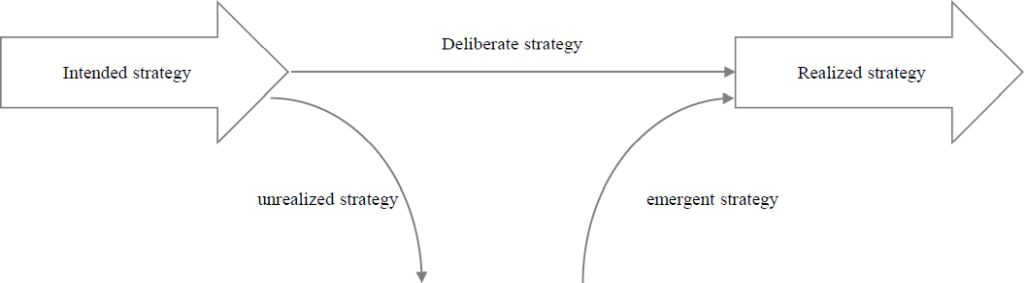
The concept of emergent strategies arose from the observation that traditional prescriptive strategy-making did not align with reality. Building on Lindblom’s muddling through (1959 in Camillus, 2018) and Quinn’s logical incrementalism (1978, 1980 in Camillus, 2018), emergent strategies highlight the delta between planned and realized strategies (Mintzberg, 1978; Mintzberg and Waters, 1985). They are defined as “unintended patterns or consistencies in organizational behavior over time”. Instead of chaos, emergent strategy stands for “unintended order, […] [or] the means by which deliberate strategies change” (Mintzberg and Waters, 1985). Emergent strategy development is no conscious process. Upon uncovering and retrospective sense-making, actions are “subsequently formalized” and as such integrated into the realized strategy of the organization (Mintzberg and Waters, 1985). This process is depicted in Figure 1. It shows the difference between intended (planned) and realized strategy:

Concept of deliberate and emergent strategies (Mintzberg and Waters, 1985).
Citation: International Food and Agribusiness Management Review 28, 3 (2025) ; 10.22434/ifamr.1279
The required conditions for perfectly deliberate strategies are precise intentions, shared organizational alignment, and full control over external conditions (Mintzberg and Waters, 1985). These conditions, particularly the last one, are nearly impossible in a competitive environment, highlighting the imperative of emergent elements. Conversely, “for a strategy to be perfectly emergent, there must be order consistency in action over time in the absence of intention about it” (Mintzberg and Waters, 1985). This is an equally unlikely scenario. Thus, real-world strategies typically combine deliberate and emergent components, with the balance between the two varying across contexts (Brews and Hunt, 1999; Whittington, 2014, 2018).
Emergent strategies initially faced criticism for diverging from the prevalent hierarchical managerial style. Gaddis (1997) labelled them a “feel-good” approach, arguing that any employee empowerment, such as flat structures or employee involvement, dilute strategic foresight. However, subsequent research validated the coexistence of deliberate and emergent strategies, emphasizing their complementary roles in effective strategy formation (Brews and Hunt, 1999). Interest in emergent strategies has fluctuated over time, often surging during periods of external disruption, such as financial crises, natural disasters, or the Covid-19 pandemic. These events underscore the relevance of adaptive strategies in navigating uncertainty and leveraging new opportunities. For instance, the agrifood sector’s response to digitainability trends reflects a shift towards emergent strategies to address evolving market demands.
This adaptive, dynamic process can be compared the improvisation seen in jazz, where unplanned elements integrate with the original composition to create an improved whole (Zack, 2000). They challenge the linear, sequential nature of prescriptive models by positing strategy as an evolutionary process, influenced by internal and external factors (Lynch, 2009; Mintzberg et al., 2009). In practice, plans rarely unfold exactly as intended, necessitating flexibility to adapt to market dynamics. Empirical studies confirm the importance of emergent strategies in corporate evolution, showing how successful firms integrate them into their strategic processes (Mintzberg et al., 2009).
The vast majority of empirical research on emergent strategy has concentrated on confirming its presence. Less is known about the underlying processes: the preceding mechanisms or triggers that prompt organizations to abandon existing strategies or adopt new ones remain underexplored. Clarifying these processes is essential to understanding how emergent strategies develop in practice and how organizations can actively support their emergence.
When reviewing the literature for emergent strategies, a careful screening is required, as the term emerging or emergent is widely used in other fields of research. Even in a managerial context, the application varies greatly. Building upon previous research, a structured overview of existing literature on deliberate and emergent strategies was adapted and enhanced, resulting in 19 scientific articles that provide the basis and substantial contributions to the concept.2 These articles shows that emergent strategies offer a vital lens for understanding the complexities of strategy formation in a dynamic context. Their integration with deliberate elements provides a nuanced approach to navigating uncertainty, fostering innovation, and achieving competitive advantage. Such nuanced approach can provide value to agrifood organizations by offering potential process improvements, more rapid response to environmental shifts or when introducing new practices to the sector, such as digitainability developments.
2.2 Dynamic capabilities: drivers of organizational adaptation
Dynamic capabilities explain complex adaptive systems that generate emergent strategies. By enabling superior deployment of specific capabilities, they help sustain evolutionary fitness (Teece et al., 1997). They are derived from the Resource-Based View (RBV) (Wernerfelt, 1984), and the concept of core competencies (Grant, 1991), which highlight the importance of intangible assets over tangible ones. As such, they provide a sustainable advantage in the competitive environment (Hinterhuber et al., 1996; Prahalad and Hamel, 1990). Despite its significance, the RBV and its derivatives faced criticism for its static nature, particularly regarding the development or acquisition of new competencies amid changing circumstances (Teece, 2018). This led to the emergence of the dynamic capabilities framework, which recognizes non-static intangible resources as critical drivers for competitiveness.
Dynamic capabilities are the “firm’s potential to systematically solve problems, formed by its propensity to sense opportunities and threats, to make timely and market-oriented decisions, and to change its resource base. […] [They] can identify and respond to opportunities and threats […] in a more effective and agile way” (Barreto, 2010).3 In doing so, these capabilities encompass three core processes: (1) sensing, meaning the ability to grasp what is of potential future relevance, and identifying these opportunities and threats, (2) seizing, the mobilizing of resources to deliver value (including the ability to invest resources as well as the willingness to do so), and (3) transforming, renewing internal structures through continuous or periodic shifts and radical strategic change if required. Firms proficient in one or more of these processes are better equipped to navigate today’s dynamic environments. As such, dynamic capabilities are valuable for any organization at any time, as they are critical for achieving a sustained competitive advantage. This is supported by several studies (Chmielewski and Paladino, 2007; Makadok, 2010; Zou et al., 2003 in Marx et al., 2021). For a full utilization of dynamic capabilities, it is paramount that firms have capabilities in all three of these processes (Teece, 2022). If just one is maintained, the potential competitive advantage is not sustainable and will not allow a firm to benefit from these specific capabilities. Several studies show that dynamic capabilities can have a direct and indirect positive impact on firm performance (Marx et al., 2021). Organizations exhibiting heightened inertia in response to environmental shifts often lose their market position to more agile competitors (O’Reilly and Tushman, 2008 in Teece, 2018). It requires certain skills or capabilities to maintain value creation and value appropriation (Alvarez and Barney, 2005). Thus, dynamic capabilities serve as the bridge between value creation and sustained competitive advantage, empowering firms to adapt, innovate, and thrive amidst uncertainty.
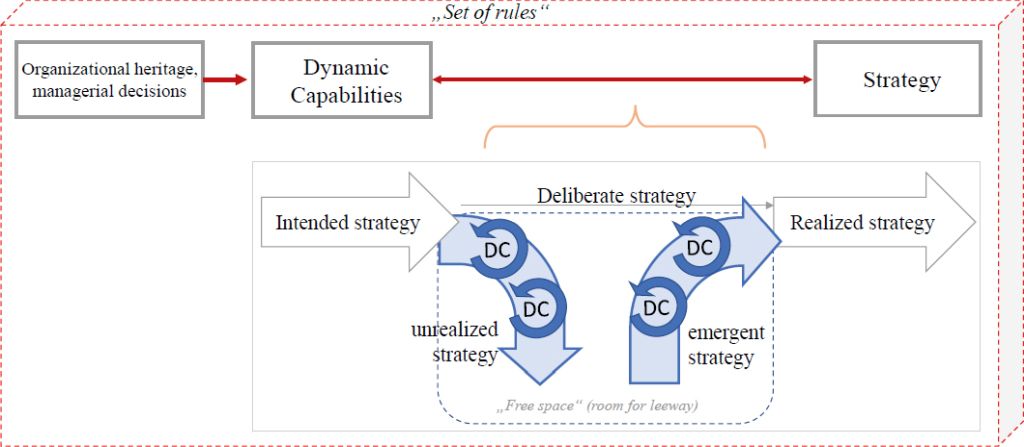
Figure 2 shows a refined extract of the process toward strategy formation and the position of dynamic capabilities within this process, as proposed by Teece. The focus of this article is on the highlighted section and its interplay with the process of emergent strategies.
Logical structure of the dynamic capabilities paradigm (refined extract adapted from Teece, 2018).
Citation: International Food and Agribusiness Management Review 28, 3 (2025) ; 10.22434/ifamr.1279
A critical differentiation must be made between ordinary and dynamic capabilities, each serving distinct strategic functions. While all organizations need ordinary capabilities to operate, not all organizations have dynamic capabilities (Arend, 2014). Ordinary capabilities, often codified and replicable, enable routine task performance and can be acquired or imitated, leveraging explicit knowledge. Being imitable, they do not ensure a sustainable competitive advantage. In contrast, dynamic capabilities cannot be imitated. They are deeply embedded in an organization’s heritage and its context-specific learning, relying on “signature practices” (Gratton and Ghoshal, 2005). They are “dedicated to the modification of operating routines” (Zollo and Winter, 2002), including the ability to enhance and reconfigure operating capabilities. Unlike ordinary capabilities, dynamic capabilities thrive in environments that embrace change and empowerment, fostering long-term adaptability and innovation.
Within dynamic capabilities, another distinction exists between higher-level dynamic capabilities and lower-level capabilities (Teece, 2018). Higher-level dynamic capabilities refer to the three core processes of sensing, seizing and transforming. Of those core activities, sensing is an important quality to filter and structure information. It provides the basis for any seizing and transforming capabilities. The actively shaping components of seizing and transforming, are closer linked to strategic decision making and strategy formation, especially emergent strategy. Lower-level dynamic capabilities, also termed microfoundations, are more specific routines that are employed less often than other capabilities, such as developing new partnerships of product innovation. They allow the firm to reshape their set of capabilities by adding, reconfiguring or removing resources (Eisenhardt and Martin, 2000). As such, they must play a crucial part in the formation of emergent strategies as well.
Abstract concepts of intangible value are often criticized, even when the existence and real-life application cannot be overlooked. Hence such concepts are analogized. Like emergent strategies, dynamic capabilities are compared to jazz improvisation (Compo, 2022) or Mixed Martial Arts, characterized by a set of practices or guidelines and high uncertainty, necessitating adaptive skills akin to dynamic capabilities (Teece, 2022).
3. From capability to strategy: linking dynamic processes to emergent outcomes
Recent years have seen growing recognition of the value in linking strategic processes and practices (Burgelman et al., 2018), highlighting benefits for practitioners through understanding the orchestration of key components. When scholars apply the same analogy to both theoretical concepts, this convergence warrants closer examination of a potential linkage. Since strategic management aims to maintain “evolutionary fitness” over time (Teece, 2007 in Teece, 2018), this Section illustrates how integrating the frameworks of Mintzberg and Teece can enhance value creation and support restructuring the agrifood sector to better address current challenges.
Both concepts support changing environments. The emergent strategy framework incorporates the fact that economic growth and organizational development is not static or purely linear, and dynamic capabilities are not only “an enabling factor for successful digital transformation processes” (Marx et al., 2021), but also benefit from and grow through digital transformation (Lu and Shaharudin, 2024). In order to ensure the successful integration of digitalization in the agrifood sector’s developmental and evolutionary processes, two major required changes are identified. The first one is the change of its structural setup from product ownership to a structure of service access. The second major change refers to the establishment of a startup mentality, “characterized by a technological environment, a culture of innovation and risk, and an ability to push forward the limits of what already exists” (Flores et al., 2022 in Piot-Lepetit, 2023). Cultivating dynamic capabilities would support the integration and advancement of digitainability in the agricultural industry (Marx et al., 2021).
Existing literature identifies several key factors that link emergent strategies with dynamic capabilities. They are crucial for integrating these concepts. These factors, detailed below, illustrate the benefits for organizations facing change, such as in the agrifood sector. Scholars have incorporated some into multidimensional constructs to empirically examine interactions between dynamic capabilities and internal factors, underscoring their significance (for an example, see Marx et al., 2021).4
3.1 Adaptability to change and overcoming static approaches
Both theoretical frameworks emphasize adaptability and transformation in response to change. Dynamic capabilities focus on an organization’s internal ability to sense, seize, and transform, while emergent strategy theory highlights the evolution of novel strategic responses within these changing contexts by leveraging the same underlying capabilities. As new strategies emerge, the two frameworks interact dynamically, reinforcing each other. Together, they challenge linear, static models reliant on routinized, ordinary capabilities, advocating instead for a more proactive, adaptive strategic orientation.
3.2 Integration of external and internal perspective and macro and micro level
The adaptability to change requires integrating both internal and external factors. Dynamic capabilities involve sensing opportunities and threats across these dimensions, while emergent strategies often originate from external triggers that prompt a re-evaluation of deliberate strategies. Emergent strategies intersect with macro- and micro-level theoretical perspectives. At the macro level, they emphasize competitive positioning and environmental responsiveness. At the micro level, they focus on internal assets, culture, and routines that foster organizational resilience. This dual focus bridges external and internal dimensions, similar to dynamic capabilities considering both perspectives when sensing, seizing and transforming. This reinforces the strategic relevance of dynamic capabilities in navigating non-routine challenges (Hamel, 1996; Kanter, 2002). By enabling organizations to detect and respond to environmental shifts (Teece et al., 1997; Teece, 2007 in Teece, 2018), dynamic capabilities form the basis for emergent strategy development. This capacity contrasts ordinary capabilities, which center on routine activities and are more susceptible to imitation. By fostering an environment of learning and decentralized control, firms enhance their capacity for emergent strategy development and long-term sustainability (Teece, 1997; Mintzberg et al., 2009).
3.3 Organizational culture and routines
The role of organizational culture as a source of sustained competitive advantage was identified early on (Barney, 1986). Dynamic capabilities rely heavily on internal factors such as organizational heritage and prior management decisions. Unlike ordinary capabilities, which can be acquired externally, dynamic capabilities must be built internally—requiring a strong organizational culture and supportive routines on the organizational level.
Like routines, dynamic capabilities are not ad hoc and need to be developed internally over time (Zollo and Winter, 2002). They form the basis of capabilities as “regular and predictable patterns of activity [comprised of] a sequence of coordinated actions by individuals” (Grant, 1991). Yet they retain flexibility, allowing adaptation to changing conditions (Winter, 1964). Dynamic capabilities emerge from signature practices. These are organizationally embedded routines shaped by a company’s heritage and business structures, which are based on management actions and context-specific learning (Gratton and Ghoshal, 2005). To establish dynamic capabilities, search routines are of particular relevance (Nelson and Winter, 1982). However, the same routines and culture that support dynamic capabilities can also constrain them if overly rigid, highlighting the need for balance.
Understanding routines requires a nuanced view. They can be seen as either activity-based or cognitive patterns and as either mindless or mindful processes (Becker, 2004). This distinction is especially relevant for dynamic capabilities, which depend on deliberate, adaptive behaviour. Feldman (2000, in Becker, 2004) introduces the concepts of ostensive (the representation of a routine) and performative (contextual enactment, the carrying out of a specific routine in a given situation) aspects of routines, emphasizing the individual to modify or apply a routine. This performative flexibility, shaped by tacit knowledge and intent, may distinguish routines underpinning dynamic capabilities from those supporting ordinary ones (Parmigiani and Howard-Grenville, 2011).
3.4 Tacit knowledge
Internal cooperation and coordination are required to link resources and capabilities. This can be done by motivation and socialization of members of the organization, which is often embedded in culture and routines and implies a high level of tacit knowledge (Grant, 1991). Tacit knowledge is particularly important to both emergent strategy and dynamic capabilities. Even though both concepts address non-routine situations, they develop, grow and feed from organizational routines and cultures—provided these fulfil other criteria as well. While dynamic capabilities focus more on internal processes and the transformation of internal resources, emergent strategies utilize these capabilities to actively shape the internal direction or respond to changes in the external environment.
3.5 Learning
Learning is a central factor for both concepts. Alongside the development of new ideas on strategy formation, Mintzberg introduced several schools of thought with different focal points, one of them being the learning school. In this school of thought, “strategies emerge as people […] come to learn about a situation as well as their organization’s capability of dealing with it” (Mintzberg et al., 2001), thus answering the question left unanswered by the prescriptive schools of thought. Both concepts are closely tied to the process of learning: “Emergent strategy itself implies learning what works, taking one action at a time in search for that viable pattern or consistency [representing] the means by which deliberate strategies change” (Mintzberg and Waters, 1985). For dynamic capabilities, Teece et al. initially identified learning as one of the three processes central to dynamic capabilities: coordinating/integrating, learning and reconfiguration. Later these were refined into the shaping activities of sensing, seizing and transforming (Teece, 2018). In order to implement these three core activities, learning is still deeply embedded in the concept. The literature highlights the importance of learning for both concepts. Reality shows that this implies certain prerequisites: the willingness to learn and an environment that fosters learning—and the cognitive ability to do so.
Strategic learning: Emergent strategies facilitate strategic learning, enabling organizations to iteratively refine their approach through experiential feedback (Mintzberg and Waters, 1985). This iterative refining and improving based on previous experience are crucial components of both emergent strategy and dynamic capabilities. Iterative strategic learning allows them to respond as internal drivers during change or uncertainty. It thrives in decentralized, loosely coupled organizations, fostering creativity and adaptation, as opposed to tightly controlled environments that prioritize stability (Alvarez and Barney, 2005; Gratton and Ghoshal, 2005).
Strategic learning can only evolve organically when supported by the right internal settings supported by the right mindset and culture (Mintzberg et al., 2001). The same settings are also the source of organically grown dynamic capabilities.
3.6 Awareness
Having a higher degree of dynamic capabilities awareness helps its utilization, as the “strength of a firm’s dynamic capabilities determines the speed and degree to which the firm’s idiosyncratic resources [or competences] can be aligned and realigned consistent with the firm strategy” (James, 2018). With a higher degree of speed and degree of integration, organizations can better act or respond to a new situation. Also, a beneficial (re-)alignment of processes or activities will be adopted, becoming part of the realized strategy (James, 2018). As such, it is identified as an emergent strategy in retrospect.
The process of employing emergent strategies is similar to well-integrated routines: people act without consciously thinking about their action. Once the intent (or necessity to act) is identified, the “organization determines where and how to adapt to evolving real-time situations” (James, 2018). Under close scrutiny, this description does not match Mintzberg’s part of the definition of “retrospect sense-making”, yet it does closely resemble the notion of Teece’s sensing, seizing and transforming of dynamic capabilities. This again highlights the proximity and conjunction of emergent strategies and dynamic capabilities. When considering organizational needs and activities leading up to the evolution of emergent strategies, do authors unconsciously employ the concept of dynamic capabilities to help explain this process? It would point to a subconscious awareness of the linkage.
3.7 Internal structures
Foss et al. (2022) propose a rule-based framework that sets external boundaries within which empowered organizations can operate with greater autonomy. This aligns with the notion that deliberate strategy is defined within these boundaries. The realized strategy, “a pattern in a stream of decisions” (Mintzberg, 1978), emerges within this structured space, shaped by firm-specific behaviours and dynamic capabilities. These internal actions interact with external constraints to form a unique strategic pattern, enabling emergent strategies. The resulting configuration is complex and firm-specific, representing a potential source of sustained competitive advantage. Bower (1970) and Burgelman (1980) showed that decisions were constantly made at all levels of a company, which evolved into the differentiation between strategy and strategic behaviour, which can take place at various hierarchical levels of a firm (Burgelman, 1983). Thus, said set of rules must encompass multiple hierarchical levels.
Considering the relationship of emergent strategies and dynamic capabilities, a reciprocal empowerment can be assumed. Ultimately it is the presence of dynamic capabilities that enable emergent strategies to form and emerge, which creates new internal settings or resources and changes the strategic implementation or realized strategy. Resource changes are the intermediate outcome of dynamic capabilities and as such mark the “causal mechanism through which dynamic capabilities create a competitive advantage” (Marx et al., 2021; Schilke et al., 2018). The development of new strategic activities results in emergent strategies. According to Mintzberg and Waters (1985), an emergent strategy is only identified as such in retrospect. Before, dynamic capabilities are required as a transmitter to move the identified idea into action and see it through with its capabilities. Only then an emergent strategy can be implemented and identified as such.
Hence it is proposed that the relationship between dynamic capabilities and strategy is of mutual support – strategic components and consequently emergent strategies are identified, developed and followed through by internal dynamic capabilities. It is the integrative interplay of dynamic capabilities and emergent strategy that enables sustained competitive advantage.
Figure 3 provides a visualization of the proposed integration of both theoretical frameworks. Highlighting the transformative interplay of both concepts, the link between dynamic capabilities and (emergent) strategy can be found in the iterative processes of dynamic capabilities leading to unrealized and emergent strategies. Dynamic capabilities provide the basis for the formation of emergent strategy. Once established, both form a reciprocal relationship within the so-called “free space”, providing room for maturation and consequently transformation. This process is framed within the previously mentioned set of rules:
The transformative team-up: Dynamic capabilities (DC) as a crucial component in the iterative process of emergent strategy development, taking place in a “free space” within a set of rules (own depiction).
Citation: International Food and Agribusiness Management Review 28, 3 (2025) ; 10.22434/ifamr.1279
4. Insights from practical application
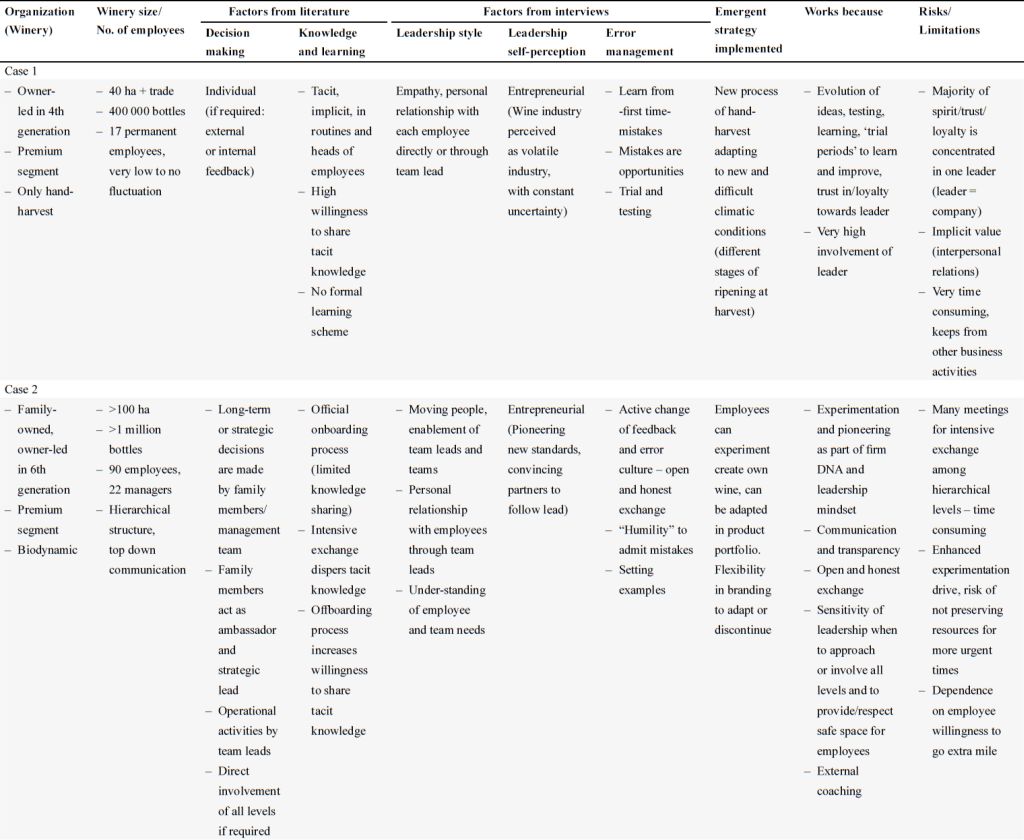
To explore these complex phenomena in real-world settings, a qualitative research approach was chosen. As an inductive theory-building method, the case study approach is particularly well-suited for examining underexplored processes and capturing the contextual depth of strategic adaptation (Hyde, 2000). It enables the investigation of how firms respond, proactively or reactively, to significant industry changes, offering insights into the internal mechanisms that support strategic evolution. The study includes three case studies from German-speaking wineries in Central Europe. The cases were selected using industry research to identify application examples of dynamic capabilities or emergent strategies. Case interviews were conducted using semi-structured, in-depth interviews to allow for a level of flexibility while probing for insights (Rouse et al., 2025). All interview partners were responsible for strategic decision making within the organization. Two case interviews were conducted with the owner and operational leader, one interview was with the general manager of the winery. As pointed out earlier, particular diligence must be applied when investigating emergent strategy to correctly identify the phenomenon. In many cases, key insights are mentioned alongside other information. Final contributions must “weave together” gathered information, existing theory and implications (Rouse et al., 2025). The qualitative data analysis followed established procedures for category-based content analysis to extract key variables and connect them to theoretical constructs (Mayring, 2014). As a result, the examples were confirmed and factors identified by the literature were contextually elaborated. Additionally, individual factors were detected that provide the context or aid greatly to the interplay of the aforementioned individual factors. These factors are summarized in Table A2 in the Appendix. Together they form a comprehensive picture of the multidimensional consolidation of an organization that provide a good surrounding for the capture, growth and maturation of dynamic capabilities, and hence, potentially, emergent strategy. It also identifies potential risk factors of these individual settings.
As elaborated in the previous Section, leadership must provide the appropriate environment to initiate and facilitate the development of dynamic capabilities and consequently emergent strategies. Scholars differentiate between dynamic capabilities at the organizational, unit, or team level and at the individual level. While the former capabilities are supported by routines (as shown in Section 3.3), the latter are supported by human capital, social capital, and cognition (Adner and Helfat, 2003; Dosi et al., 2000; Harvey et al., 2022; Helfat and Peteraf, 2015 in Helfat, 2022; Winter, 2000). Individual factors identified during the case interviews can be summarized as dynamic managerial capabilities. They are defined as the “capacity of managers to create, extend or modify the way in which [organizations operate]” (Harris and Helfat, 2018). Managerial capabilities identified during the interviews were grouped into three categories: leadership style, leadership self-perception and error management. By employing these capabilities, leadership can influence organizational dynamic capabilities and “alter existing organizational resources and capabilities” (Harris and Helfat, 2018). These capabilities can reside not only in top management but also in middle management, highlighting the role of individual team leads.
4.1 Leadership style
Across all three case interviews, leadership style emerged as a critical factor in fostering an environment conducive to the development of dynamic capabilities. It significantly influences organizational culture, internal interactions, relationship-building, and employee engagement and motivation. Interaction and communication were consistently identified as essential enablers. In case 1, the interviewee deliberately used communication to foster close interpersonal relationships. In case 2, relationship-building occurred more organically, though its organizational value was acknowledged. In case 3, communication was primarily used as a means to understand employees’ individual skills and challenges. Employee empowerment was another relevant factor. In all cases, leadership demonstrated strong involvement and a high willingness to support their teams, while simultaneously encouraging employee autonomy and proactive engagement in change. Key enablers included the cultivation of a positive error culture, openness to honest feedback, leadership by example, and active involvement of employees in ideation and problem-solving. These practices fostered employee empowerment and the confidence to experiment despite potential failure. By creating these foundational conditions, leadership facilitated the development of dynamic capabilities, thereby enabling organizational adaptability and the emergence of strategy in response to change.
All interviewees highlighted and confirmed the importance of internal culture, crucial for both dynamic capabilities and the foundation of emergent strategy. They confirmed that they rely on tacit knowledge within the organization, dispersed through (informal) exchange and learning from each other during periods of overlap. Employee willingness to share such informal and tacit knowledge among team members is crucial here. A positive culture and leadership perception help with this process. This is particularly important as the most important exchange of informal knowledge and processes is during a handover-period when the retiring or quitting employee and his successor work together for the successor to learn. The quality of the information handover depends solely on the leaving employee—influenced by the internal environment.
Routines were not explicitly mentioned during the interviews, possibly because they are implicitly embedded within organizational culture and structures that facilitate communication and knowledge exchange—factors identified as highly important.
4.2 Leadership self-perception
A previous study investigated whether firm age and size help the impact of dynamic capabilities on firm performance in entrepreneurial ventures. Objective measures like firm age or size did not provide a clear determinant, or were attributed to other causes, such as employee motivation (Arend, 2014). Yet there are unmistakable differences in firm response to environmental change. While it is presumed normal in fast-paced industries with constant change or shorter iterations, other traditional or static industries cope less well with change. Individual perception of a situation or general personal resilience can strongly impact their reaction on said situation.
Despite current developments, in a long-term perspective within the agricultural sector, the wine industry is considered more traditional (Lenzi, 2013), as well as the perception thereof. One interviewee operates in a highly dynamic environment that is self-created. Constant experimentation is “part of [the organization’s] DNA” (case 2). Another interviewee noted that they consider themselves operating in a highly volatile environment (case 1). Vintners are inherently dependent on uncontrollable natural factors, which significantly shape the final product and limit their ability to influence outcomes directly. This interviewee considered it normal to operate in an environment with high uncertainty and changing conditions. Both interviewees are used to a dynamic setting. They plan and act accordingly, growing dynamic capabilities and emergent strategies implicitly.
This suggests that individual perception of environmental volatility may play a critical role in managerial decision-making, highlighting the need to incorporate perceived industry dynamics into leadership research.
4.3 Error management
Across all case interviews, it became evident that management’s approach to mistakes plays a pivotal role in fostering a culture of empowerment and experimentation—representing the “freedom within the set of rules.” All interviewees emphasized a solution-oriented leadership style that values employee input and the testing of new ideas. For this to be effective, open communication and a willingness to accept feedback without negative consequences are essential. Leaders must show “humility to admit mistakes” (case 2) and lead by example, reframing errors as learning opportunities (cases 1 and 3). This cultivates an internal environment that encourages sensing and seizing, thus reinforcing dynamic capabilities. Such an internal environment characterizes the free space (room for leeway) within a set of rules.
The cases underscore the importance of leadership and dynamic managerial capabilities. A leader’s mindset and willingness to empower others are critical, requiring a leadership style that integrates employee perspectives and fosters trust. Although relationship-building is time-intensive, it proves crucial in motivating employees and navigating challenges. Trust, in turn, lays the foundation for a positive error culture and an environment of “trial and testing” (all three cases). The direct influence of individual leadership in enabling dynamic capabilities and emergent strategy warrants further research.
5. Implications
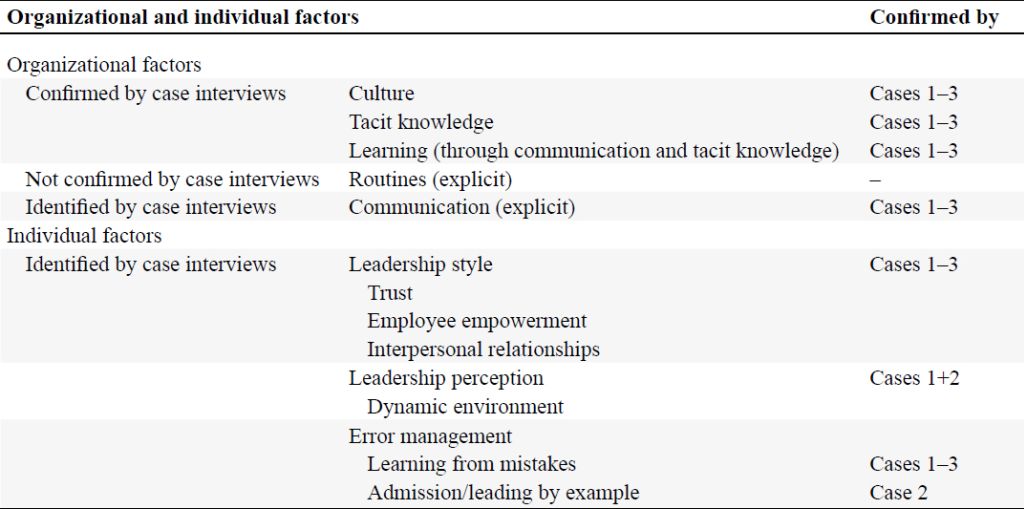
The aforementioned factors were identified as playing a key role in the existence and formation of dynamic capabilities and emergent strategies. They were confirmed and complemented by additional factors identified through case study interviews from the wine industry. These factors are summarized in Table 1.
Overview of organizational and individual factors based on literature and cases
Citation: International Food and Agribusiness Management Review 28, 3 (2025) ; 10.22434/ifamr.1279
Originally introduced by Teece as organizational heritage and managerial decision-making (see Figure 2), these foundations can now be more precisely understood as a set of organizational and individual factors that foster dynamic capabilities at both levels. The extent and expression of these factors shape the organization’s capacity to develop dynamic capabilities, influencing their growth trajectory and potential strength.
The differentiation between organizational and individual dynamic capabilities proves relevant particularly for practitioners when considering whether to establish organizational processes or key employees with the required skillset. When new ventures have dynamic capabilities from the starting point, these are imported by the founder (Arend, 2014). This allows the conclusion that individual dynamic capabilities should be treated preferential to consequently build organizational dynamic capabilities. Whether this prioritization holds true for new ventures as well as established organizations is subject to further research.
To meet the needs of digitainability, static structural components may pose as a guiding outline, while dynamic components and emergent strategy making operate within. It is comparable to the suggested “set of rules” with freedom within (Foss et al., 2022) for organizations to be fit for and meet the requirements of today.
Many internal factors that facilitate and support the emergence of dynamic capabilities and consequently emergent strategies can be driven by leadership. Understanding internal processes, sharing of tacit knowledge among employees but also learning to trust management to actively engage and learn from mistakes. This type of learning can only come by experience and leadership by example. As such, leadership can actively influence the formation and employment of these capabilities to help their organization to be fit for change in the internal and external environment.
Managerial styles that utilize dynamic managerial capabilities and aid organizational dynamic capabilities can present risks. All interviewees have a very high personal involvement. Nurturing personal exchange and relationships is very time consuming. While important, it comes at the expense of other managerial activities beneficial to the overall organization. Creating awareness for opportunity costs and trade-offs might prove beneficial, yet it is important to highlight that the creation and embedding of dynamic capabilities is an organizational process that does not happen instantaneously. Providing the foundation and factors identified in this article and installing team leads with high dynamic managerial capabilities might be a more actionable approach. Once installed, leadership could disperse their attention on other matters relevant in a dynamic competitive environment or seize more actual opportunities they currently do not take up due to time constraints (case 1). How to identify individuals with high dynamic managerial capabilities or even providing a structured approach to measure them would be further fields of investigation beneficial to practitioners.
6. Conclusion
This article underscores the critical relevance of dynamic capabilities and emergent strategy in navigating today’s volatile business environments, particularly within the agrifood sector facing the dual forces of sustainability and digitalization, termed digitainability. Traditional linear strategic approaches no longer suffice in addressing complex, rapidly evolving challenges. Instead, firms must cultivate internal capabilities that enable iterative, adaptive responses to external triggers. This includes fostering an enabling culture, embedding supportive routines for communication and knowledge exchange, and promoting leadership activities that grow trust, empowerment, interpersonal relationships and install a supportive environment for error management. These leadership traits are characterized by dynamic managerial capabilities.
Dynamic capabilities not only enhance responsiveness but also support entrepreneurial orientation and digital strategy. They serve as the foundation for an iterative co-evolution between organizational and individual capabilities and strategic elements, progressively shaping emergent strategy formation. However, their potential unfolds only when aligned with coherent strategic intent. As mentioned in the introduction of this article, an increased awareness and understanding of facilitation of dynamic capabilities and emergent strategy can help navigating technological, climatic or geopolitical shifts. Specifically, it can improve readiness to experiment and innovate in the field of digitainability, such as digital farming, restorative farming practices or adapted harvesting processes, as identified in one of the case interviews.
So far, scholars have approached either side of the two theoretical frameworks of dynamic capabilities and emergent strategy. This study provides a theoretical contribution by highlighting the underexplored interplay between dynamic capabilities and emergent strategies, offering a foundation for future research on their integrated application. It serves as a first step in understanding the exact relationship, interplay and symbiosis of the two. Further research in the matter is required to uncover exact abilities and processes within, helping organizations set up and nurture dynamic capabilities. As stability becomes the exception rather than the norm, organizations must strengthen both their strategic frameworks and internal adaptability to sustain competitive advantage. This is relevant to all organizations, since “even holding performance steady requires dynamic capabilities, because conditions change” (Compo, 2022).
7. Limitations and further research
As is often the case with exploratory qualitative research, the insights represent a conceptual development and do not allow any generalization. As a first step, designing a process model would strengthen the methodological rigor of qualitative research and build a foundation for quantitative testing (Rouse et al., 2025). It is recommended to follow up with an empirical study with a large sample size to confirm the enhanced theoretical framework. Consecutively, this research could be extended to include other countries. The individual interviews include statements, personal perception and recollections that may be biased. For a more diverse, unbiased view, the number of interviewees per organization should be increased and interviewees from different hierarchical levels should be included.
The concepts studied, and integration thereof, have a very complex structure with many factors influencing each other. Any snapshot or separated view does not represent reality and can only provide an approximation for concept development.
As presented in the overview, the different focal points of interviewed firm leaders can translate into risks. The potential to investigate further into the dynamic managerial capabilities are manifold: the relationship between individual and organizational managerial capabilities, on how to mitigate these risks, in different settings or of different hierarchical levels.
The wine industry mostly comprises family-run small- or medium-sized enterprises (Bitsch and Hanf, 2022). Future research could include the type of organization (producing winery, grape-buying or combination), ownership (family-run or manager-run), size of the organization, and product type (low-cost or premium); whether they differ in advancement of digitainability and type and use of dynamic capabilities. Leadership style in varying settings of the aforementioned factors would provide additional insights into the importance of dynamic managerial capabilities. The concept of self-perception impacting the development of dynamic capabilities should be investigated further.
Further research into the exact capabilities underlying the abilities to sense, seize and transform would be of great value to uncover which underlying capability identifies the need to change, as well as how they trigger an unrealized or emergent strategy. Another interesting area of additional research is investigating whether and how processes and capabilities differ in pursuit of activities resulting in unrealized and emergent strategies (dropping vs. taking up a new a strategic component or process). Both fields of research would provide beneficial insights to both managerial scholars and practitioners alike.
Another relevant field that requires additional insight is the interplay between organizational and individual dynamic capabilities in traditional organizations. This can provide managerial guidance on prioritization of establishing new resources and routines.
While acknowledging that often “the depiction presented in process models may oversimplify complex interrelationships” (Rouse et al., 2025), the simplified visualizations aid the understanding of a complex process and the highlighting of specific focal sections within.
Acknowledgements
This article was written as part of the doctoral dissertation of Katharina Mybes. The doctorate is carried out at Geisenheim University. The authors acknowledge the support by the Open Access Publishing Fund of Geisenheim University.
References
Alvarez, S.A. and J.B. Barney. 2005. How Do Entrepreneurs Organize Firms Under Conditions of Uncertainty? Journal of Management 31(5): 776–793. https://doi.org/10.1177/0149206305279486.
Anastasiadis, F. and N. Poole. 2015. Emergent supply chains in the agrifood sector: insights from a whole chain approach. Supply Chain Management: An International Journal 20(4): 353–368. https://doi.org/10.1108/SCM-08-2014-0259.
Anderson, K. and V. Pinilla. 2022. Wine’s belated globalization, 1845–2025. Applied Economic Perspectives and Policy 44(2): 742–765. https://doi.org/10.1002/aepp.13174.
Arend, R.J. 2014. Entrepreneurship and dynamic capabilities: how firm age and size affect the ‘capability enhancement–SME performance’ relationship. Small Business Economics 42(1): 33–57. https://doi.org/10.1007/s11187-012-9461-9.
Bitsch, L. and J.H. Hanf. 2022. The perfect match: interpersonal relationships and their impact on chain management. International Food and Agribusiness Management Review 25(3): 489–508. https://doi.org/10.22434/IFAMR2020.0204.
Bower, G.H. 1970. Organizational factors in memory. Cognitive Psychology 1(1): 18–46. https://doi.org/10.1016/0010-0285(70)90003-4.
Brews, P.J. and M.R. Hunt. 1999. Learning to plan and planning to learn: resolving the planning school/ learning school debate. Strategic Management Journal 20(10): 889–913. https://doi.org/10.1002/(SICI)1097-0266(199910)20:10<889:AID-SMJ60>3.0.CO;2-F.
Burgelman, R.A. 1980. Managing innovating systems : a study of the process of internal corporate venturing. Unpublished Doctoral dissertation, Columbia University, New York, NY.
Burgelman, R.A. 1983. A process model of internal corporate venturing in the diversified major firm. Administrative Science Quarterly 28(2): 223. https://doi.org/10.2307/2392619.
Camillus, J.C. 2018. Logical incrementalism. In: M. Augier and D. Teece (eds.) The Palgrave encyclopedia of strategic management. Springer, Cham, pp. 920–923.
Compo, P. 2022. The emergent approach to strategy: adaptive design and execution. Business Expert Press, New York, NY.
Eisenhardt, K.M. and J.A. Martin. 2000. Dynamic capabilities: what are they? Strategic Management Journal 21(10–11): 1105–1121. https://doi.org/10.1002/1097-0266(200010/11)21:10/11<1105:AID-SMJ133>3.0.CO;2-E.
Espinosa, M., K. Louhichi, A. Perni and P. Ciaian. 2020. EU‐wide impacts of the 2013 CAP direct payments reform: a farm‐level analysis. Applied Economic Perspectives and Policy 42(4): 695–715. https://doi.org/10.1093/aepp/ppz021.
Foss, N.J., M.C. McCaffrey and C.-E. Dorobat. 2022. “When Henry met Fritz”: rules as organizational frameworks for emergent strategy process. Journal of Management Inquiry 31(2): 135–149. https://doi.org/10.1177/10564926211031290.
Freedman, L. 2013. Strategy: a history. Carnegie Council for Ethics in international Affairs, London.
Gaddis, P.O. 1997. Strategy under attack. Long Range Planning 30(1): 38–45. https://doi.org/10.1016/S0024-6301(96)00094-5.
Grant, R.M. 1991. The Resource–Based Theory of Competitive Advantage: Implications for Strategy Formulation. California Management Review 33(3): 3–23. https://doi.org/10.2307/41166664.
Gratton, L. and S. Ghoshal. 2005. Beyond best practice. MIT Sloan Management Review 46(3): 49–57.
Habel, S. 1992. Strategische Unternehmensführung im Lichte empirischer Forschung. Kirsch, München.
Harris, D. and C.E. Helfat. 2018. Dynamic Managerial Capabilities. In: M. Augier and D. Teece (eds.) The Palgrave encyclopedia of strategic management. Springer, Cham, pp. 452–454.
Helfat, C.E. 2022. Strategic organization, dynamic capabilities, and the external environment. Strategic Organization 20(4): 734–742. https://doi.org/10.1177/14761270221115377.
Helfat, C.E., S. Finkelstein, W. Mitchell, M.A. Peteraf, H. Singh, D.J. Teece and S.G. Winter. 2007. Dynamic capabilities. Understanding strategic change in organizations. Blackwell, Oxford.
Henchion, M., C. Iliopoulos and L. Sauvée. 2024. Innovative business models in European agrifood systems: governance issues in an era of digitalization, societal demand and environmental challenges. International Food and Agribusiness Management Review 27(1): 1–4. https://doi.org/10.22434/IFAMR2024.0001.
Hernández–Betancur, J.E., I. Montoya–Restrepo and L.A. Montoya–Restrepo. 2020. The tree of science of deliberate and emergent strategies. IIMB Management Review 32(4): 413–433. https://doi.org/10.1016/j.iimb.2020.12.004.
Hinterhuber, H.H., S.A. Friedrich, G. Handlbauer and U. Stuhec. 1996. The company as a cognitive system of core competences and strategic business units. Strategic Change 5(4): 223–238. https://doi.org/10.1002/(SICI)1099-1697(199607)5:4<223:AID-JSC246>3.0.CO;2-D.
International Organisation of Vine and Wine. 2023. World WIne Production Outlook. OIV First Estimates. International Organisation of Vine and Wine, Dijon.
James, M. 2018. Emergent Strategy. The international encyclopedia of strategic communication: Wiley, Chichester, pp. 1–10. https://doi.org/10.1002/9781119010722.iesc0067.
Kiechle, W. 1984. Sniping a strategic planning. Planning Review May: 8–11.
Kinni, T. 2014. Rita Gunther McGrath on the end of competitive advantage. Strategy + Business 74: 239.
Lenzi, C. 2013. Smart upgrading innovation strategies in a traditional industry: Evidence from the wine production in the province of Arezzo. Regional Science Policy and Practice 5(4): 435–453. https://doi.org/10.1111/rsp3.12020.
Lichtenthaler, U. 2021. Digitainability: The combined effects of the megatrends digitalization and sustainability. Journal of Innovation Management 9(2): 64–80. https://doi.org/10.24840/2183-0606_009.002_0006.
Loose, S., A. Wetzler and C. KIefer. 2024. Umsatz und Absatzentwicklung. Ergebnisse Geisenheimer Absatzanalyse. Hochschule Geisenheim, Geisenheim
Lowe, A. and A. Jones. 2004. Emergent strategy and the measurement of performance: the formulation of performance indicators at the microlevel. Organization Studies 25(8): 1313–1337. https://doi.org/10.1177/0170840604046344.
Lu, H. and M.S. Shaharudin. 2024. Role of digital transformation for sustainable competitive advantage of SMEs: a systematic literature review. Cogent Business and Management 11(1): 2419489. https://doi.org/10.1080/23311975.2024.2419489.
Lynch, R.L. 2009. Strategic management. Prentice Hall/Financial Times, Harlow.
Marx, C., D. de Paula and F. Uebernickel. 2021. Dynamic capabilities and digital transformation: a quantitative study on how to gain a competitive advantage in the digital age. ECIS 2021 Research Papers, Marrakech.
Mileham, A. 2025. UK wine trade facing ‘seismic change’, WSTA warns. The Drinks Business. Available online at UK wine trade facing ‘seismic change’, WSTA warns – The Drinks Business
Mintzberg, H. 1978. Patterns in strategy formation. Management Science 24(9): 934–948.
Mintzberg, H., B.W. Ahlstrand and J. Lampel. 2001. Strategy safari. The complete guide through the wilds of strategic management. Prentice Hall/Financial Times, Harlow.
Mintzberg, H., B.W. Ahlstrand and J. Lampel. 2009. Strategy safari. The complete guide through the wilds of strategic management. FT Prentice Hall Financial Times, Harlow.
Mintzberg, H. and J.A. Waters. 1985. Of strategies, deliberate and emergent. Strategic Management Journal 6(3): 257–272. https://doi.org/10.1002/smj.4250060306.
Nelson, R. and S. Winter. 1982. An evolutionary theory of economic change. Belknap Press, Cambridge, MA.
Parmigiani, A. and J. Howard–Grenville. 2011. Routines revisited: exploring the capabilities and practice perspectives. Academy of Management Annals 5(1): 413–453. https://doi.org/10.5465/19416520.2011.589143.
Prahalad, C.K. and G. Hamel. 1990. The core competence of the corporation. Harvard Business Review 68: 275–292. https://doi.org/10.1007/3-540-30763-X_14.
Richter, B. and J.H. Hanf. 2024. Competitive parity in chain management – factors that influence the long–term compliance with product and quality criteria along the chain. International Food and Agribusiness Management Review 27(3): 540–565. https://doi.org/10.22434/ifamr2023.0089.
Rouse, E., J. Reinecke, D. Ravasi, A. Langley, M. Grimes and M. Gruber. 2025. Making a theoretical contribution with qualitative research. Academy of Management Journal 68(2): 257–266. https://doi.org/10.5465/amj.2025.4002.
Schilke, O., S. Hu and C.E. Helfat. 2018. Quo vadis, dynamic capabilities? A content-analytic review of the current state of knowledge and recommendations for future research. Academy of Management Journal 12(1): 390–439.
Schweickert, E. 2007. Unternehmensstrategien in den Weinwirtschaft im Rahmen der EU– Weinmarktordnungspolitik. Zugl.: Gießen, Univ., Diss., 2006. DLG–Verl., Frankfurt am Main.
Teece, D.J. 2018. Dynamic Capabilities. In: The Palgrave encyclopedia of strategic management, pp. 444–451.
Teece, D.J. 2022. Dynamic Capabilities as the New Board and Executive Strategy.
Wernerfelt, B. 1984. A resource‐based view of the firm. Strategic Management Journal 5(2): 171–180. https://doi.org/10.1002/smj.4250050207.
Whittington, D. 2018. Digital Innovation and Entrepreneurship. Cambridge University Press.
Whittington, R. 2014. Emergent Strategy. In: M. Augier and D.J. Teece (eds.) The Palgrave encyclopedia of strategic management. Springer, Cham, pp. 490–493.
Winter, S.G. 2003. Understanding dynamic capabilities. Strategic Management Journal 24(10): 991–995. https://doi.org/10.1002/smj.318.
de Wit, B. and R. Meyer. 2005. Resolving strategy paradoxes to create competitive advantage; text and readings. Thomson Learning, Andover.
de Wit, B. and R. Meyer. 2010. Strategy synthesis. Resolving strategy paradoxes to create competitive advantage. Thomson Learning, Andover.
Zack, M.H. 2000. Jazz improvisation and organizing: once more from the top. Organization Science 11(2): 227–234. https://doi.org/10.1287/orsc.11.2.227.12507.
Zollo, M. and S.G. Winter. 2002. Deliberate learning and the evolution of dynamic capabilities. Organization Science 13(3): 339–351. https://doi.org/10.1287/orsc.13.3.339.2780.
Appendix
Basis and substantial contributions to the concept of emergent strategy
Citation: International Food and Agribusiness Management Review 28, 3 (2025) ; 10.22434/ifamr.1279
Summary of interview insights
Citation: International Food and Agribusiness Management Review 28, 3 (2025) ; 10.22434/ifamr.1279
Corresponding author
It is a top 10 producer and in the top 3 of importing markets worldwide. While other producers in the EU experienced a production decline, production remained stable in Germany (2% increase) over a 5-year period (Bitsch and Hanf, 2022; International Organisation of Vine and Wine, 2023; Loose et al., 2024).
See Table A1 in the Appendix for the full table. The literature review covered journals subjecting strategy, strategic management, organizational management, applications in the environmental or agricultural sector. They were not limited by year. Search keywords were “emergent strategy”, “emergent strategies”, “Mintzberg”, emergent/emerging with the term management, in a managerial context, corporate or organizational strategy. Articles from other fields were excluded, as well as the use of the term other than in a managerial or economic context or strongly diverging from the definition of Mintzberg and Waters (1985). For a structured overview of existing literature, a Tree of Science (ToS) was developed by Hernández-Betancur et al. (2020). It includes 10 documents from 1978 to 1998 classified as roots or the basis of the theoretical framework. In the trunk, they identified five articles that “made substantial contributions to the concept of deliberate and emergent strategies”. These articles were reviewed and the list was enhanced by the authors’ own additions. Five other papers were examined and disregarded for this research. In addition to this overview, more recent research on the matter was added in this article.
Barreto’s broader definition can be broken down into four interrelated dimensions that – only together – form the overall construct: (1) The capability to sense opportunities and threats translates into the effective collection and aggregation of information by “sensing and interpreting stimuli” or adapting the reference point; (2) the ability to make timely decisions translates in a fast formulation, evaluation and selection of strategic options under conditions of change; (3) making market-oriented decisions to “create superior value for their customers”; and (4) the ability to change the resource base refers to the ability to “create, extend and reconfigure the existing resource base” (Barreto, 2010 in Marx et al., 2021). Marx et al. find points of parity with the initial definition of dynamic capabilities from 1997 only in 2). A closer examination with Teece’s later elaboration of the three core processes does show that all points correspond – except for point 3. This may be due to “creat[ing] superior value for [one’s] customers” is the equivalent to creating competitive advantage, which in turn is the desirable consequence of employing dynamic capabilities.
The selected factors varied depending on the core aim and the context of the study.